Advancing Solar Cell Fabrication: The Comprehensive Guide to PECVD Technology, Processes, and Innovations
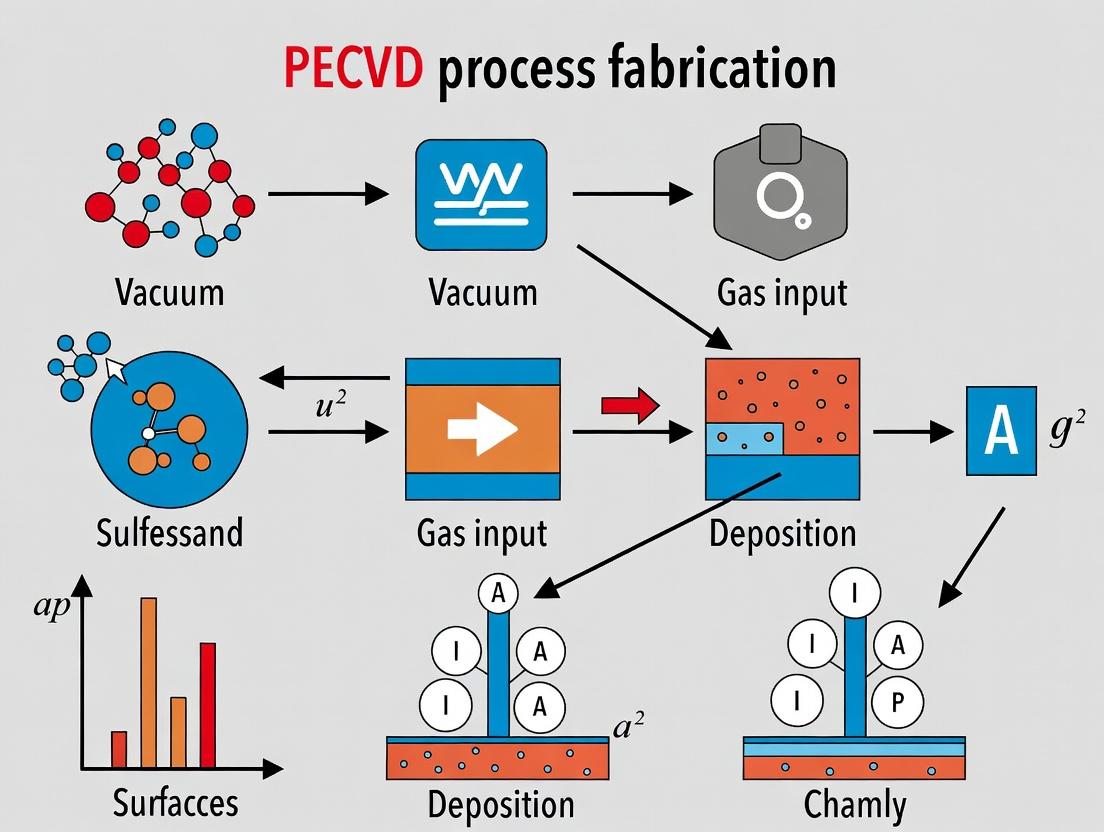
This article provides a detailed examination of Plasma-Enhanced Chemical Vapor Deposition (PECVD) for solar cell manufacturing, targeting researchers and development professionals.
Advancing Solar Cell Fabrication: The Comprehensive Guide to PECVD Technology, Processes, and Innovations
Abstract
This article provides a detailed examination of Plasma-Enhanced Chemical Vapor Deposition (PECVD) for solar cell manufacturing, targeting researchers and development professionals. It explores the fundamental physics and chemistry of PECVD, outlines its critical applications in depositing key layers like silicon nitride anti-reflection coatings, and addresses common troubleshooting and process optimization challenges. The content also validates PECVD's performance through comparisons with alternative deposition techniques and recent efficiency benchmarks. The article serves as a technical resource for improving photovoltaic device performance, yield, and scalability.
What is PECVD? Core Principles and Plasma Chemistry for Solar Cell Foundations
Within the research thesis on advancing silicon heterojunction (SHJ) and perovskite-silicon tandem solar cells, Plasma-Enhanced Chemical Vapor Deposition (PECVD) is a cornerstone technology. It enables the low-temperature (<400°C) deposition of high-quality passivation layers (e.g., amorphous silicon, silicon nitride) and functional coatings without damaging temperature-sensitive substrates or previously deposited layers. The key innovation is the use of plasma to dissociate precursor gases at low substrate temperatures, creating reactive radicals that facilitate film growth. This application note details the protocols and materials critical for harnessing PECVD in next-generation photovoltaic research.
Core Principles and Quantitative Data
PECVD utilizes electrical energy (RF, microwave, VHF) to generate a plasma from a precursor gas mixture. The plasma creates highly reactive species (ions, radicals, electrons) that undergo chemical reactions on the substrate surface, forming a solid thin film. The low-temperature process is paramount for avoiding carrier lifetime degradation in crystalline silicon and thermal decomposition of perovskite materials.
Table 1: Typical PECVD Process Parameters for Solar Cell Films
| Film Type | Precursor Gases | Typical Temp. (°C) | Pressure (Pa) | Power Density (W/cm²) | Key Function in Solar Cells | Refractive Index (@633nm) |
|---|---|---|---|---|---|---|
| a-Si:H (i-layer) | SiH₄, H₂ | 150 - 250 | 50 - 200 | 0.01 - 0.05 | Surface passivation | 3.5 - 4.0 |
| SiNₓ:H | SiH₄, NH₃, N₂ | 300 - 400 | 50 - 150 | 0.03 - 0.10 | Anti-reflection, passivation | 1.9 - 2.2 |
| SiO₂ | SiH₄, N₂O | 200 - 350 | 50 - 200 | 0.02 - 0.08 | Tunneling/barrier layer | 1.45 - 1.47 |
| µc-Si:H | SiH₄, H₂ (high dil.) | 150 - 250 | 100 - 500 | 0.05 - 0.15 | Absorber layer in thin-film | ~4.0 |
Table 2: Impact of Plasma Excitation Frequency on Film Properties
| Frequency Regime | Typical Frequency | Electron Density | Ion Energy | Resulting Film Characteristic | Best Suited For |
|---|---|---|---|---|---|
| Radio Frequency (RF) | 13.56 MHz | Moderate (~10⁹ cm⁻³) | Moderate-High | Dense, good adhesion | SiNₓ anti-reflection coatings |
| Very High Frequency (VHF) | 40 - 100 MHz | High (~10¹⁰ cm⁻³) | Lower | High growth rate, improved SiH microstructure | High-quality a-Si:H passivation |
| Microwave (MW) | 2.45 GHz | Very High | Low | High dissociation efficiency | Low-damage deposition on perovskites |
Experimental Protocols
Protocol 3.1: PECVD of Hydrogenated Amorphous Silicon (a-Si:H) for Surface Passivation
Objective: Deposit intrinsic a-Si:H on textured c-Si wafer for superior surface passivation in SHJ solar cells. Materials: See "Scientist's Toolkit" below. Equipment: Parallel-plate RF-PECVD system, load-lock chamber, substrate heater, mass flow controllers, spectroscopic ellipsometer.
Procedure:
- Substrate Preparation: Clean 156mm x 156mm n-type Cz-Si wafers via RCA-1 and RCA-2 cleaning sequences. Perform a final 2% HF dip for 2 minutes to remove native oxide and hydrogen-terminate the surface. Load wafers within 10 minutes of HF dip.
- System Initialization: Pump down deposition chamber to base pressure <1.0 x 10⁻⁵ Pa. Set substrate heater to target temperature of 200°C and stabilize for 30 minutes.
- Pre-deposition Plasma Treatment: Introduce H₂ at 100 sccm, stabilize chamber pressure at 80 Pa. Ignite H₂-plasma at RF power density of 0.03 W/cm² for 120 seconds to further clean and prepare the c-Si surface.
- a-Si:H Deposition:
- Set process pressure to 60 Pa.
- Introduce precursor gases: SiH₄ at 10 sccm, H₂ at 50 sccm.
- Ignite plasma at RF power density of 0.025 W/cm².
- Deposit for 300 seconds to achieve a ~10 nm thick film.
- Monitor plasma emission using optical emission spectrometer (OES); primary signal from SiH* radical at 414 nm.
- Post-deposition: Cease RF power and SiH₄ flow. Maintain H₂ flow and temperature for 60 seconds for annealing. Cool wafers under H₂ atmosphere to <80°C before venting chamber.
- Characterization: Measure minority carrier lifetime via quasi-steady-state photoconductance (QSSPC) to evaluate passivation quality. Target effective lifetime >5 ms. Measure film thickness and refractive index using spectroscopic ellipsometry.
Protocol 3.2: PECVD of Silicon Nitride (SiNₓ:H) as an Anti-Reflection Coating
Objective: Deposit a ~75 nm SiNₓ:H layer on the front side of a diffused c-Si solar cell. Equipment: Industrial inline microwave-PECVD system.
Procedure:
- Substrate Loading: Load diffused and PSG-etched c-Si wafers onto the conveyor boat.
- Process Setup: Set substrate temperature to 400°C. Set conveyor speed for 120 seconds of deposition time.
- Gas Flow & Plasma: Set gas flows: SiH₄ (5% in N₂) at 500 sccm, NH₃ at 30 sccm. Set process pressure to 150 Pa. Activate microwave plasma generators (2.45 GHz).
- Deposition: Pass wafers through the plasma zone. The high electron density ensures efficient dissociation, yielding a growth rate of ~0.6 nm/s.
- Characterization: Measure reflectance to confirm minimum at ~600 nm (for optimal current gain). Measure film stress via wafer bow measurement; target slightly compressive stress (<300 MPa).
Diagrams
PECVD Process Workflow for Solar Cell Passivation
Plasma Chemistry & Film Growth Mechanism
The Scientist's Toolkit: Key Research Reagent Solutions
Table 3: Essential Materials for PECVD Solar Cell Research
| Material/Reagent | Typical Purity/Concentration | Primary Function in PECVD | Critical Handling Notes |
|---|---|---|---|
| Silane (SiH₄) | 99.999% or 5% diluted in N₂/H₂ | Primary silicon source for a-Si:H, µc-Si:H, SiNₓ films. | Extremely pyrophoric. Use dedicated, leak-checked gas lines with pressure relief. |
| Ammonia (NH₃) | 99.999% | Nitrogen source for SiNₓ:H deposition. | Toxic, corrosive. Requires scrubber for exhaust. |
| Nitrous Oxide (N₂O) | 99.999% | Oxygen source for SiO₂ deposition. | Supports combustion. Ensure no hydrocarbon contamination. |
| Hydrogen (H₂) | 99.999% | Diluent, etchant, promotes crystallization in µc-Si:H, surface treatment. | Flammable. Use with appropriate flow limiters. |
| n-type & p-type Doping Gases (PH₃, B₂H₆) | 1% in H₂ or SiH₄ | Precise conductivity control in doped layers (e.g., a-Si emitters). | Highly toxic. Use sub-atmospheric pressure gas cabinets and dedicated purge systems. |
| Crystalline Silicon Wafers (n/p-type) | 156mm x 156mm, textured | Standard substrate for R&D. | Handle with wafer tweezers; clean via RCA/ HF sequences before loading. |
| In-situ Plasma Cleaning Gas (NF₃, CF₄/O₂) | 99.99% | Periodic chamber cleaning to remove deposited film from fixtures. | Generates toxic byproducts. Chamber must be thoroughly purged before deposition. |
Introduction Within the broader thesis on optimizing Plasma-Enhanced Chemical Vapor Deposition (PECVD) for high-efficiency, low-cost silicon heterojunction (SHJ) solar cells, understanding the fundamental gas-phase and surface reactions is paramount. This application note details the key reactions, protocols, and materials for depositing critical thin-film layers, specifically silicon nitride (SiNx) anti-reflection coatings and hydrogenated amorphous silicon (a-Si:H) passivation layers.
1. Key Reaction Pathways and Quantitative Data PECVD involves the fragmentation of precursor gases via plasma-generated electrons, followed by radical formation, transport, and surface reactions to form a solid film. The table below summarizes the primary reactions for two essential films in SHJ solar cells.
Table 1: Key PECVD Reactions for Solar Cell Fabrication
| Film Type | Primary Precursors | Core Plasma Phase Reactions (Gas Phase) | Core Surface Reactions (Substrate) | Critical Process Parameters & Typical Values |
|---|---|---|---|---|
| Silicon Nitride (SiNx:H) - Anti-Reflection Coating | Silane (SiH₄), Ammonia (NH₃), Nitrogen (N₂) | e⁻ + SiH₄ → SiH₃• + H• + e⁻e⁻ + NH₃ → NH₂• + H• + e⁻NH₂• + SiH₄ → NH₃ + SiH₃• | SiH₃• (ads) + NH₂• (ads) → Si-N + 2.5 H₂↑≡Si–H + •NH₂ → ≡Si–NH₂ + H• | Temp: 300-400°CPressure: 100-300 PaRF Power: 10-50 WSiH₄/NH₃ Ratio: 0.3-0.6Refractive Index (633nm): 1.9-2.1 |
| Hydrogenated Amorphous Silicon (a-Si:H) - Passivation Layer | Silane (SiH₄), Hydrogen (H₂) | e⁻ + SiH₄ → SiH₃• + H• + e⁻ (primary)e⁻ + H₂ → 2H• + e⁻SiH₄ + H• → SiH₃• + H₂ | SiH₃• (ads) → ≡Si–Si≡ + 1.5 H₂↑H• (ads) + dangling bond → Si-H | Temp: 150-250°CPressure: 50-150 PaRF Power: 5-30 WH₂ Dilution (H₂/SiH₄): 5-20Bandgap: 1.7-1.9 eV |
2. Experimental Protocols
Protocol 2.1: PECVD of Silicon Nitride Anti-Reflection Coatings Objective: Deposit a ~75 nm SiNx:H layer with a refractive index of 2.0 at 633 nm on a textured crystalline silicon wafer. Materials: See "The Scientist's Toolkit" below. Method:
- Loadlock Evacuation: Place the wafer in the loadlock and evacuate to < 1.0 x 10⁻³ Pa.
- Transfer & Pre-heat: Transfer wafer to the main deposition chamber. Ramp substrate temperature to 350°C and stabilize for 5 minutes under continuous vacuum.
- Pre-deposition Plasma Clean: Activate a 2-minute H₂/Ar plasma clean (100 sccm/50 sccm, 50 Pa, 50 W RF) to remove native oxide.
- Gas Introduction & Stabilization: Introduce process gases: NH₃ at 50 sccm, N₂ at 100 sccm. Stabilize pressure at 150 Pa. Then introduce SiH₄ at 20 sccm (SiH₄/NH₃ ratio = 0.4).
- Plasma Ignition & Deposition: Ignite 13.56 MHz RF plasma at 25 W. Commence deposition timer. Monitor in-situ interferometry for thickness control.
- Process Termination & Venting: After target thickness is reached, simultaneously shut off RF power and SiH₄ flow. Continue NH₃/N₂ flow for 30s to purge reactive silane species. Pump out remaining gases. Vent loadlock with N₂. Quality Control: Measure reflectance at 600 nm (target < 3%) and film thickness/refractive index via ellipsometry.
Protocol 2.2: PECVD of Intrinsic a-Si:H Passivation Layers Objective: Deposit a ~10 nm intrinsic a-Si:H layer for superior surface passivation of c-Si. Materials: See "The Scientist's Toolkit" below. Method:
- Loadlock Evacuation: As per Protocol 2.1.
- Transfer & Pre-heat: Transfer wafer. Stabilize substrate at 180°C.
- Surface Preparation: Perform a 5-minute in-situ H₂ plasma treatment (100 sccm H₂, 80 Pa, 30 W) to atomically clean and hydrogenate the c-Si surface.
- Gas Introduction & Stabilization: Introduce high-purity H₂ at 200 sccm. Stabilize pressure at 80 Pa. Introduce SiH₄ at 10 sccm (H₂/SiH₄ ratio = 20).
- Plasma Ignition & Deposition: Ignite RF plasma at a very low power density of 10 W. Deposit for the precise time calculated for 10 nm (typically 60-120s). Use a soft plasma ignition sequence to minimize ion bombardment.
- Process Termination: Shut off RF power and SiH₄ flow simultaneously. Maintain H₂ flow for 60s for post-deposition hydrogenation and purge. Quality Control: Measure effective minority carrier lifetime via quasi-steady-state photoconductance (QSSPC) (target > 5 ms).
3. Visualization of PECVD Reaction Pathways
Diagram Title: PECVD Reaction Pathway from Gas to Film
4. The Scientist's Toolkit: Essential Research Reagents & Materials
Table 2: Key Research Reagents and Materials for PECVD Solar Cell Research
| Item | Function & Critical Notes |
|---|---|
| Electronic Grade Silane (SiH₄) | Primary silicon source. Purity >99.995% is critical to avoid metal impurities that destroy carrier lifetime. Stored in safety cabinets. |
| Ultra-High Purity Ammonia (NH₃) | Nitrogen source for SiNx. Anhydrous, high purity to control N-H bond density and film stress. |
| Ultra-High Purity Hydrogen (H₂) | Used for dilution, surface cleaning, and passivation. Dictates microstructure of a-Si:H (epitaxy vs. amorphous). |
| Phosphine (PH₃) / Diborane (B₂H₆) (1% in H₂) | n-type and p-type doping gases for creating emitter/BSF layers in SHJ cells. Highly toxic; require dedicated gas systems. |
| Textured c-Si Wafers (n-type, Float Zone) | Substrate for SHJ research. Low bulk defect density allows accurate surface passivation assessment. Texturing reduces reflectance. |
| In-situ Ellipsometer | Real-time monitoring of film thickness and refractive index, essential for process stability and repeatability studies. |
| Quasi-Steady-State Photoconductance (QSSPC) Tool | Gold-standard for measuring effective minority carrier lifetime, directly quantifying passivation quality. |
Application Notes
Plasma-Enhanced Chemical Vapor Deposition (PECVD) is indispensable in advanced silicon solar cell fabrication, providing high-quality thin-film layers at relatively low temperatures. This application note details four critical PECVD-deposited layers, central to a research thesis on optimizing device efficiency and stability.
Silicon Nitride (SiNx): The industry-standard antireflection coating (ARC) for crystalline silicon (c-Si) solar cells. Its optimal refractive index (~2.0 at 600 nm) minimizes reflection losses. More critically, it serves as an outstanding surface and bulk passivation layer. During deposition, hydrogen from the plasma (using SiH₄ and NH₃ gases) diffuses into the silicon wafer, passivating dangling bonds at the surface and within the bulk, dramatically reducing carrier recombination. Recent research focuses on fine-tuning the [Si]/[N] ratio and hydrogen content to balance optical, passivation, and charge properties.
Silicon Dioxide (SiO₂): Provides superior interfacial passivation, especially for high-efficiency cell architectures like TOPCon (Tunnel Oxide Passivated Contact). An ultrathin (~1-2 nm) thermally grown or PECVD SiO₂ layer chemically saturates Si surface bonds. It is then capped by a doped Si layer, enabling excellent passivation with minimal carrier transport resistance. PECVD SiO₂ is also used as an insulating interlayer in multi-junction cells and for edge isolation.
Hydrogenated Amorphous Silicon (a-Si:H): A cornerstone of silicon heterojunction (SHJ) solar cells. Intrinsic a-Si:H (i-a-Si:H) layers, only a few nanometers thick, provide outstanding surface passivation for c-Si wafers due to their low defect density and high hydrogen content. Doped (p-type and n-type) a-Si:H layers form the carrier-selective contacts. The low-temperature PECVD process (~200°C) prevents wafer degradation. Key research challenges include managing parasitic absorption and ensuring long-term stability (Light-Induced Degradation, LID).
Hydrogenated Microcrystalline Silicon (μc-Si:H): A two-phase material containing nanocrystalline silicon grains embedded in an amorphous tissue. It has a higher bandgap than c-Si but lower than a-Si:H, making it ideal as a bottom cell absorber in silicon-based tandem (e.g., a-Si:H/μc-Si:H "micromorph") or multi-junction thin-film solar cells. Its stability against light-induced degradation surpasses that of a-Si:H. PECVD deposition requires precise control of the silane concentration ([SiH₄]/[H₂] ratio), pressure, and power to achieve the desired crystallinity fraction and growth rate.
Table 1: Key Properties and Functions of Critical PECVD Layers
| Layer Material | Primary Function(s) | Typical Thickness Range | Key PECVD Precursor Gases | Refractive Index (at 600 nm) | Bandgap (eV) |
|---|---|---|---|---|---|
| SiNx | ARC, Bulk/Surface Passivation | 70-80 nm | SiH₄, NH₃, N₂ | 1.9 - 2.2 | ~5.0 |
| SiO₂ | Interfacial Passivation, Insulation | 1-2 nm (tunnel), >100 nm (insul.) | SiH₄, N₂O, O₂ | 1.46 | ~9.0 |
| a-Si:H (i) | Surface Passivation (SHJ) | 5-10 nm | SiH₄, H₂ | 3.5 - 4.0 | ~1.7 - 1.8 |
| a-Si:H (p/n) | Carrier-Selective Contact (SHJ) | 5-15 nm | SiH₄, H₂, (B₂H₆ / PH₃) | 3.5 - 4.0 | ~1.7 - 1.8 |
| μc-Si:H | Absorber Layer (Tandem Cells) | 1 - 3 µm | SiH₄, H₂ | 3.5 - 4.2 | ~1.1 - 1.5 |
Table 2: Typical PECVD Process Parameters for Key Layers
| Layer | Substrate Temp. (°C) | Process Pressure (Pa) | RF Power Density (mW/cm²) | Deposition Rate (Å/s) | Key Performance Metric (Example) |
|---|---|---|---|---|---|
| SiNx (ARC) | 350 - 450 | 50 - 150 | 20 - 100 | 2 - 4 | Minority Carrier Lifetime > 2 ms |
| SiO₂ (PECVD) | 200 - 400 | 25 - 100 | 20 - 50 | 1 - 3 | Interface Defect Density < 1e11 cm⁻² |
| i-a-Si:H (SHJ) | 180 - 220 | 50 - 200 | 5 - 20 | 0.5 - 1.5 | Implied Voc > 730 mV |
| μc-Si:H (Absorber) | 180 - 250 | 200 - 1000 | 30 - 100 | 1 - 3 | Crystallinity Fraction 40-60% |
Experimental Protocols
Protocol 2.1: PECVD Deposition of a-Si:H Passivation Layers for SHJ Cells
Objective: To deposit intrinsic and doped a-Si:H layers on textured c-Si wafers for high-efficiency SHJ solar cell research. Materials: n-type c-Si wafer, RCA cleaning chemicals, PECVD system, process gases (SiH₄, H₂, B₂H₆/PH₃ for doping), ellipsometer, photoconductance decay tester. Procedure:
- Substrate Preparation: Clean textured c-Si wafers using standard RCA-1 and RCA-2 sequences. Perform a final dip in 2% HF to remove the native oxide and create a H-terminated surface. Load wafers immediately into the PECVD load-lock chamber.
- System Pre-conditioning: Stabilize the PECVD chamber at the target temperature (e.g., 200°C) under vacuum. Run a short H₂ plasma clean on a dummy wafer to condition chamber walls.
- Intrinsic a-Si:H Deposition:
- Evacuate the main chamber to base pressure (<1e-5 Pa).
- Introduce precursor gases: SiH₄ (10 sccm) and H₂ (500 sccm) to achieve a process pressure of 100 Pa.
- Ignite a 13.56 MHz RF plasma at a low power density of 10 mW/cm².
- Deposit the i-a-Si:H layer for 60 seconds to achieve a ~8 nm film. Terminate plasma and gases.
- Doped a-Si:H Layer Deposition (for p-contact):
- Without breaking vacuum, introduce dopant gas: 1% B₂H₆ in H₂ (10 sccm) alongside SiH₄ (5 sccm) and H₂ (500 sccm).
- Re-ignite the plasma at 15 mW/cm².
- Deposit the p-type a-Si:H layer for 90 seconds to achieve a ~12 nm film.
- Post-Processing & Characterization: Unload samples in a controlled N₂ atmosphere. Measure layer thickness and refractive index via spectroscopic ellipsometry. Evaluate passivation quality by measuring the minority carrier lifetime using a photoconductance decay tool (e.g., Sinton Instruments WCT-120) both before and after an annealing step (e.g., 200°C for 30 min in air).
Protocol 2.2: Optimization of SiNx ARC for c-Si Passivation
Objective: To correlate SiNx film stoichiometry ([N]/[Si] ratio) with bulk and surface passivation efficacy. Materials: p-type c-Si wafers, PECVD system, gases (SiH₄, NH₃, N₂), FTIR spectrometer, ellipsometer, lifetime tester. Procedure:
- Design of Experiment: Define a parameter matrix varying the NH₃/SiH₄ gas flow ratio (R) from 3 to 10, while keeping total pressure (80 Pa), temperature (400°C), and RF power (40 mW/cm²) constant.
- Deposition: For each R value, deposit a ~75 nm SiNx layer on a set of sister wafers.
- Film Characterization:
- Optical: Determine thickness (d) and refractive index (n) at 632.8 nm via ellipsometry.
- Chemical: Acquire FTIR spectra. Calculate the [N]/[Si] ratio using the integrated absorbance of the N-H stretching (~3340 cm⁻¹) and Si-H stretching (~2160 cm⁻¹) bands, applying known calibration factors.
- Hydrogen Content: Estimate total [H] from the integrated intensities of all Si-H and N-H related peaks.
- Passivation Assessment: Measure the effective minority carrier lifetime (τeff) of each coated wafer using a photoconductance decay tester under low-injection conditions (Δn = 1e15 cm⁻³). Calculate the implied open-circuit voltage (iVoc).
- Data Analysis: Plot τeff and iVoc versus [N]/[Si] ratio. The optimal passivation typically occurs near stoichiometry ( [N]/[Si] ~ 1.33) with high hydrogen content.
Protocol 2.3: Growth of µc-Si:H Absorber Layers for Tandem Cells
Objective: To deposit µc-Si:H intrinsic layers with controlled crystallinity for use as a bottom cell absorber. Materials: Glass or transparent conductive oxide (TCO) coated substrates, PECVD system with very high frequency (VHF, 40-70 MHz) capability, gases (SiH₄, H₂), Raman spectrometer, UV-Vis spectrometer. Procedure:
- Substrate Loading: Load substrates into the PECVD system.
- High-Dilution Deposition:
- Set substrate temperature to 200°C and stabilize.
- Use a high hydrogen dilution: SiH₄ flow = 5 sccm, H₂ flow = 495 sccm (dilution ratio [H₂]/[SiH₄] = 99).
- Set process pressure to a high value (e.g., 500 Pa) and ignite a VHF plasma at 50 MHz, 50 mW/cm². This promotes higher crystallinity at lower temperatures.
- Deposit for an extended period (e.g., 2 hours) to achieve a ~2 µm thick µc-Si:H layer.
- Crystallinity Characterization:
- Perform Raman spectroscopy using a 532 nm laser. Deconvolute the spectrum into amorphous (peak ~480 cm⁻¹) and crystalline (peak ~520 cm⁻¹) components.
- Calculate the crystalline volume fraction (Xc) using the formula: Xc = (Ic + Ii)/(Ia + Ic + Ii), where Ia, Ic, and Ii are the integrated intensities of the amorphous, crystalline, and intermediate Gaussian peaks, respectively.
- Optical Characterization: Measure the absorption coefficient (α) via UV-Vis transmission/reflection. Plot (αhν)^(1/2) vs. hν (Tauc plot) to estimate the optical bandgap. Compare the spectrum with that of standard a-Si:H.
Visualizations
Title: SHJ Passivation Layer PECVD Workflow
Title: SiNx Passivation Optimization Logic
The Scientist's Toolkit
Table 3: Essential Research Reagent Solutions & Materials
| Item/Reagent | Function/Explanation | Example Specification/Note |
|---|---|---|
| n-type c-Si Wafers | Base substrate for SHJ and high-efficiency cell research. | FZ, <100>, 1-5 Ω·cm, ~180 µm thick, double-side textured. |
| RCA Cleaning Chemicals | Removes organic, ionic, and metallic contaminants from wafer surface. | RCA-1: NH₄OH:H₂O₂:H₂O (1:1:5); RCA-2: HCl:H₂O₂:H₂O (1:1:5). |
| 2% Hydrofluoric Acid (HF) | Etches silicon dioxide, leaves Si surface hydrogen-terminated for optimal passivation interface. | EXTREME CAUTION: Use with appropriate PPE and fume extraction. |
| Silane (SiH₄) | Primary silicon source gas for all PECVD layers. | Typically 100% or diluted in H₂/N₂. Pyrophoric, requires safe gas cabinet. |
| Ammonia (NH₃) | Nitrogen source for SiNx deposition. | Determines [N]/[Si] ratio and passivation quality. Corrosive gas. |
| Nitrous Oxide (N₂O) | Oxygen source for PECVD SiO₂ deposition. | Provides milder oxidation conditions compared to O₂. |
| Diborane (B₂H₆) / Phosphine (PH₃) | p-type and n-type dopant gases for a-Si:H and µc-Si:H. | Typically 1% mixtures in H₂ or SiH₄. Highly toxic, strict safety protocols required. |
| High-Purity Hydrogen (H₂) | Diluent gas, promotes crystallization in µc-Si:H, source of passivating hydrogen. | 99.999% purity to avoid contamination. |
| Sinton Lifetime Tester Calibration Wafers | For accurate calibration of photoconductance decay measurements. | Known resistivity, polished, stable surface passivation (e.g., Al₂O₃ coated). |
Within the research framework of a doctoral thesis focused on advancing silicon heterojunction (SHJ) and perovskite-silicon tandem solar cells, Plasma-Enhanced Chemical Vapor Deposition (PECVD) is identified as a critical enabling technology. Its unique advantages—low thermal budget, high deposition rate, and excellent conformality—directly address key fabrication challenges. This application note details protocols and quantitative analyses to leverage these advantages for depositing high-quality passivation and functional layers, essential for achieving high-efficiency, commercially viable photovoltaic devices.
Table 1: Comparison of PECVD Advantages for Key Solar Cell Layers
| Deposited Layer | Typical Material | Thermal Budget (Substrate Temp.) | Deposition Rate (nm/min) | Conformality (Step Coverage) | Primary Function in Solar Cell |
|---|---|---|---|---|---|
| Passivation (Front/Rear) | Hydrogenated Amorphous Silicon (a-Si:H) | 150 - 250 °C | 10 - 30 | Excellent (>95% on textured Si) | Surface defect passivation, carrier selectivity |
| Anti-Reflection Coating (ARC) | Silicon Nitride (SiNx:H) | 300 - 400 °C | 20 - 50 | Good (>90% on planar) | Optical management, bulk passivation (H-diffusion) |
| Transparent Conductive Oxide (TCO) | Indium Tin Oxide (ITO) | RT - 200 °C (Plasma-activated) | 30 - 100 | Moderate to Good (85%) | Front electrode, lateral conduction |
| Diffusion Barrier | Silicon Oxide (SiO2) | 100 - 200 °C | 5 - 15 | Excellent (>95%) | Interlayer isolation in tandem cells |
Table 2: Performance Impact of PECVD Parameters (Experimental Data Range)
| Process Parameter | Impact on Deposition Rate | Impact on Conformality | Impact on Film Quality (e.g., a-Si:H) |
|---|---|---|---|
| RF Power Density (W/cm²) | Increases linearly (0.1 to 1.0) | Decreases at high power (plasma confinement) | High power can increase defect density |
| Process Pressure (Pa) | Optimal peak (50-200 Pa) | Increases with pressure (diffusive transport) | Moderate pressure yields dense films |
| Substrate Temperature (°C) | Minor increase | Minor direct impact | Critical for low thermal budget; affects H content, density |
| Gas Flow Ratio (e.g., SiH4/N2O for SiO2) | Varies with chemistry | High reactant dilution can improve | Determines stoichiometry, stress, optical properties |
Experimental Protocols
Protocol 3.1: Low-Temperature a-Si:H Passivation Layer Deposition for SHJ Solar Cells
Objective: To deposit high-quality intrinsic a-Si:H (i-a-Si:H) layers on textured crystalline silicon (c-Si) wafers with excellent surface passivation, utilizing PECVD's low thermal budget. Materials: Textured n-type c-Si wafer, Silane (SiH4), Hydrogen (H2), High-purity Argon (Ar). Equipment: Parallel-plate RF (13.56 MHz) PECVD system, ellipsometer, photoconductance decay (PCD) tester for minority carrier lifetime measurement. Procedure:
- Substrate Pre-cleaning: Perform standard RCA clean on c-Si wafers. Load into PECVD load-lock within 10 minutes of final HF dip.
- PECVD Chamber Conditioning: Run a standard chamber clean recipe (e.g., NF3/Ar plasma) to ensure baseline conditions.
- Deposition Parameters:
- Substrate Temperature: 180 °C
- RF Power: 20 W (power density ~0.05 W/cm²)
- Process Pressure: 80 Pa
- Gas Flows: SiH4: 10 sccm, H2: 50 sccm
- Deposition Time: 2 min (target thickness: ~10 nm)
- In-situ Hydrogen Plasma Treatment: Immediately after deposition, without breaking vacuum, expose wafer to H2 plasma (300 Pa, 50 W, 60 sec) for enhanced interface passivation.
- Ex-situ Evaluation: Measure film thickness via ellipsometry. Measure effective minority carrier lifetime (τeff) via quasi-steady-state PCD to calculate implied open-circuit voltage (iVoc).
Protocol 3.2: High-Rate Conformal SiO2 Diffusion Barrier Deposition
Objective: To deposit a pinhole-free, conformal silicon dioxide (SiO2) layer on a nanostructured substrate for use as a diffusion barrier in a perovskite-silicon tandem stack. Materials: Substrate with nanostructured surface (e.g., random pyramids), Silane (SiH4), Nitrous Oxide (N2O). Equipment: High-density plasma (HDP) PECVD system, Field-Emission Scanning Electron Microscope (FE-SEM). Procedure:
- Substrate Preparation: Characterize initial nanostructure morphology via SEM.
- PECVD Deposition Setup:
- Substrate Temperature: 150 °C
- RF Power (ICP source): 500 W
- Bias Power (Substrate): 50 W
- Process Pressure: 15 Pa (enables directional + diffusive component)
- Gas Flows: SiH4: 5 sccm, N2O: 200 sccm, Ar: 100 sccm
- Deposition Time: 4 min (target thickness on planar: ~50 nm)
- Conformality Assessment: Cleave coated sample and perform cross-sectional SEM imaging. Measure film thickness at trench top, sidewall, and bottom to calculate step coverage percentage: (Sidewall Thickness / Top Thickness) * 100.
Diagrams
Title: PECVD Advantages Solve Solar Cell Challenges
Title: Protocol for Low-Temp a-Si:H Passivation
The Scientist's Toolkit: Research Reagent Solutions
Table 3: Essential Materials for PECVD Solar Cell Research
| Material / Reagent | Function / Role in Experiment | Critical Specification for PECVD |
|---|---|---|
| Electronic Grade Silane (SiH4) | Primary silicon source for a-Si:H, SiNx, SiO2 films. | High purity (>99.999%), low particulate and moisture content to prevent particle defects and poor film quality. |
| Ammonia (NH3) & Nitrous Oxide (N2O) | Nitrogen and oxygen sources for SiNx and SiO2, respectively. | Anhydrous, high purity to control film stoichiometry (N/Si or O/Si ratio) and hydrogen content. |
| Hydrogen (H2) | Diluent and passivant; crucial for defect saturation in a-Si:H. | Ultra-high purity (>99.9999%) to avoid impurity incorporation at the critical c-Si/a-Si:H interface. |
| Diborane (B2H6) / Phosphine (PH3) | In-situ doping gases for p-type and n-type a-Si:H layers. | Precise concentration in balanced inert gas (e.g., 1% in H2); requires strict safety protocols. |
| Indium Tin Oxide (ITO) Target | Source for sputter-deposition of TCO; often integrated with PECVD cluster tools. | High density, specific In2O3/SnO2 ratio (e.g., 90/10 wt%) for optimal transparency and conductivity. |
| High-Resistivity Float-Zone c-Si Wafers | Substrate for passivation quality testing (lifetime samples). | Double-side polished, specific resistivity >1000 Ω·cm to maximize measured bulk lifetime. |
Plasma-Enhanced Chemical Vapor Deposition (PECVD) is a cornerstone technology in thin-film fabrication, critically enabling the development of high-efficiency silicon heterojunction (SHJ), perovskite-silicon tandem, and other advanced solar cell architectures. The method facilitates the low-temperature deposition of high-quality dielectric (e.g., SiNx, SiO2) and semiconductor (e.g., amorphous silicon, µc-Si:H) films. The choice of plasma excitation frequency—Radio Frequency (RF, typically 13.56 MHz), Very High Frequency (VHF, 30-300 MHz), or Microwave (MW, often 2.45 GHz)—fundamentally governs plasma characteristics, directly impacting thin-film properties, deposition rates, and process scalability. These Application Notes provide a comparative analysis and detailed experimental protocols for researchers utilizing PECVD systems within the context of solar cell fabrication research.
Principles and Comparative Analysis
Plasma Generation Mechanisms
- RF PECVD: Operates via capacitive coupling. An oscillating electric field between parallel electrodes accelerates electrons, which ionize the precursor gases via collisions. Ions are subsequently accelerated by the sheath potential towards the substrate.
- VHF PECVD: Uses similar capacitive coupling but at a higher frequency. This reduces the sheath potential (for a given power) while increasing electron density, leading to higher deposition rates and reduced ion bombardment energy.
- Microwave PECVD: Typically employs a resonant cavity or surface-wave launcher to generate high-density, low-pressure plasma via electron cyclotron resonance (ECR) or surface-wave coupling. This method produces very high electron densities with low ion energies, ideal for high-rate, gentle deposition.
Quantitative Comparison of Plasma Parameters
Table 1: Comparative Analysis of Plasma Excitation Methods for PECVD in Solar Cell Fabrication
| Parameter | RF (13.56 MHz) | VHF (e.g., 60 MHz) | Microwave (2.45 GHz) | Impact on Solar Cell Fabrication |
|---|---|---|---|---|
| Typical Power Density (W/cm³) | 0.1 - 1 | 0.1 - 1 | 10 - 100 | MW enables faster deposition, critical for throughput. |
| Electron Density (cm⁻³) | 10⁸ - 10¹⁰ | 10⁹ - 10¹¹ | 10¹⁰ - 10¹² | Higher density (VHF/MW) promotes higher dissociation of precursors like SiH₄. |
| Electron Temperature (eV) | 1 - 5 | 1 - 3 | 1 - 2 | Lower e-temp in VHF/MW can reduce powder formation. |
| Sheath Voltage (V) | High (100s) | Moderate | Low (<50) | Lower sheath voltage reduces ion bombardment damage, crucial for sensitive interfaces in SHJ cells. |
| Typical Deposition Rate (nm/min) for a-Si:H | 1 - 5 | 10 - 30 | 20 - 100 | VHF/MW significantly boost throughput for intrinsic/buffer layers. |
| Film Quality (at high rate) | Good at low rates | Excellent balance | Can be good with precise tuning | VHF often optimal for high-quality, high-rate a-Si:H passivation layers. |
| Uniformity Scaling | Challenging for large areas | More scalable | Excellent for linear sources | VHF/MW are preferred for industrial-scale PV module coating. |
Experimental Protocols
Protocol: Optimization of Intrinsic a-Si:H Passivation Layer for SHJ Solar Cells using VHF-PECVD
Objective: To deposit hydrogenated amorphous silicon (a-Si:H(i)) with excellent surface passivation properties (low recombination current density, J₀) on crystalline silicon wafers.
Materials & Pre-Treatment:
- Double-side polished, n-type c-Si wafers.
- RCA standard clean (SC-1, SC-2).
- Dilute hydrofluoric acid (HF, 2%) for native oxide removal.
- Precursor gases: Silane (SiH₄), Hydrogen (H₂).
- VHF-PECVD system with 60 MHz generator and showerhead electrode.
Procedure:
- Substrate Loading & Pre-Heating: Load cleaned wafers into the load-lock chamber. Transfer to the main deposition chamber. Heat substrates to 180°C - 220°C under vacuum (<10⁻⁶ mbar) and stabilize for 15 minutes.
- Plasma Ignition & Stabilization: Introduce process gases. A standard baseline recipe: SiH₄ flow = 20 sccm, H₂ flow = 100 sccm, pressure = 0.5 mbar. Set VHF forward power to 10W. Ignite plasma and stabilize for 2 minutes without exposing the substrate (using a shutter).
- Film Deposition: Open the substrate shutter to commence deposition. Typical deposition time is 1-3 minutes for a ~10 nm film.
- Post-Deposition Annealing (Optional): After deposition, transfer samples to a rapid thermal processor (RTP) under N₂ atmosphere. Anneal at 250°C for 15 minutes to improve film stability and passivation quality.
- Characterization: Measure the effective minority carrier lifetime (τeff) via quasi-steady-state photoconductance (QSSPC) and calculate the implied open-circuit voltage (iVoc) and J₀.
Key Variables for DoE:
- Substrate Temperature (180°C - 240°C)
- VHF Power Density (10 - 50 mW/cm²)
- Hydrogen Dilution Ratio (H₂/SiH₄ from 0 to 10)
- Chamber Pressure (0.2 - 1.0 mbar)
Protocol: High-Rate Deposition of Silicon Nitride (SiNx) Anti-Reflection Coating using Microwave PECVD
Objective: To deposit a uniform, conformal SiNx film with tailored refractive index (n ~2.0 at 600nm) for optimal light trapping in PERC and TOPCon solar cells.
Materials: Textured p-type c-Si wafers, precursor gases: Silane (SiH₄), Ammonia (NH₃), Nitrogen (N₂).
Procedure:
- System Setup: Configure a linear microwave (2.45 GHz) plasma source with moving substrate stage. Ensure gas injection is uniform across the width.
- Conditioning: Run a 5-minute plasma clean with N₂/H₂ to condition the chamber walls.
- Deposition Process: Set substrate temperature to 350°C - 400°C. Introduce process gases: SiH₄ = 50 sccm, NH₃ = 150 sccm, N₂ = 2000 sccm. Set pressure to 0.3 mbar. Apply microwave power to 2.5 kW. Initiate substrate conveyor motion at a speed calibrated for a 80 nm film thickness per pass.
- In-situ Monitoring: Use a laser interferometer to monitor film thickness and growth rate in real-time.
- Characterization: Measure film thickness (ellipsometry), refractive index (ellipsometry), stoichiometry (FTIR, XPS), and passivation quality (lifetime measurement after firing).
The Scientist's Toolkit: Essential Research Reagents & Materials
Table 2: Key Research Reagent Solutions for PECVD-Based Solar Cell Research
| Item | Function/Application | Critical Notes for Research |
|---|---|---|
| Electronic Grade Silane (SiH₄) | Primary silicon source for a-Si:H, µc-Si:H, and SiNx films. | Purity >99.999%. Pyrophoric; requires dedicated gas cabinets and leak detectors. |
| Ammonia (NH₃) | Nitrogen source for silicon nitride (SiNx) anti-reflection/passivation layers. | Corrosive and toxic. Essential for adjusting refractive index and passivation quality. |
| Nitrous Oxide (N₂O) | Oxygen source for silicon oxide (SiO₂) or silicon oxynitride (SiON) films. | Used for intermediate refractive index layers or as a diffusion barrier. |
| Hydrogen (H₂) | Dilution gas; promotes microcrystallinity, passifies dangling bonds, etches weak Si-Si bonds. | Critical parameter (dilution ratio) to control film structure from amorphous to microcrystalline. |
| Methane (CH₄) | Carbon source for diamond-like carbon (DLC) or silicon carbide (SiC) films. | For hard mask or specialized window layers in multi-junction cells. |
| Phosphine (PH₃) / Diborane (B₂H₆) | n-type / p-type dopant gases for creating emitter or BSF layers in-situ. | Highly toxic; used in very low concentrations (1% in balance gas). |
| RCA Cleaning Solutions (SC-1: NH₄OH/H₂O₂/H₂O; SC-2: HCl/H₂O₂/H₂O) | Standard wafer cleaning to remove organic and metallic contaminants. | Essential pre-deposition step to ensure low interface recombination. |
| Hydrofluoric Acid (HF, 1-5%) | Removes native silicon oxide prior to loading into the PECVD chamber. | Ensures a clean, H-terminated silicon surface for optimal film adhesion and interface quality. |
Visualization of System Workflows
RF-PECVD Plasma Generation & Deposition Process
VHF-PECVD a-Si:H Passivation Layer Deposition Protocol
How to Use PECVD: Step-by-Step Processes for Silicon Nitride AR Coatings and Passivation Layers
Standard PECVD Process Flow for Silicon Solar Cell Fabrication
This application note details the standard Plasma-Enhanced Chemical Vapor Deposition (PECVD) process flow for crystalline silicon solar cell fabrication. Within the broader thesis on "Advanced PECVD Techniques for High-Efficiency, Low-Cost Photovoltaic Devices," this protocol serves as the foundational reference. The optimization of PECVD-deposited anti-reflective and passivation layers, primarily silicon nitride (SiNx:H), is critical for minimizing optical losses and surface recombination, directly impacting cell efficiency (η). This document provides researchers with a reproducible methodology for layer deposition and characterization.
The PECVD process is typically performed after silicon wafer texturing, diffusion (emitter formation), and post-diffusion etching (phosphosilicate glass removal). The primary function is the deposition of a hydrogenated silicon nitride (SiNx:H) layer as an anti-reflective coating (ARC) and hydrogenation source for bulk passivation.
Table 1: Standard PECVD-SiNx:H Process Parameters & Target Film Properties
| Parameter / Property | Typical Range | Target Value (Example) | Function / Impact |
|---|---|---|---|
| Substrate Temperature | 350 - 450 °C | 400 °C | Drives film density & hydrogen evolution. |
| Process Pressure | 100 - 300 Pa | 200 Pa | Influences plasma uniformity & film stress. |
| RF Power Density | 10 - 30 mW/cm² | 20 mW/cm² | Controls plasma density & ion bombardment. |
| SiH₄ Flow Rate | 50 - 150 sccm | 80 sccm | Silicon source gas. |
| NH₃ Flow Rate | 500 - 1500 sccm | 1200 sccm | Nitrogen source gas. Determines [N]/[Si] ratio. |
| N₂ Dilution Flow | 1000 - 5000 sccm | 3000 sccm | Stabilizes plasma, improves uniformity. |
| Deposition Rate | 5 - 15 Å/s | 10 Å/s | Affects throughput and film quality. |
| Refractive Index (n @ 633nm) | 1.9 - 2.3 | 2.05 | Optimized for minimum reflectance on textured Si. |
| Film Thickness | 70 - 80 nm | 75 nm | λ/4 optical thickness for ARC at ~600 nm. |
Detailed Experimental Protocol: SiNx:H Deposition & Characterization
Protocol 3.1: Pre-Deposition Wafer Preparation & Load
- Cleaning: Ensure wafers are clean after PSG removal. Perform a final rinse in diluted HF (2%) for 60 seconds to ensure a hydrophobic, oxide-free surface.
- Drying: Use a spin-rinse-dryer or IPA-assisted Marangoni dryer to prevent watermarks.
- Loading: Load wafers into a clean, compatible wafer carrier (cassette). Use dedicated, particle-free gloves.
- System Pump-Down: Load the cassette into the PECVD loadlock. Pump down the loadlock to a base pressure of ≤ 1x10⁻³ Pa to minimize atmospheric contamination transfer.
Protocol 3.2: PECVD-SiNx:H Deposition Process
- Transfer & Heating: Transfer wafers to the deposition chamber. Ramp substrate heater to the setpoint temperature (e.g., 400°C) and stabilize for 5 minutes.
- Pre-Deposition Stabilization: Flow stabilizer gases (N₂, H₂ if used) into the chamber. Ignite a low-power "stabilization plasma" for 60 seconds to clean electrodes and stabilize chamber conditions.
- Film Deposition: a. Set the process pressure (e.g., 200 Pa) using the throttle valve. b. Introduce the precursor gases according to Table 1 (e.g., SiH₄: 80 sccm, NH₃: 1200 sccm, N₂: 3000 sccm). c. Ignite the RF plasma (13.56 MHz) at the target power density (e.g., 20 mW/cm²). d. Initiate deposition timer. For a target thickness of 75 nm at ~10 Å/s, deposit for 75 seconds. e. Terminate RF power and immediately stop SiH₄ flow. Continue NH₃/N₂ flow for 10 seconds for purge.
- Cooling & Unload: Ramp down heater. Transfer wafers to the loadlock under N₂ atmosphere. Vent loadlock with dry N₂ and unload wafers.
Protocol 3.3: Post-Deposition Film Characterization
- Thickness & Refractive Index: Measure using spectroscopic ellipsometry at 3-5 points per wafer. Fit data to a Cauchy or Tauc-Lorentz model.
- FTIR Spectroscopy: Analyze film chemistry. Identify peaks: N-H stretch (~3340 cm⁻¹), Si-H stretch (~2160-2250 cm⁻¹), and N-Si-N bending (~850 cm⁻¹). Calculate bonded hydrogen content.
- Contactless Lifetime Measurement: Use quasi-steady-state photoconductance (QSSPC) to measure effective carrier lifetime (τeff) before and after a forming gas anneal (400°C, 30 min) to assess passivation quality.
PECVD Process Sequence for Solar Cells
The Scientist's Toolkit: Key Research Reagent Solutions & Materials
Table 2: Essential Materials for PECVD Solar Cell Research
| Item | Specification / Example | Primary Function in Research |
|---|---|---|
| Silane (SiH₄) | Electronic grade, 99.999% purity, 5% dilution in N₂ or 100%. | Primary silicon precursor for SiNx:H, SiO₂, and a-Si:H films. |
| Ammonia (NH₃) | Electronic grade, 99.999% purity. | Nitrogen source for SiNx:H. Flow ratio to SiH₄ controls film stoichiometry & passivation. |
| Nitrous Oxide (N₂O) | Electronic grade, 99.999% purity. | Oxygen source for PECVD SiO₂ or SiOxNy deposition. |
| Phosphine (PH₃) | Electronic grade, 1% dilution in N₂/H₂. | n-type doping gas for doped a-Si:H or poly-Si layers (e.g., TOPCon cells). |
| Diborane (B₂H₆) | Electronic grade, 1% dilution in N₂/H₂. | p-type doping gas for doped a-Si:H or poly-Si layers. |
| Crystalline Silicon Wafers | p-type, FZ or CZ, (100), 1-5 Ω·cm, 180µm, textured. | Standard substrate for process development & efficiency testing. |
| HF-based Etch Solution | 2% Hydrofluoric Acid (HF) in H₂O. | Critical pre-deposition clean to remove native oxide for optimal interface. |
| Ellipsometry Reference Sample | Thermally grown SiO₂ on Si, known thickness/refractive index. | Essential for daily calibration of spectroscopic ellipsometer. |
Key PECVD Parameter-Performance Relationships
This application note is framed within a broader Ph.D. thesis investigating advanced Plasma-Enhanced Chemical Vapor Deposition (PECVD) process windows for high-efficiency crystalline silicon (c-Si) solar cell fabrication. The optimization of silicon nitride (SiNx:H) as an anti-reflection coating (ARC) and surface passivation layer is a critical component. Precise control of the coating's refractive index (n) and thickness (d) is paramount to minimize optical reflection losses and maximize current generation. This document provides detailed protocols and data analysis for researchers aiming to replicate and build upon these critical fabrication steps.
Core Principles and Target Parameters
For single-layer ARCs on silicon, the optimal conditions for minimum reflectance at a target wavelength (λ) are given by:
- Refractive Index: nARC = √(nair * n_Si)
- Thickness: doptimal = λ / (4 * nARC)
For c-Si solar cells (n_Si ≈ 3.8 at 600 nm), the ideal n is ~1.9-2.0. The thickness is typically tuned for the wavelength where the solar spectral irradiance is peak, often around 600 nm. The table below summarizes the target and typical achievable ranges.
Table 1: Target Optical Parameters for SiNx ARC on c-Si Solar Cells
| Parameter | Symbol | Ideal Value (for λ=600 nm) | Typical PECVD Range | Function |
|---|---|---|---|---|
| Refractive Index | n | ~1.95 | 1.8 - 2.3 | Optical impedance matching |
| Physical Thickness | d | ~77 nm | 70 - 110 nm | Destructive interference condition |
| Wafer-Side Reflectance | R | < 2% @ 600 nm | 1 - 5% | Direct measure of ARC efficacy |
Experimental Protocols
Protocol 3.1: PECVD Deposition of SiNx Films with Varied Parameters
Objective: To deposit SiNx films with systematically varied refractive index and thickness. Materials: See "Scientist's Toolkit" (Section 6). Workflow:
- Substrate Preparation: Clean 156mm x 156mm p-type c-Si wafers using a standard RCA clean. Load wafers into the PECVD chamber.
- Baseline Recipe Setup: Set a baseline recipe using common precursors: NH₃, SiH₄, and N₂. Fix temperature (400°C), pressure (500 mTorr), and RF power density (e.g., 30 mW/cm²).
- Refractive Index Variation:
- Independent Variable: Vary the NH₃/SiH₄ gas flow ratio from 3:1 to 10:1.
- Procedure: Run a series of depositions, keeping all other parameters constant. Each wafer corresponds to one gas ratio.
- Expected Outcome: Higher NH₃/SiH₄ ratio increases n (more Si-rich film).
- Thickness Variation:
- Independent Variable: Vary the deposition time (e.g., 60s to 300s).
- Procedure: Using the gas ratio that yielded n~2.0, run a series of depositions with increasing time.
- Expected Outcome: Linear increase in film thickness with time.
- Film Characterization: Proceed to Protocol 3.2 for all deposited wafers.
Protocol 3.2: Characterization of Optical and Passivation Properties
Objective: To measure the key performance indicators of the deposited SiNx films. Part A: Ellipsometry Measurement
- Use a spectroscopic ellipsometer.
- Measure each wafer at three distinct points (center, left, right).
- Fit the data using a Tauc-Lorentz or Cauchy model to extract thickness (d) and refractive index (n) at 632.8 nm.
- Record the mean and uniformity (standard deviation).
Part B: Reflectance Spectroscopy
- Use a UV-Vis-NIR spectrophotometer with an integrating sphere.
- Measure hemispherical reflectance (250-1200 nm) from the wafer side.
- Calculate the weighted average reflectance (WAR) using the AM1.5G solar spectrum as the weighting function.
Part C: Effective Carrier Lifetime Measurement (via Quasi-Steady-State Photoconductance, QSSPC)
- Measure the effective minority carrier lifetime (τ_eff) of the coated wafers using a QSSPC tool.
- This assesses the surface passivation quality, which is related to the hydrogen content and film density of the SiNx.
Data Presentation and Analysis
Table 2: Experimental Results from PECVD Process Variation
| Sample ID | NH₃/SiH₄ Ratio | Dep. Time (s) | n @ 632.8 nm | Thickness (nm) | WAR (%) | τ_eff (µs) |
|---|---|---|---|---|---|---|
| A1 | 3.0 | 180 | 1.82 ± 0.02 | 85.2 ± 1.5 | 4.7 | 850 |
| A2 | 4.5 | 180 | 1.91 ± 0.01 | 82.7 ± 1.1 | 2.1 | 1200 |
| A3 | 6.0 | 180 | 2.05 ± 0.02 | 80.5 ± 1.3 | 1.8 | 1550 |
| A4 | 8.0 | 180 | 2.18 ± 0.03 | 79.0 ± 1.8 | 3.5 | 1800 |
| B1 | 4.5 | 120 | 1.90 ± 0.01 | 55.0 ± 0.9 | 8.5 | 1150 |
| B2 | 4.5 | 180 | 1.91 ± 0.01 | 82.7 ± 1.1 | 2.1 | 1200 |
| B3 | 4.5 | 240 | 1.91 ± 0.02 | 110.5 ± 1.4 | 1.9 | 1180 |
Analysis: Sample A3 (n=2.05, d=80.5 nm) achieves the lowest reflectance, closely matching the theoretical optimum. The trade-off between optical and passivation properties is evident, as Sample A4 has higher lifetime but suboptimal reflectance due to a high n.
Visualized Workflows and Relationships
Title: SiNx ARC Optimization Workflow
Title: Gas Ratio Effect on SiNx Film Properties
The Scientist's Toolkit
Table 3: Essential Research Reagent Solutions for PECVD SiNx ARC Research
| Item | Function / Relevance | Typical Specification / Note |
|---|---|---|
| Silane (SiH₄) | Silicon precursor gas. Flow rate relative to NH₃ critically controls film stoichiometry and refractive index (n). | 100% purity or diluted in N₂/H₂. Extremely pyrophoric. |
| Ammonia (NH₃) | Nitrogen precursor gas. Higher NH₃/SiH₄ ratio produces more N-rich films with lower n. | Electronic or solar grade. Corrosive and toxic. |
| Nitrogen (N₂) | Carrier and dilution gas. Affects plasma stability and film uniformity. | Ultra-high purity (UHP, 99.999%). |
| p-type c-Si Wafers | Standard substrate for R&D. Textured or planar. | ~180 µm thick, 1-5 Ω·cm resistivity. |
| RCA Clean Chemicals | Standard wafer cleaning to remove organic, ionic, and metallic contaminants prior to deposition. | NH₄OH:H₂O₂:H₂O (SC1) & HCl:H₂O₂:H₂O (SC2). |
| Ellipsometry Reference Sample | Calibrated standard (e.g., thermally grown SiO₂ on Si) for ellipsometer alignment and model validation. | Known thickness (±1 nm) and refractive index. |
Within the broader thesis on Plasma-Enhanced Chemical Vapor Deposition (PECVD) for advanced solar cell fabrication, the control of charge carrier recombination is paramount. Achieving a high minority carrier lifetime (τ) is a direct indicator of superior material and interface quality, translating to higher solar cell efficiency. This application note details state-of-the-art surface and bulk passivation techniques, framed specifically for high-efficiency silicon solar cell research, with protocols and data relevant to researchers and process development professionals.
Core Passivation Mechanisms and Quantitative Data
Effective passivation reduces the density and activity of recombination active defects (e.g., dangling bonds, impurities). Key metrics include Surface Recombination Velocity (SRV) and bulk lifetime (τbulk). Recent data from leading research is summarized below.
Table 1: Comparison of Common Passivation Schemes for c-Si (2023-2024)
| Passivation Scheme | Deposition Method | Typical Thickness | Best Reported SRV (cm/s) | Best Reported τeff (ms) | Key Advantage | Thermal Stability |
|---|---|---|---|---|---|---|
| a-Si:H(i) | PECVD (Direct) | 5-10 nm | < 1 | > 10 | Excellent surface defect saturation | Low (~400°C) |
| Al2O3 | PE-ALD / PECVD | 10-30 nm | 1-2 | > 8 | High negative fixed charge | High (~800°C) |
| SiOx/SiNy Stack | PECVD | (5-10/70-80 nm) | 2-3 | > 7 | Dual anti-reflection & passivation | High (Firing stable) |
| PECVD SiO2 | PECVD (N2O/SiH4) | 10-20 nm | 5-10 | > 5 | Low-temperature, good interface | Moderate (~600°C) |
| LPCVD SiNx | LPCVD | 70-80 nm | 10-20 | > 5 | Excellent bulk hydrogenation | Very High |
Table 2: Impact of Bulk Passivation (Hydrogenation) on Lifetime
| Wafer Type | Initial τbulk (ms) | Passivation Stack | Post-Process τeff (ms) | Implied Δτ Improvement | Dominant Mechanism |
|---|---|---|---|---|---|
| n-type FZ (High-purity) | > 20 | a-Si:H(i) | ~12 | Surface-limited | Chemical Passivation |
| p-type mc-Si (Low-cost) | 0.1 - 0.5 | SiNx:H (PECVD) | 2.5 | 500% | Bulk H-diffusion to defects |
| n-type Cz (Fe contaminated) | 1.0 | Al2O3 + anneal | 4.0 | 300% | Field-effect + H-diffusion |
Experimental Protocols
Protocol 1: PECVD Deposition of a-Si:H(i)/SiNx Dual Layer for PERC Cells Objective: Achieve excellent surface chemical passivation and bulk hydrogenation with firing stability.
- Substrate Prep: Clean 156mm p-type Cz-Si wafers via standard RCA-1 & RCA-2. Perform a final 2% HF dip for native oxide removal, followed by DI water rinse and spin-dry.
- PECVD Intrinsic a-Si:H Layer:
- Tool: Industrial inline PECVD (13.56 MHz).
- Precursors: SiH4 (100% purity), H2 (carrier/diluent).
- Parameters: T = 400°C, Pressure = 0.5 Torr, Power Density = 30 mW/cm², SiH4 flow = 50 sccm, H2 flow = 1000 sccm.
- Target Thickness: 8 nm (monitored via in-situ ellipsometry or timed deposition rate).
- PECVD SiNx:H Capping Layer (In-situ):
- Precursors: SiH4, NH3, N2.
- Parameters: T = 400°C, Pressure = 1.0 Torr, Power Density = 80 mW/cm². SiH4/NH3 flow ratio = 0.6 to achieve refractive index n ≈ 2.05 at 632 nm.
- Target Thickness: 75 nm.
- Post-deposition Anneal: Execute a simulated contact firing step in an IR belt furnace. Peak temperature: 750°C for 3 seconds in air ambient to activate hydrogen diffusion and deactivate bulk defects.
Protocol 2: PE-ALD Al2O3 for TOPCon Cell Rear Surface Passivation Objective: Deposit a high-negative-charge, field-effect passivation layer.
- Substrate Prep: n-type Cz-Si wafer with a >100 nm wet-chemically grown SiO2 tunnel oxide. Pre-clean with HF vapor to ensure surface activity.
- PE-ALD Process:
- Tool: Remote plasma ALD system.
- Precursors: Trimethylaluminum (TMA), O2 plasma.
- Cycle: TMA pulse (0.1 s) → N2 purge (5 s) → O2 plasma (5 s, 300W) → N2 purge (5 s).
- Parameters: T = 200°C.
- Target Thickness: 15 nm (≈150 cycles).
- Post-Deposition Annealing: Perform a forming gas anneal (5% H2, 95% N2) at 425°C for 30 minutes to activate passivation and improve interface quality.
Protocol 3: Quasi-Steady-State Photoconductance (QSSPC) Lifetime Measurement Objective: Accurately measure the effective minority carrier lifetime (τeff) to evaluate passivation quality.
- Calibration: Calibrate the Sinton Instruments WCT-120 lifetime tester using a wafer of known thickness and resistivity. Set the photoconductance gain appropriately.
- Measurement Setup: Place the passivated wafer on the test stage. Ensure the flash lamp and photoconductance coil are properly aligned. Use an opaque mask to define the measurement area.
- Data Acquisition: Execute a photoconductance decay scan. The instrument flashes light with varying intensity, and the transient photoconductance is measured.
- Analysis: Use the software to calculate τeff as a function of injected carrier density (Δn). Record the lifetime at Δn = 1e15 cm-3 for standard comparison. The implied open-circuit voltage (iVoc) is also calculated.
Visualization: Passivation Pathways & Workflow
Diagram Title: Passivation Mechanism Pathways
Diagram Title: PECVD Passivation Process Workflow
The Scientist's Toolkit: Research Reagent Solutions
Table 3: Essential Materials for Advanced Passivation Research
| Item / Reagent | Function / Role in Research | Typical Specification / Notes |
|---|---|---|
| Silane (SiH4) | Silicon precursor for PECVD a-Si:H(i) and SiNx. | Electronic Grade (5N-6N purity). Pyrophoric, requires safe gas handling. |
| Ammonia (NH3) | Nitrogen precursor for PECVD SiNx. | Electronic Grade (5N+). Crucial for N/Si ratio and H-content. |
| Nitrous Oxide (N2O) | Oxygen precursor for PECVD SiO2 layers. | Alternative to O2 for softer plasma oxidation. |
| Trimethylaluminum (TMA) | Aluminum precursor for Al2O3 ALD/PEALD. | Pyrophoric, moisture-sensitive. Purity >99.999% for films with low C contamination. |
| Hydrofluoric Acid (HF) | For oxide removal and surface preparation. | Semiconductor Grade (49% or diluted). Critical for surface termination. |
| Hydrogen (H2) | Diluent gas and source of atomic H for passivation. | Forming Gas (5% H2 in N2) used for annealing. Ultra-high purity for PECVD. |
| c-Si Test Wafers | Substrate for passivation experiments. | Specify: Type (n/p), doping, orientation (100), thickness, surface finish (polished/textured). |
Within the broader thesis on Plasma-Enhanced Chemical Vapor Deposition (PECVD) for advanced solar cell fabrication, the deposition of hydrogenated amorphous silicon (a-Si:H) layers serves as a critical enabler for both Heterojunction (HJT) and Tunnel Oxide Passivated Contact (TOPCon) silicon solar cell architectures. These thin-film layers provide outstanding surface passivation and carrier selectivity, which are paramount for achieving high conversion efficiencies.
For HJT Cells: Intrinsic a-Si:H (i-a-Si:H) is deposited directly onto crystalline silicon (c-Si) wafers to form the core passivation layer. Subsequently, doped (n-type or p-type) a-Si:H layers are deposited to create the heterojunction emitter and back-surface field (BSF) contacts. The key challenge is achieving excellent passivation with minimal defect density (low recombination) while maintaining a low optical absorption and ensuring high conductivity in the doped layers.
For TOPCon Cells: Doped a-Si:H (typically phosphorus-doped n-type) is deposited atop an ultra-thin silicon oxide (SiO₂) layer to form the carrier-selective passivating contact at the rear of an n-type c-Si cell. The i-a-Si:H layer may be used as an interfacial buffer to further improve passivation quality. Precise control over doping concentration and hydrogen content is essential to facilitate efficient carrier tunneling and minimize contact resistivity.
This document outlines the application-specific protocols, data, and methodologies for depositing these critical layers using an industrial or lab-scale PECVD system.
Core Quantitative Data & Process Parameters
Table 1: Standardized PECVD Process Windows for a-Si:H Layers in HJT/TOPCon Cells
| Parameter | Intrinsic a-Si:H (HJT Passivation) | n-type a-Si:H (HJT BSF/TOPCon) | p-type a-Si:H (HJT Emitter) | Unit |
|---|---|---|---|---|
| Substrate Temperature | 160 - 220 | 160 - 220 | 160 - 220 | °C |
| Process Pressure | 100 - 1000 | 100 - 1000 | 100 - 1000 | Pa |
| RF Power Density | 5 - 30 | 10 - 40 | 10 - 40 | mW/cm² |
| SiH₄ Flow Rate | 50 - 100 | 30 - 80 | 30 - 80 | sccm |
| H₂ Flow Rate | 100 - 500 | 100 - 500 | 100 - 500 | sccm |
| Doping Gas (PH₃ or B₂H₆) | 0 | 0.5 - 3% (PH₃/SiH₄) | 0.5 - 3% (B₂H₆/SiH₄) | % vol. in SiH₄ |
| Layer Thickness Target | 5 - 10 | 5 - 15 | 5 - 15 | nm |
| Target Deposition Rate | 0.1 - 0.5 | 0.2 - 0.8 | 0.2 - 0.8 | nm/s |
Table 2: Target Film Properties & Characterization Results
| Property | Intrinsic a-Si:H | n-type a-Si:H | p-type a-Si:H | Measurement Method |
|---|---|---|---|---|
| Optical Bandgap (E04) | 1.70 - 1.85 | 1.65 - 1.80 | 1.65 - 1.80 | eV |
| Hydrogen Content (Cₕ) | 8 - 15 | 5 - 12 | 5 - 12 | at.% (FTIR/SIMS) |
| Dark Conductivity (σ_d) | < 1e-10 | 1e-5 - 1e-2 | 1e-5 - 1e-2 | S/cm |
| Activation Energy (Eₐ) | 0.8 - 0.9 | 0.15 - 0.30 | 0.15 - 0.30 | eV |
| Passivation Quality (τ_eff) | > 5 | N/A | N/A | ms (QSSPC on c-Si) |
| Implied VOC (iVOC) | > 730 | N/A | N/A | mV |
Detailed Experimental Protocols
Protocol 3.1: Substrate Pre-Cleaning & Surface Preparation
Objective: To remove organic, metallic, and native oxide contaminants from c-Si wafers prior to PECVD deposition.
- RCA-1 Clean: Immerse wafers in a 5:1:1 (H₂O:NH₄OH:H₂O₂) solution at 75°C for 10 minutes. Rinse in deionized (DI) water.
- RCA-2 Clean: Immerse wafers in a 6:1:1 (H₂O:HCl:H₂O₂) solution at 75°C for 10 minutes. Rinse thoroughly in DI water.
- HF Dip: Immerse wafers in a 2% hydrofluoric acid (HF) solution for 60-90 seconds to strip the chemical oxide and hydrogen-terminate the surface.
- Final Rinse & Dry: Perform a quick dump rinser cycle with DI water and spin-dry under N₂. Load wafers into the PECVD load-lock within 30 minutes.
Protocol 3.2: PECVD Deposition of Intrinsic a-Si:H (i-a-Si:H)
Objective: To deposit a high-quality, defect-poor i-a-Si:H passivation layer.
- System Startup: Evacuate the PECVD process chamber to a base pressure < 1.0 x 10⁻⁵ Pa. Heat the substrate holder to the target temperature (e.g., 180°C) and stabilize for 15 minutes.
- Gas Introduction: Introduce process gases using mass flow controllers (MFCs). Set SiH₄ to 60 sccm and H₂ to 300 sccm. Stabilize the chamber pressure at 200 Pa using the throttle valve.
- Plasma Ignition & Deposition: Apply RF power (13.56 MHz) at a power density of 15 mW/cm². Ignite the plasma and commence deposition. Monitor in-situ interferometry or plasma emission (OES) for endpoint detection.
- Process Termination: After achieving the target thickness (~8 nm, ~120s), turn off RF power, close MFCs, and evacuate the chamber. Vent with N₂ and unload samples.
Protocol 3.3: PECVD Deposition ofIn-situDoped a-Si:H Layers
Objective: To deposit conductive, doped a-Si:H layers with controlled doping profiles.
- Follow Protocol 3.2 Steps 1 & 2. Adjust gas flows: For n-type, use SiH₄ at 50 sccm, H₂ at 200 sccm, and PH₃ (1% in SiH₄) at 1 sccm. For p-type, use B₂H₆ (1% in H₂) at 1.5 sccm.
- Optimized Deposition: Use a slightly higher RF power density (25 mW/cm²) to promote dopant incorporation and improve film conductivity. Pressure can be increased to 400 Pa for better film uniformity.
- Thickness Control: Deposit to a target thickness of 10-12 nm. A thinner doped layer is often used in HJT to minimize parasitic absorption.
Protocol 3.4: Post-Deposition Annealing & Characterization
Objective: To activate dopants, optimize hydrogen configuration, and evaluate film properties.
- Rapid Thermal Annealing (RTA): Anneal samples in an N₂ ambient at 200-250°C for 15-30 minutes. Note: For HJT, this step is often omitted or kept below 200°C to preserve the a-Si:H/c-Si interface.
- Characterization Suite:
- Spectroscopic Ellipsometry (SE): Measure thickness (n, k) and optical bandgap (Tauc-Lorentz model).
- Fourier Transform Infrared Spectroscopy (FTIR): Quantify bonded hydrogen content and configuration (Si-H vs. Si-H₂).
- Quasi-Steady-State Photoconductance (QSSPC): Measure effective minority carrier lifetime (τeff) and implied open-circuit voltage (iVOC) on symmetric test structures.
- Four-Point Probe / Transfer Length Method (TLM): Measure sheet resistance and contact resistivity of doped layers.
Visualization of Processes & Workflows
Diagram Title: PECVD a-Si:H Deposition Workflow for HJT and TOPCon Cells
Diagram Title: Layer Structures of HJT and TOPCon Solar Cells
The Scientist's Toolkit: Research Reagent Solutions & Essential Materials
Table 3: Key Reagents, Gases, and Materials for a-Si:H PECVD Research
| Item | Specification / Purity | Function in Research | Critical Notes |
|---|---|---|---|
| Silane (SiH₄) | Electronic Grade (≥99.999%) | Primary silicon source gas for a-Si:H film growth. | Pyrophoric; requires dedicated gas cabinets and leak detection. |
| Phosphine (PH₃) | 1% mixture in SiH₄ or H₂ | n-type dopant source for creating electron-selective contacts. | Highly toxic; use sub-atmospheric pressure gas cabinets. |
| Diborane (B₂H₆) | 1% mixture in H₂ | p-type dopant source for creating hole-selective contacts. | Pyrophoric and toxic; requires stringent safety protocols. |
| Hydrogen (H₂) | Ultra High Purity (≥99.999%) | Diluent gas; promotes surface reactions and passivates dangling bonds in the film. | Used to control film microstructure and hydrogen content. |
| n-type c-Si Wafers | Float Zone (FZ), 〈100〉, 1-5 Ω·cm, 180µm, Double-side polished | Standard substrate for passivation quality testing and device fabrication. | Low bulk lifetime required to accurately measure surface passivation. |
| HF (49%) / HCl / NH₄OH / H₂O₂ | Semiconductor Grade (VLSI) | Components for RCA cleaning solutions to prepare contaminant-free Si surfaces. | Essential for achieving high-quality, reproducible interfaces. |
| TCO Target (e.g., ITO) | 90% In₂O₃ / 10% SnO₂, 99.99% purity | For sputtering transparent conductive oxide electrodes post-PECVD. | Enables lateral carrier collection and light incidence. |
| Aluminum Evaporation Sources | 1-3mm wire, 99.999% purity | For thermal evaporation of rear metal contacts on test structures. | Forms ohmic contact to doped silicon and a-Si:H layers. |
Within the broader research thesis on PECVD for solar cell fabrication, this application note addresses the critical transition from lab-scale to industrial-scale deposition. The primary challenge lies in maintaining high material quality while achieving throughputs necessary for cost-effective mass production, particularly for silicon nitride (SiNx) anti-reflection and passivation coatings in photovoltaic manufacturing.
Inline PECVD System Architectures & Throughput Metrics
System Configurations
Industrial PECVD systems are predominantly inline, where substrates move sequentially through process zones. Two dominant architectures exist:
- Multi-Chamber Inline Systems: Separate chambers for plasma pre-clean, deposition, and sometimes post-treatment. Isolates processes to prevent cross-contamination.
- Multi-Station Inline (Cassette) Systems: A single large vacuum chamber with multiple gas injection and plasma zones. Substrates move on a heated conveyor. Reduces pumping time and footprint.
Quantitative Throughput Analysis
Key metrics defining industrial throughput are summarized below.
Table 1: Key Throughput Metrics for Industrial Inline PECVD (SiNx on 156mm x 156mm wafers)
| Metric | Typical Range (Current Industry) | Target for Next-Gen Systems | Notes |
|---|---|---|---|
| Cycle Time (per carrier/batch) | 90 - 150 seconds | < 80 seconds | Includes load, pump, process, vent, unload. |
| Wafers per Hour (wph) | 2,000 - 3,500 wph | > 4,500 wph | Function of carrier capacity and cycle time. |
| Batch/Carrier Capacity | 100 - 200 wafers | 200 - 300 wafers | Limited by chamber volume and plasma uniformity. |
| Uptime (Availability) | 90 - 95% | > 97% | Critical for Levelized Cost of Coating (LCOC). |
| Mean Time Between Cleaning (MTBC) | 8 - 12 hours | > 15 hours | Impacts net throughput and consumables cost. |
Table 2: Comparative Analysis of PECVD System Architectures
| Parameter | Multi-Chamber Inline | Multi-Station Single Chamber | Rotary (KAI) Systems |
|---|---|---|---|
| Typical Max Throughput | 2,500 - 3,500 wph | 3,000 - 4,000 wph | 5,000 - 6,000+ wph |
| Process Flexibility | High (isolated steps) | Moderate | Low (single recipe) |
| Footprint | Large | Moderate | Compact |
| Uniformity Control | Excellent | Very Good | Good |
| Capital Cost | Highest | High | Moderate |
Experimental Protocols for Coating Performance & Throughput Correlation
Protocol 2.1: Measurement of Passivation Quality as a Function of Deposition Rate
Objective: To quantify the trade-off between increased deposition rate (for throughput) and the resulting electronic passivation quality of SiNx films on c-Si wafers.
Materials:
- n-type or p-type crystalline silicon wafers (156mm x 156mm, textured).
- Industrial inline PECVD tool (e.g., from Meyer Burger, Jusung, Tempress).
- Precursor gases: SiH₄, NH₃, N₂.
- Microwave Photoconductance Decay (μW-PCD) tester (e.g., Sinton Instruments WCT-120).
- Spectroscopic Ellipsometer.
Procedure:
- Wafer Preparation: Clean wafers using a standard RCA clean. Perform a surface conditioning etch (e.g., dilute HF dip) and dry immediately before loading.
- PECVD Process: Load wafers into the inline system. Set plasma frequency (typically 40 kHz or 13.56 MHz), temperature (400-450°C), and pressure. Vary the SiH₄ flow rate to achieve target deposition rates of 2, 4, 6, and 8 nm/s while keeping the NH₃/SiH₄ ratio constant.
- Film Characterization: Measure film thickness and refractive index (n) at 632 nm via ellipsometry at 9 points across the wafer.
- Passivation Measurement: Measure the effective carrier lifetime (τ_eff) using the μW-PCD tester in transient mode. Calculate the implied open-circuit voltage (iVoc) and the effective surface recombination velocity (Seff).
- Analysis: Plot τ_eff and iVoc versus deposition rate. The inflection point indicates the maximum viable rate for acceptable quality.
Protocol 2.2: Inline Plasma Pre-Clean Optimization for Throughput
Objective: To determine the minimum effective pre-clean time that maintains excellent film adhesion and interface quality, thereby reducing non-value-added process time.
Materials:
- As-cut or textured silicon wafers.
- Inline PECVD system with dedicated plasma pre-clean chamber (e.g., using H₂ or Ar plasma).
- Contact angle analyzer.
- Atomic Force Microscope (AFM).
Procedure:
- Sample Contamination: Artificially age wafers by exposing them to ambient conditions for 48 hours to grow a native oxide and adsorb organics.
- Pre-Clean Matrix: Process wafers through the pre-clean chamber with varying plasma exposure times (e.g., 15, 30, 45, 60 seconds). Keep power, pressure, and gas flow constant.
- Surface Analysis: Immediately after pre-clean (and before deposition), measure the water contact angle. A lower angle indicates a more hydrophilic, clean surface. Use AFM on a test wafer to confirm no surface roughening.
- Deposition & Adhesion Test: Immediately transfer wafers to the deposition chamber and coat with a standard SiNx layer. Perform a tape test (ASTM D3359) and a damp heat test (85°C/85% RH for 1000h) to assess adhesion durability.
- Throughput Calculation: Integrate the optimized pre-clean time into the full cycle time model to calculate net wph gain.
The Scientist's Toolkit: Key Research Reagent Solutions
Table 3: Essential Materials for PECVD Solar Cell Research
| Item | Function in Research | Example/Notes |
|---|---|---|
| Silane (SiH₄) | Silicon precursor for SiNx, SiO2, a-Si:H films. | Highly pyrophoric. Used in dilute (5-10%) mixtures with N2 or He for safety. |
| Ammonia (NH₃) | Nitrogen source for silicon nitride (SiNx) deposition. | Determines film stoichiometry (N/Si ratio) and passivation properties. |
| Nitrous Oxide (N₂O) | Oxygen source for silicon oxide (SiO2) deposition. | Used for surface passivation stacks or intermediate layers. |
| Phosphine (PH₃) | n-type doping gas for creating phosphorous-doped silicon layers (e.g., emitters). | Highly toxic, used in very low concentrations (e.g., 1% in SiH4). |
| Process Test Wafers | Monitors film thickness, uniformity, and particle counts. | Bare silicon wafers, often prime grade, used for daily tool qualification. |
| Lifetime Test Samples | Quantifies the electronic passivation quality of deposited films. | High-lifetime float-zone (FZ) or specially prepared Czochralski (Cz) silicon wafers. |
| Spectroscopic Ellipsometry Modeling Software | Extracts film thickness, refractive index (n & k), and density from optical data. | Essential for non-destructive, inline-capable film characterization. |
Visualization of Process Flows and Relationships
Inline PECVD Process Flow for Solar Cells
Throughput Optimization Factors & Experiments
Solving PECVD Challenges: Troubleshooting Film Defects and Optimizing Process Parameters
Within the broader thesis on optimizing PECVD for high-efficiency silicon heterojunction (SHJ) solar cells, the mitigation of film defects is critical for device performance and yield. PECVD silicon nitride (SiNx:H) and amorphous silicon (a-Si:H) layers serve as anti-reflection coatings, passivation layers, and diffusion barriers. Defects such as pinholes, thickness/refractive index non-uniformity, and stress-induced cracking directly impact carrier lifetime, optical properties, and long-term reliability. This application note details the characterization, root causes, and protocols for addressing these key defects, targeting researchers and scientists in photovoltaic and thin-film device development.
Quantitative Data on Common PECVD Defects
Table 1: Typical Impact of PECVD Process Parameters on Film Defects
| Defect Type | Key Influencing Parameters | Typical Quantitative Manifestation | Measured Impact on SHJ Solar Cell |
|---|---|---|---|
| Pinholes | RF Power Density, Pressure, Substrate Temperature, Cleaning | Density: 0.1 - 10 cm⁻²; Size: 50 - 500 nm diameter. | ∆η: -0.5% to -2.5% (absolute); Increased J₀. |
| Poor Uniformity | Gas Flow Distribution, Electrode Design, Temperature Gradient | Thickness Uniformity (1σ): >3% across 150mm wafer; RI Variation: >0.02. | ∆η: -0.3% to -1.0%; Non-uniform Voc. |
| Stress-Related Cracking | Deposition Rate, SiH₄/NH₃ ratio (for SiNx), Substrate Temp, Thermal Expansion Mismatch | Intrinsic Stress: >500 MPa (tensile) or < -300 MPa (compressive); Crack spacing: 1-20 µm. | Catastrophic failure; ∆η: > -5%; Reduced moisture barrier. |
Table 2: Characterization Techniques for PECVD Defects
| Technique | Defect Analyzed | Typical Metrics Obtained | Protocol Reference |
|---|---|---|---|
| Spectroscopic Ellipsometry | Uniformity, Stress | Thickness (t), Refractive Index (n), Extinction Coefficient (k) | Protocol 2.1 |
| Atomic Force Microscopy (AFM) | Pinholes, Cracking | Surface Roughness (Rq), Defect Density, Crack Depth/Width | Protocol 2.2 |
| Stylus Profilometry / Stress Gauge | Stress, Cracking | Curvature (∆K), Film Stress (σ) | Protocol 2.3 |
| Optical Microscopy / SEM | Pinholes, Cracks | Defect Density, Morphology | N/A (Standard Imaging) |
Experimental Protocols
Protocol 2.1: Mapping Thickness and Refractive Index Uniformity via Spectroscopic Ellipsometry
Objective: Quantify thickness (t) and refractive index (n) uniformity of a PECVD SiNx film on a 6-inch silicon wafer to diagnose deposition non-uniformity. Materials: See "Research Reagent Solutions" table. Procedure:
- Sample Preparation: Load SHJ solar cell precursor (with textured surface) into the PECVD chamber. Deposit SiNx film using standard SHJ process (e.g., SiH₄, NH₃, N₂, at 400°C).
- Ellipsometer Setup: Calibrate spectroscopic ellipsometer (e.g., 300-800 nm wavelength) using a standard SiO₂/Si wafer.
- Measurement Grid: Define a Cartesian grid with ≥49 points (7x7) excluding a 3mm edge exclusion.
- Data Acquisition: At each point, measure the ellipsometric angles Ψ(λ) and Δ(λ). Fit the data using a Tauc-Lorentz optical model for SiNx to extract t and n at 632 nm.
- Analysis: Calculate mean (μ), standard deviation (σ), and uniformity as (σ/μ) x 100% for both t and n. Generate 2D contour maps.
Protocol 2.2: Pinhole Density Assessment via AFM and Decoration Etching
Objective: Determine the pinhole density and morphology in a PECVD a-Si:H passivation layer. Materials: See "Research Reagent Solutions" table. Procedure:
- Film Deposition: Deposit a 30 nm intrinsic a-Si:H layer on a polished monocrystalline silicon wafer.
- Defect Decoration (Optional but effective): Immerse sample in a 1:50 diluted Wright etch (HF: HNO₃: CrO₃: H₂O: Cu(NO₃)₂) for 5-10 seconds. Pinholes allow etchants to reach the substrate, creating localized pits.
- AFM Imaging: Use tapping mode AFM. Scan multiple 50 µm x 50 µm areas across the wafer (min. 5 areas).
- Image Analysis: Use threshold analysis in image processing software. Define pinholes as features with depth > 50% of film thickness and lateral dimensions < 1 µm. Calculate density as number of pinholes per cm².
Protocol 2.3: Measuring Intrinsic Film Stress via Substrate Curvature
Objective: Determine the intrinsic stress of a PECVD film and correlate with cracking propensity. Materials: See "Research Reagent Solutions" table. Procedure:
- Substrate Preparation: Use a thin (150 µm thick), double-side polished, 4-inch Si (100) wafer. Measure its initial radius of curvature (R₁) using a laser scanning stress gauge or stylus profiler.
- Film Deposition: Deposit the film of interest (e.g., SiNx) on one side of the wafer. Ensure thermal conditions match the actual device process.
- Post-Deposition Measurement: Measure the final radius of curvature (R₂) of the film/substrate composite.
- Calculation: Apply Stoney's equation: σ = (Es * ts²) / (6(1-νs) * tf) * (1/R₂ - 1/R₁), where Es and νs are Young's modulus and Poisson's ratio of the substrate, and ts and tf are substrate and film thicknesses, respectively.
Visualization Diagrams
Diagram 1: Root Cause Analysis of PECVD Defects
Diagram 2: Defect Characterization Workflow for SHJ Solar Cells
The Scientist's Toolkit: Research Reagent Solutions
Table 3: Essential Materials for PECVD Defect Analysis
| Item & Specification | Function in Defect Analysis |
|---|---|
| Double-side polished Si (100) wafers, 150µm & 500µm thick | Standard, low-roughness substrates for stress measurement (thin) and reference films (thick). |
| SHJ Solar Cell Precursors (Textured n-cSi with a-Si:H layers) | Real device structures for applied defect studies and performance correlation. |
| High-Purity Process Gases (SiH₄, NH₃, N₂, H₂) | For controlled PECVD film deposition; impurity-free gases are essential to isolate defect origins. |
| Wright Etch / Diluted HF (49%) Solution | Selective etching solutions for defect decoration (pinholes) and surface cleaning/pre-treatment. |
| Spectroscopic Ellipsometry Reference Standards (e.g., Thermal SiO₂ on Si) | Calibration of optical measurement tools for accurate thickness and refractive index determination. |
| Conductive AFM Tips (Pt/Ir coated) | For simultaneous topographical and current mapping, identifying electrically active pinholes. |
| Stress Measurement Sample Kit (for curvature tools) | Calibrated substrates and holders for accurate, repeatable film stress quantification. |
This application note is framed within a broader thesis research project focused on advancing hydrogenated amorphous silicon (a-Si:H) thin-film passivation layers for crystalline silicon solar cells using Plasma-Enhanced Chemical Vapor Deposition (PECVD). The optimization of the four critical process parameters—RF Power, Chamber Pressure, Substrate Temperature, and Gas Flow Ratios—is paramount to achieving films with low defect density, optimal hydrogen content, and excellent surface passivation properties, ultimately enhancing solar cell efficiency and stability.
The following table summarizes the interrelated effects of key PECVD parameters on a-Si:H film properties for solar cell applications, based on current research.
Table 1: Impact of PECVD Parameters on a-Si:H Film Properties for Solar Cells
| Parameter | Typical Range for a-Si:H | Effect on Film Properties | Optimal Target for Passivation |
|---|---|---|---|
| RF Power (W) | 10 - 100 | Low: Poor film density, high porosity. High: Excessive ion bombardment, defect creation. | Moderate (20-50 W) for dense, low-defect films. |
| Pressure (Pa) | 50 - 200 | Low: High ion energy, rough films. High: Powder formation, low density. | Low-Medium (~100 Pa) to balance density & uniformity. |
| Temperature (°C) | 150 - 300 | Low: High H content, porous. High: Low H content, dense but may de-passivate. | 180-220°C for optimal H incorporation & bonding. |
| SiH₄:H₂ Ratio | 1:1 to 1:10 | High SiH₄: High deposition rate, polymer-like. High H₂: Low rate, dense, promotes etching. | ~1:5 to 1:8 for device-quality, passivating films. |
| Film Property | Measurement | Dependence | Target Value |
| Deposition Rate (Å/s) | 1 - 5 | Increases with RF Power, SiH₄ flow. | 2-3 Å/s for controlled growth. |
| Hydrogen Content (at.%) | 5 - 15 | Decreases with Temperature, influenced by H₂ dilution. | 8-12% for effective passivation. |
| Defect Density (cm⁻³) | 10¹⁵ - 10¹⁷ | Minimized at optimal T, P, and H₂ dilution. | < 1x10¹⁶ cm⁻³ |
Experimental Protocol: Design of Experiments (DoE) for Parameter Optimization
Objective: To systematically determine the optimal combination of RF Power, Pressure, Temperature, and SiH₄:H₂ flow ratio for depositing a-Si:H passivation layers with minimal interface defect density (Dit) and maximum minority carrier lifetime (τeff).
Protocol:
3.1. Substrate Preparation:
- Use double-side polished, float-zone (FZ) 〈100〉 crystalline silicon wafers (1-5 Ω·cm, 280 µm thick).
- Perform standard RCA cleaning (SC-1: NH₄OH/H₂O₂/H₂O; SC-2: HCl/H₂O₂/H₂O) to achieve a hydrophilic, chemically clean surface.
- Dip in 2% hydrofluoric acid (HF) for 60 seconds to remove the native oxide, leaving a hydrogen-terminated surface.
- Load wafers into the PECVD load-lock chamber within 10 minutes of HF dip.
3.2. PECVD Deposition (Using a Centrotherm/Eurotherm or Similar System):
- Base Condition: Set initial parameters: RF Power = 30 W, Pressure = 80 Pa, Temperature = 200°C, SiH₄ flow = 10 sccm, H₂ flow = 50 sccm (Ratio 1:5). Total gas flow stabilized at 60 sccm. Electrode gap fixed at 20 mm.
- Design: Implement a 2⁴ full factorial Design of Experiments (DoE) with a center point. Vary one parameter at a time from the base condition within the ranges specified in Table 1.
- Process: Evacuate the chamber to base pressure (< 1x10⁻⁴ Pa). Heat substrates to setpoint under continuous pumping. Introduce process gases. Ignite plasma and deposit a-Si:H film for a fixed time (e.g., 300s) targeting ~30 nm thickness. Shut off RF and gases, vent chamber.
3.3. Post-Deposition & Characterization:
- Film Thickness & Refractive Index: Measure via spectroscopic ellipsometry (e.g., J.A. Woollam M-2000). Model using Tauc-Lorentz oscillator.
- Chemical Composition: Analyze hydrogen bonding (Si-H vs. Si-H₂) and total H content using Fourier Transform Infrared Spectroscopy (FTIR) on films deposited on high-resistivity c-Si.
- Passivation Quality: Measure the effective minority carrier lifetime (τeff) using quasi-steady-state photoconductance (QSSPC, Sinton Instruments WCT-120). Calculate the implied open-circuit voltage (iVoc).
- Defect Density: Estimate the interface defect density (Dit) via the C-ψ method using photoconductance decay or directly from τeff analysis.
3.4. Data Analysis:
- Correlate τeff and iVoc with each deposition parameter.
- Identify the parameter window that yields τeff > 2 ms and iVoc > 720 mV on FZ c-Si.
Visualization of Parameter-Film Property Relationships
Title: PECVD Parameter Interplay for a-Si:H Passivation
The Scientist's Toolkit: Essential Research Reagent Solutions
Table 2: Key Materials and Reagents for PECVD Passivation Research
| Item | Function/Description | Critical Application Note |
|---|---|---|
| Silane (SiH₄) | Primary silicon precursor gas. Forms the a-Si:H matrix. | Ultra-high purity (99.999%). Handle with extreme caution (pyrophoric). Use mass flow controller (MFC) for precise dosing. |
| Hydrogen (H₂) | Dilution gas. Modifies plasma chemistry, etches weak bonds, promotes dense film growth. | High purity (99.999%). High H₂ dilution is key for device-quality, passivating films. |
| High-Resistivity FZ c-Si Wafers | Standardized substrate for passivation quality assessment. | Low bulk defect density ensures measured τeff reflects surface/interface quality. Double-side polishing is essential. |
| RCA Clean Chemicals (NH₄OH, HCl, H₂O₂) | Removes organic, ionic, and metallic contaminants from wafer surfaces prior to deposition. | Reproducible surface preparation is critical for low and consistent Dit. Must be semiconductor grade. |
| Hydrofluoric Acid (HF, 2%) | Removes native silicon oxide to provide a hydrogen-terminated, oxide-free starting surface. | Enables direct a-Si:H/c-Si interface formation. Strict safety protocols required. |
| Ellipsometry Reference Samples | Known thickness SiO₂/Si wafers. | For daily calibration of the ellipsometer, ensuring accurate film thickness and refractive index measurement. |
| QSSPC Calibration Sample | Wafer with known carrier lifetime. | Essential for validating the accuracy of the lifetime measurement tool. |
Preventing Powder Formation and Contamination in the Reaction Chamber
Within the broader research thesis on optimizing Plasma-Enhanced Chemical Vapor Deposition (PECVD) for high-efficiency silicon heterojunction (SHJ) solar cells, controlling reactor cleanliness is paramount. Powder formation, or particle generation, during the deposition of key layers (e.g., intrinsic/doped amorphous silicon (a-Si:H), silicon nitride (SiNx)) leads to significant performance losses. These particles act as defects, increasing recombination, shunting paths, and optical scattering. This application note details protocols to mitigate this critical issue, drawing from current semiconductor and thin-film research principles.
Mechanisms of Powder Formation in PECVD
Powder formation in PECVD is primarily a gas-phase nucleation process. In the plasma, precursor gases (e.g., SiH₄, NH₃) are fragmented into radicals and ions. Under conditions of high pressure, high power, and high precursor concentration, these species can undergo repeated collisions in the gas phase, forming stable clusters that grow into nano- to micro-sized particles (powder).
Table 1: Key Process Parameters and Their Impact on Powder Formation
| Parameter | Typical Range for a-Si:H PECVD | High-Risk Zone for Powder | Mitigation Strategy | Effect on Solar Cell Layer |
|---|---|---|---|---|
| Silane (SiH₄) Flow | 10-100 sccm | > 50 sccm (dependent on other params) | Dilution with H₂; Lower total flow | High flow increases gas-phase reaction probability. |
| Process Pressure | 0.5 - 2.0 Torr | > 1.5 Torr | Operate at lower end of range | Higher pressure increases collisional frequency. |
| RF Power Density | 10-50 mW/cm² | > 30 mW/cm² | Use Very High Frequency (VHF) or pulsed plasma | High power creates excessive radical density. |
| Electrode Gap | 10-30 mm | < 15 mm | Optimize for uniformity, not minimum gap | Smaller gap increases radical density & field. |
| Substrate Temperature | 150-250 °C | < 180 °C | Maintain optimal ~200°C for a-Si:H | Low temp reduces surface sticking, favors gas-phase reactions. |
Table 2: Contamination Sources & Control Metrics
| Source Type | Example | Target Control Level | Monitoring Method |
|---|---|---|---|
| Internal Generation | Silicon powder from plasma | Particle count >0.3 µm: < 1 / ft³ in effluent | In-situ particle monitor (ISM) |
| External Ingestion | Leaks, back-diffusion | Chamber leak rate: < 1 x 10⁻⁹ mbar·L/s | Helium mass spectrometer leak check |
| Precursor Purity | Metal impurities in SiH₄ | Metals (Fe, Ni, Cu): < 1 ppb | Supplier Certificate of Analysis (CoA) |
| Cross-Contamination | Doping species (B₂H₆, PH₃) | Doping layer transition time < 60s | In-situ ellipsometry, OES |
Experimental Protocols
Protocol 4.1: In-situ Monitoring of Particle Formation
Objective: To detect the onset of powder generation during a-Si:H i-layer deposition. Materials: PECVD reactor equipped with In-Situ Particle Monitor (ISM), Si substrates, process gases (SiH₄, H₂). Procedure:
- Baseline Measurement: Pump down chamber to base pressure (< 5 x 10⁻⁶ Torr). Run the ISM for 5 minutes to establish a background particle count.
- Process Simulation: Set standard deposition parameters (e.g., 200°C, 1.0 Torr, 20 sccm SiH₄, 50 sccm H₂, 20 mW/cm² RF power).
- Stabilization: Ignite plasma and stabilize for 2 minutes.
- Data Acquisition: Record particle counts (e.g., for sizes >0.3 µm) from the ISM every 10 seconds for a 10-minute process run.
- Parameter Ramp: Sequentially increase one risk parameter (e.g., SiH₄ flow to 60 sccm, then 80 sccm) in separate experiments, repeating steps 3-4.
- Analysis: Plot particle count vs. time. A sharp, sustained increase indicates the threshold for powder formation under those conditions.
Protocol 4.2: Post-Deposition Particulate Analysis via Light Scattering
Objective: Quantify particulate contamination on deposited films. Materials: Deposited solar cell samples, surface particle scanner (light scattering type), cleanroom wipes, class 100 cleanroom. Procedure:
- Tool Calibration: Calibrate the particle scanner using a standard wafer with known particle sizes.
- Baseline Sample: Load a clean, bare silicon wafer. Perform three scans, mapping particle count and size distribution. Average to define the tool/environment background.
- Test Sample Loading: Carefully load the PECVD-deposited sample (e.g., a-Si:H on Si) into the scanner.
- Scanning: Execute a full-surface scan using the same parameters as step 2. The tool will generate a map and total counts for specified size bins (e.g., >0.2 µm, >0.5 µm).
- Data Normalization: Subtract the average background count from the test sample count for each size bin.
- Correlation: Correlate high particulate counts on films with the process conditions used in Protocol 4.1 that showed high in-situ particle counts.
Protocol 4.3: Chamber Conditioning and Recovery Post-Powder Event
Objective: To restore chamber to a particle-free state after a suspected powder formation event. Materials: Process gases (O₂, NF₃, or CF₄/O₂ mix), high-power RF generator. Procedure:
- Venting & Inspection: Vent the chamber with pure N₂. Visually inspect electrodes and walls for powder deposits.
- Mechanical Removal (if heavy): If thick powder is visible, use a dedicated, non-abrasive tool to gently dislodge bulk material, followed by N₂ gun blow-off.
- Plasma Clean: Seal and pump down chamber.
- Step A (Oxidative): Introduce O₂ at 100 sccm, stabilize pressure at 0.5 Torr. Apply high-density RF plasma (200-500 mW/cm²) for 30 minutes. This converts silicon-based powder to volatile SiOₓ.
- Step B (Etch): For tenacious deposits, use an NF₃ or CF₄/O₂ based clean (following tool manufacturer and safety guidelines) to etch deposits.
- Post-Clean Verification: Perform a dummy deposition run on a monitor wafer using standard conditions. Analyze the wafer per Protocol 4.2. Repeat cleaning if particle count exceeds background by >10%.
Diagrams
Diagram Title: Root Cause and Mitigation Map for PECVD Powder Formation
Diagram Title: Experimental Workflow for Contamination Control Study
The Scientist's Toolkit: Key Research Reagent Solutions
Table 3: Essential Materials for PECVD Contamination Studies
| Item | Function in Research | Key Specification for Contamination Control |
|---|---|---|
| Electronic Grade Silane (SiH₄) | Primary precursor for a-Si:H layers. | Metal impurities < 0.1 ppb; H₂O < 1 ppm; Particle filtered to 0.01 µm. |
| High-Purity Doping Gases (B₂H₆/PH₃) | Create p-type and n-type a-Si:H layers. | 1% mixture in H₂ or He; Certified consistency to prevent doping memory effects. |
| In-situ Particle Monitor (ISM) | Real-time detection of nano-particle generation in plasma. | Sensitivity to particles > 0.1 µm; High temperature & plasma RF immunity. |
| Surface Particle Scanner | Quantifies particulate density on deposited films and substrates. | Laser scattering type; 0.1 µm sensitivity; Mapping capability. |
| Chamber Clean Gas (NF₃ or F₂ mix) | Removes silicon-based deposits via plasma etching post-contamination. | High etching selectivity to SiO₂/Al chamber parts; Minimizes global warming potential. |
| Certified Cleanroom Wipers | For safe handling and cleaning of chamber parts without lint generation. | Low particulate and ionic contamination; Class 100 cleanroom compatible. |
| Ellipsometry/Spectroscopy Reference Standards | To calibrate in-situ thickness monitors, ensuring accurate endpoint for cleans. | NIST-traceable silicon oxide or nitride on silicon wafers. |
Diagnosing and Correcting Poor Passivation Quality and Optical Properties
Within the broader thesis on Plasma-Enhanced Chemical Vapor Deposition (PECVD) for advanced solar cell fabrication, the quality of surface passivation and optical coatings is paramount. Poor passivation leads to high surface recombination velocities (SRV), crippling device voltage and efficiency. Suboptimal optical properties, specifically in anti-reflective coatings (ARCs), reduce photocurrent generation. This application note details diagnostic methodologies and corrective protocols for these critical failure modes, targeting high-efficiency silicon heterojunction (SHJ) and TOPCon solar cells.
Table 1: Common PECVD Passivation Layer Defects & Impact
| Defect Type | Typical Cause (PECVD) | Measured Impact (SRV in cm/s) | Impact on η (Absolute %) |
|---|---|---|---|
| High Interface State Density (Dit) | Incorrect precursor ratio (SiH4/N2O, SiH4/NH3), poor pre-treatment | >200 | -2.5% |
| High Fixed Charge (Wrong Polarity) | Incorrect film stoichiometry, contamination | Variable (can increase or decrease SRV) | -1.5% |
| Film Porosity / Low Density | Low deposition temperature, high pressure | >150 | -2.0% |
| Optical Non-Uniformity (Thickness, n) | Unstable plasma, improper cleaning of chamber | Reflectance >2% above target | -1.0% |
Table 2: Corrective Process Windows for Key PECVD Parameters
| Parameter | Standard Value | Diagnostic Adjustment Range | Optimal Correction for a-Si:H(i) | Optimal Correction for SiNx ARC |
|---|---|---|---|---|
| Substrate Temp. (°C) | 180-220 | 150-250 | 190-210 (dense film) | 380-420 (for Si-rich layer) |
| Pressure (Pa) | 40-100 | 30-200 | 60-80 (low porosity) | 80-100 (uniformity) |
| SiH4 Flow (sccm) | 10-30 | 5-50 | 15-20 (low Dit) | 40-60 (for n~2.8) |
| N2O or NH3 Flow (sccm) | 100-500 | 50-1000 | N/A | 200-250 (for SiNx) |
| RF Power Density (mW/cm²) | 10-30 | 5-100 | 15-20 (low ion damage) | 25-35 (good stoichiometry) |
| Post-Dep Anneal | 180-250°C, 30 min | 150-400°C, 10-60 min | 175°C, 30 min (H-effusion) | 400°C, 30 min (H-passivation) |
Experimental Protocols
Protocol 1: Diagnostic Workflow for Passivation Quality Failure
Objective: Systematically identify the root cause of high SRV post-PECVD.
- Non-Destructive Initial Test:
- Perform photoconductance decay (PCD) measurement (e.g., Sinton WCT-120) to obtain the effective minority carrier lifetime (τeff) and calculate SRV.
- Measure spectral reflectance to derive ARC thickness and refractive index (n, k).
- Chemical & Structural Analysis:
- FTIR Spectroscopy: Analyze Si-H, N-H, Si-O bonding peaks in the film. A shifted Si-H stretch peak (~2000-2250 cm⁻¹) indicates stress or poor Si network.
- Spectroscopic Ellipsometry: Model film thickness, n(λ), k(λ), and void fraction. High void fraction (>5%) indicates porous, low-quality film.
- Electrical Characterization:
- Prepare Metal-Insulator-Semiconductor (MIS) capacitor structures.
- Perform Capacitance-Voltage (C-V) measurements at high frequency (1 MHz). Extract Dit (via Terman's method) and fixed charge (Qf) from flat-band voltage shift.
- Correlation & Root Cause Assignment: Correlate high Dit with FTIR bonding anomalies, and high Qf or porosity with deposition parameters.
Protocol 2: Corrective Deposition for a-Si:H(i) Passivation Layer
Objective: Deposit high-quality intrinsic amorphous silicon with SRV < 10 cm/s.
- Substrate Pre-Treatment:
- Clean substrate with standard RCA sequence.
- Perform in-situ H2 plasma pre-treatment for 2-5 minutes at 180°C, 40 Pa, 20 mW/cm² to chemically clean and prepare the c-Si surface.
- Optimized PECVD Deposition:
- Recipe: SiH4 (18 sccm), H2 (500 sccm).
- Parameters: Temperature: 200°C. Pressure: 70 Pa. RF Power (13.56 MHz): 20 mW/cm². Deposition time: ~90 sec for 8 nm film.
- Key: Maintain low power to minimize ion bombardment damage to the c-Si interface.
- Post-Deposition Anneal: Anneal in N2 ambient at 175°C for 30 minutes to promote hydrogen diffusion and saturation of dangling bonds.
Protocol 3: Corrective Deposition for Dual-Layer SiNxARC
Objective: Achieve broadband reflectance <2% with excellent surface passivation.
- First Layer (Si-rich, High-n, Passivating):
- Function: Provides chemical passivation via H and low fixed positive charge.
- Recipe: SiH4 (55 sccm), NH3 (220 sccm).
- Parameters: T: 400°C, P: 90 Pa, RF Power: 30 mW/cm². Target n@630nm: ~2.8, Thickness: ~40 nm.
- Second Layer (Standard, Low-n, AR):
- Function: Provides impedance matching for minimal reflection.
- Recipe: SiH4 (25 sccm), NH3 (240 sccm), N2 (950 sccm).
- Parameters: T: 400°C, P: 90 Pa, RF Power: 25 mW/cm². Target n@630nm: ~2.05, Thickness: ~70 nm.
Visualization
Diagnostic and Correction Workflow for PECVD Layers
The Scientist's Toolkit: Research Reagent Solutions
Table 3: Essential Materials for PECVD Passivation & ARC Research
| Item / Reagent | Function / Relevance | Typical Specification / Note |
|---|---|---|
| Electronic Grade SiH4 (Silane) | Primary silicon precursor for a-Si:H and SiNx. | 99.999% purity, moisture <1 ppm. Critical for low Dit. |
| High-Purity NH3 (Ammonia) | Nitrogen source for SiNx. Influences N/Si ratio and fixed charge. | 99.9995% purity. Affects passivation quality and etch rate. |
| High-Purity N2O (Nitrous Oxide) | Oxygen source for SiOx or SiON layers. | Used for AR coatings on p-type surfaces or in stacks. |
| Ultra-Pure H2 | Diluent, etchant, and surface pre-treatment agent. | Essential for in-situ cleaning and promoting surface ordering. |
| c-Si Wafers (Float Zone) | Reference substrates for process development. | <100> orientation, 1-5 Ωcm, both sides polished for accurate lifetime. |
| Quartz or Graphite Susceptors | Sample holders within PECVD chamber. | Must be cleaned regularly to prevent cross-contamination of films. |
| Aluminum (or Cr) Evaporation Pellets | For forming MIS capacitor contacts for C-V analysis. | High purity (>99.99%) to ensure reliable Schottky contacts. |
| Buffered Oxide Etch (BOE) | For selective removal of SiNx or SiOx layers in diagnostic tests. | 6:1 or 10:1 (NH4F:HF) ratio for controlled etch rates. |
Maintenance Protocols and In-Situ Monitoring for Consistent PECVD Performance
1. Introduction and Thesis Context Within a broader thesis on optimizing PECVD for high-efficiency silicon heterojunction (SHJ) and perovskite-silicon tandem solar cells, consistent film deposition is paramount. Variations in silicon nitride (SiNx:H) anti-reflection coating thickness or hydrogen content directly impact passivation quality and device current. Similarly, uniformity of transparent conductive oxides (TCOs) is critical for tandem cell interlayers. This document outlines application notes for rigorous maintenance and in-situ monitoring to ensure PECVD process stability, a foundational requirement for reproducible solar cell research.
2. Key Maintenance Protocols: Scheduled and Corrective Actions Adherence to a strict maintenance schedule is non-negotiable for preventing process drift and chamber memory effects.
Table 1: Standard PECVD Maintenance Schedule & Impact
| Component | Frequency | Protocol | Key Performance Indicator (KPI) Impact |
|---|---|---|---|
| Chamber Wet Clean | Every 200-300 runs | 1. Disassemble showerhead and electrodes.2. Ultrasonic clean in Alconox solution.3. Rinse with DI water and isopropanol.4. Dry with N2 gun and oven bake (120°C, 2hr). | Restores baseline plasma impedance; removes parasitic particulates. |
| Pump Oil & Filter | Quarterly or per 500 hrs | 1. Replace roughing pump oil and foreline trap.2. Check and replace turbo pump bearing oil if applicable. | Maintains base pressure (<5 mTorr) and prevents hydrocarbon backstreaming. |
| O-Ring Inspection | Monthly | 1. Visually inspect all chamber seals.2. Replace if nicked, flattened, or discolored.3. Apply minimal high-vacuum grease. | Ensures leak rate remains <5 mTorr/min. |
| RF Matching Network | Weekly | 1. Inspect for arcing marks on capacitors/coils.2. Log reflected power; calibrate if >5% of forward power. | Maximizes power delivery; protects generator. |
| Showerhead Faceplate | Post-cleaning | Measure porosity and uniformity with bubble test (He flow). | Ensures precursor gas uniformity (target: <2% variation across plate). |
3. In-Situ Monitoring: Methodologies for Real-Time Process Verification Real-time diagnostics are essential for capturing process anomalies invisible to ex-situ characterization.
Protocol 3.1: Optical Emission Spectroscopy (OES) for Plasma State Monitoring
- Objective: To monitor active species in the plasma (e.g., N2, SiH, Hα) for endpoint detection and stoichiometric control.
- Materials: Ocean Insight FX-series spectrometer (200-850 nm), fiber optic cable with vacuum feedthrough, collimating lens.
- Method:
- Mount the collection lens at a dedicated viewport at a 90° angle to the plasma glow.
- Acquire a reference background spectrum with a non-reactive plasma (e.g., Argon).
- During SiNx:H deposition, collect spectra at 1-second intervals.
- Track the intensity ratio of key peaks: Hα (656 nm) / N2 (357 nm). This ratio correlates with film's hydrogen content and refractive index.
- Establish control limits: A ±10% deviation from the mean ratio triggers a process halt for investigation.
Protocol 3.2: Quadrupole Mass Spectrometry (QMS) for Residual Gas Analysis (RGA)
- Objective: To identify contamination and monitor precursor decomposition efficiency.
- Materials: Stanford Research Systems RGA100, capillary inlet, heated sampling line.
- Method:
- Perform a baseline RGA scan under high vacuum prior to process start.
- Monitor specific mass-to-charge (m/z) ratios during deposition:
- m/z 18 (H2O): Indicator of chamber leak or moisture desorption.
- m/z 28 (N2, Si): Must be tracked against m/z 32 (O2) to differentiate air leak from precursor signal.
- m/z 44 (CO2): Indicator of organic contamination.
- A sustained increase in m/z 18 or 44 above 5% of the precursor signal (e.g., m/z 30 for SiH2) necessitates a chamber clean.
4. Experimental Validation Protocol
- Title: Correlation of In-Situ OES Data with Ex-Situ Film Properties and Solar Cell Performance.
- Workflow:
- Deposit a series of SiNx:H films on 156mm x 156mm monocrystalline Si wafers, intentionally varying one process parameter (e.g., NH3/SiH4 flow ratio) while recording OES data.
- Measure ex-situ film properties: thickness (ellipsometry), refractive index (ellipsometry), and chemical composition (FTIR for Si-H/N-H bond density).
- Fabricate full SHJ solar cells using the characterized films as the front anti-reflection coating.
- Perform current-voltage (I-V) and external quantum efficiency (EQE) measurements.
- Statistically correlate the OES Hα/N2 ratio with refractive index, passivation quality (implied Voc), and final cell efficiency.
Diagram 1: OES-Property-Performance Correlation Workflow
5. The Scientist's Toolkit: Key Research Reagent Solutions Table 2: Essential Materials for PECVD Solar Cell Research
| Material / Reagent | Function & Research Criticality | Example Product |
|---|---|---|
| High-Purity Silane (SiH4) | Silicon precursor for SiNx:H, µc-Si:H, and a-Si:H layers. Purity (>99.999%) is critical for low defect density. | Linde Electronic Grade SiH4 |
| Ammonia (NH3) | Nitrogen and hydrogen source for SiNx:H deposition. Flow stability controls film stoichiometry and passivation. | Air Products Ultra High Purity NH3 |
| Nitrous Oxide (N2O) | Oxygen source for silicon oxide (SiO2) or oxynitride deposition. Used in barrier or multilayer stacks. | Matheson Tri-Gas 99.999% N2O |
| Trimethylaluminum (TMA) | Precursor for aluminum oxide (Al2O3) films, an excellent surface passivant for p-type silicon. | SAFC Hitech Stabron TMA |
| Alconox Detergent | Critical for particle-free chamber cleans. Ionic and non-ionic surfactants remove organics and salts. | Alconox Powdered Precision Cleaner |
| High-Vacuum Grease | For sealing elastomer O-rings. Low vapor pressure prevents chamber contamination. | Dow Corning High-Vacuum Grease |
Diagram 2: In-Situ Monitoring & Control Decision Logic
PECVD Performance Analysis: Benchmarking Against ALD, LPCVD, and Efficiency Metrics
Within the broader thesis on advancing Plasma-Enhanced Chemical Vapor Deposition (PECVD) for next-generation silicon solar cells, this analysis compares PECVD with Atomic Layer Deposition (ALD) for depositing ultra-thin passivation layers (e.g., SiNx, Al2O3, SiO2). The choice between these techniques represents a critical trade-off between throughput, cost, uniformity, and ultimate passivation quality, directly impacting solar cell efficiency and commercial viability.
Surface passivation is paramount for high-efficiency silicon solar cells, suppressing charge carrier recombination at surfaces. Ultra-thin (<30 nm), high-quality dielectric films are essential for this role. PECVD, a staple in PV manufacturing, faces challenges at atomic-scale thicknesses, where ALD excels. This application note provides a framework for selecting the appropriate technique based on research and production goals.
Comparative Technology Analysis
Table 1: Core Process Characteristics
| Parameter | PECVD | ALD |
|---|---|---|
| Deposition Mechanism | Plasma-enhanced, simultaneous precursor reactions | Sequential, self-limiting surface reactions |
| Growth per Cycle | 1-10 nm/min (continuous) | 0.05-0.15 Å/cycle (discrete) |
| Typical Thickness Range | 20 nm - several µm | <1 nm to ~100 nm |
| Conformality | Moderate (line-of-sight limitations) | Excellent (conformal on high-aspect-ratio structures) |
| Film Density & Uniformity | Good; can vary with plasma parameters | Excellent; inherently uniform and pinhole-free |
| Throughput | Very High (batch or in-line processing) | Low (single-wafer or small batch) |
| Process Temperature | 100-400°C | 80-300°C (thermal), down to room temp (plasma-enhanced ALD) |
| Precursor Consumption | High | Efficient (low waste) |
| Capital & Operational Cost | Lower (mature, high-throughput) | Higher (slower, more complex chemistry) |
Table 2: Passivation Performance for c-Si Solar Cells (Key Metrics)
| Film (Passivation Layer) | Deposition Technique | Best Reported Surface Recombination Velocity (cm/s) | Typical Effective Minority Carrier Lifetime (ms) | Notes |
|---|---|---|---|---|
| Al2O3 (~10 nm) | Thermal ALD | < 2 | > 10 | Excellent field-effect passivation (negative fixed charge). Industry benchmark. |
| Al2O3 (~10 nm) | Plasma-Enhanced ALD (PE-ALD) | < 5 | > 8 | Faster than thermal ALD, good quality. |
| Al2O3 (~10 nm) | PECVD (plasma pulse) | 5 - 20 | 2 - 6 | Highly process-dependent; requires excellent precursor control. |
| SiNx:H (~70 nm) | PECVD | 10 - 50 | 1 - 5 | Also serves as anti-reflection coating. Hydrogen passivation key. |
| SiO2/SiNx (Stack) | PECVD (SiO2) + PECVD (SiNx) | 5 - 15 | 3 - 8 | Common industrial passivation scheme. |
| SiO2/Al2O3 (Stack) | Thermal Oxidation + ALD (Al2O3) | < 3 | > 10 | Excellent passivation, higher thermal budget. |
Experimental Protocols
Protocol 1: PECVD of Ultra-Thin Silicon Nitride (SiNx:H) for Passivation
Objective: Deposit a 15-25 nm SiNx:H layer with high hydrogen content for surface and bulk passivation of n-type silicon wafers. Materials: See "The Scientist's Toolkit" below. Method:
- Substrate Prep: Clean 156mm x 156mm n-type Cz-Si wafers via RCA-1 and RCA-2 cleaning sequences. Perform a 1% HF dip for native oxide removal, rinse in DI water, and spin-dry.
- Load & Stabilize: Load wafers into a parallel-plate, RF (13.56 MHz) PECVD system. Pump down to base pressure < 5.0 x 10^-6 Torr.
- Process Conditions:
- Temperature: 400°C
- Pressure: 800 mTorr
- SiH4 flow: 50 sccm
- NH3 flow: 180 sccm
- N2 flow: 1000 sccm (carrier/diluent)
- RF Power Density: 25 mW/cm²
- Deposition Time: 45 seconds (target ~20 nm)
- Deposition: Introduce process gases with established flows. Ignite and maintain plasma for the set time. Shut off RF power and gases sequentially.
- Unload: Cool wafers under N2 purge, then unload.
- Characterization: Measure thickness by spectroscopic ellipsometry. Assess passivation quality via photoconductance decay (QSS-PCD) to extract effective carrier lifetime (τeff). Characterize film composition via FTIR (Si-H, N-H bonds).
Protocol 2: Thermal ALD of Aluminum Oxide (Al2O3) for Passivation
Objective: Deposit a 10 nm Al2O3 layer for field-effect passivation of p-type silicon wafers. Materials: See "The Scientist's Toolkit" below. Method:
- Substrate Prep: Clean 156mm x 156mm p-type FZ-Si wafers via RCA cleaning. Perform a 1% HF dip, rinse, and dry. Load into ALD reactor immediately.
- Process Conditions (Thermal ALD):
- Temperature: 200°C
- Precursor: Trimethylaluminum (TMA)
- Reactant: Deionized water (H2O) or Ozone (O3)
- Pulse/Purge Times: TMA pulse (0.1 s) → N2 purge (10 s) → H2O pulse (0.1 s) → N2 purge (10 s). (One cycle).
- Deposition: Execute 100 cycles to achieve ~10 nm film. The self-limiting reaction ensures atomic-layer control.
- Post-Deposition Anneal: Perform a forming gas anneal (5% H2 / 95% N2) at 425°C for 30 minutes to activate passivation properties.
- Characterization: Measure thickness by ellipsometry. Use QSS-PCD to measure τeff. Measure fixed charge density (Qf) and interface trap density (Dit) via capacitance-voltage (C-V) analysis.
Visualization of Processes & Decision Logic
PECVD Deposition Workflow
One ALD Reaction Cycle
Passivation Technique Selection Logic
The Scientist's Toolkit
Table 3: Key Research Reagent Solutions & Materials
| Item | Typical Specification/Example | Function in Experiment |
|---|---|---|
| Silicon Wafers | n-type or p-type, Czochralski (Cz) or Float Zone (FZ), 1-5 Ω·cm, 156mm x 156mm. | Substrate for solar cell fabrication and passivation testing. |
| Ammonia (NH3) | Electronic grade, 99.999% purity. | Nitrogen and hydrogen source for PECVD SiNx:H deposition. |
| Silane (SiH4) | Electronic grade, diluted in N2 or Ar (e.g., 5-10%). | Silicon source for PECVD SiNx:H or SiO2 deposition. |
| Nitrous Oxide (N2O) | Electronic grade, 99.999% purity. | Oxidant for PECVD SiO2 deposition. |
| Trimethylaluminum (TMA) | >99.99% purity, high-purity cylinder or bubbler. | Aluminum precursor for ALD of Al2O3. |
| Deionized Water (H2O) | 18.2 MΩ·cm resistivity. | Oxygen source (reactant) for thermal ALD of Al2O3. |
| HF Etch Solution | 0.5% - 2% Hydrofluoric Acid in H2O. | Removes native silicon oxide prior to deposition for optimal interface quality. |
| RCA Clean Chemicals | NH4OH, H2O2, HCl, H2O (specific ratios). | Standard wafer cleaning sequence to remove organic and metallic contaminants. |
| Forming Gas | 5% H2 / 95% N2 mixture. | Post-deposition anneal ambient to activate passivation, especially for Al2O3. |
For the broader thesis on PECVD, the analysis indicates that while ALD provides superior passivation at atomic-scale thicknesses, PECVD remains indispensable for high-throughput, cost-effective manufacturing. The future lies in hybrid approaches: using an ultra-thin ALD Al2O3 layer for optimum interface passivation, capped by a thicker PECVD SiNx layer for anti-reflection, bulk passivation (via H diffusion), and protection. Advancing high-density plasma PECVD (e.g., VHF, ICP) to improve the conformity and quality of ultra-thin films is a critical research frontier to bridge the performance gap with ALD while retaining PECVD's economic advantages.
Within the broader thesis on advancing Plasma-Enhanced Chemical Vapor Deposition (PECVD) for next-generation silicon heterojunction (SHJ) and perovskite-silicon tandem solar cells, a comparative analysis with Low-Pressure Chemical Vapor Deposition (LPCVD) is essential. This application note provides a detailed, experimentally grounded comparison of these two critical thin-film deposition techniques, focusing on metrics decisive for solar cell manufacturing: throughput, film quality (density, uniformity, passivation), and thermal budget. The objective is to delineate the operational windows where PECVD's advantages—lower temperature and higher deposition rates—can be leveraged without compromising the electronic quality required for high-efficiency photovoltaic devices.
Quantitative Comparison: PECVD vs. LPCVD
Table 1: Process Parameter and Performance Summary
| Parameter / Metric | PECVD (Typical Range for Solar Cells) | LPCVD (Typical Range for Solar Cells) | Implications for Solar Cell Fabrication |
|---|---|---|---|
| Process Temperature | 100°C – 400°C | 550°C – 650°C | PECVD enables deposition on heat-sensitive substrates (e.g., doped layers, perovskites). |
| Operating Pressure | 0.1 – 2 Torr | 0.1 – 1 Torr | Both operate in low-pressure regimes to ensure gas-phase uniformity. |
| Deposition Rate (SiNx:H) | 5 – 20 nm/min | 3 – 10 nm/min | Higher PECVD throughput reduces cycle time per wafer. |
| Film Density | 2.4 – 2.8 g/cm³ | 2.8 – 3.1 g/cm³ | LPCVD films are denser, offering superior moisture barrier properties. |
| Refractive Index (SiNx) | 1.85 – 2.10 | 2.00 – 2.10 | PECVD index is tunable via SiH4/NH3/N2 ratio for anti-reflection coating optimization. |
| Hydrogen Content | 10 – 25 at.% | < 5 at.% | PECVD's H content enables bulk passivation of silicon defects. |
| Uniformity (Within-wafer) | ±3 – 5% | ±2 – 4% | LPCVD offers excellent uniformity due to surface-reaction-limited kinetics. |
| Thermal Budget | Low | High | PECVD prevents dopant diffusion and degradation of pre-formed junctions. |
| Throughput (wafers/batch) | High (Batch or inline) | Moderate (Batch, limited by boat capacity) | PECVD inline systems are compatible with high-volume production lines. |
| Film Stress | Compressive to tensile (tunable) | Highly tensile | PECVD stress can be engineered to counter substrate stress. |
Table 2: Film Quality Assessment for Silicon Surface Passivation
| Quality Metric | PECVD SiNx:H (Optimal) | LPCVD SiO2 (Thermal, reference) | PECVD a-Si:H (i-layer for SHJ) |
|---|---|---|---|
| Surface Recombination Velocity (cm/s) | < 5 cm/s | < 1 cm/s | < 2 cm/s (on c-Si) |
| Minority Carrier Lifetime (ms) | > 5 ms | > 10 ms | > 10 ms |
| Fixed Charge Density (cm-2) | 1x10¹² – 1x10¹³ (positive) | 1x10¹⁰ – 1x10¹¹ | ~1x10¹⁰ |
| Interface Defect Density Dit (cm-2eV-1) | < 1x10¹¹ | < 1x10¹⁰ | < 1x10¹⁰ |
| Bulk Defect Density | Moderate (amorphous network) | Very Low (crystalline) | Low (highly amorphous) |
Experimental Protocols
Protocol 3.1: PECVD Deposition of Hydrogenated Silicon Nitride (SiNx:H) Anti-Reflection and Passivation Layer
Objective: To deposit a uniform, hydrogen-rich SiNx:H film on a textured silicon wafer for anti-reflection and surface passivation. Materials: See The Scientist's Toolkit (Section 5). Procedure:
- Wafer Preparation: Clean 156mm x 156mm p-type monocrystalline Si wafers using a standard RCA clean. Perform a final dip in 2% HF to remove native oxide, resulting in a H-terminated surface.
- Load Lock: Transfer wafers to the load lock chamber. Pump down to a base pressure of < 1x10⁻⁵ Torr.
- Transfer: Move wafers to the deposition chamber pre-heated to 350°C.
- Stabilization: Stabilize wafer temperature for 5 minutes under vacuum.
- Process Gas Introduction: Introduce process gases with high-precision mass flow controllers:
- Silane (SiH4): 50 sccm
- Ammonia (NH3): 180 sccm
- Nitrogen (N2): 1000 sccm (carrier/diluent)
- Maintain chamber pressure at 1.0 Torr.
- Plasma Ignition & Deposition: Ignite a capacitive RF plasma at 13.56 MHz with a power density of 0.05 W/cm2. Commence deposition for 5 minutes to achieve a target thickness of ~75 nm.
- Post-Deposition: Terminate plasma and gas flows. Vent the chamber with N2 after a 2-minute purge.
- Unload: Transfer wafers to the load lock and cool to <100°C before unloading. Characterization: Measure thickness and refractive index by spectroscopic ellipsometry. Assess passivation quality via photoconductance decay to extract minority carrier lifetime.
Protocol 3.2: LPCVD Deposition of Silicon Dioxide (SiO2) Tunneling Layer
Objective: To deposit a highly uniform, pinhole-free SiO2 layer for use as a tunneling oxide in TOPCon solar cell structures. Materials: See The Scientist's Toolkit (Section 5). Procedure:
- Wafer Preparation: Clean n-type Czochralski Si wafers. Use an RCA clean followed by an HF dip.
- Furnace Loading: Load wafers vertically into a quartz boat, ensuring consistent spacing. Insert the boat into the central, flat zone of a horizontal hot-wall LPCVD furnace tube.
- Pump & Purge: Seal the tube and pump to a base pressure of < 1x10⁻³ Torr. Purge with high-purity N2.
- Temperature Ramp: Ramp furnace temperature to 620°C at a controlled rate of 10°C/min under a continuous N2 purge.
- Deposition: At temperature stability, introduce dichlorosilane (SiH2Cl2) at 50 sccm and nitrous oxide (N2O) at 100 sccm. Maintain process pressure at 0.3 Torr. Deposit for 20 minutes to achieve a 1.5 nm film.
- Process Termination: Stop reactant gas flow. Purge the tube with N2 for 10 minutes.
- Cool Down: Ramp furnace temperature down to <400°C at 5°C/min under N2, then allow passive cooling to ambient.
- Unload: Unload wafers once temperature is below 100°C. Characterization: Film thickness must be measured by X-ray photoelectron spectroscopy (XPS) or ellipsometry. Interface quality is assessed through capacitance-voltage (C-V) measurements.
Protocol 3.3: Comparative Analysis of Thermal Budget Impact on Pre-Doped Substrates
Objective: To quantify dopant diffusion and junction degradation after PECVD and LPCVD processing. Procedure:
- Sample Preparation: Start with identical p-type Si wafers. Create a sharp n++ emitter using a standard POCl3 diffusion process, achieving a sheet resistance of 90 Ω/sq. Etch off the backside phosphosilicate glass (PSG).
- Sample Split:
- Group A (Control): No further deposition.
- Group B (PECVD): Deposit 100 nm SiNx:H at 400°C per Protocol 3.1.
- Group C (LPCVD): Deposit 100 nm SiO2 at 620°C per Protocol 3.2.
- Characterization:
- Sheet Resistance Mapping: Use a four-point probe to map sheet resistance (Rs) for all groups. An increase in Rs for Group C indicates emitter degradation.
- Secondary Ion Mass Spectrometry (SIMS): Perform SIMS depth profiling on samples from each group to compare phosphorus concentration depth profiles. Broader profiles in Group C indicate thermally driven dopant diffusion.
- Junction Analysis: Use electrochemical capacitance-voltage (ECV) profiling to determine the junction depth precisely.
Visualization Diagrams
Diagram 1 Title: PECVD and LPCVD Process Flow Comparison
Diagram 2 Title: Thermal Budget Impact on Solar Cell Fabrication
The Scientist's Toolkit: Key Research Reagent Solutions
Table 3: Essential Materials for PECVD/LPCVD Solar Cell Research
| Material / Reagent | Purity / Specification | Primary Function | Key Consideration for Solar Research |
|---|---|---|---|
| Silane (SiH4) | Electronic Grade (99.9999%), 5% in N2 or 100% | Silicon precursor for PECVD SiNx:H and a-Si:H. | Diluted blends enhance safety. Flow rate controls film stoichiometry & growth rate. |
| Ammonia (NH3) | Electronic Grade (99.9999%) | Nitrogen precursor for PECVD SiNx:H. | NH3/SiH4 ratio determines N/Si ratio, refractive index, and passivation quality. |
| Dichlorosilane (SiH2Cl2) | Electronic Grade (99.9999%) | Silicon precursor for LPCVD SiO2 and polysilicon. | Provides high deposition rate at lower LPCVD temps vs. silane. |
| Nitrous Oxide (N2O) | Electronic Grade (99.9999%) | Oxygen precursor for LPCVD SiO2. | Pyrolyzes at ~650°C to provide atomic oxygen. |
| Phosphine (PH3) | Electronic Grade, 1% in H2 or N2 | n-type doping gas for in-situ doped PECVD or LPCVD layers. | Enables deposition of doped emitter or BSF layers. |
| High-Resistivity c-Si Wafers | Float Zone (FZ) or Czochralski (Cz), >1 Ω·cm, Double-side polished | Standard substrates for passivation quality testing. | FZ wafers have lower bulk defects, allowing accurate surface lifetime measurement. |
| Buffered Oxide Etch (BOE) | 6:1 or 10:1 (NH4F:HF) | Selective etching of silicon oxides for film characterization or device isolation. | Used to remove parasitic layers before metallization. |
| Lifetime Calibration Standard | Known, stable wafer with certified lifetime (e.g., 1 ms) | Calibration of photoconductance decay (PCD) tools like Sinton WCT-120. | Critical for accurate and comparable passivation quality reporting. |
Within the broader thesis research on optimizing Plasma-Enhanced Chemical Vapor Deposition (PECVD) for high-efficiency silicon heterojunction (SHJ) solar cells, the precise validation of thin-film quality is paramount. The performance of passivation layers (e.g., a-Si:H(i), a-Si:H(n/p)) and transparent conductive oxides (TCOs) directly dictates device efficiency and stability. This application note details a synergistic, multi-technique protocol combining Spectroscopic Ellipsometry (SE), Fourier-Transform Infrared Spectroscopy (FTIR), and Photoconductance-based Lifetime Spectroscopy to provide a comprehensive film quality assessment, correlating structural, chemical, and electronic properties.
Spectroscopic Ellipsometry (SE) for Thickness & Optical Constants
Protocol: Variable-Angle Spectroscopic Ellipsometry (VASE) for PECVD a-Si:H Films
- Objective: Determine the thickness (d), refractive index (n), and extinction coefficient (k) of deposited films.
- Sample Preparation: Use double-side polished, n-type, float-zone (FZ) c-Si wafers (> 1 Ω·cm, 280 µm thick). Clean via standard RCA sequence and HF dip immediately prior to loading into the PECVD cluster.
- PECVD Deposition: Deposit the a-Si:H film (e.g., intrinsic passivation layer) on one side only. Standard conditions: SiH₄/H₂ plasma, 200°C, 0.1-0.5 Torr.
- Measurement:
- Mount the sample on the VASE stage.
- Set angles of incidence (AOI) to 65°, 70°, and 75°.
- Acquire Ψ (amplitude ratio) and Δ (phase difference) spectra from 250 nm to 1000 nm.
- Data Analysis:
- Construct a model in the ellipsometry software (e.g., CompleteEASE).
- Use a Tauc-Lorentz oscillator model for the a-Si:H layer on a c-Si substrate.
- Fit the model to the experimental (Ψ, Δ) data across all AOIs simultaneously.
- Extract thickness (d), dispersion curves (n(λ), k(λ)), and the Tauc bandgap (E₉).
Table 1: Representative SE Data for PECVD a-Si:H(i) Films Under Varying Deposition Powers
| Deposition Power (W) | Thickness (nm) | Refractive Index @ 630 nm | Tauc Bandgap, E₉ (eV) | Fit Mean-Squared Error (MSE) |
|---|---|---|---|---|
| 10 | 12.5 ± 0.2 | 3.72 ± 0.01 | 1.78 ± 0.02 | 4.2 |
| 20 | 15.1 ± 0.3 | 3.65 ± 0.01 | 1.82 ± 0.02 | 3.8 |
| 40 | 18.7 ± 0.3 | 3.58 ± 0.02 | 1.86 ± 0.03 | 5.1 |
FTIR Spectroscopy for Chemical Bonding & Density
Protocol: Transmission FTIR for Hydrogen Content and Bonding Configuration
- Objective: Quantify total hydrogen content ([H]) and identify Si-Hₙ bonding modes in a-Si:H films.
- Sample Preparation: Deposit the a-Si:H film on a low-resistivity, double-side polished c-Si wafer to ensure sufficient IR transmission. Use a bare c-Si wafer as a background reference.
- Measurement:
- Load the sample and background wafer into the FTIR spectrometer.
- Acquire transmission spectra in the range 400-4000 cm⁻¹ with a resolution of 2-4 cm⁻¹. Perform 64-128 scans.
- Data Analysis:
- Obtain the absorbance spectrum: A(ω) = -log₁₀(Tsample / Tbackground).
- Identify peaks: ~2000 cm⁻¹ (Si-H stretching), ~2090 cm⁻¹ (Si-H₂/Si-H in voids), ~630 cm⁻¹ (Si-H wag/rock).
- Calculate integrated absorption for the stretching mode (IS). Use the calibration constant (A = 1.6×10¹⁹ cm⁻² for 2000 cm⁻¹ peak) to determine [H]: [H] (at.cm⁻³) = A × IS.
- The ratio I2090 / (I2090 + I_2000) indicates microstructure factor (R*), a measure of void-rich tissue.
Table 2: FTIR-Derived Chemical Parameters of a-Si:H(i) Films
| Deposition Power (W) | [H] (at. cm⁻³ ×10²¹) | R* (I2090/I2000+2090) | Peak Position Si-H (cm⁻¹) | Inferred Film Density |
|---|---|---|---|---|
| 10 | 1.05 ± 0.05 | 0.15 ± 0.03 | 1998 | High |
| 20 | 0.92 ± 0.05 | 0.22 ± 0.03 | 2002 | Medium |
| 40 | 0.81 ± 0.05 | 0.35 ± 0.04 | 2005 | Lower (more porous) |
Photoconductance Lifetime Spectroscopy for Electronic Quality
Protocol: Quasi-Steady-State Photoconductance (QSSPC) for Effective Carrier Lifetime
- Objective: Measure the effective minority carrier lifetime (τ_eff) to assess the passivation quality of the a-Si:H/c-Si interface.
- Sample Preparation: Symmetric test structures are essential. Deposit identical a-Si:H(i) films on both sides of a high-quality, n-type FZ c-Si wafer (1-5 Ω·cm, 280 µm). Anneal at ~200°C in N₂ for 30 mins post-deposition.
- Measurement:
- Calibrate the QSSPC tool (e.g., Sinton Instruments WCT-120) using a known lifetime reference wafer.
- Place the symmetric sample on the flash lamp aperture.
- Measure the photoconductance transient after a long, quasi-steady-state light pulse.
- Sweep the injection level (Δn) from ~1×10¹³ to 2×10¹⁵ cm⁻³.
- Data Analysis:
- Extract τeff as a function of excess carrier density (Δn).
- Calculate the implied open-circuit voltage (iVOC) at an injection level of 1×10¹⁵ cm⁻³.
- Calculate the implied fill factor (iFF) from the Suns-V_OC curve.
Table 3: QSSPC Passivation Quality Results for Symmetric a-Si:H(i) Structures
| Deposition Power (W) | τ_eff @ Δn=1e15 cm⁻³ (ms) | iV_OC @ 1 sun (mV) | iFF (%) | J₀ (fA/cm²) |
|---|---|---|---|---|
| 10 | 8.5 | 735 | 84.2 | 5.2 |
| 20 | 12.1 | 743 | 84.5 | 3.8 |
| 40 | 4.2 | 720 | 82.1 | 12.6 |
The Scientist's Toolkit: Research Reagent Solutions & Essential Materials
| Item/Reagent | Function in PECVD Solar Cell Research |
|---|---|
| n-type FZ Si Wafers (280µm, >1 Ω·cm) | Ultra-low defect substrate for unambiguous film & interface quality assessment. |
| Electronic Grade Silane (SiH₄) | Primary silicon precursor for a-Si:H layer deposition. Purity is critical for low defect density. |
| Hydrogen (H₂) Gas | Diluent gas to control plasma chemistry and hydrogen incorporation in a-Si:H films. |
| Phosphine (PH₃) / Diborane (B₂H₆) | In-situ n-type and p-type doping gases for emitter and BSF layers in SHJ cells. |
| Indium Tin Oxide (ITO) Sputtering Target | Source for transparent conductive oxide front electrode deposition. |
| RCA Clean Chemicals (NH₄OH, H₂O₂, HCl, HF) | For pre-deposition wafer cleaning to remove organic, metallic, and native oxide contamination. |
Visualizations
Diagram 1: Film Quality Validation Workflow for PECVD Solar Research
Diagram 2: Data Correlation for Passivation Quality Hypothesis
Correlating PECVD Parameters with Final Solar Cell Efficiency and Reliability
Within the broader thesis research on optimizing PECVD for industrial solar cell fabrication, this application note provides a structured methodology to correlate critical plasma-enhanced chemical vapor deposition (PECVD) process parameters with the key performance indicators (KPIs) of silicon heterojunction (SHJ) and PERC solar cells: final conversion efficiency and long-term reliability. Precise control of PECVD-deposited thin films (e.g., SiNx:H anti-reflective coatings, a-Si:H passivation layers) is paramount for minimizing optical losses, maximizing surface passivation, and ensuring device stability against environmental degradation.
Core PECVD Parameters & Their Functional Impact
The following parameters are the primary levers for tuning film properties, directly influencing solar cell performance.
| Parameter Category | Specific Parameter | Typical Range (SiNx:H) | Primary Influence on Film/Cell |
|---|---|---|---|
| Plasma Power | RF Power Density | 20 - 200 mW/cm² | Film density, deposition rate, hydrogen content, ion bombardment damage. |
| Process Gases | SiH₄/N₂O/NH₃/Ar Flow Rates | Varies by recipe | Film stoichiometry (n-value), refractive index, growth rate, stress. |
| Chamber Conditions | Process Pressure | 100 - 1000 mTorr | Film uniformity, precursor gas-phase reactions, density. |
| Temperature | Substrate Temperature | 300 - 450 °C | Film adhesion, hydrogen bonding configurations, passivation quality. |
| Process Time | Deposition Time | 30 - 180 s | Film thickness (directly controls anti-reflection optimization). |
Quantitative Correlation Data
The data below, synthesized from recent literature and internal experiments, summarizes the measurable impact of varying two key PECVD parameters for SiNx:H films on PERC solar cell outputs.
Table 1: Impact of SiNx:H Refractive Index (n) & Thickness on PERC Cell Performance
| Refractive Index (n) @ 633nm | Optimal Thickness (nm) | Avg. Reflectance Loss (%) | Implied Voc (mV) | Final Cell Efficiency (η, %) |
|---|---|---|---|---|
| 1.9 | 85 | 3.5 | 690 | 22.1 |
| 2.05 | 78 | 2.1 | 695 | 22.7 |
| 2.2 | 72 | 2.5 | 693 | 22.4 |
| Primary Control Knob | SiH₄/NH₃ ratio, power | Deposition time | n & thickness | Bulk & surface passivation |
Table 2: Impact of SiNx:H Hydrogen Content on Reliability (Damp Heat Testing)
| Hydrogen Content [H] (at.%) | Bonding Ratio (Si-H/N-H) | Initial Efficiency (η, %) | Efficiency after 1000h DH (85°C/85%RH) (% of initial) | Observed Failure Mode |
|---|---|---|---|---|
| 18-20 | High Si-H | 22.5 | 95% | Minimal corrosion, stable passivation. |
| 22-24 | Balanced | 22.7 | 98% | Excellent bulk hydrogenation, sustained passivation. |
| >26 | High N-H | 22.6 | 88% | Film blistering, increased moisture ingress. |
| Primary Control Knob | Power, temperature, pressure | Post-deposition anneal |
Experimental Protocols
Protocol 4.1: PECVD SiNx:H Deposition for Anti-Reflection & Passivation
Objective: To deposit a stoichiometric SiNx:H film on textured Si wafers for PERC solar cells. Materials: Textured p-type Si wafers, silane (SiH₄), ammonia (NH₃), nitrogen (N₂), argon (Ar). Equipment: Industrial inline or batch PECVD system with RF (13.56 or 40.68 MHz) excitation.
Procedure:
- Load & Preheat: Load wafers into the PECVD chamber. Ramp and stabilize substrate temperature to 400°C under N₂ purge.
- Baseline Stabilization: Establish a base pressure of < 1.0e-5 Torr. Introduce Ar flow for 60s to stabilize plasma environment.
- Process Gas Introduction: Introduce process gases using mass flow controllers:
- SiH₄: 150 sccm
- NH₃: 450 sccm (for n ~2.05)
- N₂: 2000 sccm (carrier/dilution)
- Plasma Ignition & Deposition: Stabilize pressure at 650 mTorr. Ignite plasma at an RF power density of 80 mW/cm². Deposit for 75 seconds to achieve target thickness of ~78 nm.
- Purge & Unload: Terminate RF power and SiH₄ flow first. Purge chamber with N₂ and NH₃ for 30s, then with N₂ alone. Cool wafers under N₂ flow before unloading.
Protocol 4.2: Characterizing Film Properties & Cell Performance
Objective: To measure the critical film properties and correlate them with finished cell KPIs. Part A: Film Characterization
- Thickness & Refractive Index: Measure using spectroscopic ellipsometry at 3 points across the wafer.
- Hydrogen Content & Bonding: Analyze via Fourier Transform Infrared Spectroscopy (FTIR). Calculate [H] from Wagener and Stuart methods.
- Passivation Quality: Measure implied open-circuit voltage (iVoc) and effective carrier lifetime (τeff) using photoconductance decay (Sinton WCT-120) on symmetrical test structures.
Part B: Cell Fabrication & Testing
- Complete Cell Processing: Integrate PECVD films into full PERC or SHJ cell process flows (metallization, firing, etc.).
- Current-Voltage (I-V) Testing: Measure final cell efficiency (η), open-circuit voltage (Voc), short-circuit current density (Jsc), and fill factor (FF) under standard test conditions (AM1.5G, 1000 W/m², 25°C).
- Reliability Testing: Subject cells to damp heat (85°C/85%RH) per IEC 61215. Monitor η degradation at 0, 250, 500, and 1000-hour intervals.
The Scientist's Toolkit: Research Reagent Solutions
Table 3: Essential Materials for PECVD Solar Cell Research
| Material/Reagent | Specification/Purity | Primary Function in Experiment |
|---|---|---|
| P-type Cz-Si Wafers | 156mm x 156mm, textured, ~180µm | Standard substrate for PERC cell fabrication. |
| Silane (SiH₄) | Electronic grade, >99.999% | Silicon precursor for a-Si:H and SiNx:H deposition. |
| Ammonia (NH₃) | Electronic grade, >99.999% | Nitrogen precursor for SiNx:H; controls refractive index. |
| Nitrous Oxide (N₂O) | Electronic grade, >99.999% | Oxygen source for SiO₂ or SiOxNy deposition. |
| Phosphine (PH₃) / Trimethylboron (TMB) | 1% in H₂ or SiH₄ | n-type and p-type doping gases for emitter or doped a-Si layers. |
| Aluminum Pastes | Screen-printable, Al >80% | Rear-side metallization and contact formation for PERC cells. |
| Silver Pastes | Screen-printable, low-temperature cure | Front grid metallization for SHJ cells. |
| Encapsulant (EVA/POE) | Sheet, UV-cutoff additive | Protects cell in module from environmental stress during reliability tests. |
Visualizations
Diagram 1: PECVD Parameter-to-Performance Logical Chain (85 chars)
Diagram 2: PECVD Deposition Experimental Workflow (76 chars)
Diagram 3: RF Power Trade-off Pathway (66 chars)
This application note details critical protocols within a broader research thesis on Plasma-Enhanced Chemical Vapor Deposition (PECVD) for next-generation photovoltaic device fabrication. The thesis posits that advanced PECVD, with precise control over ion energy, radical flux, and interface passivation, is the enabling platform technology for high-efficiency Tunnel Oxide Passivated Contact (TOPCon) and Silicon Heterojunction (SHJ) solar cells, pushing single-junction silicon efficiencies beyond 26%.
Performance Data and Key Innovations
Quantitative performance data for state-of-the-art PECVD-enabled solar cells are summarized in Table 1.
Table 1: Performance Metrics of Advanced PECVD-Fabricated Solar Cells (2023-2024)
| Cell Architecture | Key PECVD-Deposited Layer(s) | Champion Lab Efficiency (%) | Average Voc (mV) | Key PECVD Innovation | Primary Research Institution (Example) |
|---|---|---|---|---|---|
| n-TOPCon (Poly-Si on Oxide) | In-situ doped n+ poly-Si | 26.1 | 730 | Dual-frequency PECVD for low-damage, high-growth-rate poly-Si | ISFH |
| SHJ / HJT | a-Si:H(i)/a-Si:H(p/n) bilayers | 26.81 | 750 | Very High Frequency (VHF) PECVD for superior a-Si:H passivation | LONGi |
| TOPCon with POLO2 | In-situ doped n+ and p+ poly-Si | 26.1 | 730 | Multi-step PECVD for asymmetric contact optimization | Fraunhofer ISE |
| Hybrid SHJ-TOPCon | a-Si:H(i) & in-situ doped poly-Si | 26.5 (predicted) | >740 | Combined low- and high-temperature PECVD processes | Research Consortium |
Detailed Experimental Protocols
Protocol: VHF-PECVD for Intrinsic a-Si:H Passivation in SHJ Cells
Objective: Deposit ultra-high-quality, low-defect-density intrinsic amorphous silicon (a-Si:H(i)) on crystalline silicon (c-Si) to achieve surface recombination velocity < 5 cm/s. Materials: See "The Scientist's Toolkit" (Section 5). Equipment: Industrial-type multi-chamber VHF-PECVD system (40-100 MHz), load-lock for vacuum integrity. Procedure:
- Substrate Pre-cleaning: Perform standard RCA clean on n-type Cz c-Si wafer. Perform final dip in 2% HF for 60s to create H-terminated surface, then load into PECVD load-lock within 2 minutes.
- PECVD Chamber Preparation: Stabilize electrode temperature at 180°C ± 2°C. Achieve base pressure < 5.0 x 10⁻⁶ Pa.
- Pre-Deposition Plasma Treatment: Introduce H2 at 100 sccm. Ignite plasma at 30W VHF power, 100 Pa pressure for 120s to perform a hydrogen plasma pre-treatment.
- a-Si:H(i) Deposition:
- Set substrate temperature to 180°C.
- Introduce process gases: SiH4 at 30 sccm, H2 at 150 sccm.
- Set chamber pressure to 90 Pa.
- Apply VHF power at 60 MHz frequency, power density of 15 mW/cm2.
- Deposit for 300s to achieve a target thickness of 5-8 nm.
- Critical: Maintain plasma "soft" conditions (low ion bombardment energy) to prevent c-Si surface damage.
- Post-Deposition: Ramp down power and gas flows. Transfer wafer to connected chamber for doped layer deposition without breaking vacuum.
Protocol: Dual-Frequency PECVD for n+Poly-Si in TOPCon Cells
Objective: Deposit in-situ phosphorus-doped polycrystalline silicon (n+ poly-Si) on ultrathin SiOx with high conformality, high doping activation, and minimal SiOx damage. Materials: See "The Scientist's Toolkit" (Section 5). Equipment: Industrial PECVD with dual-frequency (HF 13.56 MHz / LF 2 MHz) RF capability. Procedure:
- Substrate: Thermally grown SiOx (1.5 nm) on textured c-Si.
- Chamber Preparation: Stabilize electrode temperature at 450°C ± 5°C. Base pressure < 1.0 x 10⁻⁵ Pa.
- Initial Seed Layer Deposition (HF Mode):
- Gases: SiH4 (50 sccm), H2 (500 sccm), 1% PH3/H2 (20 sccm).
- Pressure: 130 Pa.
- Apply HF (13.56 MHz) power only at 25 mW/cm2 for 60s. This forms a thin, uniform amorphous seed layer.
- Bulk Poly-Si Deposition & Crystallization (Dual-Frequency Mode):
- Maintain gas flows and temperature.
- Apply combined HF (13.56 MHz, 15 mW/cm2) and LF (2 MHz, 10 mW/cm2) power.
- The LF component enhances ion bombardment for densification and in-situ crystallization.
- Deposit for 900s to achieve 150 nm thickness.
- Post-Deposition Anneal: Perform rapid thermal annealing at 850°C for 120s in N2 ambient to activate dopants and complete crystallization.
Visualizations
Diagram Title: SHJ Cell Passivation Stack PECVD Workflow
Diagram Title: Thesis on PECVD's Role in Next-Gen Solar Cells
The Scientist's Toolkit: Key Research Reagent Solutions
Table 2: Essential Materials for PECVD Solar Cell Research
| Material / Reagent | Specification / Purity | Primary Function in Experiment |
|---|---|---|
| Silane (SiH4) | Electronic Grade, >99.999% | Primary silicon source for depositing a-Si:H and poly-Si films. |
| Phosphine (PH3) | 1% mixture in H2 or SiH4, Electronic Grade | n-type dopant gas for in-situ doping of poly-Si (TOPCon) and a-Si:H(n) (SHJ). |
| Trimethylboron (TMB) / Diborane (B2H6) | 1% mixture in H2, Electronic Grade | p-type dopant gas for in-situ doping of poly-Si (TOPCon) and a-Si:H(p) (SHJ). |
| Hydrogen (H2) | Ultra High Purity, >99.9999% | Diluent gas, promotes crystallization, passifies defects, used in pre-treatment. |
| n-type Czochralski Silicon Wafers | <100> orientation, 1-5 Ω·cm, 180 µm thickness, double-side polished | Standard substrate for high-efficiency device fabrication and passivation studies. |
| HF (Hydrofluoric Acid) Solution | 2% by volume, semiconductor grade | Removes native oxide to create H-terminated, chemically clean c-Si surface prior to PECVD. |
| RCA Clean Chemicals (NH4OH, H2O2, HCl) | SEMI / Electronic Grade | Standard wafer cleaning sequence to remove organic, ionic, and metallic contaminants. |
Conclusion
PECVD remains an indispensable, versatile tool in the solar cell fabrication arsenal, uniquely capable of depositing high-quality optical and passivation layers at industrially viable speeds and temperatures. From foundational plasma chemistry to sophisticated troubleshooting, mastery of PECVD processes is directly linked to achieving higher cell efficiencies and manufacturing yields. Future directions point toward the integration of PECVD with novel device architectures like tandem perovskite-silicon cells, the development of spatial ALD-PECVD hybrid systems, and AI-driven real-time process control. For researchers and engineers, continuous optimization and validation of PECVD technology are critical for driving down the cost per watt and accelerating the global transition to photovoltaic energy.