AFM Cantilever Spring Constant Calibration: A Comprehensive Guide for Accurate Nanomechanics in Biomedical Research
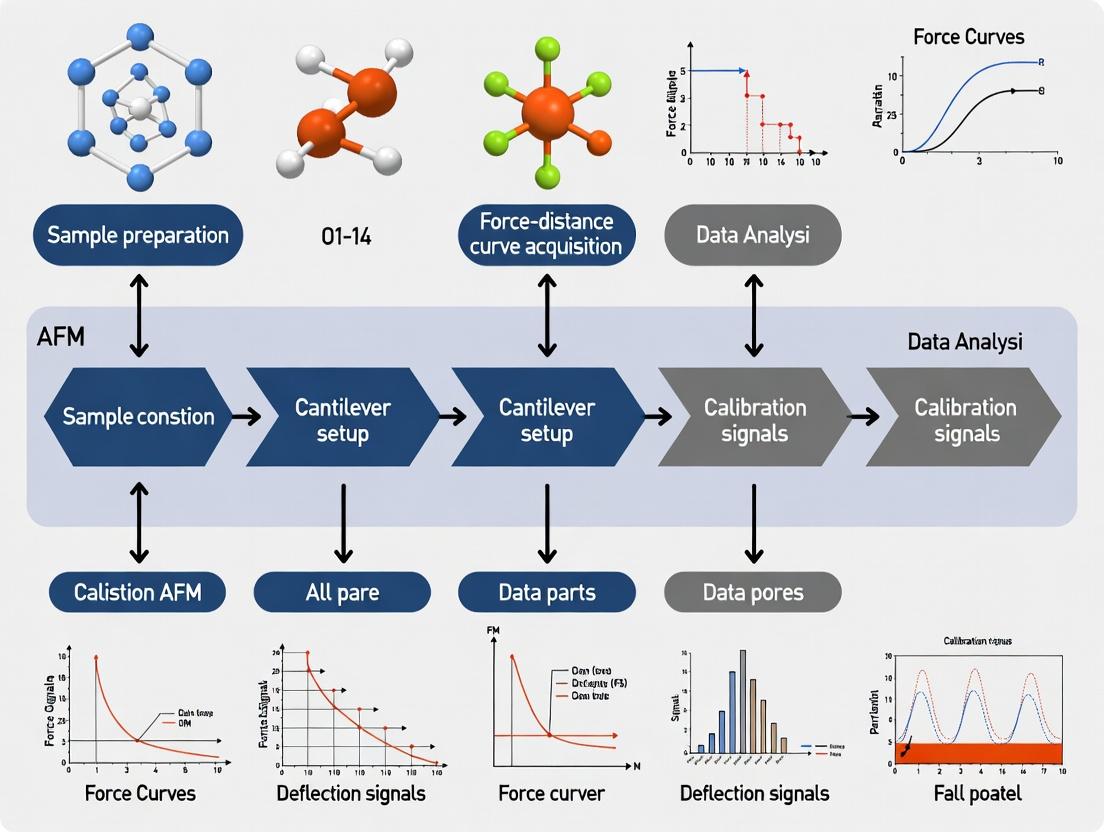
This definitive guide provides researchers, scientists, and drug development professionals with a comprehensive framework for AFM cantilever spring constant calibration.
AFM Cantilever Spring Constant Calibration: A Comprehensive Guide for Accurate Nanomechanics in Biomedical Research
Abstract
This definitive guide provides researchers, scientists, and drug development professionals with a comprehensive framework for AFM cantilever spring constant calibration. Covering foundational principles, step-by-step methodologies for popular techniques (Sader, Thermal, Contact Resonance), practical troubleshooting, and comparative validation strategies, this article equips users to achieve reliable nanomechanical measurements. Mastering these calibration protocols is critical for accurate quantification of cellular elasticity, protein-protein interactions, and material properties in biomedicine and pharmacology.
The Why and How: Foundational Principles of AFM Spring Constant Calibration
In Atomic Force Microscopy (AFM) applied to biomedical research, the spring constant (k) of the cantilever is the fundamental parameter converting raw deflection data into quantifiable force. An inaccurate k value directly corrupts all downstream force measurements, rendering data on cellular elasticity, ligand-receptor bonds, or protein unfolding biologically meaningless. Within the thesis context of advancing calibration metrology, this technical support center provides targeted guidance to ensure measurement integrity.
Troubleshooting & FAQs
Q1: My thermal tune power spectral density (PSD) shows multiple peaks or is very noisy. What is wrong? A: Multiple peaks often indicate fluid-coupled resonances or contamination. A noisy/broad PSD suggests insufficient data or system vibrations.
- Protocol: Ensure the cantilever is fully immersed but not touching the bottom. Acquire PSD in a clean, vibration-isolated environment. Increase acquisition time (e.g., 10 seconds per segment). Use a fitting algorithm (e.g., Lorentzian, Sader) that accounts for the fundamental mode only.
- Data: For a 0.1 N/m cantilever in liquid, expect a resonant frequency between 1-10 kHz and a quality factor (Q) of 1-5.
Q2: My Sader method calibration gives a different value than the thermal tune method. Which should I trust? A: Discrepancies highlight method-specific assumptions. Thermal tune is preferred for soft cantilevers (<1 N/m) in liquid. The Sader method (based on plan view dimensions and Q in fluid) is excellent for stiffer levers but relies on accurate geometric measurement.
- Protocol for Comparison:
- Perform thermal calibration in the experimental fluid.
- Measure cantilever length and width via high-magnification optical microscopy.
- Obtain resonant frequency and Q from the thermal PSD.
- Calculate k using the Sader formula (involves hydrodynamic function).
- Data Summary:
| Calibration Method | Ideal Cantilever Type | Key Requirement | Typical Uncertainty |
|---|---|---|---|
| Thermal Tune | Soft (<1 N/m), in liquid | Clean PSD, correct fit | 5-15% |
| Sader Method | Rectangular, in fluid | Accurate length/width, Q factor | 5-10% |
| Reference Lever | Any, for relative calibration | Known, traceable reference lever | 1-5% |
Q3: My measured cellular Young's modulus varies drastically from literature. Could spring constant be the issue? A: Absolutely. An overestimated k leads to an overestimated modulus, and vice versa. This is the primary non-biological variable.
- Protocol to Isolate the Issue:
- Re-calibrate your cantilever before and after the cell experiment.
- Use a standardized control sample (e.g., polyacrylamide gel with known modulus) with your system.
- Ensure your indentation model (Hertz, Sneddon) fits the sample geometry.
The Scientist's Toolkit: Research Reagent Solutions
| Item | Function in Calibration/Experiment |
|---|---|
| Standard PS Colloids | Spherical probes for reference sample indentation; known diameter critical for contact point. |
| Traceable Reference Cantilevers | Pre-calibrated levers (from NIST) to validate in-house thermal or Sader methods. |
| Polyacrylamide Gel Kits | Tunable, homogeneous substrates for validating force measurements post-calibration. |
| Cleanroom Wipes & Solvent (IPA) | For critical cleaning of cantilever chips to prevent contamination affecting resonance. |
| Calibration Gratings (TGZ series) | For lateral sensitivity and scanner piezocalibration, ensuring accurate indentation depth. |
Workflow: Validating Spring Constant Calibration
Technical Support Center
Troubleshooting Guide: Common Spring Constant Calibration Issues
Issue 1: Inconsistent Thermal Tune Results
- Problem: Wide variation in calculated k from repeated thermal noise spectra on the same cantilever.
- Diagnosis: Often caused by insufficient sampling time, low sampling frequency, or environmental noise (acoustic/mechanical vibrations).
- Solution: Increase acquisition time to at least 1 second per spectrum. Ensure the AFM is on an active or passive vibration isolation table. Perform calibration in a quiet environment. Verify the fit of the Lorentzian or Power Spectral Density (PSD) model to the data.
Issue 2: Significant Discrepancy Between Sader and Thermal Methods
- Problem: The spring constant value from the Sader method (geometric) differs from the thermal tune method by more than 20%.
- Diagnosis: Potential causes are an incorrect cantilever quality factor (Q) input in Sader, inaccurate dimensional measurements (length, width), or a damaged/carbon-contaminated cantilever.
- Solution: Re-measure cantilever dimensions precisely via SEM if possible. Re-calculate the hydrodynamic function for the exact liquid environment. Clean the cantilever using UV-ozone or plasma cleaning. Ensure the thermal method is performed with the correct calibration of the optical lever sensitivity (InvOLS) before the thermal tune.
Issue 3: Drifting InvOLS During Force Curve Acquisition
- Problem: The slope of the contact region in force curves changes during an experiment, invalidating the force calibration.
- Diagnosis: Laser drift or sample stage drift leading to a change in the spot position on the cantilever, altering the detector response.
- Solution: Allow the system to thermally equilibrate for 30-60 minutes after laser turn-on. Use cantilevers with reflective coatings to maximize signal stability. Re-check and re-acquire InvOLS periodically during long experiments.
Frequently Asked Questions (FAQs)
Q1: Why is accurately defining the spring constant (k) critical in drug development force spectroscopy? A1: Precise k is fundamental for quantifying biomolecular interaction forces (e.g., antibody-antigen, receptor-ligand). An error in k propagates directly into force measurements, leading to incorrect estimates of binding kinetics, adhesion energies, and mechanical properties of drug targets, which can misguide therapeutic design.
Q2: When should I use the thermal tune method vs. the Sader method? A2: Use the Thermal Tune Method for in-situ calibration in any fluid environment. It is the most direct method. Use the Sader Method (based on plan view dimensions and resonant frequency) for a quick, ex-situ calibration in air or liquid, but it relies on accurate geometric models and quality factor measurement.
Q3: How does cantilever shape affect the spring constant? A3: k is highly sensitive to geometry. For a rectangular cantilever, k ∝ width * (thickness³ / length³). A small error in measuring thickness (hard to do optically) leads to a large error in k. Triangular (V-shaped) cantilevers have a different mechanical model and are generally stiffer for similar dimensions.
Q4: What is the impact of the reflective coating on k? A4: The metal (e.g., Au/Al) coating adds mass, lowering the resonant frequency, and increases stiffness. For the most accurate results, the thermal method automatically accounts for this. For geometric methods, the effective thickness of the coating must be included in the model, which is challenging.
Table 1: Comparison of Common Spring Constant Calibration Methods
| Method | Principle | Typical Uncertainty | Key Advantage | Key Limitation |
|---|---|---|---|---|
| Thermal Tune | Equipartition theorem on Brownian motion | 5-15% | Works in any fluid, in-situ | Requires accurate InvOLS, sensitive to noise |
| Sader (Geometric) | Hydrodynamic function & plan view dimensions | 10-20% | No contact needed, fast | Requires Q factor, sensitive to dimension errors |
| Added Mass | Frequency shift from added mass | ~5% | Potentially very accurate | Destructive, complex procedure |
| Reference Cantilever | Direct force comparison against a pre-calibrated lever | <5% | Direct and traceable | Requires a reliable reference, contact-based |
Table 2: Effect of Measurement Errors on Calculated Spring Constant (Rectangular Lever)
| Parameter | Typical Error | Resulting Error in k | Mitigation Strategy |
|---|---|---|---|
| Length (L) | +5% | -15% (∝ 1/L³) | Use high-magnification optical or SEM imaging |
| Thickness (t) | +5% | +15% (∝ t³) | Use SEM cross-section or resonance-based estimation |
| Width (w) | +5% | +5% (∝ w) | Use high-magnification optical or SEM imaging |
| Resonant Freq (f) | +5% | +10% (∝ f² for Sader) | Ensure proper peak fitting in thermal spectrum |
Experimental Protocols
Protocol 1:In-situSpring Constant Calibration via Thermal Noise Method
This protocol is framed within AFM cantilever calibration research for force spectroscopy.
- System Setup: Mount the cantilever and allow the AFM head and stage to thermally equilibrate for 45 minutes.
- Approach: Engage the cantilever onto a clean, rigid surface (e.g., sapphire) in your experimental buffer.
- InvOLS Calibration: Obtain a force curve on the rigid surface. Fit the linear portion of the contact region to get the Inverse Optical Lever Sensitivity (in nm/V). Do not retract.
- Thermal Spectrum Acquisition: Retract the cantilever at least 5 µm from the surface. Acquire the thermal fluctuation signal of the free cantilever for a minimum of 1 second at a sampling rate ≥ 10x the resonant frequency.
- PSD Calculation & Fit: Compute the Power Spectral Density (PSD) of the thermal signal. Fit the fundamental peak to a simple harmonic oscillator (SHO) model or Lorentzian function to obtain the resonant frequency and quality factor.
- Calculate k: Apply the Equipartition Theorem method: k = kₒT / ⟨δz²⟩, where ⟨δz²⟩ is the mean-square displacement from the thermal signal, calibrated using the InvOLS from step 3. Most modern AFM software automates this calculation from the PSD fit.
Protocol 2: Ex-situ Calibration via Sader Method (Liquid)
- Dimensional Measurement: Using an optical microscope with calibrated graticule or SEM, measure the cantilever's plan view length (L) and width (w). Consult manufacturer datasheet for thickness (t) if unavailable.
- Resonant Frequency in Liquid: In the liquid of interest, obtain a thermal spectrum (as in Protocol 1, steps 4-5) to measure the resonant frequency (fₗ) and quality factor (Qₗ).
- Hydrodynamic Function: Calculate the Reynolds number and obtain the hydrodynamic function Γᵢ(Re) for the cantilever geometry.
- Calculate k: Use the Sader formula: k = 0.1906 ρᵢ w² L Qₗ fₗ² Γᵢ(Re), where ρᵢ is the fluid density. Use published code or online calculators for Γᵢ(Re).
Mandatory Visualizations
Title: Calibration Method Decision Tree
Title: Thermal Tune Experimental Steps
The Scientist's Toolkit: Research Reagent Solutions
Table 3: Essential Materials for Spring Constant Calibration Research
| Item | Function/Description | Critical Note |
|---|---|---|
| Standard Reference Cantilevers | Pre-calibrated cantilevers (traceable to NIST) for direct comparison methods. | Essential for validating in-house calibration protocols and establishing lab standards. |
| Rigid Calibration Samples | Sapphire, clean silicon, or mica disks. | Provides a non-deformable surface for accurate InvOLS calibration. |
| UV-Ozone Cleaner | Removes organic contaminants from cantilevers. | Ensures consistent surface properties and hydrodynamic behavior. |
| Buffer Solutions | Standardized PBS, Tris, or specific experimental buffers. | Required for in-situ calibration; density and viscosity are inputs for Sader method. |
| SEM Access | For high-precision measurement of cantilever dimensions (L, w, t). | Thickness measurement is the single most critical geometric factor. |
| PSD Analysis Software | Custom or commercial code for fitting thermal spectra (e.g., IGOR Pro, MATLAB scripts). | Proper fitting routine is crucial for accuracy of thermal and Sader methods. |
Technical Support Center
Troubleshooting Guides & FAQs
Q1: My AFM force spectroscopy data shows inconsistent rupture forces for the same receptor-ligand pair. Could this be due to cantilever calibration?
A: Yes, spring constant (k) calibration error is a primary suspect. An overestimated k leads to an underestimation of force (F = k × deflection). This propagates directly into your measured molecular rupture forces. For example, a 20% error in k creates a 20% systematic error in all force measurements, increasing data scatter and obscuring true biological variability.
Q2: During live-cell mechanical property mapping, the measured Young's modulus varies across the same region on repeated scans. Is my calibration procedure at fault?
A: Potentially. Inconsistent thermal tune calibrations performed at different times can cause this. Ensure the calibration is performed at the same temperature and fluid conditions as the experiment. Drift in the optical lever sensitivity (InvOLS) due to laser alignment or debris on the cantilever can also cause this type of error between scans.
Q3: I observe a systematic offset when comparing my single-molecule force spectroscopy results to literature values. How do I diagnose a calibration-based offset?
A: Follow this diagnostic protocol:
- Re-calibrate InvOLS: Use a clean, rigid sample (e.g., sapphire) in the same medium.
- Re-calibrate k: Perform the thermal tune method with at least 5 independent measurements. Calculate mean and standard deviation.
- Use a Reference Sample: Measure a well-characterized sample, like a known PEG polymer or a proven protein (e.g., titin). Compare your measured persistence length or unfolding forces to established values.
- Tabulate the results:
| Calibration Parameter | Your Value | Expected/Lit. Range | % Error |
|---|---|---|---|
| InvOLS (nm/V) | 45.2 | - | CV: <2% is ideal |
| Spring Constant, k (pN/nm) | 62.3 | 58.0 - 60.0 | +4.0% |
| PEG Persistence Lp (nm) | 0.38 | 0.37 ± 0.02 | +2.7% |
| Titin I27 Unfolding Force (pN) | 204 | 200 ± 20 | +2.0% |
A consistent positive error across parameters points to a systematic calibration offset.
Detailed Experimental Protocol: Combined Thermal & Reference Sample Calibration
Objective: To obtain a traceable and verified spring constant (k) for an AFM cantilever, minimizing propagation error into force-dependent biological measurements.
Materials:
- AFM with thermal tune calibration software
- Cantilever
- Rigid calibration sample (e.g., sapphire)
- Reference sample (e.g., pre-characterized PEG-grafted surface or purified titin polyprotein)
- Appropriate fluid cells and buffer
Methodology:
- Mount & Align: Mount cantilever. Align laser on the cantilever tip. Center the photodiode sum signal.
- InvOLS Calibration: Engage on the rigid sapphire sample. Obtain a force-distance curve on the hard surface. The slope of the contact region (V/nm) is the InvOLS. Record 10 slopes, average, and use this value.
- Thermal Tune Calibration: Retract from the surface by >10 µm. Record the thermal noise power spectral density (PSD). Fit the PSD to a simple harmonic oscillator model. The software will calculate k from the equipartition theorem. Repeat this process 5 times independently.
- Reference Sample Validation: Engage on your reference sample (e.g., PEG surface). Acquire >100 force-distance curves at 1 µm/s. Fit the polymer extension curves to the Worm-Like Chain (WLC) model to extract the persistence length (Lp). Alternatively, measure unfolding forces of a known protein.
- Data Analysis & Validation: Calculate the mean and coefficient of variation (CV) for your thermal k values. Compare your measured Lp or unfolding forces to the known literature values for your specific buffer conditions.
Expected Outcomes: A CV for k of <5% indicates good precision. Your reference sample measurements should fall within 10% of expected literature values. If they do not, re-inspect steps 2 and 3.
The Scientist's Toolkit: Research Reagent Solutions
| Item | Function in Calibration/Validation |
|---|---|
| Sapphire Disk | Provides an atomically flat, rigid surface for accurate optical lever sensitivity (InvOLS) calibration. |
| Pre-characterized PEG (Polyethylene Glycol) Linkers | Acts as a molecular force standard. Its well-known polymer physics (WLC model) allows validation of force calibration. |
| Recombinant Titin I27 Polyprotein | A canonical protein unfolding standard. Provides a known, quantized unfolding force signature (~200 pN at 1 µm/s) to verify force calibration accuracy. |
| Colloidal Probe Tips | Spherical, functionalized beads of known diameter attached to cantilevers. Simplify contact mechanics models for cell mechanics and improve reproducibility. |
| NIST-Traceable Calibration Grid | A grating with known pitch and height. Used to verify the scanner's positional accuracy in X, Y, and Z, separating scanner error from cantilever error. |
Visualizations
Title: Propagation of Calibration Error into Force Data
Title: AFM Cantilever Calibration & Validation Workflow
Introduction In the context of Atomic Force Microscopy (AFM) cantilever spring constant calibration research, a precise understanding of three key parameters—geometry, material properties, and resonance frequency—is fundamental. Accurate calibration underpins reliable nanomechanical measurements critical for researchers, scientists, and drug development professionals studying biomolecular interactions, cell mechanics, and material properties. This technical support center provides targeted guidance for common experimental challenges.
Troubleshooting Guides & FAQs
Q1: My thermal tune spectrum shows multiple peaks or is very noisy. How can I obtain a clean resonance peak for accurate spring constant calibration? A: This is often caused by environmental noise or fluid damping (if in liquid).
- Checklist & Solution:
- Isolate from Vibration: Ensure the AFM is on an active or passive isolation table. Check for nearby equipment (e.g., pumps, centrifuges) causing vibrations.
- Acoustic Noise: Use an acoustic enclosure. Verify that the room's HVAC system is not causing drafts.
- Liquid Cell Issues (for in-fluid measurements): Ensure the cantilever and tip are fully immersed to avoid meniscus effects. Use a sealed liquid cell if possible to minimize evaporation and drift. Increase the integration time or averaging on the frequency sweep.
- Cantilever Selection: Use cantilevers with a high Quality Factor (Q). In air, high-Q (~300-500) cantilevers give sharp peaks. In liquid, low-Q (~1-5) cantilevers are normal; use the appropriate fitting model (Simple Harmonic Oscillator vs. Damped Harmonic Oscillator).
Q2: After calibration, my measured spring constant deviates significantly from the manufacturer's stated value. What are the primary sources of this error? A: Manufacturer values are typically batch averages. Discrepancies arise from variations in geometry and material properties.
- Troubleshooting Protocol:
- Verify Geometry: Use high-resolution optical or electron microscopy to measure the actual length, width, and thickness of your specific cantilever. Thickness is the most critical and variable parameter. Re-calculate the nominal spring constant using the measured geometry.
- Confirm Calibration Method: Specify which method you used (Thermal, Sader, Cleveland, etc.). Each has assumptions.
- Thermal Method: Requires accurate measurement of the resonance frequency and Quality Factor (Q) from the thermal spectrum. Incorrect baseline subtraction is a common error.
- Sader Method (for rectangular cantilevers): Requires precise knowledge of the plan-view dimensions (length, width) and the resonance frequency in fluid (usually air). It is less sensitive to thickness errors.
- Check Material Properties: The Young's modulus (E) of the coating material (often reflective gold/aluminum) can stiffen the cantilever. For precise work, use the coated cantilever's effective modulus or calibrate directly without relying on nominal E.
Q3: How does the choice of cantilever material impact my experiment for biological samples or soft materials? A: The material determines stiffness, optical properties, and biocompatibility.
- Decision Guide:
- Silicon Nitride (Si₃N₄): Lower stiffness (0.01 - 0.6 N/m), often used for soft biological imaging in liquid. Hydrophilic and biocompatible.
- Silicon (Si): Wider stiffness range (0.1 - 200 N/m), suitable for both imaging and force spectroscopy. Can be coated for specific reflection or functionalization.
- Critical Consideration: A coated Si lever may have a different surface chemistry that affects nonspecific binding. For drug interaction studies, consider functionalization protocols compatible with the underlying material.
Table 1: Common AFM Cantilever Materials & Properties
| Material | Typical Young's Modulus (E) | Density (ρ) | Common Uses & Notes |
|---|---|---|---|
| Silicon (Si) | ~ 169 GPa | 2.33 g/cm³ | General purpose, high-res imaging, force spectroscopy. |
| Silicon Nitride (Si₃N₄) | ~ 290 GPa | 3.18 g/cm³ | Soft biological imaging, low spring constants. |
| Effective Modulus Note: Reflective metal coatings (Au/Al) increase effective E. Always check if nominal k is for coated or uncoated lever. |
Table 2: Spring Constant (k) Dependence on Geometry for a Rectangular Cantilever
| Parameter | Relationship with k | Sensitivity & Calibration Impact |
|---|---|---|
| Thickness (t) | k ∝ t³ | HIGHEST SENSITIVITY. A 10% error in t gives a ~30% error in k. Must be measured individually. |
| Width (w) | k ∝ w | Linear dependence. Easier to measure accurately with microscopy. |
| Length (L) | k ∝ 1/L³ | Inverse cubic dependence. Accurate measurement is crucial. |
| Resonance Frequency (f₀) | k ∝ f₀² (for thermal/Sader) | Direct, measurable parameter. Accurate peak fitting is essential. |
Experimental Protocol: Thermal Tune Calibration Method
This protocol is a cornerstone for in-situ spring constant calibration.
1. Objective: To determine the spring constant (k) of an AFM cantilever by analyzing its thermal vibrational spectrum. 2. Materials: * AFM with thermal tune capability. * Cantilever mounted in holder. * Vibration isolation table. * Acoustic enclosure (recommended). 3. Procedure: a. Mounting: Secure the cantilever chip in its holder without touching the lever. Install in the AFM head. b. Alignment: Align the laser spot on the cantilever's free end and maximize the sum signal. Align the position-sensitive detector (PSD) for zero deflection. c. Environment: Allow the system to thermally equilibrate for 15-30 minutes. d. Data Acquisition: Engage the "Thermal Tune" function. Acquire the power spectral density (PSD) of the cantilever's thermal fluctuations over a sufficient frequency range (typically 2-3 times the expected resonance). Use adequate sampling points (e.g., 8192) and averaging. e. Fitting: Fit the resonance peak in the PSD to a Simple Harmonic Oscillator (SHO) model (in air) or a Damped Harmonic Oscillator (DHO) model (in liquid) to extract the resonance frequency (f₀) and Quality Factor (Q). f. Calculation: The spring constant is calculated using the Equipartition Theorem: k = k_B T / <δ²>, where k_B is Boltzmann's constant, T is absolute temperature, and <δ²> is the mean-squared deflection obtained from the integrated area under the PSD curve after fitting. Most AFM software automates this calculation using the fitted f₀ and Q.
Visualization: Cantilever Calibration Workflow
Diagram Title: AFM Cantilever Spring Constant Calibration Workflow
The Scientist's Toolkit: Research Reagent Solutions
Table 3: Essential Materials for AFM Cantilever Calibration & Experimentation
| Item | Function & Relevance to Calibration Research |
|---|---|
| Reference Cantilevers (e.g., from NIST-traceable sources) | Provide a gold standard for validating in-house calibration protocols. Essential for method verification. |
| Colloidal Probe Tips (SiO₂ or PS beads) | Modified cantilevers with a spherical tip of known radius, enabling quantifiable adhesion/force measurements and calibration cross-check. |
| Cleaning Solutions (Piranha etch, UV-Ozone cleaner) | Ensure contaminant-free surfaces for accurate geometry measurement (via microscopy) and consistent functionalization. CAUTION: Piranha is extremely hazardous. |
| Liquid Cells (Sealed) | Enable stable thermal calibration in controlled fluid environments, mimicking physiological conditions for drug development research. |
| Standard Sample Gratings (e.g., TGZ01, HS-100MG) | Used for scanner calibration in Z and XY, ensuring dimensional accuracy in geometry measurements of cantilevers. |
| AFM Calibration Software (e.g., AtomicJ, Pycroscopy, custom scripts) | Open-source or commercial tools for advanced analysis of thermal spectra and implementation of various calibration models. |
Technical Support Center
Troubleshooting Guides & FAQs
Q1: Why is the measured spring constant inconsistent between calibration sessions, even when using the same cantilever type?
A: Inconsistency is most often caused by unaddressed environmental factors. The primary culprits are acoustic noise, thermal drift, and air drafts. Acoustic vibrations couple into the AFM head, causing noise in the deflection signal used for thermal tuning. Ensure the AFM is on an active or high-performance passive vibration isolation table, preferably within an acoustic enclosure. Perform calibrations in a draft-free environment and allow the instrument to thermally equilibrate for at least 1-2 hours after switching on the microscope or room lights.
Q2: How critical is laser alignment and photodetector sensitivity for accurate thermal calibration, and how can I optimize it?
A: It is critical. Poor alignment reduces the signal-to-noise ratio of the thermal spectrum. Before calibration:
- Alignment: Center the laser spot on the very end of the cantilever for maximum deflection sensitivity. Use the sum signal to maximize reflected intensity.
- Photodetector Sensitivity: Adjust the photodetector position (or the mirror directing the beam to it) to center the beam, zeroing the lateral and vertical deflection signals. Incorrect sensitivity (Volts/nanometer) will directly scale the calculated spring constant incorrectly.
- Verification: Gently engage the tip on a hard, clean surface and observe the deflection signal. A sharp, linear approach/retract curve indicates good alignment.
Q3: What are the key instrument setup parameters I must verify before running a thermal calibration protocol?
A: Use the following checklist before each calibration batch:
| Parameter | Optimal Setting | Purpose/Reason |
|---|---|---|
| Vibration Isolation | Active system ON OR on a granite table with damping feet. | Minimizes environmental noise in thermal spectrum. |
| Acoustic Enclosure | Deployed and sealed. | Attenuates airborne noise, particularly low-frequency room tones. |
| Thermal Equilibrium | AFM & stage powered on for >60 min. | Minimizes thermal drift during measurement. |
| Laser Alignment | Spot at cantilever tip, SUM signal maximized. | Maximizes deflection signal-to-noise ratio. |
| Photodetector Balance | Vertical & Lateral Deflection near zero when free. | Ensures proper conversion of Volts to meters. |
| Cantilever Cleanliness | Inspected under optical microscope; clean if needed. | Contaminants change mass and damping properties. |
| Sample Stage | Empty or with a clean, rigid substrate (e.g., silicon). | Prevents interaction with a sample that could affect oscillation. |
Experimental Protocol: Standard Thermal Tune Calibration
- Environmental Stabilization: Place the AFM under its acoustic hood on a stabilized isolation table. Power on all systems and wait 90 minutes.
- Cantilever Mounting: Mount the cantilever chip securely in its holder. Under an optical microscope, verify it is clean and undamaged.
- Laser & Detector Setup: Align the laser and photodetector as per Q2. Record the InvOLS (Inverse Optical Lever Sensitivity, in m/V) if performing a two-step calibration (required for colloidal probes or non-standard geometries).
- System Engagement: Engage the system in contact mode on a clean, rigid sample (e.g., silicon). Retract the probe to a free-air position, typically 5-10 μm above the surface.
- Data Acquisition: Initiate the thermal tune function. Acquire the power spectral density (PSD) of the cantilever's Brownian motion. Use a frequency range that captures the fundamental resonance peak and enough of the noise floor (typically 5x the resonance frequency).
- Fitting & Calculation: Fit the fundamental resonance peak to a simple harmonic oscillator (SHO) model or use the equipartition theorem method. The system software will calculate the spring constant k using the fitted parameters and the measured temperature.
- Validation: For critical work, calibrate the same cantilever type in triplicate across different days to establish a precision baseline.
Visualization: AFM Spring Constant Calibration Workflow
The Scientist's Toolkit: Key Research Reagent Solutions
| Item | Function in AFM Calibration Research |
|---|---|
| Standard Cantilevers (e.g., Bruker RTESPA) | Reference cantilevers with a manufacturer-provided spring constant range. Used for method validation and cross-comparison. |
| Cleaned Silicon Wafers | Provide an atomically flat, rigid, and inert surface for engaging the probe to set deflection sensitivity and for force reference measurements. |
| Piranha Solution (H₂SO₄:H₂O₂) | CAUTION: Extremely hazardous. Used to rigorously clean cantilever holders and silicon substrates to remove organic contaminants. |
| UV-Ozone Cleaner | A safer alternative for light cleaning of cantilevers and substrates to remove organic layers, improving laser reflection and surface interaction. |
| Calibration Gratings (e.g., TGZ1) | Grids with known pitch and height. Used to verify scanner piezoelectric calibration in X, Y, and Z, which is foundational for any quantitative measurement. |
| Colloidal Probe Kits | Spherical particles attached to cantilevers. Require precise alignment (InvOLS) calibration for accurate interfacial force measurement in biological studies. |
| Vibration Isolation System | Active or advanced passive isolation platform. Critical to dampen building and acoustic vibrations that corrupt the thermal signal. |
Step-by-Step Protocols: Implementing Sader, Thermal, and Contact Resonance Methods
Frequently Asked Questions (FAQs)
Q1: When should I use the Thermal Tune method versus the Sader method for spring constant calibration?
A: The Thermal Tune method is best for in-situ calibration in liquid or air for standard rectangular cantilevers. It is quick and integrated into most AFM software but can be less accurate for very stiff (>10 N/m) or non-rectilinear cantilevers. The Sader method (based on plan view dimensions and the resonant frequency in air) is highly accurate for rectangular cantilevers but requires precise knowledge of length and width and cannot be used in liquid.
Q2: My thermal oscillation spectrum shows multiple peaks or is very noisy. What should I do?
A: Multiple peaks often indicate a damaged cantilever, contamination on the lever, or laser reflection from the sample. Clean the cantilever and ensure the laser spot is correctly aligned on the tip-end of the lever. A noisy spectrum suggests insufficient data acquisition; increase the sampling time or points for the FFT.
Q3: Why do I get different spring constant values when calibrating the same cantilever in air and liquid?
A: This is expected. The Thermal method in liquid must account for the added hydrodynamic drag, which dampens the resonance and changes the fitted inertial term. Always use the liquid-calibrated value for liquid experiments. Most modern software includes a fluid density correction for this purpose.
Q4: How often should I re-calibrate my cantilevers?
A: Calibrate a new cantilever before its first use. Re-calibration is recommended if you change the experimental medium (e.g., air to liquid), if the cantilever experiences a hard crash, or if you are performing quantitative measurements over an extended period (e.g., daily for a critical week-long experiment).
Q5: Can I use the Thermal method for tipless or triangular (V-shaped) cantilevers?
A: The standard Thermal Tune model assumes a rectangular beam. For tipless rectangular cantilevers, it is generally applicable. For V-shaped cantilevers, the method can introduce significant error (>30%), and specialized models or alternative methods (e.g., the Cleveland method) are recommended.
Troubleshooting Guide
| Symptom | Possible Cause | Solution |
|---|---|---|
| Insufficient peak in thermal spectrum | Laser misaligned; Detector not optimized. | Re-align the laser and photodetector to maximize sum and minimize vertical/horizontal differences. |
| Spring constant value seems unrealistically high/low | Incorrect cantilever dimensions entered; Wrong resonant frequency fitted. | Verify cantilever dimensions from manufacturer sheet. Ensure the fitted peak is the fundamental flexural mode, not a torsional or higher harmonic. |
| Large variation between repeated calibrations | Unstable thermal drift; Environmental vibrations. | Allow system to thermally equilibrate (30+ min). Perform calibration on an active vibration isolation table. |
| Failed Sader method calculation | Incorrect input of cantilever width or fluid density. | Measure cantilever width via SEM if possible. Confirm fluid density (especially for buffers) is accurate for your temperature. |
| Cantilever frequency shifts continuously | Temperature change or drift; Evaporation of liquid. | Use a temperature-controlled stage. Ensure liquid cell is sealed to minimize evaporation during calibration. |
Quantitative Data Comparison of Common Calibration Methods
Table 1: Comparison of Primary Calibration Techniques
| Method | Typical Accuracy | Applicable Environment | Cantilever Types | Key Requirement |
|---|---|---|---|---|
| Thermal Tune | ±10-15% | Air & Liquid | Rectangular (best), V-shaped (caution) | Clean thermal peak, correct detector sensitivity. |
| Sader (Plan View) | ±2-5% | Air only | Rectangular | Precise length/width, Q factor in air. |
| Added Mass (Cleveland) | ~5% | Air only | Any geometry | Precise microsphere attachment and mass knowledge. |
| Reference Cantilever | <5% (rel.) | Air & Liquid | Any (similar stiffness) | Calibrated reference lever of known stiffness. |
| FEM Simulation | Varies (5-10%) | N/A (theoretical) | Any | Accurate dimensions and material properties. |
Experimental Protocols
Protocol 1: Standard Thermal Tune Calibration in Liquid
- Mounting & Alignment: Mount the cantilever and submerge it in your experimental fluid. Align the laser on the very end of the cantilever and optimize the photodetector signal.
- Thermal Spectrum Acquisition: Navigate to the calibration software (e.g., Thermal Tune). Select the appropriate fluid density (e.g., 1000 kg/m³ for water). Capture the thermal oscillation power spectral density (PSD) with sufficient sampling (≥10 seconds).
- Peak Fitting: Fit the fundamental resonance peak using the simple harmonic oscillator (SHO) model provided by the software. The software integrates the fitted inertial term to calculate the spring constant k.
- InvOLS Calibration: Following spring constant calibration, perform an InvOLS (Inverse Optical Lever Sensitivity) calibration on a clean, hard surface (e.g., sapphire) in the same fluid using the standard force-distance curve method.
Protocol 2: Sader Method Calibration
- Dimensional Measurement: Using a high-magnification optical microscope or SEM, measure the precise plan-view length (L) and width (W) of the cantilever.
- Frequency & Q Factor Acquisition: In air, acquire the thermal spectrum. Fit the fundamental resonance peak to obtain the resonant frequency (f) and quality factor (Q).
- Calculation: Use the Sader formula: k = 0.1906 ρ_fluid W² L Q f Γᵢ(f), where ρ_fluid is air density, and Γᵢ is the imaginary component of the hydrodynamic function (often tabulated). Use the published Sader calculator or script.
Visualizations
Diagram 1: Calibration Method Decision Flow (76 chars)
Diagram 2: Thermal Calibration Data Workflow (71 chars)
The Scientist's Toolkit: Key Research Reagent Solutions
| Item / Reagent | Function in Calibration Experiment |
|---|---|
| Standard Rectangular Cantilevers | Reference levers with well-characterized dimensions and material properties for method validation. |
| Calibrated Reference Cantilevers | Pre-calibrated levers (e.g., from NIST-traceable source) for direct relative calibration of unknown levers. |
| Sapphire or Cleaved Mica Disk | An atomically smooth, rigid substrate essential for accurate InvOLS calibration without sample deformation. |
| Silica Microspheres (⌀ 2-10 µm) | Used in the Added Mass method; attached to tipless levers to provide a known inertial mass. |
| UV-Curable or Thermal Epoxy | For securely attaching microspheres to cantilevers in Added Mass or colloidal probe preparation. |
| Precision Cleaning Solution (e.g., Hellmanex III, IPA) | To remove organic contaminants from cantilevers that can affect resonance properties and adhesion. |
| Buffer Salts & Reagents (PBS, etc.) | To match the exact experimental fluidic environment during in-situ liquid calibration. |
| Temperature Measurement/Control Unit | Critical as spring constant and fluid density are temperature-dependent. |
Technical Support Center
Frequently Asked Questions (FAQs) & Troubleshooting
Q1: What are the primary sources of error when applying the Sader method, and how can I minimize them? A: The primary error sources are inaccuracies in measuring the plan view dimensions (length and width) of the cantilever and uncertainties in the fluid properties (density and viscosity). To minimize errors:
- Use high-magnification optical microscopy (≥ 50X) or SEM to measure length and width. Perform multiple measurements and average them.
- Precisely control and record the fluid temperature, as viscosity is highly temperature-dependent. Use a calibrated thermocouple.
- For air/vacuum measurements, account for humidity, which can affect the gas density and damping. Use a dry gas purge if necessary.
Q2: My measured resonant frequency in fluid differs significantly from the value predicted by the Sader model. What should I check? A: Follow this diagnostic checklist:
- Cantilever Geometry: Re-verify length and width measurements. Ensure you are using the correct cantilever shape model (rectangular) in the calculation.
- Fluid Properties: Double-check the density and dynamic viscosity values for your medium (e.g., water, buffer) at the exact experimental temperature. Refer to NIST-standard tables.
- Hydrodynamic Function: Confirm you are using the correct hydrodynamic function, Γ(Re), for your cantilever's Reynolds number (Re). The function for a rectangular beam is standard, but ensure your calculation code implements it correctly.
- Optical Lever Sensitivity: An incorrectly calibrated optical lever sensitivity (OLS) will corrupt the thermal spectrum used to find the resonant frequency and quality factor. Re-calibrate OLS on a rigid sample.
Q3: How does the Sader method compare to the thermal noise method for spring constant calibration in the context of drug interaction studies? A: The Sader method is an in-situ method, while the thermal noise method typically requires a known spring constant reference. For drug development, where experiments often occur in liquid buffers, the Sader method is advantageous because it calibrates the cantilever directly in the operational fluid, accounting for hydrodynamic loading. The thermal method can be affected by fluid-cell interactions.
Q4: Can the Sader method be used for tipless or functionalized cantilevers? A: The standard Sader model assumes a simple rectangular beam. For tipless cantilevers of rectangular shape, it is directly applicable. For cantilevers with significant added mass (e.g., a large colloidal probe or heavy functionalization layer), the method's accuracy decreases because the model does not account for this extra mass. In such cases, it provides the spring constant of the bare lever, which can be a starting point for more complex models.
Table 1: Typical Fluid Properties for Sader Method Calibration (at 20°C & 25°C)
| Fluid | Temperature (°C) | Density, ρ (kg/m³) | Dynamic Viscosity, η (Pa·s) | Kinematic Viscosity, ν = η/ρ (m²/s) |
|---|---|---|---|---|
| Air (dry) | 20 | 1.204 | 1.82 × 10⁻⁵ | 1.51 × 10⁻⁵ |
| Air (dry) | 25 | 1.184 | 1.85 × 10⁻⁵ | 1.56 × 10⁻⁵ |
| Ultrapure Water | 20 | 998.21 | 1.002 × 10⁻³ | 1.004 × 10⁻⁶ |
| Ultrapure Water | 25 | 997.05 | 0.890 × 10⁻³ | 0.893 × 10⁻⁶ |
| Phosphate Buffered Saline (PBS) | 25 | ~1005 | ~0.90 × 10⁻³ | ~0.90 × 10⁻⁶ |
Table 2: Comparison of Common AFM Cantilever Calibration Methods
| Method | Key Principle | In-Situ? | Requires Known Reference? | Typical Uncertainty | Best For |
|---|---|---|---|---|---|
| Sader Method | Plan view dimensions + fluid dynamics (ω, Q in fluid) | Yes | No | 5-15% | Liquid environments, soft lever calibration |
| Thermal Tune | Equipartition theorem (analysis of thermal spectrum) | Yes | No (absolute) | 10-20% | Quick in-air or in-vacuum checks |
| Reference Lever | Direct force comparison against pre-calibrated lever | Yes | Yes | 5-10% | Cross-lab validation, odd-shaped levers |
| Geometric (Theoretical) | Cantilever material (E) and 3D dimensions | No | No | >20% | Order-of-magnitude estimate only |
Experimental Protocol: Sader Method Calibration
Objective: To determine the spring constant (k) of a rectangular AFM cantilever by measuring its resonant frequency and quality factor in a fluid medium.
Materials & Reagents: See "The Scientist's Toolkit" below.
Procedure:
- Cantilever Mounting: Mount the cantilever chip securely in the AFM fluid cell holder.
- Fluid Introduction: Gently introduce the calibration fluid (e.g., air, water, PBS) into the cell, avoiding the introduction of bubbles.
- Laser Alignment: Align the optical lever system to achieve a strong, stable sum signal with a low vertical deflection (VD) offset.
- Thermal Spectrum Acquisition:
- Retract the tip fully from the surface (≥ 10 μm gap).
- Acquire the power spectral density (PSD) of the cantilever's thermal fluctuations in the fluid. Use a sufficiently long sampling time and bandwidth to capture the first resonant peak clearly.
- Frequency Domain Analysis:
- Fit the resonant peak in the PSD to a simple harmonic oscillator (SHO) model to extract the resonant frequency in fluid (ωf) and the quality factor in fluid (Qf).
- Plan View Dimension Measurement:
- Image the cantilever using an optical microscope with a calibrated graticule or via SEM.
- Measure the length (L) from the base to the apex and the width (W) at several points along the lever. Record the average width.
- Spring Constant Calculation:
- Calculate the Reynolds number: Re = ρ ωf W² / (4η), where ρ and η are the fluid density and viscosity.
- Determine the hydrodynamic function Γ(Re) for a rectangular beam (use published tables or the analytical approximation).
- Calculate the spring constant:
k = 0.1906 * ρ W² L Q<sub>f</sub> ω<sub>f</sub>² * Γ<sub>i</sub>(Re)where Γi(Re) is the imaginary component of Γ(Re).
Visualizations
Sader Method Calibration Step by Step Workflow
Sader Method Place in AFM Calibration Research
The Scientist's Toolkit: Research Reagent Solutions
| Item | Function in Sader Method Experiment |
|---|---|
| Rectangular Silicon Nitride (SiN) Cantilevers | The standard probe. Their well-defined rectangular geometry is a prerequisite for the Sader model. |
| Calibration Fluid (e.g., Ultrapure Water, PBS) | The medium in which the hydrodynamic loading occurs. Must have precisely known temperature-dependent density and viscosity. |
| Temperature-Controlled AFM Fluid Cell | Maintains the calibration fluid at a constant, known temperature to stabilize fluid properties and cantilever response. |
| High-Magnification Calibrated Microscope | For accurate optical measurement of the cantilever's plan view length and width (critical inputs). |
| Dynamic Viscosity Reference Data (NIST) | Authoritative tables or equations for fluid viscosity (η) and density (ρ) as a function of temperature. |
| PSD Analysis Software with SHO Fitting | To accurately extract the resonant frequency and quality factor from the thermally driven motion of the cantilever in fluid. |
Technical Support Center
Troubleshooting Guides & FAQs
Q1: The measured Power Spectral Density (PSD) shows a large, low-frequency (1/f) noise peak that obscures the cantilever resonance peak. How can I mitigate this? A: This is typically electrical or environmental noise. Follow this protocol:
- Faraday Cage: Enclose the AFM in a grounded metallic cage.
- Vibration Isolation: Ensure the system is on an active or passive isolation table.
- Laser Source Noise: Check laser alignment and stability; use a low-noise laser driver.
- In-Air Measurement: Ensure the head is acoustically shielded. Perform the measurement in a quiet environment.
- Data Processing: Apply a high-pass filter (e.g., >100 Hz) to the raw deflection signal before PSD calculation to remove the low-frequency drift component.
Q2: After fitting the Lorentzian to the PSD, the obtained spring constant (k) value is inconsistent or varies significantly between calibrations on the same cantilever. What are the primary sources of this error? A: Inconsistency primarily stems from incorrect fitting parameters or system damping. Use this checklist:
| Error Source | Symptom | Verification & Solution |
|---|---|---|
| Incorrect Q Factor | Poor fit at resonance flanks, wrong peak width. | Fit the PSD in a vacuum or fluid with known viscosity (e.g., water) to get true Q. For in-air, use the fitted Q from the Lorentzian. |
| Incorrect Detector Sensitivity | Scaling error in PSD amplitude. | Re-calibrate the InvOLS (Involutive Optical Lever Sensitivity) using a force curve on a stiff sample before the thermal tune. |
| Fit Frequency Range | Fit includes non-Brownian noise. | Fit only the region around the resonance peak (typically from 0.5f0 to 2f0). Exclude the low-frequency tail and high-frequency noise floor. |
| Temperature Drift | k drifts over time. |
Allow the system to thermally equilibrate for 30+ minutes. Record the ambient temperature (T). |
Q3: How do I correctly determine the fitting bounds and initial parameters for the Lorentzian fit to the PSD data? A: Follow this detailed protocol:
- Acquire Data: Record the thermal deflection signal (V) at a sampling rate ≥ 10x the cantilever's resonance frequency (f0) for at least 1 second.
- Calculate PSD: Use a windowed periodogram (e.g., Hann window). Average multiple spectra to reduce noise.
- Initial Guesses:
- f0: Find the frequency at the PSD maximum.
- Q: Estimate as f0 / Δf, where Δf is the full width at half maximum (FWHM).
- A (Amplitude): The maximum PSD value.
- Fit Function: Use the following equation for a simple harmonic oscillator in a thermal bath:
PSD(f) = (A / Q^2) / [ (f0^2 - f^2)^2 + (f0*f / Q)^2 ] + BwhereBis the white noise floor. - Perform Fit: Use a non-linear least squares algorithm (e.g., Levenberg-Marquardt), bounding Q > 1 and f0 near your initial guess.
Q4: For measurements in liquid, the resonance peak is broad and low amplitude. How do I adjust the method? A: In liquid, damping is high (Q ~1-10). Key adjustments:
- Longer Sampling Time: Acquire data for 5-10 seconds to improve PSD statistics.
- Correct Viscosity/Density: Ensure the fluid properties (η, ρ) in the model are accurate for your buffer at the experimental temperature.
- Use the Correct Model: Fit with a modified Lorentzian that accounts for the fluid inertial effects if necessary, or ensure the simple harmonic oscillator model is sufficient for your frequency range.
- Fit in Log-Space: Fitting the log(PSD) vs. log(f) can sometimes improve stability for very low-Q peaks.
Q5: What are the absolute limits of accuracy for the Thermal Tune method, and what fundamental parameters dominate the uncertainty? A: The accuracy is typically within ±10-20% under optimal conditions. The dominant uncertainty sources are summarized below:
| Parameter | Typical Uncertainty Contribution | Notes |
|---|---|---|
| Absolute Temperature (T) | ~1% per 1°C error | Measure room temperature with a calibrated thermometer. |
| Detector Sensitivity (InvOLS) | 5-15% | The largest source of error. Depends on the accuracy of the static force curve used for InvOLS calibration. |
| Quality Factor (Q) | 2-10% | Higher Q (in air/vacuum) leads to more accurate fitting. |
| Fitting Algorithm & Range | 2-8% | Sensitivity to noise and fit boundaries. |
The Scientist's Toolkit: Research Reagent Solutions
| Item | Function in Thermal Tune Calibration |
|---|---|
| Standard Cantilever for Validation | A cantilever with a manufacturer-specified spring constant (with large tolerance) used for initial method verification. |
| Stiff, Inert Sample | A clean sapphire or mica surface for performing the essential InvOLS calibration via a static force curve prior to the thermal tune. |
| Calibrated Thermometer | To measure the absolute ambient temperature (T in Kelvin) required for the Equipartition Theorem (k_B * T). |
| Low-Noise Data Acquisition System | A system with a high bit-depth (≥16-bit) ADC to capture the full dynamic range of the Brownian motion signal without added electronic noise. |
| Analysis Software (e.g., custom Python/Matlab scripts, SPIP, Gwyddion) | To calculate the PSD from the time-series data and perform the non-linear Lorentzian fitting. |
| Viscosity Standard (e.g., Reference Silicone Oil) | For validating in-fluid thermal calibration by providing a medium with known, stable viscosity (η) and density (ρ). |
Experimental Protocol: Thermal Tune Spring Constant Calibration
Objective: To calibrate the AFM cantilever's spring constant (k) by analyzing the Brownian motion of the cantilever in thermal equilibrium with its environment.
Materials: AFM with cantilever, low-noise laser/detector, vibration isolation table, data acquisition system, analysis software, inert calibration sample.
Methodology:
- System Setup: Mount the cantilever. Allow the AFM head and stage to thermally equilibrate for 30 minutes.
- Laser Alignment: Align the laser spot on the cantilever tip and maximize the sum and difference signals on the photodetector.
- InvOLS Calibration: Engage on the inert, stiff sample. Obtain a static force curve (deflection vs. z-piezo displacement). Determine the InvOLS (nm/V or m/V) from the slope of the contact region.
- Thermal Spectrum Acquisition: Retract the cantilever at least 5 µm from the surface. Record the free-air (or fluid) cantilever deflection signal (in Volts) at a high sampling rate (e.g., 500 kHz) for a duration of 2-5 seconds.
- PSD Calculation: Compute the one-sided Power Spectral Density of the voltage signal. Use averaging and windowing to produce a smooth spectrum.
- Lorentzian Fitting: Fit the resonance peak in the PSD with the simple harmonic oscillator model (see FAQ Q3). Extract the fit parameters: resonance frequency
f0, quality factorQ, and amplitudeA. - Spring Constant Calculation: Calculate
kusing the Equipartition Theorem method derived from the PSD fit:k = (k_B * T) / (InvOLS^2 * Area)whereAreais the integral under the fitted Lorentzian peak (in V²/Hz). This integral is theoretically equal to(π * A * f0) / (2 * Q).
Data Analysis: Compare the obtained k value with the manufacturer's nominal range. Perform the calibration 3-5 times to estimate the measurement precision. Validate using a cantilever of similar stiffness calibrated via an alternative method (e.g., Sader's method).
Visualization: Thermal Tune Calibration Workflow
Title: AFM Thermal Tune k-Calibration Workflow & Parameters
Technical Support Center: Troubleshooting Guides & FAQs
Frequently Asked Questions (FAQs)
Q1: Why does my Contact Resonance (CR) frequency measurement show high variability between repeated measurements on the same cantilever? A: High variability is often due to inconsistent tip-sample contact mechanics. Ensure the sample surface is clean and free of adsorbates. Verify that the setpoint and feedback gains are stable before measurement. Use a sample with a known, high Young's modulus (like sapphire) for initial calibration to minimize plastic deformation. Check for a worn or contaminated tip.
Q2: When using the Reference Lever (RL) method, my calculated spring constant deviates significantly from the manufacturer's stated value. What could be wrong? A: First, confirm the reference cantilever's own calibration is traceable and current. Common issues include: (1) misalignment during the lever-on-lever contact, causing off-axis bending; (2) applying excessive force, leading to slip or damage; (3) thermal drift between the two levers during the force curve acquisition. Realign carefully and allow the system to thermally equilibrate.
Q3: In CR calibration, how do I choose between the first and second resonant mode? A: The first mode is typically more robust and has a higher signal-to-noise ratio. However, the second mode can be more sensitive to the tip-sample contact stiffness and may provide complementary data. It is recommended to perform calibration using the first mode initially. Use the second mode as a supplementary check; consistency between modes increases confidence in the result.
Q4: My thermal tune spectrum for the reference lever appears noisy or has multiple peaks. Can I still use it? A: A clean, single, Lorentzian-like peak is ideal. Multiple peaks can indicate mechanical interference (e.g., from a loose particle) or laser reflection artifacts. Move the laser spot to a cleaner position along the lever. If noise persists, the lever may be damaged or contaminated and should be replaced. Do not proceed with a poor-quality thermal spectrum.
Troubleshooting Guides
Issue: Unstable or Drifting CR Frequency During Measurement. Symptoms: The measured resonance frequency continuously increases or decreases over time. Diagnosis & Resolution:
- Thermal Drift: The system (AFM head, stage) is not thermally stabilized. Allow >1 hour for equilibration after handling or changing samples.
- Piezo Creep: The Z-piezo exhibits hysteresis. Use a closed-loop Z-scanner if available, or implement a settling delay after engaging.
- Sample Creep/Deformation: The sample is viscoelastic (e.g., polymers, biological samples). Reduce the applied force setpoint significantly or use a harder sample for calibration purposes only.
- Laser/Photodetector Drift: The alignment of the optical lever system is unstable. Re-align the laser before critical measurements.
Issue: Poor Agreement Between CR and RL Methods on the Same Cantilever. Symptoms: Spring constant values from the two methods differ by more than 15%. Diagnosis & Resolution:
- Check Assumptions: The CR method assumes a perfectly rigid sample. Verify your calibration sample's modulus is >50 GPa. The RL method assumes a point contact; ensure the reference lever tip is clean and sharp.
- Systematic Error in RL: Re-measure the deflection sensitivity of the test cantilever after the RL experiment on a rigid surface. It may have changed due to tip wear.
- Tip Geometry Effect: The CR frequency is influenced by the tip's lateral dimensions, which are often unknown. Consider this an inherent limit. The RL method is less sensitive to tip geometry. The discrepancy itself is a valuable data point regarding method limitations.
- Perform Control Experiment: Use a cantilever from a batch with traceable calibration (e.g., NIST-traceable). Test both methods on this control lever to identify a systematic bias in your setup.
Data Presentation: Method Comparison
Table 1: Comparison of Key Calibration Method Characteristics
| Parameter | Thermal Tune (Common Baseline) | Contact Resonance (CR) | Reference Lever (RL) |
|---|---|---|---|
| Primary Physical Basis | Equipartition Theorem | Driven Damped Harmonic Oscillator | Static Force Equilibrium (Hooke's Law) |
| Force Applied | None (thermal energy) | Small AC + DC static load | Quasi-static (typically 10-100 nN) |
| Sample Required? | No | Yes (rigid, known modulus) | Yes (another calibrated lever) |
| Key Measured Quantity | Power Spectral Density | Shift in Resonant Frequency | Deflection of both levers |
| Typical Reported Uncertainty | 10-15% | 5-20% (depends on tip geometry) | 5-10% (depends on reference lever) |
| Major Advantage | Fast, in-situ, no contact | Measures in-situ stiffness | Direct force comparison, traceable |
| Major Limitation | Sensitive to fluid damping, fit range | Requires model for tip-sample contact | Complex setup, risk of damage |
Experimental Protocols
Protocol 1: In-situ Spring Constant Calibration via Contact Resonance Objective: Determine the normal spring constant (k) of an AFM cantilever by measuring its resonance frequency while in contact with a known material. Materials: See "The Scientist's Toolkit" below. Procedure:
- Thermal Calibration in Air: First, record the thermal tune spectrum of the cantilever in free space (not in contact). Fit the fundamental resonance peak to obtain the resonant frequency (f₀) and quality factor (Q).
- Engage on Calibration Sample: Engage the tip on the surface of a sapphire (Al₂O₃) calibration sample. Use a low setpoint to avoid damage.
- Drive the Cantilever: Use the AFM's internal piezoacoustic drive (or an external shaker) to oscillate the cantilever base. Perform a frequency sweep (e.g., ±50 kHz around f₀).
- Measure Contact Resonance: Record the amplitude and phase response. Identify the new, higher contact resonance frequency (f_c).
- Calculate Contact Stiffness: Use the equation derived from a damped harmonic oscillator model: k_contact = k * [(f_c / f₀)² - 1], where k is the unknown spring constant. The k_contact is related to the sample's reduced modulus and tip radius via contact mechanics models (e.g., Sneddon, Hertzian).
- Iterative Solution: Assume an initial guess for k (e.g., from thermal tune or dimensions), calculate the tip radius from the k_contact equation, then refine k. Advanced analysis uses finite element models.
Protocol 2: Reference Lever (Static Force) Calibration Objective: Determine the spring constant of an unknown "test" cantilever by pressing it against a pre-calibrated "reference" cantilever. Materials: See "The Scientist's Toolkit" below. Procedure:
- Prepare Reference Lever: Install a cantilever with a known, traceable spring constant (k_ref). Precisely measure its deflection sensitivity (S_ref, nm/V) on a rigid surface.
- Align Levers: Position the test cantilever directly above, and perpendicular to, the reference cantilever. Use the optical microscope and stage controls to align the tips.
- Approach and Contact: Approach the test lever towards the reference lever until a repulsive force curve is observed on the reference lever's photodetector.
- Acquire Force Curves: Record a standard force-distance curve. As the test lever pushes, both levers bend. Measure the deflection of the reference lever (D_ref in nm, calculated from V_ref * S_ref) and the test lever (D_test in nm).
- Apply Force Balance: At any point in the repulsive region, the force is equal: F = k_ref * D_ref = k_test * D_test.
- Calculate ktest: Therefore, *ktest = kref * (Dref / D_test)*. Perform multiple measurements at different points/forces to obtain an average and standard deviation.
Diagrams
Diagram 1: Spring Constant Calibration Method Decision Flow
Diagram 2: Reference Lever Method Force Balance Principle
The Scientist's Toolkit
Table 2: Essential Research Reagents & Materials for AFM Cantilever Calibration
| Item Name | Function & Role in Experiment | Example/Notes |
|---|---|---|
| Sapphire (Al₂O₃) Disc | Ultra-rigid calibration sample for Contact Resonance method. Provides a known, high elastic modulus (~400 GPa) surface. | Single-crystal, polished surface. Root mean square roughness < 1 nm. |
| Traceable Reference Cantilevers | Pre-calibrated cantilevers for the Reference Lever method. Provide the direct force standard (k_ref). | Supplied with NIST-traceable calibration certificate. Often tipless. |
| Cleaning Solvents | For removing organic contaminants from cantilever chips and calibration samples. Ensures consistent contact mechanics. | Piranha solution (H2SO4/H2O2), UV-Ozone cleaner, acetone, isopropanol. |
| Soft Polymer Film (PDMS) | Used as a supplementary sample to verify calibration on compliant materials. Tests the robustness of the derived spring constant. | Polydimethylsiloxane, spin-coated to a smooth, uniform layer. |
| Colloidal Probe Tips | Cantilevers with a well-defined spherical particle attached. Simplify contact mechanics models for CR, reducing geometry uncertainty. | Silica or polystyrene spheres (2-20 µm diameter) glued to tipless levers. |
Technical Support Center: Troubleshooting Guides & FAQs
Context: This support center provides guidance for issues encountered during Atomic Force Microscopy (AFM) cantilever spring constant calibration experiments, a core component of advanced biomechanical research in drug development.
Frequently Asked Questions (FAQs)
Q1: When using the ARMED (Automated Robotic Microscope for Experimental Drives) plugin for thermal tune calibration, my calculated spring constant is consistently 20-30% higher than expected. What could be the cause?
A: This systematic error often stems from incorrect detector sensitivity (InvOLS) determination prior to the thermal tune. Ensure the contact point on a rigid surface (e.g., cleaned glass or sapphire) is correctly identified. A common mistake is insufficient surface cleaning, leading to a false "soft" contact and an underestimated InvOLS, which inflates the subsequent spring constant. Follow the recalibration protocol below.
Q2: My PyCante script for batch-processing Sader method calibrations fails with "Shape mismatch" when analyzing thermal power spectral density (PSD) data from my vendor's software. How do I resolve this?
A: This is a data formatting issue. Vendor software often exports PSD data with headers or in non-linear frequency bins. PyCante expects a clean two-column array (Frequency, PSD Magnitude²/Hz). Use the provided clean_vendor_psd() function in the pre-processing module to interpolate the data to a linear frequency axis before fitting the Lorentzian.
Q3: During automated calibration across a 96-well plate using a liquid-handling robot integrated with AFM, I observe significant drift in the baseline deflection over time. What troubleshooting steps should I take?
A: This points to thermal or chemical drift. First, ensure the system and buffer have reached full thermal equilibrium (minimum 1 hour). Second, check for evaporation from the wells, which changes ionic concentration and can affect laser alignment. Use a sealed humidity chamber if available. Third, verify that the robot's z-stage homing is consistent and not introducing mechanical shift.
Q4: How do I reconcile spring constant values obtained from the thermal tune method (in liquid) and the Sader method (from geometrical dimensions) for the same cantilever? Discrepancies are affecting my drug-binding kinetics model.
A: It is normal for these methods to yield variations. The thermal method in liquid is sensitive to fluid damping and proximity to surfaces. The Sader method relies on precise dimensional data from the manufacturer, which can have tolerances. Cross-validate using a reference cantilever of known standard. Consistency in one validated method is more critical than absolute agreement between methods for comparative binding studies.
Detailed Troubleshooting Protocols
Protocol 1: Recalibration of Optical Lever Sensitivity (InvOLS)
- Objective: Obtain accurate InvOLS to correct systematic error in thermal tune.
- Materials: Clean, rigid substrate (e.g., UV-Ozone cleaned silicon wafer), AFM with liquid cell (if applicable), vendor software & ARMED plugin.
- Steps:
- Engage the cantilever in air or liquid against the rigid substrate.
- Acquire a force-distance curve with a ramp size sufficient to achieve a firm, linear region of contact (slope).
- In ARMED, use the
Find_Contact_Pointmodule with a threshold set to 5% of the max deflection. - Fit the linear portion of the contact region. The slope (in V/m) is the raw InvOLS.
- Repeat at 5 different locations on the substrate. Calculate the mean and standard deviation.
- Input the mean InvOLS value into the thermal tune module before spring constant calculation.
Protocol 2: Batch Processing Vendor PSD Data with PyCante
- Objective: Automate spring constant calculation from a directory of vendor PSD files.
- Materials: Python environment with PyCante, NumPy, SciPy, and pandas installed.
- Steps:
- Place all vendor export files (.txt, .csv) in a single directory.
- Run the script below. It will clean, fit, and output a table of results.
Table 1: Comparison of Spring Constant Calibration Methods & Tools
| Method | Principle | Typical Tools Used | Accuracy Range (Reported) | Best For |
|---|---|---|---|---|
| Thermal Tune | Equipartition theorem analysis of brownian motion | Vendor Software (Bruker, Asylum), ARMED, PyCante | ±10-15% (in liquid) | In-situ calibration in biological buffers |
| Sader Method | Hydrodynamic function of cantilever geometry | PyCante, Custom MATLAB scripts | ±5-10% (depends on Q) | Rectangular cantilevers with known dimensions |
| Reference Cantilever | Direct force comparison against pre-calibrated standard | Vendor Software, ARMED (for automation) | ±2-5% | Highest accuracy validation |
Table 2: Common Error Sources and Corrective Actions
| Error Symptom | Likely Cause | Diagnostic Step | Corrective Action |
|---|---|---|---|
| High spring constant variance | Laser spot drift or air currents | Monitor deflection baseline for 60s | Re-align laser, use acoustic enclosure |
| Lorentzian fit failure in PyCante | Low signal-to-noise in PSD | Inspect raw PSD plot for peak visibility | Increase data acquisition time, check laser alignment |
| ARMED script halting | Cantilever fails to engage | Check tip approach log and substrate cleanliness | Adjust engage threshold, rigorously clean substrate |
Visualization: Experimental Workflow
Diagram Title: AFM Spring Constant Calibration & Validation Workflow
The Scientist's Toolkit: Research Reagent Solutions
Table 3: Essential Materials for AFM Cantilever Calibration in Bio-Research
| Item | Function & Specification | Example Brand/Type |
|---|---|---|
| AFM Cantilevers | Probes for force measurement; choice depends on sample stiffness. | Bruker MLCT-Bio-DC (k ~ 0.03 N/m), Olympus BL-RC-150VB (k ~ 0.03 N/m) |
| Calibration Reference | Pre-characterized sample for spring constant or force validation. | Bruker PFQNM-LC-A-Cal (soft polymer array), Novascraper PS3 (sharp step-edge) |
| Rigid Substrate | Ultra-hard, atomically flat surface for InvOLS calibration. | Silicon Wafer (P-type), Muscovite Mica (V1 Grade), Sapphire Disc |
| Buffer Salts | Maintain physiological pH and ionic strength for in-liquid calibration. | PBS (1x, pH 7.4), HEPES (10-50mM), Tris-HCl |
| Cleaning Solvents | Remove organic contaminants from substrates and cantilever chips. | Hellmanex III, Acetone (HPLC grade), Isopropanol (HPLC grade), Deionized Water |
| Software Tools | Automation and analysis of calibration data. | Bruker NanoScope Analysis, Asylum Research IGOR Pro, ARMED, PyCante, Gwyddion |
This technical support center, framed within a thesis on Atomic Force Microscopy (AFM) cantilever spring constant (k) calibration research, provides detailed troubleshooting and methodological guidance. Accurate k-value determination is critical for quantitative force measurements in biophysics and drug development, such as studying ligand-receptor interactions or cellular mechanics. The following guide details a standardized workflow and addresses common experimental pitfalls.
Standardized Calibration Workflow Diagram
Title: AFM Cantilever Calibration Workflow
The Scientist's Toolkit: Research Reagent Solutions
| Item | Function & Rationale |
|---|---|
| Piranha Solution (H₂SO₄:H₂O₂) | Cleans cantilever chips of organic contaminants. Caution: Highly corrosive. |
| UV-Ozone Cleaner | Alternative, safer cleaning method for organic removal and surface activation. |
| Calibration Gratings (e.g., TGZ1, TGXYZ02) | Rig, known-height structures for inverse Optical Lever Sensitivity (invOLS) calibration. |
| Polystyrene Beads (≈5µm) | Attached to cantilever tips for colloidal probe force spectroscopy applications. |
| APTES ((3-Aminopropyl)triethoxysilane) | Silane coupling agent for functionalizing cantilevers or beads with ligands. |
| Phosphate Buffered Saline (PBS) | Standard ionic buffer for biological measurements, maintains pH and osmolarity. |
| BSA (Bovine Serum Albumin) | Used to passivate surfaces and cantilevers to reduce non-specific adhesion. |
Detailed Experimental Protocols
Protocol 1: Inverse Optical Lever Sensitivity (invOLS) Calibration
Objective: Convert Photodiode Voltage to Cantilever Deflection (nm).
- Engage the AFM tip gently onto a clean, rigid calibration grating.
- Record a force-distance curve with a small trigger force (~0.5-1 nN).
- Obtain the slope of the contact region of the retract curve (Volts/nm).
- Calculate invOLS = 1 / (slope). This value (nm/V) is specific to the cantilever, laser alignment, and medium.
Protocol 2: Thermal Tune Method fork-value
Objective: Determine spring constant using Brownian motion.
- With the cantilever freely positioned in the measurement medium (liquid preferred), record its thermal fluctuation power spectral density (PSD).
- Fit the fundamental resonance peak with a simple harmonic oscillator model.
- Apply the Equipartition Theorem: k = kᵦT / <δ²>, where kᵦ is Boltzmann's constant, T is temperature, and <δ²> is the mean-squared deflection from the thermal spectrum (using the calibrated invOLS).
Protocol 3: Sader Method (In-Air Reference)
Objective: Provide an independent k-value estimate based on cantilever geometry.
- Using an optical microscope, measure the cantilever's plan view length (L) and width (w).
- Record the in-air resonant frequency (fᵣ) and quality factor (Q) from a thermal tune.
- Calculate k using the formula: k = 0.1906 ρw w² L Qf (Γᵢ) fᵣ², where ρ_w is fluid density and Γᵢ is the imaginary part of the hydrodynamic function.
Table 1: Comparison of Common Cantilever Calibration Methods
| Method | Medium | Key Inputs | Typical Uncertainty | Best For |
|---|---|---|---|---|
| Thermal Tune | Liquid/Air | invOLS, PSD fit | 5-15% | Soft cantilevers (0.01-1 N/m), biological fluids |
| Sader | Air | L, w, fᵣ, Q | 5-10% | Rectangular cantilevers; good cross-check |
| Added Mass | Liquid/Air | invOLS, added bead mass | <5% | Requires precise micro-manipulation |
| Reference Lever | Liquid/Air | Known k cantilever | 2-10% | Direct comparison, depends on ref. accuracy |
Table 2: Common Cantilever Types & Parameters
| Type | Nominal k (N/m) | Resonant Freq (kHz, in air) | Typical Application |
|---|---|---|---|
| MLCT-Bio (Soft) | 0.01 - 0.06 | 5 - 15 | Bio-molecular unfolding, cell mechanics |
| PNP-TR (Triangular) | 0.08 - 0.6 | 15 - 45 | General force spectroscopy, imaging |
| SNL (Sharp Nitride Lever) | 0.2 - 0.8 | 40 - 80 | High-res imaging, stiffness mapping |
| Si₃N₄ (DNP) | 0.06 - 0.35 | 15 - 65 | Fluid imaging, colloidal probe prep |
Troubleshooting Guides & FAQs
Q1: My thermal spectrum in liquid is very noisy with no clear peak. What should I do?
- A: Check laser alignment stability and fluid cell for bubbles. Ensure the system is acoustically isolated. Increase the sampling time/bandwidth for the PSD acquisition. Using a higher Q cantilever (like a long, soft lever) can improve the signal.
Q2: My invOLS slope changes significantly between different points on the sample. Why?
- A: This indicates a dirty tip or contaminated surface. Re-clean the tip and sample. Ensure you are performing invOLS on a truly rigid, clean area (like glass or the calibration grating itself). A sloping baseline can also indicate a drifting laser alignment.
Q3: The k-value from the Thermal Method differs from the Sader method by >20%. Which is correct?
- A: First, verify your invOLS calibration, as it squares the error in the Thermal Method. For Sader, double-check the manual length/width measurements under the microscope. The Thermal Method in liquid is generally more reliable for soft levers. A large discrepancy may indicate a damaged or contaminated cantilever.
Q4: How do I account for the hydrodynamic drag effect on my measured k-value in viscous media?
- A: The Thermal Method intrinsically includes viscous damping in the PSD fit. For other methods, use the calibrated invOLS from the same medium you will run the experiment in. The Sader method's hydrodynamic function (Γᵢ) can be adjusted for different fluids if density and viscosity are known.
Q5: My force curves show an adhesive "snap-off" event that makes the contact line nonlinear. How do I get a good invOLS?
- A: Perform the invOLS calibration on a hydrophilic, non-adhesive surface (e.g., clean mica in PBS). Use a faster retract velocity to minimize adhesion. Alternatively, fit only the initial linear portion of the contact regime before adhesion effects begin.
Q6: What are the critical parameters to document with my final recorded k-value?
- A: Always document: Calibration method used, cantilever lot & type, invOLS value & how obtained, medium (including temperature), date, AFM model, and operator. For Thermal Method, note the PSD fit range and model.
Solving Common Problems: Troubleshooting Calibration for Reliable Data
Technical Support Center
Troubleshooting Guide & FAQs
Q1: Why do I get significantly different spring constant values when calibrating the same cantilever using the Thermal Tune method on different days? A: Day-to-day variance in Thermal Tune calibration is often linked to environmental factors and instrument state.
- Primary Source of Variance: Changes in laboratory temperature and acoustic noise levels affect the cantilever's thermal oscillation spectrum. Draughts or HVAC cycling are common culprits.
- Troubleshooting Steps:
- Environmental Control: Ensure the AFM is in an acoustic enclosure and on an active or passive vibration isolation table. Monitor room temperature stability; aim for fluctuations < ±1°C.
- Calibration Chamber: Allow the system to thermally equilibrate for at least 1 hour after loading the cantilever.
- Protocol Adherence: Use identical acquisition parameters (e.g., sampling frequency, number of points, fitting frequency range). Re-tune the photodetector sensitivity immediately before each thermal calibration.
- Validation: Perform the calibration 5-10 times consecutively to establish a repeatability metric for your system on that day.
Q2: My Sader (geometric) and Thermal calibration results for rectangular cantilevers disagree by more than 20%. Which should I trust? A: A discrepancy this large indicates a potential issue with one method's assumptions or inputs.
- Primary Source of Error: For the Sader method, the most common error is an incorrect value for the cantilever's Q factor in fluid or an inaccurate measurement of its plan view dimensions (length and width). For the Thermal method, an incorrect optical lever sensitivity (InvOLS) is the dominant systematic error.
- Troubleshooting Steps:
- Sader Method Check: Remeasure the cantilever dimensions from high-magnification optical micrographs (SEM or optical microscope). Ensure the Q factor is extracted from a fit of the resonance peak in the relevant fluid (air/water), not just calculated from the peak height.
- Thermal Method Check: Verify the InvOLS calibration. Use a clean, rigid sample (e.g., sapphire) and a non-damaging trigger threshold. The force curve used for InvOLS must be linear in the contact region. Re-calibrate InvOLS on the same spot if possible.
- Reference Material: Use a pre-calibrated cantilever (from a reputable supplier, with traceable calibration) to benchmark your system's outputs for both methods.
Q3: When performing the Thermal Tune calibration, the fitted power spectrum shows a poor fit (low R²). What should I adjust? A: A poor fit invalidates the calibration. This is typically a data quality issue.
- Primary Source of Variance: Inadequate signal-to-noise ratio, or the presence of external vibrations corrupting the spectrum.
- Troubleshooting Steps:
- Increase Acquisition Time: Increase the number of averages or the sampling time to average out random noise.
- Check for Vibrations: Engage the tip on a surface and take a thermal spectrum. Compare it to the free-air spectrum. Significant peaks that disappear upon engagement are likely building vibrations.
- Adjust Fit Range: Manually adjust the frequency range used for the fitting algorithm. Exclude low-frequency drift (below ~10% of the resonance peak) and high-frequency electronic noise. Ensure the range is symmetric around the resonant peak on a linear scale.
Q4: How does cantilever contamination affect calibration, and how can I diagnose it? A: Contamination (e.g., protein aggregates, salt crystals, debris) alters the cantilever's effective mass and hydrodynamic drag.
- Primary Source of Error: Added mass lowers the resonant frequency, leading to an overestimation of the spring constant via the Thermal method. Altered drag affects the Sader method's Q factor.
- Diagnosis & Protocol:
- Visual Inspection: Use an optical microscope at high magnification to check for particles on the cantilever backside and tip.
- Frequency Shift: Monitor the resonant frequency in air after cleaning protocols. A stable frequency indicates a clean state.
- Cleaning Protocol: Use a validated multi-step cleaning procedure:
- Step 1: Piranha solution ( Caution: Highly corrosive ) for 30 seconds for new cantilevers.
- Step 2: UV-Ozone treatment for 15-20 minutes.
- Step 3: Rinse in pure ethanol or isopropanol and dry with clean, dry air or nitrogen.
Table 1: Common Calibration Method Comparison & Error Sources
| Method | Principle | Typical Reported Uncertainty | Major Systemic Error Sources | Key Environmental Sensitivities |
|---|---|---|---|---|
| Thermal Tune | Equipartition theorem analysis of thermal noise spectrum. | 5-15% | Incorrect InvOLS, poor PSD fit, electronic noise. | Acoustic noise, air draughts, temperature drift. |
| Sader Method | Hydrodynamic function relating dimensions & Q factor in fluid to stiffness. | 5-10% | Inaccurate length/width measurement, incorrect Q factor. | Fluid temperature, viscosity changes (e.g., evaporation). |
| Added Mass (Cleveland) | Frequency shift from added known masses. | 2-5% (theoretical) | Mass attachment error, particle size distribution. | Vibration during mass attachment, particle adhesion. |
| Reference Cantilever | Direct comparison to pre-calibrated lever. | 2-10% (depends on reference) | Reference lever damage/contamination, system nonlinearity. | Same as Thermal Tune method. |
Table 2: Impact of Common Variables on Thermal Calibration Results
| Variable | Direction of Effect on Calculated k | Approximate Magnitude of Error per Unit Change | Mitigation Strategy |
|---|---|---|---|
| InvOLS Error (+10%) | Spring constant overestimation (+21%) | +21% per +10% InvOLS error | Calibrate on hard, clean surface; use non-piezo drift correction. |
| Temperature Drift (+1°C) | Variable (shifts resonance) | ~1-2% shift in f_res | Equilibrate system; monitor chamber temperature. |
| Fit Range Selection | Can be over or underestimation | Up to ±20% if range is poor | Use symmetric range around peak; exclude non-Lorentzian regions. |
| Acoustic Noise | Overestimation (adds energy) | Highly variable; can be >50% | Use acoustic enclosure; isolate from loud equipment. |
Experimental Protocols
Protocol 1: Robust Thermal Tune Calibration with InvOLS Verification Objective: To determine the spring constant (k) of an AFM cantilever while minimizing systematic error from optical lever sensitivity. Materials: AFM with thermal tuning software, clean rigid sample (e.g., sapphire, clean silicon wafer), acoustic enclosure. Procedure:
- Mount the cantilever and allow the laser to stabilize for 30 minutes in the environmental enclosure.
- InvOLS Calibration: Engage on the rigid sample in a contaminant-free area. Obtain a force curve with a trigger force just sufficient for contact (~1-5 nN). Ensure the contact region is linear. Fit the slope of the contact region to obtain InvOLS (in m/V). Repeat 5 times at different spots and average.
- Thermal Spectrum Acquisition: Retract the cantilever at least 10 µm from the surface. Acquire the thermal power spectral density (PSD) with a sampling frequency at least 10x the expected resonant frequency. Use at least 50,000 data points per PSD and average 10-20 spectra.
- Fitting: Fit the resonant peak in the PSD to a simple harmonic oscillator (Lorentzian) model. The software will output the fitted resonant frequency and the area under the peak.
- Calculation: The software applies the equipartition theorem: k = k_B T / (InvOLS² * PSD_Area), where k_B is Boltzmann's constant and T is absolute temperature.
- Validation: Repeat steps 3-5 ten times consecutively. Calculate the mean and standard deviation. The coefficient of variation (std dev/mean) should be <5% for a stable measurement.
Protocol 2: Sader Method Calibration for Cantilevers in Liquid Objective: To calibrate the spring constant (k) using the cantilever's plan view geometry and hydrodynamic properties in fluid. Materials: AFM, optical microscope or SEM for dimensional analysis, fluid cell, relevant liquid (e.g., water, PBS). Procedure:
- Dimensional Metrology: Using an optical microscope with calibrated magnification or an SEM, measure the length (L) and width (W) of the cantilever's rectangular paddle. Exclude the tip base. Repeat measurement from 3 different images. Use the average values. Critical: Measure the metal-coated side if applicable.
- Resonance in Liquid: Mount the cantilever in the fluid cell filled with the target liquid. Use the thermal tune function to acquire the power spectrum in liquid. Fit the fundamental resonance peak to obtain the resonant frequency (f_res) and the quality factor (Q).
- Apply Sader Model: Calculate the spring constant using the formula: k = 0.1906 * ρ_fluid * W² * L * Q * f_res² * Γ_i(Re), where:
- ρfluid is the fluid density.
- Γi(Re) is the imaginary part of the hydrodynamic function, dependent on the Reynolds number (Re). This value is typically obtained from published look-up tables or calculated from established polynomials based on Re.
- Cross-Check: For cantilevers also suitable for thermal calibration in air, compare results. Discrepancies >15% warrant re-inspection of dimensions and Q factor fitting.
Visualizations
The Scientist's Toolkit: Research Reagent Solutions
Table 3: Essential Materials for AFM Cantilever Calibration Research
| Item | Function & Relevance to Calibration | Example/Specification |
|---|---|---|
| Reference Cantilevers | Provide a traceable benchmark to validate in-house calibration protocols and identify systemic instrument error. | Commercially available, with NIST-traceable k values (e.g., Bruker PRC-LA, Arrow-TL1). |
| Calibration Gratings | Used for verifying scanner linearity and calibrating lateral (XY) distances, which can impact Sader method dimension measurements. | TGXYZ series (e.g., 10µm pitch, 180nm depth). |
| Rigid Substrates | Essential for accurate InvOLS calibration. Must be clean, hard, and non-deformable to ensure a linear photodetector response. | Sapphire, freshly cleaved mica, or clean silicon wafers. |
| Piranha Solution | A powerful cleaning agent (H₂SO₄:H₂O₂) to remove organic contamination from new cantilevers and substrates. Requires extreme caution. | 3:1 ratio of concentrated sulfuric acid to 30% hydrogen peroxide. |
| UV-Ozone Cleaner | A safer, effective method to remove hydrocarbon contamination, creating a hydrophilic surface on cantilevers and samples. | 15-20 minute treatment standard. |
| Calibrated Microscope | Provides accurate plan-view dimensional measurements (Length, Width) for geometric calibration methods like Sader. | Optical microscope with calibrated graticule or SEM with scale bar calibration. |
| Acoustic Enclosure | Minimizes environmental noise that corrupts the thermal oscillation spectrum, a major source of variance. | Proprietary AFM enclosure or custom-built box with sound-dampening foam. |
| Vibration Isolator | Decouples the AFM from building vibrations, crucial for stable thermal measurements and high-Q factor detection. | Active (pneumatic) or passive (damped spring) isolation table. |
Troubleshooting Guides & FAQs
Q1: Why is my calculated spring constant in fluid an order of magnitude different from the value in air? A: This is a classic fluid effect pitfall. The thermal motion of the cantilever is damped by the viscous fluid, altering the power spectral density (PSD). The inertial and viscous forces of the surrounding fluid increase the system's effective mass and add frequency-dependent damping. You must use the correct hydrodynamic function for your cantilever geometry (e.g., rectangular, V-shaped) and the fluid properties (density, viscosity) in your fitting model. Simply applying the in-air calibration protocol to fluid data will yield incorrect results.
Q2: How do I assess if my Lorentzian fit to the thermal PSD is of high quality? A: A high-quality fit requires both visual inspection and quantitative residuals analysis. First, plot the measured PSD and the fitted curve on a log-log scale. They should overlap across the relevant frequency range, especially near the resonance peak. Second, calculate the normalized residuals: (Data - Fit) / Data. Plot these residuals; they should be randomly distributed around zero. Structured patterns in the residuals indicate a poor model, often due to missed peaks, incorrect noise floor, or improper hydrodynamic correction.
Q3: How can I reliably identify the fundamental resonance peak, especially in fluid where it's heavily damped? A: The fundamental peak is the lowest frequency peak with significant amplitude. Use this protocol:
- Collect a reference PSD in air first to know the approximate fundamental resonance frequency.
- In fluid, the peak will be significantly down-shifted and broadened. Start your analysis near ~70-80% of the in-air resonance frequency.
- Apply a preliminary fit. The fit range should be wide enough to capture the full peak but exclude obvious higher-mode peaks or low-frequency 1/f noise.
- The quality factor (Q) in fluid is typically low (1-10). A very high fitted Q factor in fluid (>20) often indicates you have incorrectly fitted a higher harmonic or a noise spike.
Experimental Protocol: Cantilever Calibration in Fluid via Thermal Tune
Objective: To accurately determine the spring constant (k) of an AFM cantilever immersed in a fluid using the thermal noise method. Materials: AFM with fluid cell, cantilever, appropriate fluid (e.g., PBS buffer), data acquisition software capable of capturing the thermal signal (e.g., Nanoscope, Asylum Research AR, or custom LabVIEW/Matlab code).
Procedure:
- Mounting & Engagement: Mount the cantilever securely in the fluid cell. Fill the cell with the desired fluid, ensuring no air bubbles are trapped. Allow the system to thermally equilibrate for 15-20 minutes.
- Data Acquisition: With the cantilever freely positioned in fluid (not in contact with the surface), acquire the vertical deflection signal at a high sampling rate (≥ 4x the expected resonant frequency) for a sufficient duration (typically 1-5 seconds per PSD, averaged over 20-50 runs).
- PSD Generation: Compute the one-sided Power Spectral Density (PSD) of the deflection signal.
- Model Fitting: Fit the PSD to the appropriate model. A common form is:
PSD(f) = A / ((f^2 - f_0^2)^2 + (f * f_0 / Q)^2) + Noise_FloorCritical: The parameterArelates to the spring constant via the equipartition theorem:k = k_B * T / (C * Integral[PSD(f) df]), whereCis a calibration factor from the detector sensitivity, and the integral is over all frequencies. The hydrodynamic correction is implicitly contained in the fittedf_0andQ. - Calculation: Use the fitted parameters and the known detector sensitivity (determined via a separate contact method on a rigid surface) to calculate
k.
Table 1: Typical Parameter Shifts from Air to Fluid (for a rectangular silicon nitride cantilever, ~0.1 N/m)
| Parameter | In Air | In Water (PBS) | Notes |
|---|---|---|---|
| Resonance Freq. (f₀) | ~15 kHz | ~5-7 kHz | Down-shift due to added fluid mass. |
| Quality Factor (Q) | 50-200 | 2-6 | Drastic reduction due to viscous damping. |
| Peak Width | Narrow | Very Broad | Direct consequence of low Q. |
| Spring Constant (k) | 0.10 N/m | 0.10 N/m | This value should remain invariant if calibration is correct. |
Table 2: Common Fit Quality Indicators and Interpretation
| Indicator | Good Fit Sign | Poor Fit Sign | Likely Cause of Poor Fit |
|---|---|---|---|
| Residuals Plot | Random scatter | Systematic "U-shape" or peaks | Incorrect peak model, missed harmonic. |
| R² Value | >0.995 (log scale) | <0.99 | Fit range too narrow, poor baseline. |
| Fit Parameter Error | <5% (from fit algo) | >20% | Insufficient data, noisy PSD, bad initial guesses. |
Visualization: Thermal Calibration Workflow
Title: AFM Thermal Calibration in Fluid Workflow
The Scientist's Toolkit: Research Reagent Solutions
Table 3: Essential Materials for Cantilever Calibration in Biological Fluids
| Item | Function & Relevance |
|---|---|
| Silicon Nitride Cantilevers | Standard for bio-AFM. Low spring constant (0.01-0.6 N/m) suitable for soft samples. Hydrodynamic geometry is well-characterized. |
| Phosphate Buffered Saline (PBS) | Standard isotonic buffer for maintaining biological sample viability during calibration and imaging. Viscosity/density must be known for models. |
| Calibration Gratings (e.g., TGZ1) | Rigid surface with known topography (sharp spikes or steps) for in-situ determination of optical lever sensitivity (nm/V) in fluid. |
| Viscosity Standard Fluid | Fluid with known, temperature-dependent viscosity (e.g., poly dimethyl siloxane) for validating hydrodynamic models and fit procedures. |
| AFM Fluid Cell with O-rings | Sealed chamber to contain liquid. Must be compatible with cantilever holder and free from leaks or contaminating materials. |
Troubleshooting Guides & FAQs
Q1: During the thermal tune method for the Sader calibration, my power spectral density (PSD) shows multiple peaks or a very broad peak. What is the cause and how can I resolve it?
A: Multiple or broad peaks typically indicate environmental noise, electrical interference, or a contaminated cantilever/liquid cell.
- Solution: Ensure the AFM is on an active vibration isolation table and inside an acoustic enclosure. Check all electrical connections for ground loops. For measurements in liquid, ensure the cell is clean and degassed. If using a cantilever from a chip with multiple beams, ensure the laser is positioned precisely on the target cantilever to avoid signal from neighboring beams. A high-quality, single-peak PSD is critical for accurate resonance frequency and quality factor determination.
Q2: My calculated spring constant varies significantly when I repeat the Sader method on the same cantilever. What are the most likely sources of this variability?
A: The primary sources are inconsistencies in the measurement of the plan view dimensions (Length, Width) and the optical lever sensitivity (OLS).
- Solution for Dimensions: Use a high-magnification calibration standard (e.g., a calibrated grating) to calibrate your optical microscope. Take multiple measurements along the cantilever's length and width and use the average. Ensure the cantilever is clean and imaging is in sharp focus.
- Solution for OLS: Perform the OLS calibration (e.g., force-displacement curve on a rigid sample) immediately before or after the thermal tune, without moving the laser spot. Ensure the slope is measured in the linear, non-contact region. Verify the photodetector sum signal is stable.
Q3: How does the quality factor (Q) from the thermal tune affect the Sader result, and what should I do if my Q value seems unusually low or high?
A: The spring constant (k) in the Sader method is proportional to Q. An inaccurate Q directly scales the error in k. Low Q in air often suggests air currents or damping; in liquid, it can indicate bubble contamination on the cantilever. High Q can result from an incorrect fit of the PSD or insufficient data points around the resonance peak.
- Solution: Use a fitting algorithm (e.g., simple harmonic oscillator fit) that accounts for the complete shape of the resonance peak, not just the peak frequency and amplitude. Ensure the thermal spectrum is acquired with sufficient frequency resolution and range.
Q4: For biological measurements in fluid, the Sader method (in air) and the thermal method (in fluid) give different spring constants for the same cantilever. Which one should I trust?
A: This is a known challenge. The Sader method is typically performed in air, while the experiment is in liquid. The cantilever's intrinsic spring constant should not change, but the calibration conditions differ.
- Best Practice: For fluid-force measurements, the in-situ thermal method is generally more reliable as it accounts for the precise hydrodynamic environment. The Sader-in-air result serves as a valuable pre-experiment check and can identify major outliers. Research indicates a correction factor may be applied, but the in-situ calibration is preferred for accuracy.
Experimental Protocols
Protocol 1: Accurate Plan View Dimension Measurement for the Sader Method
- Microscope Calibration: Image a traceable calibration grating (e.g., 1 µm or 10 µm pitch) using the same optical microscope and magnification used for cantilever imaging. Calibrate the pixels-per-µm ratio.
- Cantilever Imaging: Mount the cantilever chip cleanly. Illuminate with a coherent light source (e.g., LED) to enhance edge contrast. Focus precisely on the plane of the cantilever.
- Image Capture: Capture a high-resolution, high-contrast image. Take multiple images.
- Analysis: Use image analysis software (e.g., ImageJ). Set the scale using your calibration. Manually trace the length (from base to apex) and width (at a minimum of three points along the length). Record the average width.
- Validation: Measure 3-5 cantilevers from the same batch. The standard deviation should be <5% of the mean dimension.
Protocol 2: Integrated Optical Lever Sensitivity (OLS) and Thermal Tune Workflow
- Laser Alignment: Align the laser spot to the very end of the cantilever in air. Maximize the sum signal and ensure the vertical deflection signal is near zero.
- OLS Calibration: Engage on a clean, rigid sapphire or silicon sample in air. Obtain a force-displacement curve. In the withdrawn portion of the curve, fit a linear regression to the non-contact, constant-compliance region. The inverse of this slope (in nm/V) is your OLS. Disengage.
- Immediate Thermal Tune: Without moving the laser or disturbing the cantilever, initiate the thermal tune function. Acquire the PSD over a sufficient bandwidth (e.g., 5 kHz to 1 MHz in air). Fit the fundamental resonance peak to obtain the resonance frequency (f₀) and quality factor (Q). The spring constant is calculated as: k = 0.1906 ρ_w * Q * f₀² * L * W³ / Γᵢ(Re) where ρ_w is fluid density, L is length, W is width, and Γᵢ(Re) is the hydrodynamic function.
Data Presentation
Table 1: Common Sources of Error in Sader Calibration & Mitigation Strategies
| Error Source | Impact on Spring Constant | Mitigation Strategy |
|---|---|---|
| Width Measurement Error | Proportional to W³ - Major source of error. | Use calibrated microscope; measure at multiple points; average. |
| OLS Inaccuracy | Direct 1:1 scaling error. | Calibrate on rigid surface; use linear slope; check photodetector stability. |
| Low Quality Factor (Q) | Underestimation of k. | Eliminate air currents/vibrations; ensure clean fit of PSD peak. |
| Incorrect Resonance Frequency | Proportional to f₀² error. | Use high-resolution PSD; fit peak correctly; avoid external noise. |
| Hydrodynamic Function (Γᵢ) | Systematic bias, especially in viscous media. | Use the correct Γᵢ(Re) value for your cantilever geometry and medium. |
Table 2: Comparison of Calibration Methodologies in Context
| Method | Medium | Key Measurements Required | Typical Uncertainty | Best Use Case |
|---|---|---|---|---|
| Sader Method | Air (or fluid) | f₀, Q, L, W, OLS | 10-15% | Rapid, in-situ calibration in air; batch characterization. |
| Thermal Tune | Any (Air/Liquid) | f₀, Q, OLS, Temperature | 10-20% (in liquid) | In-situ calibration in the experimental medium. |
| Reference Cantilever | Air/Liquid | OLS, Ref. Cantilever k | 5-10% (depends on ref.) | Relative calibration when a traceable standard is available. |
Mandatory Visualization
Title: Sader Method Calibration Experimental Workflow
Title: Error Propagation in Sader Calibration
The Scientist's Toolkit: Research Reagent Solutions
Table 3: Essential Materials for Sader Method Calibration
| Item | Function & Importance |
|---|---|
| Calibrated Grating (e.g., 1µm pitch) | Traceable standard for optical microscope calibration. Critical for accurate length/width measurement. |
| Clean, Rigid Substrate (Sapphire or Si) | Provides a non-deformable surface for precise Optical Lever Sensitivity (OLS) calibration. |
| High-Magnification Optical Microscope (≥ 50x) | Enables clear visualization and measurement of cantilever plan-view dimensions. |
| Active Vibration Isolation Table | Minimizes mechanical noise, leading to cleaner thermal spectra and more accurate f₀ and Q measurement. |
| Acoustic Enclosure | Reduces air turbulence and noise, stabilizing the cantilever and improving thermal tune data. |
| Reference Cantilevers (Traceable) | Optional but recommended for validation. Provides a secondary check on the Sader method result. |
| Image Analysis Software (e.g., ImageJ) | Allows for precise, repeatable pixel-to-distance conversions and dimensional analysis. |
| Degassed Liquid (for fluid calibration) | Prevents bubble formation on the cantilever, which drastically damps the resonance and ruins Q measurement. |
Troubleshooting Guides & FAQs
Q1: Why is my thermal tune spectrum for spring constant calibration noisy and inconsistent when the cantilever is in a viscous biological buffer? A: High viscosity and density of common media like cell culture medium or PBS dampen the cantilever's resonance, broadening the peak and lowering its amplitude. This increases error in the measured resonant frequency and quality factor (Q), which are critical for the thermal noise method. Key parameters are compared below:
| Parameter | In Air (Reference) | In Water | In 50% Glycerol (High Viscosity) | Impact on Calibration |
|---|---|---|---|---|
| Resonant Frequency | High (10s-100s kHz) | Reduced ~3-5x | Reduced further | Directly impacts k calculation. |
| Quality Factor (Q) | High (~100) | Low (~1-5) | Very Low (~1-2) | Lower Q increases fitting error for the peak. |
| Peak Amplitude | High | Low | Very Low | Harder to distinguish from noise. |
| Recommended Method | Thermal tune, Sader method | Thermal tune (with care) | Thermal tune less ideal; consider alternative. |
Protocol: Enhanced Thermal Tune in Buffer
- Cantilever Selection: Use a softer cantilever (0.01 - 0.1 N/m) for better deflection sensitivity in fluid.
- Equilibration: Allow the liquid cell and cantilever to thermally equilibrate for at least 30 minutes.
- Acquisition Settings: Increase the sampling frequency (e.g., 1 MHz) and number of samples (e.g., 5-10 million points) to improve the power spectral density (PSD) statistic.
- Peak Fitting: Fit the PSD to a simple harmonic oscillator model in fluid, using an appropriate fitting algorithm that accounts for the highly overdamped (low Q) response. Take the average of at least 10 consecutive measurements.
Q2: How do I improve precision when calibrating on soft, adherent cell layers where the surface is heterogeneous and prone to drift? A: Heterogeneity and drift introduce major errors in contact-based methods (e.g., Sneddon's model on a reference sample). The key is to use an in-situ method that is less sensitive to these factors.
Protocol: Reference Cantilever Method on Cells
- Materials: A second, pre-calibrated cantilever (the "reference") of known spring constant (k_ref).
- Approach: Engage the reference cantilever onto a rigid area of your sample dish (e.g., the glass bottom) far from cells. Perform a force-distance curve to determine the piezo displacement (ΔZrigid) vs. deflection (ΔDrigid) slope.
- Measurement: Move and engage onto the cell monolayer. Record a force curve, obtaining the slope on the cell (ΔZcell vs. ΔDcell).
- Calculation: The local sample stiffness (ksample) is derived from: *ksample = kref * ((ΔZcell/ΔD_cell) - 1)*. This method minimizes the impact of system drift as both measurements are taken in quick succession.
Q3: What are the best practices for minimizing thermal drift during long-duration experiments in buffered media at 37°C? A: Thermal drift alters the probe-sample zero point, causing significant force errors. Control is essential for precision.
Protocol: Drift Measurement and Compensation
- Pre-stabilization: After loading the sample and fluid, seal the cell and activate the temperature control. Wait for a minimum of 60-90 minutes for stabilization before any calibration or measurement.
- Drift Rate Measurement: Engage the cantilever at a very low setpoint (near zero force) on a rigid, non-reactive spot (e.g., clean glass). Record the deflection (D) signal over time (t) for 5-10 minutes.
- Analysis: Fit a linear function to D(t). The slope is the drift rate (nm/min or pm/s). Acceptable rates for high-precision work are typically <50 pm/s.
- Compensation: If your AFM software has an active drift compensation feature, use it. Alternatively, schedule periodic re-engagement or correct your force curve data offline by subtracting the linear drift.
The Scientist's Toolkit: Key Reagent Solutions for AFM Calibration in Bio-Media
| Item | Function & Rationale |
|---|---|
| Poly-d-lysine Coated Slides | Provides an ultra-flat, rigid, and adhesive surface for depositing soft samples (like vesicles) or for performing reference thermal tunes in liquid. |
| Colloidal Probe Cantilevers | Cantilevers with a micron-sized sphere attached to the tip. Simplify contact mechanics models on soft samples and provide a well-defined geometry for calibration via the hydrodynamic drag method. |
| NIST-Traceable Calibration Grids (TGZ Series) | Grids with precisely known pitch and height (e.g., 10 µm pitch, 180 nm step). Used to calibrate the piezo scanner's X, Y, and Z sensitivity in air and liquid, a prerequisite for accurate spring constant calibration. |
| Bio-Inert Cantilevers (e.g., Silicon Nitride) | Minimize non-specific adhesion and protein absorption when working in protein-rich media, leading to cleaner force curves and more reliable thermal spectra. |
| Viscosity Standard Fluids (e.g., Certified Glycerol/Water Mixtures) | Used to validate the fluid damping correction in thermal calibration methods or to perform the hydrodynamic drag calibration method for colloidal probes. |
Workflow for Robust Calibration in Challenging Media
Title: Decision Workflow for AFM Calibration Method in Complex Media
Key Pathways Affecting Signal-to-Noise in Fluid
Title: Noise Sources and Their Impact on AFM Calibration
Troubleshooting Guides & FAQs
Q1: How do I identify and handle an excessively soft cantilever during force spectroscopy? A: An uncalibrated soft lever (k < 0.01 N/m) leads to force curves with no detectable contact region, excessive jump-to-contact, and thermal noise exceeding the force signal. To handle this:
- Verify Calibration: Use the thermal tune method. If the calculated spring constant is below your required range, discard the lever.
- Protocol for Thermal Tune Calibration: a. Retract the probe fully from the sample. b. Acquire a thermal noise power spectral density (PSD) in a bandwidth of 10-100 kHz. c. Fit the PSD to a simple harmonic oscillator model, extracting the resonant frequency and quality factor. d. Apply the Sader method (for rectangular levers) or the thermal noise method to calculate the spring constant.
- Alternative: Switch to a lever with a higher nominal spring constant for your intended measurement (e.g., use a 0.1 N/m lever for molecular unbinding instead of a 0.01 N/m lever).
Q2: What are the specific challenges with short cantilevers, and how are they calibrated? A: Short levers (< 30 µm) have high stiffness (often > 1 N/m) and very high resonant frequencies (> 300 kHz), making thermal calibration less accurate. The primary challenge is the low signal-to-noise ratio in optical lever detection due to reduced optical lever arm.
- Calibration Protocol (Added Mass Method): a. Thermally tune the short lever to find its resonant frequency (f1). b. Use a micro-manipulator to attach a single, known microsphere (e.g., 1-2 µm silica) to the very end of the cantilever using UV-curable glue. c. Perform a second thermal tune to find the new, lower resonant frequency (f2). d. Calculate the spring constant using the formula: k = (2π)² * m * (f1² * f2²) / (f1² - f2²), where m is the mass of the added sphere.
- Note: This is a destructive calibration method, reserving the lever for specific, high-value experiments.
Q3: My probe is contaminated. What is a reliable in-situ cleaning protocol? A: Contamination (e.g., organics, salts) causes adhesion spikes, inconsistent engagement, and altered tip radius. Experimental Cleaning Protocol:
- UV-Ozone Cleaning: Place the probe holder in a UV-ozone cleaner for 15-20 minutes. This removes organic hydrocarbons.
- Solvent Rinse: Using a micropipette, gently flow a sequence of solvents over the cantilever chip (NOT while mounted in the AFM): a. Acetone (for organics) – 5-10 drops. b. Isopropanol (to remove acetone and water) – 5-10 drops. c. Deionized water (to remove salts) – 10-15 drops. d. Dry thoroughly with clean, dry air or nitrogen.
- Plasma Cleaning (Gold Standard): Use a low-power oxygen or argon plasma for 30-60 seconds immediately before use. This renders the surface hydrophilic and clean.
Q4: How does cantilever choice impact spring constant calibration accuracy in my thesis research? A: Your thesis on calibration accuracy must account for lever geometry deviations. Manufacturer nominal values have high variance. The Sader method (for rectangular levers) is geometry-dependent and fails for V-shaped levers. The thermal noise method assumes ideal geometry and uniform thickness. Non-ideal levers introduce systematic error into your calibration research. You must:
- Use electron microscopy to characterize the true plan-view dimensions of your test levers.
- Compare calibration results from at least two independent methods (e.g., Sader, Thermal, and Reference Lever) per lever type.
- Statistically analyze the variance within a single wafer batch.
Data Presentation
Table 1: Cantilever Issues, Symptoms, and Solutions
| Issue | Primary Symptom | Diagnostic Test | Recommended Solution |
|---|---|---|---|
| Soft Lever | No clear contact line; snap-to-contact | Thermal Tune Calibration | Replace with stiffer lever (k > 0.03 N/m) |
| Short Lever | Poor optical lever sensitivity; high resonant frequency | Added Mass Method | Use Added Mass calibration; increase laser gain |
| Contaminated Probe | High, variable adhesion; unstable baseline | Force Curve adhesion analysis | UV-Ozone + solvent clean; oxygen plasma etch |
| Damaged Tip | Blunted force curves; lost imaging resolution | Tip characterization sample imaging | Replace cantilever |
Table 2: Spring Constant Calibration Method Comparison
| Method | Principle | Best For | Estimated Uncertainty | Key Requirement |
|---|---|---|---|---|
| Thermal Tune | Equipartition theorem | Soft levers (k < 1 N/m) | 10-15% | Accurate detector sensitivity |
| Sader | Hydrodynamic drag | Rectangular levers | 5-10% | Precise plan-view dimensions |
| Added Mass | Shift in resonant frequency | Short, stiff levers | 5-15% | Known mass attachment |
| Reference Lever | Direct force comparison | Any lever, if reference is trusted | 2-5% | Calibrated reference probe |
The Scientist's Toolkit
Research Reagent Solutions & Essential Materials
| Item | Function in Cantilever Research |
|---|---|
| UV-Ozone Cleaner | Removes organic contamination from cantilever surface prior to calibration/use. |
| Oxygen Plasma Etcher | Provides the highest level of surface cleaning and hydrophilicity for consistent adhesion. |
| Calibrated Reference Cantilevers | (e.g., from NIST-traceable supplier) Acts as a gold standard for validating other calibration methods. |
| Polymer Microspheres (PS, SiO₂) | Used in Added Mass calibration; known size and density provide calculable mass. |
| Colloidal Tip Characterization Sample (e.g., TGQ1) | Provides sharp spikes of known geometry to assess tip shape and detect blunting. |
| Soft Sample for Lever Validation (e.g., PDMS, agarose) | Used to collect force curves and verify calibrated stiffness values on a known, compliant material. |
Experimental Workflows & Diagrams
Cantilever Issue Diagnosis Workflow
Spring Constant Calibration Research Methodology
In-Situ Probe Cleaning Protocol
Ensuring Accuracy: Validation Strategies and Comparative Analysis of Calibration Techniques
Troubleshooting Guides & FAQs
FAQ 1: My Sader method and thermal tune spring constant values for the same cantilever differ by over 25%. Which one should I trust?
Answer: A discrepancy of this magnitude indicates a potential issue with measurement or input parameters. Neither method is universally "correct," and the appropriate choice depends on your application. First, troubleshoot using this protocol:
- Verify Cantilever Geometry (Sader): Use high-magnification SEM or calibrated optical microscopy to re-measure width and length. A 10% error in width leads to a ~30% error in the result.
- Check Thermal Tune Environmental Conditions: Ensure the experiment is performed in a sealed fluid cell if in liquid. Air drafts or thermal drift can corrupt the power spectral density (PSD) fit.
- Confirm Resonance Peak Identification: For Thermal Tune, ensure you are fitting the fundamental resonant peak. Overfitting or including noise can skew results.
FAQ 2: When calibrating in liquid using the thermal method, my obtained spring constant is unrepeatable. What are the key control parameters?
Answer: Non-repeatability in liquid thermal calibration is often due to unstable environmental conditions. Follow this detailed protocol:
- Protocol: Stabilized Liquid Cell Thermal Calibration
- Temperature Equilibration: Allow the liquid cell and syringe to sit in the lab for >1 hour before injection. Use a temperature probe to confirm the fluid and stage are within 0.5°C of each other.
- Degas Your Buffer: Sonicate or stir your buffer under vacuum for 15 minutes to remove micro-bubbles that dampen oscillation.
- Sealing: Apply a thin, uniform layer of vacuum grease to the O-ring. After injection, ensure all ports are securely sealed.
- Data Acquisition Settings: Set a long enough sampling time (typically 2-5 seconds per PSD) and acquire 20-50 PSDs to average. Use a bandwidth of at least 5x the expected resonant frequency.
- Fit the PSD: Use the correct hydrodynamic function for your cantilever geometry (e.g., infinite length rectangular beam) in the fitting algorithm. Manually verify the fitted frequency range.
FAQ 3: The colloidal probe method is considered a direct force measure. Why isn't it the default gold standard for all AFM force measurements?
Answer: While direct, the colloidal probe method introduces its own set of variables and complexities that limit its universal adoption.
- Key Issue Troubleshooting: Inconsistent glue meniscus affecting the probe geometry.
- Solution Protocol: Use a micromanipulator under a high-resolution optical microscope. Apply a femtoliter-volume of UV-curable epoxy via a sharpened tungsten wire. Cure with a focused UV light for a precise, minimal meniscus.
Data Presentation
Table 1: Comparison of Common Spring Constant Calibration Methods
| Method | Principle | Typical Uncertainty | Optimal Environment | Key Limitation |
|---|---|---|---|---|
| Sader Method | Hydrodynamic oscillation of planar geometry | 5-15% | Air, Liquid (with model) | Requires precise knowledge of cantilever dimensions (Q, L, W) |
| Thermal Tune | Equipartition theorem analysis of Brownian motion | 10-20% in air; 15-30% in liquid | Air (best), Liquid (challenging) | Sensitive to fluid cell damping, fit quality, and detector noise |
| Colloidal Probe | Direct reference to a pre-calibrated sensor | 2-5% (theoretical) | Liquid (for soft samples) | Complex fabrication, glue meniscus alters geometry, not for native tips |
| Reference Lever | Direct static force comparison | 1-10% (depends on ref.) | Air, Liquid | Dependent on accuracy and drift of the reference sensor itself |
Experimental Protocols
Protocol: The Sader Method (In Air)
- Obtain Power Spectral Density (PSD): Position the cantilever away from the surface. Acquire the thermal noise spectrum (deflection vs. time signal) and convert to a frequency-domain PSD.
- Fit Resonant Peak: Fit the fundamental resonance peak to a simple harmonic oscillator model to obtain the resonant frequency (f₀) and quality factor (Q).
- Measure Geometry: Using calibrated microscopy, measure the cantilever length (L) and width (W).
- Calculate: Use the Sader formula: k = (0.1906 * ρ_fluid * W² * L * Q * f₀³ * Γᵢ(Re)) / (π), where ρ_fluid is fluid density and Γᵢ is the imaginary component of the hydrodynamic function (tabulated).
Protocol: Thermal Tune Calibration (In Air)
- Acquire Thermal Spectrum: With the cantilever free, record a long (>2 sec) thermal deflection signal at a high sampling rate (~1 MHz).
- Generate and Fit PSD: Compute the PSD. Fit the entire spectrum (not just the peak) to the equation: PSD(f) = A / ( (f₀² - f²)² + (f₀f / Q)² ) + B*, where A scales with k_B T / (k π f₀ Q), and B is the white noise floor.
- Apply Equipartition: The spring constant is derived from the fitted integral: k = k_B T /
Mandatory Visualization
Calibration Method Decision Tree
The Scientist's Toolkit: Research Reagent Solutions
| Item | Function & Rationale |
|---|---|
| NIST-Traceable Reference Cantilevers | Pre-calibrated levers (e.g., from Bruker, Asylum) with traceable spring constants for direct static force comparison, serving as a primary check. |
| UV-Curable Epoxy (e.g., NOA 63) | Low-viscosity, fast-curing adhesive for attaching microspheres in colloidal probe fabrication, minimizing the glue meniscus. |
| Monodisperse Silica or Polystyrene Microspheres | Spherical particles with known size and surface chemistry for functionalizing cantilevers as colloidal probes for cell/bio-polymer measurements. |
| Calibrated Grating (e.g., TGZ01) | Sample with precise vertical dimensions (e.g., 500 nm steps) for calibrating the AFM scanner's vertical (z-axis) piezoelectric sensitivity. |
| Degassed Buffer Solutions | Phosphate or Tris buffers treated to remove dissolved gases, which is critical for stable thermal noise calibration in liquid by reducing damping variability. |
Troubleshooting Guides & FAQs
Q1: My thermal tune spectrum shows a low signal-to-noise ratio (SNR), making the resonant peak difficult to fit. What should I do? A: A low SNR often results from environmental vibrations, electrical interference, or a dirty cantilever. First, ensure the AFM is on an active or passive vibration isolation table. Perform the thermal tune in a quiet acoustic environment (e.g., an acoustic enclosure). Check all electrical connections for shielding. If the problem persists, clean the cantilever and chip holder with a clean, dry air source. For very soft cantilevers (<0.1 N/m), ensure the drive amplitude is appropriately low to avoid driving the cantilever yourself.
Q2: When using the Sader method, I get a spring constant value that is orders of magnitude different from the thermal method. What are the common sources of this discrepancy? A: This severe discrepancy typically points to incorrect input parameters for the Sader method.
- Incorrect Plan View Dimensions: The Sader method is highly sensitive to the accurate measurement of the cantilever's plan view length and width. Re-measure these using a high-magnification optical microscope or SEM, ensuring you are not including the tip base or chip holder.
- Incorrect Q Factor from Thermal Tune: An inaccurate quality factor (Q) from a poor thermal fit will propagate into the Sader calculation. Refit the thermal peak using a simple harmonic oscillator model, ensuring the fitting range is sufficiently wide.
- Fluid Properties: Verify the density and viscosity values for your experimental medium (often air or water) at your lab's exact temperature.
Q3: During the thermal calibration, the fitted resonant frequency shifts dramatically between successive measurements on the same cantilever. Is this normal? A: No. This indicates instability. The most common causes are:
- Loose Cantilever Chip: Ensure the cantilever chip is securely mounted in its holder.
- Particle Contamination: A particle intermittently adhering to the cantilever will change its mass and resonance. Perform cleaning procedures.
- Drifting Laser Alignment: The laser spot may be drifting on the cantilever. Re-align the photodetector and laser to a stable position on the cantilever, typically near its free end.
- Temperature Fluctuations: Ensure the experimental setup is free from drafts and direct heating/cooling sources.
Q4: How do I validate my calibration when performing force spectroscopy on living cells, where properties are heterogeneous? A: For biologically heterogeneous samples, internal cross-validation is critical.
- Reference Measurement: Perform a control measurement on a well-defined, homogeneous material (e.g., a clean, stiff region of the dish or a known polymer gel) at the beginning and end of your cell experiment. The measured modulus of this reference should be reproducible.
- Dual-Method Validation: Calibrate the same cantilever using both the thermal and the Sader method before the cell experiment. The values should agree within expected uncertainty (typically 10-25%). Use the average for your study.
- Statistical Sampling: Acquire a large number of force curves (n > 100 per condition) from different cells and locations to ensure your results are statistically robust against calibration uncertainty.
Data Presentation: Comparison of Common Calibration Methods
| Method | Principle | Typical Uncertainty | Key Requirements | Best For |
|---|---|---|---|---|
| Thermal Noise | Equipartition theorem; analysis of Brownian motion | 5-15% | Accurate measurement of deflection sensitivity, good thermal spectrum fit | Soft cantilevers (<1 N/m), in liquid or air |
| Sader Method | Hydrodynamic function; plan view dimensions & Q factor | 5-10% | High-quality optical image for length/width, accurate Q factor | Rectangular cantilevers, especially in fluid |
| Added Mass | Change in resonant frequency with added mass (e.g., microsphere) | 10-20% | Known mass attached precisely to cantilever end | Cantilevers modified with colloidal probes |
| Reference Cantilever | Direct force comparison against a pre-calibrated standard | 2-10% (depends on ref.) | A reliable, traceably calibrated reference cantilever | Absolute validation of other methods |
Experimental Protocols
Protocol 1: Thermal Tune Calibration (In Air)
- Mounting: Securely mount the cantilever chip in its holder.
- Laser Alignment: Align the laser spot onto the back of the cantilever near its free end. Adjust the photodetector to achieve a balanced sum and a high vertical deflection signal.
- Deflection Sensitivity: Engage on a clean, rigid surface (e.g., sapphire or freshly cleaved mica). Obtain a force curve and fit the linear contact region to obtain the InvOLS (Inverse Optical Lever Sensitivity) in nm/V.
- Withdraw: Withdraw the tip several micrometers from the surface.
- Acquire Spectrum: Acquire the power spectral density (PSD) of the cantilever's thermal fluctuations. Use a sufficient sampling frequency and bandwidth.
- Fit the Peak: Fit the resonant peak in the PSD with a simple harmonic oscillator model to extract the resonant frequency (f₀) and quality factor (Q).
- Calculate k: Apply the formula: k = (k_B * T) / (⟨x^2⟩), where ⟨x^2⟩ is the mean square displacement derived from the area under the thermal peak in the displacement-PSD (converted using InvOLS).
Protocol 2: Sader Method Calibration (In Fluid)
- Dimensional Analysis: Using an optical microscope with a calibrated graticule or SEM, measure the plan view length (L) and width (w) of the cantilever. Exclude the base and tip.
- Thermal Tune in Fluid: Perform a thermal tune (as in Protocol 1, steps 1-6) with the cantilever immersed in the experimental fluid (e.g., water, buffer).
- Extract Parameters: From the thermal fit, note the resonant frequency in fluid (f_{fluid}) and the quality factor in fluid (Q_{fluid}).
- Obtain Fluid Properties: Accurately determine the density (ρ) and dynamic viscosity (η) of the fluid at the experimental temperature.
- Calculate k: Use the Sader formula: k = (π/2) * ρ * w² * L * Q_{fluid} * Γ_i(Re) * (2π f_{fluid})², where Γ_i(Re) is the imaginary component of the hydrodynamic function, dependent on the Reynolds number (Re).
Visualizations
Title: AFM Spring Constant Cross-Validation Workflow
Title: Step-by-Step Thermal Calibration Protocol
The Scientist's Toolkit: Research Reagent Solutions
| Item | Function in AFM Calibration Research |
|---|---|
| Traceably Calibrated Reference Cantilevers | Gold-standard artifacts with spring constant traceable to SI units. Used for direct validation of other calibration methods. |
| Sapphire Disk or Cleaved Mica | Atomically smooth, rigid substrates essential for accurate deflection sensitivity (InvOLS) measurement. |
| Calibration Graticule (SEM/Microscope) | A ruler with known spacing, used to accurately measure cantilever plan-view dimensions for the Sader method. |
| Precision Density & Viscosity Meter | For characterizing the exact properties of fluids (buffer, media) used in Sader and thermal calibrations in liquid. |
| Acoustic & Vibration Enclosure | Minimizes environmental noise that degrades the quality of thermal noise spectra, especially for soft cantilevers. |
| Monodisperse Microspheres (e.g., SiO₂, PS) | Known mass particles for the "added mass" method; can be attached to cantilevers to create colloidal probes. |
| Data Analysis Software (e.g., custom Python/Matlab scripts, AFM vendor SW) | For rigorous fitting of thermal peaks, application of Sader formulas, and statistical analysis of results. |
Technical Support Center
Troubleshooting Guides & FAQs
Q1: During Sader’s Thermal Tune method, my measured resonant frequency shifts dramatically between scans. What could be causing this? A: This is often due to environmental noise or fluid meniscus effects. Ensure the AFM is on an active vibration isolation table and in an acoustic enclosure. If working in air, humidity changes can alter mass loading; control the lab environment. In liquid, ensure the cantilever is fully immersed and not intermittently touching the fluid surface. Check for loose cantilever chip mounting.
Q2: When performing the Cleveland added-mass method, my calculated spring constant has high variability (>15% standard deviation). Where is the error likely introduced? A: The most common source is imprecise mass attachment. The glued microsphere must be small, symmetric, and securely attached at the very end of the cantilever. Use a high-magnification optical microscope to verify sphere position and adhesion. Variability in sphere diameter is a key contributor; use spheres with a very low coefficient of variation (e.g., <2%).
Q3: Why does my AFM’s built-in thermal calibration routine give a different value than the Sader hydrodynamic method for the same cantilever? A: Built-in routines often assume a simplified model (e.g., a rectangular cantilever, uniform thickness, ideal fundamental mode). The Sader method is less sensitive to geometry and material deviations. Discrepancies >20% suggest the cantilever may be non-rectangular (trapezoidal) or have a reflective coating altering its mass. Use the Sader method as a reference for rectangular cantilevers.
Q4: I am getting inconsistent results with the AFM force-curve-based reference spring constant method. What are the critical parameters? A: Consistency requires a very stiff, pre-calibrated reference cantilever. Key parameters: 1) Use a low engagement velocity (<1 µm/s) to reduce hydrodynamic drag effects. 2) Use a trigger threshold just above the noise level to detect contact at the same point. 3) Fit the linear contact region of the force curve correctly, avoiding the non-linear regions. 4) Perform >50 indents at different points to obtain a statistically valid average.
Quantitative Comparison of Major Calibration Techniques
Table 1: Precision, Accuracy, and Practicality Metrics
| Technique | Typical Precision (1σ) | Estimated Accuracy (vs. Primary) | Practicality (Speed/Ease) | Key Limitations |
|---|---|---|---|---|
| Sader Hydrodynamic | 2-5% | ~5% | High (Fast, in-situ) | Requires fluid cell, precise Q & plan view dimensions. |
| Thermal Tune (In-built) | 5-15% | 10-50% (model-dependent) | Very High (Automated) | Sensitive to model assumptions, detector calibration. |
| Cleveland Added Mass | 5-10% | ~5-10% | Low (Tedious, ex-situ) | Requires precise microsphere attachment, destructive. |
| Reference Cantilever | 5-15% | Dependent on reference calibration | Medium | Contact method, risk of damage, sensitive to drift. |
| Leverage (Atomic Force Microscope) | <2% (Primary) | N/A (Primary Standard) | Very Low (Specialized setup) | Requires nanofabricated force lever, not routine. |
Experimental Protocols
Protocol 1: Sader Hydrodynamic Method
- Cantilever Imaging: Obtain a high-resolution (SEM or optical) plan-view image of the cantilever. Measure length (L) and width (w) at multiple points.
- Frequency Response in Fluid: Engage the cantilever in a clean fluid cell with a known density (ρ). Perform a thermal frequency sweep to obtain the fundamental resonant frequency in fluid (f_fluid) and the quality factor (Q_fluid).
- Data Processing: Calculate the hydrodynamic function Γ = Γ(Re), where Re is the Reynolds number. Use the formula: k = (0.1906 ρ w² L Q (2π f_fluid)²) / Γ, where Γ is interpolated from published tables.
Protocol 2: Cleveland Added-Mass Method
- Base Frequency Measurement: Measure the fundamental resonant frequency (f_1) of the bare cantilever in air using the thermal method.
- Mass Attachment: Using a micromanipulator and epoxy, attach a microsphere of known mass (m) and diameter (from manufacturer CV) to the very end of the cantilever.
- New Frequency Measurement: After epoxy cure, measure the new resonant frequency (f_2).
- Calculation: Apply the formula: k = (2π)² m / ( (1/f_2²) - (1/f_1²) ). The added mass m is calculated from the sphere's density and measured diameter.
Visualizations
Sader Calibration Experimental Workflow (71 characters)
Added Mass Method Logical Relationship (52 characters)
The Scientist's Toolkit: Research Reagent Solutions
Table 2: Essential Materials for Spring Constant Calibration Research
| Item | Function & Rationale |
|---|---|
| AFM Cantilever Arrays | Various geometries (rectangular, V-shaped) and nominal spring constants (0.01 - 100 N/m) for method validation. |
| Monodisperse Polystyrene Microspheres | Precisely sized beads (e.g., 2-10 µm diameter) for added-mass calibration. Low coefficient of variation (<2%) is critical. |
| Optical Grade Epoxy | Fast-curing, low-mass adhesive for attaching microspheres in Cleveland method without damping resonance. |
| Density Standard Fluid | Fluid with known density and viscosity (e.g., ultra-pure water or certified oils) for Sader hydrodynamic calibration. |
| Pre-Calibrated Reference Cantilevers | Cantilevers with traceably calibrated spring constants (from NIST or vendor) for force-curve-based relative calibration. |
| Scanning Electron Microscope (SEM) Access | For obtaining high-magnification, accurate plan-view dimensions of cantilevers, critical for dimensional methods. |
Troubleshooting Guides and FAQs
Q1: What are the most common sources of error when using PS (Polystyrene) and LDPE (Low-Density Polyethylene) reference samples for AFM cantilever calibration, and how can I mitigate them? A: Common errors include sample contamination, incorrect choice of cantilever for the sample modulus, and thermal drift. Mitigation strategies: Clean samples with isopropyl alcohol and dry with filtered air. Use a cantilever with a spring constant suitable for the sample's modulus (softer lever for LDPE ~0.2 GPa, stiffer for PS ~3 GPa). Allow the system to thermally equilibrate for at least 30-60 minutes before measurement.
Q2: During force curve acquisition on my PS reference sample, I get inconsistent modulus values. What should I check? A: Inconsistent modulus values often stem from poor tip-sample contact or a contaminated tip. First, perform a tip qualification scan on a calibration grating. Second, ensure you are applying sufficient force to achieve full indentation but not exceeding 10% of the sample height to avoid substrate effects. Third, check the velocity of approach; too high a speed can cause hydrodynamic drag effects. Use an approach/retract velocity of ≤ 1 µm/s.
Q3: How do I validate that my entire AFM system (optics, photodetector, stage, cantilever) is functioning correctly using these reference samples? A: A full system validation protocol involves a sequential check: 1) Laser alignment and photodetector sensitivity (InvOLS) calibration on a rigid surface (e.g., sapphire). 2) Spring constant calibration (e.g., via thermal tune). 3) Measurement on both PS and LDPE samples across multiple locations. The derived modulus values must fall within the accepted reference ranges (see Table 1). Consistent deviation indicates a systemic error in the calibration chain.
Q4: My measured modulus for LDPE is consistently higher than the literature value. Could this be due to substrate effects? A: Yes. LDPE is a soft material, and the underlying hard substrate (usually silicon or glass) can stiffen the measurement if indentation is too deep. Ensure your indentation depth is limited to 10-20% of the sample thickness (typically 1-5 µm for spin-coated films). Use a force setpoint that yields shallow indentation and apply an appropriate contact mechanics model (e.g., Hertz, Sneddon) that accounts for a stiff substrate if necessary.
Table 1: Accepted Reference Values for PS and LDPE at Room Temperature (23°C ± 2°C)
| Material | Reduced Young's Modulus (E*) Range | Poisson's Ratio (ν) | Typical Sample Form | Primary Use in Validation |
|---|---|---|---|---|
| Polystyrene (PS) | 2.5 - 3.5 GPa | 0.33 | Spin-coated film (100 nm - 5 µm) or bead | Validates calibration for mid-range modulus materials. |
| Low-Density Polyethylene (LDPE) | 0.15 - 0.25 GPa | 0.45 | Pressed or spin-coated film (1-10 µm) | Validates calibration for soft, viscoelastic materials. |
Table 2: Troubleshooting Checklist for System Validation
| Symptom | Possible Cause | Diagnostic Test | Corrective Action |
|---|---|---|---|
| High modulus scatter | Contaminated tip/sample | Image sample at high resolution. | Clean tip and sample with appropriate solvent. |
| Modulus bias (all high/low) | Incorrect InvOLS or spring constant | Re-calibrate InvOLS on rigid substrate. | Re-perform thermal tune or Sader method. |
| Asymmetric force curves | Scanner hysteresis or drift | Perform approach/retract on sapphire. | Reduce scan rate, increase wait times, check scanner calibration. |
| LDPE modulus too high | Substrate effect or excessive load | Measure force vs. indentation depth. | Reduce force setpoint; use thinner sample. |
Experimental Protocols
Protocol 1: Sample Preparation and Mounting
- Materials: PS or LDPE reference sample (commercial or lab-made), clean glass slide, adhesive tape or mounting clip, isopropyl alcohol, lint-free wipes.
- Cleaning: Gently clean the sample surface with a lint-free wipe dampened with isopropyl alcohol. Allow to air dry in a covered petri dish.
- Mounting: Securely attach the sample to a clean AFM specimen disk using a small piece of double-sided adhesive tape. Ensure the sample is flat and level.
- Loading: Place the mounted sample into the AFM stage. Secure according to the instrument's manual.
Protocol 2: Integrated System Validation Workflow
- System Warm-up: Power on the AFM and allow the laser and electronics to stabilize for 30 minutes.
- Photodetector Sensitivity (InvOLS): a. Engage a stiff cantilever (k > 20 N/m) on a clean, rigid sapphire surface. b. Acquire a force curve with a trigger force of ~500 nN. c. Fit the linear portion of the contact region to obtain the InvOLS (m/V).
- Spring Constant (k) Calibration: Perform a thermal tune method in air, using the equipped software. Record the calibrated k value.
- Reference Sample Measurement: a. Mount the PS sample. b. Using a cantilever with k ≈ 0.5 - 5 N/m, acquire force curves at 5 distinct locations. c. Fit each curve using the Hertz/Sneddon model (assuming a spherical/conical tip) to extract E*. d. Repeat steps a-c for the LDPE sample using a softer cantilever (k ≈ 0.1 - 0.5 N/m).
- Validation Criterion: The mean and standard deviation of E* for each material must fall within the ranges specified in Table 1.
Diagrams
Title: AFM System Validation Workflow Using Reference Samples
Title: From Signal to Modulus: The Calibration & Validation Logic
The Scientist's Toolkit
Table 3: Key Research Reagent Solutions for AFM Cantilever Calibration Validation
| Item | Function/Description | Example/Brand |
|---|---|---|
| PS Reference Sample | Provides a known, mid-range modulus (~3 GPa) for validating the accuracy of the force calibration chain. | Bruker PFQNM-LC-PS, Asylum Research PS film. |
| LDPE Reference Sample | Provides a known, low modulus (~0.2 GPa) for validating measurements on soft, biological, or polymeric materials. | Bruker PFQNM-SO-LDPE. |
| Sapphire Disk | An ultra-rigid, atomically flat substrate essential for accurate photodetector sensitivity (InvOLS) calibration. | Ted Pella, 12mm diameter discs. |
| Calibration Gratings | Used for verifying scanner dimensions and tip shape/size prior to reference sample measurement. | TGXYZ series (e.g., TGQ1), with periodic structures. |
| Stiff Calibration Cantilever | A cantilever with a high, well-defined spring constant (>20 N/m) used for the initial InvOLS calibration step. | Budget Sensors ContAl-G, k ~ 0.2 N/m. |
| Medium/Soft Cantilevers | Cantilevers with spring constants matched to the modulus of the reference sample (e.g., k ~ 0.5-5 N/m for PS). | Bruker RTESPA-300, Olympus OMCL-AC160TS. |
| Cleaning Solvents | High-purity solvents for cleaning samples and tips without leaving residues. | HPLC-grade Isopropyl Alcohol, filtered Ethanol. |
Technical Support Center: AFM Cantilever Calibration Troubleshooting
This support center provides solutions for common issues encountered during Atomic Force Microscopy (AFM) cantilever spring constant calibration, a critical step for ensuring quantitative, reproducible force measurements in biophysical and drug development research.
Frequently Asked Questions (FAQs)
Q1: Why do I get inconsistent spring constant values when using the thermal tune method on the same cantilever? A: Inconsistent thermal tune results are often due to environmental noise or incorrect fitting parameters. Ensure the AFM is on an active vibration isolation table and housed in an acoustic enclosure. For the fitting, use the correct frequency range (typically from 10% to 90% of the peak frequency) and verify the plan view optical lever sensitivity (InvOLS) is accurately calibrated on a rigid surface before the thermal tune. Always perform at least 10 repetitions and report the mean and standard deviation.
Q2: How do I know if the Sader method is appropriate for my cantilever? A: The Sader method is suitable for rectangular cantilevers. Key prerequisites are: 1) You must know the precise length and width of the cantilever (from electron microscopy or manufacturer specs). 2) You must have an accurate measurement of the cantilever's resonant frequency in fluid (typically air) and its quality factor (Q). It is less suitable for very short, wide, or non-rectangular cantilevers (e.g., triangular).
Q3: What is the most reliable calibration method for measuring molecular unbinding forces in drug target studies? A: For direct force measurement applications, like ligand-receptor unbinding, a combination method is recommended. Use the thermal tune method to calibrate the spring constant in situ immediately before or after your force measurement experiment. This accounts for any optical lever sensitivity drift and fluid environment effects. The Cleveland method (added mass) can serve as a valuable offline validation.
Q4: Our inter-lab study showed high variance in calibrated stiffness. What are the key reporting guidelines to improve this? A: Adherence to the following reporting checklist is essential:
- Cantilever: Manufacturer, batch number, nominal and measured dimensions (via SEM if possible), reflective coating details.
- Environment: Fluid type, temperature, atmospheric pressure, vibration isolation details.
- Method Parameters: For Thermal Tune: fitting frequency range, number of fits, calculated InvOLS. For Sader: Q factor fitting method, measured frequency.
- Data: Report mean, standard deviation, and number of replicates (N≥10). State the specific calibration standard or reference cantilever used for validation.
Troubleshooting Guides
Issue: Drifting Thermal Tune Frequency During Measurement Symptoms: The resonant peak visibly shifts during the thermal spectrum acquisition, leading to a broad or double peak. Solution:
- Check Thermal Equilibrium: Allow the instrument and cantilever to equilibrate in the measurement environment for at least 30-60 minutes.
- Minimize Air Currents: Close the acoustic enclosure fully and ensure no drafts from vents are impacting the stage.
- Laser Stability: Verify the laser spot is stable on the cantilever tip. Re-align if necessary.
- Procedure: If drift persists, use a faster sampling rate for the thermal spectrum or employ a drift-compensation protocol in your analysis software.
Issue: Large Discrepancy Between Sader and Thermal Tune Results Symptoms: Spring constant values from the Sader method and the thermal tune method differ by more than 15%. Diagnostic Steps:
- Verify Cantilever Geometry: Re-measure the cantilever length and width using a calibrated optical microscope or SEM. Manufacturer's nominal values can have large variances.
- Check Q Factor Fitting: Incorrect Q factor fitting in the Sader method is a common error. Use a simple harmonic oscillator fit over an appropriate range (typically from frequencies at 70-80% of the peak amplitude down to the baseline).
- Validate InvOLS: An incorrectly calibrated InvOLS will skew the thermal tune result. Perform an InvOLS calibration on a stiff, clean sample (e.g., sapphire) using a force curve with a minimal push distance to avoid piezo creep.
- Consult Reference Data: Use a cantilever from a batch with a traceable calibration standard (e.g., from NIST) to validate your implementation of both methods.
Table 1: Comparison of Common AFM Cantilever Calibration Methods
| Method | Principle | Typical Uncertainty Range | Key Requirements | Best For |
|---|---|---|---|---|
| Thermal Tune | Equipartition theorem analysis of Brownian motion | 5-15% (can be lower with care) | Accurate InvOLS, clean environment, stable laser | In-situ calibration, soft cantilevers (< 1 N/m), liquid environments |
| Sader Method | Hydrodynamic function relating dimensions & Q to stiffness | 5-10% (highly geometry-dependent) | Precise length/width, resonant frequency & Q in fluid | Rectangular cantilevers, rapid offline calculation |
| Cleveland Method | Added mass shifts resonant frequency | 5-10% | Known mass particles (e.g., tungsten spheres), careful attachment | Absolute calibration, validation of other methods |
| Reference Lever | Direct comparison against pre-calibrated standard | 2-5% (depends on standard uncertainty) | Traceably calibrated reference cantilever | Bench-marking, achieving lowest uncertainty |
Table 2: Key Factors Impacting Inter-laboratory Reproducibility
| Factor | Impact on Calibration (Typical Variance Introduced) | Mitigation Strategy |
|---|---|---|
| InvOLS Calibration | High (10-30%) | Calibrate on ultra-rigid surface, use same location for tune & experiment, report method. |
| Cantilever Geometry | Medium-High (5-25%) | Measure actual dimensions via SEM/optical microscopy, report batch variance. |
| Environmental Noise | Medium (5-20%) | Use active vibration isolation, acoustic enclosure, stable temperature. |
| Analysis Algorithm | Medium (5-15%) | Use community-accepted, open-source software (e.g., AFM/SPM Toolbox); document all fitting parameters. |
| Researcher Training | Medium (5-15%) | Implement standardized SOPs and cross-training between lab members. |
Experimental Protocols
Protocol 1: Standardized Thermal Tune Calibration (In Air)
- Mounting: Mount the cantilever securely in the holder. Visually inspect for debris.
- Laser Alignment: Align the laser spot to the very end of the cantilever. Maximize the sum signal.
- InvOLS Calibration:
- Engage on a clean, rigid sample (e.g., sapphire or clean silicon).
- Obtain a force curve with a trigger set to a minimal force (~0.5 V) and a short ramp size (50-100 nm).
- Fit the linear contact region of the retract curve. The slope is the InvOLS (in m/V). Repeat 5 times at different spots and average.
- Thermal Spectrum Acquisition:
- Retract the probe at least 5 µm from the surface.
- Acquire the power spectral density (PSD) of the thermal noise. Use a sampling frequency at least 10x the expected resonant frequency. Acquire for 5-10 seconds.
- Fitting & Calculation:
- Fit the fundamental peak in the PSD to a simple harmonic oscillator model.
- Extract the resonant frequency (f₀) and quality factor (Q).
- Calculate the spring constant (k) using the equipartition theorem formula: k = k_B T / ⟨δ^2⟩, where ⟨δ^2⟩ is the mean-squared deflection derived from the fitted PSD area and the InvOLS.
- Reporting: Report mean k, standard deviation, N (≥10), f₀, Q, and the exact InvOLS value used.
Protocol 2: Sader Method Calibration (For Rectangular Cantilevers)
- Dimensional Measurement: Using a calibrated SEM or high-magnification optical microscope, measure the length (L) and width (W) of the cantilever. Take multiple measurements and average.
- Frequency Response in Fluid:
- Place the cantilever in the desired fluid (typically air).
- Obtain a thermal tune spectrum as in Protocol 1, Step 4.
- Fit the peak to obtain the resonant frequency in fluid (f{fluid}$) and the quality factor (Q{fluid}$).
- Calculation:
- Calculate the hydrodynamic function Γi(Re), where Re is the Reynolds number. Use the published analytical or tabulated values.
- Calculate the spring constant: k = (π/4) * ρfluid * W² * L * f{fluid}² * Q{fluid} * Γi(Re), where ρfluid is the fluid density.
- Validation: Compare with another method if possible, especially for critical measurements.
Diagrams
Diagram 1: Decision Tree for Calibration Method Selection
Diagram 2: AFM Spring Constant Calibration Reporting Workflow
The Scientist's Toolkit: Research Reagent Solutions
Table 3: Essential Materials for Reproducible AFM Cantilever Calibration
| Item | Function & Importance | Example/Note |
|---|---|---|
| Traceably Calibrated Reference Cantilevers | Provides a gold-standard benchmark to validate in-house calibration methods and lab performance. | Available from national metrology institutes (e.g., NIST) or certified commercial suppliers. |
| Standard Rigid Sample for InvOLS | Essential for accurate optical lever sensitivity calibration. Must be non-deformable and clean. | Sapphire wafer, freshly cleaved mica, or single-crystal silicon. |
| Calibration Spheres (Cleveland Method) | Known masses to attach to cantilever for added-mass frequency shift calibration. | Tungsten or gold microspheres with tightly controlled diameter (e.g., 5 µm ± 0.1 µm). |
| High-Magnification Measurement System | To measure the true physical dimensions of cantilevers, critical for Sader and uncertainty analysis. | Scanning Electron Microscope (SEM) or calibrated optical microscope with 100x+ objective. |
| Environmental Control & Isolation | Minimizes acoustic/vibrational noise and thermal drift during sensitive thermal tune measurements. | Active vibration isolation table, acoustic enclosure, temperature-stable room. |
| Open-Source Analysis Software | Ensures transparency and reproducibility of data analysis algorithms across labs. | Gwyddion, AFM/SPM Toolbox for MatLab, or custom Python/Jupyter scripts shared publicly. |
| Detailed Laboratory SOP | A written, step-by-step protocol that all lab members follow to minimize operator-dependent variance. | Should include specific instrument settings, sample prep steps, and data recording formats. |
Conclusion
Accurate AFM cantilever spring constant calibration is the critical cornerstone upon which all quantitative nanomechanical and force spectroscopy data rests, especially in sensitive biomedical applications. By mastering the foundational principles, implementing robust methodological protocols, proactively troubleshooting issues, and rigorously validating results, researchers can transform their AFM from a qualitative imaging tool into a precise quantitative biophysical instrument. The future of clinical and pharmacological research—from characterizing drug-induced cellular stiffness changes to mapping the mechanical fingerprint of diseased tissues—demands this level of metrological rigor. Continued development towards standardized protocols, automated open-source software, and certified reference materials will further democratize reliable nanomechanics, accelerating discoveries at the interface of physics and biology.