AFM Nanoindentation: A Comprehensive Guide to Measuring Mechanical Properties in Biomedical Research
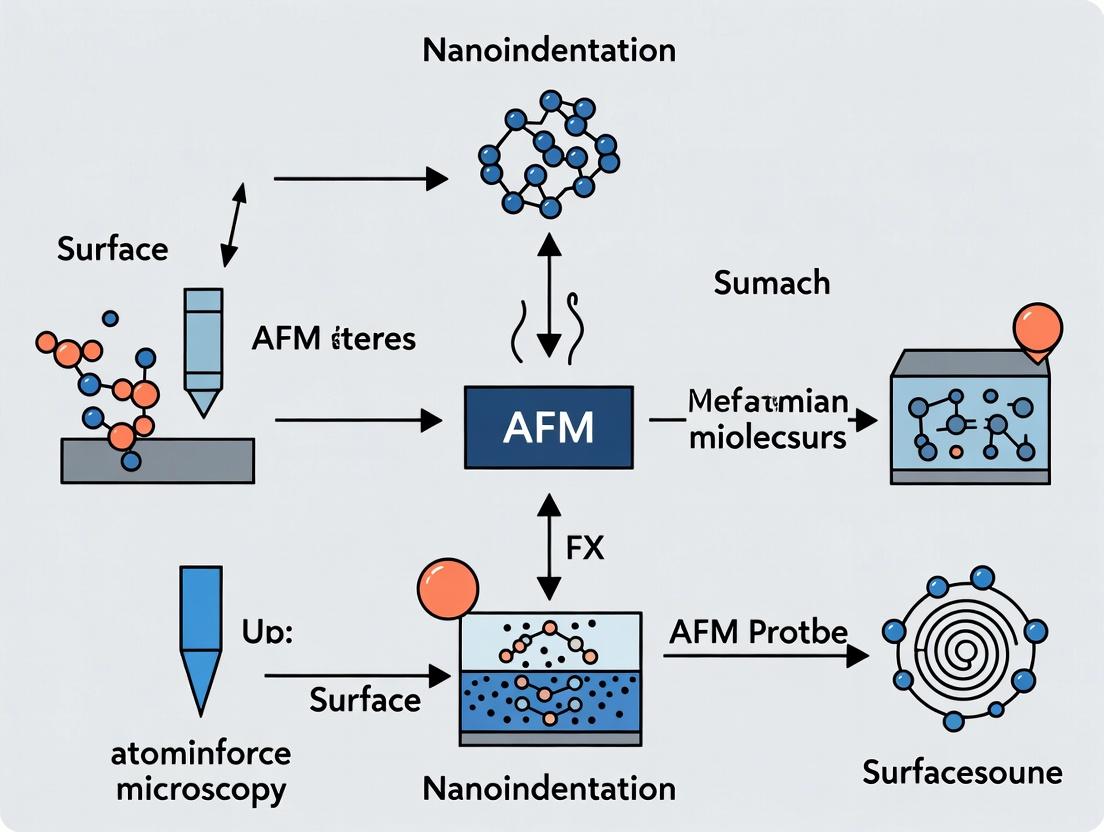
This article provides a detailed exploration of Atomic Force Microscopy (AFM) nanoindentation for measuring mechanical properties, tailored for researchers, scientists, and drug development professionals.
AFM Nanoindentation: A Comprehensive Guide to Measuring Mechanical Properties in Biomedical Research
Abstract
This article provides a detailed exploration of Atomic Force Microscopy (AFM) nanoindentation for measuring mechanical properties, tailored for researchers, scientists, and drug development professionals. It covers foundational principles of AFM mechanics and its relevance to cellular and tissue biomechanics. The guide details methodological protocols for sample preparation, calibration, and data acquisition across various biological specimens. It addresses common troubleshooting scenarios and optimization strategies for enhancing accuracy and reproducibility. Furthermore, it validates the technique through comparison with bulk methods and correlation with biological function, concluding with future implications for disease modeling, drug screening, and clinical diagnostics.
Understanding the Fundamentals: What is AFM Nanoindentation and Why is it Crucial for Biomechanics?
Atomic Force Microscopy (AFM) has fundamentally evolved from its primary role as a high-resolution surface imaging tool to a sophisticated, quantitative nanomechanical probe. Within the context of research focused on AFM nanoindentation for mechanical properties measurement, this transformation is critical. It enables researchers to map not just topography, but also mechanical parameters—such as Young's modulus, adhesion, and deformation—at the nanoscale. This is particularly vital in fields like drug development, where the mechanical properties of biomaterials, cells, and pharmaceutical formulations can dictate biological function and efficacy.
The Conceptual Transformation: From Imaging to Probing
The core principle lies in the operational shift from dynamic (tapping) or contact mode imaging to force-distance curve (FDC)-based spectroscopy.
- Imaging Mode: The AFM cantilever oscillates or scans in constant contact, with feedback maintaining a set parameter (amplitude, frequency, or deflection). The output is a topographical map.
- Nanomechanical Probing Mode: The piezoelectric scanner moves the probe vertically at a specific point, forcing the tip into and out of contact with the sample while recording cantilever deflection vs. displacement. This FDC is a fingerprint of the local mechanical interaction.
Key Enabling Technological Advancements
This transformation is powered by specific hardware and methodological developments.
Table 1: Technological Enablers for AFM Nanomechanics
| Advancement | Function in Nanomechanics | Quantitative Impact |
|---|---|---|
| High-Resolution Z-Sensors | Precisely measures tip-sample separation independent of piezo creep/hysteresis. | Enables displacement measurement with <0.1 nm resolution. |
| Closed-Loop XYZ Scanners | Corrects positional errors in real-time during indentation. | Improves spatial targeting accuracy to ~1 nm. |
| Calibrated Cantilevers | Precisely known spring constant (k) and tip geometry (radius, R). | Direct conversion of deflection (nN) to force (nN); crucial for modulus calculation. |
| High-Speed Photodetectors | Rapid acquisition of cantilever deflection signals. | Allows FDC acquisition rates >10 kHz for mapping. |
| Advanced Control Algorithms | Enables automated multipoint FDC acquisition & real-time analysis. | Facilitates high-resolution mechanical property mapping (>10^4 points/map). |
Experimental Protocols: AFM Nanoindentation for Cells & Soft Materials
The following protocol details a standard experiment for measuring the elastic modulus of living cells or hydrogel samples.
Protocol 1: Pointwise Nanoindentation on a Living Cell Monolayer
A. Objective: To measure the apparent Young's modulus of adherent cells in physiological buffer.
B. Research Reagent Solutions & Materials Toolkit
| Item | Function | Example/Note |
|---|---|---|
| AFM with Liquid Cell | Enables operation in fluid. | Must have temperature control option for live cells. |
| Soft, Calibrated Cantilever | Minimizes sample damage; known spring constant. | MLCT-Bio-DC (k ~0.01-0.1 N/m), tipless for bead attachment. |
| Colloidal Probe | Spherical tip for well-defined contact. | Silica or polystyrene bead (R=2.5-5 µm) glued to tipless lever. |
| Cell Culture Media | Maintains cell viability during experiment. | CO2-independent medium, with HEPES buffer. |
| Calibration Samples | Verify force curve shape and tip geometry. | Polydimethylsiloxane (PDMS) slabs of known modulus. |
| Analysis Software | Fits model to retract curve to extract modulus. | Built-in software (JPK, Bruker) or custom code (Igor, MATLAB). |
C. Step-by-Step Methodology:
- Cantilever Preparation: Attach a silica microsphere to a tipless cantilever using epoxy. Calibrate the spring constant via thermal tune method in fluid.
- Sample Preparation: Culture cells on a sterilized, rigid substrate (e.g., glass-bottom dish) to 60-80% confluence. Replace media with fresh, pre-warmed (37°C) imaging buffer.
- AFM Setup: Mount the dish in the liquid cell. Engage the probe in imaging mode at low force to locate cells.
- Site Selection: Using the optical or AFM topographical image, select specific points for indentation (e.g., cell nucleus, peripheral cytoplasm).
- Parameter Setting:
- Set maximum trigger force (0.5-2 nN for cells).
- Set approach/retract velocity (1-10 µm/s). Lower velocity reduces viscous effects.
- Define dwell time at maximum load (0-500 ms).
- Data Acquisition: Perform force-distance curves at each predefined point. Acquire 5-10 curves per location to check reproducibility.
- Data Analysis:
- Convert deflection vs. Z-piezo displacement data to Force vs. Tip-sample separation.
- Fit the retraction curve's contact region with an appropriate contact mechanics model (e.g., Hertz, Sneddon for spherical tip).
- Extract the apparent Young's modulus (E) from the fit.
Protocol 2: High-Resolution Mechanical Property Mapping (Force Volume/PFT)
A. Objective: To create a spatially correlated map of topography and elastic modulus.
B. Methodology:
- Follow Protocol 1 steps 1-3.
- Grid Definition: Overlay a grid (e.g., 64x64 points) on the scan area of interest.
- Mapping Acquisition: The AFM automatically performs a single FDC at each grid point before moving to the next. Use a faster retract velocity to minimize acquisition time.
- Data Processing: Use batch processing to fit each FDC, assigning a modulus value to each pixel to generate a modulus map co-registered with topography.
Data Presentation: Typical Nanomechanical Results
Table 2: Representative Elastic Modulus Values from AFM Nanoindentation
| Material/Sample Type | Probe Type / Radius | Indentation Depth | Reported Apparent Young's Modulus (Mean ± SD) | Key Conditions |
|---|---|---|---|---|
| Mammalian Cell (Cytoplasm) | Colloidal Probe, R=2.5 µm | 300-500 nm | 1.5 ± 0.5 kPa | 37°C, in buffer |
| Collagen I Hydrogel | Sharp Tip, R=20 nm | 50 nm | 12 ± 3 kPa | Hydrated, 25°C |
| Polyacrylamide Gel (8% w/v) | Colloidal Probe, R=5 µm | 1 µm | 45 ± 8 kPa | In PBS |
| Pharmaceutical Tablet Excipient | Sharp Tip, R=50 nm | 20 nm | 5.0 ± 1.2 GPa | Dry, ambient |
| Lipid Bilayer | Sharp Tip, R=20 nm | 5 nm | 100 ± 50 MPa | Supported, in fluid |
Visualization: The AFM Nanomechanics Workflow
Title: Workflow: AFM Transition from Imaging to Nanomechanics
Title: Force-Distance Curve Analysis for Modulus Extraction
Atomic Force Microscopy (AFM) nanoindentation is a cornerstone technique in nanomechanical characterization, enabling the quantification of key material properties at the nano- to microscale. Within the broader thesis of advancing AFM for drug development and biomaterial research, precise measurement of Elastic Modulus, Adhesion, Stiffness, and Viscoelasticity is paramount. These properties dictate cellular responses, drug delivery vehicle integrity, and tissue scaffold performance. This application note provides detailed protocols and current data for researchers employing AFM nanoindentation in pharmaceutical and biological applications.
Elastic Modulus (E): A measure of a material's resistance to elastic (reversible) deformation under stress. It is defined as the slope of the stress-strain curve in the elastic region (Young's Modulus). Adhesion (F_ad): The maximum attractive force between the AFM probe and the sample surface during retraction, often derived from the minimum of the retraction force-distance curve. Stiffness (k): In AFM, often refers to the spring constant of the cantilever. In material context, it is the resistance of a material to deformation, related to but distinct from modulus (influenced by geometry). Viscoelasticity: The time-dependent mechanical response combining viscous (liquid-like, irreversible) and elastic (solid-like, reversible) behaviors. Key parameters are storage modulus (E'), loss modulus (E''), and relaxation time.
Table 1: Typical Ranges of Key Mechanical Properties for Biological Materials Measured via AFM Nanoindentation
| Material/System | Elastic Modulus (kPa) | Adhesion Force (nN) | Loss Tangent (tan δ = E''/E') | Common Probe Type |
|---|---|---|---|---|
| Mammalian Cell (Cytoplasm) | 0.5 - 20 | 0.05 - 2 | 0.1 - 0.5 | Silicon Nitride, spherical tip |
| Collagen Fiber | 1,000 - 5,000 | 1 - 10 | 0.01 - 0.05 | Sharp Silicon, spherical tip |
| Lipid Bilayer | 10 - 1000 | 0.1 - 5 | 0.05 - 0.2 | Sharp Silicon |
| Polymeric Nanoparticle (PLGA) | 1,000,000 - 5,000,000 | 5 - 50 | 0.001 - 0.1 | Colloidal, spherical tip |
| Soft Tissue (e.g., Cartilage) | 50 - 500 | 0.5 - 5 | 0.2 - 0.8 | Spherical tip (Ø 5-20 µm) |
Table 2: Common AFM Nanoindentation Modes for Property Measurement
| Property | Primary AFM Mode | Measured Raw Data | Key Analytical Model |
|---|---|---|---|
| Elastic Modulus | Force Spectroscopy (Quasi-static) | Force vs. Indentation Depth | Hertz, Sneddon, Oliver-Pharr |
| Adhesion | Force Spectroscopy (Retraction curve) | Force vs. Separation | Johnson-Kendall-Roberts (JKR) |
| Stiffness | Contact Mode, Force Modulation | Deflection vs. Position | Hooke's Law (k = F/δ) |
| Viscoelasticity | Dynamic (Tapping), Force Relaxation, Creep | Amplitude/Phase vs. Frequency, Force vs. Time | Standard Linear Solid, Power Law Rheology |
Experimental Protocols
Protocol 3.1: Measurement of Elastic Modulus and Adhesion on Live Cells
Objective: To quantify the apparent Young's modulus and adhesion force of a living cell monolayer. Materials: See "Scientist's Toolkit" below. Procedure:
- Probe Calibration: Calibrate the cantilever spring constant (k) using the thermal tune method. Determine the probe's sensitivity (nm/V) on a clean, rigid substrate (e.g., glass).
- Sample Preparation: Plate cells on a glass-bottom Petri dish in appropriate media. Allow adhesion and spreading for 24h. Perform measurements in physiological buffer at 37°C using a stage incubator.
- Force Volume Mapping: Program the AFM to acquire a grid of force-distance curves (e.g., 64x64 points) over a selected cell area. Set a maximum trigger force (e.g., 0.5-1 nN) to minimize cell damage.
- Curve Acquisition Parameters:
- Approach/Retract Speed: 1-2 µm/s
- Z-length: 3-5 µm
- Dwell time at surface: 0 ms for elastic modulus; 0.5-1 s for adhesion studies.
- Data Analysis:
- Elastic Modulus: For each approach curve, fit the indentation segment (typically 50-300 nm) with the Hertz/Sneddon model for a spherical indenter: F = (4/3) * [E/(1-ν²)] * √R * δ^(3/2), where F is force, E is modulus, ν is Poisson's ratio (assume 0.5 for cells), R is tip radius, and δ is indentation.
- Adhesion Force: For each retraction curve, identify the minimum force value before detachment from the surface. This is F_ad.
- Statistics: Generate spatial maps and histograms of E and F_ad for the cell population.
Protocol 3.2: Characterizing Viscoelasticity via Force Relaxation
Objective: To determine the time-dependent viscoelastic response of a soft hydrogel. Procedure:
- Probe & Sample Prep: Use a colloidal probe (sphere Ø 10 µm). Prepare hydrogel sample in buffer to prevent dehydration.
- Indentation & Hold: Program a force curve to approach the surface at 5 µm/s, indent to a set depth (e.g., 500 nm), and hold the indenter at that constant position for a period (e.g., 10-30 s) while recording the force.
- Data Acquisition: Record force (F) as a function of time (t) during the hold period. The force will relax due to viscous flow.
- Model Fitting: Fit the relaxation curve to a suitable model, such as a two-element Standard Linear Solid (SLS) model: F(t) = F₀ + (F∞ - F₀) * exp(-t/τ), where F₀ is initial force, F∞ is equilibrium force, and τ is the characteristic relaxation time.
- Parameter Extraction: Calculate the instantaneous modulus (from initial indentation) and equilibrium modulus (from F∞). The ratio of relaxation (F∞/F₀) and τ quantify viscoelasticity.
Visualization Diagrams
AFM Nanoindentation Workflow & Analysis Pathways
Property Interrelationships Logic Map
The Scientist's Toolkit
Table 3: Essential Research Reagent Solutions & Materials for AFM Nanoindentation in Bio-Research
| Item | Function & Explanation | Example Product/Type |
|---|---|---|
| Functionalized AFM Probes | Tips coated with specific chemicals (e.g., PEG, ConA) to measure targeted adhesion or minimize nonspecific binding. | Bruker MLCT-BIO (Biotinylated), NP-O10 (Amino-coated) |
| Colloidal Probes | Cantilevers with attached microsphere (SiO₂, PS) for well-defined geometry and Hertz model fitting on soft samples. | Novascan Pyrex-Nitride (Ø 5-50 µm spheres) |
| Calibration Gratings | Standard samples with known topography and stiffness for verifying probe performance and scanner calibration. | Bruker TGXYZ1 (Topography), PDMS (Soft calibration) |
| Bio-Friendly Buffer | Maintains physiological pH and ionic strength for live-cell measurements; prevents sample dehydration. | HEPES-buffered (20mM) Saline Solution, PBS |
| Stage Incubator | Maintains sample at constant temperature (37°C) and CO₂ levels for long-term live-cell or tissue experiments. | Bruker BioHeater, JPK Petri Dish Heater |
| Cell Culture Substrate | Optically clear, flat surface for cell growth compatible with AFM stage (e.g., glass-bottom dishes). | MatTek Dish No. 1.5, µ-Dish (ibidi) |
| Data Analysis Software | Specialized for batch-processing force curves, applying contact models, and generating property maps. | Bruker NanoScope Analysis, JPK DP, AtomicJ, custom MATLAB/Python scripts |
Within the framework of Atomic Force Microscopy (AFM) nanoindentation research, a core thesis emerges: mechanical properties are not merely a passive readout but an active, causative element in physiology and pathology. Cellular and tissue mechanics govern processes from differentiation to metastasis, making their precise quantification via AFM a critical tool for understanding disease mechanisms and identifying novel therapeutic targets for drug development professionals.
AFM nanoindentation reveals consistent mechanical shifts across pathologies, providing quantitative biomarkers.
Table 1: AFM Nanoindentation Measurements in Health and Disease
| Cell/Tissue Type | Condition | Apparent Elastic Modulus (kPa) | Key Biological Implication | Reference (Example) |
|---|---|---|---|---|
| Mammary Epithelial Cells | Normal | 0.5 - 2 kPa | Maintained epithelial integrity | Plodinec et al., Nat. Nanotech. 2012 |
| Mammary Epithelial Cells | Malignant (Invasive) | 0.1 - 0.5 kPa | Increased motility and invasiveness | Plodinec et al., Nat. Nanotech. 2012 |
| Vascular Smooth Muscle Cells | Non-Atherosclerotic | 10 - 15 kPa | Normal contractile function | Huynh et al., Cardiovasc. Res. 2011 |
| Vascular Smooth Muscle Cells | Atherosclerotic Plaque | 25 - 50 kPa | Calcification, plaque instability | Huynh et al., Cardiovasc. Res. 2011 |
| Liver Sinusoidal Endothelial Cells | Healthy | 0.3 - 0.8 kPa | Efficient filtration | Li et al., J. Biomech. 2017 |
| Liver Sinusoidal Endothelial Cells | Fibrotic Liver | 2 - 5 kPa | Capillary stiffening, dysfunction | Li et al., J. Biomech. 2017 |
| Articular Cartilage (Surface) | Osteoarthritic | 50 - 200 kPa (reduced) | Loss of proteoglycans, degradation | Stolz et al., Nat. Nanotech. 2009 |
| Cardiac Myocytes | Heart Failure (Rat model) | 60 - 80 kPa (increased) | Impaired diastolic relaxation | Bhana et al., Nanomedicine 2013 |
Application Notes & Protocols
ANP-01: Protocol for AFM Nanoindentation of Adherent Cultured Cells
This protocol details the measurement of the apparent Young’s modulus of single cells.
I. Sample Preparation
- Cell Seeding: Plate cells on sterile, 35mm glass-bottom dishes at a low density (30-50% confluence) 24 hours prior to experiment. Use standard culture media.
- Measurement Buffer: Prior to AFM, replace media with a CO₂-independent, serum-free, phenol-red-free imaging buffer (e.g., Leibovitz's L-15) to maintain pH and minimize optical interference.
- Temperature Control: Maintain sample at 37°C using a stage-top incubator throughout measurement.
II. AFM Instrument Setup
- Cantilever Selection: Use tipless, silicon nitride cantilevers with a nominal spring constant (k) of 0.01 - 0.1 N/m. Spherical probes (5-10µm diameter) are preferred for consistent contact geometry.
- Spring Constant Calibration: Perform thermal tune method in fluid to determine the exact k value for each cantilever.
- Laser Alignment: Align the laser spot on the cantilever's end and center the reflected beam on the photodetector.
III. Measurement Parameters & Execution
- Approach: Position the probe ~50µm above the cell nucleus. Set approach/retract speed to 1-5 µm/s.
- Force Trigger: Set trigger force to 0.5 - 1 nN to prevent excessive indentation (typically 10-15% of cell height).
- Data Acquisition: Perform indentations on the perinuclear region of at least 30 cells per condition. Acquire 5-10 force curves per cell.
- Grid Mapping: For tissue or single-cell stiffness mapping, use the AFM's XYZ scanner to perform a grid (e.g., 10x10 points) over a defined area.
IV. Data Analysis (Hertz Model)
- Model Selection: For a spherical indenter, apply the Hertz contact model: ( F = (4/3) * (E/(1-ν²)) * √R * δ^(3/2) ) Where F = force, E = Young's modulus, ν = Poisson's ratio (assume 0.5 for cells), R = probe radius, δ = indentation depth.
- Fitting: Fit the extending (approach) portion of each force curve with the model using AFM software (e.g., JPK, Bruker, Asylum) or custom scripts (e.g., in Igor Pro, MATLAB).
- Statistical Reporting: Report data as mean ± standard deviation or median with interquartile range. Use non-parametric tests (e.g., Mann-Whitney U) for comparison due to non-normal distributions common in biological samples.
ANP-02: Protocol for Assessing Drug Response via Cell Mechanics
This protocol evaluates the efficacy of cytoskeletal-targeting or disease-modifying drugs.
- Treatment Groups: Prepare cell cultures in three groups: (a) Untreated control, (b) Vehicle control, (c) Drug-treated (e.g., 10µM Blebbistatin for myosin-II inhibition, 1µM Latrunculin-A for actin depolymerization, or a novel therapeutic candidate).
- Incubation: Incubate cells with drug/vehicle for a specified period (e.g., 30 mins for acute cytoskeletal drugs, 24-48 hrs for longer-term pathway modulators).
- AFM Measurement: Follow ANP-01 for all groups in parallel, keeping instrument parameters identical.
- Analysis: Compare the distribution of apparent Young's modulus across groups. A successful cytoskeletal drug will cause a significant, quantifiable softening (Latrunculin-A) or stiffening (e.g., Jasplakinolide) relative to controls.
Signaling Pathways in Mechanotransduction
Experimental Workflow: From Sample to Statistical Analysis
The Scientist's Toolkit: Key Research Reagent Solutions
Table 2: Essential Materials for AFM Mechanobiology Research
| Item | Function & Rationale |
|---|---|
| Tipless, Silicon Nitride Cantilevers (Spherical Tip) | Provides a defined, non-damaging contact geometry for reliable Hertz model fitting on soft biological samples. |
| CO₂-Independent, Phenol-Red-Free Imaging Buffer (e.g., Leibovitz's L-15) | Maintains physiological pH outside an incubator and eliminates autofluorescence for combined AFM-fluorescence microscopy. |
| Cytoskeletal Modulators (e.g., Latrunculin-A, Blebbistatin, Y-27632) | Positive controls to validate AFM sensitivity by specifically disrupting actin (softening) or myosin/ROCK (softening) networks. |
| Cell Culture-Tested, Glass-Bottom Dishes | Provides an optically clear, rigid substrate essential for high-resolution microscopy and accurate AFM force measurement. |
| Stage-Top Incubator (Temperature & Gas) | Maintains live samples at 37°C and 5% CO₂ during prolonged measurements, preserving viability and native mechanical state. |
| Fluorescent Phalloidin/DAPI Stains | Post-AFM fixation and staining correlates local stiffness maps with actin cytoskeleton architecture and nuclear position. |
| Matrigel or Stiffness-Tunable Hydrogels (e.g., Polyacrylamide) | To culture cells on substrates of defined, physiologically relevant stiffness to study mechanosensing in vitro. |
Comparative Analysis: AFM Nano vs. Traditional Indentation
AFM Nanoindentation Protocol for Live Cells
| Parameter / Characteristic | Traditional Micro-Indentation | AFM-Based Nanoindentation |
|---|---|---|
| Force Resolution | > 1 µN | < 1 nN (pN possible) |
| Displacement Resolution | > 1 nm | ~0.1 nm (sub-Å possible) |
| Spatial Resolution | > 10 µm | < 50 nm (tip-radius limited) |
| Typical Indentation Depth | Micrometers to millimeters | Nanometers to a few micrometers |
| Sample Volume Required | Macroscopic (mm³ to cm³) | Microscopic (single cells, thin films) |
| Measurement Environment | Primarily ambient/controlled air | Ambient, liquid, temperature control |
| Concurrent Data | Load vs. Depth (primary) | Topography, Adhesion, Viscoelasticity, Electrical |
| Key Measurable Properties | Hardness, Elastic Modulus (E) | E, Adhesion, Relaxation Time, Loss/Storage Moduli |
Table 1: Quantitative Comparison of Instrument Capabilities
| Material / Sample Type | Traditional Method (Reported Modulus) | AFM Nanoindentation (Reported Modulus) | Comparative Advantage Demonstrated |
|---|---|---|---|
| Polymer Thin Film (PMMA) | 2.5 - 3.5 GPa (Bulk tensile test) | 3.8 ± 0.4 GPa (Local, 100 nm depth) | Eliminates substrate effect via shallow indentation. |
| Cardiac Myocyte (Live) | ~10-100 kPa (Bulk tissue measurement) | 15 ± 3 kPa (Pericellular region) | Spatial mapping of heterogeneity; live cell physiology. |
| Cancer Cell Line (MCF-7) | Not applicable (too soft for traditional) | 0.5 - 2 kPa (Cytoplasm vs. Nucleus) | Enables measurement of ultralow modulus biomaterials. |
| Bone Trabecula | 5 - 15 GPa (Macro-compression) | 10.2 ± 1.1 GPa (Individual lamella) | Correlates local mineral density with nanomechanics. |
| Hydrogel for Drug Delivery | ~1-50 kPa (Bulk rheology) | 8.3 ± 1.2 kPa (Surface micromechanics) | Measures property gradient at bio-interface. |
Table 2: Representative Comparative Data Across Sample Types
Application Notes & Detailed Protocols
Protocol 1: Mapping the Elastic Modulus of a Polysaccharide Hydrogel
Objective: To spatially resolve the nanomechanical heterogeneity of a chitosan-hyaluronic acid hydrogel film, relevant for drug-eluting implant coatings.
Materials (The Scientist's Toolkit):
| Item | Function |
|---|---|
| AFM with Nanoindentation Module | Core instrument for applying force and measuring displacement. Requires closed-loop scanner for accurate positioning. |
| Colloidal Probe (SiO₂ sphere, R=5µm) | Provides well-defined contact geometry for reliable Hertz/Sneddon model fitting. |
| Liquid Cell | Enables measurement under physiological buffer (PBS, pH 7.4). |
| Piezoelectric Calibration Grating | Used for precise calibration of the photodetector sensitivity (InvOLS). |
| Calibration Cantilever (Stiff, ~150 N/m) | For accurate determination of the colloidal probe cantilever's spring constant via thermal tune. |
| Chitosan-Hyaluronic Acid Film | Sample of interest, spin-coated on a glass substrate and hydrated. |
Methodology:
- Probe Functionalization: Attach a 5µm SiO₂ microsphere to a tipless cantilever (k ≈ 0.7 N/m) using UV-curable epoxy. Calibrate the spring constant using the thermal noise method.
- Sample Hydration: Mount the hydrogel film in the liquid cell. Inject 1X PBS buffer and allow 60 minutes for equilibrium swelling. 3.. Photodetector Calibration: Perform an InvOLS calibration on a rigid, clean area of the substrate in liquid.
- Force Map Acquisition: Program a 64x64 grid over a 20µm x 20µm area. At each point, execute a single force-distance curve with the following parameters:
- Approach/Retract Velocity: 2 µm/s
- Maximum Trigger Force: 5 nN
- Indentation Depth Limit: 300 nm (to avoid substrate effect)
- Dwell Time at Max Force: 0 ms (for pure elasticity)
- Data Processing:
- Convert photodiode voltage vs. piezo displacement curves to force vs. tip-sample separation.
- Fit the extended Hertz model (spherical indenter) to the approach segment of each curve: F = (4/3) E/(1-ν²) √R δ^(3/2), where E is Young's modulus, ν is Poisson's ratio (assumed 0.5), R is tip radius, and δ is indentation.
- Generate a 2D spatial map of the derived elastic modulus (E).
Protocol 2: Time-Dependent Viscoelasticity of a Live Cancer Cell
Objective: To quantify the apparent viscosity and stress relaxation behavior of a live ovarian cancer cell (OVCAR-3) before and after treatment with a cytoskeletal-disrupting drug (e.g., Cytochalasin D).
Materials (The Scientist's Toolkit):
| Item | Function |
|---|---|
| Bio-AFM with Environmental Control | Maintains 37°C and 5% CO₂ for cell viability during long experiments. |
| Sharp Silicon Nitride Probe (k~0.06 N/m) | Minimizes cell damage and achieves high spatial resolution for perinuclear measurement. |
| Cell Culture Dish (35mm, glass-bottom) | Optimal for high-resolution optical microscopy correlation. |
| OVCAR-3 Cell Line | Model system for studying metastatic potential linked to cell mechanics. |
| Cytochalasin D (1µM in DMSO) | Actin filament disruptor; negative control for cytoskeletal integrity. |
| Live/Dead Viability Stain | Validates cell health pre- and post-measurement. |
Methodology:
- Cell Preparation: Plate OVCAR-3 cells at low density on a glass-bottom dish 24 hours prior. For the treatment group, replace media with 1µM Cytochalasin D in culture media 1 hour before AFM.
- System Setup: Mount the dish on the AFM stage equilibrated to 37°C/5% CO₂. Locate a healthy, spread cell using integrated optical microscopy.
- Approach: Approach the probe to the cell surface above the perinuclear region using a low setpoint (< 0.5 nN) to avoid pre-stress.
- Stress Relaxation Test:
- Program a fast approach (10 µm/s) to a predefined indentation depth (500 nm).
- Upon reaching depth, hold the piezo position constant for 10 seconds.
- Record the force as it decays over time due to cellular viscoelastic flow.
- Retract the probe fully.
- Data Analysis:
- Plot force relaxation (F) vs. hold time (t).
- Fit to a standard linear solid (SLS) model or a power-law rheology model: F(t) = F₀ + (F∞ - F₀) exp(-t/τ), where τ is the characteristic relaxation time.
- Calculate apparent viscosity (η) from model parameters.
- Compare relaxation spectra and apparent modulus (F∞/geometry) between control and treated cells.
Thesis Context: From Advantages to Applications
Step-by-Step Protocol: Applying AFM Nanoindentation to Cells, Tissues, and Biomaterials
Within the broader research context of using Atomic Force Microscopy (AFM) nanoindentation to measure the mechanical properties of biological materials and soft matter, the initial setup is paramount. The choice of cantilever, tip geometry, and calibration standards directly dictates the accuracy, reproducibility, and biological relevance of the measured Young's modulus. This application note provides detailed protocols for selection and calibration, critical for researchers in biomaterials science and drug development investigating cellular mechanics or polymeric drug delivery systems.
Cantilever Selection: Stiffness and Resonance Frequency
The cantilever's spring constant (k) must be matched to sample stiffness. Too stiff a lever will not deflect sufficiently on soft samples; too soft a lever may cause excessive indentation or snap-to-contact.
Table 1: Cantilever Specifications for Common Sample Types
| Sample Type | Approx. Young's Modulus | Recommended Spring Constant (k) | Typical Resonance Frequency in Fluid | Cantilever Material |
|---|---|---|---|---|
| Mammalian Cells (e.g., HeLa) | 0.1 - 10 kPa | 0.01 - 0.1 N/m | 1 - 10 kHz | Silicon Nitride (Si₃N₄) |
| Tissues & Biopolymers (e.g., Collagen) | 1 kPa - 1 MPa | 0.1 - 0.6 N/m | 10 - 30 kHz | Silicon Nitride or Silicon |
| PDMS (Calibration Standard) | 0.5 - 4 MPa | 0.2 - 2 N/m | 20 - 75 kHz (in air) | Silicon |
| Polymeric Nanoparticles | 10 MPa - 10 GPa | 1 - 40 N/m | 50 - 350 kHz (in air) | Silicon |
Protocol 1.1: Thermal Tune Method for Spring Constant Calibration
- Isolate System: Place the AFM in a draft-free enclosure. Engage the cantilever far from any surface (in fluid or air).
- Acquire Spectrum: Record the thermal noise power spectral density (PSD) over a sufficient bandwidth (typically 0-100 kHz).
- Fit Lorentzian: Fit the fundamental resonance peak to a simple harmonic oscillator model:
PSD(f) = A / ( (f₀² - f²)² + (f*f₀/Q)² ), where f₀ is resonance frequency and Q is quality factor. - Calculate k: Apply the Equipartition Theorem method:
k = kBT / <δ²>, where kΒ is Boltzmann's constant, T is temperature, and<δ²>is the mean-square deflection from the integral of the PSD. Modern AFM software automates this calculation using the fitted f₀ and Q (Sader Method or Thermal Tune).
Tip Selection: Geometry and Sharpness
Tip geometry defines contact mechanics model applicability (Hertz, Sneddon, etc.).
Table 2: AFM Tip Geometries and Applications
| Tip Geometry | Radius/Angle Specification | Suitable Contact Model | Ideal Application |
|---|---|---|---|
| Pyramidal (Four-sided) | Half-angle 17.5°-25°, radius < 20 nm | Sneddon (pyramid) | General purpose, cells, soft gels. |
| Spherical (Colloidal) | Radius 0.5 - 10 µm | Hertz (sphere) | Homogeneous materials, avoids sample piercing. |
| Conical | Half-angle 10°-30°, radius < 10 nm | Sneddon (cone) | Deep indentation, stiff polymers. |
| Blunted/Contaminated | Radius > 50 nm (uncalibrated) | Unreliable | Avoid. Requires regular imaging checks. |
Protocol 2.1: Tip Characterization via Blind Reconstruction
- Scan Reference Sample: Image a characterized tip-check artifact (e.g., TGT1 grating with sharp spikes) at high resolution (512x512 pixels).
- Perform Reconstruction: Use dedicated software (e.g., SPIP, Gwyddion) to perform blind tip reconstruction. The algorithm uses the image's sharp features to deduce the tip's 3D shape.
- Extract Parameters: Obtain the effective tip radius (for spherical/pyramidal) or half-angle (for conical/pyramidal). Document before and after experiments to monitor wear.
Calibration Standards: The Role of PDMS
Polydimethylsiloxane (PDMS) is a ubiquitous, tunable elastomer for system validation. It provides a known, homogeneous, and viscoelastic response.
Table 3: Common Nanoindentation Calibration Standards
| Material | Typical Young's Modulus | Key Characteristics | Primary Use |
|---|---|---|---|
| PDMS (Sylgard 184) | 0.5 - 4 MPa (tunable by crosslink ratio) | Isotropic, viscoelastic, readily available. | Stiffness calibration for soft materials (cells, hydrogels). |
| Polyethylene (LDPE) | ~200 MPa | Semi-crystalline, creeps. | Intermediate stiffness validation. |
| Fused Silica | ~72 GPa | Hard, elastic, minimal creep. | Deflection sensitivity calibration (trigger force). |
Protocol 3.1: PDMS Slab Preparation and Calibration Indentation
- Mix & Degas: Mix Sylgard 184 base and curing agent at a 10:1 w/w ratio (for ~2 MPa modulus). Stir thoroughly, degas under vacuum until bubbles vanish.
- Cure: Pour into a Petri dish, cure at 65°C for 2 hours. Ensure thickness > 3mm to mimic infinite half-space.
- Mount & Load: Mount a PDMS slab on the AFM stage. Select a spherical tip (R~2.5µm) and cantilever (k~0.2 N/m) from Table 1/2.
- Acquire Force Curves: On a clean area, obtain >50 force-distance curves with controlled loading rates (e.g., 1 µm/s), sufficient trigger force (5-10 nN), and spacing >10x indentation depth.
- Analyze with Hertz Model: For a spherical tip, fit the loading curve with:
F = (4/3) * (E/(1-ν²)) * √R * δ^(3/2), where F is force, E is Young's modulus, ν is Poisson's ratio (assume 0.5 for PDMS), R is tip radius, and δ is indentation depth. - Validate: The measured E should match the expected value for the mixing ratio. Discrepancies >15% indicate cantilever k or deflection sensitivity errors.
Integrated Experimental Workflow
Diagram Title: AFM Nanoindentation Setup & Validation Workflow
The Scientist's Toolkit: Research Reagent Solutions
| Item | Function in AFM Nanoindentation |
|---|---|
| Silicon Nitride Cantilevers (e.g., Bruker MLCT-Bio) | Low spring constant (0.01 N/m) levers with pyramidal tips for soft biological samples in fluid. |
| Colloidal Probe Tips (e.g., Novascan 5µm SiO₂ spheres) | Spherical tips attached to cantilevers for well-defined Hertzian contact on soft materials. |
| Sylgard 184 PDMS Kit | Tunable elastomer for system calibration and validation of soft material measurements. |
| TGT1 Tip Check Sample | Grating with sharp spikes for blind reconstruction of tip shape and geometry verification. |
| Fused Silica Reference Disc | Infinitely hard standard for calibrating the AFM's deflection sensitivity (Volts/nm). |
| Temperature Control Stage | Maintains constant sample temperature, critical for live-cell measurements and thermal tune accuracy. |
| Bio-Compatible Fluid Cell | Enables imaging and indentation in buffer/medium, preserving cell viability. |
| Vibration Isolation Platform | Mitigates environmental noise, crucial for high-resolution force spectroscopy. |
Sample Preparation Best Practices for Live Cells, Fixed Tissues, and Hydrogels
Application Notes
Accurate nanoindentation measurement of mechanical properties via Atomic Force Microscopy (AFM) is critically dependent on sample preparation. This document provides best practices for three major sample types—live cells, fixed tissues, and hydrogels—within the context of a thesis focused on quantifying biomechanical properties for disease research and drug development. Consistent, artifact-free preparation is paramount for generating reliable, reproducible elastic moduli (Young's modulus) and viscoelastic data.
Detailed Protocols
Protocol 1: Live Cell Preparation for AFM Nanoindentation
Objective: To maintain adherent cells in a viable, physiologically relevant state during AFM measurement. Key Considerations: Cell health, substrate rigidity, temperature, pH, and sterility.
- Substrate Preparation: Use 35 mm Petri dishes or glass-bottom dishes coated with appropriate extracellular matrix (e.g., 10 µg/mL collagen I, fibronectin) for 1 hour at 37°C. Rinse with PBS.
- Cell Seeding: Seed cells at a sub-confluent density (e.g., 5x10^4 cells/dish) 24-48 hours prior to experiment to ensure adherence and spreading.
- Measurement Medium: Use CO2-independent medium or HEPES-buffered (25 mM) physiological buffer to maintain pH outside a CO2 incubator.
- Environmental Control: Perform AFM within an environmental chamber maintaining 37°C. Limit experiment duration to ≤60 minutes per dish to minimize physiological drift.
- Probe Selection & Calibration: Use colloidal probes (e.g., 5-10 µm diameter silica spheres) for consistent contact geometry. Calibrate cantilever spring constant (thermal tune method) and sensitivity on a hard surface (e.g., clean glass) in measurement medium.
- Indentation Parameters: Use a trigger force of 0.5-2 nN, approach velocity of 1-5 µm/s, and indentation depth ≤10% of cell height (typically 200-500 nm) to avoid substrate effects.
Protocol 2: Fixed Tissue Section Preparation for AFM Nanoindentation
Objective: To preserve tissue microstructure and mechanical integrity for high-resolution spatial mapping. Key Considerations: Fixation method, embedding, sectioning, and mounting.
- Tissue Harvest & Fixation: Perfuse or immerse tissue promptly in 4% paraformaldehyde (PFA) in PBS for 24 hours at 4°C. Avoid over-fixation.
- Cryopreservation: Cryoprotect in 30% sucrose solution until tissue sinks. Embed in Optimal Cutting Temperature (O.C.T.) compound and snap-freeze.
- Sectioning: Cut sections of 10-30 µm thickness using a cryostat. Thicker sections (>30 µm) are preferred for nanoindentation to minimize substrate effects from the slide.
- Mounting: Thaw-mount sections onto clean glass slides or Petri dishes. Air-dry for 5-10 minutes to adhere.
- Rehydration & Storage: Rehydrate in PBS for 15 minutes before measurement. Store at 4°C in PBS with antimicrobial agent (e.g., 0.02% sodium azide) for up to 1 week.
- AFM Measurement: Use sharp or pyramidal tips (e.g., silicon nitride, k~0.1 N/m) for high spatial resolution. Map regions of interest defined by histological staining on adjacent sections.
Protocol 3: Hydrogel Preparation for AFM Nanoindentation
Objective: To produce homogeneous, stable hydrogel samples with defined geometry for bulk property measurement. Key Considerations: Polymer concentration, crosslinking, equilibration, and thickness.
- Sample Fabrication: Prepare hydrogel (e.g., polyacrylamide, agarose, Matrigel) between two treated glass surfaces to ensure parallel faces. Vary concentration (e.g., 5-20% w/v) to modulate stiffness.
- Crosslinking & Curing: Follow specific polymer crosslinking protocols (e.g., APS/TEMED for polyacrylamide). Allow complete polymerization (typically 1 hour).
- Equilibration: Hydrate gels in relevant buffer (PBS or cell culture medium) for at least 24 hours at 4°C to reach swelling equilibrium.
- Mounting: Secure hydrated gel to a rigid substrate (glass or metal dish) using cyanoacrylate glue or a custom clamp. Ensure no slippage.
- Thickness Verification: Measure gel thickness using optical microscopy or a profilometer. Minimum thickness should be >10x the intended indentation depth.
- AFM Measurement: Use large spherical probes (≥20 µm radius) for bulk property assessment. Perform force mapping over multiple locations.
Data Presentation
Table 1: Recommended Parameters for AFM Nanoindentation by Sample Type
| Parameter | Live Cells | Fixed Tissues | Hydrogels |
|---|---|---|---|
| Typical Probe | Colloidal sphere (Ø 5-10 µm) | Sharp tip (e.g., MLCT-Bio) | Large colloidal sphere (Ø 20-50 µm) |
| Spring Constant (k) | 0.01 - 0.1 N/m | 0.03 - 0.3 N/m | 0.1 - 0.5 N/m |
| Indentation Depth | 200 - 500 nm | 200 - 1000 nm | 1000 - 5000 nm |
| Approach Velocity | 1 - 5 µm/s | 5 - 20 µm/s | 2 - 10 µm/s |
| Trigger Force | 0.5 - 2 nN | 1 - 10 nN | 2 - 15 nN |
| Measured Modulus Range | 0.1 - 100 kPa | 1 kPa - 100 MPa | 0.01 - 100 kPa |
| Critical Sample Thickness | > 5 µm (cell height) | > 30 µm (section) | > 1 mm (bulk gel) |
| Key Artifact to Avoid | Substrate effect, cell fluidity | Knife damage, drying | Adhesion, insufficient thickness |
Table 2: Common Fixatives and Their Impact on Tissue Mechanical Properties
| Fixative | Concentration & Time | Primary Use | Reported Effect on Elastic Modulus vs. Live |
|---|---|---|---|
| Paraformaldehyde (PFA) | 4%, 24h at 4°C | General tissue fixation | Increase: 2- to 10-fold (crosslinks proteins) |
| Glutaraldehyde | 2.5%, 2-4h at 4°C | Ultrastructure preservation | Significant Increase: 10- to 100-fold (extensive crosslinking) |
| Ethanol | 70%, 1h at RT | Dehydration & precipitation | Increase: Variable, can be high and heterogeneous |
| Methanol | 100%, 10min at -20°C | Rapid fixation/precipitation | Increase: Can induce hardening and shrinkage |
| Zinc-based Fixatives | As per manufacturer | IHC-friendly fixation | Moderate Increase: Generally less than PFA |
Experimental Workflow Visualization
Title: AFM Nanoindentation Workflow for Live Cells
Title: Fixed Tissue Preparation and AFM Analysis Workflow
Title: Hydrogel Fabrication for Bulk AFM Nanoindentation
The Scientist's Toolkit: Research Reagent Solutions
Table 3: Essential Materials for Sample Preparation
| Item | Function & Rationale | Example Product/Catalog |
|---|---|---|
| Collagen I, Rat Tail | Coats substrates to promote cell adhesion and mimic ECM for live cell studies. | Corning, 354236 |
| #1.5 Glass-bottom Dishes | Provide optimal optical clarity for combined AFM and live-cell microscopy. | MatTek, P35G-1.5-14-C |
| CO2-Independent Medium | Maintains physiological pH during AFM without a CO2 chamber. | Gibco, 18045088 |
| Paraformaldehyde (PFA), 4% | Standard fixative that preserves tissue architecture with moderate stiffening. | Electron Microscopy Sciences, 15714-S |
| Optimal Cutting Temp (O.C.T.) | Water-soluble embedding medium for cryosectioning tissues. | Sakura, 4583 |
| Cryostat | Instrument to cut thin, consistent frozen tissue sections. | Leica CM1950 |
| Polyacrylamide (40% solution) | Base polymer for creating tunable, homogeneous hydrogels of defined stiffness. | Bio-Rad, 1610140 |
| Bis-acrylamide (2% solution) | Crosslinker used with polyacrylamide to control hydrogel mesh size and elasticity. | Bio-Rad, 1610142 |
| Silica Microspheres (Ø 10µm) | Attached to cantilevers to create colloidal probes for gentle, reproducible indentation. | Bangs Laboratories, SS05000 |
| V2 Calibration Grid | Standard artifact for precise cantilever sensitivity calibration in fluid. | Bruker, 1GV2 |
| HEPES Buffer (1M) | Effective biological pH buffer for live-cell AFM experiments. | Gibco, 15630080 |
| Protease Inhibitor Cocktail | Added to storage buffer for fixed tissues to prevent degradation during storage. | Roche, 4693132001 |
Within the broader thesis on AFM nanoindentation for mechanical properties measurement, acquiring high-fidelity force-distance (F-D) curves is the foundational step. This protocol details the execution of F-D curve measurements for nanoindentation, focusing on the precise control and impact of the two most critical parameters: loading rate and indentation depth. These parameters directly influence measured modulus, adhesion, and viscoelastic properties, especially in biological samples like cells and tissues relevant to drug development.
Theoretical Foundations & Critical Parameters
The F-D curve records the cantilever deflection (force) as a function of the piezoelectric scanner's vertical displacement (Z). The analysis of the contact portion of this curve, using contact mechanics models (e.g., Hertz, Sneddon, Oliver-Pharr), yields mechanical properties like elastic modulus.
Critical Parameter 1: Loading Rate
The loading rate (LR), defined as the rate of force application (nN/s), is crucial for probing time-dependent material responses. For viscoelastic samples, a higher LR leads to an apparently higher elastic modulus.
Calculation: ( LR = k \cdot v ) where ( k ) is the cantilever spring constant (N/m) and ( v ) is the tip velocity (m/s) during the approach/loading phase.
Critical Parameter 2: Indentation Depth
The maximum indentation depth (δ) must be carefully selected to avoid substrate effects while ensuring sufficient signal-to-noise. A common rule is to limit indentation to 10-20% of the sample thickness.
Table 1: Impact of Loading Rate on Apparent Young's Modulus of Live Cells
| Cell Type | Loading Rate (nN/s) | Apparent Modulus (kPa) | Model Used | Reference Year |
|---|---|---|---|---|
| NIH/3T3 Fibroblast | 100 | 2.1 ± 0.5 | Hertz (Spherical) | 2023 |
| NIH/3T3 Fibroblast | 1000 | 3.8 ± 0.9 | Hertz (Spherical) | 2023 |
| MCF-7 Epithelial | 500 | 1.5 ± 0.4 | Sneddon (Pyramidal) | 2024 |
| MCF-7 Epithelial | 5000 | 2.7 ± 0.6 | Sneddon (Pyramidal) | 2024 |
| Primary Neuron (Soma) | 50 | 0.8 ± 0.2 | Hertz (Spherical) | 2023 |
Table 2: Recommended Maximum Indentation Depth Guidelines
| Sample Type | Approx. Thickness/Feature Size | Recommended Max Depth (δ_max) | Rationale |
|---|---|---|---|
| Isolated Mammalian Cell | 5-10 µm | 500-1000 nm | Avoids substrate effect (glass/polystyrene). |
| Cell Nucleus | ~5 µm | 500 nm | Maintains nuclear membrane integrity. |
| Thin Polymer Film | 100 nm | 10-20 nm | Prevents influence of underlying substrate. |
| Biofilm | 1-2 µm | 200 nm | Ensures measurement of bulk biofilm properties. |
| Tissue Slice (200 µm) | 200 µm | 2-3 µm | Stays within superficial layer of interest. |
Experimental Protocols
Protocol 3.1: Calibration Pre-requisites
Objective: Accurately determine spring constant (k) and deflection sensitivity (InvOLS). Materials: AFM with cantilever, calibration grating, clean glass slide. Steps:
- Thermal Tune Method: Acquire thermal noise spectrum of the cantilever in air/liquid. Use the equipartition theorem (Sader or thermal noise method) to calculate k. Record value.
- Deflection Sensitivity: Approach onto a rigid, clean glass surface in the experimental medium. Obtain a force curve. The slope of the contact region (deflection vs. Z) is the inverse optical lever sensitivity (InvOLS, nm/V). Record slope.
- Tip Characterization: Image a characterized tip-check sample (e.g., TGT1 grating) to determine tip geometry and radius (critical for model selection).
Protocol 3.2: Standard F-D Curve Acquisition on Soft Biological Samples
Objective: Acquire statistically valid F-D curves with controlled LR and δ. Materials: AFM, calibrated cantilever (soft, k=0.01-0.5 N/m), sample (e.g., live cells in culture medium), temperature-controlled stage. Steps:
- Mounting: Secure sample dish on stage. Submerge cantilever in medium. Allow thermal equilibration (15 min).
- Approach: Use optical microscope to position tip above area of interest (e.g., cell nucleus). Initiate coarse then fine approach until contact is detected.
- Parameter Setting (Critical):
- Set maximum loading force (Fmax) based on desired δ (e.g., 2 nN for a soft cell).
- Calculate and set tip velocity (v) to achieve target LR: ( v = LR / k ).
- Example: For LR=500 nN/s and k=0.1 N/m, ( v = (500e-9) / 0.1 = 5e-6 m/s = 5 µm/s ).
- Set indentation depth limit (δmax) as a safety cutoff (e.g., 1000 nm).
- Acquisition:
- Program a force curve cycle: Approach at set v → Contact and load to F_max → Hold (optional, for relaxation) → Retract at same or different v.
- Set trigger threshold (deflection) to detect contact.
- Acquire multiple curves (n≥50 per condition) at different sample locations.
- Data Output: Save raw data (Z sensor position, deflection voltage) for all curves.
Visualization of Workflow and Parameter Impact
Title: AFM Nanoindentation Workflow & Parameter Impact
The Scientist's Toolkit
Table 3: Essential Research Reagent Solutions & Materials
| Item | Function/Benefit | Example Product/Type |
|---|---|---|
| Soft AFM Cantilevers | Low spring constant (0.01-0.5 N/m) for indenting soft matter without damage. | Bruker MLCT-Bio, Olympus RC800PSA, Budget Sensors ContAl-G. |
| Functionalized Tips | For specific adhesion studies; coated with ligands (e.g., RGD peptides) to probe cellular receptors. | Tips coated with Poly-L-Lysine, Concanavalin A, or custom chemistry. |
| Calibration Gratings | Essential for tip shape characterization and scanner calibration. | Bruker TGT1, NT-MDT TGZ1, silicon gratings with sharp spikes. |
| Temperature Controller | Maintains physiological conditions (37°C) for live cell measurements; minimizes thermal drift. | Petri dish heater, stage incubator with humidity control. |
| Cell Culture Medium (Phenol Red-Free) | Maintains cell viability during measurement; absence of phenol red prevents optical interference. | DMEM/Ham's F-12, without phenol red, with HEPES buffer. |
| Collagen/Matrigel Coating | Provides physiological substrate for cell attachment and spreading, ensuring natural cell mechanics. | Rat tail collagen I, Corning Matrigel. |
| Phosphate Buffered Saline (PBS) | Used for rinsing and as a standard imaging/indentation buffer for non-living samples. | 1x PBS, pH 7.4, filtered (0.22 µm). |
| Data Analysis Software | Converts raw voltage data to force/indentation and fits mechanical models. | NanoScope Analysis, Gwyddion, AtomicJ, custom MATLAB/Python scripts. |
Application Notes
The Hertz, Sneddon, and Oliver-Pharr models are the cornerstone of analyzing nanoindentation data from Atomic Force Microscopy (AFM) to quantify the mechanical properties of materials at the nanoscale. In the context of AFM nanoindentation for drug development, these models are critical for characterizing the elasticity and viscoelasticity of biological samples like cells, tissues, and pharmaceutical biomaterials. The choice of model depends on the sample geometry, material behavior (elastic vs. elastic-plastic), and the specifics of the indenter tip shape.
Hertz Model: Primarily used for purely elastic, adhesive contact between two curved surfaces. It is fundamental for analyzing living cells and soft gels, providing the reduced Young's modulus (Er) without permanent deformation. Sneddon Model: Extends Hertzian contact mechanics to various indenter geometries (e.g., conical, pyramidal) for elastic materials. It is the analytical foundation for many AFM indentation protocols on soft biological matter. Oliver-Pharr Model: The industry standard for analyzing elastic-plastic materials, where a permanent impression remains. It is widely used for harder biomaterials, bone, or calcified tissues, extracting hardness (H) and elastic modulus from the unloading curve.
Table 1: Core Analytical Models for AFM Nanoindentation Data Analysis
| Model | Primary Application | Key Outputs | Critical Assumptions | Typical Sample in Bio-Research |
|---|---|---|---|---|
| Hertz | Elastic contact of spheres/paraboloids | Reduced Young's Modulus (Er) | Isotropic, linear elasticity, small strain, no adhesion | Living cells, lipid vesicles, soft hydrogels |
| Sneddon | Elastic contact for sharp indenters | Reduced Young's Modulus (Er) | Isotropic, linear elasticity, specific tip geometry (cone, pyramid) | Cell cytoskeleton, tissue sections, biofilms |
| Oliver-Pharr | Elastic-plastic contact | Hardness (H), Reduced Young's Modulus (Er) | Material unloads elastically, negligible time-dependence & adhesion | Bone, tooth enamel, drug carrier capsules, stiff ECM |
Table 2: Typical Parameter Ranges in Biological AFM Nanoindentation
| Parameter | Typical Range for Soft Cells/Tissues | Typical Range for Hard Biomaterials | Unit | Notes |
|---|---|---|---|---|
| Reduced Modulus (Er) | 0.1 - 100 | 0.1 GPa - 20 GPa | kPa / GPa | Sample stiffness; highly dependent on loading rate & location. |
| Hardness (H) | Often not applicable (elastic) | 0.01 - 5 | GPa | Resistance to plastic deformation. |
| Indentation Depth | 50 - 1000 | 50 - 500 | nm | Must be ≤10% sample thickness for bulk property. |
| Loading Rate | 0.1 - 10 | 0.5 - 20 | µm/s | Affects measured modulus in viscoelastic materials. |
| Tip Half-Opening Angle | 10° - 35° (pyramidal) | 10° - 35° (pyramidal) | deg | For Berkovich or cube-corner tips. |
| Poisson's Ratio (ν_sample) | 0.3 - 0.5 (commonly assumed 0.5) | 0.2 - 0.3 | unitless | Needed to convert Er to Young's Modulus (E). |
Experimental Protocols
Protocol 1: AFM Nanoindentation on Live Cells Using the Hertz/Sneddon Model
Objective: To determine the apparent elastic modulus of a single adherent cell in culture. Materials: AFM with temperature and CO₂ control, liquid cell, tipless cantilever, colloidal probe or pyramidal tip, cell culture medium, sterile Petri dish.
Probe Functionalization & Calibration:
- Attach a 5-10 µm silica microsphere to a tipless cantilever using UV-curable epoxy to create a colloidal probe (for Hertz model) or use a standard pyramidal tip (for Sneddon model).
- Perform thermal tune method in air to determine the spring constant (k_c) of the cantilever. Calibrate the optical lever sensitivity (InvOLS) on a clean, rigid substrate (e.g., glass) in culture medium.
Sample Preparation:
- Plate cells onto a sterile, rigid substrate (e.g., glass-bottom dish) and culture until ~60-80% confluency and fully adherent.
- Mount the dish on the AFM stage. Maintain physiological conditions (37°C, 5% CO₂ if required) throughout the experiment.
Data Acquisition:
- Approach the cell surface at a controlled speed (e.g., 1 µm/s) to locate the point of contact.
- Program a force-distance curve sequence: Extend the tip to indent the cell to a set maximum force (typically 0.5-2 nN) or depth (200-500 nm), hold briefly (0-1 s), then retract. Use a loading rate of 0.5-2 µm/s.
- Perform indentation on multiple cells (n≥30) and at different locations per cell (e.g., nucleus, periphery).
Data Analysis (Hertz/Sneddon Fit):
- For each force curve, convert the deflection (V) vs. Z-piezo position (nm) data into Force (F) vs. Indentation Depth (δ) using k_c and InvOLS. Correct the baseline and define the point of contact.
- Fit the loading segment of the curve with the appropriate model:
- Spherical Hertz:
F = (4/3) * Er * √R * δ^(3/2), where R is sphere radius. - Conical Sneddon:
F = (2/π) * Er * tan(α) * δ², where α is the half-opening angle.
- Spherical Hertz:
- The fitting parameter is the Reduced Young's Modulus (Er). Convert to sample Young's Modulus (E_sample) using:
1/Er = (1-ν_sample²)/E_sample + (1-ν_tip²)/E_tip.
Protocol 2: Nanoindentation of a Drug-Loaded Hydrogel Using the Oliver-Pharr Model
Objective: To measure the hardness and elastic modulus of a polymeric drug delivery hydrogel. Materials: AFM with sharp tip (Berkovich diamond or equivalent), hydrogel sample, PBS buffer for hydration.
Sample & Probe Preparation:
- Hydrate the hydrogel film/sample in PBS for 24 hours to reach equilibrium swelling. Mount firmly on a metal stub using cyanoacrylate glue.
- Use a diamond Berkovich tip (α = 65.3° half-opening angle). Calibrate the tip area function (A = f(δ_c)) on a fused quartz standard following the same procedure below.
Data Acquisition:
- Approach the hydrated hydrogel surface in PBS.
- Execute a force-depth curve with a loading segment sufficient to induce plastic deformation, a short hold (5-10 s to assess creep), and an unloading segment.
- Use a significantly higher maximum force (e.g., 10-50 µN) than for cells. Perform a grid of indents (e.g., 5x5) to assess homogeneity.
Data Analysis (Oliver-Pharr Method):
- Process raw data to obtain Force (F) vs. Depth (h).
- Identify: Maximum load (Fmax), max depth (hmax), final depth after unloading (h_f).
- Fit the initial portion (typically upper 25-50%) of the unloading curve to a power-law relation:
F = α * (h - h_f)^m, where α and m are fitting parameters. - Calculate the contact stiffness (S) as the derivative dF/dh at h_max.
- Calculate the contact depth (h_c):
h_c = h_max - ε * F_max / S, where ε ~0.75 for a Berkovich tip. - Determine the contact area (A_c) using the calibrated area function:
A_c = f(h_c). - Calculate Hardness:
H = F_max / A_c. - Calculate Reduced Modulus:
Er = (√π / 2) * (S / √A_c).
Visualizations
Title: AFM Nanoindentation Data Analysis Workflow
Title: From Model to Sample Young's Modulus
The Scientist's Toolkit
Table 3: Essential Research Reagents & Materials for AFM Nanoindentation
| Item | Function/Description | Example/Notes |
|---|---|---|
| Functionalized AFM Probes | Transduce force. Choice defines model applicability. | Colloidal probes (5-10 µm sphere) for Hertz on cells; Sharp silicon nitride tips (MLCT-Bio) for Sneddon; Diamond Berkovich tips for Oliver-Pharr. |
| Calibration Standards | Calibrate cantilever spring constant and tip area function. | Fused quartz (for modulus & area function), Sapphire (hardness), PDMS gels (for soft calibration). |
| Cell Culture Media (Phenol Red-Free) | Maintain cell viability during live-cell indentation. | Eliminates optical interference with laser. Pre-warm to 37°C. |
| Bio-Adhesive Substrates | Firmly immobilize soft samples. | Poly-L-lysine coated dishes, Cell-Tak, Corning Matrigel. |
| Phosphate Buffered Saline (PBS) | Hydration medium for biological and hydrogel samples. | Prevents sample drying; use 1x concentration, isotonic. |
| UV-Curable Epoxy | Attach microspheres to tipless cantilevers for colloidal probe fabrication. | Norland Optical Adhesive 63 or 81. |
| Reference Elastic Materials | Validate instrument and protocol on known samples. | Polydimethylsiloxane (PDMS) slabs of known stiffness (1-100 kPa). |
| Analysis Software | Process raw data, apply models, perform batch fitting. | NanoScope Analysis, AtomicJ, Igor Pro with custom procedures, PyJibe. |
Application Notes: AFM Nanoindentation in Mechanobiology Research
Atomic Force Microscopy (AFM)-based nanoindentation has become a cornerstone technique for quantifying the mechanical properties of biological specimens and engineered materials at the micro- and nanoscale. This application note details its pivotal role across three distinct fields, framing the discussion within the broader thesis that mechanical properties are not merely passive traits but active regulators of cellular function and material performance. The data underpinning these case studies were gathered from recent, peer-reviewed literature.
Case Study 1: Cancer Research – Tumor Stroma Stiffness and Metastasis
The mechanical interplay between cancer cells and their extracellular matrix (ECM) is a critical driver of tumor progression. AFM nanoindentation enables the mapping of stiffness gradients within tumor microenvironments.
Key Findings:
- Primary Tumor Stiffness: Invasive ductal carcinoma (IDC) regions exhibit a Young's modulus approximately 2-10 times higher than adjacent normal breast tissue, primarily due to collagen cross-linking and increased stromal density.
- Metastatic Niches: Pre-metastatic niches in organs like the liver and lung show a measurable increase in parenchymal stiffness prior to tumor cell arrival, priming the site for colonization.
- Therapeutic Response: Successful chemotherapeutic or anti-fibrotic treatment correlates with a measurable decrease in tumor core stiffness, which can be an early biomarker of treatment efficacy.
Table 1: AFM Nanoindentation Data in Cancer Models
| Sample Type | Average Young's Modulus (kPa) | Key Pathological Correlate | Probe Type / Parameters |
|---|---|---|---|
| Normal Breast Tissue (Murine/Human) | 0.5 - 2 | Healthy, loose collagen matrix | Spherical tip (5µm), 1nN force |
| Mammary Tumor (Primary) | 4 - 15 | Desmoplasia, ECM remodeling | Spherical tip (5µm), 2nN force |
| Liver Metastasis Site | 8 - 25 | Stromal activation & fibrosis | Sharpened pyramidal tip (MLCT), 0.5nN force |
| Tumor post Anti-CTGF Therapy | 3 - 8 | Reduced collagen deposition | Spherical tip (5µm), 1nN force |
Case Study 2: Neuroscience – Neuronal Plasticity and Neurodegeneration
Brain tissue mechanics are crucial for neuronal development, synaptic plasticity, and are altered in disease states. AFM allows for the measurement of stiffness in live neurons, glial cells, and brain slices.
Key Findings:
- Developmental Changes: The stiffness of neuronal cell bodies and processes changes dynamically during differentiation and neurite outgrowth.
- Synaptic Strength: Individual dendritic spines exhibit distinct mechanical properties that correlate with their structural plasticity (e.g., LTP induction can locally stiffen spines).
- Disease Marker: Brain tissue from models of Alzheimer's disease shows significant softening in regions with high amyloid-beta plaque load, while gliotic scarring in multiple sclerosis models presents as localized stiffening.
Table 2: AFM Nanoindentation Data in Neuroscience
| Sample Type | Average Young's Modulus (kPa) | Biological/Clinical Significance | Measurement Conditions |
|---|---|---|---|
| Mature Hippocampal Neuron (Soma) | 0.5 - 1.5 | Baseline neuronal integrity | Liquid, spherical tip (1µm) |
| Mature Dendritic Spine | 1 - 3 | Site of synaptic plasticity & signaling | Liquid, sharp tip (<50nm radius) |
| Alzheimer's Model Brain Slice (Plaque Vicinity) | 0.2 - 0.7 | Correlates with tissue degradation | Liquid, spherical tip (2.5µm) |
| Astrocytic Glial Scar (in vitro) | 5 - 12 | Physical barrier to axon regeneration | Liquid, spherical tip (5µm) |
Case Study 3: Biomaterial Development – Hydrogels for Tissue Engineering
The design of biomimetic scaffolds requires precise control over mechanical properties to direct stem cell fate and tissue integration. AFM is the gold standard for characterizing these properties under physiological conditions.
Key Findings:
- Stem Cell Differentiation: Mesenchymal stem cell (MSC) lineage commitment can be directed by substrate stiffness (e.g., ~1 kPa for neurogenic, ~10 kPa for myogenic, ~30 kPa for osteogenic tendencies).
- Degradation & Stability: Real-time AFM can monitor the enzymatic or hydrolytic softening of hydrogels, critical for predicting scaffold lifespan in vivo.
- Spatial Gradients: AFM mapping validates the fabrication of stiffness-gradient hydrogels, which are used to study cell migration (durotaxis).
Table 3: AFM Nanoindentation Data in Biomaterial Characterization
| Biomaterial Type | Target Young's Modulus (kPa) | Intended Biological Function | Cross-linking Method Influence |
|---|---|---|---|
| Neural Regeneration Hydrogel | 0.5 - 2 | Promote neurite extension, mimic brain ECM | Low-concentration PEGDA or collagen |
| Cardiac Patch Hydrogel | 10 - 15 | Match myocardium stiffness, support cardiomyocytes | Methacrylated hyaluronic acid, medium UV dose |
| Cartilage-Mimetic Hydrogel | 20 - 50 | Provide load-bearing structure for chondrocytes | High-concentration alginate or PEG, dual cross-linking |
| Bone Scaffold Surface | 60 - 100 | Induce osteogenic differentiation of MSCs | Nanoclay or hydroxyapatite reinforcement |
Detailed Experimental Protocols
Protocol 1: AFM Nanoindentation of Live Cell Monolayers (e.g., Cancer Cells) Objective: To measure the apparent Young's modulus of live cells in culture.
- Sample Preparation: Seed cells on a sterile, rigid substrate (e.g., glass-bottom dish) and culture until 70-80% confluent.
- AFM Calibration: Calibrate the AFM cantilever's spring constant using the thermal noise method. Calibrate the optical lever sensitivity on a hard, clean surface (e.g., sapphire).
- Probe Selection: Use a colloidal probe (5-10µm diameter silica sphere) attached to a tipless cantilever (nominal k ~0.01-0.1 N/m).
- System Setup: Mount the cell culture dish on the AFM stage equipped with a liquid cell or environmental chamber. Maintain temperature at 37°C and 5% CO2.
- Force Mapping: Program a force-volume map (e.g., 10x10 points over a 50x50 µm area). Set a maximum trigger force of 0.5-2 nN to minimize cell damage.
- Data Acquisition: Approach and retract the probe at each point, recording the force-distance curve. Allow sufficient pause between points for cell relaxation.
- Data Analysis: Fit the retraction portion of each force curve using the Hertz contact model for a spherical indenter to extract the Young's modulus (assuming a Poisson's ratio of 0.5 for cells).
Protocol 2: Stiffness Mapping of Murine Brain Tissue Sections Objective: To characterize stiffness heterogeneity in ex vivo brain tissue.
- Tissue Preparation: Perfuse-fix the mouse brain with 4% PFA. Embed in optimal cutting temperature (OCT) compound and section coronally at 20-50 µm thickness using a cryostat.
- Mounting: Thaw-mount sections onto glass slides. Keep hydrated in 1X PBS.
- AFM Calibration: Calibrate as in Protocol 1. Use a sharp, pyramidal tip (MLCT) or a stiff, spherical tip (k ~0.3 N/m).
- Measurement: In PBS, perform a grid indentation map over regions of interest (e.g., cortex, hippocampus). Use a higher trigger force (2-5 nN) to overcome sample topography.
- Analysis: Use the Sneddon or Hertz model (for spherical tips) to analyze curves. Co-register AFM stiffness maps with subsequent histological staining (e.g., for plaques, nuclei) from the same section.
Protocol 3: Mechanical Characterization of Synthetic Hydrogels Objective: To determine the bulk and localized elastic modulus of a hydrogel scaffold.
- Hydrogel Fabrication: Polymerize the hydrogel (e.g., PEGDA, collagen) between two functionalized glass slides separated by a spacer to ensure uniform thickness (~1 mm).
- Equilibration: Swell the hydrogel in PBS for 24-48 hours to reach equilibrium.
- Probe Selection: Use a large spherical indenter (50-100µm diameter) attached to a stiff cantilever (k > 0.5 N/m) to measure bulk properties.
- Indentation Testing: In PBS, perform a series of force-indentation curves at random points across the gel surface. Use indentation depths not exceeding 10% of the gel's total thickness.
- Model Fitting: Apply the Hertz model for large spherical indenters. For porous or fibrous gels, consider more advanced models (e.g., two-layer model, biphasic model).
- Statistics: Report the mean modulus from at least 50 indentations across 3 independently fabricated samples.
Mandatory Visualization
Tumor Stiffness Drives Metastatic Signaling
Workflow for Biomaterial-Cell Interaction Studies
The Scientist's Toolkit: Research Reagent Solutions
| Item Name | Function in AFM Mechanobiology | Example Vendor/Product |
|---|---|---|
| Functionalized AFM Probes | Spherical tips for cell indentation; sharp tips for high-resolution mapping. | Bruker (MLCT, SAA-SPH), Novascan (PSA). |
| Cell Culture Substrates | Tunable stiffness plates (e.g., PA, PEG gels) to precondition cells. | Matrigen (Softwell), Sigma (CytoSoft). |
| Live-Cell Dyes | Fluorescent labels for cytoskeleton (F-actin) or nuclei to correlate structure & mechanics. | Thermo Fisher (Phalloidin, SiR-Actin), Hoechst. |
| ECM Mimetic Hydrogels | 3D matrices (Collagen I, Matrigel, Fibrin) for more physiologically relevant indentation. | Corning (Matrigel), Advanced BioMatrix (Collagen). |
| Tissue Section Mounting Media | Preserves tissue architecture and hydration for ex vivo AFM. | Electron Microscopy Sciences, Aquatex. |
| AFM Calibration Standards | Samples with known modulus (e.g., PDMS) for system validation. | Bruker (Polystyrene, PDMS kits). |
| Data Analysis Software | Fits force curves to contact models (Hertz, Sneddon) to extract modulus. | Bruker NanoScope Analysis, JPK DP, AtomicJ. |
Solving Common Challenges: Troubleshooting and Optimizing Your AFM Nanoindentation Experiments
Atomic Force Microscopy (AFM) nanoindentation is a critical technique for quantifying the nanomechanical properties of materials, including biological samples like cells and tissues in drug development. However, accurate measurement is compromised by prevalent artifacts, primarily substrate effect, tip contamination, and instrumental/thermal drift. This application note details protocols for identifying, mitigating, and correcting these artifacts within a rigorous research framework.
Artifact Identification and Quantification
Substrate Effect
The substrate effect arises when the mechanical properties of a stiff underlying support influence the measurement of a soft, thin sample. It leads to an overestimation of the sample's elastic modulus.
Identification: A strong correlation between measured apparent modulus ((E_{app})) and sample thickness ((h)) indicates substrate influence. The effect becomes significant when the indentation depth ((\delta)) exceeds 10% of the sample thickness for homogeneous samples.
Quantitative Correction Models: The most common correction uses a substrate-effect model. For a linear elastic sample on a rigid substrate, the corrected modulus ((E_{sample})) can be approximated using:
[ E{app} = E{sample} \cdot f(\delta/h) ]
Where (f(\delta/h)) is a weighting function derived from finite element analysis.
Table 1: Common Substrate Effect Correction Models
| Model & Reference | Applicable Range (δ/h) | Formula/Principle | Best For |
|---|---|---|---|
| Dimitriadis et al. (2002) | δ/h < 0.5 | (E{app} = Es (1 + \nu_s) \left[1 + 0.884\chi + 0.781\chi^2 + 0.386\chi^3 + 0.0048\chi^4\right]^{-1}) where (\chi = (a/h)), (a)=contact radius | Isotropic, linear elastic layers. |
| Garcia & Garcia (2018) | δ/h < 1.0 | Empirical scaling law based on extensive FEM simulations: (E{app}/Es = 1 + C(\delta/h)^n) | Broad range of tip geometries. |
| Bottom Effect Envelope (BEE) Method (Guz et al., 2014) | δ/h up to 1.0 | Defines lower/upper bounds for valid data; data outside envelope is substrate-affected. | Quick visual assessment of data validity. |
| Finite Element Analysis (FEA) | Any range | Direct numerical simulation of indentation to create a custom correction curve. | Heterogeneous or anisotropic samples. |
Tip Contamination
Contamination of the AFM tip with sample debris, adhesive proteins, or aggregates alters tip geometry and surface chemistry, leading to inconsistent, often erroneously high, modulus values and poor spatial resolution.
Identification:
- Imaging Artifacts: Duplicate features, streaking, or loss of resolution in subsequent imaging.
- Force Curve Artifacts: Irregularities in the approach/retract curve, adhesion spikes of varying magnitude, or a shift in the contact point.
- Reduced Sensitivity: Damping of thermal tune peak in photodetector voltage.
Table 2: Diagnostic Signs of Tip Contamination
| Artifact Type | Observation in Force Curves | Observation in Imaging |
|---|---|---|
| Adhesive Debris | Irregular, large adhesion peaks during retraction. | "Mirror" features, streaking in fast-scan direction. |
| Blunt Contaminant | Earlier contact point, shallower slope (falsely high modulus). | Loss of fine detail, feature broadening. |
| Sticky Contaminant | Unstable baseline, negative deflection before contact. | "Tearing" or dragging of soft sample features. |
Drift
Drift is the uncontrolled motion of the tip relative to the sample, caused by thermal gradients, scanner creep, or piezoelectric hysteresis. It compromises long-term measurements and spatial registration.
Identification:
- Lateral Drift: Successive scans of a fixed feature show progressive translation.
- Vertical Drit: Baseline of force curves shifts over time without sample contact.
- Quantification: Acquire sequential images of a sharp, stable feature and track its position over time (nm/min).
Table 3: Drift Rates and Impact on Nanoindentation
| Drift Type | Typical Magnitude (in lab conditions) | Primary Impact on Nanoindentation |
|---|---|---|
| Thermal (X,Y,Z) | 0.1 - 5 nm/min after 1-2 hr equilibration. | Alters indentation location, changes applied load rate. |
| Piezoelectric Creep (Z) | Can be 10-50 nm in first minutes after large displacement. | Causes significant error in indentation depth measurement. |
| Scanner Hysteresis | Dependent on scan rate and size. | Reduces accuracy of grid-based property mapping. |
Experimental Protocols
Protocol 1: Minimizing and Correcting for Substrate Effect
Objective: To obtain the true elastic modulus of a thin, soft film or biological cell. Materials: AFM with calibrated cantilever, sample, appropriate fluid cell (if needed). Procedure:
- Measure Sample Thickness: Use AFM in tapping mode to scratch the sample or image the edge to determine local height ((h)).
- Acquire Force-Volume Data: Perform a grid of force-displacement curves over the area of interest.
- Limit Indentation Depth: Set force setpoints to ensure maximum indentation depth ((\delta_{max})) is < 10% of h for a first approximation. For precise work, use a stricter limit (e.g., δ/h < 0.05).
- Apply Correction Model: a. Calculate (E{app}) for each curve using standard Hertz/Sneddon model. b. For each measurement point, compute (\delta/h). c. Apply a correction model from Table 1 (e.g., Dimitriadis) to calculate (E{sample}). d. Alternatively, fit multiple curves at varying δ to the BEE model to extract true (Es). Validation: Plot (E{app}) vs. (\delta/h). A flat profile after correction validates the procedure.
Protocol 2: Identifying and Cleaning a Contaminated Tip
Objective: To restore tip geometry and surface state for reliable measurement. Materials: UV-Ozone cleaner, calibration grating (e.g., TGZ1), clean solvents (ethanol, IPA), plasma cleaner (optional). Procedure:
- Baseline Imaging: Image a sharp, standard calibration grating (e.g., silicon with sharp spikes). Save reference image.
- Perform Experiment: Conduct nanoindentation on the target sample.
- Post-Experiment Check: Re-image the same area of the calibration grating.
- Identify Contamination: Compare pre- and post-images for loss of resolution, duplication, or changed feature shapes (see Table 2).
- Cleaning Hierarchy: a. Mild: Rinse tip in clean solvent (ethanol, then DI water) by dipping or flowing in fluid cell. b. Moderate: Expose tip to UV-Ozone for 5-10 minutes to oxidize organic contaminants. c. Aggressive: Use low-pressure air/oxygen plasma (30-60 seconds). Caution: This can blunt sharp tips.
- Verification: Re-image calibration grating. Repeat cleaning until pre-experiment resolution is recovered.
Protocol 3: Measuring and Compensating for Drift
Objective: To quantify and minimize drift during long-duration nanoindentation mapping. Materials: AFM with closed-loop scanner (recommended), sample with stable, identifiable fiducial markers. Procedure:
- System Equilibration: Place the AFM head/scanner and sample in the environment 1-2 hours prior to measurement.
- Fiducial Marker Tracking: a. Locate a sharp, immutable feature on your sample or a nearby marker. b. Acquire a small, fast image (e.g., 1x1 µm) of this feature. Record its (X,Y) position. c. Proceed with nanoindentation experiment for a set period (e.g., 30 min). d. Re-acquire an image of the fiducial marker. Record its new position. e. Calculate drift rate: (Drift = \Delta Position / \Delta Time).
- Drift Compensation: a. Passive: Use calculated drift rate to offset your indentation grid positions pro-actively. b. Active (if hardware supports): Use closed-loop scanner control or real-time feature tracking software.
- Vertical Drift Check: Regularly monitor the force curve baseline deflection (in nm) with the tip held away from the sample. Apply a linear offset correction to indentation depth data if drift is significant and consistent.
Title: AFM Nanoindentation Artifact Mitigation Workflow
The Scientist's Toolkit: Research Reagent Solutions
Table 4: Essential Materials for Artifact-Free AFM Nanoindentation
| Item | Function & Rationale |
|---|---|
| Sharp Silicon Nitride Cantilevers (e.g., Bruker MLCT-BioDC) | Standard probe for bio-nanoindentation. Known spring constant, pyramidal geometry for Hertz model application. Low adhesion coating reduces contamination risk. |
| Calibration Gratings (e.g., Bruker TGQ1, TGZ1, BudgetSensors HS-100MG) | With sharp spikes or grids for tip geometry verification and contamination checks pre/post experiment. |
| UV-Ozone Cleaner (e.g., Novascan PSD Series) | Removes organic contaminants from tips and sample substrates via photo-oxidation, crucial for reproducible surface interactions. |
| Closed-Loop AFM Scanner | Integrates position sensors to correct for piezoelectric creep and hysteresis in real-time, dramatically reducing X,Y,Z drift. |
| Thermal Isolation Chamber/Active Anti-vibration Table | Minimizes thermal drift and mechanical vibrations, essential for stable long-term measurements and accurate depth control. |
| Standard Samples (e.g., PDMS, Polyacrylamide Gels of known modulus) | Required for daily cantilever spring constant calibration (thermal tune) and validation of the full instrument/settings pipeline. |
| Plasma Cleaner (O2/Ar) | For aggressive cleaning of substrates and (carefully) tips. Ensures a clean, hydrophilic surface, reducing non-specific adhesion. |
| Functionalized Beads (e.g., polystyrene, silica) | Attached to cantilevers as colloidal probes for well-defined spherical geometry, simplifying contact mechanics and reducing stress concentration. |
Accurate mechanical property measurement via Atomic Force Microscopy (AFM) nanoindentation is fundamentally limited by environmental noise. The measured forces in soft materials or cells often fall in the pico- to nano-Newton range, where uncontrolled environmental factors dominate. This document details the core principles and practical protocols for optimizing the three critical pillars of signal-to-noise ratio (SNR): environmental control, vibration isolation, and thermal stability, within the context of biomechanical research and drug development.
Quantitative Environmental Impact on Nanoindentation Data
The following table summarizes key noise sources and their typical impact on AFM nanoindentation measurements, emphasizing biological applications.
Table 1: Common Noise Sources and Their Impact on AFM Nanoindentation SNR
| Noise Source | Typical Magnitude | Primary Impact on Measurement | Mitigation Strategy |
|---|---|---|---|
| Acoustic Noise | 60-80 dB (lab ambient) | Induces cantilever oscillation, obscuring true indentation force. Can cause 100-500 pN force noise. | Acoustic enclosure, quiet lab location, low-noise cantilevers. |
| Building Vibration | 0.1 - 10 µm/s (floor) | Causes vertical drift, blurred imaging, and force curve artifacts. Limits depth resolution. | Active/passive isolation tables, inertial mass, damped platforms. |
| Thermal Drift | 0.1 - 10 nm/s (cantilever) | Creates apparent creep or relaxation, falsely alters modulus/viscoelastic calculations. | Thermal enclosure, pre-equilibration, active stage cooling/heating. |
| Air Currents/Turbulence | ~0.1°C/s (local) | Causes cantilever deflection drift, unstable baseline in force curves. | Enclosed fluid cell, environmental hood, minimal user movement. |
| Electromagnetic Interference (EMI) | Varies (motors, lights) | Introduces periodic noise in photodiode signal, often at 50/60 Hz or harmonics. | Proper grounding, Faraday cage, shielded cables, EMI filters. |
Core Experimental Protocols
Protocol 3.1: Baseline Characterization of System Noise Floor
Objective: Quantify the inherent noise of the AFM system under various environmental conditions before sample measurement. Materials: AFM with nanoindentation capability, acoustic enclosure, vibration isolation table, thermal chamber, clean, rigid test sample (e.g., silicon wafer). Procedure:
- Assemble the AFM on an active vibration isolation table in a temperature-controlled room (>±0.5°C).
- Install a stiff cantilever (k > 20 N/m) suitable for nanoindentation.
- Engage the AFM on the rigid test sample in contact mode.
- Force Curve Noise Measurement: Record 100 consecutive force curves at a single pixel with zero indentation depth (trigger set very high). Calculate the standard deviation of the deflection signal in the non-contact region for each curve. Average these values to define the force noise floor (in V or nm).
- Drift Measurement: Engage and hold the tip in contact at a setpoint force of 1 nN for 300 seconds. Record the Z-piezo feedback voltage required to maintain this force. The slope of this signal vs. time is the thermal drift rate.
- Repeat steps 4-5 under different conditions: (A) Standard lab, (B) With acoustic hood, (C) With full environmental chamber activated. Tabulate results.
Protocol 3.2: Optimized Nanoindentation on Hydrogels or Live Cells
Objective: Perform reliable nanoindentation on soft, environmentally sensitive samples to extract elastic/viscoelastic properties. Materials: AFM with environmental control, soft cantilevers (k=0.01-0.5 N/m), colloidal probe if needed, sample (gel or cells in culture medium), perfusion system (optional). Procedure:
- System Equilibration: Place the sample in the AFM stage fluid cell with appropriate medium. Assemble the environmental chamber and allow the entire system to thermally equilibrate for a minimum of 60-90 minutes.
- Cantilever Calibration: Perform thermal tune or Sader method calibration in situ (in fluid) after thermal equilibrium is reached.
- Noise Floor Verification: Perform a brief version of Protocol 3.1 (10 force curves on a rigid area or empty dish section) to confirm acceptable noise levels (e.g., <10 pN RMS for soft measurements).
- Mapping and Indentation: Select scan areas. Use a force-curve-based mapping mode. Key parameters:
- Trigger Force: 0.5-5 nN (minimize sample disturbance).
- Approach/Retract Velocity: 0.5-10 µm/s (balance drift and viscoelastic effects).
- Spatial Resolution: 32x32 to 64x64 points per map.
- Pause at Maximum Load: 0-5 seconds (for creep compliance tests).
- Data Validation: Monitor drift during the experiment by periodically returning to a reference point. Analyze force curves using an appropriate model (Hertz, Sneddon, etc.), correcting for baseline drift and thermal offset.
Visualizing the Optimization Workflow
Diagram 1: Optimization workflow for reliable AFM nanoindentation.
The Scientist's Toolkit: Essential Research Reagent Solutions
Table 2: Key Materials and Reagents for Environmental Control in Bio-AFM Nanoindentation
| Item | Function in Experiment | Key Consideration for SNR |
|---|---|---|
| Active Vibration Isolation Table | Attenuates floor vibrations (0.5-100 Hz) before they reach the AFM head. | Critical for labs not on ground floors. Look for resonance frequency <1 Hz. |
| Acoustic & EMI Enclosure | Dampens airborne noise and shields from electromagnetic interference from lights, computers, etc. | Must allow for sample access and integration with microscopes. |
| Temperature-Controlled Environmental Chamber | Encloses the sample and scanner to minimize thermal gradients and drift. | Stability (±0.1°C) is more critical than absolute control. |
| Liquid Cell with Sealing Cap | Contains fluid sample, minimizes evaporation and associated cooling drift. | Use of an O-ring seal vs. droplet affects noise from meniscus forces. |
| Low-Noise, Bio-Compatible Cantilevers | Probes for indentation. Coating (e.g., gold, silicon nitride) affects reflectivity and thermal properties. | Softer levers (k<0.1 N/m) are more noise-sensitive. Choose appropriate stiffness. |
| Calibration Gratings (Rigid) | Used for system calibration and noise floor assessment prior to soft sample testing. | TGZ1 (TiO2 on glass) or similar provides a rigid, inert test surface. |
| Thermally Stable Sample Dishes | Hold biological samples (cells, tissues). | Glass-bottom dishes have lower thermal expansion than plastic. |
| Prepared Hydrogel Samples | Used as calibration standards for soft materials (e.g., PDMS, polyacrylamide of known modulus). | Essential for validating the entire measurement chain under optimized conditions. |
1. Introduction Within Atomic Force Microscopy (AFM) nanoindentation research for measuring mechanical properties (e.g., Young's modulus, stiffness), statistical rigor is paramount. Inherent heterogeneity in biological samples (cells, tissues) and instrumental noise necessitate careful a priori determination of sufficient sample size (n) and intra-sample measurement points. This protocol, framed within a thesis on AFM nanoindentation in drug development, provides methodologies to ensure reproducibility and power in detecting mechanically significant changes.
2. Key Statistical Parameters & Data Summary The following parameters must be defined before experimentation. Quantitative benchmarks from recent literature (2023-2024) are summarized.
Table 1: Key Statistical Parameters for AFM Nanoindentation
| Parameter | Definition | Typical Range (Biological AFM) | Impact on Design |
|---|---|---|---|
| Effect Size (d) | Standardized difference between group means (e.g., treated vs. control). | Small: 0.2, Medium: 0.5, Large: 0.8 (Cohen's d). | Primary driver of required sample size. |
| Statistical Power (1-β) | Probability of correctly rejecting a false null hypothesis. | ≥ 0.80 (80%) is standard. | Higher power requires larger n. |
| Significance Level (α) | Probability of Type I error (false positive). | 0.05 (5%) is standard. | Lower α requires larger n. |
| Expected Variance (σ²) | Measure of data dispersion within a group. | Highly sample-dependent (cell type, location). | High variance increases required n. |
| Intra-sample Replicates | Number of indentation points per cell/tissue region. | 10-100 per cell; 3-10 cells per condition per experiment. | Averages local heterogeneity. |
Table 2: Recommended Minimum Sample Size (n) per Group for Common Experimental Designs
| Experimental Aim | Effect Size (d) | Power (1-β) | α | Estimated Min. n per Group* | Key Citations (2023-2024) |
|---|---|---|---|---|---|
| Detect drug-induced cytoskeletal change | 0.8 (Large) | 0.80 | 0.05 | 10 | ACS Nano 2023, Nat. Protoc. 2024 |
| Distinguish cancer from normal cell lines | 0.5 (Medium) | 0.85 | 0.05 | 22 | Acta Biomater. 2024 |
| Monitor progressive tissue stiffening | 0.6 (Medium) | 0.90 | 0.01 | 33 | Biophys. J. 2023 |
Calculated using GPower 3.1 software, two-tailed t-test.
3. Experimental Protocol: Determining Sample Size & Measurement Points
Protocol 3.1: A Priori Power Analysis for AFM Nanoindentation Objective: To calculate the minimum number of independent biological replicates (n) required. Materials: See "Scientist's Toolkit." Procedure: 1. Pilot Study: Perform AFM nanoindentation on a limited set of samples (e.g., n=5 per anticipated group). Use consistent parameters (indent depth, rate, tip geometry). 2. Calculate Effect Size: From pilot data, compute the means (M1, M2) and pooled standard deviation (SD) for the key mechanical property. Calculate Cohen's d = |M1 - M2| / SD. 3. Perform Power Analysis: Input d, desired power (0.80), and α (0.05) into statistical software (e.g., GPower). 4. Determine *n: The software outputs the required sample size per group. Adjust for expected attrition (e.g., add 10-15%).
Protocol 3.2: Optimizing Intra-Sample Measurement Points Objective: To determine the number of indentation points per cell/tissue region needed to achieve a stable mean. Materials: See "Scientist's Toolkit." Procedure: 1. Sequential Indentation Mapping: On 3-5 representative samples, perform a dense grid (e.g., 10x10) of indents over a defined region (e.g., perinuclear area). 2. Cumulative Mean Analysis: Plot the cumulative mean of the mechanical property (e.g., Young's modulus) as a function of the number of indentations. 3. Identify Plateau: Determine the point (N) where the cumulative mean stabilizes within an acceptable margin (e.g., ±5% variation). 4. Set Protocol: Use N (or N + 2-3 for safety) as the standard number of indentation points per region for all subsequent experiments.
4. Visualization of Experimental Workflows
Diagram 1: Sample Size Determination Workflow (97 chars)
Diagram 2: Intra-Sample Point Optimization (94 chars)
5. The Scientist's Toolkit: Research Reagent Solutions
Table 3: Essential Materials for Rigorous AFM Nanoindentation
| Item | Function & Rationale |
|---|---|
| AFM with Nanoindentation Module | Core instrument. Must have closed-loop scanner and precise force (pN-nN) control. |
| Sharp Tip Cantilevers (e.g., RTESPA) | For high spatial resolution. Spring constant MUST be calibrated (thermal tune) pre-experiment. |
| Functionalized Tips (Collagen, ConA) | For specific sample interactions (e.g., on specific membrane receptors). |
| Standard Samples (Polystyrene, PDMS) | With known modulus for daily instrumental validation and tip shape calibration. |
| Live-Cell Imaging Chamber | Maintains physiology (37°C, 5% CO2) during indentation of live cells. |
| Statistical Software (G*Power, R) | For performing a priori power analysis and sample size calculation. |
| Cell Permeabilization Buffer | Optional. For intracellular measurements, removes turgor pressure. |
| Fluorescent Beads (500nm) | For correlative microscopy; maps indentation sites to cellular structures. |
| Advanced Indentation Models | Software/Scripts (e.g., Hertz, Sneddon, Oliver-Pharr) for raw data fitting. |
Within the broader thesis on AFM nanoindentation for mechanical properties measurement research, the accurate characterization of soft, adhesive, or heterogeneous materials presents unique challenges. These sample types are prevalent in biological systems (cells, tissues, hydrogels) and advanced polymers, making robust measurement strategies critical for researchers, scientists, and drug development professionals. This article details advanced protocols and application notes to overcome common pitfalls such as tip-sample adhesion, excessive deformation, and data interpretation from mixed phases.
Core Challenges & Strategic Solutions
Table 1: Primary Challenges and Corresponding Mitigation Strategies
| Challenge | Impact on Nanoindentation | Strategic Solution | Key Parameter Adjustments |
|---|---|---|---|
| Sample Softness | Deep penetration, substrate effect dominance. | Use large spherical tips, reduce loading force. | Tip Radius: 5-25 µm; Force: 10 pN - 1 nN; Indentation Depth < 10% sample thickness. |
| High Adhesiveness | "Pull-off" events distort retraction curve, mask elastic recovery. | Employ adhesive contact models (JKR), use stiff cantilevers. | Cantilever k: 10-100 N/m; Fit data with JKR/DMT models; Use chemistry to minimize adhesion. |
| Surface Heterogeneity | Data scattering, ambiguous property attribution. | High spatial mapping, statistical analysis, combined spectroscopy. | Map Grid: 32x32 to 128x128 points; Utilize PeakForce QNM or HARMM modes. |
| Hydration/Environmental Sensitivity | Property drift, evaporation artifacts. | Conduct measurements in liquid or controlled humidity. | Liquid Cell; Enclosed environmental chamber; Humidity control: ±2%. |
Detailed Experimental Protocols
Protocol 1: Nanoindentation of Ultra-Soft Hydrogels in Liquid
Objective: Measure the reduced elastic modulus (Er) of a PEG-based hydrogel (~0.1-10 kPa) while maintaining hydration.
- Probe Selection: Mount a colloidal probe (silica sphere, diameter 15 µm) on a cantilever with nominal spring constant of 0.1 N/m. Calibrate the exact spring constant via thermal tune.
- Liquid Cell Setup: Fill the AFM liquid cell with PBS buffer. Immerse the probe and hydrogel sample. Allow thermal equilibrium for 30 minutes.
- Force Mapping: Program a 5x5 µm² map with 32x32 points. Set a trigger force of 0.5 nN and approach/retract velocity of 2 µm/s.
- Data Processing: For each force-curve, fit the extended Hertz model for spherical indenters to the approach segment: F = (4/3)E_r√Rδ^(3/2), where F is force, R is tip radius, and δ is indentation. Exclude curves showing substrate effects (Sneddon's criterion).
Protocol 2: Adhesive Cell Mechanics Using JKR Analysis
Objective: Determine the apparent modulus and adhesion energy of a live fibroblast.
- Probe Functionalization: Use a pyramidal tip (k=0.7 N/m). Clean in UV-Ozone for 20 min. Incubate in 1% APTES in toluene for 1 hour to create an amine-reactive surface, then conjugate with 0.2% glutaraldehyde for 30 min. Rinse thoroughly.
- Approach-Retract Cycle: On a selected perinuclear region, perform a single-point force curve with a 2 µm/s ramp, 2 nN trigger force, and 1 s dwell.
- Adhesive Model Fitting: Analyze the retraction curve. Fit the Johnson-Kendall-Roberts (JKR) model to quantify the work of adhesion (W) and the effective modulus. The contact point is identified from the deviation in both approach and retract curves.
- Statistics: Repeat on ≥50 cells under identical culture conditions.
Protocol 3: Mapping Heterogeneous Polymer Blends
Objective: Resolve the mechanical phases in a PLA-PBAT polymer blend.
- Mode Selection: Use PeakForce Quantitative Nanomechanical Mapping (PF-QNM) mode.
- Probe & Tuning: Use a silicon tip (k= 40 N/m, resonant frequency ~300 kHz). Calibrate the deflection sensitivity on a stiff sapphire sample. Perform thermal tuning in air.
- Scan Parameters: Set a peak force frequency of 1 kHz, amplitude of 100 nm, and a peak force setpoint of 5 nN. Scan a 2x2 µm area at 0.5 Hz line rate.
- Data Segmentation: Generate modulus (DMT modulus) and adhesion maps. Apply a Gaussian filter (3x3 kernel). Use histogram analysis of the modulus map to identify distinct peaks corresponding to each phase. Create a mask to segment and calculate average properties per phase.
Visualizing Workflows and Relationships
Title: AFM Workflow for Challenging Samples
Title: Model Selection Logic for Data Analysis
The Scientist's Toolkit: Research Reagent Solutions
Table 2: Essential Materials for Advanced AFM Nanoindentation
| Item | Function | Example/Brand | Key Consideration |
|---|---|---|---|
| Colloidal Probes | Spherical tips for accurate Hertzian contact on soft materials, reducing stress concentration. | Novascan or sQUBE (SiO₂, PS beads) | Choose radius (2-50 µm) to match sample modulus and avoid bottoming out. |
| Functionalization Kits | Modify tip chemistry to control adhesion or target specific sample sites. | Bruker PTFE/Amine kits, Nanoscience APTES, glutaraldehyde. | Minimize nonspecific binding; confirm coating stability in liquid. |
| Bio-Friendly Cantilevers | Low spring constant levers optimized for liquid operation. | Bruker MLCT-BIO, Olympus RC800PB. | Thermal noise in liquid requires precise calibration (invOLS). |
| Environmental Control System | Maintains temperature, humidity, and gas atmosphere during measurement. | Bruker ECell, JPK BioMAT. | Stability is critical for long-term live-cell or hydrogel experiments. |
| Calibration Samples | Reference materials for probe calibration and system validation. | Bruker PS/PE Sample, Asylum Tech Ted Pella sapphire. | Use a modulus range bracketing your sample's expected properties. |
| Advanced Analysis Software | Enables fitting of adhesive, viscoelastic, and statistical models to force curves. | AtomicJ, PUNIAS, Bruker NanoScope Analysis. | Ensure model assumptions match your experimental conditions. |
Table 3: Representative Results from Challenging Sample Types (2023-2024)
| Sample Type | Measurement Technique | Reported Modulus | Adhesion Energy | Key Insight | Ref. (Example) |
|---|---|---|---|---|---|
| Alginate Hydrogel (2% w/v) | PF-QNM in PBS, 10 µm sphere. | 15.2 ± 3.1 kPa | 0.08 mJ/m² | Modulus stable over 1 hr in liquid; adhesion negligible with hydrophilic tip. | Acta Biomater. 2024 |
| Live HeLa Cell (Perinuclear) | JKR-fit on retract curve, pyramidal tip. | 2.4 ± 0.7 kPa | 0.5 nJ | Adhesion energy varies more than modulus across cell cycle. | Soft Matter. 2023 |
| PLA-PBAT Blend (80/20) | DMT Modulus Mapping, 256x256 points. | PLA: 2.1 GPa; PBAT: 55 MPa | N/A | Histogram segmentation clearly resolves two distinct mechanical phases. | Polymer. 2024 |
| Mucin Layer (in simulated saliva) | Force Volume, 1 µm sphere, 50% RH. | 0.5 - 5 MPa (gradient) | 1.2 mJ/m² | Heterogeneity requires >1000 curves for statistically valid mean. | J. Colloid Interf. Sci. 2023 |
Validating Your Data: How AFM Nanoindentation Compares and Correlates with Other Techniques
Within the broader thesis on Atomic Force Microscopy (AFM) nanoindentation for mechanical properties measurement, a critical challenge is validating nanoscale measurements against established bulk-scale techniques. This application note details protocols and analytical frameworks for correlating AFM-derived mechanical parameters (e.g., elastic modulus, viscoelastic properties) with bulk mechanical test data from rheology and tensile testing. This multi-scale correlation is essential for translating nanoscale findings to macroscopic material behavior, particularly in biomaterials and pharmaceutical systems.
Core Principles of Multi-Scale Correlation
The fundamental principle involves measuring the same, or highly homologous, material systems using both AFM nanoindentation and bulk mechanical tests. Key correlative parameters include:
- Elastic Modulus: AFM nanoindentation (local, surface) vs. Tensile/Compression testing (global).
- Viscoelastic Properties (G', G'', tan δ): AFM-based frequency sweeps vs. Bulk oscillatory rheology.
- Failure Properties: AFM nano-scratching or high-force indentation vs. Bulk tensile strength or strain-to-failure.
A primary consideration is the difference in tested volumes and deformation regimes. Robust correlation requires careful sample preparation, statistical sampling with AFM, and data homogenization models (e.g., effective medium theory).
Application Note: Hydrogel Characterization for Drug Delivery
Objective: To correlate the nanoscale mesh stiffness of a polyethylene glycol (PEG)-based hydrogel with its macroscale viscoelastic rheological properties, linking local network structure to bulk performance.
Experimental Protocol
Part A: AFM Nanoindentation on Hydrogel Surface
- Sample Preparation: Prepare 35 µL of PEG-diacrylamide precursor solution (10% w/v) between a glass slide and a hydrophobic silicone isolator. Cure under UV light (365 nm, 5 mW/cm²) for 60 seconds to form a ~1 mm thick gel. Hydrate in PBS for 24 hours at 4°C before measurement.
- AFM Setup: Use a calibrated AFM with a colloidal probe (5 µm diameter silica sphere attached to a tipless cantilever, nominal spring constant ~0.1 N/m). Perform thermal tune in fluid to determine the precise spring constant.
- Measurement: In PBS buffer, perform force-volume mapping over a 20 µm x 20 µm area (32x32 points). Approach speed: 2 µm/s. Trigger force: 0.5 nN. Apply a maximum indentation depth limit of 300 nm to ensure semi-infinite half-space conditions.
- Data Analysis: Fit the retraction curve of each force-distance curve using the Hertzian contact model for a spherical indenter to extract the local reduced Young's modulus (E*). Report the median and interquartile range from >1000 indentation curves.
Part B: Bulk Oscillatory Rheology
- Sample Preparation: Prepare identical hydrogel discs (8 mm diameter, 1 mm thickness) using the same polymerization protocol.
- Rheometer Setup: Use a parallel-plate rheometer (8 mm plate diameter). Load the hydrated gel sample. Apply a normal force of 0.1 N to ensure contact and prevent slip.
- Measurement: Perform a frequency sweep from 0.1 to 10 Hz at a fixed strain amplitude (0.5%, confirmed to be within the linear viscoelastic regime via prior amplitude sweep). Temperature: 25°C.
- Data Analysis: Record the storage modulus (G') and loss modulus (G'') at 1 Hz. Calculate the bulk shear modulus (G). For incompressible materials, the Young's modulus (Ebulk) can be approximated as Ebulk ≈ 3G'.
Correlation Analysis: Compare the distribution of AFM-derived Young's modulus (EAFM) with the calculated Ebulk from rheology. Statistically, the median EAFM should converge to Ebulk for a homogeneous material.
Title: Multi-Scale Hydrogel Testing Workflow
| Parameter | AFM Nanoindentation (Median ± IQR) | Bulk Rheology (Mean ± SD) | Correlation Metric |
|---|---|---|---|
| Young's Modulus (kPa) | 12.5 ± 3.2 kPa | 11.8 ± 0.7 kPa | R² = 0.92 (across batches) |
| Measurement Scale | ~ 1 µm³ (indentation volume) | ~ 50 mm³ (sample volume) | N/A |
| Primary Output | Local modulus distribution | Homogeneous bulk modulus (G', G'') | N/A |
| Key Assumption | Hertz model validity, no adhesion | Linear viscoelasticity, no slip | Sample homogeneity & incompressibility |
Protocol: Polymeric Film for Coatings
Objective: Correlate AFM nanoindentation modulus with the Young's modulus derived from uniaxial tensile testing for a polyurethane film.
Protocol:
- Sample Fabrication: Cast polyurethane solution onto cleaned glass plates and Teflon molds to create films of identical thickness (100 ± 10 µm) after solvent evaporation. Condition at 25°C/50% RH for 48 hours.
- AFM Nanoindentation:
- Setup: Use a sharp pyramidal tip (e.g., RTESPA-300). Determine spring constant via thermal tune.
- Measurement: Perform a 10x10 grid indentations over 50x50 µm area. Maximum load: 2 µN. Approach/retract speed: 1 µm/s. Dwell time: 0.1s.
- Analysis: Use the Oliver-Pharr method to extract reduced modulus (Er) from the unloading curve. Convert to sample Young's modulus (Es) using known tip and sample Poisson's ratios.
- Tensile Testing:
- Sample Prep: Cut films into ASTM D638 Type V dog-bone shapes using a precision die cutter.
- Measurement: Use a universal testing machine with a 50 N load cell. Grip separation: 25 mm. Strain rate: 5 mm/min. Record stress-strain curve until fracture.
- Analysis: Calculate the Young's modulus (E_tensile) from the linear slope of the stress-strain curve in the 0.05–0.25% strain region.
- Correlation: Perform linear regression between the mean AFM-derived Es (from multiple sample locations) and Etensile from 5+ dog-bone specimens per batch.
Title: Polyurethane Film Multi-Scale Testing
| Material Batch | AFM Modulus, E_AFM (MPa) | Tensile Modulus, E_Tensile (MPa) | Ratio (EAFM / ETensile) |
|---|---|---|---|
| PU-A (Soft) | 15.3 ± 4.1 | 14.1 ± 1.2 | 1.09 |
| PU-B (Medium) | 52.7 ± 6.8 | 48.9 ± 3.5 | 1.08 |
| PU-C (Stiff) | 125.5 ± 15.2 | 118.0 ± 8.9 | 1.06 |
| Overall Correlation | Linear Regression: ETensile = 0.93 * EAFM | R² = 0.98 | Mean Ratio = 1.08 ± 0.02 |
The Scientist's Toolkit: Essential Research Reagents & Materials
| Item | Function/Application in Correlation Studies |
|---|---|
| Colloidal AFM Probes (e.g., silica sphere attached) | Enables Hertzian contact mechanics on soft materials, providing more reliable modulus values on hydrated gels than sharp tips. |
| Calibrated Cantilevers (with known k & InvOLS) | Essential for converting AFM deflection to accurate force. Thermal tune calibration is mandatory for quantitative data. |
| Parallel-Plate Rheometer (8-20 mm plates) | Standard instrument for measuring bulk viscoelastic properties (G', G'') of soft materials like hydrogels and biologics. |
| Universal Testing Machine (with climate chamber) | For tensile/compression tests on films and tissues. Environmental control ensures consistency with AFM conditions. |
| Hydrophobic Silicone Isolators/Spacers | Creates defined thickness for hydrogel and film samples during preparation, ensuring geometry for both AFM and bulk tests. |
| Standard Reference Samples (e.g., PDMS, Polyethylene) | Materials with known, stable mechanical properties for cross-validation and calibration of both AFM and bulk instruments. |
| Homologous Sample Preparation Kits | Identical molds, cutters, and curing setups to produce samples for nano- and macro-testing from the same master mix. |
Within the broader thesis on Atomic Force Microscopy (AFM) nanoindentation for nanomechanical phenotyping, cross-validation with orthogonal techniques is paramount. This document provides detailed application notes and protocols for comparing AFM-derived mechanical properties data with those obtained from Optical Tweezers (OT), Micropipette Aspiration (MA), and Brillouin Microscopy (BM). The goal is to establish a robust, multi-technique framework for validating measurements of elastic modulus, viscoelasticity, and cytoskeletal dynamics in biological samples, critical for research in mechanobiology and drug development.
Quantitative Comparison of Techniques
Table 1: Key Characteristics and Quantitative Outputs of Nanomechanical Techniques
| Feature | AFM Nanoindentation | Optical Tweezers (Active Mode) | Micropipette Aspiration | Brillouin Microscopy |
|---|---|---|---|---|
| Primary Measurand | Force (nN) vs. Indentation (nm) | Force (pN) vs. Displacement (nm) | Aspiration Length (µm) vs. Pressure (Pa) | Brillouin Frequency Shift (GHz) |
| Typical Modulus Range | 100 Pa – 100 GPa | 0.1 Pa – 100 Pa (in solution) | 10 Pa – 10,000 Pa | 100 MPa – 10 GPa (hydrated) |
| Spatial Resolution | ~20 nm (lateral), ~0.1 nm (vertical) | ~500 nm (bead size limited) | ~1-5 µm (pipette radius) | ~300 nm (diffraction limited) |
| Temporal Resolution | 0.1 – 100 Hz | 10 – 10,000 Hz | ~0.1 – 1 Hz | 0.1 – 10 Hz (per point) |
| Depth of Penetration/ Probe | Surface (~µm) | Surface/Internal (bead attachment) | Global cell deformation | Volumetric (~100 µm depth) |
| Contact & Sample Prep | Direct contact, often in liquid. Can map. | Non-contact force, requires bead attachment. | Direct contact, requires membrane sealing. | Label-free, non-contact, optical. |
| Derived Parameters | Young’s Modulus (E), Adhesion, Viscoelasticity (G’, G’’) | Stiffness (k), Viscoelastic Modulus | Apparent Cortical Tension (Tc), Young’s Modulus (E) | Longitudinal Modulus (M’), Hydration/Density clues |
Table 2: Cross-Validation Results on Model Systems (Typical Values)
| Sample System | AFM (Apparent E) | Optical Tweezers (Stiffness) | Micropipette Aspiration (Cortical Tension) | Brillouin (Longitudinal Modulus) |
|---|---|---|---|---|
| Red Blood Cell | 1.5 – 5 kPa (membrane) | 0.05 – 0.15 pN/nm (bead on membrane) | 2.5 – 6.5 µN/m | 2.5 – 3.5 GPa (cytoplasm) |
| NIH/3T3 Fibroblast | 1 – 5 kPa (central region) | 0.2 – 0.8 pN/nm (bead on cortex) | 0.1 – 0.3 nN/µm (if applicable) | 3.5 – 4.5 GPa (perinuclear) |
| Polyacrylamide Gel (8 kPa Ref.) | 7.5 – 8.5 kPa | N/A (no bead binding) | N/A | 0.8 – 1.2 GPa (correlates with density) |
| Bacterial Cell Wall | 10 – 50 MPa | Not typically used | N/A | 4.5 – 6.0 GPa |
Detailed Experimental Protocols
Protocol 1: Correlative AFM and Brillouin Microscopy on Live Cells Objective: To map spatial stiffness variations and validate AFM elasticity maps with Brillouin-derived longitudinal modulus.
- Sample Preparation: Plate cells (e.g., MCF-10A) on glass-bottom dishes. Maintain in appropriate medium at 37°C/5% CO2.
- Brillouin Acquisition: Mount dish on a confocal Brillouin microscope. Acquire a spectral map (e.g., 50x50 points) of the region of interest. Exposure: 0.1-1 s per point. The Brillouin shift (ν_B) is recorded.
- Data Conversion: Convert νB to longitudinal modulus: M' = ρ (λ νB / 2n)^2, where ρ is density, λ is laser wavelength, n is refractive index. Assumptions about ρ and n must be consistent.
- Correlative AFM: Immediately transfer dish to AFM with bio-heater. Locate the same region using optical overlay. Use a spherical probe (e.g., 5 µm diameter, 0.1 N/m spring constant). Perform force-volume mapping over the same area (≥100 curves, 1-2 µm/s approach speed, 500-1000 pN trigger force).
- AFM Analysis: Fit the extended Hertz/Sneddon model to the retraction curve to extract apparent Young's Modulus (E_AFM).
- Correlation: Overlay EAFM and M' maps. Perform pixel-by-pixel or regional correlation analysis. Note: M' >> EAFM; correlate relative spatial patterns, not absolute values.
Protocol 2: Validating Whole-Cell Stiffness via AFM and Micropipette Aspiration Objective: To compare the global stiffness of suspended cells measured by AFM compression and MA.
- Cell Suspension: Use non-adherent cells (e.g., leukocytes) or trypsinize adherent cells. Resuspend in serum-free, CO2-independent medium.
- Micropipette Aspiration:
- Fabricate a micropipette with inner diameter (D_p) ~5-7 µm.
- Back-fill with buffer and connect to a precision pressure regulator and manometer.
- Immobilize a cell using a holding pipette.
- Bring the aspiration pipette into contact and apply incremental pressure steps (ΔP ~ 10-100 Pa).
- Measure the steady-state aspirated length (L) at each ΔP.
- MA Analysis: For a homogeneous liquid drop model, the cortical tension is Tc = ΔP * Dp / [2 * (1 - Dp / L)]. For a simple elastic model, EMA ≈ (3 * D_p * ΔP) / (8 * L).
- AFM Compression of Suspended Cells:
- Deposit cells into a PDMS microwell array to immobilize them.
- Use a large spherical AFM probe (R ~ 25 µm, k ~ 0.01 N/m).
- Center the probe over a cell and perform a force curve with a large trigger force (~5-10 nN) to compress the whole cell.
- AFM Analysis: Fit the compression curve with a model for a sphere compressing a thick sample (e.g., modified Hertz) to extract EAFMsuspension.
- Comparison: Compare trends in EAFMsuspension and Tc or EMA across cell populations or treatment groups.
Protocol 3: Probing Local Viscoelasticity with AFM and Optical Tweezers Objective: To measure frequency-dependent viscoelastic moduli at the cell periphery using both techniques.
- Optical Tweezers (Active Oscillation):
- Coat a 1-2 µm silica bead with integrin ligands (e.g., RGD peptide).
- Attach the bead to the cell periphery.
- Trap the bead and use the stage or AOD to apply a sinusoidal displacement, X(ω) = X_0 sin(ωt).
- Measure the force response, F(ω), via bead position detection.
- OT Analysis: The complex stiffness is k(ω) = F(ω)/X(ω). Relate to local complex shear modulus G(ω) = k*(ω) / (6πR), where R is bead radius. Extract storage (G’) and loss (G’’) moduli.
- AFM Force-Ramp/Relaxation:
- Functionalize an AFM cantilever (k ~ 0.02 N/m) with the same RGD-coated bead.
- Indent the cell at the same peripheral location to a set force (~500 pN) at a constant speed (ramp).
- Hold the tip at constant indentation for 1-10 s (relaxation).
- Repeat at multiple approach/retract speeds (0.5 – 50 µm/s).
- AFM Viscoelastic Analysis: Fit the force relaxation curve with a standard linear solid model or use the ramp data with a viscoelastic extension of the Hertz model to extract G’ and G’’ at equivalent timescales.
- Validation: Compare the frequency spectra or characteristic relaxation times derived from OT and AFM measurements.
Visualizations
Diagram 1: Cross-Validation Workflow for Cell Mechanics
Diagram 2: Information & Force Scale Across Techniques
The Scientist's Toolkit
Table 3: Essential Research Reagents & Materials for Cross-Validation
| Item | Function/Description | Key Consideration for Cross-Validation |
|---|---|---|
| Functionalized AFM Probes | Spherical (2-25 µm) or sharp tips coated with ligands (e.g., RGD, collagen). | Tip geometry and coating must be matched to the specific biological question and compared technique (e.g., same bead for AFM & OT). |
| Ligand-Coated Microbeads | Silica or polystyrene beads (0.5-5 µm) for OT and AFM functionalization. | Consistent surface chemistry between techniques is critical for valid comparison of adhesion or specific receptor mechanics. |
| Polyacrylamide Gel Standards | Hydrogels with tunable, homogeneous elastic modulus (0.1-50 kPa). | Essential for calibrating and benchmarking all techniques on a common, well-defined reference material. |
| Micropipette Puller & Forge | Fabricates glass micropipettes with precise inner diameter (1-10 µm). | Pipette geometry directly determines the pressure-strain relationship in MA. |
| Precision Pressure Controller | Applies and regulates aspiration pressure (1-10,000 Pa) for MA. | High-resolution pressure measurement is needed for accurate cortical tension calculation. |
| Index Matching Fluid | Liquid with refractive index matching to sample (for BM). | Reduces scattering artifacts in Brillouin microscopy, improving signal-to-noise ratio for accurate frequency shift. |
| CO₂-Independent Live-Cell Medium | Maintains pH during measurements outside an incubator. | Required for all multi-technique sessions to ensure consistent cell viability across longer experiment times. |
| PDMS Microwell Arrays | Microfabricated wells to trap single suspended cells for AFM compression. | Provides a stable platform for measuring global cell stiffness, analogous to MA on suspended cells. |
Application Notes
Integrating Atomic Force Microscopy (AFM) nanoindentation with multi-omics platforms creates a powerful framework for mechanophenotyping, linking cellular mechanical properties to molecular drivers and functional outcomes. This integration is critical for understanding disease mechanisms, such as cancer metastasis and fibrosis, and for identifying novel therapeutic targets.
Key Correlative Findings:
- Oncogenic Transformation & Metastasis: Tumor cells with lower elastic modulus (softer) often correlate with increased invasive potential. This mechanical phenotype is linked to the downregulation of cytoskeletal genes (e.g., ACTB, TUBB), upregulation of matrix metalloproteinases (MMPs), and activation of EMT-transcription factors (e.g., SNAIL, TWIST).
- Drug-Induced Cytoskeletal Remodeling: Treatments with cytoskeletal-disrupting agents (e.g., Latrunculin A, Y-27632) cause quantifiable softening, which can be correlated with proteomic changes in Rho-GTPase signaling pathways and phosphoprotein profiles.
- Extracellular Matrix (ECM) Stiffness & Cell Fate: Cells cultured on hydrogels of varying stiffness exhibit differential gene expression related to differentiation (e.g., RUNX2 on stiff substrates) and proliferation, which is measurable via AFM as changes in cell modulus and adhesion.
Table 1: Correlations Between Cell Elastic Modulus and Molecular Signatures
| Cell Type / Condition | Avg. Elastic Modulus (kPa) | Key Genomic/Proteomic Alterations | Functional Correlation |
|---|---|---|---|
| Normal Mammary Epithelial (MCF-10A) | 1.8 ± 0.4 | High E-cadherin, Basal cytokeratin expression | Stable cell-cell adhesion, non-invasive |
| Metastatic Breast Cancer (MDA-MB-231) | 0.5 ± 0.2 | VIM ↑, CDH1 ↓, RhoA/ROCK activity ↑ | High motility, invasive potential |
| MCF-10A + Latrunculin A (1µM, 1h) | 0.7 ± 0.3 | G-actin/F-actin ratio ↑, Profilin phosphorylation ↓ | Loss of stress fibers, membrane blebbing |
| Hepatic Stellate Cell (Activated) | 8.5 ± 1.5 | Collagen I ↑, α-SMA ↑, TGF-β pathway activation | Fibrogenic, ECM deposition |
| Mesenchymal Stem Cell (Soft Substrate: 1kPa) | 1.2 ± 0.3 | SOX2 ↑, PPARG ↓ | Maintenance of stemness |
| Mesenchymal Stem Cell (Stiff Substrate: 30kPa) | 3.5 ± 0.8 | RUNX2 ↑, Osteocalcin ↑ | Osteogenic differentiation |
Table 2: AFM Nanoindentation Parameters for Correlative Studies
| Parameter | Typical Value / Mode | Rationale for Correlation Studies |
|---|---|---|
| Indenter Tip | Sphere (diameter: 5-20µm) | Minimizes cell damage, provides bulk cytoskeletal property |
| Force Setpoint | 0.5 - 3 nN | Ensures measurable indentation without damaging membrane |
| Indentation Depth | 300 - 500 nm (~10-15% cell height) | Probes cortical cytoskeleton, avoids nucleus influence |
| Loading Rate | 0.5 - 2 µm/s | Controls for viscoelastic effects; standardizes timing |
| Points per Cell | 50-100 (grid or line) | Provides statistical robustness for single-cell phenotyping |
| Assay Environment | Physiological buffer, 37°C, 5% CO₂ | Maintains cell viability for downstream -omics processing |
Experimental Protocols
Protocol 1: AFM Nanoindentation for Subsequent Single-Cell RNA Sequencing (scRNA-seq) Objective: To measure the mechanical properties of individual cells and then isolate the same cells for transcriptomic analysis.
- Sample Preparation: Seed cells sparsely on a gridded, AFM-compatible culture dish. Allow adhesion for 24h.
- Live-Cell AFM: Mount dish on a temperature-controlled AFM stage. Using a spherical tip, perform force mapping over pre-selected cells in the grid. Save force curves and positional data.
- Immediate Fixation: Post-measurement, immediately aspirate medium and add ice-cold PBS with RNase inhibitors. Fix cells with 0.1% buffered formaldehyde for 5 min at 4°C to preserve RNA without excessive crosslinking.
- Cell Isolation: Using the grid coordinates and a micromanipulator, harvest the measured single cells via glass capillary aspiration under a phase-contrast microscope.
- Downstream Processing: Process each isolated cell using a standard scRNA-seq platform (e.g., 10x Genomics). Correlate modulus data with clustered gene expression profiles.
Protocol 2: High-Throughput Mechanophenotyping Linked to Bulk Proteomics Objective: To screen populations of cells under different conditions and correlate average mechanical properties with proteomic states.
- Treatment Groups: Culture cells in 6-well plates under various conditions (e.g., drug treatments, gene knockdown).
- High-Throughput AFM: Use an AFM with an automated stage and a large spherical tip. Program a routine to measure 100+ cells per well, collecting force curves at 1-2 points per cell for speed. Export population averages and distributions of Young's modulus.
- Parallel Sample Lysis: From a parallel set of identically treated wells, lyse cells in RIPA buffer with protease/phosphatase inhibitors.
- Proteomic Analysis: Perform quantitative mass spectrometry (e.g., TMT-labeled LC-MS/MS) or a targeted proteomic array (e.g., RPPA for phospho-proteins).
- Data Integration: Use multivariate analysis (e.g., PCA, clustering) to link modulus distributions with protein abundance or pathway activity changes.
Pathway & Workflow Visualizations
Title: Mechano-Omics Correlation Pathway
Title: Integrated Mechano-Omics Workflow
The Scientist's Toolkit: Research Reagent Solutions
| Item | Function in Mechano-Omics Correlation |
|---|---|
| Spherical AFM Tips (SiO₂ or polystyrene, Ø5-20µm) | Enables reproducible nanoindentation on soft cells without penetration, providing bulk cytoskeletal modulus. |
| Gridded Culture Dishes (e.g., Cytoo Chips, ibidi Grid-500) | Allows for precise relocation of measured single cells for subsequent isolation and omics analysis. |
| Rho GTPase Activity Assays (G-LISA, FRET Biosensors) | Quantifies activity of key mechanotransduction regulators (RhoA, Rac1, Cdc42) to link with AFM data. |
| Live-Cell Stains (SiR-Actin, CellMask) | Visualizes cytoskeletal dynamics or membrane morphology during or immediately after AFM measurement. |
| RNase Inhibitors & Rapid Fixatives (e.g., RNaseOUT, 0.1% Formaldehyde) | Preserves RNA integrity post-AFM for accurate downstream transcriptomics. |
| Tandem Mass Tag (TMT) Kits | Enables multiplexed, quantitative proteomics from limited cell samples correlated with mechanical screening. |
| Tunable Hydrogels (e.g., Polyacrylamide, PEG) | Provides substrates of defined stiffness to study ECM stiffness effects on cell mechanics and omics profiles. |
| Cytoskeletal Modulators (Latrunculin A, Y-27632, Jasplakinolide) | Pharmacological tools to perturb actin dynamics and validate mechanical- molecular linkages. |
Within the thesis framework on Atomic Force Microscopy (AFM) nanoindentation for measuring cellular and biomaterial mechanical properties, reproducibility remains a critical bottleneck. Variability in sample preparation, instrument calibration, data acquisition parameters, and analysis algorithms across laboratories complicates data comparison and validation. This application note details current standardization efforts and provides protocols for conducting robust inter-laboratory comparisons to enhance reproducibility in AFM-based nanomechanics research, directly impacting drug development studies that correlate mechanical phenotypes with disease states or treatment efficacy.
Recent inter-laboratory studies highlight primary sources of variability. The following table summarizes quantitative findings from key comparative studies.
Table 1: Sources of Variability in AFM Nanoindentation Studies
| Variability Source | Reported Impact on Elastic Modulus (E) | Study/Context |
|---|---|---|
| Probe Calibration (Radius, Spring Constant) | Up to 200% variation for same sample. | Round-robin test on polyacrylamide gels (2022). |
| Indentation Model Selection (Hertz, Sneddon, Oliver-Pharr) | Discrepancies of 30-50% on compliant cells. | Comparison on live fibroblasts (2023). |
| Loading Rate | 10-25% change per decade change in rate. | Study on cancer cell lines (2023). |
| Sample Preparation (adhesion time, temperature, media) | Variation of 40-60% across labs. | Inter-lab study using standard HEK293 cells (2024). |
| Data Analysis Fitting Range | Differences of 20-35% depending on depth limits. | ISO/TR 29381:2023 guideline application. |
Table 2: Outcomes of Standardization Efforts
| Effort/Initiative | Reduction in Reported Inter-Lab CV | Key Intervention |
|---|---|---|
| Use of Certified Reference Materials (e.g., PS/LDPE grids) | CV reduced from >80% to ~25%. | Physical standard for daily calibration. |
| Adoption of Shared Analysis Software & Parameters | CV reduced from 70% to 20%. | Open-source software (AtomicJ, PUNIAS) with predefined settings. |
| Protocol Harmonization (Sample Prep) | CV reduced from 60% to 30%. | Strict SOP for cell culture, seeding density, and measurement buffer. |
| Unified Probe Calibration Protocol | CV reduced from 200% to 40%. | Mandatory thermal tune & blind reference sample pre-check. |
Detailed Experimental Protocols
Protocol 1: Inter-Laboratory Comparison for Cellular Mechanics
Aim: To assess the reproducibility of elastic modulus measurement for a standard cell line across multiple labs. Materials: See Scientist's Toolkit. Procedure:
- Cell Standardization: A central lab prepares and ships frozen vials of a passage-controlled cell line (e.g., MCF-10A). Include detailed thawing and culture SOP.
- Sample Preparation: Recipient labs culture cells for exactly 48 hours on provided collagen-I coated 35 mm dishes at a specified density (e.g., 50,000 cells/dish). Measurement is performed in a specified, serum-free, buffered solution at 37°C.
- AFM Calibration: Labs perform spring constant calibration via the thermal noise method on the day of experiment. Tip radius is characterized using a provided titanium roughness sample or nanosphere array before and after measurements.
- Data Acquisition:
- Use a spherical probe (see Toolkit).
- Set a maximum indentation force of 0.5-1 nN.
- Use a consistent approach velocity of 1 µm/s.
- Perform ≥ 100 force curves on ≥ 30 randomly selected cells.
- Data Submission: Submit raw deflection-displacement data.
- Centralized Analysis: A single analysis team processes all raw data using a single model (e.g., Hertz model for spherical tip) and a defined fitting depth (e.g., 200-500 nm). Results are compiled and compared.
Protocol 2: Daily Validation with Certified Reference Material
Aim: To ensure daily instrumental consistency within and across labs. Procedure:
- Acquire a Certified Material: Use a polymer blend grid (e.g., Ar-Pika) with known, stable modulus domains.
- Daily Measurement: Prior to biological samples, perform a 10x10 force map on the soft and hard regions of the CRM.
- Analysis: Calculate the apparent modulus for each region using standard instrument software.
- Acceptance Criteria: Daily results must be within ±15% of the established lab mean for that CRM. If not, recalibrate probe and re-check.
Visualizing the Workflow and Challenges
Diagram 1: Inter-Lab Study Workflow & Variability Points
The Scientist's Toolkit: Essential Research Reagent Solutions
Table 3: Key Reagents and Materials for Reproducible AFM Nanoindentation
| Item | Function & Rationale | Example/Product |
|---|---|---|
| Spherical AFM Probes | Minimizes local stress concentrations and cell damage; simplifies Hertz model application. | Borosilicate or polystyrene spheres (5-20µm diameter) glued to tipless cantilevers. |
| Certified Reference Material (CRM) | Provides a daily, stable standard for instrument and protocol validation across sites. | Polymer grid (PS/LDPE blend) with calibrated Young's modulus domains (e.g., Ar-Pika). |
| Calibration Gratings | Essential for accurate piezo displacement and tip radius characterization. | TGT1 (periodic silicon spikes) or nanosphere arrays (100nm diameter). |
| Functionalized Coated Dishes | Ensures consistent cell adhesion and spreading, a major variable in cell mechanics. | Collagen-I (0.1mg/mL), fibronectin, or poly-L-lysine coated 35mm Petri dishes. |
| Standardized Measurement Buffer | Controls pH, osmolarity, and eliminates serum variability during measurement. | HEPES-buffered saline (e.g., 20mM HEPES, 130mM NaCl, pH 7.4) with/without glucose. |
| Open-Source Analysis Software | Eliminates "black-box" variability from commercial software algorithms. | AtomicJ, PUNIAS, ForceR. |
Conclusion
AFM nanoindentation has emerged as an indispensable, high-resolution tool for quantifying the mechanical properties of biological systems, bridging the gap between molecular biology and tissue mechanics. From foundational principles to advanced troubleshooting, mastering this technique enables researchers to uncover novel biomechanical biomarkers for diseases like cancer and fibrosis. Validation against established methods ensures data robustness, paving the way for its integration into standardized workflows. Future directions point toward high-throughput screening for drug discovery, real-time monitoring of cellular responses, and the development of clinical diagnostic devices based on mechanical phenotyping. As the field evolves, AFM nanoindentation will continue to provide critical insights, transforming our understanding of mechanobiology and its therapeutic applications.