Atomic Force Microscopy in Biomaterials: A Complete Guide to Surface Characterization for Drug Development
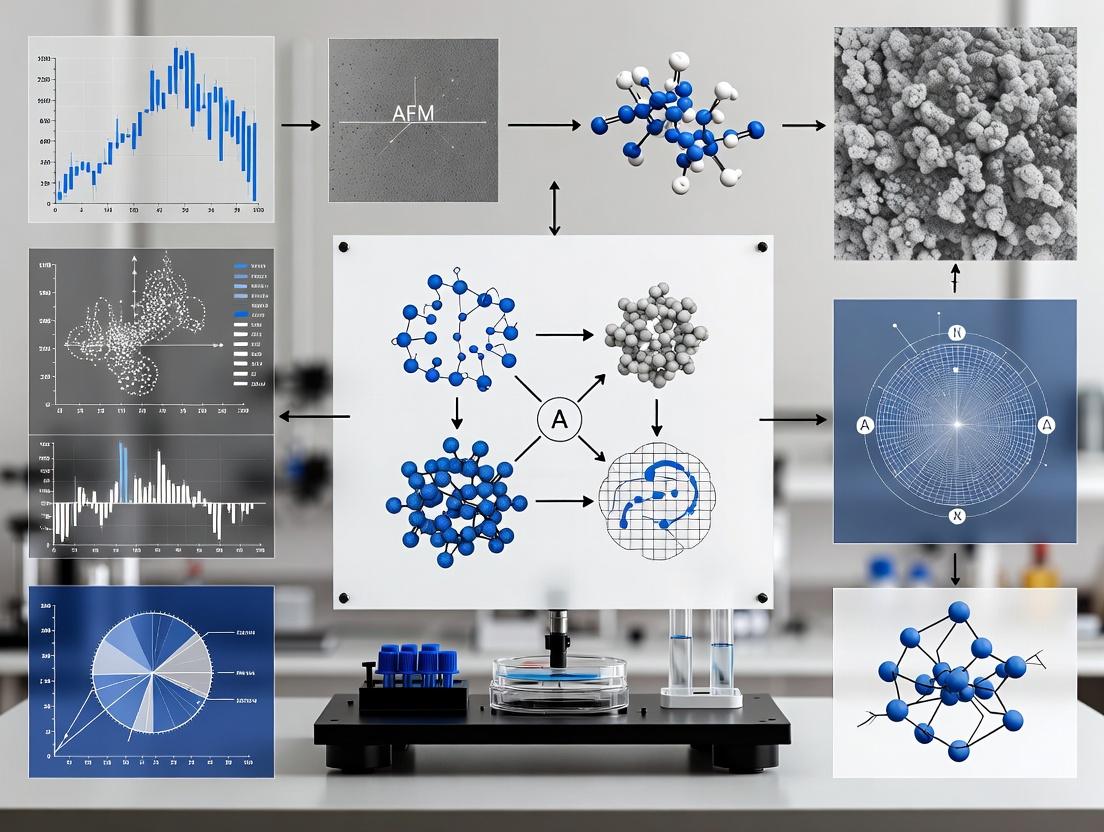
This comprehensive guide explores Atomic Force Microscopy (AFM) as an indispensable tool for biomaterial surface characterization.
Atomic Force Microscopy in Biomaterials: A Complete Guide to Surface Characterization for Drug Development
Abstract
This comprehensive guide explores Atomic Force Microscopy (AFM) as an indispensable tool for biomaterial surface characterization. Tailored for researchers, scientists, and drug development professionals, it covers foundational principles of AFM operation and its unique capabilities for probing soft, hydrated samples. The article details methodological protocols for topographical, mechanical, and chemical mapping, addresses common troubleshooting and optimization challenges for biological specimens, and validates AFM data through comparative analysis with complementary techniques. By synthesizing current best practices, this resource aims to enhance the reliability and translational impact of nanoscale surface analysis in biomaterial science and therapeutic development.
What is AFM? Unveiling the Nanoscale World of Biomaterial Surfaces
Within biomaterial surface characterization research, Atomic Force Microscopy (AFM) is an indispensable tool for probing nanoscale topography, mechanical properties, and molecular interactions. This application note, framed within a broader thesis on AFM for biomaterials, details the core physical principles governing the interaction between the AFM tip and the sample—the definitive factor governing data acquisition and interpretation. For researchers and drug development professionals, a precise understanding of this interaction is critical for designing experiments, such as measuring the Young's modulus of a polymeric scaffold or mapping the adhesion forces of proteins on a novel implant surface.
The Physics of Tip-Sample Interaction
The AFM operates by scanning a sharp tip (radius often 1-20 nm) attached to a flexible cantilever across a sample surface. The interaction forces between the tip apex and the sample dictate the cantilever's deflection, which is measured via a laser beam reflected onto a photodetector. The primary measurable force is the sum of various components, which vary with tip-sample distance.
Key Force Components:
- Van der Waals Forces: Ever-present, non-contact attractive forces dominant at distances of ~0.2-10 nm. Governed by the Hamaker constant, which is material-dependent.
- Pauli Repulsion: Extremely short-range (0.1-0.3 nm) repulsive force arising from electron orbital overlap. Dominates in contact mode.
- Capillary Forces: In ambient conditions, a water meniscus forms between tip and sample, causing a strong, variable adhesive force.
- Electrostatic Forces: Result from surface charge or potential differences. Can be long-range (>100 nm) and are tunable in electrolyte solutions.
- Chemical/Binding Forces: Specific, short-range forces such as hydrogen bonds or ligand-receptor pairs. The basis of single-molecule force spectroscopy.
The interplay of these forces creates a characteristic force-distance curve, the fundamental measurement in AFM.
| Force Type | Range (approx.) | Magnitude (approx.) | Attractive/Repulsive | Dominant Regime |
|---|---|---|---|---|
| Van der Waals | 0.2 - 10 nm | 10 pN - 10 nN | Attractive | Non-Contact, Intermittent |
| Pauli Repulsion | < 0.3 nm | 1 - 100 nN | Repulsive | Contact |
| Capillary (ambient) | 1 - 50 nm | 1 - 100 nN | Attractive | Jump-to-Contact |
| Electrostatic | 1 nm - 1 μm | 1 pN - 10 nN | Attractive or Repulsive | Non-Contact, Tuneable |
| Single Bond | < 1 nm | 50 - 500 pN | Attractive | Force Spectroscopy |
Operational Modes Derived from Interaction
The tip-sample interaction regime defines the primary operational modes used in biomaterial research.
Contact Mode
The tip remains in repulsive contact with the sample, maintaining constant deflection (force) or height. Best for hard, stable surfaces but can cause deformation or damage to soft biomaterials.
Dynamic (Oscillatory) Modes
The cantilever is oscillated at or near its resonance frequency. Changes in amplitude, frequency, or phase due to tip-sample interactions are used for feedback.
- Amplitude Modulation (Tapping Mode): The most common mode for biomaterials. Minimizes lateral forces, suitable for soft, adhesive, or loosely bound samples.
- Frequency Modulation: Offers higher sensitivity for atomic-scale imaging, less common in liquid for biological samples.
Force Spectroscopy Mode
The tip is moved vertically at a single location while measuring cantilever deflection vs. displacement. This generates a force-distance curve, quantifying adhesion, elasticity, and specific binding events.
Experimental Protocol: Force-Distance Curve Measurement on a Hydrogel Surface
Objective: To quantify the local elastic modulus and adhesion of a polyacrylamide hydrogel, a common biomaterial model.
Materials & Reagents
The Scientist's Toolkit: Key Research Reagent Solutions
| Item | Function in Experiment |
|---|---|
| AFM with Liquid Cell | Enables operation in physiologically relevant buffer. |
| Nitrogen Gas Source | For drying cantilever chip and sample stage. |
| Silicon Nitride Probe (e.g., MLCT-BIO) | Soft cantilever (k ~ 0.01 - 0.1 N/m) with pyramidal tip for soft sample compliance. |
| Phosphate Buffered Saline (PBS), pH 7.4 | Standard buffer to maintain hydrogel hydration and mimic biological conditions. |
| Polyacrylamide Hydrogel Sample | Model soft biomaterial with known/comparable elasticity. |
| Calibration Grid (TGXYZ1) | For precise determination of the cantilever's inverse optical lever sensitivity (InvOLS). |
| Microspheres (optional) | Colloidal probe preparation for well-defined tip geometry. |
| Plasma Cleaner (optional) | For cleaning cantilevers to ensure consistent surface chemistry. |
Protocol Steps
A. Cantilever Preparation & Calibration (In Air)
- Mount the cantilever onto the holder.
- Using the calibration grid, perform a force curve on a rigid, clean area (e.g., glass or silicon). Acquire the slope of the contact region on the deflection vs. piezo displacement plot. This slope is the InvOLS (nm/V).
- Thermal Tune Method: In air, record the cantilever's thermal fluctuation spectrum. Fit the resonance peak to a simple harmonic oscillator model to determine its spring constant (k). Modern AFM software often automates this.
B. System Setup in Fluid
- Carefully inject PBS into the liquid cell, avoiding bubbles. Ensure the cantilever and sample are fully immersed.
- Allow the system to thermally equilibrate for 20-30 minutes. Drift will be significantly reduced.
- Engage on the hydrogel sample in contact mode briefly, then switch to force spectroscopy mode.
C. Force Curve Acquisition
- Position the tip over a featureless area of the hydrogel.
- Set parameters: Approach/Retract Velocity: 500 nm/s (slow for soft materials); Z-Range: 1000-1500 nm; Trigger Threshold: 1-5 nN (to ensure sufficient indentation).
- Acquire a minimum of 100-200 curves at different locations to assess sample heterogeneity.
- Repeat with varying approach velocities or dwell times to probe viscoelastic effects.
D. Data Analysis
- Convert raw deflection (V) vs. displacement (nm) data to Force (nN) vs. Tip-Sample Separation (nm).
- Force = Cantilever Deflection (nm) × Spring Constant (k, N/m)
- Deflection (nm) = Deflection (V) × InvOLS (nm/V)
- Adhesion Force: Measure the minimum force on the retract curve.
- Elastic Modulus: Fit the approach curve's contact region with an appropriate contact mechanics model (e.g., Hertz, Sneddon, Oliver-Pharr). For a pyramidal tip, the Sneddon model is often used. The fit yields the Reduced Young's Modulus (E*).
Visualization of AFM Operational Logic
Diagram Title: AFM Mode Selection Logic for Biomaterials
Mastering the principles of tip-sample interaction is not merely academic; it directly informs reliable experimental design in biomaterial research. By selecting the appropriate operational mode based on the predicted interaction forces and following rigorous calibration and measurement protocols, researchers can extract quantitative, nanoscale mechanical and chemical data. This empowers the rational design of advanced drug delivery systems, tissue engineering scaffolds, and bioactive coatings, where surface properties dictate biological performance.
Why AFM for Biomaterials? Key Advantages Over Optical and Electron Microscopy
This Application Note is structured within the broader thesis that Atomic Force Microscopy (AFM) is an indispensable, multi-parametric tool for biomaterial surface characterization research. For researchers and drug development professionals, selecting the appropriate microscopy technique is critical. While Optical Microscopy (OM) and Electron Microscopy (EM) are foundational, AFM provides unique advantages for analyzing soft, dynamic, and hydrated biomaterials under near-physiological conditions.
Table 1: Core Characteristics of Microscopy Techniques for Biomaterials
| Feature | Atomic Force Microscopy (AFM) | Scanning Electron Microscopy (SEM) | Optical Microscopy (OM) |
|---|---|---|---|
| Resolution | Sub-nanometer (z); ~1 nm (x,y) | ~1 nm (x,y) | ~200 nm (diffraction-limited) |
| Environment | Air, liquid, controlled atmosphere | High vacuum (typically) | Air, liquid |
| Sample Preparation | Minimal; often none in liquid | Extensive (fixation, dehydration, coating) | Minimal to moderate (staining) |
| Sample Conductivity | Not required | Required (unless using ESEM) | Not required |
| Measurement Mode | Mechanical probe sensing | Electron imaging | Photon imaging |
| Quantitative Data | Topography, roughness, modulus, adhesion, viscoelasticity | Topography, elemental composition (with EDS) | Morphology, fluorescence intensity |
| Live Cell Imaging | Yes (in fluid) | No (except ESEM with limitations) | Yes |
| Mechanical Property Mapping | Yes (Nanomechanics) | Indirect, limited | No |
| Cost & Operational Complexity | High | High | Low to Moderate |
Table 2: Key Biomaterial Parameters Measurable by AFM
| Parameter | Typical AFM Mode | Relevance to Biomaterials |
|---|---|---|
| Surface Roughness (Ra, Rq) | Tapping or Contact Mode | Protein adsorption, cell adhesion |
| Elastic Modulus | Force Spectroscopy (QNM, PF-QNM) | Scaffold stiffness, tissue engineering |
| Adhesion Force | Force Spectroscopy | Ligand-receptor binding, coating efficacy |
| Surface Potential | Kelvin Probe Force Microscopy (KPFM) | Electrostatic interactions, protein binding |
| Morphology & Dimensions | Tapping Mode | Nanoparticle size, polymer degradation |
Detailed Experimental Protocols
Protocol 1: AFM Nanomechanical Mapping of a Hydrogel Scaffold
Objective: To quantitatively map the elastic modulus of a hydrated collagen hydrogel at sub-micron resolution. Materials: Poly-L-lysine coated glass slide, collagen type I solution, PBS buffer, AFM with fluid cell, cantilevers for force spectroscopy (spring constant ~0.1-0.6 N/m). Workflow:
- Sample Preparation: Deposit 50 µL of neutralized collagen solution onto the coated slide. Incubate at 37°C for 1 hour to form a gel. Gently cover with PBS.
- AFM Calibration: Calibrate the cantilever's spring constant using the thermal tune method. Determine the optical lever sensitivity on a rigid sapphire surface in PBS.
- Topography Imaging: Engage in PeakForce Tapping mode in fluid. Scan a 20 x 20 µm area to identify regions of interest.
- Force Volume/PeakForce QNM Acquisition: On a 10 x 10 µm area, acquire a 64 x 64 array of force-distance curves at a rate of 1-2 kHz. Apply the Derjaguin–Muller–Toporov (DMT) or Hertzian contact model to each curve to calculate the reduced modulus.
- Data Analysis: Use the AFM software to generate modulus maps and histograms. Exclude data points from the hard substrate.
Title: AFM Protocol for Hydrogel Nanomechanics
Protocol 2: In-Situ Monitoring of Polymer Degradation
Objective: To track surface morphological and roughness changes of a biodegradable polymer film (e.g., PLGA) over time in simulated body fluid. Materials: Spin-coated PLGA film, Tris-buffered saline (TBS), AFM with temperature-controlled fluid cell. Workflow:
- Baseline Scan: Image a 5 x 5 µm area of the dry film in air using Tapping Mode to obtain initial topography and roughness (Ra).
- Liquid Cell Setup: Mount the sample in the fluid cell, introduce TBS (pH 7.4), and allow thermal equilibration at 37°C.
- Time-Lapse Imaging: Re-engage on the same coordinate location. Program repeated scans (e.g., every 30 minutes for 24 hours) of the identical area.
- Post-Processing: Use image analysis software to align sequential images. Calculate Ra, Rq, and surface feature depth/width for each time point.
- Degradation Rate Calculation: Plot roughness parameters vs. time. Correlate morphological changes (pore formation, layer thinning) with degradation kinetics.
Title: In-Situ AFM Polymer Degradation Workflow
The Scientist's Toolkit
Table 3: Key Research Reagent Solutions for AFM Biomaterial Studies
| Item | Function in AFM Experiments |
|---|---|
| Functionalized Cantilevers (e.g., Si3N4 with PEG tip) | Reduce non-specific adhesion for accurate force spectroscopy on soft materials. |
| Bio-Inert Liquid Cells (Temperature-controlled) | Enable imaging in physiological buffers at 37°C for hours. |
| Calibration Gratings (e.g., TGZ1, TGQ1) | Verify scanner accuracy in X, Y, and Z dimensions before quantitative measurements. |
| Collagen Type I, High Concentration | Form standardized hydrogels for mechanobiology studies and scaffold characterization. |
| PBS or Tris Buffer, Molecular Biology Grade | Provide stable, particle-free imaging fluid to maintain biomaterial and cell viability. |
| PeakForce QNM Certified Probes (e.g., ScanAsyst-Fluid+) | Pre-calibrated cantilevers optimized for consistent nanomechanical mapping in fluid. |
| Poly-L-Lysine or APTES Coated Substrates | Promote adhesion of biomaterial samples (e.g., hydrogels, nanoparticles) for stable scanning. |
In biomaterial surface characterization research, Atomic Force Microscopy (AFM) is indispensable for quantifying topographical, mechanical, and functional properties at the nanoscale. The selection of an appropriate imaging mode is critical when analyzing sensitive samples such as proteins, living cells, lipid bilayers, and hydrogels. This article, framed within a broader thesis on AFM for biomaterials, provides detailed application notes and protocols for three foundational modes: Contact Mode, Tapping Mode, and PeakForce Tapping. These modes represent a progression towards minimizing applied forces and mitigating sample damage, thereby preserving native structure and enabling accurate characterization.
Contact Mode
Contact Mode is the original AFM imaging technique. The probe tip remains in continuous physical contact with the sample surface, providing high-resolution topographical data and enabling lateral force (friction) measurements. However, the constant shear and normal forces can deform or displace soft, sensitive biomaterials. Its primary application in biomaterial research is for robust, well-adhered samples or for conducting specific measurements like nano-scratch adhesion tests.
Protocol: Topographical Imaging of a Cross-linked Hydrogel Film
Objective: To map the surface roughness of a chemically cross-linked polyethylene glycol (PEG) hydrogel. Materials: See "The Scientist's Toolkit" (Table 2). Procedure:
- Sample Preparation: Spin-coat the PEG-diacrylate solution onto a clean glass slide. Cross-link via UV exposure (365 nm, 5 mW/cm² for 60 sec). Hydrate in phosphate-buffered saline (PBS, pH 7.4) for 1 hour prior to imaging.
- Cantilever Selection: Install a soft, triangular cantilever (k ≈ 0.1 N/m) into the fluid cell.
- Engagement: Submerge the sample and cantilever in PBS. Manually approach the surface using an optical microscope view. Initiate automatic engagement with a setpoint force of 2 nN.
- Scan Parameters: Set a scan size of 10 x 10 µm² with 512 samples/line. Optimize the integral and proportional gains to minimize ringing. Scan rate: 1.0 Hz.
- Data Acquisition: Acquire height and deflection images. Deflection images highlight edges and fine features.
- Analysis: Use instrument software to calculate root-mean-square (RMS) roughness from the height image over the entire scan area.
Tapping Mode
Tapping Mode (or Intermittent Contact Mode) oscillates the cantilever near its resonance frequency, causing the tip to lightly "tap" the surface. This eliminates continuous shear forces, significantly reducing sample damage and drift. It is the historical gold standard for imaging loosely adsorbed biomolecules (e.g., DNA, antibodies) and softer polymeric biomaterials in air or liquid.
Protocol: Imaging Adsorbed Fibronectin on Polystyrene
Objective: Visualize the conformation of fibronectin proteins adsorbed onto a tissue culture polystyrene substrate. Materials: See "The Scientist's Toolkit" (Table 2). Procedure:
- Sample Preparation: Incubate a sterile polystyrene dish with a 20 µg/mL fibronectin solution in PBS for 60 minutes at 37°C. Rinse gently three times with deionized water and air-dry in a laminar flow hood.
- Cantilever Selection: Install a silicon cantilever (k ≈ 40 N/m, f₀ ≈ 300 kHz) for imaging in air.
- Tune & Engage: Tune the cantilever to find its resonant frequency and set the oscillation amplitude (Aset) to 20 nm. Engage with a setpoint amplitude (Asp) of ~80% of Aset.
- Scan Parameters: Scan size: 2 x 2 µm², 512 samples/line. Scan rate: 0.5 Hz. Maintain a light setpoint to minimize applied force.
- Data Acquisition: Acquire height and phase images. The phase image provides contrast based on viscoelastic differences.
- Analysis: Measure the contour length and branching of individual fibronectin molecules from the height image.
PeakForce Tapping
PeakForce Tapping (PFT) is an advanced, quantitative nanomechanical mapping mode. The cantilever is oscillated at a frequency well below resonance (~1-2 kHz), generating a gentle, periodic tapping motion. At each tap, a full force-distance curve is captured, allowing direct control and measurement of the maximum applied force (Peak Force). This enables simultaneous, high-resolution mapping of topography and mechanical properties (modulus, adhesion, dissipation) with minimal force (<100 pN possible), making it ideal for live cells, vesicles, and delicate biopolymers.
Protocol: Nanomechanical Mapping of a Living Cell
Objective: Simultaneously acquire topographical and elastic modulus maps of a live fibroblast in culture medium. Materials: See "The Scientist's Toolkit" (Table 2). Procedure:
- Sample Preparation: Seed NIH/3T3 fibroblasts at low density on a Petri dish. Incubate in Dulbecco's Modified Eagle Medium (DMEM) with 10% FBS at 37°C, 5% CO₂ for 24 hours. Before imaging, replace medium with pre-warmed, CO₂-independent imaging medium.
- Cantilever Selection: Install a bio-compatible, soft cantilever (k ≈ 0.1 N/m, triangular) designed for PFT.
- Calibration: Pre-calibrate the cantilever's spring constant and optical lever sensitivity. Calibrate the tip radius using a known sample (e.g., polystyrene bead).
- Engagement: Engage in fluid using a Peak Force setpoint of 100-200 pN. Use the "Scan Assist" feature to locate a cell.
- Scan Parameters: Scan size: 20 x 20 µm² (over cell periphery), 256 samples/line. Scan rate: 0.3 Hz. Peak Force frequency: 1 kHz.
- Quantitative Nanomechanical (QNM) Setup: Select the DMT model for modulus fitting. Set the Poisson's ratio of the cell to 0.5.
- Data Acquisition: Acquire height, modulus, adhesion, and deformation channels simultaneously.
- Analysis: Use software to generate histogram distributions of modulus values from the cell body vs. the underlying substrate.
Table 1: Quantitative Comparison of AFM Imaging Modes for Sensitive Samples
| Parameter | Contact Mode | Tapping Mode | PeakForce Tapping |
|---|---|---|---|
| Typical Force Control | 0.5 - 100 nN | Indirect (Amplitude) | Direct (pN to nN) |
| Lateral (Shear) Forces | High | Negligible | Negligible |
| Imaging Environment | Fluid preferred | Air & Fluid | Air & Fluid (Superior in Fluid) |
| Speed | Fast | Medium | Slower (High Data Density) |
| Mechanical Mapping | No (Friction only) | Qualitative (Phase) | Yes, Quantitative (Modulus, Adhesion) |
| Ideal for Biomaterials | Stiff, adhered films | Polymers, adsorbed proteins | Live cells, soft gels, lipids |
| Typical Force Applied | 1-10 nN | 0.1-1 nN (in fluid) | 50-500 pN (in fluid) |
| Primary Risk | Sample deformation/displacement | Tip/sample interaction damping | Parameter complexity |
Experimental Workflow Diagrams
Contact Mode Imaging Protocol Flow
Imaging Mode Decision Logic Based on Sample & Goal
The Scientist's Toolkit
Table 2: Essential Research Reagent Solutions & Materials
| Item | Function in Biomaterial AFM |
|---|---|
| Soft Contact Cantilevers | Triangular silicon nitride levers (k ~ 0.01 - 0.1 N/m). Minimize indentation on soft samples in Contact or PFT modes. |
| BSA (Bovine Serum Albumin) | Used to passivate AFM tips/cantilevers (1 mg/mL, 30 min) to reduce non-specific adhesion when probing cells or proteins. |
| CO₂-Independent Imaging Medium | Maintains physiological pH outside an incubator during long live-cell imaging sessions. |
| PLL-g-PEG (Poly-L-lysine-g-PEG) | Coats substrates to create non-fouling, bio-inert backgrounds, improving contrast for imaging adsorbed biomolecules. |
| Calibration Gratings | Standard samples (e.g., TGXYZ1 with 10 µm pitch) for verifying scanner accuracy and calibrating tip geometry (QNM). |
| Functionalized Tips | Tips with conjugated ligands (e.g., RGD peptides, antibodies) for force spectroscopy measurements on specific receptors. |
| PS Bead Sample | Polystyrene beads of known modulus (~2-3 GPa) for critical tip radius calibration prior to quantitative nanomechanical mapping. |
| Bio-Compatible Cantilevers | Coated (e.g., with silicon oxide) or made from material (e.g., silicon) suitable for immersion in biological media. |
Within a broader thesis on Atomic Force Microscopy (AFM) for biomaterial surface characterization, this document details critical protocols for quantifying topography, roughness, and nanostructure. These parameters are fundamental to understanding biomaterial-cell interactions, protein adsorption, and ultimately, in vivo performance. AFM provides three-dimensional, quantitative data at the nanoscale under ambient or liquid conditions, making it indispensable for biomaterial research.
Application Notes & Quantitative Data
Table 1: AFM-Measured Surface Parameters and Their Biological Significance
| Parameter | AFM Mode | Typical Scale | Biological/Functional Implication | Representative Value (Range) |
|---|---|---|---|---|
| Topography | Contact, Tapping, PeakForce Tapping | 1 nm - 100 µm | Cell adhesion, contact guidance, mechanical interlocking. | 3D height maps; Feature heights from 10 nm (nanopits) to 1 µm (fibers). |
| Roughness (Ra, Rq) | Derived from topography | Sub-nm to µm | Protein adsorption, platelet activation, bacterial adhesion. | Ra: 0.5 nm (smooth implant) to 500 nm (textured scaffold). Optimal osteoblast adhesion often at Ra ~ 1-5 µm. |
| Nanostructure Periodicity | Tapping, PeakForce Tapping | 10 - 500 nm | Directing stem cell differentiation via ordered ligand presentation. | Grating pitch: 100-400 nm for neuronal alignment. Nanopit spacing: 120-300 nm for osteogenic induction. |
| Surface Area Ratio | Derived from topography | N/A | Increases protein binding capacity. | Sdr (Developed Interfacial Area Ratio): 1% (flat) to >50% (nanoporous). |
| Grain/Particle Size | Tapping, Phase Imaging | 5 - 200 nm | Influences degradation rate and drug release kinetics. | Hydroxyapatite nanocrystal size: 20-80 nm. Polymer blend domain size: 50-200 nm. |
Table 2: Key AFM Operational Parameters for Biomaterials
| Parameter | Soft Hydrogels | Rigid Ceramics/Metals | Polymer Films | Biological Coatings |
|---|---|---|---|---|
| Optimal Mode | PeakForce Tapping, Fluid Contact | Tapping, Contact | Tapping, PeakForce Tapping | PeakForce Tapping (in liquid) |
| Cantilever k (N/m) | 0.1 - 0.7 | 5 - 40 | 0.5 - 5 | 0.1 - 1 |
| Drive Frequency | 1-20 kHz (low) | 150-350 kHz | 50-300 kHz | 1-10 kHz (in liquid) |
| Setpoint/Force | Low (10-100 pN) | Medium | Low to Medium | Very Low (< 100 pN) |
| Scan Rate | 0.5 - 1.5 Hz | 0.5 - 2 Hz | 0.8 - 2 Hz | 0.3 - 1 Hz |
Detailed Experimental Protocols
Protocol 1: Topography and Roughness Analysis of a Titanium Implant Surface Objective: To acquire and quantify the nanoscale topography and roughness parameters of a titanium alloy (Ti-6Al-4V) implant surface before functionalization.
- Sample Preparation: Clean the titanium coupon sequentially in acetone, ethanol, and deionized water for 15 minutes each using ultrasonic agitation. Dry under a stream of clean, dry nitrogen.
- AFM Mounting: Attach the sample to a standard 15 mm metal puck using double-sided adhesive tape.
- Cantilever Selection: Install a silicon cantilever (nominal spring constant k = 40 N/m, resonance frequency ~300 kHz).
- Instrument Setup: Load the sample. Engage in Tapping Mode in air. Set drive frequency to ~10% below the resonant peak. Optimize the drive amplitude and setpoint for stable imaging.
- Imaging: Acquire a minimum of three (3) 10 µm x 10 µm images from random surface locations. Increase resolution to 1 µm x 1 µm to capture nanostructure details. Use 512 x 512 pixels.
- Data Analysis: Apply a first-order flattening or plane-fit to all images. Using the instrument's analysis software, calculate the following roughness parameters for each image: Ra (average roughness), Rq/RMS (root mean square roughness), Rz (ten-point height), and Sdr (surface area ratio). Report the mean ± standard deviation.
Protocol 2: Nanostructure Characterization of a Block Copolymer Thin Film Objective: To visualize and measure the phase-separated nanostructure of a poly(lactic-co-glycolic acid)-b-poly(ethylene glycol) (PLGA-PEG) film.
- Sample Preparation: Spin-coat a 1% (w/v) solution of PLGA-PEG in chloroform onto a clean silicon wafer at 3000 rpm for 60 seconds.
- AFM Mounting: Mount the wafer on the AFM puck as in Protocol 1.
- Cantilever Selection: Use a silicon cantilever (k = 0.5 - 5 N/m, resonance frequency ~70-150 kHz).
- Instrument Setup: Engage in PeakForce Tapping mode in air. Set the peak force setpoint to 50-150 pN to prevent deformation. Adjust the scan rate to 1 Hz.
- Multichannel Imaging: Acquire simultaneous channels: Height, PeakForce Error (for edge detection), and DMT Modulus (for mechanical contrast). Scan sizes: 5 µm x 5 µm and 1 µm x 1 µm.
- Data Analysis: Use particle or grain analysis tools to determine the average domain size and periodicity from the PeakForce Error or Modulus images. Perform a 2D Fast Fourier Transform (FFT) to assess the order and dominant spatial frequency of the nanostructure.
Protocol 3: In-Situ Topography of a Hydrogel in Hydrated State Objective: To measure the true, hydrated surface topography and roughness of a collagen type I hydrogel.
- Sample Preparation: Cast 100 µL of collagen solution (2 mg/mL, pH 7.4) into a glass-bottom Petri dish. Incubate at 37°C for 1 hour to gel.
- AFM Mounting: Place the Petri dish directly on the AFM scanner. Add phosphate-buffered saline (PBS) to fully immerse the gel.
- Cantilever Selection: Use a triangular silicon nitride cantilever (k = 0.1 N/m) with a reflective gold coating for liquid use.
- Instrument Setup: Engage in PeakForce Tapping or Fluid Contact Mode. For PeakForce Tapping, use a very low peak force (< 100 pN) and a low scan rate (0.5 Hz). If using fluid contact, use a minimal applied force and integral gain to maintain contact.
- Imaging: Acquire 50 µm x 50 µm and 10 µm x 10 µm scans to capture the fibrillar network.
- Data Analysis: Perform careful flattening (3rd order polynomial). Use a thresholding and skeletonization algorithm to determine average fiber diameter and pore size distribution from the height image.
The Scientist's Toolkit: Research Reagent Solutions
Table 3: Essential Materials for AFM Biomaterial Characterization
| Item | Function | Key Considerations |
|---|---|---|
| AFM with PeakForce Tapping | Core instrument enabling nanoscale imaging and mechanical mapping with minimal sample damage. | Essential for soft, fragile, or adhesive biomaterials (hydrogels, cells, polymers). |
| Silicon Probes (Tapping) | Standard probes for high-resolution topography of rigid to moderately stiff samples in air. | Choose resonant frequency matching your mode; higher k for stiff materials. |
| Silicon Nitride Probes (Contact) | For contact mode imaging, especially in fluid. Softer spring constants. | Often used for biological samples; requires careful force control. |
| SCANASYST-Fluid+ Probes | Proprietary probes optimized for PeakForce Tapping in liquid. | Automatically tunes parameters, greatly simplifying imaging of soft samples in fluid. |
| Cleanroom Wipes & Tweezers | For handling samples and probes without contamination. | Lint-free wipes (e.g., Kimwipes) and anti-static, non-magnetic tweezers are critical. |
| Double-Sided Adhesive Tape | For securely mounting samples to AFM pucks. | Use high-purity, non-outgassing tape to prevent scanner contamination. |
| Ultrasonic Cleaner | For thorough cleaning of samples (e.g., implants) and AFM pucks. | Removes particulate contamination that can degrade image quality. |
| Calibration Gratings | For verifying the x, y, and z scale accuracy of the AFM. | Use a grating with a pitch and step height relevant to your sample (e.g., TGZ1, TGXY). |
Visualizations
Title: AFM Biomaterial Characterization Workflow
Title: Surface Properties Drive Biological Response
Within the broader thesis on AFM for biomaterial surface characterization, this application note explores the transition from topographical imaging to functional property quantification. While imaging reveals structure, force spectroscopy and mechanical mapping provide indispensable quantitative data on nanoscale interactions, adhesion, elasticity, and viscoelasticity—parameters critical for understanding biomaterial performance, cell-material interactions, and drug delivery system design.
Core Principles & Quantitative Data
Force spectroscopy involves measuring the force between the AFM tip and the sample as a function of their separation. Quantitative mechanical mapping (QMM), often via peak force tapping or force volume modes, extends this to create spatial maps of mechanical properties.
Table 1: Key Mechanical Properties Accessible via AFM Force Spectroscopy
| Property | Typical AFM Mode | Description | Relevance to Biomaterials |
|---|---|---|---|
| Young's Modulus (Elasticity) | Force Volume, PeakForce QNM, SFS | Resistance to elastic deformation. | Predicts scaffold stiffness for cell differentiation, hydrogel performance. |
| Adhesion Force | All force spectroscopy modes | Minimum force to separate tip from sample. | Quantifies protein adsorption, ligand-receptor binding, cell adhesion strength. |
| Deformation | Force Volume, PeakForce QNM | Sample indentation at applied force. | Indicates structural integrity of thin films or soft layers. |
| Dissipation/Viscoelasticity | Force Volume, Multi-frequency modes | Energy loss per cycle; time-dependent response. | Characterizes polymer networks, gels, and living cells. |
| Rupture Event Analysis | Single Molecule Force Spectroscopy (SMFS) | Force & length of unbinding events. | Studies single protein unfolding or receptor-ligand bond kinetics. |
Table 2: Typical Quantitative Ranges for Biomaterials
| Biomaterial Class | Typical Young's Modulus Range | Typical Adhesion Force Range (with Si tip) | Key Experimental Parameters |
|---|---|---|---|
| Soft Hydrogels (e.g., Alginate, PEG) | 0.1 kPa - 10 kPa | 10 pN - 100 pN | Ultra-soft cantilevers (k=0.01-0.1 N/m), low loading rates. |
| Polymers (e.g., PLGA, PLLA) | 1 GPa - 5 GPa | 100 pN - 5 nN | Standard cantilevers (k=0.1-5 N/m). |
| Bone Tissue / Hydroxyapatite | 10 GPa - 40 GPa | 1 nN - 20 nN | Stiff cantilevers (k=5-40 N/m). |
| Living Cells (Cytoskeleton) | 1 kPa - 100 kPa | 50 pN - 1 nN | Sharp, soft cantilevers (k=0.02-0.1 N/m), in liquid. |
| Protein Layers (e.g., Fibronectin) | 1 MPa - 100 MPa | 50 pN - 500 pN (specific binding) | Functionalized tips, low loading rates for SMFS. |
Detailed Experimental Protocols
Protocol 1: Basic Force Spectroscopy for Adhesion & Elasticity
Objective: To obtain force-distance curves on a biomaterial surface to quantify adhesion force and approximate sample elasticity.
Materials: See "The Scientist's Toolkit" below.
Procedure:
- Cantilever Calibration:
- Obtain the cantilever's spring constant (k) using the thermal tune method or Sader method. Document the value (in N/m).
- Calibrate the optical lever sensitivity (OLS) by acquiring a force curve on a rigid, non-deformable sample (e.g., clean sapphire or glass) in the same medium.
- Sample Preparation:
- Mount the biomaterial sample securely on a steel puck using double-sided adhesive or vacuum.
- If measuring in liquid, ensure the fluid cell is clean and carefully inject the appropriate buffer to avoid bubbles.
- Engagement & Approach:
- Engage the tip onto the sample surface in imaging mode using gentle parameters.
- Navigate to a region of interest.
- Force Curve Acquisition:
- Switch to force spectroscopy mode.
- Set Parameters: Define a trigger threshold (e.g., 5-50 nN) to protect the tip/sample. Set a ramp size (e.g., 500-2000 nm) and a velocity (e.g., 100-1000 nm/s). For initial tests, use a low density (e.g., 16x16 grid over a 10x10 μm area).
- Initiate the force volume acquisition. The system will automatically acquire an array of force-distance curves.
- Data Analysis:
- Adhesion Force: For each curve, identify the minimum force in the retraction curve. Multiply the raw voltage by the OLS and k to convert to force (nN or pN). Average across all curves.
- Elasticity (Approximate): Fit the extending portion of the curve (contact region) with an appropriate contact mechanics model (e.g., Hertz, Sneddon, DMT). For a parabolic tip and linear elastic sample, use the Hertz model: F = (4/3) * (E/(1-ν²)) * √R * δ^(3/2), where E is Young's Modulus, ν is Poisson's ratio (assume ~0.5 for soft materials), R is tip radius, and δ is indentation.
Protocol 2: Quantitative Nanomechanical Mapping (QMM) via PeakForce Tapping
Objective: To generate a simultaneous topographical map and quantitative maps of modulus, adhesion, deformation, and dissipation.
Materials: See "The Scientist's Toolkit" below.
Procedure:
- Cantilever & Tip Selection:
- Select a cantilever with a spring constant suitable for the expected sample stiffness (see Table 2). Ensure a sharp, well-defined tip shape. Characterize tip radius via tip reconstruction or using a calibration grating.
- Tune & Optimization:
- In the PeakForce Tapping mode, initiate the tune. The system will identify the cantilever resonance and recommend a PeakForce frequency (typically 0.25-2 kHz).
- Critical Parameter Setting: Set the PeakForce Setpoint to the desired maximum loading force (e.g., 100 pN for cells, 1-5 nN for polymers). This is the primary parameter controlling sample indentation and damage.
- Scan Acquisition:
- Engage and begin scanning. Adjust the setpoint and feedback gains to achieve stable imaging with minimal noise.
- Acquire scans at a resolution appropriate for the features of interest (e.g., 256x256 pixels for a 10x10 μm scan).
- Real-Time QMM:
- The system processes each tap in real-time, generating separate channels for Height, Young's Modulus (DMT or Sneddon fit), Adhesion, Deformation, and Energy Dissipation.
- Post-Processing & Validation:
- Apply a plane fit or flatten to height data as needed.
- Use the analysis software to histogram the modulus data and apply appropriate masking to exclude invalid points (e.g., on very steep slopes).
- Validate modulus values against known controls or literature values for the material.
Protocol 3: Single Molecule Force Spectroscopy (SMFS)
Objective: To measure the specific unbinding forces of individual receptor-ligand pairs on a biomaterial surface.
Materials: See "The Scientist's Toolkit" below.
Procedure:
- Tip Functionalization:
- Clean cantilevers in piranha solution (Caution: Highly corrosive) or UV-ozone.
- Use a PEG-based crosslinker with terminal reactive groups (e.g., NHS ester) to tether the ligand of interest to the AFM tip surface. Passivate remaining surface with a blocking agent (e.g., ethanolamine, BSA).
- Sample Preparation:
- Immobilize the receptor molecule on a substrate (e.g., gold via thiol chemistry, mica via Ni-NTA for His-tagged proteins). Ensure a low surface density to promote single-molecule interactions.
- Specificity Control:
- Prepare a second sample with blocked receptors (incubated with free ligand).
- SMFS Acquisition:
- In force spectroscopy mode, use very low trigger forces (50-100 pN), slow approach/retract velocities (100-500 nm/s), and long dwell times in contact (0.1-1 s) to allow bond formation.
- Collect thousands of force curves on both specific and control surfaces.
- Data Analysis:
- Use batch analysis software to identify curves with specific unbinding events (characteristic non-linear retraction peaks).
- Construct force histograms. The most probable unbinding force is identified from Gaussian fits to the histogram peaks.
- Perform dynamic force spectroscopy by varying the retraction speed. Plot the most probable force vs. log(loading rate) to extract kinetic parameters (xu, koff).
Mandatory Visualization
Diagram Title: AFM Force Spectroscopy Experimental Workflow
Diagram Title: Force-Distance Curve Analysis and Data Extraction
The Scientist's Toolkit
Table 3: Essential Research Reagents & Materials
| Item | Function | Key Considerations |
|---|---|---|
| AFM Cantilevers (Various) | Transducer for force measurement. | Spring Constant: Match to sample stiffness (0.01 N/m for cells, 0.1-5 N/m for polymers). Tip Geometry: Sharp tip (R<10 nm) for high resolution, spherical colloid for bulk properties. |
| Calibration Samples | Calibrate cantilever sensitivity & tip shape. | Rigid Sample (Sapphire/Glass): For OLS. Gratings (TGT1): For tip shape reconstruction. Soft Polymer (PDMS): For modulus verification. |
| Liquid Cell | Enables AFM operation in physiological buffer. | Ensure material compatibility (e.g., inert O-rings) and cleanliness to avoid drift/contamination. |
| Functionalization Kits | For SMFS and specific adhesion studies. | Include heterobifunctional PEG crosslinkers (e.g., NHS-ester/maleimide), passivation agents (BSA, ethanolamine). |
| Reference Biomaterials | Positive controls for mechanical properties. | Polydimethylsiloxane (PDMS): Tunable elasticity (1 kPa - 3 MPa). Polyethylene glycol (PEG) Hydrogels: Well-defined soft substrates. |
| Analysis Software | Process force curves & generate maps. | Vendor software (Bruker NanoScope Analysis, JPK DP) or open-source (Igor Pro with custom codes, AtomicJ, ForcePy). |
AFM in Action: Step-by-Step Protocols for Biomaterial Characterization
Within the broader thesis on Atomic Force Microscopy (AFM) for biomaterial surface characterization, sample preparation is the critical first step that dictates data fidelity. Improper preparation of soft, dynamic, or thin-film samples like polymers, hydrogels, and coatings can introduce artifacts, degrade resolution, and lead to erroneous biomechanical or topographical conclusions. These Application Notes detail current, optimized protocols for preparing such samples for AFM analysis in both air and liquid environments, ensuring reproducible and physiologically relevant data for drug development and biomaterials research.
General Principles and Surface Preparation
A pristine, stable substrate is mandatory. The substrate must be atomically flat relative to the features of interest and exhibit strong adhesion for the sample.
Protocol 1.1: Preparation of Muscovite Mica Substrates
- Cleaving: Use fresh-grade V1 Muscovite mica. Attach a piece to a sample disk using a double-sided adhesive.
- Procedure: Apply Scotch tape to the mica surface and peel it away gently to remove the top layers, revealing a fresh, atomically flat (001) plane.
- Validation: Inspect under a clean, bright light; a smooth, mirror-like surface indicates successful cleavage. Use immediately or store in a desiccator for short periods.
Protocol 1.2: Preparation of Silicon/Silicon Oxide Wafers
- Cleaning: Place wafer pieces in a glass Petri dish.
- Sonication: Sonicate sequentially in acetone (10 min), ethanol (10 min), and ultra-pure water (18.2 MΩ·cm, 10 min).
- Drying: Dry under a stream of filtered, dry nitrogen or argon gas.
- Activation (Optional): For enhanced adhesion, treat cleaned wafers with oxygen plasma (e.g., 100 W, 30 seconds) to create a hydrophilic, negatively charged surface.
Polymer Thin Films
Goal: To produce smooth, homogeneous, and substrate-bound thin films for topography and nanomechanical mapping (e.g., PeakForce QNM).
Protocol 2.1: Spin-Coating of Synthetic Polymers (e.g., PLGA, PMMA)
- Solution Preparation: Dissolve polymer in an appropriate solvent (e.g., chloroform for PLGA) to a concentration of 0.5-2% (w/v). Filter through a 0.2 µm PTFE syringe filter.
- Deposition: Place a cleaned silicon wafer on the spin coater. Pipette 50-100 µL of solution onto the center.
- Spin Parameters: Use a two-step program: (1) 500 rpm for 5-10 seconds (spread), (2) 2000-4000 rpm for 30-60 seconds (thin).
- Annealing (Optional): To remove residual solvent and relax polymer chains, anneal on a hotplate at a temperature 10-15°C above the polymer's glass transition temperature (Tg) for 5-10 minutes.
Protocol 2.2: Preparation of Electrospun Polymer Meshes for AFM
- Mounting: Carefully detach a small section of the electrospun mesh using tweezers.
- Adhesion: Secure the mesh onto a metal sample disk using a thin layer of conductive carbon tape or epoxy, ensuring it is taut and flat.
- Critical Step: Gently blow the surface with compressed, filtered air or dry nitrogen to remove any loose nanofibers that could contaminate the AFM tip.
Hydrogels
Goal: To immobilize soft, hydrated samples without deformation or dehydration artifacts.
Protocol 3.1: Chemical Immobilization of Hydrogels (e.g., PEG-based, Alginate)
- Substrate Functionalization: Treat a plasma-cleaned glass-bottom Petri dish or disk with a silane coupling agent (e.g., (3-Aminopropyl)triethoxysilane, APTES) to create amine-reactive groups.
- Gelation & Bonding: Cast the hydrogel precursor solution onto the functionalized surface. Ensure gelation chemistry (photo, ionic, chemical) covalently links the hydrogel network to the surface-bound functional groups.
- Hydration: After gelation, immerse the sample in the appropriate aqueous buffer (e.g., PBS, Tris) and allow it to equilibrate for at least 1 hour before AFM imaging in liquid.
Protocol 3.2: Physical Adhesion for Robust Hydrogels (e.g., Agarose, Fibrin)
- Sample Sectioning: Use a vibratome or a sharp blade to create a gel section of 1-3 mm thickness.
- Adhesive Application: Apply a minimal amount of a biocompatible, fast-curing cyanoacrylate adhesive (e.g., veterinary tissue adhesive) or UV-curable optical glue to a metal or glass disk.
- Mounting: Gently press the gel section onto the adhesive. Allow it to cure fully.
- Immediate Hydration: Immediately submerge the mounted gel in buffer to prevent dehydration at the adhesive interface.
Coatings
Goal: To prepare uniform, representative coating surfaces without introducing contaminants.
Protocol 4.1: Dip-Coating of Biomimetic Coatings (e.g., Polydopamine)
- Coating Bath: Prepare a 2 mg/mL solution of dopamine hydrochloride in 10 mM Tris buffer, pH 8.5. Filter (0.2 µm).
- Process: Immerse the cleaned substrate (e.g., Ti alloy, silicon) into the solution for a defined period (e.g., 30 min to 24 h) under gentle agitation.
- Rinsing: Remove the substrate and rinse thoroughly by dipping sequentially in three beakers of ultra-pure water.
- Drying: Dry under a gentle nitrogen stream. Store in a desiccator if not imaging immediately in liquid.
Environmental Considerations: Air vs. Liquid
The imaging environment drastically affects soft samples.
Protocol 5.1: Transitioning from Air to Liquid Imaging
- Never air-dry a hydrogel. Always keep it hydrated from preparation through mounting.
- For samples prepared in air (e.g., spin-coated films), ensure they are completely dry before mounting in the liquid cell to prevent swelling artifacts.
- Use appropriate buffer salts to match the sample's physiological or application conditions. Filter all buffers (0.02 µm) before use.
Protocol 5.2: Minimizing Thermal Drift in Liquid
- Temperature Equilibration: After injecting buffer into the liquid cell, allow the entire AFM system to thermally equilibrate for at least 30-45 minutes.
- Scanner Engagement: Engage the probe at a low setpoint and allow an additional 10-15 minutes for stabilization before starting high-resolution scans.
Data Presentation: Critical Parameters for Sample Preparation
Table 1: Optimized Parameters for Polymer Film Deposition
| Polymer | Recommended Solvent | Typical Concentration (w/v) | Spin Speed (rpm) | Post-Processing |
|---|---|---|---|---|
| PLGA | Chloroform | 1% | 3000 | Anneal at 50°C, 5 min |
| PMMA | Toluene | 2% | 2500 | Anneal at 120°C, 10 min |
| Polystyrene | Toluene | 1.5% | 2000 | Anneal at 110°C, 5 min |
| PLLA | Chloroform | 1% | 3500 | Anneal at 70°C, 10 min |
Table 2: Recommended Immobilization Methods by Hydrogel Type
| Hydrogel Type | Suggested Immobilization Method | Key Advantage | Imaging Environment |
|---|---|---|---|
| Soft (< 10 kPa) | Chemical Grafting (e.g., APTES) | Prevents sample drift and detachment | Liquid Cell Only |
| Moderate Stiffness | Physical Adhesion (Cyanoacrylate) | Fast, suitable for many biocompatible gels | Liquid Cell Only |
| Porous/ Fibrous | Mechanical Clamping (with a gasket) | Preserves structure, no chemical contamination | Air or Liquid |
Experimental Protocol: Key Method for Nanomechanical Mapping in Liquid
Protocol: PeakForce QNM Mapping of a Hydrogel in Physiological Buffer Objective: To quantitatively map the elastic modulus of a PEG-based hydrogel in PBS at 37°C. Materials: PEG-DA hydrogel chemically grafted to a glass-bottom Petri dish, PBS (pH 7.4, filtered), SNL or MLCT-Bio AFM probes (k ~ 0.1 N/m), Heated Liquid Cell.
- Probe Calibration: Perform thermal tune in air to determine the spring constant. Determine the optical lever sensitivity (InvOLS) on a clean, rigid silicon surface in PBS.
- Sample Mounting: Place the hydrogel-filled Petri dish onto the AFM scanner stage. Inject pre-warmed (37°C) PBS into the liquid cell, avoiding bubbles.
- Thermal Equilibration: Wait 45 minutes with the engaged scanner and laser on to minimize drift.
- Parameter Setup: Set PeakForce frequency to 0.5-1 kHz, amplitude to 100-150 nm. Set the PeakForce Setpoint to achieve 10-20% deformation of the gel surface.
- Elastic Modulus Calibration: Use the Derjaguin-Muller-Toporov (DMT) model. Input the probe's tip radius (from SEM or vendor sheet).
- Mapping: Acquire a 20 x 20 µm scan at 256 samples/line and 0.7 Hz scan rate.
- Validation: Capture force curves on a reference sample (e.g., a known PDMS standard) under identical conditions to verify calibration.
Visualization: Workflow Diagrams
AFM Sample Prep Decision Workflow
AFM Environment Choice: Liquid vs. Air
The Scientist's Toolkit: Research Reagent Solutions
Table 3: Essential Materials for AFM Sample Preparation of Biomaterials
| Item | Function/Benefit | Example Use Case |
|---|---|---|
| V1 Grade Muscovite Mica | Provides an atomically flat, clean, and negatively charged substrate for adhesion. | Adsorption of polyelectrolyte layers, vesicles. |
| Piranha Solution (Caution!) | Creates a superhydrophilic, organic-free surface on silicon/glass. (Extreme Hazard) | Ultimate cleaning of silicon wafers. |
| Oxygen Plasma Cleaner | Safely activates surfaces, increases hydrophilicity, and improves coating adhesion. | Pre-treatment of substrates before spin-coating or grafting. |
| APTES (3-Aminopropyltriethoxysilane) | Silane coupling agent used to functionalize surfaces with amine groups for covalent bonding. | Grafting hydrogel precursors to glass. |
| Filtered Solvents (HPLC Grade) | High-purity solvents prevent particulate contamination of thin films during deposition. | Preparing polymer solutions for spin-coating. |
| 0.02 µm Anotop Syringe Filters | Removes nanoscale particulates and bio-aggregates from buffers and solutions. | Filtering imaging buffers for liquid AFM. |
| Biocompatible, Fast-Cure Epoxy | Provides strong, inert immobilization for rigid or porous samples. | Mounting bone implants or electrospun meshes. |
| Veterinary Tissue Adhesive (Cyanoacrylate) | Fast-curing, biocompatible glue for physically securing robust hydrogels. | Mounting agarose or fibrin gels for liquid AFM. |
| Calibration Gratings (e.g., TGZ1, PSP) | Verifies scanner accuracy and AFM tip resolution in X, Y, and Z axes. | Daily system verification and after tip changes. |
This application note is framed within a broader thesis on Atomic Force Microscopy (AFM) for biomaterial surface characterization research. The accurate, quantitative measurement of biomaterial properties—such as topography, adhesion, elasticity, and molecular interactions—is fundamental in biomedical research and drug development. The selection of an appropriate AFM probe (cantilever and tip) is the single most critical experimental parameter, directly determining data validity and reproducibility. This guide provides researchers, scientists, and drug development professionals with a structured framework for probe selection, supported by current data and detailed protocols.
Fundamentals of Probe Parameters
An AFM probe consists of a cantilever and a tip. The two primary selection criteria are:
- Cantilever Stiffness (k): The spring constant, measured in N/m. Determines the force sensitivity and the applied load on the sample.
- Tip Geometry: Defined by the shape, apex radius, aspect ratio, and coating. Governs spatial resolution and interaction volume.
Selecting an inappropriate combination can lead to sample damage, misleading data, or poor signal-to-noise ratios.
Cantilever Stiffness Selection Guide
Cantilever stiffness must be matched to the sample's mechanical properties and the imaging mode.
Table 1: Cantilever Stiffness Selection for Common Biomaterial Characterization Modes
| Imaging / Measurement Mode | Recommended Stiffness Range (k) | Rationale | Typical Biomaterial Application |
|---|---|---|---|
| Contact Mode Imaging | 0.01 - 0.5 N/m | Low force for minimal sample deformation and scraping. | Topography of soft hydrogels, protein layers, live cells. |
| Tapping Mode/AC Mode | 1 - 40 N/m (in air) 0.1 - 2 N/m (in fluid) | Stiff enough to overcome adhesion forces; softer in fluid for sensitivity. | High-resolution imaging of polymers, biominerals, fixed cells. |
| PeakForce Tapping/QI | 0.1 - 0.7 N/m | Optimized for force curve sampling rates and soft material sensitivity. | Nanomechanical mapping of extracellular matrix, lipid bilayers. |
| Force Spectroscopy (Single Molecule) | 0.01 - 0.1 N/m | High force sensitivity to measure pN-scale unbinding forces. | Ligand-receptor interactions, unfolding of proteins/peptides. |
| Force Spectroscopy (Cell Mechanics) | 0.01 - 0.06 N/m | Compliant enough to indent cells without causing damage. | Elasticity (Young's modulus) mapping of live cells. |
| Nanoindentation / Scratching | 10 - 200 N/m | High stiffness for controlled, measurable plastic deformation. | Fracture toughness of bone substitutes, adhesion of coatings. |
Protocol 3.1: Determining Optimal Stiffness for Nanoindentation of a Hydrogel
- Objective: Measure the elastic modulus of a synthetic PEG hydrogel without substrate effect.
- Materials: See Scientist's Toolkit.
- Method:
- Sample Preparation: Prepare a hydrogel layer >10 µm thick on a glass substrate to avoid underlying surface influence.
- Probe Selection: Choose a spherical tip (radius R ~ 2-5 µm) to avoid strain hardening. Calculate required stiffness: For a target indentation δ ≈ 500 nm and expected modulus E ≈ 10 kPa, the Hertz model force F = (4/3)E√R δ^(3/2) ≈ 7 nN. To achieve this force with 10% deflection, use k ≈ F/(0.1 * cantilever length) ~ 0.1 N/m.
- Calibration: Thermally tune the cantilever in fluid to obtain its exact spring constant.
- Data Acquisition: Perform a grid of force curves with a maximum trigger force of 1-2 nN, ensuring indentation < 10% of gel thickness.
- Analysis: Fit the approach curve with the Hertz/Sneddon contact model to extract the reduced modulus.
Tip Geometry Selection Guide
Tip geometry defines lateral resolution and the nature of tip-sample interaction.
Table 2: Tip Geometry Selection for Biomaterial Applications
| Tip Type / Geometry | Typical Apex Radius | Aspect Ratio | Coating Options | Ideal Application |
|---|---|---|---|---|
| Standard Silicon Nitride (Si₃N₄) | 20 - 60 nm | Low | None (native oxide) | General imaging in fluid, force spectroscopy on cells. |
| Sharp Silicon (Si) | < 10 nm | Moderate | None, Au, PtIr | High-resolution topography of nanoparticles, viruses, fibrils. |
| Ultra-Sharp High-Res (HS) | 1 - 5 nm | High | None, conductive diamond | Atomic-scale features, DNA duplex imaging, conductive mapping. |
| Spherical (Colloidal Probe) | 0.5 - 25 µm | N/A | Silica, PS, Au | Quantifying adhesion/cohesion, measuring bulk modulus, cell poking. |
| Cone-Shaped / Tetrahedral | 20 - 50 nm | Very High | None, Au | Deep trench imaging (e.g., porous scaffolds, etched channels). |
| Functionalized (e.g., PEG) | Varies | Varies | Chemically modified tip | Specific molecular recognition (e.g., antibody-antigen binding). |
Protocol 4.1: Functionalizing a Tip for Single-Molecule Force Spectroscopy
- Objective: Modify a cantilever tip to specifically attach a ligand for receptor binding studies.
- Materials: See Scientist's Toolkit.
- Method:
- Cantilever Cleaning: Plasma clean probes for 2-5 minutes to create a hydrophilic, reactive surface.
- PEG Linker Attachment: Immerse tips in a 1-10 mM solution of heterobifunctional PEG linkers (e.g., NHS-PEG-Maleimide) in anhydrous DMSO or chloroform for 1-2 hours. The NHS ester reacts with amine groups on the tip's native oxide.
- Washing: Rinse thoroughly in pure solvent, then in PBS buffer (pH 7.4).
- Ligand Conjugation: Incubate tips in a 0.1-1 mg/mL solution of thiolated ligand (protein, peptide) for 30-60 minutes. The maleimide group reacts with the thiol.
- Quenching & Storage: Quench unreacted groups with 1M ethanolamine-HCl (pH 8.5). Store in PBS at 4°C until use. Always perform control measurements with blocked or bare tips.
Integrated Selection Workflow
The following diagram outlines the logical decision process for selecting an AFM probe based on the primary experimental goal.
Title: AFM Probe Selection Decision Logic
The Scientist's Toolkit: Essential Research Reagents & Materials
Table 3: Key Reagents and Materials for AFM Biomaterial Studies
| Item | Function/Description | Example Application |
|---|---|---|
| Silicon Nitride Cantilevers (k ~ 0.01-0.1 N/m) | Soft, triangular levers for minimal force application. | Live-cell imaging, single-molecule force spectroscopy. |
| Sharp Silicon SPM Sensors (k ~ 1-40 N/m) | Stiff levers with ultra-sharp tips for high resolution. | TappingMode imaging of polymer morphology, protein aggregates. |
| Colloidal Probe Kits | Cantilevers with attached microspheres (SiO₂, PS). | Quantifying adhesion forces, measuring hydrogel bulk modulus. |
| Heterobifunctional PEG Linkers | Long, flexible crosslinkers (e.g., NHS-PEG-Maleimide). | Tethering biomolecules to the tip for specific binding assays. |
| AFM Calibration Gratings | Samples with known pitch and height (e.g., TGZ/TGV series). | Verifying scanner and tip geometry, Z-axis calibration. |
| Plasma Cleaner | Device for generating reactive oxygen species plasma. | Cleaning and activating probe surfaces before functionalization. |
| Bio-Inert Liquid Cell | Sealed chamber for temperature and fluid control. | Imaging biomaterials or live cells under physiological conditions. |
| Standardized Polymer Films (e.g., PDMS) | Samples with known, tunable elastic modulus. | Validating nanomechanical measurement protocols. |
1. Introduction & Context within AFM Biomaterial Research This protocol details the application of Atomic Force Microscopy (AFM) for nanoscale topographic imaging of soft, hydrated biomaterials—such as hydrogels, biopolymer scaffolds, extracellular matrix mimics, and living cell layers. Within the broader thesis on AFM for biomaterial characterization, this method addresses the critical challenge of preserving native hydrated states while achieving high-resolution, quantitative topographical data. This is essential for correlating material microstructure with biological function in drug delivery, tissue engineering, and mechanistic studies.
2. Research Reagent Solutions & Essential Materials Table 1: Key Reagents and Materials for AFM of Hydrated Biomaterials
| Item | Function/Justification |
|---|---|
| AFM with Liquid Cell | Enables operation in fluid, isolating the sample from air and preventing dehydration. |
| Soft Cantilevers (k: 0.01-0.5 N/m) | Minimizes sample deformation and damage. Typical resonance frequency in fluid: ~5-30 kHz. |
| Silicon Nitride Tips (D: 20-60 nm) | Standard for bio-AFM; provides balance between resolution and gentle contact. |
| Phosphate Buffered Saline (PBS) | Standard physiological buffer for maintaining biomaterial and cellular integrity. |
| Polydopamine Coating Solution | For immobilizing non-adherent biomaterials or cells onto substrates. |
| Temperature Controller | Maintains physiological temperature (e.g., 37°C) for live or sensitive samples. |
| Vibration Isolation Table | Critical for achieving high-resolution data by dampening environmental noise. |
| Calibration Grating (e.g., TGZ1) | For verifying lateral (X,Y) and vertical (Z) scanner accuracy. |
3. Experimental Protocols
3.1. Protocol A: Sample Preparation & Immobilization
- Substrate Selection: Use freshly cleaved mica, glass, or plasma-treated Petri dishes. Mica offers atomically flat reference.
- Immobilization: For weakly adherent samples (e.g., collagen fibrils, vesicles), apply 0.01% poly-L-lysine or polydopamine coating. Adsorb biomaterial for 15-30 minutes.
- Hydration: Gently rinse with appropriate buffer (PBS, culture medium) to remove non-adherent material. Never allow the sample to dry.
- Mounting: Immediately transfer the substrate to the AFM liquid cell. Ensure the liquid cell O-ring seals properly to prevent leakage and evaporation.
3.2. Protocol B: AFM Imaging in Fluid (Contact Mode) Objective: Acquire quantitative height maps with minimal lateral force.
- Cantilever Selection & Calibration: Mount a soft cantilever (k ~ 0.1 N/m). Calibrate the spring constant (e.g., thermal tune method) and the optical lever sensitivity (OLS) on a hard, dry surface.
- Fluid Engagement: Fill the liquid cell with buffer, avoiding bubbles. Engage the tip onto the substrate in fluid using low setpoint parameters.
- Parameter Optimization:
- Setpoint: Maintain as high as possible (low force). Start at 0.5-1.0 nN and reduce until stable tracking is achieved.
- Scan Rate: 0.5-2.0 Hz. Slower rates improve fidelity on soft, sticky surfaces.
- Integral & Proportional Gains: Adjust to achieve stable feedback without oscillation.
- Data Acquisition: Scan areas from large (e.g., 50x50 µm²) to small (e.g., 1x1 µm²) to locate features of interest. Collect height, deflection, and error signal channels.
3.3. Protocol C: AFM Imaging in Fluid (PeakForce Tapping or QI Mode) Objective: Achieve high-resolution mapping with controlled, intermittent contact, minimizing sample drag.
- Mode Selection: Engage PeakForce Tapping (or analogous) mode.
- Parameter Optimization:
- Peak Force Setpoint: 50-200 pN. Critical for soft samples; use the minimum force for consistent tip-sample interaction.
- Peak Force Frequency: 0.25-2 kHz.
- Amplitude: ~100-150 nm.
- Data Acquisition: Simultaneously capture topography, adhesion, deformation, and stiffness maps.
4. Quantitative Data & Analysis Table 2: Representative AFM Topographical Data from Hydrated Biomaterials
| Biomaterial Sample | Scan Size | Resolution (pixels) | Measured Roughness (Rq) | Measured Feature Height | Key Imaging Parameters |
|---|---|---|---|---|---|
| Type I Collagen Fibril | 2 x 2 µm² | 512 x 512 | 2.1 ± 0.3 nm | 67.5 D-periodicity | Contact Mode, 0.8 nB |
| Alginate Hydrogel | 10 x 10 µm² | 256 x 256 | 85.4 ± 12 nm | Pore depth: 500 nm | PeakForce Tapping, 150 pN |
| Polymerosome Layer | 5 x 5 µm² | 512 x 512 | 0.8 ± 0.2 nm | Vesicle height: 22 nm | QI Mode, 100 pN |
| Living Fibroblast | 50 x 50 µm² | 256 x 256 | 450 ± 75 nm | Nuclear height: ~3 µm | Contact Mode, 0.5 nN, 37°C |
5. Workflow and Analysis Pathways
Diagram 1: Workflow for AFM Topography of Hydrated Biomaterials
Diagram 2: Topography Data Analysis Pathway
Within the broader thesis on Atomic Force Microscopy (AFM) for biomaterial surface characterization, this protocol details the acquisition and analysis of force-distance (F-D) curves. This technique is paramount for quantifying nanoscale mechanical properties critical to biomaterial research, such as hydrogel scaffolds, polymer coatings, and cellular samples. It directly informs hypotheses regarding how surface mechanics influence protein adsorption, cell adhesion, and drug delivery system performance.
Experimental Protocols
Sample and Probe Preparation
- Sample Mounting: Immobilize the biomaterial on a rigid substrate (e.g., glass slide, mica) using an appropriate adhesive or protocol. For cells, culture directly on a Petri dish suitable for AFM. Ensure the sample is firmly fixed to prevent drift.
- Probe Selection & Calibration: Select a cantilever with a spring constant (k) appropriate for the sample's expected stiffness (softer samples require softer levers).
- Thermal Tune Method: Use the AFM's thermal noise spectrum to determine the cantilever's unloaded resonant frequency and quality factor to calculate k.
- Spring Constant Calibration: Perform this calibration in the same medium as the experiment. Record the deflection sensitivity (nm/V) by taking an F-D curve on a rigid, non-deformable sample (e.g., clean glass).
- Functionalization (For adhesion): To measure specific adhesion, functionalize the tip with relevant ligands (e.g., RGD peptides) using PEG linkers and standard chemistries (e.g., silanization for Si tips, thiol-gold for colloidal probes).
Force-Volume Imaging for Mapping
- Define a grid (e.g., 32x32 or 64x64 points) over the region of interest.
- At each point, perform a complete force-distance cycle.
- Set key parameters: Approach/retract velocity (0.5-10 µm/s), maximum trigger force (0.5-5 nN), and dwell time at the surface (0-500 ms).
- The system records a 3D dataset: X, Y position, and the full F-D curve at each point.
Single-Point Spectroscopy
- Position the tip above a feature of interest.
- Execute a single or series of F-D cycles with high temporal resolution.
- Vary parameters like approach velocity to study viscoelastic effects or retract velocity to study adhesion dynamics.
Data Analysis and Quantification
Each F-D curve is analyzed to extract quantitative parameters. The approach curve is fit to a contact mechanics model to derive elasticity, while the retract curve reveals adhesion.
Table 1: Key Quantitative Parameters Extracted from Force-Distance Curves
| Parameter | Symbol | Unit | Description | Typical Biomaterial Range |
|---|---|---|---|---|
| Elastic Modulus | E | Pa, kPa, MPa | Resistance to elastic deformation. Derived by fitting the approach curve. | Cells: 0.1-100 kPa; Soft Gels: 0.1-10 kPa; Bone Biomaterials: GPa |
| Adhesion Force | F_adh | nN, pN | Maximum negative force on retraction. Quantifies tip-sample adhesion. | Non-specific: 0-2 nN; Specific (e.g., ligand-receptor): 50-500 pN |
| Adhesion Energy | W_adh | aJ, fJ | Area under the retraction curve's adhesive region. Work to separate tip & sample. | 10-1000 aJ |
| Deformation at Max Force | δ | nm | Sample indentation at the trigger force. Indicates sample compliance. | 10-1000 nm |
| Stiffness (Slope) | S | N/m | Slope of the linear portion of the contact regime. Local sample stiffness. | Varies with modulus and tip geometry |
Protocol for Data Fitting (Elastic Modulus):
- Segment Identification: Isolate the contact region of the approach curve.
- Model Selection: Choose a contact mechanics model. For most biomaterials, the Hertz model or its derivatives (Sneddon, DMT) are used.
- Fitting Equation (Hertz for parabolic tip): F = (4/3) * [E/(1-ν²)] * √(R) * δ^(3/2), where F is force, E is reduced modulus, ν is Poisson's ratio (assumed ~0.5 for soft materials), R is tip radius, and δ is indentation.
- Fit Execution: Use AFM software or external tools (e.g., AtomicJ, Igor Pro) to fit the model to the experimental F-δ data, extracting E.
The Scientist's Toolkit: Essential Materials
Table 2: Research Reagent Solutions for AFM Mechanical Characterization
| Item | Function in Protocol | Example Product/Chemical |
|---|---|---|
| AFM Cantilevers | Transducer for applying/measuring force. Choice depends on sample stiffness. | Bruker MLCT-Bio (soft), Olympus TR800PSA (medium), HQ:NSC36 (stiff) |
| Calibration Gratings | For verifying scanner movement and tip shape. Essential for accurate quantification. | TGXYZ series (e.g., TGZ1, TGZ02) from NT-MDT or Bruker |
| Functionalization Kit | For tip chemistry to enable specific adhesion measurements. | Heterobifunctional PEG linker (e.g., NHS-PEG-Maleimide), thiolated ligand |
| Immobilization Reagents | To firmly attach soft biomaterials to a substrate for stable measurement. | Poly-L-Lysine, APTES (3-Aminopropyl)triethoxysilane), UV-curable glue |
| Suitable Buffer | Maintain biomaterial and cellular viability and function during measurement. | Phosphate-Buffered Saline (PBS), cell culture medium (HEPES-buffered) |
| Analysis Software | For batch processing F-D curves, applying models, and generating maps. | Bruker NanoScope Analysis, JPK DP, AtomicJ, self-written MATLAB/Python scripts |
Visualization of Experimental Workflow
AFM Force Curve Measurement Workflow
Force Curve Data Analysis Pathway
Atomic Force Microscopy (AFM) has evolved from a topographical imaging tool to a sophisticated platform for quantitative nanomechanical and chemical characterization. This application note, framed within a broader thesis on AFM for biomaterial research, details advanced protocols for mapping surface chemistry, probing specific molecular interactions, and monitoring degradation kinetics—critical parameters for drug delivery systems, implants, and tissue engineering scaffolds.
Application Notes & Protocols
Chemical Group Mapping via Chemical Force Microscopy (CFM)
Objective: To spatially map the distribution of specific chemical functional groups (e.g., -CH3, -COOH, -NH2) on a biomaterial surface with nanoscale resolution. Principle: AFM tips are functionalized with specific alkanethiol self-assembled monolayers (SAMs) terminating in the chemical group of interest. Adhesion force mapping, derived from force-volume or single-point force spectroscopy, reveals heterogeneity in surface chemistry based on tip-sample interactions.
Protocol:
- Tip Functionalization:
- Clean a gold-coated AFM tip (e.g., MikroMasch NSC18/Cr-Au) in an oxygen plasma cleaner for 60 seconds.
- Immediately immerse the tip in a 1 mM ethanolic solution of the desired alkanethiol (e.g., 1-octadecanethiol for -CH3, 16-mercaptohexadecanoic acid for -COOH, 11-amino-1-undecanethiol for -NH2) for 18 hours at room temperature under an inert atmosphere.
- Rinse thoroughly with pure ethanol and dry under a gentle stream of nitrogen.
- Sample Preparation:
- Prepare biomaterial sample (e.g., polymer blend, coated implant) and immobilize it on a glass slide using a double-sided adhesive.
- For calibration, prepare reference surfaces (e.g., gold patterned with known SAMs).
- AFM Measurement:
- Use a fluid cell with a compatible buffer (e.g., PBS, pH 7.4) to mimic physiological conditions.
- Acquire force-volume maps (64x64 points) over a selected region (e.g., 5x5 µm²). Set a trigger threshold of 5-10 nN and a maximum Z-piezo displacement of 200-500 nm.
- Perform control measurements with a bare (unfunctionalized) gold tip.
- Data Analysis:
- Use the AFM software or custom scripts (e.g., in Igor Pro, MATLAB) to extract the adhesion force (minimum force in the retract curve) at each pixel.
- Generate 2D adhesion force maps. Statistically compare adhesion force distributions across different regions or samples.
Quantitative Data (Representative CFM Adhesion Forces in PBS):
| Tip Functionalization | Target Surface Group | Measured Adhesion Force (nN) | Interaction Type |
|---|---|---|---|
| -CH3 (Octadecanethiol) | -CH3 (Methylated Surface) | 2.5 ± 0.8 | Hydrophobic |
| -COOH (MHA) | -NH2 (Aminated Surface) | 1.8 ± 0.6 | Electrostatic/H-bond |
| -COOH (MHA) | -COOH (Acidic Surface) | 0.5 ± 0.3 (repulsive) | Electrostatic Repulsion |
| Bare Gold | Hydrophilic Polymer | 0.4 ± 0.2 | Non-specific |
Table 1: Typical adhesion forces measured by CFM for different chemical pairings. Forces are system-dependent but provide relative comparison.
Diagram 1: Chemical Force Microscopy Workflow
Molecular Recognition Force Spectroscopy (Single Molecule AFM)
Objective: To quantify the specific binding forces between a biomaterial surface ligand and its target receptor (e.g., drug-target, cell adhesion peptide-integrin), and calculate kinetic parameters. Principle: A ligand is tethered to the AFM tip via a flexible PEG linker, and the receptor is immobilized on the sample surface. Repeated approach-retract cycles measure the unbinding force required to rupture the single ligand-receptor complex.
Protocol:
- Tip Functionalization (PEG-Tethering):
- Clean a silicon nitride tip (e.g., Bruker MSNL) in plasma.
- Aminosilane-functionalize the tip by vapor deposition of (3-aminopropyl)triethoxysilane (APTES).
- Incubate with a heterobifunctional PEG linker (e.g., NHS-PEG-Maleimide, 5kDa) in chloroform for 2 hours.
- Conjugate the ligand (e.g., RGD peptide, antibody) via its cysteine residue or free amine to the maleimide or NHS ester end of the PEG linker.
- Sample Preparation:
- Immobilize the recombinant receptor protein or cell membrane fragment on a freshly cleaved mica substrate using a Ni-NTA layer (for His-tagged proteins) or a lipid bilayer.
- Single-Molecule AFM Measurement:
- Perform measurements in a relevant buffer (e.g., HBSS with 1 mg/mL BSA to reduce non-specific adhesion).
- Set a high retraction speed (1000-10000 nm/s) to probe dynamic strength.
- Collect 1000-5000 force curves at different locations.
- Perform blocking experiments by adding soluble ligand to confirm specificity.
- Data Analysis:
- Identify specific binding events characterized by a nonlinear "worm-like chain" (WLC) profile in the retraction curve.
- Construct a force histogram from specific rupture events; the most probable unbinding force is the single-molecule binding strength.
- Plot most probable force vs. loading rate (from varying retract speeds) to determine the kinetic off-rate (koff) and the energy barrier width (xβ) using the Bell-Evans model.
Quantitative Data (Representative Single Molecule Forces):
| Ligand-Receptor Pair | Most Probable Unbinding Force (pN) | Loading Rate (pN/s) | Calculated k_off (s⁻¹) |
|---|---|---|---|
| Biotin - Streptavidin | 160 ± 20 | 10,000 | ~10⁻⁶ |
| RGD peptide - αVβ3 Integrin | 90 ± 30 | 5,000 | ~0.1 |
| Anti-VEGF - VEGF165 | 120 ± 40 | 8,000 | ~0.01 |
| Folic Acid - Folate Receptor | 70 ± 25 | 3,000 | ~1.0 |
Table 2: Representative unbinding forces and kinetics for selected biomolecular pairs.
Diagram 2: Single Molecule AFM & Bell-Evans Analysis
Real-Time Degradation Monitoring
Objective: To quantitatively monitor the nanoscale morphological and mechanical degradation of a biodegradable biomaterial (e.g., PLGA film, magnesium alloy) in situ and in real-time. Principle: AFM is used in liquid to repeatedly image the same surface region over time (time-lapse imaging) while simultaneously acquiring nanomechanical data via force spectroscopy, tracking changes in topography, roughness, and modulus.
Protocol:
- Sample Preparation & Mounting:
- Prepare thin films or flat sections of the degradable biomaterial.
- Firmly attach the sample to the bottom of a petri dish or fluid cell. Ensure it is electrically isolated if using electrochemical AFM (EC-AFM).
- Initial Characterization:
- In a relevant medium (e.g., simulated body fluid, PBS), acquire a high-resolution topographical map and a grid of force curves over a representative area (e.g., 10x10 µm², 32x32 points) to calculate the initial Young's modulus via Derjaguin–Muller–Toporov (DMT) model.
- In-Situ Degradation Experiment:
- Introduce the degradation trigger (e.g., specific enzyme, adjust pH, apply electrochemical potential for metals).
- Program an automated time-lapse sequence: alternate between intermittent imaging (e.g., every 15 minutes) and nanomechanical mapping (e.g., every hour) over the exact same location using the AFM's stage memory or pattern recognition software.
- Run experiment for 2-48 hours as required.
- Data Analysis:
- Analyze time-series images for changes in surface roughness (Rq), pore formation, layer thickness, or erosion rate.
- Plot Young's modulus and adhesion as a function of time to correlate mechanical loss with morphological changes.
Quantitative Data (Degradation of PLGA Film in PBS, pH 7.4, 37°C):
| Time (Hours) | RMS Roughness, Rq (nm) | Average Young's Modulus (MPa) | Observed Topographical Change |
|---|---|---|---|
| 0 | 5.2 ± 0.5 | 2200 ± 300 | Smooth surface |
| 12 | 12.8 ± 2.1 | 1950 ± 250 | Initial pitting |
| 24 | 45.6 ± 8.7 | 1200 ± 400 | Pronounced pores |
| 48 | 102.3 ± 15.4 | 400 ± 150 | Extensive erosion, scaffold collapse |
Table 3: Time-dependent changes in surface properties of a degrading PLGA film measured by in-situ AFM.
Diagram 3: Real-Time AFM Degradation Monitoring Workflow
The Scientist's Toolkit: Research Reagent Solutions
| Item | Function in AFM Biomaterial Characterization |
|---|---|
| Gold-Coated AFM Tips (e.g., NSC18/Cr-Au) | Substrate for chemical functionalization with alkanethiols for CFM. |
| Functional Alkanethiols (e.g., 1-Octadecanethiol, 16-Mercaptohexadecanoic acid) | Form self-assembled monolayers (SAMs) on tip/sample to present specific chemical groups (-CH3, -COOH). |
| Heterobifunctional PEG Linkers (e.g., NHS-PEG-Maleimide, 3.4kDa) | Flexible, long-chain spacer for tethering biomolecules to AFM tips, enabling single-molecule studies. |
| Aminosilanes (e.g., APTES) | Provide amine groups on silicon/silicon nitride surfaces for subsequent linker or molecule attachment. |
| His-Tagged Recombinant Proteins | Allow oriented, uniform immobilization on Ni-NTA functionalized surfaces for recognition studies. |
| Supported Lipid Bilayers (SLBs) | Mimic cell membranes for presenting receptors in a near-native environment for molecular recognition. |
| Simulated Body Fluid (SBF) | Standardized solution for in-situ degradation studies, mimicking ionic composition of blood plasma. |
| BSA (Bovine Serum Albumin) | Used in measurement buffers to passivate surfaces and tips, minimizing non-specific adhesion. |
Solving Common AFM Challenges: Tips for Reliable Biomaterial Data
Troubleshooting Tip Contamination and Sample Damage on Soft Surfaces
Within the broader thesis on Atomic Force Microscopy (AFM) for biomaterial surface characterization, contamination and sample damage present critical, interdependent challenges. For soft biomaterials (e.g., hydrogels, lipid bilayers, living cells, protein aggregates), these issues compromise data fidelity, leading to erroneous conclusions about morphology, mechanics, and interactions. This document provides application notes and protocols to identify, mitigate, and troubleshoot these artifacts, ensuring the reliable nanoscale characterization essential for biomaterial research and drug development.
Common Contaminants & Damage Artifacts: Identification and Impact
Contaminants often originate from the sample preparation environment, AFM fluid cell, or probe itself. Damage results from inappropriate tip-sample forces or scanning parameters.
Table 1: Common Contaminants on Soft Biomaterial Surfaces
| Contaminant Source | Typical Appearance in AFM Images | Impact on Measurement |
|---|---|---|
| Airborne Hydrocarbons | Amorphous, non-periodic features; increased background roughness. | Obscures true topography; alters adhesion and mechanical properties. |
| Salt Crystallization | Sharp, angular nanocrystals after buffer evaporation. | Punctures/deforms soft surfaces; causes tip contamination. |
| Organic Residue (e.g., from wipers) | Fibrous or blotchy structures. | Masks surface details; creates artificial tip-sample interactions. |
| Probe-Derived Debris | Repeated, identical artifacts across scan area. | Completely obscures true sample structure; leads to misinterpretation. |
| Biological Debris | Irregular, particulate matter from sample handling. | Can be mistaken for sample features; interferes with force spectroscopy. |
Table 2: Sample Damage Artifacts on Soft Surfaces
| Damage Type | Cause | Diagnostic Signature |
|---|---|---|
| Surface Dragging/Streaking | Excessive lateral force; blunt or contaminated tip. | Elongated features in fast-scan direction. |
| Indentation Pits/Perforation | Excessive vertical force (setpoint). | Periodic depressions at scan points, especially in force maps. |
| Peeling or Layer Removal | High adhesion combined with scan motion. | Abrupt change in height exposing subsurface layers. |
| Compression of Compliant Features | High load during imaging or force curves. | Apparent height lower than known value; loss of mechanical contrast. |
Experimental Protocols for Prevention and Diagnosis
Protocol 1: Pre-Imaging Surface Cleaning and Validation
Objective: To prepare a contamination-free soft sample surface.
- Sample Prep under Laminar Flow: Perform all sample preparation (spin-coating, drop-casting, bilayer formation) in a laminar flow hood to minimize airborne particulates and hydrocarbons.
- Controlled Buffer Exchange: For samples in liquid, use a syringe-driven flow system (not static fluid cell). Exchange imaging buffer (e.g., from high-salt to low-salt or to pure solvent) at least 3 times at a flow rate of 0.5 mL/min to remove loosely adsorbed contaminants.
- In-situ UV-Ozone Clean (for non-biological samples): Place the substrate (before sample deposition) in a UV-ozone cleaner for 10 minutes. This removes organic contaminants.
- Validation via Blank Scan: Image a clean, flat region of the substrate (e.g., mica in liquid) at the intended imaging force. RMS roughness should be < 0.2 nm over a 1×1 μm area. Higher values indicate persistent contamination.
Protocol 2: Optimizing Imaging Parameters to Minimize Damage
Objective: To establish non-destructive imaging conditions on soft, adhesive surfaces.
- Probe Selection: Use ultra-sharp tips (nominal radius < 10 nm) with low spring constants (k = 0.1 - 0.7 N/m for cells/hydrogels). For contact mode, use silicon nitride (Si₃N₄) tips.
- Initial Parameter Setup (in Liquid):
- Mode: Start with Peak Force Tapping or AC Mode (Tapping) in fluid.
- Setpoint/Amplitude: Begin with a high setpoint (low reduction in oscillation amplitude) or low peak force setpoint (50-100 pA).
- Scan Rate: Use a very slow scan rate (0.5-1.0 Hz).
- Feedback Gains: Set to moderate levels (Integral gain ~ 0.5) to avoid instability.
- Iterative Optimization:
- Engage the tip and capture a 256×256 px image over a small area (e.g., 500×500 nm).
- Gradually reduce the setpoint or peak force amplitude until consistent contact is maintained. The goal is the lowest possible force that provides stable tracking.
- If damage occurs (streaks, pits), immediately retract the tip, move to a new area, and reduce the force by 50% before retrying.
- Key Metric: The force applied should be < 500 pN for most ultra-soft biomaterials.
Protocol 3: Diagnostic Force Spectroscopy Mapping
Objective: To quantitatively assess sample damage and contamination through localized property mapping.
- Grid Definition: Define a 5×5 μm grid over the area of interest.
- Force Curve Acquisition: At each point in the grid, acquire a force-distance curve with the following parameters:
- Approach/Retract Velocity: 0.5 - 1.0 μm/s
- Maximum Trigger Force: 1 nA (initially)
- Data Points per Curve: 512
- Pause at Surface: 0 ms
- Data Analysis:
- Adhesion Map: Plot the maximum adhesive force per point.
- Deformation Map: Plot the sample indentation at the trigger force.
- Elasticity Map: Fit the retract curve with a suitable model (e.g., Hertz, Sneddon) to derive Young's Modulus.
- Interpretation: Heterogeneous patches in adhesion or modulus maps not correlated to sample structure indicate localized contamination. A sudden, permanent increase in deformation at a specific grid location indicates irreversible damage.
Signaling Pathways and Workflows
Troubleshooting Decision Tree for AFM Soft Samples
The Scientist's Toolkit: Key Research Reagent Solutions
Table 3: Essential Materials for Contamination-Free AFM of Soft Surfaces
| Item / Reagent | Function & Rationale |
|---|---|
| Ultra-Pure Water (≥ 18.2 MΩ·cm) | Prevents salt crystallization and inorganic contamination during aqueous sample prep and imaging. |
| Grade V1 Muscovite Mica | Provides an atomically flat, negatively charged, cleavable substrate for adsorbing many biomaterials (e.g., proteins, bilayers). |
| Piranha Solution (H₂SO₄:H₂O₂) | CAUTION: Extremely Hazardous. For deep cleaning silicon/SiO₂ substrates of organic residue. Use only with proper training. |
| Hellmanex III or Contrad 70 | Specialty lab detergents for cleaning fluid cells and glassware; rinse thoroughly to leave no film. |
| Argon or Nitrogen Gas (Duster Grade) | For drying surfaces and components without introducing hydrocarbon aerosols from canned air. |
| Plasma Cleaner (Oxygen or Argon Plasma) | The most effective method for rendering substrates and sometimes probes hydrophilic and sterile. |
| Functionalized AFM Probes (e.g., PEG-Silane) | Passivates tip surface to minimize non-specific adhesion, reducing sample damage and tip contamination. |
| Certified AFM Calibration Gratings (TGZ & HS Series) | Verifies scanner and probe integrity before imaging sensitive samples, separating instrument from sample artifacts. |
| Vibration Isolation Platform (Active or Passive) | Mitigates environmental noise, allowing lower imaging forces and higher resolution on soft samples. |
Within the broader thesis on Atomic Force Microscopy (AFM) for biomaterial surface characterization, a critical challenge is the reliable imaging of unstable samples. These include soft, adhesive, or dynamic biological materials such as living cells, hydrogels, protein aggregates, and lipid bilayers in physiological buffers. Standard imaging parameters often induce excessive tip-sample force or disruptive feedback, leading to deformation, detachment, or artifacts. This application note provides a systematic protocol for optimizing the core feedback parameters—Setpoint, Gains, and Scan Rate—to achieve high-fidelity, non-destructive imaging of unstable specimens.
Core Parameter Theory & Quantitative Guidelines
Setpoint Ratio: The ratio of the operating oscillation amplitude to the free oscillation amplitude. It directly controls the tip-sample interaction force.
Integral and Proportional Gains: Control the speed and stability of the feedback loop. Higher gains improve tracking but can induce oscillation.
Scan Rate: The speed at which the tip raster-scans the sample. Must be balanced with gain settings and feature density.
The following table summarizes target parameter ranges for common unstable sample types, derived from current literature and best practices.
Table 1: Optimal Parameter Ranges for Unstable Sample Types
| Sample Type | Typical Environment | Recommended Setpoint Ratio | Integral Gain (Relative) | Proportional Gain (Relative) | Scan Rate (Hz) | Primary Objective |
|---|---|---|---|---|---|---|
| Live Mammalian Cells | Liquid (PBS, media) | 0.7 - 0.85 | Low (0.3 - 0.5) | Low (0.3 - 0.5) | 0.5 - 1.5 | Minimize indentation, maintain viability |
| Lipid Bilayers / Vesicles | Liquid (Buffer) | 0.8 - 0.95 | Medium (0.5 - 0.7) | Medium (0.5 - 0.7) | 2 - 4 | Avoid breakthrough, resolve packing |
| Collagen Fibrils / ECM | Liquid or Air | 0.75 - 0.9 | Medium (0.4 - 0.6) | Medium (0.4 - 0.6) | 1 - 3 | Resolve D-band periodicity, prevent dragging |
| Polysaccharide Hydrogels | Liquid | 0.6 - 0.8 | Very Low (0.1 - 0.3) | Very Low (0.1 - 0.3) | 0.3 - 1 | Map mesh structure without deformation |
| Protein Aggregates (Amyloid) | Liquid or Air | 0.85 - 0.98 | High (0.7 - 1.0) | High (0.7 - 1.0) | 2 - 5 | High-res on fragile, adhesive structures |
Experimental Protocol: Iterative Optimization Workflow
Protocol 3.1: Initial Setup and Calibration
- Cantilever Selection: Use soft cantilevers (spring constant: 0.01 - 0.5 N/m) for liquid imaging. For air, medium stiffness (0.5 - 5 N/m) may be suitable. Ensure a sharp, clean tip.
- Resonance Tuning: In the imaging medium, excite the cantilever and identify the fundamental resonance peak. Set the drive frequency slightly below the peak frequency for amplitude modulation (tapping mode) operation.
- Free Amplitude (A0) Optimization: Set a low free amplitude (5-15 nm in liquid, 10-30 nm in air) to minimize energy transfer to the sample. Establish the baseline.
Protocol 3.2: The Optimization Sequence on a Representative Area
Perform this sequence on a small scan area (e.g., 1x1 µm) containing a feature of interest.
- Initial Conditions: Set a conservative setpoint ratio (0.95), low gains (0.2), and a slow scan rate (0.5 Hz).
- Setpoint Optimization:
- Engage the tip.
- Gradually lower the setpoint ratio in increments of 0.05 until a clear, stable trace/retrace overlay is achieved. Stop if the phase signal becomes noisy or the amplitude error suddenly increases, indicating excessive force.
- Target: The lowest setpoint ratio that provides stable tracking. This maximizes force minimization.
- Gain Optimization:
- With the optimized setpoint, increase the Integral (I) and Proportional (P) gains simultaneously in small steps.
- Increase until the feedback loop begins to oscillate (visible as high-frequency noise/streaking in the height channel).
- Back off the gains by 20-30%. This provides a stable margin.
- Scan Rate Optimization:
- With gains and setpoint fixed, increase the scan rate.
- The maximum usable scan rate is limited by (a) the feedback response (gains) and (b) the sampling density (pixels/line).
- Rule of Thumb: Scan Rate (Hz) ≈ (Integral Gain) / (10 * Number of Pixels per Line). Increase until features appear smeared or the trace/retrace overlay diverges, then reduce by 25%.
- Final Verification: Scan a larger or new area with the optimized parameters. Adjust slightly if necessary, as optimal parameters can be sample-region specific.
The Scientist's Toolkit: Research Reagent Solutions
Table 2: Essential Materials for AFM of Unstable Biomaterials
| Item | Function & Rationale |
|---|---|
| Soft Nitride Lever Probes (e.g., SNL, MLCT-Bio) | Silicon nitride tips on very low spring constant cantilevers (0.01-0.1 N/m) minimize contact force, crucial for cells and soft gels. |
| PFQNM or PeakForce Tapping Mode Cantilevers | Probes designed for force-controlled imaging modes that directly regulate peak force, offering an alternative feedback paradigm for unstable samples. |
| Liquid Cell with O-Ring Sealing | Enables stable imaging in physiological buffers, prevents evaporation, and maintains sample viability. |
| Functionalization Kits (e.g., PEG Linkers, NHS Esters) | For tip functionalization with molecules (e.g., ligands, antibodies) to perform specific adhesion force measurements on unstable surfaces. |
| Sample Mounting Tape / Double-Sided Carbon Tape | Provides a conductive, high-adhesion surface for securing dry or frozen samples to the AFM stub. |
| Poly-L-Lysine or APTES Coated Substrates | Treated glass/mica slides to promote electrostatic adhesion of cells, vesicles, or biomolecules without chemical alteration. |
| Calibration Gratings (e.g., TGQ1, HS-100MG) | Grids with known pitch and step height for verifying scanner accuracy and tip condition before/after imaging delicate samples. |
| UV-Ozone Cleaner | For rigorous cleaning of substrates and (some) cantilever chips to remove organic contaminants that induce spurious adhesion. |
Conceptual & Workflow Diagrams
Diagram Title: Iterative AFM Parameter Optimization Workflow
Diagram Title: AFM Feedback Loop & Parameter Interplay
Managing Thermal Drift and Environmental Noise in Long-Duration Experiments
Within the broader thesis on Atomic Force Microscopy (AFM) for biomaterial surface characterization, a central challenge is obtaining quantifiable, high-resolution data over biologically relevant timescales. Long-duration experiments, such as monitoring protein adsorption kinetics, polymer degradation, or cell-surface interactions, are critically susceptible to thermal drift and environmental noise. These artifacts distort spatial measurements, compromise force spectroscopy data, and reduce reproducibility. This application note details protocols and strategies to mitigate these effects, enabling reliable nanoscale characterization for biomaterial and drug development research.
The following table summarizes key noise sources, their quantitative impact on AFM measurements, and the resultant experimental artifacts critical for biomaterial studies.
Table 1: Quantitative Impact of Environmental Noise on AFM Biomaterial Characterization
| Noise Source | Typical Magnitude | Primary Effect on Measurement | Impact on Biomaterial Data |
|---|---|---|---|
| Thermal Drift (Z-axis) | 0.05 - 0.5 nm/s (post-stabilization) | False indentation depth/height change. | Inaccurate polymer modulus, false protein layer thickness. |
| Acoustic Noise | 0.1 - 10 nm (peak-to-peak) | Vertical oscillation of tip/cantilever. | Reduced resolution in surface topography of nanostructured scaffolds. |
| Floor Vibration | 1 - 100 Hz, >1 nm amplitude | Low-frequency cantilever deflection. | Unusable high-resolution images; blurred nanopatterns. |
| Air Currents/Temperature Fluctuation | ±0.1°C causes ~10 nm drift | Thermal expansion of components. | Drifting scan area, preventing fixed-point time-series on a specific cell or feature. |
| Electronic Noise | < 0.1 nm (RMS) on modern systems | High-frequency signal corruption. | Reduced force measurement sensitivity in ligand-binding studies. |
Core Experimental Protocols
Protocol 2.1: Pre-Experiment System Stabilization & Drift Calibration
Objective: To minimize initial thermal transient and measure residual drift rates before biological/soft material imaging.
- Instrument Preparation: Assemble the AFM head with the chosen cantilever and fluid cell (if used) at least 60 minutes before the experiment. Use a thermally conductive paste (if recommended by manufacturer) between the scanner and stage.
- Environmental Enclosure: Secure all acoustic and thermal isolation enclosures. For fluid experiments, ensure temperature control bath is circulating and set to target (e.g., 37°C ± 0.1°C).
- Drift Measurement: Engage the tip on a rigid, calibration sample (e.g., mica or sapphire) in the intended imaging mode (contact, tapping, etc.). With feedback gains set to zero, record the deflection or height signal over 300 seconds.
- Data Analysis: Fit a linear regression to the height signal vs. time. The slope is the initial Z-drift rate (nm/s). An acceptable rate for sub-nm measurements is <0.1 nm/s. Repeat X-Y drift measurement by tracking a fixed feature over time.
- Stabilization Criterion: Proceed only when sequential 5-minute measurements show drift rate change <10%.
Protocol 2.2: Active Vibration & Acoustic Isolation Setup
Objective: To implement a layered isolation strategy for high-resolution imaging of soft, compliant biomaterials.
- Primary Isolation: Place the AFM system on an active or passive vibration isolation table. Verify leveling.
- Secondary Enclosure: Construct a sealed acoustic hood using dense, layered materials (e.g., acrylic with foam lining). Ensure all cables exit via damped ports.
- Internal Acoustic Absorption: Line the interior of the hood with acoustic foam panels, particularly on the top and sides.
- Fluid Cell Consideration: For liquid imaging, ensure all tubing is stiff and mechanically anchored to the isolation table to decouple from pump vibrations.
- Validation: Image a standard nanoparticle or grating sample in tapping mode in air. Compare line roughness (RMS) with and without the full isolation protocol. A >50% reduction is typically achieved.
Protocol 2.3: Drift-Compensated Long-Term Force Spectroscopy
Objective: To acquire reliable force-distance curves at a single location on a living cell or hydrogel over minutes to hours.
- Location Marking: Use the optical microscope or a large-area AFM scan to identify a target feature (e.g., cell nucleus, matrix region).
- Initial Approach: Engage the tip at the target location using standard procedures.
- Drift Compensation Loop: a. Set the AFM software to perform a force curve at a set interval (e.g., every 30 s). b. Configure the "Track Surface" or "Constant Height" function to re-engage the tip at a defined setpoint between each curve, correcting for Z-drift. c. For X-Y drift, periodically (e.g., every 10 curves) perform a small 500 nm x 500 nm scan to re-center on the target. Use software correlation to calculate and apply an offset.
- Data Flagging: Log any compensation events (large offset applied) as they may indicate periods of high instability where data should be treated with caution.
- Post-Processing: Align force curves by their contact point, which is adjusted based on the logged drift compensation data.
Visualization of Strategies and Workflows
Diagram 1: Core Workflow for Noise-Managed AFM Experiments
Diagram 2: Noise Source Mitigation Pathway
The Scientist's Toolkit: Essential Research Reagent Solutions
Table 2: Key Materials for Drift & Noise Management in Bio-AFM
| Item | Function in Experiment | Specific Example/Note |
|---|---|---|
| Active Vibration Isolation Table | Attenuates building and floor vibrations (1-100 Hz) before they reach the AFM. | Essential for all high-resolution work. Choose a system with a low crossover frequency. |
| Acoustic Enclosure | Dampens airborne noise (e.g., voices, equipment) that can directly excite the cantilever. | Custom-built hoods with viscoelastic foam often outperform basic OEM options. |
| Temperature-Controlled Fluid Cell | Maintains constant sample temperature, reducing thermal drift from fluid expansion. | Look for cells with Peltier elements and pre-circulating bath integration. |
| Thermally Conductive Paste | Improves heat transfer between scanner and stage, reducing thermal gradients. | Apply sparingly per manufacturer guidelines to avoid contamination. |
| Drift-Calibration Sample | An atomically flat, inert standard to measure baseline drift rates. | Muscovite mica, sapphire, or silicon wafer. |
| Low-Noise Cantilevers | Cantilevers with high force sensitivity and optimized reflectivity reduce electronic noise. | Use gold-coated cantilevers for liquid; ensure proper alignment. |
| Vibration-Damping Tubing | Prevents peristaltic pump pulses from transmitting to the fluid cell. | Use short, stiff tubing anchored to the isolation table. |
| Environmental Monitoring Logger | Logs temperature, humidity, and vibration near the AFM to correlate with data anomalies. | Critical for diagnosing failed experiments and lab environment QC. |
Atomic Force Microscopy (AFM) is a cornerstone technique for characterizing biomaterial surfaces, providing essential, high-resolution topographical, mechanical, and functional data critical for evaluating biocompatibility, cell-surface interactions, and drug delivery system performance. The validity of this data, however, is contingent on the accurate identification and elimination of common instrumental artifacts. Within the broader thesis on AFM for biomaterial research, this document establishes rigorous protocols to recognize and mitigate three pervasive artifacts: Scanner Bow, Double Tips, and Electronic/Environmental Noise. Failure to address these artifacts can lead to erroneous surface roughness calculations, misinterpretation of nanostructural features, and flawed mechanical property mappings, ultimately compromising the scientific conclusions drawn about the biomaterial's performance.
Artifact Recognition and Characterization
Scanner Bow
Description: A low-frequency, parabolic curvature superimposed on the image due to the non-linear vertical motion of the scanner piezos over large lateral ranges. Impact on Biomaterial Research: Artificially inflates or deflates surface height and roughness (Rq, Ra) measurements, crucial parameters for assessing protein adsorption and cell adhesion. Visual Recognition:
- A convex or concave curvature across the entire scan area.
- Most apparent on atomically flat reference samples (e.g., mica, highly polished silicon) or over large scan sizes (>10 µm).
- Line profiles show a broad, smooth curve.
Double (or Multiple) Tips
Description: Occurs when more than one tip at the end of the cantilever contacts the sample, resulting in a "ghost" or repeated image superimposed on the true topography. Impact on Biomaterial Research: Creates phantom nanostructures that can be mistaken for genuine surface features of polymers, fibers, or coatings, leading to false conclusions about porosity, particle size, or fibril morphology. Visual Recognition:
- Duplication of sharp, high-aspect-ratio features in the fast-scan direction.
- Asymmetry in features; one side sharp, the other "shadowed."
- Sudden, unrealistic height jumps on feature edges.
Noise
Description: High-frequency random fluctuations in the Z-signal arising from electronic interference (50/60 Hz line noise), acoustic vibrations, or thermal drift. Impact on Biomaterial Research: Obscures true nanoscale surface texture, reduces vertical resolution, and introduces error in single-molecule force spectroscopy and elastic modulus measurements. Visual Recognition:
- A "hazy" or "grainy" texture across the image, even on flat regions.
- Streaks or periodic patterns running in the slow-scan direction.
- Line profiles show high-frequency jitter.
Table 1: Summary of Artifact Characteristics and Quantitative Impact
| Artifact | Primary Cause | Key Visual Indicators | Typical Impact on Roughness (Rq) | Effect on Biomaterial Data Integrity |
|---|---|---|---|---|
| Scanner Bow | Scanner non-linearity | Parabolic curvature across image | Can increase Rq by 100%+ on flat surfaces | Falsifies true topographic profile & large-area statistics |
| Double Tips | Contaminated probe | Duplicated features, directional ghosts | Alters local height measurements | Misidentification of nanostructures; unreliable feature dimensions |
| Noise | Electronic/Environmental | Grainy texture, periodic streaks | Increases Rq by 5-50% depending on severity | Reduces resolution; adds uncertainty to force & height measurements |
Experimental Protocols for Identification and Elimination
Protocol 3.1: Systematic Identification Workflow
Objective: To unambiguously identify the presence and type of artifact in an AFM image of a biomaterial. Materials: AFM with scanner, cantilever probes, sample (biomaterial + flat calibration sample).
- Calibration Sample Imaging: Image a known flat standard (e.g., cleaved mica) at the same scan size used for your biomaterial.
- Line Profile Analysis: Extract multiple line profiles (both fast and slow scan directions) from both the calibration and biomaterial images.
- Subtract Underlying Curvature: Apply a 1st or 2nd order flattening (plane fit) to the calibration image. Residual curvature indicates scanner bow.
- Feature Symmetry Check: Identify the sharpest, most isolated high-aspect-ratio feature on the biomaterial. Examine its symmetry. A trailing duplicate is indicative of a double tip.
- Power Spectral Density (PSD) Analysis: Compute the 1D PSD of a flat region of the biomaterial image. A spike at 50/60 Hz indicates line noise; a broad increase at high frequencies indicates general thermal/acoustic noise.
Diagram Title: AFM Artifact Identification Decision Workflow
Protocol 3.2: Artifact Elimination Procedures
A. Mitigating Scanner Bow
- Methodology: Software Correction via Reference Subtraction.
- Acquire an image of a flat reference sample over the identical scan size and resolution.
- Apply the same image processing steps (e.g., flattening order) to both the reference and sample images.
- Use the reference image's topography as a "bow map" and subtract it from the sample image using dedicated software or scripting (e.g., in Gwyddion).
- Critical Parameters: Scan size, scan rate, and scanner must be identical between reference and sample runs.
B. Eliminating Double Tip Artifacts
- Methodology: Probe Cleaning and Validation.
- Visual Inspection: Use an optical microscope (≥50x) to check for large debris on the cantilever tip.
- Cleaning Protocol: In a clean environment, expose the probe to UV-ozone for 10-15 minutes OR gently rinse with pure solvent (e.g., HPLC-grade isopropanol) and dry with clean, oil-free air.
- Validation: Re-image a sample with sharp, known features (e.g., Ti calibration grating, gold nanoparticles on mica). Compare feature symmetry before and after cleaning.
C. Reducing Noise
- Methodology: Integrated Hardware and Software Approach.
- Environmental Isolation: Activate the acoustic enclosure. Ensure the AFM is on an active or passive vibration isolation table.
- Electronic Grounding: Verify all components (AFM, controller, microscope stage) share a common ground point. Use high-quality, shielded cables.
- Line Frequency Notch Filter: Enable the 50/60 Hz notch filter in the AFM controller software during scanning.
- Post-Processing: Apply a low-pass filter (e.g., Gaussian) only for visualization, not for quantitative analysis. Use averaging of multiple scans where possible.
Diagram Title: Sources and Mitigation Pathways for AFM Noise
The Scientist's Toolkit: Research Reagent Solutions
Table 2: Essential Materials for AFM Artifact Management in Biomaterial Studies
| Item | Function in Artifact Management | Specific Example/Note |
|---|---|---|
| Ultra-Flat Reference Sample | Provides a baseline to identify and subtract scanner bow. | Muscovite Mica (V1 grade, freshly cleaved), Highly Ordered Pyrolytic Graphite (HOPG). |
| Tip Characterization Sample | Validates tip shape and identifies double/multiple tips. | TGT1/TGZ1 Calibration Grating (sharp spikes), Gold nanoparticles (∼20 nm) on a flat substrate. |
| Probe Cleaning Kit | Removes contaminants causing double-tip artifacts. | UV-Ozone cleaner, HPLC-grade solvents (IPA, acetone), compressed dry air/ nitrogen gun. |
| Vibration Isolation System | Mitigates environmental noise from floor vibrations. | Active isolation platform (e.g., with voice coils) or passive air table. |
| Acoustic Enclosure | Attenuates airborne noise (conversation, equipment hum). | Manufacturer-supplied or custom-built foam-lined box. |
| Software with Advanced Flattening | Enables polynomial (2nd/3rd order) flattening to remove residual bow. | Gwyddion (open-source), SPIP, MountainsSPIP. |
| Calibrated Scanner | Minimizes the fundamental source of bow through accurate positional control. | Regular calibration (≥ annually) using a traceable grating (e.g., 10 µm pitch). |
Best Practices for Calibrating Cantilevers and Validating Mechanical Property Measurements
Within the thesis on Atomic Force Microscopy (AFM) for biomaterial surface characterization, the reliable quantification of mechanical properties is paramount. This application note details current, rigorous protocols for cantilever calibration and measurement validation, essential for generating credible data in biomaterials research and drug development.
Cantilever Calibration Fundamentals
Accurate force measurement requires precise knowledge of the cantilever's spring constant (k) and the optical lever sensitivity (OLS). The following table summarizes the primary methods.
Table 1: Cantilever Calibration Methods Comparison
| Method | Principle | Typical Uncertainty | Best For |
|---|---|---|---|
| Thermal Tune | Analyzes Brownian motion power spectrum. | 10-15% | Most bio-applications, in-liquid use. |
| Sader Method | Uses plan view dimensions and resonant frequency in fluid. | 5-10% | Rectangular cantilevers, liquid environment. |
| Colloidal Probe | Calibrates via reference spring or known force. | <5% | Custom colloidal probes, high forces. |
| AFM Manufacturer | Proprietary implementations (e.g., GetReal, BluDrive). | Varies by system | Specific instrument models. |
Detailed Experimental Protocols
Protocol 2.1: In-Situ Thermal Calibration for Bio-Applications
Objective: Determine the spring constant of a cantilever in a fluid cell. Materials: AFM with fluid cell, calibrated cantilever, temperature-equilibrated PBS buffer. Procedure:
- Mounting: Install the cantilever and align the laser in air. Engage gently to a clean, rigid surface (e.g., glass) to obtain a deflection sensitivity (Volts/nm) from the slope of the force curve's contact region.
- Fluid Exchange: Retract the probe and introduce the measurement buffer (e.g., PBS). Allow 20 minutes for thermal and mechanical equilibration.
- Data Acquisition: With the probe freely oscillating in liquid (no contact), acquire a thermal power spectral density (PSD) over a sufficient bandwidth (e.g., 0-100 kHz).
- Analysis: Fit the fundamental resonance peak in the PSD to a simple harmonic oscillator model. The spring constant is calculated using the Equipartition Theorem: ( k = kB T /
- Validation: Re-measure sensitivity on a rigid surface in liquid (can differ from in-air). The product of the in-liquid sensitivity and spring constant yields the final force constant.
Protocol 2.2: Validation via Reference Material Indentation
Objective: Validate the entire force measurement chain using a material of known elastic modulus. Materials: Calibrated cantilever, polystyrene (PS) or low-density polyethylene (LDPE) reference sample. Procedure:
- Sample Preparation: Affix a flat, smooth piece of reference material securely to a steel disk using a thin adhesive.
- Indentation Mapping: Acquire force-distance curves (FDCs) at multiple (e.g., 10x10) points across the sample at a constant loading rate (e.g., 1 µm/s). Ensure indentation depth is ≤10% of sample thickness.
- Data Processing: For each FDC, fit the retract curve with an appropriate contact model (e.g., Hertz, Sneddon for a conical tip). Use the calibrated spring constant and deflection sensitivity.
- Comparison: Calculate the mean and standard deviation of the measured modulus. Compare to the accepted reference value (e.g., PS ≈ 2-3 GPa). A deviation >15% suggests a calibration or analysis error.
The Scientist's Toolkit
Table 2: Essential Research Reagent Solutions for AFM Nanomechanics
| Item | Function & Rationale |
|---|---|
| Silicon Nitride Probes (MLCT-Bio) | Standard for soft biomaterial measurement; low spring constant (0.01-0.6 N/m). |
| Polystyrene Reference Sample | Provides a known, homogeneous elastic modulus for system validation. |
| PBS Buffer, 1X, pH 7.4 | Standard physiological immersion fluid for biological samples. |
| Novel Cleaning Substrate | Freshly cleaved mica or plasma-cleaned glass for in-liquid sensitivity calibration. |
| Calibrated Gratings (TGT1) | Used for lateral (scan) and vertical (z-piezo) piezoelectric scanner calibration. |
Visualized Workflows
Diagram Title: Cantilever Calibration and Validation Protocol
Diagram Title: AFM Indentation Data Analysis and Validation
Key Recommendations for Biomaterial Research
- Always calibrate in the same medium (air/liquid) and at the same temperature as the experiment.
- Perform validation using a reference material at the beginning and end of each experimental session.
- For soft gels or cells, use the extend curve to avoid adhesion effects and apply appropriate finite-thickness corrections.
- Archive all raw data, calibration parameters, and analysis scripts to ensure reproducibility, a cornerstone of robust scientific research in biomaterials and drug development.
Validating AFM Data: How It Compares to SEM, XPS, and Contact Angle
Correlating AFM Topography with Scanning Electron Microscopy (SEM) Data
Within the broader thesis on Atomic Force Microscopy (AFM) for biomaterial surface characterization, the correlation of AFM topography with Scanning Electron Microscopy (SEM) data represents a critical multimodal approach. This integration overcomes the inherent limitations of each technique—AFM providing superior nanoscale vertical resolution and quantitative mechanical data in ambient or liquid conditions, and SEM offering high-resolution spatial imaging with greater field of view and excellent depth of focus. For researchers and drug development professionals, this correlation is indispensable for comprehensively characterizing biomaterial surfaces, from synthetic polymer scaffolds to natural extracellular matrix mimics, where both topographical nanofeatures and chemical composition dictate biological responses.
Core Principles and Comparative Advantages
Table 1: Comparative Analysis of AFM and SEM for Biomaterial Characterization
| Feature | Atomic Force Microscopy (AFM) | Scanning Electron Microscopy (SEM) |
|---|---|---|
| Resolution | Sub-nanometer vertical; ~1 nm lateral | ~1-20 nm lateral (dependent on mode) |
| Imaging Environment | Ambient air, liquid, controlled atmosphere | High vacuum typically (ESEM allows for hydrated) |
| Sample Preparation | Minimal; often none for dry samples | Often requires conductive coating (Au, C, Pt) for non-conductive biomaterials |
| Information Type | Topography (3D), mechanical (elasticity, adhesion), electrical, magnetic | Topography (2.5D), composition (with EDS), morphology |
| Quantitative Data | Direct height measurements, roughness parameters (Ra, Rq), modulus | Lateral feature sizes, particle distributions; quantitative EDS requires standards |
| Key Limitation | Slow scan speed, limited field of view, tip convolution effects | Vacuum can alter hydrated/dehydrate biomaterials; typically no direct mechanical data |
| Ideal Use Case | Measuring nano-roughness, elasticity mapping of soft polymers in PBS | Visualizing porous network structure, verifying feature distribution over large areas |
The synergy is clear: SEM identifies regions of interest across a large sample area, while AFM quantitatively profiles the nanoscale topography and mechanical properties of those specific regions.
Experimental Protocol: Correlative AFM-SEM Workflow for a Polymer Biomaterial
This protocol details the steps for correlated imaging of a non-conductive, soft polymer scaffold (e.g., PLGA or collagen-based).
Protocol 3.1: Sequential Correlative Microscopy on the Same Sample Location
Objective: To obtain aligned topographical data from both SEM and AFM from identical locations on a biomaterial sample.
Materials & Reagents:
- Sample: Biomaterial substrate (e.g., spin-coated polymer film, electrospun scaffold).
- Substrate: Conductive, patterned substrate is critical. Use a Silicon Wafer with Lithographic Alignment Marks or a Finder Grid (TEM grid affixed to a stub).
- Mounting: Conductive carbon tape or silver epoxy.
- Sputter Coater (if required for SEM).
- AFM with large-sample stage capability or compatible stage.
- High-Resolution SEM.
Procedure:
Sample Preparation & Mounting:
- Mount the patterned substrate (wafer or finder grid) on a standard SEM stub using conductive carbon tape.
- Deposit or culture your biomaterial sample directly onto this patterned substrate. Note: The sample should be thin enough not to obscure the underlying alignment marks.
- If the biomaterial is non-conductive and prone to charging, apply a thin (~2-5 nm), uniform conductive coating (e.g., gold/palladium or iridium) using a low-voltage sputter coater. This step is a compromise; the coating must be minimal to preserve nanoscale topography for AFM.
SEM Imaging (First Pass):
- Transfer the stub to the SEM.
- Using low accelerating voltage (e.g., 2-5 kV) to minimize sample damage and charging, locate a region of interest (ROI) using the alignment marks. For instance, note the position at "Grid Square C5, near the intersection of marks 7 and 8."
- Acquire medium-magnification images (e.g., 5,000-20,000X) of the ROI, ensuring several unique, recognizable topographical features (pores, cracks, particles) are visible. Capture a lower-magnification image showing the ROI relative to the nearest alignment marks.
Sample Transfer and Relocation in AFM:
- Carefully transfer the entire SEM stub to the AFM stage. Use a custom stage adapter if necessary.
- Using the optical microscope integrated with the AFM, navigate to the same grid square (C5) using the finder grid or wafer marks.
- Manually align the AFM scan head to the precise ROI identified in SEM by matching the unique topographical features seen in the SEM image with the optical view. This requires patience and may involve taking several low-resolution AFM scans to "hunt" for the area.
AFM Imaging:
- Select an appropriate AFM probe for the sample (e.g., silicon nitride tip for soft polymers).
- Set the scan size to match or be contained within the SEM-imaged area.
- Acquire the AFM topography image in contact or tapping mode in air. For quantitative roughness, ensure the scan rate is slow enough for accurate tracking (e.g., 0.5-1 Hz).
- Critical: Save the exact scan coordinates (motor position and scan offsets) relative to a known reference point on the stage or substrate.
Data Correlation & Analysis:
- Use image analysis software (e.g., Gwyddion, Gatan DigitalMicrograph, or even ImageJ with plugins) to align the AFM and SEM images.
- Overlay the images using the recognizable features as anchor points.
- Extract quantitative data: Use the AFM data to provide height profiles (cross-sectional line scans) and surface roughness parameters (Sa, Sq) for features only laterally resolved in the SEM.
Protocol 3.2: Integrated AFM-in-SEM (or AFM-SEM Hybrid Systems)
Objective: To perform AFM and SEM imaging simultaneously or sequentially without breaking vacuum, enabling perfect positional correlation and imaging of dynamic processes.
Note: This requires specialized and costly instrumentation (e.g., vacuum-compatible AFM integrated into an SEM chamber).
Procedure:
- Sample Loading: Mount the biomaterial sample (can be uncoated) onto the hybrid system's AFM stage inside the SEM load lock.
- Evacuation and Insertion: Evacuate the load lock and insert the stage into the main SEM/AFM chamber.
- SEM Navigation: Use the SEM at low kV to quickly navigate to a ROI across the entire sample.
- AFM Engagement & Scan: With the ROI in the SEM field of view, engage the AFM tip under SEM vision to prevent crashes. Perform the AFM scan (topography, force spectroscopy) while simultaneously observing the tip-sample interaction via SEM.
- Direct Correlation: The SEM and AFM data streams are inherently pixel-aligned by the system software, allowing direct 1:1 correlation and overlay.
The Scientist's Toolkit: Research Reagent Solutions
Table 2: Essential Materials for AFM-SEM Correlation on Biomaterials
| Item | Function & Rationale |
|---|---|
| Silicon Wafers with Photolithographic Marks | Provides immutable, nanoscale-precision alignment fiducials for relocating the same ROI between instruments. Critical for sequential correlation. |
| TEM Finder Grids (on a stub) | A cost-effective alternative to custom wafers. The alphanumeric grid pattern allows for coarse relocation of the ROI. |
| Iridium (Ir) Sputter Target | For applying an ultra-thin conductive coating. Iridium forms a finer grain than gold, preserving more nanoscale detail for subsequent AFM measurement. |
| Conductive Carbon Tape | Standard for mounting samples to SEM stubs. Must be used sparingly to avoid topographic interference. |
| Silver Epoxy | Provides superior electrical and mechanical bonding for samples prone to movement or charging, essential for stable AFM scanning post-SEM. |
| AFM Probes: Silicon Nitride (Si₃N₄) | Standard for soft biomaterials in liquid or air. Low spring constant minimizes sample damage. |
| AFM Probes: Diamond-like Carbon (DLC) Coated | For repeated scanning on rough or hard coated biomaterials; coating prevents tip wear that alters resolution between scans. |
| Calibration Gratings (e.g., TGT1) | Used to calibrate both AFM (Z-height) and SEM (X-Y magnification) scales independently, ensuring quantitative data accuracy. |
| Image Correlation Software (e.g., Gwyddion) | Open-source software capable of importing, aligning, and performing metrology on both AFM and SEM image file formats. |
Data Analysis and Correlation Table
Table 3: Example Quantitative Data from a Correlated Study on an Electrospun PCL Scaffold
| Parameter | SEM-Derived Data (Lateral) | AFM-Derived Data (Vertical/Mechanical) | Correlated Insight |
|---|---|---|---|
| Fiber Diameter | Mean: 245 nm ± 42 nm (from thresholded SEM image) | N/A (AFM tip convolution widens lateral measures) | Use SEM for lateral fiber statistics. AFM confirms SEM measurement where fibers are isolated. |
| Pore Size | Mean area: 1.2 µm² ± 0.6 µm² | Depth range: 0.8 - 3.1 µm (from cross-section) | Combined data gives 3D pore volume estimate. SEM defines pore perimeter, AFM defines depth. |
| Surface Roughness | Qualitative only; brightness contrast suggests texture. | Sa (Average Roughness): 18.7 nm (on fiber surface) | AFM quantifies nano-roughness invisible to SEM, critical for protein/cell adhesion studies. |
| Feature Height | No data (2D projection). | Spherical nanoparticle height: 32.5 nm (line scan). | AFM provides true 3D dimension. SEM may show same particle as 45nm wide due to coating/mixing. |
| Elastic Modulus | No data. | Reduced Modulus on fibers: 2.1 GPa ± 0.3 GPa (via Force Spectroscopy). | AFM adds crucial mechanical property, linking scaffold topography to local stiffness for cells. |
For the biomaterial scientist, the strategic correlation of AFM and SEM data transcends simple image overlay. It builds a robust, quantifiable bridge between macro/micro-scale morphology and nanoscale topography/mechanics—a nexus where surface properties dictate biological fate. This protocol-driven approach, utilizing fiducial markers and careful sequential imaging, empowers researchers to construct comprehensive property maps essential for rational biomaterial design and optimization in therapeutic development.
Application Notes
The comprehensive characterization of biomaterial surfaces requires a multi-technique approach to correlate topographical and nanomechanical properties with chemical composition. This integration is critical for understanding phenomena such as protein adsorption, cell adhesion, and drug release kinetics. Atomic Force Microscopy (AFM) provides high-resolution 3D topography and force measurements but lacks direct chemical identification. X-ray Photoelectron Spectroscopy (XPS) offers quantitative elemental and chemical state analysis from the top ~10 nm, while Fourier-Transform Infrared Spectroscopy (FTIR), particularly in ATR mode, probes functional groups to depths of ~0.5-5 µm. By correlating data from these techniques, a definitive link between structure and chemistry is established.
A representative study on a drug-eluting polymer coating demonstrates this synergy. AFM roughness parameters showed a direct correlation with the concentration of a hydrophilic additive, as quantified by XPS oxygen atomic percent and FTIR carbonyl peak ratios. Nanoscale adhesion maps from AFM force spectroscopy revealed lower adhesion on domains rich in poly(ethylene glycol) (PEG), which XPS C 1s high-resolution scans confirmed through the increased C-O component.
Table 1: Correlated Multi-Technique Data from a Model PLGA-PEG Biomaterial Coating
| Sample ID | AFM RMS Roughness (nm) | AFM Adhesion Force (nN) | XPS O/C Atomic Ratio | XPS C-O/C-C Ratio | FTIR ATR C=O Index (1710 cm⁻¹) |
|---|---|---|---|---|---|
| PLGA Control | 5.2 ± 0.8 | 2.5 ± 0.3 | 0.40 ± 0.02 | 0.25 ± 0.03 | 1.00 ± 0.05 |
| PLGA-PEG 5% | 8.7 ± 1.2 | 1.8 ± 0.4 | 0.45 ± 0.01 | 0.41 ± 0.02 | 0.92 ± 0.04 |
| PLGA-PEG 15% | 14.5 ± 2.1 | 0.9 ± 0.2 | 0.52 ± 0.02 | 0.68 ± 0.03 | 0.85 ± 0.03 |
Experimental Protocols
Protocol 1: Correlative AFM-XPS-FTIR Analysis of Spin-Coated Polymer Films Objective: To characterize the chemical heterogeneity and its effect on nanomechanics in a blended polymer film.
- Sample Preparation: Prepare solutions of PLGA and PLGA-PEG blend in chloroform. Spin-coat onto clean, 10 mm x 10 mm silicon wafers. Dry under vacuum for 24 hours.
- FTIR-ATR Analysis (First): Analyze the dry film using an FTIR spectrometer equipped with a diamond ATR crystal. Collect 64 scans at 4 cm⁻¹ resolution. Calculate the carbonyl index as the ratio of the peak height at ~1710 cm⁻¹ (C=O stretch) to the reference peak at ~1450 cm⁻¹ (CH₂ bend).
- AFM Imaging & Force Spectroscopy: Use a calibrated AFM with silicon nitride probes (k ≈ 0.1 N/m). Perform tapping mode imaging in air to obtain RMS roughness (Rq) from 5 µm x 5 µm areas. Subsequently, acquire force-volume maps (32 x 32 points) over 2 µm x 2 µm areas to measure adhesion force. Use a trigger threshold of 10 nN and a approach/retract speed of 1 µm/s.
- XPS Analysis (Last): Transfer samples to the XPS spectrometer. Use a monochromatic Al Kα source (1486.6 eV). Survey scans (pass energy 160 eV) determine elemental composition. High-resolution C 1s scans (pass energy 20 eV) are deconvoluted into C-C/C-H (284.8 eV), C-O (286.5 eV), and O-C=O (289.0 eV) components to calculate chemical state ratios.
- Data Correlation: Overlay AFM adhesion maps with XPS chemical state ratios by aligning physical landmarks on the sample. Perform linear regression analysis between AFM Rq, AFM adhesion, and XPS/FTIR chemical indices.
Protocol 2: In-Situ AFM Monitoring of Surface Reaction Followed by Ex-Situ XPS Objective: To monitor the enzymatic degradation of a polymer film in liquid and link morphological changes to surface chemistry.
- Baseline AFM: Mount the polymer-coated sample in a fluid cell. Image in tapping mode in PBS buffer (pH 7.4) to establish baseline morphology.
- In-Situ Reaction: Introduce an enzyme solution (e.g., 0.1 mg/mL lipase in PBS) into the fluid cell without disturbing the AFM tip. Continuously image the same 10 µm x 10 µm area every 5 minutes for 1-2 hours.
- Post-Reaction AFM: Perform a high-resolution scan and adhesion force map on the reacted area.
- Ex-Situ XPS: Carefully remove the sample, rinse with DI water, and dry under a gentle N₂ stream. Analyze the exact reacted area and an unreacted control area using XPS as described in Protocol 1. Compare oxygen content and chemical state ratios.
Visualizations
Title: Multi-Technique Surface Analysis Workflow
Title: AFM-XPS-FTIR Data Relationship Logic
The Scientist's Toolkit: Essential Research Reagents & Materials
| Item | Function in Experiment |
|---|---|
| Silicon Wafers (P-type, <100>) | Provides an ultra-flat, chemically inert substrate for thin film deposition, essential for high-resolution AFM and minimizing background in XPS/FTIR. |
| PLGA (Poly(lactic-co-glycolic acid)) | Model biodegradable polymer used as the base matrix for drug delivery coatings; its degradation is sensitive to surface chemistry. |
| Methoxy-PEG-NHS Ester | Poly(ethylene glycol) derivative used to synthesize PEG-grafted polymers or as an additive; reduces protein adsorption, altering AFM adhesion. |
| Chloroform (HPLC Grade) | High-purity solvent for dissolving polymers to create homogeneous spin-coating solutions without residue. |
| Phosphate Buffered Saline (PBS), pH 7.4 | Standard physiological buffer for in-situ AFM experiments to maintain biomimetic conditions during measurement. |
| Lipase from Pseudomonas cepacia | Model hydrolytic enzyme used in in-situ degradation studies to induce surface changes monitored by AFM and confirmed by XPS. |
| Calibrated AFM Cantilevers (Si₃N₄, k~0.1 N/m) | Probes for contact/tapping mode imaging and force spectroscopy; consistent spring constant is vital for quantitative adhesion force measurement. |
| XPS Charge Neutralizer (Flood Gun) | Essential for analyzing insulating polymer samples to prevent surface charging that distorts spectral data. |
| ATR Crystal (Diamond) | Durable, chemically inert crystal for FTIR-ATR allowing direct measurement of solid polymer films with minimal sample prep. |
Within the broader thesis on Atomic Force Microscopy (AFM) for biomaterial surface characterization, this application note addresses a critical interdisciplinary challenge: correlating nanoscale topography with macroscale biological response. Wettability, quantified by contact angle (CA), is a primary determinant of protein adsorption and cellular adhesion on biomaterials. AFM provides the definitive nanoscale roughness parameters (e.g., Ra, Rq, Rz) that theoretically govern this wettability via Wenzel and Cassie-Baxter models. This protocol establishes a standardized workflow to directly compare these two measurement scales, enabling researchers to engineer surfaces with predictable biological interactions for drug delivery systems and implantable devices.
Core Principles and Data Relationship
Surface roughness amplifies intrinsic surface chemistry. A hydrophilic material (low CA) becomes more hydrophilic with increased roughness; a hydrophobic material (high CA) becomes more hydrophobic. The key quantitative relationship is described by the Wenzel equation:
cos θ_rough = r * cos θ_smooth, where r is the surface roughness factor (ratio of true surface area to projected area, >1), and θ is the contact angle.
AFM measures the r factor and other critical parameters at the nanoscale, while a goniometer measures the macroscopic θ_rough.
Table 1: Common AFM Roughness Parameters and Wettability Correlation
| Parameter | Symbol | Description | Typical Influence on Water CA (Hydrophilic Surface) | Typical Scale (Biomaterial) |
|---|---|---|---|---|
| Average Roughness | Ra | Arithmetic mean height deviation | Strong inverse correlation (↓Ra often leads to ↓CA) | 1 - 100 nm |
| Root Mean Square Roughness | Rq (RMS) | Standard deviation of heights | Strongest correlation to CA changes | 1 - 100 nm |
| Maximum Height | Rz | Average difference between peaks and valleys | Moderate influence; high Rz can pin droplets | 10 - 200 nm |
| Surface Area Ratio | r | True area / projected area (Wenzel factor) | Direct multiplier per Wenzel equation | 1.0 - 2.0 |
| Skewness | Rsk | Symmetry of height distribution; + = peaks, - = valleys | Positive Rsk can increase hysteresis | Unitless |
Table 2: Example Experimental Correlation Data (Model Polymers)
| Material | AFM Ra (nm) | AFM Rq (nm) | Wenzel r factor | Advancing Water CA (°) | Receding Water CA (°) | Hysteresis |
|---|---|---|---|---|---|---|
| Polished PDMS | 0.5 ± 0.2 | 0.7 ± 0.3 | 1.02 | 108 ± 2 | 106 ± 2 | 2 |
| Sanded PDMS | 45.2 ± 5.1 | 57.8 ± 6.3 | 1.41 | 122 ± 3 | 98 ± 4 | 24 |
| Smooth TiO₂ | 2.1 ± 0.5 | 2.8 ± 0.7 | 1.05 | 72 ± 1 | 70 ± 1 | 2 |
| Nanotextured TiO₂ | 32.7 ± 4.2 | 41.2 ± 5.0 | 1.38 | 58 ± 2 | 45 ± 3 | 13 |
Experimental Protocols
Protocol A: AFM Surface Roughness Characterization
Objective: To obtain quantitative 3D topography and roughness parameters on a biomaterial sample.
- Sample Preparation: Cut sample to ~1x1 cm. Clean ultrasonically in appropriate solvent (e.g., ethanol, isopropanol) for 5 minutes. Dry under a stream of inert gas (N₂).
- AFM Mounting: Secure sample to steel puck using double-sided adhesive tape.
- Probe Selection: Use a silicon cantilever for contact mode (spring constant ~0.2 N/m) or silicon nitride for tapping mode. Ensure resonant frequency is appropriate for the scanner.
- Measurement:
- Engage in tapping mode to minimize sample damage.
- Scan a minimum of three different 10 µm x 10 µm areas on each sample.
- Use a scan rate of 0.5-1.0 Hz with 512 x 512 pixels resolution.
- Apply a light flattening or plane fit to raw data to remove sample tilt.
- Analysis:
- Use instrument software (e.g., Gwyddion, NanoScope Analysis) to calculate Ra, Rq, Rz, and Rsk.
- Calculate the surface area ratio (r) from the 3D data.
- Report mean ± standard deviation across all measured areas.
Protocol B: Static and Dynamic Contact Angle Measurement
Objective: To measure the macroscopic wettability on the same sample regions characterized by AFM.
- Sample Conditioning: Place AFM-characterized sample in a controlled humidity environment (e.g., 40% RH) for 1 hour prior to measurement.
- Setup Goniometer: Level the sample stage meticulously. Use a high-speed camera (>60 fps).
- Static Sessile Drop:
- Dispense a 3-5 µL ultra-pure water droplet using a blunt syringe.
- Capture image within 3 seconds of deposition.
- Use Young-Laplace fitting to determine the static CA.
- Repeat at least 5 times on different, pre-mapped sample locations.
- Dynamic Advancing/Receding (Hysteresis):
- Start with a 2 µL droplet on the surface.
- Advance volume by adding liquid at 0.2 µL/s until volume reaches ~7 µL. The maximum angle is the Advancing CA.
- Recede volume by removing liquid at 0.2 µL/s back to ~2 µL. The minimum angle is the Receding CA.
- Hysteresis = Advancing CA - Receding CA.
- Data Correlation: Overlay AFM map coordinates with CA measurement sites for direct spatial correlation.
Visualization Diagrams
Title: AFM-CA Correlation Workflow for Biomaterials
Title: Nanoscale to Macroscale to Bio-Response Logic
The Scientist's Toolkit: Research Reagent Solutions
Table 3: Essential Materials for Correlative AFM-CA Studies
| Item | Function & Specification | Rationale for Biomaterial Research |
|---|---|---|
| Atomic Force Microscope | High-resolution benchtop or research-grade AFM with tapping/AC mode. | Enables non-destructive 3D topography mapping at the nanoscale on soft biomaterials (polymers, hydrogels). |
| Silicon Cantilevers (Tapping) | Resonant frequency: 200-400 kHz, spring constant: ~40 N/m. Tip radius <10 nm. | Standard probes for high-resolution imaging without excessive lateral forces that damage soft surfaces. |
| Goniometer with DSA | Optical tensiometer with automatic dispensing system and Digital Shape Analysis (DSA) software. | Provides precise, repeatable static and dynamic contact angle measurements on opaque or translucent biomaterials. |
| Ultra-Pure Water | HPLC or Milli-Q grade, resistivity 18.2 MΩ·cm. | Standard test liquid for wettability; purity eliminates contaminants that alter surface tension. |
| Analytical Software | e.g., Gwyddion (AFM), ImageJ (CA), or proprietary instrument suites with batch processing. | Essential for accurate parameter extraction, statistical analysis, and correlating data sets from different instruments. |
| Sample Cleaning Kit | Ultrasonic bath, HPLC-grade solvents (ethanol, isopropanol), N₂ gas gun. | Consistent, contaminant-free sample preparation is critical for reproducible surface energy measurements. |
| Reference Materials | Polished silicon wafer (Ra < 0.5 nm), Teflon sheet (CA ~110°). | Used for daily validation and calibration of both AFM (vertical scaling) and goniometer (angle accuracy). |
1. Introduction Within a thesis on Atomic Force Microscopy (AFM) for biomaterial surface characterization, benchmarking its mechanical measurements against established techniques like nanoindentation is paramount. AFM offers nanoscale, surface-localized property mapping, while nanoindentation provides bulk-averaged, depth-sensitive data. This application note details protocols for the comparative assessment of Young's modulus on model biomaterials (e.g., hydrogels, polymer films), enabling researchers to contextualize AFM data within the broader framework of mechanical characterization.
2. Key Protocols
2.1. Protocol for AFM-Based Nanomechanical Mapping (PeakForce QNM) Objective: To map the Young's modulus of a biomaterial surface with nanoscale resolution. Materials: AFM with PeakForce QNM capability, PFQNM-SPL probes (nominal spring constant 0.4 N/m, tip radius ~10 nm), fluid cell (if measuring in liquid), calibration sample (e.g., polystyrene, PDMS of known modulus). Procedure:
- Probe Calibration: Perform thermal tune to determine the precise spring constant (
k) of the cantilever. Capture SEM image of the tip for accurate radius estimation or use a reverse imaging standard. - System Calibration: On a calibration sample with a known modulus, run PeakForce QNM to adjust the tip radius value (
R) in the software until the measured modulus matches the reference. - Sample Mounting: Immobilize the biomaterial sample (e.g., hydrogel) on a glass slide using a thin layer of adhesive or a suitable sample puck. For hydrated samples, ensure a stable fluid environment.
- Measurement: Engage in PeakForce QNM mode. Set the peak force setpoint to the lowest value that provides stable imaging (typically 1-10 nN). Set the peak force frequency to 1-2 kHz. Scan a minimum of three different areas (e.g., 10x10 µm², 5x5 µm², 2x2 µm²).
- Data Processing: Use the software's built-in DMT model to calculate the modulus from the retract curve for each pixel. Export modulus maps and histograms for statistical analysis.
2.2. Protocol for Nanoindentation Testing Objective: To measure the bulk-averaged, depth-dependent Young's modulus of a biomaterial. Materials: Nanoindenter with a spherical or Berkovich tip (recommended radius: 10-50 µm for soft materials), sample mounted rigidly on a steel stub, calibration standards (fused silica). Procedure:
- Tip Calibration: Perform area function calibration on fused silica. For spherical tips, calibrate the radius.
- Sample Mounting: Ensure the sample is thick enough (≥10x the indentation depth) to avoid substrate effects. Mount securely to prevent drift.
- Test Setup: Program a load-controlled or displacement-controlled quasi-static test. Common parameters: 10-20 indents per sample, spaced 5x the indentation radius apart. Maximum load/displacement selected to probe relevant depths (e.g., 1-10 µm).
- Measurement: Execute the test array. The system records full load (
P)-displacement (h) curves. - Data Analysis: Fit the unloading segment of the P-h curve using the Oliver-Pharr method to extract the reduced modulus (
Er). Convert to sample Young's modulus (Esample) using the known Poisson's ratio of the sample and tip.
3. Comparative Data & Analysis Table 1: Benchmarking Modulus Measurements on Polydimethylsiloxane (PDMS) Samples
| Sample (Curing Ratio) | AFM PeakForce QNM Modulus (kPa) [Mean ± SD] | Nanoindentation Modulus (kPa) [Mean ± SD] | Indenter Tip / AFM Probe | Key Observation |
|---|---|---|---|---|
| PDMS 10:1 | 1,450 ± 220 | 1,580 ± 190 | Spherical, 20 µm / SPL | Excellent agreement (within 10%). AFM shows higher spatial heterogeneity. |
| PDMS 20:1 | 680 ± 150 | 750 ± 85 | Spherical, 20 µm / SPL | Good agreement. AFM detects surface-softening artifacts not seen in bulk. |
| PDMS 30:1 | 250 ± 90 | 310 ± 50 | Berkovich / SPL | Modest agreement. AFM's lower contact depth may probe a more compliant surface layer. |
Table 2: Comparison of Technique Characteristics
| Feature | AFM (PeakForce QNM) | Nanoindentation |
|---|---|---|
| Spatial Resolution | ~10-50 nm (lateral), <5 nm (depth) | ~1-10 µm (lateral), nm-µm (depth) |
| Measurement Volume | Surface/near-surface (top ~1-100 nm) | Bulk (depth from 10s nm to µm) |
| Output | 2D Modulus map, adhesion map, topography | Single P-h curve per indent, modulus vs. depth |
| Throughput | Moderate (minutes per scan area) | High (seconds per indent) |
| Sample Environment | Excellent for liquids (physiological conditions) | Challenging in liquid, typically air/dry |
| Sample Preparation | Minimal, thin sections possible | Requires stability, minimal tilt, thickness |
4. The Scientist's Toolkit: Essential Research Reagent Solutions
| Item | Function/Benefit |
|---|---|
| AFM Probes (PFQNM-SPL) | Silicon nitride probes with calibrated spring constants for quantitative nanomechanical mapping in liquid/air. |
| Nanoindenter Spherical Tips (50 µm radius) | Minimizes sample penetration and plasticity in soft biomaterials, enabling elastic Hertzian analysis. |
| Reference Polymer Films (e.g., PS, PDMS Kit) | Certified Young's modulus samples for cross-technique calibration and validation. |
| Bio-Friendly Adhesive (e.g., Poly-L-Lysine) | For immobilizing soft biomaterials (cells, hydrogels) to a solid substrate for AFM/nanoindentation. |
| Phosphate Buffered Saline (PBS), pH 7.4 | Standard physiological buffer for maintaining biomaterial hydration and native state during AFM measurement. |
| Calibration Gratings (e.g., TGZ1, HS-100MG) | For lateral AFM scanner calibration and nanoindenter tip shape characterization. |
5. Visualization Diagrams
Title: Workflow for Benchmarking AFM and Nanoindentation
Title: Contact Mechanics Difference Between AFM and Nanoindentation
This application note details an integrated analytical workflow, framed within a thesis on advanced AFM characterization, for the complete surface analysis of a model polymeric biomaterial intended for drug-eluting implant applications. The protocol ensures correlation between topographic, nanomechanical, chemical, and biological properties.
Experimental Workflow Protocol
Objective: To characterize a poly(lactic-co-glycolic acid) (PLGA) film loaded with a hydrophobic active pharmaceutical ingredient (API).
Step 1: Sample Preparation.
- Spin-coat a 2% (w/v) PLGA/API (95:5) solution in chloroform onto clean 15mm diameter glass coverslips.
- Dry under vacuum for 48 hours to ensure complete solvent removal and API distribution.
Step 2: Atomic Force Microscopy (AFM) & Nanomechanical Mapping.
- Instrument: Multi-mode AFM with PeakForce QNM mode.
- Probe: SCANASYST-FLUID+ tip (k ≈ 0.7 N/m).
- Protocol:
- Engage in PeakForce Tapping mode in PBS (pH 7.4) at 25°C to simulate physiological conditions.
- Map a 10µm x 10µm area at a resolution of 512 samples/line.
- Collect simultaneous topography and DMT modulus data channels.
- Perform analysis on three distinct sample regions (n=3).
Step 3: Time-of-Flight Secondary Ion Mass Spectrometry (ToF-SIMS).
- Instrument: ToF-SIMS V spectrometer.
- Protocol:
- Use a 30 keV Bi₃⁺ primary ion source for analysis.
- Use a 10 keV C₆⁺ sputter source for depth profiling.
- Analyze positive and negative ion spectra from a 200µm x 200µm area.
- Perform depth profiling to a depth of 2µm.
Step 4: Contact Angle Goniometry (Surface Energy).
- Instrument: Automated drop shape analyzer.
- Protocol (Sessile Drop):
- Dispense 2µL droplets of ultrapure water and diiodomethane onto the PLGA surface.
- Capture image at 1 second post-dispension.
- Use Young-Laplace fitting to determine static contact angle.
- Perform 10 measurements per liquid (n=10).
- Calculate surface energy using the Owens-Wendt-Rabel-Kaeble model.
Step 5: Protein Adsorption Assay (Initial Bioresponse).
- Protocol:
- Incubate samples in 1 mL of 1 mg/mL bovine serum albumin (BSA) in PBS for 1 hour at 37°C.
- Rinse gently three times with PBS to remove loosely bound protein.
- Elute adsorbed protein using 1% SDS solution for 30 minutes.
- Quantify eluted protein via micro-BCA assay against a BSA standard curve (n=6).
Table 1: AFM Topography & Nanomechanical Results
| Parameter | PLGA Control (Mean ± SD) | PLGA/API Composite (Mean ± SD) | Analysis Method |
|---|---|---|---|
| RMS Roughness (Rq) | 5.2 ± 0.8 nm | 18.7 ± 3.1 nm | AFM Topography |
| Mean DMT Modulus | 2.1 ± 0.3 GPa | 1.4 ± 0.2 GPa | AFM PeakForce QNM |
| Modulus Heterogeneity | Low (Uniform) | High (API Domains) | Coefficient of Variation |
Table 2: Surface Chemical & Biological Data
| Parameter | PLGA Control (Mean ± SD) | PLGA/API Composite (Mean ± SD) | Technique |
|---|---|---|---|
| Water Contact Angle | 72.5° ± 2.1° | 85.3° ± 3.4° | Goniometry |
| Total Surface Energy | 42.1 ± 1.2 mN/m | 37.8 ± 1.5 mN/m | OWRK Model |
| BSA Adsorption | 0.21 ± 0.03 µg/cm² | 0.35 ± 0.05 µg/cm² | Micro-BCA Assay |
| API Surface Signal | Not Detected | High (Depth < 500nm) | ToF-SIMS |
The Scientist's Toolkit: Research Reagent Solutions
| Item | Function in Workflow |
|---|---|
| PLGA (50:50), acid-terminated | Model biodegradable polymer substrate for implant coating. |
| SCANASYST-FLUID+ AFM Probes | For stable, high-resolution imaging in liquid without drift. |
| Bi₃⁺ & C₆⁺ Ion Sources (ToF-SIMS) | Provide high spatial resolution surface analysis and depth profiling, respectively. |
| Ultrapure Water (≥18.2 MΩ·cm) | Polar solvent for contact angle measurement and surface energy calculation. |
| Diiodomethane | Non-polar solvent for dispersive component of surface energy calculation. |
| Micro-BCA Protein Assay Kit | Sensitive colorimetric quantification of adsorbed protein amounts. |
Workflow & Relationship Diagrams
Diagram 1: Multi-technique biomaterial surface analysis workflow.
Diagram 2: Data correlation leads to a unified mechanism hypothesis.
Conclusion
Atomic Force Microscopy has evolved from a high-resolution imaging tool into a multifunctional platform essential for the quantitative, nanoscale characterization of biomaterial surfaces. By mastering its foundational principles, adhering to robust methodological protocols, proactively troubleshooting common pitfalls, and rigorously validating data through comparative analysis, researchers can unlock profound insights into structure-property-function relationships. This comprehensive approach is critical for designing next-generation implants, tissue engineering scaffolds, and drug delivery systems with tailored surface properties. Future directions point toward high-speed AFM for dynamic process visualization, combined AFM-spectroscopic hybrid instruments, and the integration of machine learning for automated data analysis, promising to further cement AFM's role in accelerating translational biomedical research and clinical innovation.