Atomic-Scale Insights: How Scanning Tunneling Microscopy is Revolutionizing Surface Science and Biomedical Research
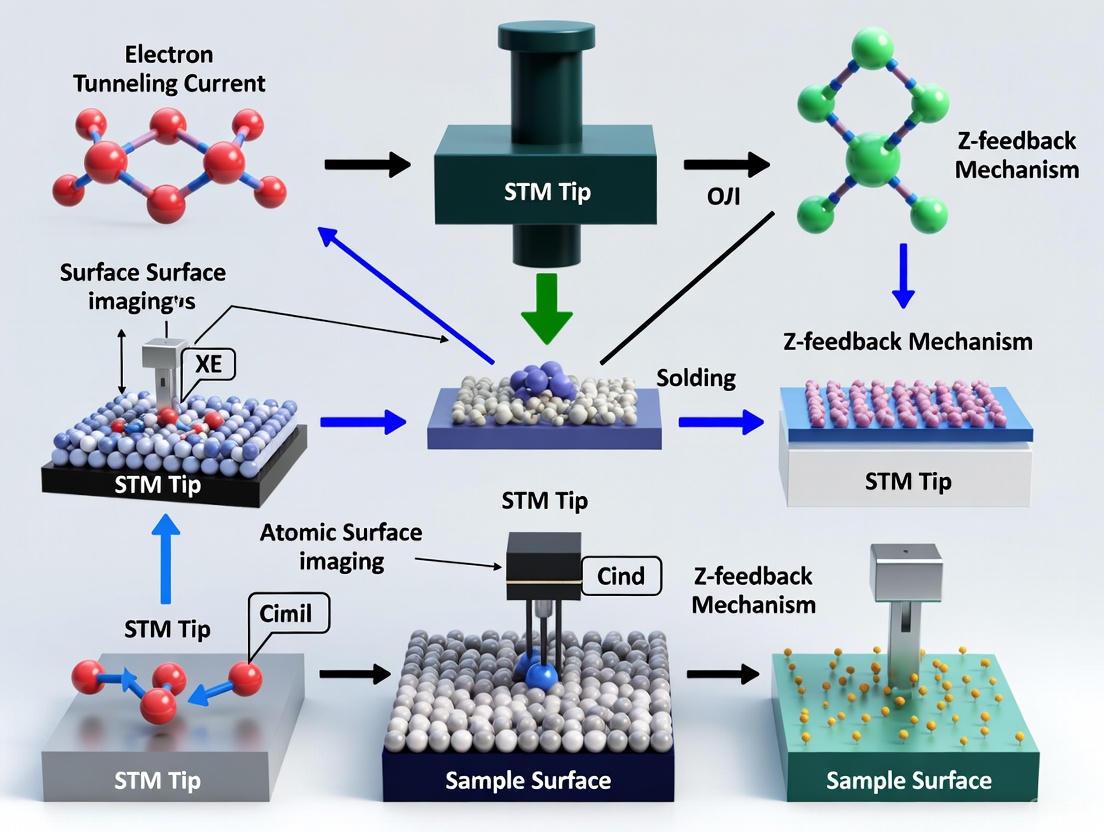
This article provides a comprehensive exploration of Scanning Tunneling Microscopy (STM), a technique capable of imaging surfaces at the atomic scale by exploiting quantum tunneling.
Atomic-Scale Insights: How Scanning Tunneling Microscopy is Revolutionizing Surface Science and Biomedical Research
Abstract
This article provides a comprehensive exploration of Scanning Tunneling Microscopy (STM), a technique capable of imaging surfaces at the atomic scale by exploiting quantum tunneling. Tailored for researchers, scientists, and drug development professionals, it covers the foundational principles of STM, from its historical development and quantum mechanical basis to its advanced methodological applications in characterizing catalytic surfaces, biological monolayers, and single-atom catalysts. The scope extends to practical guidance on overcoming key operational challenges like vibration isolation and image interpretation, and concludes with a comparative analysis against complementary techniques. By synthesizing the latest research and future directions, this article serves as a vital resource for leveraging atomic-scale surface imaging to drive innovation in material science and biomedical applications.
The Quantum Mechanical Bridge: Unveiling Atomic Worlds with STM
Scanning Tunneling Microscopy (STM) is an imaging technique of monumental importance in nanotechnology, enabling researchers to obtain ultra-high resolution images of conductive surfaces at the atomic scale without using light or electron beams [1]. Invented in 1981 by Gerd Binnig and Heinrich Rohrer at IBM (an achievement that earned them the Nobel Prize in Physics in 1986), STM was the first technique developed in the larger class of scanning probe microscopy (SPM) [2] [1]. This breakthrough provided significantly more detail than any previous microscopy technique, allowing researchers to map a conductive sample's surface atom by atom and precisely characterize its three-dimensional topography and electronic density of states [1]. The operation of STM represents a rare and remarkable example of harnessing a quantum mechanical process—electron tunneling—in a practical real-world application, revolutionizing fundamental and industrial research across physics, chemistry, and materials science [1].
The Quantum Tunneling Principle
Fundamental Concept
The core physical principle that enables STM is the quantum mechanical phenomenon of electron tunneling. In classical physics, an electron confronting a potential barrier higher than its kinetic energy would be completely reflected. However, quantum mechanics reveals that electrons possess a wave-like character that allows them to traverse such barriers [1]. This occurs because electrons do not exist as discrete points but as "fuzzy" probability clouds described by wavefunctions. When an electron cloud encounters a thin potential barrier, there is a non-zero probability that the electron will appear on the other side rather than being reflected [1].
In the specific context of STM, the potential barrier is the vacuum or air gap between the microscope's sharp conductive probe tip and the conductive sample surface. When this gap is reduced to approximately 1 nanometer or less, the electron clouds of the tip atom and surface atoms begin to overlap [1]. If a bias voltage is applied between the tip and sample in this configuration, electrons are driven to tunnel through the potential barrier, generating a measurable tunneling current [1].
Exponential Distance Dependence
The tunneling current (I) exhibits an exponential dependence on the tip-sample separation (d), following the relationship: I ∝ Vₛ × e^(-2κd)
Where Vₛ is the bias voltage and κ is the decay constant determined by the local work function of the material [1]. This exponential relationship makes the tunneling current extraordinarily sensitive to minute changes in distance—typically changing by an order of magnitude for every 0.1 nanometer variation in separation [1]. It is this remarkable sensitivity that ultimately enables STM to achieve atomic-scale resolution, as the tunneling current effectively probes the electronic density of states at the surface with sub-atomic precision.
Figure 1: Quantum Tunneling Principle - Comparison of classical prediction versus quantum mechanical reality in STM operation.
STM Operational Modes
Constant Current Mode
Constant current mode is the more commonly used operational mode in STM experiments [1]. In this mode, a feedback loop system actively maintains the tunneling current at a predetermined constant value by continuously adjusting the vertical position (z-height) of the probe tip relative to the sample surface [1]. When the tunneling current exceeds the target setpoint, indicating either a protrusion on the surface or a region of higher local electron density, the feedback system retracts the tip to increase the tip-sample distance. Conversely, if the current falls below the setpoint, indicating a depression or region of lower electron density, the system moves the tip closer to the surface [1]. The resulting three-dimensional map of the tip's vertical movements as a function of (x,y) position produces a topographical image representing surfaces of constant electron density, which generally corresponds to the physical topography of the surface [1]. This mode is particularly advantageous for imaging rough or irregular surfaces where maintaining a constant height might risk damaging the tip or sample.
Constant Height Mode
In constant height mode, the probe tip travels at a fixed vertical position above the sample surface while rapidly raster scanning across it [1]. Variations in the surface topography or electronic structure cause measurable changes in the tunneling current, which are recorded directly to construct the image [1]. This mode is generally reserved for imaging exceptionally smooth surfaces where the risk of tip-sample collision is minimal [1]. The primary advantage of constant height mode is its faster scanning capability, as it eliminates the response time limitations of the feedback loop system. This enables researchers to capture dynamic surface processes or to survey larger areas more efficiently. The resulting images represent maps of electronic density of states rather than direct topographical profiles, providing complementary information about the surface's electronic properties [1].
Table 1: Comparison of STM Operational Modes
| Parameter | Constant Current Mode | Constant Height Mode |
|---|---|---|
| Feedback Loop | Active: maintains constant current | Inactive: current variations are measured |
| Tip Movement | Vertical (z) adjustment continuously | Fixed z-position during scanning |
| Scanning Speed | Slower due to feedback response | Faster, no feedback limitations |
| Best For | Rough, irregular surfaces | Atomically flat, smooth surfaces |
| Output | Topography (constant electron density) | Electronic density of states map |
| Risk of Crash | Lower, maintained separation | Higher, fixed clearance |
Advanced STM Imaging Techniques
Bias-Dependent Imaging and Three-Color Composite
Advanced STM techniques leverage the relationship between tunneling bias and apparent topography to extract additional information about surface properties. The three-color composite process is one such technique that capitalizes on the fact that sample surfaces often exhibit strong bias-dependent apparent topography [3]. This occurs because the STM tip actually follows the local density of states rather than the physical topography alone, and this density of states varies with the energy of the tunneling electrons, which is determined by the applied bias voltage [3].
In this technique, three individual STM images of the identical sample area are acquired at different tunneling bias voltages. These images are subsequently combined in RGB mode, typically with the lowest bias image assigned to the red channel, an intermediate bias to green, and the highest bias to blue [3]. The resulting color image contains information about how the electronic structure of the surface varies with energy, which often correlates with chemical composition, adsorbates, or structural variations that might be indistinguishable in a single-bias topograph [3]. The color variations within a single image have physical meaning, though absolute colors between different images cannot be directly compared due to contrast normalization [3].
Tunneling Spectroscopy
Scanning Tunneling Spectroscopy (STS) extends STM beyond topographic imaging to directly probe the local electronic structure of surfaces. By positioning the tip at a fixed location above the surface and measuring the tunneling current as a function of applied bias voltage, researchers can obtain dI/dV spectra that reveal the local density of states (LDOS) of the sample [3]. This spectroscopic information can be spatially mapped across a surface by acquiring spectra at regular intervals in a grid pattern, creating a detailed picture of how electronic properties vary at the nanoscale.
When combined with the three-color composite technique, tunneling spectroscopy can provide the color information used to enhance a high-resolution STM topograph [3]. This powerful combination allows researchers to correlate atomic-scale structural features with their corresponding electronic properties, providing crucial insights for understanding catalytic activity, molecular orbital distributions, defect states, and other electronic phenomena at surfaces.
Experimental Protocols
Standard STM Imaging Procedure
Objective: To obtain atomic-resolution images of a conductive sample surface using scanning tunneling microscopy.
Materials and Equipment:
- Scanning Tunneling Microscope system
- Conductive probe tip (Pt-Ir, W, or other suitable material)
- Conductive sample (e.g., Highly Oriented Pyrolytic Graphite - HOPG, metal single crystal)
- Vibration isolation platform
- Sample preparation tools (cleavage tools, solvents, plasma cleaner if needed)
Procedure:
Sample Preparation
- For layered materials like HOPG, cleave the top layers using adhesive tape to expose a fresh, atomically flat surface.
- For other materials, employ appropriate cleaning procedures (e.g., argon sputtering, annealing, electrochemical etching) to ensure a clean, well-defined surface.
- Mount the sample securely on the STM sample holder, ensuring good electrical contact.
Tip Preparation
- Prepare a sharp conductive tip using appropriate methods (electrochemical etching for metal wires, mechanical cutting for Pt-Ir wires).
- Confirm tip sharpness and quality by performing test scans on a reference sample if available.
Microscope Setup
- Engage vibration isolation system.
- Approach the tip toward the sample using coarse approach mechanism until tunneling range is reached (typically indicated by a predefined current threshold).
- Set initial imaging parameters: bias voltage = 0.1-1.0 V, tunneling current = 0.1-1.0 nA (adjust based on sample and desired resolution).
Image Acquisition
- Select scanning area size (typically starting with larger areas - 1 μm × 1 μm - then progressing to smaller areas for higher resolution).
- Choose operational mode (constant current recommended for initial imaging).
- Begin scanning, monitoring image quality and adjusting parameters as needed.
- For atomic resolution, reduce scan size to 5-10 nm, optimize feedback loop gains to ensure stable tracking without oscillations.
Data Processing
- Apply necessary image processing (plane subtraction, flattening) to correct for sample tilt and thermal drift.
- Analyze surface features, defects, and periodic structures.
Figure 2: Complete STM experimental workflow from sample preparation to data analysis.
Three-Color Composite Imaging Protocol
Objective: To create color-enhanced STM images that encode bias-dependent electronic structure information.
Materials and Equipment:
- STM system capable of stable imaging over extended periods
- Thermally stable environment (to minimize drift during long acquisitions)
- Image processing software (e.g., ImageJ, Corel Photo-Paint, Adobe Photoshop)
Procedure:
Locate Region of Interest
- Identify a suitable sample area with features of interest using standard STM imaging.
- Ensure the area displays minimal drift and stable tunneling conditions.
Multi-Bias Image Acquisition
- Acquire three STM images of the identical region at different bias voltages.
- Typical bias settings: 0.3 V (low), 0.8 V (medium), 1.2 V (high) - adjust based on sample properties [3].
- Maintain constant tunneling current setpoint across all acquisitions.
- Ensure minimal sample drift between images by allowing thermal equilibration.
Image Registration
- Align the three images to correct for any residual thermal drift.
- Use cross-correlation or landmark-based alignment methods.
RGB Composite Creation
Color Enhancement
- Enhance color saturation by a factor of 2-3 to improve visual differentiation [3].
- Avoid altering color balance or applying artificial colorization.
- Document all processing steps for reproducibility.
Interpretation
The Scientist's Toolkit: Essential STM Research Reagents and Materials
Table 2: Essential Materials for STM Research
| Material/Reagent | Function/Application | Specifications |
|---|---|---|
| Conductive Probe Tips | Serves as scanning probe for tunneling current | Pt-Ir, W, or Au wires; electrochemically etched to atomic sharpness (tip radius < 50 nm) |
| HOPG (Highly Oriented Pyrolytic Graphite) | Standard calibration sample; atomically flat surface | ZYA grade recommended for minimal defects; freshly cleaved before use |
| Single Crystal Metal Substrates | Well-defined surfaces for fundamental studies | Au(111), Cu(111), Pt(111) with terraces of ≥100 nm width |
| Ultrasonic Cleaner | Cleaning tips and sample holders | Frequency: 40-50 kHz; with suitable solvents (acetone, ethanol, isopropanol) |
| Electrochemical Etching Setup | Sharpening metal wires for STM tips | DC power supply, electrolyte solution (e.g., 2M NaOH for W, CaCl₂ for Pt-Ir) |
| Vibration Isolation System | Minimizes mechanical noise | Active or passive isolation with natural frequency < 1 Hz |
| Sample Cleaving Tools | Creating fresh surfaces for imaging | Adhesive tape for layered materials; diamond scribe for brittle materials |
Applications in Surface Science Research
STM has enabled groundbreaking research across numerous disciplines by providing unprecedented atomic-scale characterization capabilities. In surface chemistry, STM has revealed the atomic structure of surface reconstructions, identified active sites for catalytic reactions, and visualized reaction intermediates adsorbed on surfaces [1]. The technique has been particularly instrumental in understanding self-assembled monolayers of organic molecules on various substrates, where it can resolve single molecules and even sub-molecular structure [1].
In nanotechnology, STM has progressed from a passive observation tool to an active manipulation instrument. Researchers have used STM tips to precisely position individual atoms on surfaces, creating quantum corrals, molecular switches, and custom nanostructures that exhibit unique quantum phenomena [1]. This atom manipulation capability has opened new possibilities for constructing nanoscale devices and studying fundamental quantum effects in confined systems.
More recently, advanced STM techniques have been applied to complex materials systems including molecular self-assembly, where STM has revealed the structural details of two-dimensional molecular lattices and moiré patterns [1]. Low-current STM operating at tunneling currents as low as 300 femtoamps has enabled higher resolution imaging of delicate molecular systems without disturbing the native structure [1]. These applications demonstrate how STM continues to evolve and provide valuable insights into the atomic-scale world, nearly four decades after its invention.
The invention of the Scanning Tunneling Microscope (STM) at the IBM Zurich Research Laboratory in 1981 marked a paradigm shift in surface science, providing researchers with the first-ever tool capable of visualizing and manipulating matter at the atomic level. Developed by physicists Gerd Binnig and Heinrich Rohder, this groundbreaking instrument earned its inventors the Nobel Prize in Physics in 1986 for an invention that would fundamentally reshape nanotechnology and materials science [4] [5]. The STM achieved what was previously thought impossible: imaging surfaces with a depth resolution of approximately 0.01 nm, allowing individual atoms to be routinely observed and manipulated [6]. By transcending the limitations of optical wavelength that constrained traditional microscopes, the STM unlocked a new realm of scientific inquiry based on the quantum mechanical phenomenon of electron tunneling [5].
The significance of this breakthrough extends far beyond fundamental physics. For researchers and drug development professionals, the STM and its subsequent progeny of scanning probe microscopes have created unprecedented opportunities for characterizing materials, studying biological molecules, and engineering nanostructures with precision. This application note details the operational principles, standardized protocols, and practical applications of STM technology, contextualized within its historical development from IBM laboratories to Nobel Prize recognition and contemporary research applications.
Theoretical Foundation: Harnessing Quantum Tunneling
The Quantum Mechanical Principle
The operational principle of STM relies exclusively on the quantum mechanical effect known as electron tunneling [1] [6]. When a sharp metallic tip approaches a conductive surface to within a distance of approximately 1 nanometer, a phenomenon occurs that defies classical physics: electrons can traverse the vacuum barrier between the tip and sample despite the absence of physical contact [1]. This tunneling effect arises from the wave-like nature of electrons, which enables a non-zero probability for electrons to cross a potential barrier that would be impenetrable according to classical mechanics [6].
The tunneling current ((I)) that forms the basis of STM imaging exhibits an exponential dependence on the tip-sample separation ((d)), following the relationship:
(I \propto V_b e^{-A \sqrt{\phi}d})
where (V_b) is the bias voltage applied between tip and sample, (\phi) is the average work function of the two materials, and (A) is a constant [6]. This exponential relationship makes the tunneling current exceptionally sensitive to minute changes in distance, with variations on the order of 0.1 nm producing measurable changes in current—the fundamental basis for atomic resolution [6].
Operational Modes of STM
The STM operates in two primary imaging modes, each with distinct advantages for specific applications:
Constant Current Mode: In this more commonly used mode, a feedback loop continuously adjusts the tip height to maintain a constant tunneling current during scanning [1] [6]. The resulting voltage applied to the z-axis piezoelectric scanner creates a topographic map that convolves both surface topography and local electronic structure [6]. This mode is particularly valuable for rough surfaces where tip crash is a concern, as the feedback mechanism maintains a relatively constant tip-sample separation.
Constant Height Mode: In this faster acquisition mode, the tip remains at a nearly constant height while variations in tunneling current are directly recorded [1] [6]. This mode is generally restricted to atomically flat surfaces but enables rapid imaging, making it suitable for observing dynamic surface processes [6].
Table 1: Comparison of STM Operational Modes
| Parameter | Constant Current Mode | Constant Height Mode |
|---|---|---|
| Feedback Loop | Active | Inactive |
| Scan Speed | Slower | Faster |
| Primary Output | Tip height adjustments | Tunneling current variations |
| Surface Compatibility | All surfaces, especially rough | Atomically flat surfaces |
| Resolution Considerations | Contains topographical and electronic information | Primarily electronic structure |
| Risk of Tip Crash | Lower | Higher on rough surfaces |
Instrumentation and Research Reagents
Core STM Components
A scanning tunneling microscope consists of several sophisticated subsystems that must operate in concert to achieve atomic resolution:
Scanning Tip: The tip represents the most critical component, typically fabricated from tungsten, platinum-iridium, or gold wires [6] [7]. Tip sharpness directly determines image resolution, with ideal tips terminating in a single atom [6]. Preparation methods include electrochemical etching for tungsten tips and mechanical shearing for PtIr alloys [6].
Piezoelectric Scanner: These components provide precise tip or sample positioning with sub-angstrom resolution [6]. Most modern STMs use hollow tube scanners constructed from lead zirconate titanate ceramics, which exhibit piezoelectric constants of approximately 5 nm/V [6]. Electrodes on the scanner tube enable three-dimensional positioning by applying appropriate control voltages.
Vibration Isolation System: Due to the extreme sensitivity of tunneling current to distance variations, sophisticated vibration damping is essential. Early STMs used magnetic levitation, while contemporary systems employ mechanical spring or gas spring systems, often supplemented with eddy current damping [6]. Systems designed for high-resolution spectroscopy may require anechoic chambers with acoustic and electromagnetic isolation [6].
Control Electronics and Software: Dedicated electronics regulate the bias voltage, measure tunneling current (typically in the sub-nanoampere range), and control the piezoelectric scanners [6]. Sophisticated software handles data acquisition, image processing, and quantitative analysis of surface properties.
Research Reagent Solutions
Table 2: Essential Materials for STM Research
| Material/Reagent | Function/Application | Specifications |
|---|---|---|
| Platinum-Iridium (PtIr) Tips | Standard tip material for general purpose STM | 80/20 PtIr alloy, mechanically sheared [7] [6] |
| Tungsten (W) Tips | High-resolution imaging in UHV | Electrochemically etched, radius <100 nm [6] |
| Gold Single Crystals | Standard substrate for calibration | Au(111) with herringbone reconstruction [7] |
| Highly Oriented Pyrolytic Graphite (HOPG) | Atomically flat substrate for ambient conditions | Freshly cleaved surface [1] |
| Argon Gas | Surface cleaning via sputtering | High purity (99.999%), 1-5 keV energy [7] |
| 5-octadecoxyisophthalic acid | Molecular self-assembly studies | Forms self-assembled monolayers on HOPG [1] |
| Nickel Octaethylporphyrin (NiOEP) | Molecular electronics research | Forms 2D lattices on HOPG for electronic studies [1] |
Experimental Protocols
Tip Preparation and Characterization Protocol
Reproducible tip preparation is essential for reliable STM operation, particularly for applications requiring atomic resolution or spectroscopic measurements. The following protocol, adapted from contemporary research practices, details a procedure for in situ tip conditioning [7]:
Step 1: Initial Tip Approach
- Bring the tip within tunneling range of a clean metal surface (typically Au(111)) using coarse positioning mechanisms.
- Establish tunneling conditions with parameters set to: bias voltage = 100 mV, tunneling current = 1 nA.
Step 2: Mechanical Annealing Cycles
- Program controlled indentation cycles using a custom MATLAB script or equivalent control software.
- Execute tip approach at a constant rate of 0.5 Å/s until reaching a predetermined conductance value, typically the quantum conductance unit (G_0 = 2e^2/h) for gold contacts [7].
- Immediately retract the tip completely from contact after reaching the target conductance.
- Repeat this process for 50-100 cycles while monitoring conductance traces for reproducibility.
Step 3: Tip Quality Verification
- Image a known surface feature, such as a single adatom deposited on Au(111).
- Assess image symmetry; asymmetric adatom images indicate tip asymmetry requiring further conditioning [7].
- For quantitative assessment, perform scanning tunneling spectroscopy on a standard surface to verify electronic feature reproducibility.
This mechanical annealing procedure induces plastic deformation at the tip apex, gradually evolving toward a stable, crystalline structure that produces reproducible conductance traces and enhanced image quality [7].
High-Resolution Imaging Protocol for HOPG
Highly Oriented Pyrolytic Graphite (HOPG) serves as a standard calibration sample for STM due to its atomically flat surfaces and well-characterized atomic structure. The following protocol ensures optimal imaging conditions:
Step 1: Substrate Preparation
- Cleave HOPG surface immediately before imaging using adhesive tape to expose fresh, contamination-free basal planes.
- Mount sample securely to minimize thermal drift during imaging.
Step 2: Imaging Parameter Optimization
- For ambient conditions, set tunneling parameters to: bias voltage = 10-50 mV, tunneling current = 1 nA.
- Engage feedback loop with moderate gain settings to ensure stable tracking without oscillations.
- Select constant current mode for initial survey scans, transitioning to constant height mode for high-speed atomic resolution imaging on flat terraces.
Step 3: Data Acquisition
- Acquire initial large-scale images (500×500 nm) to identify suitable atomically flat regions.
- Progress to smaller scan sizes (10×10 nm) for atomic resolution.
- Set scan speed to 1-2 Hz per line to balance signal-to-noise ratio and temporal resolution.
Step 4: Image Processing and Analysis
- Apply plane correction to compensate for sample tilt.
- Use Fourier filtering to enhance periodic structures while minimizing high-frequency noise.
- Measure lattice parameters against known HOPG structure (triangular lattice with 2.46 Å interatomic spacing).
Molecular Self-Assembly Imaging Protocol
Self-assembled monolayers (SAMs) represent important model systems for surface functionalization and molecular electronics. The following protocol details procedures for imaging molecular assemblies:
Step 1: Sample Preparation
- Prepare solution of target molecule (e.g., 5-octadecoxyisophthalic acid) in appropriate solvent at 0.1-1 mM concentration.
- Deposit solution droplet onto freshly cleaved HOPG surface and allow incubation for 1-5 minutes.
- Rinse gently with pure solvent to remove physisorbed multilayers and blow-dry with inert gas.
Step 2: STM Imaging Conditions
- Optimize tunneling parameters for molecular imaging: bias voltage = 500-800 mV, tunneling current = 50-200 pA.
- Use low-current settings (300 fA - 60 pA) for high-resolution imaging of molecular orbitals [1].
- Employ constant height mode to capture electronic structure details without feedback-induced artifacts.
Step 3: Data Interpretation
- Correlate observed molecular patterns with known molecular dimensions and symmetry.
- Identify domain boundaries and structural defects in the self-assembled lattice.
- Compare experimental images with molecular modeling to confirm molecular orientation and packing density.
Diagram 1: STM Experimental Workflow
Advanced Applications and Case Studies
Single-Atom Manipulation and Quantum Corrals
A landmark demonstration of STM capabilities occurred in 1990 when IBM researchers used the microscope to manipulate individual xenon atoms on a nickel surface, spelling out the letters "IBM" [4]. This unprecedented feat established the STM as both an imaging tool and a fabrication instrument at the atomic scale. The manipulation process involves:
- Positioning the STM tip directly above a target atom at low temperature (4 K) to minimize thermal diffusion.
- Lowering the tip to increase interaction strength between tip and atom.
- Dragging the atom across the surface by moving the tip while maintaining contact.
- Retracting the tip once the atom reaches the desired position.
This capability enabled the creation of "quantum corrals"—carefully arranged atom arrays on metal surfaces that confine surface electrons, creating standing wave patterns that can be directly visualized with STM [1]. These structures provide direct observation of quantum mechanical phenomena and enable fundamental studies of electron behavior in confined geometries.
Scanning Tunneling Spectroscopy (STS) and Electronic Structure Mapping
Scanning Tunneling Spectroscopy extends STM capabilities beyond topography to map the local electronic density of states (LDOS) with atomic resolution. Standard STS protocols include:
- I-V Spectroscopy: At fixed tip position, disabling the feedback loop and sweeping the bias voltage while measuring tunneling current reveals sample electronic structure at specific locations [6].
- dI/dV Mapping: Recording the differential conductance ((dI/dV)) as a function of position provides spatial maps of the LDOS at specific energies, particularly valuable for identifying impurities, defects, and quantum states [6].
- Barrier Height Measurements: Modulating the tip-sample distance while monitoring current variations yields information about the local tunnel barrier, related to surface work function.
These spectroscopic techniques have proven invaluable in characterizing semiconductor materials, high-temperature superconductors, and single-molecule electronics.
Table 3: Spectroscopy Parameters for Various Material Systems
| Material System | Bias Voltage Range | Key Spectral Features | Application Notes |
|---|---|---|---|
| Metals (Au, Ag, Cu) | ±1 V | Nearly featureless LDOS | Surface state mapping at low biases |
| Semiconductors (Si, GaAs) | ±2 V | Band edges, surface states | Careful Fermi level positioning critical |
| High-Tc Superconductors | ±20 mV | Superconducting gap | Requires low temperatures (4 K) |
| Single Molecules | ±0.5 V | Frontier orbital resonances | Avoid high voltages that induce conformational changes |
Environmental STM and Electrochemical Applications
STM operation under various environmental conditions significantly expands its application potential. Modifications to standard ultra-high vacuum (UHV) configurations enable studies in:
- Ambient Conditions: Standard laboratory air with vibration isolation and acoustic noise reduction enables imaging of biological samples and molecular self-assembly [1].
- Liquid Environments: Specialized tips with insulation exposing only the very apex allow STM operation in electrochemical cells for in situ studies of electrode processes, corrosion, and electrodeposition [1].
- Variable Temperature: Systems operating from near 0 K to over 1000°C facilitate investigations of temperature-dependent phenomena including surface diffusion, phase transitions, and reaction kinetics [1] [6].
Diagram 2: STM Application Domains
Future Perspectives and Emerging Methodologies
The evolution of scanning tunneling microscopy continues with several promising developments expanding the technique's capabilities:
- Low-Current STM: Advanced electronics enabling stable operation at tunneling currents as low as 300 femtoamperes provide enhanced resolution for delicate molecular systems while minimizing tip-sample interactions [1].
- High-Speed STM: Video-rate imaging at 80 Hz frame rates captures dynamic surface processes in real time, including diffusion, reaction kinetics, and molecular switching events [6].
- Multi-Probe STM: Systems incorporating multiple independent tips enable four-point resistance measurements and complex device characterization at the nanoscale.
- Combined SPM Techniques: Integration with atomic force microscopy (AFM) and other scanning probe methods provides complementary information about both electronic and mechanical properties with atomic resolution [1].
These advancements ensure STM's continued relevance in nanotechnology, particularly in the development of quantum materials, molecular machines, and next-generation electronic devices. The transition from IBM's pioneering instrument to today's sophisticated research tools exemplifies how fundamental breakthroughs in measurement technology can catalyze entire fields of scientific inquiry, from basic surface science to applied drug development and materials engineering.
The legacy of Binnig and Rohrer's invention extends far beyond its Nobel Prize recognition—it has established a paradigm for nanotechnology research that continues to evolve, enabling scientists to not only see the atomic world but to engineer it with increasing precision. For researchers and drug development professionals, STM and its derivative technologies offer powerful approaches to characterize materials and biological systems at the fundamental scale where molecular interactions determine macroscopic properties and functions.
The scanning tunneling microscope (STM), since its Nobel Prize-winning inception, has become an indispensable tool in nanotechnology and atomic-scale surface research [8] [9]. Its unique ability to probe the structural and electronic properties of surfaces with sub-atomic resolution has profound implications for fundamental physics, materials science, and drug development, where understanding molecular interactions at the atomic level is critical. The operational prowess of the STM rests on three fundamental pillars: the piezoelectric scanner, which enables angstrom-precise positioning; the scanning tip, which serves as the primary sensor for electron tunneling; and the feedback loop, which maintains stable imaging conditions [10] [9]. This application note details these core components, providing structured quantitative data, detailed experimental protocols, and essential workflows to guide researchers in the field of atomic surface imaging.
Core Components and Technical Specifications
Piezoelectric Scanners
Piezoelectric materials form the mechanical backbone of all STMs, converting electrical voltages into precise physical movements. They are utilized in scanners to position the tip relative to the sample with sub-angstrom precision in three dimensions [9].
Table 1: Performance Characteristics of Piezoelectric Tube Scanners
| Characteristic | Standard Single-Tube Scanner | Stacked Piezo Tube Scanner [10] | Implication for STM Performance |
|---|---|---|---|
| XY Scanning Principle | Raster pattern (triangular wave) | Raster pattern (triangular wave) | Standard method for area imaging |
| Z Direction Control | High-voltage electrode | High-voltage electrode | Maintains constant tunneling current |
| Lateral (X-Y) Drift Rate | Typically >100 pm/min | 22.8 pm/min (at 300 K) [10] | Critical for long-term stability & large-area imaging |
| Vertical (Z) Drift Rate | Typically >100 pm/min | 31.1 pm/min (at 300 K) [10] | Determines height measurement stability |
| Key Nonlinearities | Hysteresis, Creep, Vibration [11] [12] | Hysteresis, Creep, Vibration | Causes image distortion, requires compensation |
| Optimal Operating Temp. | Room Temperature (300 K) | Room Temperature (300 K) and 2 K [10] | Enables diverse experimental conditions |
The performance of piezoelectric scanners is limited by inherent nonlinear dynamics, including hysteresis, creep, and temperature-dependent behavior, which adversely affect image quality unless compensated by a controller [11] [12]. A recent innovation to overcome these challenges is the stacked piezo tube design [10]. This configuration uses two piezo tubes to function as a single coarse stepper motor during tip approach, summing their output forces for reliability. For atomic-resolution imaging, only the shorter tube is used, which, due to its smaller size, is less susceptible to external disturbances, thereby enhancing imaging accuracy and stability while allowing for a more compact STM head [10].
Scanning Tunneling Microscope Tips
The STM tip is the primary probe for surface interaction. While the search results do not provide an exhaustive list of tip specifications, the fundamental principles are well-established.
Table 2: Research Reagent Solutions - STM Tip Specifications
| Tip Material | Common Fabrication Method | Key Function and Properties | Applicable Experiments |
|---|---|---|---|
| Tungsten (W) | Electrochemical etching | Hard material; requires in-situ cleaning via high-bias field-emission to ensure a flat density of states (DOS) [9]. | General topographic imaging, dI/dV spectroscopy |
| Platinum-Iridium (PtIr) | Mechanical cutting | Chemically inert; often used without further processing. Assumption of a flat DOS is confirmed via I-V curves on metal substrates [9]. | Ambient condition imaging, electrochemical STM |
| Gold (Au) Substrate | Not applicable | Standard substrate for tip processing and characterization. Used to confirm a flat tip DOS via field emission [9]. | Tip preparation and calibration |
The tip's electronic structure is paramount. For accurate spectroscopy, the tip must have a featureless density of states around the Fermi level, which is typically achieved and verified through high-bias field-emission on a clean metal surface like Au(111) [9].
Feedback Control Systems
The feedback loop is the intelligent system that actively maintains the tunneling gap during scanning.
Table 3: Feedback Control Methodologies for STM/AFM
| Control Method | Principle | Key Parameters | Advantages & Applications |
|---|---|---|---|
| Constant Current Topography (STM) [9] | Feedback adjusts tip height (Z) to maintain a setpoint tunneling current (I~set~) at fixed bias (V). | Setpoint Current (I~set~), Bias Voltage (V), PID gains | Most common STM mode; maps surface contour convoluted with electronic structure. |
| Data-Driven Feedforward (AFM) [11] | Compensates piezoelectric hysteresis by pre-distorting scan waveforms. No lateral sensors required. | Identified hysteresis mappings from image pairs. | Ideal for high-speed AFM; mitigates image distortion without added sensors. |
| Strain Gauge Feedback (AFM) [13] | Uses a sensor (e.g., strain gauge) on the Z-piezo for direct position measurement. | Z Sensor Signal | Provides linear metrology for force curves; reduces hysteresis in topography. |
In Constant Current Mode, the most common STM imaging mode, the tip is rastered across the surface at a fixed bias voltage (V) [9]. The feedback loop continuously adjusts the tip's Z-position to keep the measured tunneling current at a predefined setpoint value (I~set~). The resulting trajectory of the Z-piezo is recorded as the topograph [9]. It is critical to understand that this topograph is not a pure geometric profile but a convolution of surface topography and the local electronic density of states (DOS) of the sample [9].
The following diagram illustrates the signaling pathway of this core feedback loop.
Experimental Protocols
Protocol: Atomic-Resolution Topographic Imaging on Graphite
This protocol is adapted from the methodology used to validate the performance of a novel stacked-piezo STM, which achieved high-quality atomic resolution at both room temperature and 2 K [10].
1. Sample Preparation:
- Cleaving: Obtain a fresh, atomically flat surface by mechanically cleaving a highly oriented pyrolytic graphite (HOPG) sample using adhesive tape immediately before loading it into the STM.
2. Tip Preparation and Approach:
- Tip Selection: Install a chemically etched Tungsten (W) or a mechanically cut PtIr tip.
- Coarse Approach: Use the stepper motor or the coarse approach mechanism of the STM to bring the tip to within a few micrometers of the sample surface.
- Fine Approach: Engage the piezo scanner to slowly advance the tip until a tunneling current is detected (e.g., 0.1-1 nA at a bias of 10-100 mV).
3. Feedback Loop Engagement and Imaging:
- Set Feedback Parameters: Set the bias voltage to a low value (e.g., V = 10-30 mV) and the setpoint current to I~set~ = 0.5-1 nA.
- Optimize PID Gains: Adjust the proportional (P), integral (I), and derivative (D) gains of the feedback controller to achieve a stable response without oscillations. This is critical for high-resolution imaging.
- Start Raster Scan: Initiate a slow-speed raster scan over a small area (e.g., 5 nm x 5 nm). The feedback system will now actively maintain a constant tunneling current by moving the Z-piezo, and this Z-position data will be recorded as the topographic image.
4. Performance Validation:
- Assess Stability: Verify the instrument's stability by confirming low drift rates. The stacked-piezo STM demonstrated lateral and vertical drift rates as low as 22.8 pm/min and 31.1 pm/min, respectively [10].
- Atomic Resolution: A successful experiment will reveal the characteristic hexagonal atomic lattice of the graphite surface.
Protocol: Differential Conductance (dI/dV) Spectroscopy
This protocol details the procedure for acquiring local density of states (LDOS) spectra, a powerful extension of STM [9].
1. Acquire Topograph:
- First, obtain a constant-current topograph of the region of interest using the protocol in Section 3.1.
2. Position Tip and Configure Lock-in Amplifier:
- Positioning: Move the tip to the specific (x,y) location on the surface where the spectrum is desired.
- Lock-in Setup: Configure a lock-in amplifier to add a small, high-frequency sinusoidal modulation dV (typical amplitude 1-10 mV, frequency ~1-5 kHz) to the DC bias voltage V.
3. Data Acquisition:
- Disable Feedback: Turn off the feedback loop. This fixes the tip-sample distance (s).
- Sweep DC Bias: Sweep the DC bias voltage V over the desired energy range (e.g., from -1 V to +1 V).
- Measure dI/dV: At each bias point, the lock-in amplifier directly measures the differential conductance dI/dV, which is proportional to the sample's local density of states at energy ε = eV [9]. The relationship is: ρ~s~(eV) ∝ dI/dV.
The workflow for this spectroscopic measurement is outlined below.
Advanced Applications and Material Property Mapping
Beyond topography, STM and its relative, Atomic Force Microscopy (AFM), can be used to map a wide range of material properties by leveraging different feedback signals and operational modes [14] [8]. These techniques are invaluable in drug development for characterizing the mechanical and chemical properties of surfaces and biomolecules.
Key AFM Modes for Material Characterization [8]:
- Phase Imaging: In tapping mode AFM, the phase shift between the driving oscillation and the cantilever's response is sensitive to energy dissipation, enabling the mapping of viscoelastic properties, adhesion, and friction.
- Piezoresponse Force Microscopy (PFM): A conductive tip applies an AC voltage to the surface, and the resulting local piezoelectric deformation is measured. This allows for the imaging of ferroelectric domains in materials.
- Kelvin Probe Force Microscopy (KFM): This mode measures the contact potential difference (work function) between the tip and sample, providing a map of surface potential with high spatial resolution.
The performance and reliability of scanning tunneling microscopy for atomic-scale research are fundamentally determined by the intricate interplay between its core components: high-precision piezoelectric scanners, well-characterized tips, and robust feedback loops. The continuous development of these elements—exemplified by innovations like the stacked piezo tube scanner for enhanced stability and miniaturization—pushes the boundaries of what is possible in nanoscale imaging and spectroscopy [10]. Mastery of the associated experimental protocols, from fundamental topographic imaging to advanced spectroscopic techniques, empowers researchers to not only visualize but also quantitatively analyze the structural and electronic landscape of surfaces, providing critical insights for fields ranging from quantum materials to pharmaceutical sciences.
Scanning Tunneling Microscopy (STM) revolutionized surface science by providing the first real-space imaging technique capable of achieving atomic-scale resolution. Developed in 1981 by Gerd Binnig and Heinrich Rohrer at IBM Zürich—an achievement that earned them the Nobel Prize in Physics in 1986—STM operates not by using light or electron beams, but by exploiting the quantum mechanical phenomenon of electron tunneling [6] [1]. This technique enables researchers to map a conductive sample's surface atom by atom, revealing details of surface topography and electronic structure with unprecedented resolution. The profound sensitivity of STM stems from the exponential dependence of the tunneling current on the tip-sample separation, where changes as small as 0.01 nm (10 pm) can be detected [6] [15].
The operation of all STM systems relies on bringing an atomically sharp conductive tip extremely close (typically <1 nm) to a conductive or semiconducting sample surface. When a bias voltage is applied between them, electrons tunnel through the vacuum barrier, generating a measurable current [1]. The two primary imaging modes—constant-current and constant-height—differ in how they utilize this tunneling current to extract information about the sample surface. The choice between these modes represents a fundamental trade-off between resolution capability, scan speed, and operational safety, with each mode offering distinct advantages for specific experimental conditions and research objectives. Understanding the underlying principles, instrumentation requirements, and practical applications of each mode is essential for optimizing STM experiments in atomic-scale surface research.
Fundamental Principles of STM Operation
Quantum Tunneling Phenomenon
The operational principle of STM rests entirely on the quantum mechanical phenomenon of electron tunneling, which allows electrons to traverse a classically impenetrable potential barrier. According to classical physics, a particle encountering a barrier with energy greater than its kinetic energy would be completely reflected. However, quantum mechanics predicts that particles such as electrons have a finite probability of appearing on the other side of the barrier due to their wave-like nature [6] [1].
In the STM configuration, the vacuum gap between the tip and sample forms this potential barrier. The wavefunction of an electron does not terminate abruptly at a barrier but rather decays exponentially within it. This decaying wavefunction can couple with states on the opposite side, enabling tunneling when the barrier width is sufficiently narrow (typically on the order of nanometers). The resulting tunneling current ((I_t)) follows the relationship:
(It \propto Vb e^{-k d})
Where (V_b) is the applied bias voltage, (d) is the tip-sample separation, and (k) is a constant related to the effective local work function of the material [15]. This exponential dependence is the source of STM's remarkable vertical sensitivity, as a change in tip-sample distance of merely 1 Å can alter the tunneling current by an order of magnitude [15]. For a typical STM operating with a tunneling current of 1 nA, the tip-sample distance is maintained in the range of 4-7 Å (0.4-0.7 nm) [6].
Core STM Instrumentation
Implementing either constant-current or constant-height mode requires a sophisticated instrumental setup with several critical components:
Scanning Tip: Typically fabricated from tungsten, platinum-iridium, or gold wire through electrochemical etching or mechanical shearing [6]. The ultimate resolution is limited by the radius of curvature of the tip's apex, with ideal tips terminating in a single atom. Tip quality significantly affects image quality, and multiple apexes can cause artifacts such as double-tip imaging [6].
Piezoelectric Scanner: Usually constructed from a radially polarized piezoelectric ceramic tube (often lead zirconate titanate) with a piezoelectric constant of approximately 5 nanometers per volt [6]. The outer surface is divided into four electrodes to enable precise three-dimensional positioning—applying voltages to opposing electrodes causes bending for x-y motion, while voltage applied to the entire tube causes extension or contraction for z-motion [6].
Vibration Isolation System: Essential for maintaining stable tip-sample separation given the extreme sensitivity of tunneling current to distance. Early STMs used magnetic levitation, while modern systems employ mechanical spring or gas spring systems, sometimes supplemented with eddy current damping [6]. Systems designed for long scans or spectroscopy require extreme stability, often being housed in dedicated anechoic chambers with acoustic and electromagnetic isolation [6].
Control Electronics and Feedback System: sophisticated electronics for controlling piezoelectric elements, applying bias voltages, measuring tunneling currents, and implementing feedback loops. The computer system coordinates scanning, data acquisition, and image processing [6].
Constant-Current Imaging Mode
Operational Principle
Constant-current mode is the more widely used STM imaging method, particularly for surfaces with significant topography [1]. In this mode, a feedback loop continuously adjusts the height of the tip above the sample surface to maintain a predetermined, constant tunneling current (setpoint) as the tip rasters across the sample [1] [15]. The feedback mechanism compares the measured tunneling current with the setpoint value at each position; if the current exceeds the setpoint, the feedback system retracts the tip, while if the current is too low, it moves the tip closer to the surface [1]. The voltage applied to the z-scanner piezoelectric element to maintain constant current is recorded and converted into topographical information, creating a three-dimensional height profile of the surface [6] [15].
The resulting image represents a surface of constant tunneling probability, which correlates with both physical topography and local electronic properties of the sample. When the surface is atomically flat, the voltage applied to the z-scanner mainly reflects variations in local charge density. However, when atomic steps or reconstructed surfaces are encountered, the height adjustment incorporates both true topography and electron density effects, making interpretation sometimes ambiguous [6].
Experimental Protocol
Implementing constant-current mode requires careful configuration of several parameters:
Tip Approach: Begin with the tip retracted from the surface. Engage the coarse positioning mechanism to bring the tip within tunneling range (typically monitored visually or through current monitoring). Once within range, fine control is handed over to the piezoelectric scanners [6].
Parameter Setup:
- Set the target tunneling current (setpoint), typically in the sub-nanoampere range [6]
- Select an appropriate bias voltage (typically several millivolts to volts) depending on the sample material
- Configure feedback loop gains (proportional, integral, and sometimes derivative parameters) to ensure stable operation without oscillation
Scan Execution:
- Initiate the raster scan pattern across the desired area
- The feedback system continuously adjusts the z-scanner height at each point to maintain constant current
- Record the z-scanner voltage as a function of (x,y) position
Data Collection:
- The recorded z-position data forms the topographical image
- Additional channels can simultaneously record variations in tunneling current or other parameters
Table: Key Parameters for Constant-Current Mode
| Parameter | Typical Range | Effect on Imaging |
|---|---|---|
| Tunneling Current Setpoint | 0.01-10 nA | Higher currents reduce tip-sample distance, increasing risk of tip crashes but potentially improving signal-to-noise ratio |
| Bias Voltage | Several mV to V | Affects electron tunneling probability and sample interaction; polarity determines direction of electron flow |
| Scan Speed | 0.1-10 Hz (line frequency) | Slower speeds improve stability on rough surfaces but increase acquisition time |
| Feedback Gain | Application-dependent | Higher gains improve response but can cause oscillation; requires optimization for each surface |
Applications and Limitations
Constant-current mode is particularly well-suited for:
- Rough or irregular surfaces where maintaining a safe tip-sample distance is critical [15]
- Atomic-scale defect imaging where precise tracking of surface variations is necessary
- Long-duration experiments where thermal drift or other instabilities might affect tip-sample distance
- Spectroscopy mapping where maintaining constant tip-sample separation is prerequisite for comparable electronic measurements
The primary limitations of constant-current mode include:
- Reduced scan speed due to the response time of the feedback loop [15]
- Potential feedback instability on surfaces with abrupt height changes
- Mixed topographical and electronic information in the resulting images, sometimes complicating interpretation [6]
Constant-Height Imaging Mode
Operational Principle
In constant-height mode, the tip travels at a fixed height above the sample surface while the tunneling current is monitored as the tip scans [1] [15]. Unlike constant-current mode, no feedback adjustment occurs to maintain constant current during the scan line. Instead, the variations in tunneling current resulting from changes in tip-sample separation (due to surface topography) or local electronic structure are directly mapped [6] [15]. This mode capitalizes on the exponential dependence of tunneling current on distance, where minute variations in surface height produce significant changes in current that can be measured with high sensitivity [15].
The constant-height mode image therefore represents a direct mapping of the tunneling current as a function of (x,y) position at approximately constant average tip-sample separation. Since the tunneling current depends both on the actual topography and the local density of states (LDOS) of the sample, the images contain information about both surface structure and electronic properties [6] [1]. For flat surfaces with uniform electronic properties, the current variations directly reflect surface topography, while on heterogeneous surfaces, the interpretation becomes more complex.
Experimental Protocol
Implementing constant-height mode requires distinct experimental considerations:
Surface Assessment: Confirm the sample surface is sufficiently smooth for safe operation in constant-height mode [15]
Initial Setup:
- Approach the tip to tunneling range using standard procedures
- Establish stable tunneling conditions in feedback mode initially
- Disable or greatly reduce the feedback loop response for the fast scan direction
Parameter Selection:
- Set the initial tip height based on a reference tunneling current
- Choose appropriate bias voltage for the specific experiment
- Select scan speed compatible with current amplifier bandwidth
Data Acquisition:
- Maintain constant z-scanner voltage while rastering across the surface
- Record tunneling current variations as a function of (x,y) position
- Potentially record multiple channels simultaneously (current, derivative signals)
Post-Processing:
- Apply necessary filtering to reduce noise in the current signal
- Convert current variations to height information using the known exponential relationship if quantitative topography is desired
Table: Key Parameters for Constant-Height Mode
| Parameter | Typical Range | Effect on Imaging |
|---|---|---|
| Initial Tip-Sample Distance | 4-7 Å | Determines baseline tunneling current and risk of tip crash |
| Bias Voltage | Several mV to V | Influences tunneling probability and surface electronic sensitivity |
| Scan Speed | 1-80 Hz (or higher) | Faster speeds possible due to absent feedback limitations [6] |
| Current Amplifier Bandwidth | Must match scan speed requirements | Higher bandwidth enables faster scanning but may increase noise |
Applications and Limitations
Constant-height mode offers particular advantages for:
- High-speed imaging of dynamic processes, with frame rates up to 80 Hz demonstrated in video-rate STMs [6]
- Atomic-scale resolution on flat surfaces where the exponential current-distance dependence provides exceptional sensitivity [15]
- Electronic structure mapping where the direct current measurement reflects local density of states without feedback interference [1]
- Molecular orbital imaging where frontier orbitals can be visualized with proper bias voltage selection [1]
Significant limitations include:
- Risk of tip damage or sample modification due to possible collisions with surface protrusions [6] [15]
- Restriction to relatively smooth surfaces where height variations are minimal [15]
- Limited usable dynamic range due to the exponential current response to height variations
Comparative Analysis and Technical Considerations
Direct Comparison of Operating Modes
Understanding the relative strengths and limitations of each imaging mode is essential for appropriate selection based on experimental needs. The following table provides a systematic comparison:
Table: Comprehensive Comparison of Constant-Current vs. Constant-Height Modes
| Characteristic | Constant-Current Mode | Constant-Height Mode |
|---|---|---|
| Feedback Loop | Active: maintains constant current by adjusting tip height [1] [15] | Inactive or minimal: tip height fixed during scan line [1] [15] |
| Primary Output Signal | Z-scanner voltage (height adjustment) [15] | Tunneling current variation [15] |
| Scan Speed | Slower (limited by feedback response) [15] | Faster (no feedback limitations) [6] [15] |
| Surface Compatibility | Rough, irregular surfaces with significant topography [15] | Atomically flat surfaces with minimal height variations [15] |
| Risk of Tip Damage | Lower (feedback maintains safe distance) [6] | Higher (possible crashes with protrusions) [6] [15] |
| Information Content | Topography mixed with electronic structure [6] | Direct electronic density mapping with topographical influence [6] |
| Quantitative Height Data | Direct measurement [15] | Indirect (derived from current using exponential relationship) [15] |
| Best Applications | Rough surfaces, defect studies, spectroscopy [15] | Flat surfaces, dynamic processes, electronic structure [6] [15] |
Advanced Applications: Scanning Tunneling Spectroscopy (STS)
A powerful extension of both imaging modes is Scanning Tunneling Spectroscopy (STS), where spectroscopic information is obtained by fixing the tip position and measuring current-voltage (I-V) characteristics [6] [15]. This technique provides detailed information about the local density of states (LDOS) at specific surface locations. STS can be performed in two primary ways:
Point Spectroscopy: The tip is positioned over a feature of interest, the feedback is disabled, and the bias voltage is ramped while measuring current. This provides I-V characteristics at specific locations [6].
Spectroscopy Mapping: A grid of measurement points is defined, and I-V curves are acquired at each point. This creates a three-dimensional map of electronic properties across the surface [15].
STS is particularly valuable for investigating impurities, defects, and nanoscale heterogeneities, as the local density of states at such sites often differs significantly from the surrounding areas [6]. When combined with spatial mapping, STS can reveal how electronic properties vary across a surface, providing insights into quantum confinement, band bending, and other electronically important phenomena.
Research Reagent Solutions and Materials
Successful implementation of STM imaging modes requires specific materials and instrumentation components. The following table details essential items for a functional STM system:
Table: Essential Materials and Components for STM Research
| Component/Reagent | Function/Application | Technical Specifications |
|---|---|---|
| Conductive Tips | Serves as scanning probe for tunneling | Materials: Tungsten, Platinum-Iridium, or Gold [6]; Fabrication: Electrochemical etching (W) or mechanical shearing (Pt-Ir) [6]; Radius: Atomic-scale termination critical for resolution [6] |
| Piezoelectric Scanner | Provides precise tip positioning in 3D | Material: Lead zirconate titanate ceramic [6]; Sensitivity: ~5 nm/V [6]; Configuration: Tubular with quadrant electrodes for x-y motion [6] |
| Vibration Isolation System | Minimizes mechanical noise | Types: Mechanical spring, gas spring, or magnetic levitation systems [6]; Performance: Should achieve better than 0.01 nm stability [6] |
| Current Amplifier | Measures minute tunneling currents | Gain: High gain values for sub-nanoampere currents [15]; Types: Internal, VECA, or ULCA amplifiers with varying noise profiles [15]; Bandwidth: Must support desired scan speeds |
| Sample Substrates | Provides flat, clean surface for deposition | Highly Oriented Pyrolytic Graphite (HOPG) [1]; Single crystal metal surfaces (Au, Cu, Pt) [6]; Preparation: UHV cleavage, annealing, sputtering [6] |
| Bias Voltage Source | Establishes potential for electron tunneling | Range: Millivolts to several volts; Stability: High precision and low noise; Polarity: Reversible (sample or tip positive) |
| UHV System | Maintains pristine surface conditions | Pressure: ≤10⁻¹⁰ mbar for pristine surfaces [6]; Temperature range: From near 0K to over 1000°C possible [6] |
Methodological Workflows
The following diagrams illustrate the fundamental operational workflows for both STM imaging modes, highlighting the critical decision points and signal pathways.
Constant-Current Mode Workflow
Constant-Height Mode Workflow
The choice between constant-current and constant-height imaging modes in Scanning Tunneling Microscopy represents a fundamental trade-off that researchers must optimize based on their specific experimental requirements. Constant-current mode offers greater safety for the tip and sample while accommodating more varied topography, making it ideal for initial surface characterization and rough samples. Constant-height mode provides superior temporal resolution and direct electronic structure mapping, making it invaluable for studying dynamic processes and flat surfaces at the atomic scale.
Both modes continue to enable groundbreaking research in nanotechnology, surface science, and materials characterization. Recent advances in video-rate STM and low-current imaging further expand the capabilities of each mode, pushing the boundaries of spatial and temporal resolution [6] [1]. As STM technology continues to evolve, complemented by techniques such as atomic force microscopy, the fundamental principles of constant-current and constant-height imaging remain essential knowledge for researchers pursuing atomic-scale surface understanding.
From Theory to Lab Bench: Advanced STM Applications in Catalysis and Biomedicine
Scanning Tunneling Microscopy (STM) stands as a pivotal characterization technique in surface science, providing unprecedented atomic-resolution imaging capabilities. The invention of STM by Binnig and Rohrer in 1981 marked a transformative breakthrough in nanotechnology and surface science, enabling the first real-space, atomic-resolution visualization of surface reconstructions such as the Si(111) 7×7 surface [16]. While conventional STM provides static atomic-scale snapshots, operando and in-situ STM techniques have emerged as powerful methodologies for investigating dynamic processes on surfaces under realistic reaction conditions. These advanced approaches enable researchers to monitor surface transformations, identify active sites, and track reaction intermediates in real-time during actual catalytic processes [16] [17].
The fundamental working principle of STM relies on the quantum tunneling effect. When an ultrasharp metal tip approaches a conductive sample surface within approximately 1 nanometer, electrons tunnel through the vacuum potential barrier, generating a measurable tunneling current. This current exhibits exponential dependence on the tip-sample separation, enabling atomic-scale resolution by maintaining a constant current through precision feedback control during scanning [16] [17]. This exquisite sensitivity to electronic and topographic features makes STM uniquely suited for investigating chemical processes at the atomic scale.
Fundamental Principles and Technical Considerations
Core Physical Principles
The quantum mechanical foundation of STM revolves around the tunneling phenomenon, where electrons traverse classically forbidden energy barriers. The tunneling current (I) follows the relationship:
[ I \propto V_b e^{(-A \phi^{1/2} s)} ]
where ( V_b ) represents the bias voltage, ( \phi ) the average work function, ( s ) the tip-sample separation, and ( A ) a constant. This exponential dependence enables STM to achieve sub-ångström vertical resolution and atomic-scale lateral resolution under optimal conditions [16]. The local density of states (LDOS) of the sample surface significantly influences the tunneling current, allowing STM to probe not only topographic features but also electronic structure variations across different surface sites.
Extension to Operando and In-Situ Conditions
Adapting STM for operando and in-situ investigations requires specialized instrumentation to maintain atomic resolution while replicating realistic reaction environments. Electrochemical STM (EC-STM) represents a crucial advancement, enabling atomic-level imaging at the electrode/electrolyte interface during electrochemical processes [17]. This technique incorporates electrochemical cells with STM scanners while maintaining precise potential control over both the working electrode (sample) and the tip, allowing researchers to correlate surface structural changes with applied potential in real time.
For heterogeneous catalysis studies, high-pressure and elevated-temperature STM systems have been developed to bridge the pressure gap between traditional ultra-high vacuum (UHV) STM and industrial reaction conditions. These systems incorporate specialized gas handling capabilities, reaction cells, and temperature control systems to monitor surface transformations during catalytic reactions [16]. The technical challenges include minimizing thermal drift, maintaining tip stability under reactive atmospheres, and ensuring uniform gas exposure while preserving atomic resolution.
Current Applications in Catalysis Research
Heterogeneous Catalysis
Operando STM has revolutionized our understanding of heterogeneous catalytic processes by enabling direct observation of surface dynamics under reaction conditions. Recent studies have employed these techniques to investigate:
- Adsorbate-induced surface restructuring: Metal surfaces often undergo significant reconstruction upon adsorption of reactant molecules. For instance, CO adsorption on Co(0001) surfaces induces the formation of high-coverage CO superstructures that can be directly visualized with atomic precision [16].
- Active site identification: STM enables direct correlation between surface topographic features and catalytic activity. Studies on model catalysts have revealed that undercoordinated sites at step edges, kinks, and defects frequently exhibit enhanced catalytic activity compared to terrace sites [16].
- Surface oxidation and reduction dynamics: The transformation of metal surfaces under oxidizing and reducing environments has been tracked in real-time, revealing the nucleation and growth of oxide phases and their reduction pathways [16].
A notable example includes the investigation of Pd-Fe alloy surfaces, where oxidation induces segregation of FeO to the surface, creating distinct catalytic environments that can be characterized with STM before, during, and after the oxidation process [16].
Electrocatalysis
EC-STM has provided unprecedented insights into electrochemical processes relevant to energy conversion and storage. Key applications include:
- Electrode surface evolution: Monitoring potential-induced reconstruction of electrode surfaces during operation, particularly for processes such as oxygen evolution reaction (OER) and hydrogen evolution reaction (HER) [17].
- Intermediate species identification: Direct imaging of reaction intermediates stabilized at electrode-electrolyte interfaces, providing structural information complementary to spectroscopic data [16].
- Nanostructured catalyst characterization: Atomic-scale imaging of emerging electrocatalysts including single-atom catalysts (SACs), metal clusters, and two-dimensional materials under operational conditions [16].
These investigations have revealed that electrode surfaces are dynamic entities that undergo significant restructuring under potential control, challenging traditional models of static electrode surfaces and highlighting the importance of studying electrocatalysts under working conditions.
Table 1: Quantitative Insights from Operando STM Studies in Catalysis
| Catalytic System | Surface Phenomenon | Spatial Resolution | Temporal Resolution | Key Insight |
|---|---|---|---|---|
| CO oxidation on Pd-Fe alloys | Surface segregation | Atomic-scale (sub-Å) | Seconds to minutes | Oxidation induces FeO segregation to surface [16] |
| CO adsorption on Co(0001) | Superstructure formation | Atomic-scale | Minutes | High-coverage CO induces surface reconstruction [16] |
| Electrochemical interfaces | Potential-dependent reconstruction | Atomic-scale | Seconds | Electrode surface structure depends on applied potential [17] |
| Single-atom catalysts | Metal-support interactions | Sub-Ångström | Limited | Stability determined by anchoring sites [16] |
Experimental Protocols
Protocol: Electrochemical STM for CO₂ Reduction Studies
Objective: To characterize the surface reconstruction of copper electrodes during the electrochemical CO₂ reduction reaction (CO₂RR) using in-situ EC-STM.
Materials and Equipment:
- Electrochemical STM system with potentiostat
- Single-crystal copper working electrode
- Platinum counter electrode
- Reversible hydrogen reference electrode (RHE) or appropriate alternative
- CO₂-saturated electrolyte (0.1M KHCO₃)
- Purification materials for electrolyte (e.g., activated alumina)
- STM tips: Electrodynamically etched tungsten or Pt/Ir wires
Procedure:
Tip Preparation:
- Electrochemically etch tungsten wire in 2M NaOH solution using alternating current (5-10 V AC)
- Apply appropriate insulation (apiezon wax or electrophoretic paint) to minimize faradaic currents
- Characterize tip quality by approach to a test surface (e.g., HOPG) in air
Electrode Preparation:
- Prepare single-crystal Cu electrode by repeated cycles of mechanical polishing, electrochemical polishing, and annealing
- Confirm surface quality and cleanliness by cyclic voltammetry in sulfate-containing solution
- Transfer to STM cell under protective atmosphere to prevent oxidation
EC-STM Cell Assembly:
- Assemble electrochemical cell with the prepared Cu working electrode
- Position reference and counter electrodes to minimize uncompensated resistance
- Introduce CO₂-saturated electrolyte under inert atmosphere
- Ensure proper sealing to exclude oxygen during measurements
In-Situ Imaging:
- Approach tip to the electrode surface under potential control (e.g., -0.2 V vs. RHE)
- Acquire baseline images of the initial surface structure
- Step the potential to CO₂RR conditions (typically -0.6 to -1.0 V vs. RHE)
- Continuously monitor surface changes with time-lapse STM imaging
- Correlate structural changes with simultaneously recorded electrochemical data
Data Analysis:
- Process raw STM images to correct for thermal drift and scanner distortions
- Quantify surface roughness, step density, and defect formation as functions of time and potential
- Correlate structural features with reaction selectivity (e.g., hydrocarbon vs. CO production)
Troubleshooting:
- If unstable tunneling occurs, verify tip insulation and purity of electrolyte
- If surface contamination is suspected, repeat electrode preparation with stricter cleanliness protocols
- For poor image quality at CO₂RR potentials, optimize tip shielding and vibration isolation
Protocol: High-Pressure STM for Heterogeneous Catalysis
Objective: To visualize the dynamics of active sites on catalyst surfaces during heterogenous catalytic reactions (e.g., CO oxidation) under operando conditions.
Materials and Equipment:
- High-pressure STM system with reaction cell
- Model catalyst sample (e.g., single crystal metal surface)
- High-purity reaction gases (CO, O₂)
- Gas handling system with pressure control and purification
- Mass spectrometer for gas analysis (optional but recommended)
- STM tips: W or Pt/Ir suitable for high-pressure operation
Procedure:
Sample Preparation:
- Clean single crystal surface by repeated sputtering-annealing cycles in UHV
- Verify surface cleanliness and order by UHV-STM and AES
- Transfer sample to high-pressure cell without breaking vacuum
Reaction Conditions Setup:
- Introduce reaction mixture (e.g., 1:2 CO:O₂ ratio) to desired pressure (typically mbar range)
- Heat sample to reaction temperature (e.g., 300-500 K for CO oxidation)
- Allow system to stabilize before beginning imaging
Operando Imaging:
- Acquire time-lapse STM images of the same surface region throughout the reaction
- Monitor changes in surface structure, island formation, and step mobility
- Correlate surface dynamics with catalytic activity (via simultaneous gas analysis if available)
- Systematically vary pressure and temperature to study their effects on surface processes
Post-Reaction Analysis:
- Pump out reaction gases and return to UHV conditions
- Characterize the post-reaction surface structure with high-resolution STM
- Perform additional surface analysis (XPS, AES) to determine composition changes
Safety Considerations:
- Implement proper gas handling procedures for reactive mixtures
- Include pressure relief safety mechanisms in high-pressure cell design
- Plan for safe disposal of reaction products
Research Reagent Solutions and Essential Materials
Table 2: Essential Research Materials for Operando and In-Situ STM
| Material/Reagent | Specification | Function/Application | Key Considerations |
|---|---|---|---|
| Single crystal surfaces | Metal foils (Pt, Au, Cu, Pd) with specific crystallographic orientation | Well-defined model catalysts for fundamental studies | Surface orientation determines reactivity; purity >99.999% |
| STM tip materials | Tungsten (W) or Platinum-Iridium (Pt/Ir) wires | Nanoscale probe for tunneling current | Tip sharpness determines resolution; requires proper insulation for liquid environments |
| Electrolytes | High-purity salts (KCl, KHCO₃, H₂SO₄) and ultrapure water | Ionic conduction in electrochemical cells | Must be purified to eliminate contaminants; degassed to remove oxygen |
| Reaction gases | High-purity CO, O₂, H₂ with purification filters | Reactants for catalytic studies | Purification essential to remove contaminants that poison surfaces |
| Reference electrodes | Reversible Hydrogen Electrode (RHE), Ag/AgCl | Potential control and measurement in electrochemical systems | Requires careful calibration and maintenance |
| Insulation materials | Apiezon wax, electrophoretic paint | Tip insulation to reduce faradaic currents in EC-STM | Must be stable under experimental conditions |
| Calibration samples | Highly Oriented Pyrolytic Graphite (HOPG), Au(111) | Scanner calibration and tip characterization | Atomically flat surfaces with known periodicities |
Visualization of Operando STM Workflows
Operando STM Experimental Workflow: This diagram illustrates the integrated workflow for operando STM investigations, highlighting the critical steps from sample preparation through data analysis to atomic-scale insight generation.
Operando and in-situ STM techniques have fundamentally transformed our approach to investigating surface reactions by providing direct atomic-scale visualization of dynamic processes under realistic conditions. These methodologies have enabled unprecedented insights into catalytic mechanisms, electrode evolution, and nanoscale materials behavior that were previously inaccessible through conventional ex situ characterization approaches [16] [17].
The ongoing development of multi-modal characterization platforms that combine STM with complementary techniques such as X-ray photoelectron spectroscopy (XPS) and mass spectrometry represents the cutting edge of operando methodology [17]. These integrated systems enable researchers to correlate surface structural information with chemical composition and reaction kinetics, providing a more comprehensive understanding of complex surface processes. Future advancements will likely focus on improving temporal resolution to capture faster dynamic processes, enhancing spatial resolution under increasingly challenging environments, and developing more sophisticated data analysis approaches incorporating machine learning and automated feature recognition to extract maximum information from complex time-lapse STM data [16].
As these techniques continue to evolve, operando and in-situ STM will play an increasingly crucial role in bridging the gap between fundamental surface science and applied catalyst development, ultimately enabling the rational design of more efficient and selective catalytic systems for energy conversion, environmental protection, and chemical synthesis.
Imaging at the Electrolyte/Electrode Interface for Electrocatalysis
The electrolyte/electrode interface constitutes the central reactive domain in electrocatalytic systems, where critical processes such as charge transfer, ion adsorption, and catalytic conversion occur. A profound understanding of this interface is paramount for advancing technologies in energy storage, conversion, and catalytic synthesis. This document frames the application of Scanning Tunneling Microscopy (STM) within a broader thesis on atomic surface imaging, highlighting its unparalleled capacity to provide atomic-level resolution of interfacial structures under operational (in situ/operando) conditions. While STM reveals the atomic architecture of the electrode surface, its insights are powerfully complemented by a suite of optical and spectroscopic techniques that probe the adjacent electrolyte composition and dynamic electrical double layer (EDL) structure. This Application Note details the integrated methodologies that enable a correlated, multi-scale investigation of the electrified interface, providing researchers with detailed protocols for capturing the dynamic interplay between an electrode's surface structure and the reacting species in its immediate vicinity.
Key Imaging and Spectroscopic Techniques
A comprehensive understanding of the electrolyte/electrode interface requires a synergistic approach, combining techniques that probe the solid electrode surface with those that analyze the adjacent liquid electrolyte and the EDL.
Table 1: Core Techniques for Interfacial Characterization
| Technique | Primary Function | Spatial Resolution | Temporal Resolution | Key Information Provided |
|---|---|---|---|---|
| Scanning Tunneling Microscopy (STM) [17] | Atomic-scale surface imaging | Atomic (sub-nm) | Seconds to minutes | Surface topography, atomic arrangement, defects, and adsorbate localization on conductive surfaces. |
| Electrochemical STM (EC-STM) [18] [17] | In situ STM in electrolyte under potential control | Atomic (sub-nm) | Seconds to minutes | Real-time dynamics of surface reconstruction, adlayer structure, and electrochemical processes at the solid/liquid interface. |
| Surface Plasmon Resonance (SPR) Imaging [19] [20] | Label-free mapping of refractive index changes | Micrometer | ~3 frames/second (real-time) | Lateral distribution and dynamics of the EDL; effective local refractive index and electron density changes. |
| Nonlinear Optical Spectroscopy (SHG/SFG) [21] | Probing molecular vibrations and interfacial fields | N/A (averages over laser spot) | Seconds (fast dynamics possible) | Interfacial water structure, molecular orientation of adsorbates, strength of interfacial electric fields. |
The following diagram illustrates the logical relationship between a primary surface technique (EC-STM) and complementary methods that provide a holistic view of the interface.
Figure 1: A multi-technique approach to interfacial analysis. EC-STM provides atomic-level details of the electrode surface, SPR imaging maps the lateral dynamics of the Electrical Double Layer (EDL), and Sum-Frequency Generation (SFG) spectroscopy probes molecular species and electric fields. Their combined insights yield a holistic picture of the electrolyte/electrode interface.
Experimental Protocols
This section provides detailed methodologies for key experiments that image the electrolyte/electrode interface.
Protocol:In SituVideo-STM of Ionic Liquid Interfaces
This protocol, adapted from a study on the Bi(hkl)|PMImI interface, details the procedure for obtaining real-time, atomic-scale video of surface dynamics in a room-temperature ionic liquid (RTIL) [18].
1. Objective: To resolve the adlayer structure and surface dynamics of a bismuth single crystal electrode in contact with an ionic liquid with atomic resolution under potential control.
2. Research Reagent Solutions & Essential Materials: Table 2: Key Reagents and Materials for Video-STM
| Item | Function/Description |
|---|---|
| Bismuth Single Crystal (Bi(hkl)) | A well-defined, pristine working electrode surface. The (hkl) orientation (e.g., 111, 110) must be specified. |
| PMImI Ionic Liquid | High-purity RTIL serving as the electrolyte. Its high viscosity and intrinsic ion structure influence adlayer formation. |
| STM Scanner & Cell | An STM scanner and electrochemical cell capable of accommodating the single crystal and a reference electrode, sealed to prevent atmospheric contamination. |
| Platinum or Gold Wire | Serves as the counter electrode. |
| Quasi-Reference Electrode | A clean silver or platinum wire can be used as a pseudo-reference in the ionic liquid system. |
3. Workflow: The experimental workflow for preparing the sample and conducting the in situ measurement is outlined below.
Figure 2: Workflow for in situ Video-STM of an ionic liquid interface.
4. Detailed Methodology:
- Electrode Preparation: The Bismuth single crystal must be prepared under ultra-high vacuum (UHV) or an inert atmosphere via cycles of sputtering and annealing to achieve a clean, well-ordered surface. The crystal is then transferred to a glove box without exposure to air [18].
- Cell Assembly: All STM experiments are performed inside an argon-filled glove box. The electrochemical STM cell, containing the Bi crystal (working electrode), counter electrode, and a quasi-reference electrode, is filled with the pure PMImI ionic liquid.
- STM Imaging: Use a constant-current mode for imaging. Set the tunneling parameters appropriately for the ionic liquid (e.g., a bias voltage of X V and a tunneling current of Y nA). Begin imaging at the potential of zero charge (PZC) and then step the potential to positive or negative values.
- Video Acquisition: Set the scan rate to a sufficiently high frequency (e.g., several frames per second) to capture dynamic processes like adsorption/desorption or surface reconstruction. The sequential images constitute the "video."
- Data Analysis: Analyze the video stream frame-by-frame to track the evolution of the adlayer structure, determine lattice parameters, and measure surface diffusion coefficients of adsorbed species.
Protocol: SPR Imaging for EDL Dynamics Mapping
This protocol describes the use of Surface Plasmon Resonance (SPR) imaging to achieve temporal-spatial-resolved mapping of EDL formation and changes at a heterogeneous electrode-electrolyte interface [20].
1. Objective: To visualize and quantify the lateral distribution and dynamic changes of the Electrical Double Layer in real-time under potential excitation.
2. Research Reagent Solutions & Essential Materials: Table 3: Key Reagents and Materials for SPR Imaging
| Item | Function/Description |
|---|---|
| SPR Sensing Chip | A prism coated with a thin gold film (e.g., 2 nm Cr + 42 nm Au) serving as the working electrode. |
| Electrolyte Solutions | Aqueous solutions of salts (e.g., NaCl, KCl) at varying concentrations (e.g., 0.1 M, 0.5 M). |
| PDMS Flow Cell | A microfluidic cell with defined channels and wells to contain the electrolyte and define the sensing area. |
| Programmable Voltage Source | A source to apply precise potential excitations (e.g., square waves) to the SPR gold film. |
| Differential CCD Cameras | For capturing the two interferograms with a 180-degree phase difference simultaneously. |
3. Workflow: The core steps for configuring the SPR imaging system and conducting a potential-induced EDL mapping experiment are shown below.
Figure 3: Workflow for SPR imaging of EDL dynamics.
4. Detailed Methodology:
- System Calibration: Calibrate the SPR imaging system by injecting a series of NaCl solutions with known refractive indices (e.g., 0% to 10%). Establish a calibration curve between the measured Refractive Index Relative Factor (RIRF) and the bulk RI, confirming linearity and sensitivity (e.g., ~122 RIRF/RIU) [20].
- Experimental Procedure: One sensing cell is filled with a salt solution (the experimental group), while an adjacent cell is filled with deionized water (the control group). This allows for differential measurement and compensation for bulk RI drift.
- Potential Excitation: Apply a series of square-wave potentials (e.g., from 0.05 V to 0.25 V) to the gold film working electrode using the programmable voltage source.
- Data Acquisition and Processing: The SPR imaging system records two interferograms simultaneously. The RIRF is calculated as the ratio of the difference and sum of these two interferograms. This RIRF value is proportional to the potential-induced changes at the interface, which include contributions from both the local refractive index change (due to ion rearrangement) and the electron density change in the metal [20].
- Analysis: Plot the temporal dynamics of the averaged RIRF in a region of interest (sensorgram). The spatial distribution of the EDL changes across the electrode surface can be visualized by analyzing the RIRF values from different pixels at each time point.
The Scientist's Toolkit
This section lists critical reagents, materials, and instrumental components essential for the experiments described in this note.
Table 4: Essential Research Reagent Solutions and Materials
| Category/Item | Specifications | Critical Function in Experiment |
|---|---|---|
| Single Crystal Electrodes | Bi(hkl), Au(111), Pt(111) with defined Miller indices. | Provides a well-defined, atomically flat baseline surface for fundamental studies of adsorption and structure. |
| Ionic Liquids | High-purity (e.g., PMImI). Stored and handled in a glove box. | Serves as a pure, solvent-free electrolyte with a wide electrochemical window and unique ion structuring at the interface. |
| SPR Sensing Chips | Glass prism with 2 nm Cr adhesion layer and 45 nm Au film. | The foundational substrate that supports the surface plasmon wave and acts as the working electrode. |
| Electrochemical Cell | PDMS or PMMA body with defined fluidic channels and ports for electrodes. | Contains the electrolyte, defines the electrochemical interface, and integrates with the optical or STM setup. |
| Nonlinear Spectroscopy Laser System | Tunable IR and fixed VIS pulsed lasers for SFG. | Provides the coherent light sources necessary for generating surface-specific vibrational spectra (SFG). |
Data Presentation and Analysis
Quantitative data is a core output of these techniques. The table below summarizes typical data and its interpretation from key methods.
Table 5: Quantitative Data Output and Interpretation
| Technique | Measured Parameter | Typical Value / Range | Physical / Chemical Interpretation |
|---|---|---|---|
| EC-STM | Adlayer lattice constant | e.g., (√3 × √3)R30° structure on Au(111) | Molecular-scale packing and symmetry of adsorbed ions or molecules. |
| EC-STM | Surface diffusion coefficient | e.g., 10⁻¹⁵ to 10⁻¹⁹ m²/s for adsorbed species | Mobility of adsorbates on the electrode surface under potential control. |
| SPR Imaging | Refractive Index Relative Factor (RIRF) change (ΔRIRF) | Sensitivity: ~122 ΔRIRF/RIU [20] | Collective measure of electron density change in the metal and local RI change in the EDL. |
| SPR Imaging | Resonant angle shift (Δφ) | Δn = 0.001 resolution; 10°C temp. increase → Δn = -0.005 [19] | Directly related to local refractive index change at the interface; requires temperature control. |
| SHG/SFG | Interfacial electric field | On the order of ~1 V/nm (10⁹ V/m) [21] | Strength of the static electric field within the EDL, which drives electrochemical behavior. |
| SHG | Potential of Zero Charge (PZC) | Metal-specific value (e.g., for Ag(111), Au(111)) [21] | The electrode potential where the surface net charge is zero; a fundamental reference point. |
Scanning Tunneling Microscopy (STM) is a powerful surface science technique that can be extended to the structural analysis of biological assemblies. This Application Note details protocols for using STM and the closely related Atomic Force Microscopy (AFM) to investigate peptide monolayers and membrane proteins. These techniques provide unique insights into the structure and function of biological systems under near-physiological conditions, offering advantages over traditional structural methods like X-ray crystallography and NMR, which may require extensive sample preparation or crystallization [22] [23]. AFM, in particular, excels in studying membrane proteins within their native lipid bilayer environment without requiring labeling, enabling functional observation in physiological buffers [22]. This document provides detailed methodologies tailored for researchers, scientists, and drug development professionals.
Scanning Probe Microscopies (SPM), including STM and AFM, utilize a sharp probe to scan a sample surface, providing high-resolution topographic images and functional data. STM operates by measuring a tunneling current between a conductive tip and a conductive sample, providing information on surface topography and electronic properties [23]. AFM measures forces between a sharp tip and the sample surface, allowing for high-resolution imaging and mechanical characterization in various environments, including liquid [22] [24]. The table below compares their core principles:
Table 1: Core Principles of STM and AFM for Biological Probing
| Feature | Scanning Tunneling Microscopy (STM) | Atomic Force Microscopy (AFM) |
|---|---|---|
| Primary Signal | Tunneling Current (electronic) | Force (mechanical) |
| Sample Conductivity | Conductive or semi-conductive samples required | Any surface, conductive or insulating |
| Imaging Environment | Ultra-high vacuum to liquid environments | Ambient air to liquid physiological buffers |
| Key Capabilities | Topography, electronic structure mapping | Topography, mechanical property mapping (stiffness, adhesion), single-molecule force spectroscopy |
| Typical Resolution | Atomic lateral resolution | Nanometer lateral and sub-nanometer vertical resolution |
For biological systems, a critical consideration for STM is that samples must be sufficiently thin or possess conductive pathways to allow tunneling. Imaging of insulating biomolecules like proteins is often facilitated by a thin water layer or conductive substrates [23]. AFM faces no such restriction, making it highly versatile for soft biological samples like cells and membranes [24].
Research Reagent Solutions and Essential Materials
Successful experimentation requires careful selection of substrates, probes, and buffers to ensure sample stability and data quality.
Table 2: Essential Research Reagents and Materials
| Item | Function/Description | Application Notes |
|---|---|---|
| Conductive Substrates (HOPG, Gold) | Provides an atomically flat, conductive surface for sample adsorption. | Highly Ordered Pyrolytic Graphite (HOPG) is widely used for STM of biomolecules due to its ease of cleavage and flatness [23]. |
| Functionalized AFM Probes (e.g., HQ:NSC19) | Soft cantilevers (stiffness ~0.1-1 N/m) with sharp tips for high-resolution imaging of soft samples. | Softer probes prevent sample damage. A stable reflective coating (e.g., Cr-Au) is needed for liquid operation [25]. |
| Biosensor AFM Probes (Tipless) | Cantilevers designed for chemical functionalization, often by attaching a microsphere or specific biomolecules. | Used for single-molecule force spectroscopy (e.g., probing receptor-ligand bonds) [25]. |
| Physiological Buffer (e.g., PBS) | Maintains biological activity and native conformation of proteins and peptides during analysis. | Prevents sample dehydration and allows for functional studies in a relevant environment [22]. |
| Lipid Bilayer Components | Forms a supported lipid bilayer as a native-like environment for reconstituting membrane proteins. | Used in AFM studies to maintain protein functionality; can be formed on mica or other substrates [22] [26]. |
| Chemical Linkers (e.g., PEG, NHS-EDC) | Used to tether specific biomolecules (ligands, peptides) to AFM tips or substrates for force spectroscopy. | Enables specific, oriented immobilization for probing defined molecular interactions [22]. |
Experimental Protocols
Protocol 1: STM Analysis of Peptide Monolayers on HOPG
This protocol outlines the procedure for imaging self-assembled peptide monolayers on a conductive HOPG substrate.
Materials:
- Peptide of interest, purified
- Freshly cleaved HOPG substrate (e.g., SPI Supplies)
- STM with liquid cell capability (e.g., Keysight, Bruker)
- Appropriate buffer or solvent (e.g., ultrapure water, phosphate buffer)
- Platinum-Iridium (Pt/Ir) STM tips
Procedure:
- Substrate Preparation: Cleave HOPG using adhesive tape to expose a fresh, atomically flat surface immediately before use.
- Sample Deposition: Apply a small volume (e.g., 10-20 µL) of peptide solution (typical concentration 0.1-1 µM) onto the HOPG surface. Incubate for 5-30 minutes to allow for adsorption and self-assembly.
- Rinsing and Hydration: Gently rinse the substrate with ultrapure water or buffer to remove loosely adsorbed peptides and salts. Do not allow the surface to dry.
- STM Imaging: a. Mount the prepared sample into the STM liquid cell and carefully immerse with the appropriate buffer. b. Engage a Pt/Ir STM tip. c. Set the microscope to constant current mode. Initial parameters are typically a bias voltage of 100-800 mV and a setpoint current of 10-100 pA. d. Begin scanning. Adjust the bias and setpoint to optimize image stability and contrast. The contrast mechanism is often related to a modulation of the local surface work function by the adsorbed peptides [23]. e. Acquire multiple images from different areas to ensure reproducibility.
Data Analysis:
- Use the STM software to flatten images and remove thermal drift.
- Analyze the periodicity and packing of the peptide monolayer.
- Measure the dimensions of individual peptide assemblies and compare to known molecular models.
Protocol 2: AFM Imaging and Force Spectroscopy of Membrane Proteins
This protocol describes high-resolution imaging and functional probing of membrane proteins reconstituted in supported lipid bilayers.
Materials:
- Purified membrane protein
- Lipids for bilayer formation (e.g., DOPC, POPC)
- Mica substrate (e.g., Grade V1)
- Bio-AFM with liquid cell and temperature control (e.g., Bruker, Asylum Research)
- Soft AFM cantilevers (e.g., HQ:NSC19 for tapping mode, HQ:CSC17 for contact mode) [25]
- Appropriate physiological buffer (e.g., HEPES with salts)
Procedure: Part A: Sample Preparation (Supported Bilayer Formation)
- Prepare small unilamellar vesicles (SUVs) from the chosen lipid mixture via sonication or extrusion.
- Cleave mica to create a fresh, atomically flat surface.
- Deposit the SUV solution onto mica, incubate to allow for vesicle fusion and formation of a planar supported lipid bilayer, then rinse thoroughly with buffer.
- Incubate the purified membrane protein with the pre-formed lipid bilayer to allow for incorporation.
Part B: AFM Topographical Imaging
- Mount the sample in the AFM fluid cell and inject physiological buffer.
- Engage a soft cantilever (e.g., HQ:NSC19, k ~ 0.5 N/m).
- Set the AFM to tapping (oscillatory) mode in fluid. This mode minimizes lateral forces and is gentler on biological samples [24].
- Tune the cantilever's resonance frequency in liquid and set a low free oscillation amplitude (e.g., 1-5 nm).
- Engage the tip and initiate scanning with a low scan rate (e.g., 1-2 Hz) and a low setpoint to minimize applied force.
- Acquire high-resolution images of the membrane surface to visualize individual proteins and their oligomeric states [22].
Part C: Single-Molecule Force Spectroscopy
- For specific binding studies, functionalize the AFM tip with the ligand of interest using chemical linkers [22] [25].
- Position the functionalized tip above a membrane protein of interest.
- Perform a force-distance curve cycle: approach the tip to the surface until contact, allow for a brief contact period for binding, then retract the tip while recording the cantilever deflection.
- Repeat this cycle hundreds of times at different locations to gather statistics.
- Analyze the retraction curves for specific unbinding events or protein unfolding peaks. The force required provides information on binding strength or the mechanical stability of protein domains [22].
Data Analysis:
- Imaging: Measure the heights and lateral dimensions of extracellular domains to infer structural features and conformational changes.
- Spectroscopy: Plot a force histogram from the unbinding events; the most probable force gives the single-molecule unbinding force. Fit the data with the Worm-Like Chain (WLC) model to extract kinetic parameters [22].
Diagram 1: AFM Workflow for Membrane Protein Analysis. The workflow bifurcates into high-resolution imaging (yellow) and force spectroscopy (green) after selecting the operational mode.
Data Presentation and Analysis
Quantitative data from these experiments are crucial for drawing structural and functional conclusions. The tables below summarize typical measurable parameters.
Table 3: Quantitative Data from AFM Studies of Membrane Proteins (Adapted from [22])
| Membrane Protein (Species) | Preparation Method | Ligand / Effector | Key AFM Data |
|---|---|---|---|
| Bacteriorhodopsin (H. salinarum) | Purple membrane | Photon | Topographical images of trimeric structure and light-induced conformational changes [22]. |
| Connexin 26 (Rat) | 2D crystal in plaques | Ca²⁺, H⁺ | Height measurements revealing channel gating and pore dilation in response to ligands [22]. |
| β2 Adrenergic Receptor (Human) | Reconstituted lipid bilayer | Adrenalin, Carazolol | Unfolding pathways and forces revealing mechanical stability and ligand-induced stabilization [22]. |
| Na+/Glucose Cotransporter (Rabbit) | Brush border membranes, CHO cells | Phlorizin, D-glucose | Single-molecule binding forces and kinetic rates for transporter-ligand interactions [22]. |
Table 4: Typical Single-Molecule Force Spectroscopy Outcomes
| Measurement Type | Experimental Output | Extracted Parameter | Biological Insight |
|---|---|---|---|
| Receptor-Ligand Binding | Rupture force (pN) during tip retraction. | Binding affinity, dissociation rate constant. | Drug-target interaction strength, molecular recognition. |
| Protein (Un)Folding | Sawtooth-pattern force curve with multiple peaks. | Stability of protein domains, free energy landscape. | Effect of mutations or ligands on protein mechanical stability. |
STM and AFM are powerful and complementary tools for probing the structure and function of biological assemblies like peptide monolayers and membrane proteins. AFM, in particular, offers the unique capability to study membrane proteins in a near-native lipid environment under physiological conditions, providing insights that are difficult to obtain with other structural biology techniques [22]. The protocols and guidelines provided here form a foundation for researchers to conduct robust experiments, enabling advancements in fundamental biology and drug development by visualizing and manipulating biological systems at the nanoscale.
Scanning Tunneling Microscopy (STM), invented in 1981 by Gerd Binnig and Heinrich Rohrer, has revolutionized nanoscience by providing the capability to image surfaces at atomic-scale resolution [6] [27]. Beyond its renowned imaging capabilities, STM has evolved into a powerful tool for the precise manipulation of matter at the atomic and molecular level [28] [29]. This application note details the advances in atom assembly and nanostructure fabrication using STM, framed within the context of atomic surface imaging research. The ability to position individual atoms and molecules with precision has opened new frontiers in material science, nanotechnology, and pharmaceutical development, enabling the creation of custom structures with tailored electronic, chemical, and physical properties [28] [30].
The fundamental principle underlying STM manipulation is quantum tunneling, where a sharp conductive tip is brought within nanometer proximity to a conductive surface, allowing electrons to tunnel through the vacuum gap when a bias voltage is applied [6] [27]. The resulting tunneling current is exponentially dependent on the tip-sample separation, providing exceptional sensitivity to atomic-scale features [28]. This same quantum mechanical phenomenon can be harnessed to exert precisely controlled forces on atoms and molecules, enabling their controlled positioning and assembly into designed nanostructures [28] [30].
Fundamental Manipulation Techniques
Operational Modes and Mechanisms
STM-based manipulation employs two primary operational modes, each with distinct mechanisms and applications. In vertical manipulation, individual atoms or molecules are transferred between the substrate and the STM tip by precisely controlling the tip height and applied voltage, effectively picking up and releasing species at desired locations [28]. This approach typically involves positioning the tip directly over an adsorbate, reducing the tip-sample distance to increase interaction forces, and then retracting the tip with the adsorbate attached. Subsequently, the tip is moved to the target location where the adsorbate is released by controlled reduction of the tunneling current or bias voltage [28].
In lateral manipulation, the STM tip is used to push or pull atoms and molecules across a surface without direct transfer to the tip [28] [30]. This method capitalizes on the weak physisorption forces between adsorbates and substrates, particularly on atomically flat surfaces. The tip is positioned close to the target atom or molecule, then moved parallel to the surface along a predetermined path, with attractive or repulsive forces causing the species to follow the tip's trajectory. This technique is particularly effective for creating one-dimensional chains and two-dimensional arrays of atoms [28].
Advanced Manipulation Modalities for 2D Materials
Recent advances have expanded STM manipulation capabilities to include sophisticated handling of two-dimensional materials, enabling the construction of complex nanoscale architectures through five primary techniques [28]:
- Translation: Controlled sliding of 2D material flakes across substrates with minimal interfacial friction, requiring precise positioning of the STM tip within the quantum tunneling regime (typically maintained at 1 nA tunneling current under -0.1 V bias voltage) and translation along predefined trajectories with atomic-scale precision at controlled scanning rates below 1 nm/s [28].
- Rotation: Precise angular reorientation of 2D flakes, dependent on lattice mismatch and commensurability with the underlying substrate [28].
- Folding (Nanoscale Origami): Creating three-dimensional nanostructures by lifting and folding portions of 2D materials through controlled tip-induced van der Waals forces that surpass interfacial adhesion energies [28].
- Picking: Selective removal and transfer of 2D material segments from larger sheets or substrates [28].
- Etching/Cutting: Patterned removal of material at atomic precision to create custom-shaped nanostructures and quantum confinement geometries [28].
Table 1: STM Manipulation Techniques for Nanostructure Fabrication
| Technique | Fundamental Mechanism | Spatial Resolution | Primary Applications |
|---|---|---|---|
| Vertical Manipulation | Atom/molecule transfer via tip-sample junction | Atomic (0.1 nm lateral) | Quantum dot assembly, single-atom catalysis |
| Lateral Manipulation | Force-mediated pushing/pulling of adsorbates | Atomic (0.1 nm lateral) | Molecular motor design, atomic patterning |
| 2D Material Translation | Tip-induced overcoming of interfacial friction | Nanoscale (1-10 nm) | Heterostructure assembly, superlubricity studies |
| 2D Material Folding | Van der Waals force-mediated lifting | Nanoscale (1-10 nm) | 3D nanostructure fabrication, bandgap engineering |
Experimental Protocols
Protocol: Atomic-Scale Manipulation of Adsorbates on Metallic Surfaces
This protocol details the procedure for lateral manipulation of individual atoms or molecules on a Cu(111) surface at low temperatures (4.2 K) to create predetermined atomic arrangements [28] [30].
Materials and Equipment
- STM System: Ultra-high vacuum (UHV) chamber (base pressure ≤1×10⁻¹⁰ mbar) with vibration isolation
- Sample: Single crystal Cu(111) cleaned by repeated sputter-anneal cycles
- STM Tip: Electrotechnically etched tungsten wire
- Cooling System: Liquid helium cryostat
- Adsorbates: Xenon atoms or designated organic molecules
Step-by-Step Procedure
Sample Preparation:
- Clean the Cu(111) surface through several cycles of Ar⁺ ion sputtering (1 keV, 15 μA, 15 minutes) followed by annealing to 770 K for 10 minutes.
- Confirm surface cleanliness and atomic flatness via STM imaging (sample bias: -0.1 V, tunneling current: 1 nA).
Adsorbate Deposition:
- Introduce Xe gas or molecular precursors into the UHV chamber through a precision leak valve to achieve sub-monolayer coverage.
- For molecular deposition, use a thermal evaporator held at appropriate temperature to maintain molecular integrity.
Tip Conditioning:
- Apply voltage pulses (3-5 V) to the tip while tunneling to sharpen and clean the apex.
- Verify tip quality by achieving atomic resolution on the clean Cu(111) surface.
Manipulation Procedure:
- Locate target adsorbate using large-scale STM imaging.
- Position the tip above the adsorbate at close proximity (tunneling parameters: -0.01 to -0.05 V, 1 nA).
- Switch STM to constant height mode.
- Move the tip along the desired manipulation path at controlled speed (0.1-0.5 nm/s).
- Monitor the tunneling current during manipulation; successful movement is indicated by characteristic current fluctuations.
- Retract the tip 1-2 nm after completing the manipulation path.
Verification:
- Image the resulting atomic arrangement using standard STM imaging conditions.
- Repeat steps 4-5 until the desired nanostructure is complete.
Troubleshooting
- Tip Crashing During Manipulation: Reduce approach speed; increase setpoint current slightly to maintain greater tip-sample distance.
- Uncontrolled Adsorbate Motion: Optimize tip height and manipulation speed; ensure temperature stability.
- Multiple Adsorbates Moving Simultaneously: Use a sharper tip; verify single-atom termination through field emission resonance spectroscopy.
Protocol: Fabrication of Graphene-Based Nanostructures via STM Manipulation
This protocol describes the translation and folding of graphene nanoislands on SiO₂/Si substrates for creating custom van der Waals heterostructures [28].
Materials and Equipment
- STM System: UHV STM capable of operating at 77 K
- Sample: Mechanically exfoliated graphene flakes on SiO₂ (285 nm)/Si substrate
- STM Tip: PtIr wire cut by mechanical shearing
Step-by-Step Procedure
Sample Preparation:
- Prepare graphene flakes via mechanical exfoliation onto SiO₂/Si substrate.
- Anneal sample at 473 K in UHV for 4 hours to remove contaminants.
System Setup:
- Transfer sample to UHV STM system and cool to 77 K.
- Approach tip to surface using standard procedures.
Flake Characterization:
- Identify suitable graphene nanoislands (20-100 nm size) through large-area mapping.
- Acquire high-resolution images of target flakes (sample bias: -0.1 V, tunneling current: 1 nA).
Translation Manipulation:
- Position the tip at the edge of the target graphene flake.
- Maintain tunneling conditions (1 nA, -0.1 V).
- Move the tip along the desired translation path at 0.5 nm/s.
- Monitor flake movement through successive imaging steps.
Folding Manipulation:
- Position the tip at the edge of the graphene flake.
- Gradually reduce the tip-sample distance while monitoring the tunneling current.
- Once the current increases 10-20% above setpoint, slowly move the tip in the direction opposite to the fold axis.
- Continue until the desired fold geometry is achieved.
- Retract the tip and verify the folded structure through STM imaging.
Electronic Characterization:
- Perform scanning tunneling spectroscopy across the manipulated structures to verify modified electronic properties.
Troubleshooting
- Insufficient Force for Manipulation: Reduce tip-sample distance incrementally; verify tip sharpness.
- Excessive Adhesion: Slightly increase tip retraction distance during manipulation; optimize substrate interaction through surface functionalization.
- Unintentional Folding During Translation: Maintain greater tip-sample distance during translation operations.
Quantitative Analysis of Manipulation Processes
The successful execution of STM manipulation requires precise control of multiple physical parameters that govern tip-sample interactions and adsorbate behavior. The following table summarizes key quantitative parameters for different manipulation scenarios.
Table 2: Quantitative Parameters for STM Manipulation Techniques
| Manipulation Type | Typical Bias Voltage | Tunneling Current | Temperature | Speed/ Rate | Key Physical Parameters |
|---|---|---|---|---|---|
| Single Atom Lateral Manipulation | -0.01 to -0.05 V | 1-10 nA | 4.2-77 K | 0.1-0.5 nm/s | Interaction energy: 10-100 meV |
| Molecular Manipulation | -0.1 to -1.0 V | 0.1-1 nA | 4.2-300 K | 0.05-1.0 nm/s | Diffusion barriers: 0.1-0.5 eV |
| 2D Material Translation | -0.1 to -0.5 V | 0.5-2 nA | 77-300 K | 0.5-2 nm/s | Superlubricity coefficient < 0.01 |
| 2D Material Folding | -0.05 to -0.2 V | 1-5 nA | 77-300 K | 0.1-0.3 nm/s | Van der Waals adhesion: 0.1-0.5 J/m² |
Workflow Visualization
Research Reagent Solutions
The following table details essential materials and reagents required for STM-based atomic manipulation experiments.
Table 3: Essential Research Reagents and Materials for STM Nanostructure Fabrication
| Material/Reagent | Specifications | Function/Purpose | Supplier Notes |
|---|---|---|---|
| Single Crystal Substrates | Au(111), Cu(111), Ag(111) | Provides atomically flat surface for manipulation | MaTecK, Surface Preparation Laboratory |
| Tungsten Tips | 0.25mm diameter, 99.95% purity | STM probe for imaging and manipulation | Goodfellow, Alfa Aesar |
| Platinum-Iridium Tips | Pt90/Ir10, 0.25mm diameter | Alternative tip material for certain applications | Goodfellow, Sigma-Aldrich |
| Xenon Gas | 99.995% purity, research grade | Source of atoms for atomic manipulation | Air Liquide, Linde |
| Carbon Monoxide | 99.9% purity | Model system for molecular manipulation | Sigma-Aldrich, Air Liquide |
| Graphene Flakes | Mechanically exfoliated, 1-10 layer | 2D material for nanostructure fabrication | Graphene Supermarket, ACS Material |
| Transition Metal Dichalcogenides | MoS₂, WS₂, WSe₂ | 2D semiconductors for electronic nanostructures | HQ Graphene, 2D Semiconductors |
| Molecular Building Blocks | Custom organic synthesis (>98% purity) | Supramolecular structure fabrication | Sigma-Aldrich, TCI Chemicals |
STM-based atom assembly and nanostructure fabrication represents a powerful methodology for constructing quantum-confined structures, molecular devices, and custom heterostructures with atomic precision [28] [30]. The protocols and analyses presented herein provide researchers with detailed methodologies for implementing these techniques in diverse experimental contexts. As STM manipulation continues to evolve, integration with computational methods and machine learning algorithms promises to enable automated nanostructure fabrication with increasingly complex architectures [28]. These advances will further expand applications in nanoelectronics, quantum computing, and pharmaceutical development where precise control over material structure and properties is paramount.
Achieving Atomic Resolution: A Practical Guide to Overcoming STM Challenges
For scanning tunneling microscopy (STM), achieving atomic-resolution imaging necessitates exceptional stability, effectively isolating the instrument from environmental vibrations. The operational principle of STM, which relies on maintaining a tunneling current between a sharp tip and a sample surface at distances of approximately 1 nanometer, makes the technique profoundly sensitive to minute mechanical disturbances [31]. These vibrations, if unmitigated, degrade image resolution and impede reliable spectroscopic measurements. This document outlines the critical challenges posed by vibrations in STM and details advanced isolation methodologies and design principles essential for stable, high-resolution imaging in diverse research environments, including those involved in the study of complex biological molecules and quantum materials.
Vibration Challenges and Isolation Fundamentals
The Core Problem
The fundamental challenge in STM is that a change of just 0.1 nm in the tip-sample distance produces a significant change in the tunneling current, which can mistakenly be interpreted as topographic features [31]. Environmental vibrations originate from various sources, including building motion (typically 10-25 Hz), air handling equipment (often at 14, 29, and 42 Hz), and internal instrument components [31]. For STMs operating in cryogen-free superconducting magnet systems, periodic vibrations from pulse-tube or Gifford-McMahon cryocoolers present a particularly severe challenge that must be addressed through specialized design [32].
Performance Metrics for Vibration Isolation
The efficacy of an isolation system is quantified by its transmissibility, the ratio of vibration output amplitude to input amplitude. Effective isolation occurs at frequencies above √2 times the system's natural frequency. Therefore, a lower natural frequency enables better attenuation of disruptive vibrations in the 1-100 Hz range, which is critical for STM operation [33] [31].
Quantitative Analysis of Vibration Isolation Performance
Table 1: Performance Comparison of Vibration Isolation Technologies
| Isolation Technology | Natural Frequency (Vertical) | Isolation Efficiency at 5 Hz | Isolation Efficiency at 10 Hz | Key Advantages |
|---|---|---|---|---|
| Negative-Stiffness (Minus K) [31] | 0.5 Hz | ~99% | ~99.7% | Fully passive; exceptional low-frequency attenuation; no power or air required |
| Two-Stage Spring (Eddy-Current Damped) [33] | Not Explicitly Quantified | Superior to one-stage systems | Superior to one-stage systems | Improved high-frequency isolation; configurable damping |
| One-Stage Spring (Eddy-Current Damped) [33] | Not Explicitly Quantified | Poor high-frequency isolation | Can be improved with elastomers | Simpler design |
| Plate Stacks with Elastomers [33] | Not Explicitly Quantified | Good amplitude reduction at high frequencies; may amplify 10-100 Hz vibrations | Good amplitude reduction at high frequencies | Effective for high frequencies; best combined with soft suspension |
Table 2: Performance Metrics of High-Stability STM Scanner Designs
| STM Scanner Design Feature | Measured Performance Metric | Impact on Imaging |
|---|---|---|
| High Eigenfrequency (12 kHz) [32] | High mechanical rigidity | Decouples scanner from most environmental vibrations (<1 kHz) |
| High Eigenfrequency (16.2 kHz) [34] | High mechanical rigidity | Reduces vibration noise during atomic imaging |
| Isolated Scanning Unit [32] [34] | Low drift rates in X-Y and Z | Ensures precise tip-sample alignment over time |
| Non-Metallic (Zirconia/Sapphire) Body [32] [34] | Prevents eddy current coupling | Reduces magnetic field-induced heating and noise |
| GeckoDrive/Piezoelectric Motor [32] | >2.2 N output force | Enables precise coarse approach in high magnetic fields |
Experimental Protocols for Vibration Isolation and Imaging
Protocol: Implementing a Passive Vibration Isolation System for a Tabletop STM
Application: This protocol is suitable for isolating STMs in standard laboratory environments, including those on building upper floors with significant low-frequency vibration noise [31].
Materials:
- Negative-Stiffness vibration isolator (e.g., Minus K Technology) or a high-performance two-stage spring system with eddy-current damping [33] [31].
- Acoustic isolation enclosure.
- Kinematic mounting hardware for the STM head.
Procedure:
- Site Characterization: Use a seismometer to measure the ambient vibration spectrum of the intended STM location. Identify dominant frequencies and amplitudes, particularly in the 1-100 Hz range [31].
- Isolator Selection: Choose a passive isolator with a natural frequency significantly below the dominant ambient frequencies. For instance, a Negative-Stiffness isolator with a 0.5 Hz natural frequency begins isolating above 0.7 Hz and provides 99% isolation at 5 Hz [31].
- Installation:
- Place the vibration isolation platform on a stable, level bench top near the building's primary structural supports if possible.
- Mount the STM head securely onto the isolator's platform using kinematic mounts to prevent strain-induced drifts.
- Environmental Enclosure: Surround the STM and isolation platform with a custom acoustical isolation chamber to attenuate high-frequency acoustic noise and thermal fluctuations [31].
- Cable Management: Minimize the number and length of cables running into the chamber. Secure all cables to prevent them from transmitting vibration into the isolated system [31].
- Validation: Image a standard sample, such as highly oriented pyrolytic graphite (HOPG), to assess resolution. Stable atomic lattices with low noise confirm successful vibration isolation.
Protocol: Achieving Atomic Resolution in a Cryogen-Free Superconducting Magnet
Application: This protocol details the steps for stable imaging within cryogen-free magnet systems, which are plagued by strong, periodic vibrations from integral cryocoolers [32].
Materials:
- Compact, high-rigidity STM head with an eigenfrequency > 12 kHz [32].
- Piezoelectric motor capable of >2.2 N output force (e.g., GeckoDrive) [32].
- Non-metallic structural components (e.g., zirconia or sapphire) to prevent eddy currents [32] [34].
- Isolated scanning unit where the piezoelectric scanning tube (PST) is mechanically decoupled from the piezoelectric motor tube (PMT) [34].
Procedure:
- STM Head Design and Assembly:
- Construct the STM body from non-metallic materials like zirconia. This provides electrical insulation to prevent eddy current coupling, which can cause magnetic field-induced heating and noise [32].
- Implement an isolated scan unit design where the scanning piezo tube is firmly clamped and mechanically decoupled from the coarse approach motor. This minimizes the transfer of motor-induced vibrations to the tip-sample junction [34].
- Finite Element Analysis (FEA): Perform FEA on the STM head design to model its eigenfrequencies and mechanical rigidity. Optimize the design to achieve a high fundamental eigenfrequency (e.g., 16.2 kHz), which ensures the structure is effectively decoupled from most environmental vibrations that are primarily below 1 kHz [32] [34].
- System Integration: Install the assembled STM head into the variable temperature insert (VTI) of the cryogen-free magnet system. Ensure all electrical connections for the motor and scanner are secure and that the assembly is firmly attached to the cooling stage.
- Coarse Approach:
- Use the high-force piezoelectric motor to perform the coarse approach, bringing the tip within tunneling range of the sample. The high output force ensures reliable operation against the stiffness of the assembly and under high magnetic fields [32].
- Imaging and Spectroscopy:
- Acquire atomic-resolution images of a test sample (e.g., HOPG or NbSe₂) at base temperature (e.g., 3 K) and varying magnetic fields (e.g., 0-9 T).
- Perform scanning tunneling spectroscopy (STS) to measure the local density of states (LDOS). Stable, reproducible dI/dV spectra are a key indicator of a vibration-free and stable system [32].
Diagram 1: Comprehensive STM Vibration Control Strategy Map illustrating the relationship between external vibration sources, isolation methods, and performance outcomes.
The Scientist's Toolkit: Essential Research Reagent Solutions
Table 3: Key Materials and Components for a Vibration-Stable STM
| Component / Material | Function / Rationale | Example Implementation |
|---|---|---|
| Negative-Stiffness Vibration Isolator | Passive, mechanical isolation with very low (0.5 Hz) natural frequency for superior attenuation of low-frequency building vibrations [31]. | Minus K Technology isolator used for STM in a fourth-floor laboratory [31]. |
| Zirconia (ZrO₂) or Sapphire (Al₂O₃) | High-stiffness, non-metallic material for STM body and frame. Prevents eddy currents in magnetic fields, reduces thermal drift, and provides high eigenfrequency [32] [34]. | Sapphire-based frame with an eigenfrequency of 16.2 kHz [34]. |
| High-Force Piezoelectric Motor | Provides precise coarse approach of the tip towards the sample. High output force (>2.2 N) ensures reliability in constrained environments like high magnetic fields [32]. | GeckoDrive motor used in a compact STM head for a cryogen-free magnet [32]. |
| Isolated Scanning Unit | Mechanically decouples the fine scanning piezo tube from the coarse approach motor, minimizing the transfer of motor-induced vibrations to the tip-sample junction [34]. | A design where the Piezo Scanning Tube (PST) is clamped separately from the Piezo Motor Tube (PMT) [34]. |
| Eddy-Current Damping | Provides non-contact damping in spring-based suspension systems. Can be configured for optimal performance in multi-stage isolators [33]. | Two-stage spring-suspended system with eddy-current damping for the upper stage only [33]. |
Diagram 2: Isolated STM Scanner Workflow demonstrating the operational sequence from sample loading to data acquisition, highlighting key stability-preserving steps.
The pursuit of atomic-resolution imaging and spectroscopy with STM is an ongoing battle against mechanical vibration. Success in this endeavor is not achieved by a single solution but through a holistic strategy that integrates multiple layers of protection. This involves implementing external passive isolation to combat low-frequency building vibrations, designing the STM head itself for maximum rigidity and internal decoupling to push its resonant frequencies beyond the spectrum of prevalent noise, and selecting non-metallic materials to mitigate interference in high-magnetic-field applications. The protocols and analyses presented here provide a framework for researchers to design and implement STM systems capable of exceptional stability, thereby enabling precise atomic-scale interrogation of surfaces and quantum phenomena in even the most challenging experimental environments.
In scanning tunneling microscopy (STM), the probe tip is not merely a component; it is the very instrument of measurement. The performance of an STM in achieving atomic resolution—whether for elucidating surface chemistry, studying electronic properties, or manipulating single atoms—is exquisitely sensitive to the atomic-scale structure of the tip apex [35] [7]. A poorly defined tip can introduce imaging artifacts that obscure true surface topography and electronic structure, compromising data integrity. Furthermore, advanced applications like single-molecule spectroscopy or the controlled fabrication of nanostructures demand a level of tip reproducibility that is difficult to achieve with standard preparation methods [7]. These protocols detail the identification of common tip artifacts and establish rigorous, reproducible procedures for creating and characterizing high-fidelity probes, thereby ensuring the reliability of STM for atomic-scale surface imaging research.
Understanding and Identifying Tip Artifacts
Tip artifacts are anomalies in an STM image that originate from the tip's physical and electronic structure rather than the sample surface. Recognizing these artifacts is the first step in diagnosing tip quality.
Common Types of Tip Artifacts
- Multiple-Tip Artifacts: One of the most frequent artifacts, this occurs when two or more microscopic protrusions on a blunt tip simultaneously contribute to the tunneling current. The resulting image is a superposition of multiple, laterally shifted copies of the surface structure, often creating ghost images or repeating patterns that do not exist on the actual sample [36].
- Tip-Induced Asymmetry: A tip with an asymmetric atomic configuration at its apex can convolve its own electronic structure with that of the sample. This results in STM images of symmetric surface features, such as adatoms, appearing distorted or elongated, failing to reflect the true symmetry of the sample [7].
- Unstable Tunneling Current: A tip contaminated with adsorbates or with an unstable nano-asperity can cause the tunnel current to fluctuate erratically. This leads to image noise, streaks, and a general lack of atomic resolution.
Table 1: Common STM Tip Artifacts and Their Characteristics
| Artifact Type | Common Causes | Impact on STM Image |
|---|---|---|
| Multiple-Tip Imaging | Blunt tip apex with multiple mini-tips [36] | Ghost images, duplicated features, repeating patterns |
| Tip-Induced Asymmetry | Asymmetric atomic structure of the tip apex [7] | Distortion or stretching of symmetric surface features |
| Unstable Tunneling | Contaminated or poorly annealed tip | High noise, streaks, and loss of resolution |
| Broadened Features | Tip with a large radius of curvature | Loss of fine detail and reduced spatial resolution |
Reliable Tip Preparation Protocols
Consistently achieving a pristine, sharp tip requires controlled in situ and ex situ methods. The following protocols provide a pathway to reproducible tip structures.
Ex Situ Electrochemical Etching
This is a standard method for producing sharp initial tip shanks from metal wires, particularly tungsten (W).
Figure 1: Workflow for electrochemical etching of STM tips with automatic cut-off.
Detailed Methodology [37]:
- Setup: Utilize a 0.25 mm diameter tungsten wire as the anode and a stainless steel cylinder as the cathode, submerged in a 2M NaOH solution.
- Etching Process: Apply a DC voltage (typically resulting in ~9-11 V at the tip). The wire etches preferentially at the solution meniscus, forming a neck. A protective tungsten oxide layer limits etching below the meniscus.
- Circuit-Controlled Fracture: A critical component is a cut-off circuit using a comparator. The circuit monitors the voltage drop across the load. When the wire fractures, the resistance suddenly increases, triggering the comparator to shut off the voltage via a MOSFET transistor within milliseconds. A reference voltage set close to the load voltage at fracture (e.g., 445 mV vs. 450 mV) is essential for achieving tip radii under 50 nm.
- Parameters for Success:
- Tip Depth: Submerge the wire 2-3 mm into the solution. Insufficient depth prevents fracture; excessive depth causes a "rebound" that deforms the tip.
- Alignment: The wire must be perpendicular to the solution surface to ensure an even etch.
In Situ Mechanical Annealing for Crystalline Apex Formation
This procedure, performed inside the ultra-high vacuum (UHV) STM, transforms an undefined tip apex into a well-defined, crystalline structure.
Detailed Methodology [7]:
- Initial Tip and Surface: Use a commercially available PtIr tip and a clean, atomically flat Au(111) surface.
- Indentation Cycles: Program the STM to perform repeated indentation cycles. The tip is driven towards the surface at a controlled rate (e.g., 0.5 Å/s) until a pre-set conductance value is reached (often the quantum conductance unit, G₀ = 2e²/h for Au), and then retracted.
- Monitoring Reproducibility: The conductance versus tip displacement traces are monitored. The goal is to achieve repetitive, stable traces over 10-20 consecutive cycles, indicating the formation of a stable, crystalline tip apex through plastic deformation.
- Verification via Adatom Imaging: The final tip quality is verified by imaging a single Au adatom deposited on the surface. A high-quality, symmetric tip will produce a circularly symmetric image of the adatom. Any asymmetry in the image reflects the asymmetry of the atomic structure behind the tip's front atom.
Table 2: Key Parameters for In Situ Tip Preparation
| Parameter | Objective | Typical Value / Observation |
|---|---|---|
| Conductance Target | Form a single-atom contact [7] | G₀ (2e²/h) for Au |
| Number of Cycles | Achieve crystalline stability [7] | 100-450 cycles |
| Trace Reproducibility | Indicator of a defined tip apex [7] | 10-20 consecutive repeating traces |
| Verification Image | Confirm tip symmetry [7] | STM image of a single adatom |
Figure 2: In situ mechanical annealing workflow for creating crystalline tip apices.
Post-Processing: Correcting Multiple-Tip Artifacts
Even with careful preparation, tips can sometimes be blunt. Crystallographic Image Processing (CIP) offers a computational solution to recover information from images degraded by multiple-tip artifacts.
Principle: CIP leverages the known two-dimensional (2D) periodicity of a crystalline sample. The artifacts from multiple mini-tips manifest as a convolution of the true surface structure with an "effective tip function." Since the multiple mini-tips scan the same periodic lattice, their individual contributions are related by the symmetry of the crystal's plane group [36].
Methodology [36]:
- Fourier Analysis: A 2D Fourier transform is applied to the obscured STM image.
- Symmetry Enforcement: The most probable plane symmetry group (e.g., p4 for a square lattice) is identified and enforced in reciprocal space. This is done by averaging the amplitudes and phase angles of symmetry-related Fourier coefficients.
- Inverse-Fourier Synthesis: An inverse Fourier transform is performed to reconstruct a corrected, symmetry-averaged image in direct space. This process effectively "sharpens" the effective tip and suppresses the contributions from multiple mini-tips, restoring the intrinsic symmetry and detail of the surface structure.
The Scientist's Toolkit: Essential Materials and Reagents
Table 3: Key Research Reagent Solutions for STM Tip Preparation
| Material / Reagent | Function in Protocol | Specific Example / Note |
|---|---|---|
| Tungsten (W) Wire | Common material for fabricating sharp, robust tip shanks [37] | 0.25 mm diameter for electrochemical etching |
| Sodium Hydroxide (NaOH) | Electrolyte for electrochemical etching of tungsten wires [37] | Used as a 2M solution |
| Platinum-Iridium (PtIr) Wire | Alternative tip material; less oxidizes but more costly | Often used as pre-fabricated, commercially available tips |
| Hydrofluoric Acid (HF) | Post-etching cleaning agent to remove tungsten oxide layer [37] | Requires careful handling in a fume hood |
| Gold (Au) single crystal | Atomically flat substrate for in situ tip preparation and characterization [7] | Au(111) with herringbone reconstruction is a standard |
| Acetone / Isopropanol | Solvents for storing etched tips to prevent oxide formation [37] | Tips stored in an air-tight container submerged in solvent |
In the field of scanning tunneling microscopy (STM), achieving atomic-scale resolution hinges on precisely controlled environmental conditions. STM operates on the principle of quantum tunneling, where a sharp conducting tip is brought to within less than 1 nanometer of a sample surface, and a bias voltage applied between them allows electrons to tunnel through the vacuum barrier [6]. The resulting tunneling current is exponentially sensitive to the tip-sample separation, enabling the instrument to distinguish features smaller than 0.1 nm with a depth resolution of 0.01 nm [6]. This extreme sensitivity, while enabling atomic resolution, also makes the instrument profoundly vulnerable to environmental interference. Ultra-high vacuum (UHV) and precision temperature control form the foundational pillars that enable reproducible, high-fidelity STM measurements by eliminating molecular contamination and stabilizing the sample environment at the atomic scale.
The necessity for environmental control extends beyond basic imaging. Modern STM applications increasingly involve the characterization of catalytic surfaces [16], manipulation of two-dimensional materials [28], and operando studies of electrochemical interfaces [16]. These advanced applications demand environments free from contaminants that could obscure active sites or react with surfaces under investigation. Furthermore, thermal stability is crucial for maintaining tip-sample registration over extended acquisition times required for scanning tunneling spectroscopy (STS), which maps the local density of electronic states by varying the bias voltage at fixed positions [6]. Without exceptional environmental control, the promise of atomic-scale surface science remains unrealized.
The Critical Role of Ultra-High Vacuum (UHV)
Contamination Elimination and Surface Science
Ultra-high vacuum (typically defined as pressures below 10⁻⁹ mbar) creates an environment where the rate of surface contamination is reduced to negligible levels. At atmospheric pressure, a surface acquires a monolayer of adsorbed molecules within approximately one second, whereas in UHV conditions, this timescale extends to several hours, enabling clean experimentation [16]. This pristine environment is essential for preparing and maintaining well-characterized surfaces, particularly when studying catalytic active sites or the atomic structures of novel materials like single-atom catalysts (SACs), metal clusters, and metallenes [16]. For instance, STM studies revealing the atomic-scale arrangement of active sites on catalytic surfaces would be impossible without UHV to prevent immediate contamination of these sensitive structures.
UHV also eliminates atmospheric interference that would otherwise disrupt the tunneling current. Water vapor, hydrocarbons, and other gases can accumulate on the tip or sample, creating spurious tunneling paths or completely interrupting current flow. Furthermore, UHV provides an electrically insulating medium superior to air, as it minimizes dielectric breakdown and arc discharge, especially at the high bias voltages sometimes employed in STS measurements. The implementation of UHV extends beyond the sample chamber to encompass the entire sample preparation and transfer pathway, ensuring surfaces prepared via sputtering, annealing, or thin-film deposition remain uncontaminated until measurement.
Vibration Isolation and System Design
UHV systems provide a platform for implementing sophisticated vibration isolation schemes essential for atomic-resolution imaging. STM's sensitivity to vibration stems from the exponential dependence of tunneling current on tip-sample separation, where even sub-angstrom vibrations can cause significant noise [6]. Modern STM designs integrate multiple vibration-damping strategies within the UHV framework, including mechanical spring systems, gas springs, and eddy current damping mechanisms [6]. For the most demanding applications, such as long-duration spectroscopic mapping, entire STM instruments are housed in dedicated anechoic chambers with both acoustic and electromagnetic isolation, themselves floated on additional external vibration isolation systems [6].
The design of UHV-STM systems emphasizes structural rigidity and compact geometry to maximize natural vibrational frequencies and minimize compliance. Systems intended for high magnetic field environments, such as the cryogen-free superconducting magnet systems described in recent literature, require particularly careful design to prevent vibration coupling from mechanical cryocoolers [38]. These systems employ stiff, compact STM heads, often constructed from specialized materials like zirconia, which provide electrical insulation to prevent magnetic eddy current heating while maintaining structural integrity [38]. The successful integration of these protection measures ensures that the exceptional vertical and lateral resolution theoretically possible with STM can be realized in practical research settings.
The Critical Role of Temperature Control
Thermal Stability and Atomic Resolution
Temperature control in STM operates on multiple scales, each critical for different aspects of instrument performance. At the macroscopic level, thermal stability prevents drift in the tip-sample position caused by differential expansion of microscope components. Thermal drift can exceed scan rates, making sustained imaging of specific surface regions impossible. For example, a temperature control system capable of stabilizing temperature fluctuations within 0.01°C over one hour has been demonstrated specifically for STM applications, representing the level of precision required for meaningful atomic-scale experimentation [39].
At the microscopic level, temperature determines the thermal energy of atoms at the surface and within the tip. Elevated temperatures increase atomic vibrational amplitudes, effectively blurring the atomic lattice and limiting resolution. This is particularly important when imaging soft materials or weakly adsorbed species. Conversely, controlled heating can be utilized to study surface diffusion, phase transitions, and reaction dynamics [6]. The ability to precisely set and maintain temperatures from below 1 K to over 1000°C enables investigation of thermally activated processes while maintaining the stability required for imaging [6].
Specialized Low-Temperature and Cryogen-Free Systems
Low-temperature STM (LT-STM) represents a crucial advancement for high-resolution spectroscopy and the study of quantum phenomena. Cooling the microscope to cryogenic temperatures (typically 4.2 K or lower) drastically reduces thermal drift and broadening of electronic features in spectroscopy. This enables the resolution of subtle electronic structures such as superconducting gaps, spin states, and quantum confinement effects [38]. Traditional LT-STM systems achieved cooling by immersing the microscope in liquid cryogens (helium or nitrogen), but these systems require regular replenishment and introduce bubbling-related vibrations.
Recent innovations have focused on cryogen-free systems that use closed-cycle mechanical refrigerators, such as Pulse Tube or Gifford-McMahon cryocoolers [38]. While eliminating liquid cryogen handling, these systems introduce new challenges in vibration management, as the periodic operation of the cryocooler generates significant mechanical noise. Advanced designs overcome this through a combination of mechanical decoupling and rigid STM head construction. For instance, a novel STM head incorporating a Gecko Drive motor achieved stable atomic resolution imaging in a cryogen-free superconducting magnet system at temperatures down to 3 K and magnetic fields up to 9 Tesla, demonstrating the effectiveness of these vibration isolation strategies [38]. Such systems now enable routine atomic-resolution imaging and spectroscopy without liquid cryogens, significantly improving operational convenience and measurement stability.
Table 1: Performance Specifications of STM Environmental Control Systems
| Environmental Parameter | Performance Specification | Impact on STM Performance |
|---|---|---|
| Ultra-High Vacuum (UHV) | Pressure: <10⁻⁹ mbar [6] | Reduces surface contamination; enables clean surface studies [16] |
| Vibration Isolation | Natural frequency: >100 Hz systems; Full isolation systems [6] | Enables atomic resolution (0.1 nm lateral, 0.01 nm depth) [6] |
| Temperature Stability | Fluctuation: <0.01°C over 1 hour [39] | Minimizes thermal drift for sustained atomic imaging [39] |
| Cryogenic Operation | Temperature: 1.6 K to 300 K (variable temperature inserts) [38] | Enhances energy resolution in spectroscopy [38] |
| High-Temperature Operation | Temperature: Up to >1000°C [6] | Studies of surface diffusion and reaction dynamics [6] |
| Magnetic Field Operation | Field: 0 to 9 Tesla [38] | Investigation of quantum phenomena in high magnetic fields [38] |
Table 2: Research Reagent Solutions for STM Environmental Control
| Component Category | Specific Examples | Function in STM Research |
|---|---|---|
| Scanning Tips | Tungsten, Platinum-Iridium, Gold [6] | Create tunneling junction; determine spatial resolution [6] |
| Piezoelectric Materials | Lead Zirconate Titanate (PZT) ceramics [6] | Provide precise scanner control (~5 nm/V sensitivity) [6] |
| Vibration Isolation | Mechanical spring systems, Gas springs, Eddy current damping [6] | Isolate from external vibrations for stable imaging [6] |
| Cryogen-Free Systems | Pulse Tube cryocoolers, Gifford-McMahon cryocoolers [38] | Provide low-temperature environment without liquid cryogens [38] |
| UHV-Compatible Materials | Stainless steel, Copper, Zirconia [38] | Maintain vacuum integrity; prevent outgassing [38] |
| Temperature Control | Spherical closed surface capsules [39] | Stabilize temperature to within 0.01°C over 1 hour [39] |
Experimental Protocols for Environmental Control
UHV System Preparation and Sample Loading
Objective: To establish and maintain an ultra-high vacuum environment suitable for atomic-resolution STM imaging. Materials: UHV chamber, turbo-molecular pump, ion pump, titanium sublimation pump, load-lock system, sample holder, transfer mechanism.
- Initial Pump Down: Begin with a rough pump using a dry scroll or turbomolecular pump from atmospheric pressure to approximately 10⁻³ mbar.
- High Vacuum Transition: Close the roughing valve and open the high vacuum valve to engage the turbo-molecular pump. Pump until the pressure reaches below 10⁻⁸ mbar.
- UHV Activation: Once the pressure is below 10⁻⁸ mbar, activate the ion pump and titanium sublimation pump to achieve ultimate pressures in the 10⁻¹¹ to 10⁻¹² mbar range.
- Sample Transfer via Load-Lock: Mount the sample on a UHV-compatible holder in ambient conditions. Place it in the load-lock chamber. Pump down the load-lock separately to approximately 10⁻⁸ mbar. Once achieved, open the gate valve to the main UHV chamber and transfer the sample onto the STM stage using a magnetic or mechanical transfer arm.
- In-Situ Sample Preparation: Perform final sample preparation inside the UHV chamber using standard techniques such as argon ion sputtering (1-5 keV energy, 10-30 minutes) followed by annealing (temperature dependent on material, typically 400-1000°C for metals) to create atomically clean and well-ordered surfaces.
- Tip Preparation: Electrochemically etch or mechanically cut the STM tip (typically W or PtIr) ex situ. Condition the tip in situ by applying high voltage pulses (3-10 V, 1-100 μs duration) or controlled indentation into a clean metal surface to obtain a stable, sharp apex.
Vibration-Stable STM Operation Protocol
Objective: To acquire atomic-resolution images with minimal vibrational noise. Materials: Vibration isolation system (spring stacks, eddy current dampers), STM with piezoelectric scanners, acoustic enclosure.
- System Activation: Engage the vibration isolation system. For pneumatic systems, allow sufficient time (typically 30-60 minutes) for pressure stabilization.
- Tip Approach: Using the coarse approach mechanism (e.g., inertial slider, motor-driven screw), bring the tip to within tunneling range of the sample. Monitor the tunneling current setpoint during the final approach; a sudden increase indicates imminent contact.
- Tunneling Parameter Optimization: With the tip in tunneling range, set the bias voltage (Vbias) and tunneling current (Iset). Typical values for atomic resolution on metals are Vbias = 10-500 mV and Iset = 0.1-1 nA.
- Feedback Loop Tuning: Adjust the proportional-integral-derivative (PID) feedback gains to achieve stable tracking without oscillation. Use lower gains for rough surfaces and higher gains for atomic-resolution imaging on flat terraces.
- Image Acquisition: Select the scan size (typically 10x10 nm² for atomic resolution) and scan rate (2-10 Hz for 256x256 or 512x512 pixel images). Acquire images in constant-current mode for rough surfaces or constant-height mode for fast imaging on flat surfaces.
- Vibration Assessment: Examine the fast Fourier transform (FFT) of the scan lines to identify specific vibrational frequencies. If prominent peaks are observed in the FFT, re-evaluate the vibration isolation or identify and eliminate the external vibration source.
Low-Temperature STM Measurement Protocol
Objective: To perform high-resolution imaging and spectroscopy at cryogenic temperatures. Materials: Cryogen-free or bath cryostat STM, temperature controller, radiation shields.
- Cool Down Procedure: For cryogen-free systems, initiate the closed-cycle cooler and set the target temperature (e.g., 4.2 K). Monitor the cool-down curve, which may take several hours to reach stability.
- Temperature Stabilization: Once the target temperature is reached, allow the system to stabilize for at least 1-2 hours to minimize thermal drift. Monitor the sample temperature readout to confirm stability (fluctuations <0.1 K).
- Thermal Drift Compensation: For long-term measurements, utilize software-based drift compensation algorithms or periodically adjust the scan center to account for residual slow drift.
- High-Resolution Imaging: Acquire images with lower bias voltages (Vbias = 1-100 mV) and smaller tunneling currents (Iset = 50-200 pA) than at room temperature to enhance spatial resolution and minimize tip-sample interaction.
- Scanning Tunneling Spectroscopy (STS): At a fixed tip location above the surface, disable the feedback loop and acquire an I-V curve by ramping the bias voltage (e.g., from -1 V to +1 V) while measuring the tunneling current. Alternatively, use a lock-in amplifier to measure dI/dV directly by adding a small AC modulation (typically 1-10 mV, 1-5 kHz) to the bias voltage.
- Spectral Mapping: Acquire STS spectra (dI/dV) on a grid of points across the surface to create spatial maps of the local density of states at specific energies.
System Integration and Workflow Visualization
The following diagram illustrates the integrated relationship between environmental control systems and their functional roles in achieving atomic-resolution STM.
Environmental Control System Relationships
The following workflow diagram outlines the procedural sequence for establishing the controlled environments necessary for atomic-resolution STM experiments.
STM Environmental Control Workflow
Environmental control through ultra-high vacuum and precision temperature management transforms scanning tunneling microscopy from a conceptually powerful technique into a practically usable instrument for atomic-scale science. UHV provides the pristine environment necessary for preparing and maintaining well-defined surfaces, while simultaneously enabling the vibration isolation schemes that make atomic-resolution imaging possible. Temperature control, particularly at cryogenic extremes, suppresses thermal drift and broadens the spectroscopic capabilities of STM to probe delicate quantum phenomena. The integrated operation of these systems, following standardized protocols, enables researchers to not only image surfaces with atomic precision but also to characterize electronic structures and manipulate matter at the fundamental scale of individual atoms. As STM continues to evolve, pushing into new domains like operando catalysis research and the creation of quantum materials, advancements in environmental control will remain the critical enabling factor, ensuring that the full potential of atomic-scale surface science can be realized.
In the field of atomic surface imaging research, the scanning tunneling microscope (STM) stands as a cornerstone instrument, enabling the characterization of local density of states and atomic structure with unprecedented resolution [32]. The pursuit of atomic-resolution imaging in challenging environments such as cryogen-free superconducting magnets, which generate strong magnetic fields and exhibit significant vibrational noise from pulse-tube cryocoolers, demands exceptional mechanical stability from the STM system [32]. This application note details how innovations in compact piezoelectric motor design directly address these stability challenges, facilitating advanced research in quantum materials and strongly correlated electron systems.
Piezoelectric motors leverage the converse piezoelectric effect, where applied electric fields induce precise mechanical deformations in piezoelectric materials [40] [41]. Unlike traditional electromagnetic motors, these solid-state actuators offer distinct advantages for STM applications, including nanometer-scale precision, absence of magnetic interference, self-locking stability when stationary, and compact form factors suitable for integration into constrained spaces within cryogenic systems [40] [42]. Recent motor designs such as the Gecko Drive, Spider Drive, and inertial piezoelectric motors have demonstrated remarkable resistance to external vibrations while providing sufficient force for precise tip positioning [32] [43].
Fundamental Principles of Piezoelectric Motors
Operating Mechanisms
Piezoelectric motors for STM applications generally operate on one of two fundamental principles: inertial driving or non-inertial stepping.
Inertial Motors: These motors exploit the mass inertia of internal components and the difference between static and dynamic friction to achieve motion [43]. They typically employ a sawtooth waveform where slow extension creates sticking friction followed by rapid contraction that overcomes static friction, resulting in net movement. These designs prioritize simplicity but can generate higher vibrational noise during stepping operations [43].
Non-Inertial Motors: Motors such as the Gecko Drive and Spider Drive utilize multiple piezoelectric elements that engage and disengage in coordinated sequences to create quasi-static stepping motion without relying on inertial effects [32]. These designs typically offer higher accuracy and reduced vibration but require more complex control systems and structural designs [32] [43].
The following diagram illustrates the core mechanical configuration of a compact STM head utilizing piezoelectric motor technology:
Figure 1: Mechanical configuration of a compact STM head with isolated scanning unit.
Material Considerations
The performance of piezoelectric motors heavily depends on the properties of the piezoelectric materials employed. Lead Zirconate Titanate (PZT) remains the most commonly used material due to its high piezoelectric coefficient and tailorable properties [40]. However, for specialized applications, alternative materials offer distinct advantages:
- Single-Crystal Materials (e.g., Lithium Niobate): Provide exceptional piezoelectric coefficients and superior strength but at higher cost and with manufacturing challenges [40].
- Lead-Free Piezoelectric Ceramics: Offer environmentally friendly alternatives but typically exhibit lower efficiency and piezoelectric coefficients [40].
- Piezoelectric Polymers (e.g., PVDF): Provide flexibility and cost-effectiveness but with limited temperature range and lower piezoelectric performance [40].
Non-metallic structural materials such as sapphire and zirconia are increasingly employed for STM bodies and frames due to their excellent electrical insulation properties, which prevent eddy current coupling in high magnetic fields, and their high stiffness-to-weight ratios that enable higher eigenfrequencies for improved vibration resistance [32] [34].
Performance Comparison of Piezoelectric Motor Designs
Recent innovations in piezoelectric motor design have yielded significant improvements in output force, compactness, and vibration resistance. The table below summarizes key performance metrics for several advanced motor designs implemented in STM systems:
Table 1: Performance comparison of recent piezoelectric motor designs for STM
| Motor Type | Output Force | Eigenfrequency | Key Features | STM Application Context | Reference |
|---|---|---|---|---|---|
| Gecko Drive | >2.2 N | 12 kHz | High rigidity, compact design, suitable for high magnetic fields | Cryogen-free superconducting magnet systems (0-9 T) | [32] |
| Spider Drive | Not specified | Not specified | Single-shaft zirconia structure, reduced lateral forces | 30 T hybrid magnet STM systems | [43] |
| Piezoelectric Shaft Inertial Motor | Not specified | 20 kHz | Ultra-compact, minimal components, piezoelectric shaft instead of metal | Narrow space environments, potential for rotatable STM | [43] |
| Isolated Scan Unit Design | Not specified | 16.2 kHz | Non-metallic materials, mechanically decoupled PST and PMT | High magnetic fields and low temperatures | [34] |
These performance characteristics translate directly to measurable improvements in STM imaging capabilities. Systems incorporating these motors have demonstrated atomic-resolution imaging on highly ordered pyrolytic graphite (HOPG) and NbSe₂ surfaces under experimentally challenging conditions [32] [34]. The long-term stability of these systems is evidenced by exceptionally low thermal drift rates, which are critical for prolonged spectroscopic measurements.
Table 2: Quantitative performance metrics of STM systems using advanced piezoelectric motors
| Performance Parameter | Gecko Drive STM | Piezoelectric Shaft Inertial Motor | Conventional STM Systems |
|---|---|---|---|
| X-Y Drift Rate | Minimal (raw data shows high stability) | Low drift rates | Typically higher drift |
| Z-Direction Drift Rate | Minimal (raw data shows high stability) | Low drift rates | Typically higher drift |
| Imaging Resolution | Atomic resolution on graphite and NbSe₂ | Atomic resolution on graphite | Varies with environmental conditions |
| Operating Temperature Range | 3 K to 300 K | Room temperature (with low-temperature capability) | Application-dependent |
| Magnetic Field Compatibility | 0-9 T tested | Suitable for narrow space environments in magnets | Often limited by vibrational sensitivity |
Experimental Protocols for Performance Validation
Vibration Isolation Testing Protocol
Objective: To quantify the vibration damping performance of the STM head assembly and confirm its suitability for high-resolution imaging in cryogen-free environments.
Materials and Equipment:
- Homebuilt STM head with piezoelectric motor
- Cryogen-free superconducting magnet system with variable temperature insert (VTI)
- Frequency spectrum analyzer
- Homebuilt modular STM controller (e.g., CASmF Sci. & Tech. Ltd system)
- Vibration isolation platform
Procedure:
- Mount the STM head within the VTI of the cryogen-free superconducting magnet system, ensuring all electrical connections are properly secured.
- Conduct frequency sweep analysis from 0-20 kHz using the spectrum analyzer to identify eigenfrequencies of the STM structure.
- Perform finite element analysis (FEA) simulations to predict mechanical eigenfrequencies and compare with experimental measurements.
- Operate the pulse-tube cryocooler at standard cooling parameters and measure vibration amplitudes at the STM head using laser Doppler vibrometry.
- Quantify vibration transmission by comparing power spectral density of floor vibrations to those measured at the STM tip-sample junction.
- Validate isolation effectiveness by demonstrating atomic resolution imaging during cryocooler operation.
Expected Outcomes: A properly isolated system should exhibit eigenfrequencies >12 kHz (significantly above the predominant cryocooler vibrations at <1 kHz) and maintain atomic resolution imaging while the cryocooler is operational [32].
Coarse Approach Motor Calibration Protocol
Objective: To characterize the stepping precision and reproducibility of the piezoelectric coarse approach mechanism.
Materials and Equipment:
- Piezoelectric motor (Gecko Drive, Spider Drive, or inertial motor design)
- High-voltage amplifier and waveform generator
- Laser interferometer or capacitive position sensor
- STM controller with LABVIEW software for voltage signal generation
Procedure:
- Configure the piezoelectric motor in vertical orientation to assess both upward and downward stepping capabilities.
- Apply sawtooth or trapezoidal waveform signals (0-200 V range) at varying amplitudes (10-200 V) and frequencies (100 Hz-10 kHz).
- Measure step sizes using laser interferometry for both approach and retraction directions.
- Plot step size versus applied voltage amplitude to determine linearity and calibration parameters.
- Perform repeatability tests by executing 1000 consecutive steps and measuring positional variance.
- Assess temperature dependence by conducting measurements at room temperature and cryogenic conditions (if accessible).
Expected Outcomes: High-quality piezoelectric motors demonstrate linear correlation between applied voltage and step size, with closely aligned upward and downward stepping curves indicating precision and minimal backlash [43].
Atomic Resolution Imaging Validation Protocol
Objective: To verify STM system performance through atomic-resolution imaging of standard reference samples.
Materials and Equipment:
- Calibrated STM system with piezoelectric coarse approach
- Highly ordered pyrolytic graphite (HOPG) sample
- NbSe₂ single crystal sample
- Electrotechnically etched tungsten or PtIr tips
Procedure:
- Prepare atomically clean sample surfaces by cleaving HOPG or NbSe₂ immediately before loading into STM.
- Mount and approach tip to tunneling distance using coarse approach motor at room temperature.
- Set tunneling parameters (typically +100 mV sample bias, 0.1-1 nA tunneling current for graphite).
- Acquire multiple images of 10×10 nm areas with 256×256 or 512×512 pixel resolution.
- Analyze images for atomic periodicity and compare with known lattice constants of reference materials.
- For low-temperature validation, cool system to 3 K and acquire topographic images of NbSe₂ surface.
- Perform scanning tunneling spectroscopy (STS) measurements by acquiring dI/dV spectra at selected points.
Expected Outcomes: Successful systems resolve hexagonal atomic lattice of graphite with spacing of approximately 2.46 Å and charge density wave modulations or atomic lattice on NbSe₂ at low temperatures [32] [34].
The following workflow diagram illustrates the complete experimental validation process:
Figure 2: Comprehensive experimental validation workflow for STM system performance.
The Researcher's Toolkit: Essential Components for Stable STM Imaging
Successful implementation of compact piezoelectric motors in STM systems requires careful selection of complementary components and materials. The following table details essential research reagents and components for assembling a high-stability STM system:
Table 3: Essential research reagents and components for stable STM imaging systems
| Component/Reagent | Function | Specification Guidelines | Application Notes |
|---|---|---|---|
| Piezoelectric Tube Scanner | Fine positioning and scanning | Small size (e.g., EBL#3: 2.3 mm OD, 1.5 mm ID, 12.7 mm length) | Provides high resonant frequency; enables both scanning and coarse approach in minimalist designs [43] |
| Piezoelectric Ceramic Stacks | Motor actuation | Lead zirconate titanate (PZT) with high piezoelectric coefficient | Tailorable properties through doping; provides sufficient output force (>2.2 N) for reliable stepping [32] [40] |
| Sapphire Frame/Components | Structural support | High stiffness, electrical insulation, thermal stability at cryogenic temperatures | Prevents eddy current coupling in magnetic fields; provides high eigenfrequency [43] [34] |
| Zirconia Structural Elements | STM body material | Electrical insulation, low thermal expansion, high rigidity | Alternative to sapphire; prevents magnetic field-induced heating [32] |
| HOPG Sample | Resolution reference standard | Highly ordered pyrolytic graphite, freshly cleaved | Validation of atomic resolution (hexagonal lattice with 2.46 Å spacing) [32] [43] |
| NbSe₂ Single Crystal | Low-temperature reference | High-quality single crystal, freshly cleaved | Validation of atomic resolution and charge density wave imaging at low temperatures [32] |
| Conical Spring | Gravity compensation | Spring constant matched to piezoelectric shaft mass | Reduces gravity effects during upward stepping; improves stepping precision [43] |
Innovations in compact piezoelectric motor design have substantially advanced the capabilities of scanning tunneling microscopy for atomic surface imaging research. Through implementations such as the Gecko Drive, Spider Drive, and novel inertial piezoelectric motors, researchers can now achieve stable atomic-resolution imaging under experimentally challenging conditions including high magnetic fields and cryogen-free low-temperature environments. The protocols and specifications detailed in this application note provide a roadmap for implementing these technologies to enhance STM stability and precision. As piezoelectric motor technology continues to evolve, further improvements in compactness, output force, and vibration resistance will open new possibilities for investigating quantum materials and surface phenomena with unprecedented spatial and spectroscopic resolution.
STM in the Analytical Toolkit: Validation, Comparison, and Complementary Techniques
Scanning Tunneling Microscopy (STM) has revolutionized surface science by providing direct atomic-scale imaging and manipulation capabilities. Originally developed for high-resolution imaging, STM has evolved into a powerful tool for precisely validating and challenging theoretical atomic models. By comparing real-space experimental data with simulated images from computational models, researchers can directly test the accuracy of electronic structure predictions. This synergy is particularly critical in the study of two-dimensional (2D) materials and correlated electron systems, where subtle atomic arrangements and electron interactions dictate macroscopic quantum phenomena. The unique capability of STM to provide both structural and electronic information at the atomic scale makes it an indispensable tool for benchmarking theoretical simulations and driving the iterative refinement of atomic models.
STM as a Validation Tool: Direct Experimental Comparisons
Cross-Technique Verification in Correlated Materials
STM provides critical experimental validation for atomic models by enabling direct comparison with other sophisticated techniques. A comprehensive study on the correlated metal Sr₂RhO₄ demonstrated remarkable consistency between STM, angle-resolved photoemission spectroscopy (ARPES), and quantum oscillation (QO) data [44]. This tripartite agreement validated the fundamental Fermi surface topography and carrier effective masses derived from theoretical models.
Table 1: Cross-Technique Validation of Electronic Structure in Sr₂RhO₄
| Technique | Probed Information | Agreement with Theory | Key Validated Parameters |
|---|---|---|---|
| STM (QPI) | Fermi surface via quasiparticle interference | Good agreement | Fermi surface contours, scattering vectors |
| ARPES | Direct band structure | Good agreement | Band dispersion, Fermi wavevectors |
| Quantum Oscillations | Fermi surface areas | Good agreement | Extremal orbits, carrier effective masses |
The Fourier transform of STM conductance maps revealed quasiparticle interference (QPI) patterns that directly corresponded to Fermi surface scattering vectors. When these experimental QPI vectors were rescaled and reconstructed in k-space, they showed excellent agreement with both ARPES-derived Fermi surfaces and band structure calculations [44]. This cross-validation approach establishes a powerful framework for verifying theoretical predictions across multiple experimental modalities.
Simulating STM Images for Theoretical Validation
The PyAtoms software package exemplifies how simulated STM images can bridge theory and experiment [45]. This open-source tool rapidly generates simulated STM images of 2D materials, moiré systems, and superlattices using a Fourier-space approach based on the mathematical principle:
[ T(\mathbf{r}) = \sumk Ak e^{i\mathbf{g}k \cdot (\mathbf{r}-\mathbf{r}0)} ]
where (T(\mathbf{r})) represents the topographic intensity at position (\mathbf{r}), (\mathbf{g}k) are reciprocal lattice vectors, and (Ak) are Fourier amplitudes [45]. This mathematical foundation allows researchers to efficiently plan STM experiments and validate theoretical models by comparing simulated images with experimental data, particularly for complex systems like twisted graphene layers and charge density wave materials.
Experimental Protocols for Atomic-Scale Manipulation and Validation
STM-Based Manipulation Techniques
STM enables not only imaging but also precise manipulation of 2D materials at the atomic scale, providing direct ways to test theoretical predictions of material behavior under deformation [46]. The following protocols detail standard methodologies for these manipulations:
Protocol 1: Translation and Rotation of 2D Materials
- Principle: Utilize ultralow friction (superlubricity) between material and substrate
- Setup: STM operating in ultrahigh vacuum at cryogenic temperatures
- Parameters: Maintain tunneling current at 1 nA under -0.1 V bias voltage
- Procedure:
- Position STM tip within quantum tunneling regime above material edge
- Guide tip along predefined trajectory with atomic-scale precision
- Maintain controlled scanning rate below 1 nm/s
- Monitor translation distance (L) and rotation angle (φ) via atomic-level STM images
- Applications: Constructing custom heterostructures, testing theoretical models of interfacial friction
Protocol 2: Nanoscale Folding (Origami)
- Principle: Exploit flexibility of 2D materials via van der Waals forces
- Procedure:
- Position STM tip near edge of target nanostructure
- Gradually reduce vertical tip-substrate distance to increase electrostatic force
- Initiate edge-selective detachment when van der Waals forces exceed interfacial adhesion
- Directionally transport nanostructure along predetermined tip trajectory
- Retract tip and deposit folded structure at targeted coordinates
- Applications: Creating 3D nanostructures, testing theoretical predictions of mechanical properties
Protocol 3: Spin Manipulation for Quantum Validation
- Principle: Electron spin resonance combined with STM (ESR-STM)
- Setup: Magnetic atoms (e.g., Ti) on thin insulating layers (MgO/Ag(100))
- Procedure:
- Implement Hadamard gate via coherent Rabi oscillations
- Apply controlled-NOT (CNOT) gate using selective driven transitions
- Characterize performance through theoretical simulations (TimeESR code)
- Analyze decoherence effects from tunneling currents
- Applications: Testing quantum entanglement models, validating quantum gate operations [47]
Quantitative Structure-Property Validation
Table 2: STM Manipulation Techniques for Theoretical Validation
| Manipulation Type | Controlled Parameters | Theoretical Insights | Experimental Challenges |
|---|---|---|---|
| Translation/Rotation | Position, orientation, interfacial friction | Superlubricity mechanisms, van der Waals interactions | Lattice commensurability, thermal drift |
| Folding | Bending strain, layer stacking | Strain engineering, interlayer coupling | Precision in fold positioning, material stress |
| Spin Manipulation | Quantum states, entanglement fidelity | Quantum coherence, many-body interactions | Decoherence from tunneling currents |
| Etching/Cutting | Edge structures, nanoribbon formation | Edge state physics, topological properties | Contamination, atomic defect control |
Visualization of STM Validation Workflows
The Scientist's Toolkit: Essential Research Reagents and Materials
Table 3: Essential Research Materials for STM Validation Experiments
| Material/Reagent | Function/Application | Specific Examples |
|---|---|---|
| 2D Material Samples | Fundamental substrates for manipulation studies | Graphene, TMDs (e.g., NbSe₂, TaS₂) [46] |
| Magnetic Adatoms | Qubit systems for quantum state manipulation | Titanium atoms on MgO/Ag(100) [47] |
| Insulating Layers | Substrate for spin isolation and quantum coherence | MgO thin films on Ag(100) [47] |
| Calibration Standards | Atomic-scale reference materials | Graphite, metal surfaces (Au, Cu, Ag) |
| Simulation Software | Theoretical comparison and image simulation | PyAtoms (2D materials), TimeESR (spin dynamics) [45] [47] |
Challenges and Limitations in STM-Theory Integration
Addressing Technique-Specific Discrepancies
Despite its powerful capabilities, STM-based validation faces several challenges that can create apparent contradictions with theoretical predictions:
Spatial vs. Momentum Space Representations: STM primarily operates in real space, while many theoretical models predict momentum-space properties. Quasiparticle interference (QPI) mapping helps bridge this gap by Fourier-transforming real-space data to access momentum-space information, but the interpretation requires careful modeling of scattering processes [44].
Tip Effects and Perturbation: The STM tip itself can perturb the system being measured, particularly in delicate quantum states. In spin manipulation experiments, the tunneling current can induce decoherence, limiting the fidelity of quantum operations and complicating direct comparison with theoretical models that assume isolated systems [47].
Variable Experimental Conditions: STM measurements are sensitive to temperature, vibrational isolation, and tip condition, creating challenges for reproducible validation across different laboratories. The PyAtoms simulation approach helps address this by enabling researchers to optimize imaging parameters before time-consuming experiments [45].
Future Directions in STM-Theory Integration
The integration of STM with theoretical simulations continues to evolve through several promising avenues:
Automated Nanofabrication: Combining STM manipulation with advanced computational techniques for automated construction of nanostructures with atomic precision [46].
Advanced Simulation Tools: Development of more sophisticated software like PyAtoms that can simulate complex material systems including moiré patterns and strained lattices with realistic experimental parameters [45].
Multi-Technique Validation Frameworks: Establishing standardized protocols for cross-validation between STM, ARPES, quantum oscillations, and theoretical predictions to resolve discrepancies in quantum materials [44].
Quantum Circuit Implementation: Utilizing ESR-STM capabilities to implement elementary quantum circuits and directly test quantum information theories at the atomic scale [47].
Through these advancing capabilities, STM continues to serve as a critical experimental foundation for validating, challenging, and refining theoretical atomic models across diverse quantum material systems.
Within the broader context of a thesis on scanning tunneling microscopy (STM) for atomic surface imaging, this document establishes detailed application notes and protocols for the critical task of correlating STM data with that from other major surface analysis techniques. STM provides unparalleled real-space imaging of conductive surfaces with atomic resolution and exquisite sensitivity to local electronic structure [28]. However, a comprehensive understanding of a material's properties often requires integrating this information with complementary data on chemical composition, internal structure, and nanomechanical properties.
This guide provides a structured framework for such cross-technique correlation, focusing on the integration of STM with X-ray Photoelectron Spectroscopy (XPS), Transmission Electron Microscopy (TEM), and Atomic Force Microscopy (AFM). By following the standardized protocols and data interpretation strategies outlined herein, researchers can systematically unravel complex structure-property relationships in materials, a capability that is invaluable in fields ranging from fundamental materials science to drug development where surface interactions are paramount.
The Scientist's Toolkit: Technique Comparison and Essential Materials
Successful multi-technique correlation begins with a clear understanding of the unique strengths and specific requirements of each method. The following table provides a comparative overview of STM, XPS, TEM, and AFM.
Table 1: Comparison of Key Nanoscale Characterization Techniques
| Technique | Primary Information | Resolution | Sample Environment | Key Sample Requirements |
|---|---|---|---|---|
| STM | Surface topography & electronic structure [28] | Atomic (lateral) [28] | Ultra-high vacuum (UHV), air, liquid | Electrically conductive surface [48] |
| XPS | Elemental composition & chemical states [49] | ≈ 10 µm (lateral) | Primarily UHV | Solid, vacuum compatible |
| TEM | Internal structure, crystallography, & composition [50] | Atomic (0.1-0.2 nm lateral) [50] | High vacuum | Electron-transparent thin sample (<100 nm) [50] |
| AFM | 3D surface topography & nanomechanical properties [50] | Sub-nm (vertical), <1-10 nm (lateral) [50] | UHV, air, liquid [50] | Solid surface (conductive or insulating) |
Table 2: Essential Research Reagent Solutions and Materials
| Item | Function/Description |
|---|---|
| UHV System with Multiple Chambers | Provides an atomically clean environment; allows for transfer between STM, XPS, and sample preparation without air exposure. |
| Conductive Substrates | Single-crystal substrates (e.g., Au(111), HOPG, MoS₂) are essential for high-resolution STM [28]. |
| Focused Ion Beam (FIB) / Ultramicrotome | For preparing electron-transparent lamellae required for TEM analysis [50]. |
| Calibrated Standards | Grids for TEM magnification, step height standards for AFM, known chemical compounds for XPS binding energy calibration. |
| GIS Analysis Software | Enables application of spatial statistics (e.g., Moran's I, codispersion) to quantify correlations in multi-channel data [51]. |
Experimental Protocols for Cross-Technique Correlation
Protocol: Correlating STM with XPS for Surface Chemistry and Electronic Structure
1.0 Objective: To correlate the atomic-scale surface structure and electronic density of states observed by STM with the chemical composition and oxidation states determined by XPS.
2.0 Materials and Equipment:
- UHV system with interconnected STM and XPS chambers.
- Single-crystal conductive substrate (e.g., Au(111) or HOPG).
- Sample holder compatible with both instruments.
- In-situ sample cleaning source (e.g., sputter gun, annealing stage).
3.0 Procedure:
- Substrate Preparation: Clean the substrate by repeated cycles of sputtering and annealing within the UHV system until a clean, well-ordered surface is confirmed by STM.
- Sample Deposition/Preparation: Introduce the material of interest onto the clean substrate. This can be via physical vapor deposition, transfer of 2D materials, or other methods.
- XPS Analysis (First Measurement):
- Transfer the sample to the XPS chamber without breaking vacuum.
- Acquire a survey spectrum to identify all elements present.
- Acquire high-resolution spectra of core-level peaks for elements of interest (e.g., C 1s, O 1s, N 1s, or metal peaks).
- Record the exact position and full width at half maximum (FWHM) of these peaks.
- STM Analysis:
- Transfer the sample back to the STM chamber under UHV.
- Acquire large-scale topographic images to assess overall morphology.
- Acquire high-resolution atomic-scale images to resolve local structure and defects.
- Perform scanning tunneling spectroscopy (STS) at specific locations to map the local density of states (LDOS).
- Data Correlation:
- Correlate regions of distinct electronic structure from STS with chemical shifts identified in XPS.
- Identify if specific surface structures (e.g., defects, step edges) imaged by STM correspond to changes in chemical state in XPS.
4.0 Data Interpretation: A shift in the XPS binding energy of a specific element indicates a change in its chemical environment (e.g., oxidation). This can be directly correlated with changes in the LDOS measured by STS. For instance, an oxidized region might show a characteristic peak in the STS spectrum and a corresponding higher binding energy in the XPS core-level spectrum [49].
Protocol: Correlating STM with TEM for Atomic Structure and Defect Analysis
1.0 Objective: To correlate surface structure and atomic defects observed by STM with the internal crystallographic structure and defect types identified by TEM.
2.0 Materials and Equipment:
- STM instrument.
- (Scanning) Transmission Electron Microscope (S/TEM), preferably aberration-corrected.
- FIB/SEM system for TEM lamella preparation.
- Coordinate-marked TEM grid (e.g., SiN membrane with finder pattern).
3.0 Procedure:
- STM Pre-screening:
- Deposit the sample of interest on a conductive substrate.
- Perform STM imaging to locate and record the coordinates of specific regions of interest (ROIs), such as grain boundaries, step edges, or unique surface domains.
- TEM Lamella Preparation via FIB:
- Protect the ROI with a deposited Pt or C layer.
- Use the FIB to mill and lift out a thin lamella from the pre-identified ROI.
- Attach the lamella to a finder grid and thin it to electron transparency (<100 nm).
- AC-(S)TEM Imaging:
- Transfer the finder grid to the TEM.
- Use the grid coordinates to navigate to the specific ROI prepared by FIB.
- Acquire low-magnification overview images to locate the general features.
- Acquire high-resolution HAADF-STEM or iDPC-STEM images at atomic resolution [48].
- Data Correlation:
- Directly overlay the STM surface topography with the projected atomic structure from STEM.
- Correlate surface defects (e.g., vacancies, adatoms) in STM with missing atomic columns in HAADF-STEM.
- Identify if surface reconstructions seen by STM are related to subsurface strain or dislocations revealed by STEM.
4.0 Data Interpretation: HAADF-STEM contrast is roughly proportional to the square of the atomic number (Z-contrast), allowing differentiation of different elements [48]. This can be used to confirm the identity of atoms or dopants observed in STM. Furthermore, the internal grain structure and strain fields revealed by STEM provide context for the surface phenomena observed by STM.
Protocol: Correlating STM with AFM for Topography and Nanomechanics
1.0 Objective: To correlate the electronic topography from STM with the true, quantitative surface topography and nanomechanical properties from AFM.
2.0 Materials and Equipment:
- Combined STM/AFM system or separate instruments.
- Conductive AFM probes.
- Sample with both conductive and insulating regions.
3.0 Procedure:
- Co-located Imaging:
- If using a combined system, sequentially perform STM and AFM scans on the exact same region.
- If using separate instruments, use prominent, unique topographic features as fiducial markers for relocating the ROI.
- STM Imaging:
- Image the region in constant-current or constant-height mode to obtain a map of surface electronic density.
- AFM Imaging:
- Using a conductive probe, image the same region in a non-destructive AFM mode (e.g., tapping mode) to acquire quantitative 3D topography.
- Optionally, perform force spectroscopy mapping to measure local properties like stiffness, adhesion, or modulus.
- Data Correlation:
- Use software (e.g., MountainsSPIP) to align the STM and AFM images [52].
- Subtract the AFM topography (true height) from the STM topography (electronic height) to isolate electronic contributions.
- Correlate variations in mechanical properties from AFM with changes in electronic structure from STM.
4.0 Data Interpretation: On a heterogeneous sample, STM will only image conductive areas, while AFM will image all regions. This makes AFM crucial for interpreting what is not seen in STM. A discrepancy between the "height" in STM and the true physical height from AFM indicates a local difference in electronic coupling or density of states.
Advanced Data Integration and Visualization
The final and most critical step is the integrated analysis of data from all techniques. Modern software tools are essential for this task.
1. Multi-Channel Data Visualization: Software platforms like MountainsSPIP allow for the simultaneous loading, alignment, and overlay of multiple data channels (e.g., STM topography, AFM dissipation, chemical maps) [52]. One can dynamically extract profiles or select regions of interest across all channels to visually identify correlations.
2. Spatial Statistics: For quantitative correlation, Geographic Information Systems (GIS)-based spatial statistics can be applied. Techniques like the Local Moran's I statistic can identify spatially clustered regions of high or low values in a dataset (e.g., identifying domains in a STEM image) [51]. The codispersion coefficient can then be used to measure the spatial covariance between two different datasets, such as chemical intensity from XPS mapping and lattice distortion from STEM imaging, providing a statistically rigorous measure of their relationship [51].
3. Multivariate Statistical Analysis: For extremely large datasets, such as 4D-STEM ptychography, unsupervised machine learning techniques like Principal Component Analysis (PCA) and k-means clustering can be employed. These purely statistical algorithms can automatically identify and separate distinct material phases or domains within a sample based on subtle variations in the multi-dimensional data, without prior operator bias [53].
Scanning Tunneling Microscopy (STM), invented by Binnig and Rohrer in 1982, represents a paradigm shift in surface science by providing the unique capability to directly "see" and "touch" individual atoms [54]. This technique has become one of the most powerful instruments in the surface science community for characterizing microscopic structures at conducting surfaces, finding widespread application across physics, chemistry, biology, and materials science [54]. The core principle of STM utilizes quantum mechanical tunneling, where a sharp metallic tip is approached within a few angstroms of a conductive sample surface [54]. When a bias voltage is applied, a tunneling current flows through the potential barrier, and this current exhibits an exponential decay with increasing tip-sample separation, enabling extraordinary sensitivity to topographic and electronic variations at the atomic scale [55].
For researchers and drug development professionals, STM offers unprecedented opportunities to investigate surface phenomena at the fundamental level. The technique operates across diverse environments—from ultra-high vacuum (UHV) to air or liquid interfaces—and at temperatures ranging from milli-Kelvin to several hundred Kelvin [54]. This flexibility allows for the study of gas-solid, liquid-solid, and vacuum-solid interfaces at atomic resolution under conditions relevant to various scientific and industrial processes. Within the context of atomic surface imaging research, understanding where STM provides unparalleled advantages and where alternative techniques might be preferable is crucial for designing effective characterization strategies and interpreting experimental data accurately.
Core Strengths of Scanning Tunneling Microscopy
Unparalleled Spatial Resolution and Electronic Sensitivity
STM's most significant strength lies in its ability to provide ultra-high spatial resolution, enabling direct visualization of individual atoms and molecules on conductive surfaces [54]. This capability stems from the exponential dependence of the tunneling current on tip-sample separation, which confines electron transfer to an extremely small area [55]. Unlike diffraction-based techniques that provide averaged structural information, STM offers a highly local view, allowing imaging of surface structures that are ordered, disordered, or contain defects [56].
The technique excels not only in topographic mapping but also in probing local electronic properties through scanning tunneling spectroscopy (STS) [54]. STS enables the detection of electronic and magnetic properties of nanostructures with high energy resolution, particularly at low temperatures [54]. This dual capability for structural and electronic characterization makes STM invaluable for studying quantum materials, organic membranes, and low-dimensional systems where electronic structure fundamentally determines material properties [54] [28].
Atomic Manipulation and Nanofabrication
Beyond imaging, STM has evolved into a powerful tool for precise manipulation of matter at the atomic scale [28]. By carefully controlling tip-sample interactions, researchers can perform translational, rotational, folding, picking, and etching operations on two-dimensional (2D) materials like graphene and transition metal dichalcogenides (TMDs) [28]. This capability enables the construction of custom heterostructures, tuning of electronic properties, and exploration of dynamic behaviors including superlubricity, strain engineering, and quantum confinement effects [28].
A landmark demonstration of this capability was achieved by Eigler et al., who arranged Xe atoms on a Ni(110) surface to spell "IBM" with atomic precision [55]. Such atomic manipulation has opened new frontiers in nanoscience, allowing the creation of quantum corrals [55], molecular graphene architectures [28], and precisely engineered nanostructures that reveal fundamental quantum phenomena.
Environmental Flexibility and Operational Modes
STM offers remarkable operational flexibility, functioning effectively in diverse environments including air, high pressure, liquid, and ultra-high vacuum (UHV) [54]. This adaptability enables investigation of interfaces under conditions relevant to actual operational environments, particularly valuable for catalytic studies and biological applications where hydration is essential [54] [50].
The technique operates in two primary modes: constant height and constant current [55]. In constant height mode, the tip scans at fixed elevation while tunneling current variations are recorded, enabling faster imaging [55]. In constant current mode, a feedback loop maintains constant current by adjusting tip height, providing direct topographic information [55]. This operational versatility allows researchers to optimize imaging conditions based on sample characteristics and information requirements.
Key Limitations and Technical Challenges
Sample Conductivity Requirements
The most significant limitation of STM is its exclusive applicability to electrically conductive samples [57] [55]. The technique relies on the flow of tunneling current between tip and sample, which necessitates that both components possess sufficient electrical conductivity [55]. This restriction prevents conventional STM analysis of insulating materials, including many ceramics, polymers, and biological specimens in their native state [55].
While workarounds exist—such as coating non-conductive samples with thin metal films [55] or depositing them on conducting substrates [55]—these approaches may introduce artifacts or alter native properties. For biological samples, scanning under humid conditions can sometimes provide sufficient conductivity [55], but these compromises frequently limit the technique's applicability for insulating materials.
Interpretation Complexities and Artifacts
STM images represent complex interactions between topographic and electronic structures, making straightforward interpretation challenging [56]. The common assumption that each maximum in tunneling current corresponds to one atom frequently leads to erroneous conclusions [56]. For instance, oxygen atoms adsorbed on metal surfaces typically appear as dips rather than bumps [56], while molecular adsorbates often reflect electronic structure rather than geometric configuration [56].
Theoretical modeling is essential for reliable interpretation of STM images at the atomic level [56]. Images demonstrate sensitivity to both surface and tip structure, electronic states of surface and tip, and quantum mechanical effects including multiple tunneling channels and interferences between them [56]. Without comprehensive modeling, simple visual interpretation risks significant misinterpretation of surface structure.
Technical Implementation Challenges
STM operation presents substantial practical challenges, particularly regarding sensitivity to external disturbances. The exponential current-distance dependence makes measurements highly vulnerable to mechanical vibrations and electronic noise, often necessitating specialized vibration-free environments and high vacuum conditions for optimal performance [55]. These requirements frequently translate into large, costly instrumentation with significant operational overhead.
Traditional STM also suffers from limited temporal resolution, typically requiring tens of seconds to several minutes to acquire a single image with typical parameters of 256 × 256 pixels over a 10 × 10 nm² area [54]. While high-speed STM (HS-STM) developments have pushed time resolution into the millisecond range [54], these advances require specialized instrumentation not yet widely available in commercial systems.
Comparative Analysis with Alternative Techniques
STM vs. AFM: Complementary Capabilities
Atomic Force Microscopy (AFM) represents the most direct alternative to STM, with distinct advantages for non-conductive samples. Unlike STM, AFM uses a sharp probe on a flexible cantilever to measure short-ranged interfacial forces, creating quantitative topographic maps without requiring sample conductivity [50]. This makes AFM particularly suitable for biological materials, polymers, insulating thin films, and other non-conductive specimens [50] [57].
Table 1: STM vs. AFM Characteristic Comparison
| Characteristic | Scanning Tunneling Microscopy (STM) | Atomic Force Microscopy (AFM) |
|---|---|---|
| Fundamental Principle | Quantum tunneling current | Force measurement via cantilever deflection |
| Sample Requirements | Electrically conductive | Any material (conductive or insulating) |
| Primary Information | Topography & electronic density of states | Topography & mechanical properties |
| Resolution Capability | Atomic resolution in plane and vertical | Sub-nanometer vertical, <1nm lateral |
| Environmental Operation | Air, liquid, UHV, variable temperature | Air, liquid, UHV, variable temperature |
| Manipulation Capability | Atomic-scale manipulation via electronic interactions | Mechanical manipulation, nanolithography |
AFM operates in multiple modes including contact mode, dynamic mode, and tapping mode, each optimized for different sample types and measurement objectives [55]. While AFM generally provides superior vertical resolution, its lateral resolution is typically limited by tip sharpness rather than fundamental physical principles [50]. For research requiring electronic property characterization, STM remains unequivocally superior, while AFM offers broader applicability across material classes.
STM in Context with Electron Microscopy Techniques
Electron microscopy techniques provide complementary capabilities to STM, particularly for non-surface-specific characterization and elemental analysis.
Table 2: Technique Comparison for Nanoscale Imaging
| Criterion | STM | AFM | SEM | TEM |
|---|---|---|---|---|
| Resolution | Atomic (sub-nm) | Sub-nm vertical, <1-10 nm lateral | 1-10 nm lateral | Atomic (0.1-0.2 nm) |
| Sample Preparation | Minimal | Minimal | Moderate (conductive coating often needed) | Extensive (ultra-thin sectioning) |
| Environmental Flexibility | High (air, liquid, UHV) | High (air, liquid, UHV) | Moderate (high vacuum typically required) | Low (high vacuum, cryo-TEM for some) |
| Primary Information | Topography, electronic structure | Topography, mechanical properties | Surface morphology, elemental composition | Internal structure, crystallography |
| Sample Requirements | Conductive | Any material | Conductive or coated | Electron-transparent thin specimens |
| Throughput | Low (slow scanning) | Low (slow scanning) | High (rapid large-area imaging) | Low (time-consuming imaging) |
Scanning Electron Microscopy (SEM) excels at providing detailed surface morphology over larger areas with high throughput, complemented by elemental analysis capabilities through Energy Dispersive X-ray Spectroscopy (EDS) [50]. However, SEM typically offers lower resolution than STM and requires conductive samples or coating [50]. Transmission Electron Microscopy (TEM) provides unparalleled internal structural information and atomic-resolution imaging of crystallography and defects [50], but demands extensive sample preparation and operates under high vacuum conditions [50].
Experimental Protocols and Methodologies
Standard STM Imaging Protocol
Objective: Atomic-resolution imaging of a conductive surface (e.g., Au(111) or HOPG) in ultra-high vacuum conditions.
Materials and Equipment:
- UHV-STM system with vibration isolation
- Piezoelectric scanner with atomic resolution
- Conductive sample (Au(111) single crystal or HOPG)
- Electrodchemically etched tungsten or PtIr tip
- Sample preparation facilities (sputtering, annealing)
Procedure:
- Tip Preparation: Electrochemically etch tungsten wire or mechanically cut PtIr tip to create atomically sharp apex.
- Sample Preparation: For metal single crystals, employ repeated sputter-anneal cycles (Ar+ sputtering at 1 keV, annealing at appropriate temperature) to achieve atomically clean surfaces.
- System Approach: Approach tip to surface using coarse positioning mechanism until tunneling current is detected at parameters of 1 V bias, 1 nA setpoint.
- Imaging Parameter Optimization:
- Select appropriate bias voltage (typically 0.01-2 V) based on sample electronic structure
- Set tunneling current (0.1-2 nA) to establish tip-sample separation
- Choose scanning speed (1-20 Hz line frequency) balancing noise and resolution
- Data Acquisition:
- For constant current mode: Engage feedback loop with parameters adjusted for surface roughness
- For constant height mode: Disengage feedback and monitor current variations
- Image Processing: Apply plane correction, noise filtering, and calibration using atomic lattice references.
Troubleshooting Notes: If atomic resolution is not achieved, check tip condition by field emission/resolution test on known standard. For excessive noise, verify vibration isolation and electrical grounding.
High-Speed STM for Dynamic Processes
Objective: Capture surface dynamic processes with millisecond temporal resolution.
Specialized Requirements:
- High-speed scanner with small inertia and high resonance frequency (>10 kHz) [54]
- High-speed electronics with MHz bandwidth current amplifier [54]
- Fast data acquisition system capable of >100 frames per second [54]
Methodology:
- Scanner Design: Implement compact, stiff mechanical loop using Pan-type or inchworm designs [54]
- Control System: Utilize digital signal processing (DSP) or field-programmable gate array (FPGA) controllers for high-speed feedback [54]
- Imaging Mode: Employ constant height mode to eliminate feedback delay [54]
- Data Handling: Implement real-time data compression and streaming for large data volumes [54]
Applications: This protocol enables direct observation of atom diffusion [54], film growth [54], and chemical reaction dynamics [54] previously inaccessible to conventional STM.
Visualization of STM Operating Principles
Essential Research Reagent Solutions
Table 3: Essential Materials for STM Research
| Material/Equipment | Function/Role | Technical Specifications |
|---|---|---|
| PtIr or Tungsten Tips | Tunneling probe for imaging and manipulation | Atomically sharp apex (<100 nm radius), high stability |
| Conductive Single Crystals | Reference and calibration samples | Au(111), HOPG, Cu(110) with atomically flat terraces |
| Piezoelectric Scanners | Nanoscale positioning and scanning | Sub-Ångstrom resolution, high resonance frequency (>1kHz) |
| Vibration Isolation System | Mechanical noise suppression | Active or passive isolation, resonance frequency <1 Hz |
| UHV System | Clean surface preservation | Base pressure <10⁻¹⁰ mbar, sample transfer capabilities |
| Low-Noise Electronics | Tunneling current detection | Current amplifier with <10 pA noise, MHz bandwidth |
| Temperature Control System | Sample temperature regulation | Cryogenic (4K) to high temperature (1000K) capability |
| QPlus Sensors | Combined STM/AFM operation | Quartz tuning fork for force detection in AFM mode [58] |
STM remains the technique of choice for atomic-resolution imaging and electronic property characterization of conductive surfaces, offering unparalleled capabilities for direct visualization of atomic structure and manipulation at the nanoscale. Its strengths are particularly evident in fundamental surface science studies, quantum material investigations, and nanofabrication applications where electronic properties are paramount.
For non-conductive samples, AFM provides the most direct alternative with comparable topographic resolution and additional mechanical property characterization. Electron microscopy techniques offer complementary capabilities for rapid large-area imaging, elemental analysis, and internal structure determination. The strategic researcher maintains access to multiple techniques, selecting the most appropriate tool based on specific sample characteristics, environmental requirements, and information objectives. As STM technology continues to evolve—particularly in high-speed imaging and multimodal operation—its applications across surface science and nanotechnology will further expand, solidifying its essential role in the atomic-scale characterization toolkit.
Scanning Tunneling Microscopy (STM) has established itself as a cornerstone technique in surface science, providing unprecedented atomic-level visualization that is fundamental to advances in material science, nanotechnology, and molecular electronics. This application note details how STM and its advanced variants enable the resolution of single molecules and defects that remain inaccessible to conventional imaging methods. We frame this discussion within the broader context of atomic surface imaging research, highlighting methodologies that provide researchers and drug development professionals with the tools to probe molecular interactions, structural defects, and electronic properties at the ultimate spatial limit. The unique capability of STM to correlate topographic structure with electronic function at the atomic scale makes it indispensable for investigating fundamental scientific laws and developing next-generation nanodevices.
Advanced STM Methodologies for Single-Molecule Resolution
High-Throughput Single-Molecule Tracking (htSMT)
The development of high-throughput Single-Molecule Tracking (htSMT) platforms represents a paradigm shift, enabling the measurement of protein dynamics at an industrial scale. This system is capable of imaging >1,000,000 individual cells per day across >13,000 assay wells, facilitating pharmacological dissection of protein dynamics in living cells at previously unattainable scales [59]. The platform combines robotic sample handling, acoustic compound dispensing, and multiple parallel SMT microscopes with automated image processing pipelines. A convolutional neural network performs quality control to identify and exclude technical artifacts, ensuring data integrity [59]. When applied to the estrogen receptor (ER), htSMT successfully determined compound potency, pathway selectivity, target engagement, and mechanism of action simultaneously from a single experimental modality, demonstrating how throughput limitations traditionally associated with single-molecule studies can be systematically overcome.
Machine Learning-Enhanced STM Imaging
The integration of machine learning with STM has dramatically expanded the technique's capability for identifying structure-property relationships. Deep Kernel Learning (DKL), a hybrid approach combining deep neural networks with Gaussian process regression, enables autonomous discovery of correlations between material structure and electronic properties [60]. This framework actively directs the STM measurement toward regions of interest based on real-time predictions, constructing accurate property maps using only 1-10% of the data required by conventional hyperspectral methods [60]. The system formulates exploration hierarchically across length scales, implementing an automated workflow to locate mesoscopic and atomic structures corresponding to target material properties. This approach is particularly valuable for identifying sparse or nearly indistinguishable structural features that would otherwise require laborious manual search processes, effectively solving the "needle in a haystack" challenge in nanoscale characterization [60].
Table 1: Performance Metrics of Advanced STM Methodologies
| Methodology | Throughput/Speed | Key Capabilities | Representative Application |
|---|---|---|---|
| High-Throughput SMT [59] | >10^6 cells/day; >13,000 wells/day | Parallelized live-cell tracking; Pharmacological screening | Estrogen receptor dynamics and drug interactions |
| ML-Enhanced STM (DKL) [60] | 1-10% data requirement vs. standard methods | Autonomous structure-property correlation; Multi-scale hierarchical exploration | Electronic properties of EuZn2As2 semimetal |
| Atomic Precision Fabrication [61] | ~82% device yield; ~1.56% conductance variance | Real-time electrical monitoring of single molecules | Azulene-type molecule conductance fluctuation |
Experimental Protocols
Protocol: Atomic Precision Construction of Single-Molecule Junctions
Principle: This methodology creates uniform covalently bonded graphene-molecule-graphene (GMG) single-molecule junctions with atomic precision through anisotropic etching and in situ functionalization, enabling stable single-molecule devices with exceptional yield and uniformity [61].
Materials & Equipment:
- Three-layer graphene mechanically exfoliated on SiO2/Si wafers (300 nm oxide)
- Pre-patterned metal alignment marks (Cr/Au: 8/80 nm thickness)
- Hydrogen plasma etching system
- Electron beam lithography system
- Atomic force microscope
- Transmission electron microscope grid
- Acyl chloride and aluminium chloride for Friedel-Crafts acylation
- Target molecules with amino anchor groups
Procedure:
- Graphene Electrode Preparation:
- Mechanically exfoliate graphene sheets onto pre-patterned substrates.
- Identify three-layer graphene regions by optical contrast analysis.
- Deposit metallic Cr/Au electrodes using electron beam lithography and thermal evaporation.
- Determine graphene lattice orientation using circular pattern arrays etched by oxygen-reactive ion etching.
Anisotropic Hydrogen Plasma Etching:
- Perform remote hydrogen plasma etching at 500°C with 30 W RF power and 9.7 sccm hydrogen flow.
- Monitor etching progress in real-time through current measurement across the device.
- Continue etching until conductance falls below measurable noise (~10 pA), indicating complete channel separation.
- Control nanogap size by precise timing of etching after the cut point.
- Verify triangular electrode formation with atomically precise zigzag edges using AFM and STEM.
In Situ Electrode Functionalization:
- Perform solvent-controlled Friedel-Crafts acylation reaction using tetrachloroethane solution containing acyl chloride and aluminium chloride.
- Attack graphene edges with COCl2‧AlCl3 complexes through electrophilic substitution mechanism.
- Hydrolyze resulting acyl chloride groups to form carboxyl functionalities.
- Confirm carboxyl functionalization through characteristic C=O peak at ~288.9 eV in XPS analysis.
Molecular Junction Formation:
- React edge carboxyl groups with amino-anchored target molecules (e.g., azulene-type molecules) to form robust amide linkages.
- Verify junction formation and performance through conductance measurements demonstrating three-level fluctuation characteristic of single-molecule behavior.
Troubleshooting:
- If etching proceeds too rapidly, reduce hydrogen flow rate or plasma power.
- If functionalization yield is low, verify solvent composition and reaction time.
- If junction conductance variance exceeds 2%, check zigzag edge configuration through STEM analysis.
Protocol: Active Learning for Structure-Property Correlation
Principle: This protocol uses Deep Kernel Learning (DKL) to autonomously correlate material structure with electronic properties, efficiently guiding spectroscopic measurements toward regions that optimize a target material property [60].
Materials & Equipment:
- Low-temperature ultra-high vacuum STM system
- EuZn2As2 crystal or material of interest
- Bayesian deep learning framework integrated with STM control system
Procedure:
- Initialization:
- Acquire STM topography of region of interest.
- Define target scalar property from spectroscopic data (e.g., bandgap, density of states features).
DKL Model Deployment:
- Begin with initial set of twenty randomly distributed spectroscopic measurements across the region.
- Use image patches from topography as input (X) to DKL model.
- Train model against experimentally measured scalar property (f) using the probabilistic framework: f ~ GP(0,K(g(x),g(x'))), where g is a deep neural network and K is a GP kernel.
Active Learning Cycle:
- Update DKL model with all previous experimental observations.
- Use acquisition function to select next measurement points that maximize information gain about target property.
- Perform spectroscopic measurements at selected locations.
- Repeat for predetermined number of iterations or until convergence.
Multi-Scale Exploration:
- Implement hierarchical approach to automatically transition between length scales.
- Use identified regions of interest to guide atomic-scale investigation.
- Correlate property variations with specific structural features (defects, terminations, interfaces).
Troubleshooting:
- If model predictions lack accuracy, increase initial random measurements before active learning phase.
- If sampling becomes trapped in local optima, adjust acquisition function to include more exploration.
- If drift affects positional accuracy, implement frequent landmark re-referencing.
Visualization of Workflows
Single-Molecule Junction Fabrication
Diagram 1: Single-Molecule Junction Fabrication: This workflow illustrates the sequential process for creating atomically precise single-molecule junctions, highlighting critical fabrication and characterization stages.
Active Learning for STM
Diagram 2: Active Learning for STM: This workflow demonstrates the iterative Deep Kernel Learning process for autonomous discovery of structure-property relationships in STM experiments.
Research Reagent Solutions
Table 2: Essential Research Reagents and Materials for Single-Molecule Studies
| Category | Specific Examples | Function & Application | Key Characteristics |
|---|---|---|---|
| Fluorescent Probes [62] | Quantum Dots (QDs); Organic fluorophores (cyanines, rhodamines); Fluorescent proteins (GFP, YFP); Supramolecular fluorophores | Single-molecule tracking and localization; Biosensing | High photostability; Brightness; Environmental sensitivity; Specific labeling |
| Nanoscale Electrodes [61] | Zigzag-edge graphene electrodes; Covalent amide linkages | Electronic measurements of single molecules | Atomic precision; High conductivity; Stable interfaces; ~82% device yield |
| 2D Materials [58] | Graphite (HOPG); Bilayer hexagonal ice; Graphene | Substrates for atomic-resolution imaging; Template for 2D crystallization | Atomically smooth surfaces; Weak substrate interactions; Preserves metastable states |
| Characterization Materials [61] | Acyl chloride/AlCl3 for Friedel-Crafts; Amino-anchored molecules | Electrode functionalization; Molecular junction formation | Edge-specific modification; Controlled interfacial bonding |
Discussion
The methodologies presented in this application note demonstrate how STM-based techniques continue to push the boundaries of single-molecule and defect analysis. The atomically precise construction of single-molecule junctions addresses fundamental challenges in molecular electronics by achieving unprecedented device uniformity and stability [61]. Meanwhile, machine-learning enhanced STM represents a transformative approach to nanoscale characterization, effectively automating the discovery process that traditionally relied on researcher intuition and serendipity [60].
These advanced applications of STM reveal intrinsic molecular properties that remain inaccessible to ensemble measurements, such as the real-time observation of three-level conductance fluctuations in individual azulene molecules [61] and the identification of distinct diffusive states for drug candidates in live cells [59]. For drug development professionals, these capabilities provide powerful tools for investigating molecular interactions, screening compound libraries, and elucidating mechanisms of action at the fundamental limit of single molecules.
The future trajectory of STM research points toward increasingly integrated systems combining atomic-resolution imaging with machine learning guidance, high-throughput automation, and multi-modal characterization. These developments will further solidify STM's role as an indispensable tool for resolving molecular and defect structures beyond the reach of other methods, enabling breakthroughs across materials science, nanotechnology, and pharmaceutical development.
Conclusion
Scanning Tunneling Microscopy has firmly established itself as an indispensable tool in the modern researcher's arsenal, providing unparalleled atomic-scale insight into the physical and electronic structure of surfaces. By mastering its foundational quantum principles, practitioners can leverage its advanced applications—from elucidating reaction mechanisms on catalysts to determining the structure of complex biological molecules—thereby accelerating rational design in materials science and drug development. Future progress hinges on overcoming persistent challenges in vibration control, tip stability, and complex image interpretation through continued instrumental innovation. The convergence of STM with other analytical techniques and its operation under increasingly realistic conditions (operando) promises a new era of discovery, where atomic-scale understanding will directly translate into breakthroughs in nanotechnology, energy solutions, and biomedical therapies, fundamentally shaping the frontier of scientific and clinical research.
References
- 1. Scanning Tunneling Microscopy (STM): An Overview [https://afm.oxinst.com/modes/scanning-tunneling-microscopy-stm]
- 2. Atomic Force Microscopy (AFM): All you need to know [https://www.nanomagnetics-inst.com/post/atomic-force-microscopy-blogpost]
- 3. Three color composite process for STM images [https://www.beugungsbild.de/stm/stm_technique.html]
- 4. Scanning tunneling microscope [https://www.ibm.com/history/scanning-tunneling-microscope]
- 5. Gerd Binnig – Facts - NobelPrize.org [https://www.nobelprize.org/prizes/physics/1986/binnig/facts/]
- 6. Scanning tunneling microscope [https://en.wikipedia.org/wiki/Scanning_tunneling_microscope]
- 7. Robust procedure for creating and characterizing the ... [https://pmc.ncbi.nlm.nih.gov/articles/PMC5704764/]
- 8. Atomic Force Microscopy [https://www.nanoscience.com/techniques/atomic-force-microscopy/]
- 9. Scanning Tunneling Microscopy (STM) [https://www.bc.edu/bc-web/schools/morrissey/departments/physics/labs/Zeljkovic-Lab/research/facilities.html]
- 10. Piezo tube stacked scanning tunneling microscope for use ... [https://www.sciencedirect.com/science/article/abs/pii/S0968432824001367]
- 11. Compensating nonlinearities in high-speed atomic force ... [https://link.springer.com/article/10.1007/s12213-025-00194-3]
- 12. Vibration and position control of piezoelectric tube scanners ... [https://openresearch.newcastle.edu.au/articles/thesis/Vibration_and_position_control_of_piezoelectric_tube_scanners_for_fast_atomic_force_microscopy/29000840]
- 13. Five Image Channels of Atomic Force Microscope [https://www.afmworkshop.com/newsletter/the-five-image-channels-in-an-afm?srsltid=AfmBOorI82Q9ulL3BSvyNMtV6thoRqNE99Ea6PjXgd_6ikqqE025Gx97]
- 14. AFM & other Scanning Probe Microscopies [https://www.rms.org.uk/community/science-sections/scanning-probe-microscopy.html]
- 15. Scanning Tunneling Microscopy (STM) [https://www.parksystems.com/en/products/research-afm/AFM-modes/Electrical-Modes/scanning-tunneling-microscopy--stm-]
- 16. STM imaging on catalytic surfaces: from atomic-scale ... [https://www.sciencedirect.com/science/article/abs/pii/S2468023025013719]
- 17. Recent Advances in In Situ/Operando Surface/Interface ... [https://www.mdpi.com/2304-6740/11/1/16]
- 18. In Situ Video-STM Study of Adlayer Structure and Surface ... [https://www.sciencedirect.com/science/article/abs/pii/S2468023025022783]
- 19. Exploring Electrochemical Double Layer Formation and ... [https://archive.aps.org/smt/2025/mar-q68/9/]
- 20. Temporal–spatial-resolved mapping of the electrical ... [https://pmc.ncbi.nlm.nih.gov/articles/PMC9084293/]
- 21. Electrochemical double layer at electrode-water interfaces [https://www.sciencedirect.com/science/article/abs/pii/S2451910323001667]
- 22. Atomic Force Microscopy: A Multifaceted Tool to Study ... [https://pmc.ncbi.nlm.nih.gov/articles/PMC3779510/]
- 23. Scanning Tunneling Microscopy of Biological Structures [https://pmc.ncbi.nlm.nih.gov/articles/PMC9457988/]
- 24. A beginner's guide to atomic force microscopy probing for ... [https://pmc.ncbi.nlm.nih.gov/articles/PMC5217064/]
- 25. Selecting AFM Probes for Life Sciences AFM Applications [https://www.spmtips.com/how-to-choose-afm-probes-by-applications-life-science]
- 26. Single-molecule fluorescence imaging of peptide binding ... [https://pubmed.ncbi.nlm.nih.gov/19480398/]
- 27. Scanning Tunneling Microscopy [https://www.nanoscience.com/techniques/scanning-tunneling-microscopy/]
- 28. Atomic Manipulation of 2D Materials by Scanning ... [https://www.mdpi.com/2079-4991/15/12/888]
- 29. Atomic Manipulation of 2D Materials by Scanning ... [https://pubmed.ncbi.nlm.nih.gov/40559251/]
- 30. Construction of metal–organic nanostructures and their ... [https://pubs.rsc.org/en/content/articlehtml/2025/cp/d5cp00030k]
- 31. STM Scanning Tunneling Vibration Isolation | In The News [https://www.minusk.com/content/in-the-news/Minus_K_EdGivePress_0624-stm-scanning-tunneling-nanoscopic-vibration-isolation.html]
- 32. Gecko Drive-enabled STM for stable atomic resolution ... [https://www.sciencedirect.com/science/article/abs/pii/S0968432825001763]
- 33. Analysis of vibration-isolating systems for scanning ... [https://www.sciencedirect.com/science/article/abs/pii/0304399192904934]
- 34. High-precision atomic imaging using an innovative ... [https://pubmed.ncbi.nlm.nih.gov/40345000/]
- 35. Quantitative modelling in scanning probe microscopy [https://www.sciencedirect.com/science/article/pii/S1359028601000250]
- 36. Removal of multiple-tip artifacts from scanning tunneling ... [https://ascimaging.springeropen.com/articles/10.1186/s40679-015-0014-6]
- 37. STM Tip Preparation [https://www.bc.edu/bc-web/schools/morrissey/departments/physics/labs/Zeljkovic-Lab/research/stm-tip-preparation.html]
- 38. 可在无需低温环境的超导磁体中实现稳定的原子级分辨率成像 [https://www.ebiotrade.com/newsf/2025-11/20251119003411306.htm]
- 39. 一种新型的扫描隧道显微镜温度控制系统的设计 [https://chinaelectrondevices.seu.edu.cn/ch/reader/view_abstract.aspx?file_no=dz15000464&flag=1]
- 40. A Comprehensive Review of Piezoelectric Ultrasonic Motors [https://pmc.ncbi.nlm.nih.gov/articles/PMC11433840/]
- 41. The Piezoelectric Effect [https://www.nanomotion.com/nanomotion-technology/the-piezoelectric-effect/]
- 42. Piezoelectric motor [https://en.wikipedia.org/wiki/Piezoelectric_motor]
- 43. A novel STM for quality atomic resolution with piezoelectric ... [https://www.sciencedirect.com/science/article/abs/pii/S0304399124000627]
- 44. Direct comparison of ARPES, STM, and quantum ... [https://www.nature.com/articles/s41535-020-00292-4]
- 45. PyAtoms: An interactive tool for rapidly simulating atomic ... [https://arxiv.org/html/2412.18332v2]
- 46. Atomic Manipulation of 2D Materials by Scanning Tunneling ... [https://pmc.ncbi.nlm.nih.gov/articles/PMC12196433/]
- 47. Unraveling spin entanglement using quantum gates with ... [https://pubs.rsc.org/en/content/articlehtml/2025/na/d5na00421g]
- 48. Atomic‐Scale Insights into the 2D Materials from Aberration ... [https://pmc.ncbi.nlm.nih.gov/articles/PMC11935267/]
- 49. The calculation of STM images, STS spectra, and XPS ... [https://www.sciencedirect.com/science/article/pii/0016703796000944]
- 50. Choosing the Right Nanoscale Imaging Technique [https://www.nanosurf.com/insights/choosing-the-right-nanoscale-imaging-technique]
- 51. Correlating local chemical and structural order using ... [https://www.sciencedirect.com/science/article/abs/pii/S0304399122001619]
- 52. Multi-channel data: how to study correlations [https://www.digitalsurf.com/news/multi-channel-data-how-to-study-correlations/]
- 53. Big Data Analytics for Scanning Transmission Electron ... [https://www.nature.com/articles/srep26348]
- 54. High-speed scanning tunneling microscope technique and ... [https://www.sciencedirect.com/science/article/abs/pii/S0079681624000108]
- 55. Including Scanning Tunneling Microscopy and Atomic ... [https://www.technologynetworks.com/analysis/articles/scanning-probe-microscopy-including-scanning-tunneling-microscopy-and-atomic-force-microscopy-356991]
- 56. SURFACE STRUCTURE DETERMINATION BY STM vs ... [https://www.sciencedirect.com/science/article/abs/pii/S0079681697000117]
- 57. SPM vs. AFM vs. STM: What's the Difference in Surface ... [https://eureka.patsnap.com/article/spm-vs-afm-vs-stm-whats-the-difference-in-surface-inspection]
- 58. Atomic-resolution imaging reveals nucleus-free ... [https://www.nature.com/articles/s41467-025-63664-z]
- 59. A high-throughput platform for single-molecule tracking ... [https://elifesciences.org/articles/93183]
- 60. Uncovering multiscale structure-property correlations via ... [https://www.nature.com/articles/s41524-025-01642-1]
- 61. Atomically precise construction of uniform single-molecule ... [https://www.nature.com/articles/s41467-025-63113-x]
- 62. Advancements in Single-Molecule Fluorescence Detection ... [https://pmc.ncbi.nlm.nih.gov/articles/PMC12109833/]