Benchmarking Surface Analysis Methods: A 2025 Guide for Pharmaceutical and Biomedical Research
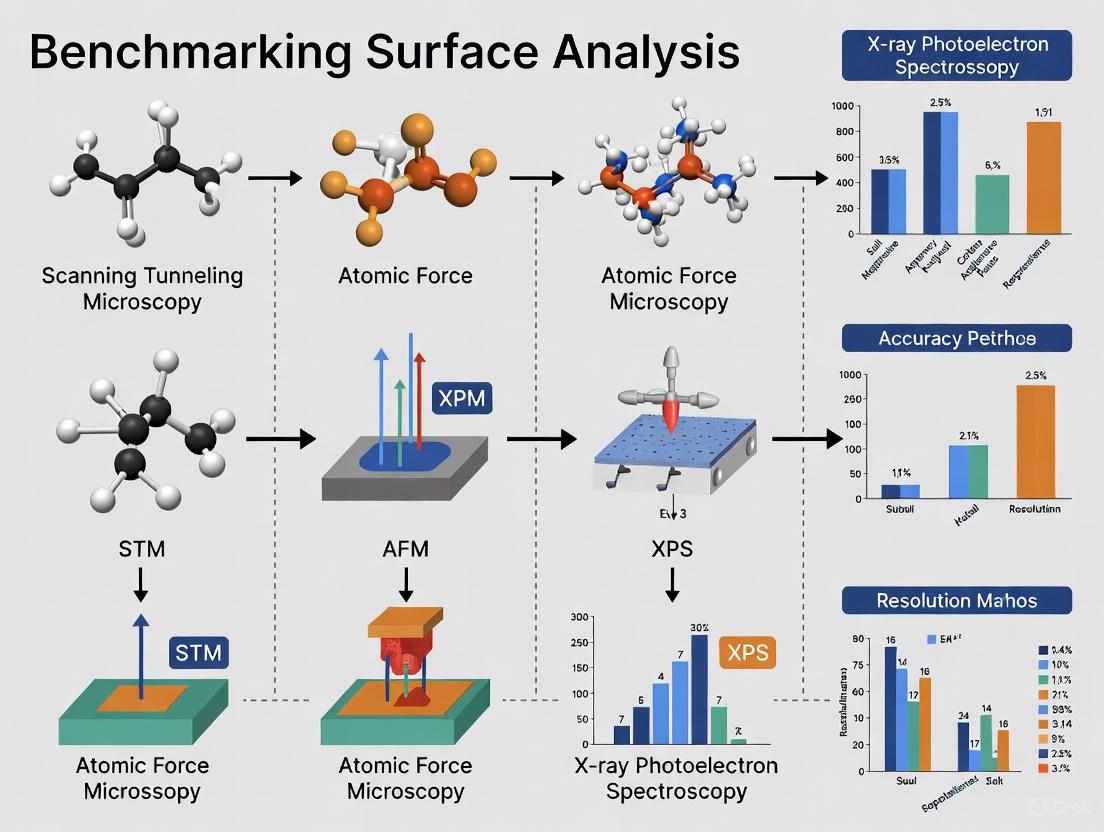
This article provides a comprehensive guide for researchers and drug development professionals on benchmarking surface analysis techniques critical for pharmaceutical innovation.
Benchmarking Surface Analysis Methods: A 2025 Guide for Pharmaceutical and Biomedical Research
Abstract
This article provides a comprehensive guide for researchers and drug development professionals on benchmarking surface analysis techniques critical for pharmaceutical innovation. It explores foundational principles, methodological applications for drug delivery systems and nanomaterials, troubleshooting for complex samples, and validation frameworks adhering to regulatory standards. By synthesizing current market trends, technological advancements, and standardized protocols, this resource enables scientists to select optimal characterization strategies that enhance drug bioavailability, ensure product quality, and accelerate therapeutic development.
Surface Analysis Fundamentals: Core Techniques and Industry Growth Drivers in Pharmaceutical Research
Surface analysis is a critical discipline in modern scientific research and industrial development, enabling the detailed characterization of material properties at the atomic and molecular levels. For researchers, scientists, and drug development professionals, selecting the appropriate analytical technique is paramount for obtaining accurate, relevant data. This guide provides a comprehensive comparison of four cornerstone techniques—Scanning Tunneling Microscopy (STM), Atomic Force Microscopy (AFM), X-ray Photoelectron Spectroscopy (XPS), and Scanning Electron Microscopy (SEM)—by examining their fundamental principles, distinct capabilities, and experimental applications. The objective benchmarking presented here supports informed methodological decisions in both research and development contexts, particularly as the surface analysis market continues to evolve with advancements in technology and increasing demand from sectors such as semiconductors, materials science, and biotechnology [1] [2].
Core Principles and Technical Specifications
The operational fundamentals of each technique dictate its specific applications and limitations. The following table provides a comparative overview of these key characteristics.
Table 1: Comparative Overview of Surface Analysis Techniques
| Technique | Fundamental Principle | Primary Information Obtained | Spatial Resolution | Sample Requirements |
|---|---|---|---|---|
| STM | Quantum tunneling of electrons between a sharp tip and a conductive surface [3] [4] | Topography & electronic structure (LDOS*) [4] [5] | Atomic/sub-atomic [4] [6] | Conductive or semi-conductive surfaces [3] |
| AFM | Mechanical force sensing between a sharp tip and the surface [3] [5] | 3D topography, mechanical properties (e.g., adhesion, stiffness) [3] [7] | Sub-nanometer (atomic possible) [3] | All surfaces (conductive and insulating) [3] [5] |
| XPS | Photoelectric effect: emission of core-level electrons by X-ray irradiation [1] | Elemental composition, chemical state, electronic state [1] | ~3-10 µm [1] | Solid surfaces under ultra-high vacuum (UHV); minimal sample charging |
| SEM | Interaction of focused electron beam with sample, emitting secondary electrons [1] | Surface morphology, topography, composition (with EDX) [1] | ~0.5-10 nm [1] | Solid surfaces; often requires conductive coating for insulating samples |
LDOS: Local Density of States; *EDX: Energy-Dispersive X-ray Spectroscopy*
Operational Modes and Data Acquisition
Each technique employs specific operational modes to extract different types of data.
STM Modes:
- Constant Current Mode: The tip height is adjusted to maintain a constant tunneling current, providing topographic information [5].
- Constant Height Mode: The tip travels at a fixed height while the variation in tunneling current is recorded, allowing for faster scanning [5].
- Scanning Tunneling Spectroscopy (STS): The tunneling current is measured as a function of the applied bias voltage at a specific location, revealing the local electronic density of states (LDOS) on the surface [3] [4].
AFM Modes:
- Contact Mode: The tip is dragged across the surface while maintaining constant deflection, providing high resolution but potentially causing damage to soft samples [3].
- Tapping Mode: The cantilever is oscillated at its resonance frequency to lightly "tap" the surface, reducing lateral forces and minimizing sample damage [3].
- Non-Contact Mode: The cantilever oscillates above the sample surface without making contact, used for delicate or liquid-immersed samples, though with lower resolution [3].
XPS Technique: This method is typically performed in a single analytical mode but provides deep chemical information by measuring the kinetic energy of ejected photoelectrons, which is characteristic of specific elements and their chemical bonding environments [1].
SEM Techniques:
Experimental Protocols and Benchmarking Data
To ensure reproducible and reliable results, standardized experimental protocols are essential. This section outlines general methodologies for each technique and presents comparative benchmarking data.
Detailed Methodologies
Protocol 1: Atomic-Scale Surface Characterization via STM
- Sample Preparation: A conductive sample (e.g., metal single crystal, highly oriented pyrolytic graphite - HOPG) is cleaned through repeated cycles of sputtering (e.g., with Ar⁺ ions) and annealing in an ultra-high vacuum (UHV) chamber to obtain an atomically clean and well-ordered surface [4].
- Tip Preparation: An electrochemically etched tungsten or platinum-iridium wire is used to create an atomically sharp tip [4].
- System Calibration: The STM scanner is calibrated using a standard sample with a known atomic lattice (e.g., graphite (HOPG) or Si(111)-(7x7) reconstruction) [4].
- Approach and Engagement: The tip is brought into proximity with the surface (typically <1 nm) using coarse motor controls, followed by a fine piezoelectric approach until a stable tunneling current (e.g., 0.1-5 nA) is established with a applied bias voltage (e.g., 10 mV - 2 V) [4] [5].
- Imaging/Spectroscopy:
Protocol 2: Nanoscale Topography and Mechanical Property Mapping via AFM
- Sample Mounting: The sample (can be insulator or conductor) is securely fixed onto a magnetic or adhesive sample disk.
- Tip/Cantilever Selection: Choose an appropriate cantilever based on the sample and mode:
- Contact Mode: A stiff cantilever (e.g., silicon nitride).
- Tapping Mode: A cantilever with a resonant frequency of 100-400 kHz [3].
- Engagement: The tip is approached to the surface until the system detects a change in the laser position on the photodetector, indicating contact or interaction with the surface [3] [5].
- Scanning and Data Acquisition:
- Set scanning parameters (e.g., scan size, rate, and setpoint).
- For force measurements, perform force-distance curves by extending and retracting the tip at a specific location to quantify adhesion forces and sample elasticity [3].
Protocol 3: Elemental and Chemical State Analysis via XPS
- Sample Preparation: A solid sample is mounted on a holder, often using conductive tape. Non-conductive samples may require charge neutralization with an electron flood gun [1].
- Load into UHV: The sample is introduced into an ultra-high vacuum chamber (pressure < 10⁻⁸ mbar) to minimize surface contamination and allow electron detection without scattering [1].
- Data Acquisition:
- A survey spectrum is acquired over a wide energy range (e.g., 0-1200 eV binding energy) to identify all elements present.
- High-resolution spectra are then collected for specific elemental regions to determine chemical states.
- Data Analysis: Spectra are analyzed using specialized software, which involves background subtraction, peak fitting, and comparing binding energies to standard databases [1].
Protocol 4: High-Resolution Surface Morphology Imaging via SEM
- Sample Preparation: The sample is secured to a stub with conductive tape. If the sample is insulating, a thin conductive coating (e.g., gold, platinum, or carbon) is applied via sputter coating to prevent charging [1].
- Load into Vacuum Chamber: The sample is placed in the SEM sample chamber, which is then evacuated.
- Microscope Alignment: The electron column is aligned, and the working distance is selected.
- Imaging: The beam energy (accelerating voltage) and current are selected. The beam is focused, and stigmation is corrected. Images are captured using a secondary electron detector for topography or a backscattered electron detector for compositional contrast [1].
Performance Benchmarking and Experimental Data
The capabilities of these techniques are often complementary. The following table summarizes key performance metrics and representative experimental data obtained from each method.
Table 2: Performance Benchmarking and Representative Data
| Technique | Key Measurable Parameters | Representative Experimental Data Output | Typical Experimental Timeframe |
|---|---|---|---|
| STM | Surface roughness, atomic periodicity, defect density, LDOS [4] [5] | Atomic-resolution images of reconstructions (e.g., Si(111)-7x7); real-space visualization of molecular adsorbates [4] | Minutes to hours for atomic-resolution imaging [4] |
| AFM | Surface roughness, step heights, particle size, modulus, adhesion force, friction [3] [8] | 3D topographic maps of polymers, biomolecules; force-distance curves quantifying adhesion [3] [7] | Minutes for a single topographic image |
| XPS | Atomic concentration (%), chemical state identification (peak position), layer thickness (via angle-resolved measurements) [1] | Survey spectrum showing elemental composition; high-resolution C 1s spectrum revealing C-C, C-O, O-C=O bonds [1] | Minutes for a survey scan; hours for detailed mapping |
| SEM | Particle size distribution, grain size, layer thickness, surface porosity, elemental composition (with EDX) [1] | High-resolution micrographs of micro/nanostructures; false-color EDX maps showing elemental distribution [1] | Seconds to minutes per image |
Application Scenarios and Workflow Integration
Understanding the optimal use cases for each technique allows for effective experimental design and workflow integration in research and development.
Technique Selection Guide
The decision on which technique to use is driven by the specific scientific question.
Choosing STM: Ideal for investigating electronic properties and atomic-scale surface structures of conductive materials. It is indispensable in catalysis research for identifying active sites and in materials science for studying 2D materials like graphene [4] [6]. Its requirement for conductive samples and UHV conditions can be a limitation [3].
Choosing AFM: The preferred method for obtaining three-dimensional topography and for measuring nanomechanical properties (e.g., stiffness, adhesion) across any material type. It is widely used in biology for imaging cells and biomolecules, in polymer science, and for quality control in thin-film coatings [3] [5]. Its key advantage is the ability to operate in various environments, including ambient air and liquid [3].
Choosing XPS: The definitive technique for determining surface elemental composition and chemical bonding states. It is critical for studying surface contamination, catalyst deactivation, corrosion layers, and the functional groups on polymer surfaces [1]. Its main limitations are its relatively poor spatial resolution compared to probe microscopy and the requirement for UHV [1].
Choosing SEM: Best suited for rapid high-resolution imaging of surface morphology over a large range of magnifications. It provides a pseudo-3D appearance that is intuitive to interpret. It is a workhorse in failure analysis, nanomaterials characterization, and biological imaging [1]. When equipped with an EDX detector, it can provide simultaneous elemental analysis [1].
Workflow Visualization: Selecting a Surface Analysis Technique
The following diagram outlines a logical decision workflow for selecting the most appropriate surface analysis technique based on the primary research goal.
Diagram 1: Technique selection workflow based on primary analysis need and sample properties.
Essential Research Reagents and Materials
Successful surface analysis requires not only sophisticated instrumentation but also a suite of specialized consumables and materials.
Table 3: Key Research Reagents and Materials for Surface Analysis
| Item | Function/Application | Common Examples |
|---|---|---|
| Conductive Substrates | Provides a flat, clean, and conductive surface for depositing samples for STM, AFM, or as a base for SEM. | Highly Oriented Pyrolytic Graphite (HOPG), Silicon wafers (often with a conductive coating), Gold films on mica [4]. |
| Sputter Coaters / Conductive Coatings | Applied to non-conductive samples for SEM analysis to prevent charging and to improve secondary electron emission. | Gold/Palladium (Au/Pd), Platinum (Pt), Carbon (C) coatings applied via sputter coating or evaporation [1]. |
| AFM Probes (Cantilevers) | The sensing element in AFM; different types are required for different modes and samples. | Silicon nitride tips for contact mode in liquid; sharp silicon tips for tapping mode; colloidal probes for force spectroscopy [3] [5]. |
| STM Tips | The sensing element in STM; must be atomically sharp and conductive. | Electrochemically etched tungsten (W) wire; mechanically cut Platinum-Iridium (Pt-Ir) wire [4]. |
| Calibration Standards | Used to verify the spatial and dimensional accuracy of the microscope. | Gratings with known pitch (for AFM/SEM), HOPG with 0.246 nm atomic lattice (for STM), certified step height standards [4]. |
| UHV Components | Essential for maintaining the pristine environment required for XPS and most STM experiments. | Ion sputter guns (for sample cleaning), electron flood guns (for charge neutralization in XPS), load-lock systems [1] [4]. |
Emerging Trends and Future Outlook
The field of surface analysis is dynamic, with several trends shaping its future. The integration of artificial intelligence (AI) and machine learning is enhancing data interpretation and automation, leading to faster and more precise analysis [1] [6]. There is a growing emphasis on in-situ and operando characterization, where techniques like STM and AFM are used to observe surface processes in real-time under realistic conditions (e.g., in gas or liquid environments), which is crucial for understanding catalysis and electrochemical interfaces [4] [7]. Furthermore, the push for multi-modal analysis, combining two or more techniques, is providing a more holistic view of surface properties. For instance, combined STM-AFM instruments can simultaneously map electronic and mechanical properties at the molecular scale [7]. These advancements, driven by the demands of the semiconductor, energy storage, and pharmaceutical industries, ensure that these foundational techniques will continue to be indispensable tools for scientific discovery and innovation.
The global surface analysis market is undergoing a significant transformation, driven by technological advancements and increasing demand across research and industrial sectors. This market, essential for characterizing material properties at atomic and molecular levels, is projected to grow from USD 6.45 billion in 2025 to USD 9.19 billion by 2032, exhibiting a compound annual growth rate (CAGR) of 5.18% [6] [2]. This growth is fueled by the critical need to understand surface interactions in material development, semiconductor fabrication, and pharmaceutical research, where surface properties directly influence performance, reliability, and efficacy [9] [10].
For researchers and drug development professionals, selecting appropriate surface analysis techniques is paramount for accurate characterization. This guide provides a comparative analysis of major surface analysis methodologies, supported by experimental data and protocols, to inform strategic decisions in research planning and equipment investment through 2032.
The surface analysis market is characterized by diverse technologies serving multiple high-growth industries. Regional dynamics reveal North America leading with a 37.5% market share in 2025, while the Asia-Pacific region is projected to be the fastest-growing, capturing 23.5% of the market and expanding rapidly due to industrialization and government-supported innovation initiatives [6]. This growth is further propelled by integration of artificial intelligence and machine learning for data interpretation, enhancing precision and efficiency in surface characterization [6].
Table 1: Global Surface Analysis Market Projections (2025-2032)
| Metric | 2025 Value | 2032 Projection | CAGR | Key Drivers |
|---|---|---|---|---|
| Market Size | USD 6.45 Billion [6] [2] | USD 9.19 Billion [6] [2] | 5.18% [6] [2] | Semiconductor miniaturization, material innovation, pharmaceutical quality control |
| Leading Technique (Share) | Scanning Tunneling Microscopy (29.6%) [6] | - | - | Unparalleled atomic-scale resolution |
| Leading Application (Share) | Material Science (23.8%) [6] | - | - | Development of advanced materials with tailored properties |
| Leading End-use Industry (Share) | Semiconductors (29.7%) [6] | - | - | Demand for miniaturized, high-performance electronics |
Segment Performance Insights
By Technique: Scanning Tunneling Microscopy (STM) dominates the technique segment due to its unparalleled capability for atomic-scale surface characterization of conductive materials [6]. Other significant techniques include Atomic Force Microscopy (AFM), X-ray Photoelectron Spectroscopy (XPS), and Secondary Ion Mass Spectrometry (SIMS), each with distinct advantages for specific applications.
By Application: The materials science segment leads applications, capturing nearly a quarter of the market share, as surface analysis forms the foundation for understanding structure-property relationships critical for developing advanced alloys, composites, and thin films [6].
By End-use Industry: The semiconductor industry represents the largest end-use segment, driven by escalating demand for miniaturized, high-performance electronic devices requiring precise control over surface and interface properties at nanometer scales [6].
Comparative Analysis of Key Surface Analysis Techniques
Selecting the appropriate surface analysis technique requires understanding their fundamental principles, capabilities, and limitations. The following section provides a comparative assessment of major technologies, with experimental data to guide selection for specific research applications.
Table 2: Technique Comparison for Surface Analysis
| Technique | Resolution | Information Obtained | Sample Requirements | Primary Pharmaceutical Applications |
|---|---|---|---|---|
| Scanning Tunneling Microscopy (STM) | Atomic-scale (0.1 nm lateral) [6] | Surface topography, electronic structure [6] | Conductive surfaces [6] | Limited due to conductivity requirement |
| Atomic Force Microscopy (AFM) | Sub-nanometer [11] | 3D surface topography, mechanical properties [11] | Any solid surface [11] | Tablet surface roughness, coating uniformity, particle size distribution [10] |
| X-ray Photoelectron Spectroscopy (XPS) | 10 μm [12] | Elemental composition, chemical state, empirical formula [9] [10] | Solid surfaces, vacuum compatible [9] | Cleanliness validation, contamination identification, coating composition [10] |
| Time-of-Flight SIMS (ToFSIMS) | ~1 μm [10] | Elemental/molecular surface composition, chemical mapping [10] | Solid surfaces, vacuum compatible [9] | Drug distribution mapping, contamination analysis, defect characterization [10] |
Experimental Protocol: Assessing Drug Distribution in Coated Stents
Background: Surface analysis is crucial for optimizing drug-eluting stents, where uniform drug distribution ensures consistent therapeutic release [10].
Objective: To characterize the distribution and thickness of a drug-polymer coating on a coronary stent using multiple surface analysis techniques.
Methodology:
- Sample Preparation: Mount stent segments without alteration for ToFSIMS analysis. For cross-sectional analysis, embed some segments in epoxy resin and section with a microtome [10].
- ToFSIMS Imaging: Acquire high-resolution chemical maps of the stent surface using a ToFSIMS instrument.
- Primary ion beam: Bi³⁺ or Auₙ⁺ clusters for enhanced secondary ion yield
- Analysis area: 500 × 500 μm
- Spatial resolution: ~1 μm
- Detect characteristic secondary ions from the drug compound and polymer matrix [10]
- 3D Profiling: For selected samples, perform sequential ToFSIMS analysis with sputter depth profiling using a C₆₀⁺ or argon cluster ion source to remove thin layers of material between analyses, building a 3D chemical distribution map [10].
- Data Analysis: Process chemical maps to determine the homogeneity of drug distribution and interface width between coating layers.
Expected Outcomes: This protocol enables visualization of drug distribution homogeneity and identification of potential defects in the coating that could affect drug release kinetics [10].
Diagram 1: Workflow for stent coating analysis. This multi-modal approach ensures comprehensive characterization of drug distribution and coating integrity.
Experimental Protocol: Response Surface Methodology for Drug Combination Synergy
Background: Quantitative evaluation of how drugs combine to elicit biological responses is crucial for combination therapy development [13].
Objective: To employ Response Surface Methodology (RSM) for robust quantification of drug interactions, overcoming limitations of traditional index-based methods like Combination Index (CI) and Bliss Independence, which are known to be biased and unstable [13].
Methodology:
- Experimental Design:
- Prepare a matrix of drug concentration combinations covering the anticipated active range
- Include 4-6 concentrations of each drug in a full factorial or central composite design
- Include appropriate controls and replicates
Data Acquisition:
- Expose target cells (e.g., cancer cell lines) to each drug combination
- Measure response (e.g., cell viability) using standardized assays (MTT, CellTiter-Glo)
- Conduct experiments in triplicate to ensure statistical reliability
Response Surface Modeling:
- Fit data to a response surface model (e.g., BRAID model) using nonlinear regression
- The general form for a two-drug combination: where E is the effect, E₀ is baseline effect, E_max is maximum effect, A and B are drug concentrations, EC50 values are potencies, H values are Hill slopes, and α is the interaction parameter [13]
- Calculate synergy scores based on deviation from Loewe additivity reference model
Model Validation:
- Use goodness-of-fit measures (R², AIC) to assess model quality
- Perform residual analysis to check for systematic fitting errors
- Validate predictions with additional experimental points not used in model fitting
Expected Outcomes: RSM provides a complete representation of combination behavior across all dose levels, offering greater stability and mechanistic insight compared to index methods. In comparative studies, RSMs have demonstrated superior performance in clustering compounds by their known mechanisms of action [13].
Essential Research Reagent Solutions
Successful surface analysis requires specific materials and reagents tailored to each technique and application. The following table outlines essential solutions for pharmaceutical surface characterization.
Table 3: Essential Research Reagents for Surface Analysis
| Reagent/Material | Function | Application Example | Technical Considerations |
|---|---|---|---|
| Conductive Substrates | Provides flat, conductive surface for analysis of non-conductive materials | AFM/STM of drug particles [10] | Silicon wafers with thin metal coatings (gold, platinum) |
| Cluster Ion Sources | Enables molecular depth profiling of organic materials | SIMS analysis of polymer-drug coatings [10] | C₆₀⁺, Argan clusters, or water cluster ions minimize damage |
| Certified Reference Materials | Instrument calibration and method validation | Quantitative XPS analysis [6] | NIST-traceable standards with certified composition |
| Ultra-high Vacuum Compatible Adhesives | Sample mounting without outgassing | Preparation of tablets for XPS/ToFSIMS [9] | Double-sided carbon or copper tapes; conductive epoxies |
| Charge Neutralization Systems | Mitigates charging effects on insulating samples | XPS analysis of pharmaceutical powders [10] | Low-energy electron floods or charge compensation algorithms |
Future Outlook and Strategic Recommendations
The surface analysis market shows promising growth trajectories with several emerging trends shaping its future development. The integration of AI and machine learning for data interpretation is enhancing precision and efficiency, fueling market expansion [6]. Additionally, sustainability initiatives are prompting more thorough surface evaluations to develop eco-friendly materials, further contributing to the sector's growth trajectory [6].
For research professionals, several strategic considerations emerge:
Technique Selection: Prioritize techniques that offer the spatial resolution and chemical specificity required for your specific applications, considering that multimodal approaches often provide the most comprehensive insights [10].
Automation Investment: Leverage growing capabilities in automated sample analysis and data interpretation to enhance throughput and reproducibility, particularly for high-volume applications like pharmaceutical quality control [6].
Emerging Applications: Monitor developments in nanotechnology, biomedical engineering, and sustainable materials, as these fields are driving innovation in surface analysis capabilities [11].
The continued advancement of surface analysis technologies promises enhanced capabilities for characterizing increasingly complex materials and biological systems, supporting innovation across pharmaceutical development, materials science, and semiconductor manufacturing through the 2025-2032 forecast period and beyond.
Surface analysis technologies stand at the confluence of three powerful industry drivers: the relentless advancement of semiconductor technology, the innovative application of nanotechnology, and an increasingly complex global regulatory landscape. These fields collectively push the boundaries of what is possible in materials characterization, demanding higher precision, greater throughput, and more reproducible data. The semiconductor industry's pursuit of miniaturization, exemplified by the demand for control over surface and interface properties at the nanometer scale, directly fuels innovation in analytical techniques [6]. Simultaneously, nanotechnology applications—particularly in targeted drug delivery—require sophisticated methods to characterize interactions at the bio-nano interface [14] [15]. Framing this progress is a stringent regulatory environment that mandates rigorous standardization and documentation, ensuring that technological advancements translate safely and effectively into commercial products. This guide objectively benchmarks current surface analysis methodologies, providing experimental data and protocols to inform researchers navigating these critical domains.
Industry Landscape and Quantitative Market Drivers
The surface analysis market is experiencing significant growth, propelled by demands from its key end-use industries. The following tables quantify this landscape, highlighting the techniques, applications, and regional markets that are leading this expansion.
Table 1: Global Surface Analysis Market Size and Growth (2025-2032)
| Metric | Value |
|---|---|
| 2025 Market Size | USD 6.45 Billion |
| 2032 Projected Market Size | USD 9.19 Billion |
| Compound Annual Growth Rate (CAGR) | 5.18% [6] |
Table 2: Surface Analysis Market Share by Segment (2025)
| Segment Category | Leading Segment | 2025 Market Share |
|---|---|---|
| Technique | Scanning Tunneling Microscopy (STM) | 29.6% [6] |
| Application | Material Science | 23.8% [6] |
| End-use Industry | Semiconductors | 29.7% [6] |
| Region | North America | 37.5% [6] |
The dominance of STM is attributed to its unparalleled capability for atomic-scale surface characterization of conductive materials, a critical need in advanced materials development [6]. The Asia Pacific region is projected to be the fastest-growing market, driven by high industrialization, massive electronics production capacity, and significant government research budgets in China, Japan, and South Korea [6].
Benchmarking Surface Analysis Techniques
To meet the demands of modern industry, surface analysis methods must be rigorously compared. The table below benchmarks several key technologies, with a special focus on Surface Plasmon Resonance (SPR) due to its high-information content and growing adoption in regulated environments like drug development.
Table 3: Performance Benchmarking of Surface Analysis Techniques
| Technique | Key Principle | Optimal Resolution | Primary Applications | Key Advantages | Key Limitations |
|---|---|---|---|---|---|
| Surface Plasmon Resonance (SPR) | Detects changes in refractive index at a sensor surface [14]. | ~pg/mm² mass concentration [14]. | Biomolecular interaction analysis, drug release kinetics, antibody screening [14] [16] [15]. | Label-free, real-time kinetic data, suitable for diverse analytes from small molecules to cells [14]. | Mass transfer limitations for large analytes like nanoparticles; requires specific sensor chips [14]. |
| Scanning Tunneling Microscopy (STM) | Measures quantum tunneling current between a sharp tip and a conductive surface [6]. | Atomic-level [6]. | Atomic-scale surface topography and electronic characterization of conductive materials [6]. | Unmatched atomic-resolution imaging [6]. | Requires conductive samples; generally limited to ultra-high vacuum conditions. |
| Atomic Force Microscopy (AFM) | Measures forces between a mechanical probe and the sample surface. | Sub-nanometer. | Surface morphology, roughness, and mechanical properties of diverse materials [6]. | Works on conductive and non-conductive samples in various environments (air, liquid). | Slower scan speeds compared to electron microscopy; potential for tip-sample damage. |
| X-ray Photoelectron Spectroscopy (XPS) | Measures the kinetic energy of photoelectrons ejected by an X-ray source. | ~10 µm; surface-sensitive (top 1-10 nm). | Elemental composition, empirical formula, and chemical state of surfaces [6]. | Quantitative elemental surface analysis and chemical bonding information. | Requires ultra-high vacuum; large area analysis relative to some probes. |
Experimental Protocol: SPR for Drug Release Kinetics
SPR is emerging as a powerful tool for characterizing the release kinetics of drugs from nanocarriers, a critical quality attribute in nanomedicine development [15]. The following provides a detailed methodology.
1. Sensor Chip Preparation:
- Chip Selection: For nanoparticle analytes, a C1 chip (flat, 2D surface) is often preferable to a CM5 chip (3D dextran matrix) to prevent steric hindrance and access all immobilized ligands, though it may increase non-specific binding [14].
- Ligand Immobilization: The chip surface is functionalized with a target molecule (e.g., a receptor or protein relevant to the drug's mechanism). This is typically done via covalent chemistry, such as EDC/NHS amine coupling, to create a stable surface [14] [15]. Immobilization levels are set in Resonance Units (RU) to ensure a measurable signal.
- Physiological Relevance: The density of the immobilized ligand should be optimized to correspond to physiologic densities on target cells and tissues, giving the experiment greater biological meaning [14].
2. Sample Immobilization for Release Studies:
- For drug release studies, the polymer-drug conjugate (nanocarrier) is first captured on the sensor chip. In one documented protocol, this is achieved by conjugating biotin to the polymer carrier and exploiting the strong streptavidin-biotin interaction on a streptavidin-coated chip [15].
- A baseline signal is established with a continuous flow of buffer (e.g., at pH 7.4 to simulate bloodstream conditions) [15].
3. Triggering and Measuring Drug Release:
- The buffer conditions are changed to trigger drug release (e.g., switching to a lower pH buffer, such as pH 5.0, to simulate the acidic environment of a tumor or cellular endosome) [15].
- The dissociation of the drug molecule from the polymer carrier on the chip surface leads to a decrease in mass, which is detected in real-time as a drop in RU [14] [15].
- The rate and extent of this signal change provide direct quantitative data on drug release kinetics.
4. Data Analysis:
- The real-time sensorgram (RU vs. time plot) is analyzed to determine kinetic rate constants (association rate,
kon, and dissociation rate,koff) and the equilibrium dissociation constant (KD) [14]. - For release studies, the data quantifies the rate of drug release under specific environmental stimuli [15].
Figure 1: SPR Drug Release Workflow. This diagram outlines the key steps in using Surface Plasmon Resonance to study the release kinetics of drugs from polymer nanocarriers, as applied in nanomedicine development [14] [15].
The Regulatory Compliance Framework
The semiconductor and nanotechnology industries operate within a strict global regulatory framework that directly influences manufacturing and product development.
Table 4: Key Global Regulatory Standards and Their Impact
| Regulation / Standard | Region | Core Focus | Impact on Industry & Analysis |
|---|---|---|---|
| REACH | European Union | Registration, Evaluation, Authorisation and Restriction of Chemicals [17]. | Mandates transparency in chemical compositions, restricting substances posing environmental/health risks. Increases production costs and documentation [17]. |
| RoHS | European Union | Restriction of Hazardous Substances in electrical and electronic equipment [17]. | Requires manufacturers to reformulate materials and implement stringent testing to ensure components meet safety standards [17]. |
| TSCA | United States | Toxic Substances Control Act [17]. | Regulates the introduction of new or existing chemicals, ensuring safety and compliance. |
| WEEE | European Union | Waste Electrical and Electronic Equipment Directive [17]. | Sets recycling and recovery targets, influencing semiconductor manufacturers to design for recyclability [17]. |
| ISO 9001 | International | Quality Management Systems [17]. | Standardizes manufacturing processes and ensures consistency in semiconductor production [17]. |
| ISO 14001 | International | Environmental Management Systems [17]. | Provides a framework for organizations to continually improve their environmental performance [17]. |
| AS6081 | International | Fraudulent/Counterfeit Electronic Parts Risk Mitigation [17]. | Provides uniform requirements for distributing against counterfeit parts in the military and aerospace supply chains [17]. |
Regulatory compliance has become a critical hurdle, with a recent poll indicating it as the most significant factor for the semiconductor industry to manage in 2025 [17]. Furthermore, government actions, such as shutdowns, can freeze contracting and export licensing from agencies like the Bureau of Industry and Security (BIS), directly delaying shipments of critical materials and disrupting R&D projects funded under acts like the CHIPS Act [18].
Figure 2: Semiconductor Regulatory Compliance Framework. This diagram visualizes the main pillars of semiconductor regulation and their direct operational impacts, based on industry analysis [17] [19].
The Scientist's Toolkit: Essential Research Reagents and Materials
The following table details key reagents and materials essential for conducting SPR experiments, a technique central to interaction analysis in drug development and nanotechnology.
Table 5: Essential Research Reagent Solutions for SPR Analysis
| Item | Function / Application | Key Considerations |
|---|---|---|
| CM5 Sensor Chip | A gold chip coated with a carboxymethyl-dextran matrix that provides a hydrophilic environment for ligand immobilization [14]. | The 3D matrix can cause steric hindrance for large analytes like nanoparticles; suitable for most proteins and small molecules [14]. |
| C1 Sensor Chip | A gold chip with a flat, 2D surface and minimal matrix [14]. | Preferred for large analytes like nanoparticles to ensure access to all immobilized ligands; may have higher non-specific binding [14]. |
| EDC/NHS Chemistry | A common cross-linking chemistry (using 1-Ethyl-3-(3-dimethylaminopropyl)carbodiimide and N-Hydroxysuccinimide) for covalent immobilization of ligands containing amine groups to the chip surface [14]. | Must be optimized to preserve the biochemical activity of the immobilized ligand [14]. |
| Regeneration Buffers | Solutions (e.g., low pH, high salt, or mild detergent) used to remove bound analyte from the immobilized ligand without damaging the chip surface [14]. | A proper regeneration protocol is critical for reusing the sensor chip for 50-100 runs with reproducible results [14]. |
| HBS-EP Buffer | A standard running buffer (HEPES Buffered Saline with EDTA and Polysorbate 20) for SPR experiments. | Provides a stable, physiologically-relevant baseline and contains surfactants to minimize non-specific binding. |
| Biotinylated Ligands | Ligands modified with biotin for capture on streptavidin-coated sensor chips [15]. | Provides a stable and oriented immobilization, often preserving ligand activity. Useful for capturing complex molecules like polymer-drug conjugates [15]. |
The trajectory of surface analysis is being powerfully shaped by the synergistic demands of the semiconductor and nanotechnology sectors, all within a framework of rigorous global regulations. As this guide has benchmarked, techniques like SPR, STM, and AFM provide the critical data needed to drive innovation, from characterizing atomic-scale structures to quantifying biomolecular interactions for next-generation therapeutics. The experimental protocols and toolkit detailed herein offer a foundation for researchers to generate reproducible, high-quality data. Success in this evolving landscape will depend on the ability to not only leverage these advanced analytical techniques but also to seamlessly integrate compliance and standardization into the research and development workflow, ensuring that scientific breakthroughs can efficiently and safely reach the market.
Surface analysis technologies, such as X-ray Photoelectron Spectroscopy (XPS) and Atomic Force Microscopy (AFM), have become indispensable tools in modern materials science, semiconductor development, and pharmaceutical research. These techniques provide critical insights into the atomic composition, chemical states, and topographic features of material surfaces, enabling breakthroughs in product development and quality control. The global adoption and advancement of these technologies, however, follow distinct regional patterns shaped by varying economic, industrial, and policy drivers. As of 2025, the global surface analysis market is estimated to be valued at USD 6.45 billion, with projections indicating growth to USD 9.19 billion by 2032 at a compound annual growth rate (CAGR) of 5.18% [6].
This comparative analysis examines the technological landscapes of North America and the Asia-Pacific region, two dominant forces in the surface analysis field. North America currently leads in market share through technological sophistication and established research infrastructure, while Asia-Pacific demonstrates remarkable growth momentum driven by rapid industrialization and strategic government initiatives. Understanding these regional paradigms provides researchers and industry professionals with valuable insights for strategic planning, collaboration, and technology investment decisions in an increasingly competitive global landscape.
Quantitative Regional Market Analysis
Current Market Size and Growth Projections
Table 1: Global Surface Analysis Market Metrics by Region (2025-2032)
| Region | 2025 Market Share | 2032 Projected Market Share | CAGR (2025-2032) | Market Size (2025) |
|---|---|---|---|---|
| North America | 37.5% [6] | Data Not Available | ~5.18% (Global Average) [6] | Leading regional market [6] |
| Asia-Pacific | 23.5% [6] | Data Not Available | Highest regional growth rate [6] | Fastest-growing region [6] |
| Europe | Data Not Available | Data Not Available | Data Not Available | Steady growth [20] |
Table 2: Regional Market Characteristics and Growth Drivers
| Region | Key Growth Drivers | Leading Industrial Applications | Technology Adoption Trends |
|---|---|---|---|
| North America | Established R&D infrastructure, semiconductor industry dominance, government funding [6] | Semiconductors (29.7% market share), healthcare, aerospace [6] | AI integration, advanced microscopy techniques, multimodal imaging [6] [21] |
| Asia-Pacific | Government initiatives (e.g., "Made in China 2025"), expanding electronics manufacturing, research investments [6] | Electronics, automotive, materials science [6] [22] | Rapid adoption of automation, focus on cost-effective solutions, emerging AI applications [23] [22] |
| Europe | Stringent regulatory standards, sustainability initiatives, advanced manufacturing [20] | Automotive, pharmaceuticals, industrial manufacturing [20] | High-precision instrumentation, quality control applications [20] |
The data reveals a distinct bifurcation in the global surface analysis landscape. North America maintains dominance with more than one-third of the global market share, supported by mature technological infrastructure and significant R&D expenditures. Meanwhile, Asia-Pacific demonstrates remarkable growth potential, positioned as the fastest-growing region despite currently holding a smaller market share. This growth trajectory is primarily fueled by massive investments in semiconductor fabrication facilities and expanding electronics manufacturing capabilities across China, Japan, and South Korea [6].
Regional Technology Adoption and Application Focus
Table 3: Regional Preferences in Surface Analysis Techniques
| Analytical Technique | North America Adoption | Asia-Pacific Adoption | Key Applications |
|---|---|---|---|
| Scanning Tunneling Microscopy (STM) | High (29.6% of global market) [6] | Growing | Semiconductor defect analysis, nanomaterials research [6] |
| X-ray Photoelectron Spectroscopy (XPS) | Well-established [6] | Rapidly expanding [6] | Chemical state analysis, thin film characterization [21] |
| Atomic Force Microscopy (AFM) | Advanced applications with AI integration [6] | Increasing adoption for quality control [6] | Surface topography, mechanical properties measurement [6] |
| Spectroscopy Techniques | Dominant in research institutions [6] | Focus on industrial applications [22] | Materials characterization, failure analysis [6] |
North America's technological edge manifests in its leadership in advanced techniques such as Scanning Tunneling Microscopy (STM), which holds 29.6% of the global market share [6]. This region demonstrates particular strength in atomic-scale surface characterization, leveraging these capabilities for fundamental research and high-value innovation in semiconductors and advanced materials. The presence of key instrument manufacturers like Thermo Fisher Scientific and Agilent Technologies further strengthens this technological ecosystem [6].
Asia-Pacific's adoption patterns reflect its manufacturing-intensive economy, with emphasis on techniques that support quality control and high-volume production. While the region is rapidly acquiring advanced capabilities, its distinctive advantage lies in the rapid implementation of these technologies within industrial settings. Countries like China, Japan, and South Korea are leveraging surface analysis to advance their semiconductor, display, and battery manufacturing sectors [6] [22].
Industry-Specific Application Focus
The application of surface analysis technologies reveals contrasting regional economic priorities. In North America, the semiconductors segment captures 29.7% of the market share, driven by the relentless pursuit of miniaturization and performance enhancement in electronic devices [6]. The material science segment follows with 23.8% share, supporting innovation in advanced alloys, composites, and functional coatings [6].
Asia-Pacific demonstrates more diverse application across multiple growth industries, with particular strength in electronics, automotive, and emerging materials development. Government initiatives such as China's "Made in China 2025" and South Korea's investments in nanotechnology provide strategic direction to these applications [6]. The region's competitive advantage stems from integrating surface analysis throughout manufacturing processes rather than confining it to research laboratories.
Experimental Protocols for Surface Analysis Benchmarking
Cross-Regional Semiconductor Surface Characterization Protocol
Objective: To quantitatively compare surface contamination levels on silicon wafers using X-ray Photoelectron Spectroscopy (XPS) across different regional manufacturing conditions.
Materials and Equipment:
- Silicon wafers with thermal oxide layer (100nm)
- XPS instrument with monochromatic Al Kα X-ray source
- Charge neutralization system
- Ultra-high vacuum chamber (<1×10⁻⁹ torr)
- Reference samples from NIST-traceable standards
Procedure:
- Sample Preparation: Cut wafer into 1cm×1cm squares using diamond scribe. Handle samples with vacuum tweezers only.
- Instrument Calibration: Verify energy scale using Au 4f₇/₂ (84.0 eV) and Cu 2p₃/₂ (932.7 eV) peaks. Adjust pass energy to 20 eV for high-resolution scans.
- Data Acquisition:
- Survey scan (0-1100 eV) at pass energy 160 eV to identify elemental composition
- High-resolution scans for C 1s, O 1s, Si 2p, and any contaminants detected
- Use spot size of 200μm with photoelectron take-off angle of 45°
- Data Analysis:
- Calculate atomic concentrations using manufacturer-supplied sensitivity factors
- Deconvolve C 1s peak to identify hydrocarbon contamination (284.8 eV) versus adventitious carbon
- Compare oxide layer composition (Si⁴+ at 103.5 eV) to reference standards
This protocol enables direct comparison of semiconductor surface quality across different geographical production facilities, particularly relevant for multinational corporations managing supply chains in both North America and Asia-Pacific regions.
Thin Film Thickness Measurement Correlation Study
Objective: To evaluate consistency of thin film thickness measurements using ellipsometry and X-ray reflectivity (XRR) across multiple research facilities.
Materials and Equipment:
- Silicon wafers with deposited SiO₂ films of varying thickness (10-200nm)
- Spectroscopic ellipsometer (wavelength range: 250-1700nm)
- X-ray diffractometer with reflectivity attachment (Cu Kα radiation)
- Surface profilometer as reference measurement
Procedure:
- Sample Distribution: Distribute identical sample sets to participating laboratories in North America and Asia-Pacific.
- Ellipsometry Measurements:
- Measure at three locations on each sample with 2mm spot size
- Use Cauchy model for transparent films with surface roughness correction
- Record Ψ and Δ values from 40° to 70° incidence angles in 5° increments
- XRR Measurements:
- Align sample to maintain incident angle 0-5° with 0.001° resolution
- Collect data until intensity drops below 10 counts per second
- Fit critical angle and oscillation period to determine thickness and density
- Data Correlation:
- Compare intra-technique variability within and between regions
- Establish inter-technique correlation coefficients
- Identify systematic measurement biases by region
This multi-technique approach provides methodological validation essential for cross-regional research collaborations and technology transfer initiatives between North America and Asia-Pacific institutions.
Visualization of Regional Technology Adoption Pathways
The following diagram illustrates the contrasting technology adoption pathways between North America and Asia-Pacific regions in surface analysis:
This diagram highlights the complementary nature of regional approaches. North America typically follows a science-driven pathway beginning with fundamental research, while Asia-Pacific often pursues a manufacturing-driven pathway focused on implementation and scaling. The dashed red lines indicate important knowledge transfer mechanisms that benefit both regions, with technology innovations from North America being optimized for mass production in Asia-Pacific, and practical application feedback from Asia-Pacific informing next-generation research priorities in North America.
Essential Research Reagent Solutions for Surface Analysis
Table 4: Essential Research Reagents and Reference Materials for Cross-Regional Surface Analysis Studies
| Reagent/Reference Material | Function | Regional Availability Considerations |
|---|---|---|
| NIST-Traceable Standard Reference Materials (SRMs) | Instrument calibration and measurement validation | Critical for cross-regional data correlation; available globally but subject to trade restrictions [21] |
| Certified Thin Film Thickness Standards | Calibration of ellipsometry and XRR measurements | Silicon-based standards from NIST (US) and NMIJ (Japan) enable regional comparability [6] |
| Surface Contamination Reference Samples | Method validation for contamination analysis | Composition varies by regional environmental factors; requires localized customization [21] |
| Charge Neutralization Standards | XPS analysis of insulating samples | Particularly important for organic materials and advanced polymers [21] |
| Sputter Depth Profiling Reference Materials | Optimization of interface analysis protocols | Certified layered structures with known interface widths [6] |
The selection and standardization of research reagents present unique challenges for multinational surface analysis studies. Recent trade tensions and tariffs have impacted the availability and cost of electron spectroscopy equipment and nanoindentation instruments sourced from Germany and Japan, potentially affecting research progress and laboratory operational costs [21]. Researchers engaged in cross-regional comparisons must establish robust material tracking protocols and maintain adequate inventories of critical reference standards to mitigate supply chain disruptions.
The comparative analysis of surface analysis adoption in North America and Asia-Pacific reveals distinct but complementary regional strengths. North America maintains leadership in technology innovation and advanced applications, particularly in semiconductors and materials science research. The region's well-established ecosystem of research institutions, major instrument manufacturers, and government funding creates an environment conducive to breakthrough innovations. The integration of artificial intelligence and machine learning for data interpretation and automation represents the next frontier in North America's technological advancement [6].
Asia-Pacific demonstrates remarkable growth momentum driven by manufacturing scale, cost optimization, and strategic government initiatives. The region's focus on industrial applications, particularly in electronics, automotive, and energy sectors, positions it as the fastest-growing market for surface analysis technologies [6]. With policies such as China's "Made in China 2025" and substantial investments in nanotechnology research, Asia-Pacific is rapidly closing the technological gap while leveraging its manufacturing advantages [6].
For researchers and drug development professionals, these regional patterns suggest strategic opportunities for cross-regional collaboration, leveraging North America's innovation capabilities alongside Asia-Pacific's manufacturing scaling expertise. The evolving landscape also underscores the importance of standardized protocols and reference materials to ensure data comparability across geographical boundaries. As surface analysis technologies continue to advance, their critical role in materials characterization, quality control, and fundamental research will further intensify global competition while simultaneously creating new opportunities for international scientific cooperation.
In the rapidly advancing fields of material science and pharmaceutical development, the precise characterization of surfaces has emerged as a critical enabling technology. Surface analysis techniques provide indispensable insights into material properties, interfacial interactions, and functional behaviors that directly impact product performance, safety, and efficacy. As these fields increasingly demand nanoscale precision and quantitative molecular-level understanding, benchmarking studies that objectively compare analytical techniques have become essential for guiding methodological selection and technological innovation.
The global surface analysis market, projected to grow from USD 6.45 billion in 2025 to USD 9.19 billion by 2032 at a 5.18% CAGR, reflects the expanding significance of these characterization methods across industrial and research sectors [6]. This growth is particularly driven by the semiconductor, pharmaceutical, and advanced materials industries, where surface properties directly influence functionality, bioavailability, and performance. This guide provides a comprehensive comparison of major surface analysis techniques, supported by experimental benchmarking data and detailed protocols, to inform researchers and development professionals in selecting and implementing the most appropriate methodologies for their specific applications.
Comparative Performance Analysis of Surface Analysis Techniques
Technical Specifications and Application Fit
Table 1: Comparative Analysis of Major Surface Analysis Techniques
| Technique | Resolution Capability | Information Obtained | Key Applications | Sample Requirements |
|---|---|---|---|---|
| Scanning Tunneling Microscopy (STM) | Atomic-scale (sub-nm) | Surface topography, electronic properties | Conductive materials, semiconductor research, nanotechnology | Electrically conductive surfaces |
| Atomic Force Microscopy (AFM) | Atomic to nanoscale | Surface topography, mechanical properties, adhesion forces | Polymers, biomaterials, thin films, composites | Most solid materials (conductive and non-conductive) |
| X-ray Photoelectron Spectroscopy (XPS) | 5-10 μm lateral; 1-10 nm depth | Elemental composition, chemical state, empirical formula | Failure analysis, contamination identification, coating quality | Solid surfaces under ultra-high vacuum |
| Surface Plasmon Resonance (SPR) | N/A (bulk measurement) | Binding kinetics, affinity constants, concentration analysis | Drug-target interactions, biomolecular binding studies | One binding partner must be immobilized on sensor chip |
| Contact Angle (CA) Analysis | Macroscopic (mm scale) | Wettability, surface free energy, adhesion tension | Coating quality, surface treatment verification, cleanliness | Solid, flat surfaces ideal; methods for uneven surfaces available |
Quantitative Performance Benchmarking
Table 2: Market Adoption and Sector Performance Metrics
| Technique/Application | Market Share (2025) | Projected Growth | Dominant End-use Industries |
|---|---|---|---|
| Scanning Tunneling Microscopy (by Technique) | 29.6% [6] | Stable | Semiconductors, materials research, nanotechnology |
| Material Science (by Application) | 23.8% [6] | Increasing | Advanced materials, polymers, composites development |
| Semiconductors (by End-use) | 29.7% [6] | Rapid | Semiconductor manufacturing, electronics |
| North America (by Region) | 37.5% [6] | Moderate | Diverse industrial and research applications |
| Asia Pacific (by Region) | 23.5% [6] | Fastest growing | Electronics manufacturing, growing industrial R&D |
Experimental Benchmarking Data and Protocols
Atomic Force Microscopy Tip Performance Benchmarking
Atomic Force Microscopy represents one of the most versatile surface analysis techniques, with performance heavily dependent on tip selection and functionalization. A comprehensive 2021 benchmarking study directly compared four atomically defined AFM tips for chemical-selective imaging on a nanostructured copper-oxide surface [24].
Table 3: Performance Comparison of Atomically Defined AFM Tips
| Tip Type | Rigidity | Chemical Reactivity | Spatial Resolution | Artifact Potential | Optimal Application |
|---|---|---|---|---|---|
| Metallic Cu-tip | High | Highly reactive | Limited to attractive regime | High (tip changes) | Limited to non-reactive surfaces |
| Xe-tip | Very Low | Chemically inert | High in repulsive regime | Moderate (flexibility artifacts) | High-resolution imaging of well-defined surfaces |
| CO-tip | Low | Chemically inert | High in repulsive regime | Moderate (flexibility artifacts) | Molecular resolution on organic systems |
| CuOx-tip | High | Selectively reactive | High in repulsive regime | Low (reduced bending) | Chemical-selective imaging on inorganic surfaces |
Experimental Protocol: AFM Tip Benchmarking
- Surface Preparation: A partially oxidized Cu(110) surface exhibiting alternating stripes of bare Cu(110) and (2×1)O-reconstructed oxide stripes was prepared under ultra-high vacuum conditions [24].
- Tip Functionalization:
- Metallic Cu-tips: Electrochemically etched tungsten tips
- Xe-tips: Metallic tips functionalized by picking up a single Xe atom from the surface
- CO-tips: Metallic tips functionalized with a single CO molecule
- CuOx-tips: Copper tips with oxygen atom covalently bound in tetrahedral configuration
- Imaging Parameters: Experiments performed at ~5 K with qPlus sensors (resonance frequencies: 24-28 kHz), amplitudes of 0.8-1.0 Å, constant-height mode [24].
- Data Collection: Height-dependent imaging with Δf(Z)-spectroscopy at characteristic surface sites.
- Analysis: Comparison of contrast evolution, chemical identification capability, and artifact generation.
The study demonstrated that CuOx-tips provided optimal performance for inorganic surfaces, combining high rigidity with selective chemical reactivity that enabled clear discrimination between copper and oxygen atoms within the added rows without the bending artifacts characteristic of more flexible Xe- and CO-tips [24].
Surface Plasmon Resonance for Pharmaceutical Applications
Surface Plasmon Resonance has emerged as a powerful tool for quantifying biomolecular interactions in pharmaceutical development, particularly for targeted nanotherapeutics. SPR enables real-time, label-free analysis of binding events with high sensitivity (~pg/mm²) [14].
Experimental Protocol: SPR Analysis of Nanotherapeutics
- Chip Selection: CM5 (carboxymethyl-dextran) chips for most applications; C1 chips (no dextran) for larger nanoparticles to improve accessibility [14].
- Ligand Immobilization: Covalent immobilization via EDC/NHS chemistry targeting amine, thiol, or aldehyde groups. Optimal ligand density depends on analyte size and should reflect physiological relevance [14].
- Analyte Preparation: NanoRx formulations in appropriate running buffer with series of concentrations for kinetic analysis.
- Binding Experiment:
- Flow rate: 30 μL/min (higher rates reduce mass transfer limitations)
- Contact time: 60-300 seconds depending on binding kinetics
- Dissociation time: 60-600 seconds to monitor complex stability
- Regeneration: Surface regeneration between runs using appropriate conditions (e.g., mild acid/base, high salt) that remove bound analyte without damaging immobilized ligand.
- Data Analysis: Simultaneous fitting of association and dissociation phases from multiple analyte concentrations to determine kinetic parameters (kₐ, k𝒅) and equilibrium constants (K𝙳) [14].
SPR has been successfully applied to evaluate both specific and non-specific interactions of targeted nanotherapeutics, enabling optimization of targeting ligand density and assessment of off-target binding potential [14]. The technique can distinguish between formulations with low and high densities of targeting antibodies, providing critical data for pharmaceutical development.
Contact Angle Measurements on Complex Surfaces
Contact angle measurements provide vital information about surface wettability, a critical property for pharmaceutical development (e.g., coating uniformity, adhesion) and material science (e.g., hydrophobicity, self-cleaning surfaces). Standard sessile drop measurements assume ideal surfaces, but real-world applications often involve uneven or rough surfaces requiring specialized approaches [25] [26].
Experimental Protocol: Contact Angle on Uneven Surfaces
- Substrate Preparation: Identify relatively flat regions for droplet deposition. If unavailable, reduce droplet volume to fit available flat areas [26].
- Measurement Setup:
- Use optical tensiometer/goniometer with adjustable stage
- Deposit 2-5 μL liquid droplets (typically water for hydrophilicity/hydrophobicity assessment)
- Capture high-resolution images immediately after deposition
- Baseline Positioning:
- Set baselines for left and right contact points independently when surface unevenness prevents uniform baseline
- Adjust baseline height to account for meniscus effects from droplet movement or evaporation
- Region of Interest Optimization:
- For high contact angles (>60°), lower top ROI line to halfway up droplet to improve polynomial fit
- Adjust side boundaries to capture complete droplet edge without extraneous features
- Data Analysis:
- Use appropriate fitting algorithm (typically circle or ellipse fitting for static contact angle)
- Report advancing and receding angles separately for uneven surfaces
- Calculate contact angle hysteresis (difference between advancing and receding angles) as indicator of surface heterogeneity [25]
For surfaces with significant unevenness, dynamic contact angle measurements (advancing and receding) using the Wilhelmy plate method may provide more reliable characterization, though this requires uniform, homogeneous samples with known perimeter [25].
Application-Specific Workflows and Decision Pathways
Material Science Development Pathway
Material Science Surface Analysis Workflow
Pharmaceutical Development Pathway
Pharmaceutical Development Surface Analysis Workflow
Essential Research Reagent Solutions
Table 4: Key Research Reagents and Materials for Surface Analysis
| Category | Specific Products/Techniques | Function | Application Notes |
|---|---|---|---|
| SPR Chips | CM5 (carboxymethyl-dextran), C1 (flat) | Ligand immobilization for binding studies | CM5 for most applications; C1 for nanoparticles to improve accessibility [14] |
| AFM Probes | CuOx-tips, CO-tips, Xe-tips | Surface imaging with chemical specificity | CuOx-tips optimal for inorganic surfaces; CO/Xe-tips for organic systems [24] |
| Contact Angle Liquids | Water, diiodomethane, ethylene glycol | Surface energy calculations | Multiple liquids required for surface free energy component analysis |
| Calibration Standards | NIST reference wafers, grating samples | Instrument calibration and verification | Essential for cross-laboratory comparability and quality assurance [6] |
| Software Tools | DockAFM, SPIP, Analysis Software | Data processing and interpretation | DockAFM enables correlation of AFM data with 3D structural models [27] |
The benchmarking data presented demonstrates that optimal surface analysis methodology selection depends heavily on specific application requirements. STM provides unparalleled atomic-scale resolution but only for conductive materials. AFM offers broader material compatibility with multiple contrast mechanisms, with tip selection critically impacting data quality. SPR delivers exceptional sensitivity for binding interactions relevant to pharmaceutical development. Contact angle measurements remain indispensable for surface energy assessment but require careful methodology adaptation for non-ideal surfaces.
The integration of artificial intelligence and machine learning for data interpretation represents an emerging trend that enhances precision and efficiency across all major surface analysis techniques [6]. Additionally, the growing emphasis on sustainability initiatives is prompting more thorough surface evaluations to develop eco-friendly materials and processes [6]. As material science and pharmaceutical development continue to advance toward nanoscale engineering and personalized medicine, the strategic implementation of appropriately benchmarked surface analysis methods will remain fundamental to innovation and quality assurance.
Method Selection and Practical Applications: Optimizing Surface Analysis for Drug Delivery and Nanomaterials
Nanoparticle Characterization for Enhanced Bioavailability
In pharmaceutical development, nanoparticles (NPs) are transforming drug delivery systems by enhancing drug solubility, enabling targeted delivery, and controlling the release of therapeutic agents, thereby significantly improving bioavailability and reducing side effects [28]. The performance of these nanocarriers—including their stability, cellular uptake, biodistribution, and targeting efficiency—is governed by their physicochemical properties [29]. Consequently, rigorous characterization is not merely a supplementary analysis but a fundamental prerequisite for designing effective, reliable, and clinically viable nanoformulations. This guide provides a comparative analysis of key analytical techniques, offering experimental protocols and benchmarking data to inform method selection for research focused on enhancing drug bioavailability.
Comparative Analysis of Key Characterization Techniques
A diverse toolbox of analytical techniques is available for nanoparticle characterization, each with distinct strengths, limitations, and optimal application ranges. The choice of technique depends on the parameter of interest, the complexity of the sample matrix, and the required information level (e.g., ensemble average vs. single-particle data) [30] [31].
Table 1: Comparison of Primary Nanoparticle Characterization Techniques
| Technique | Measured Parameters | Principle | Key Advantages | Inherent Limitations |
|---|---|---|---|---|
| Cryogenic Transmission Electron Microscopy (Cryo-TEM) | Size, morphology, internal structure, lamellarity, aggregation state [30] | High-resolution imaging of flash-frozen, vitrified samples in native state [30] | "Golden standard"; direct visualization; detailed structural data; minimal sample prep [30] | Specialized equipment/expertise; potential for image background noise [30] |
| Dynamic Light Scattering (DLS) | Hydrodynamic diameter, size distribution (intensity-weighted), aggregation state [30] | Fluctuations in scattered light from Brownian motion [30] | Fast, easy, non-destructive; measures sample in solution [30] | Assumes spherical particles; low resolution; biased by large aggregates/impurities [30] |
| Single-Particle ICP-MS (spICP-MS) | Particle size distribution (number-based), particle concentration, elemental composition [31] | Ion plumes from individual NPs in ICP-MS detected as signal pulses [31] | High sensitivity; elemental composition; number-based distribution at low concentrations [31] | Requires specific elemental composition; complex data analysis [31] |
| Particle Tracking Analysis (PTA/NTA) | Hydrodynamic size, particle concentration (relative) [31] | Tracking Brownian motion of single particles via light scattering [31] | Direct concentration estimation; handles polydisperse samples [31] | Lower size resolution vs. TEM; performance depends on optical properties [31] |
| Nuclear Magnetic Resonance (NMR) Spectroscopy | Ligand structure, conformation, binding mode, density, dynamics [32] | Analysis of nuclear chemical environment [32] | Comprehensive molecular structure data; studies ligand-surface interactions [32] | Requires large sample amounts; signal broadening for bound ligands [32] |
Quantitative Benchmarking of Technique Performance
Interlaboratory comparisons (ILCs) provide critical data on the real-world performance and reliability of characterization methods. These studies benchmark techniques against standardized materials and complex formulations to assess their accuracy and precision.
Table 2: Benchmarking Data from Interlaboratory Comparisons (ILCs)
| Technique | Sample Analyzed | Reported Consensus Value (Size) | Interlaboratory Variability (Robust Standard Deviation) | Key Performance Insight |
|---|---|---|---|---|
| Particle Tracking Analysis (PTA) | 60 nm Au NPs (aqueous suspension) [31] | 62 nm [31] | 2.3 nm [31] | Excellent agreement for pristine NPs in simple matrices [31] |
| Single-Particle ICP-MS (spICP-MS) | 60 nm Au NPs (aqueous suspension) [31] | 61 nm [31] | 4.9 nm [31] | Good performance for size; particle concentration determination is more challenging [31] |
| spICP-MS & TEM/SEM | Sunscreen Lotion (TiO₂ particles) [31] | Nanoscale (compliant with EU definition) [31] | Larger variations in complex matrices [31] | Orthogonal techniques agree on regulatory classification [31] |
| spICP-MS, PTA & TEM/SEM | Toothpaste (TiO₂ particles) [31] | Not fitting EU NM definition [31] | Techniques agreed on classification [31] | Reliable analysis possible in complex consumer product matrices [31] |
Essential Research Reagents and Materials
A successful characterization workflow relies on specific, high-quality reagents and materials. The following table details essential items for key experiments.
Table 3: Essential Research Reagent Solutions for Nanoparticle Characterization
| Reagent/Material | Function/Application | Experimental Notes |
|---|---|---|
| Citrate-stabilized Gold Nanoparticles (e.g., 60 nm) | Standard reference material for method calibration and interlaboratory comparisons [31] | Ensures data comparability; available from commercial suppliers like NanoComposix [31] |
| Single-stranded DNA-functionalized Au NPs | Model system for studying controlled, biomolecule-driven aggregation in colorimetric sensing [33] | Enables tunable aggregation; used to test sensor performance and optimize parameters [33] |
| MTAB ( (11-mercaptohexadecyl)trimethylammonium bromide) | Model surfactant ligand for studying packing density, structure, and dynamics on nanoparticle surfaces [32] | Used with NMR to analyze ligand conformation and mobility on Au surfaces [32] |
| Liquid Nitrogen | Essential for sample preparation and storage in cryo-TEM [30] | Used for flash-freezing samples to create vitrified ice for native-state imaging [30] |
| ImageJ / FIJI Software | Open-source image processing for analysis of TEM images (contrast adjustment, filtering, scale bars) [34] | Enables batch processing; critical for preparing publication-quality images [34] |
Experimental Protocols for Key Characterization Workflows
Protocol: spICP-MS for Size and Concentration of Metal-Containing NPs
This protocol is adapted from ILCs for characterizing metallic nanoparticles like Au and Ag [31].
- Sample Preparation: Dilute the nanoparticle suspension to a concentration of 0.01 to 1 µg/L (total element mass) using a compatible aqueous solvent (e.g., ultrapure water). This low concentration is critical to ensure that each detected signal pulse originates from a single nanoparticle [31].
- Instrument Setup: Use an ICP-MS instrument with a fast time resolution (typically 100 µs to 10 ms per reading). Introduce the sample, ensuring a stable plasma and consistent sample introduction rate [31].
- Data Acquisition: Acquire data in time-resolved analysis (TRA) or single-particle mode. Collect data for a sufficient duration to accumulate at least 10,000 particle events for a statistically robust size distribution [31].
- Data Processing and Analysis:
- Signal Thresholding: Set a threshold signal intensity to differentiate particle events from the dissolved ion background.
- Size Calibration: Convert the intensity of each particle pulse to mass using a dissolved ionic standard of the same element. Calculate the particle diameter from the mass, assuming a spherical shape and known density [31].
- Concentration Calculation: The particle number concentration is calculated from the number of detected particles per unit time and the sample flow rate [31].
Protocol: NMR for Surface Ligand Characterization
This protocol outlines the use of solution-phase NMR to analyze organic ligands on nanoparticle surfaces [32].
- Sample Preparation: Concentrate the nanoparticle solution to the maximum possible level without causing aggregation. For larger nanoparticles (>20 nm), a significant amount of sample may be required due to the low weight percentage of surface ligands [32]. Use a deuterated solvent for locking and shimming.
- Data Acquisition:
- Run a standard ( ^1H ) NMR spectrum.
- Compare the spectrum of ligand-functionalized NPs with that of the free ligand. Successfully attached ligands will show broadened and/or shifted resonance peaks [32].
- Employ advanced 2D-NMR techniques for deeper insight:
- DOSY (Diffusion Ordered Spectroscopy): Differentiates between bound ligands (slow diffusion) and free, unbound ligands (fast diffusion) in the sample [32].
- NOESY/ROESY (Nuclear Overhauser Effect Spectroscopy): Provides through-space correlations, revealing information about the spatial proximity and packing of neighboring ligands on the nanoparticle surface [32].
- Data Analysis: Analyze chemical shifts, peak broadening, and diffusion coefficients to confirm ligand attachment, assess binding modes, and investigate ligand dynamics and packing density [32].
Protocol: Cryo-TEM for Structural Analysis
Cryo-TEM is considered the gold standard for directly visualizing the size, shape, and internal structure of nanoparticles in a native, hydrated state [30].
- Sample Vitrification: Apply a small volume (e.g., 3-5 µL) of the nanoparticle suspension to a holey carbon TEM grid. Blot away excess liquid to form a thin liquid film across the holes. Rapidly plunge the grid into a cryogen (typically liquid ethane) cooled by liquid nitrogen. This process vitrifies the water, preventing ice crystal formation and preserving the native structure of the particles [30].
- Imaging: Transfer the vitrified grid under liquid nitrogen into the cryo-TEM microscope. Acquire images at various magnifications under low-dose conditions to minimize beam damage [30].
- Image Processing (Contrast Enhancement and Scale Bar Addition):
- Software: Use ImageJ or FIJI (open source) [34].
- Contrast Adjustment: Open the image. Select
Image > Adjust > Brightness/Contrast. Adjust the minimum and maximum sliders to bring the features of interest (the nanoparticles) into clear view. The "Auto" function can provide a good starting point [34]. - Filtering (Optional): To reduce noise, apply a mean filter via
Process > Filters > Mean. A radius between 0.5 and 3 is typically effective [34]. - Adding a Scale Bar: Find the pixel size for the image magnification (usually in the microscope metadata or report). Go to
Analyze > Set Scale. Set "Distance in pixels" to 1, "Known distance" to the pixel size, and "Unit of length" to nm. Click "OK". Then, add the scale bar viaAnalyze > Tools > Scale Bar. Adjust the width, location, and appearance in the dialog box [34].
Characterizing nanoparticles is a multi-faceted challenge that requires an integrated, orthogonal approach. No single technique can provide a complete picture; confidence in results is built by correlating data from multiple methods [31]. For instance, while DLS offers a quick assessment of hydrodynamic size in solution, cryo-TEM provides definitive visual proof of morphology and state of aggregation [30]. Similarly, spICP-MS delivers ultrasensitive, number-based size distributions for metallic elements, and NMR gives unparalleled insight into the molecular nature of the surface coat [31] [32]. The future of nanoparticle characterization for enhanced bioavailability lies in the continued development of standardized protocols, the benchmarking of methods for complex biological matrices, and the integration of advanced data analysis and modeling. This rigorous, multi-technique framework is essential for translating promising nanocarriers from the laboratory into safe and effective clinical therapies.
Accurately determining the size of particles is a fundamental requirement in diverse fields, including pharmaceuticals, materials science, and environmental monitoring. The physicochemical and biological properties of materials—from protein aggregates in biopharmaceuticals to the active ingredients in sunscreens—are strongly dependent on particle size [35]. Among the plethora of available techniques, Laser Diffraction (LD), Microscopy (particularly Electron Microscopy and Quantitative Phase Microscopies), Dynamic Light Scattering (DLS), and Nanoparticle Tracking Analysis (NTA) have emerged as prominent methods. Each technique operates on different physical principles, leading to unique performance characteristics, advantages, and limitations. This guide provides an objective, data-driven comparison of these four techniques, framing the analysis within a broader thesis on benchmarking surface analysis methods. It is designed to assist researchers, scientists, and drug development professionals in selecting the most appropriate method for their specific analytical needs, with a focus on accuracy, resolution, and applicability to real-world samples.
Core Principles and Experimental Protocols
Laser Diffraction (LD)
- Fundamental Principle: LD measures the angular variation in intensity of light scattered as a laser beam passes through a dispersed particulate sample. The analysis is based on the principle that large particles scatter light at small angles relative to the laser beam, while small particles scatter light at larger angles. The resulting scattering pattern is collected by a detector and used to calculate the size distribution of the sample, typically assuming a spherical particle model [36].
- Detailed Experimental Protocol: For a standardized measurement of a powdered material like an active pharmaceutical ingredient (API), the following protocol is recommended:
- Sample Preparation: Disperse the powder in a suitable liquid medium (e.g., water, ethanol, or iso-propanyl alcohol) ensuring the liquid has a refractive index significantly different from the particles. Add a dispersing agent (e.g., sodium dodecyl sulphate) if necessary to ensure stable dispersion and prevent aggregation [36].
- Instrument Preparation: Ensure the laser diffraction instrument's optical windows are clean. Circulate the pure dispersant through the system to establish a background measurement.
- Measurement: Introduce the dispersed sample into the instrument's measurement cell under continuous agitation or stirring to maintain homogeneity. The instrument will measure the scattered light intensity pattern.
- Data Analysis: The software inverts the scattering pattern using an appropriate optical model (e.g., Mie theory or Fraunhofer approximation) to compute a volume-based particle size distribution. Results are typically reported as cumulative distributions and percentiles (e.g., D10, D50, D90) [36].
Microscopy (Electron Microscopy and Quantitative Phase Microscopy)
- Fundamental Principle: Microscopy provides direct imaging of individual particles. Electron Microscopy (EM), such as Scanning Electron Microscopy (SEM), uses a focused electron beam to generate high-resolution images, allowing for the determination of number-based size distributions and morphological information [35]. Quantitative Phase Microscopies (QPM) are a family of optical techniques that measure the phase shift of light passing through a sample, which can be related to the dry mass density of cells or particles in a label-free manner [37].
- Detailed Experimental Protocol for SEM:
- Sample Preparation: For non-conductive samples, dilute the particle suspension and deposit a small volume onto a SEM stub. Allow to dry and then coat the sample with a thin layer of conductive material (e.g., gold or carbon) using a sputter coater to prevent charging under the electron beam.
- Instrument Calibration: Calibrate the SEM using a reference material with a known feature size.
- Image Acquisition: Image particles at a sufficient magnification to resolve the smallest particles of interest. Capture multiple images from different areas of the sample to ensure statistical representation.
- Image Analysis: Use image analysis software to manually or automatically count a sufficient number of particles and measure their diameters. This data is used to construct a number-based particle diameter distribution (PDD). For spherical particles, this can be converted into volume-based distributions [35].
Dynamic Light Scattering (DLS)
- Fundamental Principle: DLS analyzes the random Brownian motion of particles suspended in a liquid. Fluctuations in the intensity of scattered light from a laser are measured at a fixed angle. The rate of these intensity fluctuations is related to the diffusion coefficient of the particles, which is in turn used to calculate an intensity-weighted hydrodynamic diameter via the Stokes-Einstein equation [35] [38] [39].
- Detailed Experimental Protocol for Protein Aggregation Studies:
- Sample Preparation: Filter the protein solution or particle suspension using a syringe filter (e.g., 0.22 µm) to remove dust and large aggregates that could skew the results. Use a clean, particle-free cuvette.
- Instrument Preparation: Turn on the DLS instrument and allow the laser to stabilize. Set the measurement temperature (e.g., 25°C), which is critical for accurate diffusion coefficient calculation.
- Measurement: Place the cuvette in the sample holder and run the measurement. The instrument will compute an autocorrelation function from the scattered light intensity.
- Data Analysis: The software fits the autocorrelation function to derive an intensity-weighted size distribution and reports a mean hydrodynamic diameter (Z-average) and a polydispersity index (PDI). For polydisperse samples, the intensity weighting can over-represent larger particles [35].
Nanoparticle Tracking Analysis (NTA)
- Fundamental Principle: NTA directly visualizes and tracks the Brownian motion of individual nanoparticles in a liquid suspension. A laser beam is used to illuminate the particles, and the scattered light is captured by a microscope camera. The software tracks the movement of each particle on a frame-by-frame basis. The mean squared displacement is used to calculate the number-weighted hydrodynamic diameter for each particle, and a size distribution is built from these individual measurements [40] [38].
- Detailed Experimental Protocol for Nanoplastics Analysis:
- Sample Preparation: Dilute the sample to an appropriate concentration (typically 10^6 to 10^9 particles/mL) to ensure individual particles can be tracked without overlapping signals. For bottled water analysis, samples may be analyzed directly or after gentle filtration to remove large debris [38].
- Instrument Setup: Inject the sample into the instrument chamber using a syringe pump. Adjust the camera level and detection threshold to optimize the visualization of particles, ensuring only valid particle scatter is tracked.
- Measurement and Capture: Record multiple 60-second videos of the particles' Brownian motion under consistent fluidic and environmental conditions.
- Data Processing: The NTA software identifies and tracks the center of each particle across video frames. The hydrodynamic diameter and a number-based concentration are calculated for each tracked particle, generating a population-based size distribution [38].
Performance Benchmarking and Comparative Data
The following tables summarize the key performance characteristics, supported by experimental data from the cited literature, to facilitate a direct comparison of these techniques.
Table 1: Comparative Analysis of Technique Performance and Application Scope
| Feature | Laser Diffraction (LD) | Microscopy (EM) | Dynamic Light Scattering (DLS) | Nanoparticle Tracking Analysis (NTA) |
|---|---|---|---|---|
| Typical Size Range | ~50 nm to >1000 µm [35] [36] | ~1 nm (TEM) to >100 µm [35] | ~0.3 nm to 10 µm [39] | ~10 nm to 2 µm [38] |
| Measured Size Type | Volume-equivalent sphere diameter [36] | Number-based, projected area diameter [35] | Intensity-weighted hydrodynamic diameter [35] | Number-weighted hydrodynamic diameter [38] |
| Distribution Resolution | Suitable for monomodal and broadly polydisperse samples. | High resolution for monomodal and multimodal samples. [35] | Low resolution; struggles with polydisperse and multimodal samples. [35] | Moderate resolution; better for polydisperse samples than DLS. [38] |
| Key Strengths | Wide dynamic range, fast analysis, high reproducibility, established standards. [36] | Highest resolution, direct visualization, provides morphological data. [35] | Fast measurement, high sensitivity for small particles, well-established for proteins. [35] | Direct particle counting, provides concentration, good for polydisperse samples. [38] |
| Key Limitations | Assumes spherical particles; results influenced by particle shape. [36] | Time-consuming sample prep, low statistical power, requires expert operation. [35] | Intensity weighting biases towards larger particles; low resolution. [35] | Cannot chemically discriminate particles; underestimates small particles in mixtures. [38] |
Table 2: Quantitative Performance Data from Benchmarking Studies
| Performance Metric | Laser Diffraction (LD) | Microscopy (SEM) | Dynamic Light Scattering (DLS) | Nanoparticle Tracking Analysis (NTA) |
|---|---|---|---|---|
| Trueness (vs. Reference PSL) | Good agreement for 500 nm and 1000 nm PSL; overestimation for 150 nm PSL [35]. | High trueness; used to establish reference values for PSL samples [35]. | Inconsistent; overestimation for monomodal PSL, underestimation in bimodal mixtures [35]. | Accurate for 102 nm polystyrene (PSL) with a linear range of 5.0×10^6 to 2.0×10^9 particles/mL [38]. |
| Precision (Inter-laboratory) | High reproducibility across different instruments and operators [35]. | High precision when counting a sufficient number of particles [35]. | Moderate to low reproducibility; results vary significantly with instrumental parameters [35]. | Good repeatability and within-laboratory reproducibility when using optimized protocols [38]. |
| Analysis Time | Fast (minutes per sample) [36] | Very slow (hours for sample prep and analysis) [35] | Fast (minutes per sample) [39] | Moderate (sample dilution and video capture takes 10-30 minutes) [38] |
Workflow Visualization
The following diagrams illustrate the core operational and decision-making workflows for the discussed techniques.
Laser Diffraction (LD) Workflow
DLS vs. NTA Decision Workflow
Essential Research Reagent Solutions
Table 3: Key Materials and Reagents for Particle Size Analysis
| Item | Function/Application | Example Use Case |
|---|---|---|
| Polystyrene Latex (PSL) Spheres | Monodisperse reference materials with certified sizes for instrument calibration and method validation. | Establishing reference values for interlaboratory comparisons and assessing measurement trueness [35]. |
| Sodium Dodecyl Sulphate (SDS) | Anionic surfactant used as a dispersing agent to stabilize particle suspensions and prevent aggregation. | Preparing stable dispersions of soil or powder samples in liquid for LD analysis [36]. |
| Triton X-100 | Non-ionic surfactant used to stabilize nanoparticle suspensions without interfering with scattering. | Preparing stable nanoplastic suspensions for NTA measurements [38]. |
| MilliQ Water | High-purity, particle-free water used for preparing suspensions, blanks, and for instrument rinsing. | Essential for all aqueous-based sample prep in DLS and NTA to minimize background noise from contaminants [38]. |
| Field Emission Gun (FEG) | Electron source for high-resolution Scanning Electron Microscopes. | Enables precise imaging of submicron particles for number-based size distribution analysis [35]. |
In modern drug development, complex formulations like liposomal drugs, solid dosage forms, and inhalable powders are crucial for enhancing therapeutic efficacy and patient compliance. The effectiveness of these advanced drug delivery systems hinges on their critical quality attributes (CQAs), which require precise characterization using specialized surface analysis techniques [41]. For researchers and pharmaceutical scientists, selecting appropriate analytical methodologies is fundamental to guiding decision-making throughout the nanomedicine development pipeline.
This guide provides a comparative analysis of these formulation types, focusing on the experimental benchmarks and surface characterization methods essential for evaluating their performance. By presenting structured experimental data and protocols, we aim to support scientific benchmarking in pharmaceutical surface analysis research.
The table below summarizes the key characteristics, primary analytical techniques, and major challenges associated with each formulation type.
Table 1: Comparative Analysis of Complex Drug Formulations
| Formulation Type | Key Characteristics | Primary Analytical Techniques | Major Challenges |
|---|---|---|---|
| Liposomal Drugs | Spherical phospholipid vesicles; can encapsulate hydrophilic/hydrophobic drugs [42]; PEGylated coatings enhance circulation half-life [41]. | Cryogenic Time-of-Flight Secondary Ion Mass Spectrometry (Cryo-ToF-SIMS) [41]; HPLC [41]; Dynamic Light Scattering (DLS) [41]. | Controlling and characterizing surface functionalization (e.g., PEG density) [41]; high production costs [42]. |
| Solid Dosage Forms | Includes polymorphs, hydrates, solvates, and amorphous systems; stability is a key concern. | Powder X-ray Diffraction (PXRD); Differential Scanning Calorimetry (DSC); Thermogravimetric Analysis (TGA); Vibrational Spectroscopy (FT-IR, Raman) [43]. | Identifying and controlling polymorphic forms; understanding solid-solid transitions and dehydration processes [43]. |
| Inhalable Powders | Dry Powder Inhalers (DPIs) are propellant-free, offer increased chemical stability, and are breath-actuated [44]. | Cascade impaction; Laser diffraction; In vitro cell culture models; In vivo animal models [45] [44]. | Achieving consistent lung deposition dependent on particle size (1-5 µm optimal) [44]; balancing surface charge for mucus penetration vs. cellular uptake [45]. |
Analysis of Liposomal Drugs
Key Experiments and Data
Liposomal drugs represent a cornerstone of nanomedicine, where surface properties are a critical quality attribute. A key experiment involves correlating the PEG-lipid content in the formulation with its actual surface density and conformation on the final liposome, which directly impacts its "stealth" properties and biological fate [41].
Table 2: Experimental Data: Impact of Formulation PEG-Lipid Content on Surface Properties
| Nominal DSPE-PEG2k Content (mol%) | PEG Chain Conformation Regime | Rf / D Ratio | Key Analytical Findings |
|---|---|---|---|
| 3.0% | Non-interacting ("Mushroom") | 0.8 | ToF-SIMS distinguished lower surface PEG signal; partial bilayer exposure [41]. |
| 5.8% | Transitional | ~1.2 | Measurable increase in surface PEG characteristics [41]. |
| 8.5% | Interacting ("Brush") | ~1.5 | High PEG surface density; formation of a conformal corona [41]. |
| 15.5% | Interacting ("Brush") | 1.8 | ToF-SIMS confirmed highest surface PEG density; maximal steric shielding [41]. |
Another critical experiment examines the effect of surface charge on the performance of inhaled liposomes. Research on budesonide and baicalin co-loaded liposomes revealed that a slightly negative charge (~ -2.5 mV) offers the best compromise, enabling reasonable cellular uptake by immune cells while maintaining excellent mucus penetration and biocompatibility (e.g., ~85% cell viability in J774A.1 cells) [45]. In contrast, even slightly cationic liposomes (+2.6 mV) showed significant cytotoxicity (~20%) and hemolysis (~15%) [45].
Experimental Protocol: Characterizing PEG Coating with Cryo-ToF-SIMS
Principle: This protocol uses cryogenic ToF-SIMS to semi-quantitatively measure the density of PEG chains on the outer surface of liposomal nanoparticles, a crucial CQA [41].
Procedure:
- Formulation: Prepare PEGylated liposomes (e.g., via controlled nanoprecipitation with a microfluidic system) using lipids like POPC, Cholesterol, and DSPE-PEG2k with varying molar concentrations [41].
- Purification: Perform dialysis (e.g., in PBS) to remove organic solvent and other non-incorporated constituents [41].
- Quality Control: Prior to UHV analysis, characterize the liposomes for parameters like size distribution (via DLS) and total lipid concentration (via HPLC) [41].
- Cryo-Preparation: Vitrify a droplet of the liposome suspension to preserve its native structure and transfer it into the UHV chamber of the ToF-SIMS instrument under cryogenic conditions to prevent damage [41].
- ToF-SIMS Analysis: In the UHV environment, use a focused primary ion beam to sputter and ionize species from the outermost surface of the frozen liposomes. Analyze the mass-to-charge ratios of the ejected secondary ions.
- Data Interpretation: Identify mass fragments characteristic of the PEG polymer (e.g., C₂H₅O⁺, C₅H₁₃O₂⁺). The relative intensity of these PEG-specific signals is correlated with the PEG density on the liposome surface, allowing differentiation between formulations [41].
The Scientist's Toolkit for Liposomal Analysis
Table 3: Essential Reagents and Materials for Liposomal Formulation and Analysis
| Item | Function/Application |
|---|---|
| DSPE-PEG2k | PEG-lipid conjugate used to create the "stealth" corona on liposomes, increasing plasma half-life [41]. |
| POPC (1-palmitoyl-2-oleoyl-sn-glycero-3-phosphocholine) | A commonly used phospholipid for constructing the liposome bilayer [41]. |
| Cholesterol | Incorporated into the lipid bilayer to improve membrane stability and rigidity [41] [45]. |
| DSPG (Distearoyl Phosphatidylglycerol) | A negatively charged lipid used to confer an anionic surface charge on liposomes [45]. |
| Octadecylamine | A cationic lipid used to confer a positive surface charge on liposomes [45]. |
| Phosphate Buffered Saline (PBS) | An isotonic solution used for the purification and resuspension of formulated liposomes [41]. |
Diagram 1: Cryo-ToF-SIMS Workflow for Liposome Surface Analysis.
Analysis of Inhalable Powders
Key Experiments and Data
For inhalable powders, particularly Dry Powder Inhalers (DPIs), particle size and surface charge are the most critical CQAs as they dictate lung deposition and biological interaction.
Table 4: Experimental Data: Impact of Surface Charge on Inhaled Liposome Performance
| Liposome Surface Charge (Zeta Potential) | Mucus Penetration | Cell Viability (J774A.1) | Hemolysis Rate | Cellular Uptake |
|---|---|---|---|---|
| Strongly Negative (~ -25.9 mV) | Excellent | High (> 85%) | Low (< 5%) | Poor |
| Slightly Negative (~ -2.5 mV) | Good | High (> 85%) | Low (< 5%) | Good |
| Slightly Positive (+2.6 mV) | Poor | Low (~80%) | High (~15%) | Excellent |
Research demonstrates that particle size is the primary factor governing deposition mechanics in the lungs [44]. The optimal size range for deep lung deposition is 1-5 µm [44]. The deposition mechanism shifts with particle size: inertial impaction dominates for particles >5 µm (depositing in the oropharynx and upper airways), sedimentation for particles 0.5-5 µm (reaching bronchi and alveolar region), and diffusion for particles <0.5 µm (though these are often exhaled) [44].
Experimental Protocol: Evaluating Aerosol Performance of DPIs
Principle: This protocol assesses the aerosol performance of a DPI formulation, determining the emitted dose and the fine particle fraction (FPF) that would reach the deep lung.
Procedure:
- Formulation: Prepare the dry powder using techniques like spray drying or micronization, often with the addition of carrier particles (e.g., lactose) to improve flow and dispersion [44].
- Next-Generation Impactor (NGI): Use an NGI or an Andersen Cascade Impactor (ACI), which simulates the human respiratory tract with multiple stages that collect particles based on their aerodynamic diameter.
- Dispensing: Activate the DPI device into the impactor inlet using a vacuum flow rate that mimics a human inspiratory effort (e.g., 60-100 L/min).
- Assay: Wash the drug from the device, induction port, throat, and each stage of the impactor separately. Quantify the amount of drug on each part using a validated analytical method (e.g., HPLC).
- Data Analysis:
- Emitted Dose (ED): The total amount of drug released from the device.
- Fine Particle Dose (FPD): The mass of drug deposited on stages corresponding to an aerodynamic diameter less than a specific cutoff (typically 5 µm).
- Fine Particle Fraction (FPF): Calculated as (FPD / ED) * 100%, representing the percentage of the emitted dose capable of reaching the lower airways.
Diagram 2: Particle Size Dictates Lung Deposition Mechanism.
Analysis of Solid Dosage Forms
Key Experiments and Data
The analysis of solid dosage forms focuses on polymorphism and solid-state stability, as different crystalline forms can have vastly different bioavailability, stability, and processability.
Table 5: Analytical Techniques for Solid Dosage Form Characterization
| Analytical Technique | Key Measurable Parameters | Utility in Form Development |
|---|---|---|
| Powder X-Ray Diffraction (PXRD) | Crystal structure, phase composition, polymorphism [43]. | Definitive identification of polymorphic forms; qualitative and quantitative phase analysis. |
| Differential Scanning Calorimetry (DSC) | Melting point, glass transition temperature, recrystallization events, dehydration [43]. | Detection of polymorphic transitions and amorphous content; study of thermal stability. |
| Thermogravimetric Analysis (TGA) | Weight loss due to solvent/water loss, decomposition [43]. | Identification and quantification of hydrates and solvates. |
| Vibrational Spectroscopy (FT-IR, Raman) | Molecular vibrations, functional groups, molecular packing [43]. | Distinguishing between polymorphs; useful for in-situ monitoring of phase transitions. |
Experimental Protocol: A Multi-Technique Approach to Solid-State Characterization
Principle: This protocol employs a complementary set of techniques to fully characterize the solid-state form of an Active Pharmaceutical Ingredient (API), which is critical for form selection and ensuring product quality.
Procedure:
- Sample Preparation: Obtain the API or formulation powder from various processing conditions (e.g., crystallization, milling).
- Simultaneous DSC-TGA Analysis: Subject a small sample (~5-10 mg) to a controlled temperature ramp in the DSC-TGA instrument. The DSC measures heat flow, identifying melting points and other thermal events, while the TGA simultaneously measures mass loss, confirming if an endothermic event is due to melting or dehydration/desolvation [43].
- PXRD Analysis: Pack the powder sample into a holder and expose it to X-ray radiation. The diffraction pattern obtained is a fingerprint of the crystal structure. Compare patterns of different batches to identify polymorphic changes or to detect the presence of amorphous material (evidenced by a broad halo pattern) [43].
- Hot-Stage Raman Microscopy: Place the sample on a temperature-controlled stage under a Raman microscope. Collect Raman spectra while heating the sample. This allows for the direct, in-situ observation of molecular-level changes during a solid-solid phase transition or dehydration, complementing the thermal data from DSC [43].
- Data Integration: Correlate the data from all techniques to build a comprehensive understanding of the API's solid-state behavior, including the stability ranges of different polymorphs and their interconversion pathways.
The analytical strategies for these complex formulations, while distinct, share a common goal: to rigorously characterize CQAs that define product performance, stability, and safety. The choice of technique is dictated by the specific attribute in question, whether it is the molecular surface density of a PEG coating (requiring Cryo-ToF-SIMS), the aerodynamic particle size distribution (requiring cascade impaction), or the internal crystal structure (requiring PXRD and DSC).
A unifying theme across all three formulation categories is the industry's move towards Quality-by-Design (QbD) principles and the adoption of rational, fact-based analytical approaches over traditional empirical methods [41] [42]. This paradigm shift, coupled with technological advancements in instrumentation and data analysis, ensures that the development of complex drug formulations remains a precise, data-driven science, ultimately leading to safer and more effective medicines.
In the field of targeted drug delivery, surface properties of nanoparticles are one of the most important features as they profoundly influence interactions with biological systems, determining stability, cellular uptake, circulation time, and targeting specificity [46]. Surface modification has emerged as a fundamental strategy to modulate the physicochemical and biological properties of nanoparticles, enabling researchers to overcome significant challenges including colloidal instability, rapid immune clearance, off-target effects, and potential toxicity [46] [28]. This comparison guide provides an objective benchmarking of surface analysis methodologies through experimental case studies, offering drug development professionals a structured framework for selecting appropriate characterization techniques based on specific research objectives and material systems. The insights presented herein are contextualized within a broader thesis on benchmarking surface analysis methods, with a focus on generating comparable, reproducible data across research laboratories.
Analytical Technique Comparison: Methodology and Applications
The surface analysis market encompasses diverse instrumentation technologies, with key techniques including microscopy, spectroscopy, surface analyzers, and X-ray diffraction [47]. The market is projected to grow from $6.61 billion in 2025 to $9.38 billion by 2029, reflecting increasing demand for high-precision characterization in pharmaceutical and biotechnology sectors [47]. Leading techniques offer complementary capabilities for nanomedicine characterization as benchmarked in Table 1.
Table 1: Benchmarking Surface Analysis Techniques for Drug Delivery Systems
| Technique | Measured Parameters | Resolution | Sample Requirements | Key Applications in Drug Delivery | Limitations |
|---|---|---|---|---|---|
| Scanning Tunneling Microscopy (STM) [6] | Surface topography, electron density maps | Atomic-level | Conductive surfaces | Visualization of atomic arrangement, surface defects, adsorption sites | Limited to conductive materials; complex sample preparation |
| Atomic Force Microscopy (AFM) [6] [47] | Surface morphology, roughness, mechanical properties | Sub-nanometer | Minimal preparation; various environments | Size distribution, aggregation state, surface texture of polymeric NPs | Limited chemical specificity; tip convolution artifacts |
| X-ray Photoelectron Spectroscopy (XPS) [6] [47] | Elemental composition, chemical states, surface contamination | 1-10 nm depth | Ultra-high vacuum | Quantifying surface modification efficiency (e.g., PEGylation), coating uniformity | Vacuum requirements; limited depth profiling; charge buildup on insulators |
| Raman Spectroscopy [6] [47] | Molecular vibrations, chemical bonding | Diffraction-limited | Minimal preparation | Confirming ligand attachment, monitoring drug release, protein corona analysis | Fluorescence interference; weak signal for some materials |
| Secondary Ion Mass Spectrometry (SIMS) [47] | Elemental/molecular composition, distribution | ~1 nm (static); ~10-100 nm (imaging) | Ultra-high vacuum | 3D chemical mapping, tracking labeled compounds across interfaces | Complex data interpretation; semi-destructive (dynamic SIMS) |
Regional Technology Adoption and Readiness
The global surface analysis landscape demonstrates distinct regional patterns, with North America leading with 37.5% market share in 2025, followed by Asia-Pacific at 23.5% and projected to be the fastest-growing region [6]. Government initiatives significantly influence technological readiness, with the European Partnership on Metrology allocating approximately $810 million for 2021–2027 to support research including development of AFM, XPS, and SIMS methods [6]. Japan's 2024 science and technology budget request of $36 billion includes specific support for nano-characterization tool development through AIST/NMIJ and JST programs [6]. These regional investments create varying ecosystems for surface analysis methodology development, standardization, and implementation in pharmaceutical sciences.
Experimental Case Studies: Protocol Design and Outcomes
Case Study 1: Ligand-Functionalized Mesoporous Silica Nanoparticles
Experimental Protocol: Researchers synthesized chlorambucil-functionalized mesoporous silica nanoparticles (MSNs) sized between 20-50 nm to enhance cellular uptake and circulation time [48]. Surface functionalization was confirmed using Fourier Transform Infrared Spectroscopy (FTIR) to identify chemical bonds formed during conjugation, with additional validation through elemental analysis to quantify ligand density [48]. The cytotoxicity of the functionalized MSNs was evaluated against human lung adenocarcinoma (A549) and colon carcinoma (CT26WT) cell lines, comparing efficacy to free drug.
Quantitative Outcomes: The study demonstrated that MSN@NH2-CLB exhibited significantly higher cytotoxicity and greater selectivity for cancer cells compared to free chlorambucil [48]. Surface analysis confirmed successful amine functionalization, which facilitated enhanced cellular internalization. This case study highlights the critical role of surface chemistry in mediating therapeutic outcomes, where precise characterization directly correlated with improved biological performance.
Case Study 2: Silk Fibroin Particles for Breast Cancer Therapy
Experimental Protocol: Researchers developed silk fibroin particles (SFPs) using a microfluidics-assisted desolvation technique with a novel swirl mixer [48]. The surface morphology and size distribution were characterized using Atomic Force Microscopy (AFM), which confirmed particles under 200 nm with uniform distribution [48]. Curcumin and 5-fluorouracil were encapsulated with efficiencies of 37% and 82% respectively, with drug release profiles monitored over 72 hours. Magnetic components were incorporated for targeted delivery, with surface properties evaluated for their influence on cellular uptake.
Quantitative Outcomes: AFM analysis revealed excellent stability maintained for 30 days, addressing a key challenge in nanoparticulate systems [48]. In vitro studies demonstrated that drug-loaded magnetic SFPs induced cytotoxicity and G2/M cell cycle arrest in breast cancer cells while sparing non-cancerous cells. Most significantly, magnetic guidance enhanced tumor-specific accumulation and increased tumor necrosis in vivo, demonstrating how surface engineering combined with external targeting modalities can optimize therapeutic outcomes [48].
Case Study 3: Rutin-Loaded Hyaluronic Acid Nanoparticles
Experimental Protocol: This study investigated hyaluronic acid-based nanoparticles (LicpHA) loaded with Rutin to protect against endothelial damage from anthracycline therapies [48]. Nanoparticles were prepared with phosphatidylcholine, cholesterol, poloxamers, and hyaluronic acid using a modified nanoprecipitation technique. Surface charge was meticulously characterized through zeta potential measurements, revealing that Rutin incorporation influenced nanoparticle size (increasing from 179±4 nm to 209±4 nm) and surface charge (from -35±1 mV to -30±0.5 mV) [48].
Quantitative Outcomes: Cytotoxicity studies demonstrated that LicpHA Rutin significantly reduced cell death and inflammation compared to epirubicin alone, with substantially lower levels of NLRP3 and other inflammatory markers (p<0.001) [48]. The modest modification of surface charge through drug incorporation appeared to optimize biological interactions, resulting in significant vasculo-protective effects that warrant further preclinical investigation.
Structure-Property Relationships: An Analytical Framework
The connection between surface modification, analytical verification, and therapeutic efficacy follows a logical pathway that can be visualized through the following workflow:
Diagram 1: Surface Modification Analysis Workflow. This framework connects surface engineering with characterization methodologies and biological outcomes.
Essential Research Reagent Solutions
The following table catalogs key research reagents and materials essential for conducting surface modification and analysis experiments in targeted drug delivery systems.
Table 2: Essential Research Reagents for Surface Modification Studies
| Reagent/Material | Function in Surface Modification | Application Examples |
|---|---|---|
| Polyethylene Glycol (PEG) [46] | Stealth coating to reduce protein adsorption and prolong circulation | PEGylated liposomes (e.g., Doxil) demonstrating 90-fold increased bioavailability |
| Chitosan [46] [28] | Mucoadhesive polymer for enhanced residence time at target sites | Nanoparticles for mucosal delivery, facilitating electrostatic interactions with mucin |
| Hyaluronic Acid [48] | Targeting ligand for CD44 receptors, stabilizer for nanoparticles | Rutin-loaded nanoparticles for vascular protection in anthracycline therapies |
| Functional Silanes [28] [48] | Surface functionalization for subsequent ligand conjugation | Amine-modified mesoporous silica nanoparticles for drug covalent attachment |
| Phosphatidylcholine [48] | Lipid component for hybrid nanoparticle formation, surface stabilization | Hyaluronic acid-based nanoparticles with improved biocompatibility |
| Poloxamers [48] | Surfactant for nanoparticle stabilization, stealth properties | Surface modification to reduce immune recognition and enhance stability |
The case studies presented demonstrate that strategic surface modification coupled with rigorous analysis directly correlates with enhanced therapeutic outcomes in targeted drug delivery systems. The expanding technological capabilities in surface analysis, particularly the integration of artificial intelligence for data interpretation and the development of in-situ characterization methods, promise to further accelerate nanomedicine optimization [6] [49]. For research and development teams, selecting complementary analysis techniques aligned with specific modification strategies and therapeutic objectives remains paramount. The continued benchmarking and standardization of these methodologies across laboratories will be essential for advancing reproducible, efficacious nanomedicines through clinical translation.
Emerging Applications in Biotechnology and Biomedical Engineering
The field of biotechnology is evolving at an unprecedented pace, characterized by a convergence of advanced therapy development, artificial intelligence, and high-precision engineering. This rapid innovation cycle creates a critical need for rigorous benchmarking and comparative analysis to guide researchers, scientists, and drug development professionals in evaluating the performance, efficacy, and scalability of emerging technologies. As highlighted in recent surface analysis research, consistent methodology and statistically rigorous comparisons are essential for distinguishing marginal improvements from genuine technological leaps [50]. This guide provides an objective comparison of key emerging biotechnologies, framing them within the context of benchmarking principles to deliver a reliable resource for strategic decision-making in research and development.
Comparative Analysis of Emerging Biotechnologies
The following section provides a data-driven comparison of leading emerging applications, evaluating their core functions, technological maturity, and performance metrics based on current experimental data and industry reports.
Table 1: Benchmarking Emerging Biotechnology Applications
| Technology Category | Core Function & Principle | Key Performance Metrics (2025) | Development Stage & Impact Horizon | Representative Applications / Therapies |
|---|---|---|---|---|
| Cell & Gene Therapies (CGTs) [51] | Modifying or replacing defective genes/cells to treat disease. | Global CGT market (EU) projected to hit ~USD 30.04B by 2033 [51]. | Clinical & Commercialization Phase; 2-3 years. | Casgevy (CRISPR for sickle cell/beta-thalassemia) [51], CAR-T therapies for oncology [51]. |
| mRNA Therapeutics [51] | Using mRNA to instruct cells to produce therapeutic proteins. | Versatile platform with relatively straightforward production [51]. | Expansion from vaccines to novel treatments; 3-5 years. | Applications in metabolic genetic diseases, cardiovascular conditions, and cancer [51]. |
| Engineered Living Therapeutics [52] | Using engineered microbes as in vivo bio-factories to produce therapeutics. | ~70% reduction in production costs vs. traditional methods [52]. | R&D and Early Clinical Trials; 3-5 years. | Potential for stable, long-term supply of molecules (e.g., for diabetes) [52]. |
| GLP-1 for Neurodegenerative Disease [52] | Repurposing GLP-1 RAs to reduce brain inflammation and clear toxic proteins. | Targeting a population of >55 million people living with dementia globally [52]. | Clinical Repurposing & Trials; 2-4 years. | Potential treatments for Alzheimer's and Parkinson's disease [52]. |
| Microrobotics in Medicine [53] | Targeted, localized drug delivery via microscopic robots. | Enhanced precision, reduced systemic drug exposure [53]. | Experimental to Early Clinical Trials; 3-5 years. | Targeted drug delivery to tumor sites [53]. |
| Autonomous Biochemical Sensing [52] | Continuous, autonomous monitoring of specific biochemical parameters. | Enables real-time, ongoing monitoring with self-sustaining power [52]. | Niche use (e.g., glucose monitors) to broader expansion; 2-4 years. | Wearable glucose monitors, menopause care, food safety [52]. |
Experimental Protocols for Key Biotech Applications
Protocol: In Vitro Evaluation of a CRISPR-Cas9 Gene Editing System
This protocol is designed to benchmark the efficiency and specificity of a CRISPR-Cas9 therapeutic candidate in vitro prior to clinical trials.
- Cell Line Preparation: Culture human-derived cell lines (e.g., HEK293T) harboring the target genetic mutation. Split cells into experimental (CRISPR-treated) and control groups.
- Transfection: Introduce the CRISPR-Cas9 ribonucleoprotein (RNP) complex—comprising the Cas9 enzyme and target-specific guide RNA (gRNA)—into the experimental cells using electroporation. Use a non-targeting gRNA for the control group.
- Incubation & Harvest: Incubate cells for 72 hours to allow for genome editing and expression.
- Genomic DNA Extraction: Harvest cells and extract genomic DNA using a commercial kit.
- Efficiency Analysis (PCR & NGS)
- Amplify the target genomic region via polymerase chain reaction (PCR).
- Subject the amplified product to next-generation sequencing (NGS).
- Quantitative Metric: Use NGS data to calculate the indel (insertion/deletion) frequency percentage at the target site as the primary measure of editing efficiency.
- Specificity Analysis (Off-Target Assessment)
- Use in silico tools to predict potential off-target genomic sites with sequence similarity to the gRNA.
- Amplify these top predicted off-target sites via PCR and analyze by NGS.
- Quantitative Metric: Calculate the off-target indel frequency for each site. Compare the on-target efficiency to the highest off-target activity to determine the specificity ratio.
Protocol: Functional Validation of an Organ-on-a-Chip Platform for Drug Toxicity
This protocol benchmarks the predictive power of a 3D bioprinted human tissue platform (e.g., Systemic Bio's h-VIOS platform) against traditional 2D cell culture [54].
- Model System Setup:
- Experimental Group: Seed the organ-on-a-chip device with relevant primary human cells or iPSC-derived cells to form a 3D micro-tissue.
- Control Group: Seed the same cell type in a traditional 2D culture plate.
- Dosing: Apply a logarithmic concentration range of the test drug candidate to both systems. Include a vehicle control (e.g., DMSO).
- Perfusion & Incubation: Maintain the organ-on-a-chip under physiologically relevant fluid flow for 7-14 days. Maintain the 2D culture under static conditions for the same duration.
- Endpoint Analysis:
- Cell Viability: Measure using a calibrated ATP-based assay (e.g., CellTiter-Glo) for both systems.
- Biomarker Secretion: Collect effluent from the chip and supernatant from the 2D culture. Analyze for functional biomarkers (e.g., Albumin for liver models, Troponin for cardiac models) and injury markers (e.g., LDH) via ELISA.
- Histological Analysis: Fix, section, and stain the 3D micro-tissue for microscopic examination of tissue architecture and health.
- Data Correlation: Compare the IC50 (half-maximal inhibitory concentration) values for viability and the concentration-response of injury markers between the two systems. Benchmark both against known in vivo animal or human clinical data to determine which in vitro model is more predictive.
Workflow Visualization: Organ-on-a-Chip Drug Validation
The following diagram illustrates the experimental workflow for benchmarking an organ-on-a-chip platform:
The Scientist's Toolkit: Essential Research Reagents & Materials
Successful implementation and benchmarking of emerging biotechnologies rely on a suite of specialized materials and reagents.
Table 2: Key Research Reagent Solutions for Emerging Biotech Applications
| Reagent / Material | Core Function | Specific Application Example |
|---|---|---|
| CRISPR-Cas9 RNP Complex [55] [51] | Enables precise gene editing by cutting DNA at a programmed site. | Correcting genetic defects in target cells for therapies like sickle cell disease [51]. |
| Lipid Nanoparticles (LNPs) [51] | Acts as a delivery vector for fragile molecular cargo (e.g., mRNA, CRISPR components). | Delivery of mRNA vaccines and therapeutics into human cells [51]. |
| Allogeneic Cell Lines [51] | Provides a scalable, "off-the-shelf" source of cells for therapy, bypassing patient-specific cultures. | Manufacturing allogeneic CAR-T and other cell therapies for broader accessibility [51]. |
| 3D Bioprinting Hydrogels [53] [54] | Serves as a biocompatible scaffold that supports the growth and organization of cells into 3D tissues. | Creating vascularized tissue models for drug testing and organ transplantation research [53] [54]. |
| Palm Sheath Fiber Nano-Filtration Membrane [56] | Used in downstream processing for the selective removal of contaminants from pharmaceutical wastewater. | Purification and removal of specific pharmaceuticals like diclofenac potassium from wastewater [56]. |
| Spider Silk Protein Patches [54] | Provides a biocompatible, promotive substrate for cell growth and tissue regeneration. | Advanced wound care and management for chronic wounds, often integrated with AI for monitoring [54]. |
Signaling Pathway Visualization: GLP-1 in Neurodegenerative Disease
The exploration of GLP-1 receptor agonists for neurodegenerative conditions like Alzheimer's disease is a key 2025 trend [52]. The following diagram outlines the hypothesized signaling pathway through which these drugs may exert their therapeutic effects.
Overcoming Analytical Challenges: Troubleshooting Polydisperse, Non-Spherical, and Complex Nanoparticles
Common Pitfalls in Nanoparticle Size and Surface Chemistry Analysis
In the field of nanotechnology, particularly for biomedical and drug delivery applications, the physicochemical properties of nanoparticles—especially their size and surface characteristics—directly dictate biological interactions, safety, and efficacy profiles [57] [58]. The Nanotechnology Characterization Laboratory (NCL) has observed that inadequate characterization represents one of the most significant hurdles in nanomaterial development, potentially rendering extensive biological testing meaningless if underlying material properties are not properly understood [57]. This comparison guide examines common pitfalls in nanoparticle analysis, objectively evaluates characterization techniques, and provides structured experimental protocols to enhance data reliability within benchmarking surface analysis research.
A fundamental challenge lies in recognizing that different analytical techniques measure fundamentally different properties of nanoparticles. As illustrated below, the "size" of a nanoparticle can refer to its metallic core, its core with surface coatings, or its hydrodynamic diameter in biological environments, with each definition having distinct implications for its application.
Figure 1: Conceptual framework outlining major categories of pitfalls in nanoparticle characterization, highlighting how different techniques measure distinct aspects of nanoparticle size and structure.
Experimental Protocols for Robust Nanoparticle Characterization
Sterility and Endotoxin Testing Protocol
The NCL identifies endotoxin contamination as a prevalent issue, with over one-third of submitted samples requiring purification or re-manufacture due to contamination [57]. Their standardized protocol involves:
- Sample Handling: Work exclusively in biological safety cabinets using sterile, depyrogenated glassware and equipment rather than chemical fume hoods [57].
- Endotoxin Measurement: Employ multiple Limulus amebocyte lysate (LAL) assay formats (chromogenic, turbidity, or gel-clot) to account for nanoparticle interference [57].
- Interference Controls: Always perform inhibition and enhancement controls (IEC) with each assay [57].
- Alternative Methods: For nanoparticles filtered with cellulose-based filters, use Glucashield buffer to negate beta-glucan contributions or employ recombinant Factor C assays [57].
- Verification: Confirm biological activity of detected endotoxin through functional tests like rabbit pyrogen test or macrophage activation test when needed [57].
Multi-Technique Size Analysis Protocol
A comprehensive approach to nanoparticle sizing should incorporate multiple orthogonal techniques to account for their different measurement principles and limitations:
- Microscopy Sample Preparation: For TEM analysis, apply samples to glow-discharged, Formvar carbon-coated grids, incubate for 2 minutes, then negatively stain with 0.2% uranyl acetate to enhance contrast [59]. Ensure statistical robustness by measuring several hundred particles (typically N > 200) for average size determinations and several thousand (N > 3,000) for size distribution width analysis [60].
- Hydrodynamic Size Measurements: For DLS analysis, use disposable polystyrene cuvettes and maintain consistent temperature control. Report the Z-average diameter and polydispersity index (PdI), recognizing that this technique measures the intensity-weighted hydrodynamic diameter [59] [61].
- Biological Relevance: Characterize nanoparticles under biologically relevant conditions (e.g., in human plasma) as size measurements can vary significantly compared to simple buffer systems [57].
Surface Chemistry Characterization Protocol
Surface modifications significantly impact nanoparticle behavior in biological systems. Particle Scattering Diffusometry (PSD) offers one approach for detecting these changes:
- PSD Setup: Adhere 2mm thick adhesive silicon wells to corona-treated glass coverslips, pipette 7μL of nanoparticle sample into the chamber, and cover with a second coverslip to minimize evaporation [59].
- Image Acquisition: Use dark field microscopy with a 0.9 numerical aperture dark field air condenser for metallic nanoparticles, or fluorescence microscopy for fluorescent particles. Capture 100 frames at 13.3 fps using a CCD camera [59].
- Data Analysis: Analyze images using PIV analysis software with interrogation areas containing 8-10 particles. Calculate correlation peak widths for both cross-correlation and autocorrelation data to determine diffusion coefficients [59].
Comparative Analysis of Nanoparticle Sizing Techniques
Technique Comparison and Performance Metrics
Comprehensive nanoparticle characterization requires understanding the strengths, limitations, and appropriate applications of each available technique. The table below provides a systematic comparison of major characterization methods.
Table 1: Comprehensive comparison of nanoparticle sizing techniques with performance metrics and common pitfalls
| Technique | Measured Size Parameter | Size Range | Key Strengths | Common Pitfalls | Interlaboratory Reproducibility |
|---|---|---|---|---|---|
| TEM | Core size (X-Y dimensions) [60] | 1 nm - >1 μm [61] | Considered "gold standard"; direct visualization of core size and shape [60] | Misses organic coatings; vacuum drying artifacts; time-consuming sample preparation [60] [62] | High for pristine nanoparticles (e.g., 60 nm Au NPs) [31] |
| DLS | Hydrodynamic diameter (Z-average) [60] [61] | 1 nm - 10 μm [61] | Rapid measurement; minimal sample preparation; sensitivity to aggregates [60] | Intensity-weighted bias; assumes spherical particles; poor performance in polydisperse samples [60] [62] | Variable; sensitive to sample preparation and instrument calibration [31] |
| AFM | Core + dehydrated coating (Z-height) [60] | 0.5 nm - 5 μm [61] | Precise height measurements; operates in various environments [60] | Tip broadening artifacts; slow scanning speed; limited X-Y accuracy [60] | Moderate; dependent on tip quality and operator skill [62] |
| NTA/PTA | Hydrodynamic diameter [31] [59] | 10 nm - 2 μm [59] | Number-based distribution; measures concentration simultaneously [31] | Lower resolution for polydisperse samples; concentration-dependent [59] | Good for simple suspensions (e.g., consensus value 62 nm for 60 nm Au NPs) [31] |
| spICP-MS | Core element mass equivalent diameter [31] | 20 nm - 200 nm [31] | Extreme sensitivity; elemental specificity; measures concentration [31] | Requires specific elemental composition; matrix interference [31] | Good for size determination, poorer for concentration (robust standard deviation 4.9 nm vs 0.6×10¹³ parts/L) [31] |
Method-Specific Pitfalls and Data Interpretation Challenges
Each characterization technique presents unique challenges that can lead to misinterpretation if not properly addressed:
- TEM Limitations: While TEM provides high-resolution images of nanoparticle cores, it typically misses organic coatings and surface modifications. The NCL reported a case where a gold colloid solution showed the expected size by TEM but nearly doubled in DLS size when measured in human plasma, highlighting the importance of biological context [57]. Low-voltage EM (LVEM) can partially bridge this gap by providing better contrast for organic materials while maintaining relatively low operational costs [60].
- DLS Interpretation Challenges: DLS measurements are intensity-weighted and biased toward larger particles due to the Rayleigh scattering principle (intensity ∝ radius⁶) [60]. This makes the technique highly sensitive to aggregates but less reliable for accurately measuring the primary size in polydisperse samples. One study comparing commercial silver nanoparticles found significant discrepancies from manufacturer-stated sizes, with nominally 20 nm particles measuring 34 nm by DLS and 36 nm by TEM [57].
- AFM Artifacts: The "tip broadening effect" in AFM can create artifacts of wider particle dimensions than truly exist, particularly when using worn or inappropriate tips [60]. However, AFM provides exceptional Z-axis resolution, making it valuable for measuring the height of surface features and organic coatings that may be invisible to TEM [60].
- Technique Complementarity: No single technique provides a complete picture of nanoparticle characteristics. A comparative study analyzing gold, polystyrene, and silica nanoparticles found that while all microscopic techniques could characterize the samples, each presented different challenges—SEM required metal coating for adequate contrast (introducing up to 14 nm error), while AFM had difficulty distinguishing between inorganic cores and organic coatings [62].
Essential Research Reagent Solutions
Successful nanoparticle characterization requires specific materials and reagents to ensure accurate, reproducible results. The following table details essential research solutions for avoiding common analytical pitfalls.
Table 2: Essential research reagents and materials for reliable nanoparticle characterization
| Reagent/Material | Function | Application Notes | Pitfalls Addressed |
|---|---|---|---|
| LAL-Grade Water | Endotoxin-free dispersant | Substitute for purified lab water in buffers and dispersion media [57] | Prevents false endotoxin contamination |
| Glucashield Buffer | Beta-glucan masking | Used in LAL assays with cellulose-based filters [57] | Eliminates false positives from filter-derived beta-glucans |
| Formvar Carbon-Coated Grids | TEM sample support | Glow discharge treatment improves sample adhesion [59] | Reduces aggregation artifacts during drying |
| Uranyl Acetate (0.2%) | Negative stain for TEM | Enhances contrast for organic coatings and proteins [59] | Visualizes surface modifications invisible in standard TEM |
| Hepes Buffer (20 mM, pH 7.4) | Size measurement medium | Maintains consistent ionic conditions for DLS/NTA [59] | Standardizes hydrodynamic measurements |
| NHS-Activated Nanoparticles | Surface modification standard | Enable controlled conjugation via primary amine chemistry [59] | Provides reference material for surface characterization |
| Reference Nanospheres | Instrument calibration | Certified size standards (e.g., 60 nm Au NPs) [31] | Validates technique performance and interlaboratory consistency |
Advanced Approaches: Emerging Techniques and Data-Driven Solutions
Innovative Characterization Methods
Recent methodological advances address longstanding limitations in nanoparticle characterization:
- Particle Scattering Diffusometry (PSD): This technique measures the diffusivity of nanoparticles undergoing Brownian motion using dark field microscopy and particle image velocimetry principles [59]. PSD can characterize particles from 30 nm upward using three orders-of-magnitude less sample volume than standard techniques while detecting biomolecular surface modifications of nanometer thickness [59].
- Machine Learning Applications: Data-driven approaches are increasingly applied to nanoparticle characterization and optimization. One study used random forest models to predict drug loading and encapsulation efficiency of PLGA nanoparticles with R² values of 0.93-0.96, significantly reducing experimental optimization cycles [63].
- Prediction Reliability Enhancing Parameter (PREP): This recently developed data-driven modeling approach efficiently achieves target nanoparticle properties with minimal experimental iterations. In one application, PREP enabled precise size control of two distinct nanoparticle types, achieving target outcomes in only two iterations each [58].
Interlaboratory Comparisons and Benchmarking
The ACEnano project has conducted extensive interlaboratory comparisons (ILCs) to benchmark nanoparticle characterization methods [31]. These studies reveal that while laboratories can accurately determine sizes of pristine nanoparticles (e.g., 60 nm gold nanoparticles in simple suspension), analysis of particles in complex matrices like consumer products shows greater variability between techniques [31]. For example, in a sunscreen sample, both spICP-MS and TEM/SEM identified TiO₂ particles as nanoscale according to EU regulatory definitions, while in a toothpaste sample, orthogonal results from PTA, spICP-MS and TEM/SEM agreed that the TiO₂ particles did not fit the EU definition [31].
The workflow below illustrates how to incorporate advanced and data-driven methods into a robust characterization pipeline to overcome common pitfalls.
Figure 2: Integrated workflow for robust nanoparticle characterization incorporating advanced methods to address common analytical challenges.
Accurate nanoparticle size and surface chemistry analysis requires a multifaceted approach that acknowledges the limitations and appropriate applications of each technique. The most significant pitfalls include: (1) relying on a single characterization method without orthogonal validation, (2) neglecting sterility and endotoxin considerations during sample preparation, (3) failing to characterize materials under biologically relevant conditions, and (4) misinterpretation of data due to insufficient understanding of what each technique actually measures.
The evolving landscape of nanoparticle characterization emphasizes method standardization, interlaboratory comparison, and the integration of data-driven approaches to complement traditional techniques. By implementing the protocols and considerations outlined in this guide, researchers can avoid common pitfalls and generate more reliable, biologically relevant characterization data to advance nanomaterial development and applications.
In the field of particle analysis, real-world samples rarely consist of perfect, monodisperse spheres. Polydispersity (a wide distribution of particle sizes) and non-spherical shapes represent the norm rather than the exception across industries ranging from pharmaceutical development to materials science. These characteristics present significant challenges for accurate characterization, as many conventional analytical methods are optimized for idealized spherical particles. Understanding these limitations is crucial for researchers, scientists, and drug development professionals who rely on precise particle data for product development, quality control, and fundamental research.
The challenges are multifaceted: non-spherical particles exhibit different transport, packing, and interaction behaviors compared to their spherical counterparts [64] [65]. Similarly, polydisperse systems require characterization of the entire size distribution rather than a single average value. This guide provides a comprehensive comparison of analytical methods for such challenging systems, offering benchmarking data and experimental protocols to inform method selection within a broader surface analysis benchmarking framework.
Comparative Analysis of Characterization Methods
The following table summarizes the capabilities of various analytical methods when handling non-spherical and polydisperse particles, highlighting their specific limitations.
Table 1: Method Comparison for Non-Spherical and Polydisperse Particle Analysis
| Method | Principle | Non-Spherical Particle Limitations | Polydispersity Limitations | Best Use Cases |
|---|---|---|---|---|
| Discrete Element Method (DEM) | Particle-based simulation of motion and interaction [66] | Accuracy depends on shape representation; complex shapes require multi-sphere approximations [65] | Can model polydisperse systems but requires accurate input distribution data [66] | Virtual screening process optimization; powder spreading in additive manufacturing [66] [65] |
| Flow Cytometry | Light scattering and fluorescence of individual particles in fluid suspension [67] | Can differentiate spherical vs. non-spherical but provides limited quantitative shape data [67] | Can analyze polydisperse mixtures but requires careful calibration for size resolution [67] | High-throughput counting and differentiation of particle populations [67] |
| Microflow Imaging (MFI) | Image-based analysis of particles in flow [67] | Reliable for size/AR of large particles (>10µm); unreliable for smaller ones (<2µm) [67] | Limited by the resolution and field of view for broad distributions [67] | Quantitative size and aspect ratio for larger micron-sized particles [67] |
| Asymmetric Flow Field Flow Fractionation (AF4) | Separation by diffusion coefficient in a flow field [67] | Provides shape factor (rg/rh) when coupled with MALS/QELS [67] | Effective for resolving complex mixtures by size and shape [67] | Nanorod characterization; separation of complex nanoparticle mixtures [67] |
| Electron Microscopy | High-resolution imaging [67] | "Gold standard" for shape and size but requires demanding sample preparation [67] | Statistical representation requires analysis of many particles, which is time-consuming [67] | Quantitative identification of CQAs like morphology; method validation [67] |
Experimental Protocols for Challenging Particle Systems
Protocol: Discrete Element Method for Non-Spherical Particles
The Discrete Element Method is a numerical technique for modeling the motion and interaction of particles.
- Particle Shape Reconstruction: Represent complex shapes by decomposing them into multiple overlapping or connected spheres (multi-sphere models) based on stereo-lithography (STL) models of real particles [65].
- Governing Equations: Solve Newton's second law for translational and rotational motion for each particle:
- Contact Model Selection: Use appropriate contact models like the Hertz-Mindlin-JKR model to account for cohesive forces between fine particles, which significantly influence spreading behavior and packing density [65].
- Validation: Validate simulation results against experimental metrics, such as the dynamic angle of repose (AOR) formed by the reconstructed particles [65].
Protocol: Orthogonal Characterization of Non-Spherical Microparticles
For a comprehensive analysis, using orthogonal techniques provides a more complete picture than relying on a single method [67].
- Sample Preparation: Prepare suspensions of spherical and non-spherical particles (e.g., via film-stretching) across the size range of interest (e.g., 2 μm and 10 μm).
- Image-Based Analysis (Microflow Imaging):
- Analyze the 10 μm particles to reliably determine particle size and aspect ratio.
- Note the inability of MFI to accurately characterize the 2 μm non-spherical particles [67].
- Flow Cytometry Analysis:
- Use flow cytometry to differentiate between spherical and non-spherical populations for both 10 μm and 2 μm particles.
- Determine the percentage of spherical particle impurities in the non-spherical sample [67].
- Nanoparticle Analysis (AF4-MALS-QELS):
- For nanoparticles, use Asymmetric Flow Field Flow Fractionation (AF4) coupled with Multi-Angle Light Scattering (MALS) and Quasi Elastic Light Scattering (QELS).
- Calculate the geometric radius (rg) from MALS and the hydrodynamic radius (rh) from QELS.
- Determine the shape factor (rg/rh) to confirm non-spherical morphology [67].
- Benchmarking: Use Electron Microscopy as a gold standard to validate the results from the other techniques [67].
Protocol: Measuring Particle-Wall Collision Behavior
The collision behavior of non-spherical particles differs significantly from spheres and is critical for processes like pneumatic conveying and powder spreading.
- Experimental Setup: Construct a test system with an ejection tube, an adjustable impact surface, and a dual high-speed camera setup to capture 3D particle motion [64].
- Particle Selection: Use spherical particles and non-spherical regular particles (e.g., regular tetrahedrons, hexahedrons) of various diameters (e.g., 4, 8, 12 mm) [64].
- Data Collection:
- For each particle type, impact angle, and size, conduct a large number of trials (e.g., 200) to ensure statistical significance [64].
- Use the high-speed cameras to track the particle's velocity and trajectory before and after impact.
- Data Analysis:
- Calculate the normal restitution coefficient (en) as the ratio of post-impact to pre-impact normal velocity.
- Calculate the tangential restitution coefficient (et) as the ratio of post-impact to pre-impact tangential velocity.
- Measure the rebound angle and lateral angle to quantify the out-of-plane motion unique to non-spherical particles [64].
- Application: Use the calculated restitution coefficients in Computational Fluid Dynamics (CFD) simulations to more accurately model the transport and separation of non-spherical particles [64].
Visualization of Method Selection and Workflows
The Scientist's Toolkit: Essential Research Reagents and Materials
Table 2: Key Research Reagents and Materials for Particle Characterization
| Item | Function | Example Application |
|---|---|---|
| Polymeric Non-Spherical Particles | Model system for method development and validation | Studying spreading behavior in additive manufacturing [65] |
| Metal Colloids (Ag/Au) | SERS substrate for enhancing Raman signals | Quantitative analytical surface-enhanced Raman spectroscopy [68] |
| Polydisperse Particle Standards | Reference materials for instrument calibration | Benchmarking performance of AF4, MFI, and Flow Cytometry [67] |
| Hertz-Mindlin-JKR Contact Model | DEM parameter for simulating cohesive forces | Modeling adhesion between fine polymer particles [65] |
| Internal Standards (Isotopes/Dyes) | Reference signals for quantitative SERS | Correcting for signal variance in analyte quantitation [68] |
Accurately characterizing polydisperse and non-spherical particles remains a significant challenge that no single analytical method can solve completely. As demonstrated in this guide, method selection must be driven by the specific particle properties, the critical quality attributes of interest, and the required throughput. Orthogonal approaches that combine multiple techniques, such as AF4-MALS-QELS for nanoparticles or DEM simulations calibrated with experimental collision data for larger particles, provide the most robust solution [67] [64] [65].
Future advancements are likely to come from increased integration of artificial intelligence for data analysis, the development of digital twins of entire processes, and the creation of multifunctional sensors that can simultaneously capture multiple particle properties [68]. For now, researchers must maintain a critical understanding of each method's limitations—particularly when moving from ideal spherical monodisperse systems to the complex, heterogeneous particles that define real-world applications. A disciplined, benchmarking-driven approach is essential for generating reliable, actionable data in pharmaceutical development and advanced materials research.
Sample Preparation Artifacts and Mitigation Strategies
Sample preparation is a foundational step in scientific analysis across disciplines, yet it is a frequent source of technical artifacts that can compromise data integrity, lead to erroneous conclusions, and hinder the reproducibility of research. In the context of benchmarking surface analysis methods, understanding and controlling for these artifacts is not merely a procedural detail but a prerequisite for generating valid, comparable benchmark data. Artifacts—unintended byproducts introduced during sample handling, processing, or storage—can obscure true biological or material signals, alter morphological appearances, and introduce non-biological variance that confounds statistical analysis.
The challenge is multifaceted; what constitutes an artifact is highly dependent on the analytical technique employed, be it high-content microscopy, mass spectrometry-based proteomics, or scanning electron microscopy. For instance, an artifact that is critical to detect in a fluorescence microscopy image may be irrelevant in a proteomics sample, and vice versa. Therefore, a disciplined, method-aware approach to sample preparation is essential. This guide provides a comparative overview of common artifact sources, their impact on different analytical surfaces, and the experimental strategies developed to mitigate them, providing researchers with a framework for robust and reliable benchmark generation.
The following table summarizes the primary sources of artifacts, their effects on the sample surface or data, and the downstream analytical techniques they most impact.
Table 1: Common Sample Preparation Artifacts and Their Effects
| Artifact Source | Type of Artifact | Impact on Sample or Data | Primary Analytical Techniques Affected |
|---|---|---|---|
| Laboratory Contaminants (e.g., dust, fibers) [69] | Physical debris on the sample surface | Introduces false-positive signals in image analysis Obscures underlying cellular or material structures Can exhibit autofluorescence | High-content microscopy, SEM |
| Time-Dependent Degradation (e.g., sample storage at RT) [70] | Biochemical degradation | Alters gene expression profiles (scRNA-seq) Reduces number of detected genes Can induce a global downregulation of expression | Single-cell RNA-seq, Single-cell ATAC-seq |
| Inadequate Processing [71] | Incomplete protein solubilization or digestion | Biased proteome coverage Low recovery of specific protein classes (e.g., membrane proteins) Introduces variability and reduces reproducibility | Mass Spectrometry-based Proteomics |
| Improper Physical Preparation (e.g., cryo-sectioning) [72] | Morphological damage | Damages delicate structures (e.g., polymer membranes) Creates tears or compression, distorting cross-sectional analysis | Scanning Electron Microscopy (SEM) |
| Interaction with Surface Chemistry [73] | Non-specific adsorption | Alters the perceived adsorption free energy of peptides Can mask the true interaction between protein and surface | Surface Plasmon Resonance (SPR), Biomaterial Interaction Studies |
Comparative Analysis of Mitigation Methodologies
This section details specific experimental protocols designed to study, detect, and correct for preparation artifacts, providing a direct comparison of their approaches and applications.
Detection of Physical Artefacts in High-Content Microscopy
1. Experimental Protocol: Simulating and Annotating Sample Preparation Artefacts [69]
- Objective: To create a benchmark dataset for training deep learning models to detect physical artifacts like dust and precipitates in multispectral high-content microscopy images.
- Sample Preparation:
- Cell Culture: HeLa cells were cultured in a 96-well plate with varying cell densities achieved via serial dilution.
- Artefact Simulation: Laboratory dust was collected, suspended in PBS, and added to the fixed and stained (Hoechst 33342) cell samples in a serial dilution manner, with one row kept as a control.
- Image Acquisition: Images were acquired using an automated epi-fluorescence microscope with 4x and 10x objectives. Multispectral data was captured using five different wavelength filter cubes (DAPI, CFP, GFP, TRITC, CY5) to cover a broad spectral range and simulate various fluorescent labels.
- Data Preprocessing & Annotation:
- Large images (2160x2160 pixels) were split into smaller patches (256x256 pixels) compatible with deep learning workflows.
- Categorical Annotation: Patches were labeled as "Artefact" or "Nuclei".
- Pixel-level Annotation: An average projection of images from the CFP channel was subjected to Otsu thresholding to generate masks. Mitotic cells, which can be mistaken for artifacts, were manually removed by a specialist.
- Artefact Detection Model: A convolutional neural network (CNN) with six 2D convolutional layers was trained on the annotated dataset, achieving a validation accuracy of approximately 98% [69].
2. Visualization of the Microscopy Artefact Workflow
The following diagram illustrates the comprehensive process for creating the benchmark artifact dataset and training the detection model.
Mitigation of Time-Dependent Artifacts in Single-Cell Genomics
1. Experimental Protocol: Quantifying Sampling Time Effects [70]
- Objective: To systematically benchmark the effect of varying processing times on single-cell transcriptome and epigenome profiles from blood samples.
- Sample Preparation:
- Peripheral blood mononuclear cells (PBMCs) from healthy donors and chronic lymphocytic leukemia (CLL) patients were isolated.
- Cells were preserved by cryopreservation immediately (0 h) or after storage at room temperature for 2, 4, 6, 8, 24, and 48 hours, simulating both local and central biobank processing routines.
- Data Generation: Single-cell RNA-seq (3'-counting and full-length) and single-cell ATAC-seq were performed on cells from each time point.
- Computational Mitigation:
- A time score was calculated using a gene signature of 1185 differentially expressed genes (in PBMCs) to predict and quantify the artifact's effect on single-cell data.
- In silico correction via regression of this score was applied, which successfully reduced the technical variance, particularly for samples stored for less than 8 hours [70].
- Experimental Mitigation:
- Culturing and T-cell activation of cryopreserved PBMCs after storage were shown to significantly reduce the sampling-time artifact, making expression profiles from different storage times more similar [70].
2. Visualization of the Genomics Artifact Mitigation Pathways
The following diagram outlines the strategies for identifying and mitigating time-dependent artifacts in single-cell genomics.
Comparison of Sample Preparation in Bottom-Up Proteomics
1. Experimental Protocol: Benchmarking 16 Sample Preparation Methods [71]
- Objective: To conduct a comprehensive and reproducible comparison of the most widely used sample preparation methods for bottom-up proteomics.
- Sample Preparation:
- Uniform Starting Material: Aliquots of 2 million HeLa cells were used for all methods to ensure comparability.
- Methods Compared: The study evaluated 16 protocols, covering:
- In-solution digests (ISD): Using different buffer systems (Urea, Guanidine HCl, SDC) followed by protein precipitation (acetone, chloroform-methanol).
- Device-based cleanup methods: Filter-Aided Sample Preparation (FASP), Suspension Trapping (S-Trap), and single-pot, solid-phase-enhanced sample preparation (SP3).
- Commercial kits: iST (PreOmics) and EasyPep (Thermo Scientific).
- Key Measured Outcomes: The comparison focused on proteome coverage, reproducibility, recovery of specific protein classes (e.g., membrane, acidic, basic), and the degree of artifact formation (e.g., methionine oxidation, missed cleavages).
2. Quantitative Comparison of Proteomics Methods
The following table summarizes the performance of a selection of the key methods compared in the study, highlighting their relative strengths and weaknesses.
Table 2: Comparative Performance of Selected MS Sample Preparation Methods [71]
| Method Category | Specific Protocol | Key Performance Characteristics | Recovery Bias / Suitability |
|---|---|---|---|
| In-Solution Digest | Urea + Acetone Precipitation | Good proteome coverage High reproducibility Low artifact formation | Standard performance, general use |
| In-Solution Digest | SDC-based | Effective for diverse protein classes Compatible with direct digestion | Good for hydrophobic proteins |
| In-Solution Digest | SPEED (TFA-based) | No detergents/chaotropes Fast protocol | Varies by organism/sample type |
| Device-Based | SP3 (on-bead) | High efficiency and reproducibility Excellent for low-input samples | Reduced bias, more "universal" application |
| Device-Based | S-Trap | Effective detergent removal High protein recovery | Good for membrane proteins |
| Commercial Kit | iST (PreOmics) | Highly standardized and fast Good reproducibility | Good for high-throughput workflows |
The Scientist's Toolkit: Key Reagents and Materials
This table details essential reagents and materials used in the featured experiments, with explanations of their critical functions in sample preparation and artifact mitigation.
Table 3: Essential Research Reagent Solutions for Sample Preparation
| Reagent / Material | Function in Sample Preparation | Experimental Context |
|---|---|---|
| Hoechst 33342 | Fluorescent dye that binds to DNA in the cell nucleus, used for cell counting and viability assessment in microscopy. | Staining HeLa cell nuclei in the microscopy artifact dataset [69]. |
| Paraformaldehyde (PFA) | A common cross-linking fixative that stabilizes cellular structures by forming covalent bonds between proteins, preserving morphology. | Fixing HeLa cells prior to staining and artifact simulation [69]. |
| Trifluoroacetic Acid (TFA) | A strong acid used in the SPEED protocol for efficient protein extraction and solubilization without detergents or chaotropes [71]. | Sample Preparation by Easy Extraction and Digestion (SPEED) for mass spectrometry [71]. |
| Sodium Deoxycholate (SDC) | An ionic detergent used in lysis buffers to effectively solubilize and denature proteins, including hydrophobic membrane proteins. | In-solution digestion protocol for proteomics [71]. |
| Self-Assembled Monolayers (SAMs) | Well-defined surfaces with specific terminal functional groups (-OH, -CH3, -COOH, etc.) used as model substrates to study fundamental peptide-surface interactions. | Benchmarking peptide adsorption free energy [73]. |
| Dithiothreitol (DTT) / Iodoacetamide (IAA) | Standard reducing and alkylating agents, respectively. DTT breaks disulfide bonds, and IAA alkylates cysteine residues to prevent reformation. | Standard step in virtually all bottom-up proteomics sample preparation protocols [71]. |
| Trypsin | A protease enzyme that cleaves peptide chains at the carboxyl side of lysine and arginine residues, used for digesting proteins into peptides for MS analysis. | Standard digestion enzyme in bottom-up proteomics [71]. |
The advancement of nanomedicine, particularly with complex formulations like lipid nanoparticle (LNP)-based mRNA therapeutics and viral vectors, demands sophisticated analytical techniques that transcend the limitations of traditional methods. While conventional dynamic light scattering (DLS) provides accessible size measurements, it suffers from low resolution in polydisperse systems and cannot resolve complex mixtures or provide detailed information on payload distribution [74]. The integration of Field-Flow Fractionation with Multi-Angle Light Scattering and Dynamic Light Scattering (FFF-MALS-DLS) represents a transformative hybrid approach that overcomes these limitations through high-resolution separation coupled with multi-attribute detection. This paradigm shift enables comprehensive characterization of critical quality attributes essential for therapeutic development, quality control, and regulatory compliance [75] [76] [74].
The inherent complexity of nanomedicines—including wide size distributions, heterogeneous compositions, and sensitivity to manipulation—necessitates orthogonal characterization strategies. As noted by researchers, "a combination of analytical techniques is often needed to better understand or pinpoint the likely cause of instability and identify potential remedies" [77]. FFF-MALS-DLS integration provides precisely such a multifaceted approach, delivering unprecedented insights into size, molecular weight, concentration, and structure within a single analytical run. This guide provides a comprehensive comparison of this hybrid approach against conventional alternatives, supported by experimental data and detailed methodologies to inform researchers' analytical strategies.
Technical Comparison: FFF-MALS-DLS Versus Conventional Techniques
Performance Benchmarking Across Methodologies
Table 1: Comprehensive comparison of nanoparticle characterization techniques
| Technique | Size Range | Resolution | Measured Parameters | Sample Throughput | Key Limitations |
|---|---|---|---|---|---|
| Batch DLS | ~1 nm - 1 μm [77] | Low [74] | Hydrodynamic diameter, PDI, aggregation tendency [77] | High (minutes) [77] | Cannot resolve polydisperse samples; biased toward larger particles [75] [74] |
| FFF-MALS-DLS | 1 nm - 1 μm [78] | High [75] [78] | Size distributions, molar mass, particle concentration, payload distribution, conformation [75] [78] | Medium (hours) [75] | Method development required; higher complexity [74] |
| NTA | ~10 nm - 1 μm [76] | Medium | Particle size distribution, concentration [76] | Medium | Limited resolution in polydisperse samples; concentration-dependent [76] |
| SEC-MALS | Up to ~50 nm (separation limit) [78] | Medium-High | Molar mass, size, aggregation [77] [76] | Medium | Limited by column pore size; potential sample interaction with stationary phase [78] |
| TEM/cryo-EM | ~1 nm - 1 μm | High (visualization) | Size, morphology, structure [76] | Low | Sample preparation artifacts; no hydrodynamic information [76] |
Quantitative Performance Assessment in LNP Characterization
Table 2: Experimental data comparing technique performance in LNP-mRNA characterization [75]
| Sample | Technique | Size Measurement (Radius) | Polydispersity/Dispersity | mRNA Concentration | Key Findings |
|---|---|---|---|---|---|
| Comirnaty | Batch DLS | 38.4 ± 1.1 nm (Rₕ) [75] | PDI: 0.26 ± 0.02 [75] | Not measurable | Single population observed; limited resolution |
| FFF-MALS-DLS | 25.0 nm (main species, R₉) [75] | Đ: 2.58 ± 0.08 (Mw/Mn) [75] | 0.106 ± 0.002 mg/mL [75] | Revealed size subpopulations; quantified payload | |
| Spikevax | Batch DLS | 75.4 ± 1.2 nm (Rₕ) [75] | PDI: 0.24 ± 0.02 [75] | Not measurable | Single population observed; limited resolution |
| FFF-MALS-DLS | 38.9 nm (main species, R₉) [75] | Đ: 5.01 ± 0.11 (Mw/Mn) [75] | 0.086 ± 0.001 mg/mL [75] | Identified greater large particle fraction (50% >45 nm) |
Operational Characteristics and Application Fit
Table 3: Operational considerations for technique selection
| Parameter | Batch DLS | FFF-MALS-DLS | SEC-MALS | NTA |
|---|---|---|---|---|
| Capital Cost | Low | High | Medium | Medium |
| Operational Expertise | Low | High | Medium | Medium |
| Regulatory Readiness | Medium (limited) | High (comprehensive) [74] | High | Medium |
| Sample Consumption | Low (≤100 μL) [77] | Medium | Low | Low |
| Analysis Time | Fast (minutes) [77] | Medium (hours) [75] | Medium | Medium |
| Ideal Application | Formulation screening, stability trending [77] | In-depth characterization, product comparability, stability-indicating methods [75] [74] | Aggregate quantification, fragment analysis [77] | Particle concentration, vesicle analysis [76] |
Experimental Protocols for FFF-MALS-DLS Characterization
Standard Operating Procedure for LNP-mRNA Therapeutics
The following protocol, adapted from the EUNCL/NCL recommendations and recent vaccine characterization studies, provides a robust framework for LNP-mRNA analysis [75] [74]:
Sample Preparation:
- Thaw frozen LNP-mRNA vaccines (e.g., Comirnaty or Spikevax) according to manufacturer specifications
- Transfer samples using sterile syringes and needles to maintain sterility
- Dilute samples 100-fold in phosphate-buffered saline (PBS) for initial DLS screening
- For FFF-MALS-DLS, use neat samples or minimal dilution to maintain native state [75]
Batch DLS Screening (Rapid Assessment):
- Instrument: DynaPro NanoStar or equivalent with quartz cuvette
- Temperature: 25°C, controlled
- Measurement: 3-6 replicate acquisitions
- Analysis: Cumulants model for average size and PDI; regularization for coarse size distribution
- Key parameters: Hydrodynamic radius (Rₕ), polydispersity index (PDI), % mass distribution [75]
FFF-MALS-DLS Analysis (High-Resolution):
- FFF System: Eclipse FFF with 350 µm fixed-height short channel
- Mobile Phase: PBS, filtered and degassed
- Separation Method: Optimized cross-flow gradient for LNP-mRNAs
- Detection: DAWN MALS (18 angles), Optilab dRI, UV (260 nm)
- System Control: VISION software for FFF, ASTRA for detection
- Data Analysis: LNP Analysis Module for UV scattering correction and payload quantification [75]
Critical Calculation:
- mRNA payload determined by integrating dRI and UV signals with scattering corrections
- Molar mass calculated from R(0) (y-intercept at angle θ = 0) and concentration
- Particles per LNP derived from sequence-based molar mass calculations [75]
Protein Therapeutic Stability Assessment Protocol
For protein therapeutics, FFF-MALS-DLS provides critical stability assessment through multiple approaches:
Colloidal Stability Measurement:
- Prepare protein solutions at 3-5 concentrations in formulation buffer
- Measure diffusion coefficient (D) at each concentration via DLS
- Plot D versus concentration; slope provides kᴅ (diffusion interaction parameter)
- Interpretation: Negative kᴅ indicates attractive interactions; positive kᴅ indicates repulsion [77]
Thermal Stability Profiling:
- Temperature ramp: 20-80°C at 1°C/min with continuous DLS monitoring
- Identify Tᴏɴsᴇᴛ (unfolding initiation) and Tᴀɢɢ (aggregation onset)
- Correlate with DSC measurements for validation [77]
Accelerated Stability Testing:
- Incubate formulations at 40°C in DLS instrument cell
- Monitor aggregation via size measurements at regular intervals
- Rank formulations by aggregation rate for candidate selection [77]
Visualization of FFF-MALS-DLS Workflows
FFF-MALS-DLS System Configuration and Data Flow
Field-Flow Fractionation Separation Mechanism
Hybrid Technique Advantage Over Standalone Methods
Essential Research Reagents and Materials
Table 4: Key research reagents and solutions for FFF-MALS-DLS characterization
| Reagent/Solution | Function | Application Notes | Critical Parameters |
|---|---|---|---|
| Phosphate-Buffered Saline (PBS) | Mobile phase for FFF separation; sample dilution [75] | Compatible with biological nanoparticles; isotonic | pH 7.4; filtered (0.1 µm); degassed |
| Empty LNPs (Lipid Composition Matching) | UV scattering correction for payload quantification [75] | Prepared according to manufacturer specifications | Lipid concentration and composition matching |
| Size Standards | System qualification and method validation | Polystyrene nanoparticles or protein standards | Multiple sizes covering expected range |
| Ultrafiltration Membranes | FFF channel separation | Selected with smaller pores than sample particles | Material compatibility; molecular weight cutoff |
| Denaturants (Urea, Guanidine HCl) | Conformational stability assessment [77] | Isothermal chemical denaturation studies | Fresh preparation; concentration series |
| Reference mABs or Proteins | System performance qualification | Monoclonal antibodies for biomolecule analysis | Well-characterized aggregates and fragments |
The integration of FFF with MALS and DLS detection represents a superior analytical approach for characterizing complex nanomedicines compared to conventional standalone techniques. This hybrid methodology provides unrivaled resolution for polydisperse systems, simultaneous multi-attribute quantification, and critical insights into structure-function relationships that directly impact therapeutic efficacy and safety [75] [74]. While batch DLS maintains utility for rapid screening and formulation trending, its limitations in resolving complex mixtures make it insufficient as a standalone method for advanced therapeutic characterization [77] [74].
The experimental data presented demonstrates that FFF-MALS-DLS can reveal subtle but critical differences in LNP formulations—such as variations in particle size distribution, mRNA payload, and dispersity—that are completely masked by conventional DLS analysis [75]. These capabilities make the integrated approach particularly valuable for formulation development, stability assessment, and manufacturing quality control where comprehensive characterization is essential for regulatory compliance and product consistency [76] [74].
As the nanomedicine field continues to advance toward increasingly complex therapeutic modalities, the adoption of robust, orthogonal characterization strategies like FFF-MALS-DLS will be essential for understanding critical quality attributes and ensuring the development of safe, effective, and consistent nanomedicine products.
Standardization Gaps and Reference Material Availability Issues
In the field of surface analysis, the ability to obtain reproducible, comparable, and reliable data across different laboratories, instruments, and time points is fundamental to scientific progress and industrial quality control. This capability hinges on two critical, interconnected pillars: standardized methodologies and well-characterized reference materials. Without these, data becomes siloed, comparisons unreliable, and the benchmarking of surface analysis methods a significant challenge.
This guide explores the current landscape of standardization and reference materials for key surface analysis techniques, including X-ray Photoelectron Spectroscopy (XPS), Atomic Force Microscopy (AFM), and Time-of-Flight Mass Spectrometry (TOFMS). It objectively compares performance across different methodologies, highlights existing gaps, and details experimental protocols used to assess these challenges, providing researchers with a framework for rigorous, comparable surface analysis.
Current Market and Technological Landscape
The drive for standardized surface analysis is underpinned by a rapidly growing market, projected to reach $9.19 billion by 2032 with a CAGR of 5.18% [6]. This growth is fueled by sectors like semiconductors, where surface analysis is indispensable for quality control and innovation [6]. Key technological trends shaping this landscape include:
- Integration of AI and Machine Learning: Companies like JEOL are deploying AI for automated data analysis and even for quality control of AFM probes, promising more consistent initial data acquisition [6] [79].
- Correlative and Multimodal Imaging: There is a strong push towards combining multiple techniques, such as AFM with fluorescence microscopy, to link nanoscale topography with chemical information [79]. This trend necessitates standardized protocols to ensure data from different modalities can be accurately correlated.
- Instrument Automation: The introduction of fully automated systems, like the ULVAC-PHI PHI GENESIS XPS, reduces operator-dependent variability, directly addressing a key source of standardization gaps [80].
Table: Key Market Trends and Their Impact on Standardization
| Trend | Description | Impact on Standardization |
|---|---|---|
| AI/ML Integration | Use of machine learning for data analysis and instrument operation [6] [79]. | Promotes consistency; requires standardized data formats for algorithm training. |
| Correlative Microscopy | Combining AFM with optical/spectral techniques [79]. | Creates urgent need for cross-technique calibration standards. |
| Instrument Automation | Fully automated systems for multi-sample analysis [80]. | Reduces human error, a significant step towards inter-laboratory reproducibility. |
Standardization Gaps in Key Techniques
X-ray Photoelectron Spectroscopy (XPS)
XPS is a quantitative surface-sensitive technique, but its accuracy is highly dependent on reference materials and data analysis protocols. A significant challenge is the high cost of instruments and maintenance, which can limit access to well-calibrated equipment, particularly for smaller laboratories [81]. Furthermore, the technique requires highly skilled operators, and disparities in expertise can lead to significant variations in data interpretation [82]. While the market is seeing the development of more user-friendly software and automated systems to mitigate this [81], the lack of universal standards for data processing remains a hurdle.
Atomic Force Microscopy (AFM)
AFM is renowned for its high-resolution imaging but is notoriously prone to operator-induced variability. The community itself acknowledges that it "often lags behind electron and optical microscopies" in terms of data comparability and shared resources [79]. Key gaps include:
- Probe-to-Probe Variability: The performance of an AFM scan is critically dependent on the tip's sharpness and mechanical properties. Even with ML-assisted inspection, differences between probes can affect results [79].
- Lack of Universal Data Repositories: Unlike other microscopy communities, AFM lacks a dedicated, widely adopted data repository. This limits the availability of large, standardized datasets needed to train robust AI models and benchmark different instruments and methods [79].
Mass Spectrometry and Other Techniques
For advanced techniques like Multi-Reflecting Time-of-Flight MS (MRT), which can achieve resolving powers of up to 1,000,000, the primary challenges are instrumental and data-related [83]. Space charge effects can begin to degrade resolution with as few as 20 ions per packet, establishing a strict boundary condition for quantitative analysis that must be standardized for reliable results [83]. For Surface Plasmon Resonance (SPR), the emergence of portable devices and integration with microfluidics creates new application spaces that lack established calibration protocols [84] [85].
Reference Material Availability and Development
The availability of certified reference materials (CRMs) is a cornerstone of analytical comparability. Recent initiatives highlight a push to address these needs:
- NIST Reference Wafers: The National Institute of Standards and Technology (NIST) has developed integrated testbeds and reference wafers with memory arrays and device structures. These wafers standardize the calibration of Scanning Electron Microscopes (SEM) and AFMs, directly improving cross-lab comparability for critical surface measurements [6].
- Government-Funded Metrology Programs: Significant funding, such as the approximately $810 million allocated by the European Partnership on Metrology (2021-2027), supports research into developing advanced surface analysis methods, which includes the creation of new reference materials [6].
Despite these efforts, availability is not universal. The high cost and complexity of developing and certifying materials for every new material class and application means that researchers often face a scarcity of relevant reference standards for their specific needs.
Experimental Protocols for Method Benchmarking
To objectively compare the performance of surface analysis methods and identify standardization gaps, controlled experiments are essential. The following protocols outline key methodologies cited in recent research.
Protocol 1: Assessing Ultimate Mass Spectrometry Resolution
This protocol is designed to characterize the high-resolution performance of a Multi-Reflecting TOF MS instrument, pushing the limits of its resolving power and mass accuracy [83].
- 1. Instrument Setup: Utilize an advanced MRT instrument with an extended flight path (e.g., ~100 m). Configure the orthogonal accelerator (OA) and ion optics according to manufacturer specifications for high-resolution mode.
- 2. Sample Preparation: Prepare a standard peptide solution at a known concentration (e.g., in the range of 10⁻⁸ to 10⁻⁴ M) in a suitable solvent. This allows for the evaluation of performance across a dynamic concentration range.
- 3. Data Acquisition - Rare Pulsing Mode:
- Use a "push and wait" or rare pulsing method with a low pulsing rate (e.g., 500 Hz) to minimize spectral artifacts and space charge effects.
- Accumulate data over an extended spectral acquisition time to build sufficient ion statistics.
- 4. Performance Metrics Measurement:
- Resolving Power: Calculate the resolving power (R = m/Δm) from the peak width (Δm) at full width at half maximum (FWHM) for a known mass (m).
- Mass Accuracy: Measure the deviation between the observed m/z value and the theoretical value for a known peptide. Report as standard deviation over multiple measurements (e.g., target: ~100 ppb).
- Space Charge Limit: Systematically increase the ion concentration and observe the point at which resolution degrades (e.g., noted at >20 ions per packet).
Protocol 2: Cross-Laboratory Comparison Using Reference Wafers
This protocol leverages standardized reference materials to evaluate the consistency of microscopy measurements across different instruments and laboratories [6].
- 1. Material Distribution: Obtain a set of identical reference wafers, such as those provided by NIST, which feature calibrated memory arrays and device structures.
- 2. Participating Laboratories: Multiple laboratories will analyze the wafers using their own SEM or AFM instruments, following their standard operating procedures.
- 3. Standardized Measurement Tasks:
- Dimensional Metrology: Measure the critical dimensions (CD) of specific features on the wafer.
- Contour Extraction: Perform contour extraction analysis on defined patterns.
- Surface Roughness: Quantify the surface roughness (Ra, Rq) over designated areas.
- 4. Data Analysis and Comparison:
- Collate all measurement data from participating labs.
- Calculate the mean, standard deviation, and relative standard deviation (RSD) for each measured parameter.
- The primary metric for standardization success is the degree of agreement (low RSD) in results across all laboratories.
The workflow for a rigorous cross-laboratory comparison study is outlined below.
Quantitative Performance Comparison of Surface Analysis Techniques
The table below summarizes key performance metrics for different surface analysis techniques, highlighting variables critical for benchmarking and standardization efforts.
Table: Performance Comparison of Surface Analysis Techniques
| Technique | Key Performance Metric | Reported Value / Range | Conditions & Impact on Standardization |
|---|---|---|---|
| Multi-Reflecting TOF MS [83] | Resolving Power | ~1,000,000 | Achieved with 100 m flight path. Highly dependent on instrument design. |
| Multi-Reflecting TOF MS [83] | Mass Accuracy | ~100 ppb (std dev) | Requires rare pulsing (500 Hz) and long acquisition; sensitive to space charge. |
| Multi-Reflecting TOF MS [83] | Space Charge Limit | >20 ions/packet | Fundamental limit for quantitative accuracy; requires standardized tuning. |
| XPS Service Pricing [82] | Analysis Cost | ~$100/hour (U.S. academia) | Highlights economic barrier and potential inter-lab service quality variation. |
| SPR Instrument Market [84] | Projected Growth | 8.2% CAGR (2026-2033) | Indicates expanding use, necessitating broader application of standards. |
The Scientist's Toolkit: Essential Research Reagents & Materials
For researchers designing experiments to benchmark surface analysis methods or address standardization gaps, the following reagents and materials are crucial.
Table: Essential Research Reagents and Materials for Surface Analysis Benchmarking
| Item | Function in Experiment |
|---|---|
| NIST Reference Wafers | Certified materials with known structures for cross-laboratory instrument calibration (SEM/AFM) and method validation [6]. |
| Standard Peptide Solutions | Well-characterized molecular standards used for calibrating and assessing the mass accuracy and resolution of mass spectrometers [83]. |
| Certified XPS Reference Samples | Samples with known surface composition and chemical states (e.g., gold, silicon dioxide) for calibrating XPS binding energy scales and quantifying sensitivity factors. |
| Characterized AFM Tips | Probes with well-defined geometry, sharpness, and mechanical properties, verified via ML or SEM, to ensure consistent imaging and force measurement [79]. |
| Cluster Etching Ion Gun | Enables depth profiling of organic materials in XPS, a standardized method for analyzing layer-by-layer composition [80]. |
The journey toward fully standardized and comparable surface analysis is ongoing. While significant gaps in reference materials and universal protocols persist, the field is actively responding. The development of advanced reference materials by national metrology institutes, the integration of AI and automation to reduce human variability, and a growing community emphasis on data sharing are positive and necessary steps.
For researchers in drug development and materials science, acknowledging these gaps is the first step toward mitigating them. By employing the experimental protocols and benchmarking strategies outlined in this guide, and by actively using available reference materials, scientists can generate more robust, reproducible, and comparable data. This, in turn, accelerates innovation and ensures that the critical characterization of surfaces keeps pace with the development of increasingly complex materials and therapeutic agents.
Validation Frameworks and Technique Comparison: Ensuring Regulatory Compliance and Data Integrity
Benchmarking surface analysis methods is a critical process in research and development, ensuring that analytical techniques produce accurate, reliable, and comparable data across different laboratories and instruments. Benchmarking against established standards provides a framework for validating methodological approaches, instrument performance, and resulting data quality. Within the scientific community, two predominant standardization systems facilitate this process: NIST protocols developed by the U.S. National Institute of Standards and Technology and international guidelines established by the International Organization for Standardization (ISO) and the International Electrotechnical Commission (IEC). These frameworks provide complementary approaches to quality assurance, with NIST often providing specific reference materials and measurement protocols, while ISO/IEC standards offer comprehensive systems for laboratory competence and quality management.
The selection between these frameworks depends on multiple factors, including research objectives, regulatory requirements, and desired levels of formal recognition. This guide objectively compares these approaches within the context of benchmarking surface analysis methods, providing researchers with the experimental data and methodological details needed to make informed decisions about their quality assurance strategies. By understanding the distinct applications, requirements, and outputs of each system, research teams can implement more effective benchmarking protocols that enhance the credibility and reproducibility of their surface analysis research.
Comparative Analysis of Standardization Frameworks
NIST protocols are developed by the National Institute of Standards and Technology, a non-regulatory agency of the U.S. Department of Commerce. These protocols often provide specific technical guidelines, reference materials, and measurement procedures with a focus on practical implementation. A prominent example in additive manufacturing research is the AM Bench program, which provides "a continuing series of AM benchmark measurements, challenge problems, and conferences with the primary goal of enabling modelers to test their simulations against rigorous, highly controlled additive manufacturing benchmark measurement data" [86]. This program follows a nominal three-year cycle, with the most recent benchmarks released in 2025. NIST frameworks are typically voluntary, though they may be referenced in regulatory contexts or contractual requirements for government agencies and their subcontractors [87].
ISO/IEC guidelines are developed through the International Organization for Standardization and the International Electrotechnical Commission, representing international consensus across participating countries. ISO/IEC 17025 serves as the "international benchmark for the competence of testing and calibration laboratories" [88], providing comprehensive requirements for quality management and technical operations. This standard enables laboratories to "demonstrate that they operate competently and generate valid results" [88], with accreditation providing formal recognition of technical competence. The current 2017 version introduced a completely restructured format aligned with recent CASCO standards, moving from the previous Management/Technical requirements split to five comprehensive sections: General, Structural, Resource, Process, and Management requirements [89].
Table 1: Fundamental Characteristics of Standardization Frameworks
| Characteristic | NIST Protocols | ISO/IEC Guidelines |
|---|---|---|
| Originating Body | U.S. National Institute of Standards and Technology | International Organization for Standardization (ISO) and International Electrotechnical Commission (IEC) |
| Primary Focus | Technical implementation, reference materials, measurement protocols | Management systems, technical competence, quality assurance |
| Certification Available | No formal certification (voluntary implementation) | Formal accreditation available through recognized bodies |
| Document Access | Typically freely available | Often requires purchase of documentation |
| Global Recognition | Strong in U.S. government and contractor contexts | International recognition through ILAC Mutual Recognition Arrangement |
Experimental Design and Benchmarking Approaches
NIST's AM Bench employs a rigorous experimental methodology centered on highly controlled benchmark measurements and blind challenge problems. The 2025 cycle includes nine distinct benchmark sets (AMB2025-01 through AMB2025-09) covering both metal and polymer additive manufacturing processes [90]. These benchmarks provide extensive experimental data for model validation, with measurements spanning in-situ process monitoring, microstructure characterization, mechanical property testing, and residual stress analysis. The program follows a structured timeline, with short descriptions released in September 2024, detailed problems in March 2025, and submission deadlines in August 2025 [86].
The experimental protocols for AM Bench measurements exemplify rigorous benchmark development. For example, AMB2025-01 investigates laser powder bed fusion of nickel-based superalloy 625 with variations in feedstock chemistries, employing witness cubes with nominally 15 mm × 15 mm cross sections built to heights ranging from approximately 19 mm to 31 mm [90]. Challenge-associated measurements include quantitative analysis of size, volume fraction, chemical composition, and identification of precipitates after identical heat treatments for all builds. The provided data encompasses descriptions of "matrix phase elemental segregation, solidification structure size, grain sizes, and grain orientations" [90], offering comprehensive datasets for method validation.
ISO/IEC 17025 implements a systematic approach to laboratory quality management organized across five core clauses [89]. Clause 4 (General Requirements) establishes fundamental commitments to impartiality and confidentiality. Clause 5 (Structural Requirements) defines organizational structure and legal responsibility. Clause 6 (Resource Requirements) addresses personnel competence, equipment calibration, and environmental conditions. Clause 7 (Process Requirements) covers technical operations including method validation, measurement uncertainty, and reporting. Clause 8 (Management System Requirements) offers two implementation options, with Option A specifying quality system elements and Option B allowing alignment with ISO 9001:2015.
The experimental methodology under ISO/IEC 17025 emphasizes method validation and measurement traceability. Laboratories must validate their analytical methods for intended applications, establish measurement uncertainty budgets, and participate in proficiency testing or inter-laboratory comparisons. The standard requires that "laboratories must demonstrate competent operation while generating valid results, facilitating international acceptance of test reports and certificates without requiring additional testing" [89]. This capability significantly improves international trade relationships and regulatory compliance across different countries and jurisdictions.
Table 2: Experimental Benchmarking Characteristics
| Aspect | NIST AM Bench Approach | ISO/IEC 17025 Approach |
|---|---|---|
| Primary Output | Controlled experimental datasets, challenge problems, validation metrics | Accredited testing capabilities, validated methods, uncertainty quantification |
| Data Generation | Highly controlled reference measurements with detailed metadata | Laboratory-generated data with demonstrated competence through validation |
| Validation Mechanism | Comparison against reference measurements, blind challenge problems | Method validation, proficiency testing, measurement uncertainty estimation |
| Technical Emphasis | Specific measurement techniques, material systems, process parameters | General technical competence across all laboratory activities |
| Result Documentation | Detailed experimental protocols, measurement results, model comparisons | Test reports, calibration certificates, uncertainty statements |
Experimental Protocols and Methodologies
NIST AM Bench 2025 Metal Benchmarking Protocols
The AMB2025-03 benchmark provides a detailed example of experimental protocol design for high-cycle fatigue testing of additive materials. This benchmark utilizes specimens from one build of laser powder bed fusion (PBF-LB) titanium alloy (Ti-6Al-4V) equally split between two heat treatment conditions: "a non-standard hot isostatic pressing (HIP) heat treatment" and "the same heat treatment but in vacuum instead of high pressure" [90]. All fatigue specimens feature vertical orientation and undergo machining and polishing to remove as-built surface roughness and PBF-LB contour, isolating material performance from surface effects.
The experimental methodology employs approximately "25 specimens per condition tested in high-cycle 4-point rotating bending fatigue (RBF, R = -1) according to ISO 1143" [90]. The calibration dataset includes detailed build parameters, powder characteristics (size distribution and chemistry), residual stress measurements via X-ray diffraction with electropolishing, microstructural characterization (2D grain size and morphology via SEM, crystallographic texture via EBSD), and pore analysis via X-ray computed tomography (XCT). This comprehensive experimental approach provides multiple data modalities for model validation, particularly for predicting S-N curves, specimen-specific fatigue strength, and crack initiation locations.
ISO/IEC 17025 Method Validation Requirements
Method validation under ISO/IEC 17025 represents a systematic experimental approach to demonstrating that analytical methods are fit for their intended purposes. Clause 7.2.2 of the standard requires that "laboratories must validate non-standard methods, laboratory-designed/developed methods, and standard methods used outside their intended scope" [89]. The validation process must demonstrate method performance characteristics including accuracy, precision, selectivity, linearity, range, robustness, and measurement uncertainty.
The standard specifies that validation evidence may include "calibration using reference standards or reference materials; comparison of results achieved with other methods; interlaboratory comparisons; systematic assessment of the factors influencing the result; [and] assessment of the uncertainty of the results based on scientific understanding of the theoretical principles of the method and practical experience" [88]. For surface analysis methods, this typically involves testing certified reference materials, participating in inter-laboratory comparisons, performing method comparison studies, and conducting ruggedness testing to evaluate factor influences.
Data Presentation and Analysis
Quantitative Benchmarking Data from AM Bench 2025
The AMB2025-02 benchmark focuses on macroscale quasi-static tensile tests of PBF-LB IN718, representing a follow-on study from AM Bench 2022. This experimental protocol involves "eight continuum-but-miniature tensile specimens excised from the same size legs of one original AMB2022-01 specimen" [90]. These specimens undergo quasi-static uniaxial tensile testing according to ASTM E8, with predictions requested for average tensile properties. The calibration dataset incorporates "all processing and microstructure data from AMB2022-01, including 3D serial sectioning electron backscatter diffraction (EBSD) data" [90], providing comprehensive microstructural information for correlating with mechanical performance.
For polymer characterization, AMB2025-09 investigates vat photopolymerization cure depth using samples "fabricated on a methacrylate-functionalized microscope slide" [90]. Researchers are challenged to predict "cure depth versus radiant exposure (often called dose) of prototypical resins with varying monomer functionality and photoabsorber type" [90] under different irradiation conditions (narrow-bandwidth and broad-bandwidth 405 nm light). The experimental design systematically evaluates eight distinct conditions combining two monomers, two photoabsorbers, and two light sources, with modelers provided with "reactivity and thermophysical property data for the resins as well as radiometric data for the light sources" [90].
Table 3: AM Bench 2025 Experimental Data Availability
| Benchmark ID | Material System | Primary Measurements | Provided Data |
|---|---|---|---|
| AMB2025-01 | Nickel-based superalloy 625 (LPBF) | Precipitate characterization after heat treatment | As-built microstructures, segregation data, precipitate identification |
| AMB2025-02 | IN718 (LPBF) | Quasi-static tensile properties | Processing parameters, 3D serial sectioning EBSD data |
| AMB2025-03 | Ti-6Al-4V (LPBF) | High-cycle rotating bending fatigue | Residual stress, microstructure, pore distribution, tensile properties |
| AMB2025-04 | Nickel-based superalloy 718 (DED) | Residual stress/strain, baseplate deflection, grain size | Laser calibration, G-code, thermocouple data |
| AMB2025-09 | Methacrylate resins (Vat Photopolymerization) | Cure depth vs. radiant exposure | Resin reactivity, thermophysical properties, radiometric data |
Implementation and Compliance Metrics
Implementation of ISO/IEC 17025 yields quantifiable metrics for laboratory performance and accreditation status. According to the International Laboratory Accreditation Cooperation (ILAC), by 2024 "over 114,600 laboratories had been accredited under the ILAC Mutual Recognition Arrangement (MRA), up from about 93,279 in 2023" [88]. This represents significant growth in accredited laboratory capacity, facilitating international acceptance of test data without additional verification.
The implementation of ISO/IEC 17025's risk-based approach represents another measurable aspect, with the 2017 revision introducing "risk-based thinking as a central concept, requiring laboratories to identify and address risks and opportunities systematically, replacing the previous preventive action requirements with more comprehensive risk management approaches" [89]. This represents a substantial shift from the 2005 version, where "risk" appeared only four times compared to over 30 references in the 2017 edition.
Visualization of Standardization Workflows
NIST AM Bench Experimental Workflow
ISO/IEC 17025 Accreditation Process
The Researcher's Toolkit: Essential Materials and Reagents
Reference Materials and Calibration Standards
Certified Reference Materials (CRMs) represent essential tools for method validation and instrument calibration in surface analysis laboratories. These materials possess certified property values with established measurement uncertainties, traceable to national or international measurement standards. CRMs for surface analysis may include characterized substrates with known topography, composition, or mechanical properties; thin film standards with certified thickness and composition; and compositional standards with well-defined elemental or molecular distributions. Under ISO/IEC 17025, laboratories must use CRMs for calibration where available and appropriate to ensure measurement traceability.
NIST Standard Reference Materials (SRMs) constitute a specific category of well-characterized reference materials produced by NIST with certified properties values. These materials undergo rigorous characterization using multiple analytical techniques and serve as primary standards for validating analytical methods and instrument performance. Examples relevant to surface analysis include SRM 2135c (Cr/Ni Thin Film for Auger Electron Spectroscopy), SRM 2241 (Relative Intensity Correction Standard for Raman Spectroscopy), and SRM 2863 (Nanoparticle Size Standards for Particle Sizing Instruments).
Quality Management Documentation System
Controlled Document Systems represent essential infrastructure for maintaining ISO/IEC 17025 compliance, encompassing quality manuals, standard operating procedures, work instructions, and technical records. The standard requires that "laboratories must maintain comprehensive documentation that demonstrates compliance with all requirements while ensuring information remains current, accessible, and properly controlled" [89]. Modern laboratories increasingly implement electronic document management systems with version control, access restrictions, and audit trail capabilities to meet these requirements efficiently.
Technical Records constitute another critical component, providing objective evidence that analyses were performed according to established procedures. These records include "complete information regarding each test or calibration performed, including sampling, preparation, analysis conditions, raw data, derived results, and identification of personnel involved" [88]. For surface analysis methods, technical records typically include instrument parameters, calibration data, sample preparation details, raw spectral or image data, processing parameters, and final result calculations with associated measurement uncertainties.
Proficiency Testing and Interlaboratory Comparison Materials
Proficiency Testing (PT) Programs provide essential external quality assessment through the regular analysis of distributed samples with undisclosed target values. ISO/IEC 17025 requires that "laboratories must have quality control procedures for monitoring the validity of tests and calibrations" [88], with participation in proficiency testing representing a primary mechanism for fulfilling this requirement. PT programs for surface analysis may include distributed samples with certified composition, cross-sectioned materials with known layer thicknesses, or patterned substrates with defined feature dimensions for microscopy techniques.
Interlaboratory Comparison Materials serve similar functions to proficiency testing samples but may be organized less formally between collaborating laboratories. These materials enable laboratories to compare their measurement results against those obtained by other facilities using different instruments or methodologies, providing valuable data on method performance and potential biases. The statistical analysis of interlaboratory comparison data follows established protocols such as those described in ISO 5725 (Accuracy of measurement methods and results) to distinguish between within-laboratory repeatability and between-laboratory reproducibility.
Table 4: Essential Research Reagents and Materials
| Category | Specific Examples | Primary Function | Application Context |
|---|---|---|---|
| Certified Reference Materials | NIST SRMs, IRMM CRMs, BAM CRMs | Method validation, instrument calibration, measurement traceability | ISO/IEC 17025 accreditation, method development |
| Quality Control Materials | In-house reference materials, quality control charts | Ongoing method performance verification, statistical process control | Routine quality assurance, trend analysis |
| Proficiency Testing Materials | Distributed samples with undisclosed values | External performance assessment, bias identification | ISO/IEC 17025 requirement, competency demonstration |
| Documentation Systems | Electronic document management, LIMS, ELN | Controlled procedures, technical records, audit trails | ISO/IEC 17025 clause 8.3, data integrity |
| Calibration Standards | Instrument-specific calibration samples, magnification standards | Instrument performance verification, measurement accuracy | Routine instrument qualification, method validation |
The selection between NIST protocols and ISO/IEC guidelines depends significantly on research objectives, organizational context, and desired outcomes. NIST benchmark data provides invaluable resources for method development and validation, particularly for emerging analytical techniques where standardized methods may not yet exist. The highly controlled experimental data from programs like AM Bench enables researchers to evaluate method performance against rigorous reference measurements, supporting continuous improvement of analytical capabilities. This approach is particularly valuable for research organizations focused on method development and instrument evaluation.
ISO/IEC 17025 accreditation offers a comprehensive framework for demonstrating technical competence and generating internationally recognized data. The formal accreditation process provides third-party verification of laboratory quality systems and technical capabilities, facilitating acceptance of testing results across international borders. This approach is particularly valuable for testing laboratories serving regulatory purposes, commercial testing services, and research facilities collaborating across international boundaries. The management system requirements, while resource-intensive to implement, provide robust infrastructure for maintaining data quality and operational consistency over time.
Many high-performance research organizations strategically implement both frameworks, using NIST reference data and materials for method validation while maintaining ISO/IEC 17025 quality systems for overall laboratory operations. This integrated approach leverages the strengths of both systems, combining the technical specificity of NIST protocols with the comprehensive quality management of international standards. As surface analysis techniques continue to evolve and play increasingly important roles in materials characterization for drug development and other advanced technologies, such robust benchmarking approaches will remain essential for ensuring data quality and research reproducibility.
Surface analysis is a critical methodology in scientific research and industrial applications, enabling the precise characterization of material properties at micro- and nanoscales. The performance of these techniques is fundamentally assessed through three key metrics: resolution (the smallest detectable feature), throughput (the speed of data acquisition and analysis), and applicability (the range of suitable samples and analytical questions). This guide provides an objective comparison of contemporary surface analysis techniques, framing their performance within the broader context of benchmarking methodologies essential for research rigor and reproducibility in fields ranging from materials science to pharmaceutical development.
The need for such benchmarking is particularly evident in emerging manufacturing domains like metal additive manufacturing (AM), where surface topography directly influences functional properties such as fatigue life and corrosion resistance [91]. Similarly, in life sciences, the demand for high-throughput, high-resolution imaging has driven innovations that overcome traditional limitations between these typically competing metrics [92]. This analysis synthesizes experimental data and methodological protocols to empower researchers in selecting optimal characterization strategies for their specific applications.
Comparative Performance Tables
Table 1: Resolution and Throughput Comparison of Surface Analysis Techniques
Table 1 summarizes the key performance characteristics of various surface analysis techniques based on experimental data from the search results.
| Technique | Best Resolution | Throughput/Area Rate | Key Applications | Notable Limitations |
|---|---|---|---|---|
| Atomic Force Microscopy (AFM) | Sub-nanometer (vertical) [93] | Low (single measurements require minutes) | Nanoscale topography, roughness parameters (Sa, Sq, Sz) [93] | Limited field of view, surface contact may affect soft samples |
| Scanning Tunneling Microscopy (STM) | Atomic-scale [6] | Low | Conductive surface electronic properties [6] | Requires conductive samples |
| Super-Resolution Panoramic Integration (SPI) | ~120 nm [92] | Very High (1.84 mm²/s, 5,000-10,000 cells/s) [92] | High-throughput subcellular imaging, population analysis [92] | Specialized equipment, fluorescence labeling required |
| SWOT Satellite KaRIn | 2 km (along-track) [94] | Global coverage (days-weeks) | Sea surface height, ocean dynamics [94] | Macroscale applications only |
| Structured Illumination Microscopy (SIM) | ~2x diffraction limit [92] | Moderate | Subcellular structures, live-cell imaging [92] | Computational reconstruction required |
| Surface-Enhanced Raman Spectroscopy (SERS) | Single-molecule detection [68] | Moderate to High (with portable systems) [68] | Chemical identification, quantitative analysis [68] | Substrate-analyte interactions critical, requires plasmonic materials |
| Focus Variation Microscopy | Micrometer scale [91] | Moderate | Additively manufactured metal parts [91] | Challenges with steep slopes and sharp features [91] |
Table 2: Experimental Methodologies for Technique Validation
Table 2 outlines the specific experimental protocols and validation methods used to assess technique performance in the cited studies.
| Technique | Validation Method | Key Experimental Parameters | Statistical Analysis | Reference Sample |
|---|---|---|---|---|
| SPI Microscopy | Fluorescent point emitters, biological samples (β-tubulin, mitochondria) [92] | 100×, 1.45 NA oil objective; TDI sensor; WB deconvolution [92] | FWHM measurement (152±13 nm instant, 116±9 nm deconvolved) [92] | Peripheral blood smears, snowflake yeast clusters [92] |
| Multi-Scale Surface Characterization | Wavelet transform with layer-by-layer error reconstruction [95] | Optimal wavelet basis selection; signal-to-noise ratio for decomposition level [95] | Power calculation; reconstruction error analysis [95] | Machined surfaces with known topography [95] |
| Quantitative SERS | Internal standards for variance minimization [68] | Aggregated Ag/Au colloids; Langmuir model for calibration [68] | Relative standard deviation (RSD); limit of detection/quantification [68] | Controlled analyte concentrations [68] |
| Non-Destructive Surface Topography | Comparison across 4 techniques on identical AM specimens [91] | Controlled region with specific setup parameters; systematic fixturing [91] | Surface texture height parameters; resource effectiveness [91] | PBF-LB/M specimens with varying processing parameters [91] |
| Areal Topography Parameters | Certified step height standards [93] | AFM with rigorous calibration; uncertainty evaluation [93] | Parameter sensitivity analysis (Sa, Sz, Sq, Sdq, Sdr) [93] | Simulated surfaces with controlled geometric variations [93] |
Experimental Protocols
High-Throughput Super-Resolution Imaging Protocol
The Super-resolution Panoramic Integration (SPI) methodology enables instantaneous generation of sub-diffraction images with high throughput for population-level biological analysis [92]. The experimental workflow can be visualized as follows:
Figure 1: SPI Experimental Workflow. This diagram illustrates the key steps in the Super-resolution Panoramic Integration methodology, from sample preparation through to data analysis.
Detailed Methodology:
- System Configuration: Implement SPI on an epi-fluorescence microscope (e.g., Nikon Eclipse Ti2-U) equipped with a 100×, 1.45 NA oil immersion objective and concentrically aligned microlens arrays in both illumination and detection paths to contract point-spread functions by a factor of √2 [92].
- Sample Preparation: For biological applications, prepare samples with appropriate fluorescent labeling (e.g., WGA for blood smears, eGFP for yeast clusters). Mount samples for continuous translation through the field of view [92].
- Image Acquisition: Employ a time-delay integration (TDI) sensor that synchronizes line-scan readout (≥10 kHz) with sample sweeping motion. This enables continuous capture at rates up to 92,500 μm²/s without interrupting acquisition [92].
- Image Processing: Apply non-iterative rapid Wiener-Butterworth deconvolution for additional √2× resolution enhancement, achieving final resolution of ~120 nm. This processing requires only ~10 ms, maintaining high throughput [92].
- Validation: Characterize system performance using fluorescent point emitters to measure point-spread function FWHM (152±13 nm instant, 116±9 nm deconvolved). Validate with biological samples of known structure [92].
Quantitative SERS Analysis Protocol
Surface-enhanced Raman Spectroscopy (SERS) provides exceptional sensitivity for chemical analysis, but quantitative applications require careful experimental design to manage multiple variance sources [68]. The quantitative SERS process follows this conceptual framework:
Figure 2: Quantitative SERS Framework. This diagram shows the essential components and workflow for quantitative Surface-Enhanced Raman Spectroscopy measurements.
Detailed Methodology:
- Substrate Selection: Utilize aggregated silver or gold colloids as a robust starting point for non-specialists. These provide accessible enhancement with reproducible performance [68].
- Internal Standard Implementation: Incorporate internal standards to minimize variance from instrumental fluctuations, substrate heterogeneity, and sample matrix effects. This is critical for improving measurement precision [68].
- Calibration Curve Development: Establish calibration using a limited section of the approximately linear range of the SERS response. Account for surface saturation effects that cause signal plateau at higher concentrations [68].
- Signal Measurement: Measure signal as the height of relevant Raman bands rather than area, as height is less susceptible to interference from adjacent, partially overlapping bands [68].
- Precision Assessment: Calculate relative standard deviation (RSD) of recovered concentration rather than just signal intensity to enable meaningful comparison with other analytical techniques [68].
Multi-Scale Surface Characterization Protocol
For engineered surfaces, particularly those produced by additive manufacturing or precision machining, comprehensive characterization requires multi-scale analysis to link manufacturing parameters with functional performance [95].
Detailed Methodology:
- Surface Data Acquisition: Acquire high-resolution 3D surface topography data using appropriate metrology tools (AFM, optical profilometry, or coherence scanning interferometry) [93] [95].
- Wavelet Transform Implementation: Apply two-dimensional wavelet transform to decompose surface morphology into constituent scale components using the model: f(x,y) = s(x,y) + h(x,y), where s(x,y) represents low-frequency components (waviness) and h(x,y) represents high-frequency components (roughness) [95].
- Optimal Parameter Selection:
- Determine optimal wavelet basis function using the layer-by-layer reconstruction error method, selecting the function with the smallest slope of fitted error line [95].
- Establish optimal decomposition level using the signal-to-noise ratio method, identifying the decomposition layer corresponding to the maximum SNR value [95].
- Surface Reconstruction: Reconstruct surface components at different scales using the algorithm: f(x,y) = fₛ + gⱼ + gⱼ₋₁ + ... + gₛ, where fₛ is the low-frequency component and g terms represent progressively higher-frequency components [95].
- Functional Correlation: Correlate specific scale components with functional properties (friction, adhesion, contact performance) using areal topography parameters per ISO 25178-2 (Sa, Sq, Ssk, Sku, Sz) [93] [95].
The Scientist's Toolkit: Essential Research Reagents and Materials
Table 3: Key Research Reagent Solutions for Surface Analysis
Table 3 catalogs essential reagents, materials, and their functions for implementing the surface analysis techniques discussed in this guide.
| Reagent/Material | Function | Application Context | Technical Considerations |
|---|---|---|---|
| Aggregated Ag/Au Colloids | Plasmonic enhancement substrate for SERS [68] | Quantitative SERS analysis | Robust performance for non-specialists; enhancement depends on aggregation state [68] |
| Internal Standards (Isotopic or Structural Analogs) | Variance minimization in quantitative SERS [68] | Analytical calibration | Correct for instrumental drift, substrate heterogeneity, and matrix effects [68] |
| Certified Step Height Standards | AFM calibration and validation [93] | Areal topography measurements | Essential for evaluating measurement uncertainty and cross-lab comparability [93] |
| Fluorescent Labels (WGA, eGFP) | Specific cellular component labeling [92] | High-throughput super-resolution imaging | Enable population-level analysis with subcellular resolution in SPI microscopy [92] |
| Reference Wafers | SEM/AFM calibration standardization [6] | Cross-lab measurement comparability | Provided by NIST and other metrology institutes to standardize surface measurements [6] |
| Wavelet Analysis Software | Multi-scale decomposition of surface topography [95] | Surface characterization | Implementation of optimal basis selection and decomposition level determination [95] |
| Wiener-Butterworth Deconvolution Algorithm | Computational resolution enhancement [92] | SPI and other super-resolution methods | Provides ~40× faster processing than Richardson-Lucy deconvolution [92] |
This comparative analysis demonstrates that technique selection in surface analysis requires careful consideration of the resolution-throughput-applicability trade-offs specific to each research context. Benchmarking studies reveal that no single technique excels across all performance metrics, emphasizing the importance of application-driven methodology selection.
The ongoing integration of artificial intelligence for data processing, development of multifunctional substrates, and implementation of standardized reference materials are addressing key reproducibility challenges across these methodologies [6] [68]. Furthermore, innovative approaches like SPI microscopy demonstrate that the traditional compromise between resolution and throughput can be overcome through instrumental and computational innovations [92].
For researchers embarking on surface characterization projects, this guide provides both performance comparisons and detailed methodological protocols to inform experimental design. The continued development and rigorous benchmarking of these techniques will expand capabilities across scientific disciplines, from pharmaceutical development to advanced manufacturing and materials science.
For researchers and scientists in drug development, navigating the landscape of analytical method validation is fundamental to ensuring product quality, safety, and efficacy. Validation provides the documented evidence that an analytical procedure is suitable for its intended purpose and produces reliable, reproducible results. The International Council for Harmonisation (ICH) Q2(R1) guideline serves as the foundational, internationally recognized standard for validating analytical procedures. It establishes consistent parameters for methods used in drug testing and quality control, creating a streamlined path to regulatory compliance across many regions [96]. Regulatory bodies in major markets, notably the U.S. Food and Drug Administration (FDA) and the European Medicines Agency (EMA), have built upon this harmonized foundation. The FDA provides specific guidance on "Analytical Procedures and Methods Validation," which expands on the ICH framework with a particular emphasis on method robustness and lifecycle management [97] [96]. Similarly, the EMA incorporates these principles into the broader context of EU Good Manufacturing Practice (GMP) regulations [98].
Understanding the nuances between these guidelines is not merely an academic exercise; it is a practical necessity for global drug development. Selecting the wrong guideline can lead to costly revalidation, regulatory rejection of data, and significant delays in product approval [97]. This guide objectively compares the core requirements of ICH Q2(R1), FDA, and EMA expectations, providing a benchmark for validating surface analysis and other critical analytical methods within a research context.
Core Principles: Validation, Verification, and Qualification
A critical first step is distinguishing between the key concepts of validation, verification, and qualification, as these terms have distinct meanings and applications in a regulated environment [99] [98].
- Validation is a comprehensive process that demonstrates a method's suitability for its intended use. It confirms that the method produces reliable, accurate, and reproducible results across a defined range and is required for new methods used in routine quality control, stability studies, or batch release [99] [100].
- Verification is performed when a laboratory adopts a method that has already been validated elsewhere, such as a compendial procedure (e.g., from the USP). It is a confirmation that the method performs as expected in the new laboratory environment, with its specific analysts, equipment, and reagents, and is less extensive than a full validation [99] [100].
- Qualification is an early-stage evaluation, often used during method development in early research phases (e.g., preclinical or Phase I trials). It is a preliminary assessment to show the method is likely reliable and helps guide optimization before a full, formal validation is conducted [99].
The following workflow illustrates how these concepts fit into the overall analytical method lifecycle, from development through to routine use and change management.
Comparative Analysis of ICH, FDA, and EMA Requirements
While rooted in ICH Q2(R1), the regulatory expectations of the FDA and EMA present distinct characteristics. The following table provides a high-level comparison of the three frameworks.
Table 1: High-Level Comparison of ICH, FDA, and EMA Validation Guidelines
| Characteristic | ICH Q2(R1) | FDA Guidance | EMA Expectations |
|---|---|---|---|
| Primary Focus | Harmonized standard for analytical procedure validation [96]. | Risk-based approach and lifecycle management of analytical methods [97] [98]. | Integration into broader GMP framework and quality systems [98]. |
| Scope & Application | Defines core validation parameters for drug substance and product testing [96]. | Applies to methods supporting NDAs, ANDAs, and BLAs; emphasizes method robustness [96]. | Required for marketing authorization applications; references ICH Q2(R1) [100] [98]. |
| Key Emphasis | Scientific rigor and defining universal performance characteristics [97]. | Thorough documentation, analytical accuracy, and managing method variability [96]. | Patient safety and data integrity within the EU regulatory structure [97]. |
| Lifecycle Approach | Implied but not explicitly detailed. | Explicitly outlined, including recommendations for revalidation [96]. | Addressed via EU GMP Annex 15 on qualification and validation [98]. |
Detailed Comparison of Validation Parameters
The core of method validation lies in assessing specific performance characteristics. ICH Q2(R1) outlines the essential parameters, which are adopted by both the FDA and EMA, though with subtle differences in implementation.
Table 2: Detailed Comparison of Validation Parameters and Experimental Protocols
| Validation Parameter | ICH Q2(R1) & EMA Protocol | FDA-Specific Nuances |
|---|---|---|
| Accuracy | Protocol: Measure recovery of known amounts of analyte spiked into the sample matrix (e.g., drug product, excipients). Typically requires a minimum of 9 determinations over a minimum of 3 concentration levels. Express as % recovery or comparison to a known reference [100] [98]. | Emphasizes multiple independent determinations and comprehensive documentation of analytical accuracy. Expects evaluation against a certified reference standard where available [96]. |
| Precision (Repeatability & Intermediate Precision) | Protocol: 1. Repeatability: Multiple injections (e.g., 6) of a homogeneous sample at 100% test concentration by the same analyst under identical conditions.2. Intermediate Precision: Incorporate variations like different days, different analysts, or different equipment to demonstrate reproducibility within the same laboratory. Expressed as %RSD [100] [98]. | Closely aligns with ICH. Expects all potential sources of variability to be evaluated during precision studies, including different reagent lots [96]. |
| Specificity | Protocol: Demonstrate that the method can unequivocally assess the analyte in the presence of potential interferents (e.g., impurities, degradants, matrix components). For chromatography, use resolution factors. For spectroscopy, compare spectra of pure vs. spiked samples [100] [98]. | Strong focus on proving specificity against identified and potential impurities, forced degradation studies (stress testing) are a common expectation to generate degradants for testing [97]. |
| Linearity & Range | Protocol: Prepare a series of standard solutions (e.g., 5 concentrations) from below to above the expected working range. Plot response vs. concentration and evaluate using statistical methods (e.g., correlation coefficient, y-intercept, slope of the regression line) [100] [98]. | Consistent with ICH. The defined range must be justified as appropriate for the intended application of the method (e.g., release testing, impurity quantification) [96]. |
| Detection Limit (LOD) & Quantitation Limit (LOQ) | Protocol: LOD: Based on signal-to-noise ratio (e.g., 3:1) or standard deviation of the response from a blank sample.LOQ: Based on signal-to-noise ratio (e.g., 10:1) or standard deviation of the response and the slope of the calibration curve. Must be demonstrated by actual analysis of samples at LOD/LOQ [100] [98]. | Particularly critical for methods detecting low-level impurities or in cleaning validation. Expects robust, empirically demonstrated LOD/LOQ values [98]. |
| Robustness | Protocol: Deliberately introduce small, deliberate variations in method parameters (e.g., pH of mobile phase, temperature, flow rate, wavelength) to evaluate the method's reliability. Often studied using experimental design (e.g., Design of Experiments) [100]. | Heavily emphasizes method robustness as a critical parameter. Requires evaluation of how the method performs under varying conditions to ensure reliability during routine use [96]. |
The Scientist's Toolkit: Essential Reagents and Materials
The execution of a robust method validation study relies on high-quality, well-characterized materials. The following table details key research reagent solutions and their functions in the context of validating a typical chromatographic method for pharmaceutical analysis.
Table 3: Essential Research Reagent Solutions for Analytical Method Validation
| Reagent / Material | Function in Validation |
|---|---|
| Certified Reference Standard | Serves as the primary benchmark for quantifying accuracy, linearity, and precision. Its certified purity and quantity are essential for establishing method trueness [100]. |
| System Suitability Standards | Used to verify that the chromatographic system (HPLC/UPLC) is performing adequately at the time of analysis. Confirms parameters like theoretical plates, tailing factor, and repeatability before validation runs proceed [96]. |
| Pharmaceutical-Grade Solvents | Form the basis of mobile phases and sample solutions. Their purity and consistency are critical for achieving stable baselines, reproducible retention times, and avoiding spurious peaks that affect specificity [100]. |
| Forced Degradation Samples | Samples of the drug substance or product subjected to stress conditions (acid, base, oxidation, heat, light) are used to definitively demonstrate method specificity and stability-indicating properties [98]. |
| Sample Matrix Placebo | A mixture of all inactive ingredients (excipients) without the active pharmaceutical ingredient (API). Crucial for proving that the method's response is specific to the analyte and that the matrix does not interfere [100]. |
Regulatory Submission and Lifecycle Management
A successfully validated method must be integrated into the regulatory submission and managed throughout the product lifecycle. Both the FDA and EMA require a structured, documented approach.
Documentation for Submissions: The entire validation activity, including the protocol, raw data, and final report, must be thoroughly documented. This package is essential for supporting regulatory filings (e.g., CTD Module 3) and is scrutinized during pre-approval inspections [100] [98]. The rationale for selecting a specific validation guideline should also be documented [97].
Lifecycle Management and Revalidation: Validation is not a one-time event. Methods must be monitored throughout their use, and revalidation is required when changes occur that may impact method performance. Common triggers include [100]:
- Change in formulation or sample matrix.
- Transfer of the method to a new manufacturing or testing site.
- Changes to the analytical equipment or critical method parameters.
- Regulatory feedback or inspection findings indicating a problem.
The FDA's guidance provides detailed recommendations for the life-cycle management of analytical methods, while EMA's expectations are covered in EU GMP Annex 15 [96] [98]. The following diagram summarizes the regulatory strategy and lifecycle for an analytical method.
Quality by Design (QbD) Integration for Pharmaceutical Development
Quality by Design (QbD) is a systematic, risk-based approach to pharmaceutical development that begins with predefined objectives, emphasizing product and process understanding and control [101] [102]. In pharmaceutical QbD, quality is built into the product through rigorous science and risk management, rather than relying solely on end-product testing [103]. The International Council for Harmonisation (ICH) Q8-Q11 guidelines provide the framework for this paradigm, introducing key concepts like the Quality Target Product Profile (QTPP), Critical Quality Attributes (CQAs), and design space [103] [102].
Surface analysis has emerged as a critical discipline for implementing QbD principles effectively. Since surfaces represent the interface between a drug product and its environment, their composition and structure play a decisive role in critical properties including stability, dissolution, and bioavailability [104]. This guide provides a comparative analysis of surface characterization techniques, evaluating their performance in generating the precise, actionable data required to establish a robust QbD framework.
Comparative Analysis of Surface Analysis Techniques
A multi-technique approach is essential for comprehensive surface characterization, as no single method provides a complete picture [104]. The following sections and tables compare the primary techniques used in pharmaceutical development.
Table 1: Comparison of Key Surface Analysis Techniques
| Technique | Primary Information Obtained | Sampling Depth | Spatial Resolution | Key Strengths for QbD | Key Limitations for QbD |
|---|---|---|---|---|---|
| X-ray Photoelectron Spectroscopy (XPS) [105] [104] | Elemental composition, chemical state quantification | 2-10 nm | 3-10 µm | Quantitative; sensitive to all elements except H and He; provides chemical bonding information | Requires Ultra-High Vacuum (UHV); can potentially damage sensitive organic surfaces |
| Time-of-Flight Secondary Ion Mass Spectrometry (ToF-SIMS) [104] | Molecular and elemental surface composition | 1-2 nm | 100 nm - 1 µm | Extremely surface sensitive; high sensitivity to organic molecules and contaminants | Semi-quantitative; complex data interpretation; requires UHV; sensitive to surface contamination |
| Atomic Force Microscopy (AFM) [6] [105] | Topography, morphology, nanomechanical properties | Surface topology | <1 nm | Provides 3D topographic maps; can measure mechanical properties; can operate in liquid/air | Slow scan speeds; small scan areas; data is primarily topographic, not chemical |
| Scanning Tunneling Microscopy (STM) [6] | Surface topography, electronic structure | Atomic layers | Atomic resolution (0.1 nm) | Unparalleled atomic-scale resolution for conductive surfaces | Limited to conductive materials; requires UHV |
Performance Benchmarking in Key Pharmaceutical Applications
The utility of a technique is measured by its performance in addressing specific QbD-related challenges. The table below benchmarks techniques based on critical application criteria.
Table 2: Performance Benchmarking for Pharmaceutical Applications
| Application / Measured Parameter | Recommended Technique(s) | Performance Data and Experimental Evidence |
|---|---|---|
| Quantifying elemental surface composition [104] | XPS | Provides quantitative atomic concentration data (e.g., C/O ratio) with an error of ±10%. Essential for identifying and quantifying surface contaminants. |
| Detecting low-level surface contaminants [104] | ToF-SIMS | Detects trace contaminants like PDMS and hydrocarbons at parts-per-million (ppm) to parts-per-billion (ppb) sensitivity, far exceeding XPS capabilities. |
| Mapping API distribution in a blend | ToF-SIMS, AFM | ToF-SIMS can chemically map API (Active Pharmaceutical Ingredient) distribution on tablet surfaces. AFM can correlate distribution with topographic features. |
| Measuring coating thickness and uniformity | XPS, AFM | XPS with angle-resolved measurements can non-destructively profile thin films. AFM can cross-section and physically measure coating thickness. |
| Characterizing nano-formulations [6] | STM, AFM | STM provides atomic-level detail on conductive nanoparticles. AFM is versatile for 3D morphology and size distribution of various nanocarriers. |
Experimental Protocols for QbD-Driven Surface Analysis
General Sample Preparation Best Practices
Sample preparation is critical for reliable surface analysis. Key considerations include [104]:
- Minimal Handling: The surface to be analyzed must never be touched. Use carefully solvent-cleaned tweezers, contacting only sample edges.
- Contamination Control: Air exposure deposits hydrocarbons. Avoid plastics that can leach plasticizers. Use pre-screened, clean containers like tissue culture polystyrene for storage.
- Solvent Considerations: Rinsing with solvents, even to "clean" a surface, can deposit residues (e.g., salts from tap water) or alter surface composition by changing surface energetics.
Protocol 1: Using XPS to Establish a Control Strategy for Surface Composition
Objective: To quantitatively determine the elemental surface composition of a final drug product for routine quality control, ensuring consistency with the established design space [101] [104].
- Sample Introduction: Transfer the sample (e.g., a tablet or film) into the XPS introduction chamber using clean tweezers, ensuring the analysis area is not contacted.
- Evacuation: Pump down the introduction chamber to a rough vacuum before transferring to the UHV analysis chamber.
- Survey Scan Acquisition: Expose the sample to a broad X-ray beam and collect a wide energy range survey spectrum (e.g., 0-1200 eV binding energy) to identify all elements present.
- High-Resolution Scan Acquisition: For each element identified, collect a high-resolution spectrum to determine chemical state (e.g., differentiating carbonate carbon from hydrocarbon).
- Data Analysis:
- Calculate atomic concentrations (%) from the integrated peak areas of each element using instrument-specific sensitivity factors.
- Compare the measured composition (e.g., C/O/N ratio) against the predefined acceptable range derived from the design space.
Protocol 2: Using ToF-SIMS for Root Cause Analysis of a Coating Defect
Objective: To identify the molecular nature of a contaminant causing a coating defect, enabling enhanced root cause analysis and process control [104].
- Sample Preparation: Mount a small section of the defective coating on a clean silicon wafer or metal stub using double-sided conductive tape.
- Sputter Cleaning (Optional): If the sample has been handled extensively, use a low-energy ion gun to lightly sputter the surface to remove ubiquitous adventitious carbon, revealing the underlying contaminant signal.
- Spectral Acquisition: Expose the sample to a pulsed primary ion beam (e.g., Bi³⁺). Collect positive and negative secondary ions, measuring their time-of-flight to determine mass-to-charge ratio.
- Spatial Mapping (Optional): Raster the primary ion beam over the defective region to acquire molecular maps of specific ion masses.
- Data Analysis:
- Identify characteristic peaks in the mass spectrum (e.g., specific fragments for PDMS, fatty acids, or polysorbates).
- Overlay molecular maps with a photograph or topographic image to correlate the contaminant with the visual defect.
Visualizing the QbD-Surface Analysis Workflow
The following diagram illustrates the integral role of surface analysis within the systematic QbD framework for pharmaceutical development.
QbD Framework with Surface Analysis Inputs
The Scientist's Toolkit: Essential Reagents and Materials
Table 3: Key Research Reagents and Materials for Surface Analysis
| Item / Solution | Function / Rationale | Critical Notes for QbD |
|---|---|---|
| Solvent-Cleaned Tweezers [104] | To handle samples without transferring contaminants to the analysis surface. | Essential for preventing false positives for silicones or hydrocarbons in ToF-SIMS. |
| Tissue Culture Polystyrene Dishes [104] | For clean sample storage and shipping. | A low-contamination alternative to plastic bags; should be pre-screened for surface cleanliness. |
| Silicon Wafer Substrates | An atomically flat, clean substrate for mounting powder samples or thin films for AFM/XPS. | Provides a consistent, low-background surface for reproducible quantitative analysis. |
| Conductive Adhesive Tapes | To mount non-conductive samples for XPS and ToF-SIMS to prevent charging. | Must be carbon-filled, not copper, to avoid interference with elemental analysis. |
| Certified Reference Materials | For instrument calibration and method validation (e.g., gold grid for SEM, pure silicon for XPS). | Critical for ensuring data quality and cross-laboratory comparability, aligning with QbD goals [6]. |
The field of data analysis is undergoing a profound transformation, driven by the integration of artificial intelligence (AI) and machine learning (ML). These technologies are revolutionizing how researchers process, interpret, and derive insights from complex datasets. In scientific domains such as surface analysis and drug development, AI-enabled tools are accelerating discovery timelines, enhancing predictive accuracy, and enabling the analysis of increasingly large and multidimensional datasets. The global AI landscape has witnessed explosive growth, with U.S. private investment alone reaching $109.1 billion in 2024, nearly 12 times China's $9.3 billion [106]. This investment fuels rapid innovation in AI capabilities, making advanced analytics accessible to researchers across disciplines.
AI's influence is particularly pronounced in data-intensive fields. In drug development, the FDA has recognized this trend, noting a significant increase in drug application submissions using AI components over the past few years [107]. Similarly, the surface analysis market, valued at $6.45 billion in 2025, increasingly leverages AI for interpreting data from advanced techniques like scanning tunneling microscopy (STM) and X-ray photoelectron spectroscopy (XPS) [6]. This integration enhances precision and efficiency, allowing researchers to extract subtle patterns and relationships that might elude conventional analysis methods. The transition from traditional to AI-powered data analysis represents not merely an incremental improvement but a fundamental shift in research capabilities, enabling insights at unprecedented scales and speeds.
Comparative Analysis of Leading AI Data Analysis Tools
AI-enabled data analysis tools can be broadly categorized into end-to-end platforms, business intelligence (BI) and visualization tools, automated analysis platforms, and data integration and engineering tools. For researchers conducting benchmarking studies, selecting appropriate tools requires careful consideration of multiple performance dimensions. Key evaluation criteria include functionality for complex scientific data, AI and automation capabilities, integration flexibility with existing research workflows, and scalability for large-scale datasets.
Performance benchmarks for AI development in 2025 highlight several critical metrics: inference speed and throughput, which directly impact user experience and operational costs; integration flexibility and API compatibility with existing infrastructure; tool and function calling accuracy for reliable automation; and memory management for efficient context window utilization [108]. Additionally, responsible AI features including reproducibility, data governance, and transparency are particularly important for scientific applications where result validation is essential.
Performance Comparison of Major Platforms
Table 1: Comparative Analysis of Leading AI-Enabled Data Analysis Platforms
| Platform | Primary Use Case | AI Capabilities | Integration & Scalability | Performance Highlights |
|---|---|---|---|---|
| Python | Scientific computing, ML research | Extensive libraries (pandas, NumPy, Scikit-learn), ML/DL frameworks | High flexibility; interfaces with specialized scientific instruments | Industry standard for research; Rich ecosystem for custom algorithm development [109] |
| Domo | End-to-end business intelligence | AI service layer, intelligent chat, pre-built models, forecasting, sentiment analysis | Comprehensive data integration; External model support | Built-in governance and usage analytics; Active user community [110] |
| Microsoft Power BI | Business intelligence & visualization | Azure ML integration, AI visuals, automated machine learning | Strong Microsoft ecosystem integration; Handles large datasets | User-friendly for Microsoft users; Scales for enterprise deployment [109] [110] |
| Tableau | Data visualization & discovery | Tableau GPT, Tableau Pulse, Einstein Copilot, advanced AI from Salesforce/OpenAI | Salesforce integration; Limited customization for AI tools | Advanced visualization; Feature-rich but steep learning curve [109] [110] |
| AnswerRocket | Search-powered analytics | Max AI Copilot, natural language querying, automated insights | Restricted integration options; Limited advanced functionality | Excellent for non-technical users; Rapid report generation [110] |
| dbt | Analytics engineering | SQL-based transformations, data testing, documentation generation | Focus on data transformation within warehouses; Strong community plugins | Enables ELT approach; Maintains consistent data models [109] |
| Apache Spark | Large-scale data processing | MLlib for machine learning, Spark Streaming, GraphX | Multiple language support; Connectors to various data sources | Superior for big data workloads; Distributed computing capabilities [109] |
For research applications, the choice among these tools depends heavily on specific use cases. Python remains the cornerstone for scientific research due to its flexibility, extensive libraries, and status as the primary language for implementing custom machine learning algorithms [109]. End-to-end platforms like Domo provide comprehensive solutions with built-in AI capabilities suitable for organizations seeking integrated analytics [110]. Specialized tools like dbt excel at transforming data inside data warehouses, following the ELT approach that can be particularly valuable for managing large research datasets [109].
Specialized AI Tools for Competitive Benchmarking and Analysis
Beyond general-purpose data analysis platforms, specialized AI tools have emerged specifically for competitive benchmarking and intelligence. These tools automate competitor analysis, monitor market changes, and generate strategic insights in real-time, which can be valuable for research organizations tracking technological developments.
Table 2: Specialized AI Tools for Benchmarking and Competitive Analysis
| Tool | Primary Function | AI Capabilities | Application in Research |
|---|---|---|---|
| Crayon | Digital footprint tracking | AI for monitoring competitor websites, pricing, content strategies | Tracking technology adoption trends; Monitoring research tool landscapes [111] |
| Semrush | Digital marketing intelligence | AI-powered insights for content gaps, advertising opportunities | Analyzing research dissemination; Tracking publication trends [111] |
| BuzzSumo | Content performance tracking | Algorithm for viral content patterns, prediction of successful strategies | Monitoring impactful research topics; Analyzing scientific communication [111] |
| SimilarWeb | Website traffic analysis | AI analysis of traffic patterns, user behavior, marketing strategies | Understanding adoption of research portals; Analyzing digital presence of scientific resources [111] |
| SpyFu | PPC competitive research | AI insights into keyword strategies, budget allocation patterns | Tracking funding priorities; Analyzing resource allocation in research fields [111] |
These specialized tools can help research organizations benchmark their digital presence, track emerging technologies, and understand competitive landscapes in scientific instrumentation and methodology development.
Benchmarking Methodologies for AI Tools in Surface Analysis
Standardized Evaluation Frameworks
Robust benchmarking of AI tools requires standardized evaluation frameworks that systematically assess performance across multiple dimensions. Leading organizations have developed comprehensive benchmark suites to measure AI capabilities objectively. The AI Index Report 2025 highlights several demanding benchmarks including MMMU (Massive Multitask Language Understanding), GPQA (Graduate-Level Google-Proof Q&A), and SWE-bench for software engineering tasks, with performance on these benchmarks showing significant improvements – scores increased by 18.8, 48.9, and 67.3 percentage points respectively within a single year [106].
For surface analysis applications, relevant benchmark categories include:
- Reasoning and General Intelligence Evals: MMLU, GPQA, BIG-Bench, ARC (AI2 Reasoning Challenge) [112]
- Coding and Software Development Evals: HumanEval, MBPP (Mostly Basic Programming Problems), SWE-Bench [112]
- Agent and Tool-Use Benchmarks: WebArena, AgentBench, GAIA (General AI Assistant) [112]
- Safety and Robustness Evals: AdvBench, JailbreakBench, ToxicityBench, SafetyBench [112]
These standardized evaluations provide reproducible methodologies for comparing AI tool performance across different tasks and domains. For surface analysis research, adaptations of these benchmarks can focus on domain-specific tasks such as interpreting spectral data, identifying material properties from microscopy images, or predicting surface interactions.
Experimental Protocol for AI Tool Evaluation
AI Tool Evaluation Workflow
A comprehensive experimental protocol for evaluating AI tools in surface analysis research should include the following key components:
1. Data Preparation and Curation
- Collect diverse, domain-specific datasets representing various surface analysis techniques (e.g., STM, AFM, XPS)
- Establish ground truth annotations through expert validation
- Partition data into training, validation, and test sets with appropriate stratification
- Document dataset characteristics including size, complexity, and potential biases
2. Tool Configuration and Standardization
- Implement consistent environment configurations across all tested tools
- Standardize input data formats and preprocessing pipelines
- Define common output specifications for result comparison
- Document all configuration parameters for reproducibility
3. Performance Metric Definition
- Select quantitative key performance indicators (KPIs) aligned with research objectives
- Include inference speed (milliseconds per query), throughput (queries per second), and resource utilization (CPU, memory, GPU) [108]
- Measure accuracy metrics specific to analytical tasks (e.g., classification accuracy, regression error, pattern detection rates)
- Assess scalability through progressive load testing
4. Test Execution and Monitoring
- Implement automated benchmarking scripts to ensure consistent test conditions
- Execute multiple trial runs to account for performance variability
- Monitor system resources during execution to identify bottlenecks
- Log all errors and exceptional conditions for robustness assessment
5. Result Analysis and Validation
- Apply statistical methods to determine significance of performance differences
- Conduct error analysis to identify systematic failure modes
- Validate practical utility through expert review of generated insights
- Assess result interpretability and explanation quality
This protocol enables fair comparison across different AI tools and provides insights into their relative strengths and limitations for specific surface analysis applications.
Key Performance Benchmarks for AI Development
Table 3: Key AI Performance Benchmarks and Measurement Approaches
| Benchmark Category | Specific Metrics | Measurement Methodology | Target Performance Ranges |
|---|---|---|---|
| Inference Speed | Time to first token, tokens per second, end-to-end latency | MLPerf standards; Custom benchmarking suites; Iterative testing (100+ iterations) | Varies by model size: <100ms for small models (<1B), <500ms for medium (1-10B), <2s for large (>10B) [108] |
| Accuracy & Quality | Task-specific accuracy, F1 scores, BLEU/ROUGE for text, custom domain metrics | Cross-validation; Hold-out testing; Expert evaluation; Comparison to ground truth | Domain-dependent: >90% for established tasks, >80% for emerging applications, >70% for complex reasoning [112] |
| Tool Usage & API Integration | Function calling accuracy, parameter correctness, error handling | Multi-turn interaction tests; Complex query resolution; Edge case evaluation | >85% single-tool accuracy; >70% multi-tool coordination; <5% catastrophic failures [108] |
| Memory & Context Management | Context window utilization, long-term dependency handling | Progressive context testing; Information retrieval across long documents | Effective use of 90%+ of available context; Accurate recall after 10K+ tokens [108] |
| Resource Efficiency | CPU/GPU utilization, memory footprint, energy consumption | Profiling under load; Power monitoring; Scaling efficiency analysis | Linear scaling with input size; Sub-linear growth in resource consumption |
Performance benchmarking reveals that AI tools exhibit significant variation across these dimensions. For instance, in tool and function calling accuracy tests, leading models like GPT-4 and Claude achieve greater than 90% accuracy on complex multi-tool scenarios, while less sophisticated models may struggle with accuracy rates below 70% [108]. Similarly, inference speed can vary by orders of magnitude depending on model architecture, optimization techniques, and hardware acceleration.
AI Applications in Surface Analysis and Drug Development
Current Applications and Workflows
AI-enabled data analysis tools are transforming surface analysis and drug development research through multiple applications:
Surface Analysis Applications:
- Automated interpretation of complex spectra from techniques like XPS and SIMS
- Pattern recognition in microscopy images (STM, AFM) for defect detection and material characterization
- Predictive modeling of surface properties based on compositional data
- Quality control through automated anomaly detection in manufacturing processes
The integration of AI is particularly impactful in the semiconductor segment, which accounts for 29.7% of the surface analysis market [6]. Here, AI tools enable precise control over surface and interface properties at the nanometer scale, essential for developing next-generation electronic devices.
Drug Development Applications:
- Target identification and validation through analysis of biological data
- Molecular modeling and drug design using deep learning approaches
- Virtual screening of compound libraries to identify promising candidates
- Predictive toxicology and pharmacokinetic modeling
- Clinical trial optimization through patient stratification and outcome prediction
In pharmaceutical research, AI has demonstrated remarkable potential to reduce development timelines and costs. For instance, Insilico Medicine used AI-driven platforms to identify a novel drug candidate for idiopathic pulmonary fibrosis in just 18 months, significantly faster than traditional approaches [113]. Similarly, AI platforms like Atomwise have identified potential drug candidates for diseases like Ebola in less than a day [113].
Research Reagent Solutions for AI-Enabled Analysis
Table 4: Essential Research Reagents and Solutions for AI-Enabled Surface Analysis
| Reagent/Solution | Composition/Specifications | Function in Research | AI Integration Potential | |
|---|---|---|---|---|
| Reference Materials | Certified reference materials with known surface properties | Instrument calibration; Method validation; Quality control | Training data for AI models; Benchmarking algorithm performance [6] | |
| Standardized Substrates | Silicon wafers with controlled oxide layers; Gold films on mica | Experimental consistency; Cross-laboratory comparisons | Generating standardized datasets for algorithm training and validation [6] | |
| Calibration Specimens | NIST-traceable calibration gratings; Particle size standards | Quantitative microscopy; Feature size measurement | Providing ground truth data for computer vision algorithms [6] | |
| Data Annotation Tools | Specialized software for expert labeling of spectral and image data | Creating training datasets; Establishing ground truth | Enabling supervised learning; Facilitating transfer learning approaches | |
| Benchmark Datasets | Curated collections of surface analysis data from multiple techniques | Method comparison; Algorithm validation | Standardized evaluation of AI tool performance across domains |
These research reagents and solutions form the foundation for developing and validating AI tools in surface analysis. They provide the standardized references and ground truth data essential for training reliable machine learning models and benchmarking their performance against established methods.
Future Outlook and Implementation Recommendations
Emerging Trends and Development Trajectories
The field of AI-enabled data analysis continues to evolve rapidly, with several emerging trends shaping its future development:
Democratization of Advanced Analytics: AI is making sophisticated data analysis accessible to non-experts through natural language interfaces and automated insight generation. Tools like ChatGPT for data analysis allow researchers to perform complex analyses through conversational interfaces, lowering technical barriers [109]. This trend is particularly valuable for surface analysis researchers who are domain experts but may lack extensive data science backgrounds.
Specialized AI Solutions for Scientific Domains: Rather than general-purpose AI tools, the market is seeing increased development of domain-specific solutions tailored to particular scientific fields. In surface analysis, this includes AI tools specifically designed for interpreting data from techniques like STM, which accounts for 29.6% of the global surface analysis market [6]. These specialized tools can outperform general-purpose platforms on domain-specific tasks through incorporated expert knowledge.
Convergence of AI with Laboratory Automation: AI is increasingly integrated with automated laboratory systems, creating closed-loop workflows where AI analyzes experimental results and directs subsequent experiments. This approach is particularly advanced in drug development, where AI can design compounds, predict properties, and prioritize synthesis candidates [113].
Enhanced Model Efficiency and Accessibility: The AI Index Report 2025 notes that inference costs for systems performing at the level of GPT-3.5 dropped over 280-fold between November 2022 and October 2024, while energy efficiency improved by 40% annually [106]. This rapidly increasing efficiency makes advanced AI tools more accessible to research organizations with limited computational resources.
Strategic Implementation Framework
AI Tool Implementation Strategy
For research organizations implementing AI-enabled data analysis tools, a structured approach ensures successful adoption and maximum impact:
1. Comprehensive Needs Assessment
- Identify specific research challenges and data analysis bottlenecks
- Evaluate current analytical workflows and pain points
- Assess data characteristics including volume, variety, and velocity
- Define success metrics aligned with research objectives
2. Systematic Tool Selection
- Conduct preliminary evaluation of candidate tools against defined criteria
- Perform proof-of-concept testing with representative datasets
- Consider both technical capabilities and organizational factors
- Evaluate total cost of ownership beyond initial licensing
3. Phased Implementation Approach
- Begin with pilot projects addressing discrete, high-value use cases
- Establish clear benchmarks for success in initial deployments
- Gradually expand scope as expertise develops and value is demonstrated
- Maintain parallel traditional methods during transition period
4. Workflow Integration and Process Adaptation
- Redesign analytical workflows to leverage AI capabilities effectively
- Establish data management practices that support AI tool requirements
- Create feedback mechanisms for continuous improvement
- Develop protocols for result validation and quality assurance
5. Team Capability Development
- Provide technical training on both tool usage and underlying concepts
- Foster cross-disciplinary collaboration between domain experts and data scientists
- Establish communities of practice to share insights and best practices
- Develop internal champions to drive adoption and innovation
6. Continuous Evaluation and Optimization
- Monitor performance against established benchmarks
- Regularly reassess tool landscape as new options emerge
- Solicit user feedback to identify improvement opportunities
- Calculate return on investment considering both efficiency gains and research impact
This strategic framework enables research organizations to navigate the complex landscape of AI-enabled data analysis tools systematically, maximizing the likelihood of successful implementation and significant research acceleration.
As AI capabilities continue to advance rapidly, with performance on demanding benchmarks showing improvements of up to 67.3 percentage points in a single year [106], these tools will become increasingly integral to surface analysis research and drug development. By adopting a structured approach to evaluation, selection, and implementation, research organizations can harness these powerful technologies to accelerate discovery, enhance analytical precision, and address increasingly complex research challenges.
Conclusion
Effective benchmarking of surface analysis methods is paramount for advancing pharmaceutical research and ensuring regulatory compliance. By understanding foundational techniques, selecting appropriate methodologies for specific applications, implementing robust troubleshooting protocols, and adhering to standardized validation frameworks, researchers can significantly enhance drug development outcomes. Future directions will be shaped by the integration of artificial intelligence for data analysis, continued technique hybridization, development of standardized nanomaterials, and increased focus on real-time characterization methods. These advancements will further bridge the gap between analytical capability and therapeutic innovation, ultimately accelerating the development of next-generation pharmaceuticals and biomedical technologies.
References
- 1. Global Surface Analysis Market Industry Best Practices ... [https://www.statsndata.org/report/surface-analysis-market-43107]
- 2. Surface Analysis Market 2025: Business Strategies [https://www.openpr.com/news/4261614/surface-analysis-market-2025-business-strategies]
- 3. A Comparative Study of Atomic ( Force ) and... Microscopy AFM [https://rubiconscience.com.au/atomic-force-microscopy-vs-scanning-tunneling-microscopy/]
- 4. STM imaging on catalytic surfaces: from atomic-scale ... [https://www.sciencedirect.com/science/article/abs/pii/S2468023025013719]
- 5. vs. AFM - Choosing a STM Technique Microscopy [https://www.azooptics.com/Article.aspx?ArticleID=1315]
- 6. Surface Analysis Market Size, Trends & Forecast, 2025-2032 [https://www.coherentmarketinsights.com/industry-reports/surface-analysis-market]
- 7. Two in one ! Combined STM - AFM for... - IRAMIS microscopies [https://iramis.cea.fr/en/spec/lensis/2011/02/two-in-one-combined-stm-afm-microscopies-for-mechanics-and-electronics-studies-at-the-molecular-scale/]
- 8. Surface roughness and its measurement methods [https://www.sciencedirect.com/science/article/pii/S2666845925000285]
- 9. Surface Analysis Applications [https://www.phi.com/surface-analysis-applications.html]
- 10. Benefits of Surface Analysis to the Pharmaceuticals Industry [https://www.azom.com/article.aspx?ArticleID=2776]
- 11. How New Trends Are Shaping the Optical Profiling and ... [https://www.linkedin.com/pulse/how-new-trends-shaping-optical-profiling-surface-analysis-gr2pe]
- 12. Surface Analysis Market Report 2025 [https://www.researchandmarkets.com/reports/5980501/surface-analysis-market-report?srsltid=AfmBOorEOFSo8LkHPqPTk8HGINOcJ2TIlgR2JnvN8ZFIpOqSIpogvKH5]
- 13. Using response surface models to analyze drug ... [https://pmc.ncbi.nlm.nih.gov/articles/PMC8410662/]
- 14. Surface plasmon resonance as a high throughput method ... [https://pmc.ncbi.nlm.nih.gov/articles/PMC4656072/]
- 15. Using surface plasmon resonance, capillary ... [https://www.nature.com/articles/s42004-023-00992-5]
- 16. High Throughput Surface Plasmon Resonance [https://carterra-bio.com/understanding-surface-plasmon-resonance/]
- 17. The Semiconductor Industry's Biggest Hurdle in 2025 [https://sourceability.com/post/biggest-hurdle-in-2025-regulatory-compliance]
- 18. U.S. Government Shutdown 2025: Semiconductor Delays [https://www.microchipusa.com/industry-news/us-government-shutdown-2025-semiconductor-delays-?srsltid=AfmBOorJu_JLANr2x8xNIfTdr3pnqcD5BRd-eshRh8Ii0mcRFYinFr-i]
- 19. Navigating Semiconductor Compliance: Key Regulations [https://brightpathassociates.com/navigating-semiconductor-compliance-key-regulations/]
- 20. Surface Analysis Market Size 2025 Report | CAGR & ... [https://www.linkedin.com/pulse/surface-analysis-market-size-2025-report-cagr-industry-outlook-le6bf/]
- 21. Surface Analysis Market Report 2025 [https://www.researchandmarkets.com/reports/5980501/surface-analysis-market-report?srsltid=AfmBOooTLbSpV8j3dEKLXCp6nZHpxtrdSQlJslZ1MaWBkY0pKnUP_ow9]
- 22. Asia Pacific Analytical Instruments Market: Key Insights on ... [https://www.linkedin.com/pulse/asia-pacific-analytical-instruments-market-key-insights-vjjge]
- 23. Asia Pacific's AI Leap: From Strategic Drive to Agentic ... [https://news.microsoft.com/source/asia/2025/11/06/asia-pacifics-ai-leap-from-strategic-drive-to-agentic-innovation/]
- 24. Benchmarking atomically defined AFM tips for chemical ... [https://pubs.rsc.org/en/content/articlehtml/2021/nr/d1nr04080d]
- 25. Contact Angle Measurements and Wettability [https://www.nanoscience.com/techniques/tensiometry/contact-angle-measurements-and-wettability/]
- 26. Contact Angle Measurements on Uneven Surfaces [https://www.ossila.com/pages/contact-angle-measurements-on-uneven-surfaces]
- 27. DockAFM: benchmarking protein structures by docking ... [https://pmc.ncbi.nlm.nih.gov/articles/PMC5994945/]
- 28. Review Nanoparticle-enhanced drug delivery systems [https://www.sciencedirect.com/science/article/abs/pii/S0167732225001576]
- 29. Characterisation of polymeric nanoparticles for drug delivery [https://pubs.rsc.org/en/content/articlelanding/2025/nr/d5nr00071h]
- 30. Comparing Analytical Techniques for Nanoparticle ... [https://www.nanoimagingservices.com/about/blog/visualizing-nanomedicines-understanding-your-nanoparticle-formulations]
- 31. Benchmarking the ACEnano Toolbox for Characterisation ... [https://pmc.ncbi.nlm.nih.gov/articles/PMC8433974/]
- 32. Analytical Methods for Characterization of Nanomaterial ... [https://pmc.ncbi.nlm.nih.gov/articles/PMC7941215/]
- 33. Robust Rules for Optimal Colorimetric Sensing Based on Gold ... [https://pmc.ncbi.nlm.nih.gov/articles/PMC10152487/]
- 34. Enhancing Contrast, Adding Scale Bars to TEM Images [https://www.nanoimagingservices.com/about/blog/enhancing-contrast-and-adding-scale-bars-to-tem-images]
- 35. Unveiling precision and limitations in submicron particle ... [https://www.sciencedirect.com/science/article/abs/pii/S0032591025010897]
- 36. Experimental evidence of laser diffraction accuracy for ... [https://www.sciencedirect.com/science/article/abs/pii/S0016706121007072]
- 37. Quantitative phase microscopies: accuracy comparison [https://www.nature.com/articles/s41377-024-01619-7]
- 38. Evaluation of the performance of Nanoparticle Tracking ... [https://foodsafetyandrisk.biomedcentral.com/articles/10.1186/s40550-025-00112-2]
- 39. Global Dynamic Light Scattering (DLS) Analysis Market ... [https://www.linkedin.com/pulse/global-dynamic-light-scattering-dls-analysis-market-size-xen5e]
- 40. Lab Nanoparticle Tracking Analysis System 2025 Trends ... [https://www.archivemarketresearch.com/reports/lab-nanoparticle-tracking-analysis-system-444990]
- 41. Secondary ions mass spectrometric method for assessing surface density of pegylated liposomal nanomedicines | Scientific Reports [https://www.nature.com/articles/s41598-025-03947-z]
- 42. Liposomal Drugs Market – Global Market Size, Share, and Trends Analysis Report – Industry Overview and Forecast to 2032 | Data Bridge Market Research [https://www.databridgemarketresearch.com/reports/global-liposomal-drugs-market]
- 43. Analytical strategies for solid-state forms in drug development [https://pharmaceuticsconference.com/program/scientific-program/2025/analytical-strategies-for-solid-state-forms-in-drug-development]
- 44. Inhalation Dosage Forms: A Focus on Dry Powder ... [https://www.mdpi.com/1424-8247/16/12/1658]
- 45. Effects of Surface Charge of Inhaled Liposomes on Drug ... [https://pmc.ncbi.nlm.nih.gov/articles/PMC11945262/]
- 46. Recent advances in surface decoration of nanoparticles ... [https://www.frontiersin.org/journals/nanotechnology/articles/10.3389/fnano.2024.1456939/full]
- 47. Surface Analysis Market Report 2025 [https://www.researchandmarkets.com/reports/5980501/surface-analysis-market-report?srsltid=AfmBOorl-brdQU6HOSywPy_-OpeKmbKZnsO1ouNX--kKz4_DiCpFbRPD]
- 48. Advances in Nanotechnology-Based Drug Delivery Systems [https://pmc.ncbi.nlm.nih.gov/articles/PMC12389492/]
- 49. Artificial intelligence for drug delivery: Yesterday, today and ... [https://www.sciencedirect.com/science/article/pii/S2211383525006227]
- 50. Benchmarking deep learning models for surface defect ... [https://link.springer.com/article/10.1007/s10845-025-02672-8]
- 51. Biotech in 2025: Innovation, Disruption, and the Future of ... [https://tenthpin.com/insights/blog/biotech-in-2025-innovation-disruption-and-the-future-of-healthcare]
- 52. These are the top 10 emerging technologies of 2025 [https://www.weforum.org/stories/2025/06/top-10-emerging-technologies-of-2025/]
- 53. Trend Overview 2025: Key Developments in Biomedical ... [https://biomedgrid.com/fulltext/volume25/trend-overview-2025-key-developments-in-biomedical-science-research.003320.php]
- 54. Breakthrough Biomedical Innovations of 2025 [https://www.linkedin.com/pulse/breakthrough-biomedical-innovations-2025-transforming-mohamed-nihal-mklff]
- 55. Introducing the Emerging biotechnology atlas [https://cfg.eu/biotech-atlas-announcement/]
- 56. Comparative analysis of the response surface ... [https://www.sciencedirect.com/science/article/pii/S2666086525000220]
- 57. Common Pitfalls in Nanotechnology: Lessons Learned ... [https://pmc.ncbi.nlm.nih.gov/articles/PMC3499664/]
- 58. Data-driven optimization of nanoparticle size using the ... [https://pubs.rsc.org/en/content/articlehtml/2025/nr/d5nr01664a]
- 59. Physical characterization of nanoparticle size and surface ... [https://pmc.ncbi.nlm.nih.gov/articles/PMC5035303/]
- 60. Comparison of Nanoparticle Sizing Techniques: TEM vs. ... [https://delongamerica.com/nanoparticle-sizing-techniques-tem-dls-afm]
- 61. How to determine the correct size of nanoparticles?- A review [https://www.sciencedirect.com/science/article/pii/S0925838825058645?dgcid=rss_sd_all]
- 62. A direct comparison of experimental methods to measure ... [https://www.sciencedirect.com/science/article/abs/pii/S0304399116302091]
- 63. Intelligence prediction of microfluidically prepared ... [https://www.nature.com/articles/s41598-025-21471-y]
- 64. The collision behaviors of non-spherical regular particle ... [https://www.sciencedirect.com/science/article/abs/pii/S0032591024000299]
- 65. Spreading Behavior of Non-Spherical Particles with ... [https://pmc.ncbi.nlm.nih.gov/articles/PMC11085633/]
- 66. Benchmarking of process models for continuous screening ... [https://www.sciencedirect.com/science/article/abs/pii/S0892687515300601]
- 67. Application of different analytical methods for the ... [https://pubmed.ncbi.nlm.nih.gov/23727141/]
- 68. A practical approach to quantitative analytical surface ... [https://pubs.rsc.org/en/content/articlehtml/2025/cs/d4cs00861h]
- 69. A deep learning dataset for sample preparation artefacts ... [https://www.nature.com/articles/s41597-024-03064-y]
- 70. Sampling time-dependent artifacts in single-cell genomics ... [https://genomebiology.biomedcentral.com/articles/10.1186/s13059-020-02032-0]
- 71. In Search of a Universal Method: A Comparative Survey ... [https://pmc.ncbi.nlm.nih.gov/articles/PMC9552232/]
- 72. Sample preparation matters: Scanning electron ... [https://www.sciencedirect.com/science/article/pii/S2772421224000072]
- 73. Benchmark Experimental Data Set and Assessment of ... [https://pmc.ncbi.nlm.nih.gov/articles/PMC2756418/]
- 74. Measuring Particle Size Distribution by Asymmetric Flow ... [https://pmc.ncbi.nlm.nih.gov/articles/PMC6377179/]
- 75. Characterizing LNP-mRNA Therapeutics with FFF - MALS & DLS [https://www.news-medical.net/whitepaper/20241120/Advanced-characterization-of-LNP-mRNA-therapeutics-via-FFF-MALS-and-DLS-techniques.aspx]
- 76. Biophysical Characterization of Viral and Lipid-Based ... [https://pmc.ncbi.nlm.nih.gov/articles/PMC8780473/]
- 77. Stability Testing of Protein Therapeutics Using DLS [https://www.biopharminternational.com/view/stability-testing-of-protein-therapeutics-using-dls]
- 78. Multi-Angle Light Scattering with Field-Flow Fractionation [https://www.wyatt.com/solutions/techniques/fff-mals-characterization-of-nanoparticles-colloids-macromolecules.html]
- 79. What does 2025 have in store for AFM? - NuNano [https://www.nunano.com/blog/2025/1/26/what-does-2025-have-in-store-for-afm]
- 80. Surface Analysis Global Market Report 2025 [https://www.thebusinessresearchcompany.com/report/surface-analysis-global-market-report]
- 81. X-Ray Photoelectron Spectroscopy Market Size, Share [2032] [https://www.fortunebusinessinsights.com/x-ray-photoelectron-spectroscopy-market-113298]
- 82. X-Ray Photoelectron Spectroscopy Market Size, Trends & ... [https://www.researchnester.com/reports/x-ray-photoelectron-spectroscopy-market/7398]
- 83. Multi reflecting TOF MS approaching resolution of ... [https://www.sciencedirect.com/science/article/pii/S1387380624002069]
- 84. surface plasmon resonance (spr) instrument market By ... [https://www.marketsizeandtrends.com/report/surface-plasmon-resonance-spr-instrument-market/]
- 85. Surface Plasmon Resonance (SPR) Market Transformation ... [https://www.linkedin.com/pulse/surface-plasmon-resonance-spr-market-transformation-lfvrf/]
- 86. Additive Manufacturing Benchmark Test Series (AM-Bench) [https://www.nist.gov/ambench]
- 87. NIST vs. ISO: What's the Difference? [https://auditboard.com/blog/nist-vs-iso-whats-the-difference]
- 88. ISO/IEC 17025: A Complete Guide to Lab Accreditation [https://intuitionlabs.ai/articles/iso-17025-laboratory-accreditation]
- 89. ISO 17025 Compliance Guide 2026: Requirements, ... [https://www.scispot.com/blog/iso-17025-compliance-guide-requirements-software-best-practices]
- 90. Short Descriptions of 2025 Benchmarks | NIST [https://www.nist.gov/ambench/short-descriptions-2025-benchmarks]
- 91. A comparative analysis of non-destructive surface ... [https://www.sciencedirect.com/science/article/abs/pii/S2214860425001551]
- 92. Real-time, high-throughput super-resolution microscopy ... [https://www.nature.com/articles/s41467-025-64368-0]
- 93. Application of Areal Topography Parameters in Surface ... [https://www.mdpi.com/2076-3417/15/12/6573]
- 94. Enhanced resolution capability of SWOT sea surface height ... [https://os.copernicus.org/articles/21/931/2025/]
- 95. Multiscale characterization and contact performance ... [https://www.nature.com/articles/s41598-023-36907-6]
- 96. 3 Key Regulatory Guidelines for Method Validation [https://altabrisagroup.com/regulatory-guidelines-for-method-validation/]
- 97. Comparing Method Validation Guidelines: What You Need ... [https://www.linkedin.com/pulse/comparing-method-validation-guidelines-what-you-need-know-pharcell-z5zrf]
- 98. Qualification Vs Validation: Understand The Key Differences [https://gmpinsiders.com/qualification-vs-validation-key-differences/]
- 99. Analytical Methodology: Validation, Verification, or ... [https://vicihealthsciences.com/analytical-methodology-validation-verification-qualification/]
- 100. How Analytical Method Validation Ensures Product Quality [https://www.pharmsky.com.au/how-analytical-method-validation-ensures-product-quality/]
- 101. Understanding Pharmaceutical Quality by Design - PMC [https://pmc.ncbi.nlm.nih.gov/articles/PMC4070262/]
- 102. Quality by design | European Medicines Agency (EMA) [https://www.ema.europa.eu/en/human-regulatory-overview/research-development/quality-design]
- 103. Aspects and Implementation of Pharmaceutical Quality by ... [https://pmc.ncbi.nlm.nih.gov/articles/PMC12114689/]
- 104. Surface Analysis Tools for Characterizing Biological ... [https://pmc.ncbi.nlm.nih.gov/articles/PMC7337324/]
- 105. Surface Analysis Market Report 2025 [https://www.researchandmarkets.com/reports/5980501/surface-analysis-market-report?srsltid=AfmBOorbkQtdEktfs1QWI-QM9HM_Fia2JCan-lgGQVsVUsEAffiEhzfV]
- 106. The 2025 AI Index Report | Stanford HAI [https://hai.stanford.edu/ai-index/2025-ai-index-report]
- 107. Artificial Intelligence for Drug Development [https://www.fda.gov/about-fda/center-drug-evaluation-and-research-cder/artificial-intelligence-drug-development]
- 108. 5 Key Performance Benchmarks for AI Development in 2025 [https://dev.to/lofcz/5-key-performance-benchmarks-for-ai-development-in-2025-2mco]
- 109. 12 Must-Have Data Analysis Tools for 2026 | Python, SQL ... [https://www.splunk.com/en_us/blog/learn/data-analysis-tools.html]
- 110. Top 9 AI tools for Data Analysis in 2025 [https://www.domo.com/learn/article/ai-data-analysis-tools]
- 111. 15 Best AI Tools for Competitive Benchmarking (2025 Guide) [https://madgicx.com/blog/competitive-benchmarking-ai]
- 112. Top 50 AI Model Benchmarks & Evaluation Metrics (2025 Guide) [https://o-mega.ai/articles/top-50-ai-model-evals-full-list-of-benchmarks-october-2025]
- 113. Transformative Role of Artificial Intelligence in Drug ... [https://pmc.ncbi.nlm.nih.gov/articles/PMC12406033/]