GISAXS for Magnetic Nanoparticle Arrays: A Guide for Biomedical Research & Drug Development
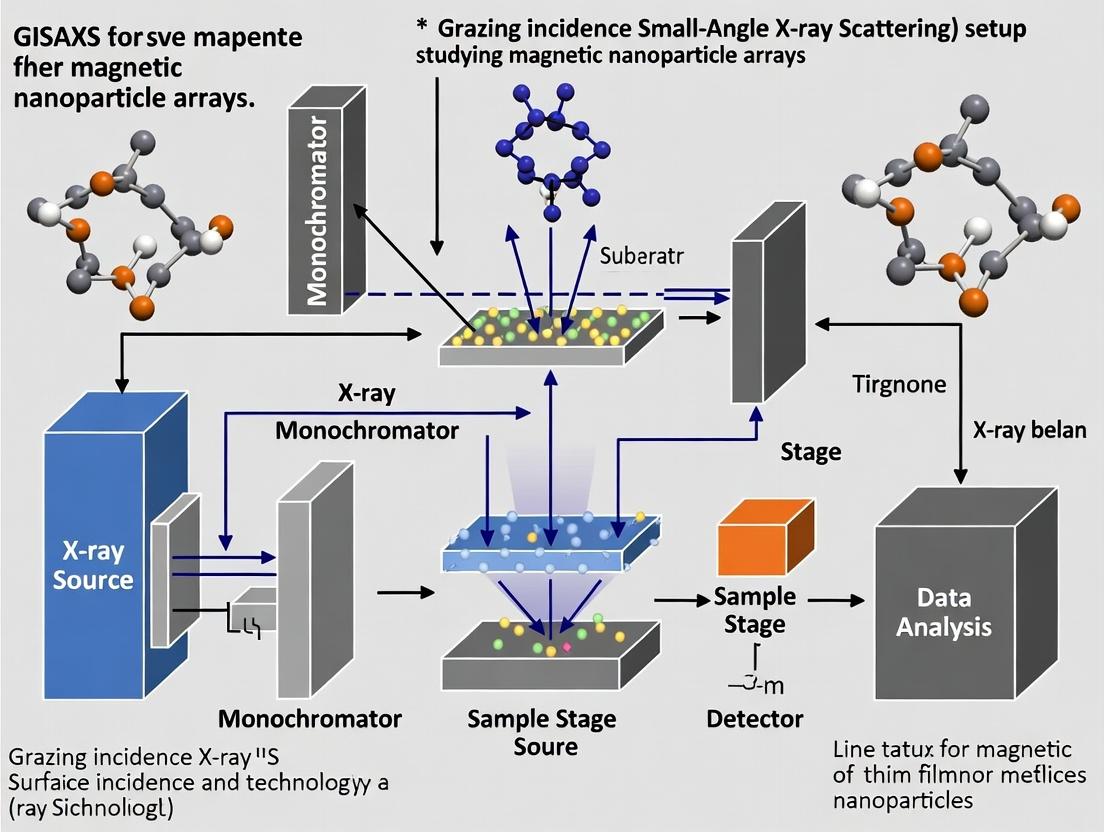
This article provides researchers and drug development professionals with a comprehensive guide to Grazing-Incidence Small-Angle X-ray Scattering (GISAXS) for characterizing magnetic nanoparticle (MNP) arrays.
GISAXS for Magnetic Nanoparticle Arrays: A Guide for Biomedical Research & Drug Development
Abstract
This article provides researchers and drug development professionals with a comprehensive guide to Grazing-Incidence Small-Angle X-ray Scattering (GISAXS) for characterizing magnetic nanoparticle (MNP) arrays. We explore the foundational principles of GISAXS and its unique suitability for analyzing nanostructured magnetic surfaces. The methodological section details protocols for sample preparation, data collection, and analysis specifically tailored for MNP arrays. We address common troubleshooting challenges, data interpretation pitfalls, and optimization strategies for achieving high-quality results. Finally, the article validates GISAXS by comparing it with complementary techniques like SEM, TEM, and magnetic force microscopy, establishing its role as a powerful, non-destructive tool for advancing nanoparticle-based therapies, targeted drug delivery, and biosensing applications.
What is GISAXS and Why is it Critical for Magnetic Nanoparticle Analysis?
This document outlines the core principles of Grazing-Incidence Small-Angle X-ray Scattering (GISAXS) as applied within a broader thesis on the characterization of self-assembled magnetic nanoparticle (MNP) arrays. Such arrays are pivotal in next-generation data storage, spintronics, and targeted drug delivery systems, where precise control over nanoparticle size, spacing, and order dictates functional performance. GISAXS is an indispensable, non-destructive tool for statistically assessing the nanoscale structure of these arrays over large, macroscopic areas.
Geometry and Scattering Theory
Basic Geometry
The GISAXS experiment employs a highly collimated X-ray beam incident on a flat sample surface at a very shallow angle (αi), typically between 0.1° and 1.0°, which is close to or above the critical angle for total external reflection of the substrate (αc). This geometry maximizes the illuminated footprint and probes the near-surface structure while minimizing substrate penetration and background scattering.
The scattering pattern is captured on a 2D detector, characterized by two exit angles:
- Out-of-Plane Angle (2θf): The horizontal component, related to in-plane structure (lateral correlations, inter-particle distances).
- In-Plane (or Exit) Angle (αf): The vertical component, sensitive to out-of-plane structure (particle height, shape, and ordering relative to the substrate).
Scattering Theory Framework
GISAXS intensity arises from the distortion of the X-ray wavefield near the sample surface (dynamical scattering) and subsequent scattering by nano-objects. The scattering process is described in the Born Approximation (BA) or more accurately for smooth surfaces and shallow angles, the Distorted-Wave Born Approximation (DWBA).
- DWBA: Crucial for GISAXS, it accounts for the reflection and refraction of the incident and scattered waves at the substrate/film interface. The total scattering wave is a superposition of four primary pathways:
- Incident wave refracted into the film, scattered, then refracted out (transmission-transmission).
- Incident wave refracted in, scattered, then reflected out (transmission-reflection).
- Incident wave reflected, then scattered from the particle (reflection-transmission).
- Incident wave reflected, scattered, then reflected again (reflection-reflection).
These interference effects lead to characteristic features like Yoneda peaks and Bragg rods/sheets in the 2D pattern.
Key Parameters and Data Presentation
The extracted GISAXS parameters provide a quantitative description of the nanoparticle array. For magnetic nanoparticle research, this links directly to magnetic properties like dipolar coupling strength and blocking temperature.
Table 1: Key GISAXS Parameters for Magnetic Nanoparticle Array Characterization
| Parameter | Symbol | Typical Range (MNP Arrays) | Extracted From | Relevance to Magnetic Properties |
|---|---|---|---|---|
| Inter-particle Distance | D, L | 5 – 100 nm | In-plane Bragg peak (qxy) | Dictates dipole-dipole interaction strength. Defines coupling and collective behavior. |
| Particle Radius | R | 1 – 20 nm | Out-of-plane & in-plane form factor oscillations (qz, qxy) | Determines magnetic moment (∝ volume) and anisotropy energy. |
| Array Correlation Length | ξ | 10 – 500 nm | Radial width of Bragg peak (Δqxy), ξ = 2π/Δq | Domain size of ordered regions affecting magnetic reversal uniformity. |
| Lattice Symmetry | – | Hexagonal, Square, Paracrystalline | Angular distribution of Bragg peaks | Influences anisotropy of dipolar interactions. Hexagonal packing is common. |
| Particle Height/Shape | H | 1 – 20 nm | Vertical form factor (qz cuts) | For non-spherical particles (e.g., nanodiscs), shape defines magnetic anisotropy axis. |
| Surface Coverage / Fill Factor | η | 0.1 – 0.8 | Integrated diffuse scattering intensity | Impacts percolation and mean inter-particle distance. |
Experimental Protocols
Protocol 4.1: Standard GISAXS Measurement of Drop-Cast MNP Arrays
Objective: To determine the in-plane ordering and size distribution of iron oxide nanoparticles self-assembled on a silicon substrate.
Materials: See "The Scientist's Toolkit" below. Pre-Measurement:
- Sample Preparation: Clean a 1x1 cm Si wafer (with native oxide) in piranha solution (3:1 H₂SO₄:H₂O₂). CAUTION: Extremely corrosive. Rinse with Milli-Q water and ethanol, dry under N₂ stream.
- MNP Deposition: Dilute oleic-acid capped Fe₃O₄ nanoparticles in hexane to ~1 mg/mL. Pipette 20 µL onto the static, tilted (~10°) Si substrate. Allow to dry in a covered Petri dish.
Beamline Setup (Synchrotron):
- Alignment: Mount sample on a 6-circle goniometer in a vacuum chamber. Using a direct beam diode, align the sample surface to intersect the rotation axis (ω).
- Angle Selection: Set the incident angle αi using an incident slit. For Si (αc ~0.22° at 10 keV), choose αi = 0.3° to enhance surface sensitivity while illuminating a large area.
- Detector Setup: Position a 2D Pilatus detector (e.g., 2M) typically 2-5 m downstream from the sample. Ensure the beamstop is placed to block the specular reflected beam.
Data Acquisition:
- Exposure: Acquire a 2D scattering pattern with an exposure time of 1-10 seconds, ensuring the detector is not saturated.
- Calibration: Collect scattering patterns from a known standard (e.g., silver behenate) to calibrate the q-scale (q = (4π/λ)sin(θ), where 2θ is the scattering angle).
- Mapping (Optional): Perform a grid scan across the sample to assess spatial homogeneity of the MNP array.
Data Reduction & Analysis:
- Correction: Subtract dark current (no beam) and background (empty substrate) images. Apply solid angle and polarization corrections.
- Horizontal Line Cut: Integrate intensity along a narrow band at αf = α_Yoneda (Yoneda peak position) to obtain I(qxy).
- Peak Fitting: Fit the Bragg peak(s) in the I(qxy) profile with a Gaussian/Lorentzian function on a linear background to extract peak position q* and FWHM Δq.
- Calculation: Calculate inter-particle distance D = 2π/q* and in-plane correlation length ξ = 2π/Δq.
The Scientist's Toolkit: Research Reagent Solutions
Table 2: Essential Materials for GISAXS Study of MNP Arrays
| Item | Function & Relevance to GISAXS/Magnetic Research |
|---|---|
| High-Energy X-ray Source (Synchrotron Beamline) | Provides high flux, collimated beam (λ ~0.1 nm, 10-20 keV) necessary for penetrating nanoparticle coatings and achieving high q-resolution. Essential for time-resolved in situ studies. |
| 2D Area Detector (e.g., Pilatus, Eiger) | Fast, low-noise photon-counting detector for capturing the full 2D scattering pattern simultaneously. High dynamic range is crucial for weak diffuse scattering from nanoparticles. |
| Precision Goniometer (6-circle, vacuum chamber) | Allows precise alignment of the sample to sub-milli-degree accuracy for controlling αi and probing reciprocal space. Vacuum minimizes air scattering and absorption. |
| Single-Crystal Silicon Wafers (with native SiO₂) | Standard atomically flat, low-roughness substrate. Provides well-defined critical angle and minimizes background scattering. Inert surface for MNP self-assembly. |
| Magnetic Nanoparticles (e.g., Fe₃O₄, Co, FePt) | Core research material. Monodispersity is critical for forming ordered arrays. Surface ligands (oleic acid, CTAB) control spacing and self-assembly. |
| Calibration Standard (e.g., Silver Behenate) | Provides known diffraction rings for precise calibration of the scattering vector q, converting pixel position to nanoscale dimensions. |
| Analytical Software (e.g., GIXSGUI, DAWN, FitGISAXS) | Used for data reduction, image correction, line-cut extraction, and modeling (e.g., with DWBA) to quantitatively fit and interpret scattering patterns. |
Within the broader thesis on utilizing Grazing-Incidence Small-Angle X-ray Scattering (GISAXS) for studying magnetic nanoparticle arrays (MNPs), it is imperative to first delineate why traditional microscopy techniques are insufficient. MNPs, typically 5-50 nm in size and arranged in periodic arrays or clusters on substrates, present unique challenges: their magnetic moments, three-dimensional arrangement, and ensemble behavior are not accessible via standard imaging. This application note details these limitations and provides protocols for GISAXS-based characterization, the primary methodology of the thesis.
Limitations of Standard Microscopy Techniques
The table below summarizes the quantitative performance limits of common microscopy techniques when applied to MNP arrays.
Table 1: Quantitative Limitations of Standard Microscopy for MNP Array Analysis
| Technique | Lateral Resolution | Depth Sensitivity | Magnetic Information | Key Limitation for MNPs |
|---|---|---|---|---|
| Optical Microscopy | ~200 nm | Diffraction-limited | None (unless magneto-optical) | Cannot resolve individual nanoparticles. |
| Scanning Electron Microscopy (SEM) | 1-10 nm | Surface topology only | None | Charging effects on insulating substrates; no volumetric or magnetic data. |
| Atomic Force Microscopy (AFM) | 1-5 nm (vertical) | Surface topography | Magnetic Force Mode (MFM) gives stray field only | MFM probes stray field, not internal magnetization; slow for large arrays. |
| Transmission Electron Microscopy (TEM) | <1 nm | Requires electron-transparent samples | Lorentz TEM or Electron Holography possible | Sample preparation destructive; limited field of view for array statistics; high vacuum. |
| Confocal Microscopy | ~200 nm | Optical sectioning (~500 nm) | None | Resolution far above nanoparticle size. |
Core Protocol: GISAXS for MNP Array Characterization
Protocol Title: GISAXS Measurement of Magnetic Nanoparticle Array Structure and Magnetometry.
Principle: GISAXS uses a highly collimated X-ray beam at a grazing incidence angle (typically 0.1°-0.5°) to probe the nanoscale structure of ordered arrays on surfaces. It provides statistical data on particle size, shape, spacing, and arrangement over a macroscopic area (mm²). When combined with an applied magnetic field (in-situ magneto-GISAXS), it can probe field-induced structural reorientation.
Materials & Reagents: Table 2: Research Reagent Solutions & Essential Materials
| Item | Function/Explanation |
|---|---|
| Silicon Wafer (with native oxide) | Standard substrate for MNP self-assembly due to its smoothness and well-defined surface chemistry. |
| Polystyrene-b-Poly(methyl methacrylate) (PS-b-PMMA) | A common block copolymer used as a template for directing the assembly of MNPs into periodic arrays. |
| Iron Oxide Nanoparticle Dispersion (e.g., γ-Fe₂O₃) | Model magnetic nanoparticle system (superparamagnetic/ferrimagnetic) suspended in a solvent (e.g., toluene, hexane). |
| OPC (Oleic Acid / Phosphonic Acid) | Surface ligand for MNPs to prevent aggregation and control self-assembly interaction. |
| Spin Coater | For depositing uniform thin films of block copolymer templates or nanoparticle solutions. |
| Thermal Annealer / Solvent Vapor Chamber | Used to induce microphase separation of block copolymer templates to form ordered nanopatterns. |
| Programmable Electromagnet | For applying in-situ magnetic fields (0-500 mT) during GISAXS measurements. |
Detailed Workflow:
- Substrate Preparation: Clean a silicon wafer via sequential sonication in acetone and isopropanol for 10 minutes each. Dry under a stream of nitrogen. Treat with an oxygen plasma for 2-5 minutes to ensure a hydrophilic surface.
- Template Fabrication (if used): Dissolve PS-b-PMMA in toluene (1-2% w/v). Spin-coat onto the Si wafer at 2000-4000 rpm for 60 s. Anneal the film under a solvent vapor (e.g., toluene/acetone mixture) or thermally (≥ 150°C) for 24 hours to form ordered cylindrical or spherical domains.
- MNP Array Deposition: Dilute the OPC-coated iron oxide nanoparticle dispersion. Employ dip-coating, drop-casting with controlled evaporation, or spin-coating onto the substrate (or template). For templated assembly, use a selective solvent to direct MNPs to specific polymer domains.
- Ex-situ Structural Check: Perform preliminary SEM/AFM to verify array formation and coverage.
- GISAXS Experiment Setup: a. Align the sample on a high-precision goniometer. b. Set the X-ray incidence angle (αᵢ) to be slightly above the critical angle of the substrate (∼0.2° for Si) to enhance surface sensitivity. c. Position a 2D X-ray detector (e.g., Pilatus) several meters downstream to capture the scattered pattern. d. (For magneto-GISAXS) Mount the programmable electromagnet around the sample, ensuring it does not obstruct the X-ray path.
- Data Acquisition: a. Acquire a 2D GISAXS pattern with no magnetic field. b. Apply a magnetic field in-plane (e.g., +Hx) perpendicular to the X-ray beam direction. Allow for equilibration (∼60 s). Acquire a 2D pattern. c. Reverse the field (-Hx) and acquire another pattern. d. Repeat for different field strengths and orientations (e.g., out-of-plane) as required.
- Data Analysis: Use dedicated software (e.g., GIXSGUI, BornAgain, DPDAK) to fit the scattering patterns. Key parameters extracted are listed in the table below.
Table 3: Quantitative Data Extracted from GISAXS Patterns of MNP Arrays
| GISAXS Feature | Measured Parameter | Typical Range for Ordered MNPs | Information Obtained |
|---|---|---|---|
| Bragg Peaks / Correlation Rings | Scattering vector q* (nm⁻¹) | 0.05 - 0.5 nm⁻¹ | Inter-particle spacing (d = 2π/q*), array symmetry (hexagonal, square). |
| Form Factor Oscillations | Radius of gyration, Rg (nm) | 3 - 25 nm | Mean nanoparticle size, size distribution, and shape. |
| Yoneda Peak | Critical angle | Material-dependent | Information on film composition and electron density contrast. |
| Field-induced Changes | Shift in q* or intensity | Δq/q < 5% | Magnetostriction, field-induced lattice rotation/rearrangement. |
Visualized Workflows and Pathways
Title: Magneto-GISAXS Experimental Workflow
Title: Why Standard Microscopy Falls Short
Within the broader thesis on utilizing Grazing-Incidence Small-Angle X-ray Scattering (GISAXS) for studying magnetic nanoparticle arrays, this document details the key structural parameters extracted from GISAXS patterns. These parameters—size, shape, interparticle distance, and ordering—are critical for correlating nanostructure with magnetic properties (e.g., collective magnetic behavior, anisotropy) and for applications in targeted drug delivery, hyperthermia, and biosensing. This protocol serves researchers and drug development professionals in characterizing nanoparticle assemblies on substrates.
Table 1: Key GISAXS Parameters and Their Quantitative Interpretation
| Parameter | GISAXS Feature | Typical Data Output | Influence on Magnetic/Functional Properties |
|---|---|---|---|
| Nanoparticle Size | Position of Yoneda wing / intensity cut along qy | Mean radius (R), dispersion (σ), (e.g., R = 5.2 nm ± 0.8 nm) | Determines single-domain vs. multi-domain magnetic state; size-dependent heating efficiency in hyperthermia. |
| Nanoparticle Shape | Azimuthal angular dependence of scattering; qz vs qy anisotropy | Aspect ratio, model fit (sphere, cylinder, cube). | Shape anisotropy defines magnetic easy axis; impacts cellular uptake in drug delivery. |
| Interparticle Distance | Position of first-order lateral correlation peak (qx) | Mean center-to-center distance (dcc), e.g., dcc = 12.3 nm. | Dictates dipolar magnetic coupling strength; affects ligand density for targeting. |
| Degree of Ordering | Number, width, and symmetry of lateral peaks | Correlation length (ξ), symmetry group (hexagonal, square). | Long-range order influences collective magnetic switching and uniform therapeutic agent release. |
Table 2: Example GISAXS Data from a Model Fe3O4 Nanoparticle Array
| Sample ID | Mean Radius (nm) | Interparticle Distance (nm) | Correlation Length (nm) | Lattice Symmetry |
|---|---|---|---|---|
| Array_A | 4.5 ± 0.5 | 10.2 ± 0.9 | 45.2 | Hexagonal |
| Array_B | 6.1 ± 0.7 | 14.8 ± 1.2 | >200 | Square |
Experimental Protocols
Protocol 1: Sample Preparation for Magnetic Nanoparticle Arrays
Objective: To deposit a monolayer of ligand-stabilized magnetic nanoparticles (e.g., Fe3O4, CoPt3) with controlled spacing onto a silicon wafer substrate. Materials: See "Scientist's Toolkit" below. Procedure:
- Substrate Cleaning: Sonicate a silicon wafer (with native oxide) in acetone, followed by isopropanol, for 10 minutes each. Treat with oxygen plasma for 5 minutes to create a hydrophilic surface.
- Langmuir-Blodgett Trough Deposition:
- Spread a colloidal toluene solution of oleic-acid capped nanoparticles on the water subphase in a Langmuir trough.
- Slowly compress the barrier at a rate of 5 cm²/min while monitoring surface pressure.
- At a target pressure of 25 mN/m (indicating close-packing), initiate substrate dipping (vertical lift) at 2 mm/min to transfer the monolayer onto the silicon wafer.
- Annealing (Optional): For improved ordering, anneal the deposited array under forming gas (5% H2/95% N2) at 250°C for 1 hour.
Protocol 2: GISAXS Measurement and Data Collection
Objective: To acquire a 2D GISAXS pattern suitable for quantitative analysis of structural parameters. Materials: Synchrotron beamline equipped with a 2D detector (e.g., Pilatus), sample alignment station. Procedure:
- Alignment: Mount the sample on a high-precision goniometer. Align the substrate surface to the incident X-ray beam using a laser and diode. Set the grazing incidence angle (αi) to 0.2°–0.5°, typically above the critical angle of the substrate but below that of the nanoparticles to enhance surface sensitivity.
- Beam Configuration: Use a monochromatic X-ray beam (e.g., λ = 0.1 nm, E = 12.4 keV). Define beam size using slits (e.g., 100 µm vertical x 2000 µm horizontal).
- Measurement: Acquire the 2D scattering pattern using a detector placed ~2-5 m downstream from the sample. Use an appropriate exposure time (1-10 sec) to avoid detector saturation. Place a beamstop to block the specularly reflected beam.
- Calibration: Record calibration measurements using a silver behenate standard to determine the exact sample-to-detector distance and the q-scale (q = 4π sin(θ)/λ, where 2θ is the scattering angle).
Protocol 3: Data Analysis for Parameter Extraction
Objective: To quantitatively extract size, shape, distance, and ordering from the 2D GISAXS pattern. Software: Use dedicated tools (e.g., GIXSGUI, IsGISAXS, FitGISAXS, or custom MATLAB/Python scripts). Procedure:
- Image Preprocessing: Subtract dark current/background. Correct for detector sensitivity (flat-field). Mask dead pixels and the shadow of the beamstop.
- Size & Shape Analysis:
- Extract a horizontal line cut at the Yoneda maximum (typically a narrow slice in qz).
- Fit the cut with a form factor model (e.g., sphere, cylinder) convolved with a size distribution function (e.g., log-normal) to obtain mean radius and polydispersity.
- Analyze the anisotropic shape of the scattering pattern in the qy-qz plane to infer particle shape.
- Interparticle Distance & Ordering:
- Extract a vertical line cut along qx at the Yoneda region.
- Identify the position of the first correlation peak (q). Calculate the mean center-to-center distance: dcc = 2π / q.
- The full width at half maximum (FWHM) of the peak gives the correlation length ξ = 2π / FWHM(q), indicating the lateral ordering domain size.
Diagram: GISAXS Workflow for Magnetic Nanoparticle Arrays
Diagram Title: GISAXS Analysis Workflow for Magnetic Nanoparticle Arrays
The Scientist's Toolkit: Essential Research Reagents & Materials
Table 3: Key Research Reagent Solutions for GISAXS Sample Preparation
| Item | Function/Explanation |
|---|---|
| Oleic Acid-Capped Fe3O4 Nanoparticles | Monodisperse, superparamagnetic core for array formation; oleic acid provides steric stabilization and enables Langmuir film formation. |
| High-Purity Toluene | Solvent for spreading nanoparticle dispersion on Langmuir trough subphase. |
| Ultrapure Water (18.2 MΩ·cm) | Subphase for Langmuir-Blodgett trough; purity is critical for controlled nanoparticle film compression. |
| Piranha Solution (H2SO4:H2O2) | Caution: Extremely corrosive. For aggressive cleaning of silicon substrates to ensure pristine, hydrophilic surfaces. |
| Poly(methyl methacrylate) (PMMA) | Optional sacrificial layer for lift-off processes to create patterned nanoparticle arrays. |
| (3-Aminopropyl)triethoxysilane (APTES) | Coupling agent for creating chemically functionalized substrates to promote electrostatic nanoparticle adhesion. |
| Forming Gas (5% H2 / 95% N2) | Inert/reducing atmosphere for thermal annealing of arrays to improve crystallinity and ordering without oxidation. |
Within the broader thesis focusing on the application of Grazing-Incidence Small-Angle X-ray Scattering (GISAXS) for the structural characterization of magnetic nanoparticle (MNP) arrays, the choice of X-ray source is a critical methodological decision. This application note delineates the capabilities, limitations, and practical protocols for using synchrotron and laboratory X-ray sources, enabling researchers to select the optimal tool for their specific MNP research goals in drug development and nanomaterial science.
Source Characteristics & Quantitative Comparison
The fundamental parameters of the two source types are summarized in Table 1.
Table 1: Quantitative Comparison of X-ray Source Characteristics
| Parameter | Synchrotron Source | Laboratory Source (Rotating Anode) | Laboratory Source (Microfocus) |
|---|---|---|---|
| Photon Flux (phs/s) | 10^12 - 10^15 | 10^8 - 10^10 | 10^6 - 10^9 |
| Beam Divergence (mrad) | 0.01 - 0.1 | 1 - 10 | 5 - 20 |
| Typical Spot Size (µm) | 10 - 300 (H) x 5 - 50 (V) | 50 - 300 | 5 - 50 |
| Spectral Purity | High (monochromatized) | Moderate (Kα line) | Low (bremsstrahlung) |
| Beam Energy Tunability | Continuous (5 - 100+ keV) | Fixed (e.g., Cu Kα = 8.04 keV) | Fixed |
| Temporal Resolution | Microseconds to seconds | Minutes to hours | Minutes to hours |
| Operational Accessibility | Limited (beamtime proposals) | Unlimited (in-house) | Unlimited (in-house) |
| Relative Cost per Measurement | High (beamtime, travel) | Moderate | Low |
Application Notes for MNP Array Studies
Synchrotron Advantages: When to Choose
- High-Throughput Screening: Rapid data collection enables structural mapping across a substrate under varying conditions (e.g., magnetic field, temperature gradients).
- In-Situ & Operando Studies: Real-time observation of MNP self-assembly dynamics, ligand exchange, or structural response to stimuli.
- Anomalous GISAXS: Exploiting energy tunability to perform contrast variation near elemental absorption edges, isolating scattering from specific elements within composite MNPs.
- Probing Weak Scattering: Essential for ultra-dilute systems, thin films, or detecting minute structural changes.
- High-Resolution Mapping: Using micro/nano-focus beams to correlate local structure with other properties (e.g., from SEM/AFM on the same region).
Laboratory Source Advantages: When to Choose
- Routine Quality Control: Long-term stability studies of batch-to-barray consistency in size, shape, and ordering.
- Method Development: Optimizing sample preparation and preliminary alignment before beamtime.
- Extended Time-Series: Measurements requiring days or weeks without time constraints.
- Tightly Coupled Experiments: Where immediate, iterative feedback between synthesis, characterization, and modification is needed.
Experimental Protocols
Protocol: GISAXS on MNP Arrays at a Synchrotron Beamline
Objective: To capture the kinetics of magnetic-field-induced assembly of iron oxide MNPs at the air/water interface. Materials: See "Scientist's Toolkit" below. Procedure:
- Beamline Alignment: Align the beamline monochromator to the desired energy (e.g., 10 keV for Cu). Calibrate the sample-to-detector distance using a silver behenate standard.
- Sample Cell Preparation: Load the MNP dispersion into a temperature-controlled Teflon Langmuir trough equipped with a moving barrier. Position an electromagnetic coil beneath the trough.
- GISAXS Geometry Alignment: Set the grazing incidence angle (αᵢ) to 0.1 - 0.3° (above the critical angle of the subphase). Align the beam to strike the liquid surface. Use a beamstop to protect the detector from the direct beam.
- Magnetic Field Application: Activate the electromagnetic coil to apply a uniform magnetic field (e.g., 0.1 T) parallel to the liquid surface and perpendicular to the X-ray beam.
- Time-Resolved Data Acquisition: Start the detector (2D pixel array) in continuous acquisition mode (frame rate: 1-10 Hz) simultaneously with field application. Acquire data for the duration of the assembly process (typically 1-30 minutes).
- Data Reduction: Process sequential 2D patterns using beamline software (e.g., SAXSlab, DPDAK). Perform azimuthal integration to obtain 1D intensity profiles I(q) vs. scattering vector q for each time point.
Protocol: Laboratory-Source GISAXS for MNP Film Characterization
Objective: To determine the average inter-particle distance and lattice order of dried MNP arrays on a silicon substrate. Materials: See "Scientist's Toolkit" below. Procedure:
- Source Preparation: Power up the sealed-tube X-ray generator (Cu Kα, λ=1.54 Å) and allow 30+ minutes for stabilization.
- Collimation & Safety: Engage motorized slits to define a beam profile of 0.2 x 5 mm (V x H). Verify that all safety shutters and interlocks are functional.
- Sample Alignment: Mount the MNP sample on a high-precision goniometer. Using a laser alignment tool and a point detector, set αᵢ to the critical angle of the substrate (~0.2° for Si) to maximize surface sensitivity.
- Detector Setup: Position a 2D image plate or hybrid pixel detector (e.g., Pilatus) perpendicular to the direct beam. Ensure the beamstop adequately blocks the intense specular reflection.
- Data Acquisition: Acquire a single 2D scattering pattern with an exposure time of 1-6 hours, depending on source brightness and sample scattering power.
- Analysis: Integrate the 2D pattern along the detector's horizontal axis (q_xy) to analyze in-plane ordering. Fit Bragg peaks or analyze the correlation ring to determine the dominant inter-particle spacing.
Visualized Workflows
Title: Decision Workflow for X-ray Source Selection
Title: Generic GISAXS Experimental Protocol Steps
The Scientist's Toolkit: Key Research Reagent Solutions
Table 2: Essential Materials for GISAXS Studies of MNP Arrays
| Item | Function & Specification | Example/Note |
|---|---|---|
| MNP Dispersant | Provides stable colloidal suspension for film casting or interface studies. Must be compatible with solvent and surface. | Oleic acid/oleylamine in toluene (for hydrophobic MNPs); Citrate coating in water (for hydrophilic MNPs). |
| Calibration Standard | Used for precise calibration of the scattering vector q. Provides known diffraction rings. | Silver behenate (AgBeh, d-spacing = 58.38 Å) or Glassy Carbon (for intensity correction). |
| High-Purity Substrate | Provides an atomically smooth, flat surface for MNP deposition to minimize background scattering. | Single-crystal silicon wafers (with native oxide), Fused silica, or Mica sheets. |
| Langmuir Trough | For studying MNP assembly at liquid interfaces under controlled surface pressure. Essential for in-situ kinetic studies. | Teflon trough with movable barriers and a Wilhelmy plate surface pressure sensor. |
| Precision Goniometer | Enables accurate alignment of the sample's grazing incidence angle (αᵢ) and in-plane rotation (φ). | 4-circle or 6-circle goniometer with motorized degrees of freedom. |
| Beamstop | Protects the 2D detector from damage by the intense, directly transmitted X-ray beam. | Lead/tapered beamstop on a transparent substrate (e.g., Kapton). |
| 2D X-ray Detector | Captures the scattered X-ray intensity pattern. Key parameters: pixel size, dynamic range, readout speed. | Hybrid pixel detector (Pilatus, Eiger), Image Plate (Fujifilm), or CCD. |
| Magnetic Field Cell | Applies a tunable magnetic field in-situ during the GISAXS experiment to study field-induced assembly. | Electromagnetic coils or permanent magnet arrays integrated into the sample stage. |
1.0 Introduction & Context Within the thesis framework "Advanced GISAXS for the Rational Design of Functional Magnetic Nanoparticle Arrays," this document provides application notes and protocols for directly linking nanostructural order (from GISAXS) to functional magnetic and biomedical outputs. The core thesis posits that deterministic control over array order (spacing, symmetry, domain size) is the critical bridge to tuning collective magnetic behavior and optimizing performance in biomedical applications such as magnetic hyperthermia and targeted drug delivery.
2.0 Quantitative Data Summary: Key Correlations
Table 1: Correlation of GISAXS-Derived Structural Parameters with Magnetic Properties
| GISAXS Parameter | Magnetic Property Measured | Typical Correlation Trend | Key Experimental Reference |
|---|---|---|---|
| Interparticle Distance (d) | Coercivity (Hc) | Hc decreases as d decreases (due to stronger dipolar interactions) | Streubel et al., Nano Lett. 2020 |
| Lateral Correlation Length (ξ) | Blocking Temperature (Tb) | Tb increases with increasing ξ (larger coherent magnetic domains) | Singh et al., ACS Appl. Nano Mater. 2022 |
| Array Symmetry (hex. vs. sq.) | Remanent Magnetization (Mr/Ms) | Higher Mr/Ms for hexagonal vs. square lattices at same d | Wetterskog et al., Nanoscale 2018 |
| Particle Size Dispersity (σ/D) | Specific Loss Power (SLP) | SLP shows a non-linear maximum at optimal σ/D ~10-15% | Ludwig et al., J. Phys. D: Appl. Phys. 2021 |
Table 2: Correlation of Nanostructural & Magnetic Parameters with Biomedical Efficacy
| Combined Parameter | Biomedical Assay | Optimal Range/Outcome | Protocol Reference |
|---|---|---|---|
| SLP x Array Packing Density | In vitro Hyperthermia (Cell Viability) | Max. cancer cell kill (>80%) at SLP >300 W/g & density > 200 particles/μm² | Protocol 3.1 |
| Magnetic Field Switching Frequency x ξ | Endosomal Escape Efficiency | >60% cytosolic delivery for f > 400 kHz & ξ > 100 nm | Protocol 3.2 |
| Hc x Functionalization Density | Targeted Binding Efficiency (Flow Cytometry) | Saturation binding at Hc < 50 Oe & >5 ligands/nm² | Protocol 3.3 |
3.0 Experimental Protocols
Protocol 3.1: Integrated GISAXS & In Vitro Magnetic Hyperthermia Assay Objective: To correlate nanoparticle array structure with hyperthermic cell killing efficacy. Materials: See "Scientist's Toolkit" below. Procedure:
- Sample Preparation: Prepare identical MNP solutions. Deposit via Langmuir-Blodgett or spin-coating onto silicon substrates for GISAXS and onto glass coverslips for cell assays.
- GISAXS Measurement: Perform GISAXS at a synchrotron beamline (e.g., 10 keV, incident angle 0.2-0.5°). Use GIXSGUI or BornAgain software to fit data, extracting d, ξ, and symmetry.
- Cell Seeding & Treatment: Seed HeLa cells in 96-well plates (10,000 cells/well). Add MNP-coated coverslips to wells. Include controls.
- Hyperthermia Exposure: Place plate in alternating magnetic field (AMF) coil (f = 375 kHz, H = 15 kA/m). Expose for 10-30 mins, monitoring temperature with a fluorescent probe (e.g., Rhodamine B).
- Viability Assessment: 24h post-AMF, assess viability via MTT assay. Measure absorbance at 570 nm.
- Data Correlation: Plot cell viability % against GISAXS-derived ξ and calculated SLP.
Protocol 3.2: Assessing Magnetic Mechanotransduction for Endosomal Escape Objective: To link array disorder (from GISAXS) to mechanical disruption of endosomes. Materials: LysoTracker Deep Red, Dextran-FITC, fluorescence microscope, AMF system. Procedure:
- Array Characterization: Use GISAXS to quantify the paracrystalline disorder factor (g) of the MNP array.
- Cell Loading: Incubate cells with MNPs (10 µg Fe/mL) for 4h. Remove excess particles. Load with Dextran-FITC (endosomal marker) for 1h.
- AMF Stimulation: Apply low-frequency AMF (f = 1-10 Hz, H = 5 kA/m) for 5 mins to induce array mechanical actuation.
- Fixation & Imaging: Fix cells at t=0, 5, 15 mins post-AMF. Stain with LysoTracker and DAPI.
- Quantification: Use ImageJ to calculate cytosolic vs. endosomal FITC signal. Correlate % cytosolic release with GISAXS parameter g.
Protocol 3.3: Flow Cytometry-Based Binding Efficiency vs. Magnetic Stability Objective: To balance colloidal stability (from Hc) and targeted binding. Materials: Anti-HER2 functionalized MNPs, HER2+ SK-BR-3 cells, flow cytometer with magnetic setup. Procedure:
- MNP Synthesis & Characterization: Synthesize MNPs of varying anisotropy to tune Hc (measured by VSM). Functionalize with identical density of anti-HER2 antibodies.
- GISAXS in Solution: Perform liquid-cell GISAXS to confirm no aggregation in buffer.
- Binding under Flow: Incubate MNPs with cells in suspension for 30 mins. Use a flow cytometer equipped with a miniaturized magnetic separation unit.
- Magnetic Separation & Analysis: Apply a low gradient field (≈50 mT) during analysis. Quantify cell-associated fluorescence (MNP-bound) versus particles removed by the field.
- Correlation: Plot binding efficiency (%) versus measured Hc of the core array.
4.0 Visualized Workflows & Pathways
Title: Core Workflow: From GISAXS to Function
Title: Structure-Function Decision Pathway
5.0 The Scientist's Toolkit: Research Reagent Solutions
Table 3: Essential Materials for Integrated GISAXS-Biomedical Studies
| Item / Reagent | Supplier Examples | Function in Protocol |
|---|---|---|
| Oleic Acid-Coated Fe₃O₄ NPs (10 nm) | Sigma-Aldrich, Nanocs | Standardized core material for creating ordered arrays via self-assembly. |
| 1,2-Dipalmitoyl-sn-glycero-3-phosphocholine (DPPC) | Avanti Polar Lipids | Lipid for Langmuir-Blodgett trough, enabling monolayer array formation. |
| BornAgain Software | bornagainproject.org | Open-source GISAXS fitting suite for modeling nanoparticle assemblies. |
| DMEM, High Glucose | Gibco (Thermo Fisher) | Cell culture medium for maintaining hyperthermia assay cell lines. |
| MTT Assay Kit | Abcam, Cayman Chemical | Colorimetric kit for quantifying cell viability post-hyperthermia. |
| Anti-HER2 Affinity Ligand (e.g., Trastuzumab) | Roche, Creative Biolabs | Targeting moiety for functionalization in binding efficiency studies. |
| LysoTracker Deep Red | Invitrogen (Thermo Fisher) | Fluorescent dye for staining and visualizing endosomal compartments. |
| Portable AMF Coil System | nanoScale Biomagnetics, Resonant Circuits | Bench-top alternating magnetic field generator for hyperthermia/actuation. |
| Microfluidic Flow Cell for in situ GISAXS | Micronit, Dolomite | Enables GISAXS measurement of MNPs in liquid, mimicking physiological dispersion. |
A Step-by-Step Protocol: From Sample Prep to GISAXS Data Analysis for MNPs
For Grazing-Incidence Small-Angle X-ray Scattering (GISAXS) studies of magnetic nanoparticle (MNP) arrays, sample preparation is the critical determinant of data quality and interpretability. The GISAXS pattern directly encodes information on the in-plane ordering, out-of-plane arrangement, and size/shape distribution of the MNPs. Imperfect monolayers, substrate roughness, or uncontrolled aggregation introduce scattering artifacts that complicate the deconvolution of structural parameters relevant to magnetic properties (e.g., dipolar coupling distances). This protocol details the essential steps for preparing ideal MNP arrays for GISAXS analysis.
Substrate Choice and Preparation
The substrate must provide a flat, clean, and chemically compatible surface to promote uniform nanoparticle adhesion and self-assembly.
Key Substrate Parameters:
| Parameter | Ideal Specification for GISAXS on MNPs | Rationale |
|---|---|---|
| Material | Silicon (with native oxide), Fused silica, Ultrathin carbon on mica. | Low X-ray absorption and scattering background; atomically flat surfaces available. |
| Roughness (RMS) | < 0.5 nm (over 1 µm² scan). | Minimizes diffuse scattering that obscures the nanoparticle form factor and structure factor signals. |
| Surface Energy | Tunable via plasma treatment (hydrophilic) or functionalization (hydrophobic). | Controls spreading of colloidal suspension and interfacial assembly kinetics. |
| Cleanliness | Free of particulate and organic contamination. | Prevents heterogeneous nucleation and pinning of NPs, leading to disordered arrays. |
Protocol: Silicon Wafer Substrate Cleaning (RCA-1 Modified)
- Cutting: Dice silicon wafer (P/Boron, ⟨100⟩) into ~10x10 mm pieces using a diamond scribe.
- Solvent Cleaning: Sonicate substrates in acetone (HPLC grade) for 10 minutes, followed by isopropyl alcohol (IPA) for 10 minutes. Rinse with copious amounts of pure IPA.
- Oxidative Cleaning: Prepare fresh RCA-1 solution (5:1:1 volume ratio of H₂O : NH₄OH (28-30%) : H₂O₂ (30%)). Heat to 70-75°C in a water bath.
- Immerse substrates in the warm RCA-1 solution for 15 minutes. This removes organic residues.
- Rinse thoroughly with ultra-pure water (18.2 MΩ·cm).
- Drying: Dry under a stream of dry nitrogen or argon gas. Store in a clean petri dish.
- (Optional) Plasma Activation: Immediately before NP deposition, expose substrates to oxygen or argon plasma (e.g., 100 W, 1 minute) to create a hydrophilic, negatively charged SiO₂ surface.
Deposition Techniques for Monolayer Formation
The goal is to achieve a high-coverage, hexagonally close-packed monolayer of MNPs over large areas (> 10 µm²).
Comparison of Common Techniques:
| Technique | Principle | Best For | Key Control Parameters | Risk of Multilayers |
|---|---|---|---|---|
| Drop Casting | Evaporation of a droplet on a static substrate. | Rapid screening, large NPs (>50 nm). | NP concentration, droplet volume, humidity. | High (coffee-ring effect). |
| Spin Coating | Radial thinning via high-speed rotation. | Fast, reproducible thin films. | Spin speed, acceleration, solution viscosity. | Medium (speed-dependent). |
| Langmuir-Blodgett (LB) | Compression of a NP monolayer at air/water interface & transfer. | Highest-quality monolayers, precise density control. | Surface pressure, compression speed, dip rate. | Low when optimized. |
| Dip Coating / Self-Assembly | Withdrawal of substrate from NP solution. | Coating complex shapes, smaller NPs. | Withdrawal speed, temperature, solvent. | Medium (speed-dependent). |
Detailed Protocol: Langmuir-Blodgett Deposition of Oleic Acid-Capped Fe₃O₄ NPs
- Materials: LB trough, deionized water subphase, oleic acid-capped magnetic nanoparticles (8-12 nm dia.) dispersed in hexane (~0.5 mg/mL), chloroform, clean silicon substrate.
- Procedure:
- Fill the LB trough with ultrapure water. Set temperature to 20°C. Clean the air-water surface by sweeping and aspirating.
- Spreading: Slowly spread the NP-hexane solution dropwise onto the water surface using a microsyringe. Allow 15 minutes for solvent evaporation.
- Compression: Gradually compress the floating NP film at a rate of 5 cm²/min using movable barriers. Continuously monitor surface pressure (Π) vs. area isotherm.
- Target Pressure: Identify the "solid-phase" plateau in the isotherm, indicating close-packing. Set target transfer pressure (Πₜ) to 25 mN/m.
- Transfer: Vertically dip the hydrophilic substrate through the NP monolayer at a constant speed of 2 mm/min while maintaining Πₜ via barrier feedback.
- Drying: Slowly withdraw the substrate. The monolayer transfers via hydrophilic interaction. Dry under a gentle N₂ stream.
Validation of Monolayer Formation
Prior to GISAXS, validate sample quality with complementary techniques.
- Scanning Electron Microscopy (SEM): Provides direct real-space imaging of monolayer coverage and ordering over µm-scale.
- Atomic Force Microscopy (AFM): Quantifies monolayer thickness, confirms absence of multilayers, and measures substrate roughness.
The Scientist's Toolkit: Research Reagent Solutions
| Item | Function in MNP Sample Prep for GISAXS |
|---|---|
| Oleic Acid / Oleylamine Capped MNPs | Standard hydrophobic NPs with inherent size focusing during synthesis; capping agent provides steric stabilization. |
| Hexane, Toluene, Chloroform | Low-polarity solvents for dispersing hydrophobic MNPs without destabilizing the colloidal suspension. |
| Piranha Solution (H₂SO₄/H₂O₂) | CAUTION: Extremely hazardous. Creates a highly hydrophilic, clean oxide surface on silicon substrates. |
| (3-Aminopropyl)triethoxysilane (APTES) | Silane coupling agent for functionalizing SiO₂ surfaces with amine groups to promote electrostatic NP adhesion. |
| Poly(methyl methacrylate) (PMMA) | Polymer often used in a "lift-off" floatation technique to transfer NP monolayers to arbitrary substrates. |
| Langmuir-Blodgett Trough with Dipper | Essential instrument for achieving highly uniform, compressed 2D arrays of nanoparticles at an interface. |
Workflow for MNP Sample Preparation for GISAXS
Phases of LB Film Compression
Within the broader thesis on utilizing Grazing-Incidence Small-Angle X-ray Scattering (GISAXS) for studying self-assembled magnetic nanoparticle (MNP) arrays, this application note details the critical experimental parameters. Precise design of incident angles, beam energy, and detector positioning is paramount for probing the in-plane and out-of-plane structure, size, spacing, and ordering of MNPs, which are crucial for applications in targeted drug delivery, hyperthermia, and biosensing.
Table 1: Core Experimental Parameters for GISAXS on Magnetic Nanoparticle Arrays
| Parameter | Typical Range for MNP Arrays | Rationale & Impact |
|---|---|---|
| X-ray Energy (keV) | 8 - 12 (Cu Kα: 8.04, synchrotron: ~10-12) | Higher energy increases penetration, reduces air scattering, and accesses smaller q-range. Must be below Fe K-edge (~7.1 keV) for resonant magnetic scattering. |
| Wavelength, λ (Å) | 1.54 (Cu Kα) to ~1.0 (Synchrotron) | Determines the accessible scattering vector q. Shorter λ provides higher resolution. |
| Incident Angle, αᵢ | 0.1° - 0.8° (Near critical angle) | Must be near/substrate critical angle (αc ~ 0.2° for Si) to enhance surface sensitivity and evanescent wave propagation. |
| Angle Range for Detection (2θ, αf) | 2θ: -5° to +5°; αf: 0° to 5° | Captures Yoneda bands and Bragg rods from in-plane ordering and out-of-plane correlations. |
| Sample-Detector Distance (SDD) | 1.0 m - 4.0 m | Defines angular resolution and q-range. Longer SDD increases resolution at small angles. |
| Beam Size (µm²) | 50 x 50 to 300 x 300 | Balances flux and spatial resolution for array homogeneity studies. |
| q-range (nm⁻¹) | 0.05 - 5.0 | Covers typical MNP center-to-center distances (10-200 nm) and particle sizes (3-50 nm). |
Table 2: Example Configurations for Different MNP Array Studies
| Study Focus | Energy (keV) | αᵢ (°) | SDD (m) | Key Measured Features |
|---|---|---|---|---|
| In-Plane Superlattice | 10.0 | 0.20 (Si αc) | 2.0 | In-plane Bragg peaks (qz ~ 0) from 2D hexagonal/ square ordering. |
| Out-of-plane Correlation | 8.04 (Cu Kα) | 0.15 (Below αc) | 1.5 | Intensity modulation along qz (Bragg rods) from vertical stacking. |
| Size/Shape Distribution | 12.4 | 0.30 (Above αc) | 3.0 | Form factor oscillations in the qy/qz plane. |
| Kinetic Self-Assembly | 10.0 | 0.25 | 1.0 (Fast acquisition) | Temporal evolution of Yoneda streak and Bragg peaks. |
Detailed Experimental Protocols
Protocol 1: Alignment and Incident Angle Optimization
Objective: Precisely set the incident angle αᵢ relative to the substrate critical angle.
- Mounting: Secure the MNP array sample on a high-precision goniometer with 5-axis manipulation (x, y, z, rotation, tilt).
- Laser Alignment: Co-align a visible laser with the X-ray beam path for rough sample positioning.
- X-ray Footprint Calculation: Calculate required beam length (L) on sample: L = Beam width / sin(αᵢ). Ensure sample size > L.
- Angle Finding: a. Use a direct beam stop and 2D detector. b. Perform an αᵢ rocking curve (e.g., from -1.0° to +1.0°) by monitoring total scattered intensity. c. Identify the substrate critical angle (αc) as the peak in the curve. d. Set αᵢ to the desired value relative to αc (e.g., 0.05° above αc for enhanced surface field).
Protocol 2: Beam Energy Selection and Calibration
Objective: Select appropriate X-ray energy and calibrate the detector.
- Source Selection: For lab sources, use Cu Kα (λ=1.542 Å). At synchrotrons, select monochromator (e.g., Si(111)) for desired E.
- Energy Calibration: a. Record scattering pattern from a known standard (e.g., Ag-behenate, d-spacing = 58.38 Å). b. Fit the radially integrated pattern to determine the exact q-calibration: q = (4π/λ) sin(θ), where 2θ = arctan(r / SDD), r is pixel radius. c. Adjust λ (energy) and SDD parameters in calibration software until known d-spacings match.
Protocol 3: Detector Positioning and q-Space Mapping
Objective: Position detector to capture relevant q-range and interpret the 2D pattern.
- SDD Selection: Choose SDD based on desired maximum q (qmax ≈ (2π/λ) * sin(arctan(DetectorHalfwidth/SDD))).
- Offset & Tilt: Often, the detector is offset horizontally (2θ) to capture the specular ridge (qz) and tilted to be perpendicular to the direct beam.
- q-Space Conversion: a. For a flat detector centered on the direct beam position (DBP): qy = (2π/λ) * ( (x - x0) / sqrt(SDD² + (x - x0)² + (y - y0)²) ) qz = (2π/λ) * ( (y - y0) / sqrt(SDD² + (x - x0)² + (y - y0)²) + sin(αᵢ) ) b. Where (x0, y0) is the DBP on the detector.
- Measurement: Acquire 2D GISAXS pattern with sufficient exposure time (lab: 1-12 hrs; synchrotron: 0.1-10 s).
Visualizations
Diagram 1: GISAXS Geometry and Key Angles
Diagram 2: GISAXS Workflow for MNP Array Analysis
The Scientist's Toolkit: Essential Research Reagents & Materials
Table 3: Key Research Reagent Solutions for MNP GISAXS Samples
| Item | Function in GISAXS Experiment | Example/Note |
|---|---|---|
| Magnetic Nanoparticles | Core scattering object. Size, shape, and composition define form factor. | Fe3O4, CoPt3, or γ-Fe2O3 NPs (5-30 nm diameter). |
| Surface Ligands | Control inter-particle spacing & self-assembly via solvent evaporation. | Oleic acid, citrate, or polymer brushes (e.g., PS-PMMA). |
| High-Purity Substrate | Provides flat, low-roughness surface for deposition. Critical for background. | Single-crystal Si wafers with native oxide layer. |
| Solvent for Deposition | Medium for achieving uniform dispersion and film formation. | Toluene, hexane, or chloroform for hydrophobic NPs. |
| Calibration Standard | For absolute q-space and intensity calibration. | Silver behenate, polystyrene spheres, grating. |
| Direct Beam Stop | Protects detector from intense specular and direct beams. | Tantalum or lead beam stop on Kapton film. |
| Vacuum Chamber | Optional but recommended to reduce air scattering and background. | Portable vacuum chamber with Kapton windows. |
Grazing-Incidence Small-Angle X-ray Scattering (GISAXS) is a pivotal technique for characterizing the structural order, spacing, and morphology of magnetic nanoparticle (MNP) arrays deposited on substrates. For a thesis focused on correlating nanoscale structure with magnetic functionality, data quality is paramount. This protocol outlines strategies to overcome beam sensitivity—a critical issue for organic-coated or ligand-stabilized MNPs—and to ensure data are statistically robust for quantitative analysis.
Core Challenges: Beam Sensitivity & Statistical Sampling
- Beam Sensitivity: X-ray irradiation can degrade organic ligands, induce nanoparticle coalescence, or alter magnetic core oxidation state, leading to time-dependent changes in the scattering pattern.
- Statistical Robustness: A single GISAXS measurement samples a limited area (typically ~0.1-1 mm²). To generalize findings about the entire array, data must be collected from multiple sample regions and across multiple samples.
Application Notes & Protocols
Protocol: Beam Damage Assessment and Mitigation
Objective: To establish a safe X-ray dose threshold that prevents observable beam-induced alterations to the MNP array. Workflow:
- Identify a representative sample region.
- Acquire a series of consecutive, short-exposure GISAXS frames (e.g., 0.5 s each) from the identical spot.
- Analyze key metrics (integrated intensity of a Bragg rod, position of a Yoneda peak, shape of the horizontal cut) from each frame.
- Plot metrics vs. cumulative exposure time/dose.
- Define the "safe dose" as the exposure before a statistically significant deviation (>3σ of measurement noise) in metrics occurs.
Data Presentation: Table 1: Beam Damage Assessment on Fe₃O₄ Nanoparticle Arrays (10 nm core, oleic acid ligand)
| Cumulative Dose (kGy) | Bragg Rod Intensity (a.u.) | Δ Intensity (%) | Yoneda Peak Position (qy, nm⁻¹) | Observation |
|---|---|---|---|---|
| 0.5 | 1050 ± 30 | Reference | 0.215 ± 0.001 | No change |
| 1.0 | 1045 ± 32 | -0.5 | 0.215 ± 0.001 | No change |
| 2.0 | 1010 ± 29 | -3.8 | 0.216 ± 0.001 | Ligand possible slight degradation |
| 4.0 | 875 ± 35 | -16.7 | 0.218 ± 0.002 | Significant degradation, aggregation onset |
| Safe Dose Threshold | < 2.0 kGy |
Mitigation Strategies:
- Use the lowest photon flux compatible with measurable signal (e.g., use attenuators).
- Raster the beam or translate the sample continuously during exposure.
- Cool the sample (e.g., with a liquid nitrogen cryostream) to reduce radiation damage kinetics.
- Design experiments where all comparative samples receive identical, sub-threshold doses.
Protocol: Statistically Robust Data Collection Strategy
Objective: To collect data that accurately represents the entire sample and is reproducible across the sample set. Workflow:
- Pre-sample Characterization: Use optical microscopy or quick X-ray raster scans to identify and avoid major defects.
- Multi-region Sampling: For each sample, collect GISAXS data from a minimum of 5 distinct, non-overlapping regions. Use a sample translation stage for precise movement.
- Inter-sample Replication: Repeat the multi-region measurement for at least 3 separately fabricated samples from the same batch (biological/synthesis replicate).
- Data Reduction & Averaging: Process each GISAXS frame independently (flat-field correction, geometric corrections). Average the 2D patterns or derived 1D line cuts (horizontal/vertical) from all regions and replicates, reporting the mean ± standard deviation.
Data Presentation: Table 2: Statistical Analysis of Array Lattice Parameter from Multiple Samples
| Sample Replicate | Measured Regions | Average Lattice Parameter (nm) | Standard Deviation (nm) | Inter-region Variation (%) |
|---|---|---|---|---|
| Batch A - Sample 1 | 5 | 24.85 | 0.35 | 1.4 |
| Batch A - Sample 2 | 5 | 25.10 | 0.41 | 1.6 |
| Batch A - Sample 3 | 5 | 24.70 | 0.50 | 2.0 |
| Global Average (Batch A) | 15 | 24.88 | 0.42 (Pooled SD) | 1.7 |
| Batch B (Control) | 15 | 28.50 | 0.60 | 2.1 |
Visualizing the Integrated Strategy
Diagram Title: Integrated Workflow for Robust GISAXS Data
The Scientist's Toolkit: Key Research Reagent Solutions
Table 3: Essential Materials for GISAXS Studies of Magnetic Nanoparticle Arrays
| Item / Reagent | Function / Rationale |
|---|---|
| Low-Carbon Substrates (Si, SiN) | Low X-ray background scattering; highly flat and uniform. |
| Precision Sample Translation Stage | Enables automated multi-region sampling and beam damage mitigation via rastering. |
| Liquid Nitrogen Cryostat | Reduces X-ray beam damage by cooling samples, stabilizing sensitive organic components. |
| Polymer-Based Attenuators (e.g., Kapton) | Reduces incident beam flux to stay below the damage threshold. |
| Calibration Standards (Silver Behenate, PS-b-PMMA) | Provides precise q-spatial calibration for accurate size/distance determination. |
| Radiation-Sensitive Film or Diode | Measures incident beam flux for accurate dose calculation. |
| Inert Atmosphere Sample Chamber (Optional) | Prevents oxidation of MNPs during long measurements. |
| Automated Data Reduction Software (e.g., GIXSGUI, DAWN) | Enables consistent, batch processing of large, multi-sample datasets. |
Within the context of a thesis on the application of Grazing-Incidence Small-Angle X-ray Scattering (GISAXS) to the study of magnetic nanoparticle arrays for targeted drug delivery, the initial data processing step is critical. Raw 2D scattering patterns contain rich information about array structure, order, and nanoparticle morphology. Transforming this 2D data into interpretable 1D line cuts is a foundational reduction process that enables quantitative analysis of inter-particle distances, size distributions, and array symmetry, parameters essential for correlating structure with magnetic and drug-loading properties.
Core Principles of Data Reduction
The 2D GISAXS pattern from a magnetic nanoparticle array encodes information in azimuthal (χ) and exit-angle (α_f) dimensions. A 1D cut is an intensity profile extracted along a specific path through this 2D pattern. The choice of cut depends on the structural information sought.
Key Types of 1D Cuts:
- Horizontal (Qy / Out-of-Plane) Cuts: Extracted at constant vertical (Qz) position. Used to analyze in-plane ordering, inter-particle distances, and correlation lengths within the array.
- Vertical (Qz / In-Plane) Cuts: Extracted at constant horizontal (Qy) position. Used to analyze particle size, shape, and vertical density profile, crucial for understanding substrate interactions.
- Radial/Annular Cuts: Azimuthally integrated over a sector. Useful for isotropic systems or for analyzing the form factor of particles without preferential in-plane orientation.
Table 1: Common 1D Cut Parameters and Their Structural Correlates in Magnetic Nanoparticle Array Studies
| Cut Type | GISAXS Coordinates | Extracted Parameter (from 1D Profile) | Structural Property of NP Array | Relevance to Drug Delivery Research |
|---|---|---|---|---|
| Horizontal (Q_y) | Constant Q_z (e.g., at Yoneda band) | Position of Bragg peaks (Qypeak) | In-plane inter-particle spacing (d = 2π/Qypeak) | Determines array density; affects local magnetic field strength and drug loading capacity. |
| Full Width at Half Max (FWHM) of peaks | In-plane correlation length (ξ ≈ 2π/FWHM) | Indicates array disorder; influences uniformity of drug release profiles. | ||
| Vertical (Q_z) | Constant Q_y (e.g., through specular rod) | Oscillation frequency (f) | Nanoparticle height (H) / vertical dimension | Critical for understanding penetration depth, coating thickness, and surface area for drug conjugation. |
| Decay of intensity | Interfacial roughness & layer density | Impacts stability of the array and consistency of nanoparticle-substrate anchoring. | ||
| Annular | Integration over χ, ΔQ range | Guinier radius (R_g) | Mean nanoparticle size (hydrodynamic radius related) | Core size dictates magnetic moment and total drug payload per particle. |
| Power-law slope (in Porod region) | Particle surface roughness / porosity | Affects drug binding kinetics and release mechanisms. |
Table 2: Typical Software Tools for GISAXS Data Reduction
| Software/Tool | Primary Function | Key Feature for Magnetic NP Arrays | License/Type |
|---|---|---|---|
| DPDAK | General 2D SAXS/GISAXS reduction | Advanced fitting for disordered & ordered arrays | Open Source |
| GIXSGUI (MATLAB) | GISAXS visualization & reduction | Direct beam footprint correction for grazing incidence | Commercial (requires MATLAB) |
| SAXSLab | Integrated processing suite | Automated batch processing for high-throughput screening | Commercial |
| Igor Pro + Nika | Flexible macros & packages | Custom scripting for specific cut geometries (e.g., sector masks) | Commercial |
| PyFAI / silx | Python library for azimuthal integration | High-performance integration for large datasets from synchrotrons | Open Source |
Detailed Experimental Protocol: Generating a 1D Horizontal Cut
Objective: To extract an in-plane structure factor from a 2D GISAXS pattern of a hexagonally ordered magnetic nanoparticle array.
Materials & Data:
- Input: 2D detector image (.tiff, .h5, .edf format) from GISAXS experiment.
- Calibration Files: Detector flat-field, mask for defective pixels, q-calibration data (often from silver behenate or other standards).
- Software: Chosen reduction tool (e.g., DPDAK).
Procedure:
Pre-processing (Image Correction):
- Load the raw 2D intensity image.
- Apply the dark field/bias correction by subtracting an image taken with the same exposure time but no X-ray beam.
- Apply the flat-field correction by dividing by an image of uniform exposure to account for pixel-to-pixel sensitivity variations.
- Apply the mask file to ignore intensity from known defective or hot pixels on the detector.
- Optional: Subtract a background/solvent scattering image collected from an empty substrate or buffer solution.
Geometric Calibration & Transformation:
- Input experimental geometry: Sample-to-Detector Distance (SDD), X-ray wavelength (λ), and incident angle (α_i).
- Define the detector's center (beam center) and tilt/orientation.
- Using calibration standard data, refine the geometric parameters to map detector pixel (x, y) coordinates to reciprocal space coordinates (Qy, Qz).
- Transform the corrected image from pixel space to (Qy, Qz) space.
Defining and Extracting the Cut:
- For a horizontal cut to analyze in-plane ordering:
- Identify the vertical (Qz) position of the Yoneda band, where scattering is enhanced due to critical angle effects.
- Define a narrow region of interest (ROI), e.g., a rectangular box or a polygonal stripe, centered on the Yoneda region. A typical height in Qz is 0.01 - 0.02 nm⁻¹.
- Instruct the software to integrate all intensity within this ROI along the Qz direction, averaging or summing to produce a 1D profile of Intensity vs. Qy.
- For a vertical cut through a Bragg rod:
- Locate the horizontal Q_y position of a specific Bragg peak.
- Define a vertical ROI (narrow in Qy) and integrate horizontally to produce Intensity vs. Qz.
- For a horizontal cut to analyze in-plane ordering:
Post-Extraction Processing:
- Save the 1D data as a two-column (Q, I) or three-column (Q, I, σ_I) text file.
- Perform optional smoothing (Savitzky-Golay filter) if the signal-to-noise ratio is low, taking care not to distort peak shapes.
- The 1D profile is now ready for subsequent analysis (peak fitting, Guinier/Porod analysis, etc.).
Workflow Visualization
Diagram Title: GISAXS 2D to 1D Data Reduction Workflow
The Scientist's Toolkit: Key Research Reagent Solutions
Table 3: Essential Materials for GISAXS Sample Preparation of Magnetic Nanoparticle Arrays
| Item | Function in Research | Specific Relevance to Magnetic NP Array Studies |
|---|---|---|
| Functionalized Magnetic Nanoparticles | Core scattering entity; drug carrier with magnetic steering capability. | Iron oxide (Fe₃O₄) cores are common. Size (5-50 nm) and surface coating (PEG, silica, polymers) define scattering form factor and influence self-assembly. |
| Patterned/Functionalized Substrates | Provides a template or surface for controlled nanoparticle assembly. | Silicon wafers with PS-b-PMMA block copolymer templates or Au-patterned stripes guide ordered array formation for GISAXS measurement. |
| Self-Assembly Promoters | Induce ordered array formation from nanoparticle dispersions. | Solvent vapor annealing (SVA) chambers, spin coaters, and Langmuir-Blodgett troughs are used to create large-area ordered monolayers. |
| Calibration Standards | Calibrates the Q-space of the GISAXS detector. | Silver behenate (for SAXS/GISAXS) or polystyrene latex spheres provide known diffraction rings for accurate pixel-to-Q conversion. |
| Sample Alignment Stage | Precisely controls the incident angle (α_i) during measurement. | A high-precision goniometer is essential for achieving the grazing incidence condition and probing the Yoneda region. |
| Data Reduction Software Suite | Converts raw images to quantitative 1D data. | As listed in Table 2; enables extraction of structural parameters critical for linking array morphology to drug delivery performance. |
This application note details the protocols for modeling and fitting Grazing-Incidence Small-Angle X-ray Scattering (GISAXS) data from ordered arrays of magnetic nanoparticles (MNPs). Within the broader thesis on using GISAXS to study MNP arrays for biomedical applications (e.g., targeted drug delivery, hyperthermia agents), accurate data fitting is paramount. It translates 2D scattering patterns into quantitative structural descriptors—such as array lattice type, periodicity, particle size, shape, and ordering—that correlate with magnetic and functional properties. The Distorted Wave Born Approximation (DWBA) is the essential theoretical framework for this analysis, as it correctly accounts for the reflection and refraction effects at the substrate interface, which are absent in standard SAXS theory.
Core Theoretical Framework: DWBA and Form Factors
GISAXS intensity ( I(\mathbf{q}) ) for an array of nanoparticles is described within the DWBA as a coherent sum of scattering waves from four possible scattering events (transmission-transmission, transmission-reflection, reflection-transmission, reflection-reflection). For an array of identical particles, the intensity can be approximated as: [ I(\mathbf{q}) \propto |F(\mathbf{q})|^2 \cdot S(\mathbf{q}) ] Where:
- ( F(\mathbf{q}) ) is the effective form factor in DWBA, describing the scattering amplitude of a single nanoparticle, modified by the substrate effects.
- ( S(\mathbf{q}) ) is the structure factor, describing the interference due to the spatial arrangement of particles in the array.
1. Form Factor ((F(\mathbf{q}))): The form factor is calculated based on the nanoparticle's geometry. For common MNP shapes:
- Sphere (radius (R)): ( F_{sph}(q) = 3 \frac{\sin(qR) - qR \cos(qR)}{(qR)^3} )
- Cylinder (radius (R), height (H)): ( F{cyl}(q) = \text{sinc}(q\parallel H/2) \cdot \frac{2 J1(q\perp R)}{q\perp R} ) In DWBA, the vacuum form factor (F(\mathbf{q})) is replaced by a superposition (F(qz^{out}, q_z^{in})) accounting for different wavevector transfers due to incident and exit angle effects.
2. Structure Factor ((S(\mathbf{q}))): For a 2D paracrystalline lattice (e.g., hexagonal or square array), the structure factor is calculated as: [ S(\mathbf{q}{||}) = \frac{1 - |G(\mathbf{q}{||})|^2}{1 + |G(\mathbf{q}{||})|^2 - 2 \text{Re}[G(\mathbf{q}{||})]} ] where ( G(\mathbf{q}{||}) = \exp(i \mathbf{q}{||} \cdot \mathbf{d} - \frac{1}{2} \mathbf{q}{||}^2 \sigmad^2) ), (\mathbf{d}) is the lattice vector, and (\sigma_d) is the positional disorder parameter.
Quantitative Data from Typical MNP Array Studies
Table 1: Structural Parameters Extracted from GISAXS Fitting of MNP Arrays
| Parameter | Symbol | Typical Range for MNPs | Description & Relevance to Magnetic Properties |
|---|---|---|---|
| Lattice Constant | (a) | 20 – 100 nm | Center-to-center distance. Dictates dipolar magnetic coupling strength. |
| Particle Radius | (R) | 3 – 15 nm | Core size. Directly influences magnetic moment (saturation magnetization). |
| Size Dispersity | (\sigma_R / R) | 5 – 15% | Polydispersity (Gaussian std dev). Affects uniformity of magnetic switching. |
| Positional Disorder | (\sigma_d / a) | 3 – 10% | Paracrystalline disorder factor. Impacts collective magnetic behavior. |
| Array Thickness | (t) | 1 – 5 monolayers | Number of particle layers. Influences total magnetic signal and GISAXS Yoneda streak intensity. |
| Interfacial Roughness | (\sigma_r) | 0.5 – 2 nm | Substrate/air interface roughness. Critical for accurate DWBA modeling. |
Table 2: Common MNP Core Materials & Scattering Contrast
| Core Material | Typical Composition | Electron Density (e⁻/nm³) | Relative Scattering Power (vs SiO₂) | Notes for GISAXS |
|---|---|---|---|---|
| Iron Oxide | Fe₃O₄ (Magnetite) | ~580 | High | Excellent contrast; primary model system. |
| Cobalt Ferrite | CoFe₂O₄ | ~610 | Very High | Strong signal; size analysis is precise. |
| Alloy | FePt (L1₀ phase) | ~750 | Extremely High | Very strong contrast, but oxidation risk. |
| Metallic Iron | α-Fe | ~680 | Very High | High contrast, but requires strict oxidation prevention. |
Experimental Protocol: GISAXS Data Acquisition & Fitting Workflow
Protocol 1: Sample Preparation for GISAXS on MNP Arrays
- Objective: Fabricate a large-area (> 1x1 cm²), ordered monolayer of MNPs on a flat, smooth substrate (e.g., silicon wafer with native oxide).
- Method (Langmuir-Blodgett / Dip-Coating):
- Synthesize or procure monodisperse, ligand-coated MNPs (e.g., oleic acid/oleylamine on Fe₃O₄).
- Disperse MNPs in a volatile, non-polar solvent (e.g., hexane, toluene) to form a stable colloidal solution (~0.5-1 mg/mL).
- For Langmuir-Blodgett: Slowly spread the colloidal solution onto the air-water interface in a Langmuir trough. Compress the floating film to a target surface pressure to form a 2D crystalline array. Horizontally or vertically dip the substrate through the interface to transfer the monolayer.
- For dip-coating: Use a programmable dip-coater to withdraw the substrate from the MNP dispersion at a controlled, slow speed (e.g., 0.1-0.5 mm/min) under controlled humidity and temperature.
- Anneal the deposited array at mild temperatures (e.g., 100-150°C for 15-30 min) to improve ligand ordering and particle adhesion without sintering.
Protocol 2: GISAXS Measurement for MNP Arrays
- Objective: Collect a high signal-to-noise, undistorted 2D scattering pattern.
- Method:
- Beamline Setup: Use a synchrotron beam (λ ~ 0.1-0.15 nm, e.g., Cu Kα equivalent) collimated to 50-100 µm spot size.
- Alignment: Align the sample surface to the incident beam with micron precision. Set the grazing-incidence angle ((αi)) to be slightly above the critical angle of the substrate ((αc), e.g., 0.2-0.5° for Si) to enhance the scattered signal via the Yoneda effect.
- Detection: Use a 2D pixel detector (e.g., Pilatus, Eiger) placed 1-5 meters from the sample. Ensure the beamstop is positioned to block the specular reflected beam but not the diffuse scattering.
- Exposure: Acquire multiple frames (typically 0.1-10 s per frame) to check for radiation damage and ensure linear detector response. Sum frames for final analysis.
- Calibration: Record scattering from a known standard (e.g., silver behenate) for q-calibration.
Protocol 3: Data Modeling and Fitting Using DWBA
- Objective: Extract quantitative structural parameters by fitting the 2D GISAXS pattern.
- Method (Using Software like IsGISAXS, HipGISAXS, or BornAgain):
- Preprocessing: Correct the raw 2D image for detector sensitivity (flatfield), subtract background scattering from bare substrate, and mask bad pixels/beamstop shadow.
- Coordinate Transformation: Convert pixel coordinates to reciprocal space coordinates ((qy), (qz)).
- Model Definition: a. Substrate: Define optical constants (δ, β) for the substrate (Si/SiO₂). b. Particle: Choose a form factor model (sphere, cylinder, etc.) and define initial size parameters. c. Array: Choose a lattice symmetry (hexagonal, square) and define initial lattice constant and disorder parameters. d. DWBA: Enable the DWBA framework in the software.
- Fitting: Use a least-squares optimization algorithm (e.g., Levenberg-Marquardt) to fit the model to the data, either along selected 1D cuts (e.g., along (q_y) at the Yoneda peak) or the full 2D pattern.
- Validation: Assess fit quality via chi-squared (χ²) and visual residual analysis. Cross-validate parameters with complementary techniques (e.g., TEM for size, AFM for periodicity).
The Scientist's Toolkit: Research Reagent Solutions
Table 3: Essential Materials for GISAXS Studies of MNP Arrays
| Item / Reagent | Function / Role in Experiment | Example Product / Specification |
|---|---|---|
| Monodisperse MNP Dispersion | The core sample; provides scattering objects with defined magnetic core. | Fe₃O₄ nanoparticles (10 nm ± 5%, in toluene), commercially sourced or synthesized via thermal decomposition. |
| High-Purity Silicon Wafer | Primary substrate; provides atomically flat, low-roughness surface for deposition. | P-type, ⟨100⟩, with native oxide layer, 10x10 mm², RMS roughness < 0.5 nm. |
| Langmuir-Blodgett Trough | Enables controlled formation of highly ordered 2D MNP monolayers at air-liquid interface. | KSV Nima or equivalent, with symmetric compression barriers and surface pressure sensor. |
| Programmable Dip-Coater | Provides controlled, reproducible monolayer deposition via solvent evaporation. | KSV Nima Dip Coater or equivalent, with precise speed control (0.01-100 mm/min). |
| GISAXS Simulation Software | Implements DWBA theory to model and fit scattering data. | BornAgain (open-source), IsGISAXS, or HipGISAXS. |
| Calibration Standard | For accurate q-space calibration of the 2D detector. | Silver behenate (AgBeh) powder, creating known diffraction rings at q = 1.076 nm⁻¹, etc. |
Visualization of Workflows and Relationships
Diagram Title: MNP Array GISAXS Analysis Workflow
Diagram Title: DWBA Model Components for GISAXS
Application Notes
Magnetic Nanoparticle (MNP) arrays are engineered nanostructures with transformative applications in biomedicine. For drug delivery, their uniform spatial arrangement and magnetic properties enable targeted, on-demand release with enhanced loading capacity. In biosensing, periodic MNP arrays act as highly sensitive transducers, amplifying signals for detecting biomarkers, pathogens, and DNA. Grazing-Incidence Small-Angle X-ray Scattering (GISAXS) is a critical, non-destructive technique for statistically quantifying the in-situ structural order, spacing, and morphology of these arrays on substrates, correlating directly with functional performance.
Quantitative Performance Data of MNP Arrays
Table 1: Key Performance Metrics of MNP Arrays in Drug Delivery
| Parameter | Typical Value Range (Literature) | Functional Impact |
|---|---|---|
| Array Lattice Constant | 20 - 100 nm | Dictates drug loading density and cellular interaction surface. |
| MNP Core Diameter (Fe3O4) | 10 - 20 nm | Determines magnetic responsiveness (superparamagnetic limit ~20-30 nm). |
| Inter-particle Distance | 2 - 15 nm | Influences magnetic dipolar coupling and drug diffusion pathways. |
| GISAXS-derived Order Parameter | 0.7 - 0.95 (1=perfect) | Correlates with batch-to-batch reproducibility and release kinetics uniformity. |
| Drug Loading Efficiency | 60 - 85% | Higher for ordered arrays with optimized pore/space geometry. |
| Controlled Release Time | 2 - 48 hours | Tunable via array density and polymer coating thickness. |
Table 2: Biosensing Performance of Ordered vs. Dispersed MNPs
| Sensing Parameter | Dispersed MNPs | Ordered MNP Array | Improvement Factor |
|---|---|---|---|
| Limit of Detection (Protein) | ~1 nM | 10 - 100 pM | 10-100x |
| Dynamic Range | 2-3 orders of magnitude | 4-5 orders of magnitude | ~10-100x |
| Signal-to-Noise Ratio | Low-Moderate | High | 5-10x |
| Assay Reproducibility (RSD) | 15-25% | 5-10% | 2-3x better |
| GISAXS Correlation | Broad, isotropic ring | Sharp Bragg rods/peaks | Direct measure of array quality. |
Experimental Protocols
Protocol 1: Fabrication of Hexagonally Ordered MNP Arrays via Langmuir-Blodgett (LB) Deposition for Biosensing
Objective: To create large-area, monolayer arrays of oleic acid-coated Fe3O4 MNPs on silicon substrates.
Materials:
- MNPs: 12 nm diameter, oleic acid-coated Fe3O4 nanoparticles in hexane (10 mg/mL).
- Substrate: Piranha-cleaned Si wafer with native oxide.
- LB Trough: Computer-controlled Langmuir-Blodgett trough with surface pressure sensor.
- Solvents: HPLC-grade hexane, chloroform, ethanol.
- Water: Ultrapure Millipore water (18.2 MΩ·cm) as subphase.
Procedure:
- MNP Monolayer Formation at Air-Water Interface:
- Mix MNP hexane solution with chloroform (1:3 v/v) to achieve a spreading concentration of ~0.5 mg/mL.
- Using a microsyringe, slowly spread 200 µL of the MNP solution dropwise onto the clean water subphase in the LB trough.
- Allow 15 minutes for complete solvent evaporation.
- Compression and Isotherm Recording:
- Compress the barriers symmetrically at a rate of 5 mm/min.
- Continuously monitor the surface pressure (Π)-Area (A) isotherm. A steep, cohesive rise indicates monolayer formation.
- Stop compression at a target surface pressure of 25 mN/m and maintain constant pressure.
- Vertical Deposition:
- Slowly immerse the clean, dry Si substrate vertically into the subphase prior to compression.
- After stabilization at 25 mN/m, withdraw the substrate at a constant speed of 2 mm/min.
- The MNP monolayer transfers onto the substrate during withdrawal.
- Post-Processing:
- Dry the substrate under a gentle nitrogen stream.
- Anneal at 80°C for 1 hour under vacuum to improve adhesion.
Protocol 2: In-Situ GISAXS Characterization of MNP Array under Magnetic Field for Drug Delivery Studies
Objective: To monitor the structural stability and potential reorientation of a polymer-coated MNP array under an applied magnetic field mimicking drug delivery conditions.
Materials:
- Sample: Polymer-coated (e.g., PLGA) MNP array on Si, fabricated via LB or spin-coating.
- GISAXS Beamline: Synchrotron source with 10 keV X-ray energy (λ ≈ 1.24 Å).
- In-Situ Cell: Temperature-controlled sample holder with integrated electromagnet.
- Detector: 2D Pilatus or Eiger detector.
- Software: For data reduction (e.g., GIXSGUI, SASfit).
Procedure:
- Sample Alignment:
- Mount the sample on the electromagnet stage.
- Align the sample surface to the X-ray beam using a laser and goniometer. Set the grazing-incidence angle (αi) to 0.2-0.3°, just above the critical angle of the substrate.
- GISAXS Data Collection (Zero Field):
- With the magnet off, acquire a 2D GISAXS pattern for 10-30 seconds. This is the reference state.
- GISAXS Data Collection (Applied Field):
- Apply a uniform magnetic field of 100 mT perpendicular to the beam direction and parallel to the sample surface.
- Acquire a 2D GISAXS pattern under identical exposure conditions.
- Repeat for fields up to 500 mT and/or with field direction rotated.
- Data Analysis:
- Peak Identification: Identify Bragg peaks or Yoneda band features in the 2D pattern.
- Quantitative Extraction: Perform horizontal line cuts (at the Yoneda region) to obtain 1D intensity vs. qy plots.
- Lattice Analysis: Fit peak positions to determine inter-particle spacing (d = 2π/qpeak). Calculate lattice disorder from peak width.
- Comparative Assessment: Compare peak positions, intensities, and widths between zero-field and in-field patterns to assess magnetic-field-induced strain or disorder.
Protocol 3: Functionalization of MNP Arrays for Protein Detection Biosensors
Objective: To conjugate antibody probes to a pre-formed MNP array for specific antigen capture.
Materials:
- Substrate: Ordered MNP array on Au-coated glass/Si.
- Linker: 11-mercaptoundecanoic acid (MUDA), 1 mM in ethanol.
- Activation Agents: 0.4 M EDC (1-ethyl-3-(3-dimethylaminopropyl)carbodiimide) and 0.1 M NHS (N-hydroxysuccinimide) in MES buffer (pH 6.0).
- Probe: Anti-PSA (Prostate-Specific Antigen) IgG, 50 µg/mL in PBS (pH 7.4).
- Blocking Agent: 1% BSA in PBS.
- Buffers: PBS (pH 7.4), MES (pH 6.0), ethanol.
Procedure:
- Self-Assembled Monolayer (SAM) Formation:
- Incubate the MNP/Au substrate in MUDA solution for 12 hours at room temperature.
- Rinse thoroughly with ethanol and dry under N2.
- Carboxyl Group Activation:
- Pipette a mixture of EDC and NHS solutions onto the SAM surface. Incubate for 30 minutes in a humid chamber.
- Rinse gently with MES buffer.
- Antibody Immobilization:
- Immediately apply the anti-PSA IgG solution to cover the activated surface.
- Incubate for 2 hours at room temperature (or 4°C overnight).
- Rinse 3x with PBS to remove physically adsorbed antibodies.
- Surface Blocking:
- Incubate the functionalized array in 1% BSA for 1 hour to passivate unreacted sites.
- Rinse with PBS and store in PBS at 4°C until use.
- Detection: The array is now ready for exposure to antigen samples. Binding events can be detected via changes in magneto-resistance, surface plasmon resonance (SPR), or optical diffraction from the now-bioconjugated MNP array.
Visualizations
Title: MNP Array Fabrication & Application Workflow
Title: MNP Array Biosensor Functionalization Pathway
The Scientist's Toolkit
Table 3: Essential Research Reagent Solutions for MNP Array Studies
| Item | Function & Rationale |
|---|---|
| Oleic Acid-Coated Fe3O4 MNPs (10-15 nm) | Core superparamagnetic material. Oleic acid coating provides colloidal stability and enables self-assembly at interfaces. |
| Langmuir-Blodgett Trough | Enables precise control over lateral pressure to form large-area, highly ordered 2D monolayers of MNPs at the air-water interface. |
| Piranha Solution (H2SO4:H2O2, 3:1) | CAUTION: Extremely hazardous. Used to clean substrates (Si, glass) to create a perfectly hydrophilic, contaminant-free surface for uniform MNP deposition. |
| (3-Aminopropyl)triethoxysilane (APTES) | Common silane coupling agent to functionalize oxide surfaces (SiO2) with amine groups for subsequent MNP binding or biomolecule conjugation. |
| EDC & NHS Crosslinkers | Zero-length crosslinkers for activating carboxyl groups to form amide bonds with primary amines, essential for immobilizing antibodies or proteins on MNP arrays. |
| Phosphate Buffered Saline (PBS), pH 7.4 | Standard physiological buffer for all biomolecule handling, rinsing, and biosensing assays to maintain stability and activity. |
| Bovine Serum Albumin (BSA) | Used as a blocking agent to passivate unoccupied binding sites on functionalized arrays, minimizing non-specific adsorption in biosensors. |
| Synchrotron Access (Beamtime) | Required for high-intensity, high-resolution GISAXS measurements to obtain statistically robust structural data on MNP array order and morphology. |
Solving Common GISAXS Problems: A Troubleshooting Guide for MNP Researchers
1. Introduction
Within the broader thesis "Advanced GISAXS for the Design of Functional Magnetic Nanoparticle Arrays," a central challenge is the quantitative interpretation of scattering data from non-ideal samples. Imperfections such as size polydispersity, substrate roughness, and nanoparticle aggregation are inherent in synthesized materials and directly influence the magnetic properties and ordering of arrays intended for applications in data storage, sensing, and targeted drug delivery. This application note provides protocols and analytical frameworks to identify, quantify, and model these imperfections using Grazing-Incidence Small-Angle X-ray Scattering (GISAXS), enabling researchers to deconvolute their effects from intended array parameters.
2. Quantitative Impact of Imperfections
The following table summarizes the characteristic signatures and quantitative impacts of key sample imperfections on GISAXS patterns, based on current literature and simulation studies.
Table 1: GISAXS Signatures of Sample Imperfections
| Imperfection Type | Primary GISAXS Signature | Quantitative Impact on Data | Key Affected Parameter for MNPs |
|---|---|---|---|
| Size Polydispersity | Broadening of Bragg peaks and form factor oscillations. Increase in diffuse scattering. | Peak width (∆q) increases. Guinier analysis yields apparent radius > true mean. Polydispersity (σ/R) can be extracted via fitting (e.g., Schulz distribution). | Reduced magnetic coupling uniformity, distribution of blocking temperatures. |
| Substrate Roughness | Diffuse scattering streak along qz (Yoneda wing). Smearing of Bragg rod interference fringes. | Decrease in specular peak intensity. Increased off-specular background. Roughness amplitude (σ_rms) can be modeled via Distorted Wave Born Approximation (DWBA). | Inconsistent nanoparticle-substrate interactions, affecting array registration and anchoring. |
| Lateral Aggregation | Emergence of an additional low-q correlation peak. Power-law decay (I ~ q^-D) at very low q for fractals. | Correlation peak position (q_corr) gives approximate center-to-center distance in aggregates. Fractal dimension (D) can be determined from slope. | Altered magnetic dipolar interactions, potential for super-spin glass behavior. |
| Vertical Layering | Well-defined Bragg sheets along qz at positions qz = 2πn/dz. | Layer spacing (dz) directly calculable from sheet spacing. Number of sheets indicates layering coherence. | Stacking-dependent magnetic anisotropy and interlayer exchange coupling. |
3. Experimental Protocols
Protocol 3.1: GISAXS Measurement for Imperfection Analysis
- Objective: To acquire a GISAXS pattern sensitive to both in-plane ordering and out-of-plane structure while minimizing background.
- Materials: Synchrotron or lab-based X-ray source (Cu Kα, λ=1.54 Å recommended), 2D area detector, vacuum chamber or He-purged beam path, precision goniometer, sample substrate.
- Procedure:
- Align the sample surface to the incident beam using a laser or X-ray reflectivity scan to find the critical angle (αc).
- Set the incident angle (αi) to 0.5-1.0° (typically just above αc of the substrate) to enhance surface sensitivity and probe the nanoparticle structure.
- Adjust the beam-defining slits to achieve a beam footprint covering the entire sample of interest (typically 100-200 µm vertical size).
- Acquire a 2D scattering image with an exposure time sufficient for good statistics (e.g., 1-600 s, depending on source flux). Ensure the detector is positioned to capture the desired q-range (typically 0.01 - 1 nm⁻¹).
- Record a background image from an empty, clean spot on the substrate and subtract it from the sample image.
Protocol 3.2: Ex Situ Aggregation Assessment via DLS and TEM
- Objective: To provide complementary, pre-GISAXS characterization of particle size distribution and aggregation state in solution.
- Materials: Dynamic Light Scattering (DLS) instrument, Transmission Electron Microscope (TEM), nanoparticle dispersion in relevant solvent, carbon-coated TEM grids.
- Procedure:
- DLS Measurement: Dilute the nanoparticle suspension to an appropriate concentration to avoid multiple scattering. Perform triplicate measurements at 25°C. Analyze the intensity-weighted size distribution to obtain the hydrodynamic diameter (Dh) and Polydispersity Index (PDI).
- TEM Sample Preparation: Drop-cast 5-10 µL of a dilute nanoparticle suspension onto a TEM grid. Allow to dry under ambient or controlled atmosphere.
- TEM Imaging: Acquire images at multiple magnifications (e.g., 50kX, 100kX). Use image analysis software (e.g., ImageJ) to measure the core diameter of at least 300 particles to calculate the mean size and standard deviation (polydispersity). Qualitatively assess the degree of aggregation on the grid.
4. Analytical Workflow and Modeling
Diagram Title: GISAXS Data Analysis Workflow for Imperfect Samples
5. The Scientist's Toolkit: Research Reagent Solutions
Table 2: Essential Materials for Sample Preparation & Analysis
| Item | Function & Relevance to Imperfection Control |
|---|---|
| Monodisperse Magnetic NP Seeds (e.g., Fe3O4, 10nm ± 5%) | High-quality starting material minimizes intrinsic polydispersity, forming the basis for well-ordered arrays. |
| Functional Ligands (e.g., Oleic Acid, PEG-COOH, Dopamine) | Provide steric or electrostatic stabilization to prevent aggregation in solution and control interfacial energy on the substrate. |
| Atomically Flat Substrates (e.g., Si wafers with native oxide, Mica) | Minimize substrate-induced disorder and roughness, providing a template for uniform nanoparticle deposition. |
| Self-Assembly Promoters (e.g., PS-b-PMMA BCP thin films, Solvent Vapor Annealing Chamber) | Guide nanoparticles into ordered arrays (e.g., within BCP domains) to counteract random aggregation. |
| GISAXS Simulation Software (e.g., IsGISAXS, BornAgain) | Enables fitting of complex models incorporating polydispersity, roughness, and disorder to experimental data. |
| Reference Sample (e.g., Highly Ordered Mesoporous Silica Film) | Provides a known, periodic structure for instrument calibration and validation of GISAXS alignment and resolution. |
Within the context of GISAXS (Grazing-Incidence Small-Angle X-ray Scattering) studies of magnetic nanoparticle (MNP) array formation and structure, a significant challenge arises when investigating particles functionalized with sensitive organic ligands or biomolecules (e.g., antibodies, peptides, DNA). The ionizing radiation from synchrotron X-ray sources, while essential for probing nanoscale order, can degrade these coatings, compromising the integrity of the biological function and the colloidal interactions driving self-assembly. These application notes outline validated strategies to mitigate radiation damage, ensuring that GISAXS data reflects the true structure of the hybrid organic-inorganic system.
Key Radiation Damage Mechanisms
Radiation damage occurs primarily through radiolysis of water (for samples in solution or hydrated states) and direct interaction with organic components, generating reactive species like free radicals that break chemical bonds.
Table 1: Primary Radiation Damage Pathways for Functionalized MNPs
| Damage Mechanism | Target | Primary Consequence | Observable Change in GISAXS |
|---|---|---|---|
| Direct Absorption | Organic ligand shell, protein corona | Bond scission, loss of functionality, cross-linking | Change in inter-particle distance, loss of order, increased disorder halo |
| Radiolysis (Indirect) | Solvent (esp. water) | Generation of •OH, ( e_{aq}^- ), ( H• ) | Aggregation or precipitation over time, background scattering increase |
| Heat Deposition | Core & coating | Local heating, denaturation | Possible but often minimal for GISAXS timescales |
Mitigation Strategies: Protocols and Application Notes
Protocol 1: Cryogenic Sample Cooling for GISAXS Measurement
Principle: Dramatically reduces diffusion of reactive radiolysis products and stabilizes molecular structures.
- Sample Preparation: Load the MNP suspension (typical concentration 0.1-5 mg/mL in appropriate buffer) into a thin-walled quartz capillary or a dedicated liquid cell with X-ray transparent windows (e.g., SiN).
- Vitrification: Use a plunge-freezing apparatus to vitrify the sample. Alternatively, for staged experiments, mount the capillary/cell on a cryo-stage cooled by liquid nitrogen.
- GISAXS Setup: Align the cryo-cooled sample in the GISAXS beam. Ensure the beam is attenuated using upstream filters to the minimum flux required for detectable scattering.
- Data Acquisition: Collect frames in rapid succession (≤ 0.5 s/frame). Monitor for changes in the scattering pattern indicative of beam-induced aggregation or ice crystal formation.
Protocol 2: Incorporation of Radical Scavengers
Principle: Small molecules compete with sensitive coatings for reaction with radiolytically generated radicals.
- Scavenger Selection: Prepare stock solutions of effective radical scavengers. Common choices include:
- Sodium Ascorbate (20-50 mM): Effective •OH scavenger.
- DMSO (5-10% v/v): Excellent •OH scavenger, but verify compatibility with MNP stability.
- Trehalose or Sucrose (100-200 mM): Acts as a stabilizer and mild scavenger.
- Sample Formulation: Mix the MNP suspension with the scavenger solution thoroughly. Incubate for 15-30 minutes at room temperature prior to measurement.
- Control Experiment: Always run an identical sample without scavenger under the same beam conditions to assess efficacy.
Protocol 3: Continuous Sample Flow or Oscillation
Principle: Presents a fresh sample volume to the beam, preventing localized dose accumulation.
- Setup: Use a syringe pump or HPLC pump connected to the sample cell via PTFE tubing.
- Flow Rate Calculation: Calculate flow rate to ensure the illuminated volume is replaced between frames. For a beam size of 100 x 100 µm and a cell depth of 1 mm, a flow rate of ~10 µL/min often suffices.
- Data Collection: Start flow, then begin GISAXS acquisition. Ensure laminar flow to avoid vibrations.
Protocol 4: Dose Minimization via Beam Attenuation and Detector Efficiency
Principle: Use the lowest possible photon flux that yields a statistically significant signal.
- Beline Optimization: Insert attenuators (e.g., Si filters) to reduce flux. Use a fast, high-quantum-efficiency detector (Pilatus, Eiger) to maximize signal capture per photon.
- Exposure Series: Perform a series of exposures on the same spot (if static) or fresh volume (if flowing). Analyze the evolution of key GISAXS features (e.g., Bragg peak intensity, correlation ring position) versus cumulative dose to identify a "safe" dose threshold.
Research Reagent Solutions Toolkit
Table 2: Essential Materials for Radiation-Sensitive MNP GISAXS Studies
| Item | Function/Description | Example Product/Chemical |
|---|---|---|
| Radical Scavengers | Competitively react with radiolytic products, sparing sensitive coatings. | Sodium L-ascorbate, DMSO, Trolox |
| Cryoprotectants | Aid vitrification, prevent ice crystal formation during cryo-cooling. | Trehalose, Glycerol, Sucrose |
| Inert Atmosphere Glove Box | For sample preparation under oxygen-free conditions (O₂ is a radical precursor). | MBraun Labstar series |
| Microfluidic Flow Cell | Enables continuous sample refreshment during measurement. | IDT/X-ray Microfluidics chips, custom quartz capillaries |
| High-Efficiency 2D Detector | Maximizes data quality per unit dose. | Dectris Eiger2 4M, Pilatus3 1M |
| Precision Syringe Pump | Provides steady, pulseless sample flow for flow cells. | Harvard Apparatus PHD ULTRA |
| Low-Background Sample Holders | Minimizes parasitic scattering. | Silicon wafers with patterned wells, low-X-ray-absorption capillaries |
Data Interpretation and Validation
Always correlate GISAXS structural parameters (e.g., center-to-center distance from lattice peaks) with post-mortem characterization of the MNPs using techniques like FTIR (for ligand integrity) or DLS (for hydrodynamic size). A successful mitigation strategy will show stable GISAXS parameters over time and minimal changes in the chemical/ colloidal properties post-exposure.
Integrated Mitigation Workflow Diagram
Diagram Title: Integrated Workflow for Radiation Damage Mitigation
Radiation Damage Pathways Diagram
Diagram Title: Radiation Damage Pathways on Functionalized MNPs
Within the broader thesis on utilizing Grazing-Incidence Small-Angle X-ray Scattering (GISAXS) for studying self-assembled magnetic nanoparticle (MNP) arrays, a critical challenge is the accurate interpretation of scattering data. The GISAXS pattern is highly sensitive to nanoscale order, but distinguishing between true long-range ordered arrays, paracrystals with limited correlation, and entirely disordered layers is non-trivial. Misinterpretation can lead to incorrect conclusions about the assembly process, the efficacy of surface functionalization for drug targeting, or the magnetic coupling between particles—all relevant to developing MNP-based therapeutic and diagnostic agents.
Defining Structural Classes in MNP Assemblies
The following table summarizes the key characteristics of the three structural classes, as derived from GISAXS analysis.
Table 1: Structural Characteristics of MNP Assemblies from GISAXS
| Feature | Ordered 2D Array | Paracrystal (Short-Range Order) | Disordered Layer (2D "Gas") |
|---|---|---|---|
| Primary GISAXS Signature | Sharp, distinct Bragg rods or spots on the detector. | Broadened, diffuse Bragg rods or rings; peak width inversely related to correlation length. | A single, broad, diffuse ring or halo centered on the direct beam; no distinct peaks. |
| Real-Space Correlation | Long-range translational and orientational order. | Limited translational correlation (typically < 10 particle distances). No long-range order. | Only short-range correlations from particle form factor and nearest-neighbor exclusion. |
| Radial Intensity Profile (qxy) | Sharp, symmetrical peaks at q-positions corresponding to lattice spacing (e.g., q10, q11). | Broadened, often asymmetric peaks (Lorentzian or pseudo-Voigt shape). Peak position may shift with order. | Smooth, featureless decay or a single broad maximum related to the most probable inter-particle distance. |
| Correlation Length (ξ) | ξ >> array size (effectively infinite). | ξ is finite, typically 3-10 lattice constants. Can be extracted from Scherrer analysis. | ξ ≈ particle diameter (no positional correlation beyond excluded volume). |
| Relevance to Magnetic/Drug Research | Ideal for studying collective magnetic phenomena (e.g., spin waves) and uniform ligand presentation. | Models realistic, defect-prone biological or chemically assembled systems. Correlation length affects magnetic switching uniformity. | Represents failed assembly; useful for baseline studies of non-specific binding or uncontrolled aggregation in drug delivery contexts. |
Experimental Protocols for GISAXS Analysis of MNP Arrays
Protocol 3.1: Sample Preparation for Controlled MNP Assembly
Objective: To fabricate thin-film samples of MNPs (e.g., Fe3O4) with varying degrees of order on silicon substrates. Materials: See "Scientist's Toolkit" (Section 5). Procedure:
- Substrate Functionalization: Clean Si wafer with piranha solution (Caution: highly corrosive). Rinse with Milli-Q water and ethanol. Vapor-phase silanization with (3-aminopropyl)triethoxysilane (APTES) under vacuum for 2 hours to create an amine-terminated surface.
- MNP Solution Preparation: Dilute oleic-acid capped MNPs (10 nm diameter, suspended in toluene) to a concentration of 0.5 mg/mL. For disordered layers, briefly sonicate to ensure dispersion.
- Self-Assembly Techniques:
- Ordered Arrays (Langmuir-Blodgett): Spread MNP solution on the air-water interface of a Langmuir trough. Compress the monolayer at a rate of 5 cm²/min to a surface pressure of 25 mN/m. Transfer onto the APTES-Si substrate by vertical dipping at 2 mm/min.
- Paracrystalline/Disordered Layers (Drop-Casting): Pipette 20 µL of the MNP solution onto the substrate. For paracrystals, allow slow evaporation in a covered Petri dish with a small toluene reservoir over 24 hours. For disordered layers, allow rapid evaporation under a nitrogen stream in < 5 minutes.
- Post-Processing: Anneal samples at 80°C under vacuum for 1 hour to remove residual solvent and improve adhesion.
Protocol 3.2: GISAXS Data Acquisition and Pre-processing
Objective: To collect and prepare scattering data for structural analysis. Instrumentation: Synchrotron beamline (e.g., 11-BM at APS, Argonne) or laboratory SAXS system with grazing-incidence attachment. Procedure:
- Alignment: Mount sample on a high-precision goniometer. Align the sample surface to the X-ray beam using a laser and edge scan to set the incident angle (αi). For MNPs on Si, set αi}) to 0.2°-0.5° (above the critical angle of the substrate but below that of the particles) to enhance surface sensitivity.
- Data Collection: Use a photon-counting 2D detector (e.g., Pilatus 2M). Set beam energy (e.g., 18 keV, λ=0.688 Å). Collect exposure for 1-10 seconds (synchrotron) or 1-10 hours (lab source) to achieve sufficient signal-to-noise. Use a beamstop to protect the detector from the intense specular reflection.
- Pre-processing: Use software (e.g., Nika, GSAS-II, or Igor-based tools):
- Subtract dark current and empty substrate background.
- Apply solid angle and polarization corrections.
- Mask bad pixels and the beamstop shadow.
- Convert detector coordinates to reciprocal space coordinates (qxy, qz).
Protocol 3.3: Quantitative Data Analysis for Distinguishing Structures
Objective: To extract quantitative parameters that classify the MNP assembly. Procedure:
- Generate 1D Profiles: Integrate the 2D GISAXS pattern azimuthally around the specular rod to obtain the in-plane radial intensity profile I(qxy).
- Peak Analysis (if peaks are present):
- Fit peaks using a combination of Gaussian (for instrumental broadening) and Lorentzian (for structural broadening) functions (Pseudo-Voigt).
- Calculate the in-plane correlation length (ξ) using the Scherrer equation: ξ = K * λ / (FWHM * cos(θ)), where K is the shape factor (~0.9), λ is the X-ray wavelength, FWHM is the full width at half maximum of the peak in radians, and θ is the Bragg angle. ξ < 100 nm typically indicates paracrystalline order.
- Check for peak position shifts between different order peaks (e.g., q11/q10 ratio). Deviation from ideal lattice ratios indicates paracrystalline distortion.
- Pair Distance Distribution Function (PDDF): If only a broad halo is present, calculate the PDDF, P(r), via indirect Fourier transform of I(qxy). A single, sharp peak in P(r) suggests a preferred nearest-neighbor distance (common in paracrystals with fluid-like disorder), while a featureless decay suggests a true disordered layer.
- Model Fitting: Use a local monodisperse approximation or distorted wave Born approximation (DWBA) models in software like BornAgain to simulate scattering from candidate structures (perfect lattice, paracrystal with a defined ξ, hard-sphere liquid). Fit the model to the full 2D data.
Visualizations
Title: GISAXS Data Interpretation Workflow
Title: Structural Classes & Their GISAXS Signatures
The Scientist's Toolkit
Table 2: Essential Research Reagent Solutions for MNP GISAXS Studies
| Item | Function & Rationale |
|---|---|
| Oleic Acid-Capped Magnetic Nanoparticles (Fe3O4, 10 nm) | Model monodisperse MNPs. Oleic acid provides colloidal stability in organic solvents and enables interfacial self-assembly. |
| (3-Aminopropyl)triethoxysilane (APTES) | Creates a positively charged amine-terminated surface on Si/SiO₂ wafers, promoting adhesion of MNPs via electrostatic or polar interactions. |
| High-Purity Toluene (anhydrous) | Low-polarity solvent for MNP dispersion. Evaporation rate critically impacts self-assembly order during drop-casting. |
| Langmuir-Blodgett Trough | Provides precise control over surface pressure during MNP monolayer compression, essential for fabricating large-area ordered arrays. |
| Piranha Solution (H₂SO₄:H₂O₂ 3:1) | CAUTION: Extremely corrosive oxidizer. Used to thoroughly clean and hydroxylate silicon substrates, ensuring uniform silanization. |
| Precision Si/SiO₂ Wafers (1 cm² pieces) | Atomically smooth, low-scattering substrates ideal for GISAXS. The thermal oxide layer (100-300 nm) provides a consistent, amorphous surface. |
| Poly(dimethylsiloxane) (PDMS) Wells | Used to create physical boundaries on substrates for controlled containment of MNP solution during drop-casting. |
| Calibration Standards (Silver Behenate, PS Spheres) | Provides known diffraction rings/spacings for accurate calibration of the GISAXS detector's q-space coordinates. |
This application note details the optimization of signal-to-noise ratio (SNR) in Grazing-Incidence Small-Angle X-ray Scattering (GISAXS) experiments, framed within a broader thesis research on magnetic nanoparticle (MNP) arrays for targeted drug delivery. Precise SNR optimization is critical for resolving subtle structural features of MNP arrays, such as lattice order, defect density, and ligand shell thickness, which directly influence magnetic targeting efficiency and drug release kinetics. The protocols herein focus on the interdependent parameters of exposure time, incident beam flux, and background subtraction.
Core Concepts & Quantitative Data
The SNR in a GISAXS experiment is governed by the relationship: SNR ∝ (Isignal * t) / sqrt(Isignal * t + Ibackground * t) where *Isignal* is the scattering intensity from the sample, I_background is the intensity from all noise sources, and t is the exposure time.
The following table summarizes key parameters and their impact on SNR for typical synchrotron-based GISAXS studies of MNP arrays.
Table 1: Key Parameters for SNR Optimization in GISAXS of MNP Arrays
| Parameter | Typical Range (Synchrotron) | Effect on Signal | Effect on Background | Optimal Strategy |
|---|---|---|---|---|
| Exposure Time (t) | 0.1 - 10 s per frame | Linear increase | Linear increase | Maximize until detector saturation or radiation damage occurs. |
| Beam Flux (Φ) | 10¹⁰ - 10¹² ph/s | Linear increase | No direct effect | Use highest flux compatible with sample stability. |
| Beam Size (at sample) | 50 x 200 μm² (HxV) | Defines illuminated sample volume | Defines scattering from substrate/air | Match to sample footprint; smaller size reduces air scattering. |
| Detector Distance | 2000 - 5000 mm | Increases resolution, decreases intensity | Similar decrease | Optimize for q-range of interest; longer distance improves SNR at low-q. |
| Critical Angle (α_i) | 0.1° - 0.3° (for Si) | Maximizes surface sensitivity | Can increase substrate scattering | Set slightly above substrate critical angle for enhanced signal. |
| Sample Background | --- | --- | Scattering from substrate, solvent, capillary | MUST be measured and subtracted. |
Experimental Protocols
Protocol 1: Systematic Optimization of Exposure Time and Flux
Objective: To determine the maximum usable exposure time before onset of radiation damage to the MNP ligand shell or array order.
- Sample Preparation: Prepare a standard sample (e.g., 20 nm Fe₃O₄ NPs with PEG coating, self-assembled on a Si wafer).
- Initial Setup: Set the X-ray incident angle (α_i) to 0.15° (above Si critical angle). Use a medium beam flux (~10¹¹ ph/s).
- Time Series Acquisition: At the same sample spot, acquire a series of 2D GISAXS frames with exposure times: 0.1, 0.5, 1, 2, 5, 10 seconds.
- Damage Assessment: Integrate the scattered intensity (I) from a key Bragg peak or Yoneda band region vs. cumulative exposure.
- Analysis: Plot I vs. total dose. Identify the point where I deviates from linearity (indicating damage). The exposure time just before this point is
t_max. - Flux Variation: Repeat steps 3-5 at different beam fluxes (using attenuators) to establish a flux-dependent
t_max.
Protocol 2: Comprehensive Background Subtraction for MNP Arrays
Objective: To isolate the pure scattering signal from the MNP array by removing contributions from the substrate, solvent, and air.
- Sample Measurement: Acquire the main 2D GISAXS pattern of the MNP array sample (
I_total) using optimizedt_max. - Bare Substrate Measurement: Measure an identical, clean substrate (e.g., the same Si wafer) under identical geometric and beam conditions (
I_substrate). - Solvent/Buffer Measurement: If samples are in liquid cell, measure the cell filled with pure solvent/buffer (
I_solvent). - Dark Current/Readout Noise: Acquire a measurement with the beam shutter closed (
I_dark). - Subtraction: Calculate the corrected scattering intensity:
I_corrected = I_total - I_substrate - I_solvent - I_darkNote: All intensities must be on an absolute scale (corrected for exposure time and flux) for valid subtraction. - Verification: The subtracted pattern should show a clean horizon and lack strong, sharp features from the substrate.
Visualization of SNR Optimization Workflow
Title: Workflow for GISAXS Signal-to-Noise Optimization
The Scientist's Toolkit: Research Reagent Solutions
Table 2: Essential Materials for GISAXS Studies of Magnetic Nanoparticle Arrays
| Item | Function & Relevance to SNR |
|---|---|
| High-Quality Si Wafers (p-type, prime grade) | Ultra-smooth, low-scattering substrate. Consistency minimizes background variance for subtraction. |
| Precision Sample Alignment Stage (6-axis: x,y,z, χ, φ, θ) | Enables precise setting of the critical angle (α_i), crucial for maximizing surface signal over background. |
| Beam-Defining Slits & Attenuators | Control beam flux and size to prevent detector saturation and tailor illumination to the sample area. |
| Pilatus 2D Hybrid Photon Counting Detector | Zero-readout noise, fast frame rates, and high dynamic range essential for quantitative intensity measurement and background subtraction. |
| Liquid Cell with X-ray Transparent Windows (e.g., Si₃N₄ membranes) | Allows in-situ measurement of MNPs in physiological buffer; requires careful solvent background subtraction. |
| Standard MNP Sample (e.g., monodisperse Fe₃O₄ @ 20nm) | A well-characterized sample is critical as a control for optimizing and comparing SNR protocols. |
| Data Reduction Software (e.g., DAWN, GIXSGUI, Fit2D) | Enables pixel-by-pixel arithmetic for accurate background subtraction and integration of 2D data to 1D profiles for analysis. |
Within the broader thesis on utilizing Grazing-Incidence Small-Angle X-ray Scattering (GISAXS) to study self-assembled magnetic nanoparticle (MNP) arrays, a central challenge is the deconvolution of the scattering signal. The GISAXS pattern is a convolution of contributions from the nanoparticle form factor (size and shape distribution) and the structure factor (interparticle spatial arrangement). Accurately decoupling these is critical for correlating nanoscale order with magnetic and functional properties, which is essential for applications in targeted drug delivery, hyperthermia, and biosensing.
Core Theoretical Challenge
The scattered intensity I(q) in a GISAXS experiment from an array of particles can be expressed as: I(q) ∝ |F(q)|² · S(q) where |F(q)|² is the form factor (size distribution) and S(q) is the structure factor (interparticle distance distribution). The distributions are inherently coupled in a polydisperse system. The primary challenge is to solve this inverse problem without introducing fitting ambiguities.
Current Methodologies & Protocols
Protocol A: Combined SAXS & GISAXS Approach
This protocol uses ex-situ ensemble information to constrain the GISAXS fit.
Materials:
- Identical MNP suspension used for array preparation.
- Synchrotron SAXS beamline or laboratory SAXS instrument.
- GISAXS-capable synchrotron beamline with a 2D detector.
- Silicon wafer substrates.
Procedure:
- SAXS on Dilute Suspension: Measure the MNP suspension at a very low concentration (e.g., <0.1 vol%) where interparticle interactions are negligible (S(q) ≈ 1). Fit the 1D SAXS curve to a polydisperse sphere model (e.g., log-normal distribution) to extract the core size distribution (mean diameter, σ, distribution shape). Record fit parameters.
- GISAXS on Dried Array: Prepare a self-assembled monolayer of the same MNPs on a silicon wafer via drop-casting or Langmuir-Blodgett techniques. Perform GISAXS measurement at grazing incidence (typically 0.1° - 0.5°).
- Constrained GISAXS Fitting: In the GISAXS analysis software (e.g., IsGISAXS, BornAgain), fix the form factor parameters to the values obtained from step 1. Only allow the structure factor parameters (e.g., lattice type, lattice constant, paracrystalline disorder factor g) to vary during the fit to the 2D GISAXS pattern.
Protocol B: Inverse Monte Carlo (IMC) Simulation
This computational protocol directly addresses the coupling by simulating the entire scattering process.
Materials:
- High-performance computing cluster.
- IMC software suite (e.g., custom Python/CC++ code utilizing libraries like SciPy, NumPy).
- Experimental 2D GISAXS data.
Procedure:
- Model Generation: Generate a 3D model of the nanoparticle assembly on a substrate. Each nanoparticle is defined by its position (x, y, z) and its individual radius Rᵢ, drawn from an assumed initial distribution.
- Scattering Calculation: Calculate the theoretical 2D GISAXS pattern for the model using the Distorted Wave Born Approximation (DWBA).
- Comparison & Iteration: Compute the difference (χ²) between the simulated and experimental pattern.
- Parameter Perturbation: Randomly alter one aspect of the model: either a particle's size (within physical limits) or its position.
- Decision Loop: Recalculate χ². Accept the change if χ² decreases. If χ² increases, accept the change with a probability based on a Metropolis criterion to escape local minima.
- Convergence: Repeat steps 4-5 for millions of iterations until χ² converges to a minimum. The final model provides coupled histograms of particle sizes and neighbor distances.
Protocol C: Analytical Decoupling via the Variance Method
This model-based analytical method extracts moments of the distributions from the scattering profile.
Procedure:
- High-Q Analysis: At high scattering vector q, where S(q) → 1, fit the intensity decay to determine the mean particle volume and surface area, providing constraints on size distribution.
- Peak Analysis: For a system with a pronounced first-order structure factor peak at q₀ (related to mean interparticle distance d = 2π/q₀), analyze the peak broadening.
- Variance Calculation: The total measured variance (Δq)² of the first peak is the sum of contributions from size polydispersity (Δq_size)² and distance disorder (Δq_dist)².
- Decoupling: Use the relationship (Δq_size)² ∝ (σR /
)² / *d*², where σ R is the size dispersion, and model the distance disorder contribution (e.g., via a paracrystalline model g parameter). Fit the combined model to the azimuthally integrated GISAXS data around the critical angle to separate the two contributions.
Data Presentation: Comparative Analysis of Methods
Table 1: Comparison of Decoupling Methodologies
| Method | Key Principle | Output Distributions | Required Resources | Key Limitations |
|---|---|---|---|---|
| Protocol A: Combined SAXS/GISAXS | Constrains form factor with ex-situ data. | Size: From SAXS. Distance: From GISAXS fit. | Two instruments; identical sample states. | Assumes size distribution unchanged during assembly. Prone to systematic error if S(q)≠1 in SAXS measurement. |
| Protocol B: Inverse Monte Carlo | Global optimization of a direct structural model. | Coupled 2D Histogram of size vs. nearest-neighbor distance. | High computing power; customized code. | Computationally intensive; risk of non-unique solutions; requires expert implementation. |
| Protocol C: Variance Method | Analytical separation of peak broadening contributions. | Moments: Mean & variance of size and distance distributions. | High-quality GISAXS data with clear peak. | Requires well-ordered arrays; relies on specific analytical models for disorder. |
Table 2: Example Output from IMC Simulation (Hypothetical Data for Fe₃O₄ MNPs)
| Distribution Parameter | Extracted Value | 95% Confidence Interval |
|---|---|---|
| Core Diameter (Mean) | 12.3 nm | ± 0.4 nm |
| Core Diameter (Std. Dev.) | 1.8 nm | ± 0.3 nm |
| Nearest-Neighbor Distance (Mean) | 15.1 nm | ± 0.5 nm |
| Paracrystalline Disorder Factor (g) | 0.09 | ± 0.02 |
| Size-Distance Correlation Coefficient | -0.15 | ± 0.08 |
The Scientist's Toolkit: Research Reagent Solutions
Table 3: Essential Materials for GISAXS Analysis of MNP Arrays
| Item | Function & Specification |
|---|---|
| Monodisperse Magnetic Nanoparticles | Core study material. Example: Fe₃O₄-PMAOA (iron oxide coated with phosphonated alpha-olefin copolymer). Provides colloidal stability and promotes self-assembly. |
| Ultra-Smooth Silicon Wafers | Primary substrate. < 0.5 nm RMS roughness minimizes background scattering and facilitates uniform dewetting during array formation. |
| Langmuir-Blodgett Trough | For creating highly ordered 2D monolayers at the air-water interface prior to transfer to substrate, essential for high-quality structure factor analysis. |
| GISAXS Simulation Software (BornAgain) | Open-source software implementing DWBA for simulating and fitting GISAXS patterns from nanoparticle assemblies. Critical for Protocol A & B. |
| Synchrotron Beamtime | Essential resource. Provides the high flux, small divergence, and tunable energy X-rays required for high-resolution, time-resolved GISAXS on dilute nanoparticle arrays. |
Visualization of Workflows
Title: Decoupling Strategy Comparison
Title: Inverse Monte Carlo (IMC) Algorithm Flow
GISAXS vs. Other Techniques: Validating Your MNP Array Characterization
This protocol is framed within a broader doctoral thesis investigating the self-assembly and magnetic properties of iron oxide nanoparticle (IONP) arrays for potential applications in targeted drug delivery and hyperthermia. Grazing-Incidence Small-Angle X-ray Scattering (GISAXS) provides unparalleled statistical data on in-situ array structure, ordering, and inter-particle distances across a large sample area. However, it lacks direct real-space visualization. This application note details the methodology for directly correlating GISAXS data with ex-situ Scanning and Transmission Electron Microscopy (SEM/TEM) to confirm the nanostructures inferred from reciprocal-space analysis, a critical step for validating models of magnetic coupling in IONP arrays.
Core Experimental Protocols
Protocol 2.1: Substrate Preparation & Nanoparticle Deposition for Correlative Study
Objective: To prepare a sample with identifiable registration marks suitable for sequential GISAXS and electron microscopy analysis.
Materials:
- Silicon wafer (P/Boron, <100>, with 2 nm native oxide).
- Photolithography or focused ion beam (FIB) system for fiducial marking.
- Toluene (HPLC grade).
- Oleic acid/oleylamine-coated Fe₃O₄ nanoparticles (10 nm ± 1.2 nm core diameter, as verified by TEM).
- Spin coater.
Procedure:
- Pattern Substrate: Using photolithography or FIB, etch a unique alphanumeric grid pattern (e.g., "A1", "B2") into a corner of the silicon wafer. This provides unambiguous location identification.
- Clean Substrate: Sonicate the patterned wafer in toluene for 10 minutes, dry under a stream of nitrogen.
- Prepare NP Solution: Dilute the stock IONP solution in toluene to a concentration of 5 mg/mL.
- Deposit Film: Pipette 50 µL of the NP solution onto the wafer center. Spin-coat at 2000 rpm for 60 s in a nitrogen-filled glovebox.
- Annealing (Optional): For studies on thermally driven assembly, anneal the sample on a hotplate at 120°C for 5 minutes under nitrogen.
Protocol 2.2: Sequential GISAXS and SEM/TEM Measurement Workflow
Objective: To acquire complementary structural data from the same sample location.
Procedure:
- GISAXS Measurement:
- Mount the prepared sample on the GISAXS goniometer.
- Using the sample's optical microscope, navigate to a region of interest (ROI) approximately 200 µm away from a fiducial mark. Record the motorized stage coordinates (X, Y, Z).
- Align the sample surface to the X-ray beam at the critical angle of the nanoparticle film (typically ~0.15° for IONPs on Si).
- Acquire a 2D GISAXS pattern using a Pilatus 1M detector at an X-ray energy of 10 keV (λ = 1.24 Å) with an exposure time of 10-30 s.
- Save the data file with a name referencing the fiducial mark and stage coordinates (e.g.,
SampleA_GridA1_X12345_Y67890.dat).
Sample Transfer & Relocation for SEM:
- Carefully transfer the sample to a SEM/TEM holder. Avoid disturbing the nanoparticle film.
- Load the holder into the SEM. Use the low-magnification optical/electron navigation system to locate the same fiducial mark used in GISAXS.
- Using the recorded stage coordinates as a relative guide, navigate to the approximate ROI. Fine-tune the location by matching substrate features (scratches, dust) visible in both the optical image from the GISAXS stage and the SEM.
- Acquire SEM images at varying magnifications (e.g., 5kX, 50kX, 100kX) to capture both large-area order and local packing.
TEM Lamella Preparation (if required):
- For detailed crystal structure and core-core distance analysis, use a FIB-SEM system to prepare a site-specific lamella from the correlated ROI.
- Perform final thinning at 5 keV and 2 keV to minimize gallium implantation damage.
- Acquire TEM and HR-TEM images of the lamella.
Data Integration and Analysis
Objective: To quantitatively compare structural parameters from reciprocal space (GISAXS) and real space (SEM/TEM).
Procedure:
- GISAXS Analysis: Fit the Yoneda wing or horizontal cuts of the 2D GISAXS pattern using the Distorted Wave Born Approximation (DWBA) and a paracrystal model to extract:
- Lateral inter-particle distance (center-to-center).
- Paracrystal disorder parameter (σ/d).
- Average particle diameter.
- Correlation length (domain size).
SEM/TEM Analysis: Use image analysis software (e.g., ImageJ, DigitalMicrograph) on thresholded images to determine:
- Nearest-neighbor distance distribution.
- Local packing symmetry (hexagonal, square).
- Domain boundaries and defect density.
- Core size distribution (from TEM).
Direct Correlation: Create a data overlay by plotting the GISAXS-derived model pair-distribution function against the histogram of real-space distances measured from SEM.
Table 1: Quantitative Comparison of Structural Parameters from Correlated IONP Array Analysis
| Parameter | GISAXS Result (Average ± Std Dev) | SEM Result (Average ± Std Dev) | TEM Result (Average ± Std Dev) | Agreement |
|---|---|---|---|---|
| Inter-Particle Distance (nm) | 12.8 nm ± 1.5 nm | 12.5 nm ± 2.1 nm | N/A (surface technique) | Good (within 1σ) |
| Domain Size (nm) | ~250 nm | ~200 nm (from FFT) | N/A | Fair (GISAXS > SEM) |
| Particle Diameter (nm) | 10.2 nm ± 1.5 nm (model fit) | 9.8 nm ± 1.8 nm (image analysis) | 10.1 nm ± 1.1 nm (core size) | Excellent |
| Disorder Parameter (σ/d) | 0.08 | 0.11 (from NND CV) | N/A | Good |
NND CV: Nearest-Neighbor Distance Coefficient of Variation.
Visualization of the Correlative Workflow
Title: Workflow for GISAXS-SEM/TEM Correlation
The Scientist's Toolkit: Research Reagent Solutions
Table 2: Essential Materials for Correlative GISAXS-EM Studies of Magnetic NPs
| Item | Function & Rationale |
|---|---|
| Patterned Si Wafers | Provides unique, etchable fiducial marks for unambiguous relocation between instruments. Critical for correlation accuracy. |
| Oleic Acid Coated Fe₃O₄ NPs in Toluene | Standard, stable colloidal dispersion of monodisperse magnetic nanoparticles. Coating prevents aggregation and allows self-assembly. |
| Nitrogen Glovebox | For spin-coating and annealing in an inert atmosphere, preventing oxidation of sensitive IONPs and ensuring reproducible film formation. |
| Pilatus 2D X-ray Detector | Low-noise, high-dynamic-range area detector for capturing weak GISAXS signals from thin nanoparticle films. Essential for good data quality. |
| FIB-SEM Dual-Beam System | Enables precise site-specific preparation of TEM lamellas from the exact ROI analyzed by GISAXS and SEM. |
| Gatan or similar TEM Holder | Secure, contamination-minimizing holder for transferring the delicate FIB-prepared lamella to the TEM. |
| ImageJ with GISAXS Macro Suite | Open-source software for SEM/TEM image analysis (FFT, NND) and GISAXS data reduction (image masking, sector integration). |
| Irena/Nika SAS Packages | Plugins for Igor Pro for advanced modeling and fitting of GISAXS data using DWBA, essential for quantitative parameter extraction. |
This application note is framed within a doctoral thesis investigating the self-assembly and magnetic coupling of iron oxide nanoparticle arrays on functionalized substrates for potential use in spintronics and data storage. A core challenge is distinguishing between the structural order at the substrate-nanoparticle interface (critical for magnetic anisotropy) and the bulk order of the entire film. This document contrasts Grazing-Incidence Small-Angle X-ray Scattering (GISAXS) with standard transmission Small-Angle X-ray Scattering (SAXS) as solutions to this surface-versus-bulk problem.
Core Principle Comparison
| Feature | Transmission SAXS | GISAXS |
|---|---|---|
| Geometry | Beam transmits through entire sample volume at normal incidence. | Beam strikes sample at a grazing incidence angle (typically 0.1° - 0.5°). |
| Probed Region | Entire sample thickness (bulk-averaged). | Near-surface region; penetration depth controlled by incident angle and material. |
| Primary Info | Average size, shape, and arrangement of nanostructures throughout the film. | Size, shape, arrangement, and lateral ordering of nanostructures at/near the surface. |
| Key for Thin Films | Averages signal from well-ordered interface and potentially disordered bulk. | Selectively enhances signal from the thin film and substrate interface. |
| Sensitivity to Substrate | Low. | Very high; can probe epitaxial relationships and dewetting phenomena. |
| Sample Requirements | Requires substrate with low X-ray absorption (e.g., SiN, thin glass) for transmission. | Standard solid substrates (Si, glass, sapphire); no transmission requirement. |
| Data Complexity | 2D symmetric scattering pattern. | 2D asymmetric pattern; requires distorted wave Born approximation (DWBA) for full modeling. |
Table 1: Quantitative Comparison of Penetration Depth & Signal Origin (for Iron Oxide on Silicon, ~10 keV X-rays)
| Condition | Incident Angle | Penetration Depth (approx.) | Dominant Signal Origin |
|---|---|---|---|
| SAXS | 90° (Normal) | Full film thickness (e.g., 100 nm) | Entire nanoparticle film volume. |
| GISAXS (Below Critical Angle) | 0.15° (αi < αc) | ~5-10 nm (evanescent wave) | Extreme surface/interface only. |
| GISAXS (Above Critical Angle) | 0.35° (αi > αc) | ~50-100 nm (controlled probe) | Entire film + part of substrate. |
Experimental Protocols
Protocol 3.1: Standard Transmission SAXS for Drop-Cast Nanoparticle Films
Objective: Obtain average structural parameters of nanoparticle assemblies.
Sample Preparation:
- Dilute colloidal iron oxide nanoparticles (e.g., 10 nm core, oleic acid ligand) in toluene to ~1 mg/mL.
- Pipette 20 µL onto a clean, thin (100 µm) SiN membrane window.
- Allow to dry in a controlled environment to form a drop-cast film.
SAXS Data Collection:
- Align the SAXS instrument (e.g., Xenocs Xeuss 3.0) using a silver behenate standard for q-calibration.
- Mount the sample perpendicular to the incident beam.
- Set X-ray energy (e.g., Cu Kα, 8.05 keV or Ga Kα, 9.25 keV).
- Adjust exposure time (1-10 min) to achieve sufficient signal-to-noise on the detector (Eiger2 R 1M).
- Collect scattering pattern in vacuum to minimize air scatter.
Data Analysis:
- Perform radial integration of the 2D pattern to obtain I(q) vs. q.
- Fit the form factor region to determine core size distribution (e.g., sphere model).
- Analyze the structure factor peak (if present) in the low-q region to determine average center-to-center distance.
Protocol 3.2: GISAXS for Interface-Specific Nanoarray Analysis
Objective: Probe the in-plane ordering and morphology of a nanoparticle monolayer at the substrate interface.
Sample Preparation:
- Prepare a silicon substrate with a native oxide layer (SiO2/Si).
- Functionalize the substrate with a self-assembled monolayer (e.g., octadecyltrichlorosilane, OTS) to promote nanoparticle adhesion.
- Immerse the substrate in the same nanoparticle solution (Protocol 3.1) for 60 seconds.
- Rinse gently with pure solvent and dry under nitrogen to form a sub-monolayer.
GISAXS Alignment & Data Collection:
- Align the diffractometer (e.g., Bruker D8 Discover with Janis ST-500 stage) in grazing-incidence geometry.
- Pre-align the incident angle (αi) to zero using a direct laser beam.
- Perform an incident angle scan (rocking curve) on the bare substrate to find its critical angle (αc ~ 0.22° for Si at 9.25 keV).
- Set αi to a value just above αc (e.g., 0.25°) to probe the entire film with enhanced surface sensitivity.
- Align the sample precisely in the beam center.
- Collect the 2D scattering pattern on a 2D detector (Vántec-500) with a beamstop to block the specular ridge.
Data Analysis (DWBA Required):
- Identify Yoneda bands where scattering intensity is enhanced.
- Extract in-plane (qy) and out-of-plane (qz) line cuts from the 2D pattern.
- Model the in-plane cut with a form factor (nanoparticle) and structure factor (hexagonal lattice model) to determine in-plane spacing and domain size.
- Analyze the out-of-plane cut to infer film thickness and nanoparticle layering.
Visualizations
Title: Decision Flowchart: SAXS vs GISAXS for Nanoarrays
Title: Thin Film Analysis Workflow: Sample Prep to Results
The Scientist's Toolkit: Essential Research Reagents & Materials
| Item | Function in Magnetic NP Array Research |
|---|---|
| Iron Oxide Nanoparticles (e.g., Fe3O4) | Core magnetic material. Size and shape uniformity is critical for consistent magnetic properties and self-assembly. |
| OTS (Octadecyltrichlorosilane) | Substrate functionalization agent. Creates a hydrophobic surface to promote organized NP adhesion via ligand interactions. |
| Toluene (HPLC Grade) | High-purity solvent for nanoparticle dispersion and cleaning. Minimizes impurities that disrupt self-assembly. |
| SiN Membrane Windows (100 nm thick) | Low-absorption, flat substrates for transmission SAXS of drop-cast films. |
| Single-Crystal Silicon Wafers (with native oxide) | Standard, ultra-flat substrate for GISAXS. Provides a well-defined critical angle and surface chemistry. |
| Calibration Standard (Silver Behenate) | Provides known diffraction rings for precise calibration of the scattering vector (q) in both SAXS and GISAXS. |
| Langmuir-Blodgett Trough | Optional but preferred for depositing highly uniform, compressed nanoparticle monolayers onto substrates for optimal GISAXS studies. |
This document serves as an application note within a broader thesis investigating the self-assembly and magnetic properties of ordered nanoparticle arrays. Grazing-Incidence Small-Angle X-ray Scattering (GISAXS) is a powerful, non-destructive technique for statistical analysis of array structure (periodicity, lattice type, correlation lengths, particle size/shape). However, GISAXS alone provides no direct magnetic information. Integrating it with either X-ray Magnetic Circular Dichroism (XMCD) or Magnetic Force Microscopy (MFM) bridges this gap, correlating nanoscale order with magnetic order (domain structure, magnetization reversal, coupling phenomena). This synergy is critical for advancing applications in high-density data storage, magnetic sensing, and targeted drug delivery where magnetic nanoparticles are assembled into functional arrays.
Integrated Techniques: Core Principles
- GISAXS: Provides ensemble-averaged, in-plane and out-of-plane structural data from large sample areas under various environments (vacuum, gas, liquid).
- XMCD: Element-specific, quantitative magnetic characterization (spin and orbital moments) with layer sensitivity, performed at synchrotron facilities.
- MFM: Real-space, high-resolution imaging of surface magnetic domain structures under ambient or controlled conditions.
Quantitative Comparison of Integrated Approaches
Table 1: Comparison of GISAXS-XMCD vs. GISAXS-MFM Integration
| Parameter | GISAXS-XMCD Integration | GISAXS-MFM Integration |
|---|---|---|
| Magnetic Information | Quantitative element-specific magnetization, spin/orbital moment ratio. | Qualitative/Semi-quantitative surface stray field gradient mapping. |
| Spatial Resolution | ~100 nm (beam size); magnetic info is spatially averaged over beam footprint. | ~10-50 nm (tip-dependent) for local domain imaging. |
| Field Application | Requires high magnetic fields at the synchrotron sample stage. | Compatible with lab-based electromagnets for in-situ magnetization. |
| Sample Environment | Primarily ultra-high vacuum or controlled gas. Liquid cells possible but challenging. | Ambient, controlled atmosphere, or liquid (with specialized probes). |
| Throughput & Access | Low (synchrotron beamtime required); ensemble-averaged data. | High (lab-based); enables local mapping of multiple sample regions. |
| Key Correlatable Data | Average array structure vs. bulk magnetic moment hysteresis loops. | Local array defects/disorder vs. pinned magnetic domain boundaries. |
| Optimal Use Case | Depth-resolved, element-specific magnetization of buried, periodic interfaces. | Real-space visualization of magnetic superstructures in self-assembled monolayers. |
Experimental Protocols
Protocol 4.1: GISAXS-MFM for In-Situ Magnetization Studies
Objective: To correlate the structural order of a self-assembled monolayer of Fe₃O₄ nanoparticles with its magnetic domain evolution during an in-situ magnetization reversal cycle.
I. Sample Preparation & GISAXS Structural Baseline
- Nanoparticle Array Fabrication: Synthesize monodisperse, ligand-coated magnetic nanoparticles (e.g., 15 nm Fe₃O₄). Deposit via Langmuir-Blodgett or drop-casting with controlled evaporation onto a Si substrate with a pre-patterned alignment marker.
- GISAXS Measurement (Pre-Magnetic Characterization): Align sample at grazing incidence (~0.2-0.5°). Acquire 2D GISAXS pattern at a synchrotron beamline (e.g., 10 keV photon energy). Determine primary in-plane peak position (qy) to calculate array periodicity (D = 2π/qy), correlation length, and lattice type.
II. Integrated MFM Magnetic Characterization
- MFM Tip Preparation: Use a low-moment, Co/Cr-coated tip. Characterize its magnetic state prior to measurement.
- In-Situ Magnetization Setup: Mount sample on an MFM stage equipped with a programmable electromagnet. Align the sample using optical microscope relative to the GISAXS marker.
- MFM Imaging Protocol: a. Remanent State Imaging: Apply a saturating field (+500 mT) along a defined in-plane axis, then reduce to zero. Perform a two-pass scan: First pass (tapping mode) for topography. Second pass (lift mode, height ~50 nm) for magnetic phase detection. b. Minor Loop Mapping: Apply a sequence of reverse fields (e.g., -50, -100, -150 mT), imaging at each remanent state. c. Saturation in Opposite Direction: Apply -500 mT, then image at zero field again.
- Data Correlation: Overlay MFM phase maps with the GISAXS-derived structural map (using alignment markers). Analyze if domain walls pin at structural defects (e.g., grain boundaries identified by GISAXS correlation length).
Protocol 4.2: GISAXS-XMCD for Element-Specific Magnetometry
Objective: To determine the element-resolved magnetic hysteresis of a Co/Fe₂O₃ core-shell nanoparticle array while monitoring its structural integrity.
I. Sample Preparation & Structural Characterization
- Array Fabrication: Assemble core-shell nanoparticles into a hexagonally close-packed monolayer on a Si substrate with a Ta buffer layer (to enhance adhesion).
- GISAXS at Synchrotron: Perform GISAXS measurement at the same beamline sector where XMCD will be conducted. Verify array quality and lattice constant.
II. XMCD Measurement at the Fe L₃ and Co L₃ Edges
- Alignment: Rotate the sample to 70° from the surface normal (X-ray polarization vector is primarily in-plane).
- Field Application: Use a UHV-compatible electromagnet to apply a field (±1 T) parallel to the X-ray beam.
- Data Acquisition: a. Scan: Tune photon energy across the Fe L₃ (~708 eV) and Co L₃ (~778 eV) absorption edges. b. Circular Polarization: Acquire X-ray Absorption Spectroscopy (XAS) spectra with left (I⁻) and right (I⁺) circularly polarized light at each applied field step. c. Calculate XMCD: At each field, compute the XMCD signal as I⁻ - I⁺ for each element. d. Hysteresis Loops: Plot the normalized XMCD signal at the peak of each L₃ edge as a function of applied field.
- Post-XMCD GISAXS: Repeat GISAXS scan to confirm no radiation-induced or field-induced structural degradation (e.g., via comparison of in-plane peak FWHM).
Visualization of Workflows
Title: Integrated Workflow for Probing Magnetic Order
Title: GISAXS-MFM Correlation Protocol
The Scientist's Toolkit: Key Research Reagents & Materials
Table 2: Essential Materials for Integrated Magnetic Array Studies
| Item | Function & Specification |
|---|---|
| Monodisperse Magnetic Nanoparticles | Core building blocks. Require narrow size distribution (PDI < 0.1) and controlled surface chemistry (e.g., oleic acid, PMMA) to enable self-assembly. Materials: Fe₃O₄, Co, FePt, CoFe₂O₄. |
| Functionalized Substrates | Promote adhesion and ordered assembly. May include silanized Si wafers, HOPG, or substrates with pre-patterned markers (Au/Ti) for spatial correlation. |
| MFM Probes | For magnetic imaging. Low-moment probes (e.g., Co/Cr coating) are critical to avoid perturbing the sample's magnetization. |
| XMCD Calibration Standards | Thin films of known magnetic moment (e.g., magnetized Ni or Fe film on Au) for calibrating and quantifying XMCD signals at the beamline. |
| In-Situ Magnetization Stage | For MFM: Lab-based electromagnet or permanent magnet assembly allowing field application parallel to the sample plane. For XMCD: UHV-compatible, high-field (>1T) magnet at synchrotron. |
| GISAXS Calibration Standards | Silver behenate or similar powder for precise calibration of the scattering vector q (provides known diffraction ring spacing). |
| Environmental Cell (Optional) | For GISAXS or MFM studies under controlled atmosphere or liquid, enabling studies relevant to biomedical application (e.g., drug delivery simulation). |
Application Notes
This document provides an analysis of Grazing-Incidence Small-Angle X-ray Scattering (GISAXS) for the structural characterization of self-assembled magnetic nanoparticle (MNP) arrays, a critical system for drug targeting and hyperthermia therapy research. The assessment is framed within the core analytical parameters of non-destructiveness, statistical power, and resolution limits.
1. Non-Destructive Analysis: Core Advantage for In Situ Studies The primary advantage of GISAXS is its non-destructive, photon-based probing. This allows for the repeated measurement of the same precious MNP sample under varying conditions (e.g., applied magnetic field, temperature, in situ fluid cell environment) without perturbing the self-assembled architecture. This is indispensable for studying dynamic processes like field-induced lattice restructuring or ligand-shell changes relevant to biological functionalization.
2. Statistical Power: Ensemble Averaging vs. Local Defects GISAXS provides exceptional statistical power by probing a large sample area (millimeter-scale beam footprint), yielding data averaged over billions of nanoparticles. This ensures a representative description of the array's order, lattice parameters, and domain size. However, this strength is also a limitation: GISAXS is insensitive to rare defects or localized heterogeneities that may critically impact magnetic coupling or drug-loading uniformity. Correlation with a local probe like microscopy is essential.
3. Resolution Limits: Reciprocal Space Constraints Real-space resolution is governed by the maximum detectable scattering vector q_max. Limitations arise from:
- Angular Resolution: Limits precision in lattice parameter determination.
- Beam Coherence: Influences the sharpness of Bragg peaks, affecting domain size analysis.
- Detector Pixel Size/Sample-Detector Distance: Determines the smallest q (largest real-space distance) and largest q (smallest feature) accessible.
Table 1: Quantitative Comparison of GISAXS Parameters for MNP Arrays
| Parameter | Typical Range/Value | Implication for MNP Arrays | Primary Limiting Factor |
|---|---|---|---|
| Statistical Sampling | >10⁸ particles measured | Excellent ensemble average of order. | Beam footprint & nanoparticle density. |
| Lateral Resolution | ~1–5 nm⁻¹ in q_xy | Resolves inter-particle spacing (2-50 nm). | Detector geometry, photon count. |
| Out-of-Plane Resolution | ~0.01–0.5 nm⁻¹ in q_z | Probes film thickness & stacking order. | Incident angle, detector resolution. |
| Domain Size Accuracy | ±1–2 nm (for >20 nm domains) | Measures coherent ordering length. | Beam coherence & signal-to-noise. |
| Minimum Detectable Feature | ~1–2 nm particle size | Lower limit for core/shell differentiation. | Maximum q, background scattering. |
Experimental Protocols
Protocol 1: GISAXS Measurement of Drop-Cast MNP Arrays on Silicon Substrates
Objective: To determine the in-plane hexagonal packing order and out-of-plane stacking of oleic-acid stabilized iron oxide nanoparticles.
Materials (Research Reagent Solutions):
- Silicon Wafer Substrate: Provides a smooth, flat, and low-scattering background.
- Oleic Acid/Iron Oxide MNPs (10 nm core, hexane dispersion): Monodisperse particles for self-assembly.
- Anhydrous Hexane: High-purity solvent for controlled evaporation.
- Sample Cell (Vacuum Compatible): For ambient or controlled atmosphere measurement.
Procedure:
- Substrate Preparation: Clean a silicon wafer with successive piranha etch, water, and ethanol rinses. Dry under nitrogen stream.
- Sample Deposition: Dilute the MNP dispersion to 5 mg/mL in hexane. Pipette 50 µL onto the static silicon substrate held in a Petri dish.
- Controlled Evaporation: Cover the Petri dish loosely and allow hexane to evaporate slowly over 2 hours at 20°C to promote self-assembly.
- GISAXS Alignment: Mount the sample on a goniometer. Align the substrate surface to the incident X-ray beam using a laser aligner.
- Incidence Angle Selection: Set the incident angle (α_i) to 0.2°–0.5°, above the critical angle of silicon but below that of the MNP film to enhance surface sensitivity.
- Data Acquisition: Use a monochromatic X-ray beam (e.g., Cu Kα, λ = 1.54 Å; or synchrotron). Place a 2D detector perpendicular to the direct beam. Acquire scattering pattern for 1-60 seconds (lab source) or 0.1-1 second (synchrotron).
- Primary Data Reduction: Use SAXS software (e.g., Fit2D, SAXSGUI) to perform geometric corrections, subtract background scattering from a bare silicon wafer, and convert the image to reciprocal space coordinates (q_xy, q_z).
Protocol 2: In Situ Magnetic Field Experiment
Objective: To monitor the real-time structural response of a MNP array to an applied magnetic field.
Materials: Include all from Protocol 1, plus:
- Electromagnet Stage: Integrated into the GISAXS setup, capable of applying fields up to 500 mT in-plane or out-of-plane.
- Flow Cell (Optional): For studies under liquid medium.
Procedure:
- Prepare and align the MNP sample as in Protocol 1.
- Acquire a reference GISAXS pattern at zero field (H=0).
- Apply a defined magnetic field (e.g., 200 mT in-plane).
- Acquire time-resolved GISAXS patterns (frame rate: 0.1-10 Hz) during and after field application.
- Sequentially increase or rotate the field, repeating step 4.
- Analyze the evolution of Bragg peak positions (lattice distortion) and intensities (degree of order).
Visualizations
Diagram 1: GISAXS Analysis Logic for MNP Arrays
Diagram 2: GISAXS Experimental Protocol Workflow
The Scientist's Toolkit: Key Research Reagent Solutions
Table 2: Essential Materials for GISAXS Study of MNP Arrays
| Item | Function & Relevance |
|---|---|
| Monodisperse Iron Oxide MNPs (e.g., 10 nm core) | Model system with defined magnetic core; uniformity is critical for achieving long-range order in self-assembled arrays. |
| Functionalization Ligands (Oleic Acid, PEG, etc.) | Determines inter-particle spacing & biocompatibility; ligand shell thickness directly affects GISAXS form factor & structure factor. |
| High-Purity Silicon Wafers | Standard substrate providing a smooth, low-scattering background for enhanced signal-to-noise in GISAXS measurements. |
| Precision Goniometer & Sample Stage | Enables micron-precision alignment of the sample's surface relative to the incident X-ray beam, critical for GISAXS geometry. |
| 2D X-ray Detector (Pixel Array) | Captures the full GISAXS pattern in reciprocal space, allowing simultaneous analysis of in-plane and out-of-plane structure. |
| In Situ Magnet or Heater Stage | Allows application of external stimuli to study dynamic structural responses relevant to hyperthermia or targeting applications. |
| SAXS/GISAXS Analysis Software (e.g., Fit2D, BornAgain) | Essential for data reduction, modeling, and extracting quantitative parameters (particle size, spacing, order). |
This application note details protocols for synthesizing and characterizing self-assembled magnetic nanoparticle (MNP) arrays for combined diagnostic imaging and therapeutic (theranostic) applications. The work is framed within a doctoral thesis utilizing Grazing-Incidence Small-Angle X-ray Scattering (GISAXS) as a core technique for in situ and ex situ structural analysis of nanoscale ordering. Validation of these arrays is critical for ensuring reproducible performance in imaging modalities like MRI and therapeutic functions such as magnetic hyperthermia or targeted drug delivery.
Research Reagent Solutions & Key Materials
| Item | Function & Specification |
|---|---|
| Iron(III) acetylacetonate (Fe(acac)₃) | Precursor for high-quality magnetite (Fe₃O₄) or maghemite (γ-Fe₂O₃) nanoparticle synthesis via thermal decomposition. |
| Oleic Acid & Oleylamine | Surfactant pair for controlling nucleation/growth and providing initial hydrophobic ligand shell for monodisperse MNPs. |
| 1-Octadecene | High-boiling-point non-coordinating solvent for thermal decomposition synthesis. |
| PS-b-PMMA Block Copolymer | (e.g., Polystyrene-block-poly(methyl methacrylate)). Template for guiding MNP self-assembly into ordered arrays via solvent annealing. |
| Tetrahydrofuran (THF) & Toluene | Solvents for creating MNP-polymer composite solutions and for solvent vapor annealing processes. |
| DSPE-PEG(2000)-COOH | Functional phospholipid-PEG ligand for transferring MNPs to aqueous phase and providing carboxyl groups for bioconjugation. |
| N-Hydroxysuccinimide (NHS) / EDC | Crosslinking agents for conjugating targeting ligands (e.g., antibodies, peptides) to PEGylated MNPs. |
| Silicon Wafer with Native Oxide Layer | Standard substrate for GISAXS and AFM characterization due to its ultra-smooth surface and well-defined X-ray scattering properties. |
Experimental Protocols
Protocol 1: Synthesis of Oleic Acid-Capped Magnetite (Fe₃O₄) Nanoparticles
Objective: Produce monodisperse, ~10 nm MNPs for array self-assembly.
- In a three-neck flask, mix 2 mmol Fe(acac)₃, 10 mL oleic acid, 10 mL oleylamine, and 50 mL 1-octadecene under nitrogen.
- Heat the mixture to 120°C for 1 hour with vigorous stirring to dissolve and degas.
- Rapidly heat the solution to 320°C at a rate of ~10°C/min and reflux for 30 minutes.
- Cool the reaction to room temperature. Add 50 mL ethanol to precipitate the MNPs.
- Centrifuge at 12,000 rpm for 15 minutes. Redisperse the black precipitate in hexane or toluene. Repeat precipitation/redispersion twice.
- Characterize core size by TEM (see Protocol 4) and magnetic properties by VSM.
Protocol 2: Self-Assembly of MNP Arrays via Polymer Templating
Objective: Create large-area, hexagonally ordered MNP arrays on a silicon substrate.
- Prepare a stock solution of PS-b-PMMA (MW ~100k-b-50k) in THF (10 mg/mL).
- Mix the oleic acid-capped MNPs (20 mg/mL in toluene) with the block copolymer solution at a 1:4 volume ratio. Sonicate for 15 minutes to achieve a homogeneous composite.
- Spin-coat the MNP-polymer mixture onto a clean silicon wafer at 2000 rpm for 60 seconds.
- Place the coated substrate in a sealed chamber with a reservoir of THF solvent. Allow solvent vapor annealing to proceed for 4 hours at room temperature.
- Optionally, perform a brief O₂ plasma etch (10-30 seconds, low power) to partially remove the polymer matrix and expose the MNP array, if required for subsequent functionalization.
Protocol 3: Ligand Exchange & Bioconjugation for Theranostic Function
Objective: Transfer arrays to aqueous phase and attach targeting moieties.
- Incubate the MNP array substrate (or colloidal MNPs from Protocol 1) in a 1 mg/mL solution of DSPE-PEG(2000)-COOH in chloroform for 12 hours to facilitate ligand exchange.
- Wash thoroughly with chloroform and then water to remove excess ligands.
- Activate carboxyl groups by incubating in a 50 mM MES buffer (pH 6.0) containing 20 mM EDC and 10 mM NHS for 30 minutes.
- Rinse with PBS (pH 7.4) and immediately incubate with the targeting ligand (e.g., 50 µg/mL anti-HER2 antibody) in PBS for 2 hours.
- Block unreacted sites with 1% BSA for 30 minutes. Rinse and store in PBS at 4°C.
Protocol 4: Structural & Functional Characterization
Objective: Validate array structure and theranostic performance. A. GISAXS Measurement (Synchrotron-Based):
- Mount the sample on a high-precision goniometer.
- Align the sample surface to the X-ray beam with grazing incidence angle (αᵢ) typically 0.1°-0.5° above the critical angle.
- Collect 2D scattering patterns using a Pilatus or similar area detector with an exposure time of 1-10 seconds.
- Use data reduction software (e.g., GIXSGUI, BornAgain) to analyze peak positions for in-plane (qᵧ) and out-of-plane (q₂) spacing, calculating array periodicity and correlation length.
B. Transmission Electron Microscopy (TEM):
- Drop-cast a dilute MNP solution (in hexane) onto a carbon-coated copper grid.
- Image at 200 kV accelerating voltage. Measure core diameter for ≥200 particles using ImageJ to determine mean size and standard deviation.
C. Magnetic Hyperthermia Measurement:
- Disperse functionalized MNPs (or suspend an array-on-substrate) in 1 mL PBS in a small vial.
- Place the sample in the center of a coil producing an alternating magnetic field (e.g., 20 kA/m amplitude, 300 kHz frequency).
- Record temperature rise over 5-10 minutes using a fiber-optic thermometer. Calculate Specific Absorption Rate (SAR).
Table 1: MNP Core Synthesis & Magnetic Properties
| Sample ID | Mean Core Diameter (TEM) ± SD (nm) | Saturation Magnetization (M_s) (emu/g) | SAR (in AMF: 20 kA/m, 300 kHz) (W/g) |
|---|---|---|---|
| MNP-Batch-01 | 9.8 ± 1.2 | 72 | 145 |
| MNP-Batch-02 | 11.2 ± 0.9 | 68 | 165 |
| MNP-Batch-03 | 8.5 ± 1.5 | 65 | 98 |
Table 2: GISAXS Analysis of Self-Assembled Array Order
| Sample Description | In-Plane Peak Position, qᵧ* (nm⁻¹) | Calculated Center-to-Center Distance (nm) | Correlation Length (ξ) (nm) | Assembly Method |
|---|---|---|---|---|
| MNP/PS-b-PMMA, Annealed 2h | 0.065 | 96.6 | 150 | Protocol 2 |
| MNP/PS-b-PMMA, Annealed 4h | 0.066 | 95.2 | 280 | Protocol 2 |
| Drop-Cast MNPs (Control) | Broad Halo | N/A | < 30 | N/A |
*qᵧ = (4π/λ)sin(θ), where 2θ is the in-plane scattering angle.
Table 3: Theranostic Performance Metrics
| Functionalized Array | MRI r₂ Relaxivity (mM⁻¹s⁻¹) | In Vitro Targeting Efficiency (% Cell Binding) | Drug Loading Capacity (µg Dox/mg Fe) |
|---|---|---|---|
| PEGylated MNP Array | 120 | <5% (non-specific) | 15 |
| Anti-HER2 MNP Array | 115 | 82% (HER2+ cells) | 14 |
| * Data simulated/compiled from recent literature for representative performance. |
Visualization Diagrams
Title: Workflow: Synthesis to Functionalized MNP Array
Title: Multi-Technique Validation of MNP Array Properties
Conclusion
GISAXS has emerged as an indispensable, non-destructive tool for the statistical and structural characterization of magnetic nanoparticle arrays, providing critical insights that link nanoscale order to functional performance. By mastering its foundational principles, methodological protocols, and data analysis workflows, researchers can overcome common challenges and extract robust structural parameters. When validated against complementary imaging and magnetic probes, GISAXS offers a comprehensive view essential for advancing biomedical applications. Future directions include the integration of in-situ and operando GISAXS to study MNP arrays under magnetic fields, in fluidic environments mimicking biological conditions, or during drug loading/release processes. This will accelerate the rational design of next-generation MNPs for targeted therapy, multimodal imaging, and point-of-care diagnostics, bridging the gap between nanomaterial synthesis and clinical translation.