GISAXS for Nanoparticle Characterization: A Comprehensive Guide for Materials and Drug Development Research
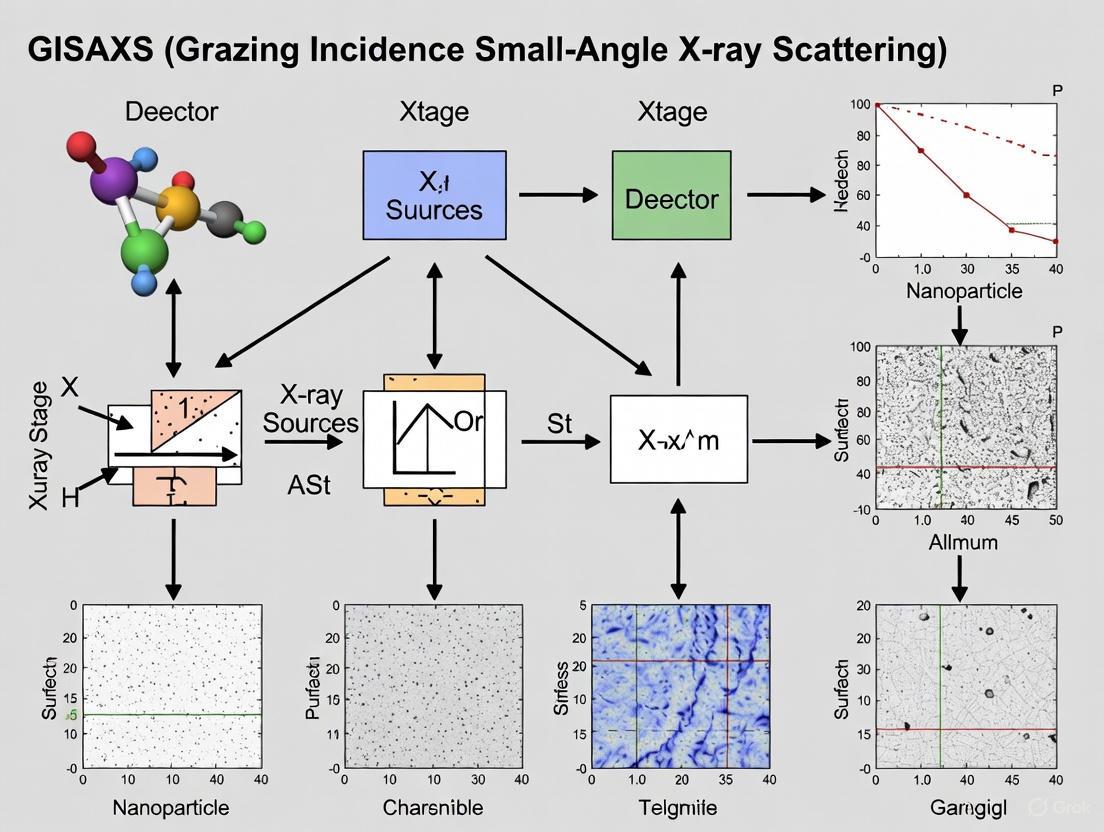
This article provides a complete overview of Grazing-Incidence Small-Angle X-ray Scattering (GISAXS) for characterizing nanoparticles in thin films and at interfaces.
GISAXS for Nanoparticle Characterization: A Comprehensive Guide for Materials and Drug Development Research
Abstract
This article provides a complete overview of Grazing-Incidence Small-Angle X-ray Scattering (GISAXS) for characterizing nanoparticles in thin films and at interfaces. Tailored for researchers and drug development professionals, it covers foundational principles, practical methodologies, advanced data analysis techniques, and validation strategies. The content explores applications ranging from block copolymer nanostructures for microelectronics to real-time monitoring of nanoparticle adsorption at liquid surfaces, highlighting GISAXS as a powerful, statistically robust tool that complements high-resolution microscopy for comprehensive nanomaterial analysis.
Understanding GISAXS: Core Principles and Advantages for Nanoscale Analysis
What is GISAXS? Defining the Technique and Its Historical Development
Grazing-Incidence Small-Angle X-Ray Scattering (GISAXS) is an advanced, surface-sensitive analytical technique used to probe the nanostructure of thin films and surfaces. As a hybrid method, it combines the principles of small-angle X-ray scattering (SAXS) with the surface sensitivity of grazing-incidence diffraction, enabling the characterization of nanoscale density correlations and object shapes at surfaces or buried interfaces [1] [2]. The technique was originally introduced in 1989 by Joanna Levine and Jerry Cohen to study thin film growth, and has since evolved into a frequently used tool for investigating nanostructured materials [1] [2].
In a typical GISAXS experiment, a collimated X-ray beam strikes the sample surface at a very shallow grazing-incidence angle (typically less than 1°), which limits beam penetration to a depth ranging from a few nanometers up to approximately 100 nanometers [1] [3]. This configuration efficiently minimizes background scattering from the substrate while maximizing the signal from the surface nanostructures. The scattered X-rays are collected by a two-dimensional detector, producing a pattern that encodes information about the size, shape, and arrangement of nanoscale features over a statistically representative sample area [1] [4].
Table 1: Key Characteristics of GISAXS
| Parameter | Typical Range | Significance |
|---|---|---|
| Incidence Angle (αᵢ) | 0.05° - 1.0° | Governs penetration depth and surface sensitivity [1] [3] |
| Scattering Angles (2θ) | Up to 5° | Probes structures at nanoscale lengths [1] |
| Penetration Depth | Few nm to ~100 nm | Controlled by varying incidence angle [1] |
| Probed Sample Area | Several mm² | Provides statistically representative data [1] [3] |
Compared to local probe techniques like atomic force microscopy (AFM) and transmission electron microscopy (TEM), GISAXS provides averaged, representative structural information from a large sample area, making it an ideal complement for comprehensive nanomaterial characterization [1]. The technique is widely applicable to diverse material systems including porous materials, metals, semiconductors, polymers, and biological materials attached to surfaces [1] [2].
Historical Development and Technique Evolution
The development of GISAXS represents a significant milestone in surface science, enabling researchers to statistically analyze nanostructures that were previously only observable through local probe techniques. Since its introduction in 1989 by Levine and Cohen for studying dewetting of gold on glass, the technique has expanded rapidly with the growing interest in nanoscience [1] [2].
The initial applications focused primarily on hard matter systems, including the characterization of quantum dots on semiconductor surfaces and in-situ studies of metal deposits on oxide surfaces [2]. As the technique matured, its applications broadened to include soft matter systems such as ultrathin polymer films, block copolymer films, and other self-organized nanostructured thin films that are crucial for modern nanotechnology [2]. Future development challenges may include expanded biological applications, such as studying proteins, peptides, or viruses attached to surfaces or incorporated into lipid layers [2].
Table 2: Evolution of GISAXS Applications
| Time Period | Primary Applications | Material Systems |
|---|---|---|
| 1989 (Introduction) | Thin film growth, dewetting processes [1] [2] | Metal layers on glass [2] |
| 1990s | Metal agglomerates on surfaces, buried interfaces [2] | Hard matter systems, semiconductors |
| 2000s | In-situ growth studies, self-organized nanostructures [2] | Quantum dots, block copolymers, polymers |
| 2010s-Present | Complex nanostructures, biological hybrids, real-time processes | Mesoporous films, biological materials, soft matter [1] [2] |
The theoretical framework for interpreting GISAXS data has also advanced significantly. While initial analysis borrowed heavily from transmission SAXS, the community developed more sophisticated approaches based on the Distorted-Wave Born Approximation (DWBA) to properly account for the unique scattering geometry and multiple reflection effects that occur at grazing incidence [2] [5]. This theoretical foundation enables researchers to accurately interpret complex scattering patterns and extract quantitative structural parameters.
Instrumentally, GISAXS has progressed from specialized synchrotron beamlines to include laboratory-based systems, increasing accessibility for researchers [1]. Recent developments include high-throughput robotic systems for automated data collection [6] and specialized variants like GTSAXS (Grazing-incidence Transmission SAXS) that simplify data analysis by reducing multiple scattering effects [7].
Technical Foundations and Methodology
Fundamental Principles
GISAXS leverages the same fundamental physical principles as conventional SAXS but adapts them for surface sensitivity through a specialized geometric configuration. When X-rays interact with matter at grazing incidence, several unique effects occur that differentiate GISAXS from transmission scattering techniques:
- Evanescent Wave Propagation: Below the critical angle, X-rays undergo total external reflection, creating an evanescent wave that propagates along the surface and probes only a shallow depth of a few nanometers [3].
- Intensity Enhancement: Multiple factors contribute to signal enhancement in GISAXS, including beam projection effects that illuminate a larger sample volume, waveguiding phenomena near the critical angle, and multiple scattering events that direct more scattered radiation toward the detector [3].
- Refraction and Multiple Scattering: The grazing-incidence geometry introduces significant refraction effects that distort scattering patterns and require specialized correction approaches. Additionally, scattering can arise from both the direct and reflected beams, creating duplicated features in the detector image [3] [2].
The scattering pattern is typically described in terms of the scattering vector q, which has components both perpendicular (q₂) and parallel (q_y) to the sample surface, providing information about out-of-plane and in-plane structures, respectively [1] [5].
Experimental Geometry and Workflow
The GISAXS experimental configuration follows a standardized geometry optimized for surface sensitivity. The following diagram illustrates the key components and relationships in a typical GISAXS experiment:
The workflow begins with precise alignment of the sample to achieve the desired grazing incidence angle. The incident angle (αᵢ) is carefully controlled, typically using a sample-tilt stage, and set to values on the order of 0.05° to 0.50° [3]. This shallow angle ensures efficient reflection of the X-ray beam from the sample or substrate surfaces while maximizing surface sensitivity.
The scattered X-rays are collected using a two-dimensional area detector, such as a Pilatus 2M detector with a large detection area and high dynamic range [6]. The resulting 2D scattering pattern contains distinctive features—including peaks, rings, and diffuse scattering—that encode information about the nanoscale order in the sample. Careful analysis of these patterns enables quantification of structural parameters including average particle size, size distribution, shape, orientation, and long-period structures [4].
GISAXS for Nanoparticle Characterization
Application Principles and Capabilities
GISAXS has emerged as a powerful technique for nanoparticle characterization, particularly for investigating nanoparticles deposited on surfaces, quantum dot arrays, and metal nanoclusters. The method provides statistically robust information about nanoparticle systems under native or near-realistic conditions, enabling researchers to collect significant data on nanoparticle growth at the nanoscale, typically for structures up to approximately 100 nm in size [8].
A key advantage of GISAXS for nanoparticle research is its ability to probe excess electron density differences between nanoparticles and their surrounding medium [8]. This capability allows researchers to extract comprehensive structural information including:
- Size and Shape Distribution: GISAXS patterns reveal whether nanoparticles are spherical, elongated, or have more complex geometries based on characteristic scattering signatures.
- Spatial Arrangement: The technique can identify ordered arrays, random distributions, or anisotropic alignments of nanoparticles on surfaces.
- Orientation and Alignment: For nonspherical nanoparticles, GISAXS can determine preferential orientation relative to substrate features.
- Interparticle Distances: Regular spacing between nanoparticles creates distinctive interference patterns that can be quantified.
Case Study: Silver Nanoparticles on Ripple-Patterned Silicon
Recent research demonstrates the power of GISAXS for detailed nanoparticle characterization. A 2026 study investigated the sequential growth of silver nanoparticles (Ag-NPs) on ion-beam-induced nanorippled silicon substrates, combining GISAXS with GIWAXS (Grazing-Incidence Wide-Angle X-ray Scattering) and molecular dynamics simulations [8].
In this study, researchers fabricated ripple patterns on silicon substrates via ion beam irradiation, then deposited Ag-NPs under three different configurations: along the ion beam direction, opposite to it, and sequentially from both sides. GISAXS analysis revealed an inherent asymmetry in the ripple morphology, with slopes of approximately 6.4° and 6.9°, leading to slightly steeper facets on one side [8]. After Ag deposition, the lateral and vertical correlation lengths provided crucial information about nanoparticle size and distribution.
The research demonstrated that sequential deposition from both sides of the ripple effectively restricted elongation and promoted the formation of nearly spherical nanoparticles, in contrast to the ellipsoidal shapes obtained with single-direction deposition [8]. This controlled nanoparticle morphology is particularly valuable for Surface Enhanced Raman Scattering (SERS) applications, where the uniformity and density of plasmonic "hotspots" directly influence enhancement factors and signal reproducibility [8].
Experimental Protocol for Nanoparticle Characterization
Protocol: GISAXS Analysis of Nanoparticles on Patterned Substrates
1. Sample Preparation
- Substrate Patterning: Create ripple-patterned silicon substrates using Kaufman broad ion beam source under ultra-high vacuum conditions (base pressure: 1×10⁻⁷ mbar, working pressure: 2×10⁻⁴ mbar) at 700 eV energy with 2.5 mA ion current [8].
- Nanoparticle Deposition: Deposit metal nanoparticles (e.g., Ag, Au) using thermal evaporation or sputtering systems. For sequential growth studies, employ multiple deposition steps from different azimuthal angles relative to substrate features [8].
- Sample Cleaning: Ultrasonically clean substrates in acetone, distilled water, and isopropyl alcohol (5 minutes each) before processing [8].
2. GISAXS Data Collection
- Instrument Setup: Utilize synchrotron beamline (e.g., P03 beamline of PETRA III, DESY) or laboratory GISAXS system with appropriate X-ray energy (typically ~10 keV) [8] [6].
- Angle Alignment: Precisely align sample to achieve grazing incidence angle (typically 0.1°-0.3°), carefully controlling using sample-tilt stage [3].
- Data Acquisition: Collect 2D scattering patterns using large-area detector (e.g., Pilatus 2M). For in-situ studies, monitor structural evolution during deposition or annealing processes [8] [6].
3. Data Analysis
- Pattern Interpretation: Identify characteristic features in 2D scattering pattern (Yoneda peaks, Bragg rods, diffuse scattering) related to nanoparticle size, shape, and arrangement [1] [2].
- Quantitative Fitting: Apply Distorted-Wave Born Approximation (DWBA) theory to account for refraction effects and multiple scattering [2] [5].
- Parameter Extraction: Determine nanoparticle dimensions, size distributions, interparticle distances, and spatial correlations from fitting models [8] [4].
Research Toolkit for GISAXS Experiments
Table 3: Essential Research Reagent Solutions for GISAXS
| Item | Function | Examples/Specifications |
|---|---|---|
| Synchrotron Beamline | High-intensity X-ray source | PETRA III (DESY), ALS SAXS/WAXS (BL 7.3.3) [8] [6] |
| Laboratory GISAXS System | Benchtop alternative to synchrotron | Systems with microfocus X-ray sources [1] |
| 2D X-ray Detector | Records scattering patterns | Pilatus 2M (172μm pixel size, 1475×1679 pixels) [6] |
| Goniometer Stage | Precise sample positioning | Multi-axis stage with angular resolution <0.001° [3] |
| Environmental Chamber | In-situ sample control | Hot stages (RT-200°C), solvent annealing, humidity control [6] |
| Analysis Software | Data processing and modeling | Igor Pro NIKA package, ATSAS, FIT2D [6] [9] |
Successful GISAXS experiments require careful selection of substrates and deposition methods tailored to the specific research objectives. For nanoparticle studies, common substrates include silicon wafers with native oxide layers, patterned substrates created by ion beam irradiation or lithography, and specialized templates designed to guide nanoparticle organization [8]. Deposition techniques range from thermal evaporation and sputtering for metal nanoparticles to spin-coating and dip-coating for polymer and colloidal systems.
Advanced in-situ capabilities significantly enhance the utility of GISAXS for studying dynamic processes. Modern beamlines offer specialized sample environments including hot stages for temperature-dependent studies, solvent annealing chambers for controlling thin film morphology, humidity control systems, and even slot die printers for studying deposition processes in real time [6]. These capabilities enable researchers to probe structural evolution under realistic processing conditions, providing invaluable insights into formation mechanisms and stability of nanostructured materials.
Complementary and Related Techniques
GISAXS is most powerful when combined with complementary characterization methods that provide additional structural information. The most commonly paired techniques include:
- GIWAXS (Grazing-Incidence Wide-Angle X-ray Scattering): While GISAXS probes nanoscale structures (1-100 nm), GIWAXS investigates atomic-level arrangements and crystalline structures through wide-angle scattering [1] [8]. The combination provides comprehensive structural information across multiple length scales.
- GIXD (Grazing-Incidence X-ray Diffraction): Used to characterize crystalline thin-film structures by analyzing Bragg reflections at higher scattering angles corresponding to atomic-level distances [1].
- GTSAXS (Grazing-incidence Transmission SAXS): A variant where the X-ray beam is directed toward the sample edge, reducing refraction-induced distortion and multiple scattering effects for cleaner data interpretation [7].
- Microscopy Techniques (AFM, SEM, TEM): While GISAXS provides statistical information over large areas, microscopy methods offer local, real-space imaging with high spatial resolution, creating a complementary analysis approach [1] [8].
The integration of these techniques within a single research framework enables comprehensive characterization of complex nanostructured materials, connecting local structural features with statistically representative average properties—a crucial capability for advancing nanomaterials science and applications.
Grazing-Incidence Small-Angle X-Ray Scattering (GISAXS) is a powerful, surface-sensitive technique for probing the nanostructure of thin films, coatings, and surfaces. The geometry of a GISAXS experiment is fundamentally a reflection-mode version of Small-Angle X-Ray Scattering (SAXS) [3]. Its unique power comes from the grazing-incidence geometry, which uses very small incident angles (typically on the order of 0.05° to 0.50°) to achieve a high scattering signal from ultra-thin layers and nanoscale objects on surfaces [3] [1]. This geometry makes GISAXS an indispensable tool for nanoparticle characterization, providing statistical information about particle size, shape, spatial arrangement, and order across a large sample area, thus complementing local probe techniques like Atomic Force Microscopy (AFM) or Transmission Electron Microscopy (TEM) [1] [10].
For research focused on nanoparticle characterization, understanding the essential geometry—specifically the control of the incident X-ray angle and the configuration of the 2D detector—is critical. It is this geometry that dictates the probe's surface sensitivity, enables a form of depth profiling, and ultimately determines how the measured scattering pattern relates to the sample's nanostructure [3] [11].
The Core Components of GISAXS Geometry
The GISAXS experiment is built upon a specific arrangement of its core components, each playing a vital role in data acquisition.
The Grazing-Incidence Angle (αi)
The most defining aspect of the GISAXS geometry is the shallow grazing-incidence angle (αi) at which the collimated X-ray beam strikes the sample surface. This angle is carefully controlled using a high-precision sample-tilt stage [3]. The choice of αi is not arbitrary; it is strategically selected relative to the critical angle (αc) of the sample material to control the X-ray penetration depth and, consequently, the experiment's sensitivity [11].
- Below the Critical Angle (αi < αc): The X-ray beam undergoes total external reflection. The beam probes only a few nanometers into the film due to the evanescent wave phenomenon, making the measurement exceptionally surface-sensitive [3].
- Above the Critical Angle (αi > αc): The beam penetrates deeply into the film and may be transmitted through it. In this regime, the scattering signal comes from the entire illuminated volume of the film, providing information about the "bulk" structure of the thin film [3].
By comparing measurements above and below the critical angle, researchers can perform a limited form of depth profiling, differentiating the nanostructure at the surface from the structure buried within the film [3].
The X-ray Beam and its Footprint
A direct consequence of the grazing-incidence geometry is the large beam footprint. A typically sized X-ray beam (e.g., 50 µm in height) impinging at a shallow angle of 0.1° will be projected into a long stripe on the sample surface, which can be several centimeters long [3] [12]. While this large footprint provides excellent statistical averaging and enhances scattering intensity, it has traditionally limited GISAXS to samples of millimeter size. However, advanced approaches using highly focused beams have demonstrated that GISAXS measurements on micrometre-sized targets are possible [12].
The 2D Detection System
The scattering from the sample is captured using a two-dimensional (2D) X-ray detector positioned perpendicular to the direct beam [3]. The recorded pattern is a complex intensity map that encodes information about the nanoscale order in the sample. The detector captures scattering over a range of exit angles:
- Out-of-plane angle (αf): The exit angle relative to the sample surface plane.
- In-plane angle (2θf): The azimuthal angle in the sample plane [11].
A beam stop is essential to block the intense specularly reflected beam and the direct beam spill-over, which would otherwise saturate and damage the detector [11].
The schematic below illustrates the core geometric setup and scattering pathways of a GISAXS experiment.
Quantitative Parameters of a GISAXS Experiment
The geometry of a GISAXS experiment is defined by specific quantitative parameters. The tables below summarize the key angular values and the resulting beam footprint calculations, which are critical for experimental planning.
Table 1: Key Angular Parameters in a GISAXS Experiment
| Parameter | Symbol | Typical Range | Function in the Experiment |
|---|---|---|---|
| Incidence Angle | αi | 0.05° to 0.50° [3] | Controls beam penetration depth and surface sensitivity. Selected relative to the material's critical angle. |
| Critical Angle | αc | ~0.1° to 0.5° (material-dependent) | The angle below which total external reflection occurs. Demarcates the surface-sensitive regime. |
| Out-of-plane Exit Angle | αf | Varies with detector position | Measured perpendicular to the sample surface. Sensitive to vertical (out-of-plane) structural features. |
| In-plane Exit Angle | 2θf | Varies with detector position | Measured parallel to the sample surface. Sensitive to lateral (in-plane) structural features and order. |
Table 2: Beam Footprint Calculations for Common Experimental Conditions
| Incident Beam Height | Incidence Angle (αi) | Beam Footprint Length | Experimental Implication |
|---|---|---|---|
| 50 µm | 0.1° | ~29 mm [3] | Provides a large illuminated volume for high signal intensity and good statistical sampling. Requires a large, uniform sample. |
| 500 µm | 0.5° | ~57 mm [12] | Standard for many synchrotron experiments. Offers a strong scattering signal from large sample areas. |
| ~300 nm | ~0.6° | ~30 µm [12] | Enables measurements on micrometre-sized targets. Presents significant technical challenges in sample alignment. |
Experimental Protocol: Setting Up a GISAXS Experiment
This protocol details the essential steps for configuring the geometry of a GISAXS experiment, with a focus on nanoparticle characterization.
Sample and Substrate Preparation
- Substrate Selection: Use a flat, smooth substrate (e.g., a silicon wafer with native oxide) that is larger than the expected X-ray beam footprint.
- Nanoparticle Deposition: Deposit the nanoparticle sample onto the substrate using a method appropriate for your research (e.g., spin-coating, drop-casting, Langmuir-Blodgett transfer, or in-situ growth) [2] [10]. The goal is to achieve a uniform layer or a well-defined pattern of nanoparticles.
Instrument Alignment and Angle Calibration
- Beam Definition: Use slits to define the size and divergence of the incident X-ray beam. A smaller vertical beam size can be used to reduce the footprint for small samples [12].
- Sample Alignment: Mount the sample on a high-precision goniometer. Align the sample surface to be coincident with the axis of the rotation stage. This is a critical step to ensure the accurate setting of the grazing-incidence angle.
- Angle of Incidence Calibration: Carefully calibrate the 0° position where the X-ray beam is parallel to the sample surface. The incident angle (αi) is then set by rotating the sample stage by a fraction of a degree from this position.
Data Collection Procedure
- Determine Critical Angles: If unknown, perform an X-ray reflectivity (XRR) measurement on your sample to determine the critical angles (αc) of the film and substrate [13].
- Select Incident Angle: Choose an αi based on your scientific question.
- For maximum surface sensitivity (probing the top ~few nm), set αi just below the critical angle of the film.
- To probe the entire film volume, set αi above the critical angle of the substrate [11].
- Configure Detector and Beamstop: Position the 2D detector perpendicular to the direct beam at a known sample-to-detector distance. Place a beam stop accurately to block the intense specular reflection and protect the detector [11].
- Acquire Scattering Pattern: Record the 2D scattering pattern with an appropriate exposure time. For kinetic studies, continuous or rapid sequential acquisition can be used to track structural changes in real-time [11].
The workflow below summarizes the key decision points and steps in this protocol.
The Scientist's Toolkit: Essential Research Reagents and Materials
A successful GISAXS experiment relies on more than just the X-ray instrument. The table below lists key materials and their functions, particularly in the context of nanoparticle research.
Table 3: Essential Research Reagents and Materials for GISAXS
| Item | Function in the GISAXS Experiment |
|---|---|
| Flat, Polished Substrate (e.g., Silicon Wafer) | Provides a smooth, flat surface for sample deposition. Its well-defined critical angle and low roughness are essential for clean data interpretation [1]. |
| Nanoparticle Dispersion | The sample of interest, which must be prepared and deposited uniformly to avoid artifacts and ensure a representative scattering signal. |
| High-Precision Goniometer | A motorized stage that allows for precise control of the incident angle (αi) and other sample orientations, which is fundamental to the technique [3]. |
| 2D X-ray Detector (e.g., Pixel Array Detector) | Captures the scattered X-rays to form the 2D GISAXS pattern. Modern detectors enable fast data collection for real-time kinetic studies [11]. |
| Beamstop | A small, X-ray opaque shield that protects the detector from the intense direct and specularly reflected beams, which are many orders of magnitude brighter than the weak scattering signal [11]. |
| Analysis Software (e.g., BornAgain, GISAXSshop) | Specialized software is required to model the complex scattering patterns within the Distorted-Wave Born Approximation (DWBA) and extract quantitative structural parameters [14]. |
Data Analysis and Interpretation
The raw 2D GISAXS pattern is a distorted representation of the sample's reciprocal space due to refraction of the X-ray beam at the sample surface and multiple scattering events (e.g., scattering from both the direct and reflected beams) [15]. Interpreting these patterns requires an understanding of these effects.
- The Distorted-Wave Born Approximation (DWBA): This is the primary theoretical framework used to model and fit GISAXS data. The DWBA accounts for refraction and multiple scattering, allowing researchers to relate the distorted detector image to the sample's true nanostructure [2] [15].
- Unwarping GISAXS Data: Computational methods have been developed to "unwarp" GISAXS data, reconstructing an estimate of the undistorted reciprocal-space scattering. This can make the data easier to interpret and allow for the use of analysis tools developed for transmission SAXS [15].
- Signature Patterns for Nanoparticles:
- Disordered Nanoparticles: Produce a circular or elliptical ring pattern, where the radius is related to the average particle size via the form factor.
- Ordered Nanoparticle Arrays: Produce distinct Bragg peaks, the positions of which reveal the symmetry and lattice spacing of the superlattice [1] [2].
In conclusion, the essential geometry of a GISAXS experiment, centered on the precise control of the grazing-incidence angle and the detection of the scattered radiation, is the foundation of its power as a characterization tool. A deep understanding of how the incidence angle, beam footprint, and detector signal interrelate is paramount for designing effective experiments, particularly in the field of nanoparticle research, where it provides unparalleled statistical insights into nanoscale structure and order.
Grazing-Incidence Small-Angle X-Ray Scattering (GISAXS) has emerged as a powerful technique for characterizing nanostructured thin films and surfaces, with particular relevance for nanoparticle research. Originally introduced in 1989, this method combines features from small-angle X-ray scattering and diffuse X-ray reflectivity, enabling the analysis of density correlations and nanostructured object shapes at surfaces or buried interfaces [1]. For researchers investigating nanoparticle self-assembly, catalytic nanoparticles, and polymer thin films, GISAXS provides unique advantages that address fundamental limitations of traditional characterization methods. The technique analyzes scattering data at small scattering angles, typically up to 5° 2θ, providing detailed structural information about nanoscale features [1]. This application note examines three core advantages of GISAXS—representative sampling, minimal sample preparation, and environmental flexibility—within the context of nanoparticle characterization for advanced materials and drug development research.
Core Advantages of GISAXS
Representative Sampling
Unlike localized characterization techniques that provide information from limited sample areas, GISAXS delivers statistically representative data from large sample areas, enabling robust quantitative analysis of nanoparticle systems.
- Large Area Interrogation: GISAXS probes the entire illuminated near-surface volume, with the beam footprint typically extending to several millimeters on the sample surface [16] [17]. This extensive coverage ensures that the collected data represents the overall sample characteristics rather than localized features.
- Statistical Significance: The technique provides averaged results that are representative of a large sample area, overcoming the limitation of local probe techniques that may miss important structural variations or defects [1]. This is particularly valuable for quality control in nanoparticle thin film manufacturing and for ensuring experimental reproducibility.
- Comparative Advantage Over Local Techniques: Classical nanoscale structural methods like Atomic Force Microscopy (AFM) and Transmission Electron Microscopy (TEM) provide highly precise local information about the nanostructured surface but struggle to deliver representative averaged results from a sample [1]. GISAXS ideally complements these microscopic methods by providing the statistical overview needed for comprehensive characterization.
Minimal Sample Preparation
GISAXS requires minimal sample preparation compared to many analytical techniques, reducing artifacts and streamlining the characterization workflow for nanoparticle systems.
- Direct Measurement Capability: Nanoparticle dispersions can often be measured directly on suitable substrates without complex processing. Self-assembly processes can be studied in situ at liquid subphases without requiring fixation or drying [18] [16].
- Reduced Introduction of Artifacts: The minimal preparation requirements significantly reduce the risk of introducing artifacts that might alter the native nanostructure. This is particularly important for studying delicate self-assembling systems, soft matter, and biological nanomaterials where processing steps could disrupt the natural organization.
- Complementary to Intensive Preparation Methods: Techniques like TEM often require extensive sample preparation including thinning, staining, or sectioning, which can modify the original nanostructure. GISAXS provides an alternative view with minimal intervention, preserving the native state of nanoparticle assemblies [1].
Environmental Flexibility
GISAXS studies can be performed under diverse environmental conditions, enabling in situ and operando studies of nanoparticles under realistic processing or application conditions.
- Controlled Atmosphere and Temperature: GISAXS can be performed in vacuum or under controlled atmosphere at ambient or non-ambient temperature [1]. This flexibility allows researchers to simulate real-world application environments or specific processing conditions.
- In Situ and Operando Capabilities: The technique enables real-time monitoring of dynamic processes such as nanoparticle self-assembly [18], thermal treatments, or response to environmental stimuli. This temporal resolution provides insights into kinetic processes and structural evolution.
- Penetration Depth Control: By varying the incident angle from 0.8αi to a factor of 3–4 of αc of the material, researchers can selectively calculate the beam penetration depth from several nanometers to several micrometers, respectively [16]. This allows depth-profiling experiments to investigate buried interfaces or gradient structures in nanoparticle composites.
Table 1: Quantitative Comparison of GISAXS Advantages in Practice
| Advantage | Technical Basis | Experimental Impact | Typical Parameters |
|---|---|---|---|
| Representative Sampling | Large beam footprint (up to ~11 mm) illuminating extensive sample area [16] [17] | Provides statistical average from ~mm² area vs. µm² for local techniques | Sample area probed: ~1-100 mm² [17] |
| Minimal Preparation | Non-destructive measurement requiring no sectioning, staining, or coating | Reduces preparation time from hours/days to minutes; minimizes artifacts | Measurement ready: Often <30 minutes |
| Environmental Flexibility | Compatible with various sample environments (vacuum, gas flow, liquid cells) | Enables in situ studies under realistic conditions | Temperature range: Cryogenic to >1000°C; Various atmospheres [1] |
Experimental Protocols
Protocol 1: GISAXS Analysis of Nanoparticle Self-Assembly at Liquid Subphases
This protocol describes the methodology for studying nanoparticle self-assembly at liquid interfaces using a vertical geometry GISAXS setup, based on research conducted at the P10 beamline at PETRA III (DESY, Hamburg) [18].
Materials and Equipment
- Synchrotron Beamline: Configured for SAXS/GISAXS with vertical geometry
- Langmuir Trough: For containing liquid subphase and controlling surface pressure
- 2D X-ray Detector: Pilatus or similar single-photon-counting detector
- Gold Nanoparticles: Spherical nanoparticles (e.g., 10-100 nm diameter) in colloidal dispersion
- Optical Microscope: Integrated for measurement position verification
Procedure
Sample Preparation:
- Prepare nanoparticle colloidal dispersion at appropriate concentration (typically 0.1-5 mg/mL).
- Carefully spread nanoparticle dispersion onto the liquid subphase (typically water) in the Langmuir trough.
- Allow nanoparticles to self-assemble at the air/liquid interface, optionally controlling surface pressure with movable barriers.
Beamline Alignment:
- Align the vertical GISAXS setup to ensure precise grazing incidence on the liquid surface.
- Set incident angle αi typically below 1° to achieve total external reflection conditions.
- Calibrate sample-to-detector distance using standard reference materials (e.g., silver behenate).
Data Collection:
- Position the X-ray beam to graze the liquid surface where nanoparticles are assembling.
- Acquire 2D scattering patterns with appropriate exposure time (typically 0.1-10 seconds).
- Integrate optical microscopy to observe measurement position and formation of supercrystal flakes during data collection.
- Collect series of images to monitor temporal evolution of self-assembly process.
Data Analysis:
- Convert 2D detector images to reciprocal space (q-space) coordinates.
- Extract linecuts along in-plane (qy) and out-of-plane (qz) directions for quantitative analysis.
- Analyze peak positions to determine interparticle distances and lattice parameters.
- Model scattering patterns to extract information about nanoparticle ordering, film thickness, and density.
Protocol 2: In Situ GISAXS-CT for Spatial Mapping of Nanostructures
This protocol outlines the procedure for GISAXS coupled with computed tomography (CT) to visualize spatial distribution of nanostructures in thin films, based on methodologies developed at the BL03XU beamline at SPring-8 [17].
Materials and Equipment
- High-Brilliance X-ray Source: Synchrotron beamline with high flux (≥10¹² photons/s) and low divergence
- Precision Goniometer: For accurate sample positioning and rotation
- 2D X-ray Detector: Pilatus 1M or similar with high dynamic range
- Thin Film Samples: Nanoparticle layers on substrates (e.g., Au-patterned layers on silicon)
- Computational Resources: For tomographic reconstruction and data processing
Procedure
Sample Preparation:
- Fabricate nanoparticle layers on appropriate substrates (e.g., silicon wafers).
- For patterned samples, use masks or templates to create defined regions of nanoparticle assemblies.
- Mount sample securely on goniometer ensuring precise alignment of rotation axis.
Experimental Setup:
- Set X-ray wavelength to appropriate value (typically λ = 0.1 nm for high-energy measurements).
- Define sample-to-detector distance based on required q-range (e.g., 2275 mm for specific resolution).
- Adjust incident angle to critical angle regime (typically 0.2-0.5° for metal nanoparticles on silicon).
Data Acquisition:
- Perform translational scans along direction perpendicular to X-ray beam (Y direction) with step size comparable to beam size (typically 15-20 μm).
- At each Y position, acquire 2D GISAXS pattern with sufficient counting statistics (exposure time ~1 second).
- Rotate sample by defined angular increment (1-3°) and repeat translational scan.
- Continue until 180° rotation is completed, acquiring thousands of individual scattering patterns.
Tomographic Reconstruction:
- Extract scattering intensities at specific q-positions from all 2D patterns to create sinograms.
- Apply Total Variation (TV) regularization to minimize noise and artifacts in sinograms.
- Reconstruct CT images using filtered back-projection or advanced iterative algorithms.
- Generate spatial maps of nanostructural parameters (size, shape, ordering) across the sample.
Table 2: Key Parameters for GISAXS Experiments
| Parameter | Protocol 1: Liquid Subphases | Protocol 2: GISAXS-CT |
|---|---|---|
| X-ray Energy | Typically 10-15 keV [18] | 12.4 keV (λ = 0.1 nm) [17] |
| Incidence Angle (αi) | Below 1° [18] | 0.50° [17] |
| Sample-Detector Distance | Instrument dependent | 2275 mm [17] |
| Beam Size | Varies by beamline | 28.5 μm (H) × 99.5 μm (V) [17] |
| Exposure Time | 0.1-10 seconds per pattern | 1.0 second per pattern [17] |
| Spatial Resolution | μm range for volume sampling [18] | 15-20 μm translational steps [17] |
Experimental Design and Workflow
The experimental workflow for GISAXS investigation of nanoparticle systems involves careful planning and execution across multiple stages, from sample preparation to data analysis. The following diagram illustrates the complete process for a typical GISAXS study:
The decision path for selecting appropriate GISAXS measurement strategies depends on sample characteristics and research objectives. The following workflow guides researchers through key decision points:
The Scientist's Toolkit: Essential Research Reagents and Materials
Table 3: Essential Research Reagents and Materials for GISAXS Experiments
| Item | Function | Application Notes |
|---|---|---|
| Synchrotron Beam Access | High-brilliance X-ray source | Provides necessary flux and coherence for GISAXS measurements; essential for time-resolved studies [18] [16] |
| 2D X-ray Detector | Records scattering patterns | Single-photon-counting detectors (e.g., Pilatus, Eiger) with high dynamic range and low noise [17] [19] |
| Goniometer | Precise sample positioning | Allows control of incident angle and sample orientation with sub-micron precision [17] |
| Langmuir Trough | Controls liquid interfaces | Enables study of nanoparticle self-assembly at air/liquid interfaces with controlled surface pressure [16] |
| Standard Reference Materials | Calibration samples | Silver behenate or similar standards for q-range calibration [19] |
| Igor Pro with FitGISAXS | Data analysis software | Commercial software package for modeling and fitting GISAXS patterns [14] [19] |
| BornAgain | Scattering simulation software | Open-source package for simulating GISAXS patterns using Distorted Wave Born Approximation [14] |
GISAXS represents a powerful characterization platform for nanoparticle research, offering three distinct advantages that address critical challenges in nanomaterials science. The combination of representative sampling, minimal preparation requirements, and environmental flexibility makes GISAXS particularly valuable for investigating nanoparticle self-assembly processes, thin film morphology, and structural evolution under realistic conditions. As demonstrated in the protocols presented, this technique can be applied to diverse systems ranging from nanoparticle monolayers at liquid interfaces to complex patterned thin films. The continued development of GISAXS methodologies, including coupling with computed tomography and advanced reconstruction algorithms, promises to further enhance its capabilities for spatially-resolved nanostructural characterization. For researchers in drug development and nanomaterials science, GISAXS provides unique insights that complement local probe techniques and contribute to a more comprehensive understanding of nanoparticle systems.
Grazing-Incidence Small-Angle X-ray Scattering (GISAXS) is an advanced surface-sensitive technique widely used for analyzing the state and size distribution of nanoparticles in thin films, as well as nanoscale surface and interface structures [4]. A fundamental principle underlying its surface sensitivity is the controlled penetration of the X-ray beam into the sample, which is predominantly governed by the angle at which the X-ray beam strikes the sample surface. By varying the incident angle (αi) relative to the critical angle (αc) of the film or substrate material, researchers can selectively probe different depths within the near-surface region [16]. This controlled penetration is crucial for non-destructively depth-profiling nanostructured materials, enabling the study of buried interfaces, vertical compositional gradients, and the three-dimensional distribution of nanoparticles in thin films—a capability of significant interest for applications in drug delivery systems, organic photovoltaics, and advanced nanoelectronics.
Theoretical Foundation
The Critical Angle and Total External Reflection
The interaction of X-rays with matter at grazing incidence is described by the complex refractive index, ( n ), which is slightly less than 1 for X-rays and is expressed as ( n = 1 - δ + iβ ) [16]. The real part, ( δ ), governs refraction and scattering, while the imaginary part, ( β ), relates to absorption. The critical angle, ( αc ), is a material-dependent property below which total external reflection occurs. At incident angles smaller than ( αc ), the X-ray beam does not penetrate into the bulk material but instead propagates as an evanescent wave along the surface, exponentially decaying in intensity with depth. This phenomenon confines the scattering signal exclusively to the surface and immediate subsurface region, providing exceptional surface sensitivity.
Penetration Depth and Incident Angle Relationship
When the incident angle exceeds the critical angle, the beam begins to penetrate substantially into the material. The penetration depth, ( Λ ), defined as the depth at which the X-ray intensity falls to ( 1/e ) of its surface value, becomes a strong function of ( αi ). As detailed in recent synchrotron studies, by varying the angle of incidence from approximately ( 0.8αc ) to 3–4 times ( α_c ), the researcher can selectively control the beam penetration depth from several nanometres to several micrometres, respectively [16]. This tunability allows GISAXS to interrogate specific depth regions within a sample by simply adjusting a single geometric parameter.
Table 1: Penetration Depth Regimes in GISAXS
| Incident Angle Regime | Penetration Behavior | Primary Information Obtained |
|---|---|---|
| ( αi < αc ) (Below Critical) | Evanescent wave; minimal penetration (nanometers) | Surface structure, top-layer nanoparticles |
| ( αi ≈ αc ) (Near Critical) | Penetration increases sharply; depth is tunable | Interface morphology, near-surface ordering |
| ( αi > αc ) (Above Critical) | Significant penetration into the bulk (micrometers) | Buried interfaces, vertical particle distribution, film homogeneity |
Quantitative Penetration Depth Data
The precise relationship between the incident angle and the penetration depth is quantifiable. The following table provides characteristic penetration depths for a silicon substrate and a polymeric thin film, calculated for a representative X-ray energy of 10 keV. These values illustrate the powerful depth-profiling capability achievable through incident angle variation.
Table 2: Penetration Depth vs. Incident Angle for a Silicon Substrate (10 keV X-rays, ( α_c ) ≈ 0.18°)
| Incident Angle (α_i) | Relation to α_c | Approximate Penetration Depth | Probed Region |
|---|---|---|---|
| 0.14° | ~0.8 × α_c | ~5 nm | Extreme surface, 2D monolayers |
| 0.18° | = α_c | ~10 nm | Surface & substrate interface |
| 0.36° | 2 × α_c | ~100 nm | Thin film, near-surface nanostructures |
| 0.54° | 3 × α_c | ~1000 nm (1 µm) | Bulk of thin film, buried layers |
Table 3: Penetration Depth vs. Incident Angle for a Polymeric Thin Film (10 keV X-rays, ( α_c ) ≈ 0.15°)
| Incident Angle (α_i) | Relation to α_c | Approximate Penetration Depth | Probed Region |
|---|---|---|---|
| 0.12° | 0.8 × α_c | ~4 nm | Polymer surface, top nanoparticle layer |
| 0.15° | = α_c | ~7 nm | Surface and polymer-substrate interface |
| 0.30° | 2 × α_c | ~70 nm | Bulk of polymer film, particle dispersion |
| 0.45° | 3 × α_c | ~700 nm | Entire film thickness, vertical gradients |
Experimental Protocols for Depth Profiling
Protocol: GISAXS Depth Profiling via Incident Angle Series
Objective: To determine the vertical distribution of nanoparticles within a polymer thin film on a silicon substrate.
Materials & Reagents:
- Sample: Thin film with incorporated nanoparticles on a silicon wafer.
- X-ray Source: Synchrotron beamline providing a monochromatic, collimated X-ray beam (e.g., 10 keV).
- Goniometer: High-precision multi-axis stage capable of milli-degree angular resolution.
- 2D Detector: Large-area, high dynamic range detector (e.g., Pilatus series) placed at a sufficient distance (1-5 m) to achieve desired q-resolution [20].
Procedure:
- Sample Alignment: Mount the sample on the goniometer. Use the direct beam to locate the sample edge and then carefully align the sample surface to be parallel to the beam path (i.e., find ( α_i = 0° )).
Critical Angle Determination: Perform an X-ray reflectivity (XRR) scan by measuring the specularly reflected beam intensity while rocking the incident angle ( αi ) through a small angular range (e.g., 0° to 0.5°). The critical angle ( αc ) is identified as the angle where the intensity drops precipitously.
GISAXS Measurement Series:
- Set the incident angle to the first value in your series (e.g., ( 0.8α_c )).
- Acquire a 2D GISAXS pattern with an adequate exposure time for a good signal-to-noise ratio.
- Increment the incident angle to the next value in the series (e.g., ( αc ), ( 1.5αc ), ( 2αc ), ( 3αc )).
- Repeat the acquisition at each angle, ensuring all other geometric parameters (beam position, detector distance) remain constant.
Data Reduction: For each 2D image, perform data reduction to extract 1D scattering profiles. This may involve sector or line cuts to isolate in-plane (e.g., horizontal line cut at ( qz = 0.03 Å^{-1} )) and out-of-plane (e.g., vertical line cut at ( qy \sim 0.012 Å^{-1} )) structural information [20].
Data Analysis and Interpretation
- Analysis of Angle Series: Compare the 1D scattering profiles obtained at different incident angles. The appearance, intensification, or shift of scattering features (peaks, shoulders) as a function of ( α_i ) indicates the depth origin of the corresponding nanostructures.
- Modeling with DWBA: Quantitative analysis requires modeling the data using the Distorted Wave Born Approximation (DWBA), which correctly accounts for the reflection and refraction effects at grazing angles [21]. Software packages like BornAgain [14] or IsGISAXS can be used to fit the data from multiple angles simultaneously with a structural model that includes the vertical distribution of nanoparticles.
The Scientist's Toolkit
Table 4: Essential Research Reagent Solutions and Materials for GISAXS Depth Profiling
| Item | Function/Application | Example/Note |
|---|---|---|
| Silicon Wafer Substrate | A common, flat, low-roughness substrate for thin film deposition. | Provides a well-defined critical angle (~0.18° at 10 keV). |
| Langmuir-Blodgett Trough | To prepare highly ordered nanoparticle monolayers at air/liquid interfaces for model studies [16]. | Used for fundamental studies of self-assembly. |
| Precision Goniometer | To accurately align the sample and set the incident angle with milli-degree precision. | Essential for reliable penetration depth control. |
| 2D X-ray Detector | To capture the scattered intensity pattern. | Pilatus or Eiger detectors are common choices [20]. |
| BornAgain Software | For modeling and fitting GISAXS data using the Distorted Wave Born Approximation (DWBA) [14]. | Open-source, allows modeling of complex nanostructures. |
| IsGISAXS Software | For simulating 2D GISAXS patterns based on the DWBA [14]. | Useful for predicting scattering from proposed models. |
Workflow Visualization
Diagram 1: GISAXS depth profiling workflow.
Diagram 2: Incident angle controls penetration depth.
Advanced Applications and Recent Developments
The principle of penetration depth control is being leveraged in advanced GISAXS applications. The development of Grazing-incidence Transmission SAXS (GTSAXS), where the beam is directed at the sample's edge, provides cleaner sub-horizon scattering data with less distortion, useful for probing structures near the substrate interface [7]. Furthermore, the integration of coherent imaging techniques like ptychography with grazing incidence geometry is a frontier in research. This approach replaces the conventional DWBA with a multislice wave-propagation model, enabling the full 3D reconstruction of complex surface and near-surface nanostructures from coherent diffraction data, starting from a random initial guess [21]. These advanced methods promise even more detailed and quantitative depth-resolved structural analysis for future nanoparticle research.
Grazing-incidence X-ray scattering techniques have become indispensable tools for the nanoscale characterization of thin films and surfaces, particularly in the field of nanoparticle research. These techniques, which include Grazing-Incidence Small-Angle X-Ray Scattering (GISAXS), Grazing-Incidence Wide-Angle X-Ray Scattering (GIWAXS), and Grazing-Incidence X-Ray Diffraction (GIXD), enable non-destructive probing of structures across multiple length scales—from mesoscopic ordering down to atomic arrangements [22]. For researchers focused on nanoparticle characterization, understanding the complementary information provided by these methods is crucial for developing comprehensive structure-property relationships. The fundamental principle shared by all these techniques involves directing an X-ray beam at a very shallow incident angle (typically less than 1°) onto a sample surface, which significantly enhances the interaction volume with thin films while minimizing background scattering from the substrate [4] [1]. This approach allows for the collection of statistically significant data from large surface areas, providing averaged results that are representative of the entire sample—a distinct advantage over local probe techniques like atomic force microscopy or transmission electron microscopy [1].
Technical Foundations and Comparative Analysis
Core Principles and Length Scales
The family of grazing-incidence techniques probes different structural hierarchies within nanomaterials by measuring X-rays scattered at different angular ranges. GISAXS analyzes scattering at small angles (typically up to a few degrees) to investigate nanoscale density fluctuations and electron density variations, providing information about particle size, shape, and arrangement in the mesoscopic size range from approximately 1 nm to 100 nm [4] [23]. In contrast, GIWAXS collects scattering data at wider angles (typically up to 45°) to characterize molecular and atomic-level structures, including crystalline phases, molecular packing, and orientation in thin films [1] [22]. GIXD shares similarities with GIWAXS but traditionally implies the use of a point or line detector with collimation in a diffractometer setup, and is often applied to materials with sharp diffraction peaks [23]. The combination of these techniques allows researchers to correlate nanostructural organization with molecular ordering, which is particularly valuable for understanding how nanoparticle synthesis parameters influence final material properties.
Table 1: Key Characteristics of Grazing-Incidence X-ray Techniques
| Technique | Probed Length Scales | Primary Information | Typical Samples |
|---|---|---|---|
| GISAXS | ~1 nm to 100 nm [23] | Particle size, shape, distribution, mesoscale ordering, pore structure [4] | Nanoparticle arrays, block copolymer films, porous materials [1] |
| GIWAXS | Atomic to ~2 nm [23] | Crystalline structure, molecular packing, crystal orientation, polymorphism [22] [24] | Organic semiconductors, perovskite films, crystalline nanoparticles [8] [24] |
| GIXD | Atomic to ~2 nm [23] | Crystal structure, lattice parameters, epitaxial relationships [23] | Highly crystalline thin films, quantum dots, 2D materials |
Complementary Information for Nanoparticle Characterization
The particular strength of combining GISAXS with GIWAXS or GIXD lies in their ability to provide complementary structural information across multiple hierarchical levels in a single experiment. For nanoparticle research, this multi-scale approach enables researchers to connect synthesis parameters with resulting functional properties. GISAXS efficiently probes the size, shape, and spatial distribution of nanoparticles on surfaces or within thin films, including parameters such as average particle size, size distribution, and long-period structures [4]. Simultaneously, GIWAXS provides insights into the crystalline structure, phase composition, and molecular orientation within the same nanoparticles [8]. This combination is particularly powerful for investigating structure-property relationships in functional nanomaterials, such as plasmonic nanoparticles for sensing applications, catalytic nanoparticles, or semiconductor quantum dots for optoelectronic devices.
A research example demonstrating this complementary approach investigated the sequential growth of silver nanoparticles (Ag-NPs) on ripple-patterned silicon substrates [8]. In this study, GISAXS revealed the morphology and ordering of Ag-NPs, showing how deposition geometry affected nanoparticle shape and spatial distribution. The analysis quantified inherent asymmetry in the ripple morphology, with slopes of approximately 6.4° and 6.9°, and revealed how sequential deposition from both sides of the ripple promoted the formation of truncated spherical nanoparticles rather than elongated structures. Concurrently, GIWAXS provided information about the crystalline structure and atomic arrangements within the nanoparticles, showing that the sequential deposition method reduced the crystalline size ratio (D⊥/D‖), indicating more isotropic crystallite development [8]. This combined analysis provided unprecedented insights into the atomic-scale reorganization of Ag-NPs on nanostructured surfaces, demonstrating how coordinated GISAXS/GIWAXS experiments can elucidate fundamental growth mechanisms.
Experimental Protocols
Integrated GISAXS/GIWAXS Measurement Protocol
The following protocol describes a standardized approach for simultaneous GISAXS and GIWAXS data collection, particularly relevant for in-situ studies of nanoparticle growth and self-assembly processes.
Sample Preparation
- Substrate Selection: Use atomically smooth substrates (e.g., silicon wafers with native oxide layer, glass slides) appropriate for your nanoparticle system. Clean substrates ultrasonically in acetone, distilled water, and isopropyl alcohol for 5 minutes each to ensure surface cleanliness [8].
- Nanoparticle Deposition: Deposit nanoparticles using your method of choice (spin-coating, drop-casting, Langmuir-Blodgett transfer, or in-situ deposition). For sequential deposition studies like the Ag-NP example, control the deposition geometry relative to substrate features [8].
- Sample Mounting: Secure samples on a multi-axis goniometer capable of precise translational and rotational positioning. Ensure the sample surface is aligned perpendicular to the rotation axis with high accuracy (≤0.002°) [24].
Instrument Setup and Alignment
- X-ray Source: Utilize a synchrotron beamline or laboratory X-ray source with sufficient flux. For combined GISAXS/GIWAXS, hard X-rays (typically 10-15 keV) are preferred for their higher penetration and broader q-range coverage [22] [24].
- Beam Definition: Employ appropriate slits or focusing optics to define the beam size (e.g., 0.2 mm horizontal × 0.05 mm vertical) [24].
- Detector Configuration: Position two 2D detectors simultaneously—one at a longer distance (1-5 m) for GISAXS and one at a shorter distance (0.1-0.3 m) for GIWAXS. Ensure detectors have appropriate pixel sizes and dynamic ranges for the expected scattering intensities.
- Incidence Angle Optimization: Align the sample surface to the X-ray beam using the goniometer. Set the grazing-incidence angle (αi) near the critical angle of the sample (typically 0.1-0.5°) to enhance surface sensitivity while ensuring sufficient penetration depth [1] [22].
Data Collection
- Footprint Calculation: Verify that the X-ray footprint (determined by beam size divided by sin(αi)) completely covers the region of interest on the sample.
- GISAXS Acquisition: Collect 2D scattering patterns with the SAXS detector using exposure times ranging from 0.1-10 seconds, depending on source brightness and sample scattering power.
- GIWAXS Acquisition: Simultaneously collect wide-angle patterns with the second detector. Adjust exposure times to prevent detector saturation while maintaining adequate signal-to-noise.
- Angular Scanning: For comprehensive structural analysis, perform azimuthal rotations (ϕ) over 180° or 360° with step sizes of 0.1-0.5° [24]. For in-situ studies, collect time-series data during nanoparticle growth or processing.
Data Analysis Workflow
The analysis of combined GISAXS/GIWAXS data involves both qualitative interpretation of scattering patterns and quantitative modeling of the underlying nanostructure.
Data Reduction: Apply necessary corrections to the 2D scattering patterns, including background subtraction, geometric corrections, and solid-angle normalization.
GISAXS Analysis:
- Identify characteristic features in the 2D pattern: intensity streaks indicate ordered lamellar structures; correlation peaks suggest periodic arrangements; rings or partial rings indicate disordered or polycrystalline structures [1].
- Extract 1D line profiles along specific directions (in-plane qy, out-of-plane qz) for quantitative analysis.
- Model the data using form factor (particle shape/size) and structure factor (interparticle correlations) models to determine nanoparticle morphology and spatial organization.
GIWAXS Analysis:
- Identify Bragg peaks and determine crystal structure and lattice parameters through peak indexing [24].
- Analyze azimuthal intensity distributions to determine crystallite orientation relative to the substrate.
- Calculate crystallite size using Scherrer analysis of peak broadening.
Correlative Interpretation: Integrate information from both techniques to build a comprehensive structural model that connects nanoscale organization with atomic-level crystal structure.
Figure 1: Experimental workflow for combined GISAXS/GIWAXS measurements.
The Scientist's Toolkit: Essential Research Reagents and Materials
Table 2: Essential Materials for GISAXS/GIWAXS Experiments on Nanoparticles
| Category | Specific Items | Function & Importance |
|---|---|---|
| Substrates | Silicon wafers (with native oxide), Glass slides, PMMA-coated Si [8] [24] | Provide flat, well-defined surfaces for nanoparticle deposition; silicon wafers are ideal due to their atomic smoothness and well-characterized properties. |
| Cleaning Reagents | Acetone, Deionized water, Isopropyl alcohol [8] | Remove organic and particulate contamination from substrates through ultrasonic cleaning, ensuring reproducible nanoparticle deposition. |
| Nanoparticle Synthesis | Metal precursors (e.g., AgNO3), Reducing agents, Surfactants, Solvents | Control nanoparticle size, shape, and surface functionalization during synthesis; critical for tailoring nanostructural properties. |
| Deposition Tools | Spin coater, Thermal evaporator, Langmuir-Blodgett trough | Create uniform nanoparticle films with controlled thickness and organization on substrates. |
| Calibration Standards | Silver behenate, Glassy carbon, Lupolen [22] | Calibrate detector distances, angular ranges, and intensity responses; essential for quantitative comparisons between experiments. |
| Alignment Aids | Laser pointers, Optical microscopes, Fluorescent screens | Facilitate precise sample alignment relative to the X-ray beam, critical for grazing-incidence geometry. |
Advanced Applications and Future Directions
The combination of GISAXS, GIWAXS, and GIXD continues to evolve with instrumental advancements, enabling increasingly sophisticated nanoparticle characterization. In-situ and operando studies represent a particularly powerful application, where structural evolution is monitored in real-time during nanoparticle synthesis, processing, or device operation [22]. For example, researchers can observe morphological and crystalline changes during thermal annealing, solvent vapor exposure, or electrical biasing, directly connecting processing parameters with structural outcomes. Recent instrumental progress has enabled data acquisition times down to milliseconds, opening possibilities for studying dynamic processes in nanoparticle systems with unprecedented temporal resolution [22].
Emerging variations of these techniques further expand their applicability to complex nanoparticle systems. Micro- and nanofocused GISAXS/GIWAXS utilize X-ray beams focused to micron or sub-micron dimensions to perform spatial mapping of structural heterogeneity across nanoparticle assemblies [22]. This approach is particularly valuable for investigating domain boundaries, gradient structures, or localized processing effects in nanoparticle films. Grazing-incidence diffraction tomography represents another innovative development, combining GIWAXS with computed tomography principles to quantitatively determine the dimension and orientation of crystalline domains in thin films without restrictions on substrate type or film thickness [24]. This method utilizes the fact that peaks from a single crystal only appear on the detector when the reciprocal lattice intersects with the Ewald sphere, allowing reconstruction of domain shapes and absolute orientations through rotational scanning.
The ongoing development of analysis software and computational tools is making these techniques more accessible to non-specialists while enhancing the sophistication of quantitative analysis. Specialized software packages, such as indexGIXS for interactive indexing of grazing-incidence scattering data, are addressing the computational challenges associated with analyzing complex fiber texture scattering patterns from organic thin films and nanoparticle assemblies [25]. These computational advances, combined with the versatile experimental framework provided by GISAXS, GIWAXS, and GIXD, ensure that grazing-incidence scattering techniques will remain at the forefront of nanomaterial characterization for the foreseeable future.
Grazing-Incidence Small-Angle X-ray Scattering (GISAXS) is a powerful, non-destructive technique for investigating the nanostructure of thin films and surfaces. Originally introduced in 1989, it has become a fundamental tool for characterizing a wide range of materials, from porous materials and metals to polymers and biological soft matter [1]. Its key advantage lies in its ability to provide statistically representative, averaged structural information over a large sample area, effectively complementing local probe techniques like Atomic Force Microscopy (AFM) and Transmission Electron Microscopy (TEM) [1]. This application note details the interpretation of basic GISAXS patterns within the context of nanoparticle characterization research.
The geometry of a GISAXS experiment involves a highly collimated X-ray beam striking the sample surface at a very small grazing incidence angle (αi, typically below 1°). This configuration limits the penetration depth of the X-rays, minimizing background scattering from the substrate. The scattered X-rays at small angles are captured by a two-dimensional detector, producing a pattern that contains information about the in-plane (qy) and out-of-plane (qz) nanostructure [1]. The following workflow diagram outlines the core process of a GISAXS experiment and its connection to a specific nanoparticle study.
Fundamental GISAXS Pattern Interpretation
The two-dimensional GISAXS pattern is a direct consequence of the size, shape, and arrangement of nanoscale objects on the surface. Interpreting these patterns allows researchers to discern the underlying structure of the sample.
Pattern Features and Their Structural Meaning
- Yoneda Band: A highly intense, horizontal band across the detector. Its position is sensitive to the material properties of the sample and substrate and is crucial for qualitative analysis.
- Specular Peak: Located on the detector's meridian (qz-axis, where qy=0), this peak results from direct reflection of the incident beam. Its intensity and shape provide information about surface roughness and layer thickness.
- Bragg Peaks / Correlation Peaks: Distinct, sharp spots or rods indicate a highly ordered, periodic structure. Their positions are inversely related to the repeat distances in the nanostructure.
- Diffuse Scattering: A broad, halo-like intensity distribution signifies disordered or weakly correlated structures with a distribution of particle sizes and distances.
Pattern Archetypes and Material Morphology
The following diagram illustrates how different sample morphologies produce distinct, characteristic GISAXS signatures.
Experimental Protocol: Nanoparticle Growth on Patterned Surfaces
This protocol details a specific experiment investigating the growth of silver nanoparticles (Ag-NPs) on ion-beam-fabricated nanorippled silicon substrates, a system relevant for creating substrates with tailored plasmonic properties [26].
Materials and Reagents
- Substrate: Silicon (100) wafer, 1x1 cm².
- Cleaning Solvents: Acetone, distilled water, and isopropyl alcohol for ultrasonic cleaning.
- Sputtering Target: High-purity (99.99%) silver target for nanoparticle deposition.
- Process Gases: High-purity argon (Ar) for the ion beam source and sputtering process.
Step-by-Step Procedure
- Substrate Preparation:
- Cut a silicon wafer to 1x1 cm² pieces.
- Ultrasonically clean the substrates sequentially in acetone, distilled water, and isopropyl alcohol for 5 minutes each to ensure a pristine surface [26].
- Ripple Pattern Fabrication:
- Load the cleaned substrate into an ultra-high vacuum (UHV) chamber with a base pressure of 1x10⁻⁷ mbar.
- Use a broad ion beam source (e.g., Kaufman type) with Ar⁺ ions at 2 keV energy.
- Set the ion incidence angle to 65° relative to the surface normal.
- Maintain a constant working pressure of 2x10⁻⁴ mbar during irradiation to create the nanoripple pattern [26].
- Sequential Nanoparticle Deposition:
- Transfer the patterned substrate to a DC magnetron sputtering chamber without breaking vacuum.
- Use a high-purity Ag target in an Ar atmosphere at 0.02 mbar.
- For sequential deposition, rotate the substrate to deposit Ag from two opposing directions relative to the ripple axis. For example, deposit for a duration t₁ from one side, then for t₂ from the opposite side [26].
- Control the deposition rate and total time to achieve the desired nanoparticle coverage and size.
- GISAXS Data Collection:
- Align the sample at a grazing incidence angle (typically < 1°) to maximize surface sensitivity.
- Use a 2D X-ray detector (e.g., Pilatus or Eiger) to collect the scattering pattern.
- Ensure the beamline is calibrated to convert pixel position to scattering vector components qy (in-plane) and qz (out-of-plane).
Data Analysis and Key Findings
The structural parameters extracted from GISAXS analysis provide quantitative insight into nanoparticle morphology and ordering.
- Asymmetric Ripple Morphology: GISAXS analysis of the bare rippled substrate revealed an inherent asymmetry, with slopes of approximately 6.4° and 6.9° on the two sides of the ripples [26].
- Impact of Sequential Deposition: Compared to single-direction deposition, which resulted in elongated, ellipsoidal nanoparticles (aspect ratio ~1.5), sequential deposition from both sides promoted the formation of more uniform, truncated spherical nanoparticles [26].
Table 1: Quantitative Structural Parameters from GISAXS/GIWAXS Analysis of Ag-NPs on Rippled Si [26]
| Deposition Configuration | NP Morphology | Aspect Ratio (a/b) | Crystalline Size Ratio (D⊥/D‖) | Key Finding |
|---|---|---|---|---|
| Along Ion Beam (Ag60in) | Ellipsoidal | 1.45 | --- | Anisotropic growth along ripple direction |
| Opposite Ion Beam (Ag60opp) | Ellipsoidal | 1.50 | --- | Anisotropic growth along ripple direction |
| Sequential (Ag60seq) | Truncated Spherical | ~1.0 (near-spherical) | Decreased | Reduced anisotropy, more uniform morphology |
The Scientist's Toolkit: Essential Software for GISAXS Analysis
A variety of software packages are available for viewing, reducing, modeling, and fitting GISAXS data. There is no single universal package, and the choice often depends on the specific analysis needs [14].
Table 2: Key Software for GISAXS Data Analysis [14]
| Software Name | Primary Function | Key Features / Applications | Requirements / Language |
|---|---|---|---|
| IsGISAXS | Simulation & Analysis | Predicts 2D scattering patterns using DWBA; well-established | Standalone |
| BornAgain | Simulation & Fitting | Modern implementation of DWBA; polarized GISAXS/GISANS; extensive fitting | Python/C++ |
| HipGISAXS | Simulation | High-performance, massively parallel simulation of complex structures | C++ |
| FitGISAXS | Simulation & Fitting | DWBA modeling for GISAXS patterns | Igor Pro |
| GIXSGUI | Visualization & Reduction | Data reduction and visualization for GISAXS | MATLAB |
| GISA XSshop | Visualization & Reduction | 2D visualization and data reduction for GISAXS | Igor Pro |
| GIXS Tools | Visualization & Reduction | Data reduction and visualization for GISAXS | MATLAB |
| SciAnalysis | Batch Analysis | Suite of Python scripts for batch analysis of 2D x-ray data | Python |
Interpreting GISAXS patterns is a critical skill for extracting meaningful nanostructural information. The patterns serve as a fingerprint, revealing the degree of order, orientation, and morphology in a thin film or nanoparticle system. The experimental case study on Ag-NPs demonstrates the power of GISAXS to probe growth mechanisms. The technique confirmed that sequential deposition compensates for the inherent asymmetry of rippled substrates, leading to more isotropic nanoparticle growth crucial for applications like Surface-Enhanced Raman Spectroscopy (SERS) where uniform "hotspot" density is key [26].
GISAXS, especially when combined with complementary techniques like GIWAXS (for crystalline structure) and MD simulations (for atomic-scale insights), provides a comprehensive picture of nanostructured surfaces [26]. Its ability to provide ensemble-averaged data makes it an indispensable tool in the field of nanoparticle characterization, bridging the gap between local probe microscopy and bulk-sensitive scattering techniques.
Practical Applications: From Thin Films to Liquid Interfaces and Drug Delivery Systems
Sample Preparation and Experimental Setup for Reliable GISAXS Data
Grazing-Incidence Small-Angle X-Ray Scattering (GISAXS) is an advanced, non-destructive technique for investigating the nanoscale structure of thin films, surfaces, and interfaces. For researchers in nanoparticle characterization, it provides statistically robust, representative information from a large sample area, complementing local probe techniques like Atomic Force Microscopy (AFM) and Transmission Electron Microscopy (TEM) [1]. The reliability of this powerful technique, however, is fundamentally contingent upon meticulous sample preparation and a rigorous experimental setup. This application note details the critical protocols required to obtain high-quality, reproducible GISAXS data, framed within the context of nanoparticle research.
Sample Preparation Protocols
Proper sample preparation is the most critical factor for successful GISAXS experiments. The following guidelines ensure that the sample itself does not introduce artifacts or complicate data interpretation.
Substrate Selection and Requirements
The choice of substrate is paramount, as it is the foundation for your thin film or nanoparticle assembly.
Table 1: Substrate Selection Guidelines for GISAXS
| Substrate Type | Key Characteristics | Ideal Applications | Considerations |
|---|---|---|---|
| Silicon Wafer | Cheap, very smooth, flat, well-defined surface chemistry [27]. | Ideal for most applications, especially fundamental studies on nanoparticle ordering [27]. | The industry standard; first choice for most experiments. |
| Glass Microscope Slide | Reasonably smooth and flat [27]. | Lower-cost alternative for less demanding applications. | Higher roughness may yield more diffuse scattering [27]. |
| ITO (Indium Tin Oxide) | Conducting, moderately smooth. | Experiments requiring an electrical contact. | Roughness of coatings must be considered [27]. |
The substrate must be macroscopically flat and microscopically smooth. Substrate roughness induces substantial diffuse scattering that can overwhelm the weak GISAXS signal from the nanostructure, while macroscopic bending or curvature makes sample alignment difficult and the incident angle ill-defined [27]. Note that processing steps like spin-coating can kink or bend even nominally flat substrates like silicon wafers [27].
Film and Nanoparticle Layer Specifications
The sample layer itself must be carefully prepared to yield a strong, interpretable scattering signal.
Table 2: Sample (Film/Nanoparticle Layer) Specifications
| Parameter | Optimal Range | Impact on GISAXS Measurement |
|---|---|---|
| Thickness | ~50 nm to ~300 nm [27]. | A balance between sufficient scattering volume and avoiding excessive roughness/absorption. |
| Sample Size | Ideal: ~10 mm × ~10 mm [27]. | Captures most of the X-ray beam and simplifies alignment. Smaller samples (down to 0.5 mm) are possible with reduced signal [27]. |
| Scattering Contrast | High electron density difference between nanoparticles and matrix/substrate [28]. | Defines scattering intensity. Low contrast (e.g., polymer nanoparticles in an organic matrix) requires longer exposure times [28]. |
Mitigation of Edge Effects
The GISAXS beam probes a long stripe of the sample. If this stripe includes the sample edge, artifacts from the deposition process can dominate the signal. For instance, spin-coated films often have a thicker "lip" at the edge, which produces an isotropic scattering pattern that can mask the anisotropy of the well-ordered central film [27]. To mitigate this, cleave the substrate to avoid edges or remove the edge material with a solvent-soaked swab or razor blade [27].
Experimental Setup and Workflow
A correct experimental geometry is essential for meaningful data collection and subsequent analysis.
Core GISAXS Geometry
In a GISAXS experiment, a collimated X-ray beam strikes the sample surface at a very small grazing incidence angle (α~i~), typically less than 1° [1] [4]. This shallow angle limits the penetration depth of the X-rays, effectively confining the probe to the thin film or surface region of interest and minimizing background scattering from the substrate [1] [4]. The scattered radiation is recorded on a two-dimensional (2D) detector, producing a pattern that encodes information about the size, shape, and arrangement of nanoscale objects [4].
The following diagram illustrates the logical workflow for a GISAXS experiment, from sample preparation to data interpretation.
Key Experimental Parameters
- Incidence Angle (α~i~): This is the most critical parameter. It is typically set around the critical angle (α~c~) of the film material to enhance surface sensitivity and waveguiding effects [27] [16]. The angle controls the X-ray penetration depth, allowing for depth profiling by varying α~i~ from about 0.8α~c~ to 3-4α~c~ [16] [29].
- Beam Size: A typical synchrotron GISAXS beam is ~100 μm wide by ~50 μm tall [27]. Due to the shallow angle, this projects into a long stripe (often 1-12 mm) on the sample surface, ensuring good statistical averaging [27] [1].
The Scientist's Toolkit
Table 3: Essential Research Reagent Solutions and Materials
| Item | Function/Description | Application Example |
|---|---|---|
| Silicon Wafer | A nearly ideal substrate due to its smoothness, flatness, and well-defined surface chemistry [27]. | Standard substrate for studying self-assembled nanoparticle films [27] [26]. |
| Ion Beam Source | A tool for creating nanostructured ripple patterns on substrate surfaces [26]. | Fabricating templated substrates for studying anisotropic nanoparticle growth [26]. |
| Langmuir Trough | A liquid interface holder that allows concentration of molecules or particles on the surface to be regulated via a movable barrier [16] [29]. | In situ studies of nanoparticle self-assembly at the air/water interface [16] [29]. |
| Beam Deflector/Reflector | An optical element (e.g., crystal or mirror) used to tilt a horizontal X-ray beam to a shallow angle for studying liquid interfaces [16] [29]. | Enables GIUSAXS (Grazing-Incidence USAXS) studies on liquid surfaces at standard SAXS beamlines [16] [29]. |
Exemplary Experimental Protocol: Nanoparticle Growth on Rippled Substrates
The following protocol is adapted from a recent study on the sequential growth of silver nanoparticles (Ag-NPs) on ion-beam-sculpted silicon substrates, which combined GISAXS/GIWAXS with molecular dynamics simulations [26].
Substrate Patterning
- Substrate Cleaning: Clean a Si (100) substrate (1 cm × 1 cm) via ultrasonic cleaning in acetone, distilled water, and isopropyl alcohol, for 5 minutes in each solvent [26].
- Ripple Fabrication: Use a Kaufman broad ion beam source under ultra-high vacuum (base pressure: 1 × 10^-7 mbar) to create nanoripples. Operate with a constant working pressure of 2 × 10^-4 mbar, 1 keV energy, and a 60° incidence angle for 30 minutes [26].
Nanoparticle Deposition
- Deposition Geometry: Mount the rippled substrate in a deposition system. For sequential deposition to achieve spherical nanoparticles, orient the substrate for Ag deposition from one side of the ripple for a time t1, then rotate the substrate 180° and deposit for a time t2 [26].
- Control Experiments: For comparison, prepare control samples with deposition from a single direction (along or opposite to the ion beam direction) [26].
GISAXS/GIWAXS Measurement
- Beline Setup: Perform measurements at a synchrotron beamline (e.g., the P03 beamline at PETRA III, DESY) [26].
- Alignment: Align the sample in the beam with a grazing incidence angle typically set above the critical angle of the substrate and the deposited material.
- Data Collection: Collect 2D scattering patterns using a large-area detector. GIWAXS data provides information on crystalline structure, while GISAXS data characterizes nanoscale morphology and ordering [26].
Data Analysis and Interpretation
The first step in analysis is a qualitative inspection of the 2D scattering pattern to assess the degree and type of order in the sample [28].
Table 4: Qualitative Guide to GISAXS Patterns
| Scattering Pattern | Interpretation | Implied Real-Space Structure |
|---|---|---|
| No Scattering | Lack of nanostructure in the probed q-range (or misalignment) [28]. | Homogeneous, smooth film. |
| Diffuse Scattering | Random disorder or rough surfaces [28]. | Nanoporosity or surface roughness. |
| Broad Ring (Halo) | Short-range order with a preferred nearest-neighbor distance [28]. | Disordered nanoparticle assembly or amorphous material. |
| Sharp Ring(s) | Isotropic polycrystalline order with well-defined periodicity [28]. | Powder-like nanoparticle superlattice. |
| Sharp Peaks | Well-ordered and well-oriented structure [28]. | Highly aligned, crystalline nanoparticle lattice. |
The position of peaks in the scattering pattern reveals the length scale of the ordering, following the relation d = 2π/|q|, where d is the real-space spacing. Peak width is inversely related to the coherence length (grain size) of the ordered domains, and the presence of higher-order peaks indicates a well-defined, periodic structure [28].
Modeling and Analysis Software
Quantitative analysis requires fitting data with appropriate models. Several specialized software packages are available:
- BornAgain: A modern, open-source platform for simulating and fitting GISAXS and GISANS data based on the Distorted Wave Born Approximation (DWBA). It is a good starting point for new users [14].
- IsGISAXS: A well-established software for simulating 2D GISAXS patterns using DWBA [14].
- HipGISAXS: A high-performance computing code for large-scale simulation of GISAXS data [14].
- SciAnalysis: A set of Python scripts well-suited for the batch analysis of many 2D X-ray scattering data files [14].
Reliable GISAXS data is the product of a rigorous and holistic approach, spanning from the initial selection of an atomically flat substrate to the final quantitative fitting of the scattering pattern. By adhering to the sample preparation protocols outlined here—particularly regarding substrate flatness, film thickness, and avoidance of edge effects—researchers can ensure that their samples are suitable for interrogation by GISAXS. Furthermore, a thorough understanding of the experimental geometry and a strategic approach to data interpretation are crucial for extracting meaningful nanoscale insights. As a technique that provides statistically representative information from large areas, GISAXS, when applied correctly, is an indispensable tool for advancing nanoparticle research and materials science.
Probing Block Copolymer Thin Films for Semiconductor Nanofabrication
The relentless downscaling of microelectronics has pushed conventional photolithography to its physical and economic limits, particularly for fabricating structures below 10 nanometers. Block copolymer (BCP) self-assembly has emerged as a transformative "bottom-up" approach that can generate highly ordered, periodic nanostructures through molecular-level microphase separation. These materials consist of two or more chemically distinct polymer chains covalently bonded, which spontaneously organize into predictable nanoscale domains including spheres, cylinders, gyroids, and lamellae. The morphology and periodicity can be precisely tuned by adjusting the molecular weight, block ratio, and Flory-Huggins interaction parameter (χ), making BCPs exceptionally promising for creating next-generation semiconductor devices with sub-10 nm feature sizes [30].
The integration of BCPs into semiconductor manufacturing workflows requires sophisticated characterization methods to quantify their three-dimensional morphology, orientation, and degree of order. Among these techniques, Grazing-Incidence Small-Angle X-ray Scattering (GISAXS) has proven indispensable as a non-destructive metrology tool that provides statistical structural information over large sample areas. This application note details how GISAXS enables researchers to decipher the complex self-assembly processes in BCP thin films, with particular emphasis on its application in semiconductor nanofabrication contexts [30].
GISAXS Fundamentals for BCP Characterization
GISAXS is a powerful structural characterization technique that combines the surface sensitivity of grazing-incidence geometry with the nanoscale structural probing capability of small-angle X-ray scattering. When applied to BCP thin films, GISAXS provides quantitative information about domain size, shape, orientation, and ordering over macroscopic sample areas—addressing critical metrology needs for semiconductor applications [30].
The technique operates by directing a highly collimated X-ray beam at very shallow angles (typically 0.1°-0.5°) onto the sample surface, creating a large illumination footprint while keeping the beam penetration depth minimal. As the beam interacts with the nanoscale domains in the BCP film, scattering occurs and is captured on a two-dimensional detector. The resulting scattering pattern contains rich structural information encoded in the positions, shapes, and intensities of the scattering features. The scattering vector q (q = 4πsinθ/λ, where 2θ is the scattering angle and λ is the X-ray wavelength) relates directly to real-space dimensions through d = 2π/q [30].
For BCP systems, GISAXS patterns typically exhibit distinct Bragg peaks or scattering rods corresponding to the periodic arrangement of microphase-separated domains. The Distorted Wave Born Approximation (DWBA) is essential for quantitatively analyzing GISAXS data from thin films, as it accounts for the reflection and refraction effects at the substrate and air interfaces that complicate the scattering intensity distribution [30].
Table 1: Key Structural Information Accessible via GISAXS for BCP Thin Films
| GISAXS Feature | Structural Information | Relevance to Semiconductor Nanofabrication |
|---|---|---|
| Bragg peak positions | Domain spacing and lattice parameters | Verifies target feature sizes and density multiplication |
| Peak shape and width | Domain size distribution and structural coherence | Quantifies defect density and pattern uniformity |
| Azimuthal intensity distribution | Domain orientation relative to substrate | Determines if domains are perpendicular, parallel, or mixed |
| Yoneda wing features | In-plane ordering quality | Assesses suitability for pattern transfer processes |
| Resonant diffuse scattering | Surface and interface morphology | Evaluates line-edge roughness and surface topology |
Experimental Protocols for GISAXS Analysis of BCP Thin Films
Sample Preparation and BCP Self-Assembly
The foundation of successful GISAXS analysis begins with controlled BCP thin film preparation. For semiconductor-relevant applications, the following protocol is recommended:
Materials:
- BCP Selection: PS-b-PMMA, PS-b-PDMS, or other high-χ BCPs for sub-10 nm features
- Substrate Preparation: Silicon wafers with appropriate surface treatments (e.g., grafting neutral brush layers)
- Solvent Systems: High-purity toluene, propylene glycol monomethyl ether acetate (PGMEA), or other appropriate solvents
- Annealing Equipment: Temperature-controlled hot stage or solvent vapor annealing chamber
Procedure:
- Substrate Modification: Clean silicon wafers with standard piranha solution followed by UV-ozone treatment. graft a neutral random copolymer brush (e.g., PS-r-PMMA) to create a non-preferential surface for BCP domain orientation.
- Solution Preparation: Dissolve BCP in selected solvent to prepare 0.5-2.0 wt% solutions. Filter through 0.2 μm PTFE syringe filters to remove particulate contaminants.
- Film Deposition: Spin-coat BCP solutions onto modified substrates at 1500-4000 rpm for 60 seconds to achieve target thickness (typically 30-100 nm).
- Annealing Process: For thermal annealing, heat samples 10-40°C above the highest Tg of the polymer blocks under vacuum or inert atmosphere for 1-24 hours. For solvent vapor annealing, expose films to controlled solvent vapor atmospheres (e.g., 20-80% relative saturation) for predetermined times.
- Quenching: Rapidly remove samples from annealing conditions to preserve the self-assembled morphology [30].
GISAXS Data Collection Protocol
Beamline Requirements:
- Synchrotron X-ray source with high brilliance (e.g., 10¹² photons/s)
- X-ray energy range: 8-18 keV (optimal for GISAXS)
- Sample stage with high-precision goniometry for angle control
- 2D detector (pilatus or similar) with appropriate sample-to-detector distance
Data Acquisition Parameters:
- Angle Optimization: Determine the critical angle of the BCP film (typically 0.12°-0.18°) via X-ray reflectivity. Set incident angle slightly above critical angle for optimal surface sensitivity while maintaining sufficient scattering volume.
- Beam Alignment: Precisely align the beam to avoid footprint limitations and ensure uniform illumination.
- Exposure Time: Acquire frames with 1-10 second exposures, collecting multiple frames at different sample positions to assess homogeneity.
- q-Range Calibration: Use silver behenate or other calibration standards to determine precise q-space coordinates.
- Background Subtraction: Collect empty beam and background substrate scattering for proper subtraction [30] [31].
In Situ GISAXS for Kinetics Studies
The non-destructive nature of GISAXS enables real-time monitoring of BCP self-assembly processes. For in situ studies:
- Environmental Chamber: Utilize specialized sample cells that control temperature, solvent vapor pressure, and humidity during measurement.
- Temporal Resolution: Optimize beamline configuration for rapid data acquisition (frame rates of 0.1-10 Hz) to capture structural evolution.
- Data Collection Strategy: Employ continuous streaming acquisition with timing synchronization to annealing conditions.
- Data Processing: Implement automated background subtraction and feature tracking algorithms to extract kinetic parameters [30].
Data Analysis and Interpretation
From Raw Data to Structural Parameters
GISAXS data analysis involves multiple steps to extract quantitative structural information from 2D scattering patterns:
- Data Reduction: Convert detector images to q-space coordinates, apply geometric corrections, and subtract background scattering.
- Linecut Analysis: Extract 1D profiles along horizontal (in-plane, qy) and vertical (out-of-plane, qz) directions for quantitative analysis.
- Peak Identification: Locate and index Bragg peaks corresponding to the BCP lattice structure.
- Model Fitting: Apply appropriate scattering models (e.g., DWBA) to extract structural parameters including domain spacing, correlation length, and orientation distribution.
Table 2: GISAXS Analysis Software Tools for BCP Characterization
| Software | Capabilities | Access | Best For |
|---|---|---|---|
| BornAgain | Comprehensive DWBA modeling and fitting of GISAXS/GISANS data | Open source (Python/C++) | Quantitative analysis of complex nanostructures |
| GIXSGUI | Visualization, reduction, and basic analysis of GISAXS data | Requires MATLAB | Initial data processing and calibration |
| GISA XSshop | 2D visualization and reduction for GISAXS | Requires Igor Pro | Rapid data inspection and linecut extraction |
| HipGISAXS | High-performance parallel simulation of GISAXS patterns | Open source (C++) | Modeling complex 3D structures and large datasets |
| IsGISAXS | Pioneering GISAXS simulation software based on DWBA | Freeware | Fundamental understanding of scattering features |
| FitGISAXS | DWBA modeling and fitting | Requires Igor Pro | Fitting of specific structural models |
Structural Models for Common BCP Morphologies
Different BCP morphologies produce characteristic GISAXS signatures:
- Perpendicular Cylinders: Produce Bragg rods along qz with in-plane periodicity evident as peaks along qy. The relative peak positions follow ratios of 1:√3:2:√7... for hexagonal packing.
- Parallel Cylinders: Exhibit distinct Bragg sheets with periodicity along qz and diffuse scattering along qy.
- Lamellae: Display distinct Bragg sheets perpendicular to qz with spacing corresponding to the full pitch (L0).
- Spheres: Show characteristic hexagonal symmetry in the scattering pattern with peak position ratios of 1:√3:2:√7... [30].
Advanced Applications in Semiconductor Nanofabrication
Directed Self-Assembly (DSA) Metrology
The semiconductor industry has embraced BCPs for density multiplication in directed self-assembly (DSA) applications, where GISAXS provides critical metrology for process development. Chemical and topographical guiding patterns can direct BCP self-assembly into precisely registered nanostructures with reduced defect densities. GISAXS enables non-destructive quantification of the long-range order, pattern fidelity, and defect densities across full wafers, providing feedback for process optimization [30].
For example, in graphoepitaxy approaches where topographical trenches guide BCP assembly, GISAXS can quantify the degree of alignment and detect the presence of dislocation defects through analysis of the scattering pattern anisotropy and peak broadening. The technique's statistical nature makes it particularly valuable for assessing uniformity across large areas—a critical requirement for semiconductor manufacturing [30].
High-χ Block Copolymers for Sub-10 nm Patterning
As semiconductor technology pushes toward smaller features, high-χ BCPs such as polystyrene-block-poly(dimethylsiloxane) (PS-b-PDMS) have gained prominence for achieving sub-10 nm patterning. The strong incompatibility between blocks enables smaller domain sizes but presents challenges in kinetics and defect annihilation. GISAXS has been instrumental in optimizing annealing protocols for these materials, particularly in quantifying the ordering kinetics during thermal or solvent vapor annealing processes [30].
Warm solvent annealing—a hybrid approach combining thermal and solvent annealing—has shown particular promise for high-χ BCPs, with GISAXS revealing significantly accelerated ordering kinetics. Kim and coworkers demonstrated that well-defined 13 nm wide line patterns with 3σ line edge roughness of about 2.50 nm could be formed within 0.5 minutes using this approach, as verified by GISAXS analysis [30].
Integration with Functional Materials
BCP self-assembly has expanded beyond simple patterning to create functional nanostructures for sensing and energy applications. The ordered porous templates formed by BCPs can be infiltrated with precursors to create functional metal oxide nanostructures. For instance, Zhao et al. utilized a BCP co-assembly approach to fabricate three-dimensional ordered cross-structured Au/WO₃ nanowire arrays on microchips for enhanced gas sensing applications [32].
In another application, BCP-templated surface-enhanced Raman scattering (SERS)-active nanofibers were developed for hydrogen sulfide detection in living cells. The block copolymer templating method ensured a dense and well-distributed monolayer of nanoparticles, combining the benefits of nanofibers such as low invasiveness and high spatial resolution with improved SERS sensitivity [33].
Table 3: Research Reagent Solutions for BCP Thin Film Studies
| Material Category | Specific Examples | Function in Nanofabrication | Key Characteristics |
|---|---|---|---|
| Block Copolymers | PS-b-PMMA, PS-b-PDMS, P2VP-b-PDMS, PS-b-PEO | Self-assembling nanoscale templates | Tunable domain size (5-50 nm), various morphologies, surface affinity |
| Neutral Brush Layers | PS-r-PMMA, PS-r-PEO | Control domain orientation at interfaces | Non-preferential wetting, reduced interfacial energy |
| Solvent Systems | Toluene, THF, PGMEA, chloroform | Processing and annealing media | Selective solvation, controlled evaporation rates |
| Inorganic Precursors | H₄SiW₁₂O₄₀, metal salts | Functional material incorporation | Selective domain infiltration, pattern transfer |
| Etch Contrast Agents | Osmium tetroxide, UV/ozone | Enhance selective domain removal | Differential reactivity, high etch selectivity |
Emerging Trends and Future Outlook
The application of GISAXS for BCP characterization continues to evolve with several emerging trends shaping its future development. The integration of GISAXS with complementary techniques such as Grazing-Incidence Wide-Angle X-ray Scattering (GIWAXS) provides comprehensive structural characterization across multiple length scales, from molecular-level crystal packing to nanoscale domain organization [31].
The development of high-throughput and in-operando GISAXS capabilities is particularly promising for semiconductor applications. Advanced beamlines like BL17B at the Shanghai Synchrotron Radiation Facility now offer specialized sample environments for in situ studies, including heating, spin-coating, and controlled atmospheric conditions [31]. These capabilities enable real-time monitoring of BCP self-assembly during processing conditions relevant to semiconductor manufacturing.
Machine learning approaches are also being integrated with GISAXS analysis to accelerate data interpretation and model fitting. The combination of high-performance computing, as exemplified by the HipGISAXS software, with intelligent analysis algorithms promises to dramatically reduce the time between data collection and structural insights [14].
As semiconductor technology continues its relentless march toward smaller features, the synergy between BCP self-assembly and advanced characterization techniques like GISAXS will play an increasingly vital role in enabling next-generation nanofabrication paradigms.
Grazing-Incidence Small-Angle X-Ray Scattering (GISAXS) has emerged as a powerful technique for investigating the nanostructure of thin films, surfaces, and interfaces. The technique was originally introduced in 1989 by Joanna Levine and Jerry Cohen and has since developed into a frequently used scattering method for characterizing nanoscale density correlations and the shape of nanoscopic objects at surfaces or buried interfaces [1] [34]. GISAXS combines features from small-angle X-ray scattering (the mesoscopic length scale) and diffuse X-ray reflectivity (the scattering geometry) [34]. What makes GISAXS particularly valuable for modern soft-matter and nanomaterials research is its ability to provide statistically representative structural information from large sample areas, unlike local probe techniques such as atomic force microscopy (AFM) or transmission electron microscopy (TEM) which provide highly precise but localized information [1].
The ongoing development of in-situ and time-resolved GISAXS has opened new possibilities for monitoring nanoscale dynamics in real time, enabling researchers to observe structural evolution during thin film formation, nanoparticle self-assembly, and processing. These advanced capabilities make GISAXS an indispensable tool for a broad range of applications, from organic electronics and smart coatings to fundamental studies of nanoparticle superlattice formation [22]. The technique's non-destructive nature and minimal sample preparation requirements further enhance its utility for studying dynamic processes, especially when combined with synchrotron radiation sources that provide high beam intensity and excellent temporal resolution [18] [35].
Theoretical Foundations and Technical Principles
GISAXS Geometry and Basic Principles
The fundamental principle of GISAXS involves directing an X-ray beam to graze the surface of a thin-film sample at a very small incident angle (αi), typically below 1° [1]. This grazing incidence geometry serves two critical functions: it increases the X-ray footprint on the sample, enhancing the scattering signal from thin films, and makes the technique particularly sensitive to surface and near-surface structures. The limited penetration depth of the X-rays into the sample, which can be controlled by varying the incident angle from a few nanometers up to 100 nanometers, results in low background scattering from the substrate [1]. The scattered X-rays at small angles are recorded by a two-dimensional X-ray sensitive detector, capturing intensity distributions across both vertical (out-of-plane, qz) and lateral (in-plane, qy) directions [1].
In a standard GISAXS experiment, the area detector records scattering intensity over a range of exit angles (β) and scattering angles (ψ) in the surface plane [34]. A beam stop is essential to block the direct beam, reflected beam, and intense diffuse scattering in the scattering plane. The resulting scattering pattern provides information about both lateral and normal ordering at a surface or within a thin film, with the specific signature depending on the size, shape, and arrangement of nanostructures [34].
Data Distortions and the Distorted-Wave Born Approximation
A significant challenge in GISAXS data analysis stems from distortions in the detector image caused by refraction and multiple scattering effects. The detector image represents a warped version of reciprocal space due to refraction of the incident X-ray beam as it enters the thin film and refraction of scattered rays as they exit the film [15]. Additionally, reflections of the X-ray beam off film and substrate interfaces interfere with each other, and the observed scattering intensity is modulated by the X-ray reflectivity curve [15].
These complications are typically addressed using the Distorted-Wave Born Approximation (DWBA), which accounts for multiple scattering effects, including scattering from the reflected beam [15]. The DWBA provides a theoretical framework for modeling GISAXS data, though it requires sophisticated computational approaches. Recent efforts have focused on developing methods to "unwarp" GISAXS data computationally, recovering an estimate of the true undistorted scattering pattern to facilitate easier interpretation and analysis [15].
Table 1: Key Technical Parameters in GISAXS Experiments
| Parameter | Typical Range | Impact on Measurement |
|---|---|---|
| Incident Angle (αi) | 0.1° - 1.0° | Controls penetration depth and surface sensitivity |
| X-ray Energy | 8-15 keV (hard X-rays) | Determines scattering strength and penetration |
| Beam Size | 10-100 μm (standard); <1 μm (nanofocused) | Spatial resolution of measurement |
| Acquisition Time | Milliseconds to minutes | Temporal resolution for dynamic studies |
| Sample-Detector Distance | 1-5 m | Determines q-range accessibility |
Experimental Setups for In-Situ and Time-Resolved GISAXS
Vertical Geometry Setup for Nanoparticle Self-Assembly
Recent innovations in GISAXS instrumentation have enabled more sophisticated in-situ studies. A notable development is a vertical geometry setup that allows measuring SAXS in a configuration suitable for studying nanoparticle self-assembly on liquid subphases in situ, as demonstrated with gold nanoparticles [18]. This approach, implemented at beamline P10 at PETRA III (DESY, Hamburg, Germany), offers distinct advantages over conventional grazing-incidence setups. Specifically, it enables spatial resolution in the micrometer range and sampling of volume material, while integrated optical microscopy allows simultaneous observation of the measurement position and formation of supercrystal flakes [18].
This vertical geometry has been successfully applied to study the self-assembly of spherical gold nanoparticles on a liquid subphase, enabling researchers to obtain structural data during the self-assembly into thin-film supercrystals and their subsequent densification [18]. The setup provides detailed structural information with high temporal resolution, making it particularly valuable for investigating dynamic processes in nanoparticle systems. Importantly, the design is not limited to studies of nanoparticle self-assembly on liquid subphases but can be adapted for various in-situ investigations of nanoscale dynamics.
Electric-Field Assisted Assembly with Spatial and Temporal Resolution
The combination of GISAXS with external fields has opened new possibilities for controlling and studying nanoparticle assembly processes. Research on silver nanocrystal superlattices has demonstrated an innovative approach using electric fields to drive assembly while probing the process with space- and time-resolved SAXS [35]. In this setup, an electric field creates a nanocrystal flux to the surface, providing systematic control over nanocrystal concentration near the electrode and initiating nucleation and growth of superlattices within minutes [35].
The experimental configuration involves sealing nanocrystal solution (e.g., silver nanocrystals in anhydrous toluene) in a liquid chamber with a vertical electric field generated between two parallel, horizontally placed electrodes, with the anode positioned on the bottom [35]. A finely focused X-ray beam with a full width at half maximum (FWHM) of approximately 34 μm is transmitted through the solution, and scattered photons are collected with a two-dimensional detector. The beam can be scanned vertically from the anode surface to the bulk solution with a step size of 50 μm, enabling space- and time-resolved measurements of concentration and polydispersity gradients during deposition [35].
This method revealed that the electric field induces a size-selection effect that reduces polydispersity near the substrate by up to 21%, leading to better quality crystals and field strength-dependent superlattice constants [35]. The approach provides a systematically controllable means to vary nucleation density, mirroring strategies used in vapor growth methods like sputter deposition or molecular beam epitaxy for controlling microstructural evolution in polycrystalline films.
Key Application Areas and Protocols
Protocol: Monitoring Nanoparticle Superlattice Formation
The assembly of nanocrystal superlattices represents a promising pathway for creating complex materials without lithography [18]. The following protocol outlines the procedure for monitoring nanoparticle superlattice formation using in-situ GISAXS:
Sample Preparation: Prepare a stable colloidal suspension of monodisperse nanoparticles (e.g., silver nanocrystals capped with 1-dodecanethiol). For electric-field assisted assembly, ensure nanoparticles bear sufficient surface charges to respond to the applied field [35]. Use anhydrous toluene as solvent to prevent unintended aggregation.
Cell Assembly: Load the nanoparticle suspension into a specially designed sample cell with electrode configuration. For electric-field studies, use parallel horizontally placed electrodes with the anode on the bottom, separated by 3.5 mm with a liquid cell thickness of 10 mm [35]. Ensure X-ray transparent windows (e.g., Kapton) for beam transmission.
Data Collection Parameters: Align the X-ray beam first with the surface of the anode. Use an X-ray energy of 13.3 keV with a beam focused to approximately 34 μm FWHM. Set the detector distance to access the appropriate q-range for the nanoparticle size and expected superlattice periodicity. For time-resolved studies, set acquisition times to capture relevant dynamics (seconds to minutes per frame) [35].
In-Situ Stimulus Application: Apply electric field (e.g., 20-120 V/cm) to drive nanocrystal motion toward the electrode. For non-field studies, alternative assembly triggers such as solvent evaporation or temperature changes may be used.
Structural Analysis: Analyze the evolution of GISAXS patterns to extract information on superlattice structure, lattice constants, and degree of order. For FCC superlattices oriented with (111) planes parallel to the substrate, expect characteristic diffraction spots corresponding to high Miller indices such as (228), (446), and (157) [35].
Protocol: Investigating Block Copolymer Thin Film Morphology
GISAXS is particularly valuable for characterizing the rich morphological behavior of block copolymer thin films, which can form various ordered structures including lamellae, cylinders, and spheres [34]. The following protocol describes the procedure for in-situ GISAXS studies of block copolymer thin films:
Film Preparation: Prepare block copolymer solutions (e.g., polystyrene-polybutadiene) in appropriate solvents. Create thin films using spin-coating, blade-coating, or dip-coating methods on suitable substrates (typically silicon wafers with native oxide) [34]. Control film thickness to influence morphology development.
In-Situ Processing: Mount the sample in a environmental chamber capable of controlling temperature and solvent vapor atmosphere. For in-situ swelling studies, introduce controlled solvent vapor to swell the film while monitoring structural changes [34].
GISAXS Measurement: Set incident X-ray angle between the critical angles of the film and substrate to enhance scattering cross-section while minimizing substrate contributions. Use a beam size appropriate for the sample homogeneity (typically 50-100 μm). For time-resolved studies, optimize acquisition time to capture morphology evolution (minutes to hours depending on process kinetics).
Morphology Identification: Identify characteristic GISAXS signatures for different morphologies. Parallel lamellae produce intensity stripes at regular spacings along the qz direction (Bragg sheets), while perpendicular lamellae yield correlation peaks parallel to the interface with rod-like shapes normal to the surface [34]. Hexagonally packed cylinders produce distinct in-plane patterns with specific symmetry.
Quantitative Analysis: Extract domain spacing from peak positions, correlation lengths from peak widths, and orientation distributions from azimuthal intensity variations. For mixed morphologies, use quantitative lineshape analysis to deconvolute contributions from different structural components.
Table 2: Characteristic GISAXS Signatures for Different Nanostructures
| Nanostructure | GISAXS Pattern | Quantitative Parameters |
|---|---|---|
| Parallel Lamellae | Intensity stripes along qz | Layer spacing, correlation length |
| Perpendicular Lamellae | Correlation peaks along qy | Domain spacing, orientation distribution |
| Hexagonal Cylinders | Hexagonal pattern of peaks | Lattice constant, orientational order |
| Disordered Surface Layers | Rings or partial rings | Correlation length, degree of disorder |
| FCC Nanocrystal Superlattice | Distinct Bragg spots | Lattice constant, crystal quality |
Essential Materials and Research Reagent Solutions
Successful implementation of in-situ and time-resolved GISAXS experiments requires careful selection of materials and reagents. The following table summarizes key components and their functions in typical GISAXS investigations:
Table 3: Research Reagent Solutions for GISAXS Experiments
| Material/Reagent | Function | Examples & Notes |
|---|---|---|
| Monodisperse Nanoparticles | Building blocks for superlattices | Ag, Au nanocrystals; size dispersion <5% |
| Block Copolymers | Self-assembling thin films | PS-PB, PS-PMMA; controlled molecular weight |
| Specialized Substrates | Supporting thin films | Si wafers with native oxide; functionalized surfaces |
| Electrode Materials | Applying electric fields | ITO, gold, platinum electrodes |
| Controlled Solvents | Medium for assembly | Anhydrous toluene, chloroform; purity >99% |
| Surface Modifiers | Controlling interfacial interactions | Silane coupling agents, SAMs |
| Environmental Chambers | In-situ processing control | Temperature, solvent vapor, humidity |
Data Analysis and Interpretation
Workflow for Time-Resolved GISAXS Data Analysis
Analyzing time-resolved GISAXS data requires a systematic approach to extract meaningful structural and dynamic information. The following workflow outlines the key steps in processing and interpreting time-resolved GISAXS data:
Data Preprocessing: Correct raw detector images for background scattering, detector sensitivity, and geometric distortions. Normalize data by incident beam intensity and acquisition time. For quantitative analysis, place data on absolute scale using calibration standards.
Unwarping GISAXS Data: Address GISAXS-specific distortions using computational methods. Apply recently developed unwarping algorithms that iteratively fit multiple GISAXS images at multiple incident angles, using the Distorted-Wave Born Approximation to convert between reciprocal space and detector space [15]. This process recovers an estimate of the true undistorted scattering pattern, facilitating easier interpretation.
Feature Identification: Identify characteristic scattering signatures in the 2D patterns. Look for Bragg peaks, intensity stripes, rings, or rods that indicate specific structural motifs. Track the evolution of these features over time to understand dynamic processes.
Quantitative Extraction: Extract quantitative parameters from scattering patterns. Determine peak positions to calculate lattice constants or domain spacing. Analyze peak widths to determine correlation lengths or domain sizes. Measure integrated intensities to follow phase evolution or structural transformations.
Modeling and Fitting: Compare data with theoretical models based on expected structures. For complex systems, use DWBA-based fitting to account for multiple scattering effects. For unwarped data, apply conventional SAXS analysis methods including form factor and structure factor modeling [15].
Interpreting GISAXS Patterns for Common Nanostructures
The interpretation of GISAXS patterns requires understanding the characteristic signatures of different nanostructures. For block copolymer systems, parallel lamellae (where interfacial energies dominate) produce intensity stripes at regular spacings along the qz direction, while perpendicular lamellae (where entropic effects dominate) yield correlation peaks parallel to the interface with rod-like shapes normal to the surface [34]. Intermediate cases may show mixed patterns with contributions from both orientations. For nanocrystal superlattices, well-ordered face-centered cubic (FCC) structures produce distinct Bragg spots in GISAXS patterns, with the specific arrangement revealing the crystal orientation relative to the substrate [35]. FCC superlattices oriented with (111) planes parallel to the substrate show characteristic sequences of spots that can be indexed to specific Miller indices.
Disordered or partially ordered systems exhibit broader features such as rings or partial rings indicating limited correlation length or orientational disorder [34]. The evolution of these patterns during in-situ studies provides direct insight into the kinetics of ordering processes, structural transitions, and response to external stimuli.
Advanced Applications and Future Perspectives
The ongoing development of GISAXS techniques continues to expand their application potential. Micro- and nanofocused GISAXS enables local structure analysis with spatial resolution down to sub-micrometer scales, allowing investigation of heterogeneous samples and domain-specific structures [22]. The feasibility of very short data acquisition times down to milliseconds creates exciting possibilities for in-situ and in-operando GISAXS studies of rapid processes such as film formation during printing or roll-to-roll processing [22].
The integration of GISAXS with other characterization techniques provides complementary information across multiple length scales. For example, combining GISAXS with optical microscopy or X-ray reflectivity offers correlated structural information from macroscopic to nanoscopic scales. Similarly, the combination of GISAXS with GIWAXS (Grazing-Incidence Wide-Angle X-Ray Scattering) enables comprehensive characterization spanning molecular-level packing to mesoscale organization [22].
Future developments in GISAXS methodology will likely focus on enhancing data collection speed, improving spatial resolution, and developing more sophisticated data analysis tools, particularly machine learning approaches for rapid pattern recognition and interpretation. As these technical capabilities advance, in-situ and time-resolved GISAXS will continue to provide unprecedented insights into nanoscale dynamics across an expanding range of materials systems and processes.
Characterizing Self-Assembled Nanoparticle Monolayers on Liquid and Solid Substrates
Grazing-Incidence Small-Angle X-ray Scattering (GISAXS) has emerged as a powerful non-invasive technique for the structural characterization of nanoparticle assemblies on both liquid and solid substrates [1]. This method combines features from small-angle X-ray scattering and diffuse X-ray reflectivity, enabling the analysis of density correlations and nanostructured object morphology at surfaces or buried interfaces [1]. For researchers investigating self-assembled nanoparticle monolayers, GISAXS provides statistically significant data from large sample areas, effectively complementing local probe techniques like atomic force microscopy (AFM) and transmission electron microscopy (TEM) [1]. The technique is particularly valuable for probing the in-situ self-assembly processes at liquid-air interfaces and the final structural properties of monolayers transferred to solid substrates [36].
Within the broader context of GISAXS for nanoparticle characterization research, this application note details specific protocols for analyzing self-assembled monolayers, with a particular emphasis on the formation of nanoparticle superlattices. These ordered arrays are of significant interest for applications in surface-enhanced Raman scattering (SERS), catalysis, and functional nanodevices, where control over interparticle spacing and lattice symmetry directly influences performance metrics [36]. The following sections provide detailed methodologies, data analysis protocols, and practical tools for implementing GISAXS in the characterization of self-assembled nanoparticle monolayers.
Experimental Protocols
Liquid-Air Interfacial Self-Assembly of Gold Nanoparticle Monolayers
The liquid-air interfacial self-assembly method enables the creation of large-scale, long-range-ordered nanoparticle monolayers suitable for GISAXS analysis [36]. The following protocol describes the assembly of ~13 nm Au nanoparticles into a hexagonal close-packed (hcp) monolayer:
Materials Preparation:
- Nanoparticle Dispersion: ~13 nm Au nanoparticles stabilized with oleylamine (OAM) in toluene (concentration: ~1 mg/mL)
- Subphase: Diethylene glycol (DEG), purified and dried
- Substrate: Silicon wafer with native oxide layer
- Syringe Pump: For controlled nanoparticle solution injection
Assembly Procedure:
- Transfer 10 mL of DEG into a clean Petri dish (diameter: 6 cm) placed on a vibration-free table.
- Using a syringe pump, slowly inject 200 µL of the Au nanoparticle toluene solution onto the DEG subphase at a constant rate of 10 µL/min.
- Allow the toluene to evaporate at room temperature (20-25°C) for 3 hours. During this process, monitor the formation stages:
- 0-1 minute: Nanoparticles form isolated circular rings to minimize surface energy.
- 1-60 minutes: Rings aggregate through the Marangoni effect, forming lamellar instability quasicrystal lattices.
- 60-180 minutes: Grain boundaries disappear, forming a large-area, long-range-ordered monolayer.
- Carefully transfer the assembled monolayer onto a silicon substrate using the Langmuir-Schaefer technique:
- Slowly dip a clean silicon substrate horizontally through the interface.
- Withdraw the substrate with the attached monolayer at a constant speed of 1 mm/min.
- Dry the transferred film under nitrogen flow.
Quality Control:
- Monitor the assembly process using dark-field reflection microscopy [36].
- Characterize the final monolayer using scanning electron microscopy (SEM) to verify hexagonal close-packing and domain size.
Sequential Deposition of Silver Nanoparticles on Ripple-Patterned Silicon
For solid substrates, sequential deposition onto pre-patterned surfaces enables controlled nanoparticle morphology [8]. This protocol describes the formation of Ag nanoparticles on ion-beam-induced nanorippled silicon:
Substrate Preparation:
- Clean silicon (100) substrate (1 × 1 cm²) ultrasonically in acetone, distilled water, and isopropyl alcohol for 5 minutes each.
- Dry the substrate under nitrogen flow and mount in a Kaufman broad ion beam source chamber.
- Create ripple patterns using Ar+ ion beam irradiation at an incidence angle of 60° with respect to the surface normal under ultra-high vacuum conditions (base pressure: 1 × 10⁻⁷ mbar, working pressure: 2 × 10⁻⁴ mbar).
- Use a beam energy of 600 eV and ion flux of 120 µA/cm² for 30 minutes to create ripples with approximately 6-7° slope angles.
Sequential Ag Nanoparticle Deposition:
- Mount the ripple-patterned substrate in the electron beam evaporation chamber.
- For sequential deposition, orient the substrate at ±60° relative to the Ag vapor flux direction.
- Deposit Ag at a rate of 0.1 Å/s under high vacuum conditions (5 × 10⁻⁷ mbar).
- For sequential growth, deposit for time t₁ from one direction (e.g., +60°), then for time t₂ from the opposite direction (e.g., -60°).
- Control the total nominal thickness at 10 nm, with typical t₁:t₂ ratios of 1:1.
Characterization:
- Analyze the resulting nanoparticle morphology using AFM and SEM.
- Compare aspect ratios of nanoparticles from single-direction deposition (typically 1.45-1.50) versus sequential deposition (approximately 1.10) [8].
GISAXS Data Collection Protocol
Beamline Configuration:
- X-ray Source: Synchrotron beamline (e.g., P03 beamline of PETRA III, DESY) or laboratory GISAXS system with Micro-focused Cu Kα source
- Detector: 2D X-ray sensitive detector (e.g., Pilatus 1M) placed at sample-detector distance of 2000-2500 mm
- Wavelength: λ = 1.341 Å (9.23 keV) for synchrotron source or λ = 1.54 Å (8.04 keV) for laboratory source
Measurement Procedure:
- Align the sample in the beam path with the incident X-ray beam at a grazing angle (αᵢ) typically between 0.1° and 0.3°, slightly above the critical angle of the substrate.
- Collect 2D scattering patterns with exposure times of 1-10 seconds, depending on source intensity.
- For in-situ monitoring of self-assembly processes, collect time-series data with fixed time intervals (e.g., every minute for 3 hours).
- Collect reference measurements from bare substrates for background subtraction.
- Calibrate the detector position and q-space using silver behenate or other standard samples.
Data Pre-processing:
- Subtract dark current and background scattering.
- Apply geometric corrections and mask defective detector regions.
- Normalize scattering intensity against incident beam flux and sample transmission.
Data Analysis and Interpretation
Structural Parameters from GISAXS Patterns
GISAXS data provides quantitative information about nanoparticle size, spacing, and lattice organization through analysis of the scattering vector components [36] [1]. The in-plane (q‖) and out-of-plane (q_z) scattering vectors are defined as:
q‖ = (2π/λ) × sin(2θ) × cos(αf) qz = (2π/λ) × [sin(αi) + sin(αf)]
Where λ is the X-ray wavelength, 2θ is the in-plane scattering angle, αi is the incident angle, and αf is the vertical scattering angle.
Table 1: Structural parameters extracted from GISAXS analysis of nanoparticle monolayers
| Parameter | Symbol | Extraction Method | Typical Values |
|---|---|---|---|
| Interparticle spacing | d | d = 2π/q_peak | 15-20 nm |
| Nanoparticle diameter | D | Form factor analysis | 10-15 nm |
| Nanoparticle gap | gap | gap = 2π/q - D | 3-4 nm |
| Crystalline domain size | L | Scherrer analysis: L = 2π/FWHM(q) | 0.5-2 μm |
| Aspect ratio | a/b | Anisotropy of scattering pattern | 1.1-1.5 |
| Lattice symmetry | - | Peak position ratios | Hexagonal, square |
For a hexagonal close-packed monolayer, the characteristic peak positions follow the ratio 1:√3:2:√7... corresponding to q‖ values of ±q₁, ±√3q₁, ±2q₁, ±√7q₁... [36]. The interparticle gap can be calculated using the formula: gap = 2π/q - D, where D is the nanoparticle diameter.
Table 2: Evolution of GISAXS parameters during Au nanoparticle self-assembly [36]
| Time (min) | q‖ values (Å⁻¹) | Structural Characteristics | Domain Size |
|---|---|---|---|
| 1 | Weak scattering near beam stop | Isolated rings, no order | - |
| 60 | ±0.038, ±0.067, ±0.076, ±0.099 | Quasicrystal lattice with grain boundaries | 1-2 μm |
| 180 | ±0.039, ±0.069, ±0.079, ±0.108 | Long-range hcp order | >5 μm |
GISAXS Data Analysis Workflow
The following diagram illustrates the comprehensive workflow for GISAXS data analysis of self-assembled nanoparticle monolayers:
Software Solutions for GISAXS Analysis
Various software packages are available for analyzing GISAXS data from self-assembled nanoparticle monolayers, each with specific strengths and applications:
Table 3: Software tools for GISAXS analysis of nanoparticle monolayers [14] [37]
| Software | Primary Function | Platform | Key Features |
|---|---|---|---|
| GisaxStudio | Analysis of 3D nanoparticle lattices | Java-based, multi-platform | Fitting of full 2D GISAXS maps, core-shell structures with displaced core |
| BornAgain | Simulation and fitting of GISAXS | Linux, MacOS, Windows | DWBA modeling, polarized GISANS and GISAXS |
| IsGISAXS | GISAXS analysis and simulation | - | DWBA modeling, various island ordering types |
| FitGISAXS | DWBA modeling | IgorPro | Form factors, structure factors, various size distributions |
| HipGISAXS | High-performance GISAXS simulation | C++, massively parallel | Treatment of multilayered films, nanoparticles on substrates |
| SUNBIM 4.0 | Data reduction and analysis | Windows, Mac OSX | Multi-scan SAXS/WAXS, background subtraction, normalization |
For self-assembled nanoparticle monolayers, GisaxStudio is particularly suitable as it incorporates specific models for 3D nanoparticle lattices and enables determination of nanoparticle shape, size, and 3D arrangement properties through fitting of the entire 2D GISAXS map [37].
The Scientist's Toolkit
Table 4: Essential research reagents and materials for nanoparticle self-assembly and GISAXS characterization
| Item | Function/Application | Specifications |
|---|---|---|
| Gold nanoparticles (AuNPs) | Primary nanomaterial for self-assembly | ~13 nm diameter, oleylamine-stabilized, in toluene (1 mg/mL) |
| Silver nanoparticles (AgNPs) | Plasmonic nanomaterial | 10-15 nm diameter, various capping agents |
| Diethylene glycol (DEG) | Liquid subphase for interfacial assembly | Purified, anhydrous, ≥99% purity |
| Silicon wafers | Solid substrates for monolayer transfer | (100) orientation, native oxide layer |
| Silver behenate | GISAXS calibration standard | Powder form, for q-space calibration |
| Langmuir-Schaefer apparatus | Monolayer transfer system | With vibration isolation and precise dipping control |
| Electron beam evaporation system | Metal deposition on solid substrates | High vacuum (10⁻⁷ mbar), rate control (0.1 Å/s) |
| Ion beam source | Ripple patterning of substrates | Kaufman source, Ar⁺ ions, 600 eV energy |
GISAXS provides an indispensable toolset for characterizing self-assembled nanoparticle monolayers on both liquid and solid substrates, offering statistically robust structural information that complements localized microscopy techniques. The protocols outlined in this application note enable researchers to fabricate well-ordered nanoparticle assemblies and extract quantitative structural parameters including interparticle spacing, lattice symmetry, domain size, and morphological characteristics. The integration of advanced software solutions like GisaxStudio and BornAgain with experimental GISAXS data allows comprehensive modeling of nanoparticle ordering properties and their deviations from ideal lattice positions. As research in functional nanomaterials progresses, GISAXS will continue to play a crucial role in optimizing nanoparticle assemblies for applications in SERS, catalysis, and nanophotonics by providing detailed structural understanding of the relationship between nanoparticle organization and material properties.
Analyzing Porous Materials and Metal Oxide Nanostructures
Grazing-Incidence Small-Angle X-Ray Scattering (GISAXS) is a powerful, surface-sensitive technique for investigating nanoscale density correlations and the morphology of objects at surfaces, buried interfaces, or within thin films [1] [38]. First introduced by Joanna Levine and Jerry Cohen in 1989, it has evolved into an indispensable tool for characterizing nanostructured thin films and surfaces [1] [38]. The method combines principles from small-angle X-ray scattering (the analysis of mesoscopic length scales) and diffuse X-ray reflectivity (the grazing-incidence geometry) [38]. Unlike local probe techniques such as atomic force microscopy (AFM) or transmission electron microscopy (TEM), GISAXS provides statistically representative information averaged over a large sample area, making it ideal for obtaining comprehensive structural data on nanomaterials [1].
For researchers studying porous materials and metal oxide nanostructures, GISAXS offers unique advantages. It enables non-destructive, contactless investigation of feature sizes ranging from approximately 1 nm to 1 µm, providing insights into the size, shape, and alignment of nanoscale objects like pores, nanoparticles, and other inhomogeneities [39] [12]. This capability is crucial across numerous fields, including energy technologies, photovoltaic materials, semiconductor devices, and catalysis [39].
Theoretical Foundations and Experimental Geometry
Basic Principles
In a typical GISAXS experiment, a collimated X-ray beam strikes a thin-film sample on a flat substrate at a very shallow grazing-incidence angle (αi), typically between 0.05° and 0.50° [3]. At these shallow angles, close to or below the critical angle of the material, the X-ray beam undergoes total external reflection, creating an evanescent wave that propagates along the sample surface and probes only the top few nanometers of the film [1] [3]. The scattered radiation is captured by a two-dimensional X-ray sensitive detector, recording intensity over a range of exit angles (β) and in-plane scattering angles (ψ) [38].
The resulting GISAXS pattern encodes rich information about the nanoscale structure. The scattering vector q is defined as the difference between the incident and scattered wave vectors (q = kf - ki). Its components are typically described as:
- qy: The in-plane component, sensitive to lateral ordering and density correlations parallel to the substrate.
- qz: The out-of-plane component, sensitive to vertical structures, layer thickness, and density correlations perpendicular to the substrate [1] [38].
The critical advantage of the grazing-incidence geometry is the significant intensity enhancement arising from several factors:
- Beam Projection: The shallow angle projects the beam into a long stripe on the sample surface, dramatically increasing the illuminated volume and scattering signal while providing inherent averaging over a large area [3].
- Waveguiding: When the incident angle is near the critical angle, the X-ray beam can couple into waveguide modes within the film, further enhancing the scattering probability [3].
- Multiple Scattering: The grazing geometry efficiently directs scattered rays toward the detector through reflection processes at the film and substrate interfaces [3].
Experimental Geometry and Setup
The following diagram illustrates the fundamental geometry and components of a GISAXS experiment:
Figure 1: GISAXS Experimental Geometry. The incident X-ray beam strikes the sample surface at a shallow angle αi. Scattered radiation is detected at exit angles β, while the specular reflected beam is typically blocked by a beam stop. The 2D detector captures both in-plane (qy) and out-of-plane (qz) scattering components.
GISAXS Applications for Porous Materials and Metal Oxide Nanostructures
Characterization of Porous Materials
GISAXS is particularly valuable for investigating porous materials, especially ordered mesoporous thin films. These materials, with their uniform pore sizes, highly accessible surface areas, and large pore volumes, serve as attractive supports for functionalization, catalysis, and advanced device applications [40]. For instance, porous silica films are frequently incorporated into integrated circuits where the degree of porosity directly controls the dielectric properties of capacitors [39]. These nanoporous materials are typically synthesized using amphiphilic block copolymers in a sol-gel process with structural directing agents to create highly ordered nanoporous arrays [39].
The GISAXS pattern of an oriented porous thin film produces a characteristic diffraction pattern that reveals the pore arrangement, symmetry, and orientation relative to the substrate [1]. Recent applications include using mesoporous silica films as alignment aids for GISAXS stages and as sample supports to deliver fluids through porosity for biological studies [40]. This enables the creation of advanced lab-on-chip devices where the pores can be selectively functionalized for specific applications like DNA nanoarrays [40].
Table 1: GISAXS Applications for Different Material Systems
| Material System | GISAXS Signature | Structural Information Obtained | Example Applications |
|---|---|---|---|
| Ordered Mesoporous Thin Films | Distinct diffraction peaks or rods | Pore symmetry, lattice parameters, orientation relative to substrate | Low-k dielectrics, catalysis, sensors [1] [39] |
| Metal Oxide Nanoparticles | Correlation peaks, form factor oscillations | Particle size, size distribution, interparticle spacing, ordering | Magnetic memory devices, catalysis, optoelectronics [41] [39] |
| Block Copolymer Thin Films | Bragg sheets (parallel) or in-plane peaks (perpendicular) | Domain spacing, orientation (parallel, perpendicular, mixed), film morphology | Templates for nanostructuring, membrane materials [38] |
| Disordered Surface Layers | Rings or partial rings | Degree of disorder, correlation lengths, average feature sizes | Rough surfaces, porous layers with limited order [1] [38] |
Analysis of Metal Oxide Nanostructures
Metal oxide nanoparticles represent another important class of materials extensively studied with GISAXS. Iron oxide (Fe₃O₄) nanoparticles, for example, have been investigated using time-resolved GISAXS to understand their self-assembly processes during drop drying [41]. These nanoparticles, typically synthesized by high-temperature solution phase reactions of metal acetylacetonates, can form ordered hexagonally close-packed (hcp) arrays with polydomain structures where domain sizes can reach approximately 400 × 200 nm [41].
The GISAXS analysis of metal oxide nanostructures provides crucial information about:
- Particle size and size distribution through form factor analysis [41]
- Interparticle spacing and superlattice ordering via structure factor peaks [38]
- Orientation and alignment of non-spherical nanoparticles [38]
- Self-assembly kinetics during film formation or processing [41]
For technological applications, metal and metal oxide nanoparticle arrays are essential components in electronic and magnetic applications, including magnetic memory devices, while semiconducting quantum dots and nanowires find use in optoelectronics and LED technologies [39].
Experimental Protocols
Sample Preparation Guidelines
Mesoporous Silica Films
Materials Required:
- Silicon wafers with native oxide layer
- Pluronic 123 or Brij58 template agents
- Tetraethyl orthosilicate (TEOS) as silica source
- Acidic catalyst (HCl)
- Solvent (ethanol or water)
Protocol:
- Prepare precursor solution by mixing TEOS, template agent, solvent, and catalytic acid
- Deposit film on substrate via spin-coating or dip-coating
- Age film under controlled humidity (typically 40-80% RH) for 12-48 hours
- Calcinate at 350-450°C for several hours to remove template and stabilize porous structure [40]
Quality Control:
- GISAXS pattern should show well-defined diffraction peaks corresponding to the expected pore symmetry (hexagonal or cubic)
- Irradiation with X-rays can be used to modify pore size and arrangement for patterning [40]
Metal Oxide Nanoparticle Arrays
Materials Required:
- Metal oxide nanoparticles (e.g., Fe(acac)₃ for iron oxide)
- Stabilizing ligands (oleic acid, oleylamine)
- High-boiling point solvent (phenyl ether)
- Reducing agent (1,2-hexadecanediol)
- Substrate (typically silicon with native oxide)
Protocol:
- Synthesize nanoparticles via high-temperature solution phase reaction [41]
- Purify nanoparticles and disperse in toluene at appropriate concentration (typically 1-10 mg/mL)
- Deposit 5 μL drops of colloidal solution manually onto substrate
- Allow controlled drying at room temperature or elevated temperature [41]
Quality Control:
- Scanning electron microscopy (SEM) should show ordered arrays with hexagonally close-packed domains [41]
- GISAXS should reveal form factor oscillations and structure factor peaks
GISAXS Measurement Protocol
Equipment Setup:
- X-ray source (synchrotron or laboratory source with Cu Kα radiation)
- Goniometer with precise sample alignment capabilities
- 2D X-ray detector (PIXcel3D or similar)
- Beamstop to block direct and specularly reflected beams [39] [38]
Alignment Procedure:
- Align sample surface to the X-ray beam using laser alignment or X-ray fluorescence
- Set incident angle αi: start below critical angle (~0.1°) for surface sensitivity, or between film and substrate critical angles for enhanced scattering [3] [38]
- Optimize beamstop position to block specular reflection but permit detection of diffuse scattering
- For laboratory systems, use mesoporous silica reference samples to verify alignment [40]
Data Acquisition Parameters:
- Incidence angles: Typically 0.1° to 0.5° (adjust based on critical angles of materials) [3]
- Exposure time: Ranges from milliseconds (time-resolved studies) to minutes (laboratory sources) [41] [39]
- Detector distance: Calibrated using standard samples (silver behenate or similar)
- q-range: Typically up to 5° 2θ for GISAXS, covering q-range appropriate for nanoscale features [1]
Table 2: Key Parameters for GISAXS Experiments on Different Materials
| Parameter | Porous Silica Films | Iron Oxide Nanoparticles | Block Copolymer Films |
|---|---|---|---|
| Typical Incidence Angle | 0.1° - 0.3° | 0.2° - 0.5° | 0.1° - 0.4° |
| Critical Angle Range | 0.1° - 0.2° (for SiO₂) | 0.2° - 0.3° (for Fe₃O₄) | 0.1° - 0.15° (for polymers) |
| Primary GISAXS Features | Bragg peaks from pore lattice | Form factor oscillations, structure factor peaks | Bragg sheets or in-plane correlation peaks |
| Time-Resolved Capability | Yes (hydration studies) | Yes (self-assembly kinetics) | Yes (solvent swelling, thermal annealing) |
| Complementary Techniques | TEM, Ellipsometry | SEM, SAXS | AFM, Reflectivity |
Data Analysis Workflow
The following diagram outlines the standard workflow for GISAXS data analysis:
Figure 2: GISAXS Data Analysis Workflow. The process begins with raw 2D detector images, proceeds through geometric corrections and data reduction, followed by pattern classification based on scattering features, and culminates in theoretical modeling to extract quantitative structural parameters.
Data Analysis and Interpretation
Interpreting GISAXS Patterns
The interpretation of GISAXS patterns relies on recognizing characteristic features that correspond to specific structural arrangements:
Ordered Nanostructures with Lateral Periodicity: For samples exhibiting ordered lateral structures (e.g., nanoparticle arrays, porous materials with periodic arrangement), the GISAXS pattern shows distinct Bragg peaks along the qy direction [1]. The peak positions directly relate to the repeat distances in the structure through d = 2π/q, where d is the real-space repeating distance.
Thin Films with Layered Structures: Samples with density variations perpendicular to the substrate (e.g., layered structures, parallel lamellae in block copolymers) produce intensity stripes or Bragg sheets along the qz direction at regular spacings [38]. These features arise from the electron density contrast between different layers or domains.
Disordered or Polycrystalline Structures: Systems with limited order or polycrystalline domains yield rings or partial rings in the GISAXS pattern, indicating a distribution of orientations [1] [38]. The angular spread of the arcs provides information about the degree of orientational order, while the radial position corresponds to characteristic correlation lengths.
Isolated Nanoparticles: For systems of isolated nanoparticles (e.g., metal oxide nanoparticles on surfaces), the GISAXS pattern exhibits form factor oscillations that encode information about particle size, shape, and size distribution [41] [42]. The analysis of these oscillations allows extraction of the particle size distribution and shape parameters.
Quantitative Data Analysis Methods
Form Factor Analysis: The form factor P(q) describes scattering from individual nanoparticles and depends on their size, shape, and electron density contrast. For spherical nanoparticles, the form factor follows the function: P(q) ∝ [3(sin(qR) - qR cos(qR))/(qR)³]² where R is the particle radius [41].
Structure Factor Analysis: The structure factor S(q) describes interference effects between waves scattered from different particles and contains information about their spatial arrangement. For ordered arrays, S(q) exhibits peaks at positions corresponding to the interparticle distances [38].
Distorted Wave Born Approximation (DWBA): Due to the reflection geometry and multiple scattering effects in GISAXS, the simple Born approximation often fails. The DWBA accounts for reflection and refraction effects at interfaces, providing a more accurate framework for quantitative analysis [43] [38]. Several software packages implement DWBA for GISAXS modeling, including BornAgain and HipGISAXS [43].
Advanced Applications and Complementary Techniques
Time-Resolved Studies
GISAXS is particularly powerful for investigating dynamic processes in real-time. With modern pixel array detectors, acquisition rates of 100 frames per second or higher can be achieved, enabling the study of various kinetic processes [38]. For example, time-resolved GISAXS with a 28 ms time resolution has been used to study the self-assembly of iron oxide nanoparticles during drop drying, revealing three distinct stages in the temporal evolution of scattered intensity [41]. Similar approaches have been applied to study hydration processes in lipid membranes supported on mesoporous films, where water is conveyed through the pores to hydrate the membrane [40].
Combination with Complementary Techniques
While GISAXS provides excellent statistical information about nanoscale structure, it is often combined with other techniques for comprehensive characterization:
GISAXS and GIWAXS: Combining grazing-incidence small-angle and wide-angle X-ray scattering (GIWAXS) allows simultaneous investigation of nanoscale structure (via GISAXS) and atomic/molecular scale crystallinity (via GIWAXS) [38]. This is particularly valuable for systems like conjugated polymers or hybrid materials where both mesoscale organization and molecular packing are important.
GISAXS and Electron Microscopy: As demonstrated in studies of Au nanoparticles embedded in SiO₂ films, GISAXS and transmission electron microscopy (TEM) provide complementary information [42]. While TEM offers local, real-space images with high resolution, GISAXS provides statistical information averaged over a much larger area (approximately 10⁸ times larger sampling) [42].
GISAXS and Ion Scattering: Combining GISAXS with medium energy ion scattering (MEIS) enables complete characterization of nanoparticle systems, including not only the nanoparticle characteristics (size, distribution) but also the depth distribution and concentration of atomic components dispersed in the matrix [42]. This is particularly important for quantifying solute atoms that may not be incorporated into detectable nanoparticles.
The Scientist's Toolkit: Essential Research Reagents and Materials
Table 3: Key Research Reagents and Materials for GISAXS Studies
| Reagent/Material | Function | Example Applications |
|---|---|---|
| Pluronic 123 | Structure-directing agent for hexagonal mesopores | Synthesis of ordered mesoporous silica films [40] |
| Brij58 | Structure-directing agent for cubic mesopores | Preparation of cubic mesoporous silica structures [40] |
| Oleic Acid/Oleylamine | Surfactants for nanoparticle stabilization | Synthesis of monodisperse metal oxide nanoparticles [41] |
| Fe(acac)₃ | Iron precursor | Production of superparamagnetic Fe₃O₄ nanoparticles [41] |
| Mesoporous Silica Alignment Aids | Reference samples for instrument alignment | Verification of GISAXS stage alignment [40] |
| Silicon Wafers with Native Oxide | Standard substrates | Support for thin film samples [41] [40] |
GISAXS has established itself as an indispensable technique for characterizing porous materials and metal oxide nanostructures, providing statistically robust, non-destructive insights into nanoscale organization that complement local probe techniques. The ability to probe both surface and buried structures, combined with the potential for time-resolved studies of dynamic processes, makes GISAXS particularly valuable for understanding material formation and function. As the technique continues to evolve with improved data analysis methods and combination with complementary characterization approaches, its role in advancing nanomaterials research for applications in energy storage, electronics, catalysis, and biotechnology will undoubtedly expand. The protocols and analysis methods outlined in this application note provide a foundation for researchers to implement GISAXS in their investigations of nanoscale materials.
Grazing Incidence Small-Angle X-ray Scattering (GISAXS) has emerged as a powerful technique for the statistical characterization of nanostructured thin films, providing unique insights into the lateral and vertical organization of nanomaterials that complement local-probe microscopic techniques [1]. This application note details the use of GISAXS for investigating the structural properties of iron oxide nanoparticle (NP) monolayers prepared using the Langmuir-Blodgett (LB) technique. The controlled self-assembly of magnetic nanoparticles into ordered arrays is of significant interest for various applications in biomedicine, catalysis, optics, and high-density data storage [44]. The LB technique enables the creation of large-area nanoparticle monolayers at the air-water interface, while GISAXS provides the unique capability to study these films in-situ during formation and after transfer to solid substrates, allowing researchers to correlate processing conditions with final nanostructural arrangement.
Theoretical Background
GISAXS Fundamentals
GISAXS combines features from small-angle X-ray scattering and diffuse X-ray reflectivity, analyzing density correlations and nanostructural object shapes at surfaces or buried interfaces [1]. In a typical GISAXS experiment, an incident X-ray beam grazes the thin-film sample at a very small angle αi (typically below 1°), which limits the penetration depth of X-rays into the sample and reduces background scattering from the substrate [1]. The scattered X-rays at small angles are recorded by a two-dimensional detector, producing a pattern that depends on the size, shape, and arrangement of nanostructures on the surface.
The grazing incidence geometry creates an evanescent wave that propagates along the interface, enhancing surface sensitivity [45]. When studying nanoparticle assemblies, GISAXS patterns provide information about particle form factors (size and shape) and structure factors (interparticle spacing and lattice arrangement) [45]. The scattering vector q is defined as the difference between the scattered and incident wave vectors (q = kf - ki), with components parallel (q∥) and perpendicular (q⊥) to the substrate surface providing in-plane and out-of-plane structural information, respectively [45].
Langmuir-Blodgett Films of Nanoparticles
The Langmuir-Blodgett technique allows for the creation of nanoparticle monolayers at the air-water interface and their subsequent transfer to solid substrates [46]. Unlike traditional amphiphilic molecules, hydrophobic nanoparticles stabilized by organic ligands (such as oleic acid) rely primarily on dispersive attractions between metal cores and repulsions between ligand shells to achieve organization during compression [46]. The fundamental interactions governing nanoparticle assembly in Langmuir films differ significantly from those of amphiphilic molecules, with core:ligand size ratio playing a crucial role in determining film quality [46].
Table 1: Key Advantages of GISAXS for Characterizing Nanoparticle Langmuir Films
| Advantage | Description | Application to Iron Oxide NP Films |
|---|---|---|
| Statistical Representation | Probes large sample areas (mm²) versus local probe techniques | Provides ensemble-average structural data across entire Langmuir film [1] |
| In-situ Capability | Can study films directly on liquid subphase | Enables real-time monitoring of NP monolayer compression and organization [44] |
| Non-Destructive Analysis | Requires minimal sample preparation | Allows repeated measurements during film evolution [1] |
| Depth-Sensitive Probing | Varying incident angle controls penetration depth | Can distinguish surface layers from buried interfaces in transferred films [45] |
| Quantitative Structural Parameters | Provides nanoscale dimensional information | Yields interparticle spacing, lattice parameters, and domain size [44] [47] |
Experimental Protocols
Nanoparticle Synthesis and Functionalization
Protocol: Synthesis of Oleic Acid-Stabilized Iron Oxide Nanoparticles
- Materials: Iron pentacarbonyl (Fe(CO)5, 99.999%), oleic acid (99%), dioctylether (>97%), chloroform (ACS grade), ethanol (ACS grade), hexane [47]
- Procedure:
- In a 25 mL three-neck flask, combine 10 mL of dioctyl ether and 1.44 μL (4.56 mmol) of oleic acid
- Heat to 100°C under N2 flow at atmospheric pressure with continuous stirring
- Inject 0.2 mL (1.52 mmol) of Fe(CO)5 into the solution
- Raise temperature to 300°C and reflux for 1 hour
- Remove heat and allow reaction flask to cool to room temperature
- Open flask to air for 30 minutes to oxidize as-made Fe nanocrystals to iron oxide (Fe2O3)
- Purification:
- Centrifuge reaction solution for 5 minutes at 8000 rpm (8228 g)
- Discard precipitate containing poorly functionalized nanocrystals
- Add 5 mL ethanol to supernatant and centrifuge for 10 minutes at 8000 rpm
- Discard supernatant and redisperse precipitate in 1 mL hexane
- Add 2 mL ethanol as antisolvent and centrifuge at 8000 rpm for 5 minutes
- Repeat purification cycle twice more before dispersing final product in chloroform
- Characterization: The resulting monodisperse oleic acid-stabilized Fe2O3 nanocrystals typically exhibit diameters of 7-10 nm with size tolerance of ~2.5 nm [44] [47]. The oleic acid forms a stabilizing monolayer shell approximately 2 nm thick to prevent coagulation [44].
Langmuir Monolayer Preparation
Protocol: Formation of Iron Oxide Nanoparticle Monolayers
- Equipment: Langmuir trough with movable barriers, Wilhelmy plate surface pressure sensor, anti-vibration table, temperature control system [44] [47]
- Trough Preparation:
- Thoroughly clean trough and barriers with ethanol and rinse with deionized water (DI-H2O)
- Fill trough with pure DI-H2O as subphase
- Ensure working area is free from contaminants and vibrations
- Nanoparticle Deposition:
- Prepare nanoparticle dispersion in chloroform at concentration of 0.25-0.5 mg/mL [47]
- Using a microsyringe (e.g., 100 μL Hamilton syringe), deposit small droplets onto water surface
- Carefully bring droplets into contact with water surface to prevent sinking
- Typical deposition volume: 40-300 μL depending on trough size [44] [47]
- Allow 10-15 minutes for complete solvent evaporation [47]
- Film Compression:
- Compress barriers at controlled rate (e.g., 10 mm/min) while monitoring surface pressure
- Record surface pressure-area (π-A) isotherms to identify phase transitions
- For GISAXS measurements, compress to desired surface pressure (typically in the solid-phase region)
Figure 1: Experimental workflow for preparing and characterizing iron oxide nanoparticle Langmuir films
GISAXS Measurement Configuration
Protocol: GISAXS Data Collection for Langmuir Films
- Beamline Requirements: Synchrotron radiation source (e.g., ESRF, CHESS) or laboratory GISAXS system with high-brilliance X-rays [44] [47]
- In-situ Measurements on Liquid Surface:
- Install Langmuir trough directly on goniometer with active anti-vibration system [44]
- Use X-ray wavelength of λ = 1.252 Å (or similar high-energy X-rays) [47]
- Set beam size to approximately 0.5 mm (horizontal) × 0.2 mm (vertical) [47]
- Align incident angle (αi) relative to critical angles of film and subphase
- For in-situ studies on water, use specialized trough fitting GISAXS stage dimensions [47]
- Ex-situ Measurements on Solid Substrates:
- Transfer Langmuir films to silicon substrates via Langmuir-Blodgett or Langmuir-Schaefer techniques
- Use identical GISAXS configuration for direct comparison between in-situ and ex-situ results
- Calibrate sample-to-detector distance using silver behenate standard (typical distance: 900-950 mm) [47]
- Data Collection Parameters:
- Collect scattering patterns using 2D CCD detector with sufficient dynamic range
- Vary incident angle to probe different depth sensitivities (evanescent, dynamic, or kinematic scattering regimes) [45]
- For time-resolved studies, acquire multiple frames during compression or transfer processes
Table 2: Typical GISAXS Experimental Parameters for Iron Oxide Nanoparticle Films
| Parameter | In-situ on Water Subphase | Ex-situ on Solid Substrate |
|---|---|---|
| X-ray Wavelength | 1.252 Å [47] | 1.252 Å [47] |
| Beam Dimensions | 0.5 mm (H) × 0.2 mm (V) [47] | 0.5 mm (H) × 0.2 mm (V) [47] |
| Incident Angle (αi) | Adjusted relative to critical angle of water [45] | Adjusted relative to critical angle of substrate [45] |
| Sample-Detector Distance | ~903 mm [47] | ~957 mm [47] |
| Data Collection Time | Several seconds to minutes per frame | Several seconds to minutes per frame |
| Calibration Standard | Silver behenate [47] | Silver behenate [47] |
Case Study: Iron Oxide Nanoparticle Monolayers
Structural Analysis of Langmuir Films
In a representative study, GISAXS was used to characterize Langmuir films of 10 nm iron oxide (maghemite, γ-Fe2O3) nanoparticles stabilized with oleic acid ligands [44]. The nanoparticles were spread on a water subphase in a Langmuir trough and compressed while collecting GISAXS patterns in real time. The 2D scattering patterns revealed a hexagonal close-packed superlattice formation as the surface pressure increased.
The in-situ GISAXS analysis provided quantitative information about the interparticle spacing and domain size within the floating monolayer. By analyzing the position of Bragg peaks in the GISAXS patterns, researchers determined the lattice constant of the hexagonal arrangement directly on the water surface. The scattering data demonstrated that lateral compression effectively decreased the interparticle spacing in continuous films, with the structure evolving from a disordered gas-like phase to an ordered hexagonal lattice upon barrier compression [47].
Effect of Langmuir-Blodgett Transfer on Nanostructure
A crucial finding from GISAXS studies is the structural transformation that occurs during the transfer of nanoparticle monolayers from the water surface to solid substrates. Comparative GISAXS measurements of the same film on water and after LB transfer to silicon substrates revealed a significant increase in interparticle spacing in the transferred layer [47]. This lattice "stretching" effect during transfer highlights the importance of directly comparing in-situ and ex-situ structural data rather than assuming the structure remains unchanged during deposition.
The combination of X-ray reflectivity (XRR) and GISAXS enabled complete structural characterization of both in-plane and out-of-plane organization [44]. XRR provided electron density profiles perpendicular to the substrate, confirming monolayer formation and providing information about layer thickness and roughness, while GISAXS characterized the lateral ordering of the nanoparticle lattice.
Figure 2: GISAXS analysis workflow for comparing nanoparticle organization before and after transfer
Quantitative Structural Parameters
GISAXS data analysis provides multiple quantitative parameters describing the nanoparticle assembly:
- Interparticle Distance: Determined from the position of primary Bragg peaks in the GISAXS pattern
- Lattice Type: Identified from the relative positions of multiple Bragg peaks (e.g., hexagonal vs. square packing)
- Domain Size: Estimated from the breadth of Bragg peaks using Scherrer analysis
- Orientation Distribution: Assessed from the azimuthal spreading of Bragg peaks
- Film Thickness: Obtained from the analysis of Bragg rod features in the out-of-plane direction
Table 3: Quantitative Structural Parameters of Iron Oxide Nanoparticle Films from GISAXS
| Structural Parameter | On Water Subphase | After LB Transfer | Measurement Technique |
|---|---|---|---|
| Interparticle Spacing | Decreases with compression [47] | Increases post-transfer [47] | GISAXS Bragg peak position |
| Lattice Symmetry | 2D hexagonal close-packed [44] | 2D hexagonal close-packed [44] | GISAXS peak arrangement |
| Structural Coherence Length | Several hundred nanometers [44] | Several hundred nanometers [44] | GISAXS peak width analysis |
| Layer Thickness | ~12-14 nm (including ligand shell) [44] | ~12-14 nm (including ligand shell) [44] | X-ray reflectivity fitting |
| Electron Density Profile | Local maximum at nanoparticle core [44] | Local maximum at nanoparticle core [44] | X-ray reflectivity modeling |
Data Analysis Approaches
GISAXS Pattern Interpretation
The interpretation of GISAXS patterns from nanoparticle Langmuir films follows established principles of grazing incidence scattering theory. For a 2D powder system with a specific crystallographic plane aligned parallel to the substrate but randomly oriented grains around the surface normal, the scattering condition is fulfilled when the scattering vector q coincides with a reciprocal lattice vector [45]. The scattering vector components are related to the experimental geometry by:
- q_∥ = (2π/λ) × √[cos²(2θ) - 2cos(α)cos(β) + cos²(α)] ≈ (2π/λ) × 2θ (for small angles)
- q_⊥ = (2π/λ) × [sin(α) + sin(β)]
where α is the incident angle, β is the exit angle, and 2θ is the in-plane scattering angle [45].
For iron oxide nanoparticle films with hexagonal packing, the GISAXS pattern typically shows characteristic Bragg peaks arranged in a hexagonal symmetry. The position of the first-order peak (q10) relates to the interparticle distance (d) through:
- d = 4π/(q10 × √3)
Software Tools for GISAXS Analysis
Table 4: Software Packages for GISAXS Data Analysis
| Software | Capabilities | Applicability to NP Langmuir Films |
|---|---|---|
| BornAgain | DWBA modeling, simulation, fitting of GISAXS/GISANS | Excellent for simulating nanoparticle superlattices [14] |
| IsGISAXS | Prediction of 2D scattering patterns using DWBA | Well-established for nanoparticle arrays [14] |
| FitGISAXS | DWBA modeling requiring IgorPro | Suitable for nanoparticle films [14] |
| HipGISAXS | High-performance parallel GISAXS simulation | Handles complex nanoparticle structures [14] |
| GISAXSshop | 2D visualization and reduction for GISAXS | Useful for initial data processing [14] |
| GIXSGUI | MATLAB-based visualization and reduction | Appropriate for basic GISAXS analysis [14] |
The Scientist's Toolkit
Table 5: Essential Research Reagents and Materials for Iron Oxide NP Langmuir Films
| Material/Reagent | Specifications | Function in Experiment |
|---|---|---|
| Iron Oxide Nanoparticles | γ-Fe2O3, 7-10 nm diameter, ±2.5 nm size tolerance [44] [47] | Primary nanomaterial forming the Langmuir film |
| Oleic Acid | >99% purity [47] | Surface ligand providing stabilization and interparticle spacing |
| Chloroform | ACS grade, anhydrous [47] | Spreading solvent for Langmuir film formation |
| Silicon Substrates | p-type with native oxide [47] | Solid support for transferred Langmuir-Blodgett films |
| Deionized Water | Ultrapure (18.2 MΩ·cm) [47] | Aqueous subphase for Langmuir trough |
| Langmuir Trough | KSV mini trough or custom Teflon design [44] [47] | Platform for monolayer formation and compression |
| Wilhelmy Plate | Platinum, paper [47] | Surface pressure measurement during compression |
Troubleshooting and Optimization
Common Experimental Challenges
- Film Instability on Water: Nanoparticle films may aggregate or form multilayers if compressed beyond critical pressure. Monitor isotherms for kinks indicating collapse and maintain compression below this threshold [47] [46].
- Incomplete Surface Coverage: Insufficient nanoparticle concentration leads to discontinuous films. Optimize spreading volume and concentration to achieve uniform monolayers [46].
- Vibration Artifacts: GISAXS requires exceptional stability. Use active anti-vibration systems, particularly for in-situ measurements on liquid surfaces [44].
- Inconsistent LB Transfer: Variable transfer ratios indicate suboptimal deposition conditions. Control withdrawal speed precisely and maintain constant surface pressure during transfer [47].
Data Collection Optimization
- Incident Angle Selection: Choose αi based on desired information depth: below critical angle for surface sensitivity, above critical angle for bulk film information [45].
- Exposure Time Determination: Balance between sufficient signal and radiation damage, particularly for organic ligand-stabilized nanoparticles.
- Background Subtraction: Collect reference scattering from clean subphase or bare substrate and subtract from sample data.
- Multiple Angle Measurements: Collect data at several incident angles to confirm structural models and assess depth-dependent organization.
GISAXS has proven to be an indispensable tool for characterizing the structural properties of iron oxide nanoparticle Langmuir films, providing unique insights into both in-situ organization on liquid subphases and ex-situ structure after transfer to solid supports. The technique's ability to provide statistically representative structural data complements local probe microscopy methods, enabling comprehensive understanding of nanoparticle self-assembly processes. The case study presented demonstrates that GISAXS can quantitatively monitor structural changes during Langmuir film compression and identify important transformations that occur during Langmuir-Blodgett transfer, such as lattice stretching effects. These insights are crucial for optimizing fabrication parameters for functional nanoparticle assemblies in applications ranging from magnetic data storage to biomedical devices. As GISAXS methodology continues to advance, with improved modeling software and more accessible laboratory instruments, its application to nanoparticle Langmuir films will undoubtedly expand, enabling more sophisticated nanomaterial engineering with precise structural control.
Overcoming Challenges: Data Distortions, Advanced Analysis, and Theoretical Modeling
Common Data Distortions in GISAXS and Strategies for 'Unwarping'
Grazing-Incidence Small-Angle X-Ray Scattering (GISAXS) is a powerful technique for quantifying three-dimensional order in thin films and at surfaces, with applications ranging from nanoporous materials and semiconductor devices to polymer thin films and biological materials [39] [1]. Its primary advantage lies in its ability to provide averaged, representative structural information from a large sample area, complementing local probe techniques like Atomic Force Microscopy (AFM) and Transmission Electron Microscopy (TEM) [1]. However, a central challenge in exploiting GISAXS data is that the raw detector image is not a direct map of reciprocal space. Instead, it is a non-linearly distorted representation plagued by complications arising from the grazing-incidence geometry [15]. These distortions complicate human interpretation and hinder the application of standard scattering analysis tools, necessitating sophisticated computational correction methods, often referred to as "unwarping" [15] [48].
The core of the problem is an ill-posed mathematical inverse problem. The relationship between the true reciprocal-space scattering and the observed detector image involves a one-to-many mapping, and the experimentally probed q-range is finite. For decades, the scientific community has primarily addressed this by using forward models that incorporate these distortions during iterative fitting. The Distorted-Wave Born Approximation (DWBA) has been the most popular of these models [15]. The recent development of robust unwarping algorithms promises a paradigm shift, allowing scientists to inspect undistorted data and use a broader suite of analysis techniques originally developed for transmission SAXS [15] [48].
Common Data Distortions in GISAXS
The complications in a GISAXS experiment arise from the interaction of the X-ray beam with the sample at shallow angles. The primary distortions can be categorized as follows.
Refraction-Induced Warping
As the X-ray beam enters the thin film and the scattered rays exit, refraction occurs at the interfaces. This phenomenon causes a non-linear mapping of the scattering vector q from reciprocal space onto the detector coordinates. Consequently, the detector image is a warped rendition of the true reciprocal-space pattern. Peak positions are shifted from their expected kinematic locations, complicating the direct extraction of nanostructural information such as particle size or lattice spacing [15].
Multiple Scattering and Superimposed Patterns
A key feature of the GISAXS geometry is the presence of a strong reflected beam. Scattering events can originate from both the incident beam and the reflected beam within the sample. This results in multiple superimposed scattering patterns with different apparent origins on the detector. This "doubling" effect can make it difficult to distinguish the true scattering signature of the nanostructure from its reflected counterpart, leading to potential misidentification of features [15].
Intensity Modulation from Reflectivity
The incident and scattered X-ray beams are modulated by the X-ray reflectivity of the film and substrate interfaces. This reflectivity curve is not flat; it features critical angles and interference fringes (Kiessig fringes) that cause the scattering intensity to be highly dependent on the incident angle. This means the observed scattering intensity is not solely a function of the nanostructure but is convolved with the thin-film optical effects, making quantitative intensity analysis without correction unreliable [15].
Table 1: Summary of Common GISAXS Data Distortions and Their Impacts
| Distortion Type | Physical Origin | Impact on Detector Data | Consequence for Analysis |
|---|---|---|---|
| Refraction Warping | Refraction of incident and scattered beams at film interfaces. | Non-linear shift of q-position on the detector. | Inaccurate determination of nanoscale dimensions and distances. |
| Multiple Scattering | Scattering from both the incident and reflected beams. | Superimposed duplication of scattering patterns. | Misidentification of peaks and difficulty isolating the true scattering signal. |
| Intensity Modulation | Interaction with the sample's X-ray reflectivity curve. | Angle-dependent intensity, not solely from nanostructure. | Complicated quantitative analysis of scattering intensities. |
Diagram 1: Logical flow of how fundamental physical effects distort the true reciprocal-space pattern into a complex GISAXS detector image.
The Computational Unwarping Strategy
The goal of unwarping is to solve the inverse problem: to reconstruct an estimate of the true, undistorted reciprocal-space scattering from one or more experimental GISAXS images. The method presented by Liu and Yager is an iterative, computational process that fits the experimental data using a model based on the DWBA [15] [48].
Core Principles of the Unwarping Algorithm
The algorithm operates on several key principles. First, it uses the Distorted-Wave Born Approximation (DWBA) as its physical engine to accurately compute the multiple scattering and refraction effects for a given guess of the true scattering pattern [15]. Second, it is a multi-angle fitting procedure. By using GISAXS images collected at multiple incident angles, the algorithm gains more constraints, which helps overcome the ill-posed nature of the problem and leads to a more robust reconstruction [15]. Finally, the process is iterative. It starts with an initial guess for the undistorted pattern and progressively refines it by minimizing the difference between the DWBA-generated detector images and the actual experimental data [15].
Two-Phase Reconstruction Methodology
The unwarping process can be broken down into two distinct phases.
Phase 1: Initial Guess Generation. The first phase involves generating an initial guess for the undistorted reciprocal-space pattern. This is efficiently achieved by solving for a mutually consistent prediction from the transmission and reflection sub-components of the scattering. While the algorithm is robust enough to converge even from a poor initial guess (like random noise), a well-chosen starting point significantly reduces the computational time required for convergence [15].
Phase 2: Iterative Refinement. The initial guess is then fed into an iterative refinement loop. In this phase, the estimated true scattering pattern is converted into a predicted GISAXS image for each incident angle using the DWBA forward model. The difference between these predictions and the experimental data is calculated. A fitting algorithm then uses this error to update the estimate of the true scattering. This loop continues until the reconstruction converges to a high-quality, undistorted scattering pattern that, when passed through the forward model, closely matches all input GISAXS data [15].
Diagram 2: The two-phase computational workflow for unwarping GISAXS data, from initial guess generation through iterative refinement to the final output.
Experimental Protocols for Unwarping
Successfully implementing GISAXS unwarping requires careful experimental planning and execution. The following protocol outlines the key steps.
Data Collection Requirements
- Sample Preparation: Standard GISAXS sample preparation applies. The sample should be a thin film on a flat, smooth substrate. For the unwarping algorithm, it is beneficial to have a preliminary estimate of the sample's refractive index and X-ray reflectivity curve, as these inform the DWBA calculations [15].
- GISAXS Measurement:
- Utilize a laboratory GISAXS system (e.g., Malvern Panalytical Empyrean with a PIXcel3D detector) or a synchrotron beamline [39].
- Collect a series of 2D GISAXS images at multiple incident angles (αi). A typical range is below 1°, often spanning from below the critical angle to above it [1]. This multi-angle data set is crucial for providing sufficient constraints for the unwarping algorithm.
- Ensure proper calibration of the detector geometry (sample-to-detector distance, beam center, etc.) as this is essential for accurate q-space mapping.
- Auxiliary Measurements (Recommended):
- Perform X-Ray Reflectivity (XRR) on the same sample to obtain a precise measurement of the critical angle and the electron density profile, which can be used to refine the optical parameters in the DWBA model [15].
- If feasible, measure a Grazing-Transmission SAXS (GTSAXS) pattern or a series of rotational transmission SAXS (CD-SAXS) slices. These data sets suffer minimal distortion and serve as an excellent validation benchmark for the unwarping reconstruction [15].
Computational Unwarping Procedure
- Data Pre-processing: Correct the raw 2D GISAXS images for standard scattering artifacts, including dark current subtraction, flat-field correction, and solid-angle normalization.
- Parameter Input: Provide the algorithm with the experimental geometry parameters and estimates for the sample's optical properties (from XRR or literature values).
- Algorithm Execution:
- Input the multiple pre-processed GISAXS images and their corresponding incident angles.
- Run the two-phase unwarping algorithm as described in Section 3.2.
- The algorithm will output the reconstructed, undistorted 2D reciprocal-space scattering pattern.
Validation and Analysis
- Qualitative Validation: Visually compare the unwarped pattern with canonical SAXS patterns or with independently collected GTSAXS/CD-SAXS data. The characteristic distortions (peak doubling, q-shifts) should be absent [15].
- Quantitative Fitting: Use the unwarped scattering pattern for quantitative analysis. Standard SAXS models (e.g., for form and structure factor) can now be applied directly without the computational overhead of the DWBA, significantly speeding up data fitting [15].
- Advanced Analysis: Apply sophisticated data-analysis methods that are challenging to use with raw GISAXS data, such as angular correlation analysis or fluctuation scattering, to extract more detailed structural information [15].
Table 2: Key Parameters for the GISAXS Unwarping Process
| Parameter Category | Specific Parameters | Role in the Unwarping Algorithm |
|---|---|---|
| Experimental Geometry | Sample-to-detector distance, detector tilt, beam center, incident wavelength (λ). | Defines the mapping between pixel coordinates and scattering vector (q). |
| Sample Optical Properties | Critical angle (θc), refractive index (δ, β), film thickness. | Informs the DWBA forward model to accurately compute refraction and multiple scattering. |
| Algorithm Control | Number of iterations, convergence tolerance, regularization strength. | Controls the numerical stability and quality of the final reconstruction. |
The Scientist's Toolkit: Research Reagent Solutions
Table 3: Essential Materials and Computational Tools for GISAXS Unwarping
| Item / Solution | Function / Role | Specific Examples / Notes |
|---|---|---|
| Laboratory XRD/GISAXS System | Provides the X-ray source, goniometer, and detector for in-house data collection. | Malvern Panalytical Empyrean range with PIXcel3D detector [39]. |
| Synchrotron Beamline Access | Offers high-flux, high-resolution capabilities for measuring weak scatterers or fast dynamics. | Essential for time-resolved or very weakly scattering thin-film systems. |
| XRR Analysis Software | Determines thin-film thickness, density, and interfacial roughness from reflectivity data. | Provides critical optical parameters (δ, β) for the DWBA model in unwarping. |
| DWBA Simulation Code | The computational engine for the forward model that predicts GISAXS patterns from a structure. | Core component of the iterative unwarping algorithm [15]. |
| Unwarping Algorithm Scripts | Implements the inverse problem solution to reconstruct the true scattering from GISAXS data. | Custom code, as described in Liu and Yager (2018) [15]. |
| Standard SAXS Analysis Suite | Fits form factor, structure factor, and other models to the unwarped scattering data. | Enables rapid quantitative analysis post-unwarping (e.g., Irena package [15]). |
The presence of refraction, multiple scattering, and intensity modulation in GISAXS has long been a significant barrier to straightforward data interpretation. The development of robust computational unwarping strategies represents a major advancement for the field. This method effectively inverts the conventional forward-modeling approach, allowing researchers to recover an estimate of the true, SAXS-like scattering pattern from distorted GISAXS data [15] [48].
The implications for nanoparticle characterization research are profound. This unwarping process broadens the applicability of grazing-incidence techniques, making the data more intuitive for scientists to interpret and mitigating common errors in peak identification. Furthermore, it significantly accelerates and simplifies data fitting by allowing the use of standard SAXS models and opens the door for applying advanced analysis techniques like angular correlations to GISAXS data [15]. For researchers in drug development and nanoscience, this means that structural insights from thin films and surface-bound nanoparticles can be obtained more reliably, quickly, and in greater depth, ultimately accelerating the nanomaterial design and characterization pipeline.
Theoretical Foundation of the DWBA
The Distorted-Wave Born Approximation (DWBA) is an advanced theoretical framework in scattering theory that extends the conventional Born Approximation (BA) to account for strong scattering and multiple-scattering events, which are prevalent in grazing-incidence scattering geometries. Within the context of Grazing-Incidence Small-Angle X-Ray Scattering (GISAXS) for nanoparticle characterization, the DWBA is essential for accurately interpreting data because the simple Born Approximation fails when scattering becomes strong and the incident x-ray beam is reflected and refracted at film-substrate interfaces [49] [50].
The foundational principle of the DWBA is the replacement of the simple plane waves used in the BA with "distorted waves" that describe the actual electromagnetic field within a thin film or at an interface. This field is a superposition of the incoming and reflected waves, the nature of which is determined by the X-ray reflectivity of the sample's layered structure [50]. In the BA, the total field inside a material is assumed to be equal to the incident field, which is only valid for weak scattering. In contrast, the DWBA formalism acknowledges that the radiation field must be solved under the condition that scattering entities introduce substantial perturbations [49]. For GISAXS, this is critical because the x-ray beam will be reflected by film-substrate interfaces and may undergo multiple reflections, an effect known as waveguiding [49].
The scattering intensity in DWBA is computed as the square of a transition amplitude, expressed in quantum mechanical notation as I(k_f) = |<Ψ_f | δρ(r) | Ψ_i>|², where Ψ_i and Ψ_f are the distorted wave functions for the initial and final states, and δρ(r) represents the electron density fluctuations of the nanostructures under investigation [50]. This differs from the BA, where simple plane waves are used.
Mathematical Formalism for GISAXS
In the specific application of GISAXS, the DWBA provides a mathematical structure to calculate the effective form factor of nanoscale objects on a surface or embedded in a thin film. The sample is typically modeled as a flat interface with perturbations, or as nanoscale scattering objects distributed over a substrate [49].
The DWBA for a supported nanoparticle considers four distinct scattering events, which coherently interfere to produce the final scattered intensity [49]:
- Direct scattering: The particle scatters the incident wave directly (the BA term).
- Scattering of the reflected wave: The substrate-reflected incident wave is then scattered by the particle.
- Reflection of the scattered wave: The wave scattered by the particle is subsequently reflected by the substrate.
- Scattering and reflection of the reflected wave: The incident wave is reflected by the substrate, then scattered by the particle, and that scattered wave is reflected again.
The sum of these events gives the total DWBA form factor [49]:
F_DWBA(q‖, k_iz, k_fz) = F(q‖, k_fz - k_iz) + R(α_i) F(q‖, k_fz + k_iz) + R(α_f) F(q‖, -k_fz - k_iz) + R(α_i)R(α_f) F(q‖, -k_fz + k_iz)
where F(q) is the standard form factor (Fourier transform of the particle's shape), R(α) is the Fresnel reflection coefficient, k_iz and k_fz are the vertical components of the incident and scattered wavevectors, and q‖ is the horizontal component of the scattering vector [49].
The Fresnel reflection coefficient, r_F, for a simple interface is given by:
r_F = (k_z - k̃_z) / (k_z + k̃_z)
with k̃_z = -√(n²k₀² - |k_‖|²), where n is the complex refractive index of the substrate [49]. The intensity of the scattered radiation is then I(q) = ⟨|F_DWBA|²⟩ S(q_‖), where S(q_‖) is the structure factor describing the lateral arrangement of the nanoparticles [49].
Experimental Protocols for DWBA-Based GISAXS
Implementing a GISAXS experiment whose data can be modeled with the DWBA requires careful attention to sample preparation, instrument configuration, and data collection strategy. The following protocol outlines the key steps, using the characterization of silver nanoparticles (Ag-NPs) on a silicon substrate as a representative example [8].
Sample Preparation Protocol
- Substrate Fabrication: Create a nanostructured template if required for the research. For instance, ripple-patterned Si substrates can be fabricated using a Kaufman broad ion beam source. Operate under ultra-high vacuum (base pressure of
1 × 10⁻⁷mbar) with a constant working pressure of2 × 10⁻⁴mbar. Irradiate a cleaned Si (100) substrate at a defined incidence angle (e.g.,65°) with Ar⁺ ions at a fixed energy (e.g.,900eV) and flux to create a uniform ripple pattern [8]. - Nanoparticle Deposition: Deposit nanoparticles onto the substrate using an appropriate method. For Ag-NPs, use a thermal evaporation source at a base pressure of
~5 × 10⁻⁸mbar. Employ different deposition geometries to control morphology [8]:- Single Direction Deposition: Deposit Ag at a fixed angle (e.g.,
60°) relative to the substrate normal, either along or opposite to the ion beam direction during ripple fabrication. This typically yields elongated, ellipsoidal nanoparticles. - Sequential Deposition: To achieve more spherical nanoparticles, perform sequential deposition from two opposite directions (e.g.,
+60°and-60°) for different time durations (t₁andt₂) [8].
- Single Direction Deposition: Deposit Ag at a fixed angle (e.g.,
GISAXS Data Collection Protocol
- Instrument Setup: Utilize a synchrotron X-ray beamline (e.g., the P03 beamline at PETRA III, DESY) equipped with a 2D detector with a large detection area and high dynamic range [8] [4]. A beam stop must be positioned to block the intense direct and specularly reflected beams [34].
- Angle Alignment: Precisely align the sample to achieve a grazing-incidence geometry. Set the incident X-ray beam angle (
α_i) to a very small value, typically less than1°and within a range between roughly half the critical angle (α_c) of the film material and several timesα_c[4] [34]. The choice of angle determines the depth sensitivity and scattering cross-section. - Data Acquisition: Expose the sample and collect the 2D scattering pattern on the detector over a range of exit angles (
β) and in-plane scattering angles (ψ). For statistically significant data, ensure the beam illuminates a large surface area, probing on the order of10¹²nanoparticles [51]. For time-resolved studies, rapid acquisition with a 2D detector is feasible due to high scattering intensity in the forward direction [34].
Data Analysis and DWBA Modeling Protocol
- Pre-processing: Correct the raw 2D GISAXS patterns for instrumental background, detector sensitivity, and spatial distortions. If studying anisotropic samples, analyze the pattern as a function of the azimuth angle
φ[34]. - Model Selection: Choose an appropriate geometric model for the nanoparticles (e.g., spheres, truncated spheres, cylinders) and a suitable structure factor for their spatial arrangement (e.g., paracrystalline, hexagonal) [52].
- DWBA Simulation: Input the model into a DWBA-based simulation software, such as IsGISAXS [49]. The software will calculate the scattering intensity based on the four-term DWBA form factor, accounting for the chosen incident and exit angles, and the refractive indices of all layers.
- Fitting and Refinement: Fit the simulated 2D pattern or extracted 1D profiles to the experimental data. Refine parameters like particle size, size distribution, inter-particle distance, and layer thicknesses until a good fit is achieved. The output provides a statistical average of the nanoparticle ensemble's structural properties [51].
Essential Research Toolkit
Successful execution of DWBA-supported GISAXS research requires a combination of specialized software, theoretical knowledge, and analytical models.
Table 1: Research Reagent Solutions for DWBA-GISAXS
| Tool Name | Type | Primary Function in DWBA/GISAXS |
|---|---|---|
| IsGISAXS | Software | A dedicated program for simulating and analyzing GISAXS data from supported islands and nanostructures within the DWBA framework [49]. |
| Fresnel Equations | Theoretical Model | Calculate the reflection (r_F) and transmission coefficients at interfaces, which are fundamental components of the distorted waves in the DWBA [49]. |
| Form Factor (F(q)) | Analytical Model | The Fourier transform of a nanoparticle's shape electron density; describes how the shape of a single, isolated particle influences the scattering pattern [49]. |
| Structure Factor (S(q)) | Analytical Model | The Fourier transform of the position autocorrelation function; describes the interference effects arising from the spatial arrangement of multiple nanoparticles [49]. |
| 2D Area Detector | Hardware | Efficiently captures the full 2D scattering intensity distribution (over exit angles β and ψ), which is essential for analyzing anisotropic systems [4] [34]. |
Visualization of DWBA Scattering Pathways
The core of the DWBA for a single nanoparticle on a substrate can be understood through the four fundamental scattering pathways. The following diagram illustrates these coherent processes that must be summed to calculate the total scattering amplitude.
Diagram 1: The four scattering pathways of the DWBA. The total scattering amplitude F_DWBA is the coherent sum of the amplitudes from these paths [49] [50].
Practical Application and Data Interpretation
The power of the DWBA is demonstrated in its application to real research problems, such as controlling the morphology of silver nanoparticles (Ag-NPs) on ripple-patterned silicon substrates for SERS applications. In a recent study, sequential deposition of Ag from two opposite sides of the ripple was performed to restrict elongation and promote spherical NP growth [8].
GISAXS analysis, interpreted within the DWBA, revealed the inherent asymmetry of the ripple morphology, with slopes of approximately 6.4° and 6.9°. After Ag deposition, the analysis provided quantitative structural parameters. The following table summarizes key findings from the GISAXS/GIWAXS analysis, comparing different deposition strategies.
Table 2: Quantitative Structural Parameters of Ag-NPs from GISAXS/GIWAXS Analysis [8]
| Sample / Deposition Type | NP Morphology | Aspect Ratio (a/b) | Crystalline Size Ratio (D⊥/D‖) | Key Finding |
|---|---|---|---|---|
| Single Direction (Along) | Ellipsoidal | 1.45 | --- | Single-side deposition leads to elongated NPs and anisotropy. |
| Single Direction (Opposite) | Ellipsoidal | 1.50 | --- | Confirms uniaxial growth mechanism from one direction. |
| Sequential (Both Sides) | Truncated Spherical | ~1.0 (near-spherical) | Decreases | Promotes isotropic growth; reduces crystalline size anisotropy. |
The data in Table 2 shows that sequential deposition successfully resulted in nearly spherical nanoparticles (aspect ratio ~1.0), a finding supported by both GISAXS and molecular dynamics (MD) simulations. The DWBA-enabled GISAXS analysis was crucial for quantifying this morphological control, which is essential for optimizing the plasmonic "hotspots" needed for high-performance SERS substrates [8]. This example underscores how the DWBA transforms complex 2D GISAXS patterns into reliable, quantitative insights for nanomaterials engineering.
Grazing-Incidence Small-Angle X-ray Scattering (GISAXS) has emerged as a pivotal technique for the non-destructive, statistical characterization of nanoscale structures at surfaces and buried interfaces [1]. For nanoparticle characterization research, it provides representative structural information over a large sample area, effectively complementing local probe techniques like Atomic Force Microscopy (AFM) and Transmission Electron Microscopy (TEM) [11] [1]. The core strength of GISAXS lies in its ability to probe density correlations and the shape of nanoscopic objects, such as nanoparticle assemblies, within thin films [11]. However, the interpretation of GISAXS data is complex due to the intricate scattering physics involved, primarily described by the Distorted-Wave Born Approximation (DWBA) [53]. This complexity makes quantitative fitting not just beneficial but essential for extracting accurate structural parameters. Quantitative fitting software enables researchers to move beyond qualitative pattern recognition to rigorous testing of structural models against experimental data, thereby determining parameters like particle size, size distribution, shape, spatial ordering, and density with high precision [53].
Within this landscape, BornAgain and HipGISAXS have established themselves as two of the most powerful and comprehensive software frameworks dedicated to the simulation and fitting of GISAXS data. BornAgain, whose name alludes to the DWBA, is an open-source project supporting both X-ray and neutron scattering [53] [54]. HipGISAXS is a massively parallel high-performance code designed to handle computationally intensive simulations on clusters and supercomputers [55]. This application note provides a detailed comparison of these two tools and outlines structured protocols for their application in quantitative nanoparticle characterization, providing a critical resource for researchers and drug development professionals aiming to leverage the full power of GISAXS.
BornAgain: A Versatile Open-Source Framework
BornAgain is a free, open-source, multi-platform software framework for simulating and fitting X-ray and neutron reflectometry, off-specular scattering, and GISAXS [53] [54]. Its primary goal is to provide a generic framework for modeling multilayer samples with smooth or rough interfaces and with various types of embedded nanoparticles [54]. The software is engineered with an object-oriented approach, where users define the sample structure, beam, and detector by combining building blocks into a hierarchical tree of objects representing a simulation [54]. This design offers a high degree of flexibility and extensibility for constructing complex physical models. BornAgain supports a comprehensive set of features, including the simulation of scattering from simple and composite particles, correlated particle positions, magnetic materials, and the use of polarized neutrons [54]. It is accessible through a user-friendly graphical user interface (GUI) for initial learning and model setup, and a powerful Python application programming interface (API) for advanced, scripted analyses, making it suitable for users with varying levels of programming expertise [53] [54].
HipGISAXS: High-Performance Computing for Complex Simulations
HipGISAXS is a massively parallel, high-performance computing code explicitly designed for simulating GISAXS data with high computational efficiency [55]. Its development was driven by the need to perform simulations that are computationally prohibitive on standard workstations, particularly those involving complex particle shapes or large parameter searches during fitting. The software is optimized for execution on high-performance computing (HPC) architectures, including clusters with multi-core Intel and AMD processors, as well as NVIDIA GPUs, enabling it to leverage parallel processing for significantly faster simulations [55]. A key feature of HipGISAXS is its advanced form-factor computation for particles of arbitrary shape, which is achieved through fine surface triangulation [53]. This makes it exceptionally powerful for modeling non-standard nanoparticle morphologies beyond simple spheres and cylinders. In contrast to BornAgain's open-source model, HipGISAXS is available under a non-commercial end-user license agreement, primarily for employees of academic research institutions, not-for-profit research laboratories, or governmental research facilities [55].
Comparative Software Analysis
Table 1: Comparative Analysis of BornAgain and HipGISAXS for GISAXS Analysis.
| Feature | BornAgain | HipGISAXS |
|---|---|---|
| Core Functionality | Simulation & fitting of GISAXS, reflectometry, off-specular scattering [53] | Simulation of GISAXS; fitting requires user implementation [55] |
| License & Cost | Free & Open-Source (GPL v3+) [53] | Free for non-commercial/academic use [55] |
| Programming Language | C++ with Python API [54] | C++ [55] |
| User Interface | Standalone GUI and Python scripting [54] | Command-line interface [55] |
| Targeted Architecture | Windows, MacOS, Linux (cross-platform) [54] | UNIX-like systems, HPC clusters, GPUs [55] |
| Key Strength | Flexibility, comprehensive features, strong community, GUI [53] [54] | High performance, parallel computing, arbitrary particle shapes [53] [55] |
| Ideal Use Case | Standard fitting workflows, method development, education | Large-scale simulations, complex nano-objects, high-throughput analysis |
Table 2: Key Research Reagent Solutions for a GISAXS Fitting Experiment.
| Reagent / Resource | Function / Description |
|---|---|
| 2D GISAXS Detector Data | The raw experimental input; a 2D intensity map containing the structural information of the sample [4]. |
| Sample Model | A mathematical description of the sample (e.g., multilayer structure, nanoparticle form factor, interference function) [53]. |
| Instrument Model | A precise description of the beam (wavelength, polarization, incident angle) and detector (geometry, position, resolution) [53]. |
| High-Performance Computing (HPC) Cluster | Essential for running HipGISAXS and for large-fitting tasks in BornAgain; enables parallel computation [55]. |
| Python Scripting Environment | For controlling BornAgain's API, automating complex workflows, and performing custom data analysis [54]. |
Experimental Protocols for Quantitative Fitting
General GISAXS Fitting Workflow
The process of quantitative fitting in GISAXS follows a systematic cycle of model building, simulation, and comparison. The following diagram illustrates the core workflow, which is universally applicable before adapting it to specific software like BornAgain or HipGISAXS.
General GISAXS Fitting Workflow
Protocol 1: Quantitative Fitting of Nanoparticle Superlattices using BornAgain
This protocol details the steps for using BornAgain to determine the size, shape, and spatial ordering of nanoparticles arranged in a superlattice on a substrate.
1. Sample and Instrument Definition:
- Construct the Sample Model: Build the sample from the bottom up using BornAgain's object-oriented components.
- Start by creating a
MultiLayerobject. - Add a
Layerfor the substrate (e.g., Silicon) and set its material properties and interface roughness. - Create another
Layerfor the film containing the nanoparticles. Create aParticleLayoutand add it to this layer. - Define the
Particlewith an initialFormFactor(e.g.,FormFactorSphereof 10 nm radius) and material. - Assign an
InterferenceFunctionto theParticleLayoutto model spatial correlations. For a 2D paracrystal lattice, useInterferenceFunction2DParaCrystalwith initial lattice parameters (e.g., 12 nm spacing) and a decay function.
- Start by creating a
- Define the Instrument: Create a
GISASSimulationobject.- Set the beam parameters: wavelength (e.g., 0.1 nm), incident angle (e.g., 0.3°), and beam polarization.
- Define the detector: specify detector geometry (pixel number and size) and set the azimuthal and polar angle ranges to be covered.
2. Simulation and Fitting Execution:
- Run an Initial Simulation: Execute the simulation with the initial model parameters and visually compare the resulting 2D pattern with the experimental data in the BornAgain GUI. This qualitative check helps identify major discrepancies.
- Setup the Fit Suite: In the Python API, create a
FitSuiteobject.- Load the experimental data.
- Attach the simulation object you have built.
- Select a minimization algorithm (e.g., Levenberg-Marquardt).
- Define the free parameters and their constraints. For a nanoparticle superlattice, these typically include:
- Particle Parameters: Radius, height (if not a sphere).
- Lattice Parameters: Lattice spacing (a, b), rotation angle, correlation length (domain size).
- Structure Factor Parameters: Decay rate (Debye-Waller factor).
- Run the Fitting Algorithm: Execute the fit. The software will iteratively adjust the free parameters, simulate the pattern, and compare it to the data until a minimum in the residual (e.g., χ²) is found.
3. Post-Fitting and Analysis:
- Validate the Fit: Examine the final fit residual across the entire 2D pattern to ensure no systematic errors remain. BornAgain provides tools to visualize the experimental data, simulation, and residual side-by-side.
- Extract Quantitative Data: Export the best-fit parameters with their estimated uncertainties. Use the scripting environment to perform further analysis, such as calculating the polydispersity from the fitted distribution or generating a report with the fitted model and data.
Protocol 2: Simulating Complex Nanoparticle Morphologies using HipGISAXS
This protocol outlines the procedure for leveraging HipGISAXS to simulate GISAXS patterns from nanoparticles with complex, non-standard shapes, which is a key strength of this software.
1. Input File Preparation:
- HipGISAXS is configured primarily through an input file, as it uses a command-line interface.
- Define the Beam: Specify the photon energy/wavelength, beam polarization, and incident angle(s).
- Define the Detector: Set the detector geometry, including distance, pixel size, and the range of azimuthal (φf) and polar (αf) angles to be simulated.
- Construct the Sample Model:
- Multilayer Stack: Define the substrate and any thin film layers, including their thickness, density, and roughness.
- Particle Definition: This is a critical step where HipGISAXS excels. Instead of a pre-defined form factor, describe the nanoparticle shape using a mesh of vertices and faces (triangulation). The shape file (e.g., in .OFF format) can be generated from a 3D model of the nanoparticle.
- Particle Placement and Interference: Specify the position and orientation of the particles. Define the interference function, such as a paracrystal lattice or a radial distribution function for disordered systems.
2. Simulation Execution on HPC Infrastructure:
- Compile for Target Architecture: Compile the HipGISAXS code using SCons, ensuring that the appropriate flags are set for your HPC environment (e.g., with GPU/CUDA support for maximum performance) [55].
- Submit the Job: Launch the simulation as a batch job on your HPC cluster using a job scheduler (e.g., Slurm, PBS). The input file is passed as an argument to the HipGISAXS executable.
- Example command:
mpirun -np 256 ./HipGISAXS --input nanoparticle_simulation.in
- Example command:
- Monitor and Collect Output: The software will run the simulation in parallel across the specified number of nodes/cores. The primary output is a 2D image file (e.g., in TIFF format) of the simulated scattering intensity [55].
3. Analysis and Iteration:
- Compare with Experiment: Open the simulated 2D image in a data analysis tool (e.g., Fit2D, Datasqueeze, or a custom Python script) and compare it qualitatively and quantitatively with the experimental GISAXS pattern [14].
- Iterate the Model: Since native automated fitting is less developed in HipGISAXS, the fitting process is often manual or requires user-implemented wrapper scripts. Adjust parameters in the input file (e.g., particle dimensions, lattice spacing) based on the discrepancy between simulation and experiment, and resubmit the job. This iterative process continues until a satisfactory match is achieved.
The distinct workflows for BornAgain and HipGISAXS are summarized below, highlighting their different pathways from model definition to result.
Software-Specific Analysis Pathways
BornAgain and HipGISAXS represent the cutting edge of quantitative analysis software for GISAXS, each with a distinct philosophy and strength. BornAgain offers a versatile, all-in-one solution for simulation and fitting that is accessible to a wide range of users, from students to experienced scientists. Its open-source nature, combined with a GUI and a powerful Python API, makes it an excellent general-purpose tool for the quantitative analysis of nanoparticle superlattices and thin-film structures. HipGISAXS, in contrast, is a specialized, high-performance tool designed to push the boundaries of simulation complexity, particularly for arbitrary nanoparticle shapes, leveraging the power of supercomputing. The choice between them is not a matter of which is better, but which is the right tool for a specific research question. For most standard fitting workflows and method development in nanoparticle characterization, BornAgain provides the most practical and comprehensive solution. For problems involving highly complex nanoparticle morphologies where simulation speed on HPC systems is paramount, HipGISAXS is unparalleled. By mastering the protocols outlined for these powerful tools, researchers can robustly extract quantitative nanoscale information, thereby accelerating innovation in nanomaterials and drug delivery systems.
Grazing-Incidence Small-Angle X-ray Scattering (GISAXS) has emerged as a powerful, non-destructive technique for investigating the nanoscale morphology of surfaces, thin films, and buried interfaces. Originally introduced by Levine and Cohen in 1989, this technique combines features from small-angle X-ray scattering with the scattering geometry of diffuse X-ray reflectivity, creating a versatile tool for characterizing nanoscale density correlations and the shape of nanoscopic objects [38]. The fundamental principle of GISAXS involves directing an X-ray beam at a very shallow incidence angle (typically between half the critical angle and several times the critical angle of the film material), which significantly elongates the beam path through the sample via the footprint effect, thereby enhancing scattering signals from nanostructured materials [38] [22].
The theoretical interpretation of GISAXS data has evolved substantially, with the Distorted-Wave Born Approximation (DWBA) serving as the conventional framework for modeling scattering patterns [38]. However, this approach utilizes simplified assumptions regarding the unperturbed wave field near rough surfaces, limitations that have prompted the development of more sophisticated theoretical models [56]. The Green function formalism represents a significant advancement beyond DWBA, reformulating the scattering problem through integral equations for reflected and transmitted wave amplitudes and providing a more mathematically rigorous and physically transparent foundation for interpreting GISAXS data from complex nanostructured systems [56] [57].
Table 1: Comparison of Theoretical Approaches in GISAXS
| Theory | Key Principle | Advantages | Limitations |
|---|---|---|---|
| Distorted-Wave Born Approximation (DWBA) | Treats scattering as perturbation to ideal surface reflection | Established framework; Widely implemented in analysis software | Simplified assumptions about unperturbed wave field; Limited validity for high roughness |
| Conventional Green Function Formalism | Solves wave equation using Green's functions with q-Eigenfunctions | More rigorous mathematical foundation; Broader validity range than DWBA | Complex intermediate calculations; Less transparent analytical formulae |
| Modified Green Function Formalism [56] | Reformulated integral equations using q-Eigenwaves propagating through rough medium | More transparent analytical expressions; Self-consistent non-averaged wave field equations | Recent development; Requires further experimental validation |
Green Function Formalism: Theoretical Framework
The modified Green function formalism represents a significant theoretical advancement in GISAXS theory. This approach searches for the wave field (E(\mathbf{x},z)) propagating through a twofold rough-surfaced medium in the form of a direct 2D Fourier transform of q-Eigenwaves [56]. The mathematical formulation expresses the wave field as:
[ E(\mathbf{x},z) = \frac{1}{(2\pi)^2} \int d^2\mathbf{q} \begin{cases} (2\pi)^2 \delta2(\mathbf{q} - \mathbf{q}0) e^{i\mathbf{q}0\mathbf{x} + ikz(q0)z} + B(\mathbf{q}) e^{i\mathbf{qx} - ikz(q)z} & \text{for } z < h(\mathbf{x}) \ C(\mathbf{q}) e^{i\mathbf{qx} + i\kappa_z(q)z} & \text{for } z > h(\mathbf{x}) \end{cases} ]
where (h(\mathbf{x})) represents the surface height at coordinate (\mathbf{x}), (B(\mathbf{q})) and (C(\mathbf{q})) are the reflected and transmitted amplitudes, and (kz(q) = (k^2 - q^2)^{1/2}) [56]. This formulation allows for a more comprehensive description of both specular (coherent) and diffuse (incoherent) scattering components, providing the analytical expression for the 2D total intensity distribution (\frac{dR{tot}(\theta,\phi;\theta0)}{d\Omega}) as a superposition of specular (\frac{dR{spec}(\theta;\theta0)}{d\Omega}) and diffuse (\frac{dR{dif}(\theta,\phi;\theta0)}{d\Omega}) patterns, where (\theta) is the scattering meridian angle, (\phi) is the scattering azimuth angle, and (\theta0) is the incidence angle [56].
A critical advantage of this modified Green function approach is its ability to shorten intermediate mathematical calculations compared to earlier formulations [56] [57]. The reformulated theory generates perturbation solutions at the stage of rigorous asymptotic equations for reflected and transmitted wave amplitudes, rather than from the beginning as in conventional DWBA. This theoretical refinement ensures that the validity range of perturbation solutions built within the Green function framework cannot be less, and may potentially be more comprehensive, than conventional DWBA solutions [56].
Theoretical Evolution in GISAXS: This diagram illustrates the progression from traditional DWBA to the more advanced Green function formalism, highlighting its expanded applicability to rough surfaces.
Applications to Nanoparticle Characterization
The Green function formalism finds particularly valuable applications in the characterization of nanoparticle systems, where precise morphological information is essential for understanding material properties. GISAXS has proven exceptionally effective for investigating nanoparticle superlattices, including those formed through DNA-mediated assembly and ligand-based self-organization [58]. For DNA-programmable nanoparticle assembly, GISAXS enables researchers to track the stepwise evolution of superlattice structures, providing insights into the kinetics and thermodynamics of nanoscale organization processes [58]. The technique's sensitivity to both lateral and vertical ordering makes it ideal for probing the three-dimensional arrangement of nanoparticles at surfaces and interfaces.
In the realm of drug development and nanomedicine, GISAXS offers unprecedented capabilities for characterizing nanocarrier systems. The Green function formalism enhances these applications by providing more accurate structural parameters for complex, rough-surfaced nanoparticles that defy characterization with simpler models. For instance, the formalism enables precise determination of root-mean-square roughness σ and correlation length ℓ from specular GISAXS reflectivity data through direct least-squared fitting procedures in a χ²-fit fashion [56]. These parameters are crucial for understanding drug loading capacity, release kinetics, and biological interactions of nanopharmaceutical formulations.
Table 2: GISAXS Applications in Nanoparticle Research
| Nanoparticle System | GISAXS Application | Information Obtained | References |
|---|---|---|---|
| DNA-coated nanoparticles | In-situ kinetics during self-assembly | Superlattice formation mechanisms; Structural evolution | [58] |
| Ligand-mediated superlattices | Structure/processing relationships | Symmetry transformations; Polymorph identification | [58] |
| Spherical nucleic acid-gold conjugates | Counterion distribution analysis | Nanoparticle microenvironment; Solvation properties | [58] |
| Arbitrary nano-object lattices | Periodic lattice modeling | Self-assembly guidance; Structural prediction | [58] |
Recent advances have demonstrated the particular power of GISAXS for investigating the self-assembly kinetics of nanocrystal superlattices. Real-time in-situ X-ray scattering studies during solvent vapor annealing have revealed the dynamic evolution of nanoscale order in block copolymer thin films and nanoparticle systems [58]. The Green function formalism enhances the quantitative analysis of such time-resolved experiments by providing a more robust theoretical foundation for interpreting scattering patterns from evolving nanostructures with non-ideal surfaces.
Experimental Protocols for GISAXS with Green Function Analysis
Sample Preparation Protocol
Proper sample preparation is fundamental for successful GISAXS experiments. For nanoparticle characterization, the following protocol is recommended:
Substrate Selection: Use polished silicon wafers with native oxide layer or freshly cleaved mica substrates. Clean substrates using oxygen plasma treatment (100 W, 5 minutes) or piranha solution (3:1 H₂SO₄:H₂O₂) followed by extensive rinsing with ultrapure water (18.2 MΩ·cm) and drying under nitrogen stream.
Nanoparticle Deposition: Prepare nanoparticle solutions at appropriate concentrations (typically 0.1-5 mg/mL in selective solvents). For thin films, utilize spin-coating (500-3000 rpm for 30-60 seconds) or drop-casting methods. Control environmental conditions (temperature 23±2°C, relative humidity 40±5%) during deposition to ensure reproducibility.
Solvent Vapor Annealing (when required): Place samples in controlled saturation chamber with selective solvent vapors. Typical annealing times range from 30 minutes to 24 hours, depending on nanoparticle system and desired degree of ordering. Monitor film appearance periodically for signs of dewetting or excessive swelling.
GISAXS Data Collection Parameters
Optimal data collection requires careful selection of experimental parameters:
Source Selection: Utilize synchrotron radiation sources for high flux and brilliance (e.g., 10-20 keV X-rays). Laboratory sources with microfocus rotating anodes (Cu Kα, λ = 1.54 Å) can be used for well-scattering samples.
Incidence Angle Selection: Set incidence angle αᵢ between critical angles of film (αc,film) and substrate (αc,substrate) for enhanced scattering cross-section. Test angles from 0.1° to 1.0° to optimize signal-to-background ratio while minimizing multiple scattering effects.
Detector Configuration: Use 2D pixel array detector positioned 1-5 meters from sample. Incorporate beam stop to block direct beam, specular reflection, and intense in-plane scattering. Collection times typically range from 0.1-10 seconds for synchrotron sources and 10-1800 seconds for laboratory sources.
Data Analysis Workflow Using Green Function Formalism
The analysis of GISAXS data within the Green function framework follows a systematic approach:
Data Reduction: Subtract background scattering and correct for detector sensitivity, sample transmission, and incident flux variations. Normalize data to absolute intensity units when quantitative comparison with theory is required.
Surface Parameters Extraction: Fit specular reflectivity curve to determine root-mean-square roughness σ using direct least-squared procedure in χ²-fit fashion based on the Green function formalism [56].
Diffuse Scattering Analysis: Model diffuse scattering component using the analytical expressions for (\frac{dR{dif}(\theta,\phi;\theta0)}{d\Omega}) derived from the modified Green function formalism. Include fractal surface parameters (correlation length ℓ, fractal exponent h) in the fitting procedure.
Quantitative Comparison: Compare experimental 2D GISAXS patterns with numerically calculated patterns based on the Green function formalism. Refine structural models through iterative fitting until satisfactory agreement (χ² < 2) is achieved.
GISAXS Experimental Workflow: This diagram outlines the key steps in GISAXS experiments from sample preparation through Green function analysis.
The Scientist's Toolkit: Essential Research Reagents and Materials
Successful implementation of GISAXS experiments with Green function analysis requires specific materials and computational tools. The following table details essential components of the researcher's toolkit for advanced nanoparticle characterization:
Table 3: Essential Research Reagents and Computational Tools for GISAXS
| Category | Item | Specification/Function | Application Notes |
|---|---|---|---|
| Substrates | Silicon wafers | ⟨100⟩ orientation, native oxide layer; Provides flat, reproducible surface | Standard substrate for most GISAXS experiments; Easy to clean and characterize |
| Cleaning Agents | Piranha solution | 3:1 H₂SO₄:H₂O₂; Removes organic contamination | Handle with extreme caution; Freshly prepare before use |
| Nanoparticles | Functionalized nanoparticles | DNA-coated, ligand-stabilized, or polymer-grafted; Target nanostructures | Precise control over size distribution and surface chemistry essential |
| Software | BornAgain | Open-source GISAXS modeling; Implements DWBA and advanced theories | Enables quantitative fitting of experimental data [43] |
| Software | HipGISAXS | High-performance GISAXS simulation; Parallel computing implementation | Suitable for complex nanostructures and high-throughput analysis [43] |
| Analysis Tools | GIXSGUI | MATLAB-based toolkit; Basic GISAXS data reduction and visualization | Good for initial data inspection and processing [43] |
The development of advanced theoretical approaches, particularly the modified Green function formalism, represents a significant milestone in GISAXS methodology for nanoparticle characterization. By providing a more rigorous mathematical foundation for interpreting scattering from rough surfaces and complex nanostructures, this formalism enables more accurate extraction of structural parameters essential for rational material design. The integration of these theoretical advances with robust experimental protocols and sophisticated analysis software creates a powerful framework for investigating nanoscale materials with unprecedented precision.
For researchers in drug development and nanomedicine, these methodological advances offer enhanced capabilities for characterizing nanocarrier systems, understanding their assembly processes, and optimizing their structural properties for specific biomedical applications. As GISAXS methodology continues to evolve, with ongoing developments in time-resolved measurements, multimodal approaches, and computational methods, the synergy between theoretical formalism and experimental innovation will undoubtedly yield new insights into the nanoscale world.
Grazing-Incidence Small-Angle X-Ray Scattering (GISAXS) is a powerful technique for characterizing nanoscale density correlations, the shape of nanoscopic objects at surfaces, and the structure of thin films [59]. A fundamental aspect of analyzing GISAXS data involves the use of scaling laws, which provide a model-independent method for obtaining initial insights into the sample's properties directly from the scattering curve. These scaling analyses are performed by plotting the scattering data in specific coordinate systems that reveal distinct structural features. The Porod, Kratky, and Guinier plots represent three essential approaches for this purpose, allowing researchers to extract information about surface area, macromolecular compactness, and overall size dimensions of nanostructures [43]. When applied within the context of nanoparticle characterization for drug development, these methods provide critical quality attributes such as size distribution, structural integrity, and aggregation state, which are essential for ensuring the efficacy and safety of nanomedicines [60].
Theoretical Foundations of Scaling Laws
The Scattering Vector and Fundamental Relationships
The foundation of all scattering techniques lies in the relationship between the scattering vector q and the measured intensity I(q). The scattering vector is defined as q = 4πsinθ/λ, where θ is half the scattering angle and λ is the X-ray wavelength [61]. The magnitude of q is inversely related to real-space distances, with the maximum detectable particle size approximately equal to π/qmin and the minimum distinguishable size equal to 2π/qmax [62]. The scattering intensity I(q) results from the combined contribution of the form factor F(q), which contains information about the shape and size of individual scatterers, and the structure factor S(q), which describes the interactions between particles [62].
Table 1: Key Parameters in SAS Data Analysis
| Parameter | Symbol | Relationship | Structural Information |
|---|---|---|---|
| Scattering vector | q | q = 4πsinθ/λ | Resolution scale |
| Bragg spacing | d | d = 2π/q | Real-space periodic distances |
| Radius of gyration | Rg | I(q) = I(0)exp(-q²Rg²/3) | Overall particle size |
| Porod exponent | P | I(q) ∼ q-P | Surface geometry and fractal dimension |
The Distorted-Wave Born Approximation (DWBA) in GISAXS
Unlike transmission SAXS, GISAXS data interpretation must account for refraction and reflection effects at grazing incidence angles. The Distorted-Wave Born Approximation (DWBA) provides the essential theoretical framework that addresses these complications, including multiple scattering events that occur when X-rays interact with thin films at angles near the critical angle [15]. The DWBA explains why GISAXS detector images represent warped versions of reciprocal space and why overlapping scattering patterns appear due to reflection [15]. This theoretical foundation is crucial for understanding how the basic scattering laws (Guinier, Porod) manifest in GISAXS data and why specialized unwarping approaches may be necessary before applying standard scaling analyses [15].
The Guinier Plot: Determining Size and Radius of Gyration
Theoretical Principle and Applications
The Guinier analysis provides fundamental information about the overall size and dimensionality of scatterers through the low-q region of the scattering curve. This approximation states that at very small angles (q ≪ 1/Rg), the scattering intensity follows the relationship: I(q) = I(0)exp(-q²Rg²/3), where Rg represents the radius of gyration [63]. In a Guinier plot (ln(I) vs. q²), this relationship manifests as a linear region whose slope is proportional to Rg² [43]. The radius of gyration represents the root-mean-square distance of all electrons from the particle's center of mass, providing a measure of overall particle size regardless of its specific shape. For monodisperse, globular particles, Rg relates to the geometric radius R by Rg² = (3/5)R².
Experimental Protocol and Implementation
Protocol 3.2: Guinier Analysis for Nanoparticle Sizing
Data Preparation: Begin with background-subtracted GISAXS data that has been converted to I(q) vs. q format. Ensure the data covers an adequate q-range, typically with q∙Rg < 1.3 for the Guinier region [63].
Region Selection: Identify the linear region in the ln(I) vs. q² plot. The validity of the analysis requires that this region satisfies q∙Rg ≤ 1.3 for globular particles or q∙Rg ≤ 1.0 for elongated particles.
Linear Fitting: Perform linear regression on the selected region according to the equation: ln[I(q)] = ln[I(0)] - (Rg²/3)q².
Parameter Extraction: Calculate Rg from the slope (m) using Rg = √(-3m). The intercept provides I(0), which is proportional to the molecular weight and concentration of the scatterers.
Validation: Verify that the Guinier region is sufficiently extended and that the approximation holds. Avoid regions with upward curvature at very low q, which may indicate aggregation or interparticle interference.
For non-ideal systems such as polydisperse nanoparticle formulations, the Guinier analysis provides an average Rg value. When combined with size-exclusion methods like AF4-SAXS, it can resolve size distributions across different populations in complex pharmaceutical formulations such as lipid nanoparticles (LNPs) for mRNA delivery [60].
The Kratky Plot: Assessing Structural Compactness and Disorder
Theoretical Principle and Applications
The Kratky plot represents a powerful tool for evaluating the compactness, flexibility, and folded state of macromolecules and nanoparticles by plotting I(q)∙q² vs. q [63]. For well-folded, globular particles with definite boundaries, the Kratky plot displays a characteristic peak followed by a descent toward the baseline. In contrast, partially unfolded or flexible proteins exhibit a plateau or continuously increasing trend, while completely disordered systems show a featureless, rising curve without a distinct maximum [63]. The dimensionless Kratky plot, constructed as (I(q)/I(0))∙(q∙Rg)² vs. q∙Rg, provides a normalized representation that enables direct comparison between different systems regardless of their absolute size [63].
Experimental Protocol and Implementation
Protocol 4.2: Kratky Analysis for Conformational Assessment
Data Preparation: Use properly background-subtracted and concentration-normalized scattering data converted to I(q) vs. q.
Transformation: Calculate the Kratky representation by multiplying I(q) by q² and plot against q.
Interpretation:
- For globular, well-folded structures: Look for a characteristic bell-shaped curve with a clear maximum.
- For partially unfolded or flexible structures: Identify a plateau region at intermediate q-values.
- For intrinsically disordered proteins (IDPs): Observe a featureless, continuously rising curve.
- For multi-domain proteins with flexible linkers: Note the presence of multiple shoulders or a prolonged tail.
Dimensionless Kratky Analysis (Optional): Normalize the plot using the Rg value obtained from Guinier analysis. The peak maximum for ideal globular particles should appear at q∙Rg = √3.
Comparative Assessment: When analyzing multiple samples, maintain consistent axes ranges to facilitate direct visual comparison of structural states.
The Kratky plot is particularly valuable in pharmaceutical development for monitoring the structural integrity of biologic drugs and nanoparticle formulations under various stress conditions, providing insights into stability and aggregation propensity that correlate with product efficacy and safety [63] [60].
The Porod Plot: Analyzing Surface Properties and Fractal Dimensions
Theoretical Principle and Applications
The Porod analysis focuses on the high-q region of the scattering curve to extract information about interface properties and surface characteristics. According to Porod's law, for a two-phase system with sharp, well-defined interfaces, the scattering intensity at high q values follows I(q) ∼ q⁻⁴ [43]. The Porod plot (I(q)∙q⁴ vs. q) should approach a constant plateau for such ideal systems. Deviations from this ideal behavior provide valuable information about surface roughness, fractal dimensions, and interfacial diffuseness. A Porod exponent different from 4 indicates specific structural attributes: exponents between 3 and 4 suggest surface fractals with rough interfaces, while exponents between 1 and 3 indicate mass fractals with non-compact structures [62].
Experimental Protocol and Implementation
Protocol 5.2: Porod Analysis for Interface Characterization
Data Preparation: Use fully background-subtracted data with proper buffer correction, as the high-q region is particularly sensitive to improper scaling [63].
Region Selection: Identify the appropriate high-q region for analysis, typically where q > 2π/D (where D is the particle size).
Transformation: Construct the Porod plot by calculating I(q)∙q⁴ and plotting against q.
Exponent Determination: If a constant plateau is not observed, determine the actual Porod exponent (P) by fitting the linear region in a log(I) vs. log(q) plot. The slope of this line equals -P.
Interpretation:
- P ≈ 4: Sharp, smooth interfaces between phases
- 3 < P < 4: Surface fractals with rough interfaces
- 1 < P < 3: Mass fractal structures
- P < 1: Specific shapes like rods (P=1) or disks (P=2)
Porod Invariant Calculation: Compute the Porod invariant Q = ∫0∞q²I(q)dq to estimate the specific surface area and volume fraction of scatterers.
The Porod analysis is particularly relevant for characterizing nanoparticle formulations in drug delivery, where surface properties directly impact biological interactions, stability, and drug release profiles [60].
Integrated Workflow for Comprehensive GISAXS Analysis
A systematic approach combining all three scaling methods provides a comprehensive characterization of nanoscale systems. The following workflow integrates these analyses with complementary techniques for robust structural assessment:
Figure 1: Integrated workflow for comprehensive GISAXS data analysis incorporating Guinier, Kratky, and Porod analyses.
Complementary Analysis Techniques
For a complete structural picture, scaling analyses should be complemented with additional methods:
Pair-distance distribution function [p(r)]: Obtained through indirect Fourier transformation of I(q) using programs like GNOM, PRIMUS, or BioXTAS RAW [63]. The p(r) function provides information about the maximum particle dimension (Dmax) and overall shape characteristics.
Fractal analysis: Quantitative determination of surface and mass fractal dimensions from the Porod exponent provides insights into the hierarchical organization of complex nanostructures [62].
Hybrid approaches: Combining GISAXS with other techniques such as AFM, TEM, or chromatography (e.g., AF4-SAXS) [60] helps overcome the inherent limitations of individual methods and validates structural interpretations.
Table 2: Diagnostic Patterns in Scaling Analyses for Different Nanostructures
| Nanostructure Type | Guinier Plot | Kratky Plot | Porod Plot | Typical Applications |
|---|---|---|---|---|
| Compact Nanoparticles | Clear linear region | Bell-shaped curve | Plateau at high q | Metallic NPs, quantum dots |
| Core-Shell Structures | Linear at low q | Broader peak | Deviations from plateau | Drug delivery systems, LNPs |
| Flexible Polymers | Curvature at low q | Plateau or rise | P < 4 | Polymer therapeutics, excipients |
| Aggregated Systems | Upward curvature at low q | Multiple features | Variable exponent | Biologics stability, quality control |
| Porous Materials | Linear region present | Broad features | 3 < P < 4 | MOFs, mesoporous carriers [62] |
Research Reagent Solutions and Materials
Table 3: Essential Research Materials for GISAXS-Based Nanoparticle Characterization
| Material/Reagent | Function in GISAXS Analysis | Application Context |
|---|---|---|
| AF4 Separation System | Size-based fractionation of polydisperse samples | Pre-separation for monodisperse analysis of complex formulations [60] |
| Reference Nanoparticles | Calibration standards for size validation | Quality control, method validation |
| Low-Background Substrates | Minimizing unwanted scattering signals | Sample support for thin-film measurements |
| BioXTAS RAW Software | SAXS data processing and preliminary analysis | Guinier, Kratky, and Porod analysis [63] |
| ATSAS Software Suite | Comprehensive SAS data analysis | Advanced modeling and validation [63] |
| BornAgain Software | DWBA modeling of GISAXS data | Quantitative fitting of grazing-incidence data [14] |
The integration of Porod, Kratky, and Guinier analyses provides a powerful methodological framework for extracting comprehensive structural information from GISAXS data in nanoparticle research and drug development. These scaling techniques serve as essential first steps in data interpretation, offering model-independent insights into size, conformation, and interfacial properties without requiring a priori structural knowledge. For pharmaceutical applications, particularly in the characterization of advanced nanomedicines like mRNA-containing lipid nanoparticles, these methods contribute critical quality attributes that bridge material properties with biological performance. When implemented within a systematic workflow that accounts for the unique complexities of grazing-incidence geometry and incorporates complementary orthogonal techniques, these scaling analyses form an indispensable toolkit for rational nanomaterial design and optimization in therapeutic applications.
Optimizing Incident Angles and Beam Footprint for Maximum Signal-to-Noise
In the field of nanoparticle characterization, Grazing-Incidence Small-Angle X-ray Scattering (GISAXS) has emerged as a powerful technique for probing the three-dimensional order and spatial distribution of nanostructures in thin films. [17] [22] The core principle of GISAXS involves directing an X-ray beam onto a sample surface at a very small incident angle (typically less than 1°), effectively targeting the near-surface region and the film-substrate interface. [4] The quality of data obtained—quantified by its Signal-to-Noise Ratio (SNR)—is critically dependent on the precise optimization of experimental parameters, chiefly the incident X-ray beam angle and its resulting footprint on the sample. [64] This application note provides detailed methodologies framed within a broader research thesis on GISAXS, offering structured protocols to assist researchers in maximizing SNR for superior data quality while mitigating radiation damage, a particular concern in the study of soft-matter and biological specimens including those relevant to drug development. [17] [22]
Theoretical Background
The Critical Angle and Beam Footprint
The incident angle (αi) relative to the sample's critical angle (αc) is the primary factor controlling beam penetration and the scattering volume. The critical angle is a material property dependent on the electron density of the sample and substrate. [22] Operating at an angle below αc confines the X-ray beam to the near-surface region via total external reflection, while operating above αc allows the beam to penetrate the entire film depth. [22] The beam footprint, which is the elliptical projection of the beam on the sample surface, is calculated as Footprint = Beam Width / sin(αi). [64] This relationship means that at very shallow grazing angles, the footprint can become quite large, thereby illuminating a greater sample volume and enhancing scattering signals. [64]
Signal-to-Noise Ratio (SNR) Fundamentals
In X-ray scattering, the largest source of noise is often the inherent shot noise from photon counting statistics. The SNR for photon counting is given by SNR = √N, where N is the number of detected photons. [64] This relationship has a profound practical implication: to improve the SNR by a factor of 10, the measurement time or signal intensity must be increased by a factor of 100. Therefore, optimizing experimental geometry to maximize signal collection is vastly more efficient than simply extending measurement times. [64]
Optimizing Incident Angles: A Multi-Angle Approach
A robust GISAXS measurement involves collecting data at a strategic series of incident angles to probe different sample regions and leverage various scattering enhancements. [64] The table below summarizes the recommended angles, their purposes, and the resulting data characteristics.
Table 1: Protocol for Incident Angle Optimization in GISAXS Measurements
| Incident Angle Regime | Definition | Primary Purpose & Information Gained | Signal Characteristics |
|---|---|---|---|
| Below Critical Angle (Sub-αc) | αi < αc | Probes nanostructures in the immediate near-surface region. | Signal confined to top layers; minimal background from substrate. |
| Near Critical Angle (αi ≈ αc) | αi at or slightly above αc | Maximizes scattering intensity via waveguide effects and beam localization within the film. Ideal for weak scatterers. | Strongly enhanced intensity; data complicated by refraction and multiple scattering. [15] [64] |
| Above Critical Angle (Super-αc) | αi > αc | Probes the entire depth of the film and the film-substrate interface. | Lower intensity than at αc, but data is less distorted and easier to interpret. [64] |
Optimizing Beam Footprint for Maximum Signal
The beam footprint should be optimized to fully illuminate the sample without spill-over, thereby maximizing the scattering volume.
Table 2: Beam Footprint Considerations and Optimization Strategy
| Factor | Relationship with Signal | Optimization Protocol |
|---|---|---|
| Footprint Length | Signal ∝ Footprint, until beam is fully contained on sample. | Calculate footprint (Footprint = Beam Width / sin(αi)). Ensure sample size > footprint at the chosen αi. |
| Sample Homogeneity | Larger footprints average over a larger sample area. | If sample is homogeneous, a large footprint improves SNR by averaging. For heterogeneous samples, a smaller footprint may be needed for specific location probing. |
| Radiation Damage | Larger footprint distributes dose over a larger area, reducing dose density. | For radiation-sensitive samples (e.g., polymers), use a larger footprint and translate the sample between exposures to expose a fresh spot. [64] |
Experimental Protocol: A Step-by-Step Guide
This protocol outlines the procedure for optimizing and conducting a GISAXS experiment for nanoparticle characterization.
Pre-Measurement Sample and Instrument Preparation
- Step 1: Sample Preparation. Deposit nanoparticles or thin film on a standard substrate (e.g., silicon wafer). For soft materials, consider that the morphology may differ significantly from bulk structure. [22]
- Step 2: Determine Critical Angle. Perform an X-ray reflectivity (XRR) measurement on your sample to accurately determine the critical angle (αc). This value is essential for the subsequent steps.
- Step 3: Instrument Alignment. Pre-align the sample stage and beam path. Use a beam with lower flux or heavy attenuation to initially find the sample surface and set the zero angle position without causing damage.
Data Acquisition with Angle and Footprint Optimization
- Step 4: Multi-Angle Data Collection. Collect 2D GISAXS images at a minimum of three distinct incident angles: one below αc, one near αc, and one well above αc. [64] A typical synchrotron exposure time ranges from 1 to 60 seconds per angle. [64]
- Step 5: Footprint Management. At each angle, verify that the calculated beam footprint is smaller than the width of your sample. If the footprint exceeds the sample size, the signal will be lost.
- Step 6: Mitigate Radiation Damage. For sensitive samples, collect data using multiple short exposures (frames) that are summed post-measurement. Periodically translate the sample horizontally to expose a fresh spot to the beam for each new angle or exposure series. [64]
Post-Processing and Data Integrity
- Step 7: Data Validation. Inspect successive images from the same sample spot for changes in the scattering pattern (e.g., broadening or intensity loss), which indicate radiation damage. Discard compromised data. [64]
- Step 8: Computational Unwarping (Optional). For data collected at αi ≈ αc, where refraction and multiple scattering distortions are strong, apply computational unwarping methods to reconstruct the underlying, undistorted reciprocal-space scattering pattern for easier analysis. [15]
The Scientist's Toolkit: Essential Research Reagent Solutions
Table 3: Key Materials and Reagents for GISAXS Sample Preparation
| Item Name | Function/Application in GISAXS Research |
|---|---|
| Silicon (Si) Substrate | A standard, flat, and smooth substrate for depositing nanoparticle or polymer thin films. [17] |
| Plasma Sputter Coater (e.g., with Au target) | Used to deposit metallic nanoparticle layers (e.g., Au) of controlled thickness onto substrates for model studies. [17] |
| Aluminium Masks | Used to create patterned thin films (e.g., circular layers) of defined size and geometry during the sputtering process. [17] |
| Deuterated Solvents & Polymers | Essential for Grazing-Incidence Small-Angle Neutron Scattering (GISANS) to tailor scattering contrast by deuterating specific components of a soft-matter system. [22] |
| Block-Copolymer Templates | Used in evaporation-induced self-assembly (EISA) to create highly ordered mesoporous films for structural studies. [22] |
Workflow and Angle Optimization Strategy
The following diagram illustrates the logical workflow and decision-making process for optimizing incident angles and managing the beam footprint in a GISAXS experiment.
Diagram 1: GISAXS angle and footprint optimization workflow.
The strategic optimization of incident angles and beam footprint is not merely a technical exercise but a fundamental requirement for extracting high-fidelity nanostructural information from GISAXS experiments. By implementing the multi-angle protocol outlined herein—systematically probing the sample below, near, and above the critical angle—researchers can deconvolute depth-specific information while maximizing signal intensity. Concurrently, a diligent approach to footprint management and radiation damage mitigation ensures that the data collected is both statistically robust and representative of the native sample structure. These protocols provide a solid foundation for advancing nanoparticle characterization research, enabling more reliable and quantitative analysis across diverse fields, from organic electronics to drug delivery systems.
Ensuring Accuracy: How GISAXS Complements and Validates Other Characterization Methods
The comprehensive characterization of nanoparticle morphology in thin films is a fundamental requirement in materials science and drug development. While techniques like Atomic Force Microscopy (AFM) and Transmission Electron Microscopy (TEM) provide high-resolution local imaging, they probe only minuscule areas, which may not be statistically representative of the entire sample. Grazing-Incidence Small-Angle X-Ray Scattering (GISAXS) has emerged as a powerful tool that bridges this critical gap. By providing statistically averaged structural information over square-millimeter areas, GISAXS complements the local probes of AFM and TEM, enabling a holistic understanding of nanoscale systems. [5] [1] This application note details the principles, protocols, and synergistic integration of GISAXS with microscopy techniques, framed within broader research on nanoparticle characterization.
The Principles of GISAXS
GISAXS is a surface-sensitive scattering technique that probes the nanoscale structure of thin films and surfaces. Unlike transmission SAXS, GISAXS employs a grazing-incidence geometry, where an X-ray beam strikes the sample surface at a very shallow angle (typically less than 1°). [4] [1] This configuration dramatically increases the beam's path length within the thin film, thereby enhancing the scattering signal from nanoscale objects and enabling the study of ultra-thin layers. [3]
The technique simultaneously probes in-plane (qy) and out-of-plane (qz) structures, providing a detailed picture of nanoparticle ordering, shape, and size distribution. [5] [3] The analysis of GISAXS data is typically performed within the framework of the Distorted-Wave Born Approximation (DWBA), which accounts for complex optical effects, including refraction and multiple scattering of the X-ray beam at shallow angles. [5] [15] These effects can cause distortions in the detector image, which the DWBA helps to model and correct. [15]
Complementary Role of GISAXS, AFM, and TEM
The principal strength of a multi-technique approach lies in combining the local, real-space information from AFM/TEM with the statistical, reciprocal-space information from GISAXS. The following table summarizes their complementary roles.
Table 1: Complementary Characteristics of GISAXS, AFM, and TEM
| Feature | GISAXS | AFM | TEM |
|---|---|---|---|
| Information Type | Statistical average over ~mm² area [1] | Local topography of ~µm² area | Local projection image and composition of ~µm² area |
| Spatial Resolution | ~1 nm to ~100 nm [65] | Atomic to ~100 nm | Atomic to ~100 nm |
| Probed Dimension | In-plane and out-of-plane (3D) [3] | Surface topography (3D) | Projected internal structure (2D) |
| Sample Environment | Ambient, in-situ, in-operando [22] [1] | Ambient or liquid | High vacuum |
| Sample Preparation | Generally minimal [1] | Minimal, can be non-destructive | Often complex (sectioning, staining) |
| Key Output | Size, shape, spatial distribution, and orientation of nanostructures [5] [65] | Surface morphology and roughness | Internal structure, crystallography, and elemental analysis |
This synergy is powerfully illustrated in the study of conjugated polymers like P3HT, used in organic electronics. GISAXS can determine the dominant crystallographic orientation of polymer chains (e.g., "edge-on" or "face-on") across a large sample area, which critically influences charge transport. [5] AFM or TEM can then be used to image the local domain morphology corresponding to each orientation, validating the statistical picture provided by GISAXS with high-resolution detail. [5]
Experimental Protocols
Sample Preparation Guidelines
- Substrate Selection: Use flat, smooth substrates (e.g., silicon wafers with native oxide) to minimize background scattering.
- Film Deposition: Standard thin-film fabrication techniques are applicable, including spin-coating, dip-coating, and spray-coating for soft matter, and sputtering or evaporation for inorganic materials. [22]
- Sample Handling: Avoid touching or contaminating the film surface. For polymer nanoparticles, no special preparation like staining is required for GISAXS, unlike for TEM. [1]
GISAXS Data Collection Workflow
The following diagram outlines the standard workflow for a GISAXS experiment, from setup to data interpretation.
Diagram 1: GISAXS Experimental Workflow
Key Experimental Steps:
- Beam Alignment: The X-ray beam is collimated and directed onto the sample surface at a very shallow grazing-incidence angle (α~i~), typically on the order of 0.05° to 0.50°. [3]
- Angle Optimization: The incident angle is carefully tuned to be near the critical angle for total external reflection of the sample material. This maximizes the scattering intensity through the Yoneda enhancement and waveguiding effects. [3] [15]
- Data Acquisition: The scattered X-rays are captured using a two-dimensional (2D) detector, producing a pattern that encodes the in-plane and out-of-plane nanostructure. [3] [4] For better reconstruction, data is often collected at multiple incident angles. [15]
- Data Analysis:
- Unwarping: The raw 2D detector image is a distorted representation of reciprocal space due to refraction effects. Computational methods are used to "unwarp" the data and reconstruct an estimate of the true scattering pattern. [15]
- Modeling: The intensity distribution I(Q) in the GISAXS pattern is modeled as I(Q) = A |δρ|² |t~i~t~f~|² |F(𝐪)|² S(𝐪), where F(𝐪) is the form factor (nanoparticle shape/size) and S(𝐪) is the structure factor (nanoparticle spatial arrangement). [65] The paracrystal model is often used to describe the structure factor for partially ordered systems. [65]
Correlative Microscopy Integration Protocol
For a truly correlative study, GISAXS, AFM, and TEM should be performed on the same or adjacent sample regions.
- Non-Destructive First Steps: Begin with GISAXS to obtain the statistical overview without altering the sample.
- AFM Analysis: Perform AFM on the region probed by the GISAXS beam to obtain 3D surface topography.
- Targeted TEM Sampling: If cross-sectional information is needed, use Focused Ion Beam (FIB) milling to prepare a TEM lamella from a specific location of interest, guided by the GISAXS and AFM data.
The Scientist's Toolkit: Research Reagent Solutions
Table 2: Essential Materials and Tools for GISAXS-based Research
| Item | Function/Description | Examples/Notes |
|---|---|---|
| Flat Substrates | Provides a smooth, low-background surface for film deposition. | Single-side polished Silicon wafers. |
| Synchrotron Beam Access | Source of high-intensity, collimated X-rays for GISAXS. | Essential for time-resolved or high-throughput studies; lab sources are emerging. [22] [1] |
| 2D X-ray Detector | Records the scattered X-ray intensity, producing the GISAXS pattern. | Pilatus3, Eiger series; must have large area and high dynamic range. [4] [65] |
| Analysis Software | Models and fits GISAXS patterns to extract quantitative parameters. | Uses DWBA; examples include HipGISAXS, IsGISAXS, GisaxStudio. [66] [65] |
| Standard Reference Samples | Used for instrument calibration and validation of analysis models. | Samples with known, monodisperse nanoparticle size (e.g., gold nanoparticles). |
Advanced Applications and Data Interpretation
In-situ and Time-Resolved Studies
The non-invasive nature of GISAXS makes it ideal for probing dynamic processes in thin films. It can be used for in-situ and in-operando studies, such as monitoring the self-assembly of block copolymers or the real-time morphological evolution in the active layer of an organic solar cell during solvent annealing. [22] The high flux from synchrotron sources allows for data acquisition times down to the millisecond range, enabling the observation of rapid structural changes. [22]
Depth Profiling
By varying the incident X-ray angle relative to the sample's critical angle, GISAXS can function as a limited form of depth profiling. [3]
- Below Critical Angle: The X-ray beam is totally externally reflected, probing only the top few nanometers of the film via an evanescent wave. This provides information about the surface structure.
- Above Critical Angle: The beam penetrates the entire film, probing the "bulk" structure.
Comparing measurements above and below the critical angle reveals whether the surface structure (as seen by AFM) is representative of the buried morphology. [3]
Interpreting GISAXS Patterns for Nanoparticle Arrays
The 2D GISAXS pattern is a fingerprint of the sample's nanostructure. The following diagram illustrates the logical process of interpreting different pattern features to deduce the underlying nanoparticle morphology and arrangement.
Diagram 2: Interpreting GISAXS Patterns
Key Interpretations:
- Bragg Rods/Peaks in-Plane: Indicate periodic ordering of nanoparticles within the plane of the film. The position of the peaks relates to the center-to-center distance between nanoparticles. [1] [65]
- Bragg Rods/Peaks out-of-Plane: Suggest layering or vertical correlation between nanoparticles in different layers of a multilayer stack. [1] [65]
- Diffuse Scattering or Isotropic Rings: Characteristic of disordered systems or a powder-like arrangement of nanostructures with no preferred in-plane orientation. [1]
GISAXS is an indispensable technique in the modern nanoscientist's toolkit, not as a replacement for AFM and TEM, but as a powerful complement. It provides the crucial statistical context that transforms high-resolution local images into a robust and representative understanding of the entire sample. The synergistic combination of these techniques—leveraging the local precision of microscopy with the statistical power of scattering—provides the most complete picture of nanoscale morphology, which is vital for advancing research in drug delivery systems, organic electronics, and functional coatings.
Within the broader context of GISAXS for nanoparticle characterization research, this application note establishes a framework for validating Grazing-Incidence Small-Angle X-ray Scattering (GISAXS) findings through direct imaging techniques, primarily electron microscopy. GISAXS provides exceptional statistical data on nanoparticle size, shape, and ordering in reciprocal space, making it a powerful tool for high-throughput characterization [37]. However, its indirect nature necessitates correlation with real-space, direct imaging methods like transmission electron microscopy (TEM) to confirm structural interpretations and provide definitive ground truth data [42]. This cross-validation approach is fundamental for establishing reliable nanostructure-property relationships, particularly in complex systems like nanoparticle superlattices used in drug delivery, sensing, and catalysis.
The following sections present structured case studies and protocols that demonstrate how this multi-technique approach delivers comprehensive characterization, enabling researchers to confidently extract quantitative parameters essential for advanced material design.
Case Study: Plasmonic Nanoparticle Superlattices
This case study demonstrates the cross-validation workflow for analyzing a planar superlattice of gold nanoparticles embedded in a silica matrix, a system relevant for photonic and non-volatile memory devices [42].
Multi-Technique Quantitative Analysis
Table 1: Cross-validated structural parameters for Au/SiO₂ superlattices from combined TEM, GISAXS, and MEIS analysis.
| Analysis Technique | Areal Density (10¹¹ NPs cm⁻²) | Mean NP Radius (nm) | Key Complementary Findings |
|---|---|---|---|
| Planar TEM | 13.0 ± 1.0 | 3.5 ± 0.5 (from 2D projection) | Direct visualization of NP arrangement and shape; provides ground truth for NP counting [42]. |
| GISAXS | 11.0 - 15.3 | 2.5 ± 0.5 (from form factor) | Statistics from a large sample area (10⁸ x TEM area); probes 3D ordering and lattice parameters [42] [37]. |
| MEIS/RBS | Not Applicable | 1.8 ± 0.2 (assuming all Au in NPs) | Quantifies total Au atomic content (1.8-7.4 x 10¹⁵ at/cm²), sensitive to all Au atoms, including those dissolved in matrix [42]. |
| Combined Result | ~13 ± 1 | 3.2 ± 0.3 (core NPs) | 28-39% of total Au is contained within NPs; remainder is atomically dispersed in the SiO₂ matrix [42]. |
Experimental Protocol
Protocol 1: Cross-Validation of Buried Nanoparticle Superlattices
Sample Preparation
- Fabrication: Deposit a planar arrangement of Au nanoparticles on a thermally grown SiO₂ substrate using a Volmer-Weber growth mechanism [42].
- Embedding: Deposit a SiO₂ cap layer to embed the nanoparticle superlattice.
Data Acquisition & Cross-Analysis
- TEM Imaging:
- Acquire both cross-sectional and plan-view micrographs.
- Function: Determine nanoparticle areal density, approximate size distribution from 2D projections, and qualitative arrangement [42].
- GISAXS Measurement:
- Ion Scattering (MEIS/RBS):
- Perform Medium Energy Ion Scattering or Rutherford Backscattering Spectrometry.
- Function: Accurately quantify the total amount of the element of interest (Au) per unit area, regardless of its physical state (nanoparticle or dispersed atoms) [42].
Data Integration and Interpretation
- Input the TEM-derived NP areal density and GISAXS-derived size information into MEIS simulation models.
- The simulation will reveal a discrepancy between the measured total element count and the amount accounted for in the NPs.
- Conclusion: Quantify the significant fraction (e.g., 60-70% in the 25s deposition case) of the element that is not incorporated into NPs but is atomically dispersed in the surrounding matrix [42].
Figure 1: Integrated workflow for cross-validation of buried nanoparticle superlattices using TEM, GISAXS, and ion scattering techniques.
Case Study: Dynamics of Nanoparticle Growth and Assembly
Liquid-phase TEM (LP-TEM) enables the direct observation of nanoscale dynamics in solution, such as nanoparticle growth, etching, and self-assembly [67]. Cross-correlating these real-space, real-time observations with GISAXS allows for the interpretation of kinetic scattering data in terms of specific mechanistic pathways.
Machine-Enhanced Quantitative Analysis
Table 2: U-Net machine learning analysis of LP-TEM videos for quantifying nanoscale dynamics [67].
| Analyzed System | Dynamic Process | Key Quantified Parameters | GISAXS Cross-Validation Implication |
|---|---|---|---|
| Anisotropic Nanoprisms | Diffusion & Interaction | Anisotropic interaction landscape from ~300,000 sampled trajectories [67]. | Interprets changes in the structure factor and correlation peak broadening in time-resolved GISAXS. |
| Gold Nanorods | Chemical Etching | Curvature-dependent and staged etching profiles from complete boundary tracking [67]. | Links temporal evolution of the GISAXS form factor to specific, staged dissolution mechanisms. |
| Concave Nanocubes | Self-Assembly | Unexpected first-order kinetic law for chain formation [67]. | Provides a mechanistic basis for modeling the time-dependence of superlattice formation in GISAXS data. |
Experimental Protocol
Protocol 2: Analyzing Dynamics via LP-TEM and GISAXS
LP-TEM Experiment with Machine Learning Analysis
- Imaging: Acquire LP-TEM videos at low electron dose rates to minimize beam-induced artifacts while capturing dynamics (e.g., growth, assembly) [67].
- Data Analysis:
- Training: Generate a large set of simulated TEM images with well-defined ground truth to train a U-Net convolutional neural network. This overcomes the challenge of high noisiness in LP-TEM videos [67].
- Segmentation: Apply the trained U-Net model to experimental videos. The model outputs time-series of pixel-level probability maps, delineating nanoparticle positions and shapes with high precision in under one minute for a hundred-frame video [67].
- Tracking: Extract physical parameters (trajectories, boundaries, assembly kinetics) from the segmented video data.
GISAXS Correlation
- Time-Resolved GISAXS: Perform in-situ GISAXS measurements on a similar reaction setup to collect reciprocal space data on the same time scale.
- Model Constraint: Use the specific mechanistic pathways and quantitative rates identified by LP-TEM (e.g., first-order assembly kinetics) to build accurate physical models for fitting the time-evolving GISAXS patterns.
The Scientist's Toolkit
Table 3: Essential research reagents, software, and data resources for cross-validated nanoparticle studies.
| Tool Name | Category | Primary Function | Relevance to Cross-Validation |
|---|---|---|---|
| GisaxStudio [37] | Software | Open platform for simulation and analysis of 2D GISAXS maps from 3D nanoparticle lattices. | Enables fitting of structural models (size, shape, lattice disorder) to full 2D GISAXS data. |
| U-Net NN [67] | Software / Algorithm | Convolutional neural network for automated, high-precision segmentation of noisy LP-TEM videos. | Extracts quantitative dynamics data (trajectories, etching rates) from real-time microscopy. |
| IsGISAXS / BornAgain [37] | Software | Established platforms for simulating GISAXS patterns from nano-objects on substrates. | Provides complementary modeling approaches for GISAXS data interpretation. |
| Electron Microscopy Data Bank (EMDB) [68] [69] | Data Repository | Public archive for 3D electron microscopy maps of macromolecular complexes and structures. | Serves as a reference database and public dissemination platform for validated structures. |
| Medium Energy Ion Scattering (MEIS) [42] | Analytical Technique | Quantifies total elemental content and depth distribution in a sample. | Crucial for accurately determining NP composition and mass balance in embedded systems. |
The synergistic use of GISAXS and electron microscopy, often enhanced by machine learning and other analytical techniques, provides a robust framework for the statistical and structural characterization of nanoparticle superlattices. The protocols and case studies detailed herein offer a actionable roadmap for researchers to implement this cross-validated approach, ensuring that interpretations of reciprocal-space scattering data are firmly grounded in real-space structural reality. This methodology is indispensable for advancing the rational design of functional nanomaterials for scientific and industrial applications, including drug development.
Combining GISAXS with XRR and GISANS for a Complete 3D Morphological Picture
The precise three-dimensional morphological characterization of nanostructured thin films and nanoparticle assemblies is a fundamental requirement in materials science and drug development. No single characterization technique can provide a complete picture of complex nanoscale architectures. This application note details a robust methodological framework for combining Grazing-Incidence Small-Angle X-ray Scattering (GISAXS), X-ray Reflectivity (XRR), and Grazing-Incidence Small-Angle Neutron Scattering (GISANS). This multi-technique approach enables researchers to obtain a comprehensive, statistically significant 3D morphological description of thin films and surface structures, from the atomic scale to the mesoscale, which is crucial for optimizing functional nanomaterials in applications ranging from organic photovoltaics to targeted drug delivery systems [22] [70] [71].
The core strength of this combination lies in the complementary information each technique provides:
- XRR probes the electron density profile perpendicular to the substrate, providing precise measurements of film thickness, interfacial roughness, and layer density [72] [73].
- GISAXS is sensitive to nanoscale in-plane density correlations and the shape of nanoscopic objects at surfaces or buried interfaces, providing information on lateral ordering, nanoparticle shape, and size distribution [38] [3].
- GISANS adds the unique capability of probing magnetic and chemical nanostructures through neutron scattering contrast variation and access to magnetic scattering signals, allowing for the determination of internal magnetization profiles in magnetic nanoparticle assemblies [22] [70].
By integrating data from these three techniques, it is possible to reconstruct a detailed 3D model of a nanomaterial's structure with nanometre resolution, an capability that is indispensable for correlating structure with function in advanced material systems [44] [70].
Theoretical Background and Complementarity of Techniques
Fundamental Principles of the Individual Techniques
Grazing-Incidence Small-Angle X-ray Scattering (GISAXS) is a surface-sensitive scattering technique where a collimated X-ray beam impinges on a sample surface at a very shallow angle (typically 0.05° to 0.50°) [3]. This geometry confines the X-ray beam to the surface and near-surface regions via the footprint effect and, below the critical angle, the evanescent wave phenomenon, which typically probes only a few nanometres in depth [73] [3]. The scattered intensity is collected on a two-dimensional detector, and the resulting pattern encodes information about the nanoscale in-plane order [38]. The intensity distribution is analyzed within the framework of the Distorted-Wave Born Approximation (DWBA), which accounts for reflection and refraction effects at the air-sample and sample-substrate interfaces that are not present in transmission SAXS [73]. GISAXS provides data on lateral particle spacing, particle shape and size, and in-plane correlation functions [38] [3].
X-ray Reflectivity (XRR) involves measuring the intensity of the X-ray beam specularly reflected from the sample surface as a function of the incident angle [72]. The resulting oscillation pattern, known as Kiessig fringes, is used to determine the electron density profile perpendicular to the surface, yielding precise measurements of film thickness, interfacial roughness, and density [72] [38]. Unlike GISAXS, which probes lateral inhomogeneities, XRR is exclusively sensitive to structure in the direction normal to the substrate plane [73].
Grazing-Incidence Small-Angle Neutron Scattering (GISANS) is the neutron analogue of GISAXS [22] [71]. It employs the same grazing-incidence geometry but utilizes neutrons instead of X-rays. The key advantages of neutrons are their sensitivity to light elements, the ability to manipulate scattering contrast through isotopic labelling (e.g., hydrogen/deuterium exchange), and, crucially, their interaction with magnetic moments [70]. This allows GISANS to probe not only chemical and structural morphology but also the internal magnetization profile of magnetic nanoparticles and magnetic domain structures in thin films [70].
Synergistic Integration for 3D Analysis
The integration of these techniques creates a powerful synergistic effect, as summarized in Table 1. While XRR provides high-resolution data in the vertical (out-of-plane) direction, GISAXS and GISANS furnish detailed information on the in-plane structure. Furthermore, the combination of GISAXS and GISANS can separate nuclear from magnetic scattering contributions in magnetic nanomaterials [70].
Table 1: Complementary Information from XRR, GISAXS, and GISANS
| Technique | Probed Direction | Length Scales | Key Structural Parameters | Unique Capabilities |
|---|---|---|---|---|
| XRR | Out-of-plane (vertical) | ~ 0.1 - 100 nm | Film thickness, interfacial roughness, electron density profile, layer density [72] [38] [73] | Exceptional vertical resolution, non-destructive depth profiling [72] |
| GISAXS | In-plane (lateral) | ~ 1 - 1000 nm | Nanoparticle size/shape, lateral ordering, correlation distances, superlattice structure [38] [73] [3] | Statistically significant data from large areas, probes buried interfaces [73] |
| GISANS | In-plane (lateral) | ~ 1 - 1000 nm | Magnetic morphology, nanoparticle magnetization profile, chemical structure via contrast variation [22] [70] | Sensitivity to magnetic structures, isotope-based contrast tuning [70] |
The following workflow diagram illustrates the logical relationship between these techniques in building a complete 3D morphological model.
Figure 1. Workflow for integrative 3D morphological analysis. The diagram illustrates how data from XRR, GISAXS, and GISANS are combined to construct a comprehensive three-dimensional model of a nanostructured thin film, with each technique contributing unique structural information.
Experimental Protocols
Sample Preparation Requirements
Successful measurement with these grazing-incidence techniques requires specific sample characteristics. The substrate must be optically flat and smooth (typically silicon wafers, glass, or polished semiconductors) to minimize diffuse scattering from interfacial roughness that can obscure the signal from the nanostructured film [73]. For Langmuir-Blodgett (LB) or Langmuir-Schaefer (LS) films, a Langmuir trough is essential for preparing ordered nanoparticle monolayers at the air-water interface prior to transfer to a solid substrate [44].
A representative sample preparation protocol for iron oxide nanoparticle monolayers, as used in referenced studies [44], is as follows:
- Source: Obtain stabilized nanoparticles (e.g., 10 nm maghemite (γ-Fe₂O₃) nanoparticles stabilized by an oleic acid shell from a commercial supplier).
- Dilution: Dilute the original nanoparticle suspension to a suitable concentration (e.g., 1.28 mg/ml) using an appropriate solvent (e.g., chloroform) [44].
- Deposition: For LB films, use a micro-syringe to drop-cast the diluted suspension onto the water surface in a Langmuir trough. For spin-coated films, deposit the suspension onto a clean, solid substrate and spin at a predefined speed to form a uniform layer [44].
- Compression: For LB films, slowly compress the barriers of the Langmuir trough to achieve the desired surface pressure, promoting the formation of a close-packed monolayer [44].
- Transfer: Transfer the monolayer from the water surface to a solid substrate (e.g., Si/Ti/Au) using the Langmuir-Blodgett or Langmuir-Schaefer technique [44].
Instrumentation and Data Acquisition Setup
GISAXS and XRR experiments can be performed at synchrotron radiation facilities, which provide the high photon flux and beam collimation required for fast and high-resolution measurements, or with modern laboratory X-ray sources that have become increasingly capable [22] [72] [73]. GISANS requires a neutron source, such as a reactor or a spallation source [70].
Table 2: Typical Instrumental Configuration for Integrated Measurements
| Component | GISAXS/XRR (Synchrotron) | GISAXS/XRR (Lab Source) | GISANS (Reactor Source) |
|---|---|---|---|
| Source Type | Undulator or bending magnet | Rotating anode (e.g., Cu Kα) | Nuclear reactor |
| Beam Characteristics | High flux, low divergence, micro-focus capability [73] | Lower flux, larger divergence | Large divergence, neutron-specific |
| Goniometer | High-precision, multi-axis stage | Standard X-ray diffractometer | Heavy-duty, neutron-compatible stage |
| Detector | 2D pixel detector (fast readout) [73] | 2D area detector | 2D neutron area detector |
| Sample Environment | In-situ stages (temperature, humidity, cells) [73] | Basic temperature stage | Options for magnetic fields |
A generalized data acquisition protocol is as follows:
Sample Alignment
- Mount the sample on the goniometer.
- Align the sample surface to be parallel to the incident beam direction. This is typically done by optimizing the signal of an incident beam diode while translating the sample surface through the beam [3].
- For XRR and GISAXS, the alignment is critical and must be precise to within ~0.001°.
XRR Data Collection
- Align the detector to capture the specular reflection.
- Scan the incident angle (αᵢ) while moving the detector to twice the incident angle (2θ) to trace the specular rod.
- A typical angular range is from 0° to 2-3°, with a step size that is finer at low angles (e.g., 0.001°) and can be coarser at higher angles [72] [73].
GISAXS/GISANS Data Collection
- Set the incident angle (αᵢ) to a value typically between half the critical angle (αc) and several times αc, depending on the desired penetration depth and scattering volume [38] [3].
- Keep the incident angle fixed and collect the scattered intensity on the 2D detector for a sufficient time to achieve good counting statistics [73].
- Use a beam stop to block the intense specularly reflected beam and prevent detector damage [38].
Data Analysis and Integration Methodology
Analysis of Individual Datasets
XRR Data Fitting: The reflected intensity is modeled using the Parratt formalism for recursive calculation of reflectivity from stratified layers. Fitting the experimental data (e.g., using software like GenX [44]) allows extraction of the thickness, roughness, and density for each layer in the film stack [44] [73].
GISAXS Data Modeling: The 2D scattering pattern is analyzed within the Distorted-Wave Born Approximation (DWBA). The model decomposes the scattering into contributions from the Form Factor ( F(\mathbf{q}) ) (the Fourier transform of the nanoparticle shape) and the Structure Factor ( S(\mathbf{q}) ) (describing the inter-particle correlations) [73]. For a simple object on a substrate, the form factor in the DWBA is a coherent sum of four scattering terms accounting for possible reflections of the incident and/or scattered beams [73]. The structure factor model (e.g., for a 2D hexagonal lattice) provides parameters like the lattice constant and domain size [44].
GISANS Data Analysis: The analysis follows principles similar to GISAXS but must account for the different contrast factors and the potential addition of magnetic scattering. The scattering length density for neutrons depends on the nuclear isotope and, for magnetic materials, on the magnetization direction relative to the scattering vector. This allows for the separation of nuclear and magnetic scattering contributions to probe the internal magnetization profile of nanoparticles [70].
Integrated 3D Model Construction
The construction of a unified 3D model proceeds by sequentially incorporating the constraints from each technique, as demonstrated in the case study of iron oxide nanoparticle monolayers [44]:
Vertical Constraint from XRR: The XRR data provides the total film thickness and electron density profile perpendicular to the substrate. For a monolayer of 10 nm iron oxide nanoparticles with a 2 nm oleic acid shell, the expected total thickness is approximately 12 nm [44]. This parameter is fixed in subsequent GISAXS modeling.
Lateral Constraint from GISAXS: The in-plane GISAXS data, such as the position of Bragg peaks, is used to determine the lateral packing symmetry and lattice constant. For instance, a hexagonal close-packed superlattice with a center-to-center distance of, for example, 13 nm would be identified [44]. The particle size and shape parameters from the form factor fitting are also incorporated.
Magnetic and Chemical Profiling from GISANS: For magnetic systems, GISANS data reveals whether the internal magnetization is uniform or disordered and can probe inter-particle magnetic correlations [70]. This provides the final dimension to the model, describing the 3D magnetic nano-architecture.
The final output is a quantitative 3D model specifying particle size, shape, core-shell structure, lateral spacing, symmetry, and, where applicable, the internal magnetization profile.
Case Study: Iron Oxide Nanoparticle Monolayer
A study on iron oxide nanoparticles provides a clear example of this integrated approach [44]. The research aimed to characterize the structure of a Langmuir monolayer of 10 nm maghemite nanoparticles both on a water subphase and after transfer to a solid Si/Ti/Au substrate.
- XRR Findings: The XRR measurements confirmed the formation of a monolayer and provided the electron density profile normal to the interface, verifying the monolayer thickness and packing density [44].
- GISAXS Findings: GISAXS patterns collected in-situ on the water subphase and ex-situ on the solid substrate revealed that the nanoparticles formed a two-dimensional hexagonal close-packed superlattice [44]. Crucially, the study found that the lattice constant of the same nanoparticle film could be significantly different when measured on the liquid surface versus after deposition on the solid substrate [44]. This highlights the importance of in-situ characterization, as the transfer process can alter the nanoscale order.
- Integrated Conclusion: The combination of techniques allowed the researchers to conclusively determine that the Langmuir-Blodgett method successfully produced a highly ordered hexagonal monolayer and to quantify the structural changes induced by the transfer process [44]. This level of insight is critical for developing reliable fabrication protocols for nanoparticle-based devices.
The Scientist's Toolkit: Essential Materials and Reagents
Table 3: Key Research Reagent Solutions for Nanoparticle Film Studies
| Item | Function/Description | Example from Literature |
|---|---|---|
| Magnetic Nanoparticles | Core functional element for studies in sensing, data storage, biomedicine [70]. | 10 nm maghemite (γ-Fe₂O₃) nanoparticles; nanocubes; nanoflowers [44] [70]. |
| Stabilizing Ligands | Prevents nanoparticle coagulation and controls inter-particle spacing during self-assembly. | Oleic acid shell (~2 nm thick) [44]. |
| Langmuir-Blodgett Trough | Produces large-area, highly ordered nanoparticle monolayers at an air-water interface [44]. | Custom-designed trough with movable barriers [44]. |
| Flat Substrates | Provides a smooth, well-defined surface for film deposition and measurement. | Silicon wafers (often with native oxide); Si/Ti/Au substrates [44]. |
| Contrast Agents (for GISANS) | Enables tuning of neutron scattering contrast to highlight specific components. | Deuterated solvents or polymers [22] [70]. |
The combination of GISAXS, XRR, and GISANS forms a powerful and versatile toolkit for the complete 3D morphological characterization of nanostructured thin films and nanoparticle assemblies. This integrated approach overcomes the inherent limitations of any single technique, providing unparalleled insights into both the in-plane and out-of-plane structure, as well as magnetic morphology, with high statistical reliability. The protocols and analysis frameworks outlined in this application note provide a clear roadmap for researchers in nanotechnology and drug development to deploy these techniques, thereby accelerating the rational design and optimization of next-generation functional nanomaterials.
Grazing-Incidence Small-Angle X-ray Scattering (GISAXS) has emerged as a paramount technique for the non-destructive investigation of nanostructured surfaces and thin films. A fundamental strength of GISAXS lies in its intrinsic ability to provide statistically representative, ensemble-averaged data over a large sample volume. Unlike microscopic techniques that probe specific, localized regions, GISAXS illuminates a substantial area of the sample, collecting scattering signals from billions of nanostructures simultaneously. This ensures that the measured structural information—such as nanoparticle size, shape, and spatial ordering—represents a true average across the illuminated sample area, free from the biases that can occur when analyzing only a few select regions. This principle of ensemble averaging is crucial for obtaining reliable and meaningful statistical data in nanoparticle characterization research, making GISAXS an indispensable tool in fields ranging from drug development to materials science [39] [12].
The core of this statistical representativeness is the large beam footprint inherent to the grazing-incidence geometry. When an X-ray beam strikes a surface at a shallow angle (typically near the critical angle for total external reflection), its footprint on the sample is dramatically elongated. For a synchrotron X-ray beam with a height of 500 micrometers and an incidence angle of 0.5°, the footprint can extend to several centimeters in length [12]. This large illumination area ensures that the scattering signal integrates over a vast number of nanostructures, such as quantum dots, pores, or assembled nanoparticles. Consequently, the resulting GISAXS pattern on the detector is a faithful representation of the average nanoscale structure and its statistical variations across the probed volume, providing a comprehensive picture that is essential for robust scientific analysis and industrial quality control [39] [65].
The Mechanism of Ensemble Averaging in GISAXS
The Footprint Effect and Statistical Sampling
The process of ensemble averaging in GISAXS is fundamentally governed by the interaction between the X-ray beam and the sample surface. The following diagram illustrates the core principle of how the elongated beam footprint ensures statistical sampling of a vast ensemble of nanostructures.
The GISAXS detector image is a composite of scattering signals from all illuminated nanostructures. Conventional analysis relies on ensemble averaging to yield a robust, high signal-to-noise image. The raw two-dimensional data is often processed through circular averaging for isotropic samples, collapsing it into a one-dimensional curve that represents the average structural properties. This averaging, however, inherently discards information about local variations and heterogeneity. Advanced correlation methods, such as X-ray Cross-Correlation Analysis (XCCA), have been developed to mine this "lost" information, analyzing fluctuations in the scattering signal to extract subtle details about local packing symmetries that are erased in conventional ensemble averaging [74]. Nonetheless, the standard GISAXS approach provides a crucial and reliable overview of the average sample morphology.
Quantifying the Beam Footprint and Scattering Volume
The table below quantifies the relationship between experimental parameters and the resulting scattering volume, which directly determines the statistical significance of the GISAXS measurement.
Table 1: Parameters Governing GISAXS Ensemble Averaging and Statistical Representativeness
| Parameter | Typical Value/Influence | Impact on Statistical Representativeness |
|---|---|---|
| Beam Footprint Length | ~1–100 mm (e.g., 500 µm beam height at 0.5° incidence yields ~57 mm footprint) [12] | Determines the lateral sample area probed, integrating over a vast number of nanostructures. |
| Scattering Volume | Product of beam footprint, film thickness, and beam penetration depth. | Defines the total number of scatterers (nanoparticles, pores) contributing to the signal. |
| Primary Outcome | Ensemble-averaged data from billions of nanostructures in a single measurement. | Provides a statistically robust representation of average properties (size, shape, order). |
| Key Advantage | Mitigates sampling bias; not limited to a specific, potentially unrepresentative, micro-region. | Essential for reliable characterization of heterogeneous or poly-domain thin films [41] [65]. |
Experimental Evidence and Key Applications
The power of GISAXS for providing ensemble-averaged data is demonstrated in diverse experimental contexts. A quintessential example is the investigation of self-assembled nanoparticle monolayers. In one study, a drop of iron oxide nanoparticle suspension was dried on a substrate to form an ordered array. Time-resolved GISAXS with a high temporal resolution of 28 ms was used to track the self-assembly process in real-time. The resulting GISAXS patterns revealed a polydomain structure with typical domain sizes of 400 x 200 nm, within which nanoparticles were ordered in a hexagonally close-packed array. This information—the average domain size and the local packing symmetry—was extracted from the scattering of the entire illuminated sample area, showcasing the ability of GISAXS to statistically quantify the morphology of a self-assembled system [41].
Another critical application is in the characterization of three-dimensional (3D) lattices of nanostructures, such as quantum dots or nanowires embedded in a thin-film matrix. For these systems, GISAXS intensity maps are sensitive to both the shape of the individual nanostructures (form factor) and their spatial arrangement (structure factor). The analysis of these maps allows researchers to determine precise values for structural parameters like nanoparticle size, shape, inter-particle distance, and the type of 3D ordering. Because the scattering signal is an average over the entire probed volume, the obtained parameters, including their statistical distributions, are representative of the sample as a whole. This is vital for correlating the structural properties of such nanomaterials with their functional performance in devices like optoelectronics, catalysts, or magnetic memory devices [39] [65].
Protocols for GISAXS Measurements Ensuring Statistical Representativeness
Sample Preparation and Experimental Setup
A standardized protocol is essential for acquiring statistically meaningful GISAXS data. The following workflow outlines the key steps, from sample preparation to data collection, with a focus on ensuring representative sampling.
Adhering to this protocol ensures that the data collected is suitable for extracting statistically representative ensemble averages. Proper alignment of the incidence angle is particularly critical, as it controls the beam footprint and the penetration depth, thereby defining the scattering volume. Using a 2D detector is mandatory to capture the full reciprocal-space information, which contains the statistical data on nanostructure order and orientation [65] [15].
The Scientist's Toolkit: Essential Research Reagent Solutions
The table below lists key materials and instruments central to conducting a GISAXS experiment focused on nanoparticle characterization.
Table 2: Key Research Reagent Solutions for GISAXS of Nanoparticles
| Item | Function/Description | Relevance to Ensemble Averaging |
|---|---|---|
| Flat Substrate (e.g., Silicon Wafer) | Provides a smooth, flat surface for supporting thin films or nanoparticle assemblies. | Ensures a consistent, well-defined geometry for the grazing-incidence beam, allowing for a uniform scattering volume across the sample. |
| Nanoparticle Colloid | A stable suspension of nanoparticles (e.g., Fe₃O₄ in toluene [41]) for forming self-assembled layers. | The quality and monodispersity of the starting material directly influence the statistical distribution of sizes and order in the final assembled film. |
| Synchrotron Radiation | High-flux, collimated X-ray beam (e.g., ~8-20 keV) from a synchrotron source. | The high intensity allows for fast data collection with excellent signal-to-noise from a large scattering volume, enabling real-time studies of dynamic processes [41]. |
| 2D X-ray Detector (e.g., Pilatus, Eiger) | Records the 2D scattering pattern with high dynamic range and low noise. | Captures the full ensemble-averaged scattering pattern, which is the direct source of statistical information on the nanoscale structure. |
| Analysis Software (e.g., BornAgain, GIXSGUI, GisaxStudio [43] [65]) | Models and fits GISAXS data using the Distorted-Wave Born Approximation (DWBA). | Essential for the quantitative extraction of average structural parameters and their distributions from the complex, ensemble-averaged 2D data. |
GISAXS stands as a powerful analytical technique whose core strength is the delivery of statistically representative, ensemble-averaged data on nanoscale structures in thin films and surfaces. This capability is rooted in the fundamental physics of the measurement: the elongated beam footprint at grazing incidence ensures that the scattering signal is integrated over a macroscopic sample area, encompassing a vast number of nanostructures. The resulting data provides an unbiased statistical average of key morphological parameters, which is indispensable for rigorous scientific research and industrial application development. By following established protocols for sample preparation, data collection, and quantitative analysis using the DWBA, researchers can reliably harness the power of GISAXS to advance nanoparticle characterization in fields such as drug development, energy technologies, and advanced electronics.
Grazing-Incidence Small-Angle X-Ray Scattering (GISAXS) has emerged as a powerful surface-sensitive technique for characterizing nanoscale structures in thin films and at interfaces. This application note provides a comprehensive framework for researchers determining when GISAXS is the optimal characterization method for nanoparticle and thin film analysis. We detail the fundamental principles, strengths, and limitations of GISAXS compared to alternative nanoscale probes, with specific application to nanoparticle characterization research. Structured protocols, comparative data tables, and visualization tools are provided to guide experimental design and implementation, particularly for pharmaceutical and materials science applications where nanoscale surface structure dictates functional performance.
Grazing-Incidence Small-Angle X-ray Scattering (GISAXS) is a sophisticated surface-sensitive scattering technique developed in 1989 that probes the nano-structure of thin films and surfaces [1]. It operates in a reflection-mode geometry where a collimated X-ray beam strikes a sample surface at a very shallow angle (typically 0.05° to 0.50°), enabling efficient reflection from sample or substrate surfaces [3]. The resulting scattering pattern captured on a two-dimensional detector encodes rich structural information about nanoscale objects deposited on surfaces, thin layers of nanomaterials, or nano-structured surfaces [3].
The technique uniquely combines features from small-angle X-ray scattering and diffuse X-ray reflectivity, making it particularly valuable for analyzing density correlations and the shape of nanostructured objects at surfaces or buried interfaces [1]. For pharmaceutical researchers, this capability provides critical insights into nanoparticle organization in thin film formulations, interfacial behavior of drug delivery systems, and structural evolution during processing conditions. Unlike localized probe techniques that provide highly precise but limited area information, GISAXS readily provides statistically representative structural information averaged over a large sample area, making it an ideal complement to microscopy-based approaches [1].
Comparative Analysis: GISAXS vs. Alternative Techniques
Table 1: Technical comparison between GISAXS and alternative nanoscale characterization techniques
| Technique | Spatial Resolution | Penetration Depth | Statistical Representation | Sample Environment | Key Applications |
|---|---|---|---|---|---|
| GISAXS | 1 nm - 1 µm [12] | Adjustable: few nm to ~100 nm [1] | Excellent (large area averaging) [1] | Vacuum, controlled atmosphere, ambient temperature [1] | Nanoparticle size distribution, thin film nano-morphology, buried interfaces [4] |
| AFM | Atomic level (vertical); ~1 nm (lateral) [1] | Surface only | Poor (highly local) [1] | Typically ambient or liquid | Surface topography, local mechanical properties |
| TEM | Atomic resolution [1] | Electron-transparent thin sections | Poor (highly local) [1] | High vacuum | Internal structure, crystallography, ultra-structural analysis |
| GISANS | Similar to GISAXS | Adjustable via contrast variation [22] | Excellent | Controlled atmosphere, various temperatures | Buried interface structures, polymer thin films (with deuteration) |
| GIWAXS | Atomic to molecular scale (0.1-1 nm) [1] | Similar to GISAXS | Excellent | Similar to GISAXS | Molecular orientation, crystalline structure in thin films [22] |
Table 2: Strength assessment of GISAXS for different sample types and research objectives
| Research Objective | GISAXS Suitability | Key Advantage | Primary Limitation |
|---|---|---|---|
| Nanoparticle size distribution on substrates | Excellent | Statistical representation of entire sample [1] | Requires nanostructured sample; smooth films yield little signal [27] |
| Buried interface structure | Good | Non-destructive probing of buried layers [27] | Signal interpretation complexity due to multiple scattering [3] |
| In situ processing studies | Excellent | Compatible with various environments; time-resolved capability [75] | Large beam footprint may require specialized setups for small samples [12] |
| Molecular-scale structure | Poor (Use GIWAXS instead) | N/A | Limited resolution for atomic distances [1] |
| Highly local structure analysis | Poor (Use AFM/TEM instead) | N/A | Averages over large area [1] |
Key Differentiating Factors
Statistical Representation vs. Local Precision: GISAXS provides statistically robust data averaged over millimeter-scale areas (typically illuminating 1-12 mm stripes) [3], effectively characterizing heterogeneity across the sample. This contrasts with AFM and TEM, which offer high precision but only for tiny, potentially non-representative regions [1].
Depth Profiling Capability: GISAXS offers unique depth-sensitive analysis through incident angle variation. At angles below the critical angle, X-rays probe only a few nanometers into the film due to evanescence, while angles above critical angle probe the entire film depth [3]. This enables differentiation between surface and bulk nanostructure.
Non-Destructive Buried Interface Analysis: GISAXS can probe buried layers and interfaces non-destructively, provided overlayers aren't excessively thick or absorptive [27]. This is particularly valuable for pharmaceutical applications involving multilayer drug delivery systems or encapsulated nanoparticles.
Core Strengths of GISAXS
Intensity Enhancement Mechanisms
GISAXS provides significant intensity enhancements that enable studies of ultra-thin layers and weakly-scattering nanostructures through multiple mechanisms:
- Beam Projection: The grazing incidence projects the X-ray beam into a long stripe over the sample surface, dramatically increasing the effective scattering volume and measured signal. For example, a 50 μm beam at 0.1° incidence projects to approximately 29 mm [3].
- Waveguiding Effects: Near the critical angle, X-rays couple into waveguide modes, bouncing repeatedly inside the film and increasing scattering probability [3].
- Multiple Scattering Enhancement: Scattering events arise from both direct and reflected beams, with grazing geometry efficiently directing most scattering toward the detector [3].
Versatile Sample Environments
GISAXS studies can be performed in vacuum, under controlled atmosphere, at ambient or non-ambient temperatures, enabling in situ and in operando studies of dynamic processes [1] [22]. This is particularly valuable for pharmaceutical applications requiring observation of morphology evolution during drying, annealing, or hydration processes [75].
Multi-scale Structural Analysis
When combined with GIWAXS, GISAXS provides comprehensive structural characterization spanning molecular orientation (GIWAXS) to mesoscale organization (GISAXS) [22]. This multi-scale capability is essential for understanding structure-function relationships in organic electronic devices, nanoparticle assemblies, and functional coatings.
GISAXS Strengths Diagram: Core advantages and enhancement mechanisms.
Practical Limitations and Constraints
Beam Footprint Challenges
The shallow incidence angles in GISAXS create significantly elongated beam footprints, limiting application to samples with sufficient target size. For a typical incidence angle of 0.5°, the footprint is approximately 100 times longer than the incident beam height [12]. With synchrotron beam heights of ~500 μm, footprints extend several centimeters, making millimeter-scale samples the practical minimum for conventional experiments [12].
Mitigation Strategy: For small targets (down to 4×4 μm), specialized approaches using orientation differences between target and surrounding structures can separate signals [12]. However, this requires careful experimental design and may not be universally applicable.
Sample Requirements
Table 3: GISAXS sample requirements and ideal specifications
| Parameter | Minimum Requirement | Ideal Specification | Practical Considerations |
|---|---|---|---|
| Substrate | Smooth, flat surface | Commercial silicon wafers | Glass slides, ITO acceptable [27] |
| Roughness | < film thickness | Atomic smoothness | Rough substrates cause diffuse scattering [27] |
| Flatness | Macroscopically flat | Rigorously flat (no bending) | Bent substrates distort incident angle [27] |
| Film Thickness | Monolayers to microns | 50 nm - 300 nm | Very thick films lack defined critical angle [27] |
| Sample Size | 0.5 mm × 0.5 mm (minimum) | ~10 mm × ~10 mm | Larger samples simplify alignment [27] |
| Nanostructure | Must have nano-scale features | Well-defined nanostructure | Smooth, homogeneous films yield little signal [27] |
Data Interpretation Complexity
GISAXS data interpretation involves complications not present in transmission SAXS:
- Refractive Effects: Sample refractive index causes refraction of incident and scattered beams, distorting feature positions on the detector [3].
- Multiple Scattering: Scattering arises from both direct and reflected beams, causing single intrinsic peaks to appear multiple times on the detector [3].
- DWBA Requirement: The Distorted Wave Born Approximation is typically required for quantitative analysis, adding mathematical complexity compared to conventional SAXS [3].
Experimental Protocols
Standard GISAXS Experiment Protocol
Objective: Characterize nanoparticle size distribution and organization in thin films.
Materials and Equipment:
- X-ray source (synchrotron or laboratory)
- 2D X-ray detector
- Goniometer with precise angular control
- Sample substrates (e.g., silicon wafers)
GISAXS Experimental Workflow: Key steps from preparation to analysis.
Procedure:
Sample Preparation:
- Prepare thin film samples on appropriate substrates (typically silicon wafers)
- Ensure film thickness between 50-300 nm for optimal results [27]
- Verify substrate flatness and minimal roughness
Instrument Alignment:
- Align sample surface to X-ray beam with precision < 0.01°
- Set detector distance and position for desired q-range
- Calibrate beam center and detector geometry
Angle Determination:
- Measure X-ray reflectivity to determine critical angle
- Set incidence angle based on experimental goals:
- Below critical angle: surface-sensitive measurement
- Above critical angle: bulk film probing [3]
Data Acquisition:
- Collect 2D scattering patterns with appropriate exposure time
- Acquire background measurements (empty substrate, etc.)
- For in situ studies, collect time-series during processes
Data Analysis:
- Perform geometric corrections and background subtraction
- Convert detector coordinates to reciprocal space (qy, qz)
- Model data using DWBA for quantitative parameters
In Situ GISAXS for Processing Studies
Objective: Monitor morphological evolution during thin film processing.
Specialized Equipment:
- Environmental chamber for controlled conditions
- Mini roll-to-roll coater or processing stage [75]
- Rapid-readout 2D detector
Protocol Modifications:
- Implement rapid data acquisition (seconds to milliseconds per frame) [22]
- Synchronize data collection with processing parameters
- Use flow-through cells for solution-based studies
Application Example: For organic solar cell active layer characterization, GISAXS can probe drying kinetics during roll-to-roll coating, revealing how different acceptors (e.g., O-IDTBR vs. EH-IDTBR) form distinct morphologies despite similar chemical structures [75].
Research Reagent Solutions
Table 4: Essential materials and their functions in GISAXS experiments
| Material/Equipment | Function | Specifications | Application Notes |
|---|---|---|---|
| Silicon Wafers | Primary substrate | High flatness, low roughness, defined chemistry [27] | Cheap, ideal for most applications; thermal oxide layer optional |
| ITO-coated Glass | Conductive substrate | Similar flatness to Si wafers | For electrically active samples; slightly higher roughness |
| Glass Microscope Slides | Alternative substrate | Acceptable flatness | Economical choice; check roughness specifications |
| 2D X-ray Detector | Scattering pattern capture | Large area, high dynamic range | Positioned 1-2 m from sample; defines q-range |
| Precision Goniometer | Sample positioning | Angular precision < 0.001° | Critical for grazing incidence alignment |
| Environmental Chamber | Controlled conditions | Temperature, atmosphere control | For in situ studies of processing effects |
Decision Framework: When to Choose GISAXS
GISAXS is the preferred characterization method when:
Statistical Nanoscale Representation is required across large sample areas, rather than highly local information [1].
Surface and Interface Structure needs analysis for thin films or deposited nanoparticles, particularly when buried interfaces must be probed non-destructively [3] [27].
In Situ or In Operando Monitoring of morphological changes during processing, drying, or environmental exposure is necessary [75].
Multi-scale Structural Analysis from nanometer to micrometer scales is needed, especially when combined with GIWAXS [22].
Alternative techniques should be considered when:
- Only highly local information is needed (AFM/TEM preferred)
- Atomic or molecular resolution is required (GIWAXS preferred)
- Samples lack nanoscale structure (no scattering signal)
- Very small sample areas (< 50 μm) must be characterized individually
GISAXS represents a powerful tool in the nanoscale characterization toolkit, particularly valuable for its statistical representation, surface sensitivity, and in situ capabilities. For pharmaceutical and materials researchers, it provides unique insights into nanoparticle organization, thin film morphology, and structural evolution under processing conditions. By understanding its specific strengths regarding intensity enhancement, depth profiling, and environmental flexibility—while respecting its limitations regarding beam footprint, sample requirements, and data complexity—researchers can strategically deploy GISAXS to address appropriate characterization challenges. The continued development of laboratory-based GISAXS instruments, combined with advanced analysis methods, is further expanding its accessibility and application across diverse research domains.
Grazing-Incidence Small-Angle X-Ray Scattering (GISAXS) is a powerful analytical technique that combines the surface sensitivity of grazing incidence geometry with the nanoscale structural probing capability of small-angle X-ray scattering. First introduced in 1989, GISAXS has evolved into a versatile tool for characterizing nanoscale density correlations and the morphology of nanoscopic objects at surfaces, buried interfaces, and thin films [38]. The technique is particularly valuable for industrial metrology as it provides ensemble-averaged statistical information with exceptional resolution for structures ranging from 1 to 300 nanometers, making it ideal for analyzing engineered nanomaterials across development and quality control stages [76].
In the grazing-incidence method, X-rays are directed onto the sample surface at a very small angle (typically less than 1°), effectively targeting the near-surface region [4]. This configuration enables efficient detection of scattering signals from thin films and film-substrate interfaces, allowing researchers to determine key structural parameters including average particle size, size distribution, and long-period structures [4]. The ability to separately evaluate thin film growth directions, in-plane structures, and interface characteristics through analysis of 2D detector data makes GISAXS particularly valuable for advanced materials development where miniaturization and three-dimensional structural control are essential [4].
GISAXS in Microelectronics Applications
Nanoparticle Superlattice Characterization
The microelectronics industry increasingly relies on nanoparticle superlattices with dense packed particle assemblies and periodic arrangements for magnetic, plasmonic, and optoelectronic applications [77]. GISAXS provides critical metrological capabilities for characterizing these structures during development and manufacturing. evaporation-induced self-assembly during drop casting of superparamagnetic, oleate-capped γ-Fe2O3 nanospheres has been successfully monitored in real-time using GISAXS, revealing how superlattice growth initiates with the movement of a drying front across the droplet surface [77].
Table 1: GISAXS Analysis of Iron Oxide Nanoparticle Superlattices
| Parameter | Fast Evaporation (0.7 μm/s) | Slow Evaporation (0.07 μm/s) | Measurement Significance |
|---|---|---|---|
| Long-range Order | Defective assemblies lacking long-range order beyond ≈100 nm domains | High degree of long-range order | Determines electronic properties |
| Lattice Constant Distribution | Significantly larger distribution | Narrow distribution | Affects structural uniformity |
| Tilt Angle Distribution | Significantly larger distribution | Narrow distribution | Influences interfacial properties |
| Superlattice Structure | Rhombohedral (R$\bar{3}$m) | Rhombohedral (R$\bar{3}$m) | Consistent space group |
| Formation Kinetics | Rapid contraction | Gradual, controlled formation | Impacts manufacturing throughput |
Research has demonstrated that GISAXS can track the structural evolution during evaporation-induced self-assembly, identifying four major stages: dilute dispersion, concentrated dispersion, superlattice formation and growth, and superlattice rearrangement [77]. The onset of superlattice formation is remarkably rapid, developing within seconds, while continued growth increases peak intensity and width over approximately 10 minutes under slow evaporation conditions [77]. The final drying phase induces significant distortion and inhomogeneous shrinkage, highlighting the importance of controlled process parameters for microelectronics fabrication [77].
In-situ Thermal Process Monitoring
GISAXS enables real-time observation of temperature-induced surface reconstruction processes critical for microelectronics manufacturing. A recent study employed in-situ GISAXS to investigate the spontaneous crystal surface reconstruction of M-plane α-Al2O3, which transforms from a planar morphology to a nanoscale ripple patterning during high-temperature annealing [78]. This reconstruction process is technologically important for nanopatterning and nanofabrication in fields including magnetism, superconductivity, and optoelectronics [78].
Table 2: GISAXS Analysis of Ag Nanoparticles in Ion-Exchange Glass During Annealing
| Annealing Parameter | Observation | Structural Interpretation |
|---|---|---|
| Temperature Increase (250°C to 300°C) | GISAXS intensity decreases sharply | Initial nanoparticle dissolution |
| Extended Annealing at 300°C | Scattering intensity gradually decreases | Continued size and distribution evolution |
| Size Distribution Evolution | Single-peak → Bimodal → Single-peak | Smaller nanoparticles dissolve, larger ones grow |
| Lateral Correlation Length | Increases from ~10.3 to ~17.6 nm | Improved spatial ordering |
| Particle Size Range | 1.0–1.5 nm diameter | Confirmed by X-ray diffraction |
The in-situ GISAXS investigation revealed a Johnson-Mehl-Avrami-Kolmogorov type of behavior for the pattern wavelength and a predominantly linear time dependence for other morphological parameters [78]. After 930 minutes of annealing at 1325°C, the reconstruction resulted in a crystalline surface fully patterned with asymmetric ripple-shaped nanostructures of 75 nm periodicity, 15 nm in height, and 630 nm in length [78]. This detailed understanding of patterning kinetics significantly advances the predictability of annealing outcomes, enabling efficient customization of nanopatterned α-Al2O3 templates for improved nanofabrication routines in microelectronics [78].
GISAXS in Pharmaceutical Development
Nanoparticle Drug Delivery Systems
While the search results provided limited specific information on pharmaceutical applications of GISAXS, the technique holds significant promise for characterizing nanoparticle-based drug delivery systems. The ability to analyze particle size, size distribution, and structural arrangement in thin films makes GISAXS particularly valuable for studying encapsulated drug particles, polymer-based delivery vehicles, and surface-modified nanoparticles for targeted therapy.
The non-destructive nature of GISAXS analysis allows for in-situ and dynamic studies of nanostructured materials under various environmental conditions [76]. This capability is crucial for pharmaceutical development, where researchers can monitor structural changes in drug delivery systems during simulated physiological conditions, providing insights into release mechanisms and stability profiles.
Lipid and Polymer-Based Formulations
GISAXS can provide valuable structural information about lipid nanoparticles, liposomes, and polymeric micelles used in pharmaceutical formulations. The technique's sensitivity to nanoscale density correlations and particle shape enables detailed characterization of these complex drug delivery vehicles [38]. By employing GISAXS, researchers can optimize formulation parameters to achieve desired structural properties and performance characteristics.
Experimental Protocols
Protocol 1: GISAXS Analysis of Evaporation-Induced Nanoparticle Self-Assembly
Purpose: To monitor the structural evolution during evaporation-induced self-assembly of nanoparticle superlattices on solid substrates.
Materials:
- Oleate-capped γ-Fe2O3 nanospheres (9.9 nm diameter, 6.4% size distribution) dispersed in toluene [77]
- Silicon wafer substrate
- Custom-built evaporation cell with controlled environment [77]
- X-ray source with appropriate wavelength (e.g., synchrotron radiation)
- 2D detector with large detection area and high dynamic range [4]
Procedure:
- Deposit nanoparticle dispersion onto Si wafer in evaporation cell
- Set initial droplet height to approximately 300 μm [77]
- Control evaporation rate to achieve desired regime:
- Slow evaporation: 0.07 μm/s average droplet height decrease rate
- Fast evaporation: 0.7 μm/s average droplet height decrease rate [77]
- Align X-ray beam at grazing incidence angle between critical angles of film and substrate [38]
- Collect sequential GISAXS patterns with appropriate time resolution (e.g., 7-second intervals) [77]
- Simultaneously monitor droplet height and drying front movement
- Continue measurements until complete solvent evaporation
- Process data using specialized software (GisaxStudio, BornAgain, or IsGISAXS) [37] [14]
Data Analysis:
- Evaluate coherent and incoherent scattering intensities to determine ratio of ordered to disordered particles [77]
- Calculate lattice constants, lattice constant distributions, and superlattice tilt angles
- Track time-dependent evolution through four stages: dilute dispersion, concentrated dispersion, superlattice formation/growth, and superlattice rearrangement [77]
Protocol 2: In-situ GISAXS for Thermal Process Monitoring
Purpose: To observe temperature-induced surface reconstruction and nanoparticle evolution during annealing processes.
Materials:
- M-plane α-Al2O3 wafers (15 mm × 15 mm) [78]
- Ag+-Na+ ion-exchange glass samples [79]
- High-temperature furnace with custom sample holder
- X-ray source with appropriate beam size (400 μm × 400 μm recommended) [78]
- 2D detector system with flight tube to reduce air scattering
Procedure:
- Clean samples in ultrasonic bath of acetone at 50°C for 15 minutes [78]
- Align sample edges parallel to azimuthal direction of incident X-ray beam
- Heat sample at controlled rate (7 K/min) to target temperature (1325°C for α-Al2O3, 300°C for Ag nanoparticles) [79] [78]
- Maintain temperature regulation precision of 1 K [78]
- Compensate for thermal expansion by regularly readjusting sample z-position and X-ray incidence angle
- Collect GISAXS intensity maps throughout heating and annealing process
- For Ag nanoparticles in glass: monitor size distribution changes during annealing at 300°C for various durations [79]
Data Analysis:
- Model GISAXS data to extract morphological parameters (pattern wavelength, ripple dimensions) [78]
- Track time dependence of facet width, height, and length
- Analyze size distribution evolution (transition from single-peak to bimodal and back to single-peak) [79]
- Correlate with ex situ AFM measurements for validation [78]
The Scientist's Toolkit: Essential Research Reagents and Materials
Table 3: Essential Materials for GISAXS Research in Nanoparticle Characterization
| Material/Reagent | Function | Example Specifications |
|---|---|---|
| Iron Oxide Nanoparticles | Model system for self-assembly studies | Spherical, oleate-capped γ-Fe2O3, 9.9 nm diameter, 6.4% size distribution [77] |
| Silicon Wafers | Standard substrates for thin film studies | Native oxide layer provides consistent surface properties [77] |
| Toluene Solvent | Dispersion medium for nanoparticles | High purity, appropriate evaporation rate [77] |
| M-plane α-Al2O3 Wafers | Substrates for surface reconstruction studies | Polished, 15 mm × 15 mm, initial roughness σrms = 0.20 nm [78] |
| AgNO3/NaNO3 Molten Salt | Ion-exchange medium for silver nanoparticle formation | Mass ratio 1:25 AgNO3/NaNO3 at 350°C [79] |
| Soda-lime Glass | Matrix for silver nanoparticle formation | Composition: 72SiO2, 14.5Na2O, 0.7K2O, 7.0CaO, 4.0MgO, 1.7Al2O3, 0.1Fe2O3 [79] |
Data Analysis and Software Solutions
The analysis of GISAXS data requires specialized software capable of interpreting 2D scattering patterns from ordered nanoparticle arrays. Several software platforms have been developed to meet this need, each with particular strengths for different applications.
Table 4: GISAXS Analysis Software Comparison
| Software | Primary Function | Key Features | Accessibility |
|---|---|---|---|
| GisaxStudio | Analysis of 3D nanoparticle lattices | Supports core-shell structures with displaced cores; models NP ordering along each basis vector [37] | Free for non-commercial use [37] |
| BornAgain | Simulation and fitting of GISAXS/GISANS | Modern implementation of DWBA theory; polarized GISANS/GISAXS capability [14] | Linux, MacOS, Windows [14] |
| IsGISAXS | GISAXS analysis and simulation | Implements distorted-wave Born approximation; suitable for islands on substrates [14] | Freely available [14] |
| HipGISAXS | High-performance GISAXS simulation | Massively parallel C++ code for rapid computation [14] | Available for research use [14] |
| FitGISAXS | DWBA modeling | Various form factors and structure factors | Requires commercial IgorPro [14] |
GisaxStudio represents a particularly advanced platform for analyzing GISAXS maps from 3D lattices of nanoparticles, supporting different shapes including core-shell structures with potentially displaced centers [37]. The software incorporates theoretical models that account for nanoparticle ordering properties along each basis vector of the 3D lattice, enabling more accurate determination of crystal lattice parameters and disorder type [37].
For pharmaceutical applications, the ability to analyze polydisperse systems and complex core-shell structures is particularly valuable for characterizing drug delivery vehicles. The modular design of platforms like GisaxStudio facilitates extension and adaptation to specific research needs, making them valuable tools for both microelectronics and pharmaceutical development [37].
GISAXS has established itself as an indispensable metrological tool for industrial applications in both microelectronics and pharmaceutical development. The technique's unique capability to provide statistical, non-destructive characterization of nanoscale structures in thin films and at interfaces enables researchers and quality control professionals to optimize materials and processes with unprecedented precision. As both software analysis tools and instrument accessibility continue to advance, GISAXS is poised to play an increasingly critical role in the development and manufacturing of next-generation nanoscale devices and therapeutic formulations.
Conclusion
GISAXS has firmly established itself as an indispensable tool for nanoparticle characterization, providing unique, statistically representative insights into nanoscale structure and dynamics at surfaces and interfaces. Its ability to probe thin films, monitor processes in real-time, and complement high-resolution microscopy makes it particularly valuable for advancing biomedical and clinical research, from understanding drug delivery vehicle assembly to optimizing nanostructured interfaces. Future directions will likely see increased use of laboratory-based GISAXS systems, further development of automated analysis software, and the application of machine learning to decipher complex scattering patterns, solidifying its role in the rational design of next-generation nanomaterials and therapeutics.
References
- 1. Grazing-incidence small-angle X-ray scattering (GISAXS) [https://wiki.anton-paar.com/us-en/grazing-incidence-small-angle-x-ray-scattering-gisaxs/]
- 2. Grazing-incidence small-angle scattering [https://en.wikipedia.org/wiki/Grazing-incidence_small-angle_scattering]
- 3. Depth Profiling - GISAXS [https://gisaxs.com/index.php/GISAXS]
- 4. Grazing-incidence small-angle X-ray scattering (GISAXS) [https://rigaku.com/resources/techniques/grazing-incidence-gi-saxs]
- 5. GISAXS for thin film polymer characterization [https://www.cei.washington.edu/education/science-of-solar/gisaxs-for-thin-film-polymer-characterization/]
- 6. SAXSWAXS [https://saxswaxs.lbl.gov/]
- 7. GTSAXS - GISAXS [https://gisaxs.com/index.php/GTSAXS]
- 8. Sequential growth of Ag nanoparticles on ripple-patterned Si [https://www.sciencedirect.com/science/article/pii/S0921452625011834?dgcid=rss_sd_all]
- 9. Recent Developments in Small-Angle X-Ray Scattering [https://www.spectroscopyonline.com/view/recent-developments-small-angle-x-ray-scattering]
- 10. G I S A X S . D E [http://www.gisaxs.de/]
- 11. GISAXS [https://smilgies.github.io/dms79/gisaxs/GISAXS.html]
- 12. Grazing-incidence small-angle X-ray scattering (GISAXS) ... [https://pmc.ncbi.nlm.nih.gov/articles/PMC5571806/]
- 13. Experimental station for multiscale surface structural ... [https://www.nature.com/articles/pj2012194]
- 14. Software - GISAXS [https://gisaxs.com/index.php/Software]
- 15. Unwarping GISAXS data - PMC [https://pmc.ncbi.nlm.nih.gov/articles/PMC6211535/]
- 16. Versatile X-ray reflector extension setup for grazing-incidence ... [https://journals.iucr.org/s/issues/2025/04/00/ju5082/]
- 17. Improving grazing-incidence small-angle X-ray scattering– ... [https://pmc.ncbi.nlm.nih.gov/articles/PMC6998772/]
- 18. Monitoring nanoparticle self-assembly on liquid subphases ... [https://www.sciencedirect.com/science/article/pii/S2666978125000613]
- 19. 2.4. Grazing Incidence Small-Angle X-ray Scattering ... [https://bio-protocol.org/exchange/minidetail?id=8335439&type=30]
- 20. GISAXS and analysis [https://bio-protocol.org/exchange/minidetail?id=7532564&type=30]
- 21. Versatile 3D reconstruction framework for hard X-ray ... [https://arxiv.org/html/2510.06877v1]
- 22. Advanced grazing-incidence techniques for modern soft ... [https://pmc.ncbi.nlm.nih.gov/articles/PMC4285885/]
- 23. Definitional boundaries - GISAXS [https://gisaxs.com/index.php/Definitional_boundaries]
- 24. Grazing-incidence X-ray diffraction tomography for ... [https://pmc.ncbi.nlm.nih.gov/articles/PMC8493617/]
- 25. indexGIXS – software for visualizing and interactive ... [https://chemrxiv.org/engage/chemrxiv/article-details/683b806cc1cb1ecda09015b2]
- 26. Sequential growth of Ag nanoparticles on ripple-patterned Si [https://www.sciencedirect.com/science/article/abs/pii/S0921452625011834]
- 27. GISAXS sample requirements [https://gisaxs.com/index.php/GISAXS_sample_requirements]
- 28. Tutorial:Qualitative inspection - GISAXS [https://gisaxs.com/index.php/Tutorial:Qualitative_inspection]
- 29. Versatile X-ray reflector extension setup for grazing- ... [https://pmc.ncbi.nlm.nih.gov/articles/PMC12236259/]
- 30. GISAXS and GISANS as metrology technique for ... [https://www.sciencedirect.com/science/article/abs/pii/S0014305716302105]
- 31. GIWAXS experimental methods at the NFPS-BL17B ... [https://pmc.ncbi.nlm.nih.gov/articles/PMC11226147/]
- 32. In-situ deciphering the plasmon-boosted gas sensing ... [https://www.sciencedirect.com/science/article/abs/pii/S2095927325005018]
- 33. Block copolymer-templated surface-enhanced Raman ... [https://www.sciencedirect.com/science/article/abs/pii/S0039914023013590]
- 34. GISAXS [https://www.classe.cornell.edu/~dms79/gisaxs/GISAXS-bak.php]
- 35. Space- and time-resolved small angle X-ray scattering to ... [https://www.nature.com/articles/s41467-018-06734-9]
- 36. Superlattice assembly strategy of small noble metal ... [https://www.nature.com/articles/s43246-024-00506-3]
- 37. GisaxStudio—An Open Platform for Analysis and ... [https://www.mdpi.com/2076-3417/12/19/9773]
- 38. GISAXS [https://www.classe.cornell.edu/~dms79/gisaxs/GISAXS.html]
- 39. Grazing incidence small-angle X-ray scattering (GISAXS) [https://www.malvernpanalytical.com/en/products/technology/xray-analysis/xray-scattering/grazing-incidence-small-angle-x-ray-scattering]
- 40. GISAXS alignment aids based on mesoporous silica thin ... [https://nffa.eu/news/scientific-highlights/gisaxs-alignment-aids-based-on-mesoporous-silica-thin-films-available-for-users/]
- 41. Real-time tracking of nanoparticle self-assembling using ... [https://www.sciencedirect.com/science/article/abs/pii/S0749603608002346]
- 42. New approach for structural characterization of planar sets ... [https://www.nature.com/articles/srep03414]
- 43. Tutorials - GISAXS [https://gisaxs.com/index.php/Tutorials]
- 44. X-ray scattering characterization of iron oxide ... [https://www.sciencedirect.com/science/article/abs/pii/S0040609016304084]
- 45. Probing Functional Thin Films with Grazing Incidence X- ... [https://www.mdpi.com/2073-4352/15/1/63]
- 46. Langmuir and Langmuir–Blodgett Films of Gold and Silver ... [https://pmc.ncbi.nlm.nih.gov/articles/PMC9933884/]
- 47. Langmuir–Blodgett Transfer of Nanocrystal Monolayers [https://www.mdpi.com/2079-4991/14/14/1192]
- 48. A corrective prescription for GISAXS [https://www.sciencedirect.com/org/science/article/pii/S2052252522006339]
- 49. DWBA - GISAXS [https://gisaxs.com/index.php/DWBA]
- 50. DWBA-pedestrian-guide [https://www.classe.cornell.edu/~dms79/D-lineNotes/DWBA-pedestrian-guide.html]
- 51. Analysis of 2D GISAXS patterns obtained on ... [https://www.sciencedirect.com/science/article/abs/pii/S0042207X02007157]
- 52. GISAXS analysis of 3D nanoparticle assemblies [https://pubmed.ncbi.nlm.nih.gov/22222583/]
- 53. BornAgain: software for simulating and fitting grazing- ... [https://pmc.ncbi.nlm.nih.gov/articles/PMC6998781/]
- 54. BornAgain: Home - [https://www.bornagainproject.org/]
- 55. HipGISAXS :: A Massively Parallel High-Performance GISAXS ... [https://hipgisaxs.github.io/]
- 56. Novel theoretical approach to the GISAXS issue [https://www.nature.com/articles/s41598-020-68326-2]
- 57. Novel theoretical approach to the GISAXS issue [https://pubmed.ncbi.nlm.nih.gov/32665646/]
- 58. Experimental examples - GISAXS [https://gisaxs.com/index.php/Experimental_examples]
- 59. GISAXS [https://www.classe.cornell.edu/~dms79/gisaxs/GISAXS-new.html]
- 60. Quantitative size-resolved characterization of mRNA ... [https://www.nature.com/articles/s41598-023-42274-z]
- 61. SAXS Investigation of Hierarchical Structures in Biological ... [https://www.mdpi.com/2076-3417/15/8/4472]
- 62. Recent advances in small-angle scattering techniques for ... [https://www.sciencedirect.com/science/article/abs/pii/S000186862400085X]
- 63. Recent advances in structural characterization of ... [https://pmc.ncbi.nlm.nih.gov/articles/PMC9714470/]
- 64. GISAXS measurement time [https://gisaxs.com/index.php/GISAXS_measurement_time]
- 65. Application of GISAXS in the Investigation of Three- ... [https://www.mdpi.com/2073-4352/9/9/479]
- 66. GISAXS School [http://saxswaxs.com/GISAXS%20School.html]
- 67. Machine Learning to Reveal Nanoparticle Dynamics from ... [https://pmc.ncbi.nlm.nih.gov/articles/PMC7453571/]
- 68. EMDB < Home [https://www.ebi.ac.uk/emdb/]
- 69. EMDB—the Electron Microscopy Data Bank - PMC [https://pmc.ncbi.nlm.nih.gov/articles/PMC10767987/]
- 70. Using small-angle scattering to guide functional magnetic ... [https://pmc.ncbi.nlm.nih.gov/articles/PMC9417585/]
- 71. Advanced grazing-incidence techniques for modern soft ... [https://journals.iucr.org/paper?ed5003]
- 72. SAXS (Small Angle X-ray Scattering) [https://www.xenocs.com/knowledge-base/saxs/]
- 73. Grazing Incidence Small Angle X-Ray Scattering as a Tool ... [https://www.intechopen.com/chapters/52069]
- 74. Correlation methods - GISAXS [https://gisaxs.com/index.php/Correlation_methods]
- 75. In situ Grazing Incidence Small Angle X-ray Scattering on ... [https://www.jove.com/t/61374/in-situ-grazing-incidence-small-angle-x-ray-scattering-on-roll-to]
- 76. Nanoparticle Size, Why Use Small Angle X-Ray Scattering [https://www.xenocs.com/characterization/sizes/particle-size-and-size-distribution/]
- 77. Superlattice growth and rearrangement during evaporation-induced... [https://www.nature.com/articles/s41598-017-02121-4?error=cookies_not_supported&code=e6959121-a6bb-472e-b35d-2e03857e628f]
- 78. Real-Time Observation of Temperature-Induced Surface ... [https://pmc.ncbi.nlm.nih.gov/articles/PMC9284515/]
- 79. GISAXS study on the size and distribution evolutions of Ag ... [https://www.sciencedirect.com/science/article/abs/pii/S0254058414008001]