GISAXS for Pharmaceutical Research: Complete Guide to Instrumentation, Setup & Bio-Nano Analysis
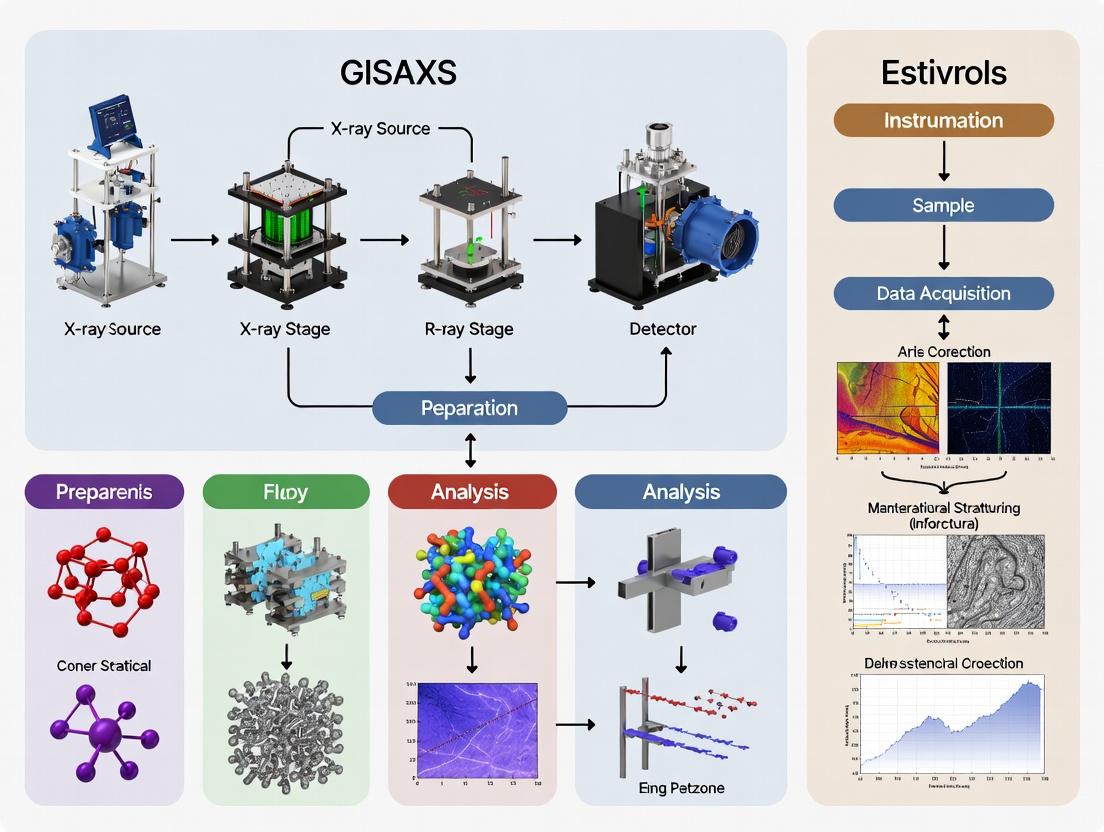
This comprehensive guide provides researchers, scientists, and drug development professionals with essential knowledge about Grazing Incidence Small-Angle X-ray Scattering (GISAXS) instrumentation and setup.
GISAXS for Pharmaceutical Research: Complete Guide to Instrumentation, Setup & Bio-Nano Analysis
Abstract
This comprehensive guide provides researchers, scientists, and drug development professionals with essential knowledge about Grazing Incidence Small-Angle X-ray Scattering (GISAXS) instrumentation and setup. Covering foundational principles, advanced methodologies, troubleshooting strategies, and validation protocols, the article serves as a practical resource for implementing GISAXS to characterize nanostructured materials, thin films, and complex biological systems relevant to modern pharmaceutical development and biomedical research.
What is GISAXS? Core Principles and Instrument Components for Beginners
Within the broader research thesis on Grazing Incidence Small-Angle X-ray Scattering (GISAXS) instrumentation and setup requirements, defining its core principle is paramount. GISAXS is a sophisticated, non-destructive analytical technique that utilizes a grazing incidence X-ray beam to probe nanoscale structures on surfaces, at interfaces, and within thin films. This whitepaper details the fundamental principles, instrumental requirements, and experimental protocols, providing a technical guide for its application in materials science and drug development.
The Fundamental Principle of GISAXS
The core principle of GISAXS leverages the phenomenon of X-ray scattering at very shallow angles (typically 0.1° to 2°). This geometry ensures that the X-ray beam penetrates and interacts with nanoscale features along the surface and through the thin film depth, while minimizing substrate penetration. The primary interactions are:
- Specular Reflection: The coherent, mirror-like reflection defining the critical angle.
- Diffuse Scattering: The Yoneda wing, sensitive to near-surface electron density.
- Out-of-Plane Scattering: Contains information about particle shape, size, and lateral ordering. The resultant 2D scattering pattern is a map in reciprocal space, which can be analyzed to extract quantitative nanostructural parameters.
Instrumental Setup & Configuration Requirements
The research thesis emphasizes that precise instrumentation is critical for reliable GISAXS data. A synchrotron source is preferred due to its high flux and collimation, though modern laboratory-scale instruments with microfocus sources are viable. The essential components are summarized in Table 1.
Table 1: Core GISAXS Instrumentation Components and Specifications
| Component | Key Requirement | Typical Specification / Options | Function |
|---|---|---|---|
| X-ray Source | High brilliance, good collimation | Synchrotron; Sealed-tube (Cu Kα, λ=1.54Å); Metal-jet (Ga Kα, λ=1.34Å) | Generates monochromatic, coherent X-rays |
| Optics & Collimation | Define beam size and divergence | Göbel mirrors; Compound refractive lenses; Slit systems | Monochromatizes, shapes, and aligns the incident beam |
| Goniometer | High angular precision (≤0.001°) | 6-axis stage (x, y, z, θ, χ, φ) | Precisely controls sample orientation (incidence angle, rotation) |
| Sample Stage | Stable, vibration-free environment | Vacuum chamber; Environmental cell (for in situ studies) | Holds sample under controlled conditions (temp., humidity, gas) |
| Detector | High dynamic range, 2D pixel array | Pilatus3 1M; Eiger2 1M; CCD-based detectors | Records the 2D scattering pattern with high sensitivity |
| Beamstop | Robust, accurately positioned | Direct beam stopper on a motorized arm | Protects detector from intense direct and specularly reflected beam |
Diagram: GISAXS Basic Experimental Geometry
Experimental Protocol: A Standard GISAXS Measurement
This protocol outlines the steps for a typical GISAXS experiment on a nanoparticle film, as derived from current methodology literature.
1. Sample Preparation & Mounting:
- Prepare the substrate (e.g., silicon wafer) via standard cleaning (piranha etch, UV-Ozone).
- Deposit the nanostructured film (e.g., by spin-coating, Langmuir-Blodgett, or sputtering).
- Mount the sample securely on the goniometer head, ensuring the surface plane is aligned with the instrumental axes.
2. Instrument Alignment & Angle Calibration:
- Use a direct beam image to precisely center the beam on the detector.
- Perform an angular scan (rocking curve) to find the sample's critical angle (αc). This is done by monitoring the intensity of the specularly reflected beam while varying the incidence angle (αi).
- Set the working incidence angle. For surface sensitivity, αi is typically slightly above αc (e.g., 0.2° - 0.5°).
3. Data Acquisition:
- Position the beamstop to block the intense specular reflection.
- Acquire the 2D scattering pattern with an exposure time sufficient for good statistics but below detector saturation or sample damage threshold (typically 1-60 seconds at a synchrotron).
- Acquire necessary background corrections: an empty beam profile and a scattering pattern from a bare substrate.
4. Data Reduction & Analysis:
- Subtract background signals from the sample pattern.
- Correct for detector effects (flat-field, pixel sensitivity).
- Perform geometric corrections to convert pixel coordinates to reciprocal space coordinates (qy, qz).
- Fit the scattering patterns using appropriate models (e.g., Distorted Wave Born Approximation (DWBA) for form factor and structure factor analysis).
Diagram: Standard GISAXS Workflow
Key Research Reagent Solutions & Materials
Table 2: Essential Materials for GISAXS Sample Preparation in Soft Matter/Drug Development
| Material / Reagent | Function / Role in Experiment |
|---|---|
| Silicon Wafer (P-type, prime grade) | Standard, low-roughness substrate with known critical angle. Provides a flat, reproducible surface for film deposition. |
| Piranha Solution (H2SO4:H2O2, 3:1) | Caution: Extremely hazardous. Used for aggressive cleaning of silicon substrates to remove organic residue and create a hydrophilic surface. |
| Polymer (e.g., PS-b-PMMA block copolymer) | Model system for studying self-assembled nanodomains (e.g., cylinders, lamellae) at surfaces and interfaces. |
| Gold Nanoparticles (colloidal, 5-50 nm) | Model inorganic nanoparticle system with high electron density contrast. Used for studying ordering, spacing, and size distributions. |
| Lipid (e.g., DPPC) or Polymer (e.g., P3HT:PCBM) Thin Film | Key systems for drug delivery (liposome layers) or organic photovoltaic research, probed for nanoscale morphology. |
| Spin Coater | Standard instrument for creating uniform thin films (10-200 nm) from solution onto flat substrates. |
Quantitative Data from Recent GISAXS Studies
Table 3: Summary of Recent GISAXS Quantitative Analyses
| Sample System | Incidence Angle (αi) | Extracted Parameters (Mean ± SD) | Instrument Source | Reference Key Finding |
|---|---|---|---|---|
| PS-b-PMMA on Si | 0.25° | Sphere diameter: 24.5 ± 1.2 nmCenter-to-center distance: 48.3 ± 2.1 nm | PETRA III, P03 beamline | Quantified highly ordered hexagonal packing of block copolymer domains. |
| Au NPs on Graphene | 0.3° | NP radius: 7.8 ± 0.5 nmInterparticle distance: 22.4 ± 3.1 nm | Swiss Light Source | Revealed correlated disorder in nanoparticle superlattices at an interface. |
| Active Layer (P3HT:ICBA) | 0.2° | PCBM cluster radius: 12.1 ± 2.8 nmCorrelation length: 41.6 nm | Advanced Photon Source | Correlation between nanoscale phase separation and OPV device efficiency. |
| Lipid Multi-bilayers | 0.15° | Bilayer spacing: 5.1 ± 0.1 nmMembrane deformation modulus: 15 kT | ESRF, ID10 beamline | Measured mechanical properties and stacking order in model drug delivery systems. |
This whitepaper details the core instrument components required for Grazing-Incidence Small-Angle X-ray Scattering (GISAXS) experiments, contextualized within a broader thesis on GISAXS instrumentation and setup optimization. The transition from high-flux synchrotron beamlines to versatile lab-source systems presents unique engineering and application challenges for researchers in materials science and pharmaceutical development.
Core Component Comparison: Synchrotron vs. Lab-Source
X-ray Source Components
The fundamental difference between facilities lies in the X-ray generation mechanism.
Table 1: X-ray Source Characteristics
| Component | Synchrotron Beamline | Laboratory Source |
|---|---|---|
| Generation | Electron storage ring & insertion devices (undulators/wigglers) | Sealed tube or rotating anode (Cu, Mo, Ga) |
| Photon Flux | 10¹² – 10¹⁵ ph/s/0.1%BW | 10⁸ – 10¹⁰ ph/s (at sample) |
| Beam Divergence | < 0.1 mrad (highly collimated) | ~1-10 mrad (requires optics) |
| Beam Size | 10 – 500 µm (easily tunable) | 50 – 1000 µm (defined by optics) |
| Energy Tunability | Wide, continuous (5-30 keV typical) | Fixed characteristic lines (e.g., Cu Kα=8.04 keV) |
| Temporal Structure | Pulsed (MHz to sub-ns pulses) | Continuous wave |
Beam Conditioning and Optics
Optical components shape and monochromatic the X-ray beam.
Table 2: Optical Components and Performance
| Component | Primary Function | Synchrotron Implementation | Lab-Source Implementation |
|---|---|---|---|
| Monochromator | Select photon energy | Double-crystal (Si 111), high stability | Single crystal or multilayer mirror |
| Focusing Device | Concentrate flux on sample | Compound refractive lenses (CRLs), KB mirrors | Capillary optics, polycapillary lenses, or mirror systems |
| Collimation/Slit System | Define beam size & divergence | Four-blade adjustable slits, high precision | Motorized or manual slits, fixed apertures |
| Harmonic Rejection | Remove higher-energy photons | Mirror at critical angle or detuning | Mirror or filter (e.g., Ni filter for Cu Kα) |
Sample Environment and Goniometry
Precise sample manipulation is critical for GISAXS.
Experimental Protocol: Sample Alignment for GISAXS
- Objective: Align the sample surface to the incident X-ray beam at grazing incidence (typically 0.1° - 1.0°).
- Materials: Aligned sample on holder, high-precision goniometer, ion chamber or point detector.
- Method:
- Coarse Height Alignment: Use a laser aligner or visual microscope to bring the sample surface to the beam height axis.
- Incident Angle (α_i) Finding: a. Place a diode or ion chamber directly after the sample to measure reflected beam intensity. b. Perform a θ (theta) scan (sample rotation perpendicular to beam) to find the critical angle of the substrate (evidenced by a sharp intensity peak from total external reflection). c. Set the incident angle to a value just above the substrate's critical angle for measurement.
- Beam Footprint Optimization: Translate the sample along its surface normal to ensure the entire beam illuminates the sample surface without spillover.
- Azimuthal Alignment (ψ): Rotate the sample about its surface normal to align any in-plane sample structure relative to the detector axes.
Detection Systems
Table 3: Detector Specifications
| Parameter | 2D Area Detector (Typical) | 1D Line Detector |
|---|---|---|
| Technology | Pixel array (Pilatus, Eiger), CCD-based | Mythen strip, position-sensitive detector |
| Pixel Size | 75 µm – 172 µm | 50 µm – 100 µm strip width |
| Active Area | ~83 x 33 mm (Eiger 500K) | ~64 x 8 mm (Mythen2 1K) |
| Readout Speed | Hz to kHz frame rates | kHz line rates |
| Key Advantage | Captures full qxy & qz plane simultaneously | High dynamic range, fast for kinetics |
System Architecture and Workflow
Diagram Title: Core GISAXS Instrument Signal Flow
The Scientist's Toolkit: Key Research Reagent Solutions
Table 4: Essential Materials for GISAXS Sample Preparation & Calibration
| Item | Function & Rationale |
|---|---|
| Silicon Wafers (P-type/Boron doped) | Primary substrate due to ultra-smooth surface (<0.5 nm roughness), well-defined critical angle, and low background scattering. |
| Polystyrene Latex Nanoparticles (e.g., 100 nm diameter) | Calibration standard for detector distance and q-scale calibration. Known structure provides sharp Bragg rings for geometry alignment. |
| Silver Behenate (CH3(CH2)20COOAg) Powder | Low-angle calibration standard for q-range. Produces well-characterized diffraction peaks for precise determination of the beam center and sample-to-detector distance. |
| Photoresist (e.g., PMMA) | Used to create lithographic patterns or as a sacrificial layer for film deposition, enabling the study of nano-patterned surfaces. |
| Block Copolymer Solutions (e.g., PS-b-PMMA) | Model system for studying thin film self-assembly, nanodomain ordering, and orientation kinetics under annealing. |
| Plasma Cleaner (O2/Ar) | For substrate surface activation prior to coating, ensuring uniform wetting and adhesion of thin films or nanoparticles. |
| Atomic Layer Deposition (ALD) Precursors (e.g., TMA, H2O) | For depositing ultra-thin, conformal oxide layers (Al2O3) as barrier or functional layers in nanostructured films. |
| Anhydrous Solvents (Toluene, Chloroform) | For preparing polymer and nanoparticle solutions without water contamination, which can affect film morphology during spin-coating. |
The choice between synchrotron and lab-source GISAXS instrumentation dictates experimental design, temporal resolution, and accessible scattering vector range. Synchrotrons offer unmatched flux and beam quality for in-situ kinetics, weak scattering, and high-resolution mapping. Modern lab-source systems, incorporating advanced optics and detectors, provide indispensable accessibility and flexibility for routine characterization, stability studies, and high-throughput screening—critical for pharmaceutical formulation development and quality-by-design paradigms. The core thesis of instrumentation research focuses on optimizing the component chain from source to detector to maximize information yield within the constraints of each platform.
Within the context of advancing Grazing-Incidence Small-Angle X-ray Scattering (GISAXS) instrumentation for structural analysis of thin films, nanoparticles, and biomolecular assemblies—critical in drug development—the choice of X-ray source is paramount. This whitepaper provides an in-depth technical comparison between synchrotron and laboratory-based microfocus sources, detailing core requirements, experimental protocols, and implications for research throughput and data quality.
Core Source Characteristics and Quantitative Comparison
The fundamental parameters of an X-ray source directly determine its suitability for GISAXS experiments, affecting beam size, flux, divergence, and temporal resolution.
Table 1: Quantitative Comparison of Source Characteristics
| Parameter | Synchrotron Beamline (Undulator) | Laboratory Microfocus Source (Rotating Anode) | Laboratory Microfocus Source (Metal Jet) |
|---|---|---|---|
| Photon Energy | Tunable (5-30 keV typical) | Fixed (Cu Kα: 8.04 keV, Mo Kα: 17.48 keV) | Fixed (Ga Kα: 9.25 keV, In Kα: 24.2 keV) |
| Beam Size (FWHM) | 10-200 µm (vert.) × 50-1000 µm (hor.) | 20-100 µm (with focusing optics) | 20-100 µm (with focusing optics) |
| Beam Divergence | < 0.1 mrad (vertical) | 5-10 mrad (native), ~1 mrad (with optics) | 5-10 mrad (native), ~1 mrad (with optics) |
| Photon Flux | 10¹² - 10¹⁵ ph/s | 10⁸ - 10⁹ ph/s (on sample) | 10⁹ - 10¹⁰ ph/s (on sample) |
| Brightness | 10¹⁸ - 10²¹ ph/s/mm²/mrad² | 10¹⁰ - 10¹¹ ph/s/mm²/mrad² | 10¹¹ - 10¹² ph/s/mm²/mrad² |
| Temporal Resolution | Milliseconds for dynamics | Minutes to hours per pattern | Seconds to minutes per pattern |
| Beam Collimation | Excellent, inherent | Requires mirrors/monochromators | Requires mirrors/monochromators |
| Operational Access | Limited, proposal-based | 24/7 in-house | 24/7 in-house |
The choice of source dictates the experimental setup and methodology. Below are standardized protocols for conducting a GISAXS experiment on a model thin-film pharmaceutical formulation.
Protocol 2.1: GISAXS at a Synchrotron Beamline
Objective: To resolve the in-situ, real-time nano-scale structural evolution of a polymer-lipid hybrid drug carrier film during solvent annealing.
- Sample Preparation: Spin-coat a thin film (~100 nm) of the formulation onto a single-crystal silicon wafer. Load the sample into a humidity- and temperature-controlled environmental cell.
- Beamline Alignment: Utilize beamline software to align the undulator gap and select the desired monochromatic energy (e.g., 12.4 keV, λ=1 Å) using a double-crystal monochromator.
- Beam Defining: Set compound refractive lenses or Kirkpatrick-Baez (KB) mirrors to focus the beam to 50 µm (V) × 200 µm (H) at the sample position. Define beam size precisely using slits.
- Incidence Angle Alignment: Align the sample surface to the beam using a laser and a quadrant diode. Set the grazing-incidence angle, αi, to 0.2°, just above the critical angle of the film.
- Detector Setup: Position a 2D pixelated detector (e.g., Pilatus3 2M) approximately 2-5 meters downstream from the sample. Record a calibration image from a silver behenate standard.
- Data Acquisition: Initiate the solvent flow. Acquire sequential 2D scattering patterns with an exposure time of 100 ms per frame. Continue for the duration of the annealing process (e.g., 30 minutes).
- Data Reduction: Use SAXS software (e.g., SAXSGUI, DPDAK) for geometric corrections, background subtraction, and azimuthal integration to produce 1D intensity vs. q profiles.
Protocol 2.2: GISAXS with a Laboratory Microfocus Source
Objective: To characterize the static nanoscale morphology of a spray-dried antibody-polymer conjugate powder.
- Source Preparation: Power on the microfocus rotating anode source (Cu target, 50 kV, 1 mA). Allow 30 minutes for stabilization.
- Beam Conditioning: Pass the divergent X-ray beam through a multilayer mirror monochromator to select the Cu Kα line and reduce divergence. Optional: Use a collimating mirror or capillary optics to further shape the beam.
- Sample Mounting: Gently sprinkle the powder onto a low-background adhesive tape mounted on a standard sample holder. Ensure a flat, even layer.
- Alignment: Use a laser pointer co-aligned with the X-ray beam to roughly position the sample. Fine-tune the grazing-incidence angle (αi ~0.3°) by maximizing the intensity of the specularly reflected beam on a point detector or the direct beam on the 2D detector.
- Beam Definition: Place motorized slits close to the sample to define the beam footprint to ~0.5 mm (H) × 20 µm (V).
- Detector Setup: Position a hybrid pixel detector (e.g., Eiger2 R 1M) 1.5 meters from the sample. Acquire a dark current image and a blank substrate image for background correction.
- Data Acquisition: Acquire a single 2D GISAXS pattern with an exposure time of 1800 seconds (30 minutes) to achieve sufficient signal-to-noise.
- Data Reduction: Perform standard corrections and integration as in Protocol 2.1, with particular care to subtract the significant parasitic scattering from the optics and air path.
Title: Generic GISAXS Experimental Workflow
Title: X-ray Generation & Conditioning Pathways
The Scientist's Toolkit: Key Research Reagent Solutions for GISAXS
Table 2: Essential Materials and Reagents
| Item | Function in GISAXS Experiment | Example Product/Type |
|---|---|---|
| Low-Roughness Substrates | Provides a smooth, flat surface for thin-film deposition to minimize diffuse scattering background. | Single-crystal Silicon wafers (P/Boron doped), Fused silica. |
| Calibration Standards | Used for precise calibration of the scattering vector q (size/distance). | Silver behenate (d-spacing = 58.38 Å), Glassy carbon (for intensity). |
| Precision Sample Stages | Enables accurate alignment of the grazing-incidence angle with sub-milliradian precision. | Hexapod or goniometer stages with vacuum compatibility. |
| Beam-Stop | Protects the detector from the intense, unscattered direct beam. | Tantalum or tungsten carbide on a kapton filament. |
| Vacuum-Compatible Cells | Allows for in-situ studies under controlled atmosphere (dry, solvent vapor) without air scattering. | Custom-made cells with Kapton or beryllium windows. |
| 2D Hybrid Pixel Detector | Captures the scattered photon pattern with high dynamic range, low noise, and fast readout. | Dectris Pilatus3/Eiger2, Rigaku Hypix-3000. |
| Data Analysis Software Suite | For data reduction, modeling, and fitting of nanostructures. | BornAgain, Irena (IGOR Pro), SASfit, GIXSGUI. |
The selection between a synchrotron and a laboratory microfocus source hinges on the specific requirements of the GISAXS research program within drug development. Synchrotrons are unparalleled for time-resolved in-situ studies, anomalous scattering, and probing weakly scattering or radiation-sensitive materials due to their high flux and brilliance. Laboratory microfocus sources offer indispensable accessibility and flexibility for routine characterization, stability studies, and method development.
A hybrid approach is often most effective: using in-house systems for routine screening and stability testing, while reserving synchrotron beamtime for high-impact, dynamic experiments that demand the ultimate in flux, resolution, or temporal sampling. This strategy optimizes resource allocation and accelerates the pipeline from formulation design to structural understanding.
Within the broader research thesis on Grazing-Incidence Small-Angle X-ray Scattering (GISAXS) instrumentation, the detector is not merely a recording device but a critical determinant of data fidelity. GISAXS experiments probe the nanoscale structure of thin films and surfaces, producing complex, weak scattering patterns over a wide intensity range. This whitepaper details the three cardinal specifications of GISAXS detectors—pixel size, dynamic range, and sensitivity—and their intrinsic interplay in dictating experimental success. The optimal detector choice directly impacts the resolution, quantitative accuracy, and throughput of structural analysis in fields from polymer science to pharmaceutical thin-film development.
Core Detector Specifications: A Technical Deep Dive
Pixel Size
Pixel size defines the angular resolution of the scattering pattern. A smaller pixel samples the scattering vector q more finely, critical for resolving closely spaced peaks from ordered nanostructures. However, excessively small pixels reduce the individual pixel's active area, potentially compromising sensitivity and dynamic range.
Dynamic Range
Dynamic Range (DR) is the ratio of the maximum detectable signal (saturation) to the minimum measurable signal (noise floor). GISAXS patterns feature intense specular/transmitted beams and extremely weak diffuse scattering signals simultaneously. A high DR is essential to capture both without saturation or loss of weak features, enabling quantitative analysis of defect densities and partial order.
Sensitivity
Sensitivity refers to the detector's ability to register low-intensity photons. It is governed by the detective quantum efficiency (DQE), the efficiency of converting an incident X-ray photon into a measurable signal. High DQE (approaching 1) minimizes the exposure time needed to achieve a sufficient signal-to-noise ratio (SNR), reducing beam damage on sensitive samples like organic semiconductors or biologic layers.
Quantitative Comparison of Modern GISAXS Detector Technologies
The following table summarizes key specifications for prevalent detector classes used in contemporary GISAXS setups, based on current manufacturer data.
Table 1: Key Specifications of Modern GISAXS Detectors
| Detector Technology | Typical Pixel Size (µm) | Dynamic Range (Bits / Linear) | Key Sensitivity Metric (DQE) | Primary GISAXS Use Case |
|---|---|---|---|---|
| Hybrid Pixel Detector (e.g., Pilatus3, Eiger2) | 75 - 150 | 20-bit (1:1,000,000) / Single-photon counting | Very High (>0.8 at 12 keV) | Fast, low-noise mapping; best for weak scattering. |
| sCMOS Camera (with scintillator) | 6.5 - 16 | 16-18 bit (1:65,000-1:262,000) / Linear | High (~0.6-0.7 at 12 keV) | High-resolution imaging of detailed q-space. |
| CCD Camera (with scintillator & fiber taper) | 13 - 27 | 16-bit (1:65,000) / Linear | Moderate (~0.4-0.5 at 12 keV) | Legacy systems; high-resolution but slower readout. |
| Micropattern Gas Detector (e.g., μRWELL) | ~80 (strips) | High (Counting) / Single-photon | Moderate | Large-area, very low cost per area; developing technology. |
| Image Plate (IP) | 25 - 100 | >20-bit (Integrating) / Linear | High | Very large area; off-line readout; high DR. |
Experimental Protocol: GISAXS Detector Calibration and Characterization
To validate detector performance within a GISAXS instrument thesis, a standardized calibration protocol is essential.
4.1 Protocol: Pixel Size and Geometry Calibration
- Objective: Precisely determine the effective pixel size and correct for geometric distortion.
- Materials: Certified calibration standard (e.g., silver behenate powder, Si grating with known period).
- Methodology:
- Mount the standard sample at the sample position.
- Acquire a transmission SAXS or GISAXS pattern at a known, direct beam distance (e.g., 1-2 meters).
- Fit the known q-values of the standard's Bragg rings or peaks to their measured pixel coordinates.
- Calculate the effective pixel size (µm/px) and generate a geometric correction map. This step is crucial for accurate q-space conversion.
4.2 Protocol: Dynamic Range and Linearity Measurement
- Objective: Measure the detector's response linearity over its full intensity range.
- Materials: Attenuator set (Al foils of varying thickness), stable X-ray source.
- Methodology:
- With no sample, measure the direct beam intensity using a series of increasing attenuators to span from the noise floor to saturation.
- Plot measured detector signal (Mean Pixel Value) against expected intensity (calculated from attenuator transmission).
- Fit the linear region. The deviation point defines the upper limit of linear dynamic range. The ratio of this saturation value to the standard deviation of the noise floor (from a dark image) defines the usable DR.
4.3 Protocol: Sensitivity and DQE Estimation
- Objective: Estimate the Detective Quantum Efficiency at relevant X-ray energies.
- Materials: Monoenergetic X-ray source (synchrotron beamline or lab source with monochromator), series of calibrated attenuators.
- Methodology:
- Acquire flat-field images at a specific energy (e.g., 12.4 keV) at different flux levels (using attenuators).
- Calculate the Noise Power Spectrum (NPS) and Modulation Transfer Function (MTF) from the images.
- DQE is calculated as: DQE(q) = [MTF(q)^2] / [NPS(q) * (Φ * Apx)], where Φ is the incident photon flux (photons/µm²) and Apx is the pixel area. A higher DQE(q) across spatial frequencies indicates superior sensitivity.
The Scientist's Toolkit: Essential Research Reagents & Materials
Table 2: Key Research Reagents and Materials for GISAXS Detector Characterization
| Item | Function in GISAXS Detector Research |
|---|---|
| Silver Behenate (AgBe) Powder | SAXS calibration standard with well-defined, sharp Bragg peaks for precise pixel size and q-space calibration. |
| Precision Attenuator Kit (Al, Cu, or Mo foils) | To measure detector linearity and dynamic range by providing known, step-wise reductions in X-ray flux. |
| Uniform Scintillator Screen (e.g., LuAG:Ce, Gd₂O₂S:Tb) | Converts X-rays to visible light for indirect detection cameras (sCMOS, CCD); quality affects resolution and sensitivity. |
| ISO 12233-Slanted Edge Target (for optical cameras) | Used with a microscope to measure the pre-scintillator MTF of the optical relay system in indirect detectors. |
| Radioisotope Source (⁵⁵Fe) | Provides a monochromatic Mn Kα X-ray line (5.9 keV) for lab-based DQE and energy response testing in the absence of a beamline. |
Visualizing the Detector Selection Logic and Workflow
Title: GISAXS Detector Selection Logic Flow
Title: GISAXS Detector Calibration Workflow
The successful execution of Grazing-Incidence Small-Angle X-ray Scattering (GISAXS) experiments is fundamentally dependent on the performance and stability of the sample stage. This component is critical for aligning the sample with respect to the X-ray beam and controlling its environment during measurement. Within the broader thesis of GISAXS instrumentation and setup requirements, this guide details the core technologies that constitute a modern, high-performance sample stage: precision goniometers and integrated environmental control systems. For researchers in materials science and drug development, mastering this subsystem is essential for obtaining reproducible, high-resolution structural data from thin films, nanoparticles at interfaces, and ordered biomolecular layers.
Core Components: Precision Goniometers
Precision goniometers provide the mechanical means to orient the sample with sub-micron and sub-milliradian accuracy. A typical GISAXS stage integrates multiple, often stacked, linear and rotational axes.
Key Axes and Their Functions
| Axis Name | Typical Travel Range | Resolution/Accuracy | Primary Function in GISAXS |
|---|---|---|---|
| Omega (ω) / Incident Angle | ±90° | < 0.0005° | Sets the grazing incidence angle (α~i~) relative to the sample surface. Critical for probing near the critical angle. |
| Phi (φ) / In-Plane Rotation | 360° continuous | < 0.001° | Rotates sample about its surface normal. Used for aligning in-plane crystal structures or achieving isotropic averaging. |
| Chi (χ) / Sample Tilt | ±10° - ±30° | < 0.001° | Tilts the sample surface relative to the beam plane. Corrects for sample non-planarity. |
| X, Y Translation | 50 - 100 mm | < 0.1 µm | Positions the beam on a specific area of the sample. Essential for mapping experiments. |
| Z Translation | 25 - 50 mm | < 0.1 µm | Adjusts sample height to bring it to the center of rotation of the goniometer. |
Drive Technologies and Position Feedback
| Technology | Principle | Advantages | Disadvantages |
|---|---|---|---|
| Piezoelectric Actuators | Piezoelectric effect | Nanometer resolution, high stiffness, fast response. | Limited travel range (typically < 200 µm), hysteresis, creep. |
| Stepper Motors with Encoders | Electromagnetic stepping | Good balance of speed, travel, and cost. Open-loop possible, closed-loop with encoder improves accuracy. | Can suffer from vibration and resonance; lower resolution than piezo. |
| DC Servo Motors with Encoders | Continuous rotation with feedback | High speed, smooth motion, excellent closed-loop stability. | More complex and expensive than stepper systems. |
| Friction Drives / Direct Drives | Direct torque application | Extremely smooth, high-resolution rotation, no backlash. | High cost, requires careful thermal management. |
Goniometer Alignment Protocol for GISAXS
A precise alignment protocol is mandatory for reliable GISAXS data.
- Laser Alignment: Co-align a visible laser with the X-ray beam path. Use this to pre-align the goniometer stage, bringing its center of rotation approximately into the beam.
- Sample Height (Z) Finding: Using a narrow beam or a knife-edge, scan the sample vertically through the beam while monitoring transmitted or scattered intensity. The center of the intensity dip/peak defines the beam center height.
- Surface Alignment (Chi/Omega):
- Perform an omega scan (rocking curve) at low incidence angle near the critical angle, monitoring the specularly reflected beam.
- The maximum intensity corresponds to the exact surface alignment. Misalignment in chi will broaden this peak.
- Iteratively adjust chi and omega to maximize and sharpen the rocking curve peak.
- Beam Position (X, Y) Validation: Use a beam-stop or a downstream detector to ensure the direct beam is correctly positioned and that the sample translation does not shift the beam on the detector.
Diagram: GISAXS Sample Alignment Workflow (94 chars)
Environmental Control Systems
Sample environment control is crucial for studying in-situ processes (e.g., annealing, solvent vapor annealing, electrochemical reactions) and stabilizing sensitive biological or soft matter samples.
Common Environmental Cells and Their Specifications
| Cell Type | Temperature Range | Atmosphere Control | Key Features | Typical Applications |
|---|---|---|---|---|
| Basic Heated Stage | RT to 300°C | Ambient or inert gas purge | Simple, low-cost, good for annealing. | Polymer thin film annealing, nanoparticle sintering. |
| Cooling Stage (Peltier) | -20°C to 100°C | Passive or purged | Precise, stable temperature for biologics. | Protein layer studies, lipid membrane kinetics. |
| Liquid Cell (Flow/Static) | RT to 150°C | Liquid environment, can be sealed | X-ray transparent windows (SiN, diamond). | In-situ electrochemical deposition, nanoparticle self-assembly in solution. |
| Solvent Vapor Annealing (SVA) Chamber | RT to 150°C | Controlled solvent partial pressure | Precise mixing of vapor streams, rapid switching. | Block copolymer thin film ordering, pharmaceutical polymorph screening. |
| Humidity Cell | RT to 100°C | 5% to 95% RH | Combined with temperature control. | Hygroscopic film studies, biomimetic materials. |
Protocol forIn-SituSolvent Vapor Annealing GISAXS
This protocol is vital for studying the directed self-assembly of block copolymers or small molecule organic semiconductors.
- Cell Preparation: Clean the environmental cell with solvent. Load the thin-film sample onto the internal stage. Connect solvent reservoirs (e.g., toluene, chloroform, water) to the vapor inlet ports via mass flow controllers (MFCs).
- Baseline Measurement: Seal the cell and flow dry, inert gas (N~2~) at a fixed rate (e.g., 500 sccm). Acquire a reference GISAXS pattern at the base temperature.
- Vapor Introduction: Set the MFCs to deliver a specific ratio of saturated solvent vapor and dry carrier gas. The total flow rate must remain constant to maintain chamber pressure. Allow the chamber to equilibrate for a set time (e.g., 5-10 mins).
- Kinetic Series Acquisition: Initiate a time-resolved GISAXS measurement sequence. Typical exposure times range from 0.1-5 seconds per frame, repeated for the duration of the annealing process (minutes to hours).
- Post-Annealing: Switch the vapor flow back to pure dry gas to quench the sample structure. Acquire a final, high-statistics GISAXS pattern.
Diagram: Solvent Vapor Annealing Cell Gas Flow (80 chars)
The Scientist's Toolkit: Essential Research Reagent Solutions & Materials
| Item | Function/Benefit | Example Application in GISAXS |
|---|---|---|
| Silicon Wafers (P-type, prime grade) | Atomically smooth, flat, and rigid substrate. Low X-ray absorption and scattering background. | Standard substrate for thin-film deposition of polymers, nanoparticles, and proteins. |
| X-ray Transparent Windows (SiN, Diamond) | Allow X-rays to enter/exit a sealed cell with minimal attenuation. Mechanically robust for vacuum or pressure differentials. | Fabricating liquid cells or environmental chambers for in-situ experiments. |
| Calibration Standards (Silver Behenate, PS-b-PMMA) | Provide known scattering patterns for precise q-calibration of the detector geometry. | Determining exact scattering vector (q) values for feature sizes. |
| High-Vacuum Compatible Grease (Apiezon, Fomblin) | Provides a seal for environmental cells that is inert and does not outgas under X-ray illumination. | Sealing O-rings and feedthroughs on custom environmental stages. |
| Precision Alignment Pins & Mounts (Kinematic) | Enable reproducible, precise mounting and dismounting of samples and sample holders. | Essential for transferring a sample from a glovebox to the stage without losing alignment. |
| Mass Flow Controllers (MFCs) | Precisely regulate the flow rate of gases and vapor streams into an environmental cell. | Creating precise solvent vapor atmospheres for annealing studies. |
This technical guide elaborates on the foundational beam conditioning components critical for successful Grazing-Incidence Small-Angle X-ray Scattering (GISAXS) experiments. Framed within a broader thesis on GISAXS instrumentation and setup, it details the principles, quantitative parameters, and methodologies for employing slits, monochromators, and collimation systems to produce a high-quality X-ray beam essential for probing nanostructures at surfaces and interfaces, with direct applications in pharmaceutical thin-film and nanoparticle drug delivery system characterization.
In GISAXS, the incident X-ray beam strikes a sample at a grazing angle (typically 0.1° - 2°), enabling surface-sensitive scattering. The quality of the extracted structural data is intrinsically linked to the conditioning of the primary beam. Precise beam conditioning—defining its energy (wavelength), angular divergence, footprint, and background—is not merely beneficial but critical. It dictates the reciprocal space resolution, signal-to-noise ratio, and the viability of measuring weakly scattering specimens, such as organic pharmaceutical films. This guide deconstructs the role of slits, monochromators, and collimation within this context.
Core Components & Quantitative Analysis
Slits Systems
Slits define the beam's physical dimensions and angular acceptance. In GISAXS, two sets are paramount: the source-defining slits and the guard or anti-scatter slits placed before the sample.
Function:
- Beam Size Definition: Controls the footprint on the sample, which must be optimized to illuminate the area of interest without excessive radiation damage.
- Divergence Control: Limits the angular spread in both the in-plane (along the beam path) and out-of-plane directions.
- Background Reduction: Guard slits eliminate parasitic scattering from upstream components, drastically reducing air scatter and slit-edge diffraction.
Quantitative Data:
Table 1: Typical Slit Parameters and Impact in a Synchrotron GISAXS Setup
| Slit Type | Typical Aperture Range | Primary Function | Impact on Measurement |
|---|---|---|---|
| Source-Defining | 0.05 - 0.5 mm (V) x 1 - 5 mm (H) | Defines beam coherence & divergence | Smaller apertures increase resolution but decrease flux. |
| Guard/Anti-Scatter | 0.1 - 1 mm (V) x 2 - 10 mm (H) | Trims scatter before sample | Critical for reducing background near the direct beam. |
| Sample-Defining | Optional, used for footprint control | Defines precise illuminated area | Prevents beam spill-over on small samples, reduces substrate scatter. |
Monochromators
Monochromators select a narrow band of X-ray wavelengths (Δλ/λ) from the polychromatic source, ensuring energy purity.
Function:
- Wavelength Definition: Sets the incident photon energy (e.g., Cu Kα = 8.04 keV, λ=1.54 Å).
- Harmonic Rejection: Eliminates higher-order harmonics (e.g., λ/2, λ/3) that can create spurious scattering features.
- Beam Conditioning: The crystal optics also influence beam divergence and vertical focusing.
Types & Protocols:
- Double-Bounce Crystal (e.g., Si(111)): Standard for lab sources and synchrotrons. Provides excellent wavelength purity (ΔE/E ~ 10⁻⁴).
- Protocol for Alignment: Rocking the second crystal to find the intensity peak (the "Bragg peak") for maximum flux while monitoring intensity and energy resolution with a detector.
- Multilayer Monochromators: Used with laboratory sources for higher flux, accepting a larger bandwidth (ΔE/E ~ 10⁻²).
- Harmonic Rejection: Can be achieved by slightly detuning the second crystal from the perfect alignment of the first (asymmetric cut crystals) or using a mirror at a critical angle below the harmonic's cutoff.
Table 2: Monochromator Performance Characteristics
| Monochromator Type | Relative Flux | Bandwidth Δλ/λ | Typical Application Context |
|---|---|---|---|
| Double-Crystal Si(111) | High (Synchrotron) / Med (Lab) | ~1.4 x 10⁻⁴ | High-resolution GISAXS, crystalline film analysis. |
| Double-Crystal Si(220) | Medium | ~5 x 10⁻⁵ | Ultra-high resolution studies. |
| W/Si Multilayer | Very High (Lab) | ~1-2 x 10⁻² | Rapid screening, weakly scattering soft matter. |
Collimation
Collimation shapes the directional properties of the beam, ensuring a well-defined, parallel wavefront at the sample position.
Function:
- Divergence Minimization: Produces a beam with minimal angular spread, which translates directly to sharper scattering features and better resolution in reciprocal space.
- Beam Shaping: Creates a clean, uniform intensity profile.
Methods:
- Long-Distance Pinholes: A series of precisely aligned pinholes (e.g., 0.5-1 mm diameter) separated by 0.5-1 m.
- Parabolic or Capillary Optics: Refractive or reflective optics that collect divergent X-rays and create a quasi-parallel beam.
- Slit-Based Collimation: Using two sets of slits separated by a large distance (1-2 m) to define divergence.
Integrated Workflow & Logical Pathway
The beam conditioning process follows a sequential logic from source to sample. The diagram below illustrates this workflow and the key decision parameters at each stage.
Diagram Title: GISAXS Beam Conditioning Sequential Workflow
The Scientist's Toolkit: Research Reagent Solutions
Table 3: Essential Beam Conditioning Components for a Laboratory GISAXS Setup
| Component / Material | Function in Beam Conditioning | Typical Specification |
|---|---|---|
| Motorized Precision Slits | Define beam size and divergence with high reproducibility. | Tungsten or Ta blades, 5 μm step resolution. |
| Double-Bounce Si(111) Monochromator | Provides monochromatic Cu Kα radiation, rejects harmonics. | ΔE/E ≈ 1.4e-4, mounted on precision goniometer. |
| Line Collimator | Produces a narrow, quasi-parallel beam from a lab source. | 0.5 mm or 1.0 mm internal capillary diameter. |
| Beamstop | Absorbs the intense direct beam to protect detector and reduce noise. | Tantalum or lead, on a motorized arm for alignment. |
| Pinhole Apertures | Used for initial beam alignment and coarse collimation. | Stainless steel, various diameters (0.5, 1.0, 2.0 mm). |
| Ionization Chamber / Photodiode | Measures beam intensity for alignment and normalization. | Placed before sample to monitor incident flux (I₀). |
Experimental Protocol: GISAXS Beam Alignment & Characterization
Objective: To align and characterize the conditioned X-ray beam prior to sample measurement.
Materials: As per Table 3.
Procedure:
- Initial Beam Path: With all slits open and no sample, use an X-ray viewer card to locate the beam path from source to detector stage. Align pinholes or coarse slits co-axially.
- Monochromator Alignment: For a double-crystal monochromator, scan the second crystal angle (rocking curve) while measuring intensity with a detector. Set the angle to the peak maximum. Verify energy with a foil absorption edge if possible.
- Primary Slit Setting: Insert and close the primary slits. Set vertical and horizontal apertures to desired size (e.g., 0.2 mm V x 5 mm H for a lab source).
- Collimation/Guard Slit Alignment: Place the guard slit assembly ~20 cm before the sample position. Close its apertures slightly smaller than the primary slit beam size. Scan the slit blades vertically and horizontally to find the intensity knife-edges, ensuring the guard slit is centered on the beam.
- Beam Profile Measurement: Place a high-resolution detector (or scan a small pin diode through) at the sample position. Measure the beam intensity profile (FWHM) in vertical and horizontal directions to determine actual size and divergence.
- Beamstop Alignment: With a beamstop in place, ensure it fully blocks the direct beam at the detector plane. Its shadow should be centered on the detector.
- Background Measurement: Record a scattering pattern with no sample (empty beam) to characterize the parasitic scattering background from slits and air. This frame is subtracted from subsequent sample data.
This protocol ensures a properly conditioned beam, forming the foundational step for reliable and high-quality GISAXS data acquisition in pharmaceutical and materials research.
This whitepaper addresses a critical design and operational parameter in Grazing-Incidence Small-Angle X-ray Scattering (GISAXS) instrumentation: the choice between an evacuated (vacuum) beam path and an air path. Within the broader thesis on optimizing GISAXS setups for pharmaceutical nanotechnology, this decision directly impacts beam intensity, data quality, signal-to-noise ratio, and the types of samples and environments that can be studied. This guide provides a technical framework for selecting the appropriate path based on experimental requirements.
Core Physical Principles: Attenuation and Scattering
X-ray attenuation in matter follows the exponential law I = I₀e^(-μx), where μ is the linear attenuation coefficient, dependent on X-ray energy and the composition of the medium. Air, primarily nitrogen and oxygen, significantly attenuates softer X-rays via photoelectric absorption. Additionally, air scattering, primarily from N₂ and O₂ molecules, contributes to a parasitic background, obscuring weak scattering signals from nanoscale sample features.
Quantitative Comparison: Vacuum vs. Air Path
The following table summarizes the key operational differences, compiled from current synchrotron and laboratory-source practices.
Table 1: Operational Comparison of Vacuum and Air Paths in GISAXS
| Parameter | Vacuum Path (Typical Pressure: <10⁻³ mbar) | Air Path (Ambient Pressure) | Primary Impact |
|---|---|---|---|
| Beam Attenuation | Negligible for typical GISAXS energies (8-12 keV). | Significant for E < 15 keV. At 8 keV, ~50% loss over 1m path. | Flux at sample, exposure time. |
| Air Scattering Background | Eliminated. | Substantial, especially at low q (< 1 nm⁻¹). | Signal-to-Noise Ratio (SNR), limits detectability of weak features. |
| Sample Environment | Restricted. Requires vacuum-compatible samples and stages. | Open. Enables in-situ liquid cells, humidity control, rheology setups. | Experimental flexibility and sample scope. |
| Instrumental Complexity | High. Requires pumps, chambers, vacuum feedthroughs, and safety interlinks. | Low. Simple alignment and sample access. | Cost, maintenance, and setup time. |
| Optimal X-ray Energy | Can utilize lower energies (e.g., Cu Kα, 8 keV) for high scattering cross-sections. | Requires higher energies (e.g., Mo Kα, 17.5 keV; Ag Kα, 22 keV) to penetrate air. | Source selection and beamline design. |
| Primary Application Focus | High-sensitivity measurements of thin films, nanostructured surfaces in controlled dry states. | In-situ/operando studies of soft matter, biological specimens, and dynamic processes at interfaces. | Research question alignment. |
Table 2: Transmission of X-rays through 1 Meter of Dry Air (20°C, 1 atm) Data derived from NIST XCOM database calculations.
| X-ray Energy (keV) | Wavelength (Å) | Transmission (%) | Recommended Path |
|---|---|---|---|
| 8.0 (Cu Kα) | 1.54 | ~50% | Vacuum strongly preferred |
| 12.4 (Cr Kβ) | 1.00 | ~85% | Vacuum for optimal SNR |
| 17.5 (Mo Kα) | 0.71 | ~95% | Air path feasible |
| 22.0 (Ag Kα) | 0.56 | ~98% | Air path suitable |
Experimental Protocols for Path Evaluation and Data Correction
Protocol 4.1: Measuring Air Scattering Background
- Objective: Quantify the parasitic scattering signal from the air path.
- Procedure:
- Align the GISAXS instrument with a direct, attenuated beam stop in place.
- With the sample removed, acquire a 2D scattering image for a fixed time (e.g., 60s) with the beam path at ambient pressure. This is the air background (Iair).
- Evacuate the entire flight path between the beam-defining slits and the detector (or use a dedicated vacuum flight tube).
- Acquire an image with identical settings. This is the instrument background (Iinstr), primarily from detector noise and slit scattering.
- The pure air scattering signal is obtained by subtraction: Iairscatter = Iair - Iinstr.
- Analysis: This background can be radially averaged to create a 1D profile of q vs. intensity, highlighting the strong low-q contribution.
Protocol 4.2: Correcting for Air Path Attenuation in Transmission Factor
- Objective: Accurately scale absolute scattering intensities from an air path experiment to correct for flux loss.
- Procedure:
- Measure the incident beam intensity (I₀) using an in-beam ionization chamber or a calibrated photodiode placed before the sample stage.
- Insert a strong, known scatterer (e.g., a glassy carbon or silver behenate standard) at the sample position.
- Acquire the GISAXS pattern from the standard.
- Compare the integrated scattering intensity of the standard to the intensity obtained under vacuum path conditions (or to its known absolute cross-section). The ratio gives the effective transmission factor (T_air) for the setup.
- Application: All subsequent sample scattering intensities I_sample should be normalized as I_corr = I_sample / (I₀ * T_air).
Protocol 4.3: In-situ Liquid Cell Experiment in Air Path
- Objective: Monitor nanoparticle film formation at a liquid interface.
- Procedure:
- Utilize an open-top, X-ray transparent (e.g., Kapton film) liquid cell mounted on a GISAXS stage.
- Fill the cell with the aqueous nanoparticle dispersion.
- Align the incident X-ray beam (≥ 17.5 keV recommended) at a grazing angle below the liquid's critical angle for total external reflection to probe the air-liquid interface.
- Acquire time-resolved 2D GISAXS patterns as the film self-assembles.
- Continuously monitor and subtract the time-averaged air + liquid background acquired prior to film formation.
- Key Consideration: Beam heating and radiation damage in the liquid medium must be minimized using low flux or flow cells.
Visualization of Decision Pathways and Experimental Workflows
GISAXS Beam Path Selection Logic
Air Scattering Background Correction Workflow
The Scientist's Toolkit: Essential Research Reagents & Materials
Table 3: Key Materials for Vacuum vs. Air Path GISAXS Experiments
| Item | Function/Application | Critical Consideration |
|---|---|---|
| Ionization Chamber | Measures incident beam flux (I₀) for absolute intensity calibration and transmission correction. | Must be placed upstream of the sample. Requires calibration for specific X-ray energy. |
| Glassy Carbon Standard | Known, stable scatterer for calibrating q-range and verifying transmission correction factors. | NIST-traceable standard required for quantitative work. |
| Silver Behenate Powder | Provides well-defined diffraction rings for precise detector distance and q-calibration. | Used in both air and vacuum. Sensitive to humidity in air. |
| Kapton Polyimide Film | X-ray transparent windows for in-situ cells (liquid, humidity, gas) in air path experiments. | Low scattering background, chemically resistant, but permeable to water vapor. |
| Vacuum-Compatible Grease (e.g., Apiezon) | Seals viewports and flanges on vacuum chambers to maintain high vacuum integrity. | Must have low vapor pressure to avoid contaminating the beam path. |
| Beam Stop (Antiscatter Cap) | Absorbs the direct beam to prevent detector saturation and reduces parasitic slit scattering. | For air path, a larger, actively cooled beam stop may be needed for high-intensity beams. |
| Motorized Slits | Define beam size and divergence, reducing air scattering volume and parasitic signals. | Critical in air path to minimize the scattering volume of air illuminated by the beam. |
| Flight Tube (Evacuatable) | Portable vacuum tube placed between sample and detector to eliminate air scattering post-sample. | Enables a "hybrid" approach for air path sample environments while improving SNR. |
Step-by-Step Setup Guide: From Sample Preparation to Data Collection for Bio-Nano Systems
Sample Substrate Selection and Preparation for Pharmaceutical Thin Films
This technical guide details the critical considerations and methodologies for selecting and preparing substrates for pharmaceutical thin film samples, a foundational step for subsequent structural characterization using techniques like Grazing-Incidence Small-Angle X-ray Scattering (GISAXS). Within the context of optimizing GISAXS instrumentation and setup, the substrate's quality directly influences data integrity, impacting research on drug polymorphism, amorphous solid dispersions, and nano-formulations.
Core Substrate Selection Criteria
The ideal substrate provides a pristine, reproducible, and non-interfering platform for thin film deposition. Selection is guided by the film's composition, the analytical technique (e.g., GISAXS), and the experimental environment.
Table 1: Quantitative Comparison of Common Substrate Materials
| Substrate Material | Typical RMS Roughness (nm) | Thermal Expansion Coefficient (10⁻⁶/K) | Chemical Inertness | Key Application in Pharmaceutical Films | GISAXS Suitability |
|---|---|---|---|---|---|
| Silicon (Si) with native oxide | <0.2 | 2.6 | High | Fundamental studies of crystallization, model bilayer systems | Excellent. Low roughness, high scattering contrast. |
| Fused Silica / Quartz | <1.0 | 0.55 | Very High | UV-vis spectroscopy correlated studies | Excellent. Low background, transparent to UV-Vis. |
| Borosilicate Glass | ~1-2 | 3.3 | High | Standard microscopy, preliminary screening | Good. Cost-effective; higher background possible. |
| Single-crystal Sapphire (Al₂O₃) | <0.3 | 5.0-7.7 (anisotropic) | Very High | High-temperature annealing studies | Excellent. Mechanically robust, low roughness. |
| Polycrystalline Gold (on glass/Si) | 2-5 | 14.2 | Moderate | Surface plasmon resonance, functionalized surfaces | Moderate. High roughness requires critical angle consideration. |
| Polymer (e.g., PVA, PVP) Film | Variable | High | Low | Mucoadhesive or dissolving film prototypes | Challenging. High background, may swell. |
Experimental Protocols for Substrate Preparation
Standardized cleaning is paramount to eliminate organic contaminants and particulates that can act as nucleation sites, confounding thin film morphology.
Protocol 2.1: Standard RCA Clean for Silicon/Silica Substrates
This is the benchmark for achieving atomically clean, hydrophilic surfaces.
- Prepare Solutions:
- SC-1 (Standard Clean-1): Mix DI water, 27% ammonium hydroxide (NH₄OH), and 30% hydrogen peroxide (H₂O₂) in a 5:1:1 ratio (by volume) at 75±5°C.
- SC-2 (Standard Clean-2): Mix DI water, 37% hydrochloric acid (HCl), and 30% H₂O₂ in a 6:1:1 ratio at 75±5°C.
- SC-1 Cleaning: Immerse substrates in SC-1 solution for 10 minutes. This removes organic residues and certain metals.
- Rinse: Perform a thorough overflow rinse with >18 MΩ·cm deionized (DI) water for 3 minutes.
- SC-2 Cleaning: Immerse substrates in SC-2 solution for 10 minutes. This removes ionic and metallic contaminants.
- Final Rinse: Rinse again with DI water for 5 minutes.
- Drying: Dry substrates under a stream of filtered nitrogen (N₂) gas or in a spin dryer. Do not air dry.
Protocol 2.2: Piranha Etch for Glass and Gold Substrates (CAUTION: Extremely Hazardous)
Used for aggressive organic removal and surface hydroxylation.
- Safety: Perform in a fume hood with acid-resistant apron, face shield, and nitrile gloves over acid-resistant gloves. NEVER add organic materials to spent solution.
- Prepare Solution: Slowly add 3 parts concentrated sulfuric acid (H₂SO₄) to 1 part 30% hydrogen peroxide (H₂O₂) in a chemically resistant vessel (e.g., PTFE). Always add acid to peroxide. The solution will heat rapidly.
- Etching: Once the solution temperature stabilizes below 80°C, carefully immerse substrates for 10-30 minutes.
- Rinse & Dry: Remove substrates, rinse copiously with DI water, and dry with N₂.
Protocol 2.3: Substrate Functionalization (Example: Silanization for Hydrophobic Films)
Modifies surface energy to control film wetting and adhesion.
- Start with a cleaned, hydroxylated substrate (from Protocol 2.1 or 2.2).
- Vapor-Phase Deposition: Place substrate in a vacuum desiccator with 200 µL of an organosilane (e.g., octadecyltrichlorosilane, OTS). Evacuate the desiccator for 1-2 hours.
- Annealing: Transfer the substrate to a 110°C oven for 15-30 minutes to complete the covalent bonding.
- Solvent Rinse: Sonicate the substrate in toluene and then ethanol for 2 minutes each to remove physisorbed molecules.
- Dry: Dry under N₂ stream.
Substrate-Thin Film-GISAXS Analysis Workflow
Diagram Title: Substrate to GISAXS Data Analysis Workflow
The Scientist's Toolkit: Key Research Reagent Solutions & Materials
Table 2: Essential Materials for Substrate Preparation
| Item | Function & Critical Specification |
|---|---|
| Silicon Wafers (p-type, <100>) | Ultra-smooth, standard substrate. Spec: Single-side polished, RMS roughness <0.5 nm, 525±25 µm thickness. |
| Microscope Slides (Borosilicate) | Cost-effective substrate for screening. Spec: Premium grade, #1.5 thickness (0.17 mm), low autofluorescence. |
| Fused Silica Slides | For UV-vis transmission studies. Spec: Spectrosil grade, λ/10 surface flatness, high UV transparency. |
| Ammonium Hydroxide (27% NH₄OH) | Component of RCA SC-1 clean. Spec: Semiconductor Grade (EL, CMOS), low metal ion content (<100 ppt). |
| Hydrogen Peroxide (30% H₂O₂) | Oxidizing agent in RCA and Piranha. Spec: Semiconductor Grade, stabilizer-free. |
| Hydrochloric Acid (37% HCl) | Component of RCA SC-2 clean. Spec: Semiconductor Grade, low organic content. |
| Sulfuric Acid (95-98% H₂SO₄) | Component of Piranha etch. Spec: ACS Reagent Grade, low residue. |
| Organosilanes (e.g., OTS) | Surface functionalization. Spec: >95% purity, stored under inert atmosphere. |
| Anhydrous Toluene | Solvent for silanization rinsing. Spec: 99.8%, Sure/Seal bottle, stored over molecular sieves. |
| Filtered Nitrogen Gas (N₂) | Drying substrates without contamination. Spec: High Purity (≥99.999%), with in-line 0.02 µm filter. |
| PolyTetraFluoroEthylene (PTFE) Wafer Forceps | Handling substrates. Spec: Chemically inert, non-scratching tips. |
This guide is an integral component of a broader thesis on the instrumentation and setup requirements for Grazing-Incidence Small-Angle X-ray Scattering (GISAXS). For soft matter systems—including polymers, biomembranes, colloids, and lipid nanoparticles for drug delivery—precise alignment of the grazing incidence angle ((\alphai)) relative to the sample's critical angle ((\alphac)) is paramount. The incident angle controls the X-ray penetration depth and the evanescent wave field, directly influencing scattering volume, signal-to-noise ratio, and sensitivity to surface and interfacial structures. This document provides a detailed technical protocol for the experimental determination of (\alpha_c) as a foundational step in any soft matter GISAXS experiment.
Theoretical Background: The Critical Angle
The critical angle for total external reflection is governed by the X-ray refractive index of the material, (n = 1 - \delta + i\beta), where (\delta) is the dispersion correction term and (\beta) is the absorption term. For most soft materials, (\beta) is negligible at typical X-ray energies. The critical angle ((\alpha_c), in radians) is approximated by:
[ \alphac \approx \sqrt{2\delta} = \lambda \sqrt{\frac{re \rho_e}{\pi}} ]
where (\lambda) is the X-ray wavelength, (re) is the classical electron radius, and (\rhoe) is the electron density of the material. For soft matter, (\alpha_c) typically falls in the range of 0.1° to 0.3° for Cu Kα radiation (~8 keV), making precise alignment essential.
Electron Density of Common Soft Matter Systems
The following table summarizes key parameters for critical angle calculation.
Table 1: Critical Angle Parameters for Representative Soft Matter Systems (at Cu Kα, λ = 1.541 Å)
| Material | Electron Density, (\rho_e) (e⁻/ų) | δ (x 10⁻⁶) | Theoretical (\alpha_c) (degrees) | Typical Application |
|---|---|---|---|---|
| Polystyrene (PS) | 0.341 | 6.47 | 0.207 | Polymer thin films |
| Poly(methyl methacrylate) (PMMA) | 0.393 | 7.45 | 0.222 | Resist layers, block copolymers |
| Silicon (Substrate) | 0.699 | 13.24 | 0.296 | Reference substrate |
| Lipid Bilayer (DPPC) | ~0.33-0.38 | ~6.3-7.2 | 0.20-0.22 | Biomembrane mimics, liposomes |
| Protein (Lysozyme) | ~0.43 | ~8.1 | 0.23 | Protein films, drug delivery vehicles |
| Water | 0.333 | 6.32 | 0.205 | Solvated layers, hydrogels |
Experimental Protocol: Critical Angle Determination via Specular Reflectivity
The most reliable method to determine (\alpha_c) for a specific sample is to measure its X-ray specular reflectivity (XRR) curve immediately prior to GISAXS mapping.
Required Equipment and Materials
Research Reagent Solutions & Essential Materials
| Item | Function/Description |
|---|---|
| Goniometer | High-precision (0.001° resolution) multi-axis stage for sample and detector positioning. |
| 2D X-ray Detector | Pilatus, Eiger, or similar area detector for capturing reflected/ scattered beam. |
| Direct Beam Stop | Protects detector from intense direct beam during alignment. |
| Sample Alignment Laser | Visual co-alignment of the X-ray beam path on the sample surface. |
| Precision Sample Holder | Vacuum chuck or kinematic mount to ensure a flat, stable sample plane. |
| Ionization Chamber (optional) | For measuring incident beam flux (I₀) for absolute reflectivity normalization. |
| Silicon Wafer Reference | A clean, native-oxide Si wafer for instrument alignment and beam profile characterization. |
| Calibrated Photodiode | For direct measurement of reflected intensity in a rock-scan. |
Step-by-Step Protocol
Step 1: Preliminary Beam & Detector Alignment
- Remove the sample from the beam path.
- Align the direct beam to the center of the detector, using a beam stop. Record the direct beam position (pixel coordinates).
- Insert the ionization chamber (if used) and measure the direct beam intensity ((I_0)).
Step 2: Sample Mounting and Visual Alignment
- Mount the sample securely on the holder.
- Using the alignment laser, adjust the sample translation stages so that the laser grazes along the sample surface. This coarsely sets the sample surface in the X-ray plane.
Step 3: The Rocking Scan ("Rocking Curve")
- Position a point detector (photodiode) or define a small Region of Interest (ROI) on the 2D detector at the specular reflection position (same vertical position as the direct beam).
- With the detector fixed, scan the sample angle ((\omega)) through a range that includes 0° (e.g., -0.5° to +0.5°) with very fine steps (0.002°-0.005°).
- The intensity profile vs. (\omega) will show a sharp peak. The center of this peak defines the sample horizon ((\alpha_i = 0°)). Align this peak to your goniometer zero.
Step 4: Specular Reflectivity Scan
- Perform a coupled θ/2θ scan: increase the incident angle ((\alpha_i = \theta)) while simultaneously moving the detector to the specular reflection angle ((2\theta)).
- Scan from below the expected (\alphac) (e.g., 0.0°) to several times (\alphac) (e.g., 0.6°). Use logarithmic angular steps.
- Measure the reflected intensity ((I)) and normalize by (I_0).
Step 5: Data Analysis for (\alpha_c)
- Plot log((I/I0)) vs. (\alphai).
- Identify the critical angle as the point where the reflectivity curve begins to deviate from the plateau of total reflection (where (I/I0 \approx 1)) and falls rapidly (typically following a (\alphai^{-4}) dependence, Fresnel's law).
- A more precise determination is the intersection of linear fits to the total reflection plateau and the steeply falling region.
Experimental Workflow Diagram
Example Data and Determination
Table 2: Example Reflectivity Data for a PMMA Thin Film on Si
| Incident Angle, αᵢ (deg) | Normalized Intensity (I/I₀) | Notes |
|---|---|---|
| 0.000 | 0.000 | Direct beam blocked |
| 0.050 | 0.998 | Total reflection plateau |
| 0.100 | 0.995 | Total reflection plateau |
| 0.150 | 0.987 | Total reflection plateau |
| 0.218 | 0.502 | ≈ Critical Angle (50% drop) |
| 0.250 | 0.102 | Fresnel decay region |
| 0.300 | 0.023 | Fresnel decay region |
| 0.400 | 0.002 | Fresnel decay region |
In this example, (\alpha_c) for the PMMA layer is determined to be approximately 0.22°.
Integrating (\alpha_c) into GISAXS Strategy
Once (\alpha_c) is determined, the GISAXS experiment can be designed.
Table 3: GISAXS Incident Angle Strategies Relative to (\alpha_c)
| Angle Regime (αᵢ vs α_c) | Penetration Depth | Sensitivity | Ideal for Soft Matter Study of: |
|---|---|---|---|
| αᵢ < α_c (Below) | Evanescent wave only (~1-10 nm) | Extreme surface, contamination. | Ultrathin surface layers, Langmuir films. |
| αᵢ ≈ α_c (At) | Rapid increase from nm to ~100 nm. | Interface, near-surface. | Thin films, bilayer structure, buried interfaces. |
| αᵢ > α_c (Above) | Bulk penetration (µm scale). | Film bulk, substrate interface. | Thick films, embedded nanoparticles, bulk morphology. |
Decision Pathway for GISAXS Angle Selection
Advanced Considerations for Soft Matter
- Swelling & Dynamic Systems: For samples in liquid cells or humid environments, the effective (\alpha_c) changes with solvent uptake. Measure XRR under in-situ conditions.
- Multi-Layered Systems: The reflectivity curve will show features from multiple (\alpha_c) values. Use fitting software (e.g., GenX, Motofit) to model the electron density profile and extract individual layer angles.
- Radiation Damage: Use the lowest flux necessary and consider continuous sample translation during measurement to mitigate damage to sensitive organic materials.
Accurate determination of the critical angle is not a preliminary step but the foundational act of quantitative soft matter GISAXS. Integrating a quick XRR measurement into the GISAXS setup protocol ensures that the chosen grazing incidence angle strategically targets the relevant depth and interface, turning qualitative scattering maps into quantifiable nanostructural data. This alignment is critical for advancing research in polymer thin films, organic electronics, and the rational design of lipid nanoparticles and protein-based therapeutics in drug development.
This guide forms a core chapter in a broader thesis on Grazing-Incidence Small-Angle X-ray Scattering (GISAXS) instrumentation and setup requirements. Precise definition of the measurement geometry is fundamental for reproducible, quantitative data acquisition and interpretation, particularly in the analysis of nanoscale structures in thin films, membranes, and surface-bound assemblies relevant to materials science and drug development (e.g., nanoparticle carriers, lipid bilayer formulations). The four angular parameters—incidence angle (αi), out-of-plane scattering angle (2θf), sample tilt (χ), and in-plane rotation (φ)—collectively define the orientation of the sample relative to the incident and scattered X-ray beam, mapping the reciprocal space probed by the experiment.
Definition of Key Geometric Parameters
The geometry is defined within a laboratory coordinate system where the incident beam propagates along the -y axis, the sample surface nominally lies in the x-y plane, and the detector sits in the y-z plane.
- α_i (Incidence Angle): The angle between the incident X-ray beam and the plane of the sample surface. It is typically kept below the critical angle of the film/substrate system to achieve total external reflection, confining the X-ray wave field to the near-surface region for enhanced surface sensitivity.
- 2θf (Out-of-Plane Angle): The vertical scattering angle, measured in the plane perpendicular to the sample surface (the *y-z* plane). It defines the component of the scattering vector (q) out of the sample plane (*qz*).
- χ (Sample Tilt): The tilt angle of the sample around the laboratory x-axis. It is crucial for aligning the sample surface precisely parallel to the incident beam direction (setting α_i=0) and for measuring off-specular diffuse scattering.
- φ (In-Plane Rotation): The rotation of the sample around its surface normal (the laboratory z-axis). Systematic φ-rotation is used to probe anisotropic in-plane nanostructures, such as aligned domains or grating patterns.
The corresponding scattering vector components are: q_y = (2π/λ) * (cos(2θ_f) * cos(α_f) - cos(α_i)) ≈ (2π/λ) * (α_i² - α_f² + 2θ_f²)/2 q_z = (2π/λ) * (sin(α_i) + sin(α_f)) ≈ (2π/λ) * (α_i + α_f) (where α_f is the exit angle relative to the sample surface, and approximations hold for small angles).
The following table summarizes the typical operational ranges and primary functions of each geometric parameter in a standard synchrotron or laboratory GISAXS experiment.
Table 1: Key Geometric Parameters in GISAXS
| Parameter | Symbol | Typical Range | Primary Function in GISAXS | Controlled By |
|---|---|---|---|---|
| Incidence Angle | α_i | 0.1° - 1.0° (often near α_c) | Controls penetration depth, enhances surface signal via waveguiding. | Goniometer omega axis. |
| Out-of-Plane Angle | 2θ_f | 0° - 5° (detector vertical extent) | Measures vertical scattering, defines q_z component for shape analysis. | Detector vertical position / 2Theta arm. |
| Sample Tilt | χ | ± 1° (fine alignment) | Critical for setting α_i=0 and aligning surface for grazing incidence. | Goniometer chi tilt stage. |
| In-Plane Rotation | φ | 0° - 360° | Probes in-plane anisotropy and lateral order of nanostructures. | Goniometer phi rotation stage. |
Detailed Methodologies for Alignment and Calibration
Protocol 1: Defining α_i = 0 (Beam-Surface Alignment)
- Mount Sample: Secure the substrate on the goniometer head.
- Laser Alignment: Use a co-linear visible laser to roughly align the sample edge parallel to the beam.
- X-ray Rocking Curve (χ-scan): With a point/line detector at the specular reflection position (2θ_f = 0), perform a scan of the χ angle.
- Find Peak: The maximum in the reflected intensity corresponds to the condition where the surface is parallel to the incident beam (α_i = 0). Set χ to this peak center.
- Set αi: The ω (or theta) axis of the goniometer is now rotated by the desired αi relative to this zero position.
Protocol 2: Detector Calibration and 2θ_f Definition
- Standard Sample: Use a known calibrant (e.g., silver behenate, Si powder) that produces sharp Bragg rings or known spacing.
- Transmission Measurement: Place the calibrant in the beam path at normal incidence (α_i = 90°) and acquire a diffraction pattern.
- Fit Rings: Fit the elliptical rings on the 2D detector to determine the exact sample-to-detector distance (SDD) and the beam center coordinates (x0, z0).
- Define 2θf: For any pixel at vertical coordinate *z*, the out-of-plane angle is calculated as: 2θf = arctan((z - z_0) / SDD).
Protocol 3: Anisotropy Mapping via φ-Scans
- Align Sample: Complete Protocols 1 & 2.
- Set GISAXS Condition: Set α_i to desired value (e.g., 0.2°).
- Acquire Series: Collect a 2D GISAXS image at each φ position (e.g., from 0° to 360° in 5° or 10° steps).
- Data Analysis: Integrate scattering intensity along qz or qy sectors. Plot integrated intensity vs. φ to reveal in-plane orientation distribution of nanostructures.
Schematic of GISAXS Measurement Geometry
Diagram Title: GISAXS Geometry and Parameter Relationships
The Scientist's Toolkit: Essential Research Reagents & Materials
Table 2: Key Materials for GISAXS Sample Preparation and Calibration
| Item | Function in GISAXS Research |
|---|---|
| Silicon Wafers (P-type, prime grade) | Ultra-flat, low-roughness substrate for thin film deposition. Their well-defined critical angle is a reference for alignment. |
| Silver Behenate (AgBeh) Powder | Standard calibration sample for determining beam center and sample-to-detector distance via its known lamellar spacing (d ≈ 58.38 Å). |
| Poly(styrene-b-methyl methacrylate) (PS-b-PMMA) | Model block copolymer for creating well-ordered nanostructured thin films (e.g., cylinders, lamellae) to test instrument resolution and data analysis pipelines. |
| Plasma Cleaner (O₂/Ar) | Essential for preparing substrate surfaces, ensuring consistent wettability and film adhesion by removing organic contaminants. |
| Spin Coater | Standard tool for depositing uniform thin films (10-200 nm) from polymer, nanoparticle, or colloidal solutions onto substrates. |
| Atomic Force Microscopy (AFM) Tips | Used for ex-situ characterization of sample surface morphology and roughness, providing real-space correlation to GISAXS data. |
Beam Alignment and Footprint Calculation for Optimal Signal-to-Noise
Grazing-Incidence Small-Angle X-ray Scattering (GISAXS) is a pivotal technique for characterizing nanostructured surfaces and thin films, with critical applications in pharmaceutical development for analyzing drug delivery systems and protein assemblies. The core challenge in obtaining high-quality data lies in achieving optimal signal-to-noise ratio (SNR), which is fundamentally governed by precise beam alignment and accurate footprint calculation. Incorrect alignment leads to beam spillage, increased background scattering, and distorted scattering patterns, while an erroneous footprint directly impacts intensity normalization and quantitative analysis. This whitepaper, framed within a broader thesis on advanced GISAXS instrumentation, details the methodologies for achieving optimal SNR through rigorous procedural protocols.
Core Principles: Alignment, Footprint, and SNR
The incident X-ray beam at a grazing angle (α~i~) illuminates a sample with a calculated footprint, F~p~ = w / sin(α~i~), where w is the beam width. The primary goals are to maximize scattering signal from the sample while minimizing background from the substrate. Optimal SNR is achieved when the beam is perfectly aligned along the sample plane, and the footprint is correctly calculated to use the entire available sample width without spillage. Key relationships governing SNR include the direct proportionality of scattering intensity to the illuminated sample volume and the inverse relationship between background and alignment precision.
Experimental Protocols for Beam Alignment
Direct Beam Profiling and Center Finding
Objective: To locate the precise spatial and angular center of the direct X-ray beam. Methodology:
- Place a high-resolution 2D detector (e.g., Pilatus or Eiger) in the direct beam path at a sufficient distance from the beam exit.
- Insert a set of motorized slits close to the source or sample position to define a small beam (e.g., 100 µm x 100 µm).
- Acquire a beam image with exposure time adjusted to avoid detector saturation.
- Use a centroid-fitting algorithm (e.g., 2D Gaussian fit) on the beam profile to calculate the beam center in pixel coordinates (X~c~, Y~c~).
- Map the pixel coordinates to real-space motor coordinates (e.g., goniometer angles and vertical/horizontal translation stages). This establishes the beam zero reference.
Sample Plane Alignment (The Kissing Beam Method)
Objective: To align the sample surface precisely with the axis of rotation of the goniometer. Methodology:
- Mount a clean, highly reflective substrate (e.g., silicon wafer) on the sample stage.
- Attach a diode or scintillation point detector to measure specularly reflected intensity.
- Perform an omega (ω) scan (rocking curve) of the sample stage while monitoring the reflected intensity at a fixed detector position set to the direct beam angle (2θ=0).
- The peak maximum of the rocking curve corresponds to the angle where the sample surface is parallel to the incident beam. Record this as ω~0~.
- Visually align the sample edge to the "kissing" condition by translating the sample vertically until the incident beam grazes the surface, appearing as a thin line of light. Fine-tune using the ω scan peak.
Angle Calibration and Critical Angle Determination
Objective: To accurately determine the incident angle (α~i~) relative to the sample plane and the material's critical angle (α~c~). Methodology:
- After sample plane alignment, perform a specular reflectivity scan.
- Command the detector to move to the specular condition (2θ = 2α~i~). Scan the incident angle α~i~ from below to above the expected critical angle.
- The resulting curve will show total external reflection below α~c~, a sharp drop at α~c~, and a power-law decay above it.
- Fit the reflectivity curve using Parratt's formalism or a similar model to extract the precise critical angle, which calibrates the absolute angle zero.
Footprint Calculation and Optimization Protocol
Objective: To calculate and experimentally verify the beam footprint on the sample for intensity normalization and avoidance of spillage. Methodology:
- Theoretical Calculation: Calculate the footprint F~p~ = w / sin(α~i~), where w is the FWHM of the beam in the plane of incidence, defined by post-sample slits or the beam profile.
- Experimental Verification (Knife-Edge Scan): a. Place a sharp, highly absorbing edge (e.g., a tantalum knife-edge) at the sample position. b. Align the edge to be parallel to the beam in the vertical direction. c. With a point detector measuring the transmitted beam, perform a horizontal translation scan of the knife-edge across the beam at a fixed, small α~i~. d. The derivative of the transmitted intensity vs. position curve gives the beam intensity profile. The distance between the 10% and 90% intensity points defines the effective beam width, w~eff~. e. Recalculate the verified footprint as F~p,eff~ = w~eff~ / sin(α~i~).
- Sample Width Check: Ensure the sample width in the beam direction (W~sample~) satisfies: W~sample~ ≥ F~p,eff~. If F~p,eff~ > W~sample~, reduce w by closing horizontal slits or reduce α~i~ to avoid spillage and background.
Quantitative Data for SNR Optimization
Table 1: Impact of Incident Angle and Beam Size on Footprint and Signal Intensity
| Incident Angle (α~i~) | Beam Width (w) | Theoretical Footprint (F~p~) | Relative Scattering Signal | Relative Background |
|---|---|---|---|---|
| 0.2° (≈ 3.5 mrad) | 100 µm | 28.6 mm | High (Large Volume) | High (Spillage Risk) |
| 0.2° | 50 µm | 14.3 mm | Medium | Medium |
| 0.5° (≈ 8.7 mrad) | 100 µm | 11.5 mm | Medium | Low |
| 0.5° | 50 µm | 5.7 mm | Low | Very Low |
| 1.0° (≈ 17.5 mrad) | 100 µm | 5.7 mm | Low | Very Low |
Note: Scattering signal scales with illuminated volume. Background scales with substrate illumination and air scattering. Optimal SNR often occurs at α~i~ just above α~c~ with F~p~ matched to sample width.
Table 2: Key Alignment Tolerances for Typical Synchrotron GISAXS
| Parameter | Typical Tolerance | Consequence of Exceeding Tolerance |
|---|---|---|
| Sample Tilt (ω) | < 0.001° | Beam spillage, incorrect α~i~ |
| Beam Center (X,Y) | < 10 µm | Asymmetric footprint, partial illumination |
| Angle Zero (α~i~=0) | < 0.005° | Error in absolute α~i~ and q-calibration |
| Slit Opening | < 5 µm repeatability | Uncontrolled beam size and divergence |
The Scientist's Toolkit: Essential Research Reagents & Materials
Table 3: Key Research Reagent Solutions for GISAXS Alignment & Calibration
| Item | Function & Explanation |
|---|---|
| High-Precision Goniometer | Provides calibrated rotational (ω, φ, χ) and translational stages for sample and detector alignment with sub-micron/milli-degree precision. |
| Motorized Beam-Defining Slits | Typically made of tungsten or tantalum. Used to define the beam size (w) and divergence precisely before the sample. |
| Point Detector (Diode/Scintillator) | For measuring direct beam intensity, reflectivity curves, and performing knife-edge scans. Essential for alignment procedures. |
| 2D Area Detector (Pixel Array) | A Pilatus, Eiger, or similar photon-counting detector for capturing the full GISAXS pattern. Must have low noise and high dynamic range. |
| Calibration Standards | Silver behenate (for q-range calibration), silicon wafer (for angle and footprint calibration), and polystyrene nanoparticles (for shape/size reference). |
| Knife-Edge (Tantalum) | A sharp, highly X-ray absorbing edge for experimental measurement of the beam profile and effective width (w~eff~). |
| Alignment Laser | A coaxial visible laser used for rough sample positioning and visualizing the "kissing" condition of the grazing-incidence beam. |
| Sample Mounting Adhesives | Double-sided carbon tape or vacuum-compatible epoxy for securing samples, especially powders or fragile films, without introducing background scattering. |
Integrated Workflow for Optimal SNR Acquisition
Within the framework of advanced GISAXS instrumentation research, meticulous beam alignment and rigorous footprint calculation are not merely preparatory steps but fundamental determinants of data quality. The protocols outlined herein provide a systematic approach to maximize SNR, thereby enabling researchers and drug development professionals to extract reliable, quantitative nanostructural information from sensitive organic and pharmaceutical materials. Adherence to these methodologies ensures that the inherent capabilities of GISAXS are fully realized in the study of complex functional surfaces.
Grazing-Incidence Small-Angle X-ray Scattering (GISAXS) is a pivotal technique for characterizing nanostructured surfaces and thin films. Within the context of a thesis on GISAXS instrumentation and setup, the choice between mapping (raster scanning) and point measurements is critical. Heterogeneous samples, such as spray-coated drug formulations, phase-separated polymer films, or self-assembled nanoparticle arrays, exhibit lateral variations in structure, thickness, and ordering. The data collection strategy directly impacts the statistical significance, representativeness, and spatial context of the acquired structural data, influencing conclusions in materials science and pharmaceutical development.
Core Strategies: Definitions and Trade-offs
Point Measurement: A single, fixed-position measurement probing a specific location on the sample. It provides high data quality for that spot with potential for excellent temporal resolution (kinetics). Mapping (Raster Scanning): A series of point measurements arranged in a grid across the sample area, creating a spatially resolved dataset.
The strategic trade-offs are quantified below:
Table 1: Strategic Comparison of Measurement Approaches
| Aspect | Point Measurement | Mapping (Raster Scanning) |
|---|---|---|
| Spatial Context | None (localized) | High (2D spatial distribution) |
| Representativeness | Low for heterogeneous samples | High, identifies variations |
| Total Data Acquisition Time | Low (Single exposure) | High (N exposures × exposure time) |
| Beam Damage Risk | Concentrated on one spot | Distributed across sample area |
| Primary Use Case | Homogeneous samples, kinetics, high-q detail | Heterogeneity assessment, defect location, structure-property correlation |
| Data Complexity | Low (1D/2D pattern) | High (3D dataset: x, y, scattering vector) |
Experimental Protocols for GISAXS
Protocol A: Optimized Point Measurement for Representative Spot Selection
- Pre-characterization: Perform a fast optical or laser microscopy scan of the sample to identify regions of interest (ROIs) or apparent heterogeneity.
- Alignment: Align the sample to the X-ray beam at the desired grazing incidence angle (typically 0.1° - 0.5° above the critical angle).
- Beam Definition: Use motorized slits to define the X-ray beam footprint (e.g., 100 µm x 500 µm).
- Exposure Optimization: Conduct a short test exposure (e.g., 0.5s) to check scattering intensity and detector saturation. Adjust exposure time (typically 1-10s) accordingly.
- Data Acquisition: Acquire the 2D scattering pattern with the optimized exposure. Repeat for multiple angles if required for depth-sensitive analysis.
Protocol B: Automated GISAXS Mapping for Heterogeneity Analysis
- Grid Definition: Using a motorized XY stage, define the mapping area and step size (e.g., 500 µm step over a 10x10 mm area).
- Beam Size Selection: Choose a beam size (via slits) commensurate with the step size to avoid excessive overlap (e.g., 50 µm beam with 100 µm step).
- Automated Workflow Scripting: Program the sequence: a. Move stage to position (xi, yj). b. Wait for stage stabilization. c. Trigger detector exposure. d. Save data file with positional metadata. e. Move to next position.
- Data Acquisition: Execute the script. Use a short exposure time (e.g., 0.1-1s) to manage total beamtime, accepting noisier individual patterns.
- Post-processing: Stitch individual patterns into a data cube. Analyze parameters (e.g., peak position, intensity, FWHM) as a function of (x,y) to create contour or heat maps.
Visualizing the Decision Workflow
Title: GISAXS Measurement Strategy Decision Tree
The Scientist's Toolkit: Essential GISAXS Reagents & Materials
Table 2: Key Research Reagent Solutions for Sample Preparation & Alignment
| Item | Function in GISAXS Context |
|---|---|
| Silicon Wafers (P-type, prime grade) | Standard, ultra-smooth, low-RMS roughness substrate for thin film deposition. |
| Precision Sample Leveling Stage | Provides micron-level control of sample height and tilt for accurate grazing-angle alignment. |
| Laser Alignment Tool (He-Ne) | Visually defines the X-ray beam path for coarse sample and detector positioning. |
| Polymer Solutions (e.g., PS-b-PMMA in toluene) | Standard block copolymer sample for testing and calibrating GISAXS setup and data reduction pipelines. |
| Colloidal Gold Nanoparticle Dispersion | Used as a reference sample for instrument alignment and q-space calibration. |
| Beamstop (with diode) | Protects detector from direct beam; diode provides incident flux measurement for normalization. |
| Pilatus 2D Hybrid Pixel Detector | Standard detector offering fast readout, high dynamic range, and single-photon sensitivity for mapping. |
| Motorized Beam Defining Slits | Precisely control the size and footprint of the X-ray beam on the sample. |
Data Analysis Pathways for Mapping Results
Title: GISAXS Mapping Data Analysis Workflow
Quantitative Comparison of Outcomes
Table 3: Typical Quantitative Outcomes from Different Strategies on a Heterogeneous Film
| Measurement Parameter | Point Measurement (Single 'Good' Spot) | Mapping (20x20 Grid) |
|---|---|---|
| Reported Lateral Periodicity | 28.5 ± 0.3 nm | 28.7 nm (Mean), Std Dev: 1.8 nm |
| Reported Correlation Length | 120 nm | 95 nm (Mode), Range: 60-150 nm |
| Detection of Defect Zones | No | Yes (maps show 3 low-order zones) |
| Total Measurement Time | 5 min (incl. alignment) | 180 min |
| Data Volume | 1 pattern (~10 MB) | 400 patterns (~4 GB) |
For research framed within advanced GISAXS instrumentation, the strategy must be dictated by the sample's inherent heterogeneity and the scientific question. Mapping is non-negotiable for quantifying heterogeneity, locating defects, and establishing robust structure-property relationships in next-generation drug films or functional coatings. Point measurements remain essential for detailed line-shape analysis or time-resolved studies on pre-identified representative locations. The modern GISAXS instrument, equipped with fast detectors, automated stages, and high-throughput data pipelines, is fundamentally designed to enable mapping as a primary mode of operation for real-world, heterogeneous samples.
This whitepaper provides a technical analysis of three advanced drug delivery systems (DDS): liposomes, polymeric micelles, and solid dispersions. The evaluation is framed within a specialized thesis investigating the instrumentation and setup requirements for Grazing-Incidence Small-Angle X-ray Scattering (GISAXS). GISAXS is a powerful, non-destructive technique for characterizing nanoscale structures on surfaces and in thin films. For novel DDS, GISAXS enables the in situ and operando analysis of critical parameters such as particle size, shape, ordering, and internal morphology within a lipid bilayer or polymeric matrix, under physiologically relevant conditions. This guide details the systems, core experimental protocols for their analysis, and explicitly outlines how GISAXS setup parameters must be tailored to interrogate each unique nanostructured platform effectively.
Core Drug Delivery Systems: A Technical Comparison
Table 1: Quantitative Comparison of Key Drug Delivery Systems
| Parameter | Liposomes | Polymeric Micelles | Solid Dispersions |
|---|---|---|---|
| Typical Size Range | 50 - 200 nm | 10 - 100 nm | 100 nm - several µm |
| Core Structure | Aqueous interior & lipid bilayer | Hydrophobic core (or reverse) | Amorphous/Crystalline drug in polymer matrix |
| Key Material(s) | Phospholipids (e.g., HSPC, DPPC), Cholesterol | Block copolymers (e.g., PEG-PLA, Pluronics) | Polymers (e.g., PVP, HPMCAS, Soluplus) |
| Drug Load Location | Aqueous core (hydrophilic) or bilayer (hydrophobic) | Hydrophobic core (for conventional micelles) | Molecularly dispersed in polymer |
| Primary Stability Challenge | Oxidation, hydrolysis, fusion, drug leakage | Critical micelle concentration, dilution stability | Physical stability, recrystallization |
| Key GISAXS Interest | Bilayer thickness & uniformity, lamellar ordering | Core-shell morphology, micelle packing in film | Phase separation, drug domain size, polymer density profile |
Experimental Protocols for Characterization
Protocol for Thin-Film Preparation for GISAXS Analysis
- Objective: To create uniform thin films of the DDS on solid supports (e.g., silicon wafers) suitable for GISAXS measurement.
- Materials: Purified DDS formulation, polished silicon wafer, spin coater or dip coater, controlled atmosphere chamber (for humidity).
- Method:
- Substrate Cleaning: Sonicate silicon wafer in acetone and isopropanol for 10 minutes each, dry under nitrogen stream.
- Solution Preparation: Dilute the DDS (liposome/micelle suspension or solid dispersion dissolved in volatile solvent) to an appropriate concentration (typically 1-10 mg/mL).
- Film Deposition:
- Spin-coating: Place 50-100 µL of solution on wafer, spin at 1500-3000 rpm for 30-60 seconds.
- Dip-coating: Immerse wafer into solution, withdraw at controlled speed (e.g., 1-10 mm/min).
- Solvent Annealing: (Optional) Place film in sealed chamber with controlled solvent vapor to induce nanostructure reorganization.
- Validation: Check film uniformity using optical microscopy or ellipsometry.
Protocol forIn SituDissolution/GISAXS Experiment
- Objective: To monitor nanostructural changes of a DDS thin film during simulated dissolution.
- Materials: GISAXS instrument with dedicated liquid cell, syringe pump, dissolution medium (e.g., PBS pH 6.8), temperature controller.
- Method:
- Cell Assembly: Mount the prepared DDS film into the GISAXS liquid cell. Ensure X-ray transparent windows (e.g., Kapton, mica) are sealed.
- Alignment: Align the sample at the desired grazing incidence angle (typically 0.1°-0.5° above the critical angle) in a dry state.
- Flow Initiation: Use syringe pump to introduce pre-warmed dissolution medium into the cell at a physiologically relevant flow rate (e.g., 0.1 mL/min).
- Data Acquisition: Start time-resolved GISAXS measurements immediately upon fluid contact. Use a fast-readout 2D detector. Acquire frames every 5-60 seconds.
- Analysis: Monitor changes in scattering features: intensity decay (erosion), peak shifts (swelling), appearance of new peaks (structural rearrangement).
Visualization of Experimental Workflows
Diagram 1: Integrated DDS GISAXS Analysis Workflow
Diagram 2: Core GISAXS Instrumentation Schematic
The Scientist's Toolkit: Essential Research Reagents & Materials
Table 2: Key Research Reagent Solutions for DDS Development & Analysis
| Item | Function in DDS Research | Example Products/Formulations |
|---|---|---|
| Lipids (Phospholipids) | Form the structural bilayer of liposomes; determine rigidity, charge, and fusogenicity. | HSPC (High Tg), DPPC, DOTAP (cationic), DSPE-PEG (stealth). |
| Block Copolymers | Self-assemble into micelles; PEG corona provides steric stabilization, other block enables drug loading. | PEG-PLA, PEG-PLGA, Pluronic F127 (PEO-PPO-PEO). |
| Matrix Polymers | Stabilize amorphous solid dispersions, inhibit drug recrystallization, enhance solubility. | PVP/VA, HPMCAS, Soluplus (PEG-PVAc-PVP). |
| Buffer Systems | Maintain physiological pH and ionic strength during formulation and in situ experiments. | Phosphate Buffered Saline (PBS), HEPES, Acetate buffers. |
| GISAXS Calibration Standard | Calibrate scattering vector (q) scale and detector geometry. | Silver behenate, polystyrene latex spheres. |
| X-ray Transparent Windows | Allow beam passage in liquid cells for in situ experiments. | Kapton film, single-crystal diamond, silicon nitride. |
| Controlled-Release Media | Simulate gastrointestinal or physiological conditions for dissolution/GISAXS. | FaSSIF/FeSSIF (biorelevant media), simulated gastric/intestinal fluid. |
Characterizing Protein Aggregation, Biologics Formulations, and Surface-Adsorbed Biomolecules
This whitepaper details the characterization of protein biologics and their interfacial behavior, framed within a thesis on advancing Grazing-Incidence Small-Angle X-ray Scattering (GISAXS) instrumentation. Precise characterization is critical for developing stable, efficacious biologic drugs, as aggregation and surface adsorption are primary failure modes. This guide provides technical methodologies, current data, and protocols, emphasizing how optimized GISAXS setups can elucidate nanostructures invisible to other techniques.
The central thesis posits that optimized GISAXS instrumentation—with advanced source collimation, high-sensitivity detectors, and specialized sample environments—is uniquely capable of providing statistically robust, in-situ, and non-destructive analysis of proteinaceous nanostructures at interfaces. This addresses critical gaps in understanding aggregation kinetics in bulk solution, structure in lyophilized formulations, and orientation of surface-adsorbed therapeutic proteins, directly impacting biologics development.
Protein Aggregation: Mechanisms & Quantification
Protein aggregation is a complex process involving nucleation, growth, and potentially fragmentation. It proceeds via multiple pathways, often beginning with monomer unfolding or misfolding.
Key Aggregation Pathways:
Diagram: Primary Pathways of Protein Aggregation
Quantitative Data on Aggregation Propensity: Table 1: Aggregation Rates of Model Proteins Under Stress Conditions
| Protein (1 mg/mL) | Stress Condition | Rate Constant (h⁻¹) | Primary Size (nm) by DLS | Method |
|---|---|---|---|---|
| IgG1 mAb | 45°C, pH 5.0 | 0.012 ± 0.003 | 150-500 (polydisperse) | SEC-MALS |
| Insulin | 37°C, Agitation | 0.45 ± 0.10 | 20-30 (fibril width) | ThT Fluorescence |
| Lysozyme | 65°C, pH 6.8 | 0.22 ± 0.05 | 10-15 (initial oligomers) | Light Scattering |
| BSA | pH 3.5, 50°C | 0.078 ± 0.015 | 50-200 | Turbidity (A350) |
Experimental Protocol: Forced Degradation Study for Aggregation Kinetics
- Sample Preparation: Dialyze protein into desired formulation buffer. Filter using 0.1 μm membrane.
- Stress Application: Aliquot samples into low-protein-binding vials. Apply stress (e.g., thermal: 40-70°C; mechanical: orbital shaking; chemical: low/high pH).
- Time-Point Sampling: At predetermined intervals (t=0, 2, 6, 24, 48h), withdraw aliquots. Immediately cool or cease agitation.
- Analysis:
- Size-Exclusion Chromatography (SEC): Quantify monomer loss and soluble high-molecular-weight species.
- Dynamic Light Scattering (DLS): Measure hydrodynamic radius (Rh) and polydispersity index.
- Micro-Flow Imaging (MFI): Count and size subvisible particles (≥2 μm).
- Data Modeling: Fit monomer loss over time to a kinetic model (e.g., first-order or nucleation-polymerization) to derive rate constants.
Biologics Formulations: Stabilizing the Native State
Formulations require excipients to suppress aggregation and chemical degradation during storage (liquid or lyophilized).
Key Formulation Components and Their Functions: Table 2: Research Reagent Solutions for Biologics Formulation
| Category | Specific Item | Function & Rationale |
|---|---|---|
| Buffers | Histidine, Succinate, Phosphate | Maintain pH in optimal range (typically 5.0-7.0) to minimize degradation reactions and aggregation. |
| Sugars & Polyols | Sucrose, Trehalose, Sorbitol | Stabilize native state via preferential exclusion (lyoprotectant/cryoprotectant) and reduce mobility in solid state. |
| Surfactants | Polysorbate 80 (PS80), Polysorbate 20 (PS20) | Minimize surface-induced aggregation at air-liquid and solid-liquid interfaces by competitive adsorption. |
| Amino Acids & Salts | Arginine HCl, Glycine, NaCl | Modulate colloidal stability (Arginine can suppress aggregation, salts may affect via Hofmeister series). |
| Antioxidants | Methionine, EDTA | Inhibit oxidation of methionine/cysteine residues. EDTA chelates metal catalysts. |
Experimental Protocol: High-Throughput Formulation Screening via DLS & SLS
- Design: Use a liquid handler to prepare 96-well plates with varying excipient types and concentrations.
- Stress: Subject plate to controlled temperature ramp (e.g., 25°C to 60°C at 1°C/min) in a plate reader equipped with DLS/Static Light Scattering (SLS) capability.
- Measurement: Monitor scattered light intensity (SLS) and Rh (DLS) continuously.
- SLS Increase: Indicates aggregation onset.
- Rh Shift: Shows size of growing aggregates.
- Output: Determine melting temperature (Tm) from SLS and aggregation onset temperature (Tagg). Rank formulations by highest Δ (Tagg - storage temperature).
Surface-Adsorbed Biomolecules: The Interfacial Challenge
Proteins readily adsorb to interfaces (containers, tubing, implants), often leading to irreversible unfolding, aggregation, and loss of activity. GISAXS is uniquely suited to study this nanoscale layer.
GISAXS Experimental Workflow:
Diagram: GISAXS Workflow for Protein Layer Analysis
Quantitative Data on Adsorbed Layers: Table 3: Characteristics of Surface-Adsorbed Protein Layers from Literature
| Protein | Substrate | Incubation Conditions | Layer Thickness (nm) | Estimated Surface Coverage | Technique |
|---|---|---|---|---|---|
| Lysozyme | Silica (neg.) | 1 mg/mL, pH 7, 1h | 3.5 ± 0.5 | 2.5 mg/m² | Neutron Reflectometry |
| IgG | Hydrophobic SAM | 0.1 mg/mL, pH 6, 30min | 10-15 (side-on) | ~4 mg/m² | GISAXS / XRR |
| Fibrinogen | Polystyrene | 0.2 mg/mL, PBS, 2h | 5-50 (patchy) | Varies widely | AFM |
| HSA | Gold (neg.) | 2 mg/mL, pH 5.5, 1h | ~4 | 1.8 mg/m² | QCM-D |
Experimental Protocol: Studying Protein Adsorption via Quartz Crystal Microbalance with Dissipation (QCM-D)
- Sensor Preparation: Mount appropriate crystal (e.g., SiO2-coated) in flow module. Clean with surfactant, rinse, dry, plasma clean.
- Baseline: Establish stable baseline in running buffer (≥30 min) at desired temperature (e.g., 25°C). Monitor frequency (ΔF, related to mass) and dissipation (ΔD, related to viscoelasticity).
- Adsorption: Switch to protein solution in the same buffer (typical 0.01-1 mg/mL). Flow until signal stabilizes (≈30-60 min).
- Rinse: Switch back to buffer to remove loosely bound protein. The remaining ΔF and ΔD indicate mass and rigidity of the adsorbed layer.
- Data Analysis: Use Sauerbrey or viscoelastic models (e.g., Voigt) to calculate adsorbed mass and layer thickness. Correlate ΔD with structural changes (higher ΔD suggests a soft, unfolded layer).
GISAXS Instrumentation Requirements from the Thesis Perspective
The thesis research underscores specific setup requirements for biological samples:
- Source: High-brilliance, micro-focus X-ray source (rotating anode or synchrotron) with monochromator (λ ~ 0.1-0.15 nm).
- Collimation: Precise slits and scatterless collimators to achieve a clean, well-defined beam at grazing incidence (<0.5°).
- Sample Stage: High-precision goniometer with in-situ environmental control (liquid cell, humidity chamber, temperature stage from -20°C to 150°C).
- Detector: Fast, low-noise, large-area 2D pixel detector (Pilatus or Eiger) placed at 1-2m from sample to access relevant q-range (0.1-5 nm⁻¹).
- Beamstop: Robust, automatically positioned beamstop to protect detector from intense specular reflection.
This optimized setup enables the measurement of weakly scattering protein layers, providing insights into the size, shape, and spatial organization of aggregates and adsorbed molecules with sub-nanometer resolution.
Common GISAXS Challenges and Solutions: Optimizing Signal, Resolution, and Data Quality
Diagnosing and Minimizing Background Scattering from Substrates and Air
This technical guide forms a critical component of a broader thesis on Grazing-Incidence Small-Angle X-ray Scattering (GISAXS) instrumentation and setup requirements. The signal-to-noise ratio in GISAXS is paramount for studying nanostructures at surfaces and interfaces, particularly in thin-film organic electronics and nanoparticle-based drug delivery systems. A primary factor degrading this ratio is parasitic background scattering, predominantly originating from the substrate and the air path. This document provides a comprehensive, methodological approach to diagnosing the sources of this scattering and implementing effective mitigation strategies to achieve high-quality data.
2.1 Substrate-Induced Scattering Substrate scattering arises from the intrinsic roughness, density fluctuations, and diffuse scattering properties of the supporting material.
- Diagnosis Protocol: Conduct a reference measurement using an identical, clean substrate under the exact same GISAXS conditions (incidence angle, beam footprint, slits, detector distance) as the sample measurement. The substrate should undergo identical cleaning procedures (e.g., piranha etch, UV-ozone, plasma cleaning) prior to the blank measurement. Subtract this background pattern from the sample data. Residual, non-statistical noise after subtraction indicates inadequate matching or substrate inhomogeneity.
2.2 Air Scattering Scattering from air molecules (primarily nitrogen and oxygen) and dust particles along the X-ray beam path contributes significantly to the diffuse background, especially at very small angles.
- Diagnosis Protocol: Measure the direct beam intensity (with a beamstop in place) with the experimental chamber/hutch evacuated and then again at ambient pressure. The difference in the diffuse scatter halo around the beamstop is directly attributable to air scattering. Alternatively, compare the scattering intensity in the region of interest (e.g., Yoneda wing) for a standard sample under vacuum and air conditions.
Quantitative Comparison of Mitigation Strategies
The effectiveness of common substrate materials and environmental conditions is summarized in the table below.
Table 1: Background Scattering Properties of Common Substrates and Environments
| Category | Material/Strategy | Typical RMS Roughness | Primary Scattering Contribution | Relative Background Intensity | Best For |
|---|---|---|---|---|---|
| Substrates | Silicon Wafer (Prime Grade) | <0.5 nm | Very low diffuse scattering; sharp crystal truncation rods. | Very Low | High-resolution studies of thin films & nanoparticles. |
| Fused Silica (Quartz) | <1 nm | Low diffuse scattering; amorphous halo. | Low | Non-crystalline films, UV-vis correlation. | |
| Float Glass | ~2-5 nm | Higher diffuse scatter from Na⁺ density fluctuations. | Medium to High | Routine or preliminary experiments. | |
| Polymer Films (e.g., Kapton) | Variable | High diffuse scattering from bulk density variations. | High | Only for transmission-capable, flexible devices. | |
| Environment | High Vacuum (<10⁻⁵ mbar) | N/A | Eliminates air scattering. | Lowest | Ultimate signal-to-noise, dynamic in-situ studies. |
| Helium Atmosphere | N/A | ~1000x less scattering than air. | Very Low | In-situ cells requiring gas exchange, sample hydration. | |
| Ambient Air | N/A | High diffuse scatter, especially at low q. | High (Reference) | Rapid screening where speed outweighs quality. |
Experimental Protocols for Minimization
4.1 Protocol: Substrate Selection and Pre-Measurement Treatment
- Selection: Choose single-side polished, prime-grade silicon wafers for the lowest background. For biological or hydrated samples, consider ultralow-background silicon nitride membranes.
- Cleaning: Sonicate in acetone for 10 minutes, followed by isopropanol for 10 minutes. Dry under a stream of dry nitrogen.
- Activation: For hydrophilic surfaces, treat with oxygen plasma (100 W, 0.2 mbar, 2 minutes) or UV-ozone (30 minutes) immediately before film deposition.
- Characterization: Perform AFM on a representative cleaned substrate to confirm RMS roughness < 1 nm.
- Reference Measurement: Always perform a GISAXS measurement on the cleaned substrate immediately before or after coating.
4.2 Protocol: Implementing an Evacuated Beam Path
- Equipment: Use a bespoke or commercial vacuum-compatible GISAXS chamber. Ensure all windows (incident and exit) are thin, low-scattering material (e.g., 100 µm Si, Be, or Kapton).
- Procedure: Load the sample onto the stage with the chamber open. Begin pump-down using a turbomolecular pump. Allow the pressure to stabilize below 10⁻⁴ mbar (typically 15-30 minutes). Monitor the direct beam on the detector; the diffuse halo will visibly diminish as vacuum improves.
- Safety: Never use vacuum with liquid samples unless in a dedicated, sealed cell.
4.3 Protocol: Using a Helium-Filled Beam Path
- Setup: For stages or in-situ cells that cannot be evacuated, construct a sealed enclosure with Kapton windows.
- Procedure: Flush the enclosure with helium for at least 10 minutes at a flow rate sufficient to exchange the volume 5-10 times. Maintain a slight positive pressure of helium during measurement.
- Note: This reduces air scattering by ~99.9% and is compatible with humidity control systems for biological samples.
Diagram: GISAXS Background Minimization Workflow
Title: Workflow for Minimizing GISAXS Background Scattering
The Scientist's Toolkit: Essential Research Reagent Solutions
Table 2: Key Materials and Reagents for Background Minimization
| Item | Function/Application | Key Consideration |
|---|---|---|
| Prime Grade Silicon Wafers | Ultra-low roughness, low-Z substrate providing minimal diffuse scatter. | Use single-side polished, with native oxide. P-type/Boron doped is standard. |
| Piranha Solution (3:1 H₂SO₄:H₂O₂) | Removes organic contaminants from Si/SiO₂ substrates. | EXTREME HAZARD. Use with full PPE, in a fume hood, and never store. |
| Hellmanex III or Contrad 100 | Specialized, low-residue aqueous detergent for cleaning substrates and sample holders. | Dilute to 2% in ultrapure water. Rinse exhaustively with Milli-Q water. |
| Oxygen Plasma Cleaner | Creates a hydrophilic, contaminant-free surface immediately prior to film deposition. | Low power (50-100W) and short time (1-2 min) to avoid excessive surface roughening. |
| Silicon Nitride Membranes | Ultrathin, mechanically stable windows for in-situ liquid cells or ultra-low background measurements. | Ensure X-ray transparency (e.g., 50-100 nm thick) and compatible with your sample environment. |
| High-Purity Helium Gas | Inert fill gas for beam paths, reducing scattering by orders of magnitude compared to air. | Use 99.999% purity with appropriate gas handling and venting procedures. |
| Kapton Polyimide Film | X-ray transparent, vacuum-compatible window material for custom environmental cells. | Choose appropriate thickness (e.g., 25-125 µm) to balance strength and X-ray absorption. |
Managing Beam Damage in Sensitive Biological and Organic Pharmaceutical Samples
Within the broader thesis on GISAXS (Grazing-Incidence Small-Angle X-ray Scattering) instrumentation and setup requirements, managing beam damage is a critical, often limiting, factor. GISAXS provides unparalleled insights into the nanoscale structure of thin films, surfaces, and embedded nanoparticles—properties essential for characterizing organic photovoltaic layers, lipid bilayer drug delivery systems, and self-assembled pharmaceutical formulations. However, the ionizing radiation used can rapidly degrade sensitive organic and biological samples, producing artifacts that obscure true structural data. This guide details the mechanisms, quantification, and mitigation strategies for beam damage, framing it as a core component of robust GISAXS experimental design.
Mechanisms of Beam-Induced Damage
Ionizing radiation (X-rays, electrons) interacts with organic matter through three primary pathways, leading to sample alteration.
- Radiolysis: Direct ionization of molecules, breaking covalent bonds (e.g., C-C, C-H) and generating reactive radicals.
- Heating: Local temperature rise due to energy deposition, which can melt crystals, denature proteins, or alter phase separation kinetics.
- Charging: In non-conductive samples, charge buildup leads to electrostatic forces that can disrupt soft structures.
Signaling Pathway of X-ray Induced Degradation
Diagram Title: X-ray Beam Damage Cascade in Organic Materials
Quantifying Beam Damage: Key Metrics and Data
Damage is quantified by measuring changes in a sample property as a function of cumulative exposure (dose). Dose is typically calculated as energy deposited per unit mass (kGy, Gray). Critical metrics are summarized in Table 1.
Table 1: Quantitative Beam Damage Thresholds for Sample Classes
| Sample Class | Typical Critical Dose (kGy) | Primary Damage Manifestation (GISAXS Readout) | Common Mitigation Temperature |
|---|---|---|---|
| Protein Complexes (e.g., Antibodies) | 1 - 10 | Loss of scattering intensity at low-q (aggregation), peak broadening. | 100 - 150 K (Cryo) |
| Lipid Bilayers / Vesicles | 10 - 50 | Disordering of lamellar peak positions, decreased correlation length. | 10 - 30 °C (Liquid) |
| Polymer Thin Films (e.g., P3HT:PCBM) | 100 - 1000 | Change in domain spacing & correlation, reduced scattering contrast. | Room Temp (Inert Gas) |
| Small Molecule Pharmaceuticals (e.g., API crystallites) | 50 - 500 | Crystal lattice expansion, peak shift, amorphization. | 100 K (Cryo) |
| Viral Vectors / LNPs | 0.5 - 5 | Complete loss of form factor features, aggregation. | < 160 K (Cryo) |
Data compiled from recent synchrotron studies (2021-2024). Doses are approximate and highly dependent on beam energy, flux density, and sample matrix.
Experimental Protocols for Damage Assessment
A robust GISAXS experiment must include a damage assessment protocol.
Protocol 1: Dose-Ramp Measurement for Threshold Determination
- Sample Prep: Prepare identical sample spots on a substrate (e.g., Si wafer).
- Setup: Align one spot in the GISAXS beam at standard incidence angle.
- Data Acquisition: Collect sequential 2D scattering frames with short exposure time (e.g., 0.1-1 s).
- Dose Calculation: Record flux (photons/s/µm²) via calibrated diode. Cumulative dose = (Flux × Exposure Time × Energy per photon) / (Estimated irradiated mass).
- Analysis: Plot key GISAXS parameters (e.g., integrated Yoneda intensity, Bragg peak position) vs. cumulative dose. The dose at which a significant deviation (>5%) occurs is the critical dose.
Protocol 2: Comparison of Mitigation Strategies
- Sample Split: Use the same batch to prepare three identical samples.
- Conditioning:
- Sample A: Mount in ambient atmosphere at room temperature.
- Sample B: Mount in a helium-purged chamber at room temperature.
- Sample C: Mount on a cryo-stage cooled to 100 K in vacuum.
- GISAXS Scan: Perform an identical, extended exposure scan on each sample.
- Evaluation: Compare the time/dose evolution of scattering patterns. The most stable condition shows the least change in key metrics over time.
Workflow for a Damage-Minimized GISAXS Experiment
Diagram Title: Damage-Aware GISAXS Experimental Workflow
The Scientist's Toolkit: Essential Research Reagents & Materials
Table 2: Key Materials for Beam Damage Mitigation Experiments
| Item | Function & Rationale |
|---|---|
| Silicon Nitride Membranes (50-200 nm thick) | X-ray transparent support for liquid cell or cryo experiments, minimizing background scattering. |
| Cryogenic Cooler (e.g., He cryostat) | Maintains samples at < 150 K to suppress radical diffusion and secondary reactions. |
| Hermetic Liquid Cell | Encapsulates hydrated samples, enabling study in native liquid state while controlling environment. |
| Helium Purge Gas System | Displaces oxygen (a potent radical source) from the beam path and sample chamber. |
| Radiation-Sensitive Film (e.g., Radiochromic) | Placed at sample position to directly map and calibrate beam flux/profile. |
| Fast Shutter (µs response) | Limits exposure to exact acquisition time, preventing unnecessary dose during positioning. |
| Polymer Dose Calibrants (e.g., PMMA) | Well-characterized samples used to benchmark beam intensity and damage rates. |
| Inert Sample Mounting Grease (Apiezon L/N) | Provides thermal contact for cooling without introducing interfering scattering signals. |
Effective management of beam damage is not an ancillary consideration but a foundational requirement for valid GISAXS analysis of sensitive materials. Integrating the protocols and tools outlined here—from pre-experiment dose audits to in-situ damage assays—directly supports the core thesis that advanced GISAXS instrumentation must be designed and operated with explicit protocols for dose minimization. This ensures that the nanostructural data generated for organic pharmaceuticals and biological systems reflects their true state, not radiation-induced artifacts.
Overcoming Sample Flatness and Roughness Issues for Clear Specular Reflection
This whitepaper, framed within a broader thesis on Grazing-Incidence Small-Angle X-ray Scattering (GISAXS) instrumentation and setup requirements, addresses the critical challenge of sample topography in obtaining high-quality specular reflections. For researchers in materials science, nanotechnology, and drug development utilizing GISAXS for thin-film or surface characterization, interfacial roughness and macroscopic flatness directly corrupt scattering data, obscuring true structural information. This guide details the quantitative impact of roughness, provides validated experimental protocols for assessment and mitigation, and presents essential tools for achieving the sample quality mandatory for unambiguous data interpretation.
In GISAXS, the specular reflection (the direct, mirror-like reflection of the X-ray beam) contains vital information about the electron density profile perpendicular to the substrate. This signal is the reference for analyzing off-specular diffuse scattering. Sample imperfections—macroscopic flatness (waviness over mm-cm scale) and interfacial roughness (nanoscale variations)—cause beam distortion, broadening, and intensity loss. For drug development professionals studying nanostructured lipid carriers or polymer thin films, this translates to inaccurate size distribution and structural data.
Quantitative Impact of Roughness on Specular Signal
The effect of interfacial roughness (σ) on specular reflectivity (R) is formally described by the Névot-Croce factor, which dampens reflectivity as a function of momentum transfer (qz): [ R(qz) = R0(qz) \exp(-qz^2 \sigma^2) ] where R0 is the reflectivity from a perfectly smooth interface.
Table 1: Impact of Root-Mean-Square Roughness (σ) on Specular Intensity
| Roughness (σ) | Critical Angle Region Intensity Loss | Effect on GISAXS Pattern | Typical Cause |
|---|---|---|---|
| < 1 nm | < 5% | Sharp specular peak, clear Yoneda bands. | Atomic-layer deposition, float-glass substrates. |
| 1 - 3 nm | 5% - 40% | Visible broadening of specular rod, attenuated Yoneda. | Spin-coated polymer films, plasma-cleaned silicon. |
| 3 - 10 nm | 40% - 90% | Highly diffuse specular rod, difficult to distinguish. | Solvent-cast films, textured electrodes. |
| > 10 nm | > 90% | Specular reflection effectively lost. | Rough coatings, unpolished surfaces. |
Experimental Protocols for Assessment and Mitigation
Protocol 3.1: Ex Situ Sample Flatness Mapping (Optical Profilometry)
Objective: Quantify macroscopic flatness (bow, warp) over the entire sample area to be illuminated by the X-ray beam.
- Instrument: White-light interferometer or laser confocal microscope.
- Procedure:
- Mount sample on vibration-isolated stage.
- Perform a tiled scan covering a minimum 5mm x 20mm area (typical GISAXS footprint).
- Apply tilt-removal and Z-leveling algorithms to the height map.
- Data Analysis: Calculate the Peak-to-Valley (PV) and Root-Mean-Square (RMS) values of the height profile. For usable specular GISAXS, PV should be << the X-ray beam's depth of field (typically < 10 µm over 20 mm).
Protocol 3.2: In Situ GISAXS Rocking Curve Measurement
Objective: Directly assess the quality of the specular condition during the experiment.
- Setup: Align sample at expected critical angle (αi ≈ αc).
- Procedure:
- With a point or line detector, perform an ω (sample rotation) scan around the specular condition while keeping 2θ constant.
- Record intensity vs. ω (rocking curve). A sharp, symmetric peak indicates good flatness; a broad, asymmetric peak indicates excessive waviness or roughness.
- Analysis: Fit the rocking curve with a Gaussian function. The Full Width at Half Maximum (FWHM) is a direct measure of the effective angular spread due to sample topography.
Protocol 3.3: Substrate Pre-treatment for Optimal Flatness
Objective: Produce atomically flat, clean substrates for subsequent film deposition.
- Materials: Single-crystal silicon (100) wafer, Piranha solution (3:1 H2SO4:H2O2), RCA-1 clean (5:1:1 H2O:H2O2:NH4OH).
- Procedure:
- CAUTION: Piranha is highly exothermic and corrosive. Use appropriate PPE.
- Immerse wafer in fresh Piranha solution at 120°C for 15 minutes.
- Rinse extensively with deionized water (18.2 MΩ·cm).
- Perform RCA-1 clean at 75°C for 10 minutes.
- Rinse again and dry under a stream of N2.
- Optional: Use oxygen plasma treatment (100 W, 5 min) immediately before film deposition to ensure a hydrophilic, clean surface.
Protocol 3.4: Film Deposition via Spin-Coating with Solvent Annealing
Objective: Produce smooth, uniform thin films from polymer or nanoparticle solutions.
- Materials: Filtered solution (0.22 µm PTFE filter), spin coater, covered solvent chamber.
- Procedure:
- Dispense solution onto a pre-cleaned, static substrate.
- Accelerate to a low spread speed (500 rpm for 3 sec).
- Rapidly accelerate to final speed (e.g., 2000-5000 rpm for 30 sec) to define thickness.
- Immediately transfer the film into a sealed glass chamber containing a shallow dish of a high-solubility, low-volatility solvent (e.g., THF for PS, chloroform for PMMA).
- Allow solvent vapor annealing for 1-4 hours. This enables polymer chain mobility, reducing surface roughness.
- Slowly vent the chamber and dry the film on a hotplate at 50°C for 10 minutes.
Visualizing the Workflow and Impact
Workflow for Achieving Clear Specular Reflection
Impact of Roughness on GISAXS Signal
The Scientist's Toolkit: Essential Research Reagent Solutions
Table 2: Key Materials for Sample Preparation
| Item | Function & Rationale | Example Product/Specification |
|---|---|---|
| Ultra-Flat Substrates | Provides a pristine, low-roughness foundation. RMS roughness < 0.5 nm is ideal. | Test-grade Si (100) wafers (P/Boron), Optically flat fused silica. |
| Piranha Solution | Removes organic contaminants via vigorous oxidation. Produces a hydrophilic, OH-terminated surface. | CAUTION: Must be prepared fresh. 96% H2SO4 : 30% H2O2 (3:1 v/v). |
| PTFE Syringe Filters | Removes particulate aggregates from coating solutions that act as nucleation sites for roughness. | 0.22 µm pore size, hydrophobic membrane. |
| Solvent for Vapor Annealing | High-purity solvent used in annealing chamber to promote film reflow and smoothing. | Anhydrous Tetrahydrofuran (THF), Chloroform, Toluene. |
| Optical Profilometer | Non-contact, pre-experimental mapping of macroscopic flatness (PV, RMS). | Zygo NewView, Sensofar S-neox. |
| In Situ Laser/Alignment Camera | Visual alignment of sample edge and beam position to ensure consistent illumination area. | MicroFocus CCD, Mitutoyo microscope. |
Optimizing Exposure Time and Beam Intensity to Prevent Detector Saturation
This technical guide addresses a critical practical challenge within a broader thesis research framework on Grazing-Incidence Small-Angle X-ray Scattering (GISAXS) instrumentation and setup requirements. Detector saturation is a fundamental limiting factor that compromises data integrity, leading to non-linear response, artifacts, and loss of structural information. Optimizing exposure time and incident beam intensity is therefore not merely an operational task but a prerequisite for obtaining reliable, quantitative nanostructural data, which is essential for applications in pharmaceutical development, such as analyzing drug-loaded polymer films or lipid nanoparticle formulations.
Core Principles: Detector Response & Saturation
Modern GISAXS experiments predominantly employ 2D hybrid pixel detectors (e.g., Pilatus, Eiger, Lambda). Their key characteristic is a linear response up to a well-defined saturation point, after which pixels report a maximum count and true intensity information is lost.
- Saturation Threshold: Defined by the detector's dynamic range and maximum count per pixel per frame. For example, a Pilatus3 1M detector has a maximum count of ~1,000,000 photons/pixel.
- Consequences of Saturation: Bleeding artifacts, radial streaks, and complete loss of intensity information in the direct beam and specular ridge, rendering data unsuitable for quantitative analysis.
Quantitative Optimization Parameters
The primary variables for optimization are Beam Intensity (I₀) and Exposure Time (t), whose product determines the total photon fluence on the detector. Secondary variables are used to modulate I₀.
Table 1: Key Optimization Variables and Typical Values
| Variable | Symbol | Common Control Method | Typical Range (Synchrotron) | Function |
|---|---|---|---|---|
| Incident Beam Intensity | I₀ | Source current, Optics | 10⁹ – 10¹² ph/s | Primary flux |
| Exposure Time | t | Detector shutter | 0.1 ms – 10 s | Duration of measurement |
| Attenuation Factor | A | Absorber filters (Al, Si, Cu) | 10⁻¹ – 10⁻⁶ | Reduces I₀ by known orders |
| Beam Size | - | Slits & Focus | 10 µm x 10 µm – 1 mm x 1 mm | Controls flux density |
Table 2: Detector Saturation Characteristics (Examples)
| Detector Model | Pixel Type | Max Count (per pixel/frame) | Linear Range | Readout Noise | Common GISAXS Use |
|---|---|---|---|---|---|
| Pilatus3 1M | Hybrid Si | ~1,000,000 | 1 - 1,000,000 | < 1 photon | Yes, robust |
| Eiger2 1M | Hybrid Si | 32-bit (high) | 1 - 10⁴ (high gain) | ~ 1 photon | Yes, fast framing |
| MarCCD 165 | CCD | 65,535 (16-bit) | 1 - 30,000 | ~ 10 photons | Legacy systems |
Experimental Protocol for Optimization
Follow this iterative protocol before collecting critical GISAXS data.
Step 1: Initial Safe Test Exposure
- Method: With maximum attenuation (e.g., multiple Al filters) and a short exposure time (e.g., 0.1 s), take a test image of the direct beam off-sample or on a non-reflecting area of the sample.
- Analysis: Visually inspect the image. The direct beam footprint should show no "flat-top" profile or bleeding streaks. The maximum pixel value should be < 10% of the detector's maximum count.
Step 2: Iterative Intensity Ramp-Up
- Method: Systematically reduce attenuation (remove filters) or increase exposure time in steps (e.g., factor of 2). Capture an image at each step.
- Analysis: Plot the maximum pixel intensity vs. relative I₀*t. Identify the point where the response deviates from linearity. The optimal operating point is typically at 70-80% of the saturation count to ensure safety against minor flux fluctuations.
Step 3: Final Setup with Sample
- Method: With the optimized I₀ and t from Step 2, align the sample at the desired incident angle. Take a final test image.
- Analysis: Check that the Yoneda streak and specular ridge are also non-saturated. If they are saturated while the direct beam is fine, consider using a beam stop or further reducing t.
Step 4: Multi-Position & Time-Resolved Experiments
- For sample mapping or kinetics studies, use the shortest t that provides sufficient signal-to-noise across all regions/times. Always verify at the most intense sample position (e.g., film edge, high coverage area).
Visualizing the Optimization Workflow
Diagram Title: Detector Saturation Prevention Workflow
The Scientist's Toolkit: Essential Research Reagent Solutions
Table 3: Key Materials for GISAXS Saturation Management
| Item/Reagent | Function in Optimization | Notes for Researchers |
|---|---|---|
| Aluminum Foil Filters | Precise attenuation of beam intensity. Known transmission coefficients allow calculable flux reduction. | Keep a calibrated set of varying thicknesses (e.g., 0.1mm, 0.5mm). |
| Order-Sorting Aperture (OSA) | A small metal disc placed before the detector to block the intense specular reflection, preventing saturation in that region. | Crucial for measuring weak diffuse scattering near the specular ridge. |
| Photodiode / Ion Chamber | Upstream beam monitor to measure relative incident intensity (I₀) for normalization and flux tracking. | Essential for comparing data across different attenuation settings. |
| Calibrated Attenuator Wheel | Motorized wheel holding multiple filters of different materials/thicknesses for remote, reproducible attenuation changes. | Standard at synchrotron beamlines; enables automated protocols. |
| Beam-Stop | Absorbs the direct beam to prevent damage and saturation at the detector center. | Often used in combination with an OSA. Must be aligned precisely. |
| Standard Reference Sample (e.g., Silver Behenate) | Provides a known diffraction pattern to calibrate detector distance, orientation, and verify linear response. | Measure at different t to confirm detector linearity. |
| Data Acquisition Software (e.g., SPEC, DAWN) | Allows real-time histogram display of detector counts, enabling immediate identification of saturated pixels. | Set up a live viewer window to monitor maximum pixel values during alignment. |
Within the framework of advanced GISAXS instrumentation research, systematic prevention of detector saturation is a foundational experimental discipline. By rigorously controlling exposure time and beam intensity through calibrated attenuation and following a defined iterative protocol, researchers ensure the collection of quantitatively accurate scattering data. This is indispensable for deriving reliable nanostructural parameters in complex systems, directly impacting the precision of conclusions in fields like drug delivery system characterization and soft-matter thin-film analysis.
Correcting for Instrumental Broadening and Beam Divergence Effects
Within the broader thesis on GISAXS (Grazing-Incidence Small-Angle X-ray Scattering) instrumentation and setup requirements, the correction of instrumental artifacts is paramount. High-precision structural analysis of nanostructured materials, including thin-film pharmaceuticals and drug delivery systems, demands the deconvolution of sample-derived scattering from effects induced by the instrument itself. This whitepaper provides an in-depth technical guide to correcting for two primary sources of error: instrumental broadening and beam divergence.
Theoretical Background
Instrumental Broadening
Instrumental broadening originates from the finite resolution of the optical components, including the source size, monochromator, and slits. It convolutes with the intrinsic sample signal, leading to widened peaks and reduced apparent structural coherence.
Beam Divergence
In GISAXS, the incident beam has a finite angular divergence in both the in-plane (αi) and out-of-plane (ψ) directions. This divergence smears the scattering pattern, particularly affecting the resolution along the critical angle region and the qy axis.
Table 1: Typical Instrumental Parameters and Their Impact on Broadening
| Parameter | Symbol | Typical Range | Primary Effect on GISAXS Pattern | Correction Method |
|---|---|---|---|---|
| Source Size | σsrc | 50-300 µm | Broadens all features isotropically | Deconvolution via known PSF |
| Slit Aperture (V) | sv | 50-500 µm | Controls vertical divergence (αi) | Analytical integration |
| Slit Aperture (H) | sh | 50-2000 µm | Controls horizontal divergence (ψ) | Analytical integration |
| Monochromator Bandwidth | Δλ/λ | 0.01% - 1% | Broadens in qx/qz | Wavelength dispersion integration |
| Detector Pixel Size | p | 50-200 µm | Limits q-resolution; pixel smearing | Oversampling & desmearing |
Table 2: Comparison of Primary Correction Algorithms
| Algorithm | Primary Use | Inputs Required | Advantages | Limitations |
|---|---|---|---|---|
| Fourier Deconvolution | Instrumental Broadening | Measured data, Instrument Point Spread Function (PSF) | Conceptually simple, direct | Noise amplification; requires precise PSF |
| Richardson-Lucy Deconvolution | Instrumental Broadening | Measured data, PSF | Handles noise better than Fourier | Iterative; convergence criteria needed |
| Analytical Integration | Beam Divergence | Slit geometries, incident angles | Physically accurate for slit systems | Computationally intensive for 2D |
| Monte Carlo Ray Tracing | Combined Effects | Full optical component model | Most comprehensive; simulates full experiment | Very high computational cost; complex setup |
Experimental Protocols for Characterization and Correction
Protocol A: Determining the Instrumental Point Spread Function (PSF)
Objective: To empirically measure the broadening function of the instrument.
- Sample Selection: Use a standard reference sample with negligible intrinsic broadening. Common choices include:
- Silver behenate (for SAXS q-range calibration and lineshape).
- A highly ordered, large-domain semiconductor grating (for GISAXS/GISAXS lineshape).
- Data Collection: Acquire a high-statistics 2D GISAXS pattern from the standard sample using the identical configuration (slits, distance, detector position) intended for unknown samples.
- Data Analysis: Fit the azimuthally integrated or line-cut profile of a known Bragg peak or form factor oscillation with a model containing an intrinsic delta function convoluted with a broadening kernel (e.g., Gaussian, Voigt). The extracted kernel is the 1D PSF. For 2D, map the shape of a well-isolated Bragg spot.
Protocol B: Direct Deconvolution Correction for Broadening
Objective: To remove the effect of instrumental broadening from sample data.
- Prerequisite: Have the 1D or 2D PSF from Protocol A or a reliable optical model.
- Data Preparation: Ensure the sample data and PSF are on the same q-grid. Normalize the PSF to unit volume.
- Application of Algorithm: Apply a deconvolution algorithm (e.g., Richardson-Lucy). For Fourier deconvolution:
I<sub>corrected</sub>(q) = F<sup>-1</sup>{ F[I<sub>measured</sub>(q)] / F[PSF(q)] }, where F denotes Fourier transform. A Wiener filter is often applied to suppress high-frequency noise. - Validation: Compare the corrected peak Full Width at Half Maximum (FWHM) against a known standard. The corrected data should show narrower features with higher peak intensities.
Protocol C: Correction for Beam Divergence via Ray Tracing
Objective: To simulate and subtract the smearing effect of a divergent beam.
- Optical Modeling: Create a geometric model of the beamline in ray-tracing software (e.g., SHADOW, McXtrace). Define all optical elements: source, monochromator crystal(s), slits, sample stage, detector.
- Parameter Definition: Input measured or designed parameters: source phase space, crystal rocking curves, slit apertures, sample orientation (αi).
- Simulation Execution: Propagate 106 - 108 rays through the model for a given sample reciprocal space map (if known) or a delta-function sample.
- Correction: The simulated pattern represents the instrumental smearing. This can be used as a complex PSF in a deconvolution routine (Protocol B) or used to generate a lookup table for analytical correction of experimental data.
Visualizations
Title: Correction Workflow for GISAXS Data
Title: Signal Convolution in GISAXS
The Scientist's Toolkit: Research Reagent Solutions
Table 3: Essential Materials and Software for Correction Experiments
| Item | Function / Role | Example / Specification |
|---|---|---|
| Silver Behenate | Primary calibration standard for q-range and lineshape analysis. Provides well-defined Bragg peaks for PSF measurement. | Powder or thin-film deposition. d-spacing ~ 58.38 Å. |
| Nano-patterned Si Grating | GISAXS/GISAXS standard for measuring in-plane lineshape and divergence effects. Provides sharp, ordered Bragg rods. | Pitch: 100-500 nm, Height: ~100 nm, High aspect ratio. |
| High-Precision Slit Set | Defines beam size and divergence. Crucial for both controlling and modeling the beam. | Tungsten or Ta blades, motorized with µm resolution. |
| Richardson-Lucy Deconvolution Code | Core algorithm for iterative PSF deconvolution, balancing resolution recovery and noise suppression. | Implementation in Python (scikit-image), Igor Pro, or MATLAB. |
| Ray-Tracing Software | Models the complete X-ray optical path to simulate the instrumental footprint. | SHADOW, McXtrace, or SRW. |
| Data Analysis Suite | Integrated environment for data reduction, modeling, and correction application. | SAXSGUI, DAWN Science, home-built Igor Pro/Python pipelines. |
Strategies for Handling Weak Scattering from Dilute or Thin Nano-formulations
Within the broader research on GISAXS (Grazing-Incidence Small-Angle X-ray Scattering) instrumentation and setup optimization, the analysis of dilute or thin nano-formulations presents a significant signal-to-noise challenge. These samples, common in pharmaceutical development for targeted drug delivery (e.g., lipid nanoparticles, polymeric micelles), produce inherently weak scattering signals due to low total electron density contrast and minimal scattering volume. This guide details advanced strategies to extract meaningful structural data from such demanding systems.
Core Instrumentation & Setup Optimization
The foundation for successful measurement lies in optimizing the GISAXS instrument configuration to maximize photon count from the sample while minimizing background.
Table 1: Key Instrument Parameters for Weak Scattering Samples
| Parameter | Optimal Strategy for Weak Scatters | Rationale |
|---|---|---|
| X-ray Source | High-brilliance synchrotron beamline (preferred) or high-power rotating anode with multilayer optics. | Maximizes incident photon flux on the sample. |
| Detector | Photon-counting hybrid pixel detector (e.g., Pilatus, Eiger). | Enables low-noise, single-photon detection with high dynamic range and fast readout. |
| Beam Size | Increase vertically (typically 100-200 µm) while keeping grazing incidence angle. | Illuminates a larger sample area, increasing scattering volume without penetrating the substrate. |
| Exposure Time | Increased significantly (minutes to hours for lab sources). | Integrates weak signal over time. Requires exceptional beam stability. |
| Sample Chamber | Vacuum or helium-purged path. | Reduces air scattering and absorption, crucial for weak signals at low angles. |
| Collimation | Best available (e.g., double-slit with intermediated scatterless guards). | Minimizes parasitic scattering and slit-smearing effects. |
Advanced Sample Preparation & Environmental Control
Sample preparation is critical to enhance signal and reduce artifacts.
Table 2: Sample Enhancement Protocols
| Method | Protocol | Function |
|---|---|---|
| Sample Concentration | Centrifugal concentrating of nanoparticles followed by gentle resuspension in minimal volume. | Increases number density of scatterers within the beam. Risk of altering structure. |
| Multilayer Deposition | Sequential spin-coating of identical dilute formulations to create a layered stack. | Effectively increases the scattering volume and path length for the X-ray beam. |
| Substrate Selection | Use ultra-smooth, low-RMS roughness substrates (e.g., silicon wafers, fire-polished glass). | Minimizes diffuse scattering from substrate roughness that can swamp the weak sample signal. |
| Contrast Matching | For composites, adjust solvent/suspension medium electron density via sucrose or glycerol. | Selectively mute scattering from one component to highlight the structure of another. |
Data Acquisition & Processing Strategies
Experimental Protocol: Reference Subtraction & Multiple Angles
- Background Measurement: Precisely measure an empty, clean substrate under identical beam conditions.
- Sample Measurement: Measure the prepared nano-formulation on the substrate.
- Direct Beam Measurement: (For absolute intensity calibration) Measure the direct beam intensity using a attenuated beam or a calibrated detector.
- Multi-Angle Acquisition: Acquire data at several incident angles (αᵢ) around the critical angle of the substrate and sample. This helps separate genuine scattering from the sample's surface structure from substrate-related features.
- Data Processing: Perform careful pixel-by-pixel subtraction of the background measurement from the sample measurement. Normalize by exposure time and direct beam intensity. Use data from optimal αᵢ that maximizes sample signal.
Diagram Title: Workflow for Weak Scattering GISAXS Experiment
Modeling & Analysis Approaches
For dilute systems, modeling must account for the entire scattering volume and decouple particle form factors from interparticle correlations.
Experimental Protocol: Form Factor Extraction from Dilute Systems
- Verify Diluteness: Confirm that the scattering intensity scales linearly with concentration over the measured range.
- 2D to 1D Reduction: Carefully perform azimuthal integration of the 2D detector image, avoiding regions with specular reflection and Yoneda band artifacts.
- Model Fitting: Fit the resulting I(q) curve with an appropriate form factor model (e.g., sphere, cylinder, core-shell) multiplied by a structure factor S(q) ≈ 1 (for dilute systems). Include a constant background term in the fit.
- Use Absolute Intensity: If calibrated, use absolute intensity scaling to constrain model parameters (e.g., total volume, number density).
Diagram Title: Analysis Path from 2D Data to Model Parameters
The Scientist's Toolkit: Key Research Reagent Solutions
Table 3: Essential Materials for GISAXS of Nano-formulations
| Item | Function in Experiment |
|---|---|
| Ultra-Smooth Silicon Wafers (P-type, prime grade) | Standard substrate with low inherent roughness and well-defined critical angle. |
| Synchrotron-Grade Calibrated Photodetector | For precise measurement of direct beam intensity for absolute scaling. |
| Helium Purge Tube or Portable Vacuum Chamber | To enclose the beam path from sample to detector, reducing air scattering. |
| Precision Goniometer with Microstepping Motors | Allows accurate, reproducible adjustment of the sample's grazing incidence angle (αᵢ). |
| Low-Background Sample Holders | Made of materials like tantalum or low-scattering carbon fiber to minimize added signal. |
| Contrast Variation Agents (D₂O, Sucrose, Glycerol) | To modify the electron density of the suspension medium for selective component highlighting. |
| Certified Nanoparticle Size Standards (e.g., Gold, Latex) | Used for instrument calibration and validation of data processing pipelines. |
Software Tools for Preliminary Data Reduction and On-the-Fly Analysis
Thesis Context: This technical guide is framed within broader research into Grazing-Incidence Small-Angle X-ray Scattering (GISAXS) instrumentation and setup requirements. Effective data workflows are critical for advancing structural analysis in materials science and pharmaceutical development, particularly for probing nanoscale structures in thin films and surfaces.
In modern GISAXS experiments at synchrotron beamlines or with laboratory sources, data acquisition rates have dramatically increased, generating multi-gigabyte datasets rapidly. Preliminary data reduction—the initial processing of raw detector data into corrected, normalized scattering patterns—and on-the-fly analysis—real-time processing to guide experimental decisions—are essential. This guide details the software ecosystem enabling these processes, with direct application to drug development research where nanostructured carriers, protein films, or lipid assemblies are characterized.
Core Software Tool Ecosystem
The following table summarizes the primary software tools utilized for GISAXS data reduction and analysis, highlighting their key characteristics and applicability.
Table 1: Software Tools for GISAXS Data Reduction and On-the-Fly Analysis
| Tool Name | Primary Type | Key Functionality | Language/Platform | Suitability for On-the-Fly |
|---|---|---|---|---|
| DAWN Science | Integrated GUI/Workflow | Data reduction, visualization, Python scripting, pipeline automation. | Java/Python, Cross-platform | High (Built for live processing) |
| PyFAI (Python Fast Azimuthal Integration) | Library/Scripting | Geometry calibration, azimuthal integration, 2D→1D reduction. | Python | Medium-High (Via scripting) |
| LimiX (Library for X-ray) | Library | Core algorithms for GISAXS geometry, distortion correction. | C++/Python | High (Optimized performance) |
| Igor Pro with GISAXS Packages | Commercial GUI | Macros & packages for manual/scripted reduction & modeling. | Igor Pro (Windows/macOS) | Medium |
| SAXSLive / BioXTAS RAW | Dedicated GUI | Automated pipeline for SAXS/GISAXS, background subtraction. | Python, Cross-platform | Medium-High |
| Jupyter Notebooks with SciPy Stack | Interactive Environment | Custom analysis scripts, visualization, statistical analysis. | Python | High (Flexible) |
| SciSoft (at ESRF) | Beamline-Specific | Integrated control, reduction, and analysis for specific setups. | Various | Very High (Tailored) |
Detailed Experimental Protocols for GISAXS Data Workflow
Protocol 1: Standard GISAXS Data Reduction Pipeline Using PyFAI/DAWN
This protocol converts raw 2D detector images into corrected, normalized 1D intensity profiles (I vs q).
- Data Acquisition & Logging: Acquire 2D scattering images, along with metadata (detector distance, pixel size, beam center, sample orientation angles αi and αf, incident wavelength λ, exposure time, beam flux).
- Dark/Noise Subtraction: For each raw image (Iraw), subtract a dark field image (Idark) averaged from multiple exposures with the beam off:
I_subtracted = I_raw - I_dark. - Flat-Field Correction: Correct for non-uniform detector response by dividing by a normalized flat-field image (I_flat), often from a diffuse scatterer:
I_corrected = I_subtracted / I_flat. - Geometric Calibration & Masking: Define the detector's position in reciprocal space using a calibration standard (e.g., silver behenate). Apply a mask to exclude dead pixels, beam stop shadows, and detector gaps.
- Coordinate Transformation: Transform pixel coordinates to reciprocal space coordinates (qy, qz) using the calibrated geometry. The transformation accounts for grazing incidence. For a pixel at (x, y), calculations involve:
qy = (2π / λ) * sin(arctan((x - x0) / D)) ≈ (2π / λ) * ((x - x0) / D)(horizontal)qz = (2π / λ) * [sin(αf) + sin(αi)](vertical, where αf is derived from y-pixel and geometry)
- Azimuthal Integration (Binning to 1D): Perform radial integration across the azimuthal angle to produce a 1D intensity curve I(q), where
q = sqrt(qy² + qz²). This is typically done in bins of constant q. - Normalization: Normalize the integrated intensity by incident beam flux (ion chamber reading), exposure time, and sample transmission to obtain absolute scattering cross-sections.
Protocol 2: On-the-Fly Analysis for Sample Alignment & Quality Check
This real-time protocol ensures optimal data collection during the experiment.
- Live Image Display: Display incoming, dark-subtracted images on the beamline control computer at ~1-5 Hz refresh rate.
- Region-of-Interest (ROI) Monitoring: Define ROIs corresponding to key scattering features (e.g., Yoneda wing, Bragg peaks). Plot total intensity in these ROIs vs. time or sample position.
- Automated Angle Optimization: Implement a script to perform a rocking curve (vary incident angle αi) while monitoring intensity in a critical ROI. Fit the Yoneda peak to automatically set the optimal αi for measurement.
- Rapid 1D Preview: Execute a simplified version of Protocol 1 (steps 2-6) in near real-time (every 10-30 seconds) to display an updated I(q) curve.
- Decision Logic: Set thresholds for integrated intensity or feature position. If thresholds are met, the system can trigger automated measurement of the next sample position or flag the operator.
Visualization of GISAXS Data Workflows
Title: GISAXS Data Reduction Protocol Workflow
Title: On-the-Fly Analysis & Feedback Loop
The Scientist's Toolkit: Research Reagent & Essential Materials
Table 2: Essential Research Materials for GISAXS Experiments in Pharmaceutical Sciences
| Item | Function & Relevance to GISAXS |
|---|---|
| Calibration Standard (e.g., Silver Behenate, Rat Tail Collagen) | Provides known diffraction rings for precise detector geometry calibration, converting pixel positions to accurate q-space coordinates. |
| Low-Scattering Substrates (e.g., Silicon Wafers, Ultraclean Glass) | Provides an atomically smooth, minimally scattering surface for depositing thin-film pharmaceutical samples (e.g., polymer matrices, lipid bilayers). |
| Precision Sample Alignment Stage (Goniometer with XYZ & Tilt) | Enables accurate positioning of the sample at the grazing incidence angle (αi) and translation for mapping. Critical for reproducible geometry. |
| Beamstop | Absorbs the intense, direct beam to prevent detector saturation and damage, allowing measurement of the weak scattered intensity. |
| Vacuum Chamber or Helium Path | Reduces air scattering and absorption of X-rays, especially important for measuring weak signals or using longer X-ray wavelengths (soft X-rays). |
| In-Situ Environment Cell | Allows control of temperature, humidity, or fluid environment around the sample to study dynamic processes like drug release or hydration-induced phase changes. |
| High-Sensitivity 2D Detector (Pixel Array, CCD, or Hybrid Photon Counting) | Captures the faint scattering pattern with high dynamic range and low noise, forming the primary raw data for all reduction pipelines. |
| Beam Monitors (Ionization Chambers, Photodiodes) | Measure incident beam flux before and after the sample, enabling absolute intensity normalization required for quantitative comparison and modeling. |
The integration of robust, automated software tools for preliminary data reduction and on-the-fly analysis is a cornerstone of modern, efficient GISAXS instrumentation. Within the thesis framework of optimizing GISAXS setup requirements, these tools directly address the need for improved data fidelity, rapid feedback, and higher throughput. For drug development researchers, mastering this software ecosystem translates to more reliable characterization of nanostructured drug delivery systems, solid dispersions, and biopharmaceutical formulations, accelerating the path from discovery to product.
Validating GISAXS Data: Complementary Techniques and Best Practices for Pharmaceutical Analysis
Cross-Validation with AFM, SEM, and Ellipsometry for Topography and Thickness
This technical guide is situated within a broader doctoral thesis research framework investigating the instrumentation and setup requirements for Grazing-Incidence Small-Angle X-ray Scattering (GISAXS). A critical prerequisite for robust GISAXS data interpretation is the precise and validated characterization of the sample's nanoscale topography and thickness. This document provides an in-depth protocol for the cross-validation of these parameters using Atomic Force Microscopy (AFM), Scanning Electron Microscopy (SEM), and Spectroscopic Ellipsometry (SE). The confluence of these techniques mitigates the inherent limitations of each, establishing a reliable metrological foundation for subsequent GISAXS analysis in fields ranging from polymer thin films to pharmaceutical nanoparticle coatings.
Core Principles and Technique Limitations
Each characterization technique operates on different physical principles, leading to complementary information and potential systematic errors.
- Atomic Force Microscopy (AFM): Provides true 3D topography with sub-nanometer vertical resolution. It is a surface-sensitive technique that measures physical height but can be influenced by tip convolution effects (lateral dimensions) and tip-sample interactions (soft materials).
- Scanning Electron Microscopy (SEM): Offers high-resolution 2D projected images of surface topology. It provides excellent lateral resolution but is not inherently quantitative for vertical measurements without tilting the stage (stereo-SEM) or cross-sectioning. It requires conductive coatings for non-conductive samples, which modifies surface topography.
- Spectroscopic Ellipsometry (SE): An optical, non-destructive technique that measures the change in polarization of light reflected from a sample to model thickness and optical constants (n, k). It is an indirect method requiring an optical model, and its accuracy depends on model correctness. It provides an average thickness over the beam spot size (typically 10s of μm to mm).
Cross-validation is essential to deconvolute actual thickness from roughness, differentiate between interfacial layers, and confirm the uniformity assumed in ellipsometric models.
Detailed Experimental Protocols
Sample Preparation for Cross-Correlative Analysis
Objective: Ensure the exact same sample region (or statistically identical regions) can be analyzed by all three techniques.
- Substrate Marking: Use a diamond scribe or laser micromachining to create a unique, fine-scale fiducial marker pattern (e.g., a crossed L-shape or alphanumeric code) near the region of interest.
- Sample Deposition: Deposit the thin film or nanostructured sample using a controlled process (spin-coating, vapor deposition, etc.).
- Sample Cleaving: For cross-sectional SEM, cleave a small piece of the sample. Crucially, cleave from an area adjacent to, not at, the marked region to preserve the main region for AFM and SE.
- Coating for SEM: Sputter-coat the cleaved sample and, if necessary for charge suppression, the main sample with an ultra-thin (2-5 nm), uniform layer of a conductive material (Pt/Ir or Au/Pd). Record coating thickness accurately, as it will add to AFM height measurements and affect SE modeling.
Protocol A: Atomic Force Microscopy (AFM)
Instrument: Tapping (AC) mode AFM is preferred for soft samples to minimize damage.
- Calibration: Perform scanner calibration in X, Y, and Z using a traceable grating standard (e.g., 1 μm pitch, 180 nm step height).
- Locate Region: Use optical microscope integrated with the AFM to locate the fiducial marker.
- Imaging:
- Scan Size: Typically 1 μm x 1 μm to 50 μm x 50 μm, encompassing representative features.
- Resolution: 512 x 512 pixels or higher.
- Scan Rate: 0.5-1.5 Hz to optimize tracking and minimize noise.
- Analysis:
- Apply a first-order flattening or plane-fit to remove sample tilt.
- Root-Mean-Square Roughness (Rq/Sq): Calculate over the entire image.
- Step Height Analysis: If a deliberate step (e.g., from masking) exists, measure the height profile across the step edge at multiple locations.
- Export raw height data and analyzed profiles.
Protocol B: Scanning Electron Microscopy (SEM)
Instrument: Field-Emission SEM (FE-SEM) for high resolution. Part 1: Plan-View Imaging (Topography)
- Mounting: Mount the main marked sample on a stub.
- Imaging Conditions:
- Acceleration Voltage: 1-5 kV (lower voltages to reduce penetration and enhance surface detail).
- Working Distance: 3-6 mm.
- Detector: Use an In-Lens or Through-Lens Detector (TLD) for high-resolution surface topography.
- Image Acquisition: Capture secondary electron (SE) images of the region near the fiducial marker at multiple magnifications (e.g., 10kX, 50kX, 100kX).
Part 2: Cross-Sectional Imaging (Thickness)
- Mounting: Mount the cleaved, coated sample so the cross-section is perpendicular to the electron beam. Use a cross-sectional holder if available.
- Imaging Conditions:
- Acceleration Voltage: 3-10 kV.
- Working Distance: 5-8 mm.
- Image Acquisition: Capture SE images of the cross-section. Ensure the film layers are clearly distinct from the substrate. Use internal scale bar for measurement.
Protocol C: Spectroscopic Ellipsometry (SE)
Instrument: Variable Angle Spectroscopic Ellipsometer.
- Locate Region: Use the instrument's video microscope to locate and focus on the sample region near the fiducial marker.
- Data Acquisition:
- Wavelength Range: Typically 250 nm to 1000 nm (or wider as needed).
- Angles of Incidence: Use at least two angles (e.g., 65° and 70°) to improve model robustness.
- Spot Size: Select the smallest possible spot size that still provides sufficient signal-to-noise, typically 50-100 μm.
- Model Building:
- Substrate: Use known optical constants (e.g., for Si with native oxide) or characterize a bare substrate separately.
- Film Layer(s): Start with a simple model:
Substrate / Film / Ambient. - Roughness Layer: Incorporate a surface roughness layer, typically modeled as a 50% film / 50% ambient (Bruggeman Effective Medium Approximation - EMA).
- Fitting:
- Fit parameters: Film thickness, roughness layer thickness, and optionally the film's optical constants (n, k) via a dispersion model (e.g., Cauchy, Tauc-Lorentz).
- Use the Mean Squared Error (MSE) to evaluate fit quality.
Data Integration and Cross-Validation Workflow
The logical flow for integrating data from the three techniques to arrive at validated parameters is depicted below.
Diagram 1: Cross-Validation Workflow for Thickness & Topography (Max width: 760px)
Quantitative Data Comparison Table
The table below summarizes typical outputs and their role in cross-validation.
| Parameter | AFM Measurement | SEM Cross-Section | Spectroscopic Ellipsometry | Cross-Validation Action |
|---|---|---|---|---|
| Film Thickness | Local step height (if step exists). | Direct measurement from image. Model-dependent. | Modeled total thickness (film + roughness). | Primary Check: SEM thickness vs. SE total thickness. Use AFM step height as secondary check on flat regions. |
| Surface Roughness | RMS Roughness (Rq) - quantitative 3D. | Qualitative texture from plan-view. Not quantitative. | Modeled as an EMA layer (thickness & composition). | Calibrate the SE roughness layer thickness and EMA % against the quantitative AFM Rq value. |
| Lateral Feature Size | Influenced by tip convolution. | High-resolution direct measurement. | Not measured (averaged over spot). | Use SEM data to inform and correct for AFM tip-broadening effects. |
| Interface Quality | Limited (surface only). | Visual assessment of layer contrast and uniformity. | Modeled via interfacial layers or grading. | Use SEM cross-section image to justify the inclusion/exclusion of interfacial layers in the SE model. |
| Optical Constants | Not measured. | Not measured. | n(λ), k(λ) derived from dispersion model. | Constrain SE fit using thickness values validated by SEM/AFM to obtain more accurate n, k. |
The Scientist's Toolkit: Essential Research Reagent Solutions
| Item | Function/Description | Key Consideration for Cross-Validation |
|---|---|---|
| Standard Reference Samples | Gratings (e.g., TGZ1, TGQ1) for AFM calibration; SiO2 on Si wafers with known thickness for SE model validation. | Provides traceability, ensures instrument accuracy before sample measurement. |
| Conductive Sputter Coating | Ultra-thin layer of Pt/Ir or Au/Pd (2-5 nm) applied via sputter coater. | Necessary for SEM imaging of non-conductive samples. Must be measured and accounted for in AFM height and SE modeling. |
| High-Precision Substrate | Prime grade, single-side polished Silicon wafers (with or without thermal oxide). | Provides an atomically smooth, flat, and well-characterized base for deposition, simplifying AFM and SE analysis. |
| Diamond Scribe or Laser Marker | Tool for creating micron-scale fiducial markers on the substrate. | Enables relocating the exact same region across AFM, SEM, and SE instruments. |
| Effective Medium Approximation (EMA) Models | Software tool within ellipsometry analysis suites (e.g., CompleteEASE, WVASE). | Used to model surface roughness or mixed material layers as a blend of film and void/ambient. |
| Cross-Sectional Sample Holder | Specialized SEM stub for mounting cleaved samples perpendicular to the electron beam. | Ensures a true, undistorted cross-sectional view for accurate layer thickness measurement. |
| Image Analysis Software | Software like Gwyddion (AFM), ImageJ (SEM), or proprietary instrument software. | Essential for quantitative extraction of roughness, step heights, and layer thickness from raw image data. |
The rigorous cross-validation of thin film topography and thickness using AFM, SEM, and Ellipsometry is not merely a best practice but a foundational requirement for consequential GISAXS research. This protocol establishes a closed loop of measurement: SEM provides ground-truth lateral and cross-sectional geometry, AFM delivers quantitative 3D topography and local height, and SE offers optically averaged thickness and intrinsic material properties. By iteratively comparing these datasets as outlined, researchers can build and refine accurate optical models, deconvolute roughness from interfacial layers, and ultimately provide the high-fidelity sample parameters necessary to interpret GISAXS scattering patterns. This integrated approach directly supports the overarching thesis goal of defining precise instrumentation and sample characterization standards for reliable nanoscale structural analysis.
Complementing with Grazing Incidence Wide-Angle Scattering (GIWAXS) for Crystallinity
This whitepaper is framed within a broader thesis investigating the instrumental and setup requirements for Grazing-Incidence Small-Angle X-ray Scattering (GISAXS). While GISAXS is a powerful technique for probing nanoscale structure and morphology at surfaces and interfaces, it is inherently limited in its direct sensitivity to atomic-scale crystalline order. This guide details how Grazing Incidence Wide-Angle X-ray Scattering (GIWAXS) serves as a critical, complementary technique. Within an integrated GISAXS/GIWAXS instrumentation framework, GIWAXS provides definitive, quantitative data on crystallinity, crystal phase, orientation, and texture, which are essential parameters for understanding the structure-property relationships in materials ranging from organic photovoltaics and perovskites to thin-film pharmaceuticals.
Fundamental Principles and Complementary Role
GIWAXS leverages a grazing-incidence geometry, identical to that of GISAXS, to enhance surface and thin-film sensitivity while probing the wide-angle scattering regime (typically corresponding to scattering vectors q from ~1 to 20 Å⁻¹). This q-range captures Bragg peaks from atomic lattice planes, providing a fingerprint of crystalline structure.
Complementarity to GISAXS:
- GISAXS: Probes length scales from ~1 nm to 100s of nm. Informs on nanoscale particle shape, size, spacing, and lateral ordering.
- GIWAXS: Probes atomic length scales (~0.1 - 1 nm). Informs on unit cell parameters, crystalline phase, crystallite orientation (texture), and degree of crystallinity.
Together, they deliver a complete hierarchical structural picture from the atomic to the mesoscale.
Key Instrumentation and Setup Requirements
Derived from the overarching GISAXS instrumentation thesis, successful GIWAXS implementation requires precise control over several parameters. The core setup consists of a micro-focus X-ray source, collimating optics, a multi-axis goniometer for sample positioning, and a large-area 2D detector.
Table 1: Critical Instrumental Parameters for GIWAXS
| Parameter | Typical Range/Requirement | Impact on Measurement |
|---|---|---|
| Incidence Angle (α_i) | 0.1° - 0.5° (above/below critical angle) | Controls penetration depth and surface sensitivity. Must be optimized for the film's material and thickness. |
| X-ray Energy/Wavelength | Cu Kα (λ = 1.54 Å) or synchrotron (λ ~ 0.5 - 1.5 Å) | Determines q-range and scattering angle. Shorter λ allows wider q-range in a fixed detector geometry. |
| Beam Size | 50 μm to 500 μm (micro-focus) | Defines spatial resolution on the sample; crucial for mapping heterogeneous samples. |
| Detector Type | 2D Pilatus, Eiger, or CCD | Must have high dynamic range, low noise, and sufficient pixel count for resolving sharp Bragg peaks. |
| Sample-Detector Distance | 70 mm - 150 mm | Calibrated precisely using a known standard (e.g., LaB₆, Ag-behenate) to convert pixels to q-space. |
| Vacuum/Helium Path | Recommended | Reduces air scattering and absorption, especially at wide angles and with low-energy X-rays. |
Experimental Protocols and Data Analysis
Standard GIWAXS Measurement Protocol
- Sample Preparation: Thin films are typically prepared on flat, single-crystal silicon wafers or glass substrates. Uniformity is critical.
- Alignment: The sample stage is aligned to ensure the surface is coincident with the instrument's rotation axes (θ and χ). The direct beam position is accurately determined.
- Angle Optimization: The incidence angle (α_i) is set using a motorized stage. An angle slightly above the critical angle of the film material is often used to enhance scattering volume while maintaining surface sensitivity.
- Exposure: A 2D scattering pattern is collected. Exposure time ranges from seconds (synchrotron) to hours (lab source), depending on source flux and sample scattering power.
- Calibration: A pattern from a crystalline standard is collected at the same geometry for q-space calibration.
- Data Reduction: 2D data is processed (masking, flat-field correction, solid-angle correction) and integrated along specific azimuthal sectors or as full radial/azimuthal integrations using software like GIXSGUI, DAWN, or Fit2D.
Protocol for Crystallinity Quantification (Relative)
A common semi-quantitative analysis involves separating the crystalline and amorphous scattering contributions.
- 2D to 1D Integration: Perform an azimuthal average over the full 360° to generate a 1D intensity vs. q profile, I(q).
- Background Subtraction: Subtract a scattering profile from the non-crystalline substrate.
- Peak Fitting: Fit the amorphous halo(s) with broad Gaussian or Voigt functions.
- Crystallinity Index (CI) Calculation: CI = A_cryst / (A_cryst + A_amorph) where A represents the integrated area under the fitted crystalline peaks and amorphous halo, respectively. This provides a relative measure of crystallinity within a sample set.
Quantitative Data from Recent Studies
Table 2: Example GIWAXS Data from Recent Thin-Film Studies
| Material System | Key GIWAXS Findings (Crystallinity Related) | Experimental Conditions | Ref. Year |
|---|---|---|---|
| Organic Semiconductor (DPP-based) | Face-on/Edge-on ratio calculated from (h00) vs. (010) pole figures. Crystallite coherence length: 25 nm (from Scherrer analysis of (100) peak). | Synchrotron, λ = 1.03 Å, α_i = 0.12° | 2023 |
| Perovskite Solar Cell (CsFA) | Identified pure α-phase (cubic) vs. δ-phase (orthorhombic) coexistence. Quantified phase ratio via integrated peak intensity ratio Iα(100)/Iδ(100) = 9:1. | Lab source (Cu Kα), vacuum chamber, α_i = 0.2° | 2024 |
| Pharmaceutical Thin Film (Itraconazole) | Determined predominant polymorph (Form III) from characteristic d-spacings. Calculated Herman's orientation factor (S=0.85) indicating high crystallite alignment relative to substrate normal. | Synchrotron, λ = 0.688 Å, α_i = 0.15° | 2023 |
The Scientist's Toolkit: Key Research Reagent Solutions
Table 3: Essential Materials and Reagents for GIWAXS Studies
| Item | Function/Description |
|---|---|
| Single-Crystal Silicon Wafers | The standard substrate due to exceptional flatness, low roughness, and well-characterized, weak scattering background. |
| Calibration Standards (LaB₆, Ag-behenate, Si powder) | Used to precisely calibrate the detector distance and q-space coordinates. LaB₆ provides sharp rings for wide-angle calibration. |
| High-Purity Solvents (Chloroform, Toluene, etc.) | For solution processing of thin films. Purity is critical to avoid impurities that disrupt crystallization. |
| Precision Syringe Filters (0.2 μm PTFE) | For filtering solutions to remove dust/aggregates prior to film deposition, ensuring uniform films. |
| Angstrom-level Thickness Standard (e.g., SiO₂ on Si) | Used to verify and calibrate the incident angle and beam alignment on the goniometer. |
| Sample Environment Chamber (Vacuum/Inert Gas) | A sealed chamber to minimize air scattering, reduce beam damage, and enable in situ studies (e.g., thermal annealing). |
Visualized Workflows and Relationships
GIWAXS Experimental Workflow
GISAXS-GIWAXS Complementarity Logic
This whitepaper is framed within a broader thesis research on Grazing-Incidence Small-Angle X-ray Scattering (GISAXS) instrumentation and setup requirements. The central aim is to provide a rigorous, comparative framework for selecting the appropriate small-angle scattering geometry—transmission SAXS, GISAXS, or Grazing-Incidence Wide-Angle Scattering (GIWAXS)—based on sample characteristics and scientific questions. The optimal geometry minimizes artifacts, maximizes signal-to-noise for the structure of interest, and aligns with practical constraints of sample preparation and beamtime accessibility.
Core Geometries and Physical Principles
Transmission SAXS (T-SAXS)
The conventional geometry where a collimated X-ray beam transmits through a bulk sample or solution. Scattering is collected in the plane perpendicular to the beam. It probes electron density fluctuations in the sample volume, providing statistically averaged structural information (e.g., particle size, shape, distribution in solution, or bulk nanostructure).
Grazing-Incidence SAXS (GISAXS)
The X-ray beam strikes a flat sample surface at a very shallow angle (typically 0.1°–0.5°), just above the critical angle for total external reflection. This confines the beam to near the sample surface, enhancing sensitivity to nanostructures at the interface or in thin films. Scattering is collected in a 2D pattern, with distinct features along the specular (vertical, Qz) and in-plane (horizontal, Qy) directions.
Grazing-Incidence Wide-Angle Scattering (GIWAXS)
Uses the same grazing-incidence geometry as GISAXS but detects scattering at wider angles, corresponding to atomic-scale crystallographic ordering (d-spacings typically 1–10 Å). It is the counterpart for crystalline or semi-crystalline materials in thin films.
Comparative Analysis: Quantitative Decision Framework
Table 1: Core Comparison of SAXS Geometries
| Parameter | Transmission SAXS (T-SAXS) | Grazing-Incidence SAXS (GISAXS) | GIWAXS |
|---|---|---|---|
| Primary Sample Type | Solutions, dispersions, bulk solids, powders. | Thin films, surfaces, interfaces, buried layers. | Crystalline/ semi-crystalline thin films. |
| Information Gained | Size, shape, distribution in volume. Nanostructure of bulk material. | Nanoscale morphology, ordering, and correlation lengths at surfaces/interfaces. Film thickness, pore structure. | Crystallographic structure, crystal orientation (texture), lattice parameters. |
| Typical Q-Range | 0.01 – 2 nm⁻¹ | 0.01 – 2 nm⁻¹ (in-plane) | 1 – 20 nm⁻¹ |
| Incident Angle (αi) | Not applicable (normal transmission). | 0.1° – 0.5° (tuned near critical angle). | 0.1° – 0.5° (tuned near critical angle). |
| Beam Path | Through entire sample thickness. | Evanescent wave, propagates along surface (~1-100 nm depth). | Evanescent wave, penetrates surface layer. |
| Key Advantages | Averages over large volume, excellent for statistical data. Standardized analysis. | Surface-specific, minimal substrate signal. Can probe buried interfaces nondestructively. | Combines surface sensitivity with atomic-scale structural data. |
| Key Limitations | No surface specificity. Requires sample transmission. | Complex data analysis due to refraction/distortion. Alignment is critical. | Limited to crystalline materials. Overlap with GISAXS Q-range requires careful setup. |
| Ideal Use Case | Characterizing nanoparticles in solution, protein complexes, bulk block copolymer morphology. | Investigating nano-patterning in films, self-assembled monolayers, lateral nanostructure of coatings. | Determining molecular packing, crystal orientation, and polymorphism in organic semiconductor films. |
Table 2: Instrumentation and Setup Requirements
| Requirement | T-SAXS | GISAXS/GIWAXS |
|---|---|---|
| Sample Stage | Standard capillary holder or solid sample mount. | High-precision goniometer with 6+ degrees of freedom (x, y, z, tilt, rotation, incident angle). |
| Beam Conditioning | Standard collimating mirrors/ slits. | Requires precise slit systems to define a tall, thin beam for grazing incidence. |
| Detector | 2D area detector, often with a beamstop for intense direct beam. | 2D area detector, must handle intense specular reflected beam and Yoneda band. |
| Alignment Criticality | Moderate (beam center, sample translation). | Very High (incident angle, sample leveling, beam positioning). |
| Typical Beamtime | Minutes to tens of minutes per sample. | Tens of minutes to hours per sample (including alignment). |
| Vacuum Required? | Not typically, but possible for air-sensitive samples. | Often beneficial to reduce air scattering and absorption, especially for soft materials. |
Experimental Protocols
Protocol: Standard Transmission SAXS for Protein Solution
- Sample Preparation: Purify protein to homogeneity. Dialyze into matched buffer. Concentrate to desired range (typically 1-10 mg/mL). Clarify solution by centrifugation (e.g., 16,000 x g, 10 min, 4°C).
- Loading: Load supernatant into a sealed, disposable capillary cell (e.g., 1-2 mm diameter) or a flow-through cell.
- Alignment: Mount cell in beam path. Use a camera to ensure the meniscus is not in the beam. Translate to a fresh spot after each exposure to minimize radiation damage.
- Data Acquisition: Acquire scattering pattern for 1-5 exposures (1-10 sec each) at 10-20 keV. Acquire matching buffer scatter for background subtraction. Measure scattering from a standard (e.g., silver behenate) for Q-calibration.
- Primary Analysis: Subtract buffer signal from sample signal. Perform azimuthal averaging to create 1D I(Q) curve. Analyze using indirect Fourier transform (GNOM) for pair-distance distribution, or model fitting.
Protocol: GISAXS on a Self-Assembled Block Copolymer Thin Film
- Sample Preparation: Spin-coat block copolymer solution (e.g., PS-b-PMMA in toluene) onto a silicon wafer. Anneal in vacuum oven to induce microphase separation. Resulting film thickness ~50 nm.
- Initial Setup: Mount wafer on high-precision goniometer. Use a laser aligner to coarsely set the sample surface in the beam center.
- Critical Angle Determination: Perform an incident angle (αi) scan (0.0° to 0.5°) while monitoring the intensity of the specularly reflected beam with a point detector. Identify the critical angle (αc) of the film material from the plateau in the reflectivity curve.
- GISAXS Alignment: Set αi to a value slightly above αc (e.g., αc + 0.1°) to enhance surface sensitivity while penetrating the film. Use a beam viewer to ensure the reflected beam is visible and level. Precisely adjust sample tilt to align the surface.
- Data Acquisition: Acquire 2D GISAXS pattern with a 2D detector (e.g., Pilatus) for 1-60 minutes, depending on flux. Use a beamstop to block the intense specular reflection. Acquire data at multiple αi if depth profiling is needed.
- Primary Analysis: Apply corrections for refraction and footprint effects. Analyze in-plane cuts (constant Qz) for lateral ordering, correlation lengths, and domain spacing. Analyze out-of-plane cuts (constant Qy) for film thickness and vertical structure.
Visualizing the Decision Pathway
Title: SAXS Geometry Selection Flowchart
Title: SAXS vs GISAXS Beam Geometry
The Scientist's Toolkit: Key Research Reagent Solutions
Table 3: Essential Materials for SAXS/GISAXS Experiments
| Item | Function | Example/Typical Specification |
|---|---|---|
| Size-Calibration Standard | Calibrates the scattering vector Q (length scale). | Silver behenate (d-spacing = 58.38 Å), polystyrene latex spheres (e.g., 50 nm diameter). |
| Intensity-Calibration Standard | Calibrates the absolute scattering intensity for quantitative analysis. | Glassy carbon, water (for absolute intensity in transmission). |
| Low-Scattering Capillaries | Holds liquid samples for transmission SAXS with minimal background. | Quartz or borosilicate glass capillaries, 1-2 mm diameter, wall thickness < 0.01 mm. |
| High-Flatness Substrates | Provides an atomically smooth, low-roughness surface for GISAXS/GIWAXS. | Single-side polished silicon wafers (RMS roughness < 5 Å), float glass. |
| Precision Sample Alignment Tools | Enables precise positioning and leveling required for grazing incidence. | Hexapod stage (6-axis), autocollimator, laser alignment system, vacuum chuck. |
| In-Vacuum Compatible Detector | Reduces parasitic air scattering and absorption, crucial for weak scatterers. | Hybrid pixel detector (e.g., Pilatus, Eiger), mounted on a vacuum flight tube. |
| Precision Slit Systems | Defines beam size and divergence, especially critical for GISAXS to create a tall, thin beam. | Tungsten or tantalum slits, motorized with micrometer precision. |
Benchmarking Against Reference Samples and Calibration Standards
Within the context of advancing Grazing-Incidence Small-Angle X-ray Scattering (GISAXS) instrumentation for pharmaceutical research, the rigorous benchmarking against calibrated reference materials is paramount. This guide details the protocols and standards essential for validating instrument performance, ensuring data reproducibility, and enabling quantitative nanostructural analysis critical for drug formulation development.
GISAXS is a powerful technique for characterizing nanoscale order and morphology in thin films, nanoparticles, and biomolecular assemblies. Accurate setup calibration is non-negotiable for extracting reliable metrics like particle size, shape, and inter-particle distances. This process hinges on two pillars: geometric calibration (beam position, detector alignment) and q-range calibration (scattering vector magnitude).
Core Reference Samples & Standards
Reference samples provide known scattering signatures to verify instrument alignment and performance. Calibration standards, with certified nanostructures, enable the translation of pixel data to absolute reciprocal space (q).
Table 1: Primary Reference and Calibration Materials
| Material / Standard | Certified Feature Size (nm) | Primary Function | Typical Supplier |
|---|---|---|---|
| Silver Behenate (AgBe) | d-spacing = 5.838 nm | Low-angle q-calibration (primary standard) | NIST, Sigma-Aldrich |
| Glassy Carbon | Broad correlation peak (~0.45 Å⁻¹) | Intensity calibration (abs. scattering cross-section) | NIST SRM 3600 |
| Colloidal Silica Nanoparticles | 50 nm, 100 nm (polydisperse <2%) | Shape & size validation, instrument resolution | Thermo Fisher, Duke Standards |
| PS-PMMA Block Copolymer Thin Film | ~30 nm periodicity (lamellar) | In-plane ordering, GISAXS pattern verification | Custom synthesis or commercial |
| Gratings (Si, Au) | Pitch: 100 nm – 1000 nm | Direct beam & detector geometry alignment | NIST, commercial nanofabrication |
| Polycrystalline Si | Multiple sharp rings | Detector distortion check, angular calibration | NIST SRM 640e |
Experimental Protocols for Benchmarking
Protocol A: Geometric Alignment & Detector Position Calibration
Objective: Precisely determine the direct beam position, sample-to-detector distance (SDD), and detector tilt angles. Materials: A strong point scatterer (e.g., Au nanodots) or a crystalline Si wafer. Method:
- Direct Beam Location: Place a beam stop. Capture a short exposure with the beam stop slightly offset to reveal a faint direct beam. Fit the beam center to sub-pixel accuracy.
- SDD & Tilt via Bragg Rings: Use a polycrystalline Si standard. Fit the elliptical distortion of the Debye-Scherrer rings using the equation:
q_xy = (2π/λ) * sin(arctan( (x - x0) / SDD_eff )), whereSDD_effis corrected for tilt. - Software (e.g., GIXSGUI, DPDAK) typically uses a least-squares algorithm to refine SDD, beam center, and detector tilts (η, φ) simultaneously from the ring pattern.
Protocol B: q-Range Calibration Using Silver Behenate
Objective: Establish an accurate mapping between detector pixel and q-value (Å⁻¹). Method:
- Prepare a thin, uniform layer of AgBe powder on a silicon substrate.
- Acquire a transmission SAXS pattern at normal incidence (or a very shallow angle for GISAXS geometry).
- Identify the first 3-5 diffraction orders. The known d-spacing (5.838 nm) gives q_n = 2πn / d.
- Plot known q_n vs. radial pixel distance (R) from beam center. Fit to the generic relation:
q = (4π/λ) * sin(0.5 * arctan(R / SDD)). - The fit refines the effective SDD and beam center, providing a calibration curve. Residual error should be <0.001 Å⁻¹.
Protocol C: Intensity & Resolution Benchmarking
Objective: Verify detector linearity and instrument resolution function. Method:
- Linearity: Use a calibrated ion chamber upstream. Acquire images of a stable sample (e.g., glassy carbon) at varying exposure times or incident fluxes. Plot measured total counts vs. expected flux. Deviation from linearity indicates detector saturation or noise issues.
- Resolution: Use monodisperse silica nanoparticles (e.g., 50 nm). Measure the radial profile of the first form factor minimum. The sharpness of the minimum and the azimuthal averaging width define the instrumental resolution in q.
The Scientist's Toolkit: Research Reagent Solutions
Table 2: Essential Materials for GISAXS Benchmarking
| Item | Function | Example Product / Specification |
|---|---|---|
| Primary q-Calibration Standard | Provides traceable d-spacing for absolute scale. | Silver Behenate (AgBe), NIST-traceable |
| Intensity Calibration Standard | For absolute intensity calibration (I(q) in cm⁻¹). | NIST SRM 3600 (Glassy Carbon) |
| Nanoparticle Size Standards | Validates size and shape measurement algorithms. | 50nm SiO₂ Nanospheres (EMD Nanosphere) |
| Beam Position Standard | Accurately locates direct beam and checks detector alignment. | Au Nanodots on Si (e.g., 5µm pitch) |
| Attenuation Filters | Prevents detector saturation for strong direct/ specular beams. | Al or Ta foils of varying thickness (µm range) |
| Sample Alignment Substrates | Provides flat, low-background support for reference samples. | Single-side polished Si wafers (P/Boron, <100>) |
| Vacuum Grease / Mounting Clay | Secures samples and standards on holders without damaging them. | Apiezon L vacuum grease, Blu-Tack |
Data Integration & Workflow
Diagram 1: GISAXS Calibration and Benchmarking Workflow
Diagram 2: Data Flow for q-Calibration Parameter Extraction
For GISAXS instrumentation in drug development, establishing a rigorous, routine benchmarking protocol using traceable standards is the foundation of credible science. It ensures that structural data for lipid nanoparticles, protein formulations, or solid dispersions are quantitatively reliable, enabling confident decision-making in the development pipeline.
Statistical Analysis and Reproducibility Protocols for Clinical-Grade Research
The pursuit of clinical-grade research demands an uncompromising commitment to statistical rigor and reproducibility. This requirement is universal, extending from biomedical trials to advanced physical sciences. Within the context of a broader thesis on Grazing-Incidence Small-Angle X-ray Scattering (GISAXS) instrumentation and setup, these principles are paramount. Just as precise beam alignment, sample positioning, and detector calibration are non-negotiable for reproducible nanostructure characterization, so too are controlled protocols, pre-registration, and robust statistical analysis in clinical research. This whitepaper details the statistical frameworks and experimental protocols that bridge these disciplines, ensuring data generated is reliable, valid, and suitable for informing high-stakes decisions in drug development.
Foundational Statistical Principles for Clinical-Grade Research
Pre-Registration and Power Analysis
Prior to any data collection, a detailed statistical analysis plan (SAP) must be pre-registered on a public platform (e.g., ClinicalTrials.gov, OSF). This plan locks in primary endpoints, hypotheses, and the analytical approach to mitigate bias. A critical component is the a priori power analysis.
Protocol for A Priori Power Analysis:
- Define Primary Endpoint: Identify the main outcome variable (e.g., change in tumor diameter, ELISA optical density).
- Specify Effect Size: Determine the minimum clinically or scientifically meaningful effect (Cohen's d for means, odds ratio for proportions). Use pilot data or literature.
- Set Statistical Power (1-β): Typically 0.80 or 0.90. This is the probability of detecting the effect if it exists.
- Set Significance Level (α): Typically 0.05.
- Choose Test: Select statistical test (e.g., two-sample t-test, ANOVA, chi-square).
- Calculate Sample Size: Use software (G*Power, R
pwrpackage) to compute the required sample size per group. - Account for Attrition: Inflate sample size by ~10-20% to maintain power after expected dropouts.
Randomization and Blinding Protocols
Detailed Methodology:
- Block Randomization: To ensure balanced group sizes over time.
- Determine block size (e.g., 4, 6).
- For each block, generate all possible sequences of treatment assignments (e.g., AABB, ABAB, BBAA, etc.).
- Randomly select sequences to create the master allocation list.
- Use sequentially numbered, opaque, sealed envelopes (SNOSE) or a secure online system to conceal the sequence.
- Double-Blinding: Ensure both participant and outcome assessor are blinded.
- Preparation of identical interventions by an independent pharmacist/third party.
- Coding of all treatment kits with the randomization number only.
- All assessments conducted by personnel with no access to the allocation list.
- A documented unblinding procedure for emergencies.
Handling of Missing Data and Outliers
Protocol:
- Predefine Rules: In the SAP, define criteria for identifying outliers (e.g., >3 SD from the mean, or using Tukey's fences) and the plan for their handling (retain, winsorize, or remove).
- Document All Missing Data: Record reasons for missingness (e.g., lost to follow-up, technical failure).
- Primary Analysis: Use intention-to-treat (ITT) analysis, including all randomized subjects.
- Sensitivity Analyses: Employ multiple imputation (MI) or maximum likelihood estimation to assess the robustness of conclusions to missing data assumptions.
Core Statistical Analyses & Quantitative Data
Table 1: Common Statistical Tests for Clinical-Grade Research
| Research Question / Data Type | Primary Statistical Test | Key Assumptions to Verify | Software Implementation (R Example) |
|---|---|---|---|
| Compare means of 2 independent groups | Independent samples t-test | Normality, homogeneity of variances | t.test(var ~ group, data) |
| Compare means of >2 independent groups | One-way ANOVA | Normality, homogeneity of variances, independence | aov(var ~ group, data); TukeyHSD() |
| Examine association between 2 categorical variables | Chi-square test of independence | Expected cell count >5 | chisq.test(table(var1, var2)) |
| Model time-to-event data (e.g., survival) | Cox Proportional Hazards regression | Proportional hazards assumption | coxph(Surv(time, event) ~ predictor, data) |
| Model a binary outcome (e.g., response/no) | Logistic Regression | Linearity of log-odds, no multicollinearity | glm(event ~ predictor, family=binomial, data) |
Table 2: Sample Size Requirements for Common Designs (Power=0.80, α=0.05)
| Test | Effect Size (Cohen's d) | Sample Size per Group | Total Sample |
|---|---|---|---|
| Two-sample t-test | Small (0.2) | 394 | 788 |
| Medium (0.5) | 64 | 128 | |
| Large (0.8) | 26 | 52 | |
| ANOVA (3 groups) | Small (f=0.1) | 322 | 966 |
| Medium (f=0.25) | 52 | 156 | |
| Large (f=0.4) | 21 | 63 |
Reproducibility & Transparency Protocols
Data and Code Sharing
- Structured Data: Data should be shared in tidy format (each variable a column, each observation a row) using open, non-proprietary formats (
.csv,.tsv). - Code Repository: All analysis code (R, Python scripts) must be shared on public repositories (GitHub, GitLab) with a clear
README.mdand an OSI-approved license. - Containerization: Use Docker or Singularity containers to encapsulate the exact software environment.
Detailed Experimental Workflow
The following diagram outlines the mandatory steps for a reproducible clinical-grade research project, from conception to dissemination.
Title: Reproducible Clinical Research Workflow
GISAXS-Specific Parallel: Instrument Calibration & Data Reduction Pathway
The rigor required in clinical analysis is directly analogous to the calibration and processing of GISAXS data. The following pathway must be standardized and documented.
Title: GISAXS Data Calibration and Processing Pathway
The Scientist's Toolkit: Research Reagent Solutions
Table 3: Essential Tools for Reproducible Statistical Analysis
| Tool / Reagent Category | Specific Example(s) | Primary Function in Research |
|---|---|---|
| Statistical Software | R (with tidyverse, lme4), Python (with scipy, statsmodels, scikit-learn) |
Primary environment for conducting all pre-registered statistical analyses and generating reproducible scripts. |
| Power Analysis Software | G*Power, R package pwr, PASS |
Calculates necessary sample size to achieve adequate statistical power, a fundamental ethical and scientific requirement. |
| Randomization Service | randomizeR (R package), REDCap randomization module, sealed envelope service |
Generates unbiased allocation sequences and provides a secure blinding mechanism. |
| Data Management Platform | REDCap, OpenClinica, LabKey Server | Securely captures, manages, and audits clinical and experimental data in a HIPAA/GCP-compliant framework. |
| Version Control System | Git (with GitHub, GitLab, Bitbucket) | Tracks all changes to analysis code, enabling collaboration, rollback, and full provenance. |
| Containerization Tool | Docker, Singularity | Packages the complete analysis environment (OS, software, libraries, code) to guarantee identical execution across labs/computers. |
| Electronic Lab Notebook (ELN) | Benchling, LabArchives, RSpace | Digitally documents protocols, observations, and reagent details in a searchable, timestamped format. |
| Biomarker Assay Kits | MSD, Luminex, ELISA kits from R&D Systems, Abcam | Provides standardized, validated reagents for quantifying key molecular endpoints (cytokines, phospho-proteins, etc.). |
| Reference Standards | WHO International Standards, NIST reference materials | Calibrates assays and instruments, allowing data to be compared across different studies and laboratories globally. |
Within the context of advancing Grazing-Incidence Small-Angle X-ray Scattering (GISAXS) instrumentation and setup requirements research, the interpretation of collected data through robust modeling and fitting is paramount. This whitepaper provides an in-depth technical guide on the core analytical progression from basic Form Factor (FF) calculations to the more sophisticated Distorted Wave Born Approximation (DWBA). This framework is essential for researchers, scientists, and drug development professionals utilizing GISAXS to characterize nanostructured surfaces, thin films, and biomolecular assemblies.
The analysis of GISAXS data involves a hierarchical modeling approach, where complexity increases to account for grazing-incidence-specific effects.
Form Factor (FF)
The Form Factor, P(q), describes the scattering from an isolated particle in a vacuum and is the Fourier transform of its electron density. It is dependent solely on the particle's shape, size, and internal structure.
Structure Factor (SF)
The Structure Factor, S(q), accounts for inter-particle interferences and describes the spatial arrangement of particles within a system. The total scattered intensity in the Born Approximation (BA) for a dilute system is: I(q) ∝ |P(q)|² S(q).
Distorted Wave Born Approximation (DWBA)
The DWBA is critical for GISAXS as it corrects for the significant refraction and reflection effects that occur at grazing angles. The incident and scattered waves are "distorted" by the substrate interface. The intensity is calculated by summing contributions from four scattering processes involving transmitted and reflected waves.
Table 1: Key Characteristics of Scattering Models
| Model | Applicability | Key Equation (Simplified) | Primary Consideration | ||
|---|---|---|---|---|---|
| Form Factor (FF) | Isolated particle, dilute solution in SAXS. | P(q) = ∫ V Δρ(r) e iq·r dr | Particle shape & size. | ||
| Born Approx. (BA) | Dilute ensemble on substrate, high incident angle. | *I(q) ∝ | P(q) | ² S(q)* | Inter-particle correlations. |
| DWBA | Any grazing-incidence geometry (GISAXS/GISANS). | *I(q) ∝ | T i P(q) T s + T i P(q) R s + R i P(q) T s + R i P(q) R s | ²* | Substrate refraction/reflection. |
Table 2: Common Form Factors for Nanostructure Analysis
| Particle Shape | Form Factor P(q) (Parameters) | Typical GISAXS Application |
|---|---|---|
| Sphere | P(q,R) = [3(sin(qR)-qR cos(qR))/(qR)³]² | Nanoparticles, vesicles. |
| Cylinder | P(q,R,H) = (Core-Shell variations common) | Nanorods, pores, cylinders. |
| Parallelepiped | P(q,L,W,H) = (Sinc functions product) | Nanocubes, rectangular nanostructures. |
Experimental Protocol for GISAXS Data Acquisition and Modeling
A standard workflow for model-based GISAXS analysis is outlined below.
Protocol 1: GISAXS Measurement for Thin Film/Nanoparticle Characterization
- Sample Preparation: Spin-coat or deposit the nanostructured film onto a pristine, flat silicon wafer. For drug delivery nanoparticles, prepare a concentrated droplet and allow to dry on the substrate.
- Instrument Alignment: Align the X-ray goniometer to achieve precise grazing incidence (typical angle αi = 0.1° - 0.5° above the critical angle of the substrate).
- Beam Conditioning: Utilize a monochromator (e.g., Si(111)) to select X-ray energy (e.g., Cu Kα 8.04 keV or Synchrotron ~10-20 keV) and a set of slits to define beam size (e.g., 100 µm x 300 µm).
- Detection: Use a 2D detector (e.g., Pilatus or Eiger) placed perpendicular to the direct beam at a sample-detector distance (SDD) calibrated with a standard (e.g., silver behenate). SDD typically ranges from 1-4 m.
- Data Collection: Acquire a 2D scattering pattern with sufficient exposure time to achieve good signal-to-noise (1-10s at a synchrotron, 1+ hour with lab source). Ensure the detector is not saturated by the specular reflected beam.
- Data Reduction: Use software (e.g., GIXSGUI, SAXSGUI, DPDAK) to perform geometric corrections, flat-field normalization, and azimuthal integration to produce 1D intensity profiles I(q y) or I(q z) for fitting.
Protocol 2: Modeling and Fitting Workflow using DWBA
- Model Selection: Based on prior knowledge (SEM/TEM) or hypothesis, choose an initial form factor (e.g., cylinder, sphere).
- Framework Implementation: Use a fitting software package capable of DWBA (e.g., FitGISAXS, BornAgain, IsGISAXS).
- Parameter Initialization: Input reasonable starting guesses for parameters (size, spacing, height) and constraints (e.g., polydispersity < 20%).
- Fitting Algorithm: Employ a global optimization algorithm (e.g., Differential Evolution, Levenberg-Marquardt) to minimize the residual (χ²) between the experimental 1D curve and the simulated model.
- Iteration & Validation: Iteratively refine the model (e.g., add a structure factor, consider a core-shell form factor). Validate the fit with a different detector cut (q y vs q z).
- Uncertainty Quantification: Extract best-fit parameters with estimated errors from the covariance matrix or Markov chain Monte Carlo (MCMC) sampling.
The Scientist's Toolkit: Essential Research Reagents & Materials
Table 3: Key Research Reagent Solutions for Model GISAXS Studies
| Item | Function in GISAXS Experiment |
|---|---|
| Silicon Wafer (P-type/Boron-doped) | Ultra-smooth, low-roughness substrate for thin film deposition. Its well-known critical angle is essential for DWBA calculations. |
| Silver Behenate (AgBeh) Powder | Calibration standard for precise determination of the sample-to-detector distance and the detector's q-space pixel mapping. |
| Polystyrene (PS) or Silica Nanoparticle Standards | Monodisperse particles with known size for validating instrument resolution, alignment, and the basic form factor fitting routine. |
| Photoresist (e.g., PMMA) | Used to create well-defined, periodic nanostructures via electron-beam lithography, serving as perfect test samples for DWBA models. |
| Block Copolymer (e.g., PS-b-PMMA) | Self-assembles into periodic nanodomains, providing a model system for studying ordering (structure factor) on surfaces. |
Visualizing the Modeling Workflow and Theory
Title: GISAXS Data Modeling and Fitting Iterative Workflow
Title: Four Scattering Pathways in DWBA Theory
This case study is framed within a comprehensive thesis on the research of instrumentation and setup requirements for Grazing-Incidence Small-Angle X-ray Scattering (GISAXS). As lipid-based nano-carriers (e.g., liposomes, solid lipid nanoparticles (SLNPs), nanostructured lipid carriers (NLCs)) become predominant in advanced drug delivery, validating their critical quality attributes (CQAs)—primarily particle size, polydispersity index (PDI), and morphology—is paramount for ensuring batch consistency, stability, and in vivo performance. This whitepaper provides an in-depth technical guide on applying orthogonal analytical techniques, with a specific focus on the emerging role of GISAXS, to rigorously characterize nanoparticle populations.
Core Analytical Techniques: Principles and Protocols
A robust validation strategy employs complementary techniques to overcome individual methodological limitations.
Dynamic Light Scattering (DLS)
Principle: Measures fluctuations in scattered laser light intensity due to Brownian motion to calculate hydrodynamic diameter (D~h~) via the Stokes-Einstein equation.
Detailed Protocol:
- Sample Preparation: Dilute the lipid nanoparticle dispersion in a suitable filtered buffer (e.g., 1 mM phosphate buffer, pH 7.4) to achieve an optimal scattering intensity. Avoid multiple dilution steps.
- Equipment Setup: Equilibrate DLS instrument (e.g., Malvern Zetasizer) at 25°C for 10 minutes. Use a disposable cuvette (low volume, ~70 µL).
- Measurement: Inject sample, avoiding bubbles. Set measurement angle to 173° (backscatter) for concentrated samples. Perform minimum 12 sub-runs per measurement.
- Data Analysis: Use intensity-weighted distribution for primary analysis. Report Z-Average (D~h~) and Polydispersity Index (PDI). Transform to volume- or number-weighted distributions for comparative assessment.
Nanoparticle Tracking Analysis (NTA)
Principle: Visualizes and tracks individual particle Brownian motion under laser illumination to determine particle size distribution and concentration.
Detailed Protocol:
- Sample Preparation: Critical dilution (typically 10^7-10^9 particles/mL) in particle-free diluent. Filter through 0.2 µm syringe filter if necessary.
- Instrument Calibration: Calibrate camera settings using monodisperse latex standards (e.g., 100 nm).
- Capture & Analysis: Inject sample with syringe pump. Capture three 60-second videos. Optimize detection threshold to exclude background noise. Ensure particle count is >20 tracks per frame.
- Output: Report mode and mean diameter from the size distribution profile and estimated particle concentration.
Transmission Electron Microscopy (TEM)
Principle: Provides direct, high-resolution images of nanoparticles based on electron transmission.
Detailed Protocol (Negative Staining):
- Grid Preparation: Apply 5 µL of diluted sample to a carbon-coated copper grid for 1 minute.
- Staining: Wick away excess liquid with filter paper. Immediately add 5 µL of 2% aqueous uranyl acetate stain for 30 seconds. Wick away and air-dry.
- Imaging: Insert grid into TEM. Image at accelerating voltages of 80-120 kV. Capture images from multiple grid squares.
- Image Analysis: Use software (e.g., ImageJ) to measure diameters of >200 particles manually to generate number-weighted size distribution and assess morphology.
Grazing-Incidence Small-Angle X-Ray Scattering (GISAXS)
Principle (within Thesis Context): A surface-sensitive technique where an X-ray beam strikes a deposited nanoparticle film at a grazing angle (<1°). The resulting 2D scattering pattern provides statistically robust data on in-plane particle size, shape, spatial ordering, and inter-particle distances. It is central to the instrumentation thesis for its unique ability to analyze nano-assemblies in situ on a substrate.
Detailed Protocol for Lipid Nanoparticle Films:
- Sample Preparation: Deposit 20-50 µL of concentrated nanoparticle suspension onto a clean silicon wafer. Allow to dry under controlled humidity to form a uniform film.
- Instrument Alignment (Critical Setup Requirement): Align the sample stage to ensure the incident angle (α~i~) is precisely between the critical angles of the substrate and the film (typically 0.1° - 0.5°). Use a piloted beam stop to capture the intense specular reflected beam.
- Data Acquisition: Use a synchrotron or laboratory micro-focus X-ray source with a 2D detector (e.g., Pilatus). Acquire scattering patterns with exposure times sufficient for good signal-to-noise (1-100s).
- Data Reduction & Analysis: Use software (e.g., GIXSGUI, DPDAK) to perform geometric corrections and sector cuts. Extract the in-plane (horizontal) scattering profile (q~y~). Fit the data with appropriate models (e.g., form factor for sphere/ellipsoid; paracrystal/distorted wave Born approximation for ordered arrays).
Table 1: Summary of Key Characterization Techniques for Lipid Nanoparticles
| Technique | Measured Parameter(s) | Size Range | Key Output Metrics | Advantages | Limitations |
|---|---|---|---|---|---|
| Dynamic Light Scattering (DLS) | Hydrodynamic Diameter | 0.3 nm - 10 µm | Z-Average (D~h~), PDI | Fast, high-throughput, measures in solution | Intensity-weighted bias, low resolution for polydisperse samples |
| Nanoparticle Tracking Analysis (NTA) | Size Distribution, Concentration | 10 nm - 2 µm | Mode/Mean Size, Particles/mL | Visual confirmation, concentration data | User-dependent settings, sample purity critical |
| Transmission Electron Microscopy (TEM) | Core Diameter, Morphology | 0.5 nm - No upper limit | Number-based size distribution, Shape | Direct imaging, highest resolution | Sample drying artifacts, low statistical sampling, non-native state |
| Grazing-Incidence SAXS (GISAXS) | In-plane Size, Shape, Ordering | 1 nm - 500 nm | Radius of Gyration, Lattice Parameters | Statistically robust, surface-sensitive, analyzes dry films | Complex data analysis, requires synchrotron for best results, sample preparation critical |
Table 2: Representative Data from a Model Lipid Nanoparticle Formulation
| Technique | Mean Size (nm) | Polydispersity / Comments | Sample State |
|---|---|---|---|
| DLS | 152.4 ± 3.2 | PDI: 0.08 ± 0.02 | Dispersion in buffer |
| NTA | 146.7 ± 8.5 | Mode: 141.2 nm | Dilute dispersion |
| TEM | 129.5 ± 12.1 | Spherical morphology observed | Dried, stained film |
| GISAXS | 131.8 ± 9.7* | In-plane radius of gyration; weak ordering detected | Dried film on substrate |
*Value derived from fitting the form factor of spheres to the in-plane scattering profile.
The Scientist's Toolkit: Research Reagent Solutions
Table 3: Essential Materials for Nanoparticle Characterization
| Item / Reagent | Function / Purpose |
|---|---|
| Phosphate Buffered Saline (PBS), 1x, Filtered (0.1 µm) | Isotonic dilution buffer for DLS/NTA to prevent aggregation and eliminate dust. |
| Uranyl Acetate (2% aqueous) | Negative stain for TEM; enhances contrast by surrounding particles. |
| Formvar/Carbon-Coated Copper Grids | TEM sample support film; provides a stable, electron-transparent substrate. |
| Polystyrene Nanosphere Size Standards | For calibration of DLS, NTA, and GISAXS instruments (e.g., 50 nm, 100 nm). |
| Ultrapure Water (18.2 MΩ·cm) | For preparing all buffers and diluents to minimize particulate contamination. |
| Syringe Filters (0.2 µm, PES membrane) | For final filtration of buffers and, if necessary, samples for NTA. |
| Cleanroom Wipes (Lint-Free) | For cleaning sample cells and substrates to prevent artifacts. |
| Silicon Wafers (P-type, prime grade) | Atomically flat, low-roughness substrate for GISAXS sample deposition. |
Integrated Experimental Workflow & Data Interpretation
The following diagram illustrates the logical workflow for orthogonal validation.
Title: Orthogonal Nanoparticle Characterization Workflow
GISAXS Data Analysis Pathway
The core data interpretation pathway for GISAXS, central to the instrumentation thesis, is shown below.
Title: GISAXS Data Analysis Pathway
Conclusion
GISAXS has emerged as an indispensable, non-destructive tool for the nanoscale characterization of surfaces and thin films, offering unparalleled insights for pharmaceutical and biomedical research. Mastering its instrumentation—from foundational components to optimized setup protocols—enables researchers to reliably probe the structure of drug-loaded nanoparticles, biologic formulations, and functional coatings. Effective troubleshooting and validation with complementary techniques ensure data robustness, critical for pre-clinical development. As laboratory sources become more powerful and analysis software more accessible, GISAXS is poised for broader adoption in quality-by-design frameworks and the rational development of advanced therapeutics, paving the way for more predictive and efficient translation from lab to clinic.