In-Situ Scanning Tunneling Microscopy: Unlocking the Dynamic World of Catalytic Surfaces for Advanced Research
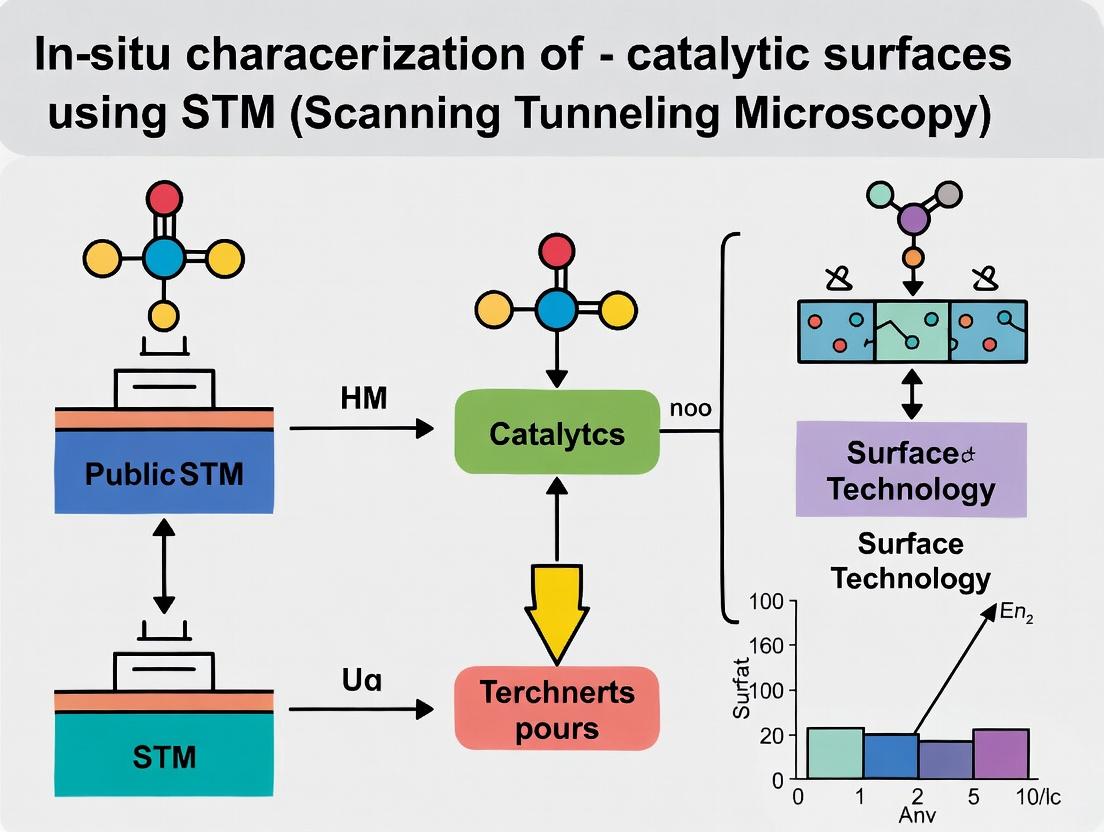
This comprehensive guide explores the critical role of in-situ Scanning Tunneling Microscopy (STM) in characterizing catalytic surfaces under realistic operating conditions.
In-Situ Scanning Tunneling Microscopy: Unlocking the Dynamic World of Catalytic Surfaces for Advanced Research
Abstract
This comprehensive guide explores the critical role of in-situ Scanning Tunneling Microscopy (STM) in characterizing catalytic surfaces under realistic operating conditions. Tailored for researchers, scientists, and development professionals, the article provides a foundational understanding of STM principles and their application to catalysis. It details advanced methodological protocols for probing active sites and reaction intermediates, offers practical troubleshooting strategies for common experimental challenges, and validates STM's findings against complementary spectroscopic and computational techniques. The synthesis underscores how in-situ STM is revolutionizing our atomic-scale understanding of catalyst structure-activity relationships, with direct implications for designing next-generation catalysts in energy conversion, pharmaceuticals, and environmental remediation.
What is In-Situ STM? A Foundational Guide to Visualizing Catalytic Surfaces in Action
Within the broader thesis on in-situ characterization of catalytic surfaces, Scanning Tunneling Microscopy (STM) emerges as a foundational tool. Its unique ability to provide atomic-resolution real-space imaging under operational conditions (ultra-high vacuum, controlled gas environments, elevated temperatures) is indispensable for elucidating structure-activity relationships in catalysis. This application note details the core principles, protocols, and materials essential for leveraging STM in this cutting-edge research.
Core Principles: Quantum Tunneling to Image Formation
The operational principle of STM relies on the quantum mechanical phenomenon of electron tunneling. When a sharp metallic tip is brought within ~1 nm of a conductive sample surface, a bias voltage (Vbias) applied between them allows electrons to tunnel through the classically forbidden vacuum barrier. The tunneling current (It) has an exponential dependence on the tip-sample separation (d):
It ∝ Vbias exp(-κd)
where κ is the decay constant, dependent on the effective local work function. This exquisite sensitivity to distance is the source of atomic resolution. Imaging is typically performed in one of two primary modes:
- Constant Current Mode: A feedback loop continuously adjusts the tip height (z) to maintain a set It. The recorded z-piezo voltage maps the surface topography.
- Constant Height Mode: The tip is scanned at a fixed height while It is monitored. This allows for faster scanning on atomically flat surfaces.
For catalytic studies, imaging must often be performed in-situ, requiring compatibility with gas dosing systems, heating/cooling stages, and stringent vibration isolation.
Quantitative Data: Key Parameters for Catalytic Surface Studies
Table 1: Typical STM Operational Parameters for In-Situ Catalysis Studies
| Parameter | Typical Range | Significance for Catalytic Surface Characterization |
|---|---|---|
| Bias Voltage (Vbias) | ±10 mV to ±3 V | Determines energy of tunneling electrons. Polarity images empty (sample+) or filled (sample-) states. Essential for identifying adsorbate electronic states. |
| Setpoint Tunneling Current (Iset) | 0.01 nA to 10 nA | Governs tip-sample distance. Lower currents increase distance, reducing tip perturbation of mobile adsorbates. |
| Scan Speed | 0.1 Hz to 100 Hz (line freq.) | Balances temporal resolution (for dynamics) with signal-to-noise. Critical for capturing surface diffusion or reaction events. |
| Temperature Range | 80 K to 1300 K | Enables study of thermal stability, adsorption/desorption, and reaction kinetics under realistic conditions. |
| Pressure Range | UHV (<10⁻⁹ mbar) to near-ambient (1 bar) | Allows characterization from pristine surfaces to operando-like conditions using flow cells or high-pressure stages. |
| Spatial Resolution (lateral) | < 1 Å (atomic) | Resolves atomic steps, defect sites (kinks, vacancies), and adsorbate binding locations. |
| Thermal Drift | < 0.1 Å/min | Must be minimized for long-term in-situ experiments to ensure stable imaging of the same surface region. |
Table 2: Common Catalytic Surface Features Resolved by STM
| Feature | STM Signature & Information Gained |
|---|---|
| Atomic Steps | Terraces separated by monoatomic height changes (~2 Å for metals). Key active sites for dissociation reactions. |
| Surface Vacancies | Atomic-scale depressions. Defect sites with altered reactivity. |
| Metal Clusters/Nanoparticles | Three-dimensional protrusions. Size, distribution, and shape under reaction conditions. |
| Adsorbed Reactants/Intermediates | Apparent height/contrast changes. Binding geometry, coverage, and ordering via submolecular resolution. |
| Surface Alloys | Atomic contrast variations due to Z-difference. Maps local composition of bimetallic catalysts. |
| Reaction Dynamics | Time-lapse image sequences reveal diffusion, clustering, and reaction events. |
Experimental Protocols
Protocol 1:In-SituPreparation and Characterization of a Model Pt(111) Catalyst Surface
Objective: To prepare an atomically clean, well-ordered Pt(111) single crystal surface and characterize its terrace-step morphology prior to gas exposure.
Materials: See "The Scientist's Toolkit" below.
Procedure:
- Sample Mounting: Spot-weld the Pt(111) crystal to the Mo sample plate attached to a UHV-compatible transfer rod. Ensure electrical contact for resistive heating.
- UHV Transfer: Insert the sample into the STM load-lock, pump to UHV, and transfer to the main STM preparation chamber.
- Surface Cleaning (Cyclic): a. Sputtering: Expose the surface to Ar⁺ ions (1 keV, 5-10 μA sample current, 15 min) at room temperature to remove bulk impurities. b. Annealing: Resistively heat the sample to 1000 K in 2×10⁻⁶ mbar of O₂ for 5 min to remove carbon, followed by flashing to 1200 K in UHV for 1 min to remove oxygen and reorder the surface. c. Repeat steps a-b 3-5 times until no contaminants are detected by Auger Electron Spectroscopy (AES).
- STM Tip Preparation: Electrochemically etched W wire is cleaned in-situ by electron bombardment heating and gentle field emission/sputtering against a Au sample.
- STM Characterization: a. Transfer the prepared sample to the STM stage cooled to room temperature (or desired temperature). b. Approach the tip using coarse motors. c. Engage the feedback loop at standard imaging parameters (Vbias = 0.5 V, Iset = 0.1 nA). d. Acquire large-scale (500 nm × 500 nm) and atomic-scale (10 nm × 10 nm) images in constant current mode to verify cleanliness and atomic order.
Protocol 2:In-SituAdsorption and Reaction Study: CO Oxidation on Pt(111)
Objective: To image the adsorption of CO and O₂ on Pt(111) and monitor surface changes under conditions relevant to CO oxidation.
Procedure:
- Baseline Image: Obtain a high-resolution image of the clean Pt(111) surface at the reaction temperature (e.g., 350 K).
- Gas Dosing: a. Introduce O₂ to the STM chamber via a leak valve to a pressure of 5×10⁻⁸ mbar for 60 seconds (dose = 3 Langmuir, L). b. Image the surface to identify chemisorbed oxygen atoms (appearing as depressions). c. Pump out O₂. Introduce CO to 1×10⁻⁷ mbar for 10 seconds (dose = 1 L).
- Co-adsorption Imaging: Image the same surface region. CO molecules appear as protrusions. Observe ordering, segregation, or displacement.
- Reaction Initiation: Simultaneously introduce both CO and O₂ (e.g., PCO = 5×10⁻⁸ mbar, PO2 = 2.5×10⁻⁷ mbar) to create a stoichiometric mix.
- Time-Lapse Imaging: Acquire sequential images (e.g., 50 nm × 50 nm, every 30 seconds) in constant current mode at 350 K. Track changes: disappearance of O/CO features, formation of CO₂ (which desorbs), and potential restructuring.
- Post-Reaction Analysis: Pump away gases and image the surface to determine the final state.
Mandatory Visualization
STM Tunneling Principle
In-Situ STM Catalysis Workflow
The Scientist's Toolkit
Table 3: Essential Research Reagent Solutions & Materials for In-Situ STM
| Item | Function & Relevance |
|---|---|
| Single Crystal Surfaces (e.g., Pt(111), Cu(110), TiO₂(110)) | Atomically ordered model catalysts. Provide well-defined terraces and steps to study site-specific reactivity. |
| Electrochemically Etched Tips (Pt-Ir, W wire) | Provide atomically sharp apex for tunneling. Pt-Ir is less reactive; W offers rigidity. |
| UHV-Compatible Gas Dosing System (Leak valves, mass spec.) | Introduces precise, small quantities of reactant gases (O₂, CO, H₂, hydrocarbons) without contaminating the chamber. |
| Direct Sample Heating Stage (Radiation/Electron bombardment) | Allows annealing to >1000 K for cleaning and studies at catalytic reaction temperatures. |
| Cryogenic Cooling System (Liquid N₂/He cryostat) | Lowers sample temperature to freeze surface diffusion, allowing imaging of mobile species and intermediates. |
| Vibration Isolation System (Spring/pneumatic + acoustic enclosure) | Isolates the STM from building/mechanical vibrations, essential for achieving atomic resolution. |
| In-Situ Transfer Mechanism (UHV suitcase, trolley) | Enables transfer of prepared samples between preparation, analysis, and STM chambers without air exposure. |
| Sputter Ion Gun (Ar⁺ source) | Used for cleaning sample surfaces by bombarding away contaminants. |
| High-Pressure Cell/Reactor (Optional) | A mini-reactor that seals over the sample, allowing STM imaging in gases up to several bar for operando studies. |
The fundamental challenge in heterogeneous catalysis research is understanding dynamic surface processes under realistic working conditions. Ex-situ characterization involves analyzing a catalyst sample in a controlled environment (often ultra-high vacuum, UHV) after it has been removed from its reaction conditions. In-situ characterization aims to observe the catalyst during operation, at relevant pressures and temperatures, preserving the active state. Operando characterization, a subset of in-situ, simultaneously measures catalytic performance (e.g., conversion, selectivity) while conducting spectroscopic or microscopic analysis, directly correlating structure with function.
For Scanning Tunneling Microscopy (STM) studies within catalytic surface research, this distinction is paramount. Ex-situ STM provides atomic-scale detail of pristine or pre-/post-reaction surfaces but risks missing or altering transient intermediates. In-situ STM, conducted in specially designed reactors, strives to bridge the "pressure gap" between UHV model studies and industrial conditions.
Comparative Analysis: Capabilities and Limitations
Table 1: Quantitative Comparison of Ex-Situ vs. In-Situ/Operando STM for Catalysis
| Parameter | Ex-Situ STM | In-Situ/Operando STM |
|---|---|---|
| Typical Pressure Range | ≤ 10⁻⁹ mbar (UHV) | 10⁻⁶ mbar to > 1 bar |
| Temperature Range | Room Temp to ~1000 K (in UHV) | Room Temp to ~1000 K (in gas) |
| Spatial Resolution | Atomic (≤ 1 Å) | Near-atomic to ~5 nm (dependent on gas/pressure) |
| Key Measurables | Surface topology, defect structure, pre-adsorbed species, post-mortem analysis. | Surface dynamics, adsorbate mobility, intermediate species identification, structure under reaction. |
| Time Resolution | Seconds per image (fast scan) to minutes. | Minutes to hours; limited by signal stability. |
| Major Challenge | "Pressure Gap": Active phase may not exist in UHV. "Materials Gap": Model vs. real catalysts. | Signal interference from gas phase; tip and sample stability; complex cell design. |
| Direct Performance Link | No (indirect correlation). | Yes (Operando: gas analysis possible). |
Key Experimental Protocols
Protocol 1: Ex-Situ STM Analysis of a Model Pt(111) Catalyst Before and After CO Oxidation
Objective: To characterize surface structural changes induced by a catalytic reaction conducted in a separate apparatus. Materials: Single crystal Pt(111), UHV-STM system with preparation chamber, gas dosing system, high-pressure reaction cell (attached or separate). Procedure:
- Initial Ex-Situ Characterization:
- Introduce Pt(111) crystal to UHV-STM main chamber (base pressure < 2×10⁻¹⁰ mbar).
- Prepare clean surface via repeated cycles of Ar⁺ sputtering (1 keV, 15 μA, 30 min) and annealing (1000 K in 5×10⁻⁸ mbar O₂, followed by 1100 K in UHV).
- Acquire high-resolution STM images (It = 1 nA, Vbias = 0.1 V) to confirm cleanliness and terrace structure.
- Reaction Phase (Ex-Situ):
- Transfer crystal to attached high-pressure cell without breaking vacuum.
- Expose to 1 bar reactant mixture (2% CO, 1% O₂, balance Ar) at 500 K for 30 min.
- Pump down the cell to UHV conditions (< 10⁻⁸ mbar).
- Post-Reaction Ex-Situ Characterization:
- Transfer crystal back to STM scanner.
- Re-acquire STM images under identical tunneling parameters.
- Identify new features: oxide clusters, carbonaceous deposits, step edge restructuring.
Protocol 2: In-Situ STM Observation of CO Oxidation on Pt(110) at Near-Ambient Pressure
Objective: To visualize surface reconstruction and adsorbate layers under reactive gas environments. Materials: High-pressure in-situ STM system with differential pumping, mass spectrometer, Pt(110) single crystal, CO, O₂. Procedure:
- System Preparation:
- Prepare clean Pt(110) in UHV following Protocol 1 steps.
- Isolate STM scanner head in the high-pressure reactor pocket.
- Establish a pressure gradient via differential pumping stages.
- In-Situ Imaging Under Reaction Conditions:
- Introduce 0.1 mbar CO into the reactor cell. Image the surface (It = 0.5 nA, Vbias = 0.05 V) to observe the CO-induced (1x2) missing-row reconstruction.
- Gradually introduce O₂ to a final mixture of 0.1 mbar CO + 0.05 mbar O₂.
- Heat sample to 425 K.
- Continuously acquire STM images (slower scan rate due to gas damping). Monitor the mass spectrometer for CO₂ production (m/z = 44).
- Operando Data Correlation:
- Correlate temporal changes in surface structure (e.g., recession of reconstruction, appearance of disordered bright species) with spikes in CO₂ production rate.
- After reaction, pump out gases and image in "quenched" state for comparison.
Visualization of Methodologies
Title: Workflow: Ex-Situ vs. In-Situ Catalytic STM
The Scientist's Toolkit: Key Research Reagent Solutions & Materials
Table 2: Essential Materials for In-Situ STM Catalysis Studies
| Material/Reagent | Function & Rationale | Key Considerations |
|---|---|---|
| Single Crystal Metal Surfaces (e.g., Pt(111), Cu(110)) | Provides a well-defined, atomically flat model catalyst to establish fundamental structure-activity relationships. | Crystallographic orientation dictates surface geometry and reactivity. Must be ultra-high purity (>99.999%). |
| Calibrated Gas Mixtures (e.g., 1% CO/Ar, 1% O₂/Ar, 1% H₂/Ar) | Enables precise dosing and creation of reactive atmospheres for in-situ studies or pre-treatment. | Certification to ±1% accuracy is critical for reproducible partial pressures. Use mass flow controllers for mixing. |
| Electrochemically Etched Tungsten Tips | The scanning probe for STM. Must be sharp and stable. | Coating with inert material (e.g., Au) can minimize reactivity in harsh in-situ environments. |
| High-Temperature Epoxy (e.g., Torr Seal) | Used in UHV systems to affix samples and wires; must withstand bake-out temperatures (~150°C). | Must have low outgassing properties to maintain UHV integrity. |
| Sputtering Gases (Research Grade Ar, Ne) | Used with ion guns for sample cleaning via momentum transfer to remove surface contaminants. | Ne allows for gentler sputtering of softer materials. Gas purity >99.9999% is standard. |
| Microchannel Plate/Seal Materials (e.g., Gold, Viton O-rings) | Critical for designing the pressure seal between high-pressure sample cell and UHV STM body in in-situ systems. | Gold provides a soft, ductile, and chemically inert seal. Viton is suitable for lower temperature ranges. |
| Calibration Grids (e.g., Graphite (HOPG), 2D MoS₂) | Used to verify and calibrate the lateral and vertical precision of the STM scanner. | HOPG provides an atomically flat surface with a known hexagonal lattice constant (2.46 Å). |
Application Notes for Catalytic Surface Research
This document details the core hardware subsystems enabling in-situ Scanning Tunneling Microscopy (STM) for the study of catalytic surfaces under reactive conditions, as required for thesis research on dynamic surface characterization in heterogeneous catalysis. The integration of a reactor environment with atomic-scale imaging is critical for elucidating structure-activity relationships.
Reactor Cells: Design and Specifications
The reactor cell forms the sealed, controlled environment where the catalyst sample interacts with gases or liquids while allowing STM probe access. Designs vary based on pressure regime (UHV, near-ambient, high-pressure) and phase (gas/liquid).
Table 1: Comparison of In-Situ STM Reactor Cell Types
| Cell Type | Typical Pressure Range | Window Material | Key Advantage | Primary Limitation |
|---|---|---|---|---|
| UHV-Compatible Flow Cell | 10⁻⁹ to 0.1 bar | Borosilicate Glass | Minimal contamination, seamless integration with surface preparation | Limited maximum pressure |
| High-Pressure Cell (HP-STM) | Up to 100 bar | Sapphire / Quartz | Studies under industrially relevant catalytic pressures | Thermal drift challenges at high P |
| Electrochemical Flow Cell (EC-STM) | 1 bar | Glass/ Kel-F | Potential control in liquid electrolyte, study of electrocatalysts | Limited to conductive liquids |
| Liquid-Phase Microreactor | 1 to 5 bar | Sapphire | Imaging in non-conductive organic solvents | Complex sealing, limited temperature range |
Protocol 1.1: Assembly and Leak Testing of a UHV-Compatible Flow Cell
Objective: To assemble a flow cell for gas-phase studies up to 0.1 bar and verify its integrity.
- Mount the pre-cleaned single-crystal catalyst sample onto the STM sample holder using Ta or Pt wires.
- Place a clean metal sealing gasket (Au or Cu) onto the cell flange.
- Lower the reactor body, featuring a borosilicate glass viewport, onto the base flange. Align bolts evenly.
- Torque flange bolts in a cross-pattern to a specified value (typically 5-7 Nm).
- Connect the cell gas inlet to a calibrated leak valve and the outlet to a pressure gauge.
- Evacuate the cell to <1×10⁻⁷ mbar using a turbomolecular pump.
- Isolate the pump and monitor pressure rise over 30 minutes. An acceptable leak rate is <1×10⁻⁹ mbar L/s.
- For a tight seal, backfill the cell with 50 mbar of ultra-high purity (UHP) Argon and monitor pressure stability for 1 hour.
Gas and Liquid Handling Systems
Precise delivery and mixing of reactants are essential for establishing defined surface compositions and studying reaction kinetics.
Table 2: Specifications for Gas/Liquid Handling Components
| Component | Typical Model/Spec | Flow/Control Accuracy | Critical Feature for In-Situ STM | Application |
|---|---|---|---|---|
| Mass Flow Controller (MFC) | Bronkhorst El-Press, 0-100 sccm | ±0.5% of RD + ±0.1% FS | Fast response time (<2s), UHP compatibility | Dosing O₂, H₂, CO |
| Liquid HPLC Pump | Shimadzu LC-20AD | 0.001-10.000 mL/min | Pulse-free flow, chemical resistance | Delivering organics, electrolytes |
| Six-Port Switching Valve | Valco Instruments | - | Low dead volume (<5 µL), air-actuated | Switching between reactant streams |
| In-Line Filter | 0.1 µm Sintered Metal | - | Prevents particulate contamination of cell | All gas/liquid lines |
| Back Pressure Regulator | Tescom 26-1700 Series | 0-100 bar control | Electrically actuated for remote control | Maintaining liquid cell pressure |
Protocol 2.1: Establishing a Mixed-Gas Reaction Environment
Objective: To create a defined 4:1 H₂:CO mixture at a total pressure of 0.5 bar in the STM reactor cell for Fischer-Tropsch model studies.
- Ensure all gas lines and the reactor cell are under vacuum (<1×10⁻⁶ mbar).
- Calibrate MFCs for H₂ and CO using a bubble flow meter.
- Set MFC-1 (H₂) to a flow rate of 40 sccm and MFC-2 (CO) to 10 sccm.
- Open the upstream valves to both MFCs and the reactor cell inlet valve.
- Initiate gas flow. The cell pressure will rise. Monitor with a capacitance manometer.
- Throttle the downstream outlet needle valve to stabilize the cell pressure at 0.50 bar.
- Allow the system to equilibrate for 15 minutes, confirming stable pressure and flow rates before commencing STM imaging.
Temperature Control Subsystems
Temperature dictates reaction rates, surface mobility, and thermodynamic equilibria. Control spans from the sample itself to the entire reactor volume.
Table 3: Temperature Control Methods for In-Situ STM
| Method | Typical Range | Precision (±) | Heating/Cooling Rate | Key Consideration |
|---|---|---|---|---|
| Direct Resistive (Sample) | 300 K - 1300 K | 0.5 K | >50 K/s | Risk of sample drift, thermal expansion |
| Radiation/IR Laser Heating | 300 K - 1000 K | 2 K | ~10 K/s | Heats only sample, reduces drift |
| Cartridge Heater (Cell Body) | 300 K - 500 K | 1 K | <5 K/s | Uniform environment, reduces condensation |
| Liquid N₂ Circulation | 100 K - 350 K | 0.2 K | Variable | For cryogenic studies, condenses gases |
Protocol 3.1: Ramping Sample Temperature Under Reactive Gas
Objective: To observe the temperature-dependent restructuring of a Pt(111) surface in 10⁻⁵ mbar of ethylene.
- After preparing a clean Pt(111) surface in UHV, introduce C₂H₄ to a stable pressure of 1×10⁻⁵ mbar.
- Using the software control for the resistive sample heater, set the initial temperature to 300 K.
- Begin continuous, slow-scan STM imaging (e.g., 1 image per minute).
- Program a linear temperature ramp from 300 K to 600 K at a rate of 5 K/minute.
- Monitor the sample temperature via a calibrated K-type thermocouple spot-welded to the sample holder.
- Continue imaging throughout the ramp and for a 30-minute hold at 600 K.
- Correlate observed surface structural changes (e.g., step edge roughening, carbide island formation) with the temperature log.
Logical Workflow for an In-Situ STM Experiment
The Scientist's Toolkit: Key Research Reagent Solutions & Materials
Table 4: Essential Materials for In-Situ STM Catalysis Studies
| Item | Function in Experiment | Key Specifications |
|---|---|---|
| Single Crystal Surfaces | Model catalyst substrate. | Pt(111), Au(111), Cu(110); orientation within ±0.1°, polished to <0.03 µm roughness. |
| UHP Process Gases | Reactive atmospheres (CO, O₂, H₂, C₂H₄). | 99.999% purity, with in-line purifiers to remove H₂O/O₂ (for inert gases) or metal carbonyls. |
| Electrolyte Solutions | For EC-STM studies of electrocatalysts. | 0.1 M HClO₄ or 0.1 M KOH, prepared from ultrapure concentrates (e.g., Merck Suprapur) in 18.2 MΩ·cm water. |
| Sputter Deposition Target | For creating model bimetallic surfaces. | High-purity metal foil (e.g., Pd, Rh, 99.99%) for deposition onto a single crystal in UHV. |
| Calibration Grid | Spatial calibration of STM scanner. | 2D grating (e.g., HOPG, highly ordered Au on mica) with known atomic or step-terrace periodicity. |
| Metal Sealing Gaskets | Creating vacuum/ pressure seal on reactor flanges. | Soft annealed gold wire (1mm diameter) or copper gaskets (CF type) for single use. |
Why Atomic-Scale Surface Imaging is Indispensable for Modern Catalytic Research
Atomic-scale surface imaging techniques, particularly Scanning Tunneling Microscopy (STM), are fundamental for modern catalytic research. They provide direct, real-space visualization of active sites, adsorbate structures, and dynamic processes under reaction conditions. This capability is central to a thesis on STM for in-situ characterization of catalytic surfaces, which aims to bridge the gap between idealized ultra-high vacuum studies and the complex reality of operando conditions. Understanding surface structure at the atomic level is the cornerstone for rational catalyst design, moving beyond trial-and-error approaches.
Key Applications and Quantitative Insights
Recent research underscores the critical quantitative data obtained through atomic-scale imaging.
Table 1: Quantitative Insights from Recent Atomic-Scale Catalytic Studies
| Catalytic System | Technique | Key Measured Parameter | Numerical Finding | Impact on Catalytic Property |
|---|---|---|---|---|
| Pt nanoparticles on TiO₂ | In-situ STM | Active terrace site density | 5.2 × 10¹⁴ sites/cm² | Direct correlation with H₂ oxidation turnover frequency |
| Cu-ZnO methanol synthesis | High-pressure STM | ZnO monolayer coverage on Cu | ~0.8 ML at 500 K, 1 bar syngas | Identifies the active interface for CO₂ activation |
| Co-MoS₂ hydrodesulfurization | AFM/STM | Sulfur vacancy clustering probability | 65% within 2 nm at reaction conditions | Explains selectivity changes due to vacancy synergy |
| Pd-Au single-atom alloy | qPlus-STM | Pd dispersion & CO adsorption energy | 99% atomically dispersed Pd; ΔEads = -0.8 eV | Rationalizes enhanced selectivity in acetylene hydrogenation |
| CeO₂-supported Pt | Operando STM | Redox-induced surface oxygen vacancy density | 2.1 × 10¹³ vacancies/cm² per Pt nanoparticle | Quantifies Mars-van Krevelen contribution to CO oxidation |
Detailed Experimental Protocols
Protocol 3.1:In-situSTM for Model Catalyst Studies under Reactive Gases
Objective: To visualize the atomic-scale restructuring of a Pt(110) surface during CO oxidation. Materials: See "Scientist's Toolkit" below.
- Sample Preparation: Clean the single-crystal Pt(110) substrate in UHV via repeated cycles of Ar⁺ sputtering (1 keV, 15 min) followed by annealing to 1000 K until a sharp (1x2) missing-row reconstruction is confirmed by STM.
- Baseline Imaging: Acquire high-resolution STM images of the clean surface in UHV (Typical parameters: Vbias = 0.1 V, It = 1 nA, T = 300 K).
- Gas Exposure & Reaction: Isolate the STM scanner cell. Introduce a controlled mixture of CO (5 × 10⁻⁸ bar) and O₂ (2.5 × 10⁻⁷ bar) into the cell using precision leak valves. Monitor pressure with a calibrated quadrupole mass spectrometer (QMS).
- Stabilization & Imaging: Allow the system to stabilize for 20 minutes. Resume STM imaging with increased tunneling resistance (Vbias = 0.5 V, It = 0.1 nA) to mitigate tip-surface interactions. Capture sequential images of the same region.
- Data Analysis: Track the evolution of step edges and terrace structures. Quantify the density of bright protrusions (adsorbed CO) and dark depressions (oxygenated species) as a function of time/gas ratio.
Protocol 3.2:Ex-situAtomic-Scale Analysis of Pt/C Nanoparticles
Objective: To characterize the surface facets and atomic steps of practical Pt/C catalyst nanoparticles after electrochemical cycling. Materials: See "Scientist's Toolkit" below.
- Sample Harvesting: After electrochemical testing (e.g., ORR cycling), extract a few drops of the catalyst ink from the working electrode.
- TEM Grid Preparation: Deposit 5 µL of the diluted ink onto a gold-foil supported ultrathin carbon TEM grid. Allow to dry in a clean desiccator.
- Transfer and Introduction: Mount the grid on a standard STM sample plate using a conductive silver paste. Quickly transfer the sample to the UHV load-lock to minimize air exposure.
- In-situ Cleaning (Optional): For cleaner imaging, perform a gentle in-situ annealing at 450 K in UHV for 1 hour to remove residual contaminants.
- STM Imaging: Locate nanoparticles at low magnification. Acquire high-resolution images of nanoparticle surfaces using relatively high bias (Vbias = 1.0 V, It = 0.05 nA) to enhance electronic contrast. Use Fourier transform analysis of atomic lattices to identify facet orientations.
Visualizing the Research Workflow
Title: STM-Driven Catalyst Research Cycle
The Scientist's Toolkit: Key Research Reagent Solutions & Materials
Table 2: Essential Materials for Atomic-Scale Catalytic Surface Imaging
| Item | Function & Importance |
|---|---|
| Single-Crystal Metal Substrates (e.g., Pt(111), Cu(110)) | Provide atomically flat, well-defined model surfaces to establish fundamental structure-property relationships under controlled conditions. |
| Electrochemically Etched Tungsten/Platinum-Iridium Tips | Serve as the scanning probe. Precise etching is critical for atomic resolution. PtIr tips offer enhanced robustness in reactive atmospheres. |
| Calibrated Gas Dosing System | Precision leak valves and mass flow controllers enable the precise introduction of reactive gases (CO, O₂, H₂) or complex mixtures for in-situ studies. |
| High-Temperature Sample Holder with Direct Heating | Allows for annealing to clean surfaces or simulate catalytic reaction temperatures (up to 1000 K) during imaging. |
| Quartz Crystal Microbalance (QMB) Depositor | Enables the controlled physical vapor deposition of metal clusters onto model supports to create realistic, yet well-defined, nanoparticle catalysts. |
| Ion Sputtering Gun (Ar⁺, Kr⁺) | Standard tool for cleaning single-crystal surfaces by bombarding with inert gas ions to remove impurities and regenerate the surface lattice. |
| Ultrathin Carbon Film on Gold Grids | Specialized TEM grids that are conductive and flat, enabling the transfer and STM analysis of practical powdered catalysts (e.g., Pt/C). |
| High-Pressure Cell (Reactant Isolation Cell) | A mini-reactor that encloses the STM tip and sample, allowing studies at pressures exceeding 1 bar while keeping the main STM chamber in UHV. |
Protocols in Practice: Methodological Guide for In-Situ STM Studies of Catalysts
Sample Preparation Protocols for Single-Crystal and Nanoparticle Catalysts
Within the context of advanced research utilizing Scanning Tunneling Microscopy (STM) for in-situ characterization of catalytic surfaces, the preparation of well-defined samples is paramount. The catalyst's surface structure, cleanliness, and order directly dictate its reactivity and the interpretability of STM data. This document provides detailed application notes and protocols for preparing two fundamental classes of model catalysts: single crystals and supported nanoparticles, tailored for in-situ ultra-high vacuum (UHV) or controlled environment studies.
Single-Crystal Catalyst Preparation
Single-crystal surfaces provide the ideal platform for establishing fundamental structure-activity relationships. The goal is to produce an atomically clean, flat, and well-ordered surface.
Protocol 1.1: UHV Preparation of Metal Single Crystals (e.g., Pt(111))
Objective: To achieve an atomically clean and well-ordered Pt(111) surface for in-situ STM studies.
Key Research Reagent Solutions & Materials:
- Single Crystal Disc: Oriented (<1° miscut) and polished metal single crystal (e.g., 10mm dia. x 2mm Pt(111) disc).
- UHV System: Equipped with sputtering gun, electron-beam heater, LEED/AES, and sample stage capable of cooling to <120K.
- Sputtering Gas: Research-grade Argon (Ar, 99.999%).
- Calibrated Thermocouple: (Type K or C) for temperature measurement.
- Optical Pyrometer: For temperatures >1000°C.
Detailed Methodology:
- Initial Insertion: Mount the crystal on a Mo or Ta sample plate using high-purity Pt or W wires. Introduce into UHV preparation chamber (< 1x10⁻⁹ mbar base pressure).
- Cyclic Sputter-Anneal:
- Sputtering: Backfill chamber with Ar to 5x10⁻⁵ mbar. Raster a 1-2 keV Ar⁺ ion beam over the crystal surface for 20-30 minutes. This removes bulk impurities and carbon.
- Annealing: Cease sputtering, pump Ar down, and resistively heat the crystal to 1000-1050°C in UHV for 5 minutes. This repairs sputter damage and promotes ordering.
- Repeat: Perform 3-5 sputter-anneal cycles.
- Oxidative Treatment (if needed): To remove residual carbon, expose the crystal at 600-700°C to 5x10⁻⁷ mbar O₂ for 5-10 minutes, followed by a brief flash to 1000°C in UHV to desorb oxygen.
- Final Anneal & Cool: Perform a final anneal at 800°C for 2 minutes, then cool slowly (>1 min) to the desired experimental temperature (e.g., room temperature).
- Quality Assessment:
- LEED: Acquire a Low-Energy Electron Diffraction pattern. A sharp (1x1) hexagonal pattern indicates a well-ordered Pt(111) surface.
- AES: Perform Auger Electron Spectroscopy. The surface is considered clean when the carbon (272 eV) and oxygen (503 eV) peak-to-peak heights are <1% of the Pt (237 eV) peak.
Table 1: Typical Sputter-Anneal Parameters for Common Single Crystals
| Crystal Surface | Sputter Energy (keV) | Sputter Time (min) | Anneal Temperature (°C) | Special Notes |
|---|---|---|---|---|
| Pt(111) | 1.0 - 1.5 | 20 - 30 | 1000 - 1050 | May require O₂ treatment for C removal. |
| Au(111) | 0.5 - 1.0 | 15 - 20 | 450 - 500 | Lower T to prevent surface roughening. |
| Cu(110) | 1.0 | 20 | 500 - 600 | Cool slowly to observe reconstruction. |
| Ru(0001) | 1.5 | 30 | 1100 - 1200 | Very high T anneal required for cleanliness. |
Title: UHV Single Crystal Preparation Workflow
Supported Nanoparticle Catalyst Preparation
For relevance to industrial catalysts, model systems of nanoparticles (NPs) supported on flat, conductive substrates are prepared. Key parameters are NP size, density, and cleanliness.
Protocol 2.1: Physical Vapor Deposition (PVD) of Pt Nanoparticles on TiO₂(110)
Objective: To deposit size-controlled Pt nanoparticles onto a clean TiO₂(110) surface for in-situ STM studies of metal-support interactions.
Key Research Reagent Solutions & Materials:
- Substrate: Rutile TiO₂(110) single crystal, prepared via sputter-anneal cycles (1 keV Ar⁺, 600°C anneal in UHV).
- Metal Source: High-purity Pt wire (99.999%) wound around a W filament for electron-beam evaporation or in a crucible for Knudsen Cell deposition.
- Quartz Crystal Microbalance (QCM): Calibrated and positioned near substrate to monitor deposition rate and thickness.
- UHV Deposition System: Integrated with STM, allowing transfer without breaking vacuum.
Detailed Methodology:
- Substrate Preparation: Clean the TiO₂(110) crystal using Protocol 1.1 principles (sputter at 300°C, anneal at 600°C in UHV, final anneal at 500°C). Verify a sharp (1x1) LEED pattern and absence of impurities via AES.
- Deposition Calibration:
- Position a shutter between the source and substrate.
- Degas the Pt source thoroughly by heating to just below evaporation temperature for >1 hour.
- With shutter closed, heat the source to the desired temperature. Use the QCM to stabilize and measure the deposition rate (e.g., in Å/s or ML/min).
- Nanoparticle Deposition:
- Set substrate to desired temperature (e.g., 300K for diffusion-limited growth, or 100K for higher nucleation density).
- Open the shutter for a precise time to deposit the desired nominal thickness (e.g., 0.1 - 0.5 ML). Close shutter.
- Post-Deposition Treatment (Optional): Anneal the sample to a specific temperature (e.g., 500°C) to induce NP sintering or encapsulation, or expose to reactive gases (O₂, H₂) to study in-situ restructuring.
- Characterization: Transfer sample in-situ to STM for immediate imaging. Measure NP height, diameter, and density from STM topographs.
Table 2: Effect of Deposition Parameters on Pt/TiO₂(110) Nanoparticle Morphology
| Substrate Temperature (K) | Nominal Pt Thickness (ML) | Deposition Rate (ML/min) | Typical NP Height (nm) | Typical NP Density (cm⁻²) |
|---|---|---|---|---|
| 100 | 0.2 | 0.05 | 0.8 ± 0.2 | ~5 x 10¹² |
| 100 | 0.5 | 0.05 | 1.5 ± 0.3 | ~6 x 10¹² |
| 300 | 0.2 | 0.05 | 1.2 ± 0.3 | ~1 x 10¹² |
| 300 | 0.2 | 0.01 | 1.0 ± 0.2 | ~3 x 10¹¹ |
| 500 (with post-anneal) | 0.5 | 0.05 | 3.0 ± 0.8 | ~5 x 10¹¹ |
Title: PVD Nanoparticle Synthesis Workflow
The Scientist's Toolkit: Essential Research Materials
Table 3: Key Research Reagent Solutions & Materials for Catalyst Preparation
| Item | Function & Importance | Typical Specifications |
|---|---|---|
| Oriented Single Crystals | Provides the atomically defined base surface for fundamental studies or as a support. | Material: Pt, Au, Cu, Ru, TiO₂, etc. Orientation: (111), (110), (100) within ±0.5°. Polish: Epitaxial or chemi-mechanical, roughness < 0.03 μm. |
| High-Purity Metal Wires/Evaporation Sources | Source material for PVD of nanoparticles. Impurities can poison catalytic surfaces. | Purity: 99.99% (4N) to 99.999% (5N). Form: Wire, rod, or granules for crucibles. |
| Research Grade Gases | Used for sputtering (Ar), surface treatment (O₂, H₂), and in-situ reaction studies. | Purity: 99.999% (5.0 grade) or higher, with dedicated purifiers. Moisture and O₂ levels < 0.1 ppm for reactive gases. |
| UHV-Compatible Sample Holders & Heaters | Allows precise resistive heating and cooling of the sample without contaminating the UHV environment. | Material: Ta, Mo, or high-purity ceramics. Wires: High-purity W or Pt. Capable of heating to 1200°C and cooling to <120K. |
| Quartz Crystal Microbalance (QCM) | Crucial for calibrating and monitoring thin film deposition rates in real-time. | UHV compatible, resolution < 0.01 Å/s, positioned in close proximity to the sample. |
Within the broader thesis on Scanning Tunneling Microscopy (STM) for in-situ characterization of catalytic surfaces, precise control of the reaction environment is paramount. The catalytic performance—activity, selectivity, and stability—is intrinsically governed by the interplay of pressure, temperature, and fluid dynamics at the catalyst surface. This application note details protocols for designing and controlling these parameters to enable meaningful in-situ STM studies that bridge the pressure gap between idealized ultra-high vacuum (UHV) and industrially relevant conditions.
Environmental Parameters & Quantitative Benchmarks
The following table summarizes target operational ranges and key quantitative benchmarks for in-situ STM reactors used in heterogeneous catalysis research.
Table 1: Operational Ranges and Specifications for In-situ STM Reaction Cells
| Parameter | Typical Range for In-situ STM | Key Consideration | Measurement Instrument (Example) |
|---|---|---|---|
| Pressure | 10⁻⁹ mbar (UHV) to 1 bar | Must maintain STM tip stability; window integrity for optical access. | Capacitance manometer (high-P), Ion gauge (low-P). |
| Temperature | 300 K to 700 K (sample) | Local heating to minimize thermal drift; thermal gradient management. | K-type thermocouple spot-welded to sample plate. |
| Gas Flow Rate | 0.1 to 10 sccm (for flow cells) | Laminar flow essential for uniform surface exposure; minimal vibration. | Mass Flow Controller (MFC), calibrated for specific gases. |
| Fluid Dynamics Regime | Laminar (Re < 100) | Ensures predictable gas delivery and removal of reaction products. | Calculated from reactor geometry, flow rate, gas viscosity. |
| Residence Time | 0.1 to 10 seconds | Correlates flow rate with reaction kinetics for steady-state observation. | τ = Vreactor / Volumetricflow_rate. |
Experimental Protocols
Protocol 2.1: Establishing a Stable High-Pressure Environment for STM Imaging
Objective: To transition a catalyst sample from UHV to a defined high-pressure gas environment while maintaining atomic-resolution STM capability. Materials: In-situ STM with high-pressure cell, single-crystal catalyst sample, gas dosing system with purifiers, vibration isolation table.
- Initial Preparation: Prepare and clean the catalytic surface (e.g., Pt(111)) under UHV (base pressure < 1×10⁻⁹ mbar) using standard sputter-anneal cycles. Characterize the pristine surface with UHV-STM.
- Cell Isolation: Isolate the STM scanner and sample within the high-pressure reactor volume. Ensure all seals and sapphire viewports are properly tightened.
- Controlled Gas Introduction:
- Connect research-grade gas (e.g., 1% CO in H₂) to the dosing system.
- Use a leak valve or a calibrated MFC to slowly introduce gas into the cell.
- Monitor pressure increase via a dedicated high-pressure gauge. Target pressure: 500 mbar.
- Allow system to stabilize for 15-20 minutes for thermal and mechanical equilibration.
- STM Imaging Under Pressure:
- Engage the STM tip using coarse approach motors.
- Optimize feedback parameters (setpoint, gains) for the denser gas environment, which may cause increased damping.
- Acquire sequential images over time to monitor surface restructuring or adsorbate layer formation.
Protocol 2.2: Temperature-ProgrammedIn-situSTM of a Catalytic Reaction
Objective: To observe dynamic changes on a catalyst surface while ramping temperature under constant reactive gas pressure. Materials: In-situ STM with sample heating stage, resistive heater or radiative heater, temperature controller, reactive gas (e.g., O₂).
- Baseline Acquisition: Image the surface (e.g., Pd(100)) under UHV at room temperature (300 K).
- Gas Introduction: Introduce reactive O₂ gas to a pressure of 1×10⁻⁴ mbar. Image the surface to observe initial oxygen chemisorption.
- Temperature Ramp Protocol:
- Set the temperature controller to a linear ramp rate (e.g., 2 K/minute).
- Start ramp from 300 K to a target of 600 K.
- Continuously acquire STM images in a fixed location (if possible) or perform frequent scans of adjacent areas.
- Correlate specific surface structure changes (e.g., oxide nucleation, step retreat) with the sample temperature.
- Quenching & Analysis: Stop heating at 600 K. Allow sample to cool under gas pressure. Analyze image sequences to extract kinetic parameters of surface transformation.
Protocol 2.3: Mapping Fluid Dynamics in a Microreactor for STM Cell Design
Objective: To characterize flow profiles within a model STM reactor channel to ensure uniform reactant delivery. Materials: Transparent microreactor mock-up (same geometry as STM cell), syringe pump, tracer dye or particles, high-speed camera, Computational Fluid Dynamics (CFD) software (e.g., COMSOL, ANSYS Fluent).
- Experimental Flow Visualization:
- Construct a scaled-up or identical acrylic model of the planar flow channel leading to the STM sample.
- Use the syringe pump and MFC to set a specific flow rate (e.g., 5 sccm equivalent).
- Inject a pulse of tracer dye into the inlet stream.
- Record the flow front progression using a high-speed camera.
- Analyze footage to determine flow uniformity and identify any stagnant regions.
- Computational Fluid Dynamics (CFD) Simulation:
- Create a 3D digital mesh of the exact reactor geometry.
- Define boundary conditions: inlet (mass flow rate), outlet (pressure), walls (no-slip condition).
- Solve the Navier-Stokes equations for the defined gas mixture.
- Visualize velocity vector fields and concentration gradients of a reactant species.
- Validate the CFD model against experimental tracer data.
- Iterate the reactor design in-silico to optimize for laminar, uniform flow across the sample location.
The Scientist's Toolkit
Table 2: Essential Research Reagent Solutions & Materials
| Item | Function in In-situ Experiments |
|---|---|
| Research-grade Gases (≥99.999% pure) | Minimizes surface contamination from impurities that can poison catalysts or foul STM tips. |
| In-line Gas Purifiers (e.g., moisture, oxygen traps) | Further purifies gas streams directly before entering the reactor, critical for sensitive studies. |
| Single-crystal Metal Surfaces (e.g., Pt(111), Cu(110)) | Well-defined model catalysts providing a uniform surface for fundamental mechanistic studies. |
| Electrochemically Etched Tungsten STM Tips | Standard tips for high-resolution imaging; can be coated to minimize faradaic currents in liquid cells. |
| High-Temperature Epoxy (e.g., Torr Seal) | Used for creating vacuum-tight electrical feedthroughs and seals in custom reactor setups. |
| Calibrated Mass Flow Controller (MFC) | Precisely controls the flux of reactant gases into the reaction cell, enabling kinetic studies. |
| Sapphire Viewport Windows | Provides optical access for tip approach and laser interferometry while withstanding pressure differentials. |
| Vibration Isolation Platform (Active or Passive) | Critically damns mechanical noise to achieve sub-ångström stability of the STM tip. |
Diagrams
Title: Workflow for In-situ STM Environmental Control
Title: Signal Pathway in Catalytic CO Oxidation
Imaging Active Sites and Tracking Surface Reconstruction in Real Time
Application Notes
This document details the application of In-Situ Electrochemical Scanning Tunneling Microscopy (EC-STM) for the direct visualization of catalytic active sites and dynamic surface reconstruction under operational conditions. The primary thesis context is the advancement of STM techniques for in-situ characterization to establish direct structure-activity relationships in heterogeneous catalysis, which is critical for rational catalyst design.
Core Application: Real-time, atomic-scale observation of electrode surfaces during electrochemical reactions (e.g., oxygen reduction reaction - ORR, CO₂ reduction - CO₂RR, water splitting) or under reactive gas environments (e.g., CO oxidation). This allows researchers to:
- Identify and correlate specific atomic configurations (steps, kinks, adatoms, defects) with catalytic activity.
- Track the dynamics of surface reconstruction, dissolution, redeposition, and adsorbate ordering.
- Monitor the formation and stability of subsurface species and alloy surfaces.
Key Challenges & Solutions:
- Thermal Drift: Compensated by using stable, low-thermal-expansion materials (e.g., Macor) for the sample stage and employing fast-scan capabilities.
- Electrochemical Noise: Mitigated through careful potentiostat design, shielding, and the use of a bipotentiostat to independently control sample and tip potentials.
- Maintaining Tip Integrity: Requires the use of insulated, electrochemically inert tips (e.g., Pt/Ir coated with Apiezon wax or electrophoretic paint).
Table 1: Comparison of Key In-Situ STM Operational Parameters for Different Environments
| Parameter | Electrochemical Liquid Cell | High-Pressure Gas Cell (≤ 1 bar) | Ultra-High Vacuum (UHV) Reference |
|---|---|---|---|
| Spatial Resolution | ~0.1 nm (vertical), ~0.3 nm (lateral) | ~0.1 nm (vertical), ~0.5 nm (lateral) | < 0.1 nm (atomic resolution) |
| Temporal Resolution (per frame) | 1 - 60 seconds | 10 - 120 seconds | 0.1 - 30 seconds |
| Typical Pressure | Ambient (liquid) | 10⁻³ – 1000 mbar | < 10⁻¹⁰ mbar |
| Temperature Range | 0 – 80 °C (typical) | 25 – 400 °C | 25 – 1300 K (cryogenic to high) |
| Key Controlled Variables | Electrode Potential (WE), Electrolyte pH, Composition | Gas Composition, Partial Pressures, Sample Temperature | None (clean surface baseline) |
| Primary Challenge | Faradaic currents, electrochemical noise | Thermal drift, lower mean free path | Not operando (model conditions) |
Table 2: Common Catalytic Systems Studied via In-Situ STM
| Material System | Reaction Studied | Observable Phenomena (Real-Time) | Key Reference Metrics (Typical) |
|---|---|---|---|
| Pt(111) / Pt(hkl) | Oxygen Reduction (ORR) | Step-edge roughening, place-exchange, oxide formation | Onset potential for reconstruction: ~0.8 - 1.0 V vs. RHE |
| Cu(100) / Cu(111) | CO₂ Reduction to C₂+ | Surface roughening, adlayer formation, nanostructure growth | C-C coupling probability linked to under-coordinated site density |
| Au(111) | CO Oxidation | Surface oxide formation & removal, adsorbate islands | Oxide layer thickness: 2-3 atomic layers at > 1.0 V vs. RHE |
| Bimetallic Surfaces (e.g., Pt-Ni) | Electro-oxidation | Segregation/dissolution, (de)alloying, core-shell formation | Ni dissolution rate: ~0.1 monolayer per minute at 1.2 V vs. RHE |
Experimental Protocols
Protocol 1: In-Situ EC-STM for Tracking Pt-Ni Alloy Reconstruction during ORR
Objective: To image the surface reconstruction and Ni dissolution of a Pt₃Ni(111) single crystal electrode in 0.1 M HClO₄ under potential cycling relevant to ORR.
I. Materials & Pre-Treatment
- Single Crystal: Pt₃Ni(111) disc, oriented and polished.
- Electrochemical Cell: Three-electrode Kel-F EC-STM cell.
- Electrolyte: 0.1 M HClO₄, prepared from concentrated acid (70%) and ultrapure water (18.2 MΩ·cm).
- Counter Electrode: Pt wire coil.
- Reference Electrode: Reversible Hydrogen Electrode (RHE) in the same electrolyte.
- STM Tip: Pt/Ir (80/20) wire, cut and coated with polyethylene electrophoretic paint for insulation.
II. Sample Preparation
- Anneal the Pt₃Ni crystal in a hydrogen flame (~1500°C) for 3 minutes.
- Cool in an Ar/H₂ mixture to preserve surface order.
- Transfer the crystal to the EC-STM cell under a protective droplet of ultrapure water to prevent air oxidation.
III. EC-STM Setup & Stabilization
- Fill the cell with deaerated 0.1 M HClO₄ (Ar purged for >30 min).
- Mount the sample as the working electrode.
- Approach the tip to the surface using a coarse approach mechanism with the cell open (no potential control).
- Close the cell, initiate inert gas flow over the electrolyte.
- Apply a constant potential of 0.4 V vs. RHE to the sample (within the H adsorption region) and -0.1 V to the tip. Allow currents to stabilize for 15 minutes.
IV. Real-Time Imaging Protocol
- Acquire a stable atomic-resolution image at 0.4 V vs. RHE as the baseline.
- Initiate Reaction Conditions: Using the bipotentiostat, step the sample potential to 1.0 V vs. RHE (ORR relevant oxidizing condition). Maintain tip potential.
- Image Acquisition: Initiate continuous scanning of a fixed area (e.g., 50 x 50 nm). Set scan rate to 3-5 Hz (approx. 20-30 sec/frame).
- Time-Lapse Tracking: Record sequential STM topographs for 30 minutes.
- Post-Reaction Analysis: Return sample potential to 0.4 V vs. RHE and acquire a final high-resolution image to assess irreversible changes.
V. Data Analysis
- Use imaging software (e.g., Gwyddion, WSxM) to align the image sequence.
- Measure changes in step-edge positions, terrace widths, and surface roughness (RMS) over time.
- Perform Fast Fourier Transform (FFT) analysis on sequential images to identify periodic adlayer formations.
- Correlate morphological changes with the applied potential waveform.
The Scientist's Toolkit: Research Reagent Solutions
Table 3: Essential Materials for In-Situ EC-STM Experiments
| Item | Function & Specification | Critical Notes |
|---|---|---|
| Single Crystal Electrodes | Provides a well-defined, atomically flat starting surface. (e.g., Pt(hkl), Au(111), Cu(100)). | Must be annealed and transferred without air exposure for reproducible surfaces. |
| Ultrapure Water | Solvent for electrolyte preparation. Resistivity: 18.2 MΩ·cm, TOC < 5 ppb. | Prevents contamination by organic or ionic species that can adsorb on the surface. |
| Perchloric Acid (HClO₄, 70%, Suprapur) | Common electrolyte for fundamental studies due to its non-adsorbing anions. | EXTREME CAUTION: Highly oxidizing; avoid contact with organic materials. Use in fume hood. |
| High-Purity Gases (Ar, H₂, CO, O₂) | For electrolyte deaeration and creating controlled atmospheres. 99.999% purity or higher. | Use oxygen/hydrogen traps on gas lines for ultra-clean conditions. |
| Pt/Ir Wire (80/20, 0.25mm diameter) | Standard material for STM tips. | Cut at an angle with sharp wire cutters; insulation is crucial for EC-STM. |
| Electrophoretic Paint (e.g., PPG Primer) | Insulates the STM tip, leaving only the very end exposed to minimize Faradaic currents. | Applied by dipping the tip into the paint and using a high-voltage electrode. |
| Bipotentiostat | Independently controls the potential of both the sample (working electrode 1) and the STM tip (working electrode 2). | Essential for maintaining tip integrity and controlling tunneling conditions in electrolyte. |
| Kel-F or Teflon EC-STM Cell | Houses the electrolyte and electrodes. Chemically inert and easily cleaned. | Design must minimize electrolyte volume and facilitate inert gas purging. |
Experimental Workflow Diagram
Title: In-Situ EC-STM Real-Time Imaging Workflow
Surface Reconstruction Pathways
Title: Catalytic Surface Reconstruction Pathways Under Operando Conditions
Within the framework of a doctoral thesis focused on advancing in-situ Scanning Tunneling Microscopy (STM) for the atomic-scale characterization of catalytic surfaces under reaction conditions, this document presents detailed application notes and protocols. The ability to correlate surface structure and adsorbate dynamics with catalytic activity in real-time is paramount for rational catalyst design. This work details methodologies for three cornerstone reactions: CO oxidation, hydrogenation, and electrochemical processes, serving as benchmarks for in-situ STM capability.
CO Oxidation on Pt-group Metals
Objective: To observe the structure-activity relationship of Pt(111) and Ru(0001) surfaces during CO oxidation using in-situ STM at elevated pressures (mbar range).
Key Quantitative Data (Literature Summary): Table 1: Comparative Activity and Adsorbate Structures for CO Oxidation.
| Catalyst | Typical Reaction Conditions (in-situ STM) | Turnover Frequency (TOF) at 500 K (mol CO₂/mol metal·s) | Dominant Surface Phase Observed by STM | Activation Energy (Ea) |
|---|---|---|---|---|
| Pt(111) | 2 mbar CO, 1 mbar O₂, 400-500 K | ~2.5 x 10⁻² | (√3 x √3)R30°-O / (2x2)-O with mobile CO | ~90 kJ/mol |
| Ru(0001) | 5 x 10⁻⁷ mbar CO, 2 x 10⁻⁷ mbar O₂, 400 K | ~5.0 x 10⁻³ (under UHV conditions) | (2x2)-O, (2x1)-O, CO islands | ~100 kJ/mol |
| Co₃O₄(001) | 0.1 mbar CO, 0.05 mbar O₂, 300 K (AP-STM) | ~1.8 x 10⁻² (at 300 K) | Co³⁺/Co²⁺ sites with adsorbed O species | ~50 kJ/mol |
Detailed Protocol: In-situ STM of CO Oxidation on Pt(111)
- Sample Preparation: A Pt(111) single crystal is prepared via repeated cycles of Ar⁺ sputtering (1 keV, 5 µA, 30 min) and annealing in UHV at 1220 K until a clean, well-ordered surface is confirmed by STM.
- Reactor Cell Isolation: The STM scanner is retracted. The sample is isolated in a miniature high-pressure reactor cell (volume ~1 mL) integrated into the STM stage.
- Gas Dosing: The cell is backfilled with a pre-mixed gas (2 mbar CO, 1 mbar O₂, balance He) using a calibrated dosing system. Total pressure is monitored with a capacitive manometer.
- Temperature Control: The sample is resistively heated to 450 K. Temperature is measured via a type K thermocouple spot-welded to the sample edge.
- STM Imaging: The scanner is carefully re-engaged. Tunneling parameters are set to 0.5 V bias and 0.5 nA current. Successive images are acquired to track the evolution of oxygen superstructures and CO island formation/depletion.
- Post-reaction Analysis: The reactor cell is evacuated and the surface is re-imaged under UHV to assess any permanent restructuring.
Research Reagent Solutions & Essential Materials: Table 2: Key Reagents for CO Oxidation Studies.
| Item | Function / Specification |
|---|---|
| Pt(111) Single Crystal | Model catalyst substrate, >99.999% purity, orientation within 0.1°. |
| CO Gas (⁵% in He) | Reductant and probe molecule. Isotopically labeled ¹³CO available for tracking. |
| O₂ Gas (⁵% in He) | Oxidant. High purity (99.999%) to prevent contamination. |
| Ar⁺ Sputtering Gas | High-purity Ar (99.9999%) for surface cleaning. |
| Calibrated Leak Valves & Mass Flow Controllers | For precise, reproducible gas mixture preparation and dosing. |
| Miniature High-Pressure STM Reactor Cell | Allows isolation of sample in reactive gases while protecting STM scanner. |
Title: In-situ STM Workflow for CO Oxidation.
Hydrogenation of Ethylene on Pd(111)
Objective: To visualize the adsorption and reaction intermediates of ethylene (C₂H₄) hydrogenation to ethane (C₂H₆) on a Pd(111) surface.
Key Quantitative Data (Literature Summary): Table 3: Ethylene Hydrogenation Parameters and Observations.
| Parameter | Value / Observation | STM Signature |
|---|---|---|
| Reaction Conditions | 10⁻⁶ mbar C₂H₄, 10⁻⁵ mbar H₂, 300 K | -- |
| Active Phase | Metallic Pd(111) with subsurface H | Slight surface buckling (<0.1 Å corrugation) |
| Key Intermediate | π-bonded C₂H₄, ethylidyne (CCH₃) | π-C₂H₄: faint protrusions; Ethylidyne: triangular clusters |
| Reaction Barrier | ~65 kJ/mol for rate-limiting H addition | Not directly imaged, inferred from intermediate coverage changes. |
| Ethylene Saturation Coverage | 0.25 ML (forming (2x2) structure) | Ordered array of protrusions. |
Detailed Protocol: Following Intermediates by STM
- Surface Preparation: Clean Pd(111) surface prepared as per Pt(111) protocol. Subsurface hydrogen is prepared by exposing the clean surface to 1000 L H₂ at 350 K, followed by cooling in H₂ atmosphere.
- Ethylene Adsorption: The sample is exposed to 2 L of ethylene at 300 K. STM imaging confirms the formation of the (2x2) ethylene overlayer.
- Initiating Hydrogenation: The chamber pressure of H₂ is raised to 10⁻⁵ mbar while maintaining ethylene partial pressure.
- Time-Lapse Imaging: Sequential STM images are taken over 30 minutes at the same surface region. Parameters: 0.1 V, 1 nA to minimize tip perturbation.
- Data Analysis: The decay of ethylene protrusions and the potential transient appearance of new features (possible intermediates) are quantified using image analysis software.
Research Reagent Solutions & Essential Materials: Table 4: Key Reagents for Hydrogenation Studies.
| Item | Function / Specification |
|---|---|
| Pd(111) Single Crystal | Hydrogenation model catalyst. Known for strong H absorption. |
| C₂H₄ (Ethylene) | Unsaturated hydrocarbon reactant. Should be purified through a cold trap. |
| H₂ Gas | Reductant. Can be replaced with D₂ for isotope tracing experiments. |
| Low-Temperature STM Stage | Capable of cooling to 100 K to stabilize reactive intermediates. |
| Residual Gas Analyzer (RGA) | Quadrupole mass spectrometer to monitor gas phase composition in situ. |
Title: Ethylene Hydrogenation Pathway on Pd.
Electrochemical CO₂ Reduction on Cu Single Crystals
Objective: To characterize the potential-dependent reconstruction of Cu(100) and Cu(111) electrodes and identify adsorbates during CO₂ reduction reaction (CO₂RR).
Key Quantitative Data (Literature Summary): Table 5: Electrochemical STM Data for CO₂RR on Cu.
| Electrode | Electrolyte | Key Potential Window | Surface Structure Observed | Proposed Active Species |
|---|---|---|---|---|
| Cu(100) | 0.1 M KHCO₃ | -0.5 V to -1.0 V vs. RHE | (√2 x √2)R45° Cl⁻ adlayer at low O.C.P., roughening at -0.9 V | Adsorbed CO* (bridge-bound) |
| Cu(111) | 0.1 M KClO₄ + 2 mM HCl | -0.2 V to -0.8 V vs. Pd/H₂ | Hexagonal Moiré pattern from anion adlayer, step edge dynamics | Hydroxyl (OH⁻) adsorbates |
| Product Distribution (Bulk Cu) | -- | At -0.9 V vs. RHE | -- | C₂H₄ (⁵0%), CH₄ (³0%), C₂H₅OH (¹0%) |
Detailed Protocol: In-situ Electrochemical STM (EC-STM)
- Electrode Preparation: A Cu single crystal electrode is oriented, polished, and annealed in a reducing H₂/Ar atmosphere. It is then transferred to the EC-STM cell under inert gas or protected by a drop of ultrapure water.
- EC-STM Cell Assembly: A standard 3-electrode configuration is used: Cu working electrode, Pt counter electrode, and a reversible hydrogen reference electrode (RHE). The cell is filled with deaerated 0.1 M KHCO₃ electrolyte.
- Tip Preparation & Coating: The W STM tip is electrochemically etched and coated with Apiezon wax to minimize Faradaic currents.
- Potentiostatic Control: The working electrode potential is controlled by a bipotentiostat. Imaging begins at open circuit potential (O.C.P.).
- Sequential Imaging: The potential is stepped in negative increments (e.g., -0.1 V steps). At each potential, 15-20 minutes are allowed for equilibration before STM imaging (typically -0.05 V tip bias, 5 nA).
- Product Analysis: The electrolyte can be sampled post-experiment for offline analysis by gas or liquid chromatography to correlate surface structure with product selectivity.
Research Reagent Solutions & Essential Materials: Table 6: Key Reagents for EC-STM Studies.
| Item | Function / Specification |
|---|---|
| Cu(hkl) Single Crystal | Working electrode. Surface orientation dictates CO₂RR selectivity. |
| Apiezon Wax | Electrically insulating, hydrophobic coating for STM tips to reduce electrochemical noise. |
| Deaerated Electrolyte (e.g., 0.1 M KHCO₃) | Prepared with ultrapure water (18.2 MΩ·cm) and purged with Argon for >1 hour. |
| Bipotentiostat | Independently controls potential of both working electrode and STM tip. |
| Electrochemical STM Fluid Cell | Glass/Teflon cell with optical windows for sample approach and electrolyte inlet/outlet. |
| Reversible Hydrogen Electrode (RHE) | Stable reference electrode for potential control in aqueous systems. |
Title: EC-STM Protocol for CO2 Reduction Study.
Within the broader thesis on Scanning Tunneling Microscopy (STM) for the in-situ characterization of catalytic surfaces, the evolution towards high-speed and spectroscopic capabilities represents a critical advancement. Traditional STM, while providing atomic-resolution topographical data, is limited in temporal resolution and chemical specificity. Fast-scanning STM and Scanning Tunneling Spectroscopy (STS) address these gaps, enabling researchers to map dynamic surface processes and local electronic structures—key parameters for understanding catalytic activity, poisoning, and regeneration under realistic conditions.
Core Concepts and Applications
Fast-Scanning STM
Fast-scanning STM utilizes specialized electronics, high-resonance-frequency piezo scanners, and optimized control algorithms to achieve image acquisition rates orders of magnitude faster than conventional STM. This is indispensable for capturing transient states during catalytic reactions, such as adsorbate diffusion, island formation, or surface reconstruction.
Spectroscopic Mapping (STS)
STS involves acquiring current-voltage (I-V) curves or differential conductance (dI/dV) spectra at each pixel of a topographic scan. This provides a direct map of the local density of electronic states (LDOS), identifying chemical species, defect states, and electronic band structures. For catalysis, this reveals active sites, charge transfer dynamics, and the electronic interaction between supports and metal nanoparticles.
Table 1: Performance Comparison of STM Operational Modes
| Parameter | Conventional STM | Fast-Scanning STM | STS Mapping |
|---|---|---|---|
| Typical Image Time | 30 - 120 s | 0.1 - 1 s | 300 - 1200 s |
| Spatial Resolution | ~0.1 nm (lateral) | ~0.2 - 0.5 nm (lateral) | ~0.5 - 1 nm (spectral map) |
| Key Output | Topography | Topographic Movies | LDOS Maps (dI/dV) |
| Spectral Resolution | N/A | N/A | ~1 - 10 meV (at 4.2 K) |
| Primary Application | Atomic structure | Dynamic processes | Electronic structure, chemical ID |
Table 2: Catalytic Surface Phenomena Accessible via Advanced STM
| Technique | Observable Catalytic Phenomena | Relevant Quantitative Metrics |
|---|---|---|
| Fast-Scanning STM | Adsorbate diffusion, Ostwald ripening, step fluctuation. | Diffusion coefficients (nm²/s), particle sintering rates. |
| STS Mapping | Charge state of adatoms, metal-support interaction, defect states. | Band gap (eV), onset potential (V), peak position in dI/dV (mV). |
Experimental Protocols
Protocol 1: Fast-Scanning STM for Monitoring Adsorbate Dynamics
Objective: To capture the diffusion of CO molecules on a Pt(111) surface at room temperature.
- Sample Preparation: Clean the single-crystal Pt(111) surface in-situ via cycles of Ar+ sputtering (1 keV, 15 min) and annealing (900 K, 5 min) in UHV (<5×10⁻¹⁰ mbar). Expose the surface to a calibrated dose of CO (e.g., 0.01 Langmuir) using a leak valve.
- Microscope Setup: Use a beetle-type or other high-resonance-frequency scanner. Set the feedback loop to a high gain setting. Engage the tip at standard parameters (Vbias = 0.05 V, Iset = 0.5 nA).
- Fast Imaging: Set the scan size to 50 nm x 50 nm. Reduce the scan pixel count to 128 x 128 to maintain speed. Initiate continuous scanning with a line rate of 50-100 Hz.
- Data Acquisition: Record a stream of sequential images for a minimum of 5 minutes. Save raw x, y, z data for each frame.
- Post-Processing: Use particle-tracking algorithms to identify and track individual CO molecules across frames. Calculate the mean-squared displacement vs. time to determine the diffusion coefficient.
Protocol 2: Grid dI/dV Spectroscopic Mapping of a Model Catalyst
Objective: To obtain the electronic structure map of Co nanoparticles supported on a TiO₂(110) surface.
- Preparation: Prepare the rutile TiO₂(110) surface in-situ. Deposit sub-nanometer Co clusters via physical vapor deposition. Transfer the sample to the STM stage without breaking vacuum.
- Topography: Acquire a stable, drift-corrected topographic image (Vbias = 1.5 V, Iset = 50 pA).
- Spectroscopy Parameters: Select a grid region (e.g., 20 x 20 points) over a nanoparticle and its support. Set the spectroscopy parameters: Bias range = -2.0 V to +2.0 V, modulation voltage (for lock-in detection) = 5-20 mV rms at 0.5-1 kHz. Set the feedback loop to open at each grid point.
- Automated Acquisition: At each pixel, pause for 2 ms, record the I-V curve, and then the dI/dV signal via the lock-in amplifier. The feedback loop re-engages briefly before moving to the next pixel to maintain tip-sample distance.
- Data Analysis: Flatten all spectra to remove topographic-induced slope. Plot dI/dV maps at specific bias voltages corresponding to known features (e.g., Co 3d states at -0.5 V, TiO₂ band gap edges). Normalize dI/dV to I/V for a crude LDOS representation.
Visualization of Methodologies
Fast-Scan STM Workflow for Dynamics
STS Spectroscopic Mapping Protocol
The Scientist's Toolkit: Research Reagent Solutions
Table 3: Essential Materials for In-situ Catalytic STM Studies
| Item | Function & Specification |
|---|---|
| Single Crystal Surfaces (e.g., Pt(111), TiO₂(110)) | Provides a well-defined, atomically flat substrate for fundamental studies of adsorption and reaction. |
| High-Purity Gases (CO, O₂, H₂, Hydrocarbons) | Reactive reagents for in-situ dosing to simulate catalytic environments. Must be 99.999% pure with filtered delivery lines. |
| Calibrated Leak Valve | Precisely controls the exposure of the sample to gases, measured in Langmuirs (1 L = 10⁻⁶ Torr·s). |
| Electrochemically Etched Tungsten or PtIr Tips | The probing electrode. Tungsten tips are sharp and stable; PtIr is more robust. Cleaning via in-situ heating or ion bombardment is critical. |
| Quartz Crystal Microbalance (QCM) | Calibrates the flux from an evaporative source (e.g., for metal cluster deposition) to determine coverage. |
| Lock-in Amplifier | Extracts the small differential conductance (dI/dV) signal by applying a small AC modulation to the bias voltage and detecting the in-phase current response. Essential for STS. |
| Vibration Isolation System | High-performance air table or cryogenic suspension to achieve mechanical stability for atomic resolution, especially in fast-scan modes. |
Overcoming Challenges: Troubleshooting and Optimizing Your In-Situ STM Experiments
Within in-situ Scanning Tunneling Microscopy (STM) studies of catalytic surfaces, the imperative to resolve atomic-scale dynamics under reactive gas environments is paramount for understanding catalytic mechanisms. This pursuit is consistently challenged by three pervasive experimental artifacts: thermal drift, tip contamination, and false contrast. These artifacts can corrupt data integrity, leading to misinterpretation of surface structure and reactivity. These Application Notes detail their origins, quantification, and protocols for mitigation, directly supporting the broader thesis that reliable in-situ STM is foundational for advancing catalytic surface characterization.
Thermal Drift: Quantification and Compensation
Thermal drift arises from temperature gradients and slow equilibration in the STM stage, causing apparent movement of surface features during scanning. This is especially critical in in-situ experiments where gas introduction creates thermal transients.
Quantitative Impact Analysis
| Drift Source | Typical Drift Rate (nm/min) at 300K | Impact on In-situ Experiment | Compensation Method Efficacy (Error Reduction) |
|---|---|---|---|
| Stage Cooling/Heating | 0.5 - 2.0 | Distorts time-resolved reaction kinetics | Active PID: 70-80% |
| Gas Inlet/Outlet | 2.0 - 10.0 | Misalignment of pre/post-reaction regions | Pre-thermalization + Drift Tracking: >90% |
| Piezo Creep | 0.1 - 1.0 | Long-term image distortion | Linear/Model-based Correction: 95% |
| Sample Holder Inhomogeneity | 1.0 - 5.0 | Prevents stable atom tracking | Symmetric Design + Annealing: 85% |
Protocol: Drift Measurement and Real-Time Correction
Objective: Quantify lateral drift vector and apply frame-by-frame correction during in-situ gas exposure.
Materials:
- STM with fast-scan capability (<30 sec/frame).
- Sample with immobile, well-defined fiducial markers (e.g., step edges, strongly bound adsorbates).
- Drift-correction software (e.g., WSxM, Gwyddion with custom scripts).
Procedure:
- Pre-Experiment Stabilization: Achieve base temperature (<0.1K fluctuation over 1 hour) under ultra-high vacuum (UHV). Acquire a reference image of a clean area with clear markers.
- Marker Tracking: Select 3-5 high-contrast markers in the reference image. In subsequent scans, implement a cross-correlation algorithm to track their displacement.
- Drift Vector Calculation: For each frame i, calculate the average displacement vector Di = (Δx, Δy) of all markers relative to the reference.
- Real-Time Compensation: Feed Di into the scanner control loop. Adjust the scan area offset proportionally to Di for frame i+1.
- In-situ Protocol: Introduce the reactive gas (e.g., CO, O2, H2) at the desired pressure. Monitor drift rate; if it exceeds a set threshold (e.g., 1 nm/min), pause imaging until the system re-stabilizes, or apply a higher-gain correction.
Visualization: Thermal Drift Correction Workflow
Diagram Title: Real-Time Drift Correction Protocol for In-Situ STM
Tip Contamination: Prevention, Detection, and Recovery
Tip contamination involves the unintentional transfer of atoms or molecules from the sample or environment to the STM tip apex, altering its electronic and geometric structure and generating false topography.
Characterization of Contamination Effects
| Contaminant | Common Source | Signature Artifact in Image | Impact on Catalytic Study |
|---|---|---|---|
| Carbonaceous Species | Chamber hydrocarbons, sample prep | Streaks, sudden contrast reversal | Masks true adsorption sites of reactants |
| Sample Atoms (e.g., Au, Pt) | Tip crash, surface diffusion | Abrupt atomic-scale height change, "double-tip" images | Creates false impression of alloying or cluster formation |
| Reactive Adsorbates (O, CO) | In-situ gas environment | Drastic change in tunneling current stability | Prevents spectroscopic study of catalytic intermediates |
| Insulating Debris | Sample handling | Extreme noise, loss of resolution | Renders surface areas apparently inert |
Protocol: In-situ Tip Conditioning and Validation
Objective: Clean and shape the tip apex within the in-situ environment without exposing the system to air.
Materials:
- STM with capability for high-voltage pulses (>5V) and controlled tip-sample approaches.
- In-situ tip treatment facilities: electron bombardment heater, gas doser for controlled exposure.
- A clean, inert test sample (e.g., Au(111), highly oriented pyrolytic graphite (HOPG)).
Procedure:
- Pre-Conditioning (UHV): Before reaction studies, flash the tip using electron bombardment heating (to ~1500°C for W tips) for 30 seconds.
- Field Emission & Annealing: Position the tip ~1 μm from a clean metal surface. Apply a high voltage (5-10V) to induce field emission and further clean the apex. Briefly anneal the tip at a moderate temperature.
- Functionalization (Optional): For enhanced stability, intentionally coat the tip via controlled exposure to a few Langmuir of CO at low temperature, creating a known, single-molecule tip.
- Validation Test: Image a known standard surface (e.g., Au(111) herringbone reconstruction, HOPG atomic lattice) under the same tunneling conditions planned for the catalytic experiment.
- In-situ Recovery Protocol: If contamination is suspected during gas exposure: a. Retract the tip by several microns. b. Perform a series of controlled voltage pulses (3-7V, 10μs) with the tip positioned over a clean, bare area of the sample. c. Re-approach and re-image the validation area or a known stable feature on the catalytic surface. d. Repeat until stable, reproducible imaging is restored.
Visualization: Tip State Management Cycle
Diagram Title: STM Tip Conditioning and Recovery Cycle
False Contrast: Electronic vs. Topographic Signals
False contrast occurs when electronic effects are misinterpreted as topographic height. On catalytic surfaces, this is common due to varying local density of states (LDOS) from adsorbates, oxide patches, or alloy components.
Decoupling Topography from Electronic Structure
| Contrast Source | Physical Origin | Misinterpretation Risk | Corrective Technique |
|---|---|---|---|
| Adsorbate LDOS | Resonant states near Fermi level | Molecule appears as a physical protrusion/depression | dI/dV Spectroscopy & Normalization |
| Surface Alloying | Different atomic electron density | Alloy atom appears higher/lower than host | Constant-current vs. constant-height imaging |
| Local Oxidation | Band gap formation | Oxide island appears as a deep pit | Bias-dependent imaging |
| Subsurface Defects | Electron scattering/interference | Ring-like features around defect | Fourier-transform filtering |
Protocol: Bias-Dependent Imaging and dI/dV Mapping
Objective: Distinguish true geometric corrugation from electronic contrast on a catalytic surface under in-situ conditions.
Materials:
- STM with lock-in amplifier for differential conductance (dI/dV) measurements.
- Stable in-situ environment with precise gas pressure control.
Procedure:
- Standard Topographic Image: Acquire an image at a standard sample bias (Vs) and tunneling current (It), e.g., Vs = 1.0V, It = 0.1nA.
- Bias-Dependent Series: At the same surface location, acquire a series of images at different sample biases (e.g., -1.5V, -0.5V, +0.5V, +1.5V), keeping I_t constant. Note: This changes the tunneling gap.
- dI/dV (LDOS) Map: At each pixel in the scan area: a. Disable the feedback loop momentarily. b. Apply a small AC modulation to Vs (e.g., 10mV rms, 2-5 kHz). c. Measure the AC component of It using the lock-in amplifier; this signal is proportional to dI/dV, hence the LDOS. d. Re-engage the feedback loop and move to the next pixel.
- Data Correlation: Compare the topographic series and the dI/dV map. Features whose apparent height changes dramatically with bias or which show strong dI/dV contrast are primarily electronic in origin. True topographic features (steps, atomic lattices) remain constant.
Visualization: False Contrast Identification Protocol
Diagram Title: Workflow to Identify False Contrast Origins
The Scientist's Toolkit: Key Research Reagent Solutions
| Item/Category | Specific Example/Product | Function in In-Situ STM of Catalysts |
|---|---|---|
| Calibration Grids | HOPG, Au(111) on mica, Si(111)-(7x7) | Atomic-scale lateral and vertical calibration; tip validation. |
| High-Purity Gases | CO (99.999%), O2 (99.999%), H2 (99.9999%) with in-line filters | Introduction of reactants without contaminating the UHV chamber or sample surface. |
| Tip Etching Materials | Electrochemical cells, KOH solution (for W), NaOH solution (for PtIr) | Preparation of sharp, clean tips prior to UHV insertion. |
| In-Situ Cleanable Samples | Metal single crystals (Pt(111), Cu(110)), thin film model catalysts | Provide well-defined, reproducible surfaces for catalytic studies. |
| Drift Correction Software | WSxM, Gwyddion, SPIP with custom scripting modules | Post-acquisition and real-time compensation of thermal drift artifacts. |
| Lock-in Amplifier | Stanford Research Systems SR830, Zurich Instruments MFLI | Enables dI/dV spectroscopy and mapping to decouple electronic states from topography. |
| Sample/Tip Heaters | Electron bombardment heaters, direct resistive heaters | For in-situ cleaning, annealing, and simulating catalytic reaction temperatures. |
| Vibration Isolation | Active pneumatic isolation tables, acoustic enclosures | Minimizes mechanical noise to achieve stable, atomic-resolution imaging. |
Optimizing Scanning Parameters for Stability in Reactive Gas and Liquid Environments
This application note is framed within a broader thesis research on using Scanning Tunneling Microscopy (STM) for the in-situ characterization of catalytic surfaces. A central challenge in such studies is maintaining instrument stability and atomic resolution while the catalyst is exposed to reactive gas or liquid environments essential for probing structure-activity relationships. This document details protocols for optimizing key scanning parameters to ensure stable imaging under these non-ideal conditions.
Core Challenges and Parameter Optimization
The primary destabilizing factors in reactive environments are thermal drift, mechanical vibration, and electrochemical/chemical noise (in liquids). The following parameters require systematic optimization.
Table 1: Key Scanning Parameters for Environmental Stability
| Parameter | Typical UHV Value | Reactive Gas Environment Adjustment | Liquid Electrolyte Environment Adjustment | Primary Function |
|---|---|---|---|---|
| Scan Speed | 1-10 Hz (line freq.) | Reduce to 0.5-2 Hz | Reduce to 0.1-1 Hz | Mitigates noise, improves signal-to-noise ratio. |
| Tunnel Current (I_t) | 0.1-1 nA | Increase to 0.5-5 nA | Increase to 1-10 nA | Enhances tip-sample interaction, pierces surface contamination layers. |
| Bias Voltage (V_b) | 10-500 mV | Adjust for surface reactivity; may require higher (±1-3 V) | Set within electrochemical window; often low (±50-500 mV) | Controls imaging polarity and electron transfer rate. |
| Gain Settings (P, I) | High (aggressive) | Reduce proportional (P) and integral (I) gains by 30-70% | Reduce gains by 50-80%; may use derivative (D) control | Prevents feedback loop oscillations from environmental noise. |
| Temperature Stability | ΔT < 0.1°C/min | Activate sample cooling/heating stage; ΔT < 0.01°C/min | Isothermal enclosure critical; ΔT < 0.02°C/min | Minimizes thermal drift from exo/endothermic reactions. |
| Approach Speed | Fast (auto) | Slow, manual approach recommended | Very slow, with current limit engaged | Prevents tip crashes into evolving surface layers or bubbles. |
Detailed Experimental Protocols
Protocol 3.1: Establishing Baseline Stability in Reactive Gases (e.g., O₂, H₂ at 1 bar)
Objective: Achieve atomic resolution on a Pt(111) surface in 500 mbar O₂ at 300°C.
- Preparation: Load flame-annealed Pt(111) sample into STM reactor. Bake and outgas the STM scanner and reactor at 150°C under vacuum for 12 hours.
- Initial Approach: Approach the tip to the surface in ultra-high vacuum (UHV) at standard parameters (It = 1 nA, Vb = 100 mV). Obtain atomic resolution.
- Gas Introduction: Isolate the scanner piezos. Introduce high-purity O₂ gas slowly to 500 mbar. Use a high-precision leak valve to avoid pressure shocks.
- Temperature Ramp: Increase sample temperature to 300°C at a rate of 5°C/min. Allow 60 minutes for thermal equilibration.
- Parameter Re-optimization:
- Set Vb to -1.0 V (sample negative) to stabilize the tip.
- Reduce scan speed to 0.8 Hz.
- Increase It to 3 nA.
- Reduce PI gains to 40% of their UHV values.
- Drift Compensation: Perform a slow, large-area scan (e.g., 200 x 200 nm). Measure the directional drift rate. Use the microscope's software drift correction function, if available, to compensate.
- Imaging: Begin scanning the area of interest. Continuously monitor the background current (at zero bias) to check for tip changes or contamination.
Protocol 3.2: High-Resolution Imaging in Liquid Electrolyte
Objective: Image Au(111) surface morphology in 0.1 M HClO₄ under potential control.
- Electrochemical Cell Setup: Use a miniature electrochemical cell with a Pt counter electrode and a reversible hydrogen reference electrode (RHE). Ensure all parts are cleaned in ultrapure water (18.2 MΩ·cm).
- Tip Preparation: Coat the STM tip (e.g., PtIr) with Apiezon wax or electrophoretic paint to minimize Faradaic currents. Test leakage current in electrolyte at target potential (< 5 pA).
- Approach: Engage the tip in a droplet of electrolyte above the sample surface. Use a very slow automated approach with a current threshold of 0.5 nA and a bias of 0.1 V.
- Potential Control: Use a bi-potentiostat. Set the sample potential to 0.8 V vs. RHE (within the double-layer region of Au). Set the tip potential slightly lower (e.g., 0.7 V vs. RHE) to maintain a small, constant V_b (0.1 V).
- Feedback Optimization:
- Set scan speed to 0.3 Hz.
- Set I_t to 8 nA.
- Reduce PI gains to 20% of UHV values. If oscillations persist, enable a small amount of derivative (D) gain.
- Stabilization: Allow the system to equilibrate for 20-30 minutes after engaging. The drift should significantly decrease.
- Imaging: Acquire images. Frequently check for tip integrity by briefly switching to a known atomic resolution condition in a different area if possible.
Visualization of Workflows
Workflow for In-Situ STM Parameter Optimization
Feedback Loop with Environmental Noise
The Scientist's Toolkit
Table 2: Essential Research Reagent Solutions & Materials
| Item | Function & Importance |
|---|---|
| High-Purity Single Crystal Surfaces (e.g., Pt(111), Au(111)) | Well-defined atomic terraces essential as model catalysts and for establishing baseline imaging performance. |
| Inert Coating for STM Tips (Apiezon Wax, Electrophoretic Paint) | Electrically insulates the tip shaft to reduce parasitic currents in conductive liquids, crucial for electrochemical STM. |
| High-Precision Gas Dosing System (Leak Valves, Mass Flow Controllers) | Allows controlled, shock-free introduction of reactive gases (O₂, H₂, CO) to the sample chamber, preventing tip crashes. |
| Potentiostat/Bipotentiostat | Precisely controls the electrochemical potential of the sample and tip independently in liquid studies, defining reaction conditions. |
| Isothermal Enclosure/Stage | Actively controls sample temperature with minimal fluctuations (<0.02°C), directly combating thermal drift. |
| Vibration Isolation Platform (Active or Passive) | Decouples the STM from building and acoustic vibrations, a prerequisite for atomic resolution in any environment. |
| Ultra-Pure Electrolytes (e.g., 0.1 M HClO₄, 0.1 M KOH) | Minimizes contamination-driven surface processes and ensures reproducible electrochemical conditions. |
| Reference Electrodes (RHE, Ag/AgCl) | Provides a stable, known potential reference in the electrochemical cell for accurate potential control of the sample. |
Strategies for Tip Functionalization and Maintaining Atomic Sharpness
In the context of in-situ scanning tunneling microscopy (STM) characterization of catalytic surfaces, the probe tip is not merely a passive sensor but a critical determinant of data fidelity. Atomic-scale imaging and spectroscopy of dynamic catalytic processes require tips that are both atomically sharp and functionally tailored. This document details advanced strategies for tip functionalization and protocols for maintaining atomic sharpness, enabling researchers to probe electronic structure, molecular adsorption, and reaction intermediates with unparalleled precision.
Quantitative Comparison of Tip Preparation Methods
The following table summarizes key performance metrics for common tip preparation and functionalization techniques, based on recent experimental studies.
Table 1: Comparison of Tip Preparation & Functionalization Methods
| Method | Key Principle | Typical Tip Radius | Stability in Reactive Environments (approx.) | Primary Application in Catalysis Research |
|---|---|---|---|---|
| Electrochemical Etching | Anodic dissolution in NaOH/KOH. | 20 - 100 nm | Moderate | General-purpose W/Ir/PtIr tip fabrication. |
| In-situ Field Evaporation | High-voltage pulses to remove atom layers. | < 5 nm (single atom possible) | High (clean metal) | Achieving and resetting atomic sharpness in UHV. |
| Self-Molecule Functionalization | Picking up molecules (e.g., CO, H2) from surface. | Molecular probe (<1 nm) | High under cryogenic conditions | Frontier orbital imaging, sensing charge distributions. |
| Controlled Tip-Surface Contact | Gentle indentation to transfer material. | Varies with material | Depends on adsorbate | Coating tip with specific catalytic material (e.g., Au, Fe). |
| Direct Chemical Vapor Deposition | Exposure to precursor gases (e.g., Mo(CO)6). | Nanocluster formation | Moderate to High | Creating tailored catalytic nanoclusters on the tip apex. |
Experimental Protocols
Protocol 2.1: In-situ Field Evaporation for Atomic Sharpness
- Objective: To reform an atomically sharp metallic tip apex within the STM system.
- Materials: STM with tip bias/current control, metal tip (W, PtIr), clean metal sample (Au(111) preferred).
- Procedure:
- Approach the tip to a tunneling setpoint on the clean sample (e.g., 1 V, 1 nA).
- Retract the tip by 50-100 nm to break tunneling contact.
- Apply a series of short-duration (100 µs – 1 ms), high-voltage pulses (+5 V to +10 V relative to sample bias). Pulse polarity depends on material.
- Re-approach and image the sample. Assess resolution on atomic steps or adatoms.
- Repeat pulses (varying amplitude/duration) until atomic resolution is achieved. Caution: Excessive voltage blunts the tip.
Protocol 2.2: CO Functionalization for Enhanced Resolution
- Objective: Attach a single CO molecule to the tip apex for high-resolution imaging of molecular adsorbates.
- Materials: STM operating at cryogenic temperature (4.6 K), PtIr tip, clean metal surface (e.g., Cu(111), Ag(111)) with sparse CO molecules adsorbed.
- Procedure:
- Prepare an atomically sharp metallic tip (Protocol 2.1).
- Dose the chamber with CO gas to achieve sub-monolayer coverage on the cold sample.
- Locate an isolated CO molecule on the surface.
- Position the tip directly over the molecule with a low setpoint (e.g., 10 mV, 1 nA).
- Slowly decrease the tip-sample distance by increasing the setpoint current (e.g., to 100 nA) or decreasing the bias (e.g., to 0 mV) until a sudden change in conductivity indicates molecule transfer to the tip.
- Verify functionalization by imaging a known molecular species (e.g., porphyrin); the CO tip will show resolved internal structure, while a metal tip shows a blurred protrusion.
Protocol 2.3: Electrochemical Etching of Tungsten Tips
- Objective: Fabricate sharp W tips for electrochemical or in-situ catalytic STM.
- Materials: 0.1-1.0 M NaOH or KOH solution, tungsten wire (0.25 mm diameter), platinum or stainless-steel counter electrode, DC power supply.
- Procedure:
- Prepare a fresh electrolyte solution.
- Immerse the W wire vertically into the solution, forming a meniscus at the air-liquid interface. The counter electrode forms the outer ring.
- Apply a DC voltage (2-10 V AC can also be used). Electrochemical etching occurs at the meniscus, forming a neck.
- Monitor the current. The etch process completes when the lower part of the wire falls away, causing a sharp drop in current. Automatically shut off the voltage.
- Immediately rinse the tip in deionized water and ethanol to stop etching.
Visualization of Workflows
Title: Pathway to a Functionalized STM Tip
Title: Protocol for CO Tip Functionalization
The Scientist's Toolkit: Research Reagent Solutions
Table 2: Essential Materials for Tip Engineering
| Item | Function & Rationale |
|---|---|
| Polycrystalline Tungsten Wire (0.1-0.3 mm Ø) | Standard tip material for UHV-STM due to high mechanical stiffness and ease of etching. |
| Platinum-Iridium (80/20 or 90/10) Wire | Corrosion-resistant alloy for electrochemical STM and stable imaging in air/liquid. |
| Sodium Hydroxide (NaOH) Pellets, AR Grade | Electrolyte for reproducible electrochemical etching of tungsten tips. |
| Carbon Monoxide (CO), High-Purity (>99.97%) | The quintessential molecule for tip functionalization to achieve sub-molecular resolution. |
| Gold Single Crystal (e.g., Au(111)) | Atomically flat, inert test surface for tip quality assessment and field evaporation procedures. |
| Iridium Hexacarbonyl (Ir(CO)₆) or similar | Precursor for direct chemical vapor deposition of catalytic clusters onto the tip apex. |
| High-Stability DC/Voltage Pulse Generator | For controlled in-situ field evaporation and cleaning via precise voltage application. |
Within the broader thesis on using Scanning Tunneling Microscopy (STM) for in-situ characterization of catalytic surfaces, a fundamental and persistent challenge is the unambiguous differentiation of adsorbed species (reactants, intermediates, products, poisons) from the intrinsic features of the substrate. This distinction is critical for accurately modeling active sites and understanding reaction mechanisms in catalysis and related surface science fields.
Key Challenges and Data Interpretation Strategies
The primary difficulty arises from the convolution of electronic and topographic information in STM images. An adsorbate can appear as a protrusion, depression, or with a specific electronic texture, closely mimicking substrate defects, step edges, or reconstructions.
Table 1: Comparison of STM Signatures for Common Features on Metal Surfaces
| Feature Type | Typical Appearance in Constant-Current Mode | Apparent Height (Δz) | I-V Spectroscopy Signature | Response to Tip Bias / Current |
|---|---|---|---|---|
| Adatom (Substrate) | Symmetric protrusion | +0.5 to +2.0 Å | Metallic, little band gap | Stable with polarity change |
| Chemisorbed Molecule (e.g., CO) | Circular depression or asymmetric protrusion | -0.5 to +1.5 Å | Resonant peaks near Fermi level | Can change with bias polarity |
| Surface Alloy Atom | Protrusion with distinct contrast | +0.8 to +1.8 Å | Modified local density of states | Stable |
| Surface Vacancy | Atomic-scale depression | -1.0 to -2.0 Å | Metallic, possible scattering states | Stable |
| Charged Impurity | Protrusion with long-range halo | +0.5 to +3.0 Å (local) | Shift in local work function | Can vary significantly |
Table 2: Complementary Techniques for Feature Discrimination
| Technique | Primary Information | Utility in Adsorbate/Substrate Discrimination | Typical In-situ Compatibility |
|---|---|---|---|
| Non-Contact AFM with CO-functionalized tip | Short-range forces, Pauli repulsion | Resolves internal structure of molecules; distinguishes organic adsorbates | High (UHV, low T) |
| Inelastic Electron Tunneling Spectroscopy (IETS) | Vibrational fingerprints | Chemical identification via bond vibrations (~5-50 mV peaks) | Moderate (requires cryogenic T) |
| Field Emission Resonances (FERs) | Local work function | Probes electrostatic landscape; identifies charged species | High |
| Voltage-Dependent Imaging | Apparent height vs. bias | Tracks molecular orbitals; contrast reversal indicates adsorbate | High |
Experimental Protocols
Protocol 1: Systematic Identification of Adsorbates via Bias-Dependent Imaging
Objective: To distinguish electronic features of adsorbates from topographic substrate features by mapping contrast changes as a function of sample bias.
- Surface Preparation: Clean single-crystal substrate (e.g., Pt(111)) via cycles of Ar+ sputtering (1 keV, 15 min) and annealing (up to 1000 K) in UHV (< 5×10⁻¹⁰ mbar).
- Dosing: Introduce adsorbate (e.g., CO, O₂, organic precursor) via a precision leak valve at a controlled pressure (e.g., 1×10⁻⁸ mbar) for a defined exposure (Langmuirs) with the sample held at the desired temperature (e.g., 300 K).
- STM Imaging (Baseline): Acquire a high-resolution constant-current image at a standard bias (e.g., Vs = +0.5 V, It = 50 pA).
- Bias Series Acquisition: At the same sample region, acquire sequential images while varying the sample bias (e.g., from -1.5 V to +1.5 V in 0.2 V steps). Maintain constant current. Critical: Allow time for thermal drift stabilization after each bias change.
- Data Analysis: Plot the apparent height (z) of each feature of interest versus applied bias. Substrate defects (vacancies, adatoms) typically show minimal variation. Adsorbates often show significant contrast changes or reversals at biases corresponding to molecular orbital energies.
Protocol 2:In-situCorrelation with Gas-Phase Reactivity
Objective: To dynamically assign STM features to reactive adsorbates by monitoring surface changes during gas exposure.
- Initial Characterization: Image the pristine, prepared catalytic surface (e.g., a metal nanoparticle on oxide support) under UHV.
- Controlled Environment Introduction: Isolate the STM stage cell and introduce a reactant gas (e.g., H₂ at 1×10⁻⁶ mbar) using a flow controller while maintaining sample temperature (e.g., 500 K).
- Time-Lapse Imaging: Continuously or intermittently image the same region. Track the appearance, disappearance, or transformation of specific features.
- Post-Reaction Analysis: Pump away gas, return to UHV baseline, and re-image. Features that appear/disappear reversibly with gas presence are likely adsorbates. Features that appear irreversibly may be reaction products or restructuring events.
- Spectral Validation: Perform point spectroscopy (dI/dV) on newly appeared features to obtain electronic fingerprints.
Visualization of Decision Workflow
Decision Workflow for Feature Identification in STM
The Scientist's Toolkit: Research Reagent Solutions
Table 3: Essential Materials for In-situ STM Catalysis Studies
| Item | Function & Rationale |
|---|---|
| Single-Crystal Metal Surfaces (e.g., Pt(111), Au(111), Cu(110)) | Well-defined substrate with known atomic structure and defect types, serving as a model catalyst and reference surface. |
| Calibrated Gas Dosing System (Leak Valves, Mass Flow Controllers) | Provides precise, reproducible exposures (Langmuirs) of reactants (CO, H₂, O₂, hydrocarbons) for controlled adsorbate studies. |
| Electrochemically Etched Tungsten or PtIr Tips | Standard STM probes. Tungsten tips offer rigidity; PtIr is less oxidizable. Can be in-situ coated/shaped via field emission. |
| CO Gas (≥ 99.99% purity) | Common probe molecule. Used for tip functionalization (for high-resolution AFM/STM) and as a model adsorbate in catalysis studies. |
| UHV-Compatible Sample Heater/Cooler (20 K - 1500 K range) | Enables in-situ surface cleaning, controlled adsorption temperatures, and studies of thermally activated processes. |
| Sputter Ion Gun (Ar⁺ or Ne⁺ source) | For cleaning sample surfaces by physical bombardment to remove contaminants and oxides prior to experiments. |
| Residual Gas Analyzer (RGA) | Mass spectrometer to monitor UHV chamber composition, verify gas purity during dosing, and detect reaction products. |
| Vibration Isolation Platform (Active or Passive) | Critical for achieving atomic resolution by decoupling the STM from building and acoustic vibrations. |
| Simulation Software (e.g., DFT codes: VASP, Quantum ESPRESSO) | For calculating electronic structure and simulating STM images of hypothesized adsorbate configurations to compare with experimental data. |
Validating Atomic Insights: How In-Situ STM Complements and Correlates with Other Techniques
This document provides detailed Application Notes and Protocols for the multi-technique characterization of catalytic surfaces, framed within a broader thesis on using Scanning Tunneling Microscopy (STM) for in-situ characterization in catalytic research. The core challenge in modern surface science and catalysis is bridging atomic-scale structure (provided by STM) with chemical state, bulk crystallography, and microstructural information. This integrated approach is critical for elucidating structure-activity relationships in heterogeneous catalysis, electrocatalysis, and materials for energy applications, with methodologies also relevant to surface-mediated processes in drug development.
The Scientist's Toolkit: Essential Research Reagent Solutions & Materials
| Item Name | Function/Brief Explanation |
|---|---|
| Single Crystal Catalytic Substrate (e.g., Pt(111), Cu(100)) | Provides a well-defined, atomically flat surface model for fundamental STM and XPS studies, serving as a baseline for understanding catalytic mechanisms. |
| Sputter/Ion Etching Gun (Ar⁺ source) | Used for in-situ surface cleaning of single crystals and samples within ultra-high vacuum (UHV) chambers to remove oxides and contaminants prior to experiments. |
| Molecular Beam Epitaxy (MBE) or Physical Vapor Deposition (PVD) Source | Enables controlled deposition of catalytic metals or oxide thin films onto substrates for creating model systems within the same UHV system as STM/XPS. |
| Calibrated Leak Valves & Gas Dosing System | Allows for precise, in-situ exposure of the sample to reactant gases (e.g., CO, O₂, H₂) for studying adsorption and reaction under controlled pressures. |
| Electron-Transparent TEM Grids (e.g., Lacey Carbon, SiO₂) | Supports powder catalysts or focused ion beam (FIB)-lifted lamellae for correlative TEM/STEM analysis after ex-situ reactions. |
| In-situ Catalysis Reactor Cell (for XPS/STM) | A micro-reactor that allows sample treatment at moderate pressures (mbar range) before analysis under UHV without air exposure, preserving reactive intermediates. |
| Metrology-Grade Calibration Samples (e.g., Au(111) on mica, Si/SiO₂ gratings) | Used for lateral calibration of STM and AFM scanners, and for verifying the spatial resolution of electron microscopes. |
| Conductive Adhesive (e.g., Carbon Tape, Silver Paste) | Essential for mounting insulating or poorly conducting powder samples for XPS and electron microscopy to prevent charging artifacts. |
Correlative Workflow: Protocol and Data Integration
Experimental Protocol:In-situReaction on Model Catalysts
This protocol describes a correlated study of a model Pd/ZnO catalyst for methanol steam reforming.
Sample Preparation:
- Load a ZnO(10-10) single crystal into a UHV system equipped with STM, XPS, and a metal evaporator.
- Clean the crystal via repeated cycles of Ar⁺ sputtering (1 keV, 15 min) and annealing at 700°C in UHV until a sharp (1x1) low-energy electron diffraction (LEED) pattern is observed and STM shows large, terraced domains.
- Deposit Pd via electron-beam evaporation from a high-purity rod onto the room-temperature ZnO substrate. Coverage is calibrated using a quartz crystal microbalance (typically 0.5-5 nm equivalent thickness).
In-situ STM and XPS Characterization (Pre-reaction):
- Acquire large-scale and atomic-resolution STM images of the Pd/ZnO surface (Typical parameters: Bias = 1.0 V, Current = 0.1 nA). Identify Pd nanoparticle size and distribution.
- Perform XPS analysis on the same sample position without breaking vacuum.
- Use Al Kα source (1486.6 eV), pass energy of 20 eV for high-resolution scans.
- Acquire spectra for Zn 2p, O 1s, Pd 3d, and C 1s (adventitious carbon reference at 284.8 eV).
- Record survey spectrum to check for impurities.
In-situ Reaction:
- Isolate the preparation chamber and introduce a 3:1 H₂:CO₂ mixture into the reactor cell attached to the UHV system. Raise pressure to 1 mbar.
- Heat the sample to 250°C for 30 minutes to simulate reverse water-gas shift reaction conditions.
- Pump out reaction gases and cool the sample to room temperature under UHV.
Post-reaction In-situ Analysis:
- Repeat Step 2 (STM and XPS) on the same sample region. Focus STM on structural changes at Pd nanoparticle edges and terraces.
- In XPS, meticulously analyze the chemical shifts in Pd 3d and O 1s spectra.
Ex-situ Correlative XRD and Electron Microscopy:
- Carefully transfer the sample (with minimal air exposure) to an inert atmosphere glovebox.
- XRD Protocol: Mount the crystal in a Bruker D8 Advance diffractometer. Perform a θ-2θ scan (20° to 80°, 0.02° step) to identify bulk phases (e.g., formation of PdZn alloy). Use Grazing Incidence XRD (GI-XRD, ω = 1°) to probe the near-surface structure.
- TEM/STEM Protocol:
- Gently scrape a small amount of material from the reacted surface onto a lacey carbon TEM grid within the glovebox.
- Load the grid into a double-tilt holder and insert into an aberration-corrected STEM (e.g., JEOL ARM200F).
- Acquire High-Angle Annular Dark-Field (HAADF-STEM) images to correlate nanoparticle morphology with STM.
- Perform Energy-Dispersive X-ray Spectroscopy (EDS) mapping (200 kV, probe current ~100 pA) to confirm elemental distribution (Pd, Zn, O) and alloying.
Data Presentation: Quantitative Correlations
Table 1: Correlated Data from Model Pd/ZnO Catalyst Study
| Technique | Length Scale Probed | Key Pre-Reaction Data | Key Post-Reaction Data | Inferred Change |
|---|---|---|---|---|
| STM | Atomic to 100 nm | Pd nanoparticles: Avg. height = 2.1 ± 0.5 nm, Avg. diam. = 5.3 ± 1.2 nm. ZnO terrace width = 50 nm. | Nanoparticles show flattened morphology. Avg. height = 1.5 ± 0.3 nm. New atomic ordering on top facets. | Sintering is minimal. Surface reconstruction suggests alloy formation. |
| XPS | 2-10 nm (escape depth) | Pd 3d₅/₂: 335.2 eV (metallic Pd). Zn 2p₃/₂: 1021.8 eV (Zn²⁺ in ZnO). | Pd 3d₅/₂: 335.6 eV (+0.4 eV shift). Zn 2p₃/₂: 1021.5 eV (-0.3 eV shift). | Electronic interaction between Pd and Zn, consistent with initial PdZn alloy formation. |
| GI-XRD | Crystalline phase (nm scale) | Peaks for ZnO (10-10) substrate only. | New diffraction peaks at 2θ = 41.5°, 44.5° corresponding to (111) and (200) planes of ordered PdZn (B2) alloy. | Confirms bulk-like ordered PdZn alloy formation in nanoparticles after reaction. |
| STEM-EDS | 0.1 - 50 nm | N/A (pre-reaction sample not analyzed). | EDS line scans across particles show uniform Pd:Zn atomic ratio ~ 48:52 (±3%). HAADF contrast consistent with ordered alloy. | Directly confirms homogeneous PdZn alloying at the nanoscale, correlating with XRD and XPS. |
Visualization of Workflows
Diagram Title: Multi-technique workflow for catalytic surface analysis.
Diagram Title: How techniques bridge scales to define an active site.
Application Notes
Within the broader thesis on STM for in-situ characterization of catalytic surfaces, integrating scanning tunneling microscopy (STM) with infrared reflection-absorption spectroscopy (IRAS) and Raman spectroscopy creates a powerful multimodal platform. This synergy addresses the classic "blind spot" problem in surface science: STM provides unparalleled atomic-scale topographic and electronic information but lacks direct chemical identification, while vibrational spectroscopies offer definitive molecular "fingerprints" but are typically averaged over micron-to-millimeter areas. Combining them allows for the correlation of specific atomic-scale surface features (e.g., step edges, vacancies, adatoms) with the chemical identity and bonding configuration of adsorbates present at those exact sites under in-situ or operando conditions. This is crucial for elucidating active sites and reaction mechanisms in heterogeneous catalysis, where local atomic structure dictates function.
Recent advances (2023-2024) demonstrate this integration moving beyond proof-of-concept into robust analytical tools. Key developments include:
- Ultrahigh Vacuum (UHV) Integration: Combined STM-IRAS systems now achieve sub-monolayer sensitivity for IRAS while maintaining atomic STM resolution, enabling studies of model catalyst surfaces.
- Tip-Enhanced Raman Spectroscopy (TERS): The STM tip itself is used to locally enhance Raman signals, achieving spatial resolution down to the nanometer scale. This is a rapidly evolving frontier.
- Operando Flow Reactors: Designs integrating optical access for IRAS/Raman into high-pressure STM flow cells allow observation of catalysts under realistic working conditions.
Table 1: Comparative Metrics of Integrated STM-Spectroscopy Techniques
| Technique | Spatial Resolution | Chemical Specificity | Key Information Gained | Ideal Operational Environment |
|---|---|---|---|---|
| STM alone | Atomic (~0.1 nm) | Indirect (via I/V spectroscopy) | Surface topography, electronic density of states, defect identification. | UHV, Liquids, Gaseous (specialized). |
| STM-IRAS | Macroscopic (≥50 µm) for IR; Atomic for STM. | High (identifies functional groups & bonding modes). | Averaged adsorbate identity and orientation on the STM-scanned area. Correlates structure with chemistry. | Primarily UHV, evolving to near-ambient pressure. |
| STM-TERS | Nanometric (~1-10 nm) | Very High (provides detailed vibrational "fingerprint"). | Local chemical identity, bonding, and strain of molecules at specific surface sites imaged by STM. | UHV, Ambient Air, Electrolyte. |
Experimental Protocols
Protocol 1: In-situ UHV Study of CO Adsorption on a Pt(111) Single Crystal Using Combined STM-IRAS
Objective: To correlate the adsorption sites of carbon monoxide (CO) on a platinum model catalyst with its vibrational signatures.
Research Reagent Solutions & Essential Materials:
| Item | Function |
|---|---|
| Pt(111) single crystal disk | Atomically flat model catalytic surface. |
| Research-grade CO gas (⁵⁶CO & ¹³C¹⁸O isotopes) | Probe molecule; isotopes used for peak assignment and coverage calibration. |
| Ar⁺ ion sputtering gun | For surface cleaning to remove contaminants. |
| Electron beam heater | For annealing the crystal to restore atomic order. |
| UHV-compatible infrared-transparent viewport (e.g., ZnSe, KBr) | Allows IR beam to enter and exit the UHV chamber. |
| Liquid nitrogen-cooled MCT (HgCdTe) detector | High-sensitivity detection for IRAS signals. |
| Electrochemically etched tungsten STM tip | For atomic-resolution imaging. |
Methodology:
- Surface Preparation: The Pt(111) crystal is cleaned in UHV (<5×10⁻¹⁰ mbar) by repeated cycles of Ar⁺ sputtering (1 keV, 15 min) followed by annealing to 1000 K. Surface cleanliness and order are verified by STM.
- Baseline Acquisition: A high-resolution STM image (e.g., 20 nm x 20 nm, It = 1 nA, Vbias = 50 mV) of the clean surface is obtained. Simultaneously, a background IRAS spectrum (512 scans, 4 cm⁻¹ resolution) is collected from the same surface.
- Dosing: The crystal is exposed to a calibrated dose of CO gas (e.g., 1 Langmuir, L) using a precision leak valve, ensuring a known sub-monolayer coverage.
- Integrated Measurement:
- The STM is used to image the adsorbed CO layer. Molecules appear as protrusions, often with ordered patterns. Key metrics: adsorbate spacing, ordering at step edges.
- Without moving the sample, IRAS spectra are acquired. The spectral range of interest is 1800-2200 cm⁻¹ (C-O stretch region).
- Data Correlation: The IRAS peak positions (e.g., atop CO at ~2100 cm⁻¹, bridge-bonded CO at ~1850 cm⁻¹) are directly linked to the adsorption sites (atop atoms, bridge sites) statistically dominant in the concurrent STM image. Isotopic gas is used to confirm peak assignments.
Protocol 2: Nanoscale Chemical Imaging of a Molecular Monolayer via STM-TERS
Objective: To map the chemical heterogeneity within a self-assembled monolayer of mixed molecules on a conductive substrate (e.g., Au(111)).
Research Reagent Solutions & Essential Materials:
| Item | Function |
|---|---|
| Au(111) on mica substrate | Atomically flat, conductive, and plasmonically active substrate. |
| Silver- or gold-coated STM tip (etched or FIB-made) | Acts as both STM probe and plasmonic nano-antenna for Raman enhancement. |
| Target molecules (e.g., porphyrin derivatives, thiols) with distinct Raman spectra | Model systems to demonstrate chemical imaging capability. |
| Raman spectrometer with a high-throughput spectrometer and CCD | For detection of the weak TERS signal. |
| Laser source (e.g., 633 nm) with clean-up and polarization filters | Provides monochromatic excitation; wavelength chosen to match tip plasmon resonance. |
| Vibration isolation platform | Critical for maintaining tip-sample stability during Raman acquisition. |
Methodology:
- Tip and Sample Preparation: The metal-coated STM tip is characterized via electron microscopy. The monolayer is prepared by solution deposition onto the freshly flame-annealed Au(111) substrate.
- System Alignment: The tip is positioned over the sample using the STM controller. The laser is focused onto the tip apex via a parabolic mirror or high-NA objective, confirmed by maximizing the Raman signal from a test molecule.
- TERS Mapping Procedure:
- The STM is set to a constant-current mode to maintain a fixed gap distance (e.g., 0.5 nA, 0.5 V).
- A topographic image is first acquired (e.g., 50 nm x 50 nm, 128x128 pixels).
- The system then switches to spectroscopy mode. At each pixel of the same grid, the scan is paused, and a TERS spectrum is collected (e.g., 1-5 second integration).
- Data Analysis: A hyperspectral data cube (X, Y, Raman shift) is generated. Chemical maps are created by integrating the intensity of characteristic Raman peaks for each molecular species. These maps are overlaid on the STM topography to correlate molecular identity with local monolayer structure (domain boundaries, defects).
Mandatory Visualizations
Title: STM & Spectroscopy Synergy for Catalysis Thesis
Title: In-situ STM-IRAS Experiment Workflow
Within the broader thesis on using Scanning Tunneling Microscopy (STM) for the in-situ characterization of catalytic surfaces, the integration of theoretical modeling is paramount. This application note details the protocols for benchmarking experimental STM data against Density Functional Theory (DFT) calculations and simulated STM images. This synergy is critical for moving beyond topographic mapping to achieving atomistic-level understanding of adsorbate geometry, electronic structure, and active site identification under reaction conditions.
Theoretical & Computational Protocols
Density Functional Theory (DFT) Calculation Protocol
Objective: To compute the ground-state electronic structure, optimized geometry, and density of states (DOS) of the modeled catalytic surface.
Detailed Methodology:
- Model Construction: Build a periodic slab model (e.g., 3-5 atomic layers) of the catalytic surface (e.g., Pt(111), CeO₂(111)). Use a vacuum layer of >15 Å to separate periodic images in the z-direction.
- Software & Functional Selection: Utilize codes like VASP, Quantum ESPRESSO, or GPAW. Employ the Generalized Gradient Approximation (GGA) with the PBE functional. For correlated systems, consider DFT+U. Include van der Waals corrections (e.g., D3) for physisorbed species.
- Convergence Tests: Systematically converge key parameters:
- Plane-wave cutoff energy (≥400 eV).
- k-point sampling (e.g., Monkhorst-Pack grid, ≥ 3x3x1 for surface calculations).
- Force convergence criterion for geometry optimization (<0.02 eV/Å).
- Calculation Execution: a. Optimize the clean slab geometry. b. Introduce adsorbate(s) (e.g., CO, O, OH) on various plausible sites. c. Re-optimize the full system. d. Calculate the Projected Density of States (PDOS) onto relevant atoms/orbitals.
- Output Analysis: Extract optimized atomic coordinates, adsorption energies, Bader charges, and PDOS data for comparison.
STM Image Simulation Protocol (Tersoff-Hamann Approximation)
Objective: To simulate constant-current STM topographic images from DFT-calculated electronic structure.
Detailed Methodology:
- Charge Density Import: Use the converged DFT calculation's electron density or wavefunctions.
- Simulation Method: Apply the Tersoff-Hamann approximation, where the tunneling current (I) at a tip position (r₀) and bias voltage (V) is proportional to the local density of states (LDOS) of the sample integrated over an energy window.
- Formula: I ∝ ∫{EF}^{E_F+eV} ρ(r₀, E) dE
- where ρ(r₀, E) is the sample LDOS at position r₀ and energy E.
- Parameter Setting: Define the simulation parameters to match experiment:
- Bias Voltage: Set to the experimental value (e.g., +0.5V for probing empty states).
- Tip State: Assume a simple s-wave tip tip. (For complex tips, modify the electronic state.)
- Constant-Current Condition: The simulated image is generated by plotting the height z at which the integrated LDOS equals a set threshold value across the xy-plane.
- Software Execution: Perform simulation using packages like ASE, Hive, or BSKAN. Generate 2D height maps.
- Post-Processing: Apply Gaussian blurring (typical 0.1-0.2 Å) to account for thermal drift and instrumental broadening present in experimental STM.
Experimental STM Protocol for Catalytic Surfaces
Objective: To acquire high-resolution, in-situ STM data of a catalytic surface under controlled gas and temperature conditions for direct comparison with theory.
Detailed Methodology:
- Sample Preparation: Single crystal surface (e.g., Pt(111)) prepared via cycles of Ar⁺ sputtering (1 keV, 15 min) and annealing (e.g., 950 K in UHV) until a clean, well-ordered surface is confirmed by STM.
- In-situ Reaction Conditions: Introduce reactant gases (e.g., CO, O₂) into the STM chamber via a leak valve to a specified pressure (e.g., 1x10⁻⁶ mbar). Heat the sample to the desired reaction temperature using a direct or radiative heater.
- STM Imaging Parameters:
- Tip Preparation: Electrochemically etched W tip, cleaned in-situ by electron bombardment or field emission.
- Imaging Mode: Constant-current mode.
- Setpoint: It = 0.1 - 1.0 nA, Vbias = +0.05 to +1.0 V (dependent on system).
- Stabilization: Allow system to stabilize thermally and chemically for 15-30 minutes before imaging.
- Data Acquisition: Capture multiple images (≥10) from different surface areas to ensure statistical relevance. Record line scans over specific features (adsorbates, step edges).
- Data Calibration: Calibrate lateral (xy) and vertical (z) scales using known atomic lattice constants and step heights of the clean surface.
Benchmarking & Data Comparison
Core Process: Quantitative comparison of simulated and experimental data to validate the theoretical model and interpret the experiment.
Key Comparison Metrics:
- Adsorbate Registry & Periodicity: Overlay simulated and experimental images to compare lattice alignment and superlattice formation.
- Apparent Height Profiles: Extract line profiles across identical features in both simulated and experimental images. Compare absolute and relative corrugation amplitudes.
- Feature Shape & Symmetry: Visually and computationally (e.g., via 2D correlation) compare the shape and symmetry of individual adsorbate protrusions or vacancies.
- Bias-Dependence: Compare image evolution with changing bias voltage in experiment and simulation (requires multiple DFT+STM simulations at different biases).
Table 1: Benchmarking Data for CO/Pt(111) (√3 x √3)R30° Model System
| Metric | Experimental STM Data (at +0.3V) | DFT+Simulated STM Data (PBE, +0.3V) | Agreement / Inference |
|---|---|---|---|
| Lattice Constant | 4.80 ± 0.15 Å | 4.82 Å | Excellent. Validates slab model. |
| CO Adsorption Site | Bright protrusion at atop site | Maximum LDOS atop Pt atom | Confirms CO adsorbs atop. |
| Apparent Height | 1.2 ± 0.1 Å | 1.05 Å | Good qualitative, ~12% deviation. |
| Feature FWHM (xy) | 3.5 ± 0.3 Å | 2.9 Å (no blur), 3.4 Å (0.15 Å blur) | Good match after blurring. |
| Adsorption Energy | N/A (from experiment) | -1.45 eV | Validates stability of used model. |
The Scientist's Toolkit: Essential Research Reagents & Materials
Table 2: Key Research Reagent Solutions for In-situ STM/DFT Catalysis Studies
| Item | Function / Explanation |
|---|---|
| Single Crystal Metal Disc (e.g., Pt(111), Au(111)) | The well-defined, atomically flat model catalytic substrate. |
| High-Purity Research Gases (e.g., CO, O₂, H₂, 99.999%) | For creating in-situ reaction environments in the STM chamber. |
| Electrochemical Etching Solutions (e.g., 2M NaOH, KOH) | For preparing sharp, clean tungsten or PtIr tips for STM. |
| Sputtering Gas (Ar, 99.9999%) | For in-situ ion bombardment to clean the single crystal surface. |
| Pseudopotential Libraries (e.g., PAW, USPP) | Pre-calculated electron-ion potentials essential for efficient DFT calculations. |
| LDOS Post-Processing Scripts (Python/Matlab) | Custom code to convert DFT output into simulated STM images. |
| Vibrational Isolation System | Critical platform to mechanically decouple the STM from building vibrations. |
| UHV-Compatible Sample Heaters (eBoat, Direct Resistive) | For precise temperature control during in-situ reactions. |
Within the broader thesis research on Scanning Tunneling Microscopy (STM) for in-situ characterization of catalytic surfaces, selecting the appropriate imaging technique is paramount. This Application Note provides a comparative analysis of STM, Atomic Force Microscopy (AFM), and Scanning Electron Microscopy (SEM) for in-situ catalysis studies, detailing their respective strengths and limitations. It includes specific protocols and reagent toolkits to guide researchers in applying these techniques to observe dynamic surface processes under realistic gas or liquid environments.
Quantitative Comparison: Strengths and Limitations
Table 1: Core Characteristics for In-Situ Catalysis Studies
| Feature | Scanning Tunneling Microscopy (STM) | Atomic Force Microscopy (AFM) | Scanning Electron Microscopy (SEM) |
|---|---|---|---|
| Primary Imaging Mechanism | Quantum tunneling current between tip and conductive sample. | Van der Waals forces between tip and sample surface. | Scattering of high-energy incident electrons; emission of secondary/backscattered electrons. |
| Resolution (Typical) | Atomic-scale (~0.1 nm lateral, ~0.01 nm height). | Near-atomic to nanoscale (~0.5 nm lateral, ~0.1 nm height in fluid). | Nanoscale (~0.5-5 nm under optimal conditions; environmental SEM reduces resolution). |
| Sample Conductivity Requirement | Mandatory. Requires conductive or semi-conductive samples. | Not Required. Can image insulators, polymers, biological materials. | Preferred for high-res. Conductors ideal; non-conductors require coating or low-voltage ESEM mode. |
| In-Situ Environment Capability | Excellent under ultra-high vacuum (UHV); challenging but possible in controlled gas/liquid cells. | Excellent. Highly versatile for gas, liquid, and electrochemical environments. | Good with Environmental SEM (ESEM), allowing wet samples and certain gas pressures. |
| Key Strength for Catalysis | Direct imaging of atomic-scale active sites, adsorbates, and surface reconstructions under reaction conditions. | True 3D topography of insulating catalysts (e.g., oxides) and soft materials in liquid media. | Large field of view and depth of field, rapid screening of catalyst particles, and elemental analysis (with EDS). |
| Primary Limitation for Catalysis | Conductivity requirement excludes many catalyst supports (e.g., pure Al2O3, SiO2). Complex tip-sample interactions can perturb measurements. | Lower temporal resolution than STM; tip can exert forces that disrupt soft or weakly adsorbed species. | Limited atomic-scale information; electron beam can damage sensitive samples or induce surface charging. |
| Typical Data Acquisition Rate | Slow to moderate (seconds per frame for atomic resolution). | Moderate (similar to STM for high-res). | Fast (relative to SPM techniques for similar fields of view). |
Table 2: Operational Parameters for In-Situ Experiments
| Parameter | In-Situ STM | In-Situ AFM (Liquid/E-cell) | In-Situ SEM/ESEM |
|---|---|---|---|
| Max Pressure/Temp Range | ~1-10 bar, up to 400°C in specialized cells. | Ambient to several bar, wide temp range. | Up to ~20 Torr (ESEM), up to ~1000°C with heating stages. |
| Compatible Media | UHV, inert gases, certain reactant gases (H2, O2, CO), some liquid electrolytes. | All gases, aqueous & non-aqueous electrolytes, ionic liquids, buffer solutions. | Gases (H2O vapor, N2, etc.), can maintain hydrated state. |
| Key Measurable Catalytic Property | Local electronic structure, adsorption site geometry, surface diffusion rates. | Topographical evolution, dissolution/precipitation, mechanical properties (adhesion, stiffness). | Particle sintering/coarsening, morphology changes, correlated elemental mapping via EDS. |
Experimental Protocols
Protocol 1:In-SituSTM for CO Oxidation on Pt(111)
Objective: To visualize the dynamic restructuring of a Pt(111) surface and adsorbed oxygen species under CO oxidation reaction conditions. Materials: UHV-STM with in-situ reactor cell, Pt(111) single crystal, CO(g), O2(g). Procedure:
- Surface Preparation: Clean the Pt(111) crystal in UHV via repeated cycles of Ar+ sputtering (1 keV, 15 min) and annealing at 1000 K.
- Baseline Imaging: Acquire high-resolution STM images in UHV at room temperature to confirm surface cleanliness and atomic terrace structure (Iset = 1 nA, Vbias = 100 mV).
- Gas Introduction: Isolate the STM scanner head within the reactor cell. Introduce a mixture of CO (0.1 Torr) and O2 (0.2 Torr) using precision leak valves. Heat the sample to 450 K using a resistive heater.
- Real-Time Imaging: Continuously scan the same surface region (e.g., 50 nm x 50 nm) with scan parameters adjusted for stability (Iset = 0.5 nA, Vbias = 500 mV). Monitor the appearance and mobility of dark depressions (interpreted as oxygen islands) and brighter protrusions (CO clusters).
- Post-Reaction Analysis: Pump away reactants, cool to RT, and image the same area in UHV to assess permanent surface modifications.
Protocol 2:In-SituElectrochemical AFM for Catalyst Layer Degradation
Objective: To measure topographical changes in a Pt/C catalyst electrode during potential cycling in acidic electrolyte. Materials: Electrochemical AFM (EC-AFM) setup, Liquid cell, Pt/C-coated conductive substrate (e.g., glassy carbon), 0.1 M HClO4 electrolyte, Pt counter electrode, reversible hydrogen reference electrode (RHE). Procedure:
- Cell Assembly: Mount the catalyst-coated substrate as the working electrode in the AFM liquid cell. Fill the cell with degassed 0.1 M HClO4. Insert the Pt counter and RHE reference electrodes.
- Initial Topography: Engage the AFM tip (Si, PtIr-coated) in contact mode under potential control (0.4 V vs. RHE). Acquire a 5 µm x 5 µm topographic image.
- Stress Protocol: Using the potentiostat, cycle the working electrode potential between 0.4 V and 1.2 V vs. RHE at a scan rate of 100 mV/s to simulate start-up/shutdown conditions.
- In-Situ Monitoring: Intermittently pause cycling, hold at 0.4 V, and acquire AFM images of the same location to track particle coalescence, support corrosion, and film detachment.
- Data Correlation: Correlate topographical changes (e.g., RMS roughness) with the number of potential cycles and charge passed.
Protocol 3:In-SituESEM for Steam Reforming Catalyst Sintering
Objective: To observe the thermal sintering of Ni nanoparticles on an Al2O3 support under a water vapor atmosphere. Materials: ESEM with heating stage, powder Ni/Al2O3 catalyst, conductive carbon tape. Procedure:
- Sample Preparation: Lightly dust dry Ni/Al2O3 powder onto carbon tape on the heating stage. Avoid excessive charging by using a minimal, sparse layer.
- ESEM Conditions: Evacuate the chamber and introduce water vapor to a pressure of 5 Torr. Set the stage temperature to 400°C. Use a low accelerating voltage (10 kV) and a backscattered electron (BSE) detector for material contrast.
- Time-Lapse Imaging: Select a region with well-dispersed Ni particles (appearing brighter in BSE). Program the microscope to capture images of the same field of view at 2-minute intervals over 60 minutes.
- Analysis: Measure the average particle size from the image sequence using image analysis software to quantify the sintering rate as a function of time under in-situ conditions.
The Scientist's Toolkit: Key Research Reagent Solutions
| Item | Function in In-Situ Catalysis Experiments |
|---|---|
| Single Crystal Metal Surfaces (e.g., Pt(111), Au(110)) | Provides atomically flat, well-defined model catalyst surfaces for fundamental STM/AFM studies of adsorption and reaction. |
| Ionic Liquid Electrolytes (e.g., [BMIM][BF4]) | Enables EC-STM/AFM studies at wide electrochemical windows and high temperatures, relevant for electrocatalysis. |
| Calibration Gratings (e.g., TGZ1, TGX1) | Essential for verifying the lateral and vertical scale calibration of STM and AFM scanners before/after in-situ experiments. |
| Conductive AFM Probes (Pt/Ir-coated Si) | Allows simultaneous topography imaging and current mapping in conductive samples or electrochemical environments. |
| Environmental SEM (ESEM) Gaseous Secondary Detector (GSD) | Detects electrons in a gaseous environment, enabling imaging of catalysts under wet or reactive gas atmospheres. |
| Specimen Heating Holders (for SPM/SEM) | Permits in-situ temperature-dependent studies of catalytic processes like sintering, reduction, or surface reconstruction. |
Diagrams
Title: Technique Selection Logic Flow
Title: In-Situ STM Reaction Protocol Workflow
Conclusion
In-situ STM has matured from a novel imaging tool into a cornerstone technique for catalytic surface science, providing an unparalleled, direct view of dynamic processes at the atomic scale. By establishing foundational principles (Intent 1), implementing robust methodologies (Intent 2), overcoming practical challenges (Intent 3), and validating findings through multi-technique correlation (Intent 4), researchers can unlock definitive structure-property relationships. The future of this field lies in the integration of ultra-fast STM for kinetic studies, operando setups with simultaneous activity measurement, and automated data analysis powered by machine learning. These advances will accelerate the rational design of high-performance catalysts, with profound implications for sustainable chemical synthesis, pharmaceutical manufacturing, and clean energy technologies, ultimately translating atomic-scale insights into macroscopic industrial and clinical benefits.