Mastering AFM Calibration: A Complete Guide for Accurate Nanoscale Modulus Measurement in Biomedical Research
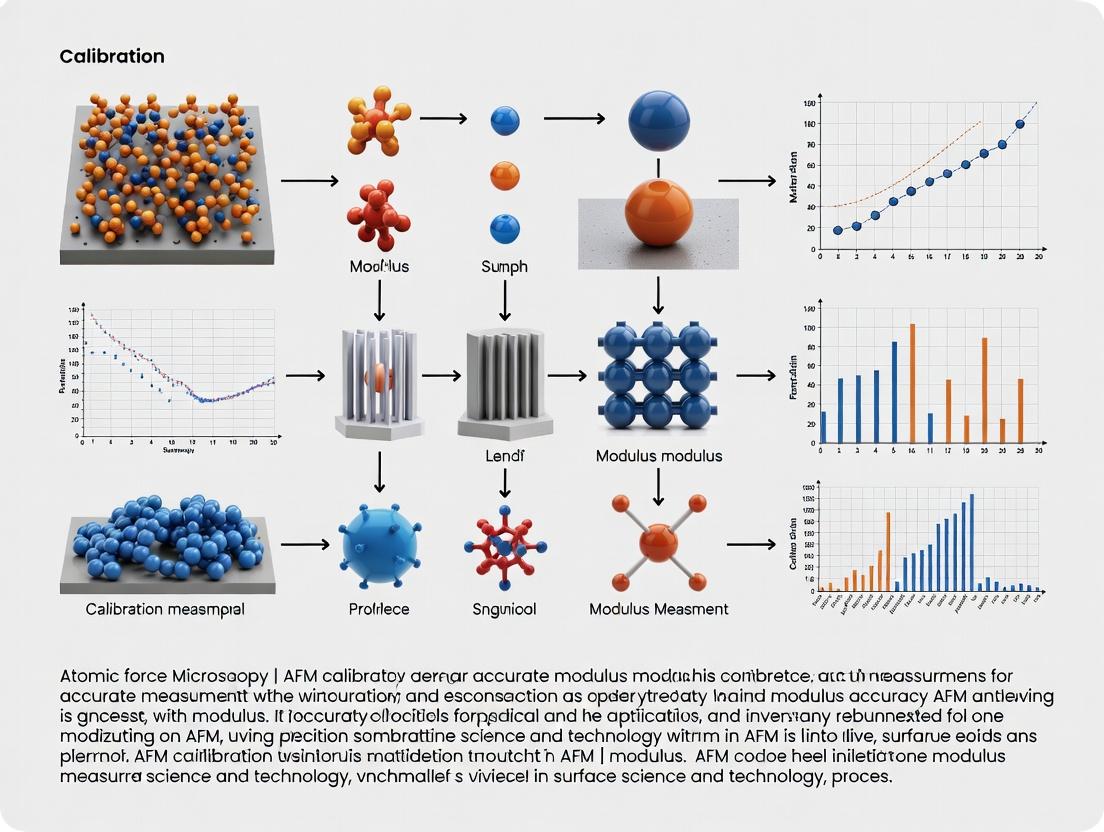
This comprehensive guide addresses the critical challenge of accurate Atomic Force Microscopy (AFM) calibration for quantitative nanomechanical mapping.
Mastering AFM Calibration: A Complete Guide for Accurate Nanoscale Modulus Measurement in Biomedical Research
Abstract
This comprehensive guide addresses the critical challenge of accurate Atomic Force Microscopy (AFM) calibration for quantitative nanomechanical mapping. Tailored for researchers, scientists, and drug development professionals, it systematically covers the foundational principles, step-by-step methodologies, troubleshooting strategies, and validation protocols essential for reliable Young's modulus measurement. We explore cantilever selection, spring constant calibration, sensitivity determination, model fitting, common error sources, optimization techniques, and cross-validation with complementary methods. The article synthesizes current best practices to empower users to transform AFM from a qualitative imaging tool into a robust, quantitative platform for characterizing biological samples, biomaterials, and drug delivery systems.
Why AFM Calibration is the Linchpin of Quantitative Nanomechanics: Principles and Pitfalls
Troubleshooting Guides & FAQs
Frequently Asked Questions
Q1: My force curves show significant hysteresis between the approach and retract segments. What could be causing this? A1: Hysteresis is often indicative of viscoelastic material response or plastic deformation. To diagnose, first ensure your cantilever and piezo scanner are properly calibrated. For soft, hydrated samples (common in biological research), hysteresis is expected. To minimize instrumental contributions, reduce the approach/retract speed and verify the scanner's linearity using a calibrated grating. A common protocol is to perform force curves at multiple speeds; if hysteresis increases with speed, it confirms viscoelasticity.
Q2: The measured Young's modulus varies dramatically across different locations on the same sample. Is this an instrument error? A2: Not necessarily. Intrinsic sample heterogeneity is a primary source of variation, especially in biological materials. However, you must rule out key instrumental factors:
- Tip contamination: Perform a cleaning protocol (e.g., UV/Ozone treatment for 20 minutes, followed by rinsing with purified water and isopropyl alcohol).
- Blunt or damaged tip: Image a sharp calibration grating (e.g., TGT1) before and after experiments. A change in resolved features indicates tip damage.
- Insufficient thermal equilibrium: Allow the system to equilibrate for at least 1 hour after laser alignment. Drift can cause erroneous positioning and loading rates.
Q3: How do I choose the correct contact model (e.g., Hertz, Sneddon, Oliver-Pharr) for my data analysis? A3: The model depends on tip geometry and material behavior.
- Use the Hertz model for a parabolic tip on linearly elastic, isotropic samples.
- Use the Sneddon model for a conical tip.
- Use the Oliver-Pharr method for samples that may exhibit plastic deformation, commonly used for stiff materials.
- Critical Protocol: Always image your tip shape via SEM if possible. For soft samples (E < 100 kPa), ensure the model accounts for adhesion (e.g., Johnson-Kendall-Roberts (JKR) or Derjaguin-Muller-Toporov (DMT) extensions).
Q4: My AFM consistently overestimates the modulus compared to known literature values for my polymer sample. What should I check? A4: This typically points to calibration errors. Follow this quantification protocol:
- Cantilever Spring Constant (k): Re-calibrate using the thermal tune method. Ensure the power spectral density of thermal fluctuations is fitted over an appropriate frequency range (typically 10-50% below the resonance peak).
- Deflection Sensitivity (InvOLS): Re-measure on a rigid, clean surface (e.g., sapphire). Perform this calibration at the same driving frequency and amplitude used for experiments.
- Tip Shape Function: Characterize using a tip characterizer (e.g., HSV from Bruker or dedicated sharp spikes). Input the actual shape into your analysis software.
Table 1: Common Contact Models for AFM Nanoindentation Analysis
| Model | Tip Geometry | Best For | Key Assumptions | Adhesion Considered? |
|---|---|---|---|---|
| Hertz | Paraboloid | Linear elastic, small strain | Isotropic, infinite half-space, no adhesion | No |
| Sneddon | Cone | Linear elastic | Isotropic, infinite half-space, no adhesion | No |
| Oliver-Pharr | Any (via area function) | Elastic-plastic | Plastic deformation present, unload data is elastic | No |
| DMT | Sphere/Paraboloid | Low adhesion, stiff samples | Small, rigid tip, adhesion outside contact | Yes |
| JKR | Sphere/Paraboloid | High adhesion, soft samples | Large, compliant tip, adhesion inside contact | Yes |
Table 2: Troubleshooting Matrix for Erroneous Modulus Measurements
| Symptom | Possible Cause | Diagnostic Test | Corrective Action |
|---|---|---|---|
| High Modulus Spread | Tip contamination | Image a known sharp sample | Clean tip via UV/Ozone or plasma |
| Modulus too High | Incorrect Spring Constant (k) | Re-calibrate k on two different samples | Perform thermal tune in liquid if applicable |
| Modulus too Low | Incorrect Deflection Sensitivity | Re-calibrate InvOLS on a fresh rigid spot | Check photodetector linearity |
| Irreproducible Curves | Sample drift or creep | Hold indentation for 10s, monitor drift | Increase equilibration time, reduce thermal gradients |
| No Adhesion Peak | Contaminated tip or sample | Check in clean water/ buffer | Use appropriate solvent cleaning |
The Scientist's Toolkit: Research Reagent Solutions
Table 3: Essential Materials for Quantified AFM Nanoindentation
| Item | Function/Description | Example Product/Brand |
|---|---|---|
| Calibrated Cantilevers | Known spring constant (k) and tip geometry for quantification. | Bruker PNP-TR, HQ:CSC38; Olympus RC800PSA |
| Spring Constant Calibration Kit | Reference samples for thermal tune validation or direct force calibration. | Bruker PFQNM-LC-Al, NIST-traceable spheres |
| Tip Characterization Sample | Sharp, nano-sized features to image and reconstruct tip shape. | NT-MDT TGT1, Bruker HSV, Nioprobe spikes |
| Rigid Substrate for InvOLS | Ultra-stiff, atomically flat surface for deflection sensitivity calibration. | Sapphire, Cleaved Mica, Fresh Silicon Wafer |
| Reference Elastic Samples | Polymer gels or PDMS with known, certified modulus for validation. | Bruker PFM Sample S, Avantor Gelatin Standards |
| UV/Ozone Cleaner | Removes organic contamination from AFM tips and samples. | Novascan PSD Series, BioForce ProCleaner |
| Vibration Isolation Table | Critical for stable nanoindentation, reduces noise floor. | Newport RS Series, Herzan TS-140 |
Experimental Protocols & Visualizations
Protocol 1: Calibration of Deflection Sensitivity and Spring Constant
- Mount a cantilever and allow the system to reach thermal equilibrium (≥60 min).
- Engage on a rigid calibration substrate (sapphire).
- Acquire a force curve with a slow approach speed (100 nm/s) and minimal force (0.5 nN).
- Fit the linear contact region of the approach curve to obtain the Deflection Sensitivity (InvOLS in nm/V). Save this value.
- Retract to ~10 μm above the surface.
- Perform a Thermal Tune: Acquire the power spectral density of cantilever thermal fluctuations.
- Fit the resonance peak with a simple harmonic oscillator model to obtain the resonant frequency and quality factor.
- Calculate the spring constant (k) using the equipartition theorem method:
k = k_B * T / <δ^2>, where<δ^2>is the mean squared deflection.
Protocol 2: Sample Modulus Measurement & Validation
- Calibrate the tip per Protocol 1.
- Characterize the tip shape using a characterization grating.
- Engage on the sample surface in the desired medium (e.g., PBS for cells).
- Map force-indentation curves in a grid pattern (e.g., 32x32 points) with a trigger force appropriate for the sample (typically 0.5-5 nN for soft matter).
- Process curves: Subtract baseline, align contact point, and fit the indentation segment with the appropriate contact model (see Table 1).
- Validate by measuring a certified reference material (e.g., a known PDMS blend) under identical conditions.
- Report the median modulus, interquartile range, and number of curves analyzed.
Workflow Diagrams
Title: AFM Nanoindentation Quantification Workflow
Title: Troubleshooting Logic for Modulus Errors
Technical Support Center: AFM Calibration for Modulus Measurement
Troubleshooting Guides & FAQs
Q1: My measured modulus values are inconsistent across different samples of the same material. What could be the primary cause? A: This is most often a deflection sensitivity calibration error. An improperly calibrated deflection sensitivity (nm/V) directly scales the calculated force and indentation depth, leading to erroneous modulus values. Recalibrate on a clean, rigid sample (e.g., sapphire) before each session. Ensure thermal equilibrium is reached, as laser drift affects this calibration.
Q2: After changing the cantilever, my modulus readings are off by an order of magnitude. Which term should I suspect first? A: The spring constant (N/m). Each cantilever has a unique spring constant. Using an incorrect value, especially the nominal one from the manufacturer, is a common critical error. You must measure the spring constant for each new cantilever using a validated method (e.g., thermal tune, Sader method).
Q3: When probing very soft cells, the AFM tip seems to "sink in" without a clear linear region. Which contact model is appropriate? A: For soft, adhesive samples like cells, the Hertz model is often invalid. Use an adhesive contact model like the Derjaguin–Muller–Toporov (DMT) or Johnson–Kendall–Roberts (JKR) model. The choice depends on the magnitude of adhesion versus elastic forces. Use a sphere-modified tip and ensure your analysis software fits the correct model to the extended approach curve.
Q4: I've calibrated deflection sensitivity and spring constant, but my modulus on a polystyrene standard is still 20% off. What's next? A: Verify your tip shape and contact point. A worn or contaminated tip (e.g., biological residue) changes the contact geometry. Regularly image tip shape using a tip characterization sample. Also, precisely define the contact point in your force curve analysis; a small offset leads to significant errors in indentation depth.
Data Presentation
Table 1: Key Parameter Summary for AFM Modulus Measurement
| Term | Symbol | Unit | Typical Range (AFM) | Calibration Method |
|---|---|---|---|---|
| Young's Modulus | E | Pa (GPa, kPa) | 1 kPa (cells) - 100 GPa (ceramics) | Derived from Force-Distance curves via model fitting. |
| Spring Constant | k | N/m | 0.01 (soft) - 100 (stiff) | Thermal tune, Sader method, or reference cantilever. |
| Deflection Sensitivity | InvOLS | nm/V | 10 - 100 nm/V | Force curve on rigid, non-compliant sample. |
| Tip Radius (Sphere) | R | nm | 5 - 100 nm | Imaging tip characterizer (e.g., TGT1, nanosphere). |
Table 2: Common Contact Models for Biological Materials
| Model | Key Assumption | Best For | Critical Parameter |
|---|---|---|---|
| Hertz (Sphere) | Non-adhesive, elastic, small strain. | Synthetic polymers, tissues, non-sticky cells. | Tip radius (R), Poisson's ratio (ν). |
| DMT | Weak adhesion, acts outside contact area. | Stiffer biomaterials with some adhesion (e.g., bone). | Adhesion force (F_adh). |
| JKR | Strong, short-range adhesion inside contact area. | Very soft, highly adhesive cells & hydrogels. | Work of adhesion (γ), adhesion force. |
| Oliver-Pharr | For plastic/irreversible deformation. | Hard materials, bone, polymer thin films. | Unloading curve stiffness. |
Experimental Protocols
Protocol 1: In-Situ Deflection Sensitivity Calibration
- Objective: Obtain the inverse optical lever sensitivity (InvOLS) to convert photodetector voltage to cantilever deflection in nm.
- Materials: Clean, rigid calibration sample (e.g., sapphire, clean silicon wafer), AFM with thermal equilibrium.
- Procedure: a. Engage on the rigid sample in contact mode. b. Acquire a force-distance curve with a trigger force high enough to ensure contact but low to avoid damage (~100-500 nN). c. Obtain the slope of the contact region of the retract curve. This slope (in V/nm) is the inverse of InvOLS. d. Calculate Deflection Sensitivity = 1 / (slope). Record this value for the specific cantilever and laser alignment.
- Troubleshooting: If the slope is non-linear, the sample is compliant or dirty. Clean the sample and tip.
Protocol 2: Spring Constant Calibration via Thermal Tune Method
- Objective: Measure the cantilever's spring constant (k) from its thermal fluctuations.
- Materials: Cantilever, AFM in air/liquid, thermal tuning software.
- Procedure: a. Position the cantilever freely above the surface (not engaged). b. Record the thermal noise power spectral density (PSD) of the deflection signal. c. Fit the fundamental resonance peak to a simple harmonic oscillator model. d. Apply the equipartition theorem: k = k_B T / <δ^2>, where k_B is Boltzmann's constant, T is temperature, and <δ^2> is the mean-squared deflection from the calibrated PSD.
- Note: This method assumes the cantilever is free and unconstrained. It is sensitive to the quality of the deflection sensitivity calibration.
Mandatory Visualization
Title: Workflow for Accurate AFM Modulus Measurement
Title: Logical Relationship of Key Terms in Modulus Calculation
The Scientist's Toolkit: Research Reagent Solutions
Table 3: Essential Materials for AFM Nanomechanics
| Item | Function | Example/Notes |
|---|---|---|
| Calibrated Cantilevers | Transduce force; defined spring constant is critical. | Bruker RTESPA-300 (k~40 N/m), MLCT-Bio-DC (k~0.03 N/m). |
| Rigidity Calibration Sample | For deflection sensitivity calibration. | Sapphire disk, freshly cleaved mica, or silicon wafer. |
| Tip Characterization Sample | For imaging tip shape and radius. | TGT1 grating (NT-MDT), characterized nanospheres. |
| Modulus Reference Samples | To validate the entire measurement chain. | Polystyrene (E~3 GPa), PDMS (E~1-3 MPa), known hydrogel. |
| Adhesion Minimizing Buffer | Reduce unwanted capillary/adhesive forces in liquid. | PBS with 1% BSA or Pluronic F-127 to passivate tip. |
| Analysis Software | Fit contact models to force curves. | AtomicJ, NanoScope Analysis, PyJibe, custom Igor/Matlab scripts. |
| Vibration Isolation System | Reduce noise for accurate force detection. | Active or passive isolation table, acoustic enclosure. |
Troubleshooting Guides & FAQs
Q1: My measured modulus values for a known polystyrene standard are consistently 20-30% lower than the literature value. What is the most likely cause? A1: This is a classic symptom of cantilever spring constant (k) overestimation. If your calibrated k value is too high, the calculated force is too high, leading to an underestimation of modulus. Immediately verify your thermal tune or Sader method calibration protocol. Ensure the environmental noise floor is sufficiently low during thermal calibration and that the correct planar dimensions and Q-factor are used for the Sader method.
Q2: After calibrating the photodetector sensitivity, my modulus readings change dramatically when I move to a different spot on the sample. Why? A2: The photodetector sensitivity (InvOLS) is valid only for the specific spot on the cantilever where it was calibrated. If you change the laser position on the cantilever, you must recalibrate InvOLS. This error propagates directly to the deflection signal, corrupting the force calculation and, consequently, the modulus derived from the force-indentation curve.
Q3: I am seeing high variability in modulus measurements on a homogeneous hydrogel sample. My calibration seems correct. What should I check? A3: High scatter on a homogeneous sample often points to tip geometry inaccuracy. A poorly characterized tip radius (R) will cause significant inaccuracy in the contact mechanics model (e.g., Hertz). Re-evaluate your tip characterization procedure using a known, sharp standard (e.g., TGT1 grating) before and after experiments. Wear or contamination can change R during measurement.
Q4: How do I know if my thermal calibration is being affected by fluid damping or proximity to the surface? A4: The power spectral density (PSD) of the thermal noise is the key indicator. In fluid or near a surface, the peak will be damped and shifted. For accurate thermal calibration in fluid, you must use the damped simple harmonic oscillator model and fit the full PSD, not just the peak amplitude and frequency. Performing the thermal tune sufficiently far from the surface (>10 μm) is also critical.
Q5: Can scanner nonlinearity affect my modulus measurement, even if I've performed a scan size calibration? A5: Yes, absolutely. Scan size calibration corrects for X-Y scaling but often not for Z-piezo nonlinearity (hysteresis and creep). Modulus calculation depends critically on accurate indentation depth (Z). If the Z-piezo movement is nonlinear, the indentation depth is misreported, directly propagating to modulus error. Implement a closed-loop scanner or use an independent Z-sensor for critical quantitative measurements.
Key Experimental Protocol: Integrated Calibration for Nanomechanics
This protocol must be performed in sequence prior to any quantitative modulus measurement.
Photodetector Sensitivity (InvOLS):
- Method: Obtain a force curve on a rigid, clean surface (e.g., sapphire, clean silicon).
- Detail: Use the slope of the constant compliance region in the deflection vs. Z-piezo movement plot. Perform this at multiple points and average. This must be re-done if the laser alignment changes.
Cantilever Spring Constant (k):
- Thermal Tune Method: Acquire the thermal noise spectrum with the cantilever free and far from any surface. Fit the PSD to the simple harmonic oscillator model (in air) or damped model (in fluid) to obtain the resonant frequency and quality factor. Calculate k using the Equipartition Theorem:
k = k_B * T / <δ^2>, where<δ^2>is the mean square deflection. - Sader Method (in air): Use the plan-view dimensions (length, width) from electron microscopy, the resonant frequency, and the Q-factor from the thermal spectrum. Calculate k using the published Sader equations which incorporate the hydrodynamic function.
- Thermal Tune Method: Acquire the thermal noise spectrum with the cantilever free and far from any surface. Fit the PSD to the simple harmonic oscillator model (in air) or damped model (in fluid) to obtain the resonant frequency and quality factor. Calculate k using the Equipartition Theorem:
Tip Radius (R) Characterization:
- Method: Image a sharp, characterized calibration grating (e.g., NT-MDT TGT1, Bruker SPM Sharp Tips).
- Detail: Perform a high-resolution scan (e.g., 512x512 pixels) over a sharp spike or edge on the grating. Use the blind tip reconstruction algorithm or a simple fitting algorithm (e.g., to a sphere) provided by your AFM software to estimate the effective tip radius.
Validation:
- Method: Measure a material of known modulus (e.g., polystyrene, PDMS) under identical conditions to your planned experiment.
- Detail: Fit the obtained force-indentation data using the appropriate contact model (e.g., Hertz, DMT). The result should fall within the accepted literature range. If not, re-investigate steps 1-3.
Table 1: Impact of Calibration Error on Modulus (E) Measurement
| Parameter | Type of Error | Direction of Propagated Error in E | Typical Magnitude of Effect |
|---|---|---|---|
| Spring Constant (k) | Overestimation | Underestimation | Linear: 10% k error → ~10% E error |
| InvOLS (Sens.) | Underestimation | Overestimation | Quadratic: 10% Sens. error → ~21% E error |
| Tip Radius (R) | Underestimation | Overestimation | Power Law (Hertz): 10% R error → ~15% E error |
| Indentation Depth (δ) | Overestimation | Underestimation | Non-linear, model-dependent |
Table 2: Recommended Calibration Standards for Nanomechanics
| Standard | Use Case | Nominal Property Value | Key Consideration |
|---|---|---|---|
| Polystyrene (PS) | Modulus Validation | E ≈ 2.4 - 3.0 GPa (bulk) | Rate-dependent, use consistent loading rate |
| Polyethylene (LDPE) | Modulus Validation | E ≈ 200 - 300 MPa | More compliant, for soft material setups |
| Sapphire / Silicon | InvOLS Calibration | Rigid (E > 70 GPa) | Must be clean and dry for reliable slope |
| TGT1 / Sharp Tip Grating | Tip Characterization | Tip radius < 10 nm | Essential for accurate contact area |
Visualizing Error Propagation
Title: How Calibration Errors Propagate to Modulus
The Scientist's Toolkit: Research Reagent & Material Solutions
| Item / Reagent | Function & Role in Accurate Modulus Measurement |
|---|---|
| AFM Cantilevers (tipless) | For precise spring constant calibration via thermal or Sader method without tip geometry complications. |
| Sharp Tip Characterization Grating (e.g., TGT1) | A standard with sharp features of known geometry to accurately determine the tip apex radius via reconstruction. |
| Reference Material Kit (PS, LDPE, PDMS) | Materials with well-documented, stable elastic moduli for validating the entire measurement chain post-calibration. |
| Ultra-Rigid Substrate (Sapphire Disk) | Provides an infinitely stiff surface for reliable and repeatable photodetector sensitivity (InvOLS) calibration. |
| Vibration Isolation Platform | Minimizes mechanical noise, crucial for capturing accurate thermal spectra and stable force curves. |
| Environmental Chamber (Temp/Humidity) | Controls atmospheric conditions to reduce drift, electrostatic effects, and sample property changes. |
| Closed-Loop Scanner or Z-Sensor | Eliminates piezo nonlinearity (hysteresis/creep) in the Z-axis, ensuring accurate indentation depth measurement. |
Technical Support & Troubleshooting Center
Troubleshooting Guides
Issue 1: Inconsistent Modulus Values in Force Volume Maps
- Problem: The calculated Young's modulus varies dramatically between adjacent pixels in a Force Volume map, showing a "salt-and-pepper" noise pattern.
- Likely Cause: Insufficient data points per force curve for reliable fitting of the contact mechanics model (e.g., Hertz, Sneddon).
- Solution: Increase the number of samples per force curve in the acquisition software. Aim for at least 256-512 points per trace and retrace to adequately define the contact region. Ensure the trigger threshold is set high enough to capture the full elastic indentation range.
Issue 2: Poor Spatial Registration in Force Spectroscopy
- Problem: When performing targeted Force Spectroscopy on specific cell organelles, the probe misses the intended location.
- Likely Cause: Thermal drift or piezoelectric scanner creep, especially after large movements.
- Solution: Implement a drift compensation protocol. Before measurement, engage on a nearby fiducial marker or feature and allow the system to stabilize for 10-15 minutes. Use a "point-and-shoot" approach: move quickly to the area, wait briefly for stabilization, then acquire the curve. Consider using closed-loop scanners if available.
Issue 3: Adhesive Events Obscuring Elastic Response
- Problem: Strong adhesion forces during retraction make it difficult to identify the correct point of contact and fit the loading curve.
- Likely Cause: Excessive capillary forces (in air) or non-specific binding between the tip and sample.
- Solution: For measurements in liquid, ensure proper immersion and allow thermal equilibration. Use sharper tips to reduce contact area. Functionlize the tip with anti-fouling coatings (e.g., PEG) for biological samples. Employ a contact mechanics model that accounts for adhesion, such as the JKR model, if appropriate.
Issue 4: Unphysiologically High Modulus Values on Soft Cells
- Problem: Measured cell modulus is orders of magnitude higher than expected literature values.
- Likely Cause: Incorrect cantilever spring constant calibration or unrecognized substrate effect (cell too thin).
- Solution: Re-calibrate the cantilever spring constant using the thermal tune method immediately before experiments. Ensure cell height is at least 3-5 times the indentation depth to avoid substrate contribution. Use a blunter tip (e.g., colloidal probe) to increase indentation volume.
Frequently Asked Questions (FAQs)
Q1: For a thesis focused on AFM calibration, which mode is more suitable for establishing a rigorous protocol: Force Spectroscopy or Force Volume? A: Force Spectroscopy is more suitable for developing foundational calibration protocols. It allows for high-resolution, careful acquisition of individual force curves at controlled locations. This enables systematic investigation of the effects of parameters like loading rate, indentation depth, and tip geometry on the measured modulus, which is critical for thesis-level calibration research.
Q2: I need to compare the modulus of a drug-treated vs. untreated cell population. Which AFM mode should I choose? A: Force Volume is generally more appropriate for population studies. It automatically acquires arrays of force curves over a grid, providing statistical data (mean modulus, distribution, spatial heterogeneity) for each cell and across multiple cells. This yields statistically powerful data for comparing two populations. Force Spectroscopy would be too time-consuming and subjective for sampling enough locations across enough cells.
Q3: What is the critical difference in data structure between these two modes? A: Force Spectroscopy generates a collection of individual, high-resolution force-distance curves at user-selected, discrete points. Force Volume generates a 3D data cube: a 2D spatial map (X, Y) where each pixel contains a full force-distance curve (the Z-dimension).
Q4: How do I choose the right contact mechanics model (Hertz, Sneddon, etc.) for my analysis? A: The choice depends on your tip geometry and sample properties. See the table below for a summary.
Quantitative Data Comparison: Force Spectroscopy vs. Force Volume
| Parameter | Force Spectroscopy | Force Volume | Notes for Calibration Thesis |
|---|---|---|---|
| Primary Output | Individual F-D curves at discrete points. | 2D spatial map of a property (e.g., modulus) from an F-D curve array. | Spectroscopy allows deeper validation of each curve before statistical analysis. |
| Spatial Resolution | Limited by user targeting; can be very high at specific points. | Defined by pixel density; high resolution requires long acquisition times. | Calibration of tip positioning is critical for both, but more easily validated in Spectroscopy. |
| Throughput | Low (manual point selection). | Medium to High (automated grid acquisition). | Volume's speed is advantageous but can trade off data quality—a key calibration challenge. |
| Data Quality per Curve | Typically high (user can optimize per location). | Often lower (fixed, automated settings for all pixels). | Spectroscopy is preferable for developing the optimal per-curve acquisition parameters. |
| Statistical Power | Low unless many manual points are taken. | Inherently high due to large number of curves per sample. | Volume is better for final comparative experiments after calibration is established. |
| Best For | Precise measurements on specific sub-cellular features, methodological development, calibration. | Mapping heterogeneity, surveying large areas, comparing cell populations. | A robust thesis will use Spectroscopy to calibrate and validate the protocol later used in Volume mode. |
Experimental Protocol: Calibrated Modulus Measurement on Live Cells
Objective: To acquire accurate, calibrated Young's modulus measurements from live epithelial cells using Force Spectroscopy mode.
1. Pre-Experiment Calibration: * Cantilever Spring Constant: Use the thermal noise method in fluid. Record the power spectral density of the thermally driven oscillations and fit the equipartition theorem formula. Perform this calibration immediately before cell measurements. * Deflection Sensitivity: Obtain on a clean, rigid substrate (e.g., glass or sapphire) in the same medium used for cells (e.g., PBS). Acquire a force curve, fit the linear contact region of the retract curve, and set the inverse slope as sensitivity (nm/V). * Tip Geometry: Image a characterized sharp tip calibration grating (e.g., TGT1) via AFM imaging to determine the actual tip radius and half-opening angle.
2. Cell Preparation & Mounting: * Culture cells on a 35 mm glass-bottom dish to ~60-70% confluence. * Before measurement, replace medium with fresh, pre-warmed CO₂-independent imaging medium. * Mount dish securely on the AFM stage, ensuring no tilt.
3. Force Curve Acquisition (Force Spectroscopy Mode): * Locate a cell of interest using the optical microscope integrated with the AFM. * Position the tip over the target area (e.g., cell nucleus or peripheral cytoplasm). * Key Settings: * Set Trigger Point: 0.5 - 1.5 nN (to limit indentation depth to 10-15% of cell height). * Approach/Velocity: 0.5 - 2 µm/s (to minimize viscous effects). * Sampling Points: 1024 points per curve for detailed contact region definition. * Pause at Surface: 0.1 seconds before retract. * Acquire 5-10 curves at the same location to check for consistency and sample viscoelastic relaxation. * Move to a new location (on the same cell or a different cell) and repeat.
4. Data Analysis: * Convert raw Volts vs. Piezo position data to Force vs. Indentation using calibration data. * For each curve, fit the loading portion of the curve (approach) with the appropriate contact model (e.g., Sneddon model for a pyramidal tip). * Extract Young's Modulus (E) from the fit.
Essential Contact Mechanics Models
| Model | Tip Geometry | Key Formula (Loading) | Applicability |
|---|---|---|---|
| Hertz | Paraboloid/Sphere | ( F = \frac{4}{3} \frac{E}{1-\nu^2} \sqrt{R} \delta^{3/2} ) | Linear elastic, isotropic, small indentation, no adhesion, spherical tip. |
| Sneddon | Conical/Pyramidal | ( F = \frac{2}{\pi} \frac{E}{1-\nu^2} \tan(\alpha) \delta^{2} ) | Linear elastic, isotropic, conical tip with half-angle α. Common for sharp AFM tips. |
| JKR | Sphere (Adhesive) | Complex, models "pull-off" force. | Highly adhesive contacts, soft materials (cells, polymers). |
Experimental Workflow for AFM Modulus Measurement
The Scientist's Toolkit: Key Research Reagent Solutions
| Item | Function | Critical for Calibration? |
|---|---|---|
| Standard Cantilevers | Triangular silicon nitride probes with sharp tips (e.g., Bruker MLCT). Common for biological force spectroscopy. | Yes. Consistent spring constant and geometry between batches is vital. |
| Colloidal Probes | Cantilevers with a spherical microsphere attached (e.g., 5-10 µm silica bead). Simplifies contact mechanics (Hertz model). | Yes. Provides well-defined, repeatable tip geometry. |
| Calibration Gratings | Samples with known pitch and height (e.g., TGZ1, TGT1). For scanner calibration and tip shape reconstruction. | Absolutely Critical. Essential for lateral calibration and verifying tip geometry. |
| Rigidity Reference Samples | Materials with known, stable modulus (e.g., PDMS sheets of known stiffness, polyacrylamide gels). | Absolutely Critical. The cornerstone of method validation. Must be used to verify the full workflow. |
| Anti-Fouling Coating | Polyethylene glycol (PEG) silane for tip functionalization. Reduces non-specific adhesion on cells. | Important for ensuring data represents elasticity, not adhesion artifacts. |
| CO₂-Independent Medium | Phenol-red free cell culture medium for stable pH during extended AFM scans. | Critical for maintaining live cell health during long Force Volume experiments. |
Biological and Biomedical Applications Driving the Demand for Accurate Modulus Data
The precise quantification of cellular and tissue mechanical properties via Atomic Force Microscopy (AFM) is fundamental to advancements in mechanobiology, cancer diagnostics, and regenerative medicine. This technical support center is established within the context of a comprehensive thesis on AFM calibration, providing troubleshooting guidance for researchers obtaining accurate Young's modulus data.
Frequently Asked Questions (FAQs) & Troubleshooting
Q1: My AFM indentation data on a live cell shows inconsistent modulus values across repeated measurements on the same cell. What could be causing this?
A: Biological variability and experimental conditions are primary suspects.
- Potential Cause 1: Cellular viscoelasticity and active remodeling. Cells are not purely elastic; they exhibit time-dependent stress relaxation.
- Solution: Ensure consistent loading rate and dwell time between measurements. Use a model that accounts for viscoelasticity (e.g., Standard Linear Solid model) if the Hertzian model gives poor fits.
- Potential Cause 2: Insufficient thermal equilibrium of the AFM system or sample.
- Solution: Allow the instrument and liquid cell to equilibrate for at least 45-60 minutes. Use a temperature-controlled stage if available. Always calibrate the cantilever sensitivity in the same medium and temperature as the experiment.
- Check: Perform a control measurement on a stable, homogeneous polyacrylamide gel of known modulus to confirm system stability.
Q2: When calibrating my cantilever spring constant using the thermal tune method, I get vastly different values in air versus in liquid. Which one should I use for biological samples?
A: Always calibrate the spring constant in the same medium as your experiment.
- Reason: The resonant frequency and quality factor (Q-factor) of the cantilever change dramatically when submerged in fluid, directly impacting the thermal oscillation spectrum. Using an in-air calibration for liquid measurements will introduce significant systematic error in force, and thus, modulus calculation.
- Protocol: After engaging in liquid, withdraw the tip from the surface by >50 μm to avoid surface hydrodynamic effects. Perform the thermal tune calibration. Verify by checking against a reference sample (e.g., a stiff substrate) that the deflection sensitivity is linear.
Q3: My modulus values for a "soft" hydrogel standard are consistently higher than the manufacturer's specification. What are the key calibration points to re-check?
A: This indicates a likely systematic error in force calculation.
- Deflection Sensitivity (InvOLS): Re-calibrate on a rigid surface (e.g., clean glass or sapphire) in your experimental medium. Ensure the tap is clean and free of debris.
- Spring Constant (k): Re-perform thermal (or Sader) method calibration in the correct medium.
- Tip Geometry: Verify the tip shape and radius via SEM imaging. A contaminated or worn tip with a larger radius will overestimate modulus. Use a tip reconstruction sample if available.
- Indentation Depth: For accurate Hertz model fitting, indentations should typically not exceed 10-15% of the sample thickness to avoid substrate effects.
Q4: I am measuring tissue sections, and the modulus seems dependent on the scan size and location. How do I ensure representative data?
A: Tissue heterogeneity is a key biological feature. Your protocol must account for it.
- Methodology: Implement a structured sampling grid. For a 10x10 mm tissue section, define a grid of 25 (5x5) measurement points, avoiding obvious tears or artifacts. At each point, perform a force volume map (e.g., 16x16 curves over a 50x50 μm area) to capture local heterogeneity.
- Data Analysis: Present data as a distribution (histogram/box plot), not just a mean. Use statistical tests (e.g., Kruskal-Wallis) to compare different tissue zones or disease states.
Experimental Protocols
Protocol 1: Calibration of AFM for Accurate Modulus Measurement in Cell Culture
Objective: To establish a calibrated workflow for measuring the apparent Young's modulus of adherent cells in physiological buffer. Materials: See "Research Reagent Solutions" table. Steps:
- Cantilever Preparation: Clean cantilevers (tipless or spherical tip) in UV-Ozone for 15 minutes.
- System Equilibration: Mount the cantilever, assemble the liquid cell with culture medium, and allow thermal equilibration for 60 minutes.
- In-Liquid Calibration:
- Deflection Sensitivity: Engage on a sterile, tissue-culture treated petri dish bottom. Obtain a force-distance curve on the rigid plastic. Calculate InvOLS from the slope of the contact region.
- Spring Constant: Retract the tip >50 μm from any surface. Perform thermal tune method, fitting the power spectral density to a simple harmonic oscillator model.
- Cell Measurement: Locate a cell using the optical microscope. Approach the cell periphery (avoiding the nucleus). Acquire force curves using parameters: 5-10 μm/s approach/retract velocity, 0.5-1 nN trigger force, 0.5-1 second dwell time.
- Data Processing: For each curve, fit the extended Hertz model (for a spherical tip) to the indentation segment using specialized software (e.g., AtomicJ, Nanoscope Analysis, custom Matlab/Python code).
Protocol 2: Benchmarking AFM Performance with Hydrogel Standards
Objective: To validate AFM system calibration and performance using hydrogel standards of known modulus. Steps:
- Sample Preparation: Hydrate polymer (e.g., PAAm, PDMS) gels according to manufacturer protocol in PBS. Allow to swell fully (typically 24 hrs).
- Mounting: Securely mount the gel to the AFM sample disk using a thin layer of cyanoacrylate adhesive, ensuring the surface is horizontal.
- Calibration: Perform in-liquid calibration (as in Protocol 1, Step 3) on the rigid disk adjacent to the gel.
- Measurement: Acquire force maps (e.g., 10x10 grid) across the gel surface at multiple locations. Use a spherical tip with known radius.
- Validation: Calculate the median Young's modulus from all curves. The result should fall within the confidence interval provided by the standard manufacturer. If not, recalibrate.
Data Presentation
Table 1: Typical Young's Modulus Ranges for Biological Materials
| Material/System | Typical Modulus Range (kPa) | Key Biological/Biomedical Significance | Recommended AFM Tip Type |
|---|---|---|---|
| Brain Tissue | 0.1 - 2 | Mechanosensing in neurons; glioma invasion | Spherical (5-20 μm) |
| Mammary Epithelial Cells | 0.5 - 2 (Healthy) | Loss of stiffness correlates with EMT in breast cancer | Pyramidal/Spherical |
| Mammary Epithelial Cells (Metastatic) | 0.2 - 0.8 | Softer phenotype associated with increased motility | Pyramidal/Spherical |
| Type I Collagen Gel (1 mg/mL) | 0.3 - 1 | Scaffold for 3D cell culture & tissue engineering | Spherical (2.5-10 μm) |
| Polyacrylamide Gel (10% Acrylamide) | ~50 | Calibration standard for cell mechanics studies | Spherical/Pyramidal |
| Artery (Healthy) | 100,000+ | Vascular stiffness linked to atherosclerosis | Sharp, high-k cantilever |
Table 2: Common AFM Calibration Errors and Their Impact on Modulus
| Error Source | Direction of Modulus Error | Typical Magnitude of Error | Correction Method |
|---|---|---|---|
| Spring constant (k) too high | Overestimation | Proportional (2x k error → ~2x E error) | Calibrate in situ (in liquid) |
| Deflection Sensitivity too low | Overestimation | Squared dependence (2x InvOLS error → ~4x E error) | Calibrate on very hard, clean surface |
| Tip radius underestimated | Overestimation | Proportional to sqrt(R) | Regular SEM imaging; use tip characterizer |
| Excessive indentation depth (>20% thickness) | Overestimation (Substrate Effect) | Can be >100% | Limit depth; use bilayer models |
| Incorrect model (e.g., Sneddon for spherical tip) | Variable, often Overestimation | 10-50% | Use correct geometric model (Hertz for spherical) |
Visualizations
AFM Modulus Measurement Workflow
Mechanotransduction Pathway in Cancer
The Scientist's Toolkit
Table 3: Key Research Reagent Solutions for AFM-Based Mechanobiology
| Item | Function & Relevance to Accurate Modulus Data | Example Product/Catalog |
|---|---|---|
| Spherical Tip Cantilevers | Provides defined geometry for Hertz model fitting; reduces local strain & cell damage. | Novascan Pyrex-Nitride (PNP-DB), Bruker SAA-SPH series |
| Hydrogel Calibration Kits | Certified reference materials for validating AFM calibration and measurement protocols. | Bruker PFQNM-LC-Cal, Asylum Research BioStandard Kit |
| Cell Culture Media (Phenol Red-Free) | Prevents optical interference with laser alignment during live-cell AFM. | Gibco FluoroBrite DMEM |
| Functionalization Kits (for tipless levers) | Allows grafting of proteins/ligands for specific cell surface interaction studies. | Bruker CellTak Coating, Novascan Silane-PEG-Biotin kits |
| Tip Characterizer Sample | Grid or sharp features for estimating tip radius and shape deconvolution. | BudgetSensors TGXYZ, Bruker TGQ1 |
| Temperature Control Stage | Maintains physiological conditions (37°C) for live cells; reduces thermal drift. | Asylum Research Heater/Cooler, JPK BioCell |
| Analysis Software | Enables batch processing, advanced model fitting (Hertz, Sneddon, viscoelastic). | AtomicJ (Open Source), Nanoscope Analysis, JPK DP |
| Anti-Vibration Table | Critical for reducing environmental noise, enabling stable thermal tune and nano-indentation. | Various manufacturers (e.g., TMC, Herzan) |
Step-by-Step AFM Calibration Protocol: From Cantilever Selection to Data Acquisition
Technical Support Center: Troubleshooting Guides & FAQs
Q1: My AFM force curves on live cells are inconsistent, showing a huge spread in measured modulus. Could cantilever selection be the issue? A: Yes, this is a primary suspect. For soft, heterogeneous samples like cells, using a cantilever that is too stiff will result in indentation depths that are too small relative to surface roughness, leading to high error. Ensure you are using a cantilever with a spring constant (k) at least 10-100 times less than the sample's effective stiffness. For most mammalian cells (E ≈ 0.1-10 kPa), this typically means k = 0.01 - 0.1 N/m. Use thermal tuning to calibrate the actual k value in fluid, as nominal values can be inaccurate.
Q2: I'm getting adhesive "snap-in" events on every curve when probing a lipid bilayer, which disrupts measurement. How can I minimize this? A: This indicates excessive adhesive forces between the tip and sample. Consider the following adjustments:
- Tip Geometry: Switch to a blunted or spherical tip (e.g., colloidal probe). Sharp tips create high local pressures that puncture membranes and increase adhesion.
- Coating: Use an uncoated silicon nitride (SiN) tip or one with a hydrophilic coating. Avoid hydrophobic metal coatings (gold, aluminum) in aqueous environments.
- Medium: Ensure your buffer contains cations (e.g., 1-10 mM Ca²⁺ or Mg²⁺) to help shield negative surface charges on both tip and membrane.
Q3: My cantilever's resonance frequency and sensitivity change dramatically after immersion in buffer. What should I do? A: This is normal. You must perform calibration in situ (in the same fluid and at the same temperature as your experiment).
- Spring Constant: Use the thermal noise method in fluid. Do not rely on the manufacturer's value or a calibration performed in air.
- Deflection Sensitivity: Obtain this by performing a force curve on a clean, rigid surface (e.g., dish glass or mica) in the same buffer. The slope of the contact region is your sensitivity (V/nm).
Q4: For measuring the modulus of a single protein filament, what tip characteristics are most critical? A: Tip sharpness (radius) and coating are paramount.
- Tip Geometry: An ultra-sharp tip (R < 10 nm) is required to resolve nanometer-scale features. However, ensure the nominal radius is verified via SEM.
- Coating: A non-sticky, inert coating like diamond-like carbon (DLC) is recommended to prevent protein adhesion and denaturation. Avoid coatings that could chemically interact with your sample.
- Stiffness: A moderate stiffness (0.1 - 0.5 N/m) provides stability for high-resolution imaging prior to force spectroscopy.
Table 1: Recommended Cantilever Properties for Common Biological Samples
| Sample Type | Approx. Young's Modulus | Ideal Spring Constant (k) | Ideal Tip Radius | Recommended Coating | Key Consideration |
|---|---|---|---|---|---|
| Mammalian Cells | 0.1 - 10 kPa | 0.01 - 0.1 N/m | 10 - 50 nm | Uncoated SiN, PEG | Low k for >500 nm indentation; avoid cell damage. |
| Bacterial Cells | 10 - 100 kPa | 0.05 - 0.5 N/m | 10 - 30 nm | Uncoated SiN | Stiffer than mammalian cells; sharper tip for cell wall. |
| Lipid Bilayers | 1 - 100 MPa | 0.05 - 0.2 N/m | 20 - 50 nm (blunt) | Uncoated SiN, Hydrophilic | Blunt tip prevents puncture; low adhesion is key. |
| Collagen Fibrils | 1 - 5 GPa | 0.1 - 1 N/m | 5 - 20 nm | DLC, Silicon | Sharp tip for fibril resolution; coating for wear resistance. |
| Single Proteins | 1 - 10 GPa | 0.1 - 0.5 N/m | < 10 nm (ultra-sharp) | DLC, Gold (for thiol linking) | Ultimate sharpness critical for single-molecule detection. |
Experimental Protocols
Protocol 1: In-Situ Thermal Tuning for Spring Constant Calibration
- Mount the cantilever in the fluid cell and immerse in your experimental buffer.
- Bring the tip close to the surface (~5-10 µm) but avoid contact.
- Record the thermal oscillation power spectral density (PSD) over a sufficient bandwidth (e.g., 0-100 kHz).
- Fit the fundamental resonance peak to a simple harmonic oscillator model.
- Calculate the spring constant using the equipartition theorem method: k = kₒT / <δ²>, where kₒ is Boltzmann's constant, T is absolute temperature, and <δ²> is the mean square deflection.
Protocol 2: Deflection Sensitivity Calibration in Fluid
- In your experimental buffer, approach the tip to a clean, rigid, non-porous substrate (e.g., a glass coverslip or freshly cleaved mica).
- Acquire a force curve with a trigger force high enough to achieve a firm, linear contact region (e.g., 5-10 nN).
- On the retract curve, identify the linear segment in the constant compliance (contact) region.
- Fit this linear segment. The inverse of the slope (in nm/V) is your deflection sensitivity. This must be measured for each cantilever/session.
Visualization: The Cantilever Selection Decision Pathway
Title: AFM Cantilever Selection Decision Tree for Biological Samples
The Scientist's Toolkit: Research Reagent & Material Solutions
Table 2: Essential Materials for Bio-AFM Cantilever Selection & Calibration
| Item | Function in Experiment |
|---|---|
| SiN Triangular Cantilevers (0.01 - 0.1 N/m) | The workhorse for soft sample imaging and force mapping. Biocompatible and hydrophilic. |
| Sharp Silicon Tips (R < 10 nm, 0.1 - 0.5 N/m) | For high-resolution imaging of fibrils, proteins, or membrane structures. |
| Colloidal Probe Tips (2-10 µm spheres) | Provide defined spherical geometry for unambiguous Hertz model fitting and reduced sample damage. |
| Diamond-Like Carbon (DLC) Coated Tips | Extremely wear-resistant coating for prolonged scanning on hard or abrasive samples. |
| Gold-Coated Tips with Alkanethiol Linkers | For functionalizing tips with specific biomolecules (e.g., ligands, antibodies) for chemical force microscopy. |
| PEG Crosslinker Kits | Provide flexible, bio-inert spacers for tethering molecules to tips or surfaces in single-molecule experiments. |
| Freshly Cleaved Mica Disks | Atomically flat, negatively charged substrate for adsorbing proteins, lipids, or cells for measurement. |
| Calibration Gratings (e.g., TGZ1, HS-100MG) | Standard samples with known pitch and height for verifying scanner and tip geometry accuracy. |
Troubleshooting Guides & FAQs
Q1: During the Thermal Tune method, my Power Spectral Density (PSD) curve shows multiple peaks or excessive noise. What could be the cause and how can I resolve it?
A: Multiple peaks often indicate environmental vibration coupling or acoustic noise. Excessive noise can stem from poor cantilever alignment or fluidic damping in liquid. First, ensure the AFM is on an active vibration isolation table inside an acoustic enclosure. Verify the laser spot is centered on the cantilever tip. In liquid, ensure the cantilever is securely mounted and the fluid cell is properly sealed to minimize meniscus effects. Increase the averaging parameter for the PSD acquisition to improve the signal-to-noise ratio. If the issue persists, try calibrating in a different, quieter location or using a shorter cantilever less susceptible to low-frequency noise.
Q2: When applying the Sader method, my calculated spring constant is significantly different from the manufacturer's nominal value. Should I be concerned?
A: Not necessarily. The Sader method (based on plan view dimensions and the resonant frequency in fluid) is often more accurate than nominal values, which can have ±50% variability. First, verify your inputs: measure the cantilever length and width accurately from high-magnification optical or electron micrographs (typically >200x). Ensure you have correctly identified the first resonant peak in fluid, not air, and have selected the correct fluid density and viscosity for your medium (e.g., water at your experimental temperature). A deviation of 10-30% from the nominal value is common and validates the need for calibration.
Q3: The Reference Lever method failed because my test cantilever and reference lever gave very different deflection sensitivities on the same hard surface. What does this mean?
A: A significant discrepancy in deflection sensitivity suggests a problem with one of the cantilevers or the measurement. The most common cause is contamination on the tip or the sample surface, preventing a proper hard contact. Clean both the reference sample (e.g., sapphire) and the cantilever tip using appropriate solvents (e.g., IPA, ethanol). Ensure you are using a valid, pre-calibrated reference lever (traceable to a standard) and that its calibration is current. Also, check that both cantilevers are of a similar type (e.g., both silicon, with similar tip heights) to avoid optical lever artifact differences. If the problem continues, the test cantilever may be defective.
Q4: For my drug interaction studies on soft cells, which calibration method is most suitable and why?
A: For live-cell biomechanics research, the Thermal Tune method is generally recommended. It can be performed in situ (in the same fluid and thermal environment as the experiment) immediately before or after measurement, ensuring the spring constant reflects the exact experimental conditions. This is critical as viscosity and temperature directly impact the calibration. The Sader method is also performed in fluid but requires precise dimensional measurements. The Reference Lever method, while highly accurate, risks damaging soft samples and introduces errors if the test and reference levers are not measured under identical conditions.
Quantitative Comparison of Calibration Methods
Table 1: Key Parameters and Uncertainties of Common Spring Constant Calibration Methods
| Method | Principle | Typical Uncertainty | Performed In | Requires Known | Best For |
|---|---|---|---|---|---|
| Thermal Tune | Equipartition theorem analysis of Brownian motion. | 5-15% | Air or Fluid. | Deflection Sensitivity, Temperature. | In-situ biological studies, soft materials. |
| Sader | Hydrodynamic function relating resonant frequency & Q-factor in fluid. | 5-10% (with good imaging). | Fluid. | Plan View Dimensions (L, W), Fluid Properties. | Routine lab use, rectangular levers. |
| Reference Lever | Direct comparison of deflection against a pre-calibrated lever. | 1-5% (depends on ref. lever uncertainty). | Air (typically). | Spring Constant of Reference Lever. | Highest accuracy validation, method benchmarking. |
Table 2: Common Issues and Verification Steps
| Symptom | Likely Culprit (Thermal) | Likely Culprit (Sader) | Verification Action |
|---|---|---|---|
| Unstable/Drifting Value | Temperature drift, laser drift. | Fluid evaporation/temp change. | Monitor system equilibration time; re-check deflection sensitivity. |
| Value Out of Range | Incorrect deflection sens., PSD fit range. | Wrong dimensions, fluid properties. | Re-measure dimensions; verify solvent database values. |
| Poor Reproducibility | Environmental noise, insufficient PSD averaging. | Inconsistent resonant peak fitting. | Increase PSD averages; use an acoustic enclosure; automate peak fitting. |
Experimental Protocols
Protocol A: In-Situ Thermal Tune Calibration in Buffer
- Mount & Align: Mount the cantilever and align the laser and photodetector in your experimental buffer.
- Deflection Sensitivity: Obtain the inverse optical lever sensitivity (InvOLS) by taking a force curve on a clean, rigid part of your sample (e.g., the culture dish substrate). Use the linear slope of the contact region.
- Thermal Spectrum: Retract the tip at least 5-10 µm from the surface. Acquire the thermal fluctuation spectrum (PSD) with sufficient averaging (e.g., 10-20 repeats).
- Fit the Model: Fit the PSD (in Hz²/Hz) with the simple harmonic oscillator model:
PSD(f) = A / (f₀² - f²)² + (f*f₀/Q)²) + B. Extract the resonant frequency (f₀) and quality factor (Q). - Calculate k: Apply the Equipartition Theorem:
k = kᵦT / ⟨δ²⟩, where⟨δ²⟩is the mean square deflection integrated from the fitted PSD,kᵦis Boltzmann's constant, andTis absolute temperature.
Protocol B: Sader Method Calibration for Rectangular Cantilevers
- Dimensional Metrology: Using a calibrated optical microscope or SEM, measure the cantilever length (
L) and width (W). Uncertainty here dominates overall error. - Fluid Resonance Measurement: In the desired fluid (e.g., air, water), obtain a thermal PSD as in Protocol A, Step 3. Fit to get the resonant frequency in fluid (
f₀ fluid) and quality factor (Q fluid). - Apply Sader Model: Calculate the spring constant using:
k = 0.1906 * ρ * W² * L * Q * Γᵢ(Re) * (2π f₀ fluid)². Whereρis fluid density, andΓᵢ(Re)is the imaginary component of the hydrodynamic function (tabulated or calculated based on the Reynolds numberRe).
Visualization: Method Selection & Workflow
Title: Spring Constant Calibration Method Decision Tree
Title: Thermal and Sader Calibration Workflows
The Scientist's Toolkit: Research Reagent Solutions
Table 3: Essential Materials for AFM Spring Constant Calibration
| Item | Function & Specification | Example/Note |
|---|---|---|
| AFM Cantilevers | Transducer for force measurement; material and shape define k range. | Silicon nitride (soft, for cells: 0.01-0.1 N/m), Silicon (stiffer: 1-50 N/m). |
| Reference Lever Kit | Traceable standard for direct force calibration. | Bruker PFQNM-LC or similar, with NIST-traceable k values. |
| Calibration Gratings | Rigid sample for InvOLS/Deflection Sensitivity measurement. | TGT1 (Tespa) or Sapphire substrate; clean, flat, and hard. |
| Optical Microscope | For precise plan-view dimensional measurement of cantilevers. | Requires high magnification (>200x) and calibrated pixel size. |
| Solvent Database | Provides accurate density & viscosity for fluid calibration (Sader). | Use NIST Chemistry WebBook; critical for temperature control. |
| Acoustic Enclosure | Minimizes environmental noise for stable thermal spectra. | Essential for reliable Thermal Tune in non-ideal lab environments. |
| Vibration Isolation Table | Decouples AFM from building vibrations. | Active isolation preferred for low-frequency noise reduction. |
Troubleshooting Guides & FAQs
Q1: Why does my deflection sensitivity value vary significantly between repeated calibrations on the same rigid substrate (e.g., sapphire)?
A: This is often caused by tip contamination or substrate surface contamination. A contaminated tip can stick, slide, or accumulate debris, altering the slope of the force-distance curve. Ensure both the tip and the rigid substrate are cleaned immediately before calibration. Use protocols such as UV-ozone cleaning for 20 minutes or plasma cleaning for both. Also, verify that the substrate is truly rigid and that your AFM is thermally equilibrated to minimize drift.
Q2: During the force curve acquisition on the rigid substrate, the curve appears non-linear or has a significant hysteresis between approach and retract. What should I do?
A: Non-linearity or hysteresis indicates unwanted interaction forces or system compliance issues. First, confirm you are using a sufficiently stiff cantilever (spring constant > 20 N/m) to minimize its own bending relative to the substrate's rigidity. Second, check for adhesion by examining the retract curve for a "pull-off" event; if present, improve cleaning. Third, ensure the piezo scanner is calibrated correctly for the Z-axis, as hysteresis can originate from the scanner itself. Reduce the approach/retract speed to minimize hydrodynamic forces.
Q3: How do I verify that my chosen substrate is sufficiently "rigid" for accurate deflection sensitivity determination?
A: A substrate is considered rigid if its effective stiffness is at least 100 times greater than the stiffness of the cantilever you are calibrating. Perform a simple test: measure the deflection sensitivity on two substrates with vastly different moduli (e.g., sapphire and a soft polymer). If the measured sensitivity values differ by more than 1-2%, the softer substrate is contributing to the measurement. Refer to the table below for common rigid substrates.
Table 1: Common Rigid Calibration Substrates and Properties
| Substrate Material | Approx. Young's Modulus | Surface Cleaning Protocol | Typical Use Case |
|---|---|---|---|
| Sapphire (Al₂O₃) | 400 GPa | UV-Ozone for 20 min; solvent rinse | Gold standard for high-accuracy calibration |
| Fused Silica / Quartz | 70-80 GPa | Piranha etch (Caution!); or plasma clean | Good rigidity, optically flat |
| Silicon Wafer | 130-180 GPa | RCA clean; or UV-Ozone | Readily available, very flat |
| Cleaved Mica | ~180 GPa (in-plane) | Fresh cleavage with adhesive tape | Atomically flat, but can delaminate |
Q4: What is the impact of an incorrect deflection sensitivity value on subsequent modulus measurements of soft samples?
A: Deflection sensitivity (InvOLS) is a critical linear scaling factor. An error in this value propagates directly into an error in the measured force and, consequently, the calculated Young's modulus. The relationship is quadratic: Modulus ∝ (InvOLS)⁻². Therefore, a 5% overestimation in deflection sensitivity leads to an ~10% underestimation of the sample's modulus. This makes accurate determination on a rigid substrate the foundational step for reliable nanomechanics.
Experimental Protocol: Deflection Sensitivity Determination on Sapphire
Objective: To obtain the inverse optical lever sensitivity (InvOLS) in nm/V by measuring the slope of the deflection vs. Z-piezo displacement curve on a rigid, non-deformable substrate.
Materials & Reagents:
- Atomic Force Microscope (AFM) with a calibrated Z-piezo.
- Rigid cantilever (nominal spring constant > 20 N/m).
- Sapphire substrate (or equivalent, see Table 1).
- Analytical grade ethanol and isopropanol.
- Compressed dry air or nitrogen gas.
- UV-ozone cleaner or plasma cleaner.
Procedure:
- Substrate & Tip Preparation: Clean the sapphire substrate sequentially with ethanol, isopropanol, and dry with inert gas. Perform a final UV-ozone clean for 20 minutes. Clean the cantilever chip holder with solvent.
- Mounting & Engagement: Mount the clean, stiff cantilever. Align the laser and photodiode to maximize sum and minimize deflection signals. Engage on the sapphire surface in contact mode using low setpoint and slow approach speed.
- Thermal Equilibrium: Allow the system to stabilize for 15-20 minutes to minimize thermal drift.
- Force Curve Acquisition: Select a clean, featureless spot on the substrate. Acquire a force-distance curve with the following parameters:
- Z-scan size: 100-200 nm.
- Speed: 100 nm/s (slow to reduce dynamic effects).
- Data points: 512 per curve.
- Trigger threshold: High (to ensure a firm contact).
- Data Collection: Acquire a minimum of 50 force curves from different spots on the substrate.
- Analysis: For each curve, fit a linear regression to the sloped contact region of the approach trace. The slope of this line (Deflection Voltage / Piezo Displacement) is the InvOLS (units: V/nm). The reciprocal of this is the Deflection Sensitivity (nm/V), commonly used in software.
- Validation: Calculate the mean and standard deviation of all measured InvOLS values. The coefficient of variation (standard deviation/mean) should be < 2%. Discard outliers caused by dirt or sliding.
Table 2: Typical Deflection Sensitivity Data from a Single Experiment
| Cantilever Type | Nominal k (N/m) | Substrate | Mean InvOLS (V/nm) | Std. Dev. (V/nm) | Coeff. of Variation (%) | # of Curves |
|---|---|---|---|---|---|---|
| RTESPA-300 | 40 | Sapphire | 45.2 | 0.3 | 0.66 | 50 |
| RTESPA-300 | 40 | Silicon | 44.8 | 0.5 | 1.12 | 50 |
| MLCT-BIO-DC | 0.1 | Sapphire | 48.5 | 1.2 | 2.47 | 50 |
The Scientist's Toolkit: Research Reagent Solutions
Table 3: Essential Materials for Deflection Sensitivity Calibration
| Item | Function in the Experiment |
|---|---|
| Sapphire Disc Substrate | Provides an ultra-rigid, atomically smooth surface to ensure all piezo displacement translates to cantilever bending, not substrate indentation. |
| Stiff Silicon Nitride Cantilevers (e.g., RTESPA-300) | High spring constant minimizes thermal noise and bending, providing a clear, linear force curve slope on the rigid substrate. |
| UV-Ozone Cleaner | Removes organic contaminants from both substrate and cantilever chip holder through photo-oxidation, ensuring clean, repeatable contact. |
| Analytical Grade Solvents (Ethanol, IPA) | Used for initial dissolution and removal of greases, lipids, and other common contaminants. |
| Vibration Isolation Table | Mitigates environmental mechanical noise, which can cause scatter in the deflection signal during force curve acquisition. |
| Environmental Chamber (Optional) | Enables calibration under controlled temperature and humidity, reducing drift and minimizing capillary forces. |
Visualization: Deflection Sensitivity Calibration Workflow
Troubleshooting Guides & FAQs
Q1: My sample drifts excessively during imaging, making modulus measurement unreliable. What could be the cause? A: Excessive drift often stems from improper mounting or incomplete curing/setting of adhesives. Ensure the sample and substrate are firmly attached using a minimal, even amount of adhesive. Allow ample time for UV glue to cure fully or for double-sided tape to achieve full adhesion under light pressure. Thermal drift can be minimized by allowing the AFM and sample to equilibrate in the measurement environment for at least 30-60 minutes.
Q2: I observe "halo" or edge artifacts around my soft hydrogel samples in modulus maps. How can I mitigate this? A: Halo artifacts are common on soft, hydrated samples and are often due to tip contamination or meniscus forces. Ensure rigorous tip cleaning (e.g., UV-ozone treatment for 15-20 minutes prior to use). For samples in liquid, use sharp, high-resolution tips (e.g., ScanAsyst-Fluid+) and ensure complete immersion to avoid air-liquid interfaces. Mount the sample securely to prevent even nanoscale movement during force curve acquisition.
Q3: My measured modulus values vary significantly across the same sample surface. Is this a preparation issue? A: Inconsistent modulus values can arise from poor sample flatness or uneven mounting. The sample surface must be level with the AFM scanner's plane. Use an optically flat substrate (e.g., freshly cleaved mica, silicon wafer). For cells or tissues, ensure the mounting protocol results in a uniformly spread, stable layer. Check that the sample is not loosely adhered, causing local tilting under tip pressure.
Q4: How do I prevent my biological sample (e.g., protein aggregate, lipid bilayer) from detaching during scanning? A: For weakly adsorbed samples, optimize the substrate functionalization. Use appropriate surface chemistries (see Reagent Solutions table). Increase incubation time for adsorption. For force mapping, reduce the maximum trigger force and consider using a "Q-Control" or "PeakForce" mode that maintains lower, more consistent forces. Always perform a preliminary low-resolution scan to check for sample disruption.
Q5: Air bubbles form under my sample when mounting in fluid. How do I avoid this? A: Bubbles introduce significant artifacts. Use degassed buffer solutions. When lowering the liquid cell or depositing fluid, tilt the stage slightly and add liquid slowly from the edge. Using a syringe, gently flow fresh buffer through the cell after sealing to displace any trapped air.
Detailed Experimental Protocol for Standard Sample Mounting
Objective: To securely mount a soft polymer film for stable, artifact-free nanomechanical mapping via PeakForce QNM.
Materials: As per "Research Reagent Solutions" table.
Procedure:
- Substrate Preparation: Clean a 15 mm diameter glass coverslip or silicon wafer by sequential sonication in acetone, ethanol, and deionized water (5 minutes each). Dry under a stream of filtered nitrogen or argon. Treat with UV-ozone for 20 minutes to create a clean, hydrophilic surface.
- Sample Deposition: Spin-coat or drop-cast the polymer solution onto the prepared substrate. Follow specific curing/drying protocols (e.g., bake at 60°C for 2 hours for PDMS).
- Adhesive Application: Apply a minuscule drop (∼1 µL) of UV-curable adhesive (e.g., Norland Optical Adhesive 63) to the center of a clean steel AFM specimen disk.
- Mounting: Gently press the substrate (with sample side up) onto the adhesive droplet. Ensure no adhesive wicks to the sample surface.
- Curing: Expose the adhesive to UV light (365 nm) for 5-10 minutes to achieve full cure.
- Equilibration: Place the mounted sample in the AFM chamber. Allow thermal equilibration for 45 minutes before starting measurements.
- Verification: Perform an optical microscope check to confirm sample integrity and flatness.
Table 1: Impact of Mounting Methods on Modulus Measurement Stability (Representative Data)
| Mounting Method | Average Drift Rate (nm/min) | Modulus Std. Dev. on Homogeneous Sample (MPa) | Sample Detachment Frequency |
|---|---|---|---|
| Double-Sided Tape | 15.2 | 0.45 | Medium |
| UV-Curable Adhesive | 3.1 | 0.12 | Low |
| Magnetic Clip | 8.7 | 0.28 | High (in liquid) |
| Epoxy (24h cure) | 1.5 | 0.09 | Very Low |
Table 2: Recommended Curing Parameters for Common Adhesives
| Adhesive Type | Typical Curing Condition | Minimum Cure Time Before AFM Measurement | Key Consideration |
|---|---|---|---|
| UV Glue (NOA 63) | 365 nm, 100 mW/cm² | 10 minutes | Ensure full UV penetration; opaque samples problematic. |
| Two-Part Epoxy | 25°C (Room Temp) | 24 hours | Mix ratios critical; bubbles must be avoided. |
| Cyanoacrylate | Ambient Humidity | 60 minutes | Can outgas; use minimal quantity. |
| Thermal Wax | 70°C, then cool to RT | 30 minutes | Risk of melting during long scans. |
Visualization: Sample Mounting Workflow for AFM Modulus Mapping
Title: AFM Sample Mounting and Validation Workflow
Title: AFM Sample Preparation Troubleshooting Logic
The Scientist's Toolkit: Research Reagent Solutions
Table 3: Essential Materials for AFM Sample Preparation for Modulus Measurement
| Item Name & Example | Primary Function | Key Consideration for Modulus Accuracy |
|---|---|---|
| UV-Curable Adhesive (e.g., Norland Optical Adhesive 63) | Provides rapid, rigid, and durable bonding to specimen disk. | Minimizes creep and drift; ensure cure wavelength matches adhesive. |
| Optically Flat Substrates (e.g., Silicon Wafers, Freshly Cleaved Mica) | Provides an atomically smooth, rigid support for sample deposition. | Critical for eliminating substrate-induced tilt and for thin film measurements. |
| Functionalized Substrates (e.g., APTES-coated glass, PEI-coated mica) | Promotes strong, specific adhesion of biological samples (cells, proteins, bilayers). | Prevents sample detachment during scanning; choose chemistry matching your sample. |
| High-Purity Solvents (e.g., HPLC-grade Acetone, Ethanol) | For rigorous substrate and tip cleaning to remove organic contaminants. | Residual contamination causes adhesion artifacts and false modulus readings. |
| UV-Ozone Cleaner | Generates reactive species to remove hydrocarbon contamination from tips and substrates. | Essential for achieving reproducible surface energies and minimizing meniscus forces. |
| Calibration Gratings (e.g., TGXYZ1, HS-100MG) | Verifies scanner movement, tip sharpness, and force sensitivity before sample measurement. | Regular use is mandatory for ensuring quantitative modulus data traceability. |
| Specimen Disks (e.g., 12mm or 15mm steel disks) | Standardized mounts compatible with AFM stage. | Must be clean and magnetic if using magnetic stage holders. |
Troubleshooting Guides & FAQs
Q1: My force curves show inconsistent rupture or contact points, even on a hard, clean substrate. What should I check? A: This is often due to suboptimal Trigger Threshold and Approach/Retract Rate settings.
- Protocol: On a clean sapphire or glass substrate, set a moderate approach rate (e.g., 1 µm/s) and a relatively high trigger threshold (e.g., 5-10 nN). Acquire 10-20 curves.
- Check: If curves are still inconsistent, reduce the Approach Rate to 0.5 µm/s to minimize hydrodynamic forces. If the probe fails to trigger consistently, slightly lower the trigger threshold. Ensure your Points per Curve is sufficiently high (≥1024) to adequately sample the contact region.
Q2: I am measuring soft biological samples (e.g., cells, hydrogels) and the probe is indenting too deeply or damaging the sample. How do I adjust parameters? A: This requires optimizing all three parameters for soft samples.
- Protocol: 1) Reduce Trigger Threshold significantly (e.g., 0.5-2 nN). 2) Reduce Approach Rate (e.g., 0.1-1 µm/s) to allow for gentle contact and viscoelastic relaxation. 3) Increase Points per Curve (e.g., 4096) to capture more data points in the low-force contact region for accurate fitting.
Q3: My force curve data appears noisy, obscuring the critical contact region needed for modulus fitting. What parameters can improve signal-to-noise? A: Noise can often be mitigated by trading off against acquisition speed.
- Protocol: Decrease the Approach/Retract Rate. Slower rates allow for more signal averaging per data point. Simultaneously, ensure Points per Curve is not set unnecessarily high for your experiment, as this can sometimes include low-amplitude electronic noise. A rate of 0.2-0.5 µm/s with 2048 points is a good starting point for noise reduction on soft samples.
Q4: When performing statistical mapping, my acquisition is too slow. Can I speed it up without sacrificing data quality? A: Yes, but within limits. Speed requires careful balancing.
- Protocol: To increase acquisition speed: 1) Increase Approach/Retract Rate (e.g., to 5-10 µm/s). 2) Reduce Points per Curve (e.g., to 512). 3) Optimize Trigger Threshold to its highest reliable value to minimize unusable approach distance. Critical Validation: You must validate that this faster parameter set yields the same modulus value on a calibration sample (e.g., a PDMS gel of known stiffness) as your slower, high-fidelity settings.
Quantitative Parameter Optimization Table
| Sample Type | Approach/Retract Rate (µm/s) | Trigger Threshold (nN) | Points per Curve | Primary Rationale |
|---|---|---|---|---|
| Hard Calibration Sample (e.g., Sapphire) | 1 - 5 | 5 - 15 | 1024 | High trigger for clean contact; moderate speed for calibration. |
| Soft Polymer Gel (e.g., PDMS, PAA) | 0.5 - 2 | 1 - 5 | 2048 - 4096 | Balanced rate for relaxation; low trigger for sensitivity. |
| Live Mammalian Cell | 0.1 - 1 | 0.2 - 2 | 4096 | Very slow rate for fluid/viscoelasticity; low force to prevent damage. |
| Protein or Thin Film | 0.5 - 1 | 0.1 - 1 | 4096 - 8192 | High data density to capture short-range forces & thin layer contact. |
| High-Throughput Mapping | 5 - 20 | 2 - 10 | 256 - 512 | Maximized speed for statistics; lower resolution accepted. |
Detailed Experimental Protocol: Parameter Optimization for Accurate Modulus
Objective: To empirically determine the optimal set of parameters (Rate, Trigger, Points) for acquiring force curves on an unknown sample within the context of quantitative modulus measurement.
Materials & Reagents:
- Atomic Force Microscope with liquid cell (if applicable).
- AFM probe of known spring constant (calibrated via thermal tune).
- Hard reference sample: Clean glass coverslip or sapphire disk.
- Soft calibration sample: Polyacrylamide (PAA) or Polydimethylsiloxane (PDMS) gel with a known, literature-reported elastic modulus.
- Appropriate buffer or medium for the sample.
Methodology:
- Probe Calibration: Perform thermal tune calibration in the experimental medium to determine the precise spring constant (k) and inverse optical lever sensitivity (InvOLS).
- Hard Sample Baseline:
- Mount the clean glass slide.
- Set a medium approach rate (1 µm/s), moderate trigger (5 nN), and 1024 points.
- Acquire 20-30 curves. The contact region should be a steep, linear line. Inconsistent slopes indicate contamination or poor trigger setting.
- Soft Calibration Sample Test:
- Mount the PAA/PDMS gel of known modulus (e.g., 10 kPa).
- Systematic Sweep: Acquire force curves while varying one parameter at a time.
- Rate Sweep: Fix Trigger and Points. Acquire curves at rates: 0.1, 0.5, 1, 2, 5 µm/s.
- Trigger Sweep: Fix Rate and Points. Acquire curves at thresholds: 0.2, 0.5, 1, 2, 5 nN.
- Points Sweep: Fix Rate and Trigger. Acquire curves with points: 256, 512, 1024, 2048, 4096.
- Data Analysis: Fit the retraction curve's contact region with the Hertz model (using appropriate tip geometry). Calculate the apparent modulus at each parameter setting.
- Optimization Criterion: The optimal parameter set is the one that yields: a) A calculated modulus for the calibration gel that matches its known literature value, b) Minimal standard deviation across multiple curves, and c) A visually smooth, well-sampled force curve with a clean contact region.
- Application to Unknown Sample: Apply the optimized parameters to your biological sample. Minor adjustments to Trigger may be needed if adhesion is significantly different.
The Scientist's Toolkit: Research Reagent Solutions
| Item | Function in AFM Force Curve Acquisition |
|---|---|
| Calibrated AFM Cantilevers (e.g., MLCT, HQ:CSC) | Transducer that applies and senses force; spring constant must be pre-calibrated for quantitative measurement. |
| Sapphire Disks or Clean Glass Slides | Provides an infinitely hard, atomically smooth surface for probe sensitivity (InvOLS) calibration and system verification. |
| Polyacrylamide (PAA) Gels of Defined Stiffness | Tunable, homogeneous soft calibration standards with known elastic modulus, essential for validating accuracy on soft samples. |
| Polystyrene Beads (µm diameter) | Can be attached to cantilevers to create spherical tips for more reliable Hertz model fitting on soft samples. |
| Buffers & Cell Culture Media | Experimental immersion fluid; must be specified as viscosity and temperature affect approach dynamics and thermal calibration. |
| PLL-g-PEG or BSA Solution | Used to passivate tips and substrates to minimize nonspecific adhesive forces that complicate force curve analysis. |
Workflow: Force Curve Parameter Optimization
Relationship: Force Curve Parameters & Data Quality
Technical Support Center
Troubleshooting Guides
Issue 1: Inconsistent Modulus Values on the Same Sample
- Problem: The calculated Young's modulus varies significantly across repeated measurements on a homogeneous biological sample (e.g., a hydrogel or cell monolayer).
- Diagnosis & Solution:
- Check Tip Geometry: Verify the correct indenter shape (spherical, conical, pyramidal) is selected in the fitting software. A common error is using a conical Sneddon model for a blunted pyramidal tip. Re-calibrate tip shape via SEM imaging or using a reference sample.
- Review Contact Point Detection: Incorrect identification of the contact point in the force-distance curve drastically skews fitting. Manually review the automated detection algorithm. Use a consistent method (e.g., deviation from baseline, threshold force) across all curves.
- Assess Sample Drift: Thermal or mechanical drift can alter the contact point during measurement. Ensure adequate thermal equilibration (≥ 1 hour) and minimize environmental vibrations. Use a fast approach speed to reduce drift impact.
- Validate Adhesion Handling: For sticky samples, ensure you are applying the correct model. The DMT model may be more appropriate than the standard Hertz/Sneddon if adhesion is present but the contact area is small.
Issue 2: Poor Fit Between Model and Force Curve Data
- Problem: The chosen contact mechanics model does not align well with the experimental indentation data, indicated by high χ² or R² values < 0.95.
- Diagnosis & Solution:
- Confirm Linearity: Hertz, Sneddon, and DMT models assume linear elastic, isotropic material. Biological samples are often viscoelastic. Reduce indentation depth to < 10% of sample height and use a slower loading rate or incorporate a hold period to minimize viscous effects.
- Evaluate Sample Thickness: The sample must be infinitely thick relative to indentation. For a cell on a stiff substrate, ensure indentation is < 10-20% of cell height to avoid substrate effect. Use a thin sample protocol or a correction model (e.g., Dimitriadis model).
- Select Appropriate Model:
- Use Hertz (spherical) for spherical tips and small, frictionless indentation.
- Use Sneddon (conical/pyramidal) for sharp tips (half-opening angle > 45°).
- Use DMT for spherical tips when adhesive forces are present but do not increase the contact area (i.e., "pull-off" force is visible, but the contact geometry remains Hertzian).
Issue 3: Unphysiologically High or Low Modulus Results
- Problem: Calculated modulus values are orders of magnitude off expected values (e.g., 1 GPa for a soft cell).
- Diagnosis & Solution:
- Calibrate Cantilever Spring Constant: An inaccurate spring constant (k) is the most common culprit. Re-calibrate using the thermal tune method in fluid before each experiment. Verify against a reference cantilever if possible.
- Verify Poisson's Ratio: The assumed Poisson's ratio (ν) significantly impacts the result. For soft, hydrated biological samples, ν is often assumed to be 0.5 (incompressible). Using 0.3 for cells can overestimate modulus by ~30%. Use a consistent, biologically justified value (typically 0.45-0.5).
- Check Sample Hydration: Measurements in air will yield artificially high moduli due to dehydration. Perform all measurements in appropriate liquid (buffer, media). Use a fluid cell and allow equilibration.
Frequently Asked Questions (FAQs)
Q1: When should I use the DMT model over the standard Hertz model for a spherical tip? A: Use the DMT model when you observe a clear adhesive "pull-off" force in the retraction curve, but the sample is relatively stiff and has low adhesion. The DMT model adds an adhesive force term to the Hertz equation, assuming the contact profile remains Hertzian. If adhesion is large and deforms the contact area significantly (typical for very soft samples), the JKR model may be more suitable, though it is less common in AFM for biologicals.
Q2: How do I properly convert my pyramidal tip geometry to an equivalent cone for the Sneddon model? A: For a four-sided pyramidal tip (like a common silicon nitride tip), the equivalent half-opening angle (θ) is calculated based on the face angle. If the manufacturer gives a side angle of 35°, the equivalent half-angle for the Sneddon equation is often taken as θ = 35° * (π/180) rad. However, for greater accuracy, use the formula for a pyramidal indenter: F = (E/(1-ν²)) * (tan(α)/√2) * δ², where α is the face angle. The most reliable method is to perform a reference measurement on a sample of known modulus and back-calculate the effective angle.
Q3: My sample is viscoelastic. How can I still use these elastic models? A: You can obtain an "apparent" or "relaxed" elastic modulus by modifying your experimental protocol. Use a force-relaxation or creep experiment: indent to a set force or depth and hold. Fit the elastic models only to the loading portion of the curve at a slow, constant velocity, or use the data from the end of the hold period when the relaxation has plateaued. Always report the loading rate or hold time alongside your modulus value.
Q4: What is the minimum number of force curves I need for a statistically valid measurement? A: For a homogeneous material, a minimum of 25-50 force curves from at least 3 different locations/samples is recommended. For heterogeneous samples like single cells, acquire 10-20 curves per cell and sample ≥ 10 cells per condition. Always report the number (n) of curves and cells, and use median with interquartile range rather than mean ± SD, as modulus data is often non-normally distributed.
Data Presentation
Table 1: Comparison of Key Contact Mechanics Models for AFM
| Model | Indenter Shape | Governing Equation (Force vs Indentation, δ) | Key Assumptions | Best for Biological Samples Like... |
|---|---|---|---|---|
| Hertz | Parabolic (Spherical) | ( F = \frac{4}{3} \frac{E}{1-\nu^2} \sqrt{R} \delta^{3/2} ) | Linear elasticity, no adhesion, small strain, smooth surfaces. | Soft hydrogels, tissue slices, spherical cells (with large tip). |
| Sneddon | Conical / Pyramidal | ( F = \frac{2}{\pi} \frac{E}{1-\nu^2} \tan(\theta) \delta^{2} ) | Same as Hertz, but for a conical indenter. | Most single cells, bacteria (using sharp or pyramidal tips). |
| DMT | Parabolic (Spherical) | ( F = \frac{4}{3} \frac{E}{1-\nu^2} \sqrt{R} \delta^{3/2} - 2\pi R \Delta\gamma ) | Hertz geometry with an additive adhesive force outside contact area. | Samples with moderate, long-range adhesion (e.g., some coated surfaces, extracellular matrix). |
Table 2: Typical AFM Experimental Parameters for Biological Samples
| Parameter | Recommended Value/Range | Rationale & Impact |
|---|---|---|
| Indentation Depth | < 10% of sample thickness, typically 200-500 nm for cells. | Minimizes substrate effect and non-linear material response. |
| Loading Rate | 0.5 - 2 µm/s. | Balances data point density, thermal drift, and viscoelastic effects. |
| Poisson's Ratio (ν) | 0.5 for hydrogels & cells; 0.3 for dense tissue/bone. | Assumed value. 0.5 assumes incompressibility (common for soft, hydrated biosamples). |
| Spring Constant (k) | 0.01 - 0.1 N/m for soft cells; 0.1 - 0.6 N/m for stiffer tissues. | Must be calibrated in situ. Too stiff a lever damages samples; too soft lacks sensitivity. |
| Tip Geometry | Spherical (2-5 µm radius) for homogeneity; Pyramidal for high-resolution mapping. | Spherical tips provide well-defined contact; pyramidal offers lateral resolution. |
Experimental Protocols
Protocol 1: Calibration & Validation for Model Fitting on a Soft Hydrogel
- Prepare Reference Sample: Use a polyacrylamide hydrogel of known modulus (e.g., 10 kPa).
- In-situ Calibration: Mount the gel in liquid (PBS) in the AFM fluid cell. Thermally equilibrate for 60 min.
- Cantilever Calibration: Perform thermal tune method to determine the precise spring constant of the cantilever.
- Acquisition: Using a 5 µm spherical tip, record 50 force-curves across a 10x10 µm grid. Set approach velocity to 1 µm/s, trigger force to 1 nN, and indentation depth limit to 1 µm.
- Analysis: In analysis software, batch process all curves:
- Align baseline to zero.
- Identify contact point via least-squares fit of baseline and contact regions.
- Convert deflection to force (using calibrated k) and z-piezo position to indentation (δ).
- Fit the loading portion of the curve to the Hertz model for a spherical indenter.
- Exclude curves where R² < 0.95 or the fit visually deviates.
- Validation: The calculated median modulus should be within 10% of the gel's known value. If not, re-check spring constant and contact point detection.
Protocol 2: Mapping Modulus of a Living Cell Using the Sneddon Model
- Cell Preparation: Plate cells on a sterile, rigid substrate (e.g., glass coverslip) 24-48 hours before experiment.
- AFM Setup: Use a sharp, pyramidal tip (k ~ 0.1 N/m). Mount coverslip in bio-compatible medium (e.g., CO₂-independent medium) in a temperature-controlled fluid cell (37°C).
- Optical Navigation: Use integrated optical microscopy to position the tip over the cell nucleus or area of interest.
- Force Volume Imaging: Define a scan area (e.g., 20x20 µm over a single cell). Set parameters: 32x32 pixels, approach speed 5 µm/s, trigger force 0.5 nN. This collects 1024 force curves.
- Batch Fitting: For each curve, fit the approach data to the Sneddon model for a pyramidal tip, using the manufacturer's specified half-angle. Assume ν = 0.5.
- Data Filtering: Generate a modulus map. Apply a contact point quality filter and remove pixels where indentation exceeded 15% of estimated cell height (to avoid substrate effect).
The Scientist's Toolkit: Research Reagent Solutions
| Item | Function in AFM Modulus Measurement |
|---|---|
| Polyacrylamide Hydrogels (Stiffness Reference) | Pre-made or tunable gels with known elastic modulus (0.1-100 kPa) for critical calibration and validation of the AFM system and model fitting protocol. |
| Collagen- or Fibronectin-Coated Substrata | Used to promote cell adhesion and spreading in physiological conditions, ensuring consistent and relevant mechanical measurements of cells. |
| Bio-Compatible Cantilevers (e.g., SiN, tipless with glued spheres) | Probes designed for operation in liquid. Spherical tips (2-20 µm) provide defined contact for Hertz/DMT models; sharp tips enable high-resolution Sneddon-based mapping. |
| Spring Constant Calibration Kit (e.g., Contact-free Thermal Tune System) | Essential software/hardware package for accurately determining the cantilever's spring constant in fluid, the most critical parameter for converting deflection to force. |
| Phosphate Buffered Saline (PBS) or Live-Cell Imaging Medium | Ionic, pH-stable buffers that maintain sample hydration and physiological conditions, preventing artifacts from sample drying or pH changes. |
| Analysis Software with Batch Fitting Capability (e.g., AtomicJ, NanoScope Analysis, Igor Pro) | Software that allows automated processing of hundreds of force curves, including baseline correction, contact point detection, and fitting to Hertz, Sneddon, or DMT models. |
Visualization Diagrams
Title: Model Fitting Decision Workflow for AFM Data
Title: Essential Steps for Reliable AFM Modulus Measurement
Diagnosing and Solving Common AFM Modulus Measurement Errors: A Troubleshooting Toolkit
Troubleshooting Guides & FAQs
FAQ 1: My measured Young's modulus values for a known polymer (e.g., PDMS) are consistently 20-30% lower than the literature values. What is the most likely source of this error?
- Answer: This systematic offset most commonly points to a calibration error in the AFM cantilever's spring constant. An undervalued spring constant will produce proportionally lower modulus values. First, verify your calibration method (thermal tune, Sader, etc.). Re-calibrate the cantilever using a standardized protocol. Then, validate your entire system (calibration, sample prep, analysis) by measuring a reference sample with a known modulus.
FAQ 2: I observe a high degree of point-to-point scatter in modulus values on what should be a homogeneous sample. Where should I start troubleshooting?
- Answer: High scatter on a homogeneous sample typically indicates an issue with the sample preparation or the analysis parameters. Check for sample contamination, uneven curing (for polymers), or a rough surface that causes tip-sample contact area variation. In analysis, ensure you have correctly defined the contact point and applied an appropriate contact model (e.g., Hertz, DMT) for your tip geometry.
FAQ 3: My force curves show excessive adhesion or nonspecific binding, skewing the fit. Is this a sample or analysis problem?
- Answer: This is primarily a sample-level issue, but can be mitigated in analysis. Excessive adhesion often stems from sample surface chemistry (hydrophobic/hydrophilic interactions) or a contaminated tip. Ensure proper sample rinsing and buffer conditions. Using a sharper tip or one with a different coating can help. In analysis, you can use an adhesive contact model (e.g., DMT, JKR) that accounts for this force, but correcting the sample condition is preferable.
FAQ 4: After changing AFM tips, my modulus values shifted despite using the same calibration protocol. Why?
- Answer: This highlights a potential calibration or analysis error related to tip geometry. The spring constant calibration may be correct, but the tip radius is critically important for the contact mechanics model. A worn or contaminated tip has a larger effective radius, leading to an overestimated modulus. Always check tip shape via SEM or reverse imaging before and after experiments, and re-characterize the tip radius if changed.
Key Experimental Protocols
Protocol 1: Cantilever Spring Constant Calibration (Thermal Tune Method)
- Mount the cantilever in the AFM holder and allow it to thermally equilibrate in the measurement medium for 30 minutes.
- Retract the tip from any surface and record the thermal fluctuation power spectral density (PSD).
- Fit the fundamental resonance peak in the PSD to a simple harmonic oscillator model.
- Calculate the spring constant k using the Equipartition Theorem: k = k_B T /
- Validation: Repeat 3 times for a new cantilever; the standard deviation should be <5%.
Protocol 2: Sample Preparation & Measurement for Soft Hydrogels (e.g., for cell mechanics mimicry)
- Fabrication: Prepare polyacrylamide (PAAm) gels of known concentration (e.g., 5-15% acrylamide) with a bis-acrylamide crosslinker. Use a published recipe for target modulus (e.g., 1-50 kPa).
- Substrate Binding: Functionalize glass coverslips with binders like APS and glutaraldehyde to covalently attach the gel.
- Topography Scan: First, perform a large-area (e.g., 50x50 µm) tapping-mode scan to confirm surface uniformity and absence of debris.
- Force Mapping: In fluid, select a clean, representative 10x10 µm area. Acquire a grid of force curves (e.g., 32x32 or 64x64 points) with a trigger force low enough to avoid sample damage (typically 0.5-2 nN).
- Reference Measurement: Include a spot measurement on the rigid glass substrate to verify tip integrity.
Protocol 3: Data Analysis Workflow for Hertzian Fit
- Baseline Correction: Subtract the linear compliance from the non-contact portion of the force curve.
- Contact Point Detection: Precisely identify the point of tip-sample contact using an automated algorithm (e.g., change in slope, variance method). Visually inspect for accuracy.
- Indentation Calculation: For each point past contact, calculate indentation δ = (z - z0) - d, where z is piezo position, z0 is contact point, and d is deflection.
- Model Fit: Fit the corrected force (F) vs. indentation (δ) data to the Hertz model for a spherical indenter: F = (4/3) E/(1-ν^2) R^(1/2) δ^(3/2), where E is Young's modulus, ν is Poisson's ratio (assume 0.5 for incompressible samples), and R is tip radius.
- Statistical Reporting: Exclude curves with poor fits or artifacts. Report modulus as mean ± standard deviation from at least 100-500 curves from multiple samples.
Table 1: Common Error Sources and Their Quantitative Impact on Measured Modulus
| Error Source | Typical Magnitude of Error in E | Direction of Error | Diagnostic Check |
|---|---|---|---|
| Spring Constant (k) | 10-50% | Proportional (Δk -> ΔE) | Calibrate same lever on different devices; use a pre-calibrated lever. |
| Tip Radius (R) | Can be 100%+ for worn tips | R^(1/2) dependence | Image tip via SEM before/after; use a sample of known, sharp features. |
| Contact Point Offset | 5-40% | Overestimation if contact late, underestimation if early | Visually inspect fits; vary contact point algorithmically to see fit sensitivity. |
| Sample Hydration/Drift | Variable, time-dependent | Usually causes increasing E | Measure same spot over time; ensure fluid cell stability. |
| Incorrect Contact Model | Variable | Over- or Under-estimation | Compare Hertz vs. DMT/JKR fits, especially if adhesion is present. |
Table 2: Expected Modulus Ranges for Common Reference Materials
| Material | Expected Young's Modulus Range | Typical Use Case |
|---|---|---|
| Polydimethylsiloxane (PDMS) | 1.5 - 2.5 MPa (10:1 base:cure) | System validation, cell culture substrates. |
| Polyacrylamide Gel (8%) | 15 - 25 kPa | Mimicking soft tissue mechanics. |
| Collagen Fiber (Type I) | 2 - 10 GPa (dry, fibril) | Biopolymer reference. |
| Polystyrene | 2 - 4 GPa | Hard polymer reference. |
| Living Cell (Cytoplasm) | 0.1 - 10 kPa | Target for bio-measurements. |
Visualizations
Title: AFM Modulus Error Troubleshooting Decision Tree
Title: AFM Modulus Measurement Experimental Workflow
The Scientist's Toolkit: Key Research Reagent Solutions
| Item | Function & Rationale |
|---|---|
| Pre-Calibrated AFM Cantilevers | Cantilevers with factory-measured spring constants (k) and tip radius (R). Reduces a major variable and provides a baseline for in-situ calibration methods. Essential for cross-study reproducibility. |
| Reference Material Kit (e.g., PDMS, PAAm) | Samples with well-characterized, stable modulus across a range (kPa to GPa). Used to validate the entire AFM system (calibration, measurement, analysis) before and during experimental series. |
| Sharp Tip AFM Probes (e.g., silicon nitride, diamond-coated) | Probes with a defined, sharp geometry (<20 nm radius) and known coating. Ensures accurate contact area for the Hertz model and reduces sample damage on soft materials. |
| Functionalized Substrates (e.g., APTES-glass) | Treated coverslips for covalent attachment of soft hydrogels. Prevents sample slippage or deformation during measurement, ensuring data reflects true material properties. |
| Standard Buffer Solutions (e.g., PBS, Tris) | Controlled ionic strength and pH environment for biological samples. Maintains sample stability (hydration, protein function) and minimizes unwanted electrostatic forces in force curves. |
| Advanced Analysis Software (e.g., AtomicJ, SPIP, custom code) | Enables batch processing of force curves, robust contact point detection, and application of advanced contact models (DMT, JKR, Sneddon). Critical for accurate, high-throughput analysis. |
Troubleshooting Poor Sensitivity Calibration and Drift Issues
Accurate calibration of Atomic Force Microscope (AFM) sensitivity is critical for reliable modulus measurement in materials science and biophysics research. Poor calibration and drift directly compromise force curves, leading to erroneous Young's modulus calculations. This guide provides targeted solutions within the broader thesis context of establishing robust AFM calibration protocols for quantitative nanomechanical mapping.
Troubleshooting Guides & FAQs
Q1: How do I diagnose if my sensitivity calibration is poor, and what are the immediate steps? A: Poor sensitivity manifests as inconsistent deflection-voltage conversion factors. Immediate steps: 1) Re-calibrate on a clean, rigid surface (e.g., sapphire) using the thermal tune method. 2) Verify the laser alignment and photodiode sum signal. 3) Check for contamination on the cantilever or sample.
Q2: What are the primary causes of vertical drift affecting force curve baselines? A: The main causes are thermal expansion/contraction of components and piezoelectric scanner creep. Thermal drift is dominant in liquid environments or after system startup. Creep occurs after large, rapid Z-displacements.
Q3: How can I minimize thermal drift during long-term modulus mapping experiments? A: Allow the AFM system to thermally equilibrate for at least 1-2 hours. Use an active temperature control enclosure if available. Design experiments to acquire maps rapidly or use a closed-loop Z-scanner. Schedule calibrations immediately before measurement sessions.
Q4: My sensitivity value changes significantly between calibration and measurement. Why? A: This often indicates laser spot drift on the cantilever or a change in optical path. Ensure the laser is stable and aligned at the very end of the cantilever. In liquid, refractive index changes can alter the optical lever; always calibrate sensitivity in the same medium as the measurement.
Q5: What is the protocol for reliable in-situ sensitivity calibration in liquid? A: Use the thermal tune method on a rigid part of your sample (e.g., the substrate) after engaging and before measuring your soft sample area. Apply a trigger threshold to avoid sample damage. The table below summarizes key parameters.
Table 1: Recommended Parameters for In-Situ Thermal Tune Calibration
| Parameter | Air/ Vacuum | Liquid (Aqueous) |
|---|---|---|
| Equilibration Time | 15-30 min | 30-45 min |
| Drive Frequency | Auto-detected | Auto-detected |
| Fit Range | 10-50% of peak | 10-30% of peak |
| Number of Fits Averaged | 10 | 20 |
| Expected Fit R² | >0.995 | >0.98 |
Experimental Protocols
Protocol 1: Daily Sensitivity Calibration and Drift Check
- Preparation: Clean a rigid calibration sample (sapphire, mica) and a new cantilever. Mount securely.
- Laser Alignment: Align laser to the very end of the cantilever. Maximize the sum signal (typically 3-7V).
- Thermal Tune: In the software, run a thermal tune to obtain the power spectral density. Fit the fundamental resonance peak to get the InvOLS (Inverse Optical Lever Sensitivity) in nm/V. Record the value and standard error of the fit.
- Drift Assessment: Engage on the surface at a low setpoint. Record the deflection (or height) signal over 5 minutes without feedback. Plot vs. time; the slope is the instantaneous drift rate.
- Validation: Perform a force curve on the rigid surface. The slope in the contact region should be linear and very steep. A non-linear or shallow slope indicates persistent calibration error.
Protocol 2: Cantilever Spring Constant Calibration (Sader Method) This protocol is prerequisite for accurate modulus measurement.
- Optical Image: Capture an optical microscope image of the cantilever. Measure its length (L) and width (W) precisely.
- Thermal Tune in Air: Perform a high-quality thermal tune in air to obtain the resonant frequency in air (fair) and the quality factor (Qair).
- Calculate: Use the Sader formula: k = 0.1906 ρ_w W² L Q_f Γ_i(Re) f_air², where ρw is fluid density, and Γi(Re) is the hydrodynamic function. Use the online "Sader Method" calculator by entering L, W, fair, and Qair.
Table 2: Typical Calibration Values for Common Cantilevers (Illustrative)
| Cantilever Type | Nominal k (pN/nm) | Resonant Freq in Air (kHz) | Typical Sensitivity (nm/V) | Recommended Use |
|---|---|---|---|---|
| Silicon Nitride MLCT | 10 | 7-15 | 20-50 | Soft cells, hydrogels |
| AC240TS (Olympus) | ~2 | ~70 | 40-80 | Medium stiffness (tissue) |
| Tap300GD (Budget) | 40 | ~300 | 10-30 | Stiff polymers, calibration |
Workflow Diagrams
Title: Daily AFM Sensitivity Calibration and Drift Check Workflow
Title: Root Cause and Symptom Relationships for AFM Drift
The Scientist's Toolkit: Research Reagent Solutions
Table 3: Essential Materials for AFM Calibration and Modulus Measurement
| Item Name | Function/Benefit | Example/Catalog Number |
|---|---|---|
| Sapphire (0001) Disc | Ultra-rigid, atomically smooth surface for reliable sensitivity calibration. | Ted Pella, #50 |
| Freshly Cleaved Mica | Atomically flat surface for calibration and substrate preparation for soft samples. | V1 Grade, 15mm discs |
| Colloidal Gold Standard | Nanosphere size standard for lateral (XY) scanner calibration and image distortion correction. | 100nm diameter, citrate stabilized |
| Polydimethylsiloxane (PDMS) | Soft polymer standard with known modulus (~2 MPa) for validating modulus measurement chain. | Sylgard 184 Kit |
| PBS Buffer (1X, pH 7.4) | Standard physiological medium for biological samples; minimal salt crystallization. | Gibco, #10010023 |
| Deionized Water (>18 MΩ·cm) | For cleaning substrates and cantilevers; prevents contamination and mineral deposits. | Millipore Milli-Q grade |
| UV-Ozone Cleaner | Removes organic contaminants from substrates and cantilever chips, improving adhesion/laser reflection. | Jelight Company, Model 42 |
| Nitrile Powder-Free Gloves | Prevents contamination from skin oils during sample and cantilever handling. | - |
Troubleshooting Guide & FAQs
Q1: How does excessive probe-sample adhesion falsely affect my measured elastic modulus? A: Excessive adhesion causes an overestimation of the modulus. The adhesive force adds to the loading force, making the material appear stiffer. This is pronounced on soft, sticky samples (e.g., hydrogels, cells) and in low-humidity conditions where capillary forces are significant.
Q2: What surface roughness threshold typically invalidates standard Hertzian contact models? A: Standard Hertzian models assume an infinitely smooth surface. Roughness with an RMS (Root Mean Square) value exceeding 5-10% of the indentation depth can lead to significant errors. For typical 100-500 nm indents on soft materials, an RMS roughness >10-50 nm requires alternative analysis or sample preparation.
Q3: How does an excessively stiff substrate influence the measurement of a thin, soft film? A: The substrate effect causes an overestimation of the film's modulus. The rule of thumb is to limit indentation depth to ≤10% of the film thickness for a compliant film on a rigid substrate to keep error below ~10%. For precise work, use a bilayer contact model.
Key Experimental Protocols
Protocol 1: Quantifying and Minimizing Adhesive Artifacts
- Environmental Control: Perform measurements in an inert fluid (e.g., PBS for biological samples) or controlled humidity chamber (<30% RH) to eliminate capillary forces.
- Force Curve Analysis: Acquire multiple force-distance curves across the sample. Quantify the adhesion force from the retract curve's minimum.
- Model Selection: For high adhesion, use an adhesive contact model (e.g., DMT, JKR) instead of the standard Hertz model. Most AFM software includes these options.
- Probe Functionalization: Use probes coated with hydrophilic polymers (e.g., PEG) or surfactants to reduce non-specific adhesion.
Protocol 2: Characterizing and Accounting for Surface Roughness
- Pre-Measurement Imaging: First, perform a high-resolution topographic scan of the area.
- Roughness Analysis: Calculate the RMS roughness (Rq) and average roughness (Ra) from the topographic image using your AFM software.
- Site Selection: Use software features to target indentations on the flattest regions of the surface, avoiding obvious peaks and valleys.
- Model Adjustment: If roughness is unavoidable, consider using a modified contact mechanics model that incorporates roughness parameters or report the roughness alongside your modulus data.
Protocol 3: Correcting for the Substrate Effect in Thin Films
- Film Thickness Measurement: Use a scratch test, profilometer, or ellipsometry to determine exact film thickness (h).
- Depth Limitation: Set your maximum indentation depth (δ) to ensure δ/h ≤ 0.1. This may require using very soft cantilevers (k < 0.1 N/m).
- Bilayer Model Fitting: Fit your force-indentation data using a bilayer elastic model (e.g., Dimitriadis, Garcia models) that incorporates the film and substrate moduli.
- Validation: Perform indents at varying depths and plot apparent modulus vs. δ/h. A flat profile indicates minimal substrate influence.
Table 1: Impact of Artifacts on Measured Modulus
| Artifact Source | Typical Error Magnitude | Direction of Error | Key Mitigation Strategy |
|---|---|---|---|
| High Adhesion | +20% to >+100% | Overestimation | Measure in liquid; Use adhesive contact models |
| High Roughness (δ/Rq < 10) | ±10% to ±50% | Unpredictable | Limit indents to smooth areas; RMS < 10% of δ |
| Substrate Effect (δ/h > 0.1) | +10% to >+100% | Overestimation | Limit δ/h to 0.1; Use bilayer models |
| Blunt/Contaminated Tip | +50% to +500% | Overestimation | Regular tip imaging & cleaning; Use new tips |
Table 2: Recommended AFM Probe Selection for Common Samples
| Sample Type | Approx. Modulus Range | Recommended Cantilever Spring Constant | Recommended Tip Geometry | Rationale |
|---|---|---|---|---|
| Hydrogels, Soft Cells | 0.1 - 10 kPa | 0.01 - 0.06 N/m | Sphere (2-5µm) or super low-force sharp tip | Minimizes indentation depth; reduces adhesion via lower pressure. |
| Polymer Films | 1 MPa - 10 GPa | 0.1 - 5 N/m | Sharp pyramid (nom. 20nm radius) | Provides sufficient force for indentation while maintaining reasonable spatial resolution. |
| Rigid Biomaterials | 10 GPa - 100 GPa | 10 - 50 N/m | Diamond-like carbon sharp tip | Prevents tip wear and ensures linear elastic response from sample. |
The Scientist's Toolkit: Research Reagent Solutions
| Item | Function in Artifact Mitigation |
|---|---|
| Liquid Cell (Closed-Fluid) | Eliminates capillary adhesion by submerging tip and sample in controlled buffer/fluid. |
| PEGylated AFM Probes | Reduces non-specific protein and cellular adhesion via hydrophilic, anti-fouling polymer brush coating. |
| Colloidal Probe Kits | Pre-fabricated probes with micron-sized spherical tips for well-defined, low-stress contact geometry. |
| Standard Reference Samples (e.g., PDMS, Polyethylene) | Samples with known, stable modulus for daily verification of AFM system calibration and tip condition. |
| Plasma Cleaner | Provides reliable, reproducible cleaning of substrates and AFM probes to remove organic contamination. |
| Nanoparticle Tip Characterization Kit | Gold nanoparticles or grating samples for accurately measuring tip radius and shape post-experiment. |
Diagrams
Title: Artifact Diagnosis and Mitigation Workflow
Title: Substrate Effect in Thin Film Measurement
Technical Support Center: Troubleshooting & FAQs
FAQ 1: Why does my measured modulus on a hydrated hydrogel vary dramatically with different loading rates?
- Answer: This is a classic rate-dependent effect due to the viscoelastic nature of soft, hydrated materials. At higher loading rates, the polymer network and interstitial fluid cannot relax quickly, leading to an overestimation of the elastic modulus. To minimize this, perform force spectroscopy at multiple loading rates (e.g., 0.5, 1, 2, 5 µm/s) and extrapolate to a quasi-static modulus by plotting apparent modulus vs. log(loading rate) or by using linear viscoelastic models (e.g., Standard Linear Solid) for analysis.
FAQ 2: How deep should I indent a soft, hydrated sample to get an accurate modulus measurement?
- Answer: Adhere to the "10% rule." The indentation depth should not exceed 10% of the sample's thickness to avoid substrate stiffening effects. For very thin or compliant samples (E < 1 kPa), aim for 1-5% indentation. Use large spherical probes (R = 5-20 µm) to maximize contact area and minimize stress, allowing for measurable deflection at shallow indentations. Ensure your AFM is capable of low-noise operation in fluid.
FAQ 3: My cantilever drift in liquid is severe, making baseline determination impossible. How can I stabilize it?
- Answer: Thermal drift is exacerbated in liquid. Implement a strict protocol: 1) Thermal equilibrium: Allow the fluid cell and scanner to equilibrate for at least 60 minutes after loading. 2) Use low-drift cantilevers (e.g., gold-coated, short, wide levers). 3) Employ a closed-loop scanner if available. 4) For long experiments, frequently re-acquire the baseline by retracting the probe fully from the surface. 5. Consider using a temperature-controlled stage.
FAQ 4: The sample surface is being dragged or deformed by adhesion during approach. How do I mitigate this?
- Answer: This indicates high adhesive forces. Solutions include: 1) Probe Selection: Use very soft cantilevers (k < 0.1 N/m) with hydrophilic, colloidal probes to reduce adhesive pull-off forces. 2) Chemistry: Adjust ionic strength of the buffer to moderate electrostatic interactions. 3) Protocol: Reduce the setpoint trigger force to the absolute minimum (e.g., 100 pN). Utilize a "touch-and-withdraw" mode rather than continuous scanning for point spectroscopy.
FAQ 5: How do I calibrate my AFM cantilever accurately in fluid for soft sample measurements?
- Answer: In-fluid calibration is non-negotiable. Use the thermal tune method in the same fluid and at the same temperature as your experiment. For soft levers (k < 0.1 N/m), the hydrodynamic function must be corrected. Employ the Sader method or a calibrated reference sample (e.g., a known soft hydrogel) for in-situ validation. Laser alignment must be stable post-fluid injection.
Table 1: Apparent Young's Modulus of a 5 kPa PDMS Hydrogel at Varying Loading Rates
| Loading Rate (µm/s) | Indentation Depth (nm) | Apparent Modulus (kPa) | Recommended Analysis Model |
|---|---|---|---|
| 0.5 | 300 | 5.2 ± 0.3 | Hertz/SLS (Quasi-static) |
| 2.0 | 300 | 6.8 ± 0.4 | Standard Linear Solid (SLS) |
| 5.0 | 300 | 9.1 ± 0.7 | Standard Linear Solid (SLS) |
| 10.0 | 300 | 12.5 ± 1.1 | Power-Law Creep |
Table 2: Substrate Effect Error for a Thin Sample (Modulus = 2 kPa, Thickness = 5 µm)
| Indentation Depth (nm) | Depth/Thickness Ratio | Measured Modulus (kPa) | Error Due to Substrate |
|---|---|---|---|
| 250 | 5% | 2.1 ± 0.2 | ~5% |
| 500 | 10% | 2.5 ± 0.3 | ~25% |
| 750 | 15% | 3.4 ± 0.4 | ~70% |
Experimental Protocols
Protocol 1: Minimizing Rate-Dependent Effects via Multi-Rate Testing
- Cantilever Calibration: Perform thermal tune calibration in the experimental buffer.
- Sample Preparation: Mount hydrated sample, ensure full immersion, and equilibrate for 1 hour.
- Force Curve Acquisition: Program the AFM to collect 32 force curves at a single location for each loading rate: 0.5, 1, 2, 5, 10 µm/s. Use a constant trigger force (e.g., 1 nN).
- Data Analysis: Fit each curve with the Sneddon model for a spherical indenter to extract apparent modulus (Eapp). Plot Eapp versus log(loading rate). The y-intercept provides the quasi-static, relaxation modulus.
Protocol 2: Shallow Indentation Protocol for Ultra-Soft Samples (< 500 Pa)
- Probe Selection: Use a colloidal probe (R = 20 µm) on a very soft cantilever (k ~ 0.01 N/m).
- Approach Control: Set the approach velocity to 1 µm/s and the trigger threshold to 50 pN.
- Indentation Limit: Program the force curve to retract after reaching a maximum indentation of 200 nm or 2% of sample thickness (whichever is smaller).
- Mapping: Perform this at multiple points (e.g., 16x16 grid) to assess homogeneity and avoid local features.
Diagrams
Title: Workflow for Accurate Soft Hydrated Sample AFM
The Scientist's Toolkit: Research Reagent Solutions
Table 3: Essential Materials for AFM of Soft, Hydrated Samples
| Item | Function & Rationale |
|---|---|
| Soft, Bio-Friendly Cantilevers (k = 0.01 - 0.1 N/m) | Minimizes sample damage and allows measurement at low trigger forces. Silicon nitride with gold coating recommended for fluid stability. |
| Colloidal Probe Tips (Silica, Polystyrene, R = 5-20 µm) | Spherical geometry provides well-defined Sneddon/Hertz contact mechanics, reduces stress concentration, and is easily functionalized. |
| Calibrated Reference Gel Kit (e.g., 0.5 kPa, 5 kPa, 50 kPa) | Enables in-situ validation of cantilever spring constant and force curve analysis protocol in the experimental medium. |
| Low-Autofluorescence PDMS | For creating micro-patterned substrates or calibration samples with tunable, stable mechanical properties in aqueous environments. |
| Temperature-Stable Fluid Cell | Minimizes thermal drift. A cell with a Peltier element allows for precise temperature control, crucial for biomimetic conditions. |
| High-Ionic Strength, Biocompatible Buffer (e.g., PBS with 150mM NaCl) | Shields electrostatic adhesion between probe and sample, reducing unwanted adhesive interactions that distort force curves. |
Troubleshooting Guides & FAQs
Q1: Why do I get inconsistent modulus values when scanning across different material phases in my polymer blend? A: This is often due to tip-sample adhesion hysteresis and varying contact geometry. On sticky phases, increased adhesion forces can artificially inflate the measured modulus. Implement a force-distance curve-based adhesion mapping protocol synchronously with your modulus mapping. Use the following correction protocol:
- Acquire a grid of force-distance curves.
- For each curve, fit the retract segment to determine the adhesion force (F_ad).
- Apply the Derjaguin-Müller-Toporov (DMT) model: E = (3/4) * (k * S^(3/2)) / (√R * (1 - ν^2)), where S is the contact stiffness from the extend curve. Use a script to subtract the adhesion force component from the loading force before stiffness calculation.
Q2: My AFM images show "halos" or blurring at phase boundaries. How can I achieve sharper edges? A: "Halos" are artifacts from tip convolution and insufficient spatial sampling. To improve:
- Tip Selection: Use ultra-sharp, high-aspect-ratio tips (e.g., carbon spike tips). Verify tip shape integrity before and after experiments via blind tip reconstruction or imaging a characterized sharp grating (e.g., TGT1).
- Scan Parameters: Set your pixel resolution so that the pixel size is ≤ (tip radius / 3). For a 5 nm tip radius, use ≤ 1.7 nm/pixel. Reduce scan speed to allow for sufficient data sampling per pixel; for high-resolution modulus mapping, 0.5-1 Hz line rates are typical.
- Data Processing: Apply deconvolution algorithms (e.g., Richardson-Lucy) post-acquisition, using an estimated tip shape model.
Q3: The noise floor in my nanoindentation data obscures subtle modulus variations in biological samples. How can I improve SNR? A: Improving Signal-to-Noise Ratio (SNR) requires optimizing both data acquisition and processing.
- Environmental Control: Perform measurements in an acoustic and vibration isolation enclosure. For soft samples, conduct measurements in fluid to minimize capillary forces and thermal drift.
- Averaging: Increase the number of averages per force curve (
nPointsSampled). Typically, 512-1024 points per curve provide a good balance. - Filtering: Apply a low-pass Butterworth filter (3rd order, cutoff at 1/3 of the sampling rate) to the raw deflection data before fitting the contact mechanics model.
Q4: What is the optimal loading rate for measuring viscoelastic samples without inducing permanent deformation? A: The goal is to approximate quasi-static conditions while avoiding drift. Use the following protocol to determine the rate:
- Perform a series of indentations at different loading rates (e.g., 0.1, 0.5, 1, 2 µm/s).
- Plot the measured modulus versus log(loading rate). Identify the plateau region where modulus is rate-independent.
- Select a loading rate within this plateau. For many hydrated biological samples, this is between 0.5 - 1 µm/s.
- Always include a hold segment at maximum load (e.g., 1-2 seconds) to check for creep; if >5% creep occurs, reduce the load or rate.
Table 1: Impact of Tip Radius on Measured Modulus for Common Materials
| Material (Expected Modulus) | Tip Radius: 2 nm | Tip Radius: 10 nm | Tip Radius: 50 nm | Notes |
|---|---|---|---|---|
| Polydimethylsiloxane, PDMS (~2 MPa) | 2.1 ± 0.3 MPa | 2.4 ± 0.5 MPa | 5.8 ± 1.2 MPa | Significant overestimation with blunt tips. |
| Polystyrene (~3 GPa) | 3.0 ± 0.4 GPa | 3.2 ± 0.6 GPa | 3.5 ± 0.8 GPa | Less sensitivity to tip radius. |
| Living Cell (Cytoplasm, ~1-10 kPa) | 3.2 ± 0.9 kPa | 8.5 ± 2.1 kPa | Not measurable | Extreme overestimation; sharp tips are critical. |
Table 2: SNR Improvement with Averaging and Filtering
| Processing Method | Noise Floor (RMS) | Effective Resolution | Recommended Use Case |
|---|---|---|---|
| Single Curve, Raw | ~15 pN | Low | Quick surveys, very stiff materials. |
| 16x Curve Averaging | ~4 pN | Medium | Standard modulus mapping. |
| 64x Averaging + Low-Pass Filter | ~1.5 pN | High | Detecting subtle intra-phase variations. |
Experimental Protocols
Protocol 1: Calibration of Tip Geometry for Accurate Modulus Measurement
- Image Reference Sample: Scan a characterized sharp grating (e.g., NT-MDT TGT1 or Bruker HSRC-15M) in tapping mode.
- Reconstruct Tip Shape: Use the AFM software's blind tip reconstruction algorithm on the grating image to generate a 3D tip model.
- Extract Effective Radius: Fit the apex of the reconstructed tip to a sphere or paraboloid to determine the effective radius (R_eff).
- Validate: Measure a standard sample of known modulus (e.g., PDMS) using the DMT model with your R_eff. The result must be within 10% of the known value.
Protocol 2: High-Resolution Modulus Mapping of a Polymer Blend
- Sample Preparation: Spin-coat or microtome the blend to create a smooth surface. Lightly plasma treat if necessary to reduce adhesion.
- Topography Imaging: First, image in PeakForce QNM or similar mode with very low force (< 500 pN) to locate regions of interest.
- Parameter Setup:
- Set resolution to 256x256 pixels for the region.
- Adjust PeakForce amplitude to ensure reliable contact on all phases.
- Set peak force setpoint to the minimum required for stable engagement.
- Use a scan rate of 0.7 Hz.
- Data Acquisition: Acquire the modulus, adhesion, and deformation channels simultaneously.
- Post-Processing: Apply a 3x3 median filter to modulus maps to remove single-pixel outliers. Overlay modulus data on the topography image.
Visualizations
Diagram 1: AFM Modulus Measurement Workflow for Heterogeneous Samples
Diagram 2: Key Factors Affecting SNR and Resolution
The Scientist's Toolkit: Research Reagent Solutions
Table 3: Essential Materials for High-Resolution AFM Modulus Mapping
| Item | Function | Example Product/Brand |
|---|---|---|
| Sharp AFM Probes | Minimizes tip convolution, crucial for spatial resolution and accurate contact mechanics on soft materials. | Bruker ScanAsyst-Air (Si3N4), Olympus AC240TS (Si), CDT-NCHR (Carbon Spike) |
| Calibration Gratings | For verifying tip shape and scanner calibration (lateral and vertical). | NT-MDT TGT1, Bruker HSRC-15M, BudgetSensors HS-100MG |
| Modulus Reference Samples | A set of materials with known, stable elastic moduli for quantitative validation. | Bruker PFQNM-LC-M (Polystyrene/PDMS), Arland PolyRef (Various polymers) |
| Vibration Isolation Enclosure | Reduces acoustic and floor vibration noise, essential for low-force measurements. | Herzan TS-140, Accurion i4, custom acoustic hoods |
| Fluid Cell | For imaging in liquid; minimizes capillary forces, keeps biological samples hydrated, reduces adhesion. | Bruker MTFML, Asylum Research BioHeater |
| Advanced Analysis Software | Enables batch processing of force curves, application of contact models, and deconvolution. | Bruker NanoScope Analysis, Asylum Research Igor Pro, Gwyddion, AtomicJ |
Software and Algorithmic Considerations for Robust Automated Analysis
Technical Support & Troubleshooting Center
Q1: During automated batch analysis of AFM force-indentation curves, I encounter a high rate of curve rejection. The software flags "Poor Fit" for many curves. What are the primary causes and solutions?
A: This is commonly due to incorrect contact point detection or inappropriate model selection.
- Cause 1 (Software/Algorithm): The automated algorithm for identifying the initial tip-sample contact point is sensitive to noise or pre-contact baseline drift.
- Troubleshooting Steps:
- Visualize a subset of rejected curves. Manually verify the contact point.
- Adjust the sensitivity parameter for the contact detection algorithm (e.g., the deviation threshold from the baseline slope). Increase it if the baseline is noisy.
- Implement a pre-processing step to smooth the baseline or subtract a polynomial fit from the non-contact portion before contact point detection.
- Troubleshooting Steps:
- Cause 2 (Experimental): The sample is very soft (e.g., <1 kPa), leading to a gradual indentation onset that violates the abrupt contact assumption of the standard Hertz model.
- Troubleshooting Steps:
- Switch to a model that accounts for adhesion, like the Johnson-Kendall-Roberts (JKR) or Derjaguin-Muller-Toporov (DMT) model, if your software supports it.
- Ensure your tip geometry selection (Spherical vs. Pyramidal) in the fitting software matches the actual tip used.
- Troubleshooting Steps:
Q2: My calculated elastic modulus values show high variability (poor reproducibility) between different scan areas or on different days, even for the same calibration sample. What software or calibration checks should I perform?
A: This points to inconsistencies in cantilever spring constant calibration or thermal drift.
- Cause 1 (Algorithmic): Inaccurate spring constant (k) value used in the Hertz model (E ∝ k).
- Troubleshooting Protocol:
- Recalibrate
kDaily: Use the thermal tune method. Ensure the software's acquisition parameters are correct:- Equipartition Theorem Application:
k = k_B * T / <δ^2>wherek_Bis Boltzmann's constant,Tis absolute temperature, and<δ^2>is the mean-squared deflection. - Perform calibration on a clean, rigid surface (e.g., glass) in fluid (if applicable) to match experimental conditions.
- Table: Critical Thermal Tune Parameters
Parameter Recommended Value Function Sampling Frequency ≥ 4x Cantilever Resonance Avoids aliasing Recorded Points 524,288+ Improves statistical power Fit Region 10-90% of power spectrum Excludes noise at extremes
- Equipartition Theorem Application:
- Verify Sensitivity (InvOLS): Re-measure the inverse optical lever sensitivity on a rigid, non-compliant sample before each session. A dirty laser path or misaligned photodiode can alter this value.
- Recalibrate
- Troubleshooting Protocol:
- Cause 2 (Software): Analysis software is not correcting for vertical stage drift or piezoelectric creep.
- Troubleshooting Steps: Enable "Drift Correction" features if available. Alternatively, implement a post-processing script that aligns the baseline of force curves to zero deflection before the contact point.
Q3: When analyzing a heterogeneous sample (e.g., a cell with nucleus and cytoplasm), the automated segmentation/clustering of modulus maps is misleading. How can I improve the algorithmic classification of different mechanical domains?
A: The issue is likely simplistic clustering based solely on modulus value without spatial or shape context.
- Solution (Algorithmic Enhancement):
- Feature Extraction: For each region in a preliminary map, extract multiple features: mean modulus, standard deviation, skewness, area, perimeter, and proximity to other regions.
- Machine Learning Classifier: Train a simple classifier (e.g., a Random Forest) on manually labeled domains from a few representative maps. Use the multi-dimensional feature set as input.
- Implement Post-Processing: Apply morphological operations (e.g., erosion/dilation) to clean up classified domain maps and remove single-pixel outliers.
Essential Experimental Protocol: AFM Calibration for Accurate Modulus Measurement
Title: Daily Calibration & Validation Protocol for Nanomechanical Mapping.
Objective: To ensure the accuracy and reproducibility of elastic modulus measurements by systematically calibrating key instrumental parameters.
Materials & Reagents:
- Research Reagent Solutions Table
Item Function Example/Notes Calibrated PS/PDMS Sample Reference material with known, homogeneous modulus. Polystyrene (2-3 GPa), PDMS elastomer kit (e.g., 500 kPa). Clean, Rigid Substrate For InvOLS and spring constant calibration. Freshly cleaved mica, clean silicon wafer, or glass coverslip. Calibrated Gratings For tip shape verification. TGZ01 (8 μm pitch) or similar for tip reconstruction. Filtered Buffer/PBS Experimental medium. Prevents debris contamination of tip and sample. Soft Cleaning Tissue For optical component maintenance. Wipe objective and laser window carefully.
Methodology:
- Optical Alignment (Pre-Session): Align laser onto cantilever end, center beam on photodiode. Maximize sum signal.
- InvOLS Calibration: Engage on rigid substrate. Acquire force curve with rapid trigger. Fit linear portion of deflection vs. Z-piezo displacement. Software stores conversion factor (nm/V).
- Spring Constant Calibration (Thermal Tune): Retract tip ~100 μm from surface. Acquire thermal spectrum. Fit the power spectral density to a simple harmonic oscillator model. Software calculates
kvia equipartition theorem. - Tip Shape Validation (Weekly): Image a sharp, characterized grating. Use software's tip reconstruction algorithm to generate an estimate of tip bluntness. Discard/replace tips if radius deviation exceeds 10% from nominal value.
- Validation on Reference Sample: Perform a small (e.g., 5x5) force map on the calibrated PS or PDMS sample. Process using same parameters as experimental data. Compare mean calculated modulus to known value. Deviation >15% requires re-investigation of steps 1-4.
Visualizing the Automated Analysis Workflow
Title: Automated AFM Force Curve Analysis Pipeline
Visualizing Calibration Dependencies for Modulus Accuracy
Title: Variable Dependencies in AFM Modulus Calculation
Validating Your AFM Results: Benchmarking Against Macrotechniques and Ensuring Reproducibility
Troubleshooting Guides & FAQs
Q1: Our AFM-derived Young’s modulus values for a polymer hydrogel are consistently 2-3 times higher than those obtained from tensile testing on the same batch of material. What are the primary causes of this discrepancy?
A: This is a common cross-validation issue. Key factors include:
- Indentation Depth: AFM measurements are surface-sensitive and shallow. If the indentation depth is a significant fraction of the sample thickness or exceeds the linear elastic regime, you will measure an artificially high modulus. For soft materials, limit indentation to <10% of sample thickness.
- Tip Geometry & Calibration: An inaccurate tip shape (especially for pyramidal tips) or improper spring constant calibration will skew results. Regularly image and calibrate your tip using a reference sample.
- Sample Preparation & Homogeneity: AFM probes a very small area (~µm²). Inhomogeneities (pores, density variations) can cause local modulus to differ from the bulk-average modulus measured by tensile testing.
- Contact Model Mismatch: Ensure you are using the correct contact mechanics model (e.g., Hertz, Sneddon, Oliver-Pharr) that matches your tip geometry and accounts for sample adhesion if present.
Q2: During tensile testing of a biological scaffold, the stress-strain curve shows high variability and premature failure, making it difficult to obtain a reliable bulk modulus for AFM comparison. How can we improve protocol consistency?
A: Variability often stems from sample gripping and hydration control.
- Gripping Technique: Use sandpaper or specialized textured grips to prevent slippage. Ensure the sample is aligned vertically to avoid shear forces. For fragile samples, consider cryo-clamps or adhesive methods.
- Hydration & Environment: Perform tests in a controlled humidity chamber or with the sample fully submerged in a physiological buffer. Desiccation during the test drastically increases stiffness.
- Strain Rate: Use a consistent, biologically relevant strain rate (e.g., 1-10% per minute for soft tissues). Document this rate precisely.
- Pre-conditioning: Apply 5-10 cycles of low-strain loading/unloading before the final test to achieve a repeatable mechanical response.
Q3: What are the critical parameters to document when reporting AFM and tensile test data to ensure meaningful cross-validation?
A: Maintain a detailed experimental metadata table. Essential parameters are summarized below.
Table 1: Essential Reporting Parameters for AFM-Tensile Cross-Validation
| Technique | Parameter Category | Specific Parameters to Report |
|---|---|---|
| AFM Nanoindentation | Instrument & Probe | Cantilever spring constant (calibration method), tip shape & radius (validation method), deflection sensitivity. |
| Acquisition | Indentation depth/force, loading rate, number of points/curves, spatial mapping details (if applicable). | |
| Analysis | Contact mechanics model used, fit range, assumptions (e.g., Poisson's ratio), method for adhesion handling. | |
| Tensile Testing | Instrument | Load cell capacity and accuracy, grip type, environmental chamber details. |
| Sample Geometry | Gauge length, width, thickness (measurement method), cross-sectional area calculation. | |
| Test Protocol | Strain rate, pre-conditioning cycles, hydration control, definition of modulus (e.g., tangent, secant). | |
| Sample | Universal | Material composition, batch ID, preparation protocol, storage conditions, age, hydration state during test. |
Experimental Protocol: Correlative AFM & Tensile Testing for Hydrogel Validation
Objective: To accurately determine the Young's modulus of a synthetic polyethylene glycol (PEG) hydrogel and validate AFM nanoindentation measurements via bulk tensile testing.
Materials:
- PEG hydrogel sheet (2 mm thick).
- Phosphate Buffered Saline (PBS).
- AFM with a colloidal probe (sphere diameter ~10-20 µm) or a soft, pyramidal tip.
- Universal tensile testing machine with a 10N load cell and submersion bath.
- Laser micrometer or digital calipers.
Procedure:
Part A: Tensile Test (Bulk Modulus)
- Sample Preparation: Using a precision cutter, cut hydrogel into dog-bone or rectangular strips (e.g., 20mm gauge length, 5mm width). Measure thickness at 3+ points with a micrometer.
- Hydration: Equilibrate samples in PBS for >24 hours at 4°C. Perform all tests with samples submerged in PBS at room temperature.
- Mounting: Attach sample to tensile grips submerged in the bath. Ensure no pre-tension or slack.
- Pre-conditioning: Stretch sample to 10% strain and back to 0% at 5 mm/min for 5 cycles.
- Final Test: Perform a monotonic tensile pull at 1 mm/min until failure. Record force and displacement.
- Analysis: Convert to engineering stress-strain. Calculate the secant modulus between 5% and 15% strain from the 5th pre-conditioning cycle.
Part B: AFM Nanoindentation (Local Modulus)
- Sample Mounting: From the same hydrogel batch, cut a small section (∼1 cm²). Immobilize it on a Petri dish using a thin layer of cyanoacrylate on the dish edges only. Submerge in PBS.
- AFM Calibration: Calibrate cantilever spring constant (thermal tune method) and deflection sensitivity on a rigid glass surface in PBS.
- Imaging/Positioning: Use contact mode or a low-force mapping to identify a smooth, representative area for indentation.
- Force Spectroscopy: Acquire force-distance curves (n > 100) across the sample surface. Use a trigger force resulting in <50 nm indentation depth (~1-2 nN). Set a 1 Hz approach/retract rate.
- Analysis: Fit the retract curve's contact region with the Hertz model (for a spherical tip) to extract Young's modulus. Use a Poisson's ratio of 0.5 for the hydrogel. Report the median and distribution.
Cross-Validation: Compare the median AFM modulus to the tensile secant modulus. Values should agree within 20% for homogeneous, linear elastic materials. Investigate causes for larger discrepancies using the FAQ guide.
The Scientist's Toolkit: Research Reagent Solutions
Table 2: Essential Materials for AFM-Bulk Technique Cross-Validation
| Item | Function & Importance |
|---|---|
| Colloidal AFM Probes (e.g., silica sphere-tipped cantilevers) | Provides a well-defined spherical geometry for simpler Hertz model fitting, reducing tip-shape uncertainty critical for soft materials. |
| Reference Cantilever Calibration Kit (e.g., arrays of pre-calibrated levers) | Enables absolute verification of AFM spring constant calibration, a major source of systematic error. |
| Calibration Gratings (TGZ & PS) | TGZ series for tip shape characterization; Polystyrene reference samples for modulus calibration cross-check. |
| Bio-Compatible Tensile Grips & Bath | Submersion grips prevent sample dehydration and allow physiological condition testing, essential for biomaterials. |
| Laser Micrometer | Provides non-contact, high-precision measurement of sample cross-sectional area, critical for accurate stress calculation. |
| Standardized Reference Elastomers (e.g., PDMS kits with known modulus) | Used as internal controls to validate the entire AFM and tensile testing workflow from measurement to analysis. |
Workflow & Analysis Diagrams
AFM-Tensile Cross-Validation Workflow
Troubleshooting Modulus Discrepancy Logic
Correlating AFM with Other Nanomechanical Tools (Nanoindentation, Brillouin, Optical Tweezers)
Technical Support Center: Troubleshooting Guides & FAQs
FAQ 1: AFM-Nanoindentation Correlation Q: When correlating AFM force spectroscopy with instrumented nanoindentation on the same soft polymer sample, my AFM-derived Young's modulus is consistently 20-30% lower. What could cause this discrepancy? A: This is a common calibration issue. The primary culprits are:
- Tip Geometry Inaccuracy: AFM relies on precise knowledge of the tip's shape and radius. A worn or contaminated tip will give erroneous stiffness calculations.
- Contact Point Detection: Errors in identifying the initial contact point in AFM force curves significantly affect the force-distance slope.
- Indentation Depth Scale: Nanoindentation probes deeper volumes (µm scale), while AFM is surface-sensitive (nm scale). Material heterogeneity or a stiffer substrate effect in shallow AFM indents can cause differences.
- Different Analysis Models: Ensure you are using the same contact mechanics model (e.g., Hertz, Sneddon, Oliver-Pharr) for both datasets with appropriate corrections for adhesion if present.
Protocol: Combined AFM-Nanoindentation Calibration on a Reference Sample
- Sample Preparation: Use a homogeneous, isotropic polymer reference standard with a known, certified modulus (e.g., PDMS of a specific cross-link density or a polystyrene film).
- Spatial Registration: Create a microfiducial mark (e.g., via focused ion beam or UV lithography) on the sample to locate the same region for both instruments.
- AFM Measurement:
- Use a calibrated AFM tip (geometry validated by SEM/TEM or using a tip characterization grating).
- Acquire force-volume maps (e.g., 10x10 points) over a 20x20 µm area centered on the fiducial.
- Record approach curves at a minimum of 1 kHz sampling rate.
- Apply a thermal tune method to calibrate the AFM cantilever's spring constant in situ before measurement.
- Nanoindentation Measurement:
- Use a Berkovich or spherical indenter tip with known area function, calibrated on a fused silica standard.
- Perform a matrix of indents (e.g., 3x3) within the previously mapped AFM area.
- Use indentation depths that span from the shallow AFM range (<200 nm) to deeper regimes (>1 µm).
- Data Correlation:
- Fit both AFM force curves and nanoindentation loading curves with the Sneddon model for a conical indenter (converting Berkovich to equivalent cone) for direct comparison.
- Plot modulus vs. indentation depth for both techniques on the same graph.
FAQ 2: Brillouin-AFM Modulus Mismatch Q: My Brillouin scattering measurement reports a longitudinal modulus, while AFM provides an elastic (Young's) modulus. How can I correlate them meaningfully for my hydrogel drug delivery study? A: You must account for the different physical properties measured. Brillouin scattering probes high-frequency (GHz) longitudinal modulus (M'), related to the uniaxial relaxed modulus. AFM measures a low-frequency, quasi-static Young's modulus (E). For viscoelastic materials like hydrogels, these will differ.
Protocol: Bridging Brillouin and AFM Moduli for Hydrogels
- Material Formulation: Prepare a series of hydrogels (e.g., alginate) with varying cross-link densities to create a modulus range from 1 kPa to 100 kPa.
- Brillouin Spectroscopy:
- Perform measurements in a backscattering geometry with a 532 nm single-frequency laser.
- Extract the longitudinal sound velocity (VL) from the Brillouin frequency shift (νB): VL = (λ νB) / (2 n sin(θ/2)), where λ is laser wavelength, n is refractive index, θ is scattering angle.
- Calculate the longitudinal storage modulus: M' = ρ V_L^2, where ρ is the mass density.
- AFM Measurement:
- Use a colloidal probe (sphere-tipped cantilever) to avoid sample damage and apply Hertz contact mechanics.
- Perform force spectroscopy in fluid on at least 50 random locations per hydrogel formulation.
- Fit the approach curve to derive the Young's modulus (E).
- Data Correlation & Modeling:
- For each hydrogel formulation, plot M' (Brillouin) vs. E (AFM).
- Apply a viscoelastic model (e.g., the rubbery network model linking high-frequency and low-frequency moduli) to establish a conversion factor. The relationship often follows a near-linear trend for a given polymer system.
FAQ 3: Optical Tweezers and AFM Force Discrepancy Q: When measuring the rupture force of a specific ligand-receptor bond, my optical tweezers report 50 pN, but my AFM reports 120 pN. Which is correct? A: Both may be correct, but they measure under different loading conditions. The discrepancy highlights the need for careful calibration of the force probe's dynamic response.
Protocol: Correlating Single-Bond Rupture Forces
- Experimental Setup:
- AFM: Functionalize a tipless cantilever with the ligand via PEG linker. Functionalize a substrate with the receptor.
- Optical Tweezers: Coat a silica bead with ligand and trap it. Use a receptor-coated pedestal or a second bead held by a micropipette.
- Critical Calibration Steps:
- AFM: Precisely calibrate the inverse optical lever sensitivity (InvOLS) on a hard contact in the same buffer used. Calibrate the cantilever spring constant (kAFM) using the thermal noise method.
- Optical Tweezers: Calibrate the trap stiffness (kOT) for the specific bead and laser power using the power spectrum analysis of Brownian motion or the drag force method.
- Measurement & Analysis:
- Control the loading rate (pN/s), as rupture force is loading-rate dependent. Use similar, calculated loading rates for both instruments. Loading rate = pulling velocity * system stiffness.
- For AFM, system stiffness is ~kAFM. For optical tweezers, system stiffness is (ktrap * ktether)/(ktrap + ktether), where ktether is the stiffness of the molecular tether.
- Perform hundreds of approach-retract cycles to gather sufficient rupture event statistics for both tools.
- Plot rupture force histograms and fit with the Bell-Evans model to extrapolate to zero loading rate for comparison.
Data Presentation
Table 1: Typical Modulus Ranges and Resolutions of Nanomechanical Tools
| Tool | Measured Property | Typical Range | Spatial Resolution | Force Resolution | Frequency/Strain Rate |
|---|---|---|---|---|---|
| AFM | Young's Modulus (E) | 100 Pa - 100 GPa | ~10 nm | 1 pN - 100 nN | 0.1 - 1000 Hz |
| Nanoindentation | Reduced Modulus (E_r) | 1 kPa - 1 TPa | ~200 nm | 50 nN - 500 mN | 0.01 - 10 Hz |
| Brillouin | Longitudinal Modulus (M') | 1 GPa - 100 GPa | ~1 µm (diffraction limit) | N/A | ~10 GHz |
| Optical Tweezers | Stiffness (k), Force (F) | N/A | ~nm (bead position) | 0.1 pN - 1 nN | DC - 100 kHz |
Table 2: Common Calibration Artifacts and Solutions
| Artifact | Symptom | Likely Cause | Solution |
|---|---|---|---|
| AFM Tip Blunting | Modulus increases over time/sample. | Tip wear or contamination. | Image tip via SEM; clean or replace tip; use tip characterization grating regularly. |
| Dynamic Range Mismatch | Poor correlation at high/low modulus extremes. | Instrument operating outside optimal range. | Use colloidal probe (AFM) for soft samples; use high-force option for stiff samples. |
| Viscoelastic Discrepancy | Brillouin modulus > AFM modulus, trend not linear. | Frequency-dependent material response ignored. | Perform AFM frequency sweeps; use a viscoelastic model (e.g., Standard Linear Solid) for correlation. |
| Adhesion Effects | AFM force curve shows large adhesion pull-off, nanoindentation does not. | Different surface chemistry/sensitivity. | Include adhesion work in AFM model (e.g., JKR); ensure consistent sample hydration. |
Experimental Protocols
Protocol: Integrated Workflow for Cell Mechanics (AFM + Brillouin)
- Cell Culture: Plate mammalian cells (e.g., HeLa) on glass-bottom dishes.
- Brillouin Mapping: Mount dish on Brillouin microscope. Acquire a 2D spectral map of the cell monolayer with 1 µm step size. Process to obtain M'(x,y).
- AFM Force Mapping: Locate the same region using stage markers. Using a spherical tip (5 µm radius), perform a force-volume map over a 50x50 µm area matching the Brillouin scan, at 37°C in culture medium. Derive E(x,y) from fitting.
- Correlative Analysis: Register the two maps using software (e.g., ImageJ with Correlia plugin). Plot per-pixel M' vs. E to establish a cell-type-specific empirical relationship.
Protocol: Loading Rate Control for Single-Molecule Force Spectroscopy (AFM vs. Optical Tweezers)
- System Stiffness Calibration: Precisely calibrate kAFM and kOT as per FAQ 3.
- Loading Rate Calculation: Set the retraction velocity (v). Calculate loading rate (LR):
- AFM: LRAFM = kAFM * v.
- Optical Tweezers: LROT = keffective * v, where keffective = (kOT * kmolecule) / (kOT + kmolecule). Estimate kmolecule from initial slope of force-extension curve.
- Experiment: Perform rupture measurements at 5-6 different, calculated loading rates spanning 2-3 orders of magnitude for each instrument.
- Unified Analysis: Plot most probable rupture force vs. logarithm of loading rate for both datasets on the same Bell-Evans plot to check for consistency in the underlying energy landscape.
Mandatory Visualization
Correlation Workflow for Nanomechanical Tools
AFM Calibration Thesis Validation Path
The Scientist's Toolkit: Research Reagent Solutions
Table 3: Essential Materials for Cross-Correlative Nanomechanics
| Item | Function | Example/Supplier Note |
|---|---|---|
| Certified Polymer Reference Standards | Provide known, traceable modulus values for instrument calibration and cross-tool validation. | Polymeric nanoindentation standards (e.g., from Bruker, Asylum), PS/PDMS films of known thickness & cross-link density. |
| Functionalized PEG Linkers | Enable controlled, single-molecule attachment for AFM/Optical Tweezers bond rupture studies. | Heterobifunctional NHS-PEG-Maleimide linkers (e.g., from Creative PEGWorks) for biomolecule coupling. |
| Calibrated Colloidal Probes | Spherical AFM tips for well-defined contact geometry and gentle measurement on soft samples. | Silica or polystyrene beads (5-20 µm) glued to tipless cantilevers (procedure or commercially available). |
| Tip Characterization Gratings | Independent measurement of AFM tip shape and radius to correct for wear and geometry assumptions. | TGT1 or HAHR grating (e.g., from Bruker) with sharp spikes of known dimensions. |
| Refractive Index Matching Oil | Critical for Brillouin spectroscopy on cells/hydrogels to reduce scattering and reflection artifacts. | Oil matching the glass substrate (n~1.52) or specific oil matching the sample (n must be measured). |
| Calibration Beads for Optical Tweezers | Monodisperse, non-absorbing silica or polystyrene beads for precise trap stiffness calibration. | 1-3 µm diameter beads (e.g., from Bangs Laboratories, Polysciences). |
Technical Support Center
FAQs & Troubleshooting
Q1: My measured modulus for a PDMS (Sylgard 184) sample is consistently higher/lower than the literature values. What could be the cause? A: The most common cause is inaccurate control over the base-to-curing agent ratio and mixing/curing protocol. Ensure precise weighing. Incomplete mixing introduces soft inhomogeneities, while uneven or excessive curing temperature creates a stiffer network. Follow the protocol in Table 2 strictly.
Q2: My polyacrylamide gel modulus is not uniform across the surface. How can I improve homogeneity? A: This typically stems from uneven polymerization. Ensure your solution is thoroughly mixed before adding the final initiator (APS). Cast the gel immediately after adding TEMED, as polymerization begins rapidly. Use a hydrophobic silanized surface to promote even spreading and adhesion during casting.
Q3: The AFM force curves on my soft gel are noisy, and the fit to the Hertz model is poor. How can I improve data quality? A: This indicates issues with probe selection or experimental conditions.
- Probe: Use a colloidal probe with a large, well-defined sphere (e.g., 5-20µm diameter) to increase contact area and signal-to-noise ratio.
- Approach Speed: Reduce the approach velocity (e.g., 0.5-1 µm/s) to minimize hydrodynamic drag effects and allow for viscoelastic relaxation.
- Indentation Depth: Limit indentation to ≤10% of the sample thickness and ≤10-20% of the sphere radius to comply with Hertz model assumptions.
Q4: How do I validate that my AFM system and analysis pipeline are correctly calibrated for modulus measurement? A: Perform a calibration curve using reference materials spanning your expected modulus range (see Table 1). Systematically measure a PDMS sample (e.g., ~2 MPa) and a polyacrylamide gel (e.g., ~10 kPa). If your measured values deviate consistently, check:
- Cantilever Spring Constant: Re-calibrate using the thermal tune method in fluid if measuring gels.
- Tip Geometry: Verify the colloidal sphere radius via SEM or template analysis.
- Analysis Parameters: Ensure correct Poisson's ratio assumption (ν~0.5 for gels, ~0.5 for PDMS) and that the fitting algorithm uses the appropriate model (e.g., Hertz, Sneddon).
Q5: The adhesive "pull-off" force is overwhelming the elastic region on my force curves. What should I do? A: High adhesion can dominate and invalidate the Hertz model fit. Solutions include:
- Measure in Fluid: Immerse the sample and probe in PBS or DI water to eliminate capillary forces.
- Functionalize the Probe: Coat the colloidal probe with a non-adhesive layer like PEG or BSA to minimize non-specific adhesion.
- Adjust Chemistry: For polyacrylamide, ensure your recipe includes a surfactant (e.g., 0.1% Triton X-100) to reduce surface tackiness.
Experimental Protocols
Protocol 1: Preparation of PDMS (Sylgard 184) Reference Samples
- Weighing: Precisely weigh the PDMS base and curing agent in the desired ratio (e.g., 10:1, 30:1) using an analytical balance.
- Mixing: Mix thoroughly for at least 5 minutes using a centrifugal planetary mixer or by careful manual spatulation to avoid introducing air bubbles.
- Degassing: Place the mixed elastomer in a desiccator under vacuum for 30-45 minutes until all bubbles are removed.
- Curing: Pour into a clean Petri dish or mold. Cure in an oven at 65°C for 4 hours (for 10:1 ratio). Do not cure at higher temperatures for faster results, as this affects cross-linking.
- Storage: Store at room temperature. Measure within a week of curing.
Protocol 2: Preparation of Polyacrylamide Gel Reference Samples
- Stock Solutions: Prepare 40% (w/v) acrylamide and 2% (w/v) bis-acrylamide solutions in ultrapure water. Filter (0.2 µm).
- Formulation: Mix acrylamide, bis-acrylamide, and PBS to the desired total volume (see Table 2 for % values).
- Initiation: Add 1/100 volume of 10% Ammonium Persulfate (APS). Finally, add 1/1000 volume of Tetramethylethylenediamine (TEMED). Mix gently by pipetting.
- Casting: Immediately pipette 50-100 µL between two hydrophobic glass slides (silanized with dichlorodimethylsilane) separated by a 0.5mm spacer.
- Polymerization: Allow to polymerize for 30-45 minutes at room temperature.
- Hydration: Carefully separate the slides and hydrate the gel in PBS for >1 hour before AFM measurement. Keep hydrated at all times.
Data Presentation
Table 1: Representative Modulus of Common Reference Materials
| Material | Target Modulus Range | Common Formulation | Key Parameter Controlling Modulus |
|---|---|---|---|
| PDMS (Sylgard 184) | 1.5 - 3.5 MPa | 10:1 (base:curing agent) | Mixing Ratio (e.g., 30:1 gives ~0.1 MPa) |
| Polyacrylamide Gel | 1 - 50 kPa | 5% Acrylamide, 0.1% Bis | Total Acrylamide % (T) |
| Polyacrylamide Gel | 50 - 200 kPa | 10% Acrylamide, 0.3% Bis | Bis-Acrylamide Crosslinker % (C) |
Table 2: Example Polyacrylamide Gel Recipes for Calibration
| Target Modulus (kPa) | Acrylamide (40%) | Bis (2%) | PBS (pH 7.4) | Total Volume |
|---|---|---|---|---|
| ~5 kPa | 125 µL (5% T) | 50 µL (0.2% C) | 825 µL | 1 mL |
| ~15 kPa | 175 µL (7% T) | 75 µL (0.15% C) | 750 µL | 1 mL |
| ~50 kPa | 250 µL (10% T) | 150 µL (0.3% C) | 600 µL | 1 mL |
Mandatory Visualizations
Title: AFM Modulus Calibration & Validation Workflow
Title: Key Factors Affecting AFM Modulus Measurement Accuracy
The Scientist's Toolkit: Essential Research Reagent Solutions
| Item | Function in Experiment |
|---|---|
| Sylgard 184 PDMS Kit | Silicone elastomer for preparing reference samples with tunable modulus via base:agent ratio. |
| Acrylamide/Bis-Acrylamide | Monomer and crosslinker for polyacrylamide gel fabrication. Ratio defines gel stiffness. |
| Ammonium Persulfate (APS) | Initiator for free-radical polymerization of polyacrylamide gels. |
| TEMED | Catalyst that accelerates polymerization of polyacrylamide by decomposing APS. |
| BSA or PEG | Used to functionalize AFM probes to minimize non-specific adhesion during measurement. |
| Fluorescent Microspheres | Used to create colloidal AFM probes of defined radius for accurate contact geometry. |
| Calibration Gratings | Used for lateral (XY) and vertical (Z) calibration of the AFM piezo scanner. |
Establishing Inter-Laboratory Reproducibility and Reporting Standards
Technical Support Center: AFM Calibration for Modulus Measurement
FAQs & Troubleshooting
Q1: Why do we measure different Young's modulus values for the same PDMS sample across different AFMs/labs?
A: This is a core reproducibility challenge. Primary causes are:
- Probe Calibration Variance: Inconsistent methods for calibrating the cantilever's spring constant and deflection sensitivity.
- Tip Geometry Assumptions: Using incorrect or unreported tip shape (e.g., assuming a perfect pyramid) in the contact model.
- Environmental Drift: Temperature and humidity fluctuations affecting the laser alignment and piezo scanner calibration.
- Data Analysis Parameters: Different choices in contact point detection, fit range for the Hertz model, and baseline correction.
Q2: How can we standardize the calibration of the AFM cantilever spring constant?
A: Implement and report a multi-method verification protocol. The thermal tune method is standard, but it requires precise dimensions and can drift. Support it with:
- Sader Method (for rectangular levers): Use optically measured plan-view dimensions and the resonant frequency in fluid.
- Reference Sample Method: Use a pre-calibrated cantilever or a sample of known modulus (e.g., a specific PS or PDMS) as a secondary check.
- Document All Parameters: Report the calibration method, environment, and raw data.
Q3: Our force curves show a significant non-linear region before the expected contact point. How should we handle this?
A: This is often due to surface interactions or a contaminant layer (liquid, adsorbates).
- Troubleshooting Steps:
- Ensure sample and tip are clean (use appropriate UV/Ozone or plasma cleaning; check compatibility).
- Perform measurements in a controlled liquid environment (e.g., PBS) to minimize meniscus forces if appropriate.
- In your analysis software, carefully select the contact point based on the deviation from the non-contact baseline, not at absolute zero deflection. Use a consistent algorithm (e.g., 5x the noise band) and report it.
Q4: What are the minimum metadata requirements we should report to enable replication of our AFM modulus measurements?
A: Adopt the following as a checklist for your manuscript's Methods section:
| Category | Specific Parameters to Report |
|---|---|
| Instrument | AFM Manufacturer & Model, Isolation System (active/passive) |
| Probe | Cantilever Manufacturer, Part #, Nominal k & f, Coating Material |
| Calibration | Spring Constant Method (thermal, Sader, etc.), Deflection Sens. Method, Date/Time |
| Tip Shape | Imaging Method (SEM, blind reconstruction), Assumed Model (pyramid, sphere, cone), Radius (mean ± SD) |
| Sample Prep | Material, Modulus Reference Value (if applicable), Curing Protocol, Storage Conditions |
| Environment | Temperature, Humidity, Medium (air, liquid type) |
| Acquisition | Setpoint, Approach/Retract Speed, Sampling Points per Curve, # Curves/Location |
| Analysis | Software (name, version), Contact Point Algorithm, Contact Model (Hertz, DMT, etc.), Fit Range Strain, Data Filtering Criteria |
Experimental Protocol: Combined Calibration & Measurement Workflow
This protocol ensures traceable modulus measurements.
Title: Standardized AFM Modulus Measurement Protocol
Materials:
- AFM with environmental enclosure.
- Calibrated cantilevers (spring constant known, tip shape characterized).
- Reference sample of known modulus (e.g., Bruker PFQNM-LC-A).
- Target biological sample (e.g., live cells in culture medium).
- Appropriate fluid cell if measuring in liquid.
Procedure:
- System Stabilization: Allow the AFM to thermally equilibrate in its environment for at least 1 hour.
- Probe Installation & Laser Alignment: Install the cantilever and align the laser. Allow 30 minutes for drift stabilization.
- Deflection Sensitivity Calibration: Perform a force curve on a rigid, clean surface (e.g., sapphire) in the same medium as the experiment. Acquire 10 curves, determine the mean slope (V/nm), and set as the inverse optical lever sensitivity (InvOLS).
- Spring Constant Calibration: Perform the thermal tune method. Record the power spectral density, fit the resonant peak, and calculate k. Document the measured resonant frequency and quality factor.
- Reference Sample Validation: Measure the modulus of your calibrated reference sample (≥50 curves across ≥3 locations). Calculate the mean and standard deviation. The result must be within 10% of the certified value. If not, re-investigate steps 3 & 4.
- Biological Sample Measurement: Without disturbing the laser alignment, move to the target sample. Acquire force maps or point curves. Maintain identical acquisition settings (speed, setpoint) where possible.
- Post-Measurement Tip Check: Re-image the tip shape via SEM or re-measure the reference sample to confirm no tip contamination or damage occurred during the experiment.
Essential Research Reagent Solutions
| Item | Function in AFM Modulus Research |
|---|---|
| Calibrated Cantilevers | Probes with factory-provided spring constant and sensitivity data for cross-verification of in-lab calibration. |
| Modulus Reference Samples | Polymer or hydrogel samples with traceable, certified Young's modulus values (e.g., PDMS, polystyrene). Used to validate the entire measurement chain. |
| Tip Characterization Kit | Includes samples for blind tip reconstruction (e.g., TGT1 grating) or known sharp features for tip shape estimation. |
| Environmental Control Chamber | Enclosure to maintain stable temperature and humidity, reducing thermal drift and meniscus force variability. |
| Bio-Friendly Probes | Silicon nitride or gold-coated cantilevers optimized for compatibility with cell culture media and biological samples. |
| Standardized Analysis Software | Software that implements documented, version-controlled analysis algorithms (open-source options like AtomicJ or PyJibe promote reproducibility). |
Visualizations
Title: AFM Modulus Reproducibility Workflow
Title: Root Causes & Solutions for AFM Reproducibility
Technical Support Center: AFM Calibration & Modulus Measurement Troubleshooting
Troubleshooting Guides & FAQs
Q1: My AFM measurements on live cells show an unexpectedly high and inconsistent Young's modulus. What could be the cause? A: This is commonly due to incorrect cantilever calibration or improper environmental control.
- Actionable Steps:
- Re-calibrate the cantilever: Perform thermal tune calibration in the same fluid and temperature as your experiment. Verify the spring constant using the Sader method or a reference sample of known modulus (e.g., a polystyrene bead).
- Check fluid conditions: Ensure temperature and pH are stable. For cells, use a CO₂-independent medium if not in a controlled incubator.
- Verify indentation depth: Keep indentation below 10-15% of sample height to avoid substrate stiffening effects. Use the Hertz or Sneddon model appropriately for your tip geometry.
- Check probe contamination: Clean the tip with UV-ozone or plasma cleaning before use.
Q2: When testing hydrated collagen gels, the modulus values vary drastically between different spots on the same sample. How can I improve reliability? A: This highlights heterogeneity and potential issues with sample preparation or measurement parameters.
- Actionable Steps:
- Standardize gelation: Ensure consistent polymerization time, temperature, and collagen concentration. Allow the gel to equilibrate in measurement buffer for at least 1 hour.
- Increase measurement points: Perform a large grid scan (e.g., 16x16 points over a 50x50 µm area) to map heterogeneity and report median/quartile values, not just the mean.
- Control hydration: Perform all measurements fully submerged. Use a liquid cell or a petri dish with a sealed lid to prevent evaporation during the scan.
- Use a spherical tip: A colloidal probe (5-10µm sphere) will provide a more representative measurement of fibrous network mechanics than a sharp tip.
Q3: After calibrating on a reference polymer, my modulus readings on a known PDMS sample are still off by >20%. What should I check? A: This indicates a systematic error, likely in data analysis or model selection.
- Actionable Steps:
- Confirm analysis model: For soft materials like PDMS, use the appropriate contact mechanics model (e.g., Hertz model for a parabolic tip). Double-check that the tip radius used in the model matches the calibrated value.
- Inspect the force curves: Look for adhesion, nonlinearities, or excessive noise in the extension curve. Adjust the trigger threshold and loading rate.
- Check sample mounting: Ensure the PDMS is firmly bonded to the substrate (e.g., glass slide) to prevent slipping during indentation.
- Validate with a second method: Cross-check a sample's modulus using a macro-scale method (e.g., tensile testing) to identify AFM-specific biases.
Q4: I am getting negative moduli values during processing. What does this mean and how do I fix it? A: Negative moduli are non-physical and almost always arise from an incorrect contact point detection in the force curve analysis.
- Actionable Steps:
- Manual review: Re-analyze several raw force curves. Manually define the contact point where the curve first deviates from the baseline.
- Adjust auto-processing parameters: Increase the sensitivity of the contact point detection algorithm. Often, a "relative trigger threshold" or "slope threshold" needs tuning.
- Check for drift: Thermal or mechanical drift can shift the baseline. Ensure system equilibration and use a closed-loop scanner if available.
- Filter curves: Apply a smoothing filter to reduce noise that may be confusing the detection algorithm, but avoid over-filtering.
Data Presentation: Representative Modulus Ranges in Biomedical Systems
Table 1: Comparative Modulus of Cells, Tissues, and Biomaterials
| System | Specific Example | Approx. Young's Modulus (kPa) | Key Notes & Variability Factors |
|---|---|---|---|
| Cells | Mammalian Epithelial Cell (Cytoplasm) | 1 - 5 | Highly dependent on actin cortex integrity, measurement rate, and confluency. |
| Mammalian Fibroblast | 2 - 10 | Stiffens with serum stimulation or cytoskeletal drugs. | |
| Neuron (Growth Cone) | 0.1 - 1 | Very soft, requires ultra-low force calibration. | |
| Tissues | Brain Tissue (Gray Matter) | 0.5 - 2 | Anisotropic, highly strain-rate sensitive. |
| Cardiac Muscle | 10 - 100 | Direction-dependent due to fiber alignment. | |
| Articular Cartilage | 500 - 1000 | Significant depth-dependent gradient from surface to bone. | |
| Biomaterials | Collagen I Hydrogel (1-5 mg/mL) | 0.1 - 10 | Concentration, crosslinking density, and polymerization temperature are key. |
| Polydimethylsiloxane (PDMS) | 500 - 4000 | Directly tunable by base-to-curing agent ratio. Common calibration standard. | |
| Polyacrylamide Gel (for cell culture) | 0.1 - 100 | Precisely tunable by acrylamide/bis-acrylamide ratio. |
Experimental Protocols
Protocol 1: AFM Calibration for Soft Matter Measurements
- Objective: Accurately determine the spring constant (k) and deflection sensitivity of a cantilever for use in liquid on soft biological samples.
- Materials: AFM with liquid cell, tipless cantilever (for Sader method) or reference cantilever, clean glass slide, polystyrene bead sample (known modulus ~2 GPa), calibration software.
- Methodology:
- Deflection Sensitivity:
- Engage the cantilever on a clean, rigid glass surface submerged in your experimental buffer (e.g., PBS).
- Obtain a force-distance curve on the rigid glass.
- Fit the linear portion of the contact region (deflection vs. Z-piezo movement). The inverse slope is the sensitivity (nm/V).
- Spring Constant (Thermal Tune Method):
- Retract the tip ~50-100 µm from any surface in liquid.
- Record the thermal noise spectrum of the cantilever.
- Fit the power spectral density to a simple harmonic oscillator model to obtain the resonant frequency and quality factor.
- Calculate the spring constant using the equipartition theorem: k = kBT / <δ^2>, where <δ^2> is the mean-squared deflection.
- Validation:
- Perform an indentation measurement on a validation sample (e.g., a known PDMS formulation or polystyrene bead).
- Process the data using your calibrated k and sensitivity. The calculated modulus should match the known value within ~10%.
- Deflection Sensitivity:
Protocol 2: Nanoindentation of a 2D Cell Monolayer
- Objective: Measure the apparent Young's modulus of adherent cells in culture.
- Materials: AFM with temperature control, colloidal probe (e.g., silica sphere, 5-10µm diameter), cell culture in a Petri dish or glass-bottom dish, culture medium.
- Methodology:
- Preparation: Calibrate the colloidal probe per Protocol 1 in the culture medium at 37°C.
- Sample Mounting: Place the cell culture dish on the AFM stage. Use a stage-top incubator if available, or use pre-warmed, CO₂-independent medium for short experiments.
- Measurement: Approach the cell nucleus or peri-nuclear region. Acquire force curves at a loading rate of 0.5-1 µm/s, with a maximum trigger force of 0.5-1 nN.
- Analysis: Fit the retraction (extending) curve with the Hertz model for a spherical indenter, using your calibrated parameters. Exclude curves with significant adhesion artifacts. Report the median modulus from at least 50 curves per cell, across at least 10 cells per condition.
Visualizations
Title: AFM Calibration and Validation Workflow
Title: Force Curve Analysis Decision Tree
The Scientist's Toolkit: Key Research Reagent Solutions
Table 2: Essential Materials for AFM Biomechanics Research
| Item | Function/Description | Key Consideration |
|---|---|---|
| Colloidal AFM Probes | Spherical tip (e.g., silica, polystyrene) for reproducible, gentle indentation of soft samples. Reduces stress concentration. | Choose sphere diameter: larger (10µm) for tissues/gels, smaller (2µm) for single cells. |
| Calibration Reference Samples | Pre-characterized samples with known modulus (e.g., specific PDMS, polystyrene, polyurethane films). | Essential for validating the entire calibration chain. Should span your expected modulus range. |
| CO₂-Independent Cell Culture Medium | Maintains physiological pH outside a tissue culture incubator during AFM measurements. | Critical for live-cell experiments without an on-stage incubator. |
| Functionalized Substrates | Glass or dishes coated with Poly-L-Lysine, collagen, or fibronectin for consistent cell adhesion. | Ensures uniform cell spreading, which influences measured cytoskeletal tension and modulus. |
| Tunable Hydrogel Kits | Polyacrylamide or PEG-based hydrogel kits with variable crosslinkers. | Provide standardized, iso-elastic substrates for cell mechanobiology studies or as soft calibration standards. |
| Cantilever Cleaning Solution | Piranha solution (H₂SO₄/H₂O₂) or UV-ozone cleaner. | Removes organic contaminants from cantilevers, ensuring consistent surface properties and adhesion. |
Conclusion
Accurate AFM-based modulus measurement is not a single step but a rigorous, integrated process encompassing careful calibration, meticulous experimentation, and critical validation. This guide synthesizes the journey from foundational understanding through methodological execution, problem-solving, and final verification. For biomedical research, mastering this pipeline is transformative, enabling reliable insights into disease states (e.g., cancer cell mechanics, fibrotic tissue stiffness), biomaterial performance, and drug-cell interactions. Future directions point toward higher-throughput automated calibration, standardized protocols for biological samples, and the integration of machine learning for model selection and analysis. By adopting these disciplined practices, researchers can confidently leverage AFM to generate quantitative, reproducible nanomechanical data that robustly informs clinical hypotheses and therapeutic development.