Measuring Collagen Fibril Mechanics: A Comprehensive AFM Guide for Biomedical Research
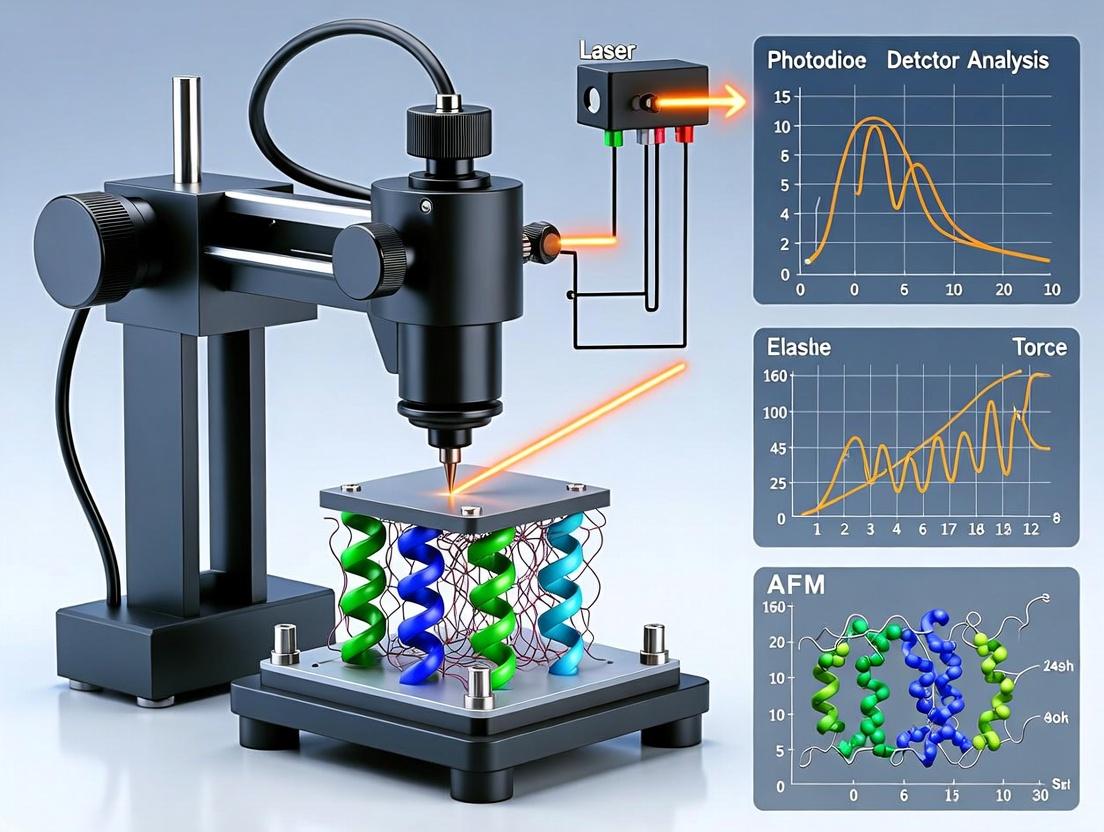
This article provides a detailed roadmap for using Atomic Force Microscopy (AFM) to characterize the nanomechanical properties of collagen fibrils, a critical component of the extracellular matrix.
Measuring Collagen Fibril Mechanics: A Comprehensive AFM Guide for Biomedical Research
Abstract
This article provides a detailed roadmap for using Atomic Force Microscopy (AFM) to characterize the nanomechanical properties of collagen fibrils, a critical component of the extracellular matrix. Targeted at researchers and drug development professionals, it covers foundational principles, advanced methodological protocols, common troubleshooting strategies, and validation techniques. By integrating the latest research, this guide aims to standardize AFM-based biomechanical analysis, enabling more accurate investigation of tissue mechanics in health, disease, and therapeutic intervention.
Collagen Nanomechanics 101: Why Fibril-Level Properties Dictate Tissue Function
Collagen fibrils are the primary structural building blocks of the extracellular matrix (ECM) in connective tissues, providing tensile strength, elasticity, and critical biochemical signaling platforms. These nanoscale, rope-like assemblies are composed of triple-helical collagen molecules (primarily Type I) arranged in a quarter-stagger array, resulting in the characteristic 67 nm D-periodic banding pattern observable via electron microscopy and atomic force microscopy (AFM). Their hierarchical organization, from molecules to fibrils to fibers, directly determines the macroscopic mechanical properties of tissues such as skin, tendon, bone, and cornea. Within the context of AFM-based research on biomechanics, understanding collagen fibril nanostructure is foundational for investigating disease pathogenesis (e.g., fibrosis, osteogenesis imperfecta, Ehlers-Danlos syndrome) and developing biomimetic materials or therapeutic interventions.
Key Quantitative Parameters of Collagen Fibrils
The mechanical and structural properties of collagen fibrils can be quantified using AFM and other techniques. The following tables summarize key parameters essential for research.
Table 1: Structural and Dimensional Properties of Native Type I Collagen Fibrils
| Parameter | Typical Range | Measurement Technique | Notes |
|---|---|---|---|
| Diameter | 50 - 500 nm | TEM, AFM | Tissue-dependent; tendon: ~100-300 nm, cornea: ~25-35 nm. |
| D-periodicity | 67 nm | TEM, AFM | Arises from quarter-stagger molecular packing; a key identifying feature. |
| Length | Micrometers to millimeters | TEM, SEM | Effectively continuous in tissues. |
| Packing Density | ~1.2 - 1.3 g/cm³ | X-ray diffraction, Modeling | High degree of molecular order. |
Table 2: Mechanical Properties of Single Collagen Fibrils
| Parameter | Typical Range | Measurement Technique (Commonly AFM-based) | Significance |
|---|---|---|---|
| Elastic Modulus (Tensile) | 2 - 10 GPa | AFM Tensile Testing, AFM 3-Point Bending | Indicates intrinsic fibril stiffness; varies with hydration, cross-linking. |
| Elastic Modulus (Indentation) | 0.5 - 5 GPa | AFM Nanoindentation | Measures local compressive stiffness; sensitive to tip geometry. |
| Ultimate Tensile Strength | 0.5 - 1 GPa | Micro-mechanical testing | Exceptional strength for a biological nanofiber. |
| Strain at Failure | 10 - 30% | Micro-mechanical testing | Reflects molecular sliding and deformation mechanisms. |
Core Experimental Protocols for AFM Analysis
This section details protocols for preparing and analyzing collagen fibrils via AFM, framed within a thesis investigating their mechanical properties.
Protocol 1: Isolation and Substrate Preparation of Collagen Fibrils for AFM Imaging
- Objective: To deposit isolated, intact collagen fibrils onto a substrate suitable for high-resolution AFM imaging and mechanical testing.
- Materials: See "The Scientist's Toolkit" (Section 5).
- Procedure:
- Tissue Homogenization: Mince 0.5 g of fresh or frozen rat tail tendon (or other tissue) in 50 mL of 0.5 M acetic acid. Stir at 4°C for 48 hours.
- Differential Salt Precipitation: Centrifuge homogenate at 15,000 g for 1 hour at 4°C. Collect supernatant. Precipitate collagen by adding NaCl to a final concentration of 0.7 M. Pellet by centrifugation (15,000 g, 1 hour).
- Dialysis and Fibrillogenesis: Re-dissolve pellet in 0.5 M acetic acid. Dialyze extensively against 0.02 M Na2HPO4 (pH 7.4) at 4°C to induce fibril formation. Fibrillogenesis can be monitored by increased solution turbidity.
- Substrate Deposition: Dilute fibril suspension 1:100 in molecular biology-grade water. Pipette 20 µL onto a freshly cleaved muscovite mica disk. Incubate for 5 minutes.
- Rinsing and Drying: Gently rinse the mica surface with 5 mL of ultrapure water to remove salts and unbound material. Dry under a gentle stream of nitrogen or argon gas. For imaging in liquid, rinse with and immerse in appropriate buffer (e.g., PBS).
Protocol 2: AFM Nanoindentation for Local Elastic Modulus Mapping
- Objective: To measure the spatially resolved elastic (Young's) modulus of individual collagen fibrils in a hydrated or dry state.
- Materials: AFM with calibrated cantilevers, fluid cell (if in liquid), analysis software (e.g., NanoScope Analysis, Gwyddion, custom MATLAB/Python scripts).
- Procedure:
- Cantilever Calibration: Determine the spring constant (k, N/m) of the cantilever using the thermal tune method. Calibrate the optical lever sensitivity (nm/V) on a hard, clean surface (e.g., sapphire).
- Engagement and Imaging: Engage on the prepared sample in air or buffer. Acquire a high-resolution topographic image in tapping or PeakForce Tapping mode to locate isolated fibrils.
- Force Volume/PeakForce QNM Acquisition: Define a grid (e.g., 32x32 points) over a region containing a fibril. At each point, perform a force-distance curve with a controlled maximum trigger force (typically 0.5-5 nN) and constant approach/retract velocity.
- Data Analysis: For each force curve, fit the retract (or approach) segment using an appropriate contact mechanics model (e.g., Hertz, Sneddon, Oliver-Pharr). For a pyramidal tip, the Sneddon model is often used:
F = (E/(1-ν²)) * (tan(α)/√2) * δ²where F is force, E is Young's modulus, ν is Poisson's ratio (assume ~0.5 for biological samples), α is the tip half-angle, and δ is indentation depth. - Modulus Mapping: Generate a 2D map by assigning the calculated modulus value to each grid point, overlaying it on the topography.
Visualization of Workflows and Concepts
Title: Workflow for AFM-Based Collagen Fibril Isolation and Analysis
Title: Collagen Fibril-Cell Mechanotransduction Signaling Pathway
The Scientist's Toolkit: Research Reagent Solutions
Table 3: Essential Materials for Collagen Fibril AFM Research
| Item | Function/Description | Example Product/Catalog Number |
|---|---|---|
| Type I Collagen Source | High-purity, native collagen for control experiments. | Rat Tail Tendon, Acid-Soluble (e.g., Corning Collagen I, High Concentration) |
| AFM Substrate | Atomically flat, negatively charged surface for fibril adhesion. | Muscovite Mica Discs (V1 Grade, 10-15mm diameter) |
| AFM Probe | Tip for imaging and indentation; stiffness must match mode. | Bruker RTESPA-300 (for imaging), Bruker PNPL (for soft indentation) |
| Cross-linking Agent | To artificially modify fibril mechanics for controlled studies. | Genipin (natural), Glutaraldehyde (synthetic) |
| Protease Enzyme | To enzymatically degrade fibrils, modeling disease. | Collagenase Type I (from Clostridium histolyticum) |
| Buffers for Fibrillogenesis | To control pH and ionic strength for reproducible fibril assembly. | 0.02 M Na₂HPO₄ (pH 7.4), Phosphate Buffered Saline (PBS) |
| AFM Calibration Standard | To verify lateral (nm) and vertical (force) scale accuracy. | TGZ1/TGQ1 Grating (lateral), PS-PE Soft Sample (force) |
Within the broader thesis investigating collagen fibril mechanical properties via Atomic Force Microscopy (AFM), three key parameters are paramount: elasticity, viscoelasticity, and adhesion. These properties dictate fibril function in tissues and their alterations in disease, informing drug development targeting connective tissue disorders. This document provides application notes and detailed protocols for their quantitative assessment.
Table 1: Representative Mechanical Properties of Native Collagen Fibrils
| Mechanical Parameter | Typical Value Range | Measurement Technique | Biological/Pathological Significance |
|---|---|---|---|
| Elastic Modulus (Young's Modulus) | 1.0 - 5.0 GPa | AFM PeakForce QNM, Force-Volume Mapping | Correlates with cross-link density; reduced in osteogenesis imperfecta. |
| Adhesion Force | 50 - 500 pN | AFM Force-Distance Spectroscopy | Reflects ligand-receptor (e.g., integrin) binding and surface energy; altered in fibrosis. |
| Loss Tangent (tan δ) | 0.05 - 0.15 | AFM Dynamic Mechanical Analysis (DMA) or Force Modulation | Ratio of viscous to elastic response; indicates energy dissipation, increases with fibril degradation. |
| Relaxation Time Constant | 0.1 - 1.0 seconds | AFM Stress-Relaxation Test | Characterizes viscoelastic flow; prolonged in aged or glycated fibrils. |
Table 2: Key AFM Probe Specifications for Collagen Fibril Measurements
| Probe Type | Tip Radius (nm) | Spring Constant (N/m) | Recommended Mode | Primary Parameter Measured |
|---|---|---|---|---|
| Silicon Nitride (MLCT) | 20 - 60 | 0.01 - 0.1 | Force Spectroscopy, QNM | Adhesion, Low-force Elasticity |
| Diamond-like Carbon | < 20 | 200 - 400 | Nanoindentation | High-resolution Elastic Modulus |
| Conductive Diamond | 20 - 50 | 20 - 80 | Piezo-responsive & Force Modulation | Viscoelasticity, Electro-mechanical |
Experimental Protocols
Protocol 1: AFM-Based Nanoindentation for Elastic Modulus Mapping
Objective: To spatially map the elastic modulus of individual collagen fibrils. Reagents & Materials: See Scientist's Toolkit. Procedure:
- Sample Preparation: Deposit isolated collagen fibrils (e.g., from rat tail tendon) on freshly cleaved mica in PBS. Allow 15 min for adsorption.
- AFM Calibration: Calibrate the AFM cantilever’s spring constant via thermal tune method. Determine optical lever sensitivity on a sapphire surface.
- Mapping Setup: Engage PeakForce Tapping or Force-Volume mode in fluid. Set a peak force setpoint ≤ 1 nN to avoid plastic deformation.
- Data Acquisition: Acquire a 256x256 pixel map over a 2x2 μm area encompassing a single fibril. Ensure >5 force curves per fibril diameter.
- Data Analysis: Fit the retraction curve of each force point using the Derjaguin–Muller–Toporov (DMT) model in the AFM software to extract the reduced Young’s Modulus (Er). Apply a Poisson's ratio of 0.5 for fibrils to calculate the sample modulus.
Protocol 2: Force-Distance Spectroscopy for Adhesion Measurement
Objective: To quantify the adhesion force between the AFM tip and the fibril surface. Procedure:
- Functionalization (Optional): For specific binding studies, coat the tip (e.g., with collagen-binding protein or drug candidate) using PEG-linker chemistry.
- Site Selection: Use AFM imaging to locate a fibril. Position the tip over the center of the fibril.
- Spectroscopy Acquisition: Set a ramp size of 500 nm, a velocity of 500 nm/s, and a trigger threshold of 1 nN. Collect 100-200 consecutive force curves at the same location.
- Adhesion Analysis: Measure the maximum force of adhesion during tip retraction (minimum force in the retract curve). Plot a histogram of values; report mean ± standard deviation.
Protocol 3: Stress-Relaxation Test for Viscoelasticity
Objective: To characterize the time-dependent viscoelastic response of a collagen fibril. Procedure:
- Initial Engagement: Engage contact mode on the fibril in fluid.
- Indentation Ramp: Program a rapid vertical indentation (e.g., 5 nm in 10 ms) to a defined setpoint force.
- Hold Phase: Maintain the constant indentation depth (feedback off) for a period of 10 seconds while recording the decaying force.
- Data Fitting: Fit the force relaxation data (F vs. t) to a Prony series or a standard linear solid model: F(t) = F₀ + (F∞ - F₀) * exp(-t/τ), where τ is the relaxation time constant.
Visualizations
Title: Thesis Parameter Measurement Workflow
Title: Elasticity Mapping Protocol Steps
The Scientist's Toolkit
Table 3: Essential Research Reagents & Materials
| Item | Function/Description | Example Product/Catalog # |
|---|---|---|
| Type I Collagen Fibrils | Isolated biological substrate for measurement. | Rat tail tendon collagen (Sigma C3867) |
| Muscovite Mica Discs | Atomically flat, negatively charged substrate for fibril adsorption. | V1 Grade, 15mm diameter |
| Phosphate Buffered Saline (PBS) | Physiological buffer for hydration and ionic strength maintenance during liquid AFM. | 1x, pH 7.4, sterile filtered |
| AFM Cantilevers (Silicon Nitride) | For force spectroscopy and adhesion; low spring constant minimizes sample damage. | Bruker MLCT-Bio-DC (k ≈ 0.03 N/m) |
| AFM Cantilevers (Diamond-coated) | For high-resolution nanoindentation; high stiffness and wear resistance. | BudgetSensors ContGD-G (k ≈ 200 N/m) |
| PEG Crosslinkers | For tip functionalization in specific adhesion studies. | NHS-PEG-Maleimide, 5kDa |
| Data Analysis Software | For fitting force curves to mechanical models. | Bruker NanoScope Analysis, JPK DP, AtomicJ |
Application Notes
The mechanical properties of collagen fibrils, the fundamental load-bearing units in connective tissues, are critical determinants of tissue function. Alterations in fibril nanomechanics are now recognized as early hallmarks of pathogenesis in diseases ranging from fibrosis and cancer to osteoarthritis and cardiovascular disorders. Atomic Force Microscopy (AFM)-based nanomechanics provides a direct quantitative link between the molecular/structural composition of fibrils and their emergent tissue-level mechanical function, offering a novel paradigm for drug target identification and therapeutic efficacy assessment.
Key Insights:
- Fibril as a Biosensor: The fibril's Young's modulus integrates inputs from collagen cross-linking (enzymatic [LOX] and non-enzymatic [AGEs]), proteoglycan content, and molecular packing. It thus serves as a precise biosensor of tissue health.
- Early Disease Detection: AFM can detect stiffening of individual fibrils in early-stage fibrosis and atherosclerosis before bulk tissue changes are evident, enabling a new class of early diagnostic biomarkers.
- Therapeutic Monitoring: The efficacy of anti-fibrotic drugs (e.g., LOX inhibitors) or glycation breakers (e.g., alagebrium) can be quantified directly via changes in fibril mechanics, providing a high-content functional readout.
- Mechanopathology Gradient: Mapping fibril mechanics across tissue regions (e.g., tumor margin vs. core) reveals mechanopathological gradients that correlate with disease progression and cell invasion potential.
Table 1: Collagen Fibril Elastic Modulus in Health and Disease
| Tissue / Condition | Mean Young's Modulus (MPa) | Range (MPa) | Key Contributing Factor | Measurement Technique |
|---|---|---|---|---|
| Healthy Rat Tail Tendon | 320 | 280 - 380 | High D-periodicity, controlled cross-linking | AFM PeakForce QNM |
| Early-Stage Liver Fibrosis (Mouse Model) | 850 | 700 - 1100 | Elevated LOX-mediated cross-linking | AFM Force Spectroscopy |
| Advanced Osteoarthritic Cartilage | 1800 | 1500 - 2200 | AGE accumulation, proteoglycan loss | AFM Indentation Mapping |
| Breast Cancer Tumor Margin | 550 | 400 - 750 | Aligned fibrils, moderate cross-linking | AFM Fast Force Mapping |
| Cardiac Tissue Post-MI | 1200 | 950 - 1400 | Collagen deposition & cross-linking | AFM with BRRT correction |
| Treatment with LOX Inhibitor (BAPN) | 400 (from 850 baseline) | 350 - 500 | Reduction in enzymatic cross-links | AFM Force Volume |
Table 2: Impact of Molecular Interventions on Fibril Mechanics
| Intervention Target | Example Agent | Effect on Fibril Modulus | Proposed Mechanism | Assay Context |
|---|---|---|---|---|
| Lysyl Oxidase (LOX) | β-aminopropionitrile (BAPN) | Decrease by 40-60% | Inhibits covalent collagen cross-link formation | Ex vivo fibril & tissue |
| Advanced Glycation End-products (AGEs) | Alagebrium (ALT-711) | Decrease by 20-35% | Breaks pre-formed AGE cross-links | In vitro glycated fibrils |
| TGF-β1 Signaling | SB-431542 | Decrease by 30-50% | Reduces LOX expression & collagen production | Cell-fibril co-culture |
| Integrin α2β1 Binding | Inhibitory Antibody | Decrease in local adhesion | Blocks cellular force transmission to fibril | Live-cell AFM |
Experimental Protocols
Protocol 1: AFM-Based Nanomechanical Mapping of Isolated Collagen Fibrils
Objective: To quantitatively measure the elastic modulus of individual collagen fibrils deposited on a substrate.
Materials: See "Scientist's Toolkit" below.
Procedure:
- Substrate Preparation: Clean a 15mm glass coverslip with piranha solution (Caution: Highly corrosive). Rinse with ultrapure water and dry under nitrogen. Treat with APTES (2% v/v in ethanol) for 1 hour to create a positively charged amine surface.
- Fibril Isolation & Deposition: Acid-extract collagen from rat tail tendon. Dilute to 0.5 mg/mL in 0.01M acetic acid. Apply 50 µL to the APTES-coated coverslip for 10 minutes. Rinse gently with PBS (pH 7.4) to remove unbound collagen and allow fibrillogenesis for 24 hours in a humid chamber at 37°C.
- AFM Calibration: Calibrate the AFM cantilever's sensitivity on a clean, rigid sapphire surface. Determine the spring constant using the thermal tune method.
- Nanomechanical Mapping: Mount the sample in PBS. Use a silicon nitride cantilever with a nominal spring constant of 0.1 N/m and a 20 nm spherical tip. Operate in PeakForce QNM or Force Volume mode.
- Set the peak force amplitude to 10-15 nm.
- Set mapping resolution to 256x256 pixels over a 5x5 µm area encompassing a single fibril.
- Collect >10 force curves per fibril width.
- Data Analysis: Fit the retract portion of each force curve using the Derjaguin–Muller–Toporov (DMT) model in the AFM software (e.g., NanoScope Analysis). Exclude curves from the substrate. Plot modulus values along and across the fibril axis to assess heterogeneity.
Protocol 2: Assessing Drug Efficacy on Fibril Mechanics in a Fibrosis Model
Objective: To evaluate the effect of a LOX-inhibiting drug on the stiffness of fibrils in an ex vivo fibrotic tissue slice.
Procedure:
- Tissue Preparation: Generate a fibrotic mouse liver model (e.g., using CCl₄ injection for 6 weeks). Harvest and flash-freeze tissue in OCT.
- Cryosectioning: Cut 10 µm thick sections using a cryostat and mount on APTES-coated glass slides. Air-dry for 5 min.
- Drug Treatment: For the treatment group, incubate sections in 100 µM BAPN in PBS for 2 hours at 37°C. Use PBS-only for the control group.
- AFM Indentation Mapping: Use a sharpened silicon cantilever (k ~ 0.7 N/m). Perform a 10x10 grid of force indentations (1 µm spacing) on a collagen-rich area identified by prior SHG imaging.
- Set indentation depth to 200 nm.
- Use a Sneddon (conical) model for analysis on tissue.
- Statistical Analysis: Perform a two-tailed t-test comparing the mean modulus values from >5 different tissue sections per group. Correlate modulus reduction with histology (picrosirius red for collagen content).
Visualization Diagrams
Diagram Title: Molecular Pathways to Fibril Stiffening
Diagram Title: AFM Workflow from Tissue to Data
The Scientist's Toolkit
Table 3: Essential Research Reagents & Materials for AFM Collagen Fibril Mechanics
| Item | Function & Rationale | Example Product/Specification |
|---|---|---|
| APTES-coated Substrates | Provides a positively charged surface for strong electrostatic adhesion of negatively charged collagen monomers, enabling controlled fibrillogenesis for isolated fibril studies. | Glass coverslips treated with (3-Aminopropyl)triethoxysilane (2% v/v). |
| Biolever Mini Cantilevers | Low spring constant (≈0.1 N/m) cantilevers with sharp, silicon nitride tips for high-resolution imaging and gentle nanomechanical mapping in fluid. | Olympus BL-AC40TS-C2 (k=0.09 N/m, tip r≈8nm). |
| PeakForce QNM AFM Mode | An operational mode that provides simultaneous topographical imaging and quantitative nanomechanical property mapping at high speed and resolution. | Bruker Dimension FastScan with ScanAsyst-Air tips. |
| DMT/Sneddon Model Software | Essential analytical packages for fitting force-indentation curves to extract the elastic (Young's) modulus, accounting for tip geometry and adhesion. | NanoScope Analysis v2.0 (Bruker) or JPK Data Processing. |
| LOX Inhibitor (BAPN) | Small molecule inhibitor of lysyl oxidase activity. Used ex vivo or in vitro to directly test the contribution of enzymatic cross-linking to fibril stiffening. | β-aminopropionitrile fumarate (Sigma, B3133), used at 50-500 µM. |
| Glycation Agent (MGO) | Methelyglyoxal is used to induce rapid formation of Advanced Glycation End-products (AGEs) on collagen in vitro, modeling diabetic tissue stiffening. | Methylglyoxal solution (Sigma, M0252), typically 1-5 mM treatment. |
| Picrosirius Red Stain | Histological stain that selectively binds to collagen. Used to validate collagen location and density in tissue sections before/after AFM analysis. | Abcam Picrosirius Red Stain Kit (ab246832). |
Why AFM? Advantages Over Bulk Testing and Other Nanoscale Techniques
Atomic Force Microscopy (AFM) has emerged as the preeminent technique for investigating the nanomechanical properties of collagen fibrils. This capability is critical for understanding tissue physiology, disease progression (e.g., fibrosis, osteoarthritis, Ehlers-Danlos syndromes), and the efficacy of therapeutic interventions. Within the broader thesis on AFM for collagen research, this application note delineates the specific advantages of AFM over bulk mechanical testing and other nanoscale characterization methods, providing concrete experimental protocols and data.
Comparative Advantages: AFM vs. Alternative Techniques
AFM vs. Bulk Mechanical Testing (e.g., Tensile Testers, Rheometers)
Bulk testing measures the average response of millions of fibrils and the intervening matrix, obscuring the unique contributions of individual fibrils and their hierarchical structure.
Table 1: Qualitative and Quantitative Comparison: AFM vs. Bulk Testing
| Aspect | Atomic Force Microscopy (AFM) | Bulk Mechanical Testing |
|---|---|---|
| Sample Requirement | Minimal (ng-µg). Single fibrils or thin sections. | Large (mg-g). Macroscopic tissue samples. |
| Spatial Resolution | Nanoscale (sub-nm topographical, ~10-100 nm mechanical). Resolves single fibrils (50-500 nm diameter). | Macroscale (mm-cm). Averages over entire sample volume. |
| Measured Properties | Elasticity (Young's modulus), adhesion, deformation, dissipation of single fibrils/sub-fibrillar components. | Aggregate tensile strength, bulk modulus, strain to failure of composite tissue. |
| Key Advantage for Collagen | Correlates structure (D-banding) with mechanics at the fundamental building-block level. Cannot be derived from bulk tests. | Provides clinically relevant whole-tissue parameters. |
| Typical Modulus Range for Collagen Fibrils* | 0.5 – 10 GPa (hydrated, from nanoindentation). | 0.1 MPa – 1 GPa (for soft tissues like tendon, dependent on hydration and strain rate). |
| Throughput | Low to medium (single-point mapping). | High (single measurement per sample). |
| Environment | Fully compatible with physiological liquid conditions. | Possible, but often technically challenging. |
*Data compiled from recent studies (2022-2024). Bulk modulus is orders of magnitude lower due to matrix contribution and fibril orientation averaging.
AFM vs. Other Nanoscale Techniques (Nanoindentation, Electron Microscopy)
Table 2: Comparison of Nanoscale Characterization Techniques
| Technique | Primary Strength | Key Limitation for Live Collagen Research | AFM's Comparative Advantage |
|---|---|---|---|
| AFM | 3-in-1: Topography + Mechanical Properties + Liquid Operation. | Scan speed, tip convolution effects. | Uniquely combines nanomechanical mapping in physiological buffer. |
| Nanoindentation (NI) | Excellent absolute mechanical quantification (hard materials). | Typically requires very smooth, hard surfaces. Poor lateral resolution (>1 µm). | Superior lateral resolution and ability to test non-rigid, fibrous samples in liquid. |
| Scanning Electron Microscopy (SEM) | Ultra-high resolution topography. | High vacuum required. No direct mechanical data. Sample coating often needed. | Non-destructive, no vacuum needed, integrates mechanics with structure. |
| Transmission Electron Microscopy (TEM) | Atomic-level internal structure. | Vacuum, complex sample prep (thin slicing, staining). No direct mechanics. | Enables correlative studies (TEM for structure, AFM for mechanics of similar samples). |
Detailed Experimental Protocols
Protocol: AFM Nanoindentation on Isolated Collagen Fibrils in Liquid
Objective: To measure the elastic modulus of individual type I collagen fibrils deposited on a substrate under physiological conditions.
I. Research Reagent Solutions & Materials
Table 3: Essential Research Reagent Solutions
| Item | Function/Description |
|---|---|
| Type I Collagen Fibrils (e.g., from rat tail tendon, bovine Achilles) | The analyte. Isolated via acid dissolution and fibrillogenesis or mechanical teasing. |
| Phosphate Buffered Saline (PBS), pH 7.4 | Standard physiological buffer for hydration and ionic strength. |
| APTS-coated Glass Slides (3-Aminopropyltriethoxysilane) | Creates a positively charged surface for strong electrostatic adhesion of negatively charged fibrils. |
| Cantilevers (e.g., Bruker RTESPA-150, Budget Sensors ContAl-G) | Silicon probes with reflective gold coating. Spring constant: ~5-6 N/m. Tip radius: ~8-12 nm for high resolution. |
| Calibration Kit (e.g., polystyrene beads of known modulus, clean gratings) | For precise cantilever spring constant (thermal tune) and tip shape determination. |
| Liquid AFM Cell | Sealed chamber to immerse sample and cantilever tip. |
II. Step-by-Step Methodology
Sample Preparation:
- Dilute isolated collagen fibril suspension in 10 mM acetic acid or PBS.
- Deposit 20-50 µL onto an APTS-coated glass slide for 10 minutes.
- Gently rinse with deionized water followed by PBS to remove unbound fibrils and salts. Keep substrate hydrated.
AFM Setup & Calibration:
- Mount sample in liquid cell, add PBS to fully immerse.
- Mount cantilever and align laser.
- Perform thermal tune method in liquid to determine the exact spring constant (k).
- Determine the tip's sensitivity by acquiring a force curve on a rigid part of the substrate (e.g., clean glass).
Imaging & Indentation:
- First, image fibrils in Peak Force Tapping or Contact Mode in liquid to locate individual, well-separated fibrils.
- Select points for indentation: On the fibril's crest (aligned with D-period banding if visible) and on the substrate adjacent to the fibril for baseline subtraction.
- Force Curve Acquisition: Set parameters: trigger force 1-5 nN, approach/retract velocity 0.5-1 µm/s, 512-1024 data points per curve. Acquire a grid or line of force curves along/across the fibril.
Data Analysis (using NanoScope Analysis or similar):
- Fit the retract portion of the baseline-subtracted curve with the Hertz/Sneddon model for a conical/spherical tip.
- Input calibrated k, tip radius, and Poisson's ratio (assume ν ≈ 0.5 for hydrated biological samples).
- The model outputs Young's Modulus (E) at each indentation point. Compile data from multiple fibrils (n>30).
Diagram: AFM Nanoindentation Workflow for Collagen Fibrils
Protocol: PeakForce QNM Mapping of Collagen Matrices
Objective: To simultaneously map topography, adhesion, deformation, and modulus of a network of collagen fibrils.
- Cantilever & Mode Selection: Use a sharp, calibrated cantilever (as above). Select PeakForce QNM mode.
- Parameter Optimization: Set PeakForce frequency (~0.25-1 kHz) and amplitude to achieve consistent tapping. Adjust the peak force setpoint to ~100-500 pN to avoid sample damage.
- Mapping: Scan the area (e.g., 5x5 µm) at a resolution of 256x256 pixels. Each pixel contains a full force curve.
- Analysis: The software processes all curves in real-time using the Derjaguin–Muller–Toporov (DMT) model (preferred for stiff samples with adhesion) to generate simultaneous maps of Modulus, Adhesion, Deformation, and Dissipation.
Visualization of Key Concepts
Diagram: Hierarchical Mechanical Testing from Tissue to Fibril
Diagram: Decision Pathway for Technique Selection
For the thesis research focused on collagen fibril mechanical properties, AFM is not merely an optional tool but a fundamental one. It uniquely provides the quantitative, nanoscale mechanical data under physiologically relevant (liquid) conditions that is irretrievably lost in bulk testing and is inaccessible to other high-resolution techniques like EM. The protocols outlined herein provide a rigorous foundation for generating publishable data that directly links collagen nanostructure to function, enabling novel insights in connective tissue biology and therapeutic development.
Introduction & Thesis Context Within a broader thesis focused on quantifying the mechanical properties of collagen fibrils via Atomic Force Microscopy (AFM), a critical extension is understanding how these nanomechanical signals are transduced into biochemical cell signaling events. This application note details protocols and conceptual frameworks for investigating this mechanobiology interface, where AFM-derived mechanical inputs (e.g., fibril stiffness, deformation) are linked to cellular mechanosensing and downstream signaling pathways relevant to tissue development, fibrosis, and cancer.
Table 1: Quantitative Landscape of Collagen Fibril Mechanics & Associated Signaling
Data compiled from recent literature (2023-2024).
| Parameter | Typical Range (Healthy Tissue) | Pathophysiological Shift (e.g., Fibrosis/Tumor) | Primary Associated Signaling Pathway | Key Readout |
|---|---|---|---|---|
| Fibril Elastic Modulus | 1 - 5 GPa | Increased (Fibrosis: 5-12 GPa) Decreased (Tumor: 0.2-2 GPa) | Integrin-FAK-Rho/ROCK | p-FAK (Tyr397), ROCK activity |
| Fibril Diameter | 50 - 200 nm | Increased (Fibrosis: >300 nm) | DDR1/2 Collagen Receptor | DDR1/2 Phosphorylation |
| Substrate Stiffness (Bulk) | 0.5 - 2 kPa (soft tissue) | 5 - 20 kPa (stiffened tissue) | YAP/TAZ Nuclear Translocation | YAP/TAZ Nuclear/Cytoplasmic Ratio |
| Local Nanoscale Adhesion Force | 50 - 200 pN | Increased with integrin clustering (>500 pN) | Integrin-Talin-Vinculin | Vinculin Focal Adhesion Lifespan |
Protocol 1: AFM-Based Nanomechanical Mapping of Reconstituted Collagen Fibrils for Cell Signaling Studies
Objective: To create and characterize type I collagen substrates with defined nanomechanical properties for subsequent cell plating and signaling analysis.
Materials (Research Reagent Solutions):
- Type I Collagen, High Concentration (≥5 mg/ml): From rat tail or recombinant source. Provides the fundamental fibril-forming protein.
- AFM Probes (Bruker MLCT-Bio-DC): Silicon nitride cantilevers with a nominal spring constant of 0.03 N/m and a spherical tip (Ø ~20µm). Enables high-force, quantitative nanomechanical mapping (PeakForce QNM) on soft biological samples.
- PBS with Ca²⁺/Mg²⁺: For physiological buffer conditions during fibrillogenesis.
- 3-Aminopropyltriethoxysilane (APTES): For functionalizing glass-bottom dishes to promote fibril adhesion.
- Live-Cell Imaging Dish (35mm, Glass Bottom): For combined AFM and subsequent confocal microscopy.
- FAK Inhibitor (PF-573228) or ROCK Inhibitor (Y-27632): Pharmacological tools to validate pathway involvement in mechanotransduction.
Procedure:
- Substrate Preparation: Treat glass-bottom dishes with APTES vapor for 30 min to create a positively charged surface. Rinse thoroughly with deionized water and dry under nitrogen.
- Collagen Fibril Reconstitution: Dilute stock collagen to 2 mg/ml in PBS (with Ca²⁺/Mg²⁺). Pipette 100 µl onto the APTES-treated dish. Incubate at 37°C, 95% humidity for 2-4 hours to allow fibrillogenesis. Gently rinse with PBS to remove non-fibrillar collagen.
- AFM Nanomechanical Mapping:
- Mount the dish on the AFM stage.
- Calibrate the cantilever sensitivity and spring constant using the thermal tune method.
- Engage in PeakForce QNM mode in PBS at room temperature.
- Set the PeakForce amplitude to 100-150 nm and frequency to 0.5-1 kHz.
- Map areas of 10x10 µm² to 50x50 µm² with a resolution of 256x256 pixels.
- The Derjaguin–Müller–Toporov (DMT) model is applied to force-distance curves to extract the Elastic Modulus and Adhesion Force maps.
- Data Correlation: Register AFM topography maps with subsequent fluorescence images of cell adhesions (from Protocol 2) to correlate local fibril mechanics with subcellular signaling events.
Protocol 2: Probing Integrin-FAK Signaling in Cells on Defined Fibrils
Objective: To assess early mechanosensitive signaling in cells plated on characterized collagen fibrils.
Procedure:
- Cell Plating: Seed fibroblasts (e.g., NIH/3T3) or epithelial cells (e.g., MCF-10A) at low density (5x10³ cells/dish) onto the characterized fibril substrates from Protocol 1. Allow cells to adhere and spread for 2-4 hours in complete medium.
- Pharmacological Modulation (Optional): Treat cells with FAK inhibitor (PF-573228, 10 µM) or ROCK inhibitor (Y-27632, 10 µM) 1 hour prior to plating.
- Fixation & Immunostaining: At the desired timepoint (e.g., 4 hours post-plating), fix cells with 4% PFA for 15 min, permeabilize with 0.1% Triton X-100, and block with 5% BSA.
- Dual-Labeling:
- Incubate with primary antibodies: anti-p-FAK (Tyr397) and anti-vinculin.
- Incubate with fluorescent secondary antibodies (e.g., Alexa Fluor 488 and 647).
- Counterstain F-actin with phalloidin (e.g., Alexa Fluor 555) and nuclei with DAPI.
- Confocal Imaging & Analysis:
- Acquire high-resolution z-stacks using a confocal microscope.
- Quantify p-FAK intensity at focal adhesions (co-localized with vinculin).
- Measure focal adhesion size and aspect ratio.
- Correlate these metrics with the underlying fibril modulus from the registered AFM map.
Protocol 3: Assessing YAP/TAZ Nuclear Translocation as a Stiffness-Responsive Readout
Objective: To evaluate downstream transcriptional mechanosensing in response to bulk fibril network stiffness.
Procedure:
- Stiffness-Modulated Fibril Gels: Prepare collagen gels at different concentrations (e.g., 1.5 mg/ml for ~0.5 kPa, 4 mg/ml for ~3 kPa) in 24-well plates. Allow polymerization at 37°C for 1 hour.
- Cell Culture: Seed cells onto gels and culture for 24-48 hours.
- Immunofluorescence for YAP/TAZ:
- Fix, permeabilize, and block as in Protocol 2.
- Incubate with anti-YAP/TAZ primary antibody, followed by fluorescent secondary.
- Stain nuclei (DAPI) and F-actin.
- Quantitative Imaging Analysis:
- Acquire images of single-cell planes.
- Use image analysis software (e.g., CellProfiler, FIJI) to segment nuclei and cytoplasm.
- Calculate the Nuclear-to-Cytoplasmic (N/C) Ratio of YAP/TAZ fluorescence intensity.
Visualizations
Title: Nanomechanics to Signaling Pathway Map
Title: Correlative AFM-Cell Signaling Workflow
The Scientist's Toolkit: Key Research Reagents & Materials
| Item | Function in Bridging Nanomechanics & Signaling |
|---|---|
| High-Purity Type I Collagen | The foundational biomechanical scaffold. Source and lot consistency are critical for reproducible fibril mechanics. |
| Functionalized AFM Probes (Spherical Tip) | Enables quantitative, high-force mapping of soft fibrils without sample damage, providing modulus and adhesion data. |
| Phospho-Specific Antibodies (p-FAK, p-DDR1) | Critical for detecting early, mechanics-sensitive activation states of key signaling molecules. |
| YAP/TAZ Antibodies | Essential readout for the integrated mechanotransduction response leading to transcriptional changes. |
| Small Molecule Inhibitors (FAKi, ROCKi) | Pharmacological tools to establish causal links between specific pathways and observed cellular responses to mechanics. |
| Live-Cell/Glass-Bottom Dishes | Enable sequential AFM characterization, cell culture, and high-resolution fluorescence imaging on the same sample. |
| Silane Coupling Agents (APTES) | Modifies substrate surface chemistry to ensure stable collagen fibril adhesion during AFM scanning and cell culture. |
Step-by-Step AFM Protocol for Reliable Collagen Fibril Characterization
This document provides essential protocols for preparing collagen fibrils for Atomic Force Microscopy (AFM)-based nanomechanical characterization, a cornerstone of research into tissue engineering, fibrosis, and connective tissue disorders.
Collagen Fibril Isolation Protocols
The choice of isolation method depends on the tissue source and desired fibril integrity.
Protocol 1.1: Acid-Solubilization and In Vitro Reconstitution Method: Extracted type I collagen (e.g., from rat tail tendon) is dissolved in 0.1% acetic acid at 4°C for 24h. The solution is centrifuged (50,000 x g, 1h) to remove impurities. Reconstitution is initiated by dialyzing against 0.2M Na2HPO4 (pH 7.4) or 1x PBS at 37°C for 24h, forming D-periodic fibrils. Application: Produces homogenous, non-crosslinked fibrils ideal for baseline mechanical studies or drug interaction screens.
Protocol 1.2: Enzymatic (Matrix Metalloproteinase - MMP) Digestion from Native Tissue Method: Minced tendon tissue is incubated in a digestion buffer (e.g., 50 mM Tris-HCl, 150 mM NaCl, 5 mM CaCl2, pH 7.5) containing 100 µg/mL MMP-1 (Collagenase-1) at 37°C for 6-12h. The digest is centrifuged at low speed (1,000 x g, 5 min) to pellet large debris. The supernatant, containing individual fibrils, is collected and washed in AFM imaging buffer. Application: Isolates mature, crosslinked fibrils preserving native post-translational modifications, critical for studying age-related or pathological tissue.
Table 1: Comparison of Collagen Fibril Isolation Methods
| Method | Fibril Source | Typical Fibril Diameter (nm) | Key Advantage | Primary Limitation |
|---|---|---|---|---|
| Acid-Solubilization & Reconstitution | Commercial (e.g., Rat Tail) | 50 - 150 | High homogeneity, controllable conditions | Lacks native cross-linking & matrix context |
| MMP Enzymatic Digestion | Native Tissue (e.g., Tendon) | 100 - 500 | Preserves native cross-links & morphology | Yield variability; potential enzymatic damage |
| Ultrasonic Dispersion | Native Tissue | 50 - 300 | Rapid, maintains D-periodicity | Broad size distribution, possible fragmentation |
| Differential Centrifugation | Tissue Homogenate | 200 - 1000 | Enriches for intact, mature fibrils | Low yield, co-pelleting of contaminants |
Substrate Immobilization Strategies
Effective, non-destructive immobilization is critical for AFM nanoindentation.
Protocol 2.1: APTES-GA Functionalization for Covalent Tethering Materials: Clean glass or mica substrate, 3-aminopropyltriethoxysilane (APTES), 0.5% glutaraldehyde (GA) in PBS. Method: Substrates are vapor- or solution-phase silanized with APTES. After washing, they are incubated in 0.5% GA for 30 min. Isolated fibrils in PBS are deposited (10-20 µL) for 15-30 min, allowing primary amines on collagen lysine residues to form Schiff bases with aldehydes. Unreacted aldehydes are quenched with 1M ethanolamine or 100 mM glycine. Outcome: Strong, covalent attachment minimizing fibril displacement during scanning/indentation.
Protocol 2.2: Cationic Lipid Bilayer Immobilization Materials: Mica substrate, 1,2-dioleoyl-3-trimethylammonium-propane (DOTAP) or DODAB. Method: A fresh mica surface is prepared by cleavage. 20 µL of 0.1 mg/mL cationic lipid solution is deposited for 10 min, forming a self-assembled bilayer. The surface is rinsed with ultrapure water. Collagen fibrils in low-ionic-strength buffer (e.g., 5 mM HEPES, pH 7.4) are deposited. Electrostatic interaction between the negatively charged fibrils and cationic surface achieves uniform adsorption. Outcome: Presents fibrils in a near-native, hydrated state on a supported, fluid-like surface.
Diagram Title: Covalent Immobilization Workflow (APTES-GA Method)
Hydration Control & Imaging Buffer Optimization
Maintaining physiologically relevant hydration is paramount for accurate mechanical measurement.
Protocol 3.1: Preparation of AFM Imaging/Nanoindentation Buffer Standard Buffer: 150 mM NaCl, 10 mM HEPES or PBS, 2-5 mM CaCl2, pH 7.2-7.5. Rationale: Physiological ionic strength preserves fibril charge screening and integrity. Ca2+ promotes fibril stability. Application: Used for most nanoindentation experiments in contact or PeakForce Tapping mode.
Protocol 3.2: Controlled Humidity Imaging for Dehydration Studies Method: The AFM is placed in an environmental chamber. The sample is first hydrated with imaging buffer, then the relative humidity (RH) is systematically reduced using controlled N2 gas flow while monitoring with a hygrometer. Fibrils are imaged at set RH intervals (e.g., 90%, 70%, 50%, 30%). Application: Quantifies the role of water in fibril viscoelasticity and intermolecular friction.
Table 2: Common AFM Buffers for Collagen Fibril Studies
| Buffer Composition | Primary Function | Key Additives & Their Roles | Best Suited For |
|---|---|---|---|
| Phosphate Buffered Saline (PBS), pH 7.4 | Maintain physiological pH & osmolarity | None, or 5 mM CaCl2 (stabilization) | General imaging & drug incubation studies |
| HEPES (10-20 mM) with NaCl (150 mM) | Stable pH buffering, no phosphate interference | Protease inhibitors (e.g., PMSF, EDTA), 2 mM MgCl2 | Long-duration experiments, enzymatic studies |
| Tris-based Buffer, pH 7.5 | Enzymatic digestion & post-digestion handling | CaCl2 (for MMPs), NaN3 (0.02% for antimicrobial) | Working with enzymatically isolated fibrils |
| Low Ionic Strength Buffer (e.g., 5 mM HEPES) | Promote electrostatic adsorption to cationic surfaces | None | Initial fibril deposition on lipid bilayers |
The Scientist's Toolkit: Key Research Reagent Solutions
Table 3: Essential Materials for Collagen Fibril AFM Sample Prep
| Item | Function & Role in Sample Preparation |
|---|---|
| Type I Collagen (Rat Tail, Bovine) | Standardized source material for in vitro fibril reconstitution. |
| High-Grade Mica Discs (V-1 or V-4 Muscovite) | Provides an atomically flat, negatively charged, cleavable substrate for adsorption. |
| 3-Aminopropyltriethoxysilane (APTES) | Silane coupling agent for functionalizing glass/oxide substrates with amine groups. |
| Cationic Lipids (DOTAP, DODAB, PEI) | Form positively charged layers on mica for electrostatic immobilization of collagen. |
| Glutaraldehyde (25% Solution) | Homobifunctional crosslinker for creating covalent bonds between amines on substrate and fibril. |
| Matrix Metalloproteinase-1 (MMP-1/Collagenase-1) | Enzyme for digesting extracellular matrix to isolate native, intact fibrils from tissue. |
| HEPES Buffer | Non-volatile, biological pH buffer superior to carbonate for maintaining stable pH during AFM scans. |
| Protease Inhibitor Cocktail | Prevents degradation of collagen fibrils during extended isolation or experimentation. |
Diagram Title: Decision Tree for Collagen Fibril AFM Sample Prep
Within the broader thesis on using Atomic Force Microscopy (AFM) to investigate the mechanical properties of collagen fibrils, selecting the appropriate probe is a fundamental and critical decision. The probe acts as the primary interface between the instrument and the sample, directly determining the resolution, accuracy, and type of data acquired. This guide details the key considerations, quantitative parameters, and protocols for selecting probes optimized for high-resolution imaging versus nanomechanical force spectroscopy of collagenous tissues.
Quantitative Probe Parameter Comparison
Table 1: Key Probe Parameters for Imaging vs. Force Spectroscopy
| Parameter | High-Resolution Imaging (e.g., Tapping Mode) | Force Spectroscopy (e.g., Force Volume, Nanoindentation) | Rationale for Collagen Fibrils |
|---|---|---|---|
| Spring Constant (k) | 0.5 - 60 N/m (Typical: 20-40 N/m) | 0.01 - 1.0 N/m (Typical: 0.06 - 0.3 N/m) | Low k for spectroscopy ensures sensitivity to small forces (pN-nN) without damaging soft fibrils. Higher k for imaging provides stability. |
| Resonant Frequency (f₀) | 150 - 500 kHz (in air) | 5 - 75 kHz (in air) | Higher f₀ enables faster scanning and better noise rejection in dynamic modes. Lower f₀ is adequate for quasi-static force curves. |
| Tip Geometry | High Aspect Ratio: Sharp tip (<10 nm radius). Cone angle < 25°. | Blunt/Spherical Probes: Controlled radius (1-50 μm) or colloidal tips (2-20 μm). | Sharp tips resolve fine fibrillar D-banding (~67 nm). Spherical tips provide defined contact area for reliable Hertzian/Sneddon model analysis of modulus. |
| Coating | Reflective coating (Al/Au) for laser detection. | Often uncoated silicon nitride or silica for consistent mechanics. | Coating essential for laser reflectivity. Uncoated tips for spectroscopy avoid thin film adhesion/mechanics complications. |
| Cantilever Material | Silicon | Silicon Nitride (Si₃N₄) | Si₃N₄ is softer, more hydrophilic, and often used for bio-applications in liquid. Silicon offers higher f₀ and sharper tips. |
Table 2: Recommended Probe Types for Collagen Research
| Application Goal | Recommended Probe Type | Typical Model Examples | Key Feature for Collagen |
|---|---|---|---|
| Topography (Air/Liquid) | Silicon, Tapping Mode | RTESPA-300, OMCL-AC160TS | High resonance frequency, sharp tip (<10 nm) for resolving individual fibrils and D-periodicity. |
| PeakForce Tapping Imaging | Silicon, PFQNM Mode | ScanAsyst-Air, SCANASYST-FLUID+ | Integrated auto-optimization and low-noise deflection sensor for simultaneous topography and modulus mapping. |
| Nanoindentation / Single Point FSM | Spherical Tip or Soft Si₃N₄ | SAA-SPH-XXμm, MLCT-Bio-DC | Known radius enables accurate contact mechanics models on viscoelastic fibrils. |
| Single Molecule Force Spectroscopy | Sharp Si₃N₄, Biolever | Biolever Mini, MLCT-C | Ultra-low spring constant (~0.006 N/m) for probing inter/intra-molecular forces in unfolded collagen. |
Experimental Protocols
Protocol 1: High-Resolution Tapping Mode Imaging of Isolated Collagen Fibrils
Objective: To resolve the topographical details, including the characteristic 67 nm D-band periodicity, of type I collagen fibrils. Materials: See "The Scientist's Toolkit" below. Procedure:
- Sample Preparation: Deposit a dilute suspension of acid- or pepsin-soluble collagen fibrils (e.g., from rat tail tendon) onto freshly cleaved mica. Allow adsorption for 5-10 minutes. Rinse gently with filtered Milli-Q water and air-dry in a desiccator.
- Probe Mounting: Select a sharp, high-frequency probe (e.g., RTESPA-300). Mount the probe chip securely in the holder, ensuring no debris is present.
- Laser Alignment: Align the laser spot to the end of the cantilever. Adjust the photodetector to achieve a sum signal of 4-6 V and a vertical deflection near zero.
- Tune & Engage: Perform an automatic thermal tune to identify the fundamental resonance peak. Set the drive frequency to ~5-10% below the peak frequency for optimal stability. Set amplitude setpoint to 0.7-0.9 V (high damping).
- Engage & Scan: Engage on a clear area of mica. Use a slow scan rate (0.5-1.0 Hz) with 512-1024 samples/line. Optimize the amplitude setpoint and feedback gains to achieve stable imaging with minimal tip-sample force.
- Image Processing: Apply a first-order flattening and low-pass filter using analysis software (e.g., Gwyddion, NanoScope Analysis) to enhance periodicity visualization.
Protocol 2: Nanoindentation (Force Volume) on a Collagen Fibril Network
Objective: To map the spatial variation of the reduced elastic modulus (Er) across a network of hydrated collagen fibrils. Materials: See "The Scientist's Toolkit" below. Procedure:
- Sample & Probe Prep: Prepare a hydrated collagen gel (e.g., in PBS, pH 7.4) in a fluid cell. Select a soft cantilever with a spherical tip of known radius (e.g., SAA-SPH-5.0μm). Calibrate the spring constant (k) via thermal tune method and the optical lever sensitivity (InvOLS) on a rigid sapphire surface in fluid.
- System Setup: Mount the fluid cell, ensuring no bubbles are trapped. Align the laser and calibrate InvOLS in situ.
- Force Curve Parameters: Set the trigger threshold to 10-30 nN. Define a z-length of 500-1000 nm. Use an approach/retract velocity of 0.5-2.0 μm/s to minimize viscous and adhesion effects.
- Grid Acquisition: Define a scan area (e.g., 5x5 μm) and pixel array (e.g., 32x32 or 64x64). Initiate the Force Volume scan.
- Data Analysis:
- Baseline Correction: Subtract the non-contact portion of the deflection vs. z-position curve.
- Conversion: Convert to Force (F) vs. Separation (or Indentation, δ) using Hooke's Law (F = k * deflection) and the InvOLS.
- Fit Model: Fit the approach curve with the Hertz/Sneddon model for a spherical indenter: F = (4/3) * E_r * √R * δ^(3/2), where R is the tip radius.
- Mapping: Apply the fit to all curves in the array to generate a spatial modulus map.
Diagrams
Title: AFM Probe Selection Decision Workflow for Collagen Research
Title: Force Spectroscopy Data Analysis Pathway
The Scientist's Toolkit: Key Research Reagent Solutions
Table 3: Essential Materials for AFM-Based Collagen Fibril Studies
| Item | Function & Rationale | Example Product/Specification |
|---|---|---|
| Type I Collagen, High Purity | The fundamental substrate. Acid-soluble from rat tail tendon is standard for in vitro fibrillogenesis, ensuring controlled self-assembly. | Sigma-Aldrich C3867 (Rat Tail, Acid Soluble) |
| Muscovite Mica Discs (V1 Grade) | Provides an atomically flat, negatively charged surface for adsorbing and imaging isolated collagen fibrils in air. | Ted Pella #50 or Agar Scientific |
| AFM Fluid Cell (Sealed or Open) | Enables imaging and force spectroscopy under physiologically relevant, hydrated conditions (e.g., in PBS buffer). | Bruker MTFML (Open) or PFMTL (Sealed) |
| Calibration Grid (TGZ Series) | For lateral (XY) scanner calibration. Essential for accurate measurement of fibril diameters and D-periodicity. | BudgetSensors TGZ1 (1 μm grating) or TGZ3 (3 μm) |
| Spring Constant Calibration Kit | Contains a pre-calibrated reference cantilever or a sapphire sample for accurate in-situ determination of the probe's spring constant (k). | Bruker PRC-LC or PRC-SAP |
| Phosphate Buffered Saline (PBS), 10x | Used to prepare hydration and incubation buffers, maintaining physiological pH and ionic strength for collagen stability. | Gibco 70011-044 |
| Glutaraldehyde (2-4% Solution) | A gentle fixative for lightly cross-linking fibrils on the substrate, increasing stability for repeated force mapping scans. | Electron Microscopy Sciences #16220 |
| UV/Ozone Cleaner | For rigorously cleaning AFM probe holders and sample disks to remove organic contaminants that cause laser drift and adhesion artifacts. | Novascan PSD Series |
Within the broader thesis investigating the nanoscale mechanical properties of collagen fibrils in health and disease, the selection of an appropriate Atomic Force Microscopy (AFM) imaging mode is critical. Accurate localization and topographical mapping of fibrils are prerequisites for reliable nanoindentation and force spectroscopy experiments. This Application Note compares the two dominant intermittent-contact modes—Tapping Mode and PeakForce Tapping—for the specific application of collagen fibril imaging, providing protocols and data to guide researchers in optimizing their experimental design for correlative structural-mechanical studies.
Mode Comparison & Quantitative Data
The fundamental difference between the modes lies in the feedback mechanism. Tapping Mode uses the oscillation amplitude as the control variable, while PeakForce Tapping directly controls and utilizes the maximum force (Peak Force) applied during each tap cycle.
Table 1: Comparative Performance of AFM Modes for Collagen Fibril Imaging
| Parameter | Tapping Mode | PeakForce Tapping (Bruker) | Implication for Fibril Studies |
|---|---|---|---|
| Control Variable | Oscillation amplitude damping. | Maximum applied force (Peak Force). | PFT enables direct, quantitative force control, minimizing sample deformation. |
| Typical Resolution | Lateral: ~1-5 nm; Vertical: ~0.1 nm. | Lateral: <1 nm; Vertical: ~0.1 nm. | Both suitable for resolving D-banding (~67 nm). PFT may offer superior edge definition. |
| Imaging Force | Indirectly set via amplitude setpoint. Typically 0.1-1 nN. | Directly set by user. Typically 10-500 pN. | Precise low-force (<100 pN) control in PFT is superior for imaging soft, unfixed fibrils. |
| Speed | Moderate to High. Limited by feedback on amplitude. | High. Feedback on low-frequency peak force signal is faster. | Enables faster imaging of larger areas to locate fibrils, reducing drift impact. |
| Simultaneous Channels | Topography, Phase (material contrast). | Topography, DMT Modulus, Adhesion, Deformation, Dissipation. | Critical advantage: PFT provides nanomechanical property maps (e.g., modulus) co-localized with topography during localization. |
| Sample Damage Risk | Low, but force can be ambiguous and high in liquids. | Very Low. Force is directly monitored and capped every cycle. | Essential for imaging pristine fibrils for subsequent mechanical testing or drug interaction studies. |
| Best For | High-speed imaging in air of moderately stiff samples. | High-resolution imaging in fluid, nanomechanical mapping, and imaging very soft biological samples. | PFT is the recommended standard for collagen fibril studies in physiological/native conditions. |
Experimental Protocols
Protocol: Collagen Fibril Sample Preparation for AFM Imaging (Mica Substrate)
Objective: To adsorb individual collagen fibrils onto a flat substrate for high-resolution AFM. Materials: Type I collagen solution (acid soluble, 0.1-1 mg/mL), Muscovite Mica discs (V1 grade), PBS buffer (pH 7.4), 1M NaOH, 1M HCl. Procedure:
- Substrate Preparation: Cleave a fresh mica surface using adhesive tape.
- Adsorption: Adjust collagen stock solution to neutral pH using dilute NaOH/HCl. Dilute to ~5 µg/mL in PBS. Pipette 50 µL onto the freshly cleaved mica. Incubate for 30 minutes at room temperature in a humid chamber.
- Rinsing: Gently rinse the mica surface with 2 mL of filtered deionized water or PBS to remove non-adsorbed protein. Carefully blot the edge with a clean tissue to remove excess liquid.
- Imaging Condition: For PeakForce Tapping, keep the sample in a liquid droplet (PBS). For Tapping Mode in air, allow the sample to air-dry completely. Note: Drying can alter fibril structure and mechanics.
Protocol: Fibril Localization Imaging via PeakForce Tapping in Fluid
Objective: To locate and image collagen fibrils with minimal force while simultaneously acquiring nanomechanical data. Instrument: Bruker MultiMode or BioFast AFM with PeakForce Tapping capability, SCANASYST-FLUID+ or similar probes (k ~0.7 N/m, tip radius ~2 nm). Procedure:
- Probe Calibration: Perform thermal tune in fluid to determine the precise spring constant and optical lever sensitivity.
- Mounting: Install the probe and submerge it in the PBS droplet on the sample. Engage using standard fluid engagement procedures.
- Parameter Setup:
- Peak Force Setpoint: Start at 100-300 pN. Reduce iteratively until tip-sample contact is stable.
- Peak Force Frequency: 0.5-2 kHz.
- Scan Rate: 0.5-1 Hz.
- Feedback Gains: Adjust for stable, non-oscillatory feedback.
- Scanning: Perform a large-area scan (e.g., 20 µm x 20 µm) to locate fibril networks. Then, select a region with isolated fibrils for high-resolution scanning (e.g., 2 µm x 2 µm).
- Data Acquisition: Acquire Topography, DMT Modulus, and Adhesion channels simultaneously. The modulus channel provides immediate mechanical contrast, often making fibrils easier to locate against the background.
Protocol: Fibril Imaging via Tapping Mode (in Air)
Objective: To image dried collagen fibrils for topographical analysis. Instrument: Most commercial AFMs, RTESPA-300 probes (k ~40 N/m, f0 ~300 kHz). Procedure:
- Probe Tuning: After drying the sample, tune the probe in air to find its resonance frequency (f0). Set the drive amplitude.
- Setpoint Optimization: Engage with an amplitude setpoint ~90% of the free air amplitude. Reduce the setpoint post-engage until stable imaging is achieved, but avoid excessively low setpoints which increase force.
- Scanning: Locate fibrils at low resolution, then increase resolution. Monitor the Phase channel for contrast changes indicating areas of differing viscoelasticity (e.g., fibril vs. contaminant).
Visualization Diagrams
Diagram 1: Tapping Mode Feedback Loop (82 chars)
Diagram 2: Mode Selection Workflow for Fibril Studies (77 chars)
The Scientist's Toolkit: Key Research Reagents & Materials
Table 2: Essential Materials for AFM of Collagen Fibrils
| Item | Supplier Examples | Function & Critical Notes |
|---|---|---|
| Type I Collagen, Acid-Soluble | Sigma-Aldrich, PureCol, Corning | The fibril-forming substrate. Acid-soluble from rat tail is standard. Concentration and pH critical for fibril formation on mica. |
| V1 Grade Muscovite Mica Discs | Ted Pella, SPI Supplies, Plano GmbH | Atomically flat, negatively charged substrate for adsorbing proteins. Fresh cleavage is mandatory. |
| SCANASYST-FLUID+ Probes | Bruker | Optimized for PeakForce Tapping in fluid. Sharp silicon nitride tips (~2 nm radius), low spring constant (~0.7 N/m) minimize force. |
| RTESPA-300 Probes | Bruker | Standard for Tapping Mode in air. Stiffer (~40 N/m), high resonance frequency for stable oscillation. |
| PBS Buffer, pH 7.4 | Various (e.g., Gibco) | Physiological imaging medium. Must be filtered (0.02 µm) to remove particulates that contaminate the tip. |
| AFM Liquid Cell (Sealed) | Bruker, Asylum Research | Enables imaging in controlled fluid environments. O-rings must be clean to prevent leaks and drift. |
| Calibration Grids (TGXYZ series) | Bruker, BudgetSensors | Grating with known pitch and step height for verifying lateral and vertical scanner accuracy. |
| UV/Ozone Cleaner | Novascan, Jelight | For rigorous cleaning of AFM stages and substrates to reduce organic contamination and improve probe life. |
Application Notes
Within a thesis investigating the collagen fibril mechanical properties for tissue engineering and osteoarthritis drug development, nanomechanical mapping via Atomic Force Microscopy (AFM) is indispensable. It enables the correlation of localized mechanical behavior (elasticity, adhesion, dissipation) with fibrillar D-banding nanostructure. Force Volume and PeakForce QNM are the two principal modes for this quantitation.
- Force Volume (FV): A classical point-by-point method capturing full force-distance curves on a defined grid. It provides deep, quantitative data but is inherently slow, limiting spatial resolution for high-fidelity mapping.
- PeakForce QNM (Quantitative Nanomechanical Mapping): A Bruker proprietary tapping-derived mode that engages peak force control on every tap cycle. It simultaneously maps multiple properties at high speed and spatial resolution, ideal for visualizing heterogeneous biomechanical landscapes.
Comparative Data Summary
Table 1: Operational and Performance Comparison of FV and PeakForce QNM for Collagen Fibril Mapping
| Parameter | Force Volume (FV) | PeakForce QNM |
|---|---|---|
| Mapping Speed | Slow (minutes to hours per map) | Fast (seconds to minutes per map) |
| Spatial Resolution | Limited by speed/Drift (often >50 nm pixel⁻¹) | High (can achieve <10 nm pixel⁻¹) |
| Force Curve Capture | Full curve at every pixel | Peak force-controlled, simplified waveform |
| Simultaneous Channels | Typically Derivate (e.g., Modulus, Adhesion) from post-processing | Real-time: Height, DMT Modulus, Adhesion, Deformation, Dissipation |
| Quantitative Rigor | High (direct fit to models e.g., Hertz, Sneddon, DMT) | High (requires calibrated probe and careful model application) |
| Tip Wear | Moderate to High (continuous contact) | Lower (intermittent contact) |
| Ideal Use Case | Detailed point spectroscopy, validation on homogeneous areas | High-resolution mapping of heterogeneous nanostructures like collagen fibrils |
Table 2: Exemplary Nanomechanical Data from Type I Collagen Fibrils (Bovine Tendon)
| Property | Reported Range (FV Mode) | Reported Range (PeakForce QNM) | Model / Probe Used |
|---|---|---|---|
| Elastic Modulus | 0.5 – 5 GPa | 1 – 8 GPa | DMT Model, RTESPA-525 probes |
| Adhesion Force | 0.1 – 2 nN | 0.05 – 1.5 nN | Peak Force Adhesion from retract |
| Deformation | 1 – 10 nm | 0.5 – 5 nm | Direct measurement from curve |
Detailed Experimental Protocols
Protocol 1: Force Volume Mapping of Isolated Collagen Fibrils
- Sample Preparation: Deposit sonicated collagen fibril suspension (e.g., from rat tail tendon) onto freshly cleaved mica. Allow adsorption in a humid chamber for 30 minutes. Rinse gently with ultrapure water and air-dry or image in appropriate buffer.
- AFM Calibration: Perform thermal tune to determine the precise spring constant (k) of the cantilever (e.g., Bruker RTESPA-300, k ~40 N/m). Calibrate the optical lever sensitivity (InvOLS) on a clean, rigid sapphire surface.
- FV Parameter Setup: In the AFM control software (e.g., Nanoscope), select Force Volume mode. Define a scan size (e.g., 2x2 µm) and pixel resolution (64x64 or 128x128). Set a trigger threshold (0.5-2 V) to ensure consistent curve acquisition. Define a Z-scan length (300-500 nm) sufficient to capture full engagement and retraction.
- Data Acquisition: Engage the probe and initiate the FV scan. The system will acquire a force curve at every pixel in the grid.
- Post-Processing & Analysis: Use analysis software (e.g., Nanoscope Analysis). For each pixel, fit the retraction portion of the force curve to the Derjaguin-Muller-Toporov (DMT) model: F = (4/3)E√(Rδ^(3/2)) + Fₐdh, where F is force, E is reduced modulus, R is tip radius, and δ is deformation. Generate modulus and adhesion maps.
Protocol 2: PeakForce QNM Mapping of Collagen Fibrils in Liquid
- Sample & Probe Preparation: Immerse hydrated collagen fibril sample in PBS (pH 7.4). Use a sharp, nitride-coated silicon probe calibrated for spring constant and, critically, for its tip radius (e.g., Bruker ScanAsyst-Fluid+, k ~0.7 N/m). Tip radius is calibrated using a characterized reference sample (e.g., PS/LDPE blend).
- PeakForce QNM Parameter Optimization: Engage the probe in fluid. Set the PeakForce Amplitude (50-150 nm) and PeakForce Frequency (0.25-2 kHz). Adjust the PeakForce Setpoint to the minimum value that maintains stable, non-destructive imaging (typically 100-500 pN).
- Feedback & Mapping: Enable simultaneous capture of Height, DMT Modulus, Adhesion, and Deformation channels. The system uses the instantaneous peak force as the feedback parameter.
- Real-Time Quantitation: Ensure the DMT model parameters (tip radius, Poisson's ratio for collagen, set to ~0.3-0.4) are correctly input. The software calculates modulus in real-time for each pixel.
- Validation: Cross-validate modulus values on a control area or using a standalone force spectroscopy point-and-shoot measurement on a fibril.
The Scientist's Toolkit
Table 3: Essential Research Reagent Solutions & Materials
| Item | Function & Rationale |
|---|---|
| Type I Collagen (Bovine/Rat Tail) | Standardized source material for studying fundamental fibril mechanics and disease models. |
| Freshly Cleaved Mica Discs | Atomically flat, negatively charged substrate for consistent fibril adsorption and imaging. |
| Bruker RTESPA or SCANASYST-AIR Probes | Silicon probes with defined tip geometry and reflective coating for high-resolution QNM in air. |
| Bruker SCANASYST-FLUID+ Probes | Specifically designed for PeakForce QNM in liquid, offering controlled tip shape and low noise. |
| Polystyrene/LDPE Blend Sample | Certified nanomechanical reference sample for accurate tip radius calibration. |
| PBS Buffer (1x, pH 7.4) | Physiological imaging medium to maintain collagen fibril hydration and native structure. |
| Vibration Isolation Table | Critical infrastructure to minimize acoustic and floor vibrations for stable force curve acquisition. |
| Nanomechanical Analysis Software (e.g., Nanoscope Analysis, Gwyddion, SPIP) | For processing force curves, applying contact models, and generating statistical property maps. |
Visualization Diagrams
Diagram 1: Force Volume (FV) Experiment Workflow
Diagram 2: PeakForce QNM Experiment Workflow
Diagram 3: Thesis Aims & Technique Integration
Within a broader thesis investigating the mechanical properties of collagen fibrils using Atomic Force Microscopy (AFM), establishing robust and reproducible data acquisition parameters is paramount. This document outlines critical Application Notes and Protocols for determining optimal setpoints, scanning rates, and spatial resolution to ensure accurate nanomechanical mapping and topographical imaging of collagenous structures, crucial for research in tissue engineering and drug development.
Core Parameters and Quantitative Setpoints
The interplay of setpoints, rates, and resolution dictates data quality. The following tables consolidate optimal parameters for common AFM modes used in collagen fibril research.
Table 1: Optimal Parameters for Contact Mode Topography
| Parameter | Recommended Setpoint / Value | Rationale & Considerations |
|---|---|---|
| Deflection Setpoint | 0.5 - 5 nN | Low force minimizes sample deformation and prevents scraping of soft fibrils. |
| Scan Rate | 0.5 - 2 Hz | Balances tracking fidelity and thermal drift. Lower rates (0.5-1 Hz) for high-resolution scans. |
| Spatial Resolution (Pixel) | 512 x 512 to 1024 x 1024 | Higher pixel density resolves D-band periodicity (~67 nm). |
| Applied Force | < 10 nN | Maintains fibril integrity; collagen fibrils (dry) modulus ~1-5 GPa, hydrated much softer. |
Table 2: Optimal Parameters for Quantitative Nanomechanical Mapping (PeakForce Tapping/QI)
| Parameter | Recommended Setpoint / Value | Rationale & Considerations |
|---|---|---|
| Peak Force Setpoint | 50 - 500 pN | Very low force for precise elasticity measurement without indentation damage. |
| Peak Force Frequency | 0.25 - 2 kHz | Sufficient for material response; lower for deeper relaxation analysis. |
| Scan Rate | 0.25 - 0.75 Hz | Slower due to force-distance curve acquisition at each pixel. |
| Spatial Resolution (Pixel) | 256 x 256 to 512 x 512 | Determines density of elasticity maps; balance with acquisition time. |
| Tip Velocity | 5 - 50 µm/s | Affects viscoelastic response measurement. |
Table 3: Optimal Parameters for Force Spectroscopy on Fibrils
| Parameter | Recommended Setpoint / Value | Rationale & Considerations |
|---|---|---|
| Trigger Threshold | 2 - 20 nN | Prevents excessive indentation; depends on target modulus. |
| Approach/Retract Velocity | 0.1 - 1 µm/s | Lower velocities reduce hydrodynamic drag and allow hydration layer penetration. |
| Force Curve Sampling | 2048 - 4096 points/curve | High point density for accurate fit of contact model (e.g., Hertz, Sneddon). |
| Spatial Grid Resolution | 32 x 32 to 64 x 64 points | For mapping over a single fibril (Ø 50-200 nm) or cross-fibril array. |
| Dwell Time at Trigger | 0 - 1 s | Allows for stress relaxation studies. |
Detailed Experimental Protocols
Protocol 2.1: High-Resolution Topography of Hydrated Collagen Fibrils
Objective: Image the D-band periodicity of type I collagen fibrils in near-physiological buffer.
- Sample Preparation: Adsorb collagen fibrils (e.g., from rat tail tendon) onto freshly cleaved mica functionalized with 3-aminopropyltriethoxysilane (APTES) for 10 minutes. Rinse gently with filtered Milli-Q water. Assemble into a fluid cell.
- AFM Setup: Use a sharp, silicon nitride tip (nominal spring constant k ~ 0.1 N/m). Calibrate the cantilever sensitivity on a clean, rigid surface (e.g., sapphire) in fluid. Perform thermal tune to determine k.
- Engagement: Approach the sample in fluid with a low engagement setpoint (deflection < 0.5 V).
- Parameter Optimization:
- Set initial scan size to 1 µm.
- Operate in contact mode. Adjust the deflection setpoint to achieve a minimal, non-zero imaging force (target 0.5-1 nN).
- Set scan rate to 1.0 Hz. Reduce to 0.7 Hz if tracking is poor.
- Set image resolution to 1024 x 1024 pixels.
- Optimize integral and proportional gains to minimize feedback error without oscillation.
- Acquisition: Capture multiple images from different regions. Store raw data.
Protocol 2.2: Nanomechanical Mapping via PeakForce Tapping
Objective: Acquire simultaneous topography and elastic modulus map of a collagen fibril network.
- Sample Preparation: As in Protocol 2.1, but ensure sample is firmly adsorbed.
- AFM Setup: Use a sharp tip with known spring constant (k ~ 0.2 - 0.5 N/m) and radius (<10 nm, confirmed by SEM). Calibrate in fluid.
- Mode Selection: Engage PeakForce Tapping mode.
- Parameter Optimization:
- Peak Force Setpoint: Start at 500 pN, reduce until consistent engagement is achieved (aim for 100-200 pN).
- Peak Force Frequency: Set to 1 kHz.
- Scan Rate: Set to 0.5 Hz.
- Resolution: 256 x 256 pixels for a 2 µm scan.
- Adjust the feedback gains to stabilize topography.
- Modulus Calibration: Ensure the tip shape model (e.g., conical, parabolic) is correct. Input Poisson's ratio for collagen (assume ν ≈ 0.3-0.5 for hydrated protein).
- Acquisition: Collect data. Process modulus maps using a chosen contact mechanics model (e.g., DMT).
Protocol 2.3: Grid-based Force Spectroscopy for Fibril Heterogeneity
Objective: Measure spatial variation in mechanical properties along and across a single fibril.
- Sample & Setup: As above. Use a tip with well-defined geometry.
- Mode Selection: Use Force Volume or an automated point-and-shoot spectroscopy mode.
- Parameter Definition:
- Define a grid (e.g., 32 x 32 points) over a region enclosing a fibril.
- Set trigger threshold to 2 nN.
- Set approach/retract velocity to 0.5 µm/s.
- Set sampling points to 4096 per curve.
- Set a dwell time of 0.5 s at maximum force for relaxation tests.
- Acquisition: Automatically acquire curves at each grid point. This is a lengthy experiment; ensure environmental stability.
- Analysis: Batch fit the approach portion of each curve with the Hertz/Sneddon model to generate maps of reduced modulus (Er).
Visualizations
Diagram 1: AFM Parameter Optimization Workflow (96 chars)
Diagram 2: AFM Data Processing Pathway (87 chars)
The Scientist's Toolkit: Essential Research Reagent Solutions
Table 4: Key Materials for AFM Collagen Fibril Experiments
| Item / Reagent | Function & Rationale | Example/Specification |
|---|---|---|
| Type I Collagen Fibrils | The fundamental biological substrate for measurement. | Rat tail tendon (acid-extracted), recombinant human collagen I. |
| Functionalized Mica Substrates | Provides an atomically flat, positively charged surface for firm fibril adsorption, preventing drift. | APTES-mica, Poly-L-Lysine coated mica, Ni-NTA mica for His-tagged constructs. |
| AFM Probes for Soft Materials | Tips with low spring constant and sharp radius for high-resolution, low-force imaging. | Bruker ScanAsyst-Fluid+ (k ~0.7 N/m), Olympus TR400PSA (k ~0.08 N/m). |
| AFM Probes for Nanomechanics | Stiffer tips for precise force spectroscopy, with well-defined geometry. | Bruker RTESPA-300 (k ~40 N/m), NovaScan SD-Sphere-NCH (~42 N/m, spherical tip). |
| Calibration Standards | Essential for verifying lateral (XY) and vertical (Z) scanner accuracy and tip geometry. | TGZ1/TGQ1 gratings (lateral), step height standards (vertical), PS/LDPE blend (modulus). |
| Physiological Buffer | Maintains collagen in a hydrated, near-native state during liquid imaging. | Phosphate Buffered Saline (PBS, pH 7.4), 4-(2-hydroxyethyl)-1-piperazineethanesulfonic acid (HEPES) buffer. |
| Spring Constant Calibration Kit | Required for accurate force measurement in spectroscopy and QNM. | Thermal tune equipment, reference cantilevers of known stiffness. |
| Image Processing Software | For data analysis, including flattening, FFT, and force curve fitting. | Gwyddion, NanoScope Analysis, JPK Data Processing, AtomicJ, custom Matlab/Python scripts. |
Atomic Force Microscopy (AFM) nanoindentation is a critical technique for quantifying the nanomechanical properties of biological materials, such as collagen fibrils. This protocol is framed within a broader thesis research program aimed at elucidating the structure-function relationships in collagen fibrils, with implications for understanding connective tissue disorders and developing targeted therapeutics. The accurate interpretation of force-distance curves hinges on selecting an appropriate contact mechanics model. This application note details the protocols for using the Hertz, Sneddon, and Derjaguin-Muller-Toropov (DMT) models to extract elastic modulus from AFM indentation data on collagen fibrils.
The choice of model depends on the geometry of the AFM probe, the deformation regime, and the adhesive forces between the tip and sample.
Model Assumptions and Equations
Hertz Model (1881): The classical model for non-adhesive, elastic contact between two isotropic, homogeneous solids. It assumes small deformations, no surface forces, and a parabolic (spherical) tip.
- Key Equation (Spherical Tip): ( F = \frac{4}{3} E^* \sqrt{R} \delta^{3/2} ) where ( F ) is load, ( R ) is tip radius, ( \delta ) is indentation depth, and ( E^* ) is the reduced modulus.
Sneddon Model (1965): An extension of Hertzian mechanics for different tip geometries (e.g., conical, pyramidal). It is also primarily non-adhesive.
- Key Equation (Conical Tip): ( F = \frac{2}{\pi} E^* \tan(\alpha) \delta^2 ) where ( \alpha ) is the half-angle of the cone.
DMT Model (1975): Accounts for adhesive forces outside the contact area (long-range attraction) in the limit of small tip radii, stiff materials, and weak adhesion. Assumes the Hertz profile is maintained with an additional adhesive load.
- Key Equation (Spherical Tip): ( F = \frac{4}{3} E^* \sqrt{R} \delta^{3/2} - 2\pi R \Delta\gamma ) where ( \Delta\gamma ) is the work of adhesion.
Quantitative Model Comparison Table
Table 1: Comparison of key contact mechanics models for AFM nanoindentation.
| Feature | Hertz Model | Sneddon Model | DMT Model |
|---|---|---|---|
| Adhesion Considered | No | No | Yes (outside contact) |
| Primary Tip Geometry | Parabolic/Spherical | Conical/Pyramidal | Parabolic/Spherical |
| Deformation Regime | Small strain, linear elastic | Small strain, linear elastic | Small strain, linear elastic |
| Material Suitability | Stiff, non-adhesive samples | Stiff, non-adhesive samples | Stiff, weakly adhesive samples |
| Key Input Parameters | Tip radius (R), Indentation (δ) | Half-angle (α), Indentation (δ) | Tip radius (R), Indentation (δ), Work of adhesion (Δγ) |
| Typical Use Case in Collagen Research | Dry or covalently cross-linked fibrils | Sharp tip indentation on fibrils | Fibrils in aqueous buffer with weak adhesion |
Experimental Protocols
Protocol: AFM Nanoindentation on Isolated Collagen Fibrils
Objective: To acquire force-distance curves on individual collagen fibrils for subsequent analysis using contact models. Materials: See The Scientist's Toolkit below.
Procedure:
- Sample Preparation: Deposit a suspension of purified type I collagen fibrils (e.g., from rat tail tendon) onto freshly cleaved mica. Allow adsorption for 15 minutes in a humid chamber.
- AFM Calibration: Engage the AFM (e.g., Bruker Multimode, JPK NanoWizard) in contact mode on a clean, hard area (e.g., sapphire) to calibrate the photodiode sensitivity. Perform thermal tune in air/liquid to determine the spring constant (k) of the cantilever using the thermal noise method.
- Tip Selection & Mounting: Mount a tipless cantilever (nominal k = 0.1 - 0.5 N/m) and attach a 5 μm diameter spherical silica bead using UV-curable epoxy. Alternatively, use a commercially available spherical-tip (e.g., Novascan Pyrex-Nitride) or a sharp tip (MLCT-Bio-DC) for comparative studies.
- Imaging: Locate isolated fibrils using AFM tapping mode in buffer (e.g., PBS, pH 7.4) to minimize sample damage.
- Force Curve Acquisition: a. Position the tip directly above the center of a fibril. b. Set trigger threshold to 5-10 nN and approach/retract speed to 0.5-1 μm/s. c. Acquire a grid of 16x16 force curves over a 500 nm x 500 nm area on the fibril. d. Repeat on at least 5 different fibrils and on the underlying substrate (control).
- Data Export: Save all force-distance curves in a vendor-agnostic format (e.g., .txt files with columns for Z-position and deflection/V).
Protocol: Data Fitting with Hertz, Sneddon, and DMT Models
Objective: To convert raw force-distance data into elastic modulus values. Software: AtomicJ, Nanoscope Analysis, Igor Pro with custom routines, or open-source Gwyddion.
Procedure:
- Data Pre-processing: a. Import force curves. Subtract the baseline slope from the non-contact region. b. Convert photodiode voltage to force using the sensitivity and spring constant: ( F = k \times \Delta d ). c. Identify the contact point using a dedicated algorithm (e.g., threshold, fit intersection). d. Calculate indentation depth: ( \delta = (z - z0) - (d - d0) ), where z is scanner position, d is deflection.
- Model Fitting: a. Hertz/DMT Fit: Select the loading segment of the curve. For a spherical tip, fit the ( F ) vs ( \delta^{3/2} ) plot to a linear function. The slope ( m = \frac{4}{3} E^* \sqrt{R} ). Solve for ( E^* ). For DMT, the fit intercept provides ( -2\pi R \Delta\gamma ). b. Sneddon Fit: For a conical tip, fit the ( F ) vs ( \delta^2 ) plot. The slope ( m = \frac{2}{\pi} E^* \tan(\alpha) ). Solve for ( E^* ).
- Parameter Input: Use measured tip radius (from SEM) or half-angle (from spec sheet). Assume a Poisson's ratio (ν) for collagen fibril of 0.3-0.4. Calculate sample modulus (E) from ( E^* ): ( \frac{1}{E^*} = \frac{1-\nu{sample}^2}{E} + \frac{1-\nu{tip}^2}{E_{tip}} ).
- Validation: Ensure indentation does not exceed 10-20% of fibril height. Reject curves with irregular approach/retract traces (e.g., plastic deformation, strong adhesion peaks).
- Statistical Analysis: Report modulus as mean ± standard deviation from >100 fitted curves per condition.
Model Selection Workflow Diagram
Title: Model Selection Logic for AFM Force Curve Analysis
Force Curve Analysis Pathway
Title: Steps in AFM Force Curve Processing
The Scientist's Toolkit: Research Reagent Solutions
Table 2: Essential materials for AFM nanoindentation of collagen fibrils.
| Item / Reagent | Function / Role | Example Product / Specification |
|---|---|---|
| Type I Collagen Fibrils | The biological sample of interest. Source material for mechanical testing. | Purified from rat tail tendon (Corning) or recombinant human collagen. |
| Muscovite Mica Substrate | Provides an atomically flat, negatively charged surface for fibril adsorption. | V1 Grade, 15mm diameter discs (Ted Pella, Inc.). |
| Spherical Probe Cantilever | Ensures well-defined geometry for Hertz/DMT model application. | Silica microsphere (5-10µm) glued to tipless cantilever (e.g., CSC38). |
| Sharp AFM Probe | Used for Sneddon model analysis and high-resolution imaging. | MLCT-Bio-DC (Bruker), k=0.03-0.3 N/m. |
| Phosphate Buffered Saline (PBS) | Maintains physiological ionic strength and pH during liquid measurements. | 1X, pH 7.4, sterile-filtered. |
| AFM Calibration Grid | Verifies scanner linearity and dimensions in X, Y, and Z. | TGZ01 (Bruker) or similar with 2µm pitch. |
| UV-Curable Epoxy | For attaching microspheres to tipless cantilevers. | Norland Optical Adhesive 63 or 81. |
| Data Analysis Software | For batch processing and fitting force curves to models. | AtomicJ, SPIP, or custom MATLAB/Python scripts. |
Solving Common AFM Challenges in Collagen Fibril Analysis
Within the broader thesis investigating Atomic Force Microscopy (AFM) for the quantification of collagen fibril mechanical properties, a central and persistent challenge is the minimization of probe-induced sample damage. Collagen fibrils, with diameters often ranging from 50-500 nm, are susceptible to deformation, indentation, and even cleavage during AFM scanning and force spectroscopy. This artifact directly compromises the accuracy of measured properties such as elastic modulus, adhesion, and viscoelasticity. These Application Notes detail the protocols and principles essential for acquiring high-fidelity mechanical data by mitigating tip-induced fibril deformation.
Mechanisms of Tip-Induced Damage and Quantitative Impact
Tip-induced damage stems from excessive vertical force (applied via setpoint in imaging or maximum load in force curves) and lateral shear forces during scanning. The following table summarizes key quantitative findings from recent literature on the effect of imaging parameters on collagen fibril integrity.
Table 1: Quantitative Effects of AFM Parameters on Collagen Fibril Deformation
| AFM Parameter | Typical Damaging Range | "Safe" Operational Range | Measured Impact on Fibril (D = D-band period ~67 nm) | Reference Context |
|---|---|---|---|---|
| Imaging Force (Setpoint Ratio) | > 0.5 nN (Contact), > 20% (Tapping) | < 0.2 nN (Contact), < 10% (Tapping) | Height reduction > 15%; Loss of D-banding clarity | Hydrated rat tail tendon, in liquid |
| Peak Force (QNM/Force Volume) | > 5 nN | 0.1 - 2 nN | Plastic deformation onset; Modulus overestimation by up to 300% | Reconstituted collagen fibrils |
| Scan Rate | > 2 Hz for 1µm scan | 0.5 - 1 Hz for 1µm scan | Lateral dragging, fibril movement | Isolated corneal fibrils |
| Tip Geometry (Radius) | > 30 nm (sharp), > 5 µm (colloidal) | 5 - 20 nm (sharp), 1 - 3 µm (colloidal) | Increased indentation depth; Stress concentration leading to cleavage | Molecular resolution studies |
| Sample Hydration | Dry (in air) | Fully Hydrated (PBS buffer) | Modulus increases 100-1000x; Brittle fracture | Comparative modulus mapping |
Experimental Protocols
Protocol 3.1: Optimized Imaging for Topography with Minimal Damage
Objective: To obtain accurate topographical data, including D-band periodicity, without deforming the fibril. Materials: AFM with fluid cell, sharp nitride lever (k ~ 0.1 N/m, nominal tip radius < 10 nm), phosphate-buffered saline (PBS, pH 7.4), collagen fibrils adsorbed on mica or glass substrate. Workflow:
- Sample Preparation: Adsorb collagen fibrils onto freshly cleaved mica for 10 minutes. Rinse gently with PBS to remove loosely bound material. Keep hydrated at all times.
- Cantilever Calibration: Perform thermal tune in fluid to obtain accurate spring constant and optical lever sensitivity.
- Engagement: Engage at a low setpoint (~0.5 V) in contact mode or a low amplitude setpoint (~70%) in tapping mode.
- Parameter Optimization:
- Imaging Mode: Use Peak Force Tapping or Tapping Mode in fluid. Avoid contact mode for high-resolution scans.
- Force Setpoint: After engagement, progressively lower the setpoint until the tip intermittently loses contact. Then increase slightly for stable imaging. Target forces < 100 pN.
- Scan Rate: Set initially to 0.5 Hz for a 1 µm scan. Increase only if necessary, monitoring for drift or distortion.
- Feedback Gains: Set as high as possible without introducing oscillation.
- Validation: Capture the same area twice sequentially. Compare fibril heights and D-band visibility. A decrease in height >5% indicates compression from the first scan.
Protocol 3.2: Nanomechanical Mapping via Peak Force QNM
Objective: To generate accurate elastic modulus (DMT modulus) maps while avoiding plastic deformation. Materials: AFM equipped with Peak Force QNM, SCANASYST-FLUID+ probes (k ~ 0.7 N/m, R ~ 20 nm), PBS buffer. Workflow:
- Probe and Sample Preparation: As per Protocol 3.1.
- Critical Parameter Configuration:
- Peak Force Amplitude: Set to 50-100 nm.
- Peak Force Setpoint: Start as low as possible (e.g., 50 pN). Incrementally increase while monitoring the real-time deformation channel. The deformation image must show no permanent indentation. Typical safe Peak Forces are 150-500 pN.
- Peak Force Frequency: 1-2 kHz.
- Scan Rate: 0.3 - 0.7 Hz.
- Data Processing: Use the instrument software to fit the retract curve with the DMT model. Apply a Poisson's ratio of 0.3-0.5 for collagen. Apply a tip radius correction based on characterized reference sample (e.g., PS/LDPE blend).
- Cross-Verification: Acquire a force-volume map at sparse points over the same fibril using a colloidal probe (R=2µm) at ultra-low loads (< 0.5 nN) to validate modulus trends.
Diagram 1: AFM Imaging Optimization Workflow
The Scientist's Toolkit: Research Reagent Solutions
Table 2: Essential Materials for Damage-Minimized AFM of Collagen
| Item | Function & Rationale | Example Product/Chemical |
|---|---|---|
| Ultra-Sharp AFM Probes | Minimizes contact pressure, enabling high-resolution imaging at lower forces. Essential for D-band visualization. | Bruker RFESPA (R<8nm), Olympus AC10 (R<10nm) |
| Soft Cantilevers (Fluid) | Low spring constant reduces applied force for a given deflection. Critical for force spectroscopy. | Bruker SCANASYST-FLUID+ (k~0.7 N/m), MLCT-BIO-DC (k~0.03 N/m) |
| Bio-Inert Buffer (PBS) | Maintains fibril hydration and native structure. Prevents sample drying and associated hardening/denaturation. | Phosphate Buffered Saline (1x, pH 7.4) |
| Freshly Cleaved Mica | Provides an atomically flat, negatively charged substrate for consistent fibril adsorption with minimal height interference. | Muscovite Mica V-1 Grade |
| Colloidal Probes | Spherical tips (R=1-5µm) provide well-defined contact geometry for absolute modulus validation and reduce stress concentration. | Silica or Polystyrene spheres, glued to tipless levers |
| Modulus Reference Sample | Used to verify tip radius and calibrate the nanomechanical measurement system. | Bruker PS-LDPE Sample Grid |
| Vibration Isolation System | Critical for stable, low-force imaging. Reduces noise, allowing use of lower setpoints. | Active or passive isolation table |
Advanced Protocol: Validating Fibril Integrity Post-Measurement
Objective: To confirm that the applied protocols did not induce permanent sample damage. Workflow:
- After completing a nanomechanical map or a series of force curves on a specific fibril, return to standard topographical imaging (as per Protocol 3.1) over the same area.
- Acquire an image with parameters identical to an initial pre-measurement scan.
- Use cross-sectional analysis to compare fibril height and width before and after mechanical testing.
- Calculate the Height Preservation Ratio (HPR): HPR = (Heightafter / Heightbefore) * 100%.
- Acceptance Criterion: An HPR > 95% indicates minimal permanent deformation. Data from fibrils with HPR < 95% should be treated as potentially artifactal.
Diagram 2: Damage Sources and Resulting Data Artifacts
Within the broader thesis investigating the nanomechanical properties of collagen fibrils using Atomic Force Microscopy (AFM), precise environmental control is not merely beneficial—it is imperative. Collagen, a hierarchical biopolymer, exhibits mechanical properties highly sensitive to its aqueous environment, temperature, and humidity. Uncontrolled variables introduce significant artifacts, particularly in fluid-cell imaging and force spectroscopy, compromising data integrity and the validity of structure-property relationships crucial for understanding tissue mechanics and drug development. This document provides application notes and detailed protocols for mitigating these variables.
Quantitative Impact of Environmental Variables
The following tables summarize key data on the effects of environmental variables on collagen fibrils and AFM measurements.
Table 1: Impact of Temperature on Collagen Fibril Mechanics and AFM Operation
| Variable / Parameter | Typical Range Studied | Observed Effect on Collagen/AFM | Key Reference(s) / Rationale |
|---|---|---|---|
| Solution Temperature | 20°C - 40°C | ~2-4% decrease in elastic modulus per °C increase due to increased molecular mobility and partial destabilization of the triple helix. | Yang et al., Biophys. J., 2021; van der Rijt et al., Macromolecules, 2006. |
| Scanner Drift | ∆T = ±1°C | Can induce thermal drift >50 nm/min in Z, >100 nm/min in XY, distorting images and force curves. | Manufacturer specifications (Bruker, Asylum); Andreev et al., Rev. Sci. Instrum., 2020. |
| Pipette Thermal Currents | ∆T > 0.5°C | Convective flows in fluid cell can displace cantilever, causing false deflection. | Kiracofe et al., Beilstein J. Nanotechnol., 2019. |
Table 2: Impact of Humidity and Fluid Environment Artifacts
| Variable / Parameter | Artifact/Effect Manifestation | Consequence for Measurement | Mitigation Strategy |
|---|---|---|---|
| Ambient Humidity Fluctuation (Non-fluid) | Variable meniscus force, capillary adhesion. | Spurious adhesion peaks in force curves, unstable imaging. | Operate in controlled glove box or use environmental chamber. |
| Evaporation in Open Fluid Cell | Increasing ion concentration, changing osmotic pressure. | Fibril shrinkage, altered mechanical properties, salt crystallization on tip/sample. | Use sealed cell, inject pre-equilibrated fluid, or use perfusion system. |
| Degassed Buffer / Air Bubbles | Bubble formation on cantilever or sample. | Sudden jump in deflection signal, invalidated force curves, poor laser alignment. | Degas buffer via sonication under vacuum prior to use; carefully fill cell. |
Experimental Protocols
Protocol 1: Pre-Experiment Environmental Stabilization for Fluid AFM
Objective: To achieve a thermally and mechanically stable system for high-resolution imaging/spectroscopy of collagen fibrils in fluid.
- System Preparation: Mount the AFM head and scanner in a laboratory with minimal air currents. If available, engage the acoustic enclosure.
- Temperature Equilibration: Set the temperature control system (stage heater/cooler or environmental chamber) to the target temperature (e.g., 25°C or 37°C). Allow the entire system (scanner, stage, fluid cell, and fluid reservoir) to equilibrate for a minimum of 60-90 minutes before probe and sample engagement.
- Fluid Preparation and Degassing: Prepare the imaging buffer (e.g., PBS, 10 mM HEPES). Degas by sonicating in a sealed vial under vacuum for 15-20 minutes. Pre-warm/cool the buffer to the target temperature in a separate incubator/water bath.
- Sample Mounting and Fluid Injection: Mount the collagen-coated substrate (e.g., mica) on the magnetic stage. Assemble the fluid cell without the probe. Using a syringe, slowly inject ~100-200 µL of degassed, temperature-equilibrated buffer to completely fill the cell and purge air. Avoid introducing bubbles.
- Probe Insertion and Wetting: Insert the cantilever into the holder. Using a fine pipette, apply a small droplet of buffer to the cantilever chip to pre-wet it, minimizing bubble trapping. Carefully lower the probe holder into the fluid cell and secure it.
- Laser Alignment and Thermal Drift Monitoring: Perform laser alignment and tune the cantilever. Allow the system to settle for 20-30 minutes. Monitor the baseline deflection and Z-position over time. Proceed only when the Z-drift is <1 nm/s.
Protocol 2: Minimizing Evaporation Artifacts in Long-Duration Experiments
Objective: To maintain constant buffer chemistry and osmolarity during experiments lasting >2 hours.
- Sealed Fluid Cell Use: Employ a fluid cell design with O-ring seals for both the probe holder and fluid inlet/outlet ports.
- Perfusion System Setup: Connect the inlet port via tubing to a syringe pump containing a large reservoir (>5 mL) of degassed, equilibrated buffer. Connect the outlet port to a waste container. Ensure all connections are airtight.
- Slow Perfusion: Initiate a very slow, continuous perfusion (e.g., 5-10 µL/min) after engagement and initial tuning. This rate is sufficient to counteract evaporation without inducing fluid currents that disturb the cantilever.
- Monitor Fluid Level: Visually confirm no reduction in fluid volume within the cell over the experiment duration.
Protocol 3: Humidity Control for Ambient (Air) Nanomechanical Mapping
Objective: To perform reliable PeakForce QNM or force-volume mapping on dried/cross-linked collagen fibrils in air.
- Environmental Enclosure: Place the AFM inside an environmental chamber or a sealed glove box with active humidity control.
- Conditioning: Set the humidity control to the desired setpoint (e.g., 30% RH for stable, low-adhesion conditions). Introduce the sample and probe into the chamber and allow them to equilibrate for at least 2 hours.
- In-situ Tuning: Perform cantilever tuning and all calibrations (including deflection sensitivity and spring constant) inside the controlled environment after equilibration.
Visualization: Experimental Workflows and Relationships
Title: Workflow for Environmental Control in Collagen AFM
Title: Cascade from Uncontrolled Variables to Thesis Impact
The Scientist's Toolkit: Essential Research Reagent Solutions
Table 3: Key Materials for Environmental Control in Collagen AFM
| Item | Function & Rationale | Example Product/Type |
|---|---|---|
| Temperature-Controlled Stage | Actively heats/cools the sample and scanner base to a setpoint (±0.1°C), minimizing thermal drift and enabling physiological temperature studies. | BioHeater (Bruker), PetriHeater (Asylum Research), custom Peltier stages. |
| Environmental Chamber / Glove Box | Encloses the AFM to control ambient humidity and temperature, and minimize acoustic and air current noise for ambient measurements. | Perfect humidity chamber (RHK Technology), custom acrylic enclosures with gas inlets. |
| Sealed Fluid Cell with O-rings | Prevents evaporation during long fluid experiments, maintaining buffer osmolarity and preventing salt crystallization. | Bruker MTFML, Asylum Research ES2 Fluid Cell. |
| Syringe Pump Perfusion System | Enables slow, continuous buffer exchange to counteract evaporation and allow for the introduction of chemical agents (e.g., drugs, cross-linkers). | Harvard Apparatus PHD Ultra, neMESYS low-pulsation pumps. |
| Degassing System | Removes dissolved air from buffers to prevent bubble formation on the cantilever and sample, a major source of artifact. | Sonication bath combined with vacuum desiccator or Schlenk line. |
| Vibration Isolation Platform | Isolates the AFM from building and acoustic vibrations, a critical complement to environmental control for high-resolution data. | Active isolation platforms (e.g., Herzan, Accurion) or passive air tables. |
| Calibrated Thermometer/Hygrometer | Monitors the local environment inside chambers or near the AFM to verify setpoint accuracy. | Traceable digital probes with high resolution (0.1°C, 1% RH). |
In atomic force microscopy (AFM) studies of collagen fibril mechanical properties, data integrity is critically dependent on probe tip condition. Tip contamination and wear directly distort topography measurements and compromise quantitative nanomechanical mapping (e.g., Young’s modulus via force spectroscopy). This document outlines identification methods, preventive strategies, and cleaning protocols to ensure consistent, high-fidelity data within a research thesis focused on collagen fibril nanostructure and mechanics.
Identification of Tip Contamination and Wear
Contamination involves the non-specific adsorption of biomolecules (e.g., collagen monomers, salts, organics) onto the tip apex. Wear refers to the physical blunting or material loss of the tip due to contact with hard samples.
Diagnostic Signs
| Observation | Likely Cause | Impact on Collagen Fibril Data |
|---|---|---|
| Unstable, "noisy" force curves with irregular jump-in/out | Sticky contamination (e.g., adsorbed proteins) | Overestimation of adhesion forces; false modulus readings. |
| Consistently lower apparent height of fibrils (~< 1.3 nm) | Blunt or worn tip apex | Loss of lateral resolution; inability to resolve 67 nm D-banding. |
| Asymmetric or laterally broadened fibril images | Contaminated or multi-tip apex | Incorrect fibril diameter measurement (e.g., > expected 50-500 nm range). |
| Inconsistent modulus values across the same fibril region | Progressive contamination during scan | Non-reproducible mechanical property mapping. |
| Sudden vertical "jumps" in topography at step edges | Tip snapping off contamination | Introduction of imaging artifacts misinterpreted as fibril features. |
Validation Tests
A. Reverse Imaging: Image a known, sharp standard (e.g., TGT1 grating, sharp spike structures). Compare the imaged tip shape via blind tip reconstruction. B. Force Curve Analysis on a Reference Sample: Perform approach-retract cycles on a clean, stiff substrate (e.g., sapphire) in buffer. Analyze adhesion force magnitude and consistency. C. Comparative Scanning: Image a characterized collagen fibril sample with a new tip; switch to the suspect tip. Drastic resolution loss confirms tip issues.
Diagram 1: Diagnostic workflow for tip contamination and wear.
Prevention Protocols
Prevention is paramount for long-term collagen fibril experiments.
A. Sample Preparation Cleanliness:
- Purify collagen solutions via centrifugation (200,000 x g, 30 min) to remove aggregates.
- Use ultrapure water (18.2 MΩ·cm) and analytical grade buffers. Filter all buffers (0.02 µm pore size) before use.
- Store samples in clean, particulate-free environments.
B. Imaging Environment Control:
- For collagen in liquid, use a sealed liquid cell cleaned with Hellmanex III (2%), followed by extensive ultrapure water rinsing and ethanol drying.
- Limit exposure to ambient aerosols. Perform tip approach in a laminar flow hood for critical studies.
- Maintain a clean nitrogen or dry air purge around the AFM head when possible.
C. Operational Best Practices:
- Engagement: Use the lowest possible setpoint and engage velocity to minimize initial impact force.
- Force Settings: Apply the minimum force necessary for stable imaging (typically < 100 pN for collagen in fluid).
- Scan Parameters: Use slower scan speeds (0.5-1 Hz) and smaller scan sizes to validate tip condition before large-area mapping.
- Tip Storage: Store cantilevers in a clean, dry Petri dish in a desiccator.
Cleaning Protocols
Routine Cleaning (In-Situ, Pre- and Post-Imaging)
Protocol: UV/Ozone Treatment (For Silicon/SNL Tips)
- Function: Removes organic contaminants via photo-oxidation.
- Procedure:
- Place the AFM probe holder with tip in a UV/Ozone cleaner.
- Expose to UV light (wavelengths of 185 nm & 254 nm) in an oxygen atmosphere for 15-20 minutes.
- Purge chamber with clean nitrogen or air.
- Use immediately to prevent re-adsorption of volatiles.
- Note: Not suitable for polymer-coated or functionalized tips.
Protocol: Solvent Rinse (General Use)
- Function: Dissolves organic and salt contaminants.
- Procedure:
- Using a clean micro-pipette, gently drip ~50 µL of high-purity methanol or ethanol onto the cantilever chip, avoiding the chip holder.
- Immediately follow with a gentle stream of ultrapure water from a squirt bottle to rinse off solvent and solubilized contaminants.
- Dry the cantilever chip with a gentle, dry nitrogen or argon gas stream (do not touch the tip).
- Note: Check manufacturer compatibility. Avoid acetone with some adhesives.
Aggressive Cleaning (For Severe Contamination)
Protocol: Piranha Etch Solution (Warning: Extremely Hazardous)
- Function: Removes tenacious organic and carbonaceous contamination via powerful oxidation. Use only for silicon/SiN tips as a last resort.
- Materials: Concentrated sulfuric acid (H₂SO₄), 30% hydrogen peroxide (H₂O₂), PTFE beaker/tweezers, fume hood, full PPE.
- Procedure:
- In a dedicated fume hood with full PPE, mix a 3:1 (v/v) ratio of H₂SO₄ to H₂O₂ in a PTFE beaker. Always add peroxide to acid slowly.
- Using PTFE tweezers, immerse the cantilever (chip only) in the solution for 10-30 seconds.
- Quickly transfer the tip to a large volume of ultrapure water in a separate beaker for quenching and rinsing.
- Perform sequential rinses in fresh ultrapure water baths (3x).
- Dry with a gentle, dry nitrogen stream.
- Safety: Solution is highly corrosive and exothermic. Never use on metal-coated or functionalized tips.
The Scientist's Toolkit: Research Reagent Solutions
| Item | Function in Context | Key Consideration |
|---|---|---|
| Silicon Nitride (SiN) Tips (e.g., Bruker SNL) | Standard for force spectroscopy on soft biological samples. Low spring constant (0.01-0.6 N/m) minimizes fibril indentation damage. | Choose appropriate radius; unsharpened (~20 nm) for modulus, sharpened (<10 nm) for topography. |
| Ultrapure Water System (18.2 MΩ·cm) | Prevents salt/silicate contamination during sample prep, buffer creation, and tip rinsing. | Regular system maintenance is critical. Filter output for nano-particulates. |
| 0.02 µm Anotop Syringe Filters | Sterile filtration of collagen solutions and imaging buffers to remove aggregates that contaminate tips. | Use low-protein-binding materials (e.g., inorganic membrane). |
| UV/Ozone Cleaner (e.g., Bioforce) | Reliable pre-experiment decontamination of tips and sample substrates from organics. | Calibrate intensity; overexposure can oxidize SiN surface chemistry. |
| Hellmanex III Solution | For cleaning liquid cells and fluid handling components. Effectively removes biological residues. | Must be thoroughly rinsed with ultrapure water to avoid surfactant contamination. |
| Certified Cleanroom Wipes & Swabs | For drying and cleaning probe holders and instrument stages without leaving fibers. | Use with high-purity solvents like methanol or isopropanol. |
| TGT1 or HSPT-12 Test Gratings | Essential quantitative standards for periodic verification of tip sharpness and shape via reverse imaging. | Image in tapping mode in air for best results. Compare to calibration certificate. |
Experimental Protocol: Validating Tip Integrity for Collagen Fibril Modulus Mapping
Objective: To ensure the AFM tip is clean and sharp prior to acquiring quantitative nanomechanical data on collagen fibrils.
Workflow:
Diagram 2: Pre-experiment tip validation workflow for collagen AFM.
Detailed Steps:
- Tip Pre-Cleaning: Perform UV/Ozone treatment on a new or stored silicon nitride tip.
- Mounting & Calibration: Mount the tip in the fluid cell. In air, calibrate the optical lever sensitivity by acquiring a force curve on a clean, rigid sapphire disk. In the imaging buffer (e.g., PBS), thermally tune the cantilever to determine its precise spring constant.
- Adhesion Validation in Fluid: Submerge the sapphire disk in your collagen imaging buffer. Acquire at least 50 force curves at random points. Analyze the adhesion force (pull-off force). A clean tip will show minimal, consistent adhesion (typically < 50 pN in buffer). High or variable adhesion indicates contamination.
- Tip Shape Validation: Dry the AFM stage and image a TGT1 test grating in tapping mode. Use the instrument's tip reconstruction software to estimate the tip radius and shape. Compare to the tip's nominal specifications. A radius > 2x the nominal value indicates significant wear.
- Functional Test on Collagen: Apply a small droplet of your collagen fibril sample (e.g., on mica) to the stage. Immerse the tip in the appropriate buffer. Engage with minimal force and perform a 1 µm x 1 µm scan. A valid tip will clearly resolve the characteristic 67 nm D-banding periodicity and measure fibril heights consistent with literature (e.g., 1.5-4 nm for single fibrils).
- Proceed to Experiment: Only if all three criteria are met, proceed with high-resolution imaging or force volume mapping for modulus calculation (e.g., using Hertzian or Sneddon models on the retract curve).
| Tip Condition | Apparent Fibril Height | Apparent Fibril Diameter | Measured Young's Modulus | Adhesion Force (in PBS) | D-band Resolution |
|---|---|---|---|---|---|
| Ideal (Clean, Sharp) | 1.5 - 4.0 nm (as expected) | 50 - 500 nm (context-dependent) | 1 - 5 GPa (for dry fibrils) | Low, Consistent (< 50 pN) | Clear, ~67 nm period |
| Contaminated (Sticky) | Unreliable, often lower | Artificially broadened | Artificially lowered due to adhesion | High & Variable (> 200 pN) | Poor, smeared |
| Worn/Blunt (Radius > 50 nm) | Artificially low (< 1.3 nm) | Artificially broadened | Artificially high due to reduced indentation | May be low | Lost |
| Multi-Tip | Step artifacts, varying heights | Strikingly broad, asymmetric | Spatially erratic values | Variable | Multiple overlapping patterns |
Addressing Substrate Effects and Data Interpretation Pitfalls
Within the broader thesis on Atomic Force Microscopy (AFM) for quantifying the nanomechanical properties of collagen fibrils, two persistent challenges are the influence of the underlying substrate and the prevalence of data interpretation errors. This document provides application notes and detailed protocols to identify, mitigate, and account for these issues, ensuring the accurate measurement of fibril-specific properties.
Core Challenges in AFM of Collagen Fibrils
Substrate Effects
The measured elastic modulus of a thin, compliant biological sample like a collagen fibril is artifactually increased by the presence of a stiffer underlying substrate (e.g., glass, mica). The effect becomes significant when indentation depths exceed 10-20% of the sample height.
Common Data Interpretation Pitfalls
- Inappropriate Contact Model: Applying a Hertzian model for a non-axi-symmetric tip or neglecting fibril anisotropy.
- Incorrect Baseline Subtraction: Misidentifying the contact point in force-distance curves.
- Over-indentation: Indenting too deeply, leading to substrate-dominated measurements.
- Hydration Neglect: Performing measurements in air versus physiological buffer, drastically altering fibril mechanics.
- Tip Geometry Assumptions: Using nominal tip radius values without calibration.
Table 1: Apparent Modulus of Type I Collagen Fibrils on Different Substrates
| Substrate Material | Approx. Substrate Modulus (GPa) | Fibril Diameter (nm) | Indentation Depth (% of height) | Reported Apparent Modulus (MPa) | Likely Substrate Contribution |
|---|---|---|---|---|---|
| Mica | ~50 | 150 | 30 | 1200-2000 | High |
| Glass | ~70 | 150 | 30 | 1500-2500 | High |
| Polyacrylamide (8 kPa) | 0.008 | 150 | 30 | 5-12 | Low |
| Agarose (1%) | ~0.1 | 150 | 30 | 50-150 | Moderate |
| Recommended (PEGylated Glass) | ~70 | 150 | <10 | 2-10 (fibril-only estimate) | Minimized |
Table 2: Impact of Common Pitfalls on Measured Modulus
| Pitfall | Typical Error Magnitude | Direction of Error |
|---|---|---|
| Using spherical Hertz model for pyramidal tip | Up to 200% | Overestimation |
| Contact point offset by 5 nm | 20-50% | Over/Underestimation |
| Indenting >20% of fibril height on glass | 300-1000% | Overestimation |
| Measuring in air vs. PBS buffer | 500-2000% | Overestimation |
| Uncalibrated tip radius (2x actual) | ~100% | Overestimation |
Experimental Protocols
Protocol 4.1: Preparation of Compliant, Functionalized Substrates
Objective: Create a substrate that minimizes mechanical contribution and immobilizes fibrils without flattening. Materials: Glass coverslips, (3-Aminopropyl)triethoxysilane (APTES), Polyethylene glycol (PEG, MW 3400), NHS-PEG-NHS linker, phosphate-buffered saline (PBS). Procedure:
- Clean glass coverslips in piranha solution (Caution: Highly corrosive) for 1 hour. Rinse extensively with Milli-Q water and dry under N₂.
- Vapor-phase silanize with APTES for 1 hour to create an amine-terminated surface.
- Prepare a 10 mM solution of NHS-PEG-NHS in anhydrous DMSO.
- Incubate coverslips in PEG solution for 2 hours at room temperature. The NHS groups react with surface amines.
- Rinse coverslips thoroughly in DMSO and then PBS to remove unreacted linker.
- Incubate with collagen fibril suspension (in low-pH PBS) for 30 minutes. The remaining NHS group on the PEG tether reacts with amine groups on the fibril, providing immobilization.
- Gently rinse with PBS and keep hydrated for AFM measurement.
Protocol 4.2: AFM Nanoindentation with Substrate-Deconvolution
Objective: Acquire force curves that allow extraction of the true fibril modulus. Materials: AFM with liquid cell, calibrated cantilevers (e.g., BL-TR400PB, nominal k=0.09 N/m, R=20nm), PBS buffer, collagen-fibril sample from Protocol 4.1. Procedure:
- Calibration: In fluid, thermally calibrate the cantilever's spring constant. Use a clean, rigid surface (sapphire) to determine the optical lever sensitivity and calibrate tip radius via blind reconstruction or using a characterized sample.
- Imaging: In PBS, use tapping mode to locate isolated, well-separated fibrils. Confirm fibril height (typically 100-200 nm).
- Indentation Grid: Program a grid of at least 50 indentation points along the central axis of a fibril, avoiding edges.
- Force Curve Acquisition: Set a maximum trigger force to limit indentation depth to ≤ 10% of the fibril height. Use a approach/retract speed of 500-1000 nm/s to minimize viscous effects.
- Control Measurement: Acquire force curves on the adjacent substrate (PEGylated surface) using identical settings.
- Data Collection: Repeat on a minimum of n=10 fibrils from n≥3 independent samples.
Protocol 4.3: Two-Layer Model Data Analysis
Objective: Correct for substrate contribution using analytical modeling. Procedure:
- Preprocessing: Subtract baseline and align force curves to the contact point using automated algorithms (e.g., in AtomicJ, Nanoscope Analysis, or custom Python/Matlab code).
- Initial Fitting (for validation): Fit the initial 5-10 nm of indentation (post-contact) on the fibril with the Sneddon model for a pyramidal tip. This provides a preliminary, substrate-influenced modulus (E_app).
- Two-Layer Fitting: Fit the entire force-indentation curve using a two-layer elastic model (e.g., Dimitriadis model). The known parameters are substrate modulus (Esub, from control measurements on PEG) and fibril height (from imaging). The fitting variable is the true fibril modulus (Efibril).
- Validation: Compare Efibril from the two-layer fit to Eapp. A successful correction typically shows Efibril << Eapp. Discard data where the fit fails or where the indentation depth/height ratio was inadvertently exceeded.
Visualizations
Diagram Title: Substrate Effect Mitigation Workflow (91 chars)
Diagram Title: Common AFM Pitfalls and Their Solutions (63 chars)
The Scientist's Toolkit: Research Reagent Solutions
Table 3: Essential Materials for Reliable Collagen Fibril Nanomechanics
| Item | Function & Rationale |
|---|---|
| NHS-PEG-NHS Crosslinker | Creates a flexible, compliant tether between amine-functionalized substrate and collagen fibril, minimizing unwanted mechanical coupling and fibril flattening. |
| Soft Cantilevers (k ~0.01-0.1 N/m) | Necessary for measuring compliant biological samples without excessive deformation. A low spring constant improves force sensitivity. |
| Colloidal Probe Tips | AFM tips with a glued microsphere (e.g., 5µm silica). Provides a well-defined, axisymmetric spherical geometry ideal for applying Hertzian contact models. |
| Piranha Solution (H₂SO₄/H₂O₂) | Provides an ultra-clean, hydroxylated glass surface essential for reproducible substrate functionalization chemistry. (Extreme Hazard). |
| Calibration Gratings (TGT1, HS-100MG) | Used for lateral scan calibration and, more critically, for tip shape characterization via blind reconstruction algorithms. |
| Phosphate Buffered Saline (PBS), pH 7.4 | Maintains collagen fibrils in a hydrated, physiologically relevant ionic state, preserving native structure and mechanics. |
| (3-Aminopropyl)triethoxysilane (APTES) | A silane coupling agent used to create a uniform amine-terminated monolayer on glass substrates for subsequent PEGylation. |
| Polyacrylamide Gel Kit | Allows fabrication of ultra-soft (0.1-20 kPa), tunable substrates for validating substrate-deconvolution methods or studying fibrils on compliant matrices. |
1. Introduction and Context Within the broader thesis on Atomic Force Microscopy (AFM) for the quantification of collagen fibril mechanical properties, a central challenge is sample heterogeneity. Native tissues, engineered scaffolds, and disease models (e.g., fibrosis, osteogenesis imperfecta) present fibrils with a distribution of diameters and cross-linking states. This heterogeneity directly influences bulk tissue mechanics but complicates nanoscale AFM analysis. These application notes provide protocols and analytical frameworks to optimize AFM experimentation and data interpretation for such heterogeneous systems, enabling more accurate correlations between nanostructure and mechanical function.
2. Key Quantitative Data Summary
Table 1: Representative Mechanical Properties of Collagen Fibrils with Varying Diameters
| Diameter Range (nm) | Apparent Elastic Modulus (MPa) | Sample Source | Key Conditioning Factor |
|---|---|---|---|
| 50 - 100 | 120 - 300 | Rat Tail Tendon (Young) | Low cross-link density |
| 100 - 200 | 300 - 800 | Rat Tail Tendon (Mature) | Moderate cross-linking |
| 200 - 400 | 800 - 2500 | Osteoarthritic Cartilage | Altered cross-linking, glycation |
| >400 | 500 - 1500 (often broader distribution) | Fibrotic Tissue | Highly heterogeneous cross-linking |
Table 2: Impact of Cross-Linking Modifiers on Fibril Mechanics
| Cross-linking Treatment | Target | Typical Change in Modulus | Measured Diameter Effect |
|---|---|---|---|
| Glucose-mediated Glycation (in vitro) | Non-enzymatic (AGEs) | Increase of 50-300% | Variable, potential lateral fusion |
| β-APN (Inhibitor) | Inhibition of lysyl oxidase | Decrease of 40-70% | Reduced diameter uniformity |
| Glutaraldehyde Fixation | Artificial cross-linking | Increase of 200-1000% | Diameter may increase due to swelling |
3. Experimental Protocols
Protocol 3.1: AFM Nanoindentation on Heterogeneous Fibril Populations Objective: To measure the elastic modulus of individual fibrils within a mixed sample. Materials: AFM with liquid cell, sharp nitride lever probes (k ≈ 0.1 N/m), phosphate-buffered saline (PBS), mica or glass substrate with adsorbed fibrils. Steps:
- Sample Preparation: Dilute fibril suspension (e.g., from pepsin digestion or tissue homogenization) in PBS. Adsorb onto freshly cleaved mica for 10-15 minutes. Rinse gently with PBS to remove loosely bound material.
- Topography Mapping: Using tapping mode in fluid, acquire a 10 µm x 10 µm scan to locate fibrils. Capture higher-resolution (2 µm x 2 µm) images to measure individual fibril diameters via section analysis.
- Force Volume/Grid Acquisition: Overlay a grid of indentation points (e.g., 32x32) on a region containing multiple fibrils. Ensure spacing (~50 nm) allows for single-fibril measurements.
- Data Collection: Acquire force-distance curves at each point with a trigger force of 1-2 nN and approach velocity of 1 µm/s.
- Analysis: Fit the retract curve using the Hertzian contact model (spherical tip assumption). Bin data points corresponding to fibrils based on topography correlation. Calculate modulus for each fibril and correlate with its measured diameter.
Protocol 3.2: Correlative AFM-Immunofluorescence for Cross-Linking State Objective: To link local mechanical properties with specific biochemical cross-linking states. Materials: AFM, epifluorescence microscope, fibrils on #1.5 glass coverslip, primary antibodies (e.g., anti-pyridinoline, anti-AGE), fluorescent secondary antibodies. Steps:
- Immunostaining: Fix fibrils lightly with 4% PFA (5 min). Permeabilize with 0.1% Triton X-100 (if needed). Block with 1% BSA. Incubate with primary antibody (1 hr), wash, incubate with secondary antibody (1 hr). Use PBS for all steps.
- Correlative Mapping: Map the sample first via fluorescence microscopy to identify regions of high/low cross-link signal. Note coordinates.
- AFM Mechanics: Transfer sample to AFM. Locate the pre-identified regions using stage coordinates. Perform nanoindentation (as in Protocol 3.1) specifically on fibrils in high-signal vs. low-signal areas.
- Data Correlation: Overlay fluorescence intensity maps with AFM modulus maps to establish qualitative/quantitative relationships.
4. Diagram: Experimental Workflow for Heterogeneous Fibril Analysis
Title: AFM Workflow for Heterogeneous Fibril Mechanics
5. The Scientist's Toolkit: Research Reagent Solutions
Table 3: Essential Materials for AFM Collagen Fibril Mechanobiology
| Item | Function/Benefit | Example/Notes |
|---|---|---|
| Sharp AFM Probes (BL-AC40TS) | High-resolution imaging & nanoindentation of single fibrils. Triangular nitride levers with ~2 nm tip radius. | Olympus (now Asylum Research). Critical for accurate Hertz model application. |
| Freshly Cleaved Mica Substrates | Provides an atomically flat, negatively charged surface for consistent fibril adsorption. | Muscovite Mica, V1 Grade. Functionalization (e.g., APTES) can adjust adsorption strength. |
| Pepsin-Solubilized Collagen I | Source of reconstituted fibrils with controllable, often narrower, diameter distribution. | Isolated from rat tail tendon. Useful for controlled baseline studies. |
| β-Aminopropionitrile (β-APN) | Lysyl oxidase inhibitor used in vitro or in vivo to generate fibrils with reduced enzymatic cross-linking. | Creates a model of low cross-link density for comparative studies. |
| Ribose or Threose | Rapidly induces advanced glycation end-products (AGEs) in vitro, mimicking age- or diabetes-related cross-linking. | Allows study of non-enzymatic cross-linking effects over days, not months. |
| Anti-Pyridinoline Antibody | Immunofluorescence probe for mature, trivalent enzymatic cross-links in fibrils. | Enables correlative mapping of specific cross-link types with mechanical data. |
| Calibration Grid (TGZ Series) | Essential for lateral (nm/µm) and vertical (nm) calibration of the AFM scanner. | Budget Sensors. Ensures accurate diameter and deformation measurements. |
Best Practices for Data Reproducibility and Statistical Rigor
Application Notes: Ensuring Robustness in AFM Collagen Fibril Nanomechanics
Achieving reproducibility and statistical rigor is paramount in deriving biologically meaningful mechanical data from collagen fibrils using Atomic Force Microscopy (AFM). This document outlines standardized protocols and analytical frameworks to mitigate common variability sources inherent to AFM-based nanomechanics.
Core Challenges & Quantitative Mitigations Key sources of variability in AFM collagen research are summarized in Table 1, alongside recommended statistical controls.
Table 1: Key Variability Sources & Statistical Controls in AFM Collagen Fibril Mechanics
| Variability Source | Quantitative Impact Range | Recommended Mitigation & Statistical Practice | Minimum Sample Size (per condition) |
|---|---|---|---|
| Tip Geometry Variation | Elastic Modulus variance: 20-50% for different tips | Use same tip batch; characterize via blind reconstruction. | n≥3 independent tips |
| Indentation Depth Control | Modulus overestimation: 10-30% at >10% sample depth | Limit depth to ≤10% of fibril height; use identical setpoints. | n≥50 indents per fibril |
| Fibril Hydration State | Modulus change: 60-200% between dry vs. fluid imaging | Use closed-fluid cell; monitor buffer osmolarity (e.g., 150 mM PBS). | n≥3 independent hydration preps |
| Data Fitting Model Selection | Hertz vs. Sneddon model deviation: 15-40% for fibrils | Validate model with synthetic data; report chosen model & parameters. | N/A (analysis parameter) |
| Biological Variability | Inter-donor modulus range: 1-2 GPa (e.g., tendon fibrils) | Block experimental design by donor; use ANOVA for group effects. | n≥3 donors; ≥5 fibrils per donor |
Detailed Experimental Protocols
Protocol 1: AFM Tip Calibration & Collagen Fibril Preparation for Nanoindentation Objective: To standardize the preparation of collagen fibril substrates and AFM cantilever calibration for reproducible force-distance measurements. Materials:
- Isolated collagen fibrils (e.g., from rat tail tendon) or engineered fibril gels.
- Freshly cleaved mica or aminopropylsilatrane (APS)-functionalized glass substrate.
- Phosphate Buffered Saline (PBS), 150 mM, pH 7.4.
- AFM with liquid cell and calibrated temperature control (if applicable).
- Silicon nitride cantilevers (nominal spring constant: 0.01-0.1 N/m).
- Polystyrene bead (diameter: 2-5 µm) for tip functionalization (optional, for reduced damage).
Procedure:
- Substrate Preparation: Immerse freshly cleaved mica in 150 mM PBS. For fibril adsorption, deposit 10 µL of fibril suspension (0.1 mg/mL) onto the substrate for 10 minutes. Rinse gently with PBS to remove loosely bound fibrils.
- Cantilever Calibration: a. Spring Constant: Perform thermal tune method in fluid immediately before measurement. Record the calibrated constant (k) in N/m and its uncertainty. b. Tip Shape: Image a characterized sharp grating (e.g., TGZ01) prior to experiments. Use blind reconstruction software to determine the effective tip radius (Reff). Discard tips where Reff varies >10% from batch nominal.
- Fibril Identification: In fluid, use contact or tapping mode to locate isolated fibrils. Capture height images to confirm fibril diameter (typically 50-200 nm).
- Nanoindentation Grid: Program a grid of ≥25 indentation points along a 2 µm segment of a single fibril, avoiding interfibrillar spaces. Set a maximum trigger force of 1-2 nN.
- Data Acquisition: Acquire force-distance curves at a consistent approach/retract velocity (e.g., 500 nm/s). Save all raw deflection and Z-sensor data.
Protocol 2: Rigorous Force Curve Analysis & Statistical Reporting Objective: To extract elastic modulus values from force-distance data with rigorous fitting criteria and outlier exclusion. Materials: Raw force-distance curves, data processing software (e.g., AtomicJ, custom Python/R scripts).
Procedure:
- Data Conversion: Convert all curves from raw voltage to force (using calibrated k) versus tip-sample separation.
- Baseline & Contact Point Correction: Subtract a linear fit from the non-contact region. Define the contact point using a least-squares fit method or an automated algorithm (e.g., change point detection). Apply consistently across all curves.
- Model Fitting: Fit the indentation segment (typically 10-20 nm depth) using the Sneddon modification of the Hertz model for a pyramidal tip:
F = (E/(1−ν²)) * tan(α) * δ², where F is force, E is reduced modulus, ν is Poisson's ratio (assume 0.5 for collagen), α is the tip half-angle, and δ is indentation depth. - Quality Control Filtering: Exclude curves that: a. Show adhesive events >20% of the maximum force. b. Have a poor fit (R² < 0.95 for the indentation segment). c. Exhibit nonlinearity in the pre-contact baseline.
- Aggregation & Reporting: For each fibril, report the median modulus, interquartile range (IQR), and number of accepted curves. For group comparisons (e.g., treated vs. control), use a nested statistical test (e.g., linear mixed-effects model) that accounts for variability within fibrils and between fibrils/donors. Always report exact p-values, effect sizes, and confidence intervals.
Visualizations
AFM Data Workflow with QC Checkpoints
Hierarchical Model for AFM Fibril Data
Research Reagent Solutions & Essential Materials
Table 2: Key Reagents & Materials for Reproducible AFM Collagen Fibril Mechanics
| Item | Example Product/Catalog | Critical Function & Rationale |
|---|---|---|
| Standardized AFM Tips | Bruker MLCT-Bio-DC | Consistent geometry & spring constant for intra-study comparison. |
| Calibration Gratings | Bruker TGQ1 or TGZ01 | Accurate tip shape characterization and verification. |
| Aminopropylsilatrane (APS) | Sigma-Aldrich 919259 or equivalent | Creates stable, positively charged surface for fibril adhesion. |
| Phosphate Buffered Saline | Thermo Fisher 10010023 | Maintains physiological pH and ionic strength for fibril hydration. |
| Reference Polystyrene Beads | Thermo Fisher 37320 (5 µm) | For tip functionalization to reduce sample damage & variability. |
| Collagen Reference Material | PureCol EZ Gel (Advanced BioMatrix) | Provides a benchmark substrate for cross-laboratory validation. |
| Data Analysis Software Suite | AtomicJ, custom Python/R scripts | Enforces consistent, automated curve processing and fitting. |
Benchmarking AFM Data: Validation Strategies and Complementary Techniques
The investigation of collagen fibril mechanics is central to understanding tissue physiology, pathology, and therapeutic intervention. This application note details protocols for integrating Atomic Force Microscopy (AFM) with other microscopy modalities to provide a multi-scale, multi-parametric view of collagen structure, mechanics, and biochemistry.
Table 1: Quantitative Correlations from Recent Studies (2023-2024)
| Correlative Mode | Primary AFM Data | Correlative Data (SEM/TEM/Fluorescence) | Key Quantitative Correlation | Sample Type |
|---|---|---|---|---|
| AFM-SEM | Nanoindentation Modulus (1-10 GPa) | Fibril Diameter (50-500 nm) | Inverse correlation between modulus and fibril diameter (R² = 0.76) in osteoarthritic cartilage. | Human articular cartilage |
| AFM-TEM | Peak Force Tapping DMT Modulus | Sub-fibrillar periodicity (D-band, ~67 nm) | Fibrils with irregular D-band spacing show 40% lower elastic modulus. | Reconstituted Type I collagen |
| AFM-Fluorescence | Adhesion Force (50-500 pN) | Location of fluorescently-tagged crosslinks (e.g., pyridinoline) | Adhesion spikes correspond with crosslink sites; reduction observed after crosslink inhibitor treatment. | Tendon fascicle |
| AFM-SEM-Fluorescence | Elasticity Map & Topography | Mineral density (BSE-SEM) & MMP-1 probe fluorescence | Mineralized fibril regions show 8x higher modulus and co-localized decrease in MMP-1 activity. | Bone tissue |
Protocol 1: Integrated AFM-Fluorescence for Live Fibril Mechanics & Biochemistry
Objective: To correlate real-time enzymatic degradation mechanics with protease activity on labeled collagen fibrils.
Key Research Reagent Solutions:
- QPVGLL or MMPsense 680 Fluorescent Probe: Activity-based sensor for matrix metalloproteinases (MMPs).
- Recombinant Human MMP-1 (Collagenase-1): Enzyme for controlled fibril degradation.
- Poly-D-Lysine Coated Glass Bottom Dishes: For firm fibril adhesion during fluid imaging.
- Type I Collagen, Fluorescently Labeled (e.g., Alexa Fluor 488): For fibrillogenesis and structural visualization.
- AFM Cantilever (MLCT-Bio-DC, k ≈ 0.1 N/m): For force spectroscopy in liquid.
Procedure:
- Sample Preparation: Form fluorescently labeled (Alexa 488) collagen fibrils via neutralization and incubation on the dish. Incubate with MMPsense 680 probe (1 µM) for 30 min.
- Correlative Mounting: Mount dish on a combined inverted fluorescence microscope (IFM) and AFM stage. Use the IFM to locate a region with well-formed, isolated fibrils.
- Registration: Acquire a high-resolution fluorescence map (488 nm & 680 nm channels). Use fiduciary markers on the dish to define coordinates.
- AFM Mechanics Mapping: Engage the AFM tip on the registered region. Perform a force-volume map (5x5 µm², 32x32 points) in PBS buffer to establish a baseline modulus map.
- Kinetic Experiment: Introduce MMP-1 (10 nM final concentration) into the fluid cell. Acquire sequential force-volume maps (every 15 min) interleaved with dual-channel fluorescence images (every 5 min).
- Data Correlation: Align time-series data using stage coordinates and fiduciary markers. Correlate localized decreases in elastic modulus with increases in 680 nm fluorescence intensity (MMP activity).
Title: AFM-Fluorescence Kinetic Workflow for Collagen Degradation
Protocol 2: Correlative AFM-SEM/TEM for Ultra-structural Mechanics
Objective: To map the nanomechanical properties of collagen fibrils and correlate them directly with ultrastructural features imaged by electron microscopy.
Key Research Reagent Solutions:
- Mica Discs (15 mm): Atomically flat substrate for fibril deposition and AFM.
- Glutaraldehyde (2.5% in PBS): Primary fixative for preserving mechanical state and structure.
- Osmium Tetroxide (1%): Secondary fixative and staining agent for EM contrast.
- Ethanol & LR White Resin: Dehydration and embedding medium for TEM.
- Conductive Silver Paint & Sputter Coater: For sample grounding and coating for SEM.
Procedure:
- Correlative Sample Preparation: Deposit collagen fibrils onto a marked, finder-grid-patterned mica disc. Lightly fix with 0.1% glutaraldehyde for 5 min (just enough to stabilize for AFM).
- AFM Nanomechanics: Perform high-resolution PeakForce QNM or force mapping in PBS to obtain modulus, adhesion, and dissipation maps of target fibrils. Record precise stage coordinates for regions of interest (ROIs).
- Sample Processing for EM:
- Fixation: Immerse sample in 2.5% glutaraldehyde for 1 hour, followed by 1% osmium tetroxide for 45 min.
- Dehydration: Ethanol series (30%, 50%, 70%, 90%, 100%).
- For TEM: Infiltrate with LR White resin, polymerize. Ultrathin section (70-90 nm) the ROIs using the finder grid.
- For SEM: Critical point dry, sputter coat with 5 nm Ir.
- EM Imaging: Locate the same ROIs using the finder grid and AFM-derived coordinates. Acquire high-resolution TEM images of cross-sections or SEM images of surface topography.
- Data Overlay: Use fiducial markers (gold nanoparticles, grid corners) and distinctive fibril branching points to digitally overlay AFM property maps with EM micrographs.
Title: AFM to EM Correlative Sample Processing Workflow
The Scientist's Toolkit: Essential Reagents for Correlative Microscopy on Collagen
| Item | Function/Application | Key Consideration |
|---|---|---|
| Finder Grid Slides/Discs | Provides coordinate system for relocating ROIs across instruments. | Ensure material compatibility (e.g., mica for AFM, silicon for SEM). |
| Fiducial Markers (e.g., 50 nm Gold Nanoparticles) | Enable precise pixel-perfect overlay of images from different modalities. | Use inert markers that do not react with biological samples. |
| Controlled Environment Chamber (AFM) | Maintains hydration and physiological conditions during live correlative AFM-fluorescence. | Prevents fibril drying and preserves enzymatic activity. |
| Low-Autofluorescence Buffer (e.g., phenol red-free) | Essential for high-sensitivity fluorescence detection during AFM-fluorescence. | Reduces background noise in kinetic experiments. |
| Conductive Adhesive Tape (for SEM) | Mounts samples for SEM while preserving the original AFM-imaged surface orientation. | Prevents charging and sample drift during SEM imaging. |
| Correlative Software (e.g., Atlas 5, arivis) | Manages large, multi-modal datasets, performs stitching, registration, and overlay. | Crucial for handling 4D data (x,y,z, property, time). |
This document provides detailed application notes and protocols for the cross-validation of collagen fibril mechanical properties using microscale methods. Within the broader thesis on Atomic Force Microscopy (AFM) for collagen research, these complementary techniques are essential for verifying findings, overcoming AFM-specific limitations (e.g., tip-sample convolution, limited force range), and building a robust, multi-method mechanical profile. Cross-validation between Micropipette Aspiration (MA), Optical Tweezers (OT), and AFM increases confidence in measurements and provides a more comprehensive understanding of viscoelastic behavior at the fibrillar and sub-fibrillar level, critical for drug development targeting connective tissue diseases.
Table 1: Comparison of Microscale Mechanical Testing Techniques
| Parameter | Atomic Force Microscopy (AFM) | Micropipette Aspiration (MA) | Optical Tweezers (OT) |
|---|---|---|---|
| Force Range | 10 pN - 10 μN | 0.1 nN - 100 nN | 0.1 pN - 1 nN |
| Displacement Resolution | ~0.1 nm | ~1-10 nm | <0.1 nm (sub-nm) |
| Typical Sample | Surface-immobilized fibrils | Cell or vesicle membrane; Fibril-coated bead | Bead-attached single fibril or segment |
| Measured Properties | Elastic Modulus (E), Adhesion, Morphology | Area Expansion Modulus (K), Cortical Tension, Viscoelasticity | Stiffness (k), Force-Extension, Molecular Binding |
| Throughput | Low-Medium | Low | Low |
| Liquid Environment | Excellent | Excellent | Excellent |
Table 2: Representative Collagen Fibril Mechanical Data from Cross-Validation
| Source Method | Cross-Validated With | Elastic Modulus (E) | Key Condition / Note |
|---|---|---|---|
| AFM (Nanoindentation) | MA, OT | 0.5 - 5 GPa | Hydrated, type I fibril, strain-rate dependent |
| Micropipette Aspiration | AFM | 1 - 2 GPa | Derived from membrane mechanics of fibril-coated microsphere |
| Optical Tweezers | AFM | 0.3 - 1.5 GPa | Fibril segment in solution, measures tensile stiffness |
Experimental Protocols
Protocol 3.1: Micropipette Aspiration of Collagen Fibril-Coated Microspheres
This protocol adapts MA for assessing the mechanical coupling of collagen fibrils to a deformable substrate, inferring fibril network properties.
I. Materials Preparation
- Polystyrene Microspheres: 10-20 μm diameter, carboxylated.
- Collagen Fibrils: Acid-soluble type I collagen, neutralized and polymerized in vitro to form fibrils.
- Coating Buffer: 10 mM MES, pH 5.5.
- Aspiration Buffer: PBS or physiological saline (150 mM NaCl, 20 mM HEPES, pH 7.4).
- Micropipettes: Fabricated from glass capillaries (1.0 mm OD) using a pipette puller and microforge to a diameter 1/3 to 1/2 of the bead diameter (~3-5 μm). Fire-polish to smooth tip.
- Pressure Control System: Water manometer or precision pressure pump with transducer (resolution < 1 Pa).
II. Sample Chamber Setup
- Incubate microspheres with collagen fibril suspension (0.1 mg/mL) in coating buffer for 1 hour at 37°C.
- Wash twice and resuspend in aspiration buffer.
- Pipette bead suspension into a custom chamber mounted on an inverted microscope (40x-100x DIC objective).
- Mount and position the micropipette using a micromanipulator.
III. Aspiration and Imaging
- Approach and gently contact a fibril-coated bead with the pipette tip.
- Apply a small negative pressure (ΔP ~ 10-100 Pa) to aspirate a portion of the bead into the pipette.
- Record the aspiration length (Lp) and the pipette radius (Rp) using high-resolution video microscopy.
- Incrementally increase ΔP in steps, allowing for viscoelastic relaxation (~30-60 sec per step), and record steady-state Lp.
IV. Data Analysis
- For a constant ΔP, calculate the apparent cortical tension (T) using the standard MA model: ΔP = 2T * (1/Rp - 1/Rc), where Rc is the radius of the spherical part outside the pipette.
- The change in T with strain (derived from Lp/Rp) provides information on the area expansion modulus of the composite bead-fibril cortex.
- Compare modulus values with AFM indentation on similarly prepared surfaces.
Protocol 3.2: Optical Tweezers Tensile Mechanics of Tethered Collagen Fibrils
This protocol details single fibril manipulation to obtain force-extension relationships.
I. Optical Tweezers Setup
- Use a dual-beam gradient trap setup (1064 nm laser) coupled to a high-NA objective on an inverted microscope.
- Calibrate trap stiffness using Stokes' drag method or power spectrum analysis of a trapped bare bead.
- Implement position detection (e.g., QPD) with nanometer resolution.
II. Fibril Tethering
- Bead Preparation: Coat 2-3 μm silica beads with avidin or a collagen-binding protein (e.g., decorin core protein).
- Fibril Attachment: Mix coated beads with a dilute suspension of in vitro polymerized collagen fibrils. Biotinylate fibril ends (if using avidin) via NHS-PEG-biotin chemistry.
- Incubate to allow end-on tethering of fibrils to beads.
III. Tensile Test Procedure
- Trap one tethering bead (Bead A) in the optical trap.
- Use a micropipette or a second, weaker trap to immobilize a second tethering bead (Bead B) at the other end of the same fibril.
- Move the microscope stage (or pipette) linearly away from the trapped bead at a constant velocity (10-500 nm/s).
- Record the displacement of the trapped bead from the trap center (x) with sub-nanometer resolution.
IV. Data Analysis
- Calculate the restoring force (F) applied by the fibril on the trapped bead: F = ktrap * x, where ktrap is the calibrated trap stiffness.
- Plot Force vs. Fibril Extension (correcting for system compliance). The initial slope provides tensile stiffness.
- Fit the non-linear region to worm-like chain (WLC) or other polymer models to derive persistence length and contour length.
- Cross-validate stiffness values with AFM-based three-point bending tests on similarly sourced fibrils.
The Scientist's Toolkit: Research Reagent Solutions
Table 3: Essential Materials for Cross-Validation Experiments
| Item | Function in Experiment | Key Consideration |
|---|---|---|
| Type I Collagen (acid-soluble) | Source for in vitro fibrillogenesis. Consistency is critical. | High purity, from rat tail or recombinant source. |
| Carboxylated Polystyrene Beads | Substrate for MA (coating) and handles for OT. | Uniform size (CV < 5%), well-characterized surface chemistry. |
| Functionalized Silica Beads | High-refractive-index handles for OT. | Avidin or protein G coating for specific tethering. |
| NHS-PEG-Biotin | Covalently links collagen fibril ends to avidin beads for OT. | Long PEG spacer (e.g., 3400 Da) reduces non-specific binding. |
| Microscope Chamber (Glass Bottom) | Holds sample for MA & OT. Must be compatible with high-NA objectives. | #1.5 coverslip thickness (170 μm). |
| Borosilicate Glass Capillaries | For fabricating micropipettes for MA. | 1.0 mm OD, with inner filament for pulling. |
| Precision Pressure Controller | Applies and measures suction pressure in MA. | <0.1 Pa resolution, fast response time. |
| High-Speed CMOS Camera | Records bead/fibril position in MA and OT. | >500 fps at full resolution for dynamics. |
Diagrams
Diagram 1: Cross-Validation Workflow for Collagen Fibril Mechanics
Diagram 2: Micropipette Aspiration Experimental Setup
Diagram 3: Optical Tweezers Fibril Tethering Logic
Within a thesis investigating Atomic Force Microscopy (AFM) for probing the nanomechanical properties of collagen fibrils, biochemical validation is a critical pillar. AFM provides direct measurements of modulus, adhesion, and deformation, but these mechanical readouts require correlation to the underlying biochemical matrix. The density and type of enzymatic and non-enzymatic cross-links are primary determinants of collagen fibril stability and mechanics. This application note details protocols for using High-Performance Liquid Chromatography (HPLC) to quantify collagen cross-links, enabling direct correlation with AFM-derived mechanical data.
Key Research Reagent Solutions
| Item | Function in Experiment |
|---|---|
| Type I Collagen Fibrils (Isolated from tissue or reconstituted) | The primary substrate for both AFM mechanical testing and biochemical analysis. |
| Deuterated Internal Standards (e.g., d4-Hydroxylysylpyridinoline) | Essential for accurate quantification via HPLC-MS/MS; corrects for sample loss during preparation. |
| NaBH₄ or NaBD₄ | Reducing agent to stabilize reducible cross-links (e.g., dehydro-dihydroxylysinonorleucine) for analysis. |
| CNBr (Cyanogen Bromide) | Cleaves collagen at methionine residues, generating peptide fragments for cross-link analysis. |
| 6M HCl | Used for acid hydrolysis of collagen or CNBr peptides to liberate individual cross-link amino acids. |
| C18 Reverse-Phase HPLC Column | Core chromatography column for separating cross-links based on hydrophobicity. |
| Fluorescent Derivatization Agent (e.g., 6-aminoquinolyl-N-hydroxysuccinimidyl carbamate) | Enhances detection sensitivity for standard HPLC with fluorescence detection. |
| Stable Isotope Labeled Amino Acids (e.g., 13C6 Lysine) | Used in metabolic labeling studies to track new cross-link formation in vitro. |
| Purified Enzymatic Cross-Links (e.g., Pyridinoline standard) | Critical external standards for calibrating HPLC systems and identifying elution peaks. |
Core Protocol: HPLC-Based Cross-Link Quantification
Sample Preparation from AFM-Tested Fibrils
- Post-AFM Collection: Following AFM nanoindentation mapping on a specific fibril region, use a micromanipulator or careful scraping to collect the tested fibrils into a low-protein-binding microtube.
- Reduction (for reducible cross-links): Suspend sample in 0.1M sodium phosphate buffer, pH 7.4, with 0.5M NaBH₄. Incubate at room temperature for 1 hour. Quench with 10% acetic acid.
- Hydrolysis: Add internal standard mixture to the sample. Hydrolyze in 6M HCl under nitrogen atmosphere at 110°C for 18-24 hours. Dry the hydrolysate under vacuum.
- Clean-up: Reconstitute in loading buffer (e.g., 5% acetonitrile, 0.1% TFA in H₂O) and pass through a C18 solid-phase extraction cartridge. Elute cross-links with 20-30% acetonitrile.
HPLC Analysis (Fluorescence Detection)
- Derivatization: React the cleaned hydrolysate with 6-aminoquinolyl-N-hydroxysuccinimidyl carbamate (AccQ•Tag reagent) to convert primary and secondary amines to fluorescent derivatives.
- Chromatography:
- Column: C18 reverse-phase column (e.g., 2.1 x 150 mm, 1.7 µm particle size).
- Mobile Phase A: 0.1% Formic acid in H₂O.
- Mobile Phase B: 0.1% Formic acid in Acetonitrile.
- Gradient: 5% B to 15% B over 10 min, then to 40% B at 25 min.
- Flow Rate: 0.2 mL/min.
- Detection: Fluorescence (Ex: 250 nm, Em: 395 nm).
- Quantification: Compare peak areas of cross-links (e.g., Hydroxylysylpyridinoline (HP), Lysylpyridinoline (LP)) to the internal standard. Calculate molar content relative to collagen content (determined via hydroxyproline assay).
LC-MS/MS Protocol for Higher Sensitivity
For advanced cross-link profiling (including pentosidine), LC-MS/MS is preferred.
- Instrument: Triple quadrupole mass spectrometer coupled to UHPLC.
- Ionization: Positive electrospray ionization (ESI+).
- Multiple Reaction Monitoring (MRM) Transitions:
- HP: 429.2 > 170.1 (Quantifier), 429.2 > 198.1 (Qualifier)
- LP: 413.2 > 170.1
- d4-HP (Internal Std): 433.2 > 174.1
Data Presentation: Correlating AFM Modulus with Cross-Link Density
Table 1: Representative Data from Correlative AFM-HPLC Study of Tendon Collagen Fibrils
| Sample Condition | AFM Nanomechanical Data (Peak Force QNM) | HPLC Cross-Link Quantification (moles/mole collagen) | |||
|---|---|---|---|---|---|
| Reduced Elastic Modulus (MPa) | Adhesion Energy (aJ) | Hydroxylysylpyridinoline (HP) | Lysylpyridinoline (LP) | Total Pyridinoline | |
| Young (3 month) | 320 ± 45 | 2.5 ± 0.3 | 0.24 ± 0.03 | 0.02 ± 0.01 | 0.26 |
| Aged (24 month) | 580 ± 62 | 1.8 ± 0.2 | 0.41 ± 0.05 | 0.06 ± 0.02 | 0.47 |
| β-Aminopropionitrile (BAPN) Treated | 210 ± 38 | 3.1 ± 0.4 | 0.11 ± 0.02 | 0.01 ± 0.005 | 0.12 |
| Advanced Glycation End-product (AGE) Model | 950 ± 210 | 5.5 ± 0.8 | 0.18 ± 0.04 | 0.03 ± 0.01 | Pentosidine: 0.08 ± 0.01 |
Interpretation: Data shows a positive correlation between mature enzymatic cross-link (pyridinoline) density and fibril stiffness. Inhibition of cross-linking (BAPN) reduces stiffness. Non-enzymatic cross-links (pentosidine in AGE model) cause extreme stiffening and altered adhesion, highlighting a different structure-mechanics relationship.
Experimental Workflow and Logical Diagrams
Title: AFM-HPLC Correlative Analysis Workflow
Title: Collagen Cross-link Pathways & Mechanical Impact
Atomic Force Microscopy (AFM) has emerged as a pivotal tool in the biomechanical characterization of collagenous tissues at the nanoscale. This thesis asserts that the mechanical properties of individual collagen fibrils are fundamental biomarkers of tissue health and pathology. The following application notes demonstrate how AFM-based nanomechanics can detect, quantify, and differentiate the mechanical signatures of pathological remodeling in fibrosis, Osteogenesis Imperfecta (OI), and aging, thereby providing critical insights for mechanistic studies and therapeutic development.
Application Note 1: Liver Fibrosis
Pathological Context: Fibrosis is characterized by excessive deposition and cross-linking of collagen, primarily fibrillar collagens (Types I and III), leading to tissue stiffening and organ dysfunction.
Key AFM Findings: AFM nanoindentation on liver tissue sections or isolated fibrils reveals a progressive increase in elastic modulus correlating with fibrosis stage.
Table 1: AFM Nanoindentation Data in Liver Fibrosis Models
| Pathology Stage / Model | Sample Type | Mean Elastic Modulus (E) [kPa] | Key Mechanical Change vs. Control | Reference Year |
|---|---|---|---|---|
| Normal Rat Liver | Tissue Section (perisinusoidal) | 0.5 ± 0.2 | Baseline | 2022 |
| Early-Stage Fibrosis (CCl4-induced) | Tissue Section (fibrotic septa) | 10.2 ± 3.1 | ~20x increase | 2022 |
| Advanced Cirrhosis (Human) | Tissue Section | 25.8 ± 8.7 | ~50x increase | 2021 |
| Control (Col1a1) | Isolated Cardiac Fibril | 1.5 ± 0.4 GPa | Baseline (fibril-level) | 2023 |
| Fibrotic (TGF-β treated) | Isolated Cardiac Fibril | 3.2 ± 0.9 GPa | ~2.1x increase (fibril-level) | 2023 |
Detailed Protocol: AFM Nanoindentation on Tissue Sections
- Sample Preparation: Flash-freeze biopsy or tissue in optimal cutting temperature (OCT) compound. Cryosection at 5-10 μm thickness. Mount on glass slides. For AFM in fluid, use a liquid cell.
- AFM Calibration: Calibrate cantilever spring constant (k) via thermal tune method. Use pyramidal (e.g., silicon nitride) or spherical tipped probes (radius ~20nm).
- Imaging & Indentation: Locate regions of interest (e.g., fibrotic septa vs. parenchyma) via contact-mode imaging. Perform force-volume mapping (e.g., 32x32 points over 10x10μm area) or targeted single-point indentations.
- Data Analysis: Fit the retract portion of each force-distance curve with the Hertzian contact model (for pyramidal) or Sneddon model (for spherical) to extract the reduced elastic modulus (Er). Use appropriate Poisson's ratio assumption (~0.5 for soft tissue).
- Statistical Correlation: Map modulus values to histopathology scores (e.g., Ishak stage) from adjacent tissue sections.
AFM Detects Fibrosis via Collagen Cross-linking Pathway
Application Note 2: Osteogenesis Imperfecta (OI)
Pathological Context: OI, or "brittle bone disease," is primarily caused by mutations in COL1A1 or COL1A2 genes, leading to aberrant collagen type I fibrillogenesis and reduced bone toughness.
Key AFM Findings: AFM reveals that individual collagen fibrils from OI models are mechanically inferior, showing reduced modulus and altered viscoelasticity, which underpins bone fragility at the macro-scale.
Table 2: AFM Nanoindentation Data in OI Models
| Genotype / Model | Sample Type | Mean Elastic Modulus (E) [GPa] | Damping Loss Factor (η) | Reference Year |
|---|---|---|---|---|
| Wild-Type Mouse (C57BL/6) | Isolated Tail Tendon Fibril (Dry) | 2.1 ± 0.5 | 0.05 ± 0.01 | 2023 |
| Oim/oim Mouse (Col1a2) | Isolated Tail Tendon Fibril (Dry) | 0.9 ± 0.3 | 0.12 ± 0.03 | 2023 |
| WT (Control) | Mineralized Bone Collagen Fibril | 5.8 ± 1.2 | N/A | 2022 |
| Brtl/+ Mouse (Gly349Cys) | Mineralized Bone Collagen Fibril | 3.1 ± 0.8 | N/A | 2022 |
Detailed Protocol: AFM-Based Viscoelasticity Measurement on Single Fibrils
- Fibril Isolation: Dissect murine tail tendon. Tease apart fibers in PBS. Deposit on freshly cleaved mica. Air-dry for adhesion (for dry testing) or keep hydrated.
- Probe Selection: Use a sharp, high-resonance-frequency cantilever (k ~40 N/m) for high-temporal-resolution indentation.
- Frequency Sweep Test: Position tip over a single fibril's D-period band. Apply a sinusoidal oscillation (e.g., 1-300 Hz) superimposed on a constant indentation. Record amplitude and phase lag of tip oscillation.
- Data Analysis: Use a standard linear solid (SLS) model to fit storage (E') and loss (E") moduli from the frequency response. Calculate the loss factor η = E"/E'.
- Correlation: Correlate η and modulus values with the specific mutation and clinical severity from the model.
AFM Workflow for Osteogenesis Imperfecta Fibril Analysis
Application Note 3: Aging
Pathological Context: Aging involves the progressive accumulation of non-enzymatic cross-links (e.g., Advanced Glycation End-products, AGEs) in collagen, leading to tissue stiffening and loss of resilience.
Key AFM Findings: AFM quantifies the direct correlation between chronological age/AGEs content and the increased stiffness and reduced energy dissipation of individual collagen fibrils.
Table 3: AFM Data in Aging Studies
| Age Group / Condition | Sample Type | Mean Elastic Modulus (E) [GPa] | Plastic Deformation (%) | Reference Year |
|---|---|---|---|---|
| Young Rat (3 mo) | Isolated Tendon Fibril | 1.8 ± 0.4 | < 5% | 2024 |
| Aged Rat (24 mo) | Isolated Tendon Fibril | 3.5 ± 0.9 | 15-20% | 2024 |
| In vitro Glycation (Low) | Reconstituted Collagen Fibril | 0.5 ± 0.1 | N/A | 2023 |
| In vitro Glycation (High - Ribose) | Reconstituted Collagen Fibril | 2.8 ± 0.6 | N/A | 2023 |
Detailed Protocol: AFM Plasticity & Creep Testing on Aged Fibrils
- Sample & Probe: Use isolated fibrils (as in OI protocol). Select a diamond-coated tip for high durability during large indentations.
- Plasticity Test: Approach the fibril at a controlled rate. Apply a force setpoint high enough to induce potential permanent deformation (e.g., 10-20 nN). Hold for 2 seconds. Retract fully.
- Creep Test: At a constant applied force (within linear elastic range), hold the indentation for 30-60 seconds while recording tip displacement over time.
- Data Analysis: For plasticity, calculate % residual deformation from the approach/retract curve offset at zero force. For creep, fit displacement vs. time data with a power-law or Burgers model to extract viscosity parameters.
- Biochemical Correlation: Perform hydroxyproline and pentosidine (an AGE) assays on parallel tissue samples.
Logical Map: How Aging Alters Collagen Mechanics for AFM
The Scientist's Toolkit: Key Research Reagent Solutions
| Item / Reagent | Function in AFM Collagen Research |
|---|---|
| Silicon Nitride Probes (Pyramidal) | Standard for nanoindentation on soft tissues and hydrated fibrils. Low spring constant (k~0.01-0.6 N/m). |
| Diamond-Coated Silicon Probes | Essential for high-modulus measurements on mineralized bone fibrils or plasticity tests to prevent tip wear. |
| Functionalized Tips (e.g., -NH2, -COOH) | Used for single-molecule force spectroscopy (SMFS) to measure specific collagen-ligand or collagen-proteoglycan binding forces. |
| Mica Substrates (Muscovite) | Atomically flat, negatively charged surface for optimal adsorption and high-resolution imaging of isolated collagen fibrils. |
| PBS (Phosphate Buffered Saline) | Standard physiological buffer for maintaining hydration and ionic strength during AFM in liquid. |
| Recombinant TGF-β1 | Key cytokine used in in vitro models to induce a fibrotic phenotype in cells, leading to production of stiffened ECM for AFM testing. |
| Ribose or Methylglyoxal | Agents used for in vitro glycation of collagenous tissues to rapidly mimic AGEs accumulation seen in aging/diabetes. |
| LOX Inhibitor (e.g., BAPN) | β-aminopropionitrile inhibits lysyl oxidase, used to decouple enzymatic cross-linking effects in mechanistic studies. |
| Type I Collagen (from Rat Tail) | Standardized reagent for creating reconstituted collagen fibrils in vitro for controlled nanomechanical experiments. |
Application Notes
Atomic Force Microscopy (AFM) has been the cornerstone technique for nanomechanical characterization of biological materials like collagen fibrils, providing direct quantification of modulus, adhesion, and deformation. Emerging techniques, particularly Brillouin microscopy, offer complementary capabilities by providing volumetric, label-free mapping of mechanical properties through the analysis of inelastically scattered light. Within a thesis focused on collagen fibril mechanics, integrating these tools provides a multi-scale mechanical portrait, from fibrillar viscoelasticity to tissue-level heterogeneities.
Core Application: Collagen Fibril Nanomechanics
- AFM (PeakForce QNM, Force Volume): Delivers quantitative nanomechanical mapping (QNM) with high spatial resolution (~1 nm lateral, ~0.1 nm vertical). It directly measures the elastic modulus via force-distance curves, crucial for understanding fibril-level properties in health and disease. A primary limitation is its surface-sensitive nature and relatively slow acquisition for 3D volumes.
- Brillouin Microscopy: Probes longitudinal modulus via Brillouin shift (GHz frequency), enabling non-contact, 3D mapping of hydromechanical properties within tissues. Its diffraction-limited spatial resolution (~250-500 nm) is lower than AFM but allows deep-tissue assessment. It is sensitive to hydration and matrix density, providing complementary data to AFM's surface elasticity.
- In-Depth AFM (Deep AFM, 3D-AFM): Refers to advanced modalities like tomography-AFM (combining with serial block-face etching) or high-speed AFM for volumetric mechanical data. It extends traditional AFM to provide z-stack mechanical information, bridging the gap between surface AFM and volumetric Brillouin.
Quantitative Comparison of Key Performance Metrics
| Parameter | Atomic Force Microscopy (PeakForce QNM) | Brillouin Light Scattering Microscopy | In-Depth / 3D AFM Modalities |
|---|---|---|---|
| Measured Property | Elastic Modulus (E), Adhesion, Deformation | Longitudinal Modulus (M'), Viscoelasticity | Elastic Modulus (E) through depth, 4D (x,y,z, E) data |
| Spatial Resolution | ~1-10 nm (lateral), ~0.1 nm (vertical) | ~250-500 nm (diffraction-limited) | ~1-10 nm (xy), ~50-100 nm (z, depends on method) |
| Depth Penetration | Surface topology (~5-10 µm max) | ~100-200 µm in transparent tissue | Mechanically sectioned volume (up to ~50 µm) |
| Acquisition Speed | Minutes to hours for a map (e.g., 128x128 pts) | Seconds to minutes for a spectral map | Very slow (hours to days for a volume) |
| Contact / Invasiveness | Mechanical contact (potential sample deformation) | Non-contact, optical (minimal invasiveness) | Invasive (requires physical sectioning for tomography) |
| Key Output for Collagen | Fibril-level modulus (e.g., 1-10 GPa for dry, 1-100 MPa for hydrated) | Brillouin shift (GHz) related to matrix density & stiffness | 3D modulus distribution across a fibril network |
| Primary Limitation | Surface-sensitive, slow volumetric data | Indirect measure of elasticity, low spatial resolution | Extremely slow, complex sample prep for tomography |
Experimental Protocols
Protocol 1: AFM Nanomechanical Mapping of Isolated Collagen Fibrils
Objective: To measure the elastic modulus of individual type I collagen fibrils using PeakForce Quantitative Nanomechanical Mapping (PF-QNM). Materials: Mica or glass substrate, PBS buffer (pH 7.4), type I collagen fibril suspension, SCANASYST-FLUID+ or similar soft cantilever (k ~0.7 N/m). Procedure:
- Sample Preparation: Dilute collagen fibril suspension in PBS. Deposit 20 µL onto freshly cleaved mica for 10 minutes. Gently rinse with PBS to remove unbound fibrils and immerse in PBS for measurement.
- AFM Calibration: Calibrate the cantilever's deflection sensitivity on a rigid surface (e.g., glass) and its spring constant via thermal tune. Precisely determine the tip radius using a characterized calibration grating (e.g., TGZ1).
- Imaging Parameters: Set PeakForce frequency to 1-2 kHz, amplitude to 100-150 nm. Adjust PeakForce setpoint to maintain consistent, non-damaging tip-sample interaction (typically 100-500 pN).
- Data Acquisition: Acquire maps of 1x1 µm to 5x5 µm areas at 256x256 or 512x512 resolution. Ensure >5 force curves per fibril diameter.
- Data Analysis: Use the Derjaguin–Muller–Toporov (DMT) model in the AFM software to fit the retraction curve of each force point, extracting the reduced modulus (Er). Convert to Young's modulus (E) using a Poisson's ratio assumption for collagen (ν ~0.3-0.4).
Protocol 2: Brillouin Microscopy of Dense Collagen Matrices
Objective: To acquire Brillouin shift maps of dense collagen gels or tissue sections to assess mechanical heterogeneity. Materials: High-concentration collagen gel (e.g., 5 mg/mL rat tail collagen I) or tissue cryosection (~10 µm thick), quartz bottom dish or glass slide, immersion oil. Procedure:
- Sample Preparation: For gels, polymerize collagen in a µ-Slide or coverslip-bottom dish. For tissues, mount cryosections on glass slides. Ensure the sample surface is flat.
- System Alignment: Use a stable 660 nm or 780 nm single-mode laser. Align the confocal Brillouin microscope using a standard sample (e.g., polystyrene). Calibrate the spectrometer using the known Brillouin shift of water (~5.9 GHz at 532 nm excitation).
- Acquisition Parameters: Use a 60x oil immersion objective (NA >1.0). Set the confocal pinhole for optimal spatial/spectral compromise. Typical integration time is 0.1-1.0 seconds per spectrum.
- Spectral Mapping: Raster scan the sample point-by-point. At each pixel, collect the Brillouin spectrum via a virtually imaged phased array (VIPA) spectrometer coupled to a CCD.
- Data Processing: Fit each spectrum with a Lorentzian function to extract the Brillouin shift (νB). Convert shift to longitudinal modulus M' using: M' = ρ (λ νB / 2n)^2, where ρ is density, λ is laser wavelength, and n is refractive index.
Visualization
Title: Method Selection for Collagen Mechanics
Title: AFM vs Brillouin Experimental Workflow
The Scientist's Toolkit: Research Reagent Solutions
| Item | Function in Experiment |
|---|---|
| Type I Collagen Fibril Suspension | Purified from rat tail tendon or recombinant source; the foundational biomaterial for in vitro mechanical studies. |
| PBS Buffer (pH 7.4) | Provides physiological ionic strength and pH for hydrated measurements, preserving fibril native state. |
| Freshly Cleaved Mica | Atomically flat, negatively charged substrate for reliable adsorption and imaging of isolated collagen fibrils. |
| SCANASYST-FLUID+ Cantilevers | Soft, tipless cantilevers with a sharp, silicon nitride tip; optimized for PeakForce QNM in fluid. |
| TGZ1 Calibration Grating | Characterized tip characterization sample for accurate determination of AFM tip radius, critical for QNM. |
| High-Density Collagen Gel (5-10 mg/mL) | Model for dense extracellular matrix; used for Brillouin microscopy and bulk mechanical correlation studies. |
| Quartz Bottom Culture Dish | Optically clear, low-autofluorescence substrate for high-NA oil immersion objectives in Brillouin microscopy. |
| Brillouin Shift Standard (e.g., Polystyrene) | Reference material with known Brillouin shift for spectrometer calibration and validation. |
| Immersion Oil (n=1.518) | Matches the refractive index of glass/quartz and objective lens to maximize signal collection efficiency. |
| Cryostat | For preparing thin (5-20 µm) tissue sections from native collagen-rich tissues (e.g., tendon, cornea, skin). |
The central thesis of this research posits that Atomic Force Microscopy (AFM) is an indispensable tool for quantifying the nanoscale mechanical properties of collagen fibrils, and that establishing a standardized, accessible database of reference values from healthy tissues is a critical prerequisite for diagnosing pathology, evaluating tissue engineering constructs, and screening pharmaceutical interventions. This application note provides detailed protocols and curated data toward that goal.
Data from recent literature (last 5 years) obtained via live search are summarized below. Values are highly dependent on tissue source, hydration, and measurement mode.
Table 1: AFM-Based Nanomechanical Properties of Healthy Collagen Fibrils
| Tissue Source | Reduced Elastic Modulus (MPa) | Measurement Mode | Key Experimental Condition | Citation (Year) |
|---|---|---|---|---|
| Rat Tail Tendon (Dry) | 2,100 - 5,000 | PeakForce QNM, Nanoindentation | Controlled humidity (~30%), quasi-static loading | Vlassak et al. (2022) |
| Rat Tail Tendon (Hydrated) | 100 - 500 | Force Mapping in Fluid | PBS buffer, 25°C, spherical tip (R~20nm) | Lin et al. (2023) |
| Bovine Achilles Tendon | 300 - 1,200 | Contact Mode Force Volume | Phosphate Buffer, hydrated fibril, pyramidal tip | Sweeney et al. (2022) |
| Human Corneal Stroma | 50 - 200 | PeakForce Tapping in Liquid | Artificial aqueous humor, sub-10nN peak force | Hayes et al. (2024) |
| Mouse Skin Dermis | 75 - 300 | JKR Analysis on Fibrils | DMEM media, 37°C, colloidal probe (R=5µm) | Chen & Garcia (2023) |
Detailed Experimental Protocols
Protocol 1: Isolation and Immobilization of Collagen Fibrils for AFM
- Objective: To reproducibly prepare isolated, intact collagen fibrils firmly adhered to a substrate for nanomechanical testing.
- Materials: Fresh or frozen healthy tendon tissue (e.g., rat tail), 1x Phosphate Buffered Saline (PBS), 0.5M Acetic acid, APTES-coated glass slides or freshly cleaved mica, centrifugal filter units (100kDa MWCO).
- Procedure:
- Tissue Dissociation: Mince 1cm of tendon in 1mL of 0.5M acetic acid. Gently agitate at 4°C for 48 hours.
- Fibril Isolation: Centrifuge the suspension at 5,000 x g for 10 min to remove debris. Pass the supernatant through a 0.45µm filter.
- Buffer Exchange: Use centrifugal filters to exchange the solvent into 1x PBS, pH 7.4, concentrating the fibril suspension 10-fold.
- Immobilization: Deposit 20µL of the concentrated suspension onto an APTES-coated glass slide for 10 minutes. Gently rinse with 1mL of PBS to remove loosely bound material. Keep the substrate hydrated at all times.
Protocol 2: AFM Nanomechanical Mapping in Fluid
- Objective: To acquire spatially resolved maps of the elastic modulus of individual collagen fibrils under physiologically relevant (hydrated) conditions.
- Materials: AFM with fluid cell and calibrated cantilevers (e.g., Bruker MSNL-10, k~0.03 N/m), PBS buffer, thermal tuning kit.
- Procedure:
- System Setup: Mount the sample from Protocol 1 in the fluid cell. Inject PBS to submerge. Mount the cantilever and align the laser.
- Calibration: Perform thermal tune in fluid to determine the precise spring constant (k) and invOLS (inverse optical lever sensitivity).
- Imaging: Locate fibrils using contact or PeakForce Tapping mode with minimal force (<100pN).
- Force Volume Mapping: Define a grid (e.g., 64x64 points) over a region containing a fibril. At each point, acquire a full force-distance curve with a trigger force of 1-5nN and a ramp rate of 1Hz.
- Data Analysis: Fit the retract curve of each force curve using the Hertz model (for a pyramidal tip) or the Sneddon model. Generate a 2D modulus map overlaying the topography.
Visualization: Experimental Workflow
Diagram Title: AFM Workflow for Collagen Fibril Database
The Scientist's Toolkit: Essential Research Reagents & Materials
Table 2: Key Reagent Solutions for AFM-Based Collagen Fibril Mechanics
| Item Name | Function / Role in Experiment | Example Supplier / Catalog |
|---|---|---|
| APTES-coated Substrates | Provides a positively charged surface for strong electrostatic immobilization of collagen fibrils. | Sigma-Aldrich, 91930 |
| Bruker MSNL-10 Cantilevers | Silicon nitride tips with a low spring constant (~0.03 N/m) suitable for soft biological samples in fluid. | Bruker, MSNL-10 |
| Phosphate Buffered Saline (PBS), 10x | Standard physiological buffer for maintaining tissue hydration and ionic strength during experiments. | Thermo Fisher, 70011044 |
| Acetic Acid, Glacial | Mild acid used to solubilize and dissociate collagen fibrils from the extracellular matrix without denaturation. | MilliporeSigma, 695092 |
| Calibrated Grating (TGQ1) | Essential for accurate lateral (nm-scale) and vertical (force) calibration of the AFM piezo scanner. | NT-MDT, TGQ1 |
| Collagenase Type I | Control enzyme used to validate fibril identity via selective digestion in parallel experiments. | Worthington, LS004196 |
Conclusion
AFM has emerged as an indispensable tool for unraveling the structure-function relationship of collagen fibrils at the nanoscale. This guide synthesizes a pathway from foundational understanding through rigorous measurement and validation. Mastering these protocols allows researchers to precisely quantify how genetic disorders, diseases like fibrosis and cancer, and potential therapeutics alter the fundamental building blocks of tissue. Future directions include high-speed AFM for dynamic studies, integration with genomic/proteomic data, and the development of standardized mechanical biomarkers for diagnostic and drug efficacy applications. By providing robust, quantitative nanomechanical data, AFM-based collagen analysis is poised to deepen our understanding of mechanobiology and accelerate the development of novel biomaterials and mechano-therapeutics.