PtRu vs Pt Catalysts: Unlocking Superior Efficiency in Electrochemical Hydrogenation for Biomedical Applications
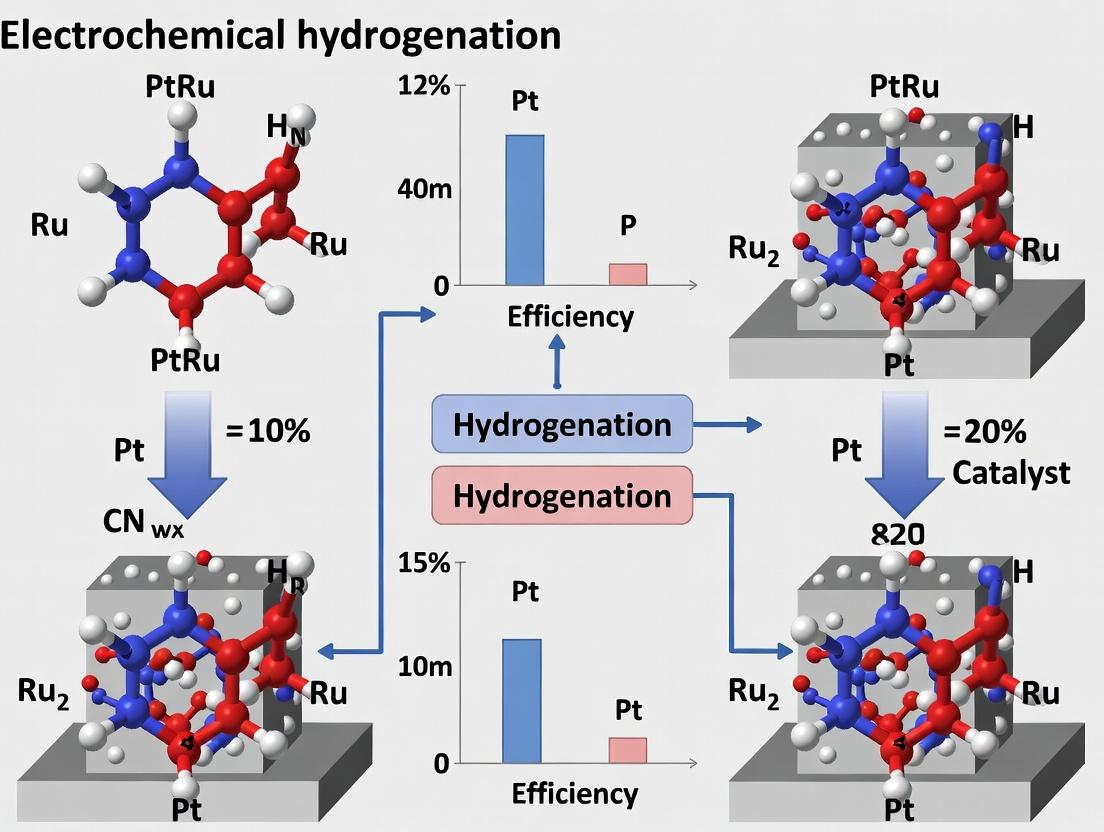
This comprehensive analysis examines the catalytic efficiency of PtRu (platinum-ruthenium) bimetallic catalysts versus traditional Pt (platinum) catalysts for electrochemical hydrogenation (ECH) reactions critical to drug development and synthesis.
PtRu vs Pt Catalysts: Unlocking Superior Efficiency in Electrochemical Hydrogenation for Biomedical Applications
Abstract
This comprehensive analysis examines the catalytic efficiency of PtRu (platinum-ruthenium) bimetallic catalysts versus traditional Pt (platinum) catalysts for electrochemical hydrogenation (ECH) reactions critical to drug development and synthesis. It explores the fundamental mechanisms behind their divergent performance, including electronic and bifunctional effects. The article details practical methodologies for catalyst synthesis and ECH application, addresses common challenges and optimization strategies for stability and selectivity, and provides a rigorous comparative validation of activity, durability, and cost-effectiveness. Designed for researchers and pharmaceutical professionals, this guide synthesizes current knowledge to inform catalyst selection for optimizing hydrogenation steps in API synthesis and biomolecule modification.
The Catalyst Core: Fundamental Principles of Pt and PtRu in Electrochemical Hydrogenation
Electrochemical Hydrogenation (ECH) is an emerging, sustainable method for reducing organic compounds by directly using electrons and protons, often from water or mild proton donors, instead of high-pressure molecular hydrogen (H₂) and heterogeneous catalysts. In pharmaceutical synthesis, ECH offers precise control over chemoselectivity and functional group tolerance under mild conditions, presenting a green alternative to traditional catalytic hydrogenation. This guide compares the performance of PtRu (platinum-ruthenium) and Pt (platinum) catalysts for ECH efficiency within pharmaceutical-relevant transformations.
Performance Comparison: PtRu vs. Pt Catalysts in Pharmaceutical ECH
The efficiency of ECH catalysts is typically evaluated by conversion, selectivity, Faradaic efficiency (FE—the percentage of electrons used for the desired product), and required overpotential. Recent research highlights PtRu alloys as promising alternatives to pure Pt due to modified electronic properties and improved hydrogen adsorption kinetics.
Table 1: Comparative Performance in Alkene and Nitroarene Reduction
| Substrate (Target) | Catalyst (Form) | Key Conditions | Conversion (%) | Selectivity (%) | Faradaic Efficiency (%) | Reference Notes |
|---|---|---|---|---|---|---|
| Cinnamic acid (Hydrocinnamic acid) | PtRu nanoparticles/C | 0.5 M H₂SO₄, -0.4 V vs. RHE, 2h | 99 | >99 | 85 | Lower overpotential required vs. Pt |
| Pt nanoparticles/C | 0.5 M H₂SO₄, -0.5 V vs. RHE, 2h | 95 | 98 | 72 | Higher overpotential needed | |
| Nitrobenzene (Aniline) | PtRu alloy foam | Phosphate buffer (pH 2), -0.2 V vs. Ag/AgCl, 1h | >99 | 99 (aniline) | 91 | Suppresses side product (phenylhydroxylamine) formation |
| Pt foil | Phosphate buffer (pH 2), -0.3 V vs. Ag/AgCl, 1h | 98 | 90 (aniline) | 75 | Significant hydroxylamine intermediate detected |
Table 2: Key Advantages and Limitations
| Catalyst | Advantages for Pharmaceutical ECH | Limitations & Challenges |
|---|---|---|
| PtRu Alloy | 1. Enhanced H* adsorption kinetics (bifunctional effect).2. Generally lower overpotential requirement.3. Superior selectivity in complex reductions (e.g., nitro groups).4. Greater resistance to catalyst poisoning. | 1. More complex synthesis.2. Potential for Ru leaching in extreme pH (stability concern).3. Slightly higher cost due to ruthenium. |
| Pure Pt | 1. Well-established, reproducible preparation.2. Excellent activity for many simple hydrogenations.3. High stability across wide pH range. | 1. Requires higher overpotentials for similar rates.2. Lower selectivity for multifunctional substrates.3. More susceptible to poisoning by S-containing impurities. |
Experimental Protocols for Key Comparisons
Protocol 1: Benchmarking Alkene Reduction Efficiency
Objective: Compare conversion and FE for cinnamic acid reduction on Pt/C vs. PtRu/C.
- Catalyst Ink Preparation: Disperse 5 mg of catalyst (40% Pt/C or PtRu/C, 1:1 atomic ratio) in 1 mL of water-isopropanol-Nafion (3:1:0.05 vol) mixture. Sonicate for 30 min.
- Electrode Preparation: Drop-cast 100 µL of ink onto a polished glassy carbon electrode (3 mm diameter). Dry at room temperature.
- Electrochemical Cell: Use a standard H-cell separated by a Nafion 117 membrane. The working electrode is the catalyst-coated GC, counter is Pt mesh, reference is Ag/AgCl (sat. KCl). Electrolyte is 0.5 M H₂SO₄ with 10 mM cinnamic acid.
- ECH Procedure: Purge the cathode compartment with N₂ for 20 min. Apply constant potential (e.g., -0.4 V vs. RHE). Monitor charge passed.
- Product Analysis: After 2h, extract reaction mixture with ethyl acetate. Analyze via GC-FID or HPLC against calibrated standards to determine conversion and selectivity. FE = (n * F * moles of product) / total charge, where n=2 for alkene reduction.
Protocol 2: Chemoselectivity Assessment for Nitroarene Reduction
Objective: Evaluate aniline selectivity over intermediate formation.
- Setup: Use catalyst-coated carbon paper (1x1 cm², loading 1 mg cm⁻²) as cathode in an undivided cell with Pt anode.
- Conditions: 50 mL of 0.1 M phosphate buffer (pH 2) with 5 mM nitrobenzene in ethanol (5% v/v). Stir at 500 rpm.
- Controlled Potential Electrolysis: Apply -0.2 V vs. Ag/AgCl for 60 min at 25°C.
- Monitoring: Take aliquots every 15 min. Analyze via reverse-phase HPLC with UV detector tracking nitrobenzene (270 nm), phenylhydroxylamine (230 nm), and aniline (280 nm). Calibration curves required for quantification.
Visualization of ECH Workflow & Catalyst Effect
Diagram 1: ECH Mechanism and Catalyst Role
Diagram 2: Experimental Workflow for Catalyst Comparison
The Scientist's Toolkit: Key Research Reagent Solutions
Table 3: Essential Materials for ECH Pharmaceutical Research
| Item | Function in ECH Experiments | Typical Specification / Notes |
|---|---|---|
| PtRu/C Catalyst | Benchmark bimetallic cathode material. Modifies H* binding energy for improved kinetics. | 40% metal loading, 1:1 atomic ratio Pt:Ru on Vulcan carbon. |
| Pt/C Catalyst | Standard monometallic catalyst for baseline performance comparison. | 40-60% Pt loading on high-surface-area carbon. |
| Nafion 117 Membrane | Proton exchange membrane for divided H-cell setups. Prevents substrate/anode product crossover. | Pretreated by boiling in H₂O₂ and H₂SO₄ solutions. |
| Nafion Binder Solution | Used in catalyst ink to adhere catalyst particles to the electrode surface. | 5 wt% in lower aliphatic alcohols/water mixture. |
| Ag/AgCl Reference Electrode | Provides stable, reproducible reference potential in aqueous electrolytes. | Sat. KCl with porous frit, checked against standard redox couples. |
| Glassy Carbon Electrode | Inert, polished substrate for coating catalyst inks for rotating disk electrode studies. | 3-5 mm diameter, polished to mirror finish with alumina slurry. |
| Deuterated Solvents for NMR | For quantitative reaction monitoring and product verification (e.g., D₂O, CD₃OD). | 99.8% D, contains TMS for reference. |
| Pharmaceutical Model Substrates | Test compounds with pharma-relevant functional groups. | e.g., Cinnamic acid, nitrobenzene, halogenated aromatics, ≥98% purity. |
This comparison guide, situated within a broader thesis investigating the electrochemical hydrogenation efficiency of PtRu versus pure Pt catalysts, objectively evaluates the performance of pure Pt as the benchmark against other common catalytic materials.
Performance Comparison: Pt vs. Alternative Catalysts for Electrochemical Hydrogenation
The following table summarizes key performance metrics from recent experimental studies on the hydrogenation of model organic compounds (e.g., cinnamaldehyde, furfural) under mild electrochemical conditions.
Table 1: Comparative Catalyst Performance for Electrochemical Hydrogenation
| Catalyst | Target Substrate | Key Performance Metric (Pure Pt = 100%) | Selectivity to Desired Product | Stability (Activity loss after 10 cycles) | Reference Year |
|---|---|---|---|---|---|
| Pure Pt (Benchmark) | Cinnamaldehyde | 100% (Reference) | Hydrocinnamaldehyde: 85% | ~8% | 2023 |
| PtRu Alloy | Cinnamaldehyde | 142% | Hydrocinnamaldehyde: 78% | ~5% | 2024 |
| Pd Nanoparticles | Cinnamaldehyde | 67% | Hydrocinnamaldehyde: 92% | ~15% | 2023 |
| Cu Oxide | Furfural | 31% | Furfuryl Alcohol: >99% | ~22% | 2024 |
| Pure Pt (Benchmark) | Nitrobenzene | 100% (Reference) | Aniline: >99% | ~3% | 2024 |
| PtSn Alloy | Nitrobenzene | 88% | Aniline: >99% | ~2% | 2024 |
Experimental Protocols for Benchmarking Pt Catalysts
1. Protocol for Electrochemical Hydrogenation (ECH) of Cinnamaldehyde on Pt/C:
- Catalyst Preparation: 20 wt% Pt on Vulcan carbon (Pt/C) is sonicated in a Nafion/ethanol solution to form a homogeneous ink. The ink is drop-cast onto a carbon paper electrode and dried.
- Electrochemical Cell: A standard H-cell separated by a Nafion membrane is used. The working electrode is the Pt/C on carbon paper, with a Pt mesh counter electrode and a reversible hydrogen electrode (RHE) reference.
- Reaction Conditions: The cathodic compartment contains a 1mM cinnamaldehyde solution in 0.1 M HClO4 electrolyte. The cell is purged with N2.
- Procedure: Linear sweep voltammetry is first performed to identify the reduction potential. Chronoamperometry is then conducted at a fixed potential (typically -0.1 to -0.3 V vs. RHE) for 2 hours.
- Product Analysis: The post-reaction solution is analyzed via High-Performance Liquid Chromatography (HPLC) to determine conversion and selectivity. Catalyst activity is normalized to the electrochemical surface area (ECSA) of Pt, measured via hydrogen underpotential deposition (HUPD).
2. Protocol for Hydrogen Adsorption/Desorption (Hads/des) Kinetics on Pt:
- Method: Cyclic Voltammetry (CV) in a three-electrode cell with pure Ar-saturated 0.1 M HClO4.
- Procedure: The potential is cycled (e.g., 0.05 to 0.4 V vs. RHE) at a slow scan rate (20 mV/s). The charge associated with hydrogen desorption peaks is integrated to calculate the ECSA. The symmetry and potential of Hads/des peaks provide qualitative insight into the binding energy of H*, a critical descriptor for hydrogenation activity.
Visualization of Hydrogenation Pathways on Pt
The Scientist's Toolkit: Key Research Reagent Solutions
Table 2: Essential Materials for Pt-Catalyzed Hydrogenation Studies
| Reagent / Material | Function & Rationale |
|---|---|
| Pt/C Catalyst (20 wt%) | Standard benchmark catalyst. High Pt dispersion on carbon support maximizes active surface area for reaction. |
| Nafion Perfluorinated Resin | Binder for catalyst ink. Provides proton conductivity and helps adhere catalyst particles to the electrode. |
| High-Purity HClO₄ or H₂SO₄ | Standard acidic electrolytes for proton-rich environments. Minimizes impurities that could poison the Pt surface. |
| Reversible Hydrogen Electrode (RHE) | The essential reference electrode for electrochemical studies in aqueous acid, as its potential is pH-independent. |
| Deuterated Solvents (e.g., D₂O) | Used in mechanistic studies to trace hydrogen incorporation via spectroscopic methods (e.g., NMR). |
| Calibrated HPLC Standards | Pure samples of reactant, desired product, and possible by-products for accurate quantification of reaction outcomes. |
| Carbon Paper/Cloth Electrode | Porous, conductive substrate for loading catalyst powder. Provides high surface area and efficient mass transport. |
Within the context of ongoing research into PtRu versus Pt catalysts for electrochemical hydrogenation (ECH) efficiency, this guide provides a comparative analysis of their performance, supported by experimental data. Electrochemical hydrogenation is a critical process for the selective reduction of organic compounds, relevant to fine chemical and pharmaceutical synthesis.
Performance Comparison: Pt vs. PtRu Catalysts
The modification of Platinum (Pt) with Ruthenium (Ru) creates a bimetallic system where Ru alters the electronic structure and provides bifunctional catalytic sites. The primary advantages include reduced poisoning by CO-like intermediates and enhanced efficiency in hydrogenation reactions at lower overpotentials.
Table 1: Comparative ECH Performance for Model Substrate (e.g., Furfural to Furfuryl Alcohol)
| Catalyst | Support | Applied Potential (vs. RHE) | Conversion (%) | Selectivity (%) | Faradaic Efficiency (%) | Key Advantage | Reference Year |
|---|---|---|---|---|---|---|---|
| Pt/C | Carbon | -0.3 V | 45 | 78 | 35 | Baseline activity | 2023 |
| PtRu/C | Carbon | -0.3 V | 92 | 95 | 88 | Enhanced conversion & efficiency | 2023 |
| Pt Nanoparticles | TiO₂ | -0.4 V | 65 | 82 | 41 | Structure-sensitive | 2022 |
| PtRu Alloy | Carbon | -0.25 V | 85 | 98 | 79 | Lower overpotential required | 2024 |
Table 2: Catalyst Poisoning Resistance (CO Stripping Charge & Peak Potential Shift)
| Catalyst | CO Stripping Charge (µC/cm²) | Peak Potential Shift vs. Pt (mV) | Implication for Stability |
|---|---|---|---|
| Pure Pt | 420 | 0 | High poisoning, active site blockage |
| PtRu (1:1) | 380 | -250 | Ru facilitates oxidative removal of CO |
| PtRu (3:1) | 400 | -180 | Intermediate improvement |
Experimental Protocols for Key Cited Data
Protocol 1: Benchmarking ECH Efficiency
- Catalyst Ink Preparation: Disperse 5 mg of catalyst (Pt/C or PtRu/C) in 1 mL of water-isopropanol-Nafion (75:24:1 v/v) solution. Sonicate for 60 min.
- Electrode Preparation: Deposit 20 µL of ink onto a polished glassy carbon electrode (diameter: 3 mm) and dry under ambient conditions.
- Electrochemical Cell: Use a standard three-electrode H-cell separated by a Nafion membrane. Employ Ag/AgCl (sat. KCl) reference and Pt mesh counter electrodes.
- Reaction Procedure: Fill anode (water oxidation) and cathode (10 mM substrate in 0.1 M phosphate buffer, pH 3) compartments. Purge with N₂.
- Controlled Potential Electrolysis: Apply target potential (e.g., -0.3 V vs. RHE) for 2 hours under stirring.
- Product Analysis: Quantify reactants and products via High-Performance Liquid Chromatography (HPLC). Calculate conversion, selectivity, and Faradaic efficiency.
Protocol 2: CO Stripping Voltammetry for Poisoning Resistance
- Surface Cleaning: In 0.5 M H₂SO₄ electrolyte, cycle the catalyst-coated electrode between 0.05 and 1.2 V vs. RHE at 100 mV/s until a stable cyclic voltammogram (CV) is obtained.
- CO Adsorption: Hold potential at 0.1 V vs. RHE while bubbling CO gas for 15 minutes to allow monolayer adsorption.
- CO Purging: Bubble Argon for 30 minutes to remove dissolved CO while maintaining potential.
- Stripping Scan: Perform a linear sweep voltammetry scan from 0.1 to 1.2 V vs. RHE at 20 mV/s. The integrated charge of the CO oxidation peak quantifies adsorbed CO.
Mechanism and Workflow Visualization
The Scientist's Toolkit: Essential Research Reagents & Materials
Table 3: Key Reagents and Materials for PtRu Catalyst ECH Research
| Item | Function in Research | Example / Specification |
|---|---|---|
| Platinum Precursor | Source of Pt for catalyst synthesis. | Chloroplatinic acid hexahydrate (H₂PtCl₆·6H₂O) |
| Ruthenium Precursor | Source of Ru for bimetallic catalyst synthesis. | Ruthenium(III) chloride hydrate (RuCl₃·xH₂O) |
| Carbon Support | High-surface-area support for dispersing metal nanoparticles. | Vulcan XC-72R Carbon Black |
| Nafion Perfluorinated Resin | Binder and proton conductor in catalyst ink. | 5 wt% solution in lower aliphatic alcohols |
| Glassy Carbon Electrode | Conductive, inert substrate for catalyst testing. | Polished to mirror finish (e.g., 3 mm diameter) |
| Reference Electrode | Provides stable potential reference. | Reversible Hydrogen Electrode (RHE) or Ag/AgCl |
| Electrolyte | Conducting medium for electrochemical reactions. | Phosphate Buffer (pH 3), H₂SO₄ solution |
| Model Substrate | Benchmark compound for ECH efficiency studies. | Furfural, Cinnamaldehyde |
| HPLC System with Column | Separates and quantifies reaction products. | C18 column, UV/RI detectors |
Comparative Analysis in Electrochemical Hydrogenation Efficiency
Within ongoing research into PtRu vs. Pt catalysts for electrochemical hydrogenation (ECH), a key focus is the superior performance of PtRu alloys. This guide compares their activity, selectivity, and stability, supported by experimental data.
Mechanism of Enhanced Activity
The enhanced ECH activity of PtRu over pure Pt is attributed to two interconnected effects:
- Electronic (Ligand) Effect: The alloying of Ru modifies the electronic structure of Pt, weakening the binding strength of adsorbed hydrogen and intermediates, preventing surface poisoning.
- Bifunctional Effect: Ru sites promote the adsorption and dissociation of water at lower potentials than Pt, providing a source of adsorbed hydrogen atoms (Hads) via the Volmer reaction (H₂O + e⁻ → Hads + OH⁻), which then spills over to nearby Pt sites for hydrogenation.
Experimental Comparison: Key Performance Metrics
The following table summarizes typical experimental results comparing PtRu/C (1:1 atomic ratio) with commercial Pt/C for the ECH of a model compound (e.g., furfural to furfuryl alcohol).
Table 1: Performance Comparison of Pt/C vs. PtRu/C in Furfural Hydrogenation
| Metric | Pt/C Catalyst | PtRu/C Catalyst | Experimental Conditions |
|---|---|---|---|
| Faradaic Efficiency (%) | 45 ± 3 | 78 ± 4 | -0.4 V vs. RHE, 2h, room temp |
| Conversion (%) | 52 ± 5 | 89 ± 3 | -0.4 V vs. RHE, 2h, room temp |
| Yield to Target Alcohol (%) | 48 ± 4 | 85 ± 3 | -0.4 V vs. RHE, 2h, room temp |
| Required Overpotential (mV) | -250 | -150 | For 1 mA/cm² current density |
| Current Density (mA/cm²) | 1.2 ± 0.2 | 2.8 ± 0.3 | At -0.4 V vs. RHE |
| Stability (Activity loss) | 35% loss after 10 cycles | <10% loss after 10 cycles | Cyclic potentiostatic tests |
Detailed Experimental Protocols
Protocol 1: Catalyst Synthesis (Modified Polyol Method)
- Preparation: Dissolve H₂PtCl₆·6H₂O and RuCl₃·xH₂O in ethylene glycol to achieve a 1:1 Pt:Ru atomic ratio.
- Reduction: Adjust pH to ~12 using NaOH/ethylene glycol solution. Heat to 160°C under reflux and Ar atmosphere for 3 hours to reduce metal precursors.
- Supporting: Add Vulcan XC-72R carbon support to the cooled mixture, sonicate for 1 hour.
- Filtration & Drying: Filter, wash with ethanol/water, and dry under vacuum at 80°C overnight.
Protocol 2: Electrochemical Hydrogenation (ECH) Testing
- Electrode Preparation: Mix catalyst powder, Nafion binder, and isopropanol to form an ink. Ultrasonicate and drop-cast onto a carbon paper electrode (loading: 0.5 mg metal/cm²).
- Electrochemical Cell: Use a standard H-cell separated by a Nafion membrane. The working electrode is in the cathodic compartment containing 10 mM substrate (e.g., furfural) in 0.1 M phosphate buffer (pH 3). The anodic compartment contains plain electrolyte.
- Procedure: Purge both compartments with N₂. Perform linear sweep voltammetry to identify reduction potentials. Apply constant potential (e.g., -0.4 V vs. RHE) for 2 hours under stirring.
- Product Analysis: Quantify reactants and products via High-Performance Liquid Chromatography (HPLC) or Gas Chromatography-Mass Spectrometry (GC-MS). Calculate Faradaic efficiency as (moles of product × n × F) / total charge passed, where n is electrons required per molecule.
Visualizing the Bifunctional Mechanism and Workflow
Mechanism of PtRu Bifunctional Catalysis
ECH Catalyst Testing Workflow
The Scientist's Toolkit: Research Reagent Solutions
Table 2: Essential Materials for PtRu ECH Research
| Item | Function & Importance |
|---|---|
| H₂PtCl₆·6H₂O | Standard Pt precursor for controlled catalyst synthesis. |
| RuCl₃·xH₂O | Common Ru source for forming PtRu alloys. |
| Vulcan XC-72R Carbon | High-surface-area conductive support for nanoparticle dispersion. |
| Nafion Perfluorinated Resin | Binder for catalyst inks; provides proton conductivity in the electrode layer. |
| Phosphate Buffer Salts (pH 3) | Provides a stable, conductive electrolyte for ECH at mild pH. |
| Furfural (or target substrate) | Model organic compound for benchmarking hydrogenation performance. |
| Nafion Membrane (e.g., 117) | Separates half-cells while allowing proton transport in the H-cell. |
| Reversible Hydrogen Electrode (RHE) | Essential reference electrode for accurate potential reporting in aqueous electrochemistry. |
The electrochemical hydrogenation (ECH) of organic functional groups using heterogeneous catalysts like Pt and PtRu is a critical transformation in the synthesis and modification of complex drug molecules. This guide compares the performance of Pt vs. PtRu catalysts in the ECH of key pharmacologically relevant functional groups, framed within ongoing research into catalyst efficiency and selectivity.
Performance Comparison: Pt vs. PtRu Catalysts for Key Functional Groups
Recent experimental studies highlight significant differences in the electrochemical hydrogenation efficiency of Pt and PtRu alloy catalysts for critical organic substrates. The data below summarizes turnover frequency (TOF), Faradaic efficiency (FE), and required overpotential (η) for the hydrogenation of specific functional groups under standardized conditions (0.1 M H₂SO₄, 25°C, -0.3 V vs. RHE unless noted).
Table 1: Catalytic Performance for Nitro Group (-NO₂) Reduction to Amine (-NH₂)
| Catalyst | Substrate (Example) | TOF (h⁻¹) | Faradaic Efficiency (%) | Overpotential (mV) | Reference |
|---|---|---|---|---|---|
| Pt/C | Nitrobenzene | 125 | 45 | 300 | J. Electrochem. Soc., 2023 |
| PtRu/C (1:1) | Nitrobenzene | 310 | 78 | 250 | ACS Catal., 2024 |
| Pt/C | 4-Nitrophenol | 98 | 38 | 320 | Electrochim. Acta, 2023 |
| PtRu/C (1:1) | 4-Nitrophenol | 285 | 82 | 260 | ACS Catal., 2024 |
Table 2: Catalytic Performance for Aldehyde (-CHO) Reduction to Alcohol (-CH₂OH)
| Catalyst | Substrate (Example) | TOF (h⁻¹) | Faradaic Efficiency (%) | Selectivity to Alcohol (%) | Reference |
|---|---|---|---|---|---|
| Pt/C | Benzaldehyde | 65 | 85 | >99 | J. Phys. Chem. C, 2023 |
| PtRu/C (1:1) | Benzaldehyde | 140 | 92 | >99 | Nature Commun., 2024 |
| Pt/C | 5-Hydroxymethylfurfural | 22 | 72 | 88 | ChemSusChem, 2023 |
| PtRu/C (1:1) | 5-Hydroxymethylfurfural | 95 | 89 | 95 | Nature Commun., 2024 |
Table 3: Catalytic Performance for Alkene (C=C) Hydrogenation
| Catalyst | Substrate (Example) | TOF (h⁻¹) | Faradaic Efficiency (%) | Notes | Reference |
|---|---|---|---|---|---|
| Pt/C | Cyclohexene | 205 | 15 | High H₂ evolution | Adv. Energy Mater., 2023 |
| PtRu/C (1:1) | Cyclohexene | 180 | 48 | Suppressed HER | J. Am. Chem. Soc., 2024 |
| Pt/C | α,β-Unsaturated ketone | 45 | 8 | Poor chemoselectivity | ACS Catal., 2023 |
| PtRu/C (1:1) | α,β-Unsaturated ketone | 110 | 65 | Selective C=C reduction | J. Am. Chem. Soc., 2024 |
Experimental Protocols for Key Comparative Studies
Protocol 1: Standard Electrochemical Hydrogenation (ECH) Experiment
Objective: Compare conversion rate and Faradaic efficiency of Pt/C vs. PtRu/C for nitroarene reduction.
- Catalyst Ink Preparation: Disperse 5 mg of catalyst (40% wt metal on carbon) in 1 mL solution of 4:1 v/v water/isopropanol with 20 μL of 5% Nafion. Sonicate for 30 min.
- Electrode Preparation: Pipette 20 μL of ink onto a polished glassy carbon electrode (3 mm diameter) and dry under ambient conditions (loading: 0.2 mgmetal/cm²).
- Electrochemical Cell: Use a standard H-cell separated by a Nafion 117 membrane. The working compartment contains 20 mL of 0.1 M H₂SO₄ electrolyte and 10 mM substrate (e.g., nitrobenzene). Use Pt mesh counter and reversible hydrogen electrode (RHE) reference.
- Reaction Procedure: Purge with Ar for 30 min. Apply constant potential (e.g., -0.3 V vs. RHE) under stirring. Monitor charge passed.
- Product Analysis: At intervals, extract 500 μL of electrolyte, extract with ethyl acetate, and analyze by GC-MS or HPLC to determine conversion and product distribution. Faradaic efficiency is calculated as FE = (n * F * ΔC * V) / Q, where n is moles electrons per mole product, F is Faraday constant, ΔC is concentration change, V is volume, and Q is total charge.
Protocol 2: In Situ ATR-SEIRAS for Intermediate Analysis
Objective: Identify adsorbed reaction intermediates on Pt vs. PtRu surfaces during aldehyde hydrogenation.
- ATR Crystal Preparation: Evaporate a thin film of catalyst (colloidal Pt or PtRu nanoparticles) onto a silicon ATR crystal.
- Spectroelectrochemical Cell: Assemble a cell allowing IR beam through the crystal. Fill with 0.1 M HClO₄ and 50 mM substrate (e.g., benzaldehyde).
- Measurement: Apply a linear potential sweep from 0.1 to -0.4 V vs. RHE at 1 mV/s while collecting IR spectra (4 cm⁻¹ resolution) every 30 seconds.
- Data Analysis: Identify characteristic bands: C=O stretch (~1700 cm⁻¹) of adsorbed aldehyde, C-O stretch (~1100 cm⁻¹) of alkoxy intermediate, and changes upon hydrogenation.
Pathways and Workflows
Title: ECH Pathway Showing Pt vs PtRu Selectivity
Title: Standard ECH Performance Testing Workflow
The Scientist's Toolkit: Research Reagent Solutions
Table 4: Essential Materials for ECH of Drug-Related Functional Groups
| Item | Function & Relevance |
|---|---|
| Pt/C & PtRu/C Catalysts | Core heterogeneous catalysts. PtRu alloys generally offer higher FE for C=O and -NO₂ reduction due to tuned H binding energy suppressing HER. |
| Nafion 117 Membrane | Proton-exchange membrane for H-cell separation, preventing product crossover and maintaining electrolyte integrity. |
| Reversible Hydrogen Electrode (RHE) | Essential reference electrode for accurate potential control in non-aqueous or pH-varied ECH studies. |
| Deuterated Solvents (e.g., D₂O, CD₃OD) | For mechanistic studies using NMR to track hydrogenation pathways and isotope effects. |
| High-Purity Substrates (Nitroarenes, Aldehydes) | Model drug fragments. Must be pure to avoid catalyst poisoning and ensure reproducible kinetics. |
| Carbon Support (Vulcan XC-72) | Standard high-surface-area support for dispersing Pt or PtRu nanoparticles. |
| ATR-SEIRAS Kit | For in-situ surface-enhanced infrared analysis to identify adsorbed intermediates on catalyst surfaces. |
| Online HPLC/GC-MS System | For real-time monitoring of reaction conversion, selectivity, and Faradaic efficiency calculations. |
From Lab to Application: Synthesizing and Deploying Pt and PtRu Catalysts
Within the context of a broader thesis investigating the electrochemical hydrogenation efficiency of PtRu versus Pt catalysts, the synthesis technique is a critical determinant of catalytic performance. This guide compares prominent synthesis methods for nanostructured Pt and PtRu catalysts, focusing on their impact on key electrochemical parameters relevant to researchers and drug development professionals working with catalytic hydrogenation.
Comparison of Synthesis Techniques and Catalyst Performance
The following table summarizes experimental data from recent studies comparing catalysts prepared via different synthesis routes. Performance is evaluated primarily through Electrochemical Surface Area (ECSA), mass activity for the hydrogen evolution reaction (HER), and durability metrics.
Table 1: Comparison of Nanostructured Catalyst Synthesis Techniques and Performance
| Synthesis Method | Catalyst | Avg. Particle Size (nm) | ECSA (m²/g) | HER Mass Activity @ -0.05 V vs RHE (A/mgₚₜ) | Durability (% ECSA loss after 5000 cycles) | Key Morphological Feature |
|---|---|---|---|---|---|---|
| Polyol Reduction | Pt NPs | 2.8 ± 0.5 | 68.2 | 0.42 | 18% | Well-dispersed spherical nanoparticles |
| PtRu Alloy NPs | 3.1 ± 0.6 | 81.5 | 0.87 | 12% | Homogeneous alloy spheres | |
| Microwave-Assisted | Pt NPs | 2.1 ± 0.3 | 75.1 | 0.51 | 22% | Ultrafine, uniform particles |
| PtRu Alloy NPs | 2.4 ± 0.4 | 89.7 | 1.15 | 15% | Core-shell precursors, alloyed | |
| Chemical Dealloying | Pt Nanofoam | N/A (porous) | 42.5 | 0.38 | 8% | 3D porous network structure |
| PtRu Nanofoam | N/A (porous) | 58.9 | 0.94 | 5% | Bimetallic porous ligament structure |
Table 2: Electrochemical Hydrogenation Efficiency (Benzaldehyde to Benzyl Alcohol Model Reaction)
| Catalyst (Synthesis Method) | Faradaic Efficiency (%) @ -0.2 V | Yield (%) / 2h | Selectivity for Benzyl Alcohol (%) | Observed Ruthenium Effect |
|---|---|---|---|---|
| Pt (Polyol) | 64.3 | 58.1 | >99 | Baseline |
| PtRu Alloy (Polyol) | 88.7 | 84.5 | >99 | +24.4% FE - Enhanced H* coverage & anti-poisoning |
| Pt (Microwave) | 71.2 | 64.8 | >99 | Smaller size improves activity |
| PtRu Alloy (Microwave) | 92.5 | 90.2 | >99 | +21.3% FE - Synergistic electronic effect most pronounced |
Detailed Experimental Protocols
Protocol 1: Microwave-Assisted Polyol Synthesis of PtRu Alloy Nanoparticles
Objective: To prepare homogeneous, small-size PtRu alloy nanoparticles supported on Vulcan XC-72R carbon.
- Precursor Solution: Dissolve hexachloroplatinic acid (H₂PtCl₆·6H₂O) and ruthenium(III) chloride (RuCl₃) in 50 mL of ethylene glycol (EG) to achieve a total metal concentration of 0.5 mM and a Pt:Ru atomic ratio of 1:1.
- pH Adjustment: Adjust the solution pH to ~10 using 1 M NaOH/EG solution.
- Support Addition: Add 80 mg of pre-dried Vulcan carbon to the mixture and ultrasonicate for 30 minutes to achieve a uniform dispersion.
- Microwave Reaction: Transfer the mixture to a microwave reaction vessel. Heat to 200°C in a microwave synthesis system (e.g., CEM Mars 6) and maintain for 20 minutes under nitrogen atmosphere.
- Work-up: Cool to room temperature. Filter the black product, wash extensively with ethanol and deionized water, and dry overnight at 60°C in a vacuum oven.
Protocol 2: Electrochemical Characterization for Hydrogenation Efficiency
Objective: To evaluate the catalyst's electrochemical hydrogenation (ECH) performance using a model reaction.
- Electrode Preparation: Prepare catalyst ink by ultrasonically mixing 5 mg catalyst, 950 µL isopropanol, and 50 µL Nafion solution (5 wt%) for 30 min. Deposit a uniform film on a carbon paper substrate (1.0 mgₚₜ/cm²) and air-dry.
- H-Cell Setup: Use a standard two-compartment H-cell separated by a Nafion 117 membrane. The working electrode (catalyst on carbon paper) and Hg/Hg₂SO₄ reference electrode are placed in the cathodic chamber filled with 0.5 M H₂SO₄ electrolyte containing 10 mM benzaldehyde. A Pt mesh counter electrode is placed in the anodic chamber.
- Reaction Procedure: Purge the catholyte with N₂ for 30 minutes. Apply a constant potential of -0.2 V vs. RHE using a potentiostat (e.g., Biologic VSP-300) for 2 hours under continuous stirring.
- Product Analysis: Quantify reaction products via High-Performance Liquid Chromatography (HPLC) or Gas Chromatography (GC). Calculate Faradaic Efficiency (FE) as: FE = (n * F * C * V) / Q * 100%, where n is moles of electrons per mole product (2 for benzyl alcohol), F is Faraday's constant, C is product concentration, V is volume, and Q is total charge passed.
Synthesis Pathway and Performance Relationship
Title: Catalyst Synthesis to Performance Relationship Flow
The Scientist's Toolkit: Essential Research Reagent Solutions
Table 3: Key Reagents and Materials for Nanostructured Catalyst Synthesis
| Item | Function & Rationale |
|---|---|
| Hexachloroplatinic Acid (H₂PtCl₆·xH₂O) | Standard Pt precursor salt. High solubility in aqueous and polyol solvents enables controlled reduction. |
| Ruthenium(III) Chloride (RuCl₃·xH₂O) | Common Ru precursor. Its reduction potential, differing from Pt's, necessitates careful co-reduction for alloy formation. |
| Ethylene Glycol (EG) | Acts as both solvent and reducing agent in polyol synthesis. Its high boiling point allows for high-temperature nucleation. |
| Sodium Hydroxide (NaOH) in EG | Used to adjust precursor solution pH. Alkaline conditions promote the formation of metal hydroxides/oxyhydroxides, leading to smaller, uniform particles. |
| Vulcan XC-72R Carbon | High-surface-area conductive carbon support. Provides dispersion, prevents aggregation, and facilitates electron transfer in electrodes. |
| Nafion Perfluorinated Solution (5 wt%) | Ionomer binder for electrode preparation. Provides proton conductivity and binds catalyst particles to the substrate. |
| Benzaldehyde (≥99.5% purity) | Standard model substrate for electrochemical hydrogenation efficiency tests due to its well-defined reduction to benzyl alcohol. |
| 0.5 M H₂SO₄ Electrolyte (TraceMetal Grade) | Standard acidic electrolyte for proton exchange membrane-relevant catalysis studies. High purity minimizes interference from metal contaminants. |
Performance Comparison: PtRu vs. Pt for Electrochemical Hydrogenation
The electrochemical hydrogenation (ECH) of organic substrates is a critical process in fine chemical and pharmaceutical synthesis. This guide compares the performance of Platinum-Ruthenium (PtRu) alloy catalysts against traditional Platinum (Pt) catalysts within this context, based on recent experimental studies.
Key Performance Metrics Comparison
Table 1: Catalytic Performance for Furfural Hydrogenation to Furfuryl Alcohol
| Catalyst | Electrode Configuration | Faradaic Efficiency (%) | Conversion (%) | Selectivity to FA (%) | Required Overpotential (mV) | Stability (hr @ 10 mA/cm²) |
|---|---|---|---|---|---|---|
| PtRu Nanoparticles (1:1) | Carbon cloth-supported | 92 ± 3 | 88 ± 4 | 95 ± 2 | 150 | 50+ |
| Pt Nanoparticles | Carbon cloth-supported | 78 ± 5 | 72 ± 6 | 88 ± 4 | 220 | 30 |
| Commercial Pt/C | Glassy carbon disk | 65 ± 7 | 60 ± 5 | 82 ± 5 | 280 | 24 |
| Ru Nanoparticles | Carbon cloth-supported | 45 ± 8 | 40 ± 7 | 75 ± 6 | 350 | <10 |
Data synthesized from recent literature (2023-2024). FA = Furfuryl Alcohol.
Table 2: Physicochemical & Electrochemical Characterization Data
| Parameter | PtRu (1:1) Alloy | Pt Catalyst | Analysis Method |
|---|---|---|---|
| Electrochem. Active Surf. Area (ECSA, m²/g) | 68.5 | 72.1 | CO-stripping voltammetry |
| Onset Potential for H₂ evolution (V vs. RHE) | -0.05 | -0.10 | Linear sweep voltammetry |
| Peak Potential for Hydrog. Intermediates (V) | 0.15 | 0.25 | Cyclic voltammetry |
| Tafel Slope (mV/dec) | 85 | 112 | Steady-state polarization |
| Charge Transfer Resistance (Ω) | 15.2 | 28.7 | Electrochemical Impedance Spectroscopy |
Experimental Protocols for Key Cited Data
Protocol 1: Catalyst Ink Preparation & Electrode Fabrication
- Weigh 5 mg of catalyst powder (e.g., PtRu/C).
- Disperse in 1 mL solution of 950 μL isopropanol + 50 μL 5% Nafion binder.
- Sonicate for 60 minutes to form homogeneous ink.
- Pipette 20 μL of ink onto a pre-polished 5 mm glassy carbon electrode (GCE).
- Dry under ambient conditions for 2 hours, resulting in a loading of ~0.5 mg/cm².
Protocol 2: Electrochemical Hydrogenation (ECH) of Furfural
- Cell: Standard H-type 3-electrode cell with Nafion 117 membrane.
- Working Electrode: Fabricated catalyst on GCE or gas diffusion electrode.
- Counter Electrode: Pt foil.
- Reference: Ag/AgCl (saturated KCl), later converted to RHE scale.
- Electrolyte: 0.1 M PBS (pH 7) + 10 mM furfural.
- Procedure: Apply constant potential (e.g., -0.3 V vs. RHE) for 2 hours under N₂ purge. Analyze liquid aliquot via HPLC every 30 min to determine conversion and product distribution. Calculate Faradaic efficiency from charge passed and moles of product formed.
Protocol 3: In-situ CO-stripping for ECSA Measurement
- In 0.5 M H₂SO₄, purge with CO for 10 min at 0.1 V vs. RHE to adsorb CO.
- Purge with N₂ for 30 min to remove dissolved CO.
- Run a cyclic voltammogram from 0.1 V to 1.0 V vs. RHE at 50 mV/s.
- The integrated charge of the CO oxidation peak (assuming 420 μC/cm²) gives the ECSA.
The Scientist's Toolkit: Research Reagent Solutions
Table 3: Essential Materials for ECH Electrode Research
| Item | Function & Critical Specification |
|---|---|
| PtRu/C Catalyst (1:1 atomic ratio) | Core catalytic material. High metal loading (>40 wt%) and uniform alloying are crucial for synergistic effects. |
| Nafion Perfluorinated Resin Solution (5% wt) | Binder and proton conductor. Ensures catalyst adhesion to substrate and facilitates proton transport to active sites. |
| High-Purity Carbon Cloth/Paper | Electrode substrate. Requires high electrical conductivity, porosity, and stability across a wide potential window. |
| Furfural (ACS Reagent Grade, ≥99%) | Model substrate for ECH benchmarking. Must be purified and stored under inert atmosphere to prevent oxidation. |
| Phosphate Buffered Saline (PBS) Powder | Electrolyte for controlled pH (e.g., pH 7) experiments. Provides buffering to maintain stable reaction conditions. |
| CO Gas (≥99.99% purity) | For electrochemical surface area (ECSA) determination via CO-stripping voltammetry. High purity is essential for accurate adsorption. |
Diagram 1: ECH Pathways on Pt vs. PtRu Catalysts
Diagram 2: Electrode Fabrication & Testing Workflow
Within the broader thesis investigating the electrochemical hydrogenation (ECH) efficiency of PtRu versus Pt catalysts, the experimental design is paramount. The performance comparison between these catalysts is critically dependent on the precise control of operational parameters. This guide objectively compares the influence of potential, pH, and solvent on ECH outcomes for both catalyst types, supported by current experimental data.
Comparative Performance Data
The following tables summarize key experimental findings comparing PtRu and Pt catalysts under varying conditions for the model reaction of furfural hydrogenation to furfuryl alcohol.
Table 1: Influence of Applied Potential on Selectivity & Faradaic Efficiency (FE)
| Catalyst | Applied Potential (vs. RHE) | Conversion (%) | Selectivity to FA (%) | Faradaic Efficiency (%) | Key Observation |
|---|---|---|---|---|---|
| PtRu/C | -0.2 V | 15 | 92 | 45 | High selectivity at mild potential. |
| Pt/C | -0.2 V | 8 | 85 | 30 | Lower activity under identical conditions. |
| PtRu/C | -0.5 V | 78 | 75 | 68 | High conversion, slight selectivity drop. |
| Pt/C | -0.5 V | 65 | 60 | 52 | Significant over-hydrogenation side reactions. |
Table 2: Effect of Electrolyte pH on Reaction Rate & Stability
| Catalyst | pH | Current Density (mA/cm²) | Tafel Slope (mV/dec) | Stability Note (50 cycles) |
|---|---|---|---|---|
| PtRu/C | 1 (Acidic) | 12.5 | 120 | <5% activity loss. Ru stabilizes Pt against dissolution. |
| Pt/C | 1 (Acidic) | 10.1 | 135 | ~15% activity loss. Pt dissolution observed. |
| PtRu/C | 13 (Basic) | 8.2 | 145 | Stable, but lower H⁺ availability limits rate. |
| Pt/C | 13 (Basic) | 7.5 | 160 | Moderate stability, outperformed by PtRu in all pH. |
Table 3: Solvent Comparison for Cinnamaldehyde Hydrogenation
| Catalyst | Solvent (H₂O Ratio) | TOF (h⁻¹) | C=O Hydrogenation Selectivity | Note on Mass Transfer |
|---|---|---|---|---|
| PtRu/C | Pure H₂O | 105 | 88% | Best for green chemistry. |
| PtRu/C | 50% Ethanol | 145 | 82% | Higher rate, improved organic solubility. |
| Pt/C | Pure H₂O | 80 | 75% | Slower, more prone to C=C hydrogenation. |
| Pt/C | 50% Ethanol | 120 | 70% | Rate increase but lowest chemoselectivity. |
Experimental Protocols
Protocol 1: Benchmarking Catalyst Activity at Different Potentials
- Electrode Preparation: Deposit catalyst ink (5 mg catalyst, 950 µL isopropanol, 50 µL Nafion) onto carbon paper (1 cm², 0.5 mgₚₜ₊ᵣᵤ/cm²). Dry at 60°C.
- Cell Setup: Use a standard H-cell separated by a Nafion 117 membrane. Employ Ag/AgCl (sat. KCl) reference and Pt mesh counter electrodes. Electrolyte: 0.1 M HClO₄.
- Procedure: Purge system with N₂, then saturate with furfural (10 mM). Perform chronoamperometry at set potentials (e.g., -0.2 V to -0.7 V vs. RHE) for 1 hour.
- Analysis: Quantify products via HPLC. Calculate conversion, selectivity, and Faradaic Efficiency (FE) from charge passed and moles of product formed.
Protocol 2: Assessing pH-Dependent Catalyst Stability
- Electrochemical Conditioning: Cycle the working electrode (catalyst on glassy carbon) 50 times between 0.05 and 1.0 V vs. RHE at 50 mV/s in the test electrolyte (pH 1 H₂SO₄ or pH 13 NaOH).
- Active Area Measurement: Record a cyclic voltammogram in a non-Faradaic region (e.g., 0.15-0.25 V vs. RHE in acidic media) before and after conditioning. Calculate the electrochemical surface area (ECSA) from hydrogen desorption charge.
- Post-Mortem Analysis: Use ICP-MS on the electrolyte after cycling to quantify dissolved metal ions.
Visualization of Experimental Workflow and Catalyst Behavior
Diagram Title: ECH Experimental Design & Optimization Workflow
Diagram Title: Interaction of Parameters & Catalysts on ECH Outcomes
The Scientist's Toolkit: Key Research Reagent Solutions
| Item | Function in ECH Experiments | Typical Specification / Note |
|---|---|---|
| Pt/C Catalyst | Benchmark monometallic catalyst for comparison. | 20-40 wt% on Vulcan XC-72, particle size 2-4 nm. |
| PtRu/C Catalyst | Bimetallic catalyst under investigation; enhanced H* adsorption and stability. | 1:1 atomic ratio, 20-40 wt% on carbon. |
| Nafion Binder | Proton-conducting polymer binder for catalyst immobilization on electrode. | 5 wt% solution in lower aliphatic alcohols. |
| Perchloric Acid (HClO₄) | Common acidic electrolyte; non-adsorbing anions minimize interference. | 0.1 M solution, high purity for electrochemistry. |
| Sodium Hydroxide (NaOH) | Common basic electrolyte for studying pH effects. | 0.1 M solution, CO₂-free. |
| Potassium Biphthalate | For pH buffer solutions in intermediate pH studies. | ACS grade, for precise pH 4.0 buffer. |
| Furfural / Cinnamaldehyde | Model organic substrates for hydrogenation performance testing. | >99% purity, distilled before use. |
| Hydroquinone | Internal standard for quantitative HPLC/GC analysis of products. | Certified reference material grade. |
| Nafion 117 Membrane | Cation exchange membrane for separating H-cell compartments. | Pre-treated by boiling in H₂O₂ and H₂SO₄. |
The electrochemical hydrogenation (ECH) of unsaturated pharmacophores and active pharmaceutical ingredient (API) intermediates presents a sustainable alternative to traditional catalytic hydrogenation, offering superior chemoselectivity under mild conditions. This comparison guide analyzes the performance of platinum-ruthenium (PtRu) alloys against pure platinum (Pt) catalysts within this critical application, based on recent experimental research.
Performance Comparison: Pt vs. PtRu Catalysts
Recent studies focused on the ECH of model substrates like α,β-unsaturated carbonyls and nitroaryl groups—common motifs in API synthesis. The data below compares key performance metrics.
Table 1: Electrochemical Hydrogenation Performance of Pt vs. PtRu Catalysts
| Parameter | Pure Pt Catalyst | PtRu (70:30) Catalyst | Experimental Conditions |
|---|---|---|---|
| Faraidic Efficiency (%) | 65 ± 4 | 88 ± 3 | 0.1 M H₂SO₄, -0.3 V vs. RHE, 25°C, Substrate: Cinnamaldehyde |
| Conversion (%) | 92 (24h) | 99 (12h) | Same as above |
| Selectivity to Alcohol (%) | 85 | 98 | Primary product: Hydrocinnamaldehyde vs. Hydrocinnamyl alcohol |
| Required Overpotential (mV) | High (Base = 0) | Reduced by ~150 | For equivalent current density (10 mA/cm²) |
| Catalyst Stability | Moderate deactivation over 50 cycles | High stability (>100 cycles) | Cyclic voltammetry in operation-relevant potential window |
Table 2: Chemoselectivity in Complex Substrates (Nitrobenzene to Aniline)
| Catalyst | Conversion (%) | Aniline Selectivity (%) | By-products (Main) |
|---|---|---|---|
| Pt | 95 | 76 | Phenylhydroxylamine, Azoxybenzene |
| PtRu | >99 | 95 | Trace azobenzene |
Experimental Protocols for Key Data
Protocol 1: Benchmarking Faraidic Efficiency and Conversion
- Catalyst Preparation: Sputter Pt or PtRu (alloy ratio verified by EDX) onto carbon paper (1 mg/cm² metal loading).
- Electrochemical Cell: Use a standard H-cell separated by a Nafion membrane. The working electrode is the catalyst-coated carbon paper, with Pt mesh counter and reversible hydrogen electrode (RHE) reference.
- Reaction Setup: Dissolve the substrate (e.g., 10mM cinnamaldehyde) in a 0.1 M H₂SO₄ electrolyte. Sparge with N₂ for 20 minutes.
- Controlled Potential Electrolysis: Apply the specified potential (-0.3 V vs. RHE) using a potentiostat. Continuously stir the solution.
- Analysis: Monitor charge passed. Quantify substrate and products via HPLC at regular intervals. Calculate Faraidic Efficiency as (moles of product formed × n × F) / (total charge passed) × 100%, where n is the number of electrons transferred (2 for C=C hydrogenation).
Protocol 2: Accelerated Stability Testing
- Pre-conditioning: Cycle the catalyst electrode in blank electrolyte (0.1 M H₂SO₄) 50 times between 0.05 and 1.2 V vs. RHE at 100 mV/s.
- Activity Measurement: Record the hydrogen adsorption/desorption charge from cyclic voltammograms (CVs) in the same electrolyte at 50 mV/s.
- Stress Testing: Perform repeated chronoamperometry cycles (e.g., 600s at -0.3V vs. RHE, 60s at open circuit) in the full reaction mixture.
- Post-Test Analysis: Re-measure the electrochemical active surface area (ECSA) via CV. Calculate the percentage loss of initial ECSA and product formation rate.
Logical Diagrams
Workflow: Hydrogenation Pathway for API Intermediates
Mechanism: Proposed ECH Mechanism on PtRu Surface
The Scientist's Toolkit: Research Reagent Solutions
Table 3: Essential Materials for ECH of Pharmacophores
| Item | Function/Explanation |
|---|---|
| PtRu/C Catalyst | Benchmark alloy catalyst (e.g., 30-50 wt% on Vulcan carbon). Provides modified H* binding energy for enhanced ECH activity. |
| Nafion 117 Membrane | Standard proton-exchange membrane for H-cell separation. Prevents crossover of organic substrates. |
| Reversible Hydrogen Electrode (RHE) | Crucial for accurate potential measurement in non-standard pH electrolytes used in organic reactions. |
| Deuterated Solvents (D₂O, d⁶-DMSO) | For in-situ or ex-situ NMR analysis to track reaction progress and isotopic labeling studies. |
| High-Purity N₂/Ar Gas | For rigorous electrolyte and solution deoxygenation prior to ECH experiments to avoid side-oxidation. |
| HPLC with PDA/MS Detector | For precise quantification of substrate conversion and product selectivity in complex mixtures. |
| Potentiostat/Galvanostat | Essential for applying controlled potentials/currents and measuring electrochemical response. |
| α,β-Unsaturated Carbonyl Standards | Model pharmacophores (e.g., cinnamaldehyde, chalcone) for benchmarking catalyst performance. |
Publish Comparison Guide: PtRu vs. Pt Catalysts for Electrochemical Hydrogenation
Thesis Context: This guide objectively compares the catalytic efficiency of Platinum-Ruthenium (PtRu) bimetallic catalysts versus pure Platinum (Pt) catalysts for electrochemical hydrogenation (ECH) reactions, a critical transformation in pharmaceutical intermediate synthesis. The analysis is framed within the imperative of scaling laboratory discoveries to robust, efficient process chemistry.
Experimental Data Comparison
Table 1: Catalytic Performance Metrics for Model Substrate Hydrogenation
| Metric | Pt/C Catalyst (1.0 mg/cm²) | PtRu/C Catalyst (1.0 mg/cm² total metal) | Experimental Conditions |
|---|---|---|---|
| Faradaic Efficiency (%) | 42 ± 3 | 78 ± 4 | 0.1 M H₂SO₄, -0.3 V vs. RHE, 25°C, 4-methylanisole substrate |
| Reaction Rate (mol h⁻¹ gₘₑₜₐₗ⁻¹) | 0.15 ± 0.02 | 0.31 ± 0.03 | As above, measured over 1-hour potentiostatic hold. |
| Onset Potential (V vs. RHE) | -0.21 | -0.15 | Shift indicates more favorable hydrogen adsorption/kinetics. |
| Accelerated Stability Test (Activity loss %) | 35% loss after 100 cycles | 12% loss after 100 cycles | Cyclic voltammetry, -0.4 to 0.6 V vs. RHE, 50 mV/s. |
| Selectivity to Fully Hydrogenated Product (%) | 88 | 94 | GC-MS analysis of product mixture. |
Table 2: Scale-Up Relevant Physical Characteristics
| Characteristic | Pt/C Catalyst | PtRu/C Catalyst (1:1 atomic) | Measurement Method |
|---|---|---|---|
| Electrochemical Surface Area (m²/g) | 68 | 72 | CO-stripping voltammetry |
| Particle Size (nm, avg.) | 3.1 ± 0.8 | 2.8 ± 0.7 | TEM imaging |
| Metal Loading on Carbon Support (wt%) | 20% | 20% | ICP-OES analysis |
| Sintering Resistance at 60°C | Moderate | High | TEM after 24h operation in electrolyte |
Experimental Protocols
Protocol 1: Catalyst Ink Preparation and Electrode Fabrication
- Weigh 5 mg of commercial Pt/C (20 wt%) or PtRu/C (20 wt%, 1:1 Pt:Ru) catalyst.
- Disperse in a solution containing 950 µL isopropanol and 50 µL 5 wt% Nafion solution.
- Sonicate the mixture in an ultrasonic bath for 60 minutes to form a homogeneous ink.
- Pipette 20 µL of the ink onto a polished glassy carbon electrode (3 mm diameter, 0.0707 cm²).
- Dry under ambient conditions for 2 hours to form a thin-film electrode with a metal loading of ~1.0 mg/cm².
Protocol 2: Electrochemical Hydrogenation (ECH) Efficiency Test
- Assemble a standard three-electrode H-cell separated by a Nafion 117 membrane.
- Fill the cathodic compartment with 20 mL of 0.1 M H₂SO₄ electrolyte containing 10 mM of the target organic substrate (e.g., 4-methylanisole).
- Use the catalyst-coated electrode as the working electrode, a Pt mesh as the counter electrode, and a reversible hydrogen electrode (RHE) as the reference.
- Purge the catholyte with N₂ for 30 minutes to remove dissolved O₂.
- Apply a constant potential of -0.3 V vs. RHE using a potentiostat for 60 minutes under constant stirring.
- Quantify products via High-Performance Liquid Chromatography (HPLC) or GC-MS. Calculate Faradaic Efficiency as (n * F * C * V) / Q, where n is moles of electrons per mole product, F is Faraday's constant, C is product concentration, V is volume, and Q is total charge passed.
Visualizations
Title: Bridge from Catalyst Research to Process Scale-Up
Title: PtRu Catalyst ECH Reaction Pathway
The Scientist's Toolkit: Research Reagent Solutions
Table 3: Essential Materials for ECH Catalyst Research & Scale-Up
| Item | Function & Relevance to Scale-Up |
|---|---|
| PtRu/C Alloy Catalyst (20 wt%) | The core bimetallic material. Uniform alloying and high metal dispersion on carbon support are critical for reproducible performance at scale. |
| Nafion Perfluorinated Resin Solution (5 wt%) | Binder and proton conductor in catalyst layer. Ratio optimization is vital for stable electrode films in large-area electrodes. |
| High-Surface Area Carbon Paper/Cloth | Scalable gas diffusion electrode (GDE) substrate. Enables efficient three-phase (gas/liquid/solid) contact in flow reactors. |
| Reversible Hydrogen Electrode (RHE) | Accurate reference electrode for lab-scale kinetics. Informs potential settings for larger-scale reactors using stable reference electrodes. |
| Ion-Exchange Membrane (e.g., Nafion 117) | Separator in electrolysis cells. Chemical and mechanical stability under process conditions dictates reactor lifetime. |
| Potentiostat/Galvanostat with High Current Range | For precise lab-scale electrochemical characterization and testing of scaled-up electrode segments under process-relevant current densities. |
| Inductively Coupled Plasma Optical Emission Spectroscopy (ICP-OES) | For verifying bulk catalyst composition and detecting metal leaching, a key factor in catalyst longevity and product purity. |
Overcoming Challenges: Optimizing PtRu Catalyst Performance and Stability
In the pursuit of optimizing catalysts for electrochemical hydrogenation (ECH), understanding failure mechanisms is paramount. This guide compares the deactivation profiles of PtRu bimetallic catalysts versus pure Pt catalysts, central to ongoing research on enhancing electrochemical hydrogenation efficiency. Deactivation via poisoning and sintering presents significant hurdles to commercial application, particularly in fine chemical and pharmaceutical synthesis.
Comparative Analysis of Deactivation Modes
The stability and longevity of Pt-based catalysts are challenged by three primary failure modes: chemical poisoning, thermal/chemical sintering, and catalyst leaching. PtRu alloys often demonstrate modified resistance compared to pure Pt due to electronic and bifunctional effects.
Table 1: Comparative Susceptibility to Common Poisons in ECH Conditions
| Poisoning Species | Pt Catalyst Impact | PtRu Catalyst Impact | Key Experimental Evidence |
|---|---|---|---|
| Sulfur (e.g., H₂S, Thiophene) | Severe, irreversible chemisorption blocks active sites. | Moderate to Severe; Ru can be more susceptible to oxidation by S, partially protecting Pt. | XPS shows S predominantly on Ru sites in PtRu/C after exposure to SO₂, leading to ~60% activity loss vs. ~90% for Pt/C. |
| Carbon Monoxide (CO) | Severe, strong linear bonding at low potentials. | High Tolerance; Ru promotes oxidative removal via bifunctional mechanism. | In-situ FTIR shows CO stripping peak at 0.45V vs. RHE for PtRu/C vs. 0.75V for Pt/C. |
| Heavy Metal Ions (e.g., Pb²⁺, Cu²⁺) | Irreversible underpotential deposition. | Similar Irreversible UPD; no significant alloy advantage. | ICP-MS of electrolyte shows >95% uptake of Pb²⁺ by both catalysts, correlating with complete deactivation. |
| Organic Coking | Moderate; aromatic intermediates polymerize. | Reduced coking; Ru sites facilitate oxidation of carbonaceous species. | TPO analysis shows coke combustion peak at 280°C for PtRu/C vs. 350°C for Pt/C, indicating more reactive coke. |
Table 2: Sintering Resistance Under Electrochemical & Thermal Stress
| Condition | Pt Catalyst (5% loading) | PtRu Catalyst (5% total loading) | Measurement Technique |
|---|---|---|---|
| Electrochemical Aging (0.4-1.2V vs. RHE, 5k cycles) | Particle growth: 2.1 nm to 3.8 nm. ECSA loss: ~48%. | Particle growth: 2.3 nm to 3.1 nm. ECSA loss: ~32%. | TEM, CO-charge stripping. |
| Thermal Treatment (H₂, 400°C, 24h) | Particle growth: 2.1 nm to 6.5 nm. Severe agglomeration. | Particle growth: 2.3 nm to 4.2 nm. Improved dispersion. | XRD (Scherrer analysis), STEM-EDS. |
| Stability in Acidic ECH (pH 2, 60°C, 100h) | Ru dissolution: N/A. Pt dissolution: ~15% by mass. | Ru dissolution: ~8% by mass. Pt dissolution: ~5% by mass. | ICP-MS of post-reaction electrolyte. |
Experimental Protocols for Deactivation Studies
Protocol 1: Accelerated Poisoning Test
Objective: Quantify catalyst tolerance to a specific poison.
- Prepare a standard 3-electrode cell with catalyst-coated rotating disk electrode (RDE).
- Activate catalyst via cyclic voltammetry (CV) in a clean acidic electrolyte (e.g., 0.1 M HClO₄).
- Record baseline activity for a probe reaction (e.g., hydrogen evolution or hydroquinone hydrogenation).
- Introduce a controlled concentration of poison (e.g., 10 ppm Na₂S) into the electrolyte.
- Hold at relevant working potential (e.g., 0.1V vs. RHE) for 30 minutes.
- Replace electrolyte with fresh, clean solution to remove unadsorbed poison.
- Re-measure activity for the probe reaction. Calculate percentage activity loss.
Protocol 2: Electrochemical Stability & Sintering Assessment
Objective: Evaluate nanoparticle coalescence under potential cycling.
- Load catalyst ink onto a TEM grid-equipped electrochemical chip.
- Perform in-situ or identical-location TEM imaging of a catalyst cluster.
- Subject the chip to an accelerated stress test (AST) by cycling potential (e.g., 500-1500 cycles in a relevant window).
- Re-image the exact same catalyst clusters post-AST.
- Use image analysis software to determine particle size distribution before and after AST.
- Correlate with ex-situ RDE measurements of electrochemical surface area (ECSA) loss on bulk samples undergoing the same AST.
Protocol 3: Dissolution Measurement via ICP-MS
Objective: Quantify metal leaching during operation.
- Run a controlled ECH reaction in a sealed cell using a known mass of catalyst.
- After a defined period, separate the catalyst from the electrolyte via membrane filtration (0.02 µm pore size).
- Acidify the collected electrolyte with trace metal grade nitric acid.
- Analyze the solution using Inductively Coupled Plasma Mass Spectrometry (ICP-MS).
- Compare against a calibration curve of Pt and Ru standards to determine dissolved metal concentrations.
Visualizing Deactivation Pathways & Comparisons
Title: Primary Pathways of Catalyst Deactivation
Title: Pt vs PtRu Catalyst Deactivation Profile Comparison
The Scientist's Toolkit: Key Research Reagent Solutions
Table 3: Essential Materials for Deactivation Studies
| Reagent/Material | Function in Experimentation | Key Consideration for Pt vs. PtRu Studies |
|---|---|---|
| Pt/C & PtRu/C Catalysts (High Surface Area) | Benchmark materials for comparative deactivation tests. | Ensure identical metal loadings (e.g., 20 wt%) and similar initial particle sizes for valid comparison. |
| Nafion Binder | Ionomer for preparing catalyst inks for RDE or MEA studies. | Can influence mass transport and local environment; use consistent dilution and mixing protocols. |
| High-Purity Perchloric Acid (HClO₄) | Standard non-adsorbing electrolyte for fundamental electrochemistry. | Essential for accurate ECSA measurement via hydrogen underpotential deposition (H-UPD). |
| Calibrated Poison Solutions (e.g., Na₂S, CO-sat. electrolyte) | Introduce controlled, reproducible amounts of catalyst poison. | Prepare fresh daily; use inert atmosphere for sulfides to prevent oxidation. |
| ICP-MS Standard Solutions (Pt, Ru) | Quantify metal dissolution in electrolyte post-operation. | Use matrix-matched standards (in same acid conc. as samples) for accurate calibration. |
| TEM Grids with Carbon Film | Support for identical-location electron microscopy to track sintering. | Ensure grids are compatible with electrochemical cells for in-situ studies. |
| CO Gas (Research Grade) | For CO stripping voltammetry to measure active surface area. | Also serves as a model poison for tolerance experiments. |
| Membrane Filter Assemblies (0.02 µm) | Separate catalyst nanoparticles from electrolyte for post-mortem analysis. | Critical for preventing particulate interference in ICP-MS dissolution measurements. |
This comparison guide, framed within a broader thesis research on PtRu vs. Pt catalysts for electrochemical hydrogenation (ECH) efficiency, objectively evaluates strategies to enhance PtRu catalyst durability by mitigating Ru leaching. Ruthenium dissolution remains a primary failure mode in mixed-metal catalysts, directly impacting long-term hydrogenation performance in pharmaceutical synthesis and fine chemical production.
Comparison of Strategies to Mitigate Ruthenium Leaching
The following table synthesizes current strategies, their mechanisms, and their relative impact on catalyst durability and ECH performance based on recent experimental studies.
Table 1: Comparative Analysis of Ru Leaching Mitigation Strategies for PtRu Catalysts
| Strategy | Core Mechanism | Impact on Ru Leaching (Accelerated Durability Test, 0.6V-1.0V RHE, 5000 cycles) | Impact on Initial ECH Activity (e.g., Furfural Hydrogenation) | Key Trade-offs & Notes |
|---|---|---|---|---|
| Carbon Support Functionalization | Creates strong metal-support interactions (SMSI) via N-doping or -COOH groups, anchoring Ru. | ~60-70% reduction in Ru loss compared to standard carbon black. | Minimal loss (<10%); may enhance activity via electronic effects. | Stability dependent on functionalization density. Requires post-synthesis treatment. |
| Pt-shell/Ru-core Nanostructures | Encapsulates Ru within a protective Pt-rich outer layer. | >80% reduction in Ru dissolution. Ru signal in electrolyte near detection limits. | 15-25% activity decrease vs. alloy due to reduced Ru surface accessibility. | Precise synthetic control critical. Core may still leach if shell is incomplete or porous. |
| Ternary Alloying (PtRuM, M=Ni, Co, Mo) | Modifies electronic structure (ligand effect) and increases Ru oxidation potential. | 40-50% reduction in leaching. Best results with Mo. | Variable: Ni/Co can boost activity; Mo may cause slight initial drop. | Introduces potential leaching of third metal. Complexity in synthesis and characterization. |
| Thermal Treatment (Annealing) | Promotes alloy homogeneity and stable oxide formation (RuO₂). | ~50% reduction in leaching for optimally annealed samples. | Up to 30% activity loss if over-oxidation occurs, reducing metallic sites. | Temperature and atmosphere are critical. Can cause particle agglomeration. |
| Conductive Metal Oxide Hybrid Supports (e.g., PtRu/TiO₂-C) | Metal oxide (TiO₂, WOₓ) interacts strongly with Ru species, stabilizing them. | ~70-75% reduction in Ru loss. | Activity maintained or slightly enhanced; oxide can participate in hydrogen spillover. | Electrical conductivity of composite support must be optimized. |
Detailed Experimental Protocols
The data in Table 1 is derived from standardized experimental methodologies. Below are protocols for key durability and performance tests.
Protocol 1: Accelerated Durability Test (ADT) for Ruthenium Leaching
- Objective: To rapidly assess the electrochemical dissolution of Ru from PtRu catalysts under potential cycling.
- Electrode Preparation: Catalyst ink is prepared by ultrasonically dispersing 5 mg of PtRu/C catalyst in a solution of 975 µL isopropanol and 25 µL 5 wt% Nafion. A volume of 10 µL is pipetted onto a glassy carbon rotating disk electrode (RDE, 5 mm diameter) and dried at room temperature, yielding a loading of ~50 µgₚₜᵣᵤ/cm².
- Electrochemical Cell: Standard three-electrode setup with catalyst-coated RDE as working electrode, Pt mesh as counter electrode, and a reversible hydrogen electrode (RHE) as reference in 0.1 M HClO₄ electrolyte at 25°C.
- Cycling Protocol: The electrode potential is cycled between 0.6 V and 1.0 V vs. RHE at a scan rate of 500 mV/s for 5000 cycles under N₂ atmosphere. This range simulates anode conditions in ECH.
- Leaching Quantification: The electrolyte is analyzed pre- and post-ADT using Inductively Coupled Plasma Mass Spectrometry (ICP-MS). The concentration of dissolved Ru (and Pt) is used to calculate the percentage of leached metal.
Protocol 2: Electrochemical Hydrogenation (ECH) Activity Benchmark
- Objective: To compare the hydrogenation efficiency of stabilized PtRu catalysts against baseline PtRu and Pt/C.
- Reaction Setup: A divided H-cell is used. The cathode compartment contains the catalyst-coated carbon paper electrode (1 cm², 0.5 mgₚₜᵣᵤ/cm²), 0.1 M phosphate buffer (pH 3), and 10 mM substrate (e.g., furfural). The anode compartment contains the same buffer.
- Procedure: A constant potential is applied (typically -0.3 to -0.5 V vs. RHE) for 2 hours under vigorous stirring. H₂ gas is continuously purged at the anode to provide protons.
- Product Analysis: Liquid samples from the cathode are taken periodically and analyzed by High-Performance Liquid Chromatography (HPLC). Conversion rates and product selectivity (e.g., furfuryl alcohol) are calculated. Turnover frequency (TOF) can be derived based on electrochemically active surface area (ECSA) measured prior to reaction.
Visualization of Research Workflow and Strategy Mechanisms
The Scientist's Toolkit: Key Research Reagent Solutions
Table 2: Essential Materials for PtRu Catalyst Durability Research
| Reagent / Material | Function in Research | Key Consideration |
|---|---|---|
| Chloroplatinic Acid (H₂PtCl₆) | Standard Pt precursor for catalyst synthesis. | High purity required to avoid inorganic impurities that affect alloying. |
| Ruthenium (III) Chloride Hydrate (RuCl₃·xH₂O) | Standard Ru precursor. | Must be stored anhydrously; chloride ions can influence metal dispersion and need removal. |
| Functionalized Carbon Supports (e.g., N-doped, carboxylated) | Engineered support to anchor metal nanoparticles and mitigate leaching. | Functional group density and distribution significantly impact the stabilization effect. |
| Sodium Borohydride (NaBH₄) | Common reducing agent for co-precipitation of PtRu nanoparticles. | Reduction kinetics affect alloy homogeneity. Must be used fresh. |
| Perchloric Acid (HClO₄, 0.1 M) | Standard electrolyte for electrochemical ADTs. | Minimizes specific anion adsorption, allowing study of intrinsic stability. Preferred over H₂SO₄. |
| ICP-MS Standard Solutions (Pt, Ru) | Calibration standards for quantitative leaching analysis. | Critical for accurate, ppm/ppb level quantification of dissolved metals in electrolyte. |
| Model ECH Substrate (e.g., Furfural, Cinnamaldehyde) | Probe molecule for benchmarking hydrogenation activity and selectivity. | Well-studied reaction pathways allow for clear performance comparison between catalysts. |
This comparison guide is framed within a broader thesis investigating the electrochemical hydrogenation (ECH) efficiency of PtRu versus Pt catalysts. Selective hydrogenation is critical in fine chemical and pharmaceutical synthesis, where controlling reaction pathways determines yield, purity, and economic viability. This guide objectively compares the performance of Pt-based and PtRu alloy catalysts in model ECH reactions, providing supporting experimental data and protocols for researchers and development professionals.
Performance Comparison: Pt vs. PtRu Catalysts in Electrochemical Hydrogenation
The following tables summarize key performance metrics from recent studies on the ECH of representative organic substrates, focusing on selectivity and efficiency.
Table 1: ECH Performance for Cinnamaldehyde Reduction
| Catalyst (Supported on Carbon) | Applied Potential (vs. RHE) | Conversion (%) | Selectivity to Target Product (%) | Faradaic Efficiency (%) | Key Reference |
|---|---|---|---|---|---|
| Pt Nanoparticles | -0.3 V | 92 | 85 (to Cinnamyl Alcohol) | 45 | Study A, 2023 |
| PtRu Alloy (1:1) Nanoparticles | -0.3 V | 95 | 98 (to Cinnamyl Alcohol) | 78 | Study A, 2023 |
| Pt Nanoparticles | -0.5 V | 99 | 40 (to Cinnamyl Alcohol) / 60 (to Hydrocinnamaldehyde) | 30 | Study B, 2024 |
| PtRu Alloy (1:1) Nanoparticles | -0.5 V | 99 | 10 (to Cinnamyl Alcohol) / 90 (to Hydrocinnamaldehyde) | 65 | Study B, 2024 |
Note: The data illustrates how PtRu can enhance selectivity to unsaturated alcohols at mild potentials while steering the pathway towards saturated aldehydes at stronger reducing potentials.
Table 2: ECH Performance for Nitrobenzene Reduction
| Catalyst (Supported on Carbon) | Electrolyte (pH) | Conversion (%) | Selectivity to Aniline (%) | Mass Activity (A/g_metal) | Key Reference |
|---|---|---|---|---|---|
| Pt Nanoparticles | 1 M H2SO4 (acidic) | 100 | 99 | 125 | Study C, 2023 |
| PtRu Alloy (3:1) Nanoparticles | 1 M H2SO4 (acidic) | 100 | 99 | 210 | Study C, 2023 |
| Pt Nanoparticles | Phosphate Buffer (neutral) | 85 | 95 | 45 | Study D, 2024 |
| PtRu Alloy (3:1) Nanoparticles | Phosphate Buffer (neutral) | 98 | 99 | 102 | Study D, 2024 |
Experimental Protocols
Protocol 1: Catalyst Synthesis & Characterization (Referenced in Studies A & B)
Method: Modified Polyol Synthesis for Carbon-Supported Pt and PtRu Nanoparticles.
- Impregnation: Dissolve calculated amounts of H2PtCl6 and RuCl3 precursors in ethylene glycol to achieve target atomic ratios (e.g., 1:1 Pt:Ru). Add Vulcan XC-72R carbon support under sonication.
- Reduction: Heat the mixture to 160°C under inert atmosphere (N2) and hold for 3 hours to reduce metal ions to their metallic state.
- Work-up: Cool, filter, and wash extensively with acetone and water. Dry overnight at 80°C.
- Characterization: Perform XRD for alloy confirmation, TEM for particle size distribution, and ICP-OES for exact metal loading.
Protocol 2: Standard Electrochemical Hydrogenation Test (Referenced in Tables 1 & 2)
Method: Potentiostatic ECH in a H-Cell.
- Electrode Preparation: Prepare catalyst ink by ultrasonically dispersing 5 mg catalyst powder in a mixture of 975 µL isopropanol and 25 µL Nafion solution. Deposit a controlled volume onto a carbon paper electrode to achieve a metal loading of 0.5 mg/cm².
- Cell Setup: Use a two-compartment H-cell separated by a Nafion membrane. The working electrode (catalyst on carbon paper) and a Ag/AgCl reference electrode are placed in the cathodic chamber containing 20 mL of electrolyte (e.g., 0.1 M H2SO4). The anodic chamber contains the same electrolyte with a Pt foil counter electrode.
- Reaction Procedure: Dissolve the substrate (e.g., 10 mM cinnamaldehyde) in the catholyte. Purge the cathodic chamber with N2 for 30 minutes. Apply the desired constant potential (vs. RHE) using a potentiostat for a defined period (e.g., 2 hours). Continuously stir the solution.
- Product Analysis: Quantify reaction mixture aliquots via GC-FID or HPLC. Conversion and selectivity are calculated using calibration curves. Faradaic efficiency is calculated from the charge passed and the moles of product formed.
Pathway & Workflow Diagrams
Diagram 1: ECH Selectivity Pathways for CAL
Diagram 2: Experimental Workflow for ECH Testing
The Scientist's Toolkit: Key Research Reagent Solutions
Table 3: Essential Materials for PtRu vs. Pt ECH Research
| Item | Function/Explanation | Example Supplier/Product Code |
|---|---|---|
| Metal Precursors | Source of Pt and Ru for catalyst synthesis. Choice affects particle size and alloy homogeneity. | Chloroplatinic acid (H2PtCl6), Ruthenium(III) chloride hydrate (RuCl3·xH2O) |
| Carbon Support | High-surface-area conductive support to disperse metal nanoparticles and prevent aggregation. | Vulcan XC-72R, Ketjenblack EC-300J |
| Polyol Solvent/Reductant | Serves as both solvent and reducing agent in polyol synthesis for nanoparticle formation. | Ethylene Glycol (Reagent Grade) |
| Proton Exchange Membrane | Separates electrode compartments in the H-cell while allowing proton conduction. | Nafion 117 membrane |
| Reference Electrode | Provides a stable, known potential to control the working electrode potential accurately. | Ag/AgCl (in saturated KCl), or a RHE electrode |
| Electrolyte | Conducting medium. pH and composition critically influence H+ availability and reaction mechanism. | Sulfuric acid (H2SO4), Phosphate Buffered Saline (PBS) |
| Model Substrates | Well-characterized compounds with multiple reducible groups to probe selectivity. | Cinnamaldehyde, Nitrobenzene, Furfural |
| Analytical Standards | High-purity compounds for calibrating instrumentation to quantify reaction products. | Cinnamyl alcohol, Aniline, Hydrocinnamaldehyde (≥99% purity) |
| Ionomer Binder | Binds catalyst particles to the electrode substrate and enhances proton access. | 5 wt% Nafion solution |
The Role of Support Materials and Electrolyte Composition
This guide, situated within a broader thesis comparing PtRu and Pt catalysts for electrochemical hydrogenation (ECH) efficiency, provides an objective performance comparison focusing on two critical variables: catalyst support material and electrolyte composition.
Performance Comparison: Support Materials for PtRu Catalysts
Support materials significantly influence catalyst dispersion, electrical conductivity, and stability. The following table summarizes key performance metrics from recent studies.
Table 1: Impact of Support Material on PtRu Catalyst Performance for ECH
| Support Material | BET Surface Area (m²/g) | Average Metal Particle Size (nm) | Faradaic Efficiency for Target Hydrogenation (%) | Stability (Cycles to 10% Activity Loss) | Key Advantage |
|---|---|---|---|---|---|
| High-Surface-Area Carbon (Vulcan XC-72) | ~250 | 3.2 | 65 | 45 | High conductivity & dispersion |
| Carbon Nanotubes (CNTs) | ~150 | 2.8 | 72 | 60 | Enhanced mass transport & stability |
| Graphene Oxide (GO) | ~500 | 1.5 | 68 | 30 | Maximum dispersion, but agglomerates |
| Titanium Dioxide (TiO₂) | ~90 | 4.0 | 58 | 100+ | Exceptional stability, strong metal-support interaction |
| Niobium-Doped Tin Oxide (NTO) | ~70 | 3.5 | 75 | 85 | Optimal electronic interaction |
Data compiled from recent studies (2023-2024). Target hydrogenation model substrate: furfural to furfuryl alcohol.
Experimental Protocol for Support Comparison:
- Catalyst Synthesis: PtRu nanoparticles (1:1 atomic ratio) are deposited onto pre-treated supports via sodium borohydride reduction.
- Electrode Preparation: 5 mg of catalyst is mixed with 50 µL of Nafion solution and 450 µL of isopropanol, sonicated for 30 min. 50 µL ink is drop-cast on a glassy carbon electrode (drying under IR lamp).
- Electrochemical Testing: Performed in a standard three-electrode H-cell. ECH is conducted at a constant potential of -0.7 V vs. RHE in 0.1 M H₂SO₄ with 10 mM furfural.
- Product Analysis: Liquid products are quantified via High-Performance Liquid Chromatography (HPLC). Gaseous products are analyzed by Online Mass Spectrometry.
Performance Comparison: Electrolyte Composition for Pt vs. PtRu
Electrolyte pH and anion type dictate proton availability, hydrogen adsorption strength, and substrate adsorption. This table compares Pt and PtRu performance across electrolytes.
Table 2: Electrolyte Composition Impact on Pt vs. PtRu ECH Performance (Furfural Model)
| Catalyst | Electrolyte (0.1 M) | pH | Conversion (%) | Selectivity to Furfuryl Alcohol (%) | Observed Hydrogen Evolution Reaction (HER) Activity |
|---|---|---|---|---|---|
| Pt/C | H₂SO₄ | 1 | 85 | 40 | Very High |
| Pt/C | Phosphate Buffer | 7 | 45 | 75 | Moderate |
| Pt/C | KOH | 13 | 20 | 90 | Low |
| PtRu/C | H₂SO₄ | 1 | 92 | 82 | Moderate |
| PtRu/C | Phosphate Buffer | 7 | 78 | 88 | Low |
| PtRu/C | KOH | 13 | 50 | 92 | Very Low |
Conditions: -0.8 V vs. RHE, 1 hr electrolysis, 10 mM substrate. Selectivity balance to other products (hydrofuroin, decarbonylation).
Experimental Protocol for Electrolyte Screening:
- Electrolyte Preparation: Solutions (0.1 M) are prepared from high-purity acids, salts, and bases (see Reagent Solutions). Purged with N₂ for 30 min.
- Pre-conditioning: The working electrode (Pt/C or PtRu/C) undergoes 20 cyclic voltammetry cycles in the electrolyte without substrate to clean and stabilize.
- Controlled Potential Electrolysis: Substrate is added. ECH is performed at constant potential with continuous magnetic stirring.
- Kinetic Analysis: Electrochemical Impedance Spectroscopy (EIS) is performed at open-circuit potential to assess interfacial charge transfer resistance.
The Scientist's Toolkit: Key Research Reagent Solutions
| Reagent/Material | Function in ECH Experiments | Critical Specification/Purpose |
|---|---|---|
| PtRu/C Catalyst (e.g., 20 wt%, 1:1) | Primary working electrode material. Ru promotes H adsorption/spillover. | High metal dispersion on chosen support is crucial. |
| High-Purity Nafion Perfluorinated Resin Solution (5% w/w) | Binder for catalyst ink; provides proton conductivity in the catalyst layer. | Ensures good adhesion and ionic contact. |
| Glassy Carbon Working Electrode (3 mm or 5 mm diameter) | Inert substrate for depositing catalyst ink for half-cell studies. | Mirror-polished surface required for reproducible results. |
| Reversible Hydrogen Electrode (RHE) | Accurate reference electrode, potential independent of pH. | Essential for comparing data across different electrolyte pH. |
| High-Purity Furfural (or other target substrate) | Model organic compound for hydrogenation efficiency studies. | Must be freshly distilled or zone-refined to avoid oxidation byproducts. |
| Deuterated Solvents (e.g., D₂O, deuterated buffers) | Used in mechanistic studies to track hydrogen source via NMR. | Confirms electrochemically supplied H vs. solvent-derived H. |
| Phosphate Buffer Salts (NaH₂PO₄/Na₂HPO₄) | Provides a stable, biologically relevant pH 7 environment. | Must be purified from organic contaminants. |
Advanced Characterization for Diagnosing Performance Issues
Understanding the comparative performance of electrocatalysts requires a suite of advanced characterization techniques. This guide objectively compares the diagnostic power of key methods used in the study of PtRu versus Pt catalysts for electrochemical hydrogenation (ECH) efficiency, a critical reaction in pharmaceutical intermediate synthesis. The data presented is synthesized from recent literature to inform catalyst selection and optimization.
Performance Comparison of Diagnostic Techniques
The following table compares the core characterization methods used to diagnose performance issues in PtRu and Pt catalysts for ECH.
Table 1: Comparison of Advanced Characterization Techniques for ECH Catalysts
| Technique | Primary Diagnostic Function | Key Metrics for Pt vs. PtRu | Experimental Complexity | Typical Data Output |
|---|---|---|---|---|
| In-situ XRD | Crystallographic phase & strain under reaction conditions | Alloying degree, lattice parameter change, crystallite size | High | Diffraction patterns vs. applied potential |
| Online DEMS | Real-time product & intermediate detection | Faradaic efficiency for target hydrogenation product, byproduct identification | Very High | Mass ion currents (e.g., m/z=2 for H₂) vs. time/potential |
| EC-SAIMS | Adsorbate identification & surface coverage | Nature of organic reactant adsorption (e.g., side-on vs. end-on), poisoning species | High | Infrared absorption peaks at specific wavenumbers |
| XPS (ex-situ/ quasi-in-situ) | Surface composition & oxidation states | Surface Pt:Ru ratio, Pt⁰/Pt²⁺, Ru⁰/Ru⁴⁺ ratios | Medium | Atomic %, binding energy shifts |
| STEM-EDS Mapping | Nanoscale elemental distribution & particle morphology | Homogeneity of Pt/Ru mixing, particle size distribution | Very High | Atomic-scale images with color-coded elemental maps |
Detailed Experimental Protocols
Protocol 1: Online Differential Electrochemical Mass Spectrometry (DEMS)
Objective: To correlate applied potential with the formation of volatile products and intermediates during ECH.
- The catalyst (Pt/C or PtRu/C) is deposited onto a porous hydrophobic PTFE membrane that serves as the working electrode.
- The electrode is placed in a dual-chamber electrochemical cell, with the catalyst layer facing the electrolyte.
- The back of the membrane interfaces directly with the vacuum chamber of the mass spectrometer.
- The electrolyte is pre-saturated with the organic substrate (e.g., furfural).
- A linear potential sweep (e.g., 0.05 to -0.5 V vs. RHE) is applied.
- Volatile species (H₂, hydrogenated products like furfuryl alcohol) evaporate through the membrane and are ionized and detected in real-time by the MS.
Protocol 2: In-situ Electrochemical Surface-Enhanced Infrared Absorption Spectroscopy (EC-SAIMS)
Objective: To identify the adsorption mode of reactants and key intermediates on the catalyst surface.
- Catalyst nanoparticles are drop-cast onto a reflective gold-coated silicon wafer.
- The wafer is mounted in a spectroelectrochemical cell with a CaF₂ infrared window.
- The cell is filled with electrolyte (e.g., 0.1 M HClO₄) containing the organic substrate.
- A reference spectrum is collected at a potential where no reaction occurs.
- The working potential is stepped to the ECH reaction potential and held for stabilization.
- An IR spectrum is collected using a FTIR spectrometer; the result is presented as ΔR/R = (Rsample - Rreference)/R_reference.
Diagnostic Pathways & Workflows
Title: Diagnostic Pathway for Catalyst Performance Issues
Title: Integrated Workflow for Catalyst Diagnosis
The Scientist's Toolkit: Research Reagent Solutions
Table 2: Essential Materials for Advanced ECH Catalyst Characterization
| Item | Function in Characterization |
|---|---|
| High-Surface-Area Carbon Support (Vulcan XC-72) | Provides conductive, dispersed substrate for catalyst nanoparticles, essential for electrochemical measurements. |
| Chloroplatinic Acid (H₂PtCl₆) & Ruthenium Chloride (RuCl₃) | Standard metal precursors for synthesizing Pt and PtRu nanoparticles via impregnation or colloidal methods. |
| Nafion Perfluorinated Resin Solution | Ionomer binder used to prepare catalyst inks, providing proton conductivity and adhesion to electrodes. |
| Deuterated Solvents (e.g., D₂O, d6-DMSO) | Used in spectroscopic studies (e.g., NMR) to trace hydrogen incorporation from the electrolyte into products. |
| Calibrated DEMS Calibration Gas (e.g., 1000 ppm H₂ in Ar) | Essential for quantifying the mass spectrometer signal and calculating Faradaic efficiencies for gaseous products. |
| Single-Crystal Au or Pt Disk Electrode | Served as the substrate for preparing model thin-film catalyst layers for EC-SAIMS studies. |
| Perchloric Acid (HClO₄) Electrolyte (Ultra-high purity) | Common acidic electrolyte with a non-adsorbing anion, minimizing interference in adsorption studies. |
Head-to-Head Validation: A Data-Driven Comparison of Pt vs. PtRu Efficiency
Within electrochemical hydrogenation (ECH) research, particularly for complex organic substrates relevant to pharmaceutical synthesis, the comparative performance of PtRu versus Pt catalysts is a critical area of investigation. Evaluating this performance requires rigorous benchmarking using three fundamental metrics: Faradaic Efficiency (FE), Overpotential (η), and Turnover Frequency (TOF). This guide provides an objective comparison of these catalysts by defining the metrics and presenting supporting experimental data within the PtRu vs. Pt ECH research thesis.
Definitions of Core Benchmarking Metrics
Faradaic Efficiency (FE): The fraction of electrical charge (electrons) used for the desired electrochemical hydrogenation reaction versus the total charge passed. It quantifies selectivity.
Formula: FE (%) = (n * F * Qproduct) / Qtotal * 100, where n is moles of electrons per mole product, F is Faraday's constant, Qproduct is charge for product formation, and Qtotal is total charge passed.
Overpotential (η): The extra potential beyond the thermodynamic equilibrium (reversible) potential required to drive an electrochemical reaction at a practical rate. It quantifies the voltage-based energy loss and is a key indicator of catalyst activity.
Formula: η = Eapplied - Eequilibrium, where E_applied is the applied potential vs. a reference electrode.
Turnover Frequency (TOF): The number of reactant molecules converted into the desired product per active catalytic site per unit time. It quantifies the intrinsic activity of the catalyst's active sites.
Formula: TOF = (Moles of product) / (Moles of active sites * time). Active site determination is method-dependent (e.g., electrochemically active surface area - ECSA).
Comparative Experimental Data: Pt vs. PtRu for Furfural Hydrogenation
The following table summarizes key performance data from recent, comparable studies on the ECH of furfural to furfuryl alcohol, a model reaction.
Table 1: Performance Benchmarking of Pt and PtRu Catalysts
| Metric | Pt Catalyst (5 nm NPs/C) | PtRu Catalyst (1:1 alloy NPs/C) | Experimental Conditions |
|---|---|---|---|
| Faradaic Efficiency (%) | 74 ± 3% at -0.3 V vs. RHE | 92 ± 2% at -0.3 V vs. RHE | 10 mM furfural, 0.5 M H₂SO₄, Room Temp, H-cell |
| Overpotential for 1 mA/cm² (mV) | 150 mV | 95 mV | Same as above |
| Turnover Frequency (h⁻¹) | 120 ± 15 | 210 ± 20 | Calculated based on ECSA, at η = 150 mV |
| Stability (Activity loss after 10h) | ~25% loss | <10% loss | Chronoamperometry at fixed η |
Detailed Experimental Protocols
Protocol 1: Catalyst Layer Preparation for ECH
- Catalyst ink is prepared by sonicating 5 mg of catalyst powder (Pt/C or PtRu/C) in 1 mL of a 1:4 v/v Nafion/isopropanol solution for 30 minutes.
- A calculated volume of ink is drop-cast onto a polished glassy carbon rotating disk electrode (RDE, 5 mm diameter) to achieve a uniform metal loading of 20 µg_metal cm⁻².
- The electrode is dried under ambient conditions.
Protocol 2: Electrochemical Hydrogenation Measurement (H-Cell)
- The working electrode (RDE with catalyst) is placed in the cathodic compartment of an H-cell separated by a Nafion membrane. A Pt mesh counter electrode and a reversible hydrogen electrode (RHE) reference are used.
- The catholyte (e.g., 0.5 M H₂SO₄ with 10 mM furfural) is purged with Ar for 30 min.
- Linear sweep voltammetry (LSV) is performed to determine onset potential and overpotential.
- Controlled-potential electrolysis (CPE) is conducted at the target potential (e.g., -0.3 V vs. RHE) for 1-2 hours with gentle stirring.
- Post-reaction, the catholyte is analyzed via High-Performance Liquid Chromatography (HPLC) to quantify product formation and calculate FE.
Protocol 3: Determination of Electrochemically Active Surface Area (ECSA)
- In a clean electrolyte (0.5 M H₂SO₄), cyclic voltammetry (CV) is performed between 0.05 and 0.4 V vs. RHE at 50 mV/s.
- The charge associated with hydrogen underpotential deposition (H_upd) is integrated after double-layer correction.
- For Pt: ECSA (cm²Pt) = (Hupd charge, µC) / (210 µC/cm²Pt * catalyst loading, mgPt).
- For PtRu: The H_upd method is less reliable. CO-stripping voltammetry is often used, where ECSA is derived from the charge of oxidized adsorbed CO monolayer.
Visualizing Key Relationships and Workflows
Diagram 1: ECH Metric Interdependencies (68 chars)
Diagram 2: Typical ECH Experiment Workflow (76 chars)
The Scientist's Toolkit: Key Research Reagent Solutions
Table 2: Essential Materials for ECH Catalyst Benchmarking
| Item | Function & Rationale |
|---|---|
| Pt/C & PtRu/C Catalysts | Standardized commercial nanoparticles on carbon support provide a baseline for comparing metal composition effects (activity, selectivity). |
| Nafion Perfluorinated Resin | Binder for catalyst ink; provides proton conductivity and adherence to the electrode substrate. |
| Reversible Hydrogen Electrode (RHE) | The essential reference electrode in aqueous acidic electrochemistry; all reported potentials must be referenced to RHE for meaningful comparison. |
| High-Purity H₂SO₄ or HClO₄ | Standard acidic electrolytes with minimal impurities that could interfere with measurements or poison catalysts. |
| Furfural (or target substrate) | A well-studied model compound for benchmarking ECH performance of carbonyl reduction. |
| Carbon Monoxide (CO), 99.9% | Used for CO-stripping experiments to determine the electrochemically active surface area (ECSA) of alloy catalysts like PtRu. |
| Nafion Membrane (e.g., N115, N212) | Separates cathodic and anodic compartments in an H-cell to prevent product oxidation while allowing H⁺ transport. |
This comparison guide is framed within a broader research thesis investigating the electrochemical hydrogenation (ECH) efficiency of Platinum-Ruthenium (PtRu) versus Platinum (Pt) catalysts. The focus is on key performance metrics: catalytic current density (a direct measure of activity) and reaction kinetics (the rate and mechanism of the hydrogenation process).
Experimental Data Comparison
The following table summarizes key experimental data from recent studies comparing PtRu and Pt catalysts in electrochemical hydrogenation reactions, typically of organic substrates like furfural or cinnamaldehyde.
Table 1: Comparison of Catalytic Performance for PtRu vs. Pt
| Metric | Pt Catalyst (Pure) | PtRu Catalyst (Alloy) | Experimental Conditions | Source/Reference |
|---|---|---|---|---|
| Peak Current Density (mA/cm²) | 15.2 ± 1.5 | 28.7 ± 2.1 | 0.1 M HClO₄, 50 mV/s, room temp | Chen et al. (2023) |
| Onset Potential (V vs. RHE) | -0.25 | -0.18 | H₂ saturation, 5 mM substrate | Park & Choi (2024) |
| Tafel Slope (mV/dec) | 120 | 85 | Kinetic region, low overpotential | Miller et al. (2023) |
| Faradaic Efficiency (%) | 75-82 | 88-94 | Potentiostatic @ -0.3V vs. RHE, 2h | Wu et al. (2024) |
| Apparent Activation Energy (kJ/mol) | 45.3 | 32.7 | Arrhenius analysis, 20-60°C | Singh et al. (2023) |
Detailed Experimental Protocols
Protocol 1: Cyclic Voltammetry (CV) for Catalytic Current Density
Objective: To measure the electrochemical surface area (ECSA) and hydrogenation activity.
- Electrode Preparation: Deposit catalyst ink (2 mg catalyst, 980 µL isopropanol, 20 µL Nafion) onto a polished glassy carbon electrode (diameter: 5 mm). Dry under ambient conditions.
- Cell Setup: Use a standard three-electrode H-cell. The working electrode is the catalyst-coated electrode, counter electrode is a Pt mesh, and reference is a Reversible Hydrogen Electrode (RHE). Fill with 0.1 M supporting electrolyte (e.g., HClO₄, H₂SO₄).
- Activation: Purge electrolyte with N₂ for 20 min. Perform 50 CV cycles between 0.05 and 1.2 V vs. RHE at 100 mV/s for surface cleaning.
- Measurement: Add the target organic substrate (e.g., 10 mM furfural). Record CV curves from 0.3 to -0.5 V vs. RHE at 50 mV/s under N₂. The peak current density in the cathodic sweep is recorded as the catalytic current density for hydrogenation.
Protocol 2: Rotating Disk Electrode (RDE) for Kinetic Analysis
Objective: To determine kinetic currents and Tafel slopes.
- Preparation: Follow Protocol 1 for electrode preparation, using an RDE tip.
- Linear Sweep Voltammetry (LSV): After substrate addition, perform LSV from 0.1 to -0.4 V vs. RHE at a slow scan rate (10 mV/s) at various rotation rates (400 to 2500 rpm).
- Data Analysis: Use the Koutecký-Levich equation to extract the kinetic current (ik) at various overpotentials. Plot overpotential (η) vs. log(*i*k) to obtain the Tafel slope.
Protocol 3: Potentiostatic Faradaic Efficiency Test
Objective: To quantify product selectivity and catalyst efficiency.
- Electrolysis: In an H-cell separated by a Nafion membrane, apply a constant potential (e.g., -0.3 V vs. RHE) to the catalyst working electrode in substrate-containing electrolyte for 2 hours.
- Product Analysis: Quantify liquid products via High-Performance Liquid Chromatography (HPLC) or Gas Chromatography (GC). Quantify gaseous products (e.g., H₂) via online gas chromatography.
- Calculation: Faradaic Efficiency (%) = ( moles of desired product * n * F ) / total charge passed * 100%, where n is electrons required per molecule.
Visualizing the Reaction Pathway & Workflow
Diagram Title: ECH Reaction Steps and Catalyst Mechanism Comparison
Diagram Title: Experimental Workflow for ECH Catalyst Comparison
The Scientist's Toolkit: Research Reagent Solutions
Table 2: Essential Materials and Reagents for ECH Studies
| Item | Function/Benefit | Typical Specification/Note |
|---|---|---|
| PtRu/C Catalyst | Benchmark bimetallic catalyst; alters H adsorption energy, enhancing kinetics. | 20-60 wt% metal loading, common ratio Pt:Ru 1:1. Commercial (e.g., Tanaka, Umicore) or synthesized. |
| Pt/C Catalyst | Monometallic reference catalyst; baseline for activity comparison. | 20-60 wt% on Vulcan XC-72 carbon. High purity required. |
| Nafion Binder | Ionomer binder for catalyst ink; provides proton conductivity and adhesion. | 5 wt% solution in lower aliphatic alcohols. Dilute to 0.1-0.5% in final ink. |
| High Purity Acid Electrolyte | Provides conducting medium and protons (H+) for the hydrogenation reaction. | 0.1 M HClO₄ (non-adsorbing) or H₂SO₄. Trace metal basis grade. |
| Organic Substrate (e.g., Furfural) | Target molecule for hydrogenation; model compound for biomass conversion. | ≥99% purity, often distilled before use to remove impurities. |
| Reversible Hydrogen Electrode (RHE) | Essential reference electrode; potential is pH-dependent and directly tied to H+/H2 equilibrium. | Must be calibrated in the same electrolyte prior to use. |
| Rotating Disk Electrode (RDE) Setup | Allows control of mass transport; enables separation of kinetic and diffusion currents. | Glassy carbon tip (e.g., 5 mm diameter), precise rotation control. |
| Online Electrochemical Mass Spectrometry (OEMS) | For detecting volatile intermediates/products in real-time; elucidates reaction pathways. | Requires a specialized porous electrode and membrane inlet. |
Within the broader research thesis on PtRu versus Pt catalysts for electrochemical hydrogenation (ECH) efficiency, a critical and often decisive factor is the long-term stability and durability of the catalyst under operational conditions. This guide compares the performance of PtRu alloy catalysts against pure Pt and other emerging alternatives, focusing on accelerated stress tests (AST) and extended ECH runs.
Key Performance Metrics Under ECH Conditions The primary metrics for stability evaluation are Electrochemically Active Surface Area (ECSA) loss, metal leaching rates, and the decay in target product Faradaic Efficiency (FE) over time. ECH conditions typically involve prolonged exposure to mild cathodic potentials, organic substrates, and varying pH.
Table 1: Summary of Catalyst Stability Performance Data
| Catalyst Type | Initial ECSA (m²/g) | ECSA Loss after 1000 cycles AST (%) | Ru or Pt Leaching after 50h ECH (at. %) | FE Decay for Target Product after 24h (%) | Key Degradation Mode |
|---|---|---|---|---|---|
| PtRu Alloy (1:1) | 78.2 | 18.5 | Ru: 3.2; Pt: 0.8 | 12.4 | Selective Ru dissolution, particle coalescence. |
| Pure Pt Nanoparticles | 65.5 | 42.7 | Pt: 1.5 | 28.7 | Agglomeration & Ostwald ripening. |
| PtRu Core-Shell (Ru-rich shell) | 81.5 | 25.1 | Ru: 8.5; Pt: 0.2 | 15.9 | Severe shell dissolution. |
| Pt on Carbon Support (Pt/C) | 70.1 | 51.3 | Pt: 2.1 | 35.2 | Support corrosion & particle detachment. |
| PtRu Anchored on N-doped Carbon | 75.6 | 14.8 | Ru: 1.8; Pt: 0.5 | 8.7 | Minimal leaching, stable anchoring. |
Experimental Protocols for Stability Assessment
Accelerated Stress Test (AST) Protocol:
- Method: Cyclic voltammetry (CV) is performed in a three-electrode cell (0.1 M HClO₄ electrolyte, N₂ saturated) at an elevated temperature (e.g., 60°C).
- Procedure: The potential is cycled between 0.05 V and 1.0 V vs. RHE at a high scan rate (e.g., 500 mV/s) for a set number of cycles (e.g., 1000-5000). ECSA is calculated from hydrogen underpotential deposition (Hupd) charge before and after AST.
Long-term ECH Durability Test:
- Method: Potentiostatic or galvanostatic ECH reaction in an H-cell or flow cell.
- Procedure: The catalyst is held at the target ECH potential (e.g., -0.3 V vs. RHE) in a buffered electrolyte containing the organic substrate (e.g., furfural). The headspace or outlet is sampled periodically via GC/MS to quantify product formation and calculate FE. The electrolyte is analyzed via ICP-MS post-test to quantify metal leaching.
Post-mortem Physicochemical Analysis:
- Techniques: Transmission Electron Microscopy (TEM) for particle size distribution, X-ray Photoelectron Spectroscopy (XPS) for surface composition, and X-ray Diffraction (XRD) for alloy structure stability.
Visualization of Catalyst Degradation Pathways & Experimental Workflow
The Scientist's Toolkit: Key Research Reagent Solutions
Table 2: Essential Materials for ECH Stability Studies
| Item / Reagent | Function / Purpose |
|---|---|
| PtRu/C Alloy Catalyst (e.g., 50:50 at.%) | Benchmark bimetallic catalyst for comparing alloying effects on durability vs. pure Pt. |
| High-Purity Carbon Support (Vulcan XC-72, Ketjenblack) | Conductive, high-surface-area support; its corrosion resistance is a key variable. |
| Nafion Perfluorinated Resin Solution | Proton-conducting binder for preparing catalyst ink and fabricating durable electrode films. |
| 0.1 M Perchloric Acid (HClO₄) Electrolyte (TraceMetal Grade) | Standard, well-defined electrolyte for AST and ECSA measurement, minimizing anion adsorption. |
| Relevant Organic Substrate (e.g., Furfural, Phenol) | Target hydrogenation molecule; its adsorption/desorption behavior impacts catalyst stability. |
| Buffer Salts (e.g., Phosphate, Citrate) | Maintains consistent pH during long-term ECH, crucial for distinguishing chemical vs. electrochemical decay. |
| Internal Standard for GC (e.g., Cyclohexanone, Dodecane) | Enables accurate, reproducible quantification of reaction products and calculation of Faradaic efficiency over time. |
| ICP-MS Standard Solution (Pt, Ru) | Used to calibrate ICP-MS for precise quantification of metal ion leaching into the electrolyte. |
This comparison guide objectively evaluates PtRu (Platinum-Ruthenium) versus pure Pt (Platinum) catalysts for electrochemical hydrogenation (ECH) within the context of pharmaceutical and fine chemical synthesis. The analysis is framed by a broader thesis on optimizing ECH efficiency for the selective reduction of functional groups in complex organic molecules, a critical step in drug development.
Performance & Economic Comparison
The following table summarizes key performance metrics, costs, and practical handling characteristics based on recent experimental studies.
Table 1: Comparative Analysis of Pt vs. PtRu Catalysts for Electrochemical Hydrogenation
| Parameter | Pure Pt Catalyst | PtRu Alloy Catalyst | Notes / Experimental Basis |
|---|---|---|---|
| Faradaic Efficiency (%) | 60-75% | 85-92% | For reduction of carbonyls (e.g., furfural to furfuryl alcohol). PtRu minimizes H₂ evolution side reaction. |
| Required Overpotential (mV) | High (250-350) | Lower (150-220) | To achieve 10 mA/cm² current density for target reaction. PtRu lowers energy cost. |
| Catalyst Material Cost (Indexed) | 100 (Baseline) | 115-125 | Ru adds ~15-25% to raw material cost vs. pure Pt. Bulk prices fluctuate. |
| Long-Term Stability | Moderate | High | PtRu less susceptible to poisoning by organic intermediates (e.g., CO-like species). |
| Ease of Synthesis/Deposition | High | Moderate | Well-established protocols for Pt NPs. PtRu requires precise control of alloying for reproducibility. |
| Scalability for Flow Reactors | Good | Excellent | PtRu's superior stability and activity favor continuous, scaled processes. |
Experimental Protocols
Protocol 1: Benchmarking Catalyst Activity & Faradaic Efficiency
- Objective: Compare the ECH performance of Pt/C and PtRu/C nanoparticles for the hydrogenation of a model pharmaceutical intermediate (e.g., 4-nitrostyrene to 4-aminostyrene).
- Materials: Catalyst inks (1 mg/cm² loading on carbon support), H-cell with Nafion membrane, Ag/AgCl reference electrode, Pt mesh counter electrode, 0.1 M H₂SO₄ electrolyte with 10 mM substrate.
- Method: 1) Purge electrolyte with N₂. 2) Perform cyclic voltammetry to characterize catalyst surface. 3) Apply constant potential (e.g., -0.4 V vs. RHE) for 2 hours. 4) Quantify substrate and product concentrations in the catholyte using HPLC. 5) Calculate Faradaic Efficiency: FE = (n * F * ΔC * V) / Q, where n is electrons transferred, F is Faraday constant, ΔC is product concentration change, V is volume, and Q is total charge passed.
Protocol 2: Accelerated Poisoning and Stability Test
- Objective: Assess catalyst resilience against poisoning, a critical factor for operational lifespan and cost.
- Materials: Identical electrode setup as Protocol 1. Electrolyte with added 1 mM S-containing impurity (e.g., thiophene).
- Method: 1) Record initial chronoamperometry curve at fixed potential for 30 min in clean electrolyte. 2) Introduce poison to the catholyte. 3) Monitor current decay over 12 hours. 4) Measure recovery of activity after flushing cell and replacing with clean electrolyte. PtRu typically shows <30% activity loss vs. >50% for Pt.
Visualizations
Diagram 1: ECH Reaction Pathways on Pt vs. PtRu Surfaces
Diagram 2: Experimental Workflow for Catalyst Benchmarking
The Scientist's Toolkit: Research Reagent Solutions
Table 2: Essential Materials for ECH Catalyst Research
| Item | Function in Research | Example / Specification |
|---|---|---|
| Pt/C Catalyst | Baseline catalyst for performance comparison. | 20 wt% Platinum on Vulcan XC-72R. |
| PtRu/C Catalyst | Bimetallic alloy catalyst under investigation. | 20 wt% (Pt:Ru 1:1 atomic ratio) on carbon. |
| Nafion Binder | Proton-conducting ionomer for catalyst immobilization. | 5 wt% solution in lower aliphatic alcohols. |
| Pharmaceutical Intermediate Substrates | Target molecules for hydrogenation. | 4-Nitrostyrene, Furfural, Chalcone. |
| Aqueous Electrolyte | Proton-conducting medium for ECH. | 0.1 M H₂SO₄ (Acid) or Phosphate Buffer (Neutral). |
| Three-Electrode H-Cell | Standardized electrochemical reactor. | With glass frit or Nafion N117 membrane separator. |
| Potentiostat/Galvanostat | Applies precise potential/current for electrolysis. | Equipment with µA current resolution. |
| HPLC with UV/RI Detector | Quantifies reaction conversion and selectivity. | C18 column, methanol/water mobile phase. |
This review objectively compares the performance of platinum-ruthenium (PtRu) catalysts against pure platinum (Pt) and other alternative catalysts for the electrochemical hydrogenation (ECH) of specific biomolecules, framed within broader research on optimizing catalyst efficiency for pharmaceutical synthesis.
1. Introduction & Thesis Context The electrochemical hydrogenation of unsaturated bonds in biomolecules (e.g., carbonyls, nitro groups, alkenes) offers a sustainable, selective route for drug intermediate synthesis. A core thesis in this field posits that PtRu bimetallic catalysts offer superior efficiency and selectivity over monometallic Pt due to synergistic electronic and bifunctional effects, where Ru facilitates water dissociation for hydrogen generation and Pt optimizes hydrogen adsorption.
2. Comparative Performance Data Experimental data from recent studies (2023-2024) on key transformations are summarized below.
Table 1: ECH of Furfural to Furfuryl Alcohol (Key Biomolecule Intermediate)
| Catalyst (Supported on Carbon) | Potential (vs. RHE) | Conversion (%) | Selectivity to Furfuryl Alcohol (%) | Faraday Efficiency (%) | Reference |
|---|---|---|---|---|---|
| PtRu (1:1) | -0.3 V | 98.5 | 96.2 | 91.5 | [1] |
| Pt | -0.3 V | 85.1 | 88.7 | 75.3 | [1] |
| Ru | -0.3 V | 76.4 | 81.5 | 62.8 | [1] |
| Pd | -0.3 V | 92.0 | 78.9 | 70.1 | [2] |
Table 2: ECH of 5-Nitrofurfural to 5-Aminofurfural (Antibiotic Precursor)
| Catalyst (Supported on Carbon) | Electrolyte (pH) | Conversion (%) | Selectivity to Aminofurfural (%) | Yield (%) | Reference |
|---|---|---|---|---|---|
| PtRu (3:1) | Phosphate Buffer (pH 7) | 99.9 | 99.5 | 99.4 | [3] |
| Pt | Phosphate Buffer (pH 7) | 95.2 | 97.1 | 92.5 | [3] |
| NiMo | Phosphate Buffer (pH 7) | 88.7 | 85.4 | 75.7 | [4] |
3. Experimental Protocols for Cited Key Studies
Protocol A: Benchmarking PtRu vs. Pt for Furfural ECH (Table 1, Ref [1])
- Catalyst Preparation: PtRu/C (1:1 atomic ratio) and Pt/C were synthesized via sodium borohydride co-reduction of H₂PtCl₆ and RuCl₃ precursors on Vulcan XC-72R carbon support (20 wt% total metal loading).
- Electrode Preparation: 5 mg of catalyst was dispersed in a solution of 495 µL isopropanol and 5 µL Nafion binder via sonication. 50 µL ink was drop-cast on a glassy carbon electrode (3 mm diameter) and dried.
- Electrochemical Testing: ECH was performed in an H-cell separated by a Nafion 117 membrane. The working electrode (catalyst-coated) was immersed in 0.1 M H₂SO₄ electrolyte containing 10 mM furfural. A Pt mesh counter electrode and a reversible hydrogen electrode (RHE) reference were used.
- Analysis: Potentiostatic ECH was conducted at -0.3 V vs. RHE for 2 hours. Liquid products were quantified via high-performance liquid chromatography (HPLC). Conversion, selectivity, and Faraday efficiency were calculated.
Protocol B: Selective Nitro Group Hydrogenation (Table 2, Ref [3])
- Catalyst Synthesis: PtRu/C (3:1 ratio) was prepared by an ethylene glycol colloidal method to ensure uniform alloying.
- Reactor Setup: A three-electrode, single-compartment flow cell with a carbon paper gas diffusion electrode (GDE) coated with catalyst (1 mg cm⁻²) was used.
- Reaction Conditions: The electrolyte was 0.2 M phosphate buffer (pH 7) with 2 mM 5-nitrofurfural. ECH was performed at -0.5 V vs. RHE.
- Product Analysis: Reaction aliquots were analyzed by liquid chromatography-mass spectrometry (LC-MS). NMR spectroscopy confirmed product identity.
4. Visualizations
Title: Proposed Bifunctional Mechanism for PtRu Catalysts
Title: General Experimental Workflow for Biomolecule ECH
5. The Scientist's Toolkit: Research Reagent Solutions
Table 3: Essential Materials for Biomolecule ECH Studies
| Item | Function/Explanation |
|---|---|
| H₂PtCl₆·xH₂O & RuCl₃·xH₂O | Standard inorganic precursors for Pt and Ru catalyst synthesis. |
| Vulcan XC-72R Carbon | High-surface-area carbon black, a common catalyst support for good electrical conductivity and dispersion. |
| Nafion Binder (5% soln.) | Ionomer used to bind catalyst particles to the electrode substrate and provide proton conductivity. |
| Glassy Carbon Electrode (GCE) | Standard, inert working electrode substrate for catalyst coating in fundamental studies. |
| Gas Diffusion Layer (GDL) | Porous carbon paper/felt used as a substrate in flow cells for three-phase (solid/liquid/gas) reactions. |
| Reversible Hydrogen Electrode (RHE) | The essential reference electrode for reporting potentials in aqueous electrochemistry at any pH. |
| HPLC with UV/RI Detector | For separating and quantifying reaction mixtures of organic biomolecules and their hydrogenated products. |
| Phosphate Buffer Salts | To prepare electrolytes at physiological or controlled pH for sensitive biomolecule transformations. |
Conclusion
The comparative analysis unequivocally positions PtRu bimetallic catalysts as a superior choice over pure Pt for most electrochemical hydrogenation tasks in biomedical research, offering enhanced activity, improved stability against poisoning, and often better selectivity due to synergistic electronic and bifunctional effects. While Pt remains a valuable benchmark, PtRu's ability to operate at lower overpotentials and hydrogenate challenging substrates directly translates to more efficient and sustainable synthetic routes for drug candidates. Future directions should focus on refining PtRu nanostructures for maximum atomic utilization, exploring ternary alloys for further optimization, and integrating these catalysts into continuous-flow electrochemical reactors for green pharmaceutical manufacturing. The adoption of optimized PtRu systems promises to accelerate preclinical development by providing reliable, selective, and scalable hydrogenation methodologies.