Surface Plasmon Resonance in Food Safety: A Guide for Researchers on Real-Time Pathogen & Contaminant Detection
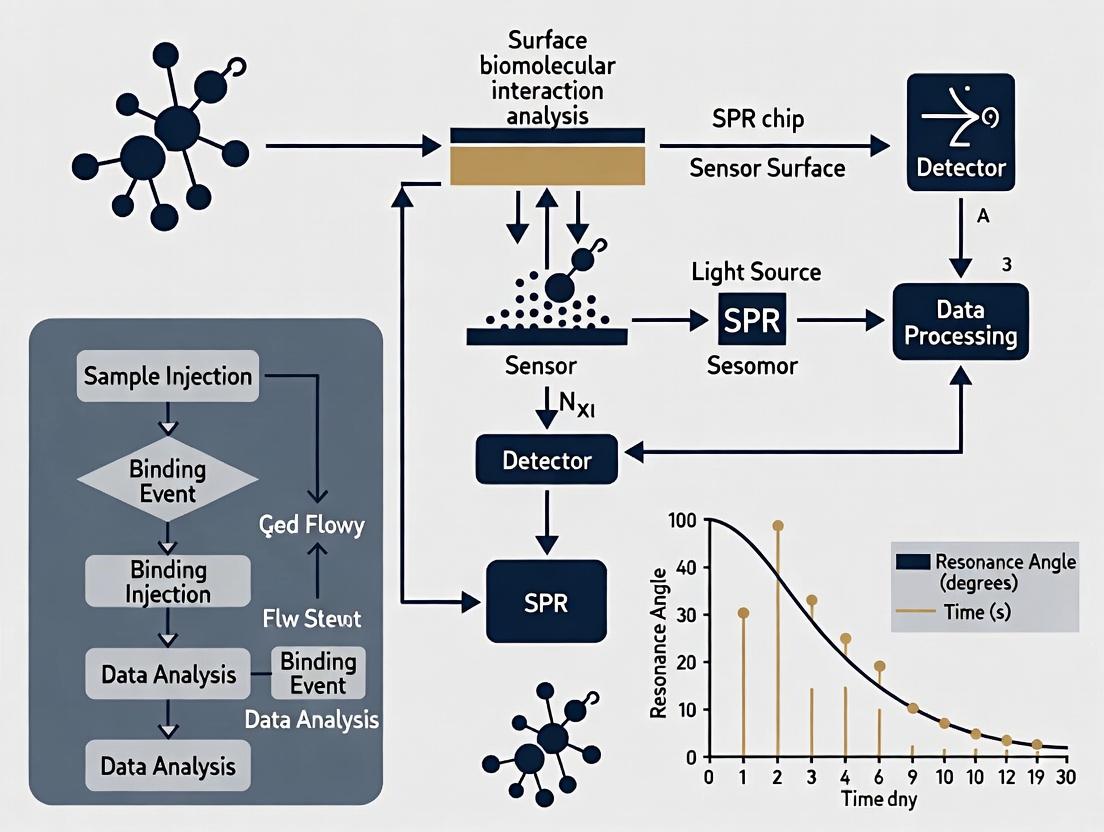
This article provides a comprehensive overview of Surface Plasmon Resonance (SPR) technology for food safety monitoring, tailored for researchers and analytical scientists.
Surface Plasmon Resonance in Food Safety: A Guide for Researchers on Real-Time Pathogen & Contaminant Detection
Abstract
This article provides a comprehensive overview of Surface Plasmon Resonance (SPR) technology for food safety monitoring, tailored for researchers and analytical scientists. It covers the foundational principles of SPR biosensing, details methodological approaches for detecting pathogens, toxins, and chemical contaminants, addresses common troubleshooting and optimization challenges, and validates SPR performance against traditional methods like ELISA and PCR. The synthesis offers a critical resource for advancing rapid, label-free screening in food supply chains.
What is SPR Biosensing? Core Principles and Relevance to Modern Food Safety
Surface Plasmon Resonance (SPR) is a label-free, real-time optical sensing technique that detects changes in the refractive index (RI) at a metal-dielectric interface. Within the thesis context of food safety monitoring, SPR's sensitivity to minute RI changes enables the direct detection of pathogenic bacteria (e.g., Salmonella, E. coli), mycotoxins, pesticide residues, and allergens in complex food matrices. The core physics involves the excitation of surface plasmons and the precise measurement of their resonance condition, which is directly perturbed by analyte binding.
Core Physics: Principles and Quantitative Relationships
Plasmon Resonance Condition
Surface plasmons are coherent electron oscillations at a noble metal (typically gold) surface. Resonance occurs when the energy and momentum of incident light match that of the surface plasmon. This is described by the momentum matching condition:
ksp = kx = (ω/c) np sinθ
Where:
- ksp: Surface plasmon wavevector.
- kx: Component of incident light wavevector parallel to the interface.
- ω: Angular frequency of light.
- c: Speed of light in vacuum.
- np: Refractive index of the prism.
- θ: Angle of incidence.
The resonance condition is highly sensitive to the refractive index ns of the dielectric medium (the sample) within ~200 nm of the metal surface, as defined by the plasmon's evanescent field decay length.
Refractive Index Change and Sensor Response
Binding of an analyte (mass) to the sensor surface increases ns. This shifts the resonance condition, observable as a change in resonance angle (Δθ), wavelength (Δλ), or intensity (ΔI). The shift Δθ is approximately proportional to the mass surface concentration Δm (in pg/mm²):
Δθ ≈ Sm × Δm
Where Sm is the mass sensitivity factor. The relationship between Δθ and Δns is given by:
Δθ = (δθ/δns) × Δns
The sensitivity δθ/δns is typically in the range of 10¹–10² deg/RIU (Refractive Index Unit).
Table 1: Quantitative Parameters of Typical SPR Sensors for Food Safety
| Parameter | Typical Range/Value | Relevance to Food Safety Detection |
|---|---|---|
| Detection Limit (RI) | 10⁻⁶ – 10⁻⁷ RIU | Enables detection of low molecular weight toxins (e.g., aflatoxins < 1 kDa). |
| Mass Detection Limit | 0.1 – 1 pg/mm² | Sufficient for bacterial cell detection (e.g., Listeria ~1-10 pg/cell). |
| Assay Dynamic Range | 3 – 4 orders of magnitude | Allows quantification from regulatory limits to high contamination levels. |
| Surface Evanescent Field Depth | 150 – 300 nm | Optimal for capturing whole bacterial cells and antibody-antigen complexes. |
| Typical Resonance Angle Shift (for 1 ng/mm² protein) | ~0.1° | A readily measurable signal for proteinaceous allergens or bacterial surface proteins. |
| Assay Time (Direct Detection) | 5 – 30 minutes | Enables rapid screening compared to traditional culture methods. |
Application Notes & Protocols
Protocol: Direct Detection ofSalmonella typhimuriumin Buffer
Objective: Quantify bacterial cell concentration using a functionalized SPR chip.
The Scientist's Toolkit: Research Reagent Solutions
| Item | Function in Protocol |
|---|---|
| Gold-coated SPR Chip (CM5 type) | Sensor substrate; gold enables plasmon excitation, carboxymethylated dextran provides a hydrogel for ligand immobilization. |
| EDC/NHS Cross-linking Kit | Activates carboxyl groups on the dextran matrix for covalent amine coupling of antibodies. |
| Anti-Salmonella monoclonal Antibody (mAb) | Capture ligand; specifically binds to surface antigens on Salmonella. |
| Ethanolamine HCl | Blocks remaining activated ester groups after ligand coupling to deactivate the surface. |
| HBS-EP Running Buffer (10 mM HEPES, 150 mM NaCl, 3 mM EDTA, 0.005% v/v Surfactant P20, pH 7.4) | Maintains pH and ionic strength; EDTA minimizes non-specific metal interactions; P20 reduces non-specific adsorption. |
| Salmonella Standard Solutions (10³ – 10⁷ CFU/mL) | Calibration and sample matrix; prepared in sterile PBS or food extract. |
| Glycine-HCl (pH 2.0 – 3.0) | Regeneration solution; breaks antibody-bacterium bond without denaturing the captured mAb for sensor surface reuse. |
Experimental Methodology:
- System Priming: Prime the SPR instrument (e.g., Biacore, OpenSPR) with sterile, degassed HBS-EP buffer at a flow rate of 20 µL/min.
- Surface Activation: Inject a 1:1 mixture of 0.4 M EDC and 0.1 M NHS over the sensor chip for 7 minutes.
- Ligand Immersion: Dilute anti-Salmonella mAb to 50 µg/mL in 10 mM sodium acetate buffer (pH 5.0). Inject for 10 minutes to achieve ~10,000 Response Units (RU) of immobilized antibody.
- Surface Blocking: Inject 1 M ethanolamine-HCl (pH 8.5) for 7 minutes to quench unreacted sites.
- Baseline Stabilization: Flow HBS-EP for 10 minutes to establish a stable baseline.
- Sample Injection (Analysis): Inject Salmonella standard or prepared food sample for 5-10 minutes (association phase). Monitor the real-time increase in RU.
- Dissociation: Switch flow to buffer only for 3-5 minutes to monitor dissociation of weakly bound material.
- Surface Regeneration: Inject a 30-second pulse of 50 mM glycine-HCl (pH 2.5) to remove bound bacteria, restoring the mAb surface.
- Data Analysis: Plot the maximum response during the association phase (RU) against bacterial concentration (CFU/mL) to create a calibration curve.
Protocol: Competitive Inhibition Assay for Small Molecules (Ochratoxin A)
Objective: Detect small molecules (toxins) below the direct detection limit via inhibition.
Methodology:
- Surface Preparation: Immobilize Ochratoxin A (OTA)-conjugated carrier protein (e.g., OTA-BSA) on the sensor chip using standard amine coupling (as in Steps 2-4 above).
- Pre-mixture Incubation: Incubate a fixed concentration of anti-OTA antibody (e.g., 50 nM) with varying concentrations of free OTA standard or sample extract for 15 minutes.
- Injection and Detection: Inject the pre-mixture over the OTA-BSA surface. Free OTA in the sample inhibits antibody binding to the surface. The sensor response (RU) is inversely proportional to the free OTA concentration.
- Calibration: Generate a standard curve of %Inhibition vs. log[OTA].
Table 2: Comparison of SPR Assay Formats for Food Safety Targets
| Assay Format | Target Example | LOD (Approx.) | Advantage | Disadvantage |
|---|---|---|---|---|
| Direct Binding | Bacterial Cells (e.g., E. coli), Large Proteins | 10³ – 10⁴ CFU/mL; 1 nM | Simple, real-time kinetics | Size-limited; non-specific binding in complex matrices. |
| Sandwich / Amplification | Bacterial Cells, Viral Particles | 10² – 10³ CFU/mL | Enhanced specificity and signal | Requires two specific binders; more complex development. |
| Competitive Inhibition | Small Molecules (Pesticides, Toxins, Antibiotics) | 0.1 – 10 ng/mL (ppb) | Ideal for haptens (<1000 Da) | Indirect measurement; requires careful optimization. |
Visualizing SPR Workflows and Physics
Within the context of developing Surface Plasmon Resonance (SPR) biosensors for food safety monitoring, the precise integration of core instrumentation components is critical. This application note details the essential subsystems—sensor chips, fluidics, and optical detection—and provides protocols for their evaluation and use in detecting foodborne pathogens and toxins.
Sensor Chips: Substrates for Biorecognition
Sensor chips form the foundational interface where molecular interactions occur. The choice of chip dictates the immobilization strategy and performance.
Chip Types and Applications
| Chip Type | Substrate Material | Common Functionalization | Key Application in Food Safety | Typical Immobilization Capacity (RU) |
|---|---|---|---|---|
| Bare Gold | Pure gold film (~50 nm) | Thiol-based self-assembled monolayers (SAMs) | Method development, small molecule analysis | 100-500 (for protein A/G) |
| Carboxymethylated Dextran (CM5) | Gold with hydrogel dextran matrix | Amine coupling via EDC/NHS | Detection of large targets (e.g., bacterial cells) | 10,000-30,000 |
| Carboxylated (C1) | Gold with flat carboxylated matrix | Amine coupling | Detection of large analytes (e.g., E. coli O157:H7) | 5,000-15,000 |
| Streptavidin (SA) | Gold with pre-immobilized streptavidin | Biotinylated ligand capture | High-affinity capture of biotinylated DNA probes or antibodies | 2,000-5,000 (for captured ligand) |
| NTA (Nitrilotriacetic acid) | Gold with NTA groups | Histidine-tagged protein capture via Ni²⁺ | Recombinant antibody fragments | 1,000-3,000 |
Protocol: Amine Coupling on a CM5 Chip for Antibody Immobilization
Objective: To covalently immobilize a monoclonal antibody against Salmonella Typhimurium on a CM5 sensor chip.
Materials:
- SPR instrument with continuous flow.
- CM5 sensor chip.
- Running Buffer: 10 mM HEPES, 150 mM NaCl, 0.05% v/v Surfactant P20, pH 7.4 (HBS-P), filtered (0.22 µm).
- Antibody Solution: 20-50 µg/mL anti-Salmonella in 10 mM sodium acetate, pH 4.5.
- Activation Solutions: 0.4 M EDC (1-ethyl-3-(3-dimethylaminopropyl)carbodiimide) mixed 1:1 with 0.1 M NHS (N-hydroxysuccinimide).
- Deactivation Solution: 1 M ethanolamine hydrochloride-NaOH, pH 8.5.
- Regeneration Solution: 10 mM glycine-HCl, pH 2.0.
Procedure:
- Prime the fluidic system with HBS-P buffer.
- Dock the CM5 chip and perform a preconditioning wash with two 1-min injections of the regeneration solution, followed by a 2-min stabilization period.
- Baseline establish a stable baseline with HBS-P at a flow rate of 10 µL/min.
- Activate the dextran surface by injecting a 1:1 mixture of EDC/NHS for 7 minutes.
- Immobilize the antibody by injecting the antibody solution for 7 minutes. Target an immobilization level of 10,000-15,000 Response Units (RU).
- Deactivate unreacted esters by injecting 1 M ethanolamine hydrochloride-NaOH (pH 8.5) for 7 minutes.
- Wash with two 1-min pulses of regeneration solution to remove non-covalently bound antibody.
- Stabilize the surface with running buffer for at least 30 minutes before analyte injection.
Fluidics: Precision Sample Delivery
The fluidic system controls sample and buffer delivery, directly impacting binding kinetics and data quality.
Performance Metrics and Specifications
| Fluidic Component | Key Parameter | Typical Specification | Impact on Food Safety Assay |
|---|---|---|---|
| Pump | Precision | CV < 1% for flow rates 1-100 µL/min | Ensures reproducible injection volumes for quantification. |
| Pulsation | < 2% ripple | Prevents baseline noise that can obscure small analyte signals. | |
| Autosampler | Carryover | < 0.1% | Critical for preventing cross-contamination between food extract samples. |
| Injection Valve | Loop Volume Accuracy | ± 1% of set volume | Accurate analyte concentration delivery for dose-response curves. |
| Microfluidic Cartridge/Flow Cell | Channel Height | ~50-100 µm | Defines mass transport conditions; critical for detecting large bacterial cells. |
| Temperature Control | Stability ± 0.01°C | Minimizes drift when analyzing complex food matrices. |
Protocol: Kinetic Characterization of an Aptamer-Toxin Interaction
Objective: Determine the association (k_a) and dissociation (k_d) rate constants for an ochratoxin A (OTA) binding aptamer.
Materials:
- SPR instrument with high-precision microfluidic system.
- SA sensor chip.
- Running Buffer: PBS-T (10 mM phosphate, 137 mM NaCl, 2.7 mM KCl, 0.005% Tween 20, pH 7.4).
- Biotinylated OTA Aptamer: 100 nM in running buffer.
- OTA Standard Solutions: 0.1, 0.5, 2.5, 10, and 50 nM in running buffer (prepared by serial dilution).
- Regeneration Solution: 10 mM NaOH, 1 M NaCl.
Procedure:
- Chip Preparation: Capture the biotinylated aptamer on one flow cell of the SA chip by injecting a 100 nM solution for 120 seconds at 10 µL/min. Target ~100 RU capture. Use a reference flow cell with no aptamer.
- Kinetic Series: a. Set the flow rate to 30 µL/min. b. Inject each OTA concentration in duplicate for 180 seconds (association phase). c. Monitor dissociation in running buffer for 300 seconds. d. Regenerate the aptamer surface with a 30-second pulse of 10 mM NaOH, 1 M NaCl. e. Re-equilibrate with running buffer for 120 seconds between cycles.
- Data Analysis: Subtract the reference flow cell data. Fit the resulting sensograms globally to a 1:1 Langmuir binding model using the instrument's software to extract
k_a,k_d, and the equilibrium dissociation constantK_D(k_d/k_a).
Optical Detection: Translating Binding Events into Signals
The optical system excites surface plasmons and measures changes in the refractive index at the chip surface.
System Configurations and Resolution
| Optical Configuration | Excitation Method | Key Advantage | Typical Noise Level (RU, RMS) | Suitability for Food Monitoring |
|---|---|---|---|---|
| Fixed Angle, Intensity Modulation | LED or Laser | Simplicity, robustness | 0.5-1 RU | High-throughput screening of small molecules (e.g., antibiotics). |
| Angle Interrogation (Goniometer) | Scanning Laser or Divergent Beam | High resolution | 0.1-0.5 RU | Detecting low-abundance proteins in complex food extracts. |
| Wavelength Interrogation (Spectroscopic SPR) | Broadband Light Source | Multichannel, multiplexing capability | 0.2-1 RU | Simultaneous detection of multiple allergens on an imaging chip. |
| SPR Imaging (SPRi) | CCD camera, fixed angle | Spatial resolution, array-based detection | 1-5 RU per pixel | Parallel monitoring of multiple capture spots for pathogen identification. |
Protocol: SPRI for Multiplex Pathogen Detection
Objective: Simultaneously detect Listeria monocytogenes and E. coli O157:H7 on a single sensor chip array.
Materials:
- SPR imaging system (SPRi) with a CCD camera.
- Bare gold array chip (with 5x5 spot capability).
- Running Buffer: PBS, pH 7.4.
- Capture Probes: Spot 1: Anti-Listeria antibody (50 µg/mL in PBS). Spot 2: Anti-E. coli antibody (50 µg/mL). Spot 3: Negative control (BSA, 1 mg/mL).
- Blocking Solution: 1% BSA in PBS.
- Bacterial Samples: Pure cultures or spiked food homogenates, diluted in PBS.
- Regeneration Solution: 50 mM NaOH.
Procedure:
- Array Fabrication: Using a microarray spotter, deposit 100 pL droplets of each capture probe and the BSA control onto discrete locations on the gold chip. Incubate in a humid chamber for 1 hour at 25°C.
- Blocking: Rinse the chip with PBS and immerse in 1% BSA blocking solution for 1 hour to passivate unmodified gold surfaces.
- SPRi Analysis: a. Mount the chip in the SPRi instrument. b. Establish a stable baseline in PBS buffer. c. Inject the sample containing bacteria over the array for 20 minutes at a flow rate of 20 µL/min. d. Monitor reflectivity changes (Δ%R) in real-time for each spot. e. Rinse with PBS for 5 minutes to observe dissociation.
- Data Interpretation: A positive response is defined as a Δ%R > 3 standard deviations above the mean signal from the BSA control spot. The pattern of spot activation identifies the pathogen(s) present.
The Scientist's Toolkit: Key Research Reagent Solutions
| Item | Function in SPR Food Safety Assays | Example Product/Catalog Number |
|---|---|---|
| Sensor Chips (CM5) | Provides a high-capacity hydrogel matrix for covalent ligand immobilization. | Cytiva Series S Sensor Chip CM5 |
| EDC / NHS Crosslinker Kit | Activates carboxyl groups on sensor chips for amine coupling. | Thermo Fisher Scientific EDC (A35391) / NHS (24510) |
| HBS-EP+ Buffer (10X) | Standard running buffer with EDTA and surfactant to minimize non-specific binding. | Cytiva BR100669 |
| Recombinant Protein A/G | For oriented capture of antibodies from diverse species. | Thermo Fisher Scientific 21186 |
| Biotin CAPture Kit | Regenerable surface for capturing biotinylated ligands. | Cytiva 28920234 |
| PBS-T Buffer (10X) | Phosphate-buffered saline with Tween 20 for washing and dilution. | Sigma-Aldrich P3563 |
| Glycine-HCl (pH 2.0) | Mild regeneration solution for breaking antibody-antigen bonds. | Prepare from Glycine (Sigma G7126) |
| Ethanolamine (1 M, pH 8.5) | Blocks unreacted NHS-esters after amine coupling. | Cytiva BR100050 |
| Micro-Scale Protein Labeling Kits (Biotin, Fluorescein) | For labeling small quantities of proteins or aptamers for capture assays. | Abcam Ab201795 (Biotin) |
| Certified Pathogen Standards | Positive controls for assay development (e.g., Salmonella DNA, viral particles). | ATCC Genuine Cultures |
Diagrams
Title: Core SPR Assay Workflow for Food Safety
Title: Common SPR Optical Detection Configurations
Why SPR for Food Analysis? Advantages of Label-Free, Real-Time Kinetic Data
Within the broader thesis on Surface Plasmon Resonance (SPR) for food safety monitoring, this application note details its pivotal advantages. SPR biosensors provide a robust platform for the sensitive, specific, and real-time detection of food contaminants—from pathogens and mycotoxins to veterinary drug residues and allergens—without the need for fluorescent or enzymatic labels. This direct detection capability, combined with quantitative kinetic analysis, makes SPR an indispensable tool for modern food analysis research and compliance screening.
Core Advantages in Food Safety Context
Label-Free Detection: SPR measures changes in refractive index at a sensor surface, allowing for the direct observation of biomolecular interactions. This eliminates the time, cost, and potential interference associated with label conjugation steps required in ELISA or fluorescence assays.
Real-Time Kinetic Data: SPR provides a continuous sensorgram, enabling researchers to extract crucial interaction parameters:
- Association Rate Constant (kₐ): How quickly an analyte binds to the immobilized ligand.
- Dissociation Rate Constant (k_d): How quickly the complex falls apart.
- Equilibrium Dissociation Constant (K_D): A direct measure of binding affinity.
This kinetic profiling is vital for understanding toxin-receptor interactions or optimizing antibody capture elements for sensor development.
High Sensitivity & Throughput: Modern SPR instruments can detect analytes at picomolar to nanomolar concentrations in complex matrices like milk, juice, or meat extracts. Multi-channel systems allow for high-throughput screening of multiple contaminants simultaneously.
Table 1: Comparative Analysis of Detection Techniques for Food Contaminants
| Parameter | SPR Biosensor | ELISA (Traditional) | HPLC-MS/MS (Gold Standard) |
|---|---|---|---|
| Detection Time | 5 - 20 minutes | 2 - 4 hours | 30 - 60 minutes + sample prep |
| Label Required | No | Yes (Enzyme) | Yes (Ionization) |
| Kinetic Data | Yes (kₐ, kd, KD) | No (Endpoint only) | No |
| Sample Throughput | Medium-High (Multi-channel) | High (96-well) | Low-Medium |
| Sensitivity (e.g., Aflatoxin B1) | 0.05 - 0.5 ng/mL | 0.1 - 0.5 ng/mL | 0.01 - 0.05 ng/mL |
| Real-Time Monitoring | Yes | No | No |
| Typical Cost per Sample | Low-Medium | Low | High |
Data compiled from recent literature (2022-2024).
Application Protocols
Protocol 1: Direct Detection ofSalmonellain Buffer and Spiked Milk
Objective: To quantify Salmonella typhimurium using an SPR biosensor functionalized with a specific antibody.
Materials (Scientist's Toolkit):
- SPR Instrument: Biacore X100 or equivalent, with carboxymethylated dextran (CM5) sensor chips.
- Capture Reagent: Monoclonal anti-Salmonella antibody (lyophilized).
- Coupling Reagents: 1-ethyl-3-(3-dimethylaminopropyl)carbodiimide (EDC), N-hydroxysuccinimide (NHS) for amine coupling; Ethanolamine-HCl for deactivation.
- Running Buffer: HBS-EP+ (10 mM HEPES, 150 mM NaCl, 3 mM EDTA, 0.05% v/v Surfactant P20, pH 7.4).
- Analytes: S. typhimurium in pure culture (CFU/mL) and inoculated into whole milk.
- Regeneration Solution: 10 mM Glycine-HCl, pH 2.0.
- Microfiltration Units: 0.22 µm, for clarifying spiked milk samples.
Methodology:
- Antibody Immobilization:
- Dock a new CM5 sensor chip. Prime system with HBS-EP+.
- Activate the dextran surface with a 7-minute injection of a 1:1 mixture of 0.4 M EDC and 0.1 M NHS.
- Dilute anti-Salmonella antibody to 20 µg/mL in 10 mM sodium acetate buffer (pH 5.0). Inject for 7 minutes (~5000-8000 RU achieved).
- Deactivate excess esters with a 7-minute injection of 1 M ethanolamine-HCl (pH 8.5).
- Binding Assay:
- Set flow rate to 30 µL/min. Use one flow cell as a reference (activated/deactivated only).
- Inject a 2-fold serial dilution of Salmonella in buffer (10^4 to 10^7 CFU/mL) over the antibody surface for 3 minutes (association phase).
- Monitor dissociation in running buffer for 5 minutes.
- Regeneration:
- Inject 10 mM Glycine-HCl, pH 2.0, for 30 seconds to remove all bound bacteria, restoring the surface.
- Analysis in Food Matrix:
- Spike known concentrations of Salmonella into whole milk.
- Dilute 1:5 in HBS-EP+ and filter through a 0.22 µm unit.
- Inject the filtered sample as in Step 2. Use a standard curve in buffer to quantify recovery from the milk matrix.
- Data Analysis:
- Subtract reference flow cell sensorgram.
- For quantification, plot maximum response (RU) during association vs. CFU/mL.
- For kinetic analysis (if using whole cells at low density), fit the data to a 1:1 Langmuir binding model to obtain kₐ and k_d.
Protocol 2: Competitive Inhibition Assay for Small Molecules (e.g., Antibiotic Residues)
Objective: To detect the small molecule chloramphenicol (CAP) in honey using a competitive SPR immunoassay.
Materials (Scientist's Toolkit):
- SPR Instrument & Chip: As in Protocol 1.
- Conjugate: Chloramphenicol-BSA (CAP-BSA) conjugate for surface immobilization.
- Detection Reagent: Monoclonal anti-CAP antibody.
- Running & Sample Buffer: PBS-P+ (0.01 M phosphate, 0.15 M NaCl, 0.05% v/v Surfactant P20, pH 7.4).
- Analytes: Pure CAP standard and honey samples.
- Regeneration Solution: 50 mM NaOH, 0.5% SDS.
Methodology:
- Conjugate Immobilization:
- Immobilize CAP-BSA conjugate on a CM5 chip using standard amine coupling (as in Protocol 1, Step 1) to achieve ~3000 RU.
- Competitive Assay:
- Pre-mix a fixed concentration of anti-CAP antibody (near K_D concentration) with a series of CAP standard solutions (0, 0.1, 1, 10, 100 ng/mL) in PBS-P+. Incubate for 10 minutes.
- Separately, prepare a 1:10 (w/v) dilution of honey in PBS-P+, centrifuge, and mix the supernatant with the same fixed antibody concentration.
- Inject each antibody/analyte mixture over the CAP-BSA surface for 2 minutes.
- The response is inversely proportional to free CAP concentration, as CAP in solution inhibits antibody binding to the surface.
- Regeneration:
- Inject 50 mM NaOH with 0.5% SDS for 30 seconds to remove all bound antibody.
- Data Analysis:
- Plot the maximum binding response (RU) against the logarithm of CAP concentration to generate a standard inhibition curve.
- Fit a four-parameter logistic curve to determine the IC50. Quantify CAP in honey samples by interpolation from the standard curve.
Diagrams
Diagram 1: SPR Principle for Food Analysis
Diagram 2: SPR Assay Workflow Cycle
Application Notes
Surface Plasmon Resonance (SPR) biosensors offer real-time, label-free analysis critical for monitoring primary contaminants in food. This technology is integral to a thesis on advancing rapid, multiplexed surveillance systems for food safety. The following notes detail its application for key targets.
- Pathogens (e.g., Salmonella spp., Listeria monocytogenes, E. coli O157:H7): SPR enables direct detection of whole bacterial cells or specific surface antigens (e.g., flagellin, lipopolysaccharides) with sensitivities approaching 10³ - 10⁴ CFU/mL. Sandwich assays using secondary antibodies or lectins can enhance signal and specificity. Recent advancements incorporate phage-displayed peptides or molecularly imprinted polymers (MIPs) as robust capture ligands.
- Mycotoxins (e.g., Aflatoxin B1, Ochratoxin A, Deoxynivalenol): As small molecules (<1 kDa), mycotoxin detection requires competitive or inhibition assay formats. A fixed concentration of mycotoxin-specific antibody is mixed with a sample extract and injected over a sensor chip coated with a mycotoxin-protein conjugate. Lower responses indicate higher toxin concentration in the sample, with detection limits often below regulatory thresholds (e.g., <0.1 µg/kg for Aflatoxin B1).
- Allergens (e.g., Ara h 1 (peanut), β-lactoglobulin (milk), Gliadin (gluten)): SPR quantifies trace protein allergens in complex processed foods. Cross-reactivity assessment is a key strength, allowing for the evaluation of antibody specificity against related protein families. Protocols often involve extracting proteins from food matrices under denaturing and reducing conditions to expose cryptic epitopes.
- Veterinary Drug Residues (e.g., antibiotics, growth promoters): Similar to mycotoxins, detection employs inhibition assays. Sensor chips are functionalized with immobilized analogues of the drug. Sample extracts are pre-mixed with specific antibodies or DNA aptamers. High residue levels inhibit binding to the chip, providing a quantitative, multiplex-capable method to screen for multiple drug classes in a single run.
Quantitative Data Summary of SPR Performance for Key Food Targets
Table 1: Representative SPR Assay Performance Metrics for Food Contaminants
| Target Class | Specific Analyte | LOD (Limit of Detection) | Assay Format | Assay Time (min) | Key Chip Chemistry |
|---|---|---|---|---|---|
| Pathogen | Salmonella Typhimurium | 10³ CFU/mL | Direct/Sandwich | 20-30 | Carboxylated dextran (CM5) with anti-Salmonella antibody |
| Mycotoxin | Aflatoxin B1 | 0.05 µg/kg (ppb) | Inhibition | 15-20 | CM5 chip with AFB1-BSA conjugate |
| Allergen | Ara h 1 (Peanut) | 0.1 mg/kg (ppm) | Direct | 25 | CM5 chip with anti-Ara h 1 monoclonal antibody |
| Veterinary Drug | Sulfadiazine | 0.3 µg/kg (ppb) | Inhibition | 15 | CM5 chip with sulfadiazine derivative |
Experimental Protocols
Protocol 1: Inhibition Assay for Mycotoxin (Aflatoxin B1) Detection
- Chip Preparation: Immobilize Aflatoxin B1-BSA conjugate on a CM5 sensor chip using standard amine-coupling (EDC/NHS) to achieve ~5000 RU.
- Sample Preparation: Mix standard/sample extract with a fixed, optimized concentration of monoclonal anti-Aflatoxin B1 antibody. Incubate for 5 min at room temperature.
- SPR Analysis: Inject the mixture (30 µL, flow rate 20 µL/min) over the mycotoxin-conjugate and reference surfaces.
- Data Analysis: Record the response (RU). The signal is inversely proportional to mycotoxin concentration. Generate a calibration curve with known standards (0, 0.05, 0.1, 0.5, 1.0 µg/kg).
Protocol 2: Direct Capture Assay for Pathogen (Salmonella spp.) Detection
- Chip Preparation: Immobilize polyclonal anti-Salmonella antibody on a high-capacity HC200M chip via amine coupling to achieve ~15,000 RU.
- Sample Preparation: Pre-enrich food homogenate (25g in 225mL BPW) for 16-18h. Centrifuge and resuspend pellet in HBS-EP+ buffer.
- SPR Analysis: Inject the prepared sample (50 µL, flow rate 10 µL/min). Monitor association/dissociation. For signal amplification, inject a secondary antibody (10 µL).
- Regeneration: Strip bound bacteria using a 30-second pulse of 10 mM Glycine-HCl, pH 2.0. Re-equilibrate with running buffer.
Protocol 3: Sandwich Assay for Allergen (β-lactoglobulin) Quantification
- Chip Preparation: Immobilize capture anti-β-lactoglobulin antibody on a CM5 chip.
- Sample Preparation: Extract food sample in extraction buffer (PBS, 2% Tween-20, 1M NaCl) at 65°C for 30 min. Centrifuge and filter.
- SPR Analysis: Inject extract (flow rate 20 µL/min). Inject detection antibody (biotinylated anti-β-lactoglobulin, different epitope) post-capture. For enhanced signal, inject streptavidin.
- Regeneration: Use two 30-second pulses: first with 10 mM Glycine-HCl, pH 2.0, then with 0.1% SDS.
Visualizations
SPR Assay Workflow for Food Analysis
SPR Assay Selection Logic
The Scientist's Toolkit: Key Research Reagent Solutions
Table 2: Essential Materials for SPR-based Food Safety Research
| Reagent/Material | Function & Role in SPR Assay |
|---|---|
| CM5 Sensor Chip (Carboxymethylated dextran) | Gold-standard hydrogel matrix for covalent ligand immobilization via amine coupling. Provides a stable, low-nonspecific binding surface. |
| HBS-EP+ Running Buffer | Standard buffer (10mM HEPES, 150mM NaCl, 3mM EDTA, 0.05% surfactant P20). Maintains pH and ionic strength, minimizes non-specific interactions. |
| Amine-coupling Kit (EDC/NHS) | Contains 1-ethyl-3-(3-dimethylaminopropyl)carbodiimide (EDC) and N-hydroxysuccinimide (NHS). Activates carboxyl groups on the chip for ligand attachment. |
| Regeneration Solutions (e.g., Glycine-HCl, NaOH) | Low/high pH buffers or surfactants that disrupt analyte-ligand bonds without damaging the chip, enabling re-use. |
| Specific Capture Ligands (Antibodies, Aptamers, MIPs) | Biological or biomimetic recognition elements immobilized on the chip. Define the assay's specificity and sensitivity. |
| Analyte Standards (Certified Reference Materials) | Purified targets (toxins, drugs, allergens, inactivated pathogens) used for calibration curve generation and method validation. |
| Biacore or Equivalent SPR Instrument | Core analytical platform that generates the refractive index change data in real-time as Resonance Units (RU). |
Surface Plasmon Resonance (SPR) is a label-free, real-time biosensing technology that measures biomolecular interactions. Within the thesis context of food safety monitoring, SPR's evolution addresses the critical need to rapidly detect pathogens (e.g., Salmonella, E. coli), toxins (e.g., aflatoxins), and antibiotic residues from complex food matrices. The transition from laboratory benchtop systems to portable field-deployable platforms enables on-site screening, shifting from centralized laboratory testing to distributed surveillance networks, which is pivotal for preventing foodborne illness outbreaks and ensuring supply chain integrity.
Evolution of SPR Platforms: Quantitative Comparison
The development of SPR platforms can be categorized into three generations, each with distinct performance metrics relevant to food safety applications.
Table 1: Comparative Analysis of SPR Platform Generations
| Feature | Laboratory Benchtop (1st Gen) | Automated Multiplex (2nd Gen) | Portable Field-Deployable (3rd Gen) |
|---|---|---|---|
| Example Models | Biacore T200, Reichert SR7500DC | Biacore 8K, SPRi-Plex II | Spreeta 2000, Sierra SPR S100, OpenSPR |
| Weight & Size | 50-100 kg, >0.5 m³ | 20-50 kg, ~0.3 m³ | 0.5-5 kg, <0.01 m³ |
| Throughput | 4-6 samples/hour (serial) | 96-384 samples/hour (array) | 1-2 samples/hour |
| Detection Limit (RU) | 0.1 – 1 RU | 0.5 – 2 RU (per spot) | 1 – 5 RU |
| Typical LOD (Food Pathogen) | 10² – 10³ CFU/mL | 10³ – 10⁴ CFU/mL | 10³ – 10⁵ CFU/mL |
| Sample Consumption | ~100 µL | ~10 µL per spot | ~10-50 µL |
| Key Advantage | Ultra-high sensitivity, gold-standard quantification | High-throughput screening for multiple targets | Portability, low cost, point-of-need use |
| Primary Food Safety Role | Reference method validation, detailed kinetics | Multi-analyte surveillance panels | Rapid, on-site screening at farm or factory |
Experimental Protocols for Food Pathogen Detection
Protocol 3.1: SPR Chip Functionalization for Antibody Immobilization (Gold Surface)
This protocol details the preparation of a sensor chip for capturing antibodies specific to Salmonella Typhimurium.
Materials:
- SPR Gold Sensor Chip
- 11-Mercaptoundecanoic acid (11-MUA): Forms a self-assembled monolayer (SAM).
- NHS/EDC solution: Activates carboxyl groups for amine coupling.
- Ethanolamine HCl: Blocks remaining activated esters.
- 10 mM Sodium Acetate Buffer (pH 4.5): Running buffer for antibody immobilization.
- Anti-Salmonella monoclonal antibody (1 µg/mL): Capture ligand.
- 1X PBS with 0.005% Tween 20 (PBST): Running and dilution buffer.
Procedure:
- Chip Cleaning: Sonicate the gold chip in absolute ethanol for 10 minutes, then dry under a stream of nitrogen.
- SAM Formation: Immerse the chip in a 1 mM solution of 11-MUA in ethanol for 18-24 hours at room temperature. Rinse thoroughly with ethanol and dry with nitrogen.
- SPR System Priming: Install the chip in the SPR instrument. Prime the system with ultrapure water followed by sodium acetate buffer at a flow rate of 20 µL/min.
- Surface Activation: Inject a 1:1 mixture of 0.4 M EDC and 0.1 M NHS for 7 minutes.
- Antibody Immobilization: Dilute the anti-Salmonella antibody in sodium acetate buffer. Inject the solution (typically 50 µg/mL) for 10 minutes or until the desired response unit (RU) increase (~5000-10000 RU) is achieved.
- Blocking: Inject 1 M ethanolamine-HCl (pH 8.5) for 7 minutes to deactivate unreacted sites.
- Equilibration: Condition the surface with 5-10 injections of glycine-HCl (pH 2.0) for 30 seconds each, followed by re-equilibration with PBST until a stable baseline is achieved.
Protocol 3.2: Direct Detection ofSalmonellain Spiked Lettuce Extract
This protocol describes a sandwich assay for sensitive pathogen detection in a complex food matrix.
Materials:
- Functionalized SPR chip from Protocol 3.1.
- Lettuce Sample: 25g homogenized in 225 mL of Buffered Peptone Water (BPW).
- Secondary Detection Antibody: Polyclonal anti-Salmonella antibody, biotinylated.
- Streptavidin (SA): Signal amplification reagent.
- PBST: Running buffer.
- Portable SPR Instrument (e.g., Sierra SPR S100).
Procedure:
- Sample Preparation: Spike lettuce homogenate with known concentrations of S. Typhimurium (10¹ to 10⁶ CFU/mL). Centrifuge at 5000 x g for 10 min. Filter supernatant through a 0.45 µm syringe filter. Adjust pH to 7.4.
- Baseline Establishment: Flow PBST over the functionalized chip at 15 µL/min until a stable baseline is established.
- Sample Injection: Inject the filtered lettuce extract sample for 5 minutes (association phase), followed by PBST for 5 minutes (dissociation phase). Record the binding response (ΔRU₁).
- Signal Amplification (Sandwich Assay): a. Inject biotinylated polyclonal anti-Salmonella antibody (10 µg/mL in PBST) for 5 minutes. b. Inject streptavidin solution (50 µg/mL in PBST) for 5 minutes. c. Record the total binding response (ΔRU₂).
- Regeneration: Gently regenerate the surface with a 30-second injection of 10 mM glycine-HCl (pH 2.0) to remove the complex without damaging the immobilized primary antibody.
- Data Analysis: Plot the amplified response (ΔRU₂) against the pathogen concentration to generate a calibration curve. The limit of detection (LOD) is defined as the concentration yielding a signal three times the standard deviation of the blank (unspiked) sample response.
Diagrams of Experimental Workflows and System Evolution
Title: SPR Chip Functionalization Workflow
Title: SPR Sandwich Assay for Pathogen Detection
Title: Evolution Path of SPR Platform Generations
The Scientist's Toolkit: Key Research Reagent Solutions
Table 2: Essential Materials for SPR-based Food Safety Assay Development
| Item | Function & Relevance |
|---|---|
| Carboxylated Gold Sensor Chips | The foundational substrate for SAM formation. Provides a stable, functionalizable surface for ligand immobilization via amine coupling. |
| CM5 or equivalent dextran chip | For benchtop systems. The hydrogel matrix increases surface area and loading capacity, enhancing sensitivity for low-abundance analytes. |
| Anti-target Capture Ligands | High-affinity, specific monoclonal antibodies or aptamers. The critical biological recognition element that determines assay specificity. |
| Biotinylated Detection Probes | Secondary antibodies or aptamers for sandwich assays. Enables signal amplification when used with a streptavidin reagent. |
| Streptavidin | High-affinity tetrameric protein that binds biotin. Used as a universal signal amplifier in sandwich assay formats. |
| NHS/EDC Crosslinkers | Standard chemistry for activating carboxyl groups on the sensor surface to form amine-reactive esters for covalent immobilization. |
| Ethanolamine-HCl | A small amine-containing molecule used to quench (block) unreacted activated esters after immobilization, reducing non-specific binding. |
| Regeneration Buffers | Low pH (e.g., Glycine-HCl) or other mild denaturing solutions. Crucial for removing bound analyte without damaging the immobilized ligand, enabling chip re-use. |
| PBST (0.005% Tween 20) | Standard running and dilution buffer. The surfactant minimizes non-specific adsorption of matrix components from complex food samples to the sensor surface. |
| Reference Sensor Channel | An essential experimental control surface, typically immobilized with a non-specific antibody or blocked with BSA, to subtract bulk refractive index and non-specific binding effects. |
Building an SPR Assay: Step-by-Step Protocols for Food Contaminant Detection
Within a thesis focused on Surface Plasmon Resonance (SPR) for food safety monitoring, robust sensor surface functionalization is the critical foundation. The selective immobilization of capture ligands—antibodies, aptamers, and molecularly imprinted polymers (MIPs)—determines the sensitivity, specificity, and reusability of the biosensor for detecting pathogens, toxins, and adulterants in complex food matrices. This document provides Application Notes and detailed Protocols for these three primary immobilization strategies.
Antibody Immobilization: Application Notes & Protocol
Antibodies are the gold-standard capture ligands due to their high specificity. Direct physical adsorption leads to random orientation and denaturation. Covalent immobilization via amine or thiol coupling on a functionalized gold SPR chip is preferred for stable, oriented binding.
Key Research Reagent Solutions
| Reagent/Material | Function in Experiment |
|---|---|
| CM5 or C1 SPR Chip (Carboxymethylated dextran) | Provides a hydrophilic, low non-specific binding matrix with carboxyl groups for covalent coupling. |
| N-ethyl-N'-(3-dimethylaminopropyl)carbodiimide (EDC) | Activates carboxyl groups on the chip surface to form reactive O-acylisourea esters. |
| N-hydroxysuccinimide (NHS) | Stabilizes the EDC-activated esters, forming an amine-reactive NHS ester. |
| 1.0 M Ethanolamine-HCl, pH 8.5 | Blocks unreacted NHS esters after ligand coupling to deactivate the surface. |
| 10 mM Sodium Acetate, pH 4.0-5.5 | Immobilization buffer; low pH ensures antibody (pI ~6-8) is positively charged for electrostatic pre-concentration on negatively charged chip. |
| Polyclonal or Monoclonal IgG | Capture ligand; target-specific antibody. |
| HBS-EP Running Buffer (10 mM HEPES, 150 mM NaCl, 3 mM EDTA, 0.05% v/v Surfactant P20, pH 7.4) | Standard SPR running buffer; minimizes non-specific interactions. |
Protocol: Antibody Immobilization via Amine Coupling
Objective: To covalently immobilize anti-Salmonella antibodies on a CM5 SPR chip for pathogen detection.
- Surface Preparation: Dock the CM5 chip and prime the SPR system with HBS-EP buffer.
- Activation: Inject a 1:1 mixture of 0.4 M EDC and 0.1 M NHS over the target flow cell for 7 minutes (flow rate: 10 µL/min).
- Antibody Dilution & Injection: Dilute the antibody to 10-50 µg/mL in 10 mM sodium acetate (pH 4.5). Inject this solution for 7 minutes (flow rate: 10 µL/min). The low pH ensures electrostatic pre-concentration.
- Blocking: Inject 1.0 M ethanolamine-HCl (pH 8.5) for 7 minutes to deactivate remaining reactive groups.
- Reference Surface: A reference flow cell should be activated and blocked without antibody injection to serve as a control for bulk refractive index and non-specific binding.
- Regeneration Scouting: Post-immobilization, inject a series of short pulses (30-60 sec) of regeneration solutions (e.g., 10 mM Glycine-HCl, pH 2.0-3.0) over the antibody surface to identify conditions that remove bound analyte without damaging the antibody. This step is crucial for assay reusability.
Antibody Immobilization Performance Data
Table 1: Comparison of antibody immobilization methods for food pathogen detection.
| Immobilization Method | Typical Ligand Density (RU) | Assay Stability (Cycles) | Key Advantage | Main Drawback for Food Safety |
|---|---|---|---|---|
| Direct Amine Coupling | 8,000 - 15,000 | 20-50 | Simple, high density | Random orientation reduces active fraction |
| Protein A/G Capture | 6,000 - 9,000 | 10-30 | Uniform Fc orientation | Leakage of antibody over time/regeneration |
| Site-Specific Thiol Coupling | 4,000 - 8,000 | 50-100 | Controlled orientation, high stability | Requires antibody reduction/engineering |
Diagram 1: SPR Antibody Immobilization via Amine Coupling
Aptamer Immobilization: Application Notes & Protocol
Aptamers are single-stranded DNA or RNA oligonucleotides selected for high-affinity target binding. They offer advantages over antibodies, including thermal stability, reusability, and ease of chemical modification for controlled surface attachment.
Key Research Reagent Solutions
| Reagent/Material | Function in Experiment |
|---|---|
| Streptavidin (SA) Sensor Chip | Pre-immobilized streptavidin on dextran matrix for capturing biotinylated ligands. |
| Biotinylated DNA Aptamer | Capture ligand; biotin tag allows for strong, specific, and oriented binding to streptavidin. |
| 1.0 M NaCl in HBS-EP | High-salt buffer used to wash the surface and remove non-specifically adsorbed aptamers post-capture. |
| 10-50 mM NaOH or HCl | Regeneration solution; aptamers withstand harsh pH, allowing complete analyte removal. |
| 6-Mercapto-1-hexanol (MCH) | Alkanethiol used on bare gold chips to backfill uncoated areas and reduce non-specific adsorption. |
| Thiol-Modified Aptamer | Alternative to biotin; allows direct covalent attachment to gold via Au-S bond. |
Protocol: Aptamer Immobilization via Streptavidin-Biotin
Objective: To immobilize a biotinylated aptamer against ochratoxin A (OTA) on an SA chip for mycotoxin detection.
- Surface Equilibration: Dock the SA chip and prime with HBS-EP buffer until a stable baseline is achieved.
- Aptamer Capture: Dilute the biotinylated aptamer to 100-500 nM in HBS-EP buffer. Inject over the target flow cell for 5-10 minutes (flow rate: 10 µL/min). The high-affinity biotin-streptavidin interaction provides immediate capture.
- Washing: Inject a pulse (1-2 min) of 1.0 M NaCl to remove electrostatically adsorbed aptamers and ensure only biotin-bound aptamers remain.
- Surface Blocking (Optional): Inject a low concentration of free biotin (50-100 µM) to block any remaining vacant streptavidin sites.
- Reference Surface: Use a flow cell where streptavidin is blocked with free biotin prior to aptamer injection.
- Regeneration: After analyte binding, inject 10-50 mM NaOH for 30-60 seconds to denature and release the bound OTA, regenerating the aptamer surface for the next cycle.
Aptamer Immobilization Performance Data
Table 2: Performance metrics for aptamer-based SPR detection of food contaminants.
| Target (Food Contaminant) | Aptamer Sequence Length (nt) | Immobilization Method | Achieved LOD (nM) | Regeneration Condition | Reference (Year) |
|---|---|---|---|---|---|
| Ochratoxin A | 36 | SA-Biotin | 0.05 | 50 mM NaOH | 2023 |
| Listeria monocytogenes | 80 | Thiol-Gold + MCH backfill | 10^2 CFU/mL | 10 mM HCl | 2022 |
| Kanamycin (Antibiotic) | 25 | Direct Amine Coupling | 0.8 | 4 M Urea | 2024 |
Diagram 2: Two Primary Aptamer Immobilization Strategies
Molecularly Imprinted Polymer (MIP) Immobilization: Application Notes & Protocol
MIPs are synthetic, cross-linked polymers with tailor-made cavities complementary to the target molecule (template). They are highly stable and cost-effective alternatives to biological receptors, suitable for small molecule detection in harsh conditions.
Key Research Reagent Solutions
| Reagent/Material | Function in Experiment |
|---|---|
| Template Molecule (e.g., Melamine) | The target analyte around which the polymer is formed; later removed to leave specific cavities. |
| Functional Monomer (e.g., Methacrylic acid) | Binds to the template via non-covalent interactions during polymerization. |
| Cross-linker (e.g., Ethylene glycol dimethacrylate - EGDMA) | Forms the rigid polymer matrix and stabilizes the imprinted cavities. |
| Initiator (e.g., AIBN) | Initiates the radical polymerization process. |
| Gold Nanoparticles (AuNPs) or Nanofilm | Often used as a substrate or component to enhance SPR signal via plasmonic coupling. |
| Acetic Acid/Methanol (9:1 v/v) | Washing solution to extract the template molecule from the polymer, creating the binding sites. |
Protocol: In-situ MIP Film Synthesis on SPR Gold Surface
Objective: To create a MIP sensor for the detection of melamine in milk.
- Surface Pre-treatment: Clean the bare gold SPR chip with piranha solution (Caution: Highly corrosive), followed by rinsing with water and ethanol. Dry under nitrogen.
- Pre-polymerization Mixture: Prepare a solution containing the template (melamine, 10 mM), functional monomer (methacrylic acid, 40 mM), cross-linker (EGDMA, 200 mM), and initiator (AIBN, 2 mM) in aporotic solvent (e.g., acetonitrile). Sonicate and degas with nitrogen.
- In-situ Polymerization: Place a droplet (~50 µL) of the pre-polymer mixture onto the gold chip surface. Seal in a UV-transparent chamber under nitrogen atmosphere. Expose to UV light (365 nm) for 30-60 minutes to initiate polymerization.
- Template Extraction: After polymerization, mount the chip in the SPR system. Flush the surface extensively with a washing solution (e.g., acetic acid/methanol 9:1 v/v) for at least 1 hour at a high flow rate (50-100 µL/min) to completely remove the embedded template molecules, leaving specific recognition cavities.
- Equilibration: Switch to running buffer (e.g., PBS) until a stable baseline is achieved. The surface is now ready for analyte binding studies.
MIP Immobilization Performance Data
Table 3: MIP-SPR sensors for food safety analytes.
| Imprinted Target (Class) | Polymerization Method | Substrate | Binding Constant (K_D, M) | Cross-Reactivity Notes | Reference (Year) |
|---|---|---|---|---|---|
| Patulin (Mycotoxin) | Electro-polymerization (o-phenylenediamine) | Gold electrode | 1.2 x 10^-7 | Low for 5-HMF & citrinin | 2023 |
| Enrofloxacin (Antibiotic) | Thermal, bulk grinding | AuNP-modified chip | 3.8 x 10^-9 | High for Ciprofloxacin | 2022 |
| Histamine (Biogenic Amine) | Photo-grafting, in-situ | Gold chip | 4.5 x 10^-6 | Selective over Tyramine | 2024 |
Diagram 3: MIP Synthesis and Template Removal Workflow
The choice of immobilization strategy directly impacts the performance of an SPR biosensor for food safety applications. Antibodies offer high specificity but can lack robustness. Aptamers provide excellent stability and reusability for repeated testing. MIPs deliver unmatched physical and chemical stability for harsh environments or small molecule targets. The protocols outlined here form the core experimental methodologies for developing reliable SPR-based detection assays within a comprehensive food safety monitoring research framework.
Sample Preparation Protocols for Complex Food Matrices (Meat, Dairy, Produce, Processed Foods)
Surface Plasmon Resonance (SPR) biosensors offer real-time, label-free detection of pathogens, toxins, and adulterants in food. However, the analytical sensitivity and robustness of SPR are critically dependent on the quality of the sample introduced to the sensor chip. Complex food matrices contain fats, proteins, carbohydrates, and particulate matter that cause nonspecific binding, sensor fouling, and signal suppression. These protocols are designed to extract and purify target analytes from diverse food types into a compatible form for downstream SPR analysis, directly supporting thesis research on developing universal, field-deployable SPR monitoring platforms.
General Principles and Key Challenges
| Matrix Type | Primary Interferents | Key Preparation Goal |
|---|---|---|
| Meat | Fats, Myoglobin, Collagen | Defatting, Protein Precipitation, Clarification |
| Dairy | Caseins, Fats, High Viscosity | Fat Removal, Casein Precipitation, Dilution |
| Produce | Polyphenols, Pectins, Pigments, Soil | Removal of PCR inhibitors, Washing, Concentration |
| Processed Foods | Emulsifiers, Preservatives, Complex Mixtures | Matrix Disruption, Target Isolation from Additives |
Detailed Application Notes and Protocols
Protocol 2.1: Meat Products (e.g., Ground Beef forE. coliO157:H7 Detection)
Objective: Extract and concentrate bacterial cells and antigens from a 25g meat sample.
Materials:
- 25g test sample
- 225 mL of sterile Buffered Peptone Water (BPW) or selective enrichment broth
- Stomacher or paddle blender bags
- Centrifuge tubes (50 mL)
- PBS-Tween 20 (0.05% v/v) wash buffer
- pH 7.4 phosphate buffer (0.01M)
- Refrigerated centrifuge
Procedure:
- Homogenization: Aseptically weigh 25g of meat into a sterile stomacher bag. Add 225 mL of pre-warmed (37°C) BPW. Homogenize at high speed for 2 minutes.
- Enrichment (Optional, for low CFU): Transfer homogenate to a sterile flask. Incubate at 37°C for 4-6 hours to amplify target bacteria.
- Clarification: Transfer 50 mL of homogenate/enriched broth to a 50 mL centrifuge tube. Centrifuge at 500 x g for 10 min at 4°C to pellet large food debris.
- Bacterial Concentration: Carefully transfer the supernatant to a new centrifuge tube. Centrifuge at 3000 x g for 15 min at 4°C to pellet bacterial cells.
- Wash: Discard supernatant. Gently resuspend the pellet in 10 mL of cold PBS-Tween 20. Centrifuge again at 3000 x g for 10 min. Repeat wash step once.
- Final Resuspension: Resuspend the final pellet in 1 mL of pH 7.4 phosphate buffer. This 50-fold concentrated sample is now ready for SPR injection or further immuno-magnetic separation cleanup.
Key Reagent: Buffered Peptone Water provides a neutral pH and nutrients, supporting pathogen viability during initial homogenization and optional enrichment without promoting excessive coagulation of meat proteins.
Protocol 2.2: Dairy Products (e.g., Milk for Beta-Lactam Antibiotic Residues)
Objective: Remove casein and fat to obtain a clear aqueous extract for small molecule detection.
Materials:
- 10 mL milk sample (whole, skim, etc.)
- 2% (v/v) Acetic Acid solution
- 0.1M NaOH
- Acetonitrile (HPLC grade)
- MgSO4 and NaCl (for QuEChERS salt packets)
- Centrifuge tubes (15 mL, 50 mL)
- 0.22 μm PVDF syringe filter
Procedure:
- Casein Precipitation: Add 10 mL of milk to a 50 mL tube. Add 20 μL of 2% acetic acid, vortex for 30 sec. Let stand for 2 min.
- Defatting & Initial Centrifugation: Add 10 mL of acetonitrile. Shake vigorously for 1 min. Centrifuge at 4000 x g for 10 min at 10°C.
- Liquid-Liquid Partitioning: Transfer the upper acetonitrile layer to a 15 mL tube containing a commercial QuEChERS salt packet (e.g., 4g MgSO4, 1g NaCl). Cap and shake vigorously for 1 min.
- Phase Separation & Cleaning: Centrifuge at 4000 x g for 5 min. The acetonitrile layer (top) now contains the antibiotics, separated from sugars, organic acids, and some pigments.
- Final Filtration: Carefully collect ~8 mL of the acetonitrile layer. Pass through a 0.22 μm PVDF syringe filter into a clean tube. The filtrate can be diluted 1:1 with SPR running buffer (e.g., HBS-EP) and directly injected.
Key Reagent: Acetonitrile efficiently precipitates major proteins and extracts a wide range of small molecule veterinary drugs while being miscible with aqueous SPR buffers upon dilution.
Protocol 2.3: Leafy Produce (e.g., Spinach forSalmonellaspp. Detection)
Objective: Separate and concentrate bacteria from plant material and inhibitory compounds.
Materials:
- 25g leafy vegetable sample
- 225 mL Letheen Broth with 0.1% sodium pyruvate
- Stomacher bag with filter compartment
- Immunomagnetic beads (IMB) coated with anti-Salmonella antibodies
- Magnetic particle concentrator
- PBS-BSA (0.1%) elution buffer
Procedure:
- Selective Homogenization: Add sample and broth to a filtered stomacher bag. Homogenize for 2 min. The filter compartment retains large plant debris.
- Pre-Clearing: Transfer filtrate to a tube. Centrifuge at 500 x g for 5 min to remove fine particulate matter.
- Immunomagnetic Separation (IMS): Transfer supernatant to a new tube. Add 20 μL of anti-Salmonella IMBs. Incubate with gentle mixing for 25 min at room temperature.
- Bead Washing: Place tube in a magnetic concentrator for 2 min. Discard supernatant. Resuspend beads in 1 mL PBS-Tween. Transfer to a microcentrifuge tube. Repeat wash step twice.
- Elution (for SPR): After final wash, resuspend bead-bound cells in 100 μL of PBS-BSA (0.1%) or glycine-HCl (pH 2.5) for 2 min to dissociate antigens. Immediately neutralize with 10 μL 1M Tris-HCl (pH 9.0) if using acid elution. The eluate is a purified, concentrated sample for SPR.
Key Reagent: Letheen Broth contains lecithin and polysorbate to neutralize phenolic compounds and fatty acids from plant tissues that are toxic to bacteria, improving pathogen recovery.
Protocol 2.4: Processed Foods (e.g, Ready-to-Eat Sauce for Allergen (Gluten) Detection)
Objective: Solubilize and extract protein allergens from a complex, emulsified matrix.
Materials:
- 5g processed sauce/paste
- Cocktail Extraction Solution: 2% NaCl, 0.4% Tween 20, 50mM Tris-HCl pH 8.0
- Reducing Agent: 10mM Dithiothreitol (DTT)
- Shaking incubator or rotator
- Centrifuge with temperature control
- 10kDa MWCO centrifugal filter unit
Procedure:
- Solubilization: Weigh 5g of sample into a 50 mL tube. Add 25 mL of pre-warmed (50°C) Cocktail Extraction Solution. Vortex until fully dispersed.
- Reduction of Disulfide Bonds: Add DTT to a final concentration of 10mM. Vortex.
- Agitation & Extraction: Incubate with constant agitation (shaking) at 50°C for 30 minutes.
- Clarification: Centrifuge at 10,000 x g for 15 min at 20°C. Carefully collect the middle aqueous layer, avoiding the top lipid and bottom pellet layers.
- Buffer Exchange/Concentration: Load the supernatant onto a 10kDa MWCO centrifugal filter. Centrifuge per manufacturer's instructions to exchange the extract into a compatible SPR buffer (e.g., PBS). Concentrate 5-10 fold.
Key Reagent: Cocktail Extraction Solution (2% NaCl, 0.4% Tween 20, Tris buffer) disrupts hydrophobic and ionic interactions, solubilizing proteins from processed matrices while maintaining epitope integrity for immuno-detection.
The Scientist's Toolkit: Essential Research Reagent Solutions
| Item | Function in Sample Prep | Application Note |
|---|---|---|
| Buffered Peptone Water (BPW) | Non-selective pre-enrichment medium | Maintains pathogen viability, dilutes natural inhibitors. Crucial for low-level detection. |
| Immunomagnetic Beads (IMBs) | Antibody-coated magnetic particles for target isolation | Dramatically reduces matrix effects by physically purifying cells/antigens from crude homogenates. |
| QuEChERS Salt Packets | (MgSO4, NaCl) for salting-out solvent extraction | Essential for partitioning small molecule analytes (toxins, drugs) from fatty/watery matrices into acetonitrile. |
| Letheen Broth | Enrichment broth with lecithin & polysorbate | Neutralizes plant-derived antimicrobials (phenols, fatty acids) in produce testing. |
| Tween 20 / Triton X-100 | Non-ionic surfactants | Reduce nonspecific binding by blocking hydrophobic interactions on surfaces and sensor chips. |
| Dithiothreitol (DTT) | Reducing agent | Breaks disulfide bonds in processed foods to fully solubilize proteinaceous allergens or toxins. |
| Centrifugal Filter Units (MWCO) | Size-exclusion filtration devices | Rapid buffer exchange, desalting, and concentration of analytes into ideal SPR running buffer. |
Data Presentation: Comparative Protocol Efficiency
| Protocol | Target Example | Input Sample Mass | Final Prep Volume | Estimated Recovery Yield* | Processing Time |
|---|---|---|---|---|---|
| 2.1 Meat | E. coli O157:H7 | 25 g | 1 mL | 60-80% | 90 min (excl. enrich.) |
| 2.2 Dairy | Beta-lactam Antibiotics | 10 mL | 8 mL | >85% | 25 min |
| 2.3 Produce | Salmonella spp. | 25 g | 0.1 mL | 40-70% (post-IMS) | 45 min (excl. enrich.) |
| 2.4 Processed Food | Gluten Proteins | 5 g | 0.5 mL | 50-75% | 60 min |
*Yield is matrix and analyte dependent. Values represent typical ranges reported in literature for immunoassay-compatible prep.
Experimental Workflow Visualization
Diagram Title: SPR Food Sample Prep Universal Workflow
Diagram Title: Sample Prep Impact on SPR Signal Quality
Direct, Indirect, and Sandwich Assay Formats for Optimal Sensitivity and Specificity
Within the context of Surface Plasmon Resonance (SPR) biosensor development for food safety monitoring, the selection of assay format is paramount. The direct detection of small-molecule contaminants (e.g., mycotoxins, pesticides) versus large proteinaceous allergens or pathogens requires distinct strategies to maximize analytical sensitivity and specificity. This application note details the principles, protocols, and practical considerations for direct, indirect (competitive), and sandwich assay formats using SPR platforms, providing a framework for their deployment in food safety research.
Core Assay Formats: Principles and Applications
Direct Assay Format
Principle: The analyte binds directly to an immobilized ligand on the sensor surface. The binding signal is proportional to the analyte concentration. Best For: Large analytes (e.g., bacterial cells, proteins like allergens) that generate a significant mass change upon binding. Key Challenge for Food Safety: Often unsuitable for small molecules (<500 Da) due to minimal refractive index shift.
Indirect (Competitive) Assay Format
Principle: A limited amount of analyte-specific antibody is pre-mixed with the sample. The mixture is then injected over a sensor surface coated with a conjugate of the analyte (e.g., analyte-protein conjugate). Free antibodies in the mixture bind to the surface. The signal is inversely proportional to the analyte concentration in the sample. Best For: Small molecule contaminants (e.g., aflatoxin B1, chloramphenicol, sulfonamides). Key Advantage: Enables sensitive detection of haptens.
Sandwich Assay Format
Principle: The analyte is first captured by an immobilized antibody. A second, detection antibody is then injected, binding to a different epitope on the captured analyte, amplifying the signal. Best For: Large analytes with multiple epitopes (e.g., bacterial toxins, protein allergens, viruses). Key Advantage: High specificity (requires two distinct binding events) and enhanced sensitivity due to signal amplification.
Quantitative Comparison of Assay Formats
Table 1: Comparative Analysis of SPR Assay Formats for Food Safety Targets
| Format | Typical LOD (Food Matrix) | Analyte Suitability | Assay Time | Multiplexing Potential | Key Interference Risk |
|---|---|---|---|---|---|
| Direct | 10-100 ng/mL (proteins) | Large molecules (>5 kDa) | Fast (single step) | High | Non-specific binding, matrix effects |
| Indirect | 0.01-1 ng/mL (small molecules) | Haptens, Small molecules (<1 kDa) | Moderate (incubation step) | Moderate | Cross-reactivity of antibody |
| Sandwich | 0.1-10 ng/mL (proteins/bacteria) | Large molecules with ≥2 epitopes | Slower (two-step binding) | Low to Moderate | Requires matched antibody pair |
Detailed Experimental Protocols
Protocol 1: Indirect Competitive Assay for Mycotoxin Detection
Objective: Quantify aflatoxin M1 in milk. Reagent Solutions: See "The Scientist's Toolkit" below.
- Surface Preparation: Immobilize aflatoxin B1-BSA conjugate on a CM5 sensor chip via standard amine coupling to ~5000 RU.
- Sample Pre-incubation: Mix 50 µL of filtered milk sample (or standard) with 50 µL of monoclonal anti-aflatoxin antibody (1 µg/mL) for 10 minutes at 25°C.
- SPR Analysis:
- Prime system with running buffer (PBS + 0.05% Tween 20, pH 7.4).
- Inject pre-incubated mixture for 180 s at 30 µL/min.
- Monitor the binding response. The signal will be lower for samples containing the toxin.
- Regenerate surface with 10 mM Glycine-HCl, pH 2.0 for 30 s.
- Calibration: Plot response (RU) vs. log[analyte] to generate a standard curve for quantification.
Protocol 2: Sandwich Assay for Salmonella Detection
Objective: Detect Salmonella typhimurium in buffer.
- Capture Surface Preparation: Immobilize polyclonal anti-Salmonella antibody on a high-capacity dextran chip (e.g., CM7) to ~10,000 RU.
- Analyte Capture:
- Inject diluted bacterial culture supernatant or lysate over the capture surface for 300 s at 10 µL/min.
- Wash with running buffer for 120 s.
- Detection & Amplification:
- Inject a secondary, monoclonal anti-Salmonella antibody (10 µg/mL) for 180 s at 30 µL/min.
- Alternatively, inject a antibody-conjugated gold nanoparticle for signal enhancement.
- Regeneration: Strip all bound material using 50 mM NaOH with 1% SDS for 60 s.
Visualization of Assay Workflows
Title: SPR Assay Format Selection Workflow
Title: Indirect vs. Sandwich Assay Binding Mechanisms
The Scientist's Toolkit: Key Research Reagent Solutions
Table 2: Essential Materials for SPR Assay Development in Food Safety
| Reagent / Material | Function & Description | Example Vendor/Product |
|---|---|---|
| Carboxymethylated Dextran (CM) Sensor Chips | Gold sensor surface with a hydrogel matrix for high-capacity, low non-specific binding ligand immobilization. | Cytiva Series S CM5, CM7 |
| Amine Coupling Kit | Contains reagents (NHS, EDC, ethanolamine) for covalent immobilization of proteins/peptides via primary amines. | Cytiva Amine Coupling Kit |
| HBS-EP+ Running Buffer | Standard SPR running buffer (HEPES, NaCl, EDTA, surfactant) to maintain pH and ionic strength, minimize NSB. | Cytiva BR-1006-69 |
| Regeneration Solutions | Low/high pH or chaotropic buffers (e.g., Glycine-HCl, NaOH) to remove bound analyte without damaging the ligand. | Ready-made scouting kits available |
| Analyte-Protein Conjugates | Critical for competitive assays; the small molecule target (hapten) is conjugated to a carrier protein (BSA, OVA) for surface immobilization. | Often custom-synthesized or from specialty suppliers (e.g., Biosynth). |
| Monoclonal & Polyclonal Antibody Pairs | Matched antibody pairs (different epitopes) are essential for sandwich assay development and optimization. | Thermo Fisher, Abcam, R&D Systems |
| Gold Nanoparticle Conjugation Kits | For signal amplification in sandwich assays by conjugating detection antibodies to high-mass nanoparticles. | Cytiva, NanoHybrids |
| Portable SPR Instrument | For potential field-deployable food safety analysis. | Biosuplar, Sensia |
1.0 Introduction This application note provides detailed protocols and data for the detection of Salmonella spp. using surface plasmon resonance (SPR). The work is framed within a broader thesis research program focused on developing rapid, label-free SPR biosensors for real-time monitoring of foodborne pathogens to enhance food safety. SPR's ability to provide quantitative, kinetic binding data makes it an ideal platform for developing sensitive and specific assays for bacterial detection.
2.0 Experimental Protocols
2.1 Sensor Chip Functionalization (Carboxymethylated Dextran Surface) Objective: To immobilize anti-Salmonella monoclonal antibody (mAb) onto a CM5 sensor chip for capture-based assays. Materials: SPR instrument (e.g., Biacore series, SPR-4D), CM5 sensor chip, anti-Salmonella mAb, 10 mM sodium acetate buffer (pH 4.5-5.5), 1-ethyl-3-(3-dimethylaminopropyl)carbodiimide (EDC), N-hydroxysuccinimide (NHS), 1 M ethanolamine-HCl (pH 8.5), HBS-EP+ running buffer (10 mM HEPES, 150 mM NaCl, 3 mM EDTA, 0.05% v/v Surfactant P20, pH 7.4). Procedure:
- Dock a new CM5 sensor chip and prime the system with HBS-EP+ buffer.
- Activate the dextran matrix by injecting a 1:1 mixture of 0.4 M EDC and 0.1 M NHS for 7 minutes at a flow rate of 10 µL/min.
- Dilute the anti-Salmonella mAb to 20 µg/mL in 10 mM sodium acetate buffer (optimal pH determined by pre-scouting). Inject over the activated surface for 7 minutes (flow rate: 10 µL/min) to achieve covalent amine coupling.
- Deactivate remaining NHS esters by injecting 1 M ethanolamine-HCl (pH 8.5) for 7 minutes.
- One flow cell serves as the active surface; a reference flow cell undergoes activation/deactivation without antibody immobilization for background subtraction.
2.2 Direct Detection of Salmonella Cells Objective: To quantify the binding of whole Salmonella Typhimurium cells to the immobilized antibody surface. Materials: Cultured Salmonella Typhimurium cells, phosphate-buffered saline (PBS, pH 7.4), running buffer (PBS with 0.05% P20). Procedure:
- Resuspend Salmonella cells in PBS-P from serial dilutions of an overnight culture (e.g., 10^3 to 10^8 CFU/mL). Gently vortex to minimize clumping.
- Set instrument temperature to 25°C and flow rate to 25 µL/min.
- Inject each bacterial dilution over both the active and reference surfaces for 3 minutes (association phase).
- Switch to running buffer and monitor dissociation for 5 minutes.
- Regenerate the antibody surface with a 30-second pulse of 10 mM glycine-HCl (pH 2.0) to remove bound cells without damaging the antibody.
- The response (in Resonance Units, RU) is recorded in real-time. The response from the reference flow cell is automatically subtracted.
2.3 Sandwich Assay for Enhanced Sensitivity Objective: To amplify the detection signal using a secondary detection antibody. Materials: Polyclonal anti-Salmonella antibody (pAb), Salmonella samples. Procedure:
- Follow the direct detection protocol (2.2) with a 5-minute injection of the Salmonella sample.
- Without regenerating, inject the secondary pAb (50 µg/mL in running buffer) for 3 minutes.
- The binding of the secondary antibody to captured cells produces a significant signal amplification.
- Regenerate as in 2.2.
3.0 Data Presentation
Table 1: Direct Detection of Salmonella Typhimurium Using Antibody-Based SPR
| Sample Concentration (CFU/mL) | Average SPR Response (RU) | Signal-to-Noise Ratio | Limit of Detection (LOD) |
|---|---|---|---|
| 1.0 x 10^8 | 425.6 ± 18.3 | 42.1 | |
| 1.0 x 10^7 | 189.2 ± 12.7 | 18.7 | |
| 1.0 x 10^6 | 65.5 ± 8.1 | 6.5 | |
| 1.0 x 10^5 | 15.2 ± 4.5 | 1.5 | 3.2 x 10^5 CFU/mL |
| 1.0 x 10^4 | 3.1 ± 2.1 | 0.3 |
Note: Data from triplicate experiments. LOD calculated as mean blank signal + 3SD.
Table 2: Comparison of SPR Assay Formats for Salmonella Detection
| Assay Format | Assay Time (min) | Dynamic Range (CFU/mL) | LOD (CFU/mL) | Key Advantage |
|---|---|---|---|---|
| Direct Detection | ~10 | 10^5 – 10^8 | 3.2 x 10^5 | Simple, fast, label-free |
| Sandwich Detection | ~15 | 10^3 – 10^7 | 2.1 x 10^3 | High sensitivity, enhanced specificity |
4.0 The Scientist's Toolkit: Key Research Reagent Solutions
| Item | Function & Brief Explanation |
|---|---|
| CM5 Sensor Chip | Gold surface with a carboxymethylated dextran hydrogel matrix for high-capacity ligand immobilization via amine coupling. |
| Anti-Salmonella mAb (clone 6E4) | High-affinity, species-specific monoclonal antibody for selective capture of Salmonella surface antigens. |
| HBS-EP+ Buffer | Standard SPR running buffer; provides stable pH and ionic strength, while P20 surfactant minimizes non-specific binding. |
| EDC/NHS Chemistry Kit | Reagents for activating carboxyl groups on the sensor chip surface to form reactive esters for covalent coupling. |
| Glycine-HCl (pH 2.0) | Standard regeneration solution; gently disrupts antibody-antigen bonds to regenerate the biosensor surface for re-use. |
| Polyclonal Anti-Salmonella | Secondary antibody for sandwich assay; binds multiple epitopes on captured cells, amplifying the SPR signal. |
5.0 Visualizations
SPR Sandwich Assay Signal Amplification
SPR Detection Protocol Workflow
Within the broader thesis research on Surface Plasmon Resonance (SPR) for food safety monitoring, this application note details the development and validation of a highly sensitive, label-free aptamer-based SPR sensor for the quantification of Aflatoxin B1 (AFB1). AFB1 is a potent hepatocarcinogenic mycotoxin prevalent in cereals, nuts, and spices. The protocol demonstrates a robust method for functionalizing gold sensor chips with thiol-modified anti-AFB1 aptamers, enabling real-time, specific detection with minimal sample preparation, suitable for high-throughput screening in food supply chains.
The core thesis investigates advanced SPR biosensing platforms as rapid, on-site alternatives to traditional chromatography (HPLC, LC-MS) for contaminant monitoring. This case study on AFB1 exemplifies a critical application: detecting low-molecular-weight toxins with high specificity and sensitivity. Aptamer-based chips offer advantages over antibody-based sensors, including improved stability, easier modification, and lower cost, which are key themes in the thesis's pursuit of deployable food safety solutions.
Key Research Reagent Solutions
Table 1: Essential Materials and Reagents
| Item | Function / Role in Experiment |
|---|---|
| Thiol-modified DNA Aptamer (5'-SH-(CH2)6-...-3') | Recognition element; binds AFB1 with high specificity; thiol group enables covalent immobilization on gold. |
| Gold Sensor Chip (CM5 or equivalent) | SPR substrate; gold surface facilitates thiol-based aptamer immobilization and plasmon resonance. |
| SPR Instrument (e.g., Biacore, OpenSPR) | Platform for real-time, label-free measurement of binding interactions (response units, RU). |
| 6-Mercapto-1-hexanol (MCH) | Backfilling agent; forms a self-assembled monolayer to passivate unoccupied gold sites, reducing non-specific binding. |
| AFB1 Standard (in methanol/PBS) | Primary analyte for calibration curve generation and assay validation. |
| Running Buffer (e.g., PBS with 5mM Mg2+) | Optimized buffer to maintain aptamer conformation and ensure stable baseline during SPR analysis. |
| Regeneration Solution (e.g., 10 mM Glycine-HCl, pH 2.0) | Gentle solution to dissociate AFB1 from the aptamer without damaging the sensor surface, enabling chip re-use. |
| Food Sample Extraction Kit | For matrix cleanup (e.g., from maize, peanuts); critical for minimizing interference in complex samples. |
Experimental Protocols
Sensor Chip Functionalization (Aptamer Immobilization)
Objective: To create a dense, oriented monolayer of anti-AFB1 aptamers on the gold sensor surface.
Detailed Protocol:
- Chip Pretreatment: Rinse the gold chip with absolute ethanol and ultrapure water, then dry under a stream of N2 gas.
- Aptamer Solution Preparation: Dilute the thiol-modified aptamer to 1 µM in Tris-EDTA (TE) buffer containing 50 mM NaCl. Heat to 95°C for 5 minutes and slowly cool to room temperature to ensure proper folding.
- Immobilization: Inject the aptamer solution over the clean gold surface at a flow rate of 5 µL/min for 60 minutes (or until an immobilization level of ~2000-3000 RU is achieved).
- Backfilling: Immediately inject 1 mM 6-mercapto-1-hexanol (MCH) solution for 30 minutes to passivate remaining gold sites.
- Conditioning: Wash the chip thoroughly with running buffer (PBS with Mg2+) until a stable baseline is achieved.
SPR Binding Kinetics and Calibration
Objective: To quantify the binding affinity and generate a calibration curve for AFB1 detection.
Detailed Protocol:
- System Setup: Prime the SPR system with running buffer. Set a constant flow rate (e.g., 20 µL/min) and temperature (25°C).
- Sample Injection: Prepare AFB1 standards in running buffer across a concentration range (0.1 ng/mL to 100 ng/mL). Inject each sample over the aptamer chip for 180 seconds (association phase).
- Dissociation: Switch to running buffer flow for 300 seconds to monitor dissociation.
- Surface Regeneration: Inject a short pulse (30 seconds) of regeneration solution (10 mM Glycine-HCl, pH 2.0) to completely remove bound AFB1. Re-equilibrate with running buffer.
- Data Analysis: Use the instrument's software to fit the sensorgrams (e.g., 1:1 Langmuir binding model) to determine the association (ka) and dissociation (kd) rate constants, and the equilibrium dissociation constant (KD). Plot the maximum response (RU) at each concentration versus concentration to generate the calibration curve.
Spiked Food Sample Analysis
Objective: To validate the method's accuracy and precision in a complex food matrix.
Detailed Protocol:
- Sample Preparation: Grind representative peanut or maize samples. Spike with known concentrations of AFB1 (e.g., 1, 5, 20 ng/g).
- Extraction: Extract AFB1 from 5g of spiked sample using 70% methanol/water, vortex, and centrifuge.
- Matrix Cleanup: Dilute the supernatant 1:10 in running buffer and filter (0.22 µm) to remove particulates and reduce matrix interference.
- SPR Measurement: Inject the processed sample over the aptamer sensor chip using the same parameters as for the standards.
- Quantification: Determine the AFB1 concentration from the calibration curve and calculate recovery rates (%) and coefficients of variation (CV%).
Table 2: SPR Binding Kinetics of Anti-AFB1 Aptamer
| AFB1 Conc. Range (ng/mL) | ka (1/Ms) | kd (1/s) | KD (nM) | LOD (ng/mL) | LOQ (ng/mL) |
|---|---|---|---|---|---|
| 0.1 - 100 | (2.8 ± 0.3) x 10^4 | (1.1 ± 0.2) x 10^-3 | 39.3 ± 5.1 | 0.05 | 0.15 |
Table 3: Recovery of AFB1 from Spiked Food Samples (n=3)
| Food Matrix | Spiking Level (ng/g) | Measured Conc. (Mean ± SD, ng/g) | Recovery (%) | CV (%) |
|---|---|---|---|---|
| Peanut Butter | 1.0 | 0.92 ± 0.08 | 92.0 | 8.7 |
| 5.0 | 4.75 ± 0.35 | 95.0 | 7.4 | |
| 20.0 | 19.1 ± 1.2 | 95.5 | 6.3 | |
| Maize Flour | 1.0 | 0.87 ± 0.11 | 87.0 | 12.6 |
| 5.0 | 4.6 ± 0.4 | 92.0 | 8.7 | |
| 20.0 | 18.4 ± 1.5 | 92.0 | 8.2 |
Diagrams
Diagram 1: SPR Aptamer-Sensor Experimental Workflow
Diagram 2: Case Study Contribution to Thesis Research Pathway
This protocol successfully establishes a quantitative, aptamer-based SPR method for AFB1 detection, aligning with the thesis objectives of developing robust, rapid biosensors for food contaminants. The method demonstrates high sensitivity (LOD 0.05 ng/mL), excellent recovery in complex matrices (>87%), and rapid analysis time (<10 minutes per cycle). The reusable sensor chip and stable aptamer probe underscore the potential for cost-effective, high-throughput screening, advancing the thesis's vision for next-generation food safety monitoring platforms.
Within the broader thesis on developing Surface Plasmon Resonance (SPR) biosensors for food safety monitoring, the precise determination of kinetic rate constants—association (kₐ) and dissociation (k_d)—is paramount. These parameters provide a dynamic understanding of the interaction between biorecognition elements (e.g., antibodies, aptamers) and food contaminants (e.g., mycotoxins, pathogens, allergens), going beyond equilibrium affinity to inform on binding speed and complex stability. This application note details protocols for obtaining robust kinetic data using SPR platforms, critical for optimizing sensor surface regeneration, assay design, and validating bioreagent specificity in complex food matrices.
Key Concepts and Data
The derived kinetic parameters directly inform biosensor performance and interpretation.
Table 1: Key Kinetic and Affinity Parameters from SPR Analysis
| Parameter | Symbol | Unit | Description | Impact on Food Safety Assay Design |
|---|---|---|---|---|
| Association Rate Constant | kₐ | M⁻¹s⁻¹ | Speed of complex formation. | High kₐ desirable for rapid detection. |
| Dissociation Rate Constant | k_d | s⁻¹ | Speed of complex breakdown. | Low k_d indicates stable binding, crucial for capture assays. |
| Equilibrium Dissociation Constant | K_D | M | Ratio k_d/kₐ. Measure of overall affinity. | Lower K_D (higher affinity) improves sensitivity and limits of detection. |
| Chi-squared (χ²) Value | χ² | RU² | Goodness of fit between data and model. | Low value (<10% of Rmax) validates model choice and data quality. |
Table 2: Representative Kinetic Data for Food Hazard Analysis
| Analytic (Ligand on chip) | Bioreceptor (Analyte in flow) | kₐ (M⁻¹s⁻¹) | k_d (s⁻¹) | K_D (M) | Assay Relevance |
|---|---|---|---|---|---|
| Aflatoxin B1 conjugate | Anti-aflatoxin monoclonal antibody | 2.5 x 10⁴ | 8.0 x 10⁻³ | 3.2 x 10⁻⁷ | Mycotoxin monitoring |
| Salmonella LPS | Anti-Salmonella aptamer | 1.8 x 10⁵ | 5.5 x 10⁻⁴ | 3.1 x 10⁻⁹ | Pathogen detection |
| β-lactoglobulin | IgE from allergic patient serum | 7.2 x 10³ | 1.2 x 10⁻² | 1.7 x 10⁻⁶ | Allergen profiling |
Experimental Protocols
Protocol 1: Immobilization of Ligand on SPR Sensor Chip (CMS Series)
This protocol details the covalent immobilization of a protein-based capture molecule (e.g., an antigen or protein toxin) onto a carboxymethylated dextran sensor chip via amine coupling, a standard method for preparing a stable sensing surface.
- Equipment & Reagents: SPR instrument, CMS sensor chip, 0.05% SDS, 10 mM glycine-HCl (pH 1.5-2.0), amine coupling kit (containing 400 mM EDC, 100 mM NHS, and 1.0 M ethanolamine-HCl pH 8.5), HBS-EP running buffer (10 mM HEPES, 150 mM NaCl, 3 mM EDTA, 0.05% v/v surfactant P20, pH 7.4), ligand solution (10-100 µg/mL in 10 mM sodium acetate buffer, pH 4.0-5.5).
- Surface Conditioning: Dock the new sensor chip. Prime the system with running buffer. Perform two 1-minute injections of 50 mM NaOH at a flow rate of 30 µL/min.
- Surface Activation: Mix equal volumes of EDC and NHS from the coupling kit. Inject the mixture over the target flow cell for 7 minutes at a flow rate of 10 µL/min.
- Ligand Immobilization: Immediately inject the ligand solution (in low ionic strength acetate buffer) for 7 minutes at 10 µL/min. The ligand’s primary amines will covalently attach to the activated esters.
- Blocking Residual Sites: Inject 1.0 M ethanolamine-HCl pH 8.5 for 7 minutes at 10 µL/min to deactivate and block unreacted NHS esters.
- Surface Regeneration Scouting: To establish regeneration conditions, inject a high concentration of analyte briefly, followed by 2-3 short pulses (30-60 sec) of regeneration candidates (e.g., 10 mM Glycine pH 2.0, 0.05% SDS). Monitor for return to baseline and stability over cycles.
- Finalize: The flow cell is now ready for kinetic analysis. A reference flow cell should be prepared similarly but without ligand injection (activated and blocked only).
Protocol 2: Single-Cycle Kinetics (SCK) for Irreversible or Low-Affinity Binders
SCK is valuable in food safety research for characterizing interactions where surface regeneration is difficult or for analyzing low-affinity interactions more efficiently.
- Prepare: Immobilize ligand as per Protocol 1. Dilute the analyte (e.g., antibody) in running buffer to five increasing concentrations (e.g., 2x serial dilutions around expected K_D). Include a zero-concentration (buffer) for double referencing.
- Instrument Programming: Set the instrument method to a single cycle containing five sequential analyte injection phases, each followed by a short dissociation phase, with no regeneration in between.
- Binding Phase: Inject the lowest analyte concentration for a time sufficient to reach near saturation (e.g., 3-5 minutes) at a high flow rate (e.g., 30 µL/min).
- Sequential Injection: Without regenerating, proceed to inject the next higher analyte concentration for an identical duration and flow rate. Repeat until all five concentrations are injected in the same cycle.
- Final Dissociation & Regeneration: After the final injection, allow a prolonged dissociation period (e.g., 10-15 minutes). Finally, inject the predetermined regeneration solution to fully clear the surface.
- Data Analysis: Fit the entire set of binding curves from the single cycle globally to a 1:1 binding model using the instrument’s software. The software will extract kₐ, kd, and KD from the sequentially building response.
Protocol 3: Multi-Cycle Kinetics (MCK) with Regeneration
The standard method for obtaining high-quality kinetic data when a robust regeneration condition is available.
- Prepare: As in SCK, prepare at least five analyte concentrations and a blank.
- Cycle Definition: Each cycle consists of: a baseline stabilization (60-120 sec), analyte injection (association phase, 2-5 min), buffer injection (dissociation phase, 5-10 min), and a regeneration injection (30-60 sec).
- Execution: Run each analyte concentration (including the blank) in separate, sequential cycles, with the regeneration step returning the response to baseline between cycles. Randomize the order of concentration injections to minimize systematic drift effects.
- Data Processing: Perform double referencing by subtracting both the reference flow cell response and the blank analyte injection (buffer) response.
- Global Fitting: Fit all resulting sensoryrams simultaneously (globally) to a 1:1 Langmuir binding model. The software will share the kₐ and k_d values across all curves while fitting the individual Rmax for each.
Visualizations
Title: Fundamental Kinetic Binding Interaction
Title: SPR Kinetic Analysis Experimental Workflow Decision Tree
The Scientist's Toolkit: Research Reagent Solutions
Table 3: Essential Materials for SPR Kinetic Analysis in Food Safety
| Item | Function in SPR Kinetic Analysis |
|---|---|
| CMS Series Sensor Chip | Gold sensor surface with a carboxymethylated dextran matrix for covalent ligand immobilization via amine coupling. |
| Amine Coupling Kit (EDC/NHS) | Contains crosslinkers to activate carboxyl groups on the dextran matrix for covalent attachment of protein ligands. |
| HBS-EP+ Running Buffer | Standard buffer providing consistent pH, ionic strength, and surfactant to minimize non-specific binding. |
| Regeneration Solutions (e.g., Glycine pH 1.5-3.0, NaOH, SDS) | Solutions that disrupt the analyte-ligand interaction without damaging the immobilized ligand, allowing surface re-use. |
| High-Purity Analytic Samples | The interacting molecule in solution (e.g., antibody, serum, food extract) must be precisely concentrated and in a compatible buffer for accurate kinetics. |
| Reference Ligand/Analyte | Well-characterized interaction pair (e.g., IgG/anti-IgG) used for system performance verification and protocol optimization. |
| SPR Instrument Software | Provides tools for experimental design, real-time monitoring, sensorgram processing (double referencing), and global curve fitting to extract kₐ and k_d. |
Overcoming Challenges: Noise Reduction, Matrix Effects, and Assay Optimization in SPR
Within Surface Plasmon Resonance (SPR) biosensor research for food safety monitoring, signal fidelity is paramount. Noise and baseline drift compromise the detection of low-concentration analytes like pathogens, toxins, or antibiotics, leading to false positives or negatives. This application note details common sources of these artifacts and provides validated protocols for their mitigation, supporting robust assay development.
Quantitative impact and characteristics of common artifacts in SPR biosensing.
Table 1: Common Sources of Signal Noise in SPR Biosensors
| Source | Typical Amplitude (RU) | Frequency Profile | Primary Impact |
|---|---|---|---|
| Thermal Fluctuations | ±0.5 – 2 RU | Low to Mid (0.1-10 Hz) | Baseline instability |
| Microbubbles in Flow | ±5 – 50 RU (spikes) | Random High-Frequency Spikes | Signal artifacts |
| Pump/Pressure Pulsation | ±0.1 – 1 RU | Periodic (Pump frequency) | High-frequency noise |
| Electronic/Shot Noise | ±0.05 – 0.3 RU | White Noise Spectrum | Limit of detection |
| Non-Specific Binding | 1 – 20 RU (slow drift) | Very Low Frequency | Masks specific signal |
Table 2: Common Sources of Baseline Drift in SPR Biosensors
| Source | Drift Rate (RU/min) | Direction | Root Cause |
|---|---|---|---|
| Temperature Gradient | 0.5 – 5 | Positive/Negative | Poor thermostatting |
| Buffer Mismatch/Evaporation | 1 – 10 | Typically Negative | Osmolarity/pH change |
| Sensor Chip Degradation | 0.1 – 2 | Usually Negative | Ligand instability |
| Column/System Contamination | 0.5 – 3 | Positive | Accumulation of aggregates |
| Reference Channel Failure | Variable | Variable | Invalid subtraction |
Experimental Protocols for Diagnosis and Mitigation
Objective: Isolate and identify the dominant source of noise in an SPR system. Materials: SPR instrument, degassed running buffer (e.g., HBS-EP+), pristine sensor chip, data analysis software.
- System Preparation: Flush entire fluidic path with 0.5% (v/v) Hellmanex III, followed by ultrapure water, then running buffer. Prime system three times.
- Baseline Acquisition with Static Buffer:
- Stop the flow and record signal from all flow cells for 10 minutes.
- Analysis: Calculate standard deviation (SD). SD < 0.3 RU indicates acceptable electronic/optical noise. Higher SD suggests thermal or environmental instability.
- Flow-Induced Noise Test:
- Restart flow at standard assay rate (e.g., 30 µL/min) with buffer only.
- Record signal for 10 minutes.
- Analysis: Apply a Fast Fourier Transform (FFT) to the sensorgram. A peak at the pump frequency (e.g., 1 Hz for a syringe pump) confirms pump pulsation. Random high-amplitude spikes indicate microbubbles.
- Chip-Specific Test:
- Immobilize a stable, non-interacting ligand (e.g., BSA) on one flow cell.
- Monitor baseline under continuous flow for 1 hour.
- Analysis: A gradual negative drift exceeding 30 RU/hour suggests chip degradation or buffer mismatch.
Protocol 2.2: Minimizing Buffer-Induced Drift
Objective: Achieve a stable baseline for sensitive kinetic analysis. Materials: Analyte, ligand, dialysis tubing (10 kDa MWCO), running buffer, degassing unit.
- Buffer Equilibration: Dialyze the analyte stock solution against a large volume (≥1 L) of running buffer at 4°C for 18-24 hours.
- Post-Dialysis Handling: Use the dialysate (the buffer from the dialysis bath) to prepare final analyte dilutions and as the instrument running buffer.
- Degassing: Actively degas all buffers using an inline degasser or by sonication under vacuum for 20 minutes immediately before use.
- Validation: Perform a zero-concentration analyte injection (buffer blank). A bulk shift > 5 RU upon injection indicates residual buffer mismatch. A drift rate > 0.5 RU/min post-injection requires further dialysis.
Protocol 2.3: Advanced Referencing for Non-Specific Binding (NSB) Compensation
Objective: Subtract contributions of NSB and systemic drift.
- Dual-Referencing Setup:
- Prepare a ligand-free reference surface (e.g., ethanolamine-blocked dextran).
- Use a separate, non-interacting ligand channel (e.g., an irrelevant protein) for additional NSB control.
- Experimental Run:
- Inject analyte over active ligand surface (FC1), ligand-free reference (FC2), and NSB control surface (FC3).
- Repeat for all analyte concentrations.
- Data Processing:
- First subtraction:
FC1 - FC2removes bulk refractive index shift and system drift. - Second subtraction:
(FC1 - FC2) - (FC3 - FC2)further subtracts NSB specific to the chip matrix.
- First subtraction:
Visualization of Workflows and Relationships
Title: SPR Noise Diagnosis Decision Tree
Title: Dual-Referencing Data Processing Steps
The Scientist's Toolkit: Key Research Reagent Solutions
Table 3: Essential Reagents and Materials for Noise Mitigation in SPR
| Item | Function & Rationale |
|---|---|
| High-Purity, Low-Autofluorescence Running Buffer (e.g., HBS-EP+) | Standardized ionic strength and pH with surfactant (P20) to minimize non-specific binding and buffer effects. |
| Inline Degasser or Sonicator | Removes dissolved gases to prevent microbubble formation in microfluidics, eliminating spike noise. |
| Precision Temperature Controller | Stabilizes sensor chip and flow cell temperature to <0.01°C, drastically reducing thermal drift. |
| High-Quality Sensor Chips with Matched Reference Channels | Provides a physically matched surface for accurate bulk shift and drift subtraction. |
| Laboratory-Grade Surfactant (e.g., 0.5% Hellmanex III) | For rigorous, non-abrasive cleaning of the entire fluidic path to remove contamination-derived drift. |
| Analyte Dialysis Cassettes (10 kDa MWCO) | Ensures perfect buffer matching between analyte sample and running buffer, eliminating injection shocks. |
| Stable, Inert Coating Protein (e.g., BSA) | For creating reliable negative control surfaces for advanced referencing protocols. |
Mitigating Non-Specific Binding from Fatty or Particulate-Rich Food Samples
Surface Plasmon Resonance (SPR) biosensors offer real-time, label-free analysis for food safety monitoring. However, the analysis of complex food matrices like dairy products, meats, and processed oils is significantly hampered by non-specific binding (NSB) from lipids, fat globules, and particulate matter. This NSB fouls the sensor surface, increases background noise, and obscures specific target detection (e.g., pathogens, toxins). These Application Notes detail a multi-pronged experimental strategy to mitigate NSB, enabling robust SPR analysis for fatty and particulate-rich samples within a food safety research framework.
The core thesis of this research is that SPR can be transitioned from a controlled laboratory technique to a reliable tool for direct, complex food sample monitoring. The primary obstacle is matrix interference. Fatty acids, lipoprotein complexes, and cellular debris can adsorb to the sensor chip gold surface or hydrogel matrix via hydrophobic interactions, ionic forces, or van der Waals forces, leading to false-positive signals and reduced assay sensitivity.
Core Mitigation Strategies & Protocols
A combination of surface chemistry, sample pretreatment, and runtime solution engineering is required.
Sensor Surface Functionalization & Blocking
Protocol 1.1: Covalent Coating with Hydrophilic Polymers
- Objective: Create a dense, hydrophilic barrier to minimize hydrophobic adsorption of lipids.
- Materials: Carboxymethyl dextran (CMD) gold chip, 1-ethyl-3-(3-dimethylaminopropyl)carbodiimide (EDC), N-hydroxysuccinimide (NHS), 2 mg/mL Poly(L-lysine)-grafted-poly(ethylene glycol) (PLL-PEG) in 10 mM HEPES pH 7.4, 1 M ethanolamine-HCl pH 8.5.
- Method:
- Dock a fresh CMD chip and perform a standard EDC/NHS activation (7-min pulse each at 10 µL/min).
- Inject PLL-PEG solution for 20 minutes at 5 µL/min. The amine groups on PLL will covalently attach to the activated carboxyls, presenting a dense PEG brush layer.
- Deactivate remaining esters with a 7-minute injection of 1 M ethanolamine.
- Condition the surface with 3 injections of 10 mM NaOH, 50 µL/min for 30 seconds.
Protocol 1.2: In-Situ Blocking with Non-Ionic Surfactants
- Objective: Dynamically passivate the surface during sample injection.
- Materials: Running buffer (e.g., HBS-EP+: 10 mM HEPES, 150 mM NaCl, 3 mM EDTA, 0.05% v/v surfactant P20). Alternative surfactants: Tween-20, Triton X-100.
- Method:
- Incorporate a non-ionic surfactant into both the running buffer and the sample dilution buffer.
- Optimize concentration (typically 0.01%-0.1% v/v) to minimize NSB without disrupting specific antigen-antibody interactions.
- Perform sample injections with the surfactant-containing buffer.
Sample Pretreatment Protocols
Protocol 2.1: Lipid Removal via Solvent Extraction
- Objective: Physically remove fatty components prior to injection.
- Materials: Raw homogenized food sample (e.g., ground beef, cheese), hexane or dichloromethane, vortex mixer, centrifuge, separatory funnel.
- Method:
- Homogenize 1 g sample with 5 mL of organic solvent (e.g., hexane) for 2 minutes.
- Centrifuge at 10,000 x g for 15 minutes at 4°C.
- Carefully separate the organic (top, lipid-containing) layer using a separatory funnel.
- Evaporate the aqueous/sub-surface layer under a gentle nitrogen stream and reconstitute in SPR running buffer. Note: Validates target analyte stability in solvent conditions.
Protocol 2.2: Particulate Clarification by Differential Centrifugation & Filtration
- Objective: Remove microparticulates and large protein aggregates.
- Materials: Sample, low-protein binding 0.22 µm and 0.45 µm syringe filters, centrifuge, microcentrifuge tubes.
- Method:
- Perform a coarse clarification by centrifuging the crude sample at 5,000 x g for 10 minutes. Retain the supernatant.
- Pass the supernatant sequentially through a 0.45 µm syringe filter, then a 0.22 µm low-protein-binding filter.
- Use the filtrate directly for SPR analysis, ensuring the target analyte (e.g., a small toxin like aflatoxin M1) is not retained by the filters.
Experimental Design: Reference Surface Subtraction
Protocol 3.1: Dual-Channel Referencing
- Objective: Subtract bulk refractive index shifts and generalized NSB.
- Method:
- Use a sensor chip where one flow channel (Fc-2) is functionalized with a specific capture molecule (e.g., antibody), and a reference channel (Fc-1) is treated with an irrelevant protein or blocked only.
- Inject the pretreated food sample over both channels simultaneously.
- The SPR software subtracts the reference channel response (NSB + bulk effect) from the active channel response, isolating the specific binding signal.
Table 1: Impact of Mitigation Strategies on NSB Reduction in Full-Fat Milk Spiked with Listeria Cells
| Mitigation Strategy | NSB Response (RU) | Specific Signal (RU) | Signal-to-Noise Ratio | % NSB Reduction vs. Crude Sample |
|---|---|---|---|---|
| Crude Sample (No Treatment) | 485 ± 45 | 120 ± 25 | 2.5 | 0% |
| 0.1% Tween-20 in Buffer Only | 310 ± 30 | 115 ± 20 | 3.7 | 36% |
| PLL-PEG Coated Surface Only | 155 ± 20 | 105 ± 15 | 6.8 | 68% |
| Filtration (0.22 µm) Only | 195 ± 25 | 95 ± 20 | 4.9 | 60% |
| Combined: Filtration + PEG Surface + Tween | 65 ± 10 | 102 ± 12 | 15.7 | 87% |
Table 2: Recommended Surfactants for Fatty Food Matrices
| Surfactant | Typical Working Conc. | Primary Mechanism | Best For | Caution |
|---|---|---|---|---|
| Polysorbate 20 (Tween-20) | 0.01 - 0.05% v/v | Disrupts hydrophobic adsorptio | General use, immunoassays | Can disrupt weak protein complexes |
| Triton X-100 | 0.01 - 0.03% v/v | Solubilizes lipids/proteins | Oily matrices | Stronger, may denature some proteins |
| Surfactant P20 (BIAcore) | 0.005 - 0.05% v/v | Optimized for dextran surfaces | SPR-specific systems | Proprietary blend |
The Scientist's Toolkit: Research Reagent Solutions
| Item | Function in NSB Mitigation |
|---|---|
| PLL(20)-g[3.5]-PEG(2) Stock Solution | Gold-standard polymer for creating a non-fouling, hydrophilic brush layer on sensor surfaces. |
| Low-Protein-Binding PVDF Filters (0.22 µm) | Remove particulates without adsorbing the target analytes (proteins, small molecules). |
| HBS-EP+ Buffer | Standard SPR running buffer containing EDTA (chelates divalent cations) and surfactant P20. |
| Biacore Series S Sensor Chip CM5 | High-capacity carboxymethyl dextran chip for covalent immobilization of ligands and blocking polymers. |
| Regeneration Solution: 40 mM n-Octyl β-D-glucopyranoside | Mild detergent for stripping NSB materials from the sensor surface without damaging immobilized ligand. |
Experimental & Conceptual Diagrams
Title: Three-Pronged Strategy to Mitigate Food Sample NSB in SPR
Title: SPR Protocol for Fatty Food Samples with NSB Controls
Within the broader thesis on developing Surface Plasmon Resonance (SPR) biosensors for food safety monitoring, the economic viability and operational efficiency of the platform are paramount. Frequent analysis of food contaminants (e.g., pathogens, toxins, antibiotics) necessitates robust, reusable sensor surfaces to make continuous, in-line monitoring feasible. This application note details validated regeneration strategies that allow for the repeated use of sensor chips without significant loss of ligand activity, directly contributing to cost-effective and sustainable SPR-based food safety surveillance.
The following table summarizes common regeneration conditions for different biorecognition elements, critical for food safety assays.
Table 1: Regeneration Reagents and Protocols for Common Biointeractions
| Immobilized Ligand (Food Safety Target) | Analytic | Recommended Regeneration Solution | Exposure Time (sec) | Stable Cycles Reported | Reference Activity Loss (%) | | :--- | :--- | : | :--- | :--- | :--- | | Polyclonal Antibody (e.g., vs. Salmonella) | Bacterial cells | 10 mM Glycine-HCl, pH 2.5 | 30-60 | 50-100 | < 5% after 50 cycles | | Monoclonal Antibody (e.g., vs. Aflatoxin B1) | Small molecule toxin | 50 mM NaOH | 60 | 200+ | < 2% after 100 cycles | | Streptavidin | Biotinylated DNA/antibody | 1 M NaCl in 50 mM NaOH | 30 | 500+ | Negligible | | Protein A/G | Antibody (for capture) | 10 mM Glycine-HCl, pH 1.7 | 15-30 | 100 | < 8% after 80 cycles | | Aptamer (e.g., vs. Ochratoxin A) | Small molecule | 4-6 M MgCl₂ / 20 mM EDTA | 120 | 50 | < 10% after 40 cycles |
Detailed Experimental Protocols
Protocol 3.1: General Regeneration Scouting and Optimization
Objective: To identify the optimal regeneration agent that completely dissociates the analyte without damaging the immobilized ligand.
Materials:
- SPR instrument (e.g., Biacore, OpenSPR)
- Sensor chip with covalently immobilized ligand
- Running buffer (e.g., HBS-EP: 10 mM HEPES, 150 mM NaCl, 3 mM EDTA, 0.05% v/v Surfactant P20, pH 7.4)
- Analytic solution at known concentration
- Series of regeneration scouting solutions (see Table 1 for examples).
Procedure:
- Establish a stable baseline: Prime the SPR system with running buffer at the recommended flow rate (e.g., 20-30 μL/min).
- Analyte binding: Inject the analyte solution for 2-5 minutes to achieve near-saturation binding (Rmax).
- Regeneration scouting: Inject a short pulse (e.g., 30-60 seconds) of a mild regeneration candidate (e.g., pH 3.0 glycine).
- Assess regeneration: Observe the sensorgram. A successful regeneration returns the response signal (RU) to the baseline level prior to analyte injection.
- Test ligand activity: Re-inject the same analyte sample. A response equal to 95-105% of the initial binding indicates no ligand damage.
- Iterate: If regeneration is incomplete, use a progressively harsher reagent (lower pH, higher salt, mild detergent). If activity drops >10%, use a milder condition.
- Finalize protocol: Select the mildest reagent that achieves >95% analyte removal and allows for <5% activity loss over 10 test cycles.
Protocol 3.2: Long-Term Stability Assessment for Food Safety Monitoring
Objective: To validate sensor chip reusability over extended operational cycles simulating a food monitoring workflow.
Materials:
- As in Protocol 3.1.
- Relevant food contaminant analyte (e.g., purified toxin, inactivated pathogen).
- Spiked food sample extract (negative matrix).
Procedure:
- Initial calibration: Perform a concentration series of the analyte in running buffer to create a standard binding curve. Record the response for a mid-level calibrant (Cmid).
- Cyclic testing: a. Inject the spiked food sample extract for 3 minutes. b. Wash with running buffer for 2 minutes. c. Inject the optimized regeneration solution from Protocol 3.1. d. Re-equilibrate with running buffer for 1 minute. e. Inject the buffer-based Cmid analyte.
- Data Recording: Record the response for the Cmid injection in each cycle.
- Endpoint: Repeat cycle for 50-100 iterations or until the Cmid response falls below 85% of its initial value.
- Analysis: Plot Cmid response vs. cycle number. The chip is considered stable if the signal decay slope is <0.1% per cycle.
Visualizations
Diagram 1: SPR Chip Regeneration Workflow for Food Safety
Diagram 2: Regeneration Impact on Ligand Binding Site
The Scientist's Toolkit: Research Reagent Solutions
Table 2: Essential Materials for SPR Chip Regeneration Studies
| Item | Function/Benefit |
|---|---|
| CM5 Sensor Chip (Carboxymethylated dextran) | Gold-standard SPR chip for covalent amine coupling of proteins/antibodies. Provides a hydrophilic matrix. |
| HBS-EP Buffer | Standard running buffer. Provides consistent pH and ionic strength; surfactant minimizes non-specific binding. |
| Glycine-HCl Buffer (pH 1.5-3.0) | Mild acidic regenerant. Breaks ionic and hydrophobic interactions without denaturing many proteins. |
| Sodium Hydroxide (10-100 mM) | Common basic regenerant. Very effective for disrupting antibody-antigen bonds; stable for storage. |
| Sodium Dodecyl Sulfate (SDS, 0.01-0.1%) | Ionic detergent. Useful for disrupting strong hydrophobic interactions and removing lipid-based contaminants. |
| Phosphoric Acid (50-85 mM) | Strong acidic regenerant. Alternative to glycine for particularly stubborn interactions. |
| Magnesium Chloride (1-6 M) | High-salt solution. Effective for disrupting nucleic acid-based interactions (e.g., aptamer-analyte). |
| Portable pH Meter | Critical for accurate preparation and verification of regeneration buffer pH. |
| 0.22 μm Syringe Filters | For sterile filtration of all buffers to prevent microfluidic system and chip clogging. |
| Biacore System Saver Kit | Contains cleaning and sanitization solutions for maintaining the instrument's fluidic path integrity. |
Optimizing Ligand Density and Flow Rate for Maximum Response and Binding Efficiency
Application Notes: Surface Plasmon Resonance (SPR) for Food Safety Biosensor Development
Within the broader thesis on developing SPR-based biosensors for food safety monitoring, optimizing surface chemistry and fluidics is paramount. This protocol details the systematic approach to maximizing assay sensitivity and binding efficiency by controlling ligand density and flow rate, critical for detecting low-abundance foodborne pathogens and toxins.
Table 1: Effect of Ligand Immobilization pH on Surface Density and Binding Response
| Target Analyte (Food Contaminant) | Ligand Type | Optimal Immobilization pH | Resulting Surface Density (RU) | Maximum Analytic Binding Response (RU) |
|---|---|---|---|---|
| Listeria monocytogenes Antibody | IgG | 5.0 | 12,000 | 850 |
| Aflatoxin B1 Mimotope | Peptide | 4.5 | 6,500 | 320 |
| Salmonella LPS | Lipopolysaccharide | 7.2 | 8,200 | 720 |
Table 2: Impact of Flow Rate on Binding Kinetics and Efficiency for a Model Toxin
| Flow Rate (µL/min) | Association Rate (ka, 1/Ms) | Dissociation Rate (kd, 1/s) | Steady-State Response (RU) | Sample Consumption (µL) |
|---|---|---|---|---|
| 10 | 1.2 x 10⁵ | 8.5 x 10⁻⁴ | 185 | 50 |
| 30 | 3.5 x 10⁵ | 8.3 x 10⁻⁴ | 195 | 150 |
| 50 | 5.8 x 10⁵ | 8.7 x 10⁻⁴ | 200 | 250 |
| 100 | 1.1 x 10⁶ | 8.9 x 10⁻⁴ | 198 | 500 |
Detailed Experimental Protocols
Protocol 2.1: Ligand Density Optimization via pH Scouting
Objective: To immobilize a consistent, optimal density of capture ligand (e.g., antibody) for maximum analyte binding capacity without steric hindrance. Materials: SPR sensor chip with carboxymethylated dextran (CM5), 0.4 M EDC, 0.1 M NHS, 10 mM sodium acetate buffers (pH 3.5-5.5), 1 M ethanolamine-HCl pH 8.5, ligand solution (50 µg/mL in respective acetate buffer). Procedure:
- System Priming: Prime the SPR instrument with running buffer (e.g., HBS-EP+).
- Surface Activation: Inject a 1:1 mixture of EDC and NHS for 7 minutes at 10 µL/min.
- pH Scouting Immobilization: For each pH condition (e.g., 3.5, 4.0, 4.5, 5.0, 5.5), perform a 1-minute injection of the ligand solution prepared in the corresponding acetate buffer. Monitor the response.
- Deactivation: Inject ethanolamine for 7 minutes to block unreacted sites.
- Analysis: The response difference before activation and after deactivation for each pH is the "capture level." Select the pH yielding 8,000-12,000 RU for typical IgG antibodies.
- Final Immobilization: Using the optimal pH, perform a standard 7-minute ligand injection to achieve the target density.
Protocol 2.2: Flow Rate Optimization for Binding Kinetics
Objective: To determine the flow rate that maximizes mass transport and binding efficiency while conserving precious sample (e.g., extracted food matrix). Materials: SPR chip with optimized ligand density, analyte sample (food contaminant standard) in a concentration series, running buffer. Procedure:
- Baseline Stabilization: Flow running buffer at 30 µL/min until a stable baseline is achieved.
- Multi-Cycle Kinetics: Program a series of analyte injections (e.g., 5 concentrations, 3-fold serial dilution) at varying flow rates (e.g., 10, 30, 50, 100 µL/min). Use a fixed association time (e.g., 180 s) and dissociation time (e.g., 300 s).
- Regeneration: Between cycles, inject a regeneration solution (e.g., 10 mM glycine pH 2.0) for 30 s to remove bound analyte without damaging the ligand.
- Data Processing: For each flow rate dataset, fit the sensorgrams to a 1:1 Langmuir binding model using the instrument's software.
- Evaluation: Compare the calculated association rate constant (ka). The rate will typically increase with flow rate until it plateaus, indicating the transition from a mass transport-limited regime to a reaction-limited regime. The flow rate just before this plateau is often optimal.
Visualization: Experimental Workflow and Optimization Logic
Diagram Title: SPR Assay Optimization Workflow for Food Safety
The Scientist's Toolkit: Key Research Reagent Solutions
Table 3: Essential Materials for SPR Assay Optimization in Food Safety Research
| Item | Function & Relevance to Food Safety Assays |
|---|---|
| CM5 Sensor Chip | Gold surface with a carboxymethylated dextran hydrogel. The standard matrix for covalent immobilization of proteinaceous ligands (antibodies, receptors) via amine coupling. |
| Series S Sensor Chip NTA | Surface pre-coated with nitrilotriacetic acid (NTA) for capturing His-tagged recombinant proteins or peptides (e.g., engineered toxin-binding proteins). |
| HBS-EP+ Buffer | Standard running buffer (HEPES, NaCl, EDTA, surfactant). Maintains pH and ionic strength, minimizes non-specific binding from complex food extracts. |
| EDC/NHS Crosslinkers | 1-ethyl-3-(3-dimethylaminopropyl)carbodiimide and N-hydroxysuccinimide. Activates carboxyl groups on the chip surface for ligand coupling. |
| Ethanolamine-HCl | Blocks remaining activated ester groups after immobilization to prevent non-specific binding. |
| Glycine-HCl (pH 1.5-3.0) | Common regeneration solution to dissociate tightly bound analytes (e.g., antibody-pathogen complexes) for chip re-use. |
| Protein A or G | Used for oriented capture of antibodies, improving antigen-binding efficiency compared to random amine coupling. |
| Food Matrix Simulants | e.g., Fat-free milk, lean meat extracts. Used for spike-and-recovery experiments to validate assay performance in relevant complex backgrounds. |
Surface Plasmon Resonance (SPR) biosensing offers real-time, label-free detection critical for food safety monitoring. However, a core challenge within this thesis research is the detection of low-abundance analytes (e.g., mycotoxins, bacterial pathogens, antibiotic residues) which often fall below the intrinsic detection limit of conventional SPR. This necessitates the integration of signal amplification strategies. This document details application notes and protocols for employing secondary antibody labeling with nanomaterial enhancers, specifically gold nanoparticles (AuNPs), to overcome sensitivity limits in a food safety SPR biosensor context.
Table 1: Comparison of Signal Amplification Techniques for SPR Biosensing in Food Matrices
| Technique | Principle | Typical Signal Enhancement (vs. Direct Assay) | Key Advantage for Food Safety | Limit of Detection (LOD) Improvement |
|---|---|---|---|---|
| Secondary Antibody (Ab) | Sandwich assay; mass increase on sensor surface. | 2-5x | High specificity; commercially available reagents. | ~10-100 ng/mL (for aflatoxin B1 model) |
| AuNP-Labeled Secondary Ab | AuNP introduces massive local refractive index change & plasmon coupling. | 10-100x | Extreme signal enhancement; can be functionalized. | ~0.1-1 ng/mL (for aflatoxin B1 model) |
| Enzymatic Precipitation | Enzyme (e.g., HRP) generates insoluble precipitate on sensor surface. | 20-50x | Amplification tunable via reaction time. | ~1-10 ng/mL (for E. coli O157:H7 model) |
| Polymer-based Amplification | (e.g., Dextran) carrying multiple tags attaches to target. | 5-20x | Good stability in complex matrices. | ~5-50 ng/mL (for salmonella model) |
Table 2: Performance of AuNP-Amplified SPR vs. Direct SPR for Selected Food Contaminants (Thesis Model Data)
| Target Analyte (Food Matrix) | Direct SPR LOD | AuNP-Amplified SPR LOD | Assay Time | Reference Technique (e.g., ELISA) LOD |
|---|---|---|---|---|
| Aflatoxin B1 (Corn Extract) | 25 ng/mL | 0.3 ng/mL | ~35 min | 0.1 ng/mL |
| Listeria monocytogenes (Milk) | 10^4 CFU/mL | 10^2 CFU/mL | ~40 min | 10^3 CFU/mL |
| Chloramphenicol (Honey) | 5 ng/mL | 0.1 ng/mL | ~45 min | 0.05 ng/mL |
Detailed Experimental Protocols
Protocol 3.1: Synthesis and Functionalization of 20nm AuNPs for Antibody Conjugation
Objective: Produce stable, antibody-conjugated AuNPs for SPR signal amplification. Materials: Hydrogen tetrachloroaurate(III) trihydrate (HAuCl₄·3H₂O), Trisodium citrate dihydrate, PBS (0.01 M, pH 7.4), Anti-species IgG (e.g., anti-mouse), 10kDa MWCO centrifugal filters. Procedure:
- AuNP Synthesis (Turkevich Method): a. Bring 100 mL of 1 mM HAuCl₄ solution to a rolling boil in a round-bottom flask. b. Rapidly add 10 mL of 38.8 mM trisodium citrate under vigorous stirring. c. Continue heating and stirring until solution color changes from pale yellow to deep red (~10 min). d. Cool to room temperature while stirring. Characterize by UV-Vis (λmax ~520-525 nm) and DLS (PDI < 0.2).
- Antibody Functionalization: a. Adjust AuNP solution to pH 8.5-9.0 using 0.1 M K₂CO₃. b. Add anti-species IgG to the AuNP solution at an optimized ratio of ~10-12 antibodies per nanoparticle (typically 5-10 µg antibody per mL of NP solution). c. Incubate for 1 hour at room temperature with gentle agitation. d. Block remaining surface with 1% BSA (in PBS) for 30 minutes. e. Centrifuge (10,000 x g, 20 min) to remove unbound antibody. Resuspend pellet in 0.1% BSA/PBS storage buffer. f. Filter-sterilize (0.22 µm) and store at 4°C. Characterize conjugation success via a shift in SPR λmax (2-5 nm red shift) and DLS size increase.
Protocol 3.2: AuNP-Amplified Sandwich SPR Assay for Mycotoxin Detection
Objective: Detect aflatoxin B1 in buffer and spiked corn extract using an amplified sandwich assay. Materials: SPR instrument with carboxymethyl dextran (CM5) chip, Anti-aflatoxin B1 monoclonal antibody (mAb), Aflatoxin B1-BSA conjugate, Ethanolamine-HCl, HBS-EP+ running buffer, AuNP-labeled anti-mAb (from Protocol 3.1), Corn extract samples. Procedure:
- Sensor Surface Preparation: a. Activate CM5 chip surface with a 1:1 mixture of 0.4 M EDC and 0.1 M NHS for 7 min. b. Dilute anti-aflatoxin B1 mAb to 20 µg/mL in 10 mM sodium acetate (pH 5.0). Inject for 7 min to achieve ~8000-10000 RU immobilization. c. Deactivate with 1 M ethanolamine-HCl (pH 8.5) for 7 min. d. Create a reference flow cell by immobilizing BSA using the same procedure.
- Direct Binding Analysis (Calibration): a. Dilute aflatoxin B1 standard in HBS-EP+ to concentrations from 0.1-100 ng/mL. b. Inject each standard over test and reference flow cells for 3 min (association), followed by dissociation in buffer for 5 min. c. Regenerate surface with two 30s pulses of 10 mM Glycine-HCl (pH 2.0). d. Plot response at end of injection vs. concentration to establish direct detection LOD.
- AuNP-Amplified Sandwich Assay: a. Inject aflatoxin B1 sample/standard (3 min) over the prepared surface. b. Without regeneration, inject the AuNP-labeled secondary anti-mAb (diluted 1:50 in HBS-EP+ + 0.1% BSA) for 5 min. c. Monitor the dramatic increase in RU due to AuNP binding. d. Regenerate as in step 2c. The signal (RU) is the differential response from the AuNP injection step.
- Analysis in Food Matrix: a. Prepare corn extract via 70:30 methanol:water extraction, followed by dilution (1:10) in HBS-EP+ buffer. b. Spike with known aflatoxin concentrations. Perform assay as in step 3. c. Use matrix-matched standard curves for quantification.
Visualizations
AuNP-Amplified SPR Sandwich Assay Workflow
Mechanism of AuNP Signal Enhancement in SPR
The Scientist's Toolkit: Research Reagent Solutions
Table 3: Essential Materials for AuNP-Amplified SPR in Food Safety Research
| Item | Function & Role in Amplification | Example Product/Specification |
|---|---|---|
| High-Affinity Capture Antibody | Selective immobilization of the target analyte from the complex sample. Critical for assay specificity. | Anti-analyte monoclonal antibody (mouse IgG), >95% purity. |
| Gold Nanoparticle (20nm) | Core amplification element. Provides massive local refractive index change for signal enhancement. | Citrate-capped, OD~1, 20nm diameter, EM grade. |
| Crosslinker / Conjugation Kit | For covalent immobilization of capture antibody on sensor chip (e.g., CM5). | Amine-coupling kit (EDC/NHS) for SPR. |
| Detection Antibody (Different Epitope) | Binds captured analyte to form sandwich. Serves as linker for AuNP. | Anti-analyte pAb (rabbit) or mAb from different host. |
| Anti-Species IgG AuNP Conjugate | Pre-functionalized secondary conjugate. Binds to detection antibody, delivering AuNP to sensor surface. | Goat Anti-Rabbit IgG (H+L)-20nm Gold Conjugate. |
| Regeneration Buffer | Gently removes bound analyte/AuNP complex without damaging immobilized capture layer. | 10-50mM Glycine-HCl, pH 2.0-3.0. |
| Matrix-Matched Negative Control | Essential for establishing baseline in complex food samples (e.g., toxin-free extract, pathogen-free milk). | Certified reference material or thoroughly pre-tested sample. |
| Blocking Agent (e.g., BSA) | Reduces non-specific binding of AuNP conjugates to the sensor surface, minimizing background. | Molecular biology grade, protease-free BSA. |
SPR vs. Gold Standards: Validation Protocols and Comparative Analysis with ELISA, PCR, and LC-MS
Within a broader thesis on Surface Plasmon Resonance (SPR) for food safety monitoring, the development of robust validation frameworks is paramount. SPR biosensors offer real-time, label-free detection of contaminants like pathogens (e.g., Salmonella, E. coli O157:H7), mycotoxins (aflatoxins), and veterinary drug residues. Transitioning from research proof-of-concept to reliable analytical methods requires rigorous validation of key parameters: Limit of Detection (LOD), Limit of Quantification (LOQ), Specificity, and Reproducibility. This document provides detailed application notes and protocols to establish these parameters, ensuring data integrity for regulatory compliance and effective food safety surveillance.
Core Validation Parameters: Definitions and Calculations
Limit of Detection (LOD): The lowest analyte concentration that can be consistently distinguished from a blank sample (negative control). For SPR, it is the concentration yielding a response signal equal to the mean blank response plus three standard deviations (SD).
- Calculation: LOD = MeanBlank + 3(SDBlank)
Limit of Quantification (LOQ): The lowest analyte concentration that can be quantified with acceptable precision (typically ≤20% CV) and accuracy (80-120% recovery).
- Calculation: LOQ = MeanBlank + 10(SDBlank) or the lowest point on the calibration curve meeting precision/accuracy criteria.
Specificity: The ability of the SPR assay to detect only the target analyte in the presence of potential interferents (e.g., sample matrix components, structurally similar compounds).
Reproducibility (Precision): The degree of agreement among repeated measurements under varied conditions (inter-day, inter-operator, inter-instrument). Expressed as Coefficient of Variation (%CV).
Detailed Experimental Protocols
Protocol 3.1: Determining LOD and LOQ
Objective: To empirically determine the LOD and LOQ for an SPR assay detecting Ochratoxin A (OTA) in buffer. Materials: SPR instrument, CMS sensor chip, OTA standard, anti-OTA monoclonal antibody, running buffer (HBS-EP pH 7.4), regeneration solution (10 mM Glycine-HCl, pH 2.0). Workflow:
- Surface Preparation: Immobilize anti-OTA antibody on a CMS chip via amine coupling to achieve ~10,000 Response Units (RU).
- Blank Analysis: Inject running buffer (n=20) over the active and reference flow cells. Record the response at the end of the association phase.
- Calibration Curve: Serial dilute OTA in running buffer (e.g., 0, 0.01, 0.05, 0.1, 0.5, 1, 5 ng/mL). Inject each concentration in triplicate (randomized order).
- Regeneration: Inject regeneration solution for 30 seconds after each analyte injection.
- Data Processing: Subtract reference flow cell and blank buffer responses.
- Calculation:
- Calculate the mean and SD of the blank injections.
- LOD: Concentration corresponding to MeanBlank + 3SD, derived from the calibration curve.
- LOQ: Concentration corresponding to MeanBlank + 10SD or the lowest spiked standard with ≤20% CV and 80-120% recovery, derived from the calibration curve.
Protocol 3.2: Assessing Specificity and Cross-Reactivity
Objective: To evaluate assay specificity for OTA against common cross-reactants. Materials: OTA, Aflatoxin B1 (AFB1), Citrinin, Zearalenone, Fumonisin B1. Workflow:
- Prepare solutions of each potential interferent at a high concentration (e.g., 100 ng/mL) and a mixture of all interferents (each at 100 ng/mL).
- Prepare a solution of OTA at its LOQ (e.g., 0.1 ng/mL).
- Inject each solution (interferents individually, interferent mixture, OTA at LOQ) in triplicate over the prepared anti-OTA surface.
- Measure the binding response. A specific assay will show significant response only to OTA.
- Cross-Reactivity Calculation: % Cross-Reactivity = (ResponseInterferent / ResponseOTA) * 100 at equimolar concentrations.
Protocol 3.3: Establishing Reproducibility (Precision)
Objective: To determine intra-assay and inter-assay precision for OTA detection. Workflow: Intra-Assay (Repeatability):
- On a single day, using one instrument and operator, prepare and analyze three replicates of OTA quality control (QC) samples at Low (3x LOQ), Medium (mid-range), and High (upper calibration range) concentrations.
- Calculate the mean, SD, and %CV for each QC level.
Inter-Assay (Intermediate Precision):
- Over three separate days, with two different operators, repeat the intra-assay protocol.
- Pool all data from all runs for each QC level.
- Calculate the overall mean, SD, and %CV for each QC level. Acceptable precision is typically ≤20% CV at the LOQ and ≤15% at higher concentrations.
Summarized Quantitative Data
Table 1: Summary of Validation Parameters for an Exemplary SPR OTA Assay
| Validation Parameter | Result | Method / Acceptance Criteria |
|---|---|---|
| Limit of Detection (LOD) | 0.03 ng/mL | MeanBlank + 3SD (n=20 blanks) |
| Limit of Quantification (LOQ) | 0.1 ng/mL | Lowest calibrator with CV=18%, Recovery=92% |
| Calibration Range | 0.1 - 10 ng/mL | R² = 0.998, 4-parameter logistic fit |
| Specificity (Cross-Reactivity) | ||
| - Aflatoxin B1 | <0.1% | Response at 100 ng/mL vs. OTA |
| - Citrinin | 0.5% | Response at 100 ng/mL vs. OTA |
| - Zearalenone | <0.1% | Response at 100 ng/mL vs. OTA |
| Intra-Assay Precision (%CV, n=3) | ||
| - Low QC (0.3 ng/mL) | 6.2% | |
| - Mid QC (2.5 ng/mL) | 4.8% | |
| - High QC (8 ng/mL) | 3.5% | |
| Inter-Assay Precision (%CV, n=9) | ||
| - Low QC (0.3 ng/mL) | 12.5% | Over 3 days, 2 operators |
| - Mid QC (2.5 ng/mL) | 8.7% | Over 3 days, 2 operators |
| - High QC (8 ng/mL) | 7.1% | Over 3 days, 2 operators |
Visualized Workflows and Relationships
Diagram Title: Four-Phase SPR Assay Validation Workflow
Diagram Title: SPR Biosensor Signal Generation Pathway
The Scientist's Toolkit: Research Reagent Solutions
Table 2: Essential Materials for SPR Assay Validation in Food Safety
| Item | Function & Importance in Validation |
|---|---|
| High-Purity SPR Sensor Chips (CMS Series) | Gold surface with carboxylated dextran matrix. Provides a consistent, low-nonspecific binding surface for ligand immobilization, critical for achieving low LOD and reproducible baselines. |
| Certified Reference Analyte Standards | Pure, characterized analytes (e.g., mycotoxins, antibiotics). Essential for accurate calibration curve generation, defining LOD/LOQ, and specificity testing. |
| Capture Ligands (Monoclonal Antibodies, Aptamers) | High-affinity, specific binding partners. The choice of ligand directly determines assay specificity, sensitivity, and robustness. Must be validated for minimal cross-reactivity. |
| Regeneration Buffers (e.g., Glycine-HCl, NaOH) | Solutions that dissociate bound analyte without damaging the immobilized ligand. Key for reusability of sensor surfaces, impacting long-term reproducibility and cost-effectiveness. |
| Matrix-Matched Blank Samples | Contaminant-free samples of the food matrix (e.g., milk, grain extract). Used to prepare calibration standards and assess matrix effects, ensuring accurate LOD/LOQ determination in real samples. |
| HBS-EP+ Running Buffer | Standard SPR buffer (HEPES, NaCl, EDTA, Surfactant P20). Provides consistent pH, ionic strength, and reduces nonspecific binding. Buffer consistency is fundamental for reproducible kinetic and calibration data. |
| Microfluidic System Cleaning Solution | Dedicated solutions (e.g., DESORB, SDS). Maintains instrument fluidics, prevents carryover, and ensures stable baselines—a prerequisite for precise inter-assay reproducibility studies. |
Application Notes
Within the broader thesis on developing SPR biosensors for decentralized food safety monitoring, this analysis provides a direct comparison between Surface Plasmon Resonance (SPR) and Enzyme-Linked Immunosorbent Assay (ELISA) for the detection of proteinaceous toxins (e.g., Staphylococcal enterotoxin B, SEB; ricin). SPR offers real-time, label-free kinetics and rapid analysis, making it suitable for screening, while ELISA remains the gold standard for high-throughput, endpoint quantitation. The core trade-off lies between the superior analytical sensitivity of optimized ELISA and the superior kinetic and operational speed of SPR for certain applications.
Quantitative Performance Comparison Table
| Parameter | Surface Plasmon Resonance (SPI/Blacore) | Enzyme-Linked Immunosorbent Assay (Sandwich ELISA) |
|---|---|---|
| Limit of Detection (LOD) | 0.1 - 1 ng/mL (for SEB) | 0.01 - 0.1 ng/mL (for SEB) |
| Assay Time | 5 - 15 minutes (after surface preparation) | 3 - 4 hours (including incubations) |
| Sample Throughput | Medium (serial analysis, some systems offer parallelization) | High (96- or 384-well plate format) |
| Sample Volume Required | Low (10 - 100 µL) | Medium (50 - 100 µL per well) |
| Label Required? | No (label-free) | Yes (enzyme-conjugated antibody) |
| Primary Output | Binding kinetics (ka, kd, KD), concentration | Concentration (endpoint absorbance) |
| Real-time Monitoring? | Yes | No |
| Automation Potential | High for analysis, medium for sample loading | Very High (full robotic handling) |
Experimental Protocols
Protocol 1: SPR Direct Binding Assay for SEB Quantification
Objective: Determine the concentration and kinetic parameters of SEB binding to an immobilized anti-SEB antibody.
Key Research Reagent Solutions:
- SPR Sensor Chip (CM5): Carboxymethylated dextran matrix for covalent ligand immobilization.
- Anti-SEB Monoclonal Antibody (Capture Ligand): High-affinity antibody for specific toxin capture.
- HBS-EP+ Running Buffer (10mM HEPES, 150mM NaCl, 3mM EDTA, 0.05% v/v Surfactant P20, pH 7.4): Provides consistent pH, ionic strength, and reduces non-specific binding.
- Ami ne Coupling Reagents (N-ethyl-N'-(3-dimethylaminopropyl)carbodiimide (EDC), N-hydroxysuccinimide (NHS)): Activates carboxyl groups on the chip surface for antibody coupling.
- Ethanolamine HCl (1.0 M, pH 8.5): Blocks remaining activated esters after coupling.
- SEB Toxin Standards (Serial Dilutions in running buffer): Used to generate a calibration curve (0.1 - 100 ng/mL).
Methodology:
- Surface Preparation: Dock a new CM5 chip. Prime the system with HBS-EP+ buffer.
- Ligand Immobilization: Inject a 1:1 mixture of EDC and NHS for 7 minutes to activate the dextran matrix. Inject anti-SEB antibody (diluted to 10 µg/mL in 10 mM sodium acetate, pH 5.0) over the desired flow cell for 7 minutes. Inject ethanolamine for 7 minutes to deactivate and block. A reference flow cell is activated and blocked without antibody.
- Kinetic/Affinity Analysis: Inject serial dilutions of SEB toxin (association phase: 3 minutes, dissociation phase: 5 minutes) over both test and reference flow cells at a constant flow rate (e.g., 30 µL/min).
- Regeneration: Inject a short pulse (30 seconds) of 10 mM Glycine-HCl, pH 2.0 to dissociate bound SEB and regenerate the antibody surface.
- Data Analysis: Subtract the reference flow cell signal. Fit the resulting sensorgrams to a 1:1 Langmuir binding model using the SPR evaluation software to calculate association (ka) and dissociation (kd) rate constants, equilibrium dissociation constant (KD), and toxin concentration in unknown samples.
Protocol 2: Sandwich ELISA for SEB Quantification
Objective: Quantify SEB concentration in buffer or complex matrix with high sensitivity.
Key Research Reagent Solutions:
- Microplate Coated with Capture Anti-SEB Antibody: 96-well plate pre-coated with high-affinity anti-SEB.
- SEB Toxin Standards & Samples: Prepared in sample diluent (e.g., PBS with 1% BSA).
- Detection Anti-SEB Antibody (Biotinylated): Binds a different epitope on captured SEB.
- Streptavidin-Horseradish Peroxidase (SA-HRP) Conjugate: Binds to biotin, provides enzymatic signal amplification.
- TMB (3,3',5,5'-Tetramethylbenzidine) Substrate: Colorimetric HRP substrate.
- Stop Solution (1M Sulfuric Acid): Halts the enzymatic reaction.
- Plate Washer and Microplate Reader: For automated washing and absorbance measurement.
Methodology:
- Plate Preparation: Add 100 µL of SEB standards or samples to appropriate wells. Incubate for 1-2 hours at room temperature (RT) with gentle shaking.
- Washing: Aspirate and wash wells 3-5 times with PBS containing 0.05% Tween 20 (PBST).
- Detection Antibody Incubation: Add 100 µL of biotinylated detection antibody (diluted in diluent) to each well. Incubate for 1 hour at RT. Wash as in step 2.
- Enzyme Conjugate Incubation: Add 100 µL of SA-HRP (diluted in diluent). Incubate for 30 minutes at RT, protected from light. Wash as in step 2.
- Substrate Development: Add 100 µL of TMB substrate. Incubate for 15-30 minutes at RT until color develops.
- Signal Measurement: Add 100 µL of stop solution. Measure absorbance at 450 nm within 30 minutes using a microplate reader.
- Data Analysis: Generate a standard curve (Absorbance vs. log[SEB concentration]) using a 4-parameter logistic fit. Interpolate unknown sample concentrations from the curve.
Visualizations
SPR vs ELISA Workflow for Toxin Detection
SPR Biosensor Signal Generation Principle
The Scientist's Toolkit: Key Reagents for Toxin Detection Assays
| Item | Function in Assay | Primary Use Case |
|---|---|---|
| High-Affinity Monoclonal Antibody Pair (Non-overlapping epitopes) | Provides specificity for the target toxin; one for capture, one for detection. | Essential for both SPR and Sandwich ELISA. |
| CM5 or Equivalent SPR Sensor Chip | Provides a carboxylated matrix for stable, oriented antibody immobilization via amine coupling. | SPR-specific. Critical for assay reproducibility. |
| Biotinylated Detection Antibody | Enables strong and specific conjugation to streptavidin-enzyme complexes for signal amplification. | ELISA-specific (and some SPR sandwich formats). |
| Streptavidin-HRP (Horseradish Peroxidase) | High-affinity link to biotinylated antibody; enzyme catalyzes colorimetric or chemiluminescent reaction. | ELISA-specific. Key for sensitivity. |
| TMB (3,3',5,5'-Tetramethylbenzidine) Substrate | Colorimetric HRP substrate; turns blue upon oxidation, yellow when stopped. Safe and sensitive. | ELISA-specific. Standard for endpoint readout. |
| HBS-EP+ Running Buffer | SPR running buffer; maintains pH/ionic strength, surfactant P20 minimizes non-specific binding. | SPR-specific. Vital for stable baseline. |
| Glycine-HCl (pH 2.0-2.5) Regeneration Solution | Gently dissociates bound antigen from the capture antibody without denaturing it. | SPR-specific. Enables sensor chip re-use. |
| Blocking Agent (e.g., BSA, Casein, Blocker) | Covers non-specific binding sites on surfaces (well plates, sensor chips) to reduce background noise. | Critical for both SPR and ELISA. |
Surface Plasmon Resonance (SPR) and quantitative Polymerase Chain Reaction (qPCR) represent two distinct paradigms in pathogen detection for food safety. SPR offers real-time, label-free detection of molecular interactions, while qPCR provides ultra-sensitive, amplification-based nucleic acid quantification. This application note details the protocols, performance metrics, and practical considerations for both technologies within a food safety monitoring framework.
Quantitative Performance Comparison
Table 1: Core Performance Characteristics for Listeria monocytogenes Detection
| Parameter | SPR (Direct Binding Assay) | qPCR (TaqMan Probe-Based) |
|---|---|---|
| Limit of Detection (LoD) | 10³ - 10⁴ CFU/mL | 1 - 10 genomic copies/reaction |
| Assay Time (Sample-to-Answer) | 15 - 30 minutes | 1.5 - 2.5 hours (incl. extraction) |
| Dynamic Range | ~3 log | 6 - 8 log |
| Precision (CV) | 5-15% (inter-chip) | 2-10% (inter-run) |
| Multiplexing Capacity | Moderate (wavelength/angle) | High (multi-color channels) |
| Primary Target | Surface proteins (e.g., Internalin A) | Nucleic acids (e.g., hlyA gene) |
Table 2: Operational & Practical Considerations
| Consideration | SPR | qPCR |
|---|---|---|
| Sample Prep Complexity | Low (may require enrichment) | High (mandatory nucleic acid extraction) |
| Labeling Requirement | None | Fluorescent probes/dyes required |
| Real-Time Monitoring | Yes | Yes (cycle-by-cycle) |
| Throughput | Medium (serial analysis) | High (parallel, 96/384-well) |
| Cost per Test (Reagents) | Medium | Low |
| Capital Equipment Cost | High | Medium |
Detailed Experimental Protocols
Protocol 1: SPR-Based Detection ofSalmonellaspp. on a Carboxylated Sensor Chip
Application: Direct capture and quantification of Salmonella Typhimurium from spiked lettuce rinse.
Materials & Reagents:
- SPR instrument (e.g., Biacore, OpenSPR)
- Carboxylated gold sensor chip (e.g., CMS chip)
- Salmonella-specific monoclonal antibody (anti-O-antigen)
- Running Buffer: 10 mM HEPES, 150 mM NaCl, 0.05% v/v Tween 20, pH 7.4
- Activation Solutions: 0.4 M EDC, 0.1 M NHS
- Blocking Solution: 1 M ethanolamine-HCl, pH 8.5
- Regeneration Solution: 10 mM Glycine-HCl, pH 2.0
Procedure:
- System Preparation: Prime the SPR instrument with running buffer until a stable baseline is achieved.
- Antibody Immobilization:
- Activate the carboxylated chip surface with a 1:1 mix of EDC/NHS for 7 minutes.
- Dilute the capture antibody to 50 µg/mL in 10 mM sodium acetate buffer (pH 5.0).
- Inject the antibody solution over the activated surface for 10 minutes (flow rate: 10 µL/min).
- Deactivate excess active esters with a 7-minute injection of 1 M ethanolamine (pH 8.5).
- Blocking: Inject 1% (w/v) BSA in running buffer for 10 minutes to minimize non-specific binding.
- Sample Analysis:
- Centrifuge pre-enriched lettuce rinse samples at 5000 x g for 10 min. Resuspend pellet in running buffer.
- Inject the sample over the functionalized surface for 5 minutes (association phase).
- Switch to running buffer for 5 minutes (dissociation phase).
- Regenerate the surface with two 30-second pulses of Glycine-HCl, pH 2.0.
- Data Analysis: Calculate the response unit (RU) shift during the association phase. Quantify against a standard curve generated from known concentrations of Salmonella.
Protocol 2: qPCR Detection ofE. coliO157:H7stx1andstx2Genes
Application: Multiplex, amplification-based detection from ground beef homogenates.
Materials & Reagents:
- Real-time PCR thermocycler (e.g., Applied Biosystems 7500, Bio-Rad CFX96)
- Commercial DNA extraction kit (e.g., DNeasy Blood & Tissue Kit)
- TaqMan Universal PCR Master Mix
- Primer/Probe Sets:
- stx1: FAM-labeled probe
- stx2: VIC/HEX-labeled probe
- Internal Amplification Control (IAC): Cy5-labeled probe
Procedure:
- Nucleic Acid Extraction:
- Add 25 mg of homogenized beef sample to 180 µL of lysis buffer with proteinase K. Incubate at 56°C for 1 hour.
- Follow manufacturer's spin-column protocol for DNA binding, washing, and elution in 50-100 µL of elution buffer.
- qPCR Reaction Setup (25 µL total volume):
- 12.5 µL TaqMan Universal PCR Master Mix (2X)
- 0.9 µM each forward and reverse primer (for stx1 and stx2)
- 0.25 µM each TaqMan probe
- 5 µL of template DNA
- Nuclease-free water to volume.
- Thermal Cycling:
- Stage 1 (Enzyme Activation): 50°C for 2 min (UNG incubation, if used).
- Stage 2: 95°C for 10 min.
- Stage 3 (40 cycles): 95°C for 15 sec (denaturation) → 60°C for 1 min (annealing/extension).
- Data Analysis: Set fluorescence threshold in the exponential phase. Record cycle threshold (Ct) values. A sample with Ct ≤ 35 is considered positive, validated by IAC amplification.
Visualizations
Title: SPR vs qPCR Workflow Comparison
Title: SPR Signal Transduction Pathway
The Scientist's Toolkit: Key Research Reagent Solutions
Table 3: Essential Materials for SPR-based Pathogen Detection
| Item | Function & Rationale | Example Product/Supplier |
|---|---|---|
| Carboxylated Sensor Chip | Provides a versatile surface for covalent ligand immobilization via amine coupling. | Series S Sensor Chip CMS (Cytiva) |
| EDC & NHS Crosslinkers | Activate carboxyl groups to form reactive esters for stable amide bond formation. | Thermo Scientific Pierce EDC Sulfo-NHS Kit |
| High-Affinity Capture Antibody | Specific, high-avidity antibody ensures selective pathogen capture and low LoD. | Anti-Listeria p60 antibody (Abcam) |
| High-Sensitivity Running Buffer | Maintains pH and ionic strength, minimizes non-specific binding with surfactant. | HBS-EP+ Buffer (10x) (Cytiva) |
| Regeneration Solution | Gently removes bound analyte without damaging the immobilized ligand. | Glycine-HCl, pH 2.0 (Sigma-Aldrich) |
Table 4: Essential Materials for qPCR-based Pathogen Detection
| Item | Function & Rationale | Example Product/Supplier |
|---|---|---|
| Magnetic Bead DNA Extraction Kit | Efficiently purifies inhibitor-free nucleic acids from complex food matrices. | MagMAX Microbiome Ultra Kit (Thermo Fisher) |
| TaqMan Universal Master Mix | Contains optimized polymerase, dNTPs, and buffer for robust probe-based qPCR. | TaqMan Fast Advanced Master Mix (Applied Biosystems) |
| Pathogen-Specific Primers/Probes | Target conserved virulence genes with high specificity; FAM/VIC labels enable multiplexing. | CDC-validated E. coli O157 stx1/stx2 assay. |
| Internal Amplification Control (IAC) | Distinguishes true negatives from PCR inhibition, critical for diagnostic accuracy. | Exogenous DNA with unique probe (e.g., Cy5 channel). |
| Nuclease-Free Water | Prevents enzymatic degradation of primers, probes, and template. | UltraPure DNase/RNase-Free Water (Invitrogen) |
1. Introduction Within the ongoing thesis research on advancing food safety monitoring, the selection of an analytical platform hinges critically on throughput and multiplexing capacity. Surface Plasmon Resonance (SPR) and Liquid Chromatography with tandem mass spectrometry (LC-MS/MS) represent two pillars of quantitative analysis. This note provides a detailed comparison of their multiplexing capabilities and throughput, with protocols for their application in screening multiple contaminants (e.g., mycotoxins, veterinary drugs) in complex food matrices.
2. Quantitative Comparison: Throughput & Multiplexing
Table 1: Core Performance Comparison of SPR and LC-MS/MS
| Parameter | SPR (Biacore or comparable) | LC-MS/MS (Triple Quadrupole) | Context for Food Safety |
|---|---|---|---|
| Assay Time per Sample | 5-10 minutes (for a full multi-analyte cycle) | 10-30 minutes (chromatographic run time only) | SPR measures interactions in real-time without separation. |
| Sample Prep Time | Moderate (extraction, dilution) | High (extraction, cleanup, often derivatization) | LC-MS/MS requires extensive cleanup to mitigate matrix effects. |
| True Multiplexing | High (Simultaneous detection of multiple analytes in a single run on one sensor chip). | Pseudo-multiplexing (Sequential detection via Multiple Reaction Monitoring (MRM) channels). | SPR can use arrayed ligands; LC-MS/MS measures many compounds per run but not simultaneously in the physical sense. |
| Max Analytes per Run | Typically 4-8 (limited by discrete flow cells/spot array) | 100-300+ (limited by MRM dwell times & chromatographic peak width) | LC-MS/MS excels in target number, but throughput is serial. |
| Throughput (Samples/day) | High (96-384) with automated microfluidics and array chips. | Medium (40-120) limited by LC cycle time. | SPR's speed shines in screening applications requiring yes/no answers or relative quantification. |
| Quantitation | Relative (compared to a standard curve) or semi-quantitative. | Absolute quantitation with high accuracy and precision. | LC-MS/MS is the gold standard for confirmatory analysis and regulatory compliance. |
Table 2: Data Output Characteristics
| Aspect | SPR | LC-MS/MS |
|---|---|---|
| Primary Data | Sensorgrams (Response Units vs. Time). | Chromatograms & Mass Spectra (Intensity vs. Time / m/z). |
| Key Metrics | Binding kinetics (ka, kd), affinity (KD), concentration. | Peak area/height, retention time, ion ratio, concentration. |
| Information Depth | Real-time binding dynamics & stoichiometry. | Structural confirmation via fragmentation patterns. |
3. Experimental Protocols
Protocol 3.1: SPR-based Multiplex Detection of Mycotoxins Objective: Simultaneously quantify Aflatoxin B1 (AFB1), Ochratoxin A (OTA), and Zearalenone (ZEN) in cereal extract.
Materials: SPR instrument with array capability (e.g., Biacore 8K+, MX96); CM5 sensor chip; mycotoxin-protein conjugates (AFB1-BSA, OTA-BSA, ZEN-BSA); running buffer (HBS-EP+); amine coupling kit (EDC/NHS); ethanolamine; regenerants (10 mM Glycine-HCl, pH 2.0-3.0); polyclonal or monoclonal anti-mycotoxin antibodies; cereal samples.
Procedure:
- Chip Functionalization: Dock a CM5 chip. Using the instrument's spotting or microfluidic system, immobilize each mycotoxin conjugate to distinct spots in a flow cell via standard amine coupling (7 min injection of EDC/NHS mix, contact time 10-20 min for conjugate, followed by ethanolamine block).
- Assay Setup: Set up a multiplexed assay format using either a competitive inhibition or sandwich assay design. For inhibition assays, mix sample/standard with a fixed concentration of antibody cocktail for 5 min.
- Sample Run: Inject the mixture over the functionalized flow cell for 3-5 minutes at 30 µL/min. Monitor binding response simultaneously at all analyte spots.
- Regeneration: Inject a 30-second pulse of regeneration solution to remove bound antibodies, regenerating all spots simultaneously.
- Data Analysis: Plot inhibition of binding response (RU) for each spot against analyte concentration. Generate separate standard curves for each mycotoxin from the same sensorgram.
Protocol 3.2: LC-MS/MS Multi-residue Analysis of Veterinary Drugs Objective: Quantify 50+ veterinary drug residues (sulfonamides, quinolones, β-agonists) in meat homogenate.
Materials: UHPLC system coupled to triple quadrupole MS; C18 reverse-phase column (100 x 2.1 mm, 1.7 µm); methanol, acetonitrile (LC-MS grade); formic acid; ammonium acetate; extraction solvent (Acetonitrile with 1% formic acid); dispersive SPE salts (MgSO4, NaCl); PSA/C18 cleanup sorbents.
Procedure:
- Sample Preparation: Homogenize 2 g sample with 10 mL acetonitrile (1% formic acid). Shake vigorously, add salts for partitioning, vortex, and centrifuge.
- Cleanup: Transfer supernatant to a tube containing dispersive SPE sorbents (e.g., 50 mg PSA, 150 mg MgSO4). Vortex and centrifuge.
- LC-MS/MS Analysis: Evaporate and reconstitute an aliquot in mobile phase. Inject 5 µL onto the UHPLC.
- Chromatography: Gradient elution with (A) 0.1% formic acid in water and (B) 0.1% formic acid in acetonitrile. Flow rate: 0.4 mL/min. Total run time: 15 minutes.
- MS Detection: Operate in positive electrospray ionization (ESI+) with multiple MRM transitions per compound. Dwell times are optimized (typically 10-50 ms) to ensure sufficient data points across each chromatographic peak for all ~150+ transitions.
- Data Analysis: Integrate peaks for each MRM transition. Use internal standards (e.g., isotopically labeled analogs) for quantification. Calculate concentration from matrix-matched calibration curves.
4. Visualized Workflows
Diagram: SPR Multiplexed Screening Workflow (96 chars)
Diagram: LC-MS/MS Pseudo-Multiplex Workflow (95 chars)
5. The Scientist's Toolkit: Key Research Reagent Solutions
Table 3: Essential Materials for SPR-based Food Safety Multiplexing
| Item | Function & Rationale |
|---|---|
| Array-Compatible SPR Instrument (e.g., Biacore 8K, Sierra Sensors SPR-2i) | Enables simultaneous, parallel analysis of multiple interactions on a single sensor surface, forming the hardware core of multiplexing. |
| Carboxymethylated Dextran (CM) Sensor Chips | The gold-standard hydrogel surface for ligand immobilization via amine coupling, offering a stable, low-nonspecific binding matrix. |
| Analyte Capture Ligands (Antibodies, aptamers, MIPs) | The biorecognition element. High-affinity, specific binders are critical. Monoclonal antibodies are preferred for consistency in multiplex arrays. |
| Analyte-Protein Conjugates (for small molecules) | Used as immobilized competitors in inhibition assays for hapten targets (e.g., mycotoxins, antibiotics). |
| Regeneration Solutions (Low/high pH, salt, chaotropes) | Crucial for reusing the sensor chip. Must effectively dissociate bound analyte/antibody without damaging the immobilized ligand. |
| HBS-EP+ Running Buffer | Standard buffer (HEPES, NaCl, EDTA, surfactant) providing consistent pH, ionic strength, and minimizing nonspecific binding. |
| Kinetic Evaluation Software | For advanced data processing to extract kinetic rates (ka, kd) and affinities (KD) from multiplexed sensorgrams. |
1. Introduction
Within the broader thesis on implementing Surface Plasmon Resonance (SPR) biosensors for decentralized food safety monitoring, a critical practical evaluation is required. This Application Note provides a structured cost-benefit analysis comparing SPR with common endpoint screening techniques—Enzyme-Linked Immunosorbent Assay (ELISA) and Lateral Flow Immunoassay (LFIA)—focusing on instrumentation capital, per-assay cost, and time-to-result. The analysis is grounded in data from recent market surveys and peer-reviewed methodological studies, aimed at informing researchers and development professionals on optimal technology deployment for high-throughput or point-of-need screening scenarios.
2. Comparative Data Summary
Table 1: Instrumentation Cost & Throughput Comparison
| Platform | Example Instrument(s) | Approx. Capital Cost (USD) | Throughput (Samples/Hour) | Automation Level |
|---|---|---|---|---|
| SPR (Lab-Based) | Biacore 8K, Sierra Sensors SPR-2 | $200,000 - $400,000 | 50-200 | High (autosampler, integrated fluidics) |
| SPR (Benchtop) | BioNavis SPR Navi, OpenPlex | $50,000 - $120,000 | 12-50 | Medium (semi-automated) |
| Microplate ELISA | Spectrophotometric Plate Reader | $10,000 - $30,000 | 60-240 (96-well) | Low to Medium (requires separate washer/dispenser) |
| Lateral Flow (LFIA) | Reader (optional) | $1,000 - $15,000 | 1-20 (manual) | None (visual) to Low (reader) |
Table 2: Assay Cost & Time-to-Result Analysis
| Platform | Cost per Sample (USD) | Assay Development Time | Hands-on Time | Total Time-to-Result | Key Cost Drivers |
|---|---|---|---|---|---|
| SPR (Direct Assay) | $15 - $45 | Weeks-Months | Low (after setup) | 5-15 minutes | Sensor chips, high-quality ligands |
| SPR (Sandwich Assay) | $25 - $60 | Weeks-Months | Medium | 20-40 minutes | Sensor chips, two antibodies |
| Quantitative ELISA | $5 - $20 | Weeks | High | 3-5 hours | Coated plates, enzyme-antibody conjugates, substrates |
| Qualitative LFIA | $1 - $10 | Weeks | Very Low | 5-15 minutes | Nitrocellulose strips, colloidal gold/latex |
3. Detailed Experimental Protocols
Protocol 3.1: Direct Binding SPR Assay for Mycotoxin Screening Objective: To quantify aflatoxin B1 (AFB1) in buffer using a competitive inhibition SPR assay. Materials: Benchtop SPR instrument, carboxymethyl dextran (CM5) sensor chip, AFB1-BSA conjugate, anti-AFB1 monoclonal antibody, 1-ethyl-3-(3-dimethylaminopropyl)carbodiimide (EDC), N-hydroxysuccinimide (NHS), ethanolamine hydrochloride, HBS-EP+ running buffer (10 mM HEPES, 150 mM NaCl, 3 mM EDTA, 0.05% v/v Surfactant P20, pH 7.4). Procedure:
- Chip Preparation: Dock a new CM5 sensor chip. Prime the system with HBS-EP+ buffer.
- Ligand Immobilization: Using the instrument’s automated fluidics, inject a 1:1 mixture of EDC (400 mM) and NHS (100 mM) for 7 minutes to activate the dextran surface.
- Dilute AFB1-BSA conjugate in 10 mM sodium acetate buffer (pH 4.5) to 50 µg/mL. Inject over the activated surface for 10 minutes to achieve ~5000 Response Units (RU) of covalent attachment.
- Inject 1 M ethanolamine-HCl (pH 8.5) for 7 minutes to block unreacted NHS-esters.
- Analysis Cycle: For each sample/standard, prepare a mixture of anti-AFB1 antibody (fixed concentration) with either buffer (for max signal) or known/unknown concentrations of free AFB1. Pre-incubate for 5 minutes.
- Inject the mixture over the AFB1-BSA surface for 3 minutes at 30 µL/min (association phase).
- Switch to running buffer and monitor dissociation for 2 minutes.
- Regenerate the surface with a 30-second injection of 10 mM Glycine-HCl (pH 2.0).
- Data Analysis: Plot the maximum response during association against AFB1 standard concentration. Fit a four-parameter logistic curve to generate a calibration model for unknown samples.
Protocol 3.2: Comparative Validation via Microplate ELISA Objective: To validate SPR results using a standardized ELISA for AFB1. Materials: AFB1 ELISA kit (competitive format), microplate washer, spectrophotometric plate reader. Procedure:
- Reconstitute standards and prepare samples as per kit instructions.
- Add 50 µL of standard or sample to each antibody-coated well, followed immediately by 50 µL of enzyme conjugate (AFB1-HRP). Mix gently.
- Incubate for 45 minutes at room temperature in the dark.
- Aspirate and wash each well 4 times with wash buffer.
- Add 100 µL of tetramethylbenzidine (TMB) substrate to each well. Incubate for 15 minutes in the dark.
- Add 100 µL of stop solution (1 M sulfuric acid). Read absorbance immediately at 450 nm.
- Generate a standard curve and calculate sample concentrations.
4. Visualizations
Diagram 1: SPR Direct Assay Workflow
Diagram 2: Screening Platform Selection Logic
5. The Scientist's Toolkit: Key Research Reagent Solutions
Table 3: Essential Materials for SPR-Based Food Safety Screening
| Item | Function & Rationale | Example/Supplier |
|---|---|---|
| CMD Sensor Chips | Gold sensor surface with a carboxymethylated dextran hydrogel layer. Provides a versatile matrix for covalent ligand immobilization via amine coupling. | Cytiva Series S CM5, Sierra Sensors CMD 200M |
| EDC & NHS | Crosslinking reagents. Activate carboxyl groups on the dextran matrix to form reactive NHS esters for stable amide bond formation with protein ligands. | Thermo Fisher Scientific (#PG82079) |
| HBS-EP+ Buffer | Standard running buffer. Provides optimal pH and ionic strength for biomolecular interactions; contains a surfactant to minimize non-specific binding. | Cytiva (#BR100669) |
| Regeneration Solutions | Low/high pH or chaotropic agents. Removes bound analyte without damaging the immobilized ligand, enabling chip re-use. | Glycine-HCl (pH 2.0-3.0), NaOH (10-50 mM) |
| Analyte & Ligand Standards | High-purity target analyte (e.g., mycotoxin, antibiotic) and its protein conjugate (e.g., BSA-analyte). Critical for assay development, surface preparation, and calibration. | Sigma-Aldrich, Romer Labs |
| High-Affinity Capture Antibody | Monoclonal antibody with high specificity and affinity for the target. The quality of this reagent is the primary determinant of assay sensitivity and specificity. | Creative Diagnostics, HyTest Ltd |
Conclusion
SPR technology presents a powerful, real-time analytical tool that addresses critical needs in food safety monitoring, offering label-free detection, rich kinetic data, and increasingly robust platforms for complex matrices. While methodological optimization and matrix interference remain key challenges, ongoing advancements in sensor design, biorecognition elements, and portable systems are rapidly enhancing its field applicability. For researchers, the future lies in developing highly multiplexed SPR arrays, integrating SPR with other complementary techniques for confirmatory analysis, and creating standardized protocols for regulatory adoption. This progression will solidify SPR's role not just in the laboratory, but as a cornerstone of preventative food safety management systems worldwide.