The International Space Station: Revolutionizing Earth and Space Science Technologies
How humanity's orbiting laboratory serves as a testbed for cutting-edge innovations in microgravity
Published: August 22, 2025
Article Navigation
Introduction: An Orbiting Laboratory Revolutionizing Scientific Discovery
For over two decades, the International Space Station (ISS) has served as humanity's most extraordinary orbiting laboratory, hovering approximately 250 miles above Earth in what scientists call low Earth orbit (LEO). This engineering marvel—a collaboration between NASA, Roscosmos, ESA, JAXA, and CSA—represents one of the most ambitious international scientific undertakings in history 8 .
25+ Years
Continuous human presence in space
90% Coverage
Of Earth's populated areas observed
The ISS as a Technology Testbed: Why Space Accelerates Innovation
The Unique Microgravity Environment
The ISS provides a laboratory environment unlike any on Earth—one characterized by continuous microgravity. This near-weightless condition allows scientists to study phenomena free from the constraints of gravity-driven processes like convection, sedimentation, and buoyancy. These conditions enable research not possible on Earth, from studying fundamental physical processes to developing revolutionary medical treatments 1 8 .
Advanced Facilities and Capabilities
The station boasts state-of-the-art facilities that support a wide range of technological demonstrations:
Materials Science Laboratory
A multi-user facility for high-temperature research in materials science 3 .
Microgravity Science Glovebox
A sealed workspace for handling hazardous materials 3 .
Electrostatic Levitation Furnace
Levitates, melts, and solidifies materials without containers 3 .
Life Sciences Glovebox
Designed specifically for biological research 3 .
Earth Observation Technologies: Monitoring Our Planet From Above
Climate Change Monitoring
The ISS's orbit takes it over 90% of Earth's populated areas, providing unparalleled vantage points for monitoring our planet's health. Instruments mounted on the station track greenhouse gas concentrations, measure ice sheet thickness at the poles, monitor ocean temperatures and acidity, and observe changes in vegetation patterns worldwide 2 .
Natural Disaster Response
Perhaps one of the most immediate benefits of the ISS's Earth observation capabilities is in natural disaster monitoring. Instruments on station can track hurricane intensity, monitor volcanic activity, detect early signs of wildfires, observe flood patterns, and study atmospheric phenomena like transient luminous events 2 .
Earth Observation Instruments
| Instrument Name | Type of Measurement | Earth Science Application |
|---|---|---|
| ECOSTRESS | Thermal infrared radiation | Water stress in plants, urban heat islands |
| GEDI | Laser ranging | Forest structure, carbon storage |
| OCEAN | Optical radiometry | Ocean color, phytoplankton concentrations |
| SAGE III | Solar and lunar occultation | Ozone layer, aerosols, other trace gases |
| Light Imaging Sensor | Visible light imaging | Nighttime light patterns, energy use |
Did You Know?
The ISS orbits Earth every 90 minutes, allowing astronauts to witness 16 sunrises and sunsets each day, providing unique opportunities for Earth observation.
Materials Science Revolution: Manufacturing in Microgravity
The Promise of Microgravity Manufacturing
The microgravity environment of the ISS enables manufacturing possibilities that simply cannot be achieved on Earth. Without gravity's distorting effects, materials can be produced with more perfect structures and novel properties. The In Space Production Applications (InSPA) program continues to demonstrate the benefits of microgravity for developing new commercial technologies and products that have the potential to improve life on Earth 1 .
Breakthroughs in Biomedical Materials
One of the most promising areas of materials research on the ISS involves Janus base nanomaterials (JBNs). These synthetic molecules that self-assemble into structures resembling human DNA have shown remarkable potential for medical applications. Researchers from the University of Connecticut and Eascra Biotech have been working to improve the production of these innovative nanomaterials in space 6 .
Potential Medical Applications of Space-Manufactured Materials:
In-Depth Look: The ELVIS Experiment - Seeing the Unseeable
Project Overview and Objectives
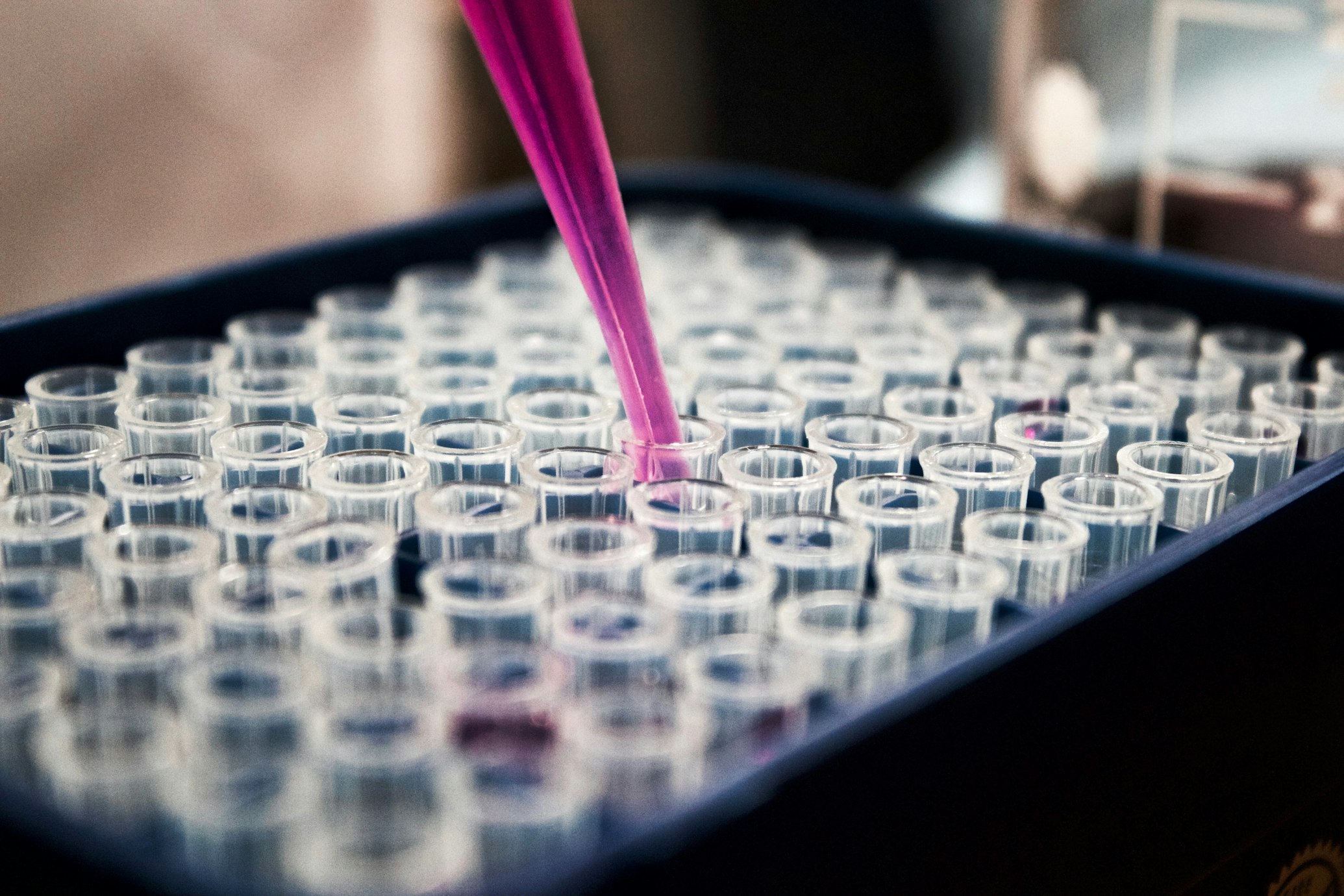
One of the most exciting recent technological demonstrations on the ISS is the Extant Life Volumetric Imaging System (ELVIS)—a revolutionary holographic microscope that returned to Earth in May 2025 after successful testing aboard the space station 6 . Developed by Portland State University in collaboration with NASA's Jet Propulsion Laboratory and Teledyne Brown Engineering, ELVIS represents a quantum leap in microscopic imaging technology.
Methodology: Step-by-Step Experimental Procedure
Sample Preparation
Astronauts prepared samples containing various microorganisms specifically chosen for their relevance to astrobiology research.
Instrument Setup
The ELVIS instrument was installed in one of the ISS's microscope stations and calibrated for operation in microgravity.
Holographic Imaging
The samples were examined using ELVIS's innovative holographic technology, which captures interference patterns created when laser light passes through the sample.
Data Transmission
Preliminary data was transmitted to Earth for near-real-time analysis by the research team.
Sample Return
The physical samples were returned to Earth for further analysis aboard SpaceX's 32nd commercial resupply mission 6 .
ELVIS Technical Specifications
| Parameter | Specification | Significance |
|---|---|---|
| Imaging Technology | Digital holographic microscopy | Enables 3D imaging without focus stacking |
| Resolution | Sub-micron level | Capable of identifying bacterial cells |
| Sample Volume | Up to 100 microliters | Suitable for diverse sample types |
| Data Output | Multi-dimensional datasets | Provides structural and behavioral information |
| Size | Compact design | Suitable for space-constrained environments |
Future Technologies: Preparing for Lunar Missions and Beyond
Testing Ground for Deep Space Exploration
The ISS serves as a critical testing ground for technologies that will enable future human exploration of the Moon and Mars. Systems being validated on station include advanced life support systems, radiation protection technologies, 3D printing capabilities, and telemedicine applications 1 8 .
Building a Sustainable Economy in Low Earth Orbit
As the ISS approaches the end of its operational life (currently planned for 2030), a new era of commercial space stations is already being planned 8 . The technological demonstrations conducted on the ISS are helping to establish the feasibility of in-space manufacturing, space-based pharmaceutical development, commercial research facilities, and space tourism infrastructure 5 7 .
Future Space Technologies in Development
- Advanced closed-loop life support systems
- Radiation-shielding materials
- On-demand 3D printing of tools and parts
- Autonomous medical diagnosis systems
- In-situ resource utilization technologies
- Advanced propulsion systems
Conclusion: A Legacy of Technological Innovation
The International Space Station has proven to be far more than an engineering marvel—it is a catalyst for innovation that benefits both space exploration and life on Earth. From advanced Earth observation instruments that help us monitor our changing planet to revolutionary medical technologies that could treat currently incurable conditions, the technologies demonstrated aboard the orbiting laboratory continue to push the boundaries of what is possible.
As we look toward the station's silver jubilee and beyond, its legacy as a technology testbed will undoubtedly continue to grow, inspiring new generations of scientists and engineers to reach for the stars while improving life on Earth. The ISS truly represents what humanity can achieve through international collaboration and unwavering commitment to scientific discovery.