The Secret Dance of Molecular Soccer Balls
How Smart Carbon Structures Organize in Our Cells
Introduction: More Than Just a Ball of Carbon
Imagine a soccer ball, but shrunk down to a billionth of its size, crafted perfectly from carbon atoms. This is a fullerene, a stunning molecular cage that has captivated scientists since its discovery . But these "buckyballs" are more than just a scientific curiosity; they hold immense promise for revolutionizing medicine, from targeted drug delivery to advanced medical imaging .
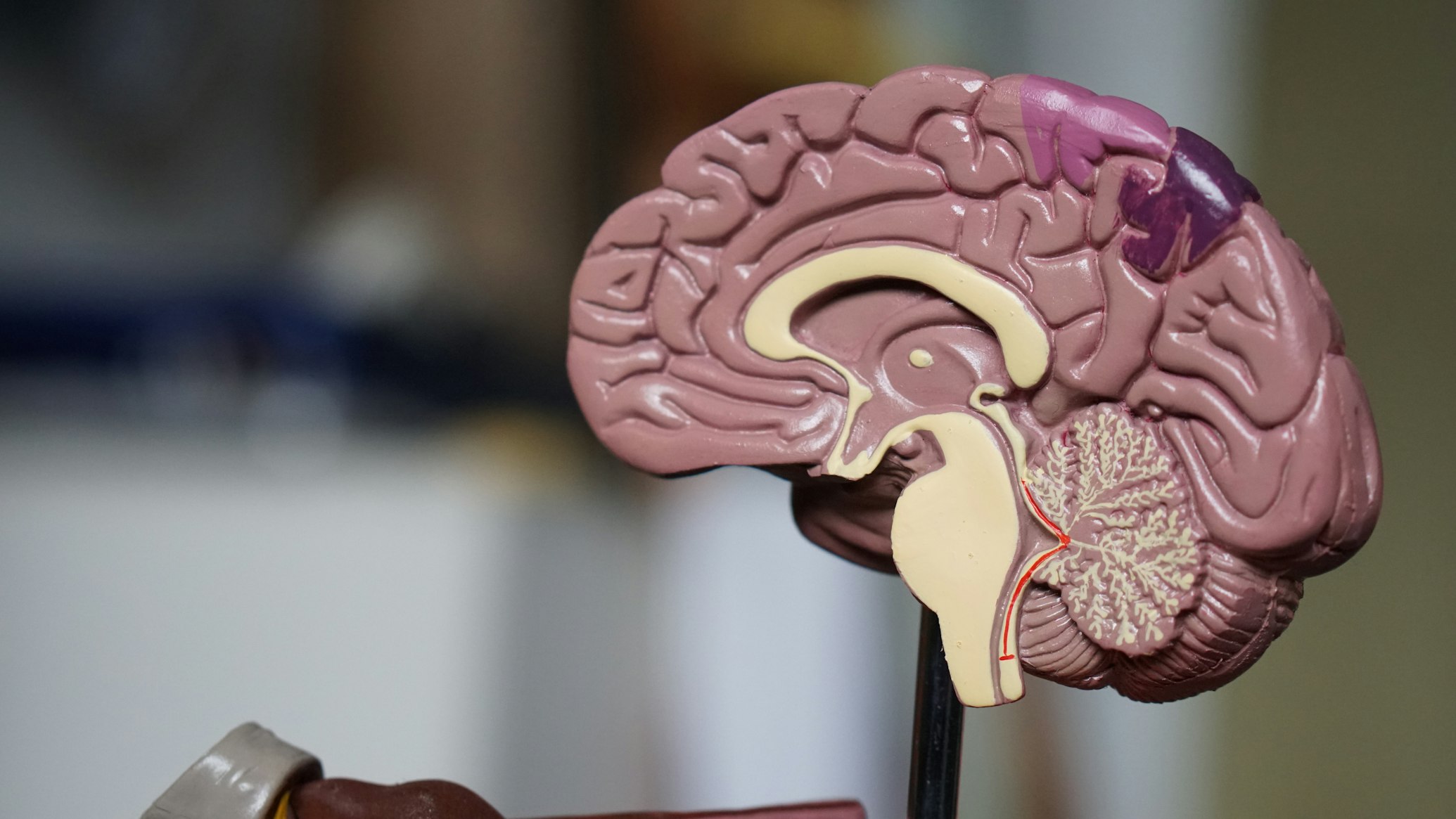
There's just one problem: how do these carbon cages behave once they're injected into the complex, watery environment of a living cell?
The answer lies not in the ball itself, but in the molecular dance it performs. Fullerenes rarely work alone; they are customized with chemical "accessories" to make them soluble and functional. These new molecules, called fullerene derivatives, have a mind of their own, self-assembling into complex structures that dictate their final role .
Thanks to a powerful and non-invasive technology called Pulsed Field Gradient NMR, scientists are now uncovering the secrets of this hidden dance, watching in real-time as these molecular soccer balls organize themselves in solutions and within biological cells .
The Cast of Characters
Buckyballs, Water, and a Quantum Compass
Fullerenes (C60)
Often called "buckyballs," these are spheres of 60 carbon atoms arranged in pentagons and hexagons. Pristine fullerenes are hydrophobic – they hate water, much like a drop of oil in a salad dressing .
Fullerene Derivatives
To make fullerenes useful in biology, scientists attach water-loving (hydrophilic) chemical groups to them. This creates an amphiphilic molecule – one part loves water, the other part avoids it .
Self-Assembly
Driven by the desire to hide their hydrophobic parts from water, these derivative molecules spontaneously cluster together, forming complex structures like micelles, vesicles, or bilayers .
PFG-NMR
This is our "quantum compass." Unlike a microscope that sees shape, PFG-NMR measures movement. It's a non-invasive method that can peer inside a living cell without disrupting its delicate processes .
A Deep Dive: The Critical Experiment
Let's zoom in on a landmark experiment designed to answer a pivotal question: How does the concentration of a specific fullerene derivative influence its self-assembly and behavior inside a living cell?
The Methodology: Tracking Molecular Motion
The researchers followed a meticulous, step-by-step process :
1. Synthesis
A specific fullerene derivative, C60-PEG, was synthesized. This molecule has a hydrophobic C60 "head" and a hydrophilic Polyethylene Glycol (PEG) "tail," a common and biocompatible polymer.
2. Sample Preparation
- A series of solutions with varying concentrations of C60-PEG in pure water were prepared.
- A separate batch of human cells (e.g., HeLa cancer cells) was incubated with a specific, non-toxic concentration of C60-PEG, allowing the molecules to be absorbed.
3. PFG-NMR Measurement
- Each sample (both the pure solutions and the cell suspensions) was placed in the NMR spectrometer.
- The instrument applied a specific pulse sequence that "labels" the nuclear spins of the hydrogen atoms in the PEG tails with a spatial marker.
- After a precisely timed diffusion period, a second pulse was applied. The signal received revealed how much the molecules had moved during that time.
4. Data Analysis
The signal decay was analyzed to calculate the Diffusion Coefficient (D), a precise number that describes how fast the molecules are moving. A high diffusion coefficient means fast, unhindered motion (small, individual molecules). A low diffusion coefficient means slow, restricted motion (large, assembled aggregates).

The PFG-NMR spectrometer allows researchers to track molecular movement in real-time without disrupting biological samples.
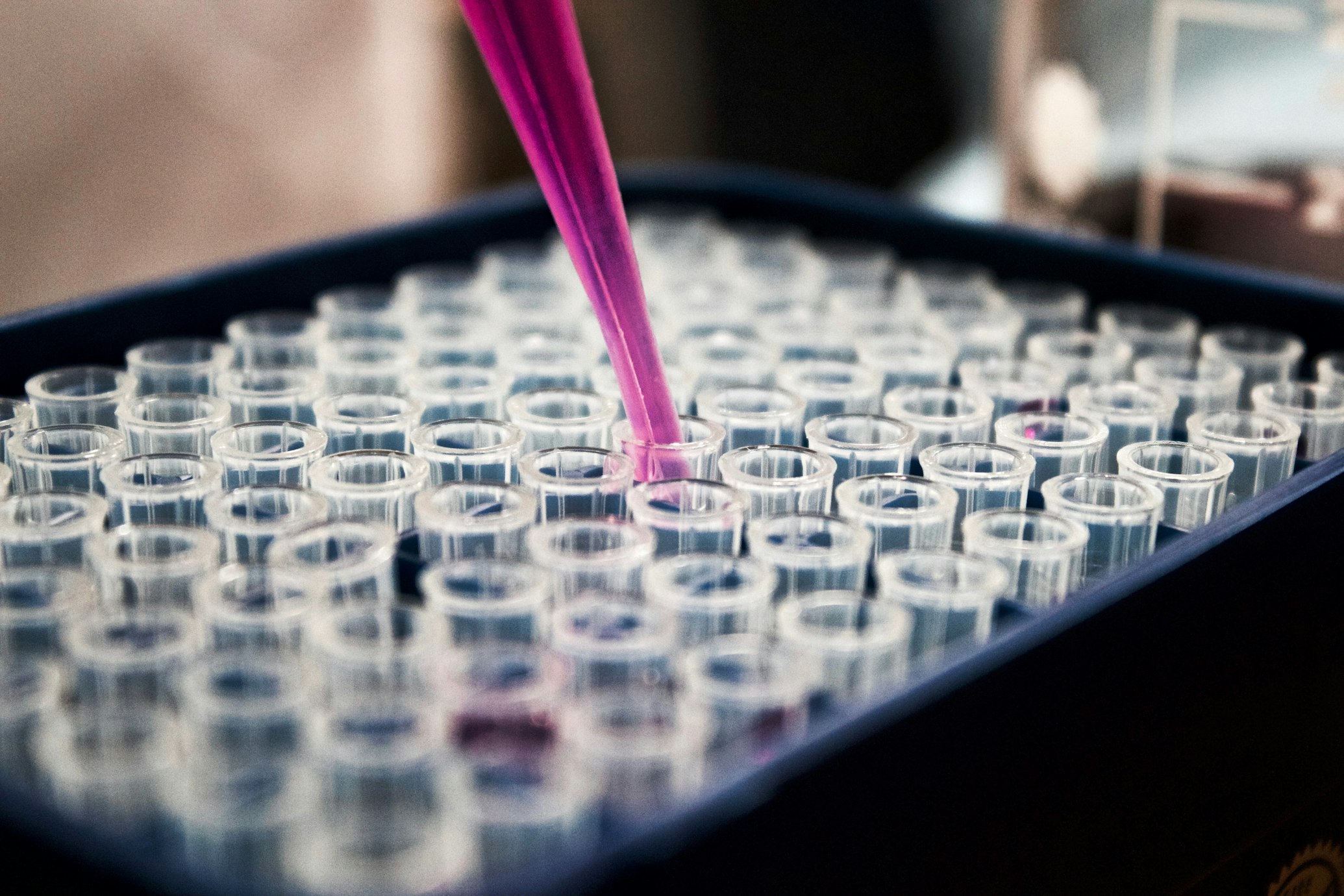
Visualization of C60-PEG molecules with hydrophobic fullerene heads (black) and hydrophilic PEG tails (blue).
Results and Analysis: The Tipping Point
The core results were striking and told a clear story.
| Concentration (mM) | Diffusion Coefficient, D (10⁻¹⁰ m²/s) | Inferred Structure |
|---|---|---|
| 0.1 | 4.5 | Single Molecules |
| 0.5 | 4.3 | Single Molecules |
| 1.0 | 2.1 | Onset of Aggregation |
| 2.0 | 1.5 | Large Aggregates |
| 5.0 | 1.4 | Large Aggregates |
Analysis: In dilute solutions, the C60-PEG molecules moved quickly, indicating they existed as individual molecules. However, as the concentration crossed a critical threshold (around 1.0 mM), the diffusion coefficient dropped dramatically. This is the Critical Aggregation Concentration (CAC). The molecules, to shield their hydrophobic fullerene cores from water, began self-assembling into large, slow-moving aggregates, likely spherical micelles .
The sharp drop in diffusion coefficient indicates the Critical Aggregation Concentration (CAC).
| Sample Environment | Diffusion Coefficient, D (10⁻¹⁰ m²/s) |
|---|---|
| In Water (0.5 mM) | 4.3 |
| Inside HeLa Cells | 0.8 |
Analysis: The C60-PEG molecules diffused over five times slower inside the cells than they did as single molecules in water. This proves two critical things :
- The molecules successfully entered the cells.
- Once inside the crowded cellular environment, they formed massive aggregates or became trapped in specific cellular compartments.
| Fullerene Derivative | Critical Aggregation Concentration (CAC) | Aggregation Behavior |
|---|---|---|
| C60-PEG | ~1.0 mM | |
| C60-OH (Fullerenol) | > 50 mM* |
*Does not aggregate significantly at biologically relevant concentrations.
Analysis: This comparison highlights the "tunability" of these systems. Changing just the hydrophilic tail (e.g., to a cluster of hydroxyl groups, -OH, in "fullerenol") drastically changes the self-assembly behavior. This allows chemists to design molecules with precise aggregation properties for specific medical tasks .
The Scientist's Toolkit: Essential Research Reagents
What does it take to run these experiments? Here's a look at the key tools and materials.
| Research Reagent / Material | Function in the Experiment |
|---|---|
| Functionalized Fullerene (e.g., C60-PEG) | The star of the show. Its amphiphilic nature drives the self-assembly process under investigation. |
| Deuterated Solvent (e.g., D2O) | The "invisible" medium. Deuterium, an isotope of hydrogen, doesn't interfere with the NMR signal, allowing for clear measurement of the molecule's movement. |
| Cell Culture Line (e.g., HeLa cells) | A model biological environment. These human-derived cells act as a simplified, reproducible system to mimic what happens in the body. |
| Pulsed Field Gradient NMR Probe | The heart of the instrument. This specialized component generates the rapid, precise magnetic field gradients needed to measure diffusion. |
| Buffer Solutions (PBS) | Mimics the salt concentration and pH of bodily fluids, ensuring the cellular environment remains stable and biologically relevant during the experiment. |
Chemical Synthesis
Precise modification of fullerenes with functional groups to control their behavior.
Cell Culture
Maintaining living cells as test environments for studying molecular behavior.
Data Analysis
Interpreting NMR data to understand molecular diffusion and aggregation.
Orchestrating the Future of Nanomedicine
The ability to spy on the self-organization of fullerene derivatives using PFG-NMR is more than a technical achievement; it's a paradigm shift.
Targeted Therapy
It moves us from simply hoping a drug delivers itself to the right place, to actively designing and observing its intricate molecular dance from the vial to the cell .
Smart Design
By understanding the rules of this dance—how concentration, molecular structure, and environment dictate the final performance—scientists can now design smarter nanomaterials .
They can create fullerene carriers that remain discreet and separate in the bloodstream, only assembling into a therapeutic delivery truck once they pass through the membrane of a cancer cell. The invisible dance of the molecular soccer balls, once a mystery, is now a choreography we can begin to direct, paving the way for a new era of targeted and intelligent medicine .
