Ultimate Guide to SEM Parameter Optimization for Biological Samples: Techniques, Troubleshooting, and Best Practices
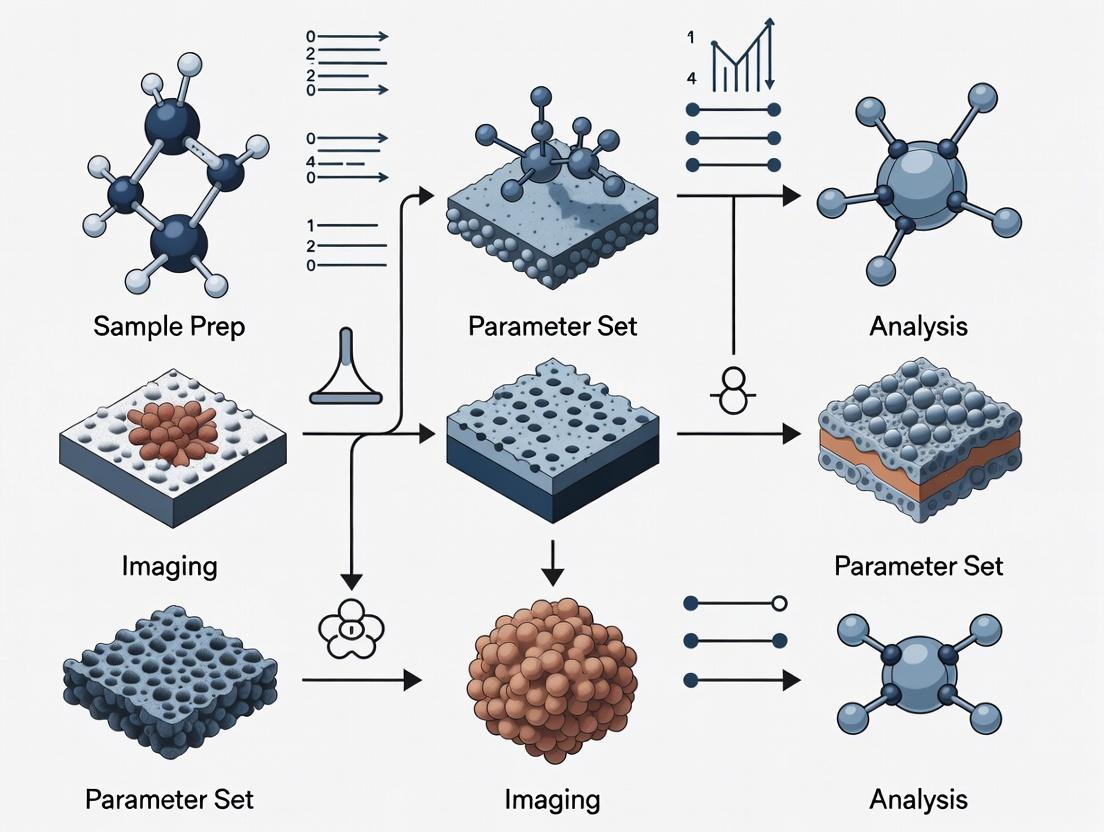
This comprehensive guide details the critical principles and advanced methodologies for optimizing Scanning Electron Microscope (SEM) parameters when imaging biological specimens.
Ultimate Guide to SEM Parameter Optimization for Biological Samples: Techniques, Troubleshooting, and Best Practices
Abstract
This comprehensive guide details the critical principles and advanced methodologies for optimizing Scanning Electron Microscope (SEM) parameters when imaging biological specimens. Tailored for researchers, scientists, and drug development professionals, it explores foundational challenges posed by non-conductive, beam-sensitive samples, provides step-by-step protocols for metal coating and low-voltage operation, addresses common artifacts like charging and shrinkage, and establishes frameworks for validating image fidelity. By synthesizing current best practices, this article serves as a definitive resource for obtaining high-resolution, artifact-free micrographs essential for accurate biomedical analysis and discovery.
Why Biological Samples Challenge SEM: Understanding Beam-Sensitivity, Conductivity, and Structural Integrity
Application Notes: Understanding the Core Challenges
In scanning electron microscopy (SEM) of biological specimens, two intertwined, fundamental challenges dominate: non-conductivity and electron beam sensitivity. Untreated tissues and cells are composed primarily of light elements (C, H, O, N) embedded in a hydrated, insulating organic matrix. This presents a dual problem:
- Non-Conductivity: The insulating nature of biological matter causes the accumulation of incident electrons (charging), distorting the signal and producing bright streaks, blurs, or catastrophic image loss.
- Electron Beam Sensitivity: The high-energy electron beam rapidly damages the delicate, un-crosslinked macromolecular structures (proteins, lipids), leading to mass loss, shrinkage, bubbling, and artefactual morphology.
These challenges are not independent; charging effects are exacerbated by beam-induced damage that alters local conductivity. Successful biological SEM, therefore, requires integrated protocols that simultaneously address both issues through meticulous sample preparation and instrument parameter optimization.
Table 1: Impact of Common Coating Materials on Conductivity and Resolution
| Coating Material | Typical Thickness (nm) | Conductivity | Grain Size (nm) | Primary Application | Notes on Beam Interaction |
|---|---|---|---|---|---|
| Gold (Au) | 5-20 | High | 5-10 (coarse) | General topography, high signal | Excellent SE yield, but can obscure ultrafine detail. |
| Gold/Palladium (Au/Pd) | 3-15 | High | 2-5 (fine) | High-resolution topography | Finer grain than pure Au, better for detail. |
| Platinum (Pt) | 1-5 | Very High | <1-2 (very fine) | Ultra-high resolution (FESEM) | Dense, fine-grained, superior for nanoscale features. |
| Chromium (Cr) | 2-10 | Moderate | 1-3 | For samples requiring subsequent analysis | Adhesion layer, lower SE yield than noble metals. |
| Carbon (C) | 5-20 | Low-Moderate | Amorphous | Conductive backing for X-ray microanalysis | Minimal interference with elemental analysis. |
Table 2: SEM Parameter Optimization for Beam-Sensitive Biological Samples
| Parameter | Typical Setting for Hard Materials | Optimized Setting for Biology | Rationale & Effect on Sample |
|---|---|---|---|
| Acceleration Voltage (kV) | 5-30 kV | 0.5-5 kV (Low Voltage SEM) | Reduces beam penetration & interaction volume, minimizing internal charging and subsurface damage. |
| Beam Current (pA to nA) | 0.1-10 nA | 10-100 pA (Low Current) | Redoses total electron dose, mitigating mass loss and thermal damage. |
| Working Distance (WD) | 5-10 mm | 2-5 mm (Short WD) | Increases signal collection efficiency, allowing lower kV/current to be used effectively. |
| Scan Speed | Slow (High dwell time) | Fast (Low dwell time) | Reduces electron dose per unit area, limiting instantaneous damage. |
| Detector | Standard Everhart-Thornley SE | Through-the-lens (TLD) or In-lens | Maximizes signal-to-noise for low-current, low-kV imaging of surface detail. |
| Chamber Pressure | High Vacuum (~10^-3 Pa) | Variable Pressure (50-500 Pa) | Gaseous environment mitigates charging of uncoated/hydrated samples. |
Detailed Experimental Protocols
Protocol 1: Critical Point Drying (CPD) for Dehydrated, Low-Shrinkage Preservation
Objective: To remove cellular water without subjecting the sample to destructive surface tension forces at the liquid-gas interface.
Materials: Dehydrated specimen (in 100% ethanol), Critical Point Dryer, liquid CO₂, specimen holder/cage.
Methodology:
- Transition: Place the ethanol-exchanged sample into the CPD chamber pre-cooled to ~10°C. Flood the chamber with liquid CO₂.
- Rinse: Cycle/purge the chamber 5-10 times with fresh liquid CO₂ over 30-60 minutes to fully displace ethanol.
- Critical Point: Slowly raise the temperature above the critical point of CO₂ (31.1°C, 1072 psi). The liquid CO₂ will convert to a supercritical fluid with no surface tension.
- Vent: Slowly vent the supercritical CO₂ as a gas over 20-60 minutes, leaving a fully dried, structurally intact sample.
- Storage: Store the dried sample in a desiccator until coating.
Protocol 2: Optimized Sputter Coating for Beam-Sensitive Samples
Objective: To apply an ultra-thin, continuous conductive metal layer without causing thermal damage to the underlying sample.
Materials: CPD-dried sample, high-resolution sputter coater with thickness monitor, argon gas, platinum or gold/palladium target.
Methodology:
- Setup: Mount the sample on a rotating, tilted stage (~15-30° tilt) inside the coater. Ensure the chamber is under high vacuum.
- Pre-conditioning: Introduce argon gas to a pressure of 5-10 Pa. Initiate a low plasma current for 30 seconds to clean the target.
- Coating Parameters: Use a low deposition rate (1-2 nm/min). For high-resolution work, use a platinum target. Set the coating thickness to 2-4 nm.
- Rotation: Continuously rotate and tilt the sample during coating to ensure even coverage on all surfaces, avoiding shadowing effects.
- Completion: Vent the chamber and transfer the coated sample directly to the SEM or a sealed desiccator.
Protocol 3: Low-Voltage, High-Efficiency SEM Imaging Protocol
Objective: To acquire high-resolution topographic images while minimizing electron beam damage and charging artefacts.
Materials: Properly coated biological sample, field-emission SEM (FESEM) equipped with a through-the-lens detector (TLD/SE).
Methodology:
- Loading & Pumpdown: Load the sample, ensuring good electrical contact with the stub. Allow the chamber to reach high vacuum.
- Initial Alignment: At a conservative high kV (5 kV) and standard WD (8-10 mm), quickly navigate to the area of interest using fast scan speeds.
- Parameter Optimization:
- Reduce Acceleration Voltage to 1.0-2.5 kV.
- Select a short Working Distance (3-4 mm) to align with the TLD's optimal collection field.
- Select the TLD/In-Lens detector for surface-sensitive signal collection.
- Reduce the beam current to ~50 pA (using a small aperture).
- Set the scan speed to "fast" or "scan averaging" mode (e.g., 8-16 frame integration) rather than a single slow scan.
- Focus & Stigmation: Perform final focusing and astigmatism correction on a small, non-critical area adjacent to the ROI using the optimized low-kV parameters.
- Image Acquisition: Capture the final image using frame integration. If necessary, slightly adjust kV (in 0.1 kV increments) to optimize contrast and eliminate residual charging.
Mandatory Visualization
Title: SEM Prep Workflow for Biological Samples
Title: Causes of Electron Beam Damage & Charging
The Scientist's Toolkit: Key Research Reagent Solutions
Table 3: Essential Materials for Biological SEM Preparation
| Item | Function & Rationale |
|---|---|
| Glutaraldehyde (2.5-5% in buffer) | Primary fixative. Crosslinks proteins, stabilizing 3D structure by forming covalent bonds between amine groups. |
| Paraformaldehyde (2-4%) | Often used with glutaraldehyde. Rapidly penetrates to fix tissue, stabilizing lipids and complementing glutaraldehyde's crosslinking. |
| Cacodylate or Phosphate Buffer (0.1M) | Maintains physiological pH during fixation and rinsing, preventing artefactual changes due to acidity/alkalinity. |
| Tannic Acid or Osmium Tetroxide (1-2%) | Secondary fixative/contrast agent. Osmium binds to lipids, stabilizing membranes and providing inherent conductivity. |
| Hexamethyldisilazane (HMDS) | An alternative drying agent. A volatile chemical that replaces ethanol and evaporates with less surface tension than air drying. |
| Conductive Carbon Adhesive Tabs | Provides a secure, electrically continuous bond between the sample stub and the specimen, preventing point-charging. |
| Pelco NanoSilver Conductive Paste | A low-viscosity, fine-grain silver paint. Used to create a thin conductive bridge from sample to stub, ensuring grounding. |
| High-Purity Platinum Wire Target (for Sputtering) | The preferred target material for ultra-fine grain, high-conductivity coatings essential for maximum resolution imaging. |
Within a broader thesis on SEM parameter optimization for biological samples, three critical sample properties fundamentally influence imaging quality, analytical accuracy, and data interpretation: Hydration State, Topography, and Elemental Composition. This document provides detailed application notes and protocols for characterizing and controlling these properties, enabling reliable and reproducible results in biological research and drug development.
Hydration State: Control and Analysis
Application Notes
The hydration state of a biological sample directly affects structural integrity under vacuum. Inappropriate dehydration leads to collapse, shrinkage, or crystallization artifacts, obscuring true morphology. Cryogenic techniques are paramount for preserving native hydration states.
Quantitative Data: Dehydration Methods Comparison
| Dehydration Method | Residual Water Content (% mass) | Structural Shrinkage (%) | Recommended Sample Type | Key Limitation |
|---|---|---|---|---|
| Air Drying | <5% | 30-50% | Robust tissues (e.g., bone) | Extreme collapse |
| Chemical Dehydration (Ethanol series) | 2-5% | 15-30% | Cells, soft tissues | Solvent-induced extraction |
| Critical Point Drying (CPD) | <1% | 5-10% | Delicate structures (e.g., cilia, ECM) | Cost, process time |
| Cryo-Fixation & Freeze-Drying | ~2% (sublimed) | <5% | High-fidelity ultrastructure | Requires specialized equipment |
| Cryo-SEM (Frozen Hydrated) | >90% (fully hydrated) | 0% (vitrified) | Native state imaging | Requires continuous cryo-stage |
Protocol: Cryo-Fixation and Freeze-Drying for SEM
Objective: To preserve sample topography in a near-native hydrated state.
- Sample Preparation: Cut tissue to <5mm³. For cells, grow on cryo-compatible substrate (e.g., Thermanox disc).
- Cryo-Fixation: Use a high-pressure freezer (e.g., Leica EM ICE) to vitrify sample without ice crystal formation. Alternatively, plunge-freeze in slushed nitrogen (-210°C) using a cryogen like ethane or propane.
- Transfer: Under liquid nitrogen, transfer sample to a pre-cooled freeze-dryer (e.g., Leica EM ACE900).
- Freeze-Drying: Lyophilize at -80°C to -90°C under vacuum (<0.001 mbar) for 24-72 hours, depending on sample size.
- Storage & Mounting: Store under vacuum or in a desiccator. Mount on a stub using conductive carbon tape in a humidity-controlled environment (<10% RH).
- Sputter Coating: Apply a thin (5-10 nm) layer of iridium or platinum-palladium using a magnetron sputter coater.
Research Reagent Solutions:
| Item | Function | Example Product |
|---|---|---|
| High-Pressure Freezer | Vitrifies biological samples without damaging ice crystals | Leica EM ICE |
| Cryogenic Plunge Freezer | Rapidly freezes thin samples for vitrification | Gatan CryoPlunge3 |
| Cryo-Stage for SEM | Maintains sample at cryogenic temperatures during imaging | Quorum PP3010T Cryo-SEM System |
| Freeze-Dryer | Sublimates ice under vacuum from frozen samples | Leica EM ACE900 |
| Conductive Adhesive | Mounts dried samples without introducing charge | Pelco Carbon Conductive Tape |
Topography: High-Fidelity Surface Imaging
Application Notes
Sample topography dictates optimal SEM detection strategies. Low-voltage imaging reduces charging and increases surface detail but may compromise signal-to-noise. The choice of detector (In-lens SE, SE2, BSE) must be matched to the topographic complexity.
Quantitative Data: SEM Parameters for Topographic Features
| Topographic Feature | Optimal kV | Optimal Detector | Working Distance (mm) | Coating Thickness (nm) | Key Parameter Rationale |
|---|---|---|---|---|---|
| Microvilli/Cilia | 1.0-2.0 kV | In-lens SE | 3-4 | 2-3 (Pt/Ir) | Low kV enhances surface detail, reduces penetration |
| Extracellular Matrix (Fibers) | 2.0-3.0 kV | SE2 or BSE | 5 | 5-7 (Au/Pd) | Balance of surface signal and fiber depth information |
| Tissue Section Surface | 5.0-10.0 kV | BSE | 8-10 | 10 (C, for EDS) | Higher kV for bulk; BSE for compositional contrast |
| Rough, Fractured Surface | 3.0-5.0 kV | Mixed SE/BSE | 10 | 10 (Pt) | Mixed signal captures undercuts and peaks |
Protocol: Correlative Topography Analysis Using SE and BSE Detectors
Objective: To obtain comprehensive topographic and sub-surface compositional data.
- Sample: Dehydrated, CPD-dried, and sputter-coated tissue sample.
- Mounting: Secure on a multi-axis tilt stub.
- Initial Survey: Image at 5 kV, WD 10 mm using SE2 detector at low magnification (500X).
- Multi-Detector Imaging: At a region of interest (ROI): a. Acquire SE2 image at 3 kV, WD 5 mm (high surface topography). b. Without moving stage, switch to BSE detector (solid-state). Acquire image at 10 kV, WD 5 mm (sub-surface composition/topography).
- Tilt Series for 3D: At the ROI, acquire images at 0°, 10°, 20°, and 30° stage tilt using the BSE detector at 10 kV.
- Image Processing: Use software (e.g., MountainsSEM) to align and create a stereoscopic pair or a simple 3D height map from the tilt series.
Topographic Analysis Workflow for SEM
Elemental Composition: EDS Analysis in Biological Systems
Application Notes
Energy-Dispersive X-ray Spectroscopy (EDS) in SEM allows for qualitative and semi-quantitative elemental analysis of biological samples. Key challenges include minimizing background from the substrate, mitigating beam damage on organic matrix, and accurate quantification of light elements (C, N, O).
Quantitative Data: EDS Parameters for Biological Elements
| Element of Interest | Optimal kV | Recommended Live Time (s) | Detectable Weight % (Approx.) | Key Spectral Line | Common Biological Context |
|---|---|---|---|---|---|
| Carbon (C) | 5-7 | 60-120 | >5% | CKα | Organic matrix, coating |
| Nitrogen (N) | 7-10 | 100-150 | >3% | NKα | Proteins, nucleic acids |
| Oxygen (O) | 7-10 | 60-100 | >2% | OKα | Water, organic compounds |
| Phosphorus (P) | 10-15 | 80-120 | >0.5% | PKα | Nuclei, bone, ATP |
| Sulfur (S) | 10-15 | 80-120 | >0.5% | SKα | Proteins (cysteine/methionine) |
| Calcium (Ca) | 15-20 | 60-100 | >0.1% | CaKα | Bone, mineralization, signaling |
| Iron (Fe) | 15-20 | 100-150 | >0.1% | FeKα | Hemoglobin, iron storage |
Protocol: Elemental Mapping of Mineralized Biological Tissue
Objective: To localize and semi-quantify elemental distribution (e.g., Ca, P) in a bone or calcified tissue sample.
- Sample Prep: Dehydrate and CPD-dry bone sample. Avoid metal staining. Apply thin (5 nm) carbon coating using thermal evaporation for optimal conductivity and minimal X-ray absorption.
- SEM Setup: Mount on aluminum stub. Insert into SEM equipped with silicon drift detector (SDD)-EDS.
- Initial Imaging: Locate ROI using BSE detector at 15 kV, WD 10 mm. BSE contrast will highlight mineral-rich (brighter) areas.
- Spectrum Acquisition: At a representative mineralized area, acquire a full spectrum at 15 kV, spot size 3.0, live time 100 seconds. Identify peaks (Ca, P, O, C).
- Elemental Map Acquisition: a. Set mapping parameters: 15 kV, spot size 3.0, WD 10 mm, pixel dwell time 50 µs. b. Define map area (e.g., 512x400 pixels). c. Acquire simultaneous maps for Ca Kα, P Kα, and O Kα.
- Quantification & Analysis: a. Use standardless ZAF (or Phi-Rho-Z) correction routines in the EDS software. b. Extract weight% and atomic% ratios from point spectra. Calculate Ca/P molar ratio from quantified data. c. Overlay elemental maps on SE image to correlate morphology with composition.
Research Reagent Solutions:
| Item | Function | Example Product |
|---|---|---|
| Silicon Drift Detector (SDD) | High-count-rate X-ray detection for EDS | Oxford Instruments X-MaxN 80 |
| Cryo-SEM-EDS Holder | Enables EDS analysis of frozen-hydrated samples | Quorum Cryo-EDS Holder |
| Carbon Coater | Applies conductive, X-ray transparent coating for EDS | Leica EM ACE600 Carbon Coater |
| EDS Standard (e.g., Mg, Al, SiO2) | Used for quantitative calibration | Micro-Analysis Consultant Ltd. Standards |
| Low-Voltage, High-Resolution SEM | Optimized for beam-sensitive materials and nanoscale EDS | Thermo Fisher Apreo 2 |
Workflow for EDS Analysis of Biological Samples
Mastering the control and analysis of hydration state, topography, and elemental composition is non-negotiable for robust SEM-based biological research. The protocols outlined here, framed within a thesis on parameter optimization, provide a systematic approach to mitigate artifacts, maximize relevant signal, and extract quantifiable data. This enables researchers and drug development professionals to draw confident conclusions about biological structure and composition from the micro to the nano scale.
Scanning Electron Microscopy (SEM) is pivotal for high-resolution surface imaging in biological and drug development research. The quality of data is directly determined by the optimization of SEM parameters (e.g., accelerating voltage, probe current, working distance, scan speed) to mitigate four primary artifacts: charging, shrinkage, melting, and contamination. This application note details the causes, identification, and protocols for minimizing these artifacts within a holistic sample preparation and imaging workflow.
Artifact Characterization & Quantitative Data
Table 1: Primary Artifacts in Biological SEM: Causes, Identification, and Mitigating Parameters
| Artifact | Primary Cause | Key Identifying Features | Critical SEM Parameters for Mitigation |
|---|---|---|---|
| Charging | Accumulation of non-conducting electrons on poorly conductive samples. | Bright streaks/bands, abnormal edge contrast, image drifting, "scanning noise." | Accel. Voltage (kV): Lower (0.5-3 kV). Probe Current (pA): Reduce. Scan Speed: Increase. Working Distance: Optimize for signal. |
| Shrinkage | Dehydration and mass loss under vacuum and electron beam. | Cracking, collapse, loss of structural integrity, dimensional distortion. | Beam Energy: Low kV. Stage Temp: Use cryo-stage. Scan Mode: Fast, low-dose mapping. |
| Melting/Deformation | Thermal damage from excessive beam energy, especially in hydrated or sensitive samples. | Flowing features, bubbling, smoothing of fine detail, holes. | Accel. Voltage: Minimize (≤1 kV). Probe Current: Minimize. Dwell Time: Short. Cooling: Essential for unfixed samples. |
| Contamination | Deposition of hydrocarbons from vacuum system or sample surface onto scan area. | Dark, growing "shadow" or "crust" following beam path, loss of detail over time. | Beam Conditioning: "Clean" scan area prior to high-res imaging. Dwell Time: Reduce. Chamber Prep: Ensure clean vacuum. Sample Cleaning: Use solvents, plasma clean. |
Table 2: Recommended Parameter Ranges for Common Biological Samples
| Sample Type | Recommended Accelerating Voltage | Optimal Working Distance | Critical Preparation Step | Primary Artifact Risk |
|---|---|---|---|---|
| Uncoated, Dehydrated Tissue | 1.0 - 2.5 kV | 4 - 6 mm | Conductive Staining (e.g., OTO, TA) | Charging, Shrinkage |
| Metal-Coated (Au/Pd) Tissue | 3.0 - 5.0 kV | 8 - 10 mm | Uniform Thin Coating (2-10 nm) | Contamination, Melting (if over-beam) |
| Cryo-Preserved (Frozen-Hydrated) | 0.5 - 2.0 kV | 2 - 5 mm | Rapid Freezing, Cryo-Transfer | Melting, Sublimation |
| Bacteria/Cells on Substrate | 2.0 - 4.0 kV | 5 - 8 mm | Critical Point Drying, Coating | Charging, Collapse |
Detailed Experimental Protocols
Protocol 1: Low-Voltage, Low-Dose Imaging for Beam-Sensitive Samples Objective: To image delicate, uncoated, or polymeric biological samples with minimal charging and thermal damage.
- Sample Prep: Fix sample in glutaraldehyde, dehydrate in graded ethanol. Perform conductive staining (e.g., 1% thiocarbohydrazide between osmium steps) instead of metal coating.
- SEM Load & Pump: Load sample, achieve high vacuum (<5x10⁻⁵ Pa).
- Initial Localization: At high working distance (WD = 10mm), use fast scan speed and low magnification with a low kV (2 kV) to find region of interest.
- Beam Conditioning: On an area adjacent to ROI, scan for 2-5 minutes at intended imaging parameters to reduce contamination.
- Parameter Optimization: Set kV to 0.8-1.5 kV. Adjust probe current to 10-25 pA. Reduce WD to 4-6 mm for optimal signal.
- Image Acquisition: Use line-averaging or frame-averaging (8-16 frames) with a slow scan speed to compensate for low signal-to-noise ratio. Minimize total scan time.
Protocol 2: Cryo-SEM Protocol for Hydrated Biological Samples Objective: To preserve native hydrated morphology and prevent shrinkage/melting.
- Cryo-Fixation: Rapidly plunge-freeze sample in slushed nitrogen or high-pressure freezer.
- Transfer: Under liquid nitrogen, transfer sample to cryo-preparation chamber.
- Fracture/Etch: Fracture surface with cold knife. Optionally, sublimate surface ice (etching) at -95°C for 1-3 minutes to reveal topography.
- Sputter Coating: Apply 5-10 nm of platinum in an argon atmosphere within the cryo-chamber.
- Cryo-Transfer: Transfer sample under vacuum to the cryo-stage in the SEM column.
- Imaging: Maintain stage at <-130°C. Use accelerating voltage of 1-3 kV and a dedicated backscattered electron detector for optimal contrast.
Protocol 3: Contamination Reduction Protocol Objective: To acquire high-resolution images without progressive hydrocarbon contamination.
- Pre-Load Cleaning: Clean sample holder with acetone and ethanol. Plasma clean sample stub if possible.
- Sample Cleaning: Ensure sample is thoroughly dehydrated and dried. Use solvent exchange or critical point drying.
- Chamber Hygiene: Use extended pump-down cycles after sample introduction. Consider an anti-contamination cold trap if available.
- Pre-Scan "Cleaning": Before high-resolution imaging, select a field of view larger than your ROI. Scan this area for 5-10 minutes at your desired magnification and parameters. This polymerizes and stabilizes hydrocarbons.
- Final Imaging: Move to the "cleaned" ROI. Acquire images using the same parameters but with minimized dwell time.
Visualizations
Diagram 1: SEM Artifact Mitigation Decision Pathway
Diagram 2: Key SEM Parameters & Their Interrelationships
The Scientist's Toolkit: Research Reagent Solutions
Table 3: Essential Materials for Biological SEM Artifact Mitigation
| Item | Function in Mitigating Artifacts |
|---|---|
| Osmium Tetroxide (OsO₄) | Conductive staining: binds to lipids, increases bulk conductivity, reduces charging. Also acts as a fixative. |
| Thiocarbohydrazide (TCH) | Used in OTO (OsO₄-TCH-OsO₄) protocol; a bridging molecule that enhances osmium deposition, further reducing conductivity issues. |
| Hexamethyldisilazane (HMDS) | An alternative drying agent to CPD; evaporates quickly, leaving minimal residue, reducing shrinkage and contamination sources. |
| Conductive Adhesive Tapes/Carbon Paste | Provides a secure, conductive path from sample to stub, essential for dissipating charge and preventing charging. |
| Platinum/Palladium Target (for Sputtering) | For applying ultra-thin (2-5 nm), fine-grained conductive coatings, minimizing charging while preserving high-resolution detail. |
| Cryo-Preparation System | Integrated suite (freezer, fracture, coat, transfer) for preserving hydrated samples, preventing melting and shrinkage. |
| Anti-Static Device (Ionizer) | Neutralizes static charge on non-conductive samples prior to coating/loading, reducing initial charging artifacts. |
| Plasma Cleaner | Removes hydrocarbon contaminants from sample surfaces and stubs prior to loading, significantly reducing contamination rate. |
1. Introduction In Scanning Electron Microscopy (SEM) analysis of beam-sensitive biological samples, the fundamental trade-off between achieving high spatial resolution and preserving sample integrity defines experimental success. This application note, framed within a comprehensive thesis on SEM parameter optimization for biological research, provides a detailed guide to navigating this trade-off. It is intended for researchers, scientists, and drug development professionals who require high-fidelity imaging of biological structures, from cellular organelles to drug delivery systems, without compromising structural information through electron beam-induced damage.
2. Core Principles of Beam-Sample Interaction Electron beam irradiation causes damage through several mechanisms: heating, electrostatic charging, mass loss (through desorption and volatilization), and molecular bond breaking (radiolysis). The extent of damage is a function of the total electron dose (electrons per unit area). Exceeding a sample's critical dose leads to irreversible morphological alterations, obscuring true biological ultrastructure. Resolution is primarily governed by probe size and signal-to-noise ratio, which are controlled by accelerating voltage, probe current, and scan speed.
3. Quantitative Parameter Framework The table below summarizes the effect of key SEM parameters on resolution and damage, guiding systematic optimization.
Table 1: SEM Parameter Impact on Resolution and Sample Damage
| Parameter | Typical Range (Bio Samples) | Effect on Resolution | Effect on Sample Damage | Primary Trade-off Consideration |
|---|---|---|---|---|
| Accelerating Voltage (kV) | 0.5 - 10 kV | Higher kV increases resolution (smaller probe, less diffraction). | Higher kV increases penetration & heating, can increase internal charging and radiolysis. | Use lowest kV that provides sufficient signal and resolution for the feature of interest. |
| Probe Current (pA) | 10 - 500 pA | Higher current increases signal-to-noise (SNR), enabling finer detail discernment. | Higher current dramatically increases electron dose, accelerating all damage mechanisms. | Use the lowest current that provides acceptable SNR at desired magnification. |
| Scan Speed | Slow to Fast | Slower scanning increases pixel dwell time, improving SNR and effective resolution. | Slower scanning exponentially increases dose per area, maximizing damage. | Use fastest scan speed compatible with image quality; employ line averaging over frame averaging. |
| Working Distance (mm) | 2 - 10 mm | Shorter WD improves theoretical resolution (smaller spot size). | Shorter WD can increase signal but also current density; may influence charging. | Optimize for depth of field and signal strength, not solely minimal WD. |
| Dose (e⁻/Ų) | Critical Dose: <1-100 e⁻/Ų for organics | Higher dose improves SNR, allowing resolution of finer features up to the damage limit. | Direct cause of all beam-induced damage. Total dose = (Probe Current * Dwell Time) / Pixel Area. | The central variable to control. Calculate and consciously limit total dose below sample's estimated critical dose. |
4. Experimental Protocols for Systematic Optimization
Protocol 4.1: Establishing a Sample-Specific Critical Dose
- Objective: To empirically determine the maximum tolerable electron dose for a specific biological sample preparation (e.g., critical-point dried cells, frozen-hydrated sections).
- Materials: Prepared sample on conductive substrate, low-dose capable SEM.
- Methodology:
- Select a representative, non-critical area of the sample.
- Set SEM to low-dose conditions (e.g., 2 kV, 10 pA, fast scan).
- Image the same region repeatedly at a fixed magnification (e.g., 20,000X) and identical parameters.
- After each image, capture a subsequent "monitor" image at a very low dose (≤10% of the main dose) to assess structural changes.
- Quantify changes by measuring the drift of recognizable features or the decrease in signal variance from a specific structure over time.
- The dose at which a pre-defined threshold of deformation (e.g., >5% feature drift) occurs is the operational critical dose.
Protocol 4.2: High-Resolution, Low-Dose Imaging Workflow
- Objective: To acquire a high-SNR image while total dose remains below the critical dose.
- Materials: Sample with known/estimated critical dose, SEM with beam control and frame-averaging capabilities.
- Methodology:
- Survey: Use fast scan speeds (short pixel dwell time), low current (<50 pA), and low kV (1-3 kV) to locate areas of interest with minimal dose.
- Parameter Calculation: Calculate the dose per pixel for a single scan: Doseperpixel = (Probe Current * Dwell Time) / (Pixel Size)^2. Ensure it is far below critical dose.
- Frame Averaging: Instead of a single slow scan, acquire multiple (N) rapid frames of the same area. The total dose is N times the single-frame dose, but the SNR improves by √N.
- Align & Average: Use post-processing software to align and average the frame stack. This distributes the dose more evenly over time, often yielding a superior final image compared to a single long-dwell scan of equivalent total dose.
- Validation: Compare the final image to the first frame in the stack to check for visible beam-induced artifacts.
5. Visualization of the Optimization Logic
Diagram 1: The Resolution-Damage Trade-off Logic Flow
6. The Scientist's Toolkit: Essential Research Reagent Solutions Table 2: Key Materials for Bio-SEM Sample Preservation & Imaging
| Item | Function & Rationale |
|---|---|
| Conductive Stains (e.g., Osmium Tetroxide, Tannic Acid) | Binds to and stabilizes biomolecules (lipids, proteins), adds mass for scattering, and increases conductivity to reduce charging. |
| Metal Coatants (e.g., Iridium, Platinum, Gold-Palladium) | Applied via sputter or evaporation coaters. Creates a thin, conductive metal layer to dissipate charge and enhance secondary electron yield. |
| Conductive Adhesives (e.g., Carbon Tape, Silver Paint) | Provides a robust electrical and physical connection between sample and stub, preventing localized charging. |
| Cryo-Preparation Systems (e.g., Plunge Freezers, Cryo-Stages) | For cryo-SEM. Rapidly vitrifies samples, immobilizing native-state water and structures, allowing imaging of hydrated samples with minimal chemical processing. |
| Critical Point Dryer (CPD) | Removes solvent (e.g., water via ethanol/CO₂ exchange) without surface tension-induced collapse, preserving delicate 3D ultrastructure of hydrated samples. |
| Low-Voltage, High-Contrast Detectors (e.g., In-Lens SE, T2 BSE) | Specialized detectors optimized for capturing high-SNR signals at low accelerating voltages (≤5 kV), minimizing beam penetration and damage. |
| Dose Monitoring Software / FPGA | Integrated or add-on systems that calculate and display real-time electron dose (e⁻/Ų), enabling precise adherence to pre-set dose budgets. |
Application Notes
Scanning Electron Microscopy (SEM) analysis of biological specimens is inherently challenged by their non-conductive, beam-sensitive, and hydrated nature. Within a broader thesis on SEM parameter optimization for biological research, three cornerstone mitigation strategies emerge as critical: conductive coating, low accelerating voltage operation, and cryo-preservation techniques. Each strategy addresses specific artifacts while introducing unique trade-offs that must be balanced for optimal imaging.
Conductive Coating mitigates charging artifacts by applying a thin metal or carbon layer, enhancing secondary electron emission and thermal conductivity. Modern sputter coaters allow for ultra-thin (2-10 nm), uniform films of gold/palladium, platinum, or iridium, preserving fine surface topology while providing conductivity. Low kV Imaging (typically 0.5-5 kV) reduces electron penetration and interaction volume, improving surface detail resolution and minimizing charging and thermal damage. This requires a field emission gun (FEG-SEM) for sufficient signal-to-noise at low beam energies. Cryo-Techniques (Cryo-SEM) involve rapid freezing (e.g., plunge freezing in liquid ethane) to vitrify water, stabilizing native hydrated structures. Subsequent imaging is performed on a cryo-stage, preventing collapse and volatile release. An integrated approach, such as cryo-preparation followed by low-kV imaging of a coated or uncoated sample, often yields the most faithful representation of biological ultrastructure.
Table 1: Comparison of Key Mitigation Strategies for Biological SEM
| Strategy | Typical Parameters | Primary Benefit | Key Limitation | Optimal Use Case |
|---|---|---|---|---|
| Conductive Coating | Au/Pd: 5-10 nm; Pt: 2-5 nm; C: 10-20 nm | Eliminates charging; Enhances SE yield | Masks ultrafine details (<5 nm); Non-reversible | Robust, dried samples (e.g., pollen, insect cuticle) |
| Low kV Operation | 0.5-2.0 kV (high-res); 2-5 kV (general) | Reduces interaction volume & damage; Surface-sensitive | Reduced SNR; Requires FEG source | Beam-sensitive, uncoated or lightly coated samples |
| Cryo-Techniques | Plunge freezing: >10^4 K/s; Stage: -120°C to -180°C | Preserves hydrated native state; Eliminates chemical fixation | Complex workflow; Contamination risk | Hydrated soft tissues, emulsions, lipid structures |
Table 2: Protocol Selection Guide Based on Sample Properties
| Sample Property | Recommended Primary Strategy | Complementary Strategy | Notes |
|---|---|---|---|
| High Water Content | Cryo-Techniques | Low kV imaging on cryo-stage | Avoids dehydration artifacts completely. |
| Extreme Beam Sensitivity | Low kV (<1 kV) | Cryo-fixation or light metal coating | Minimizes energy deposition per pixel. |
| Poor Conductivity (Dry) | Conductive Coating | Low kV (3-5 kV) to reduce needed coat thickness | Balance between charge suppression and detail preservation. |
| Need for Elemental Analysis | Light Carbon Coating | Low kV (if compatible with EDX) | Carbon coating is conductive and X-ray transparent. |
Experimental Protocols
Protocol 1: Sputter Coating for High-Resolution Topology
Objective: Apply an ultra-thin, continuous conductive layer to a dehydrated biological sample without obscuring nanoscale features. Materials: Critical point dried or desiccated sample on stub, sputter coater with rotary/tilt stage, platinum or gold/palladium target, thickness monitor. Procedure:
- Mount sample securely on stub with conductive adhesive tape or carbon paste.
- Load into sputter coater. Evacuate chamber to at least 5 x 10^-2 mbar.
- Set coater to "thickness" mode. For high-resolution work, set target thickness to 3-5 nm for Pt or 5-8 nm for Au/Pd.
- Initiate coating process with slow, steady deposition rate (e.g., 0.5 nm/min). Use stage rotation for even coverage.
- Vent chamber, retrieve sample, and proceed to SEM imaging. For best results, image within 24 hours.
Protocol 2: Low kV Imaging of Uncoated, Beam-Sensitive Samples
Objective: Acquire high-resolution SEM images of an uncoated or carbon-only coated biological sample by optimizing for low accelerating voltage. Materials: FEG-SEM, sample on conductive stub (lightly carbon-coated if necessary), anti-contamination cold trap (if available). Procedure:
- Insert sample and pump column. Ensure the microscope is optimally aligned for low-kV operation (check manufacturer's guidelines).
- Set accelerating voltage to 1.0 kV. Set probe current to a medium value (e.g., 50 pA for initial navigation).
- Using fast scan rates, navigate to area of interest at low magnification (e.g., 1,000x).
- Optimize working distance to the manufacturer's recommended value for low kV (often shorter, e.g., 4-5 mm).
- Switch to high magnification (e.g., 50,000x). Fine-tune stigmation and focus.
- Lower probe current to 10-20 pA to minimize damage. Use a slower scan speed (e.g., 30-60 seconds/frame) or line averaging (4-8 frames) to improve SNR.
- Capture image. If charging is observed, reduce kV in 0.1 kV increments to 0.7 kV or increase probe current slightly.
Protocol 3: Cryo-SEM Preparation and Imaging of Hydrated Tissue
Objective: Visualize the native, hydrated microstructure of a soft biological tissue (e.g., liver, plant leaf). Materials: Cryo-preparation system (sputter coater/cryo-transfer), SEM with cryo-stage, liquid nitrogen, slushed liquid ethane or propane, biopsy tool, cryo-stubs. Procedure:
- Plunge Freezing: Under appropriate biosafety conditions, prepare a small (<3 mm^3) tissue sample. Using tweezers, swiftly plunge the sample into slushed liquid ethane cooled by liquid nitrogen. Transfer to liquid nitrogen for storage.
- Fracture/Etch (Optional): Under LN2, transfer frozen sample to cryo-prep chamber. Fracture with a cold knife to expose internal surfaces. For etching, sublime surface ice at -95°C for 60-90 seconds to reveal topography.
- Cryo-Coating: Sputter coat the frozen, fractured surface with 5-10 nm of platinum in the prep chamber to ensure conductivity.
- Cryo-Transfer: Using a vacuum transfer shuttle, transfer the coated sample to the cryo-stage in the SEM chamber, maintaining temperature below -140°C.
- Imaging: Set SEM cryo-stage temperature to -120°C to -140°C. Use accelerating voltage of 2-5 kV and a low probe current. Use a dedicated secondary electron detector for cryo-work (e.g., in-lens SE). Acquire images before significant contamination or sublimation occurs.
Visualization: Diagrams
Diagram 1: Strategy Selection Workflow
Title: SEM Mitigation Strategy Decision Tree
Diagram 2: Integrated Cryo-Low kV Workflow
Title: Cryo-SEM Sample Prep & Imaging Flow
The Scientist's Toolkit: Research Reagent Solutions
Table 3: Essential Materials for Biological SEM Mitigation
| Item | Function & Key Characteristics | Example Product/Type |
|---|---|---|
| Conductive Adhesive Tapes/Carbon Paste | Secures sample to stub; provides grounding path. Carbon paste is preferable for high vacuum. | Double-sided carbon tape; Pelco colloidal silver paste |
| Platinum or Iridium Targets | For high-resolution sputter coating. Forms fine-grained, continuous thin films superior to Au for <5 nm detail. | 99.99% pure Pt target; Iridium target for ultra-thin coating |
| Carbon Evaporation Rods | For applying a conductive, X-ray transparent coating for subsequent EDX analysis. | Graphite rods for thermal evaporation |
| Cryogen for Plunge Freezing | Achieves vitrification (non-crystalline ice). Liquid ethane/propane has superior heat transfer vs. liquid N2 alone. | Slushed liquid ethane prepared in LN2 |
| Cryo-Stubs & Adhesives | Holds frozen sample. Must have high thermal conductivity and be compatible with transfer shuttle. | Aluminum or copper cryo-stubs with cryo-compatible glue |
| Cryo-Preparation Chamber | Integrated system for fracturing, etching, and coating frozen samples under vacuum prior to transfer. | Leica EM VCT500; Quorum PP3010T |
| Anti-Contamination Cold Trap | A cooled surface (often LN2-filled) inside the SEM chamber that traps volatiles, preventing contamination of the sample. | Integrated SEM cold finger or custom cold trap |
| High-Efficiency SE Detector | Essential for low-kV imaging. In-lens or through-the-lens detectors capture low-energy secondary electrons efficiently. | In-lens SE detector; TTL detector |
Step-by-Step Protocols: Optimizing Coating, Voltage, Current, and Detectors for Clear Bio-Imaging
Within a comprehensive thesis on SEM parameter optimization for biological research, specimen conductivity is a critical variable. Non-conductive biological samples require a thin, uniform metallic coating to prevent charging, improve secondary electron yield, and enhance thermal stability under the electron beam. The choice between sputter coating and high-resolution (thermal) evaporation is a fundamental methodological decision that impacts image fidelity, resolution, and the preservation of ultrastructural detail at different scales. This application note details the principles, comparative performance, and specific protocols for both techniques.
Fundamental Principles and Comparative Data
Sputter Coating
A plasma-based process where argon ions bombard a target cathode (e.g., gold, platinum, iridium), ejecting atoms that deposit onto the sample. It provides good conformity and is suitable for topographically complex samples.
High-Resolution Evaporation (Thermal)
A resistive heating process where a metal (e.g., chromium, gold/palladium) is heated to its evaporation point in a high vacuum. The vapor stream travels line-of-sight to coat the sample, typically producing finer grain size.
Table 1: Quantitative Comparison of Coating Techniques
| Parameter | Sputter Coating (DC/Pulsed) | High-Resolution Evaporation |
|---|---|---|
| Typical Coating Thickness | 2–20 nm | 1–10 nm |
| Grain Size | 2–5 nm (Pt/Ir) | 1–3 nm (Cr), 5-10 nm (Au/Pd) |
| Deposition Rate | ~0.5–2 nm/min | ~0.1–0.5 nm/min |
| Base Pressure | 0.05–0.1 mbar (Ar) | <1 x 10⁻⁶ mbar |
| Sample Complexity | Excellent for high aspect ratio, 3D structures | Best for flat or shallow-tilt samples |
| Primary Metals | Au, Au/Pd, Pt, Pt/Ir, Cr | Cr, C, Au, Au/Pd, Pt |
| Heat Load on Sample | Low to moderate | Low (with proper shielding) |
| Best For (Scale) | Macro to Nano (tissues, pollen, insects) | Nano to Atomic (viruses, membranes, macromolecules) |
Table 2: Metal Selection Guide for Biological SEM
| Metal/Alloy | Grain Size | Conductivity | Typical Use Case in Biology |
|---|---|---|---|
| Gold/Palladium (80/20) | Medium (~3-5 nm) | Excellent | General purpose for cell surfaces, bacteria. |
| Platinum | Fine (~2-4 nm) | Excellent | High-resolution imaging of complex surfaces. |
| Iridium | Very Fine (~1-2 nm) | Excellent | Ultimate high-resolution, low grain. |
| Chromium | Ultra-fine (<1 nm) | Good | Highest resolution; adhesion layer. |
| Carbon | Amorphous | Poor (but conductive) | X-ray microanalysis, background for immuno-SEM. |
Detailed Experimental Protocols
Protocol 1: Sputter Coating of Hydrated Biofilm for SEM
Objective: To apply a 5 nm conductive layer of Pt/Ir onto a dehydrated but topographically complex biofilm without inflicting structural damage.
Materials:
- Critical point dried biofilm on a silicon chip.
- Sputter coater with platinum/iridium target (80/20).
- Rotary-stage and cryo-stage (optional but recommended).
- High-purity argon gas.
- Film thickness monitor.
Procedure:
- Mount the sample on the rotary stage within the sputter chamber. Ensure the stage is set to rotate at 15-20 RPM for even coverage.
- Evacuate the chamber to a base pressure of ≤0.1 mbar.
- Introduce high-purity argon gas to a process pressure of 0.08 mbar, maintaining a constant flow.
- Set the current to 20 mA for a pulsed-DC plasma. This reduces heat buildup.
- Engage the shutter over the sample. Pre-sputter the target for 60 seconds to clean its surface.
- Open the shutter and initiate deposition. Using the thickness monitor, deposit a 5 nm film (approximately 90 seconds at 0.33 nm/s).
- Close the shutter, vent the chamber, and retrieve the coated sample. Proceed immediately to SEM imaging.
Protocol 2: High-Resolution Evaporation of Chromium for Viral Particle Imaging
Objective: To apply an ultra-thin (2 nm), ultra-fine grain conductive coating to immobilized viral particles for sub-nanometer resolution SEM.
Materials:
- Purified virus suspension on ultra-flat, conductive silicon wafer.
- High-vacuum evaporation system (<5 x 10⁻⁷ mbar capable).
- Chromium slugs (99.99% purity) in a tungsten boat.
- Liquid nitrogen cold trap.
- Quartz crystal microbalance (QCM) thickness sensor positioned at sample height.
Procedure:
- Load the sample into the evaporation chamber, ensuring it is perpendicular to the evaporation source at a distance of 30-40 cm.
- Pump the chamber to a high vacuum of at least 5 x 10⁻⁷ mbar. Engage the liquid nitrogen cold trap to minimize hydrocarbon contamination.
- With the shutter closed, slowly increase the current through the tungsten boat to outgas the chromium source. Cease heating when pressure stabilizes below 1 x 10⁻⁶ mbar.
- Set the QCM to monitor deposition rate and total mass thickness. Open the source shutter.
- Rapidly increase the current to achieve a stable deposition rate of 0.1 nm/s. Deposit until the QCM reads 2 nm.
- Immediately close the shutter and cut power to the source.
- Allow the sample to cool for 10 minutes before venting the chamber with dry nitrogen. Store in a desiccator until SEM insertion.
Visualizations
Title: Sputter Coating Process Flow
Title: Coating Technique Decision Logic
The Scientist's Toolkit: Essential Research Reagent Solutions
Table 3: Key Materials for Metal Coating in Biological SEM
| Item | Function & Rationale |
|---|---|
| Platinum/Iridium Target (80/20) | Sputter target; provides a fine-grained, durable, and highly conductive coating with excellent secondary electron yield. |
| High-Purity Chromium Slugs (99.99%) | Evaporation source; enables deposition of ultra-fine grain (<1 nm) films for the highest-resolution imaging. |
| Conductive Carbon Tape | Sample mounting; provides both adhesion and a conductive path to the specimen stub, minimizing charging. |
| Pelco Ted Pella SEM Stubs | Standardized aluminum mounts; provide a stable, conductive, and compatible platform for samples. |
| Agar Scientific Silver DAG | Conductive paint; creates a secure, low-resistance electrical connection between the sample and stub. |
| Liquid Nitrogen Cold Trap | Vacuum system component; cryo-pumps water vapor and hydrocarbons, ensuring a clean vacuum for evaporation. |
| Quartz Crystal Microbalance (QCM) | Thickness monitor; provides real-time, precise measurement of deposition rate and film mass thickness. |
| Critical Point Dryer (CPD) | Sample preparation; removes solvent without surface tension damage, preserving nanostructure before coating. |
Within the broader thesis on SEM parameter optimization for biological samples, accelerating voltage (kV) stands as the most critical parameter governing the fundamental interaction between the electron beam and the specimen. This application note delineates the strategic selection of kV to prioritize either high-resolution surface topography visualization or the revelation of sub-surface structural detail, providing specific protocols for biological research in fields such as drug delivery system characterization and cellular morphology.
The Physics of kV: Interaction Volume & Signal Origin
The accelerating voltage determines the energy of the primary electrons, which directly controls the depth and shape of the electron interaction volume within the sample.
- Low kV (0.5-5 kV): Limits beam penetration, confining interactions to the immediate surface. This maximizes secondary electron (SE) emission from topography and minimizes charging, yielding excellent surface detail but with potentially reduced signal-to-noise.
- High kV (10-30 kV): Increases beam penetration and interaction volume, generating signals (backscattered electrons - BSE, and secondary electrons) from deeper layers. This is essential for BSE imaging of compositional contrast (e.g., stained organelles) but can cause charging, beam damage, and loss of surface detail due to subsurface signal interference.
Table 1: Quantitative Effects of Accelerating Voltage on Key Imaging Parameters
| Parameter | Low kV (1-3 kV) | High kV (10-15 kV) | Practical Implication for Biology |
|---|---|---|---|
| Interaction Volume Depth | ~0.01 - 0.1 µm | ~1 - 5 µm | Surface vs. Subsurface probe |
| Optimal Spatial Resolution | 2-5 nm (surface) | 1-3 nm (theoretical) | High kV offers better theoretical but often not achievable on delicate samples |
| Beam Penetration in Uncoated Tissue | Very Low | High | High kV causes severe charging & damage in uncoated samples |
| Backscattered Electron Yield | Lower | Higher | High kV enhances Z-contrast for stained or labeled structures |
| Sample Charging (Uncoated) | Minimal | Severe | Low kV enables charge-free imaging of poorly conductive samples |
| Radiation Damage | Reduced | Significantly Increased | Low kV preserves native ultrastructure |
Experimental Protocols
Protocol 1: High-Resolution Surface Topography of a Drug Delivery Nanoparticle (Low kV) Objective: To characterize the surface morphology, porosity, and aggregation state of polymeric nanoparticles. Sample Preparation: Air-dry a dilute suspension of nanoparticles on a silicon wafer or conductive carbon tape. Apply a thin (~5 nm) coating of Au/Pd using a sputter coater. SEM Imaging Parameters:
- Accelerating Voltage: Set to 2 kV.
- Detector: Use the In-Lens or Through-the-Lens SE detector for surface-sensitive signal.
- Aperture Size: Select a small aperture (e.g., 30 µm) for fine probe size.
- Working Distance: Adjust to 3-5 mm for optimal resolution.
- Scan Speed: Use a slow scan speed (e.g., 6) for high signal-to-noise imaging. Rationale: The low kV confines the interaction to the nanoparticle surface, preventing the beam from "seeing through" or charging the polymer, thus revealing true surface texture.
Protocol 2: Visualizing Sub-cellular Detail in Fixed & Stained Cells (Variable kV) Objective: To localize heavy metal stains (e.g., OsO4, lead citrate) within cellular organelles using Z-contrast. Sample Preparation: Culture cells on a conductive substrate (e.g., ITO-coated coverslip). Fix with glutaraldehyde/paraformaldehyde, post-fix with 1% OsO4, dehydrate, and critical point dry. Optionally, apply a thin carbon coat. SEM Imaging Parameters:
- Initial Survey: Use 5 kV with a SE detector to locate cells and assess surface integrity.
- Sub-surface BSE Imaging: Switch to the Backscattered Electron Detector (Annular BSE preferred).
- kV Optimization: Acquire image stacks at 10 kV, 15 kV, and 20 kV, keeping other parameters constant.
- Working Distance: Set to 8-10 mm to maximize BSE collection.
- Analysis: Compare stacks. Higher kV (15-20 kV) will enhance contrast from stained, high-Z elements (Os, Pb) in membranes and nuclei buried beneath the surface.
Protocol 3: Imaging Uncoated or Beam-Sensitive Biological Specimens (Ultra-low kV) Objective: To visualize the native surface of a hydrated bacterial biofilm or protein complex with minimal metal coating. Sample Preparation: For ESEM, stabilize sample at high humidity. For standard SEM, use a conductive substrate (e.g., HOPG) with minimal Pt sputter coating (<2 nm). SEM Imaging Parameters:
- Accelerating Voltage: Begin at 0.8 kV. Incrementally increase only if signal is insufficient, not exceeding 2.5 kV.
- Detector: Use a dedicated low-voltage, high-contrast detector (e.g., ESETD, TLD).
- Beam Current: Increase slightly to compensate for low SE yield at very low kV.
- Pressure (if ESEM): Maintain water vapor pressure of 400-600 Pa. Rationale: Ultra-low kV minimizes interaction volume, allowing surface electrons to escape from uncoated samples without significant charging or thermal damage.
Title: kV Selection Workflow for Biological SEM
The Scientist's Toolkit: Research Reagent Solutions
Table 2: Essential Materials for Biological SEM kV Optimization
| Item | Function & Relevance to kV Optimization |
|---|---|
| Conductive Substrates (Silicon Wafer, ITO-glass) | Provides a flat, conductive base to minimize charging, essential for low-kV imaging where charge dissipation is limited. |
| Sputter Coater (Au/Pd or Pt target) | Applies ultra-thin, continuous conductive metal coatings. Thinner coatings (<5 nm) are sufficient for low-kV, preserving fine detail. |
| Osmium Tetroxide (OsO4) | A heavy metal fixative and stain. Increases Z-contrast, enabling effective sub-surface BSE imaging at higher kV (10-15 kV). |
| Critical Point Dryer | Preserves delicate, hydrated structures (e.g., cells, hydrogels) without collapse. Creates samples robust enough for low-kV, high-vacuum SEM. |
| Conductive Adhesive (Carbon Tape, Silver Paint) | Ensures electrical continuity between sample and stub. Prevents localized charging, a critical factor for clean imaging at all kVs. |
| Heavy Metal Stains (Uranyl Acetate, Lead Citrate) | Used in tandem with OsO4 for en bloc staining. Provide additional Z-contrast for sub-cellular organelles in BSE mode at optimal kV. |
| Low-kV High-Contrast Detector (e.g., TLD, ESETD) | Specialized detector that enhances signal-to-noise at accelerating voltages below 2 kV, enabling ultra-low kV protocols. |
Probe Current and Spot Size Adjustment for Minimizing Beam Damage
Application Notes
Within the broader thesis on SEM parameter optimization for biological samples research, managing electron beam-specimen interactions is paramount. For beam-sensitive biological specimens (e.g., proteins, tissues, biofilms), the primary strategy for minimizing damage lies in the precise calibration of probe current and spot size. These parameters directly govern the electron dose, which is the critical factor causing mass loss, morphological alteration, and chemical degradation. The core principle is to use the lowest electron dose sufficient for achieving the required signal-to-noise ratio (SNR) for imaging or analysis. This is formalized as the "minimum dose system" (MDS) approach. Modern field-emission SEMs (FE-SEMs) enable operation at low kV (0.5-5 kV) and exceptionally low probe currents (picoampere range), which, when combined with optimal spot size, can preserve native structures. The relationship is synergistic: a smaller spot size generally provides higher resolution but may require a higher probe current to maintain a usable SNR, thereby increasing dose. The optimal adjustment is therefore a site-specific compromise between resolution, contrast, and specimen integrity. The protocols below detail systematic methods for establishing this balance for diverse biological samples.
Protocols
Protocol 1: Iterative Optimization for High-Resolution Imaging of Protein Complexes
Objective: To find the probe current and spot size combination that yields sub-5 nm resolution with minimal observable deformation on freeze-dried protein complexes. Materials: FE-SEM with beam deceleration capability, conductive substrate (e.g., ultra-flat HOPG), cryo-preparation system.
- Sample Preparation: Apply purified protein solution to HOPG, blot, and freeze-dry under controlled humidity. Apply 5 nm chromium coating via sputtering.
- Initial Conditions: Set accelerating voltage to 2 kV, working distance to 3 mm. Set spot size to 3 (approx. 2 nm probe diameter) and probe current to 1 pA.
- Dose Ramping:
- Acquire a reference image at 100,000x magnification.
- Increase probe current sequentially to 5 pA, 10 pA, and 20 pA, acquiring an image at each setting at the same frame scan speed (e.g., 30 sec/frame).
- Return to 1 pA and repeat imaging at the same location.
- Damage Assessment: Compare the before-and-after 1 pA images. Quantify changes in feature diameter or the appearance of bubbling/cracking using image analysis software.
- Spot Size Adjustment: If the SNR at 1 pA is insufficient, incrementally increase spot size to 4 and then 5, repeating the dose ramp at each new spot size setting.
- Determination: Identify the highest probe current and spot size combination that shows no measurable change in the before-and-after low-dose image. Use this setting for final imaging.
Protocol 2: Low-Dose Survey and Analysis of Cellular Tissue
Objective: To enable large-area mapping and localized EDX analysis of resin-embedded tissue without mass loss. Materials: FE-SEM, heavy metal-stained, resin-embedded tissue block, ultramicrotome, silicon wafer substrate.
- Sample Preparation: Cut 100 nm semi-thin sections and mount on silicon wafer. Apply carbon conductive tape.
- Survey Mode Setup: For navigation and low-magnification mapping, use a large spot size (e.g., 6 or 7) and a low probe current (<10 pA) at 5 kV. This spreads the dose over a larger area, reducing local dose.
- Targeted High-Resolution: Navigate to a region of interest (ROI). Reduce spot size to 4 and increase probe current to 50 pA. Acquire a single, slow-scan image (60 sec/frame) immediately.
- Analytical Mode Setup (for EDX): For spectroscopy, signal is paramount. Increase probe current to 1 nA and spot size to 5 to ensure a strong, stable signal. Minimize acquisition time (live time < 30 sec).
- Dose Management Workflow: Never dwell the beam on the ROI prior to acquisition. Use the lowest magnification possible for navigation away from the ROI. Perform EDX analysis last, as it delivers the highest dose.
Table 1: Parameter Optimization Guide for Biological Samples
| Sample Type | Primary Goal | Recommended Probe Current | Recommended Spot Size | Key Rationale |
|---|---|---|---|---|
| Uncoated, Frozen-Hydrated | Morphology Preservation | 5 - 25 pA | 3 - 4 | Absolute minimum dose to prevent ice sublimation and deformation. |
| Metal-Coated Proteins/Complexes | High-Resolution Detail | 10 - 50 pA | 3 - 4 | Balance between SNR for sub-nm features and current to prevent metal migration. |
| Resin-Embedded Tissue (Survey) | Large-Area Mapping | < 10 pA | 6 - 7 | Wide, low-intensity probe for navigation without pre-damaging specific sites. |
| Resin-Embedded Tissue (EDX) | Elemental Analysis | 0.5 - 2 nA | 5 - 6 | High current for sufficient X-ray counts; focused spot for spatial resolution. |
| Delicate Polymers/Biomaterials | Surface Topography | 5 - 20 pA | 4 - 5 | Low dose to prevent melting or cross-linking; moderate spot for depth of field. |
Title: Iterative SEM Beam Parameter Optimization Workflow
Title: Beam Parameter Influence on Damage Pathways
The Scientist's Toolkit: Research Reagent Solutions
| Item | Function & Relevance to Minimizing Beam Damage |
|---|---|
| Conductive Coatings (Chromium, Iridium, Carbon) | Provides a dissipation path for injected electrons, preventing charging artifacts which exacerbate beam-induced distortion. Ultra-thin (~2-5 nm), continuous coatings are critical. |
| Cryo-Preparation Systems (Plunge Freezers, Freeze Dryers) | Preserves hydrated biological structures in vitreous ice or dry state, allowing imaging at very low dose without dehydration artifacts in conventional SEM. |
| Conductive Substrates (HOPG, Silicon Wafers, ITO-coated Glass) | Offers an atomically flat, highly conductive surface that minimizes background topography and improves charge drainage, allowing lower probe currents to be used effectively. |
| Heavy Metal Stains (Osmium Tetroxide, Tannic Acid, Uranyl Acetate) | Increases secondary electron yield and conductivity of biological samples, improving SNR at lower beam doses and providing some structural cross-linking. |
| Low-Dose Imaging Software (Beam Blanking, Atlas/Map Systems) | Automates navigation and imaging by blanking the beam during stage movement and acquiring reference maps at ultra-low dose, preventing pre-exposure of ROIs. |
| Anti-Contamination Cold Trap | Cools surfaces near the sample to condense hydrocarbons from the vacuum, preventing their polymerization onto the sample by the beam, a key source of artifact. |
| High-Efficiency SE/BSE Detectors (In-Lens, Annular) | Maximizes signal collection efficiency, allowing usable images to be acquired at lower probe currents, directly reducing the electron dose required. |
1. Introduction Within the thesis framework of scanning electron microscope (SEM) parameter optimization for biological specimens, mastering chamber and stage variables is critical. Unlike conductive materials, biological samples present unique challenges: low conductivity, beam sensitivity, and complex topographies. The precise orchestration of chamber pressure (in variable pressure or environmental SEM modes), stage tilt, and working distance (WD) directly determines image quality, data fidelity, and analytical capability. This document provides application notes and protocols for researchers, scientists, and drug development professionals to systematically optimize these parameters.
2. Core Parameter Definitions and Interactions
- Chamber Pressure: Controlled introduction of water vapor or other gases (N₂, CO₂) mitigates charging of uncoated or thinly coated samples. Higher pressures increase charge dissipation but scatter the primary electron beam, reducing signal-to-noise ratio.
- Stage Tilt: The angle between the sample surface and the primary electron beam. Critical for topology visualization, cross-section analysis, and aligning features for optimal detection.
- Working Distance (WD): The distance between the objective lens pole piece and the sample surface. WD directly influences signal collection efficiency, depth of field, and spatial resolution.
Table 1: Quantitative Effects of Parameter Adjustment on Image Metrics
| Parameter | Typical Range for Bio-SEM | Effect on Resolution | Effect on Depth of Field | Effect on Signal Strength | Primary Application |
|---|---|---|---|---|---|
| Chamber Pressure | 10 - 130 Pa | Decreases as pressure increases (beam scattering) | Slight increase | SE signal increases then decreases; BSE signal decreases | Imaging uncoated, hydrated, or sensitive samples. |
| Stage Tilt | 0° to 60° | Optimal at 0°; decreases with high tilt | Decreases significantly | Maximized when tilted toward detector | Topography contrast, layer analysis, EDS optimization. |
| Working Distance | 5 - 20 mm | Best at short WD (~5mm) | Increases linearly with longer WD | Strongest at short WD | High-resolution imaging (short WD) vs. 3D topography (long WD). |
3. Experimental Protocols
Protocol 1: Optimizing Pressure and WD for Uncoated Cellular Specimens
- Objective: Achieve charge-free imaging of fixed but uncoated adherent mammalian cells.
- Materials: See "The Scientist's Toolkit" below.
- Method:
- Load sample. Set initial conditions: High Vacuum mode, WD = 10 mm, 5 kV, spot size 3.
- Switch to Variable Pressure (VP) mode. Set pressure to 30 Pa. Observe real-time image for charge dissipation (streaking, abnormal contrast).
- If charging persists, increase pressure in 10 Pa increments up to 80 Pa. Find the lowest pressure that eliminates charging.
- At the optimized pressure, adjust WD. Reduce WD to 5-7 mm to improve resolution and signal. Increase WD to 12-15 mm if deeper topographic features require greater depth of field.
- Fine-tune kV and spot size for final image.
Protocol 2: Utilizing Stage Tilt for Topographical and Analytical Data
- Objective: Enhance edge detail and perform site-specific analysis on a complex biofilm sample.
- Method:
- Image the sample at 0° tilt at a medium WD (10 mm) to locate a region of interest (ROI).
- To enhance topography, tilt the stage (typically 15° - 30°) towards the secondary electron detector. Re-focus and adjust stigmation.
- For cross-sectional perspective or to expose subsurface layers, increase tilt to 45° - 55°.
- For energy-dispersive X-ray spectroscopy (EDS) on a specific feature, tilt the stage to orient the feature's surface normal towards the EDS detector (often ~35°), optimizing X-ray count rate.
- Record tilt angle for all micrographs to enable dimensional correction.
4. Signaling and Decision Pathways
Title: Decision Pathway for Chamber Pressure Optimization
Title: Stage Tilt Selection Based on Experimental Goal
5. The Scientist's Toolkit: Research Reagent Solutions
| Item | Function in Bio-SEM Sample Prep |
|---|---|
| Phosphate Buffered Saline (PBS) | Isotonic buffer for rinsing biological samples post-fixation to remove excess fixative and salts. |
| Glutaraldehyde (2.5-5% in buffer) | Primary fixative that cross-links proteins, preserving cellular ultrastructure against electron beam damage. |
| Osmium Tetroxide (1-2% in buffer) | Secondary fixative that stabilizes lipids and provides inherent conductivity (electron density) to membranes. |
| Hexamethyldisilazane (HMDS) | A chemical drying agent used as an alternative to critical point drying; displaces water for air-drying with minimal collapse. |
| Conductive Carbon Tape | Provides both adhesion and electrical conduction from sample stub to the specimen, reducing gross charging. |
| Pelco NanoPure Colloidal Gold | High-contrast fiducial markers for correlation microscopy and calibration of scale bars at high magnifications. |
Within the broader research on Scanning Electron Microscope (SEM) parameter optimization for biological samples, selecting the appropriate detector is paramount for revealing specific structural and compositional information. This guide details the application of three primary detectors—Secondary Electron (SE), Backscattered Electron (BSE), and the newer Enhanced Signal-to-noise Backscattered (ESB) detector—tailored to biological contrast needs, enabling researchers to extract maximum relevant data from complex, often uncoated, samples.
Detector Principles & Comparative Specifications
Table 1: Core Characteristics of SE, BSE, and ESB Detectors
| Feature | Secondary Electron (SE) Detector | Backscattered Electron (BSE) Detector | Enhanced Signal-to-noise BSE (ESB) Detector |
|---|---|---|---|
| Primary Signal Origin | Sample surface (top ~1-10 nm) | Sample subsurface (interaction volume, ~µm range) | Backscattered electrons filtered by energy/angle |
| Key Contrast Mechanism | Surface topography (edges bright) | Atomic number (Z-contrast; higher Z = brighter) | Material & Topography; enhanced compositional contrast at low kV |
| Optimal kV Range | 1-5 kV (biological, uncoated) | 5-15 kV (for sufficient BSE yield) | 1-5 kV (specifically optimized for low kV) |
| Critical for | Ultra-surface morphology, nanoscale features | Distinguishing components (e.g., mineral in tissue, labels) | Uncoated, beam-sensitive biological samples |
| Noise Performance | Moderate | Lower signal at low kV, higher noise | Superior signal-to-noise at low kV |
| Sample Charging Sensitivity | High (mitigated by low kV, charge compensation) | Moderate | Lower (due to optimized detection) |
Table 2: Quantitative Performance Comparison at Low kV (2-5 kV)
| Parameter | SE Detector | Standard BSE Detector | ESB Detector |
|---|---|---|---|
| Relative Signal Yield | High (surface) | Low to Moderate | High (filtered BSE) |
| Effective Spatial Resolution | 1-3 nm (ideal) | 10-50 nm (depends on kV) | 5-20 nm |
| *Compositional Contrast Index | Low | High | Very High |
| Topographic Contrast | Very High | Low to Moderate | Moderate to High |
*Contrast Index refers to the ability to distinguish areas with different average atomic numbers.
Application Notes & Protocols
Protocol 1: Imaging Uncoated Biological Tissue with an ESB Detector
Objective: To visualize intracellular structures in resin-embedded tissue without metal coating, maximizing compositional contrast. Materials: See "The Scientist's Toolkit" below. Workflow:
- Sample Prep: Fix, dehydrate, and embed tissue in epoxy resin. Prepare a 70-100 nm ultrathin section and mount on a silicon wafer or TEM grid.
- SEM Setup: Use a field-emission gun SEM equipped with an ESB detector. Set the chamber pressure to ~30-60 Pa (if using Variable Pressure mode for uncoated samples).
- Parameter Optimization:
- Accelerating Voltage: 2 kV (minimizes charging, maximizes surface contrast).
- Probe Current: 50 pA (balance between signal and beam damage).
- Working Distance: 4-5 mm (optimized for ESB detector geometry).
- ESB Grid Bias: Apply a +50V to +300V bias to filter and enhance low-energy BSEs.
- Imaging: Scan at a slow speed (e.g., 30-40 µs/pixel) to integrate signal. Adjust the ESB bias voltage interactively to optimize contrast between cellular organelles (e.g., lipid droplets vs. cytoplasm).
Protocol 2: Correlative Topography (SE) and Composition (BSE) Mapping
Objective: To simultaneously capture surface detail and localize heavy-element stains (e.g., immunogold labels) within a sample. Materials: Immunogold-labeled, critical-point-dried sample. Workflow:
- Sample Prep: Perform immunogold labeling on fixed cells/tissue. Dehydrate and critical-point dry. Apply a thin conductive coating (e.g., 3 nm Ir) if necessary.
- Dual-Detector Configuration: Use an SEM equipped with both an in-lens SE detector and a solid-state BSE detector mounted concentric to the pole piece.
- Parameter Optimization:
- Accelerating Voltage: 10 kV (ensures adequate BSE yield from gold particles).
- Probe Current: 100 pA.
- Working Distance: 8-10 mm (to position sample within optimal field for both detectors).
- Simultaneous Acquisition: Use the microscope's software to acquire signal-mixed or parallel images. The SE signal reveals membrane topography, while the BSE signal shows bright, discrete spots corresponding to gold labels.
Visual Guides
Title: SEM Detector Selection Logic for Biology
Title: ESB Imaging Protocol for Uncoated Tissue
The Scientist's Toolkit: Research Reagent Solutions
| Item | Function in SEM Biology |
|---|---|
| Epoxy Resin (e.g., Epon 812) | Embeds tissue for ultra-thin sectioning, providing stability under the electron beam. |
| Heavy Metal Stains (e.g., Osmium Tetroxide) | Cross-links lipids and provides Z-contrast for BSE/ESB imaging by binding to cellular structures. |
| Immunogold Conjugates (e.g., 10nm Colloidal Gold) | Antibody-bound nanoparticles for specific protein localization; high-Z particles are bright in BSE. |
| Silicon Wafer Substrates | Ultra-flat, conductive mounting surfaces for uncoated samples, minimizing charging. |
| Iridium Sputter Coater | Provides an ultra-thin, fine-grained conductive coating for high-resolution SE imaging when coating is permissible. |
| Conductive Adhesive Tape (Carbon) | Secures samples to mounts with minimal outgassing or charging artifacts. |
Solving Common SEM Imaging Artifacts in Biological Samples: A Troubleshooting Manual
Preventing and Correcting Sample Shrinkage, Cracking, and Dehydration
Within a comprehensive thesis on SEM parameter optimization for biological research, the integrity of sample preparation is paramount. Artifacts such as shrinkage, cracking, and dehydration critically degrade morphological fidelity, leading to unreliable imaging data. These artifacts arise primarily from uncontrolled water loss and stress during chemical processing and vacuum exposure. This document provides application notes and detailed protocols to prevent and correct these issues, ensuring high-quality ultrastructural preservation for SEM analysis.
Table 1: Comparative Efficacy of Common Fixatives and Dehydration Agents on Morphological Preservation
| Agent/Technique | Concentration | Primary Function | Avg. Linear Shrinkage (%) | Key Artifact Risk |
|---|---|---|---|---|
| Glutaraldehyde | 2.5% in buffer | Primary fixation | 3-5% | Minimal cracking if osmolarity matched |
| Paraformaldehyde | 4% in buffer | Primary fixation | 5-8% | Moderate shrinkage |
| Tannic Acid | 1-2% | Mordanting, membrane stabilization | 1-3% | Reduces collapse |
| Osmium Tetroxide | 1-2% | Secondary fixation, lipid retention | 2-4% | Tissue hardening |
| Ethanol (Graded) | 30%-100% | Dehydration | 10-15% (if rapid) | Severe shrinkage/cracking |
| HMDS | 100% | Final drying | 1-2% | Low risk of collapse |
| Critical Point Drying (CPD) | CO₂ | Final drying | <1% | Gold standard, minimal artifact |
Table 2: Impact of Drying Method on Sample Integrity Metrics
| Drying Method | Residual Water Content (%) | Reported Crack Frequency (per 100μm²) | Recommended Sample Type |
|---|---|---|---|
| Air Drying | 5-15% | 12-25 | None (avoid for SEM) |
| HMDS Drying | 2-5% | 3-8 | Pollen, some plant tissues |
| Critical Point Drying | <1% | 0-2 | Soft tissues, hydrogels |
| Freeze Drying (Lyophilization) | <2% | 1-5 (ice crystal risk) | Bacterial biofilms |
| Tetramethylsilane (TMS) Drying | ~3% | 2-6 | Alternative to HMDS |
Experimental Protocols
Protocol 1: Controlled Chemical Processing for Soft Animal Tissue
Objective: To dehydrate and dry soft tissue (e.g., liver, kidney) while minimizing shrinkage and cracking.
- Primary Fixation: Immerse sample (<1mm³) in 2.5% glutaraldehyde + 2% paraformaldehyde in 0.1M cacodylate buffer (pH 7.4, 320 mOsm) for 24h at 4°C.
- Buffer Washes: Rinse 3x for 10 minutes each in 0.1M cacodylate buffer.
- Secondary Fixation & Stabilization: Post-fix in 1% osmium tetroxide in the same buffer for 2h at 4°C. Optional: Include 1% tannic acid step for 1h after OsO₄ to cross-link and stabilize proteins.
- En Bloc Staining: Treat with 1% aqueous uranyl acetate for 1h at 4°C.
- Graded Dehydration: Process through an ethanol series: 30%, 50%, 70%, 80%, 90%, 95% (15 min each), then 3 changes of 100% ethanol (20 min each). Critical: Perform steps at 4°C until 70% ethanol.
- Transition Fluid: Replace ethanol with 100% hexamethyldisilazane (HMDS) or proceed to CPD.
- Drying: For HMDS: Air-dry in a fume hood after two HMDS changes (15 min each). For CPD: Follow manufacturer's protocol with liquid CO₂.
- Mounting & Sputter Coating: Mount on stub with conductive adhesive and coat with 10nm Au/Pd.
Protocol 2: Cryo-Stabilization and Freeze-Drying for Hydrated Biofilms
Objective: To preserve the native hydrated architecture of delicate samples.
- Cryo-Protection: Infuse sample with 15% (v/v) glycerol in growth medium for 30 min.
- Plunge-Freezing: Submerge sample in liquid nitrogen-slushed ethane or propane.
- Transfer: Under liquid nitrogen, transfer to a pre-cooled freeze-dryer stage.
- Freeze-Drying: Lyophilize at -80°C under vacuum (<0.01 mbar) for 48-72 hours.
- Warm-up: Gradually increase temperature to 20°C over 6 hours under continued vacuum.
- Immediate Coating: Sputter coat with 5nm iridium immediately upon removal to prevent atmospheric moisture uptake.
Visualization: Workflows and Relationships
Title: Biological SEM Sample Preparation Decision Workflow
Title: Artifact Causation and Correction Pathways
The Scientist's Toolkit: Essential Reagents & Materials
Table 3: Key Research Reagent Solutions for Artifact Prevention
| Item | Function & Rationale | Typical Concentration/Type |
|---|---|---|
| Glutaraldehyde | Primary fixative; creates covalent cross-links between proteins, stabilizing the 3D structure against osmotic shock. | 2-4% in buffer |
| Cacodylate Buffer | Maintains physiological pH and osmolarity during fixation to prevent swelling or shrinkage. | 0.05-0.1M, pH 7.2-7.4 |
| Osmium Tetroxide (OsO₄) | Secondary fixative; stabilizes lipids by binding to unsaturated bonds, provides conductivity, and reduces charging. | 0.5-2% aqueous |
| Tannic Acid | Mordant; enhances fixation of proteins and phospholipids, strengthens membranes, reduces collapse. | 0.5-2% aqueous |
| Hexamethyldisilazane (HMDS) | Chemical drying agent; evaporates quickly with low surface tension, reducing collapse vs. air drying. | 100% |
| Liquid CO₂ (CPD Grade) | Transition fluid for Critical Point Drying; allows sublimation past the critical point with no liquid-gas interface. | 99.99% purity |
| Conductive Adhesive | Carbon tape or silver paint; ensures electrical grounding to prevent charging artifacts during imaging. | N/A |
| Sputter Coating Target (Au/Pd) | Source for depositing a thin, conductive metal layer to dissipate electron beam charge. | 60/40 alloy |
| High-Pressure Freezing Device | For cryo-fixation; ultra-rapid freezing minimizes ice crystal damage, preserving native state. | N/A |
| Tetramethylsilane (TMS) | Alternative chemical dryer to HMDS; similar low surface tension properties. | 100% |
Within the broader thesis on SEM parameter optimization for biological samples, controlling contamination is a foundational prerequisite. Contaminants introduced during sample handling or deposited during pump-down can obscure ultrastructural details, create imaging artifacts, and lead to erroneous analytical data. This application note details protocols to minimize hydrocarbon and water vapor contamination, ensuring the integrity of biological specimens throughout the SEM workflow.
Contamination in SEM primarily originates from two phases: handling (pre-insertion) and chamber pump-down. Common sources include hydrocarbons from fingerprints, vacuum pump oils, outgassing from adhesives, plasticizers, and water vapor from biological samples or ambient humidity. This deposition forms a carbonaceous layer on the sample during electron beam irradiation, reducing signal-to-noise ratio and degrading resolution.
Table 1: Common Contamination Sources and Mitigation Strategies
| Contamination Source | Typical Composition | Primary Impact on Biological SEM | Mitigation Strategy |
|---|---|---|---|
| Fingerprints | Hydrocarbons, Salts | Conductive coating instability, amorphous layer formation | Use of powder-free nitrile gloves, forceps only |
| Inadequate Curing of Adhesive | Volatile organic compounds (VOCs) | Chamber hydrocarbon increase, deposition on sample and column | Extended curing per manufacturer protocol; use of carbon tape |
| Poor Chamber Vacuum | Water vapor, hydrocarbons | Increased scattering, contamination deposition during imaging | Use of turbo-molecular pumps; regular chamber bake-out |
| Sample Itself (Biological) | Water, volatiles | Ice formation, cracking, outgassing during pump-down | Proper critical point drying or freeze-drying protocols |
| O-Rings & Seals | Silicones, polymers | Background hydrocarbons, column contamination | Use of metal seals (CF) where possible; regular replacement of elastomer seals |
Detailed Protocols
Protocol 1: Pre-Insertion Sample Handling for Low-Contamination
Objective: To prepare and mount a biological sample (e.g., dehydrated pollen grain) for SEM with minimal pre-chamber contamination.
- Workspace Preparation: Clean the laminar flow hood or workstation with 70% ethanol and 18 MΩ-cm water. Use a conductive, grounded mat.
- Personal Equipment: Don powder-free nitrile gloves. Avoid gloves containing silicone emollients.
- Mounting:
- Use high-purity carbon conductive adhesive tabs or freshly prepared colloidal silver paste.
- Apply the adhesive to a clean aluminum stub using a sterilized applicator.
- Using anti-capillary, vacuum-compatible tweezers (e.g., Dumont #5), place the dried sample onto the adhesive. Do not touch the stub surface or sample.
- Securing: For loose samples, use a high-purity, sputter-coated copper or stainless-steel slide-on stub holder. Avoid plastic SEM pin stubs for high-resolution work.
- Storage: Place the mounted stub in a dedicated, clean, and dry desiccator containing phosphorous pentoxide (P₂O₅) or activated molecular sieve until loading.
Protocol 2: Optimized Chamber Pump-Down and Venting Procedure
Objective: To achieve high vacuum with minimal contamination transfer to the sample and chamber.
- Pre-Pump Checklist: Verify the chamber is clean. Ensure the diffusion or turbo-molecular pump is within service intervals.
- Load Lock Utilization (If Available):
- Place sample in load lock.
- Pump load lock with a dedicated roughing pump to ~10⁻² mbar.
- Isolate the roughing pump line before opening the gate valve to the main chamber to prevent backstreaming.
- Direct Chamber Loading (If No Load Lock):
- Vent the chamber with dry, oil-free nitrogen gas (purity > 99.998%).
- Load sample quickly (<30 seconds).
- Begin pump-down immediately.
- Pump-Down Sequence:
- Engage the rotary vane pump to rough down to at least 5 x 10⁻² mbar.
- Start the turbo-molecular pump. Once speed is stable, open its gate valve.
- Monitor pressure. For high-moisture samples, employ a slow, controlled pump-down (e.g., 10 minutes to reach rough vacuum) to minimize water vapor shock.
- Target Vacuum: Achieve a high vacuum of ≤ 5 x 10⁻⁵ mbar before applying high voltage. Use a cold trap or anti-contaminator if available.
The Scientist's Toolkit: Research Reagent Solutions
Table 2: Essential Materials for Contamination Control
| Item | Function & Rationale |
|---|---|
| Powder-Free Nitrile Gloves | Protects samples from skin oils and salts; powder-free to avoid particulate contamination. |
| High-Purity Carbon Conductive Tabs | Provides a clean, low-outgassing adhesive bond between sample and stub. |
| Colloidal Silver Paste (Low VOC) | Alternative conductive adhesive; low VOC formulation minimizes hydrocarbon outgassing. |
| Anti-Capillary, Vacuum-Compatible Tweezers (Dumont Style) | For precise handling; anti-capillary design prevents wicking of liquids and contaminants. |
| Dry, Oil-Free Nitrogen Gas Cylinder & Regulator | Provides clean gas for chamber venting, preventing moisture and oil ingress. |
| Phosphorus Pentoxide (P₂O₅) Desiccant | Powerful desiccant for storing mounted samples in a desiccator, removing residual moisture. |
| High-Purity Aluminum SEM Stubs | Clean, machined surface; can be plasma-cleaned before use to remove organic residues. |
| Metal (CF) Sealed Chamber Adapters | Replace elastomer O-rings on critical fittings to reduce hydrocarbon outgassing sources. |
Data Presentation: Contamination Rate Measurement
Contamination rate can be quantified by monitoring the decay of a specific signal (e.g., secondary electron) from a clean reference point over time under a stationary beam.
Table 3: Measured Contamination Rate Under Different Protocols
| Sample Preparation Protocol | Chamber Pre-Treatment | Vacuum Level (mbar) | Contamination Rate (nm/min)* | Relative Image Quality (1-5) |
|---|---|---|---|---|
| Standard handling, air vent | None | 2 x 10⁻⁵ | 8.2 | 2 |
| Protocol 1, N₂ vent | 24-hour bake-out | 3 x 10⁻⁶ | 1.1 | 5 |
| Protocol 1, N₂ vent | Cold trap at -150°C | 5 x 10⁻⁶ | 0.7 | 5 |
| Gloved handling, but using epoxy | None | 8 x 10⁻⁶ | 12.5 | 1 |
*Contamination rate measured via electron beam deposited carbon layer thickness estimation.
Visualization of Workflows
Title: End-to-End Low-Contamination SEM Workflow
Title: Contamination Sources, Phases, and Impacts
Optimizing for Low-Abundance or Low-Contrast Features (e.g., Membrane Proteins, Nanoparticles)
Within the broader thesis of SEM parameter optimization for biological samples, a critical challenge is the reliable detection and high-resolution imaging of low-abundance or low-contrast features. Membrane proteins, which are sparse within lipid bilayers, and nanoparticles with weak electron emissivity exemplify this problem. Traditional SEM settings often fail to distinguish these targets from the background or surrounding matrix, leading to false negatives and incomplete data. This application note provides targeted protocols and parameter optimizations to enhance signal-to-noise ratio (SNR) and contrast specifically for these elusive structures, enabling more accurate characterization in research and drug development.
Core SEM Parameter Optimization Table
The following table summarizes critical parameter adjustments for low-contrast targets compared to standard biological imaging.
Table 1: SEM Parameter Optimization for Low-Abundance/Contrast Features
| Parameter | Standard Bio Imaging | Optimized for Low-Contrast Features | Rationale & Effect |
|---|---|---|---|
| Accelerating Voltage (kV) | 5-10 kV | 1-3 kV (Primary); 10-15 kV (BSE) | Low kV increases surface sensitivity for topographical detail on nanoparticles. High kV for BSE improves cross-sectional interaction volume for embedded membrane proteins. |
| Beam Current (pA) | 50-100 pA | 100-500 pA | Increased current boosts signal strength (SNR), critical for detecting weak emission from sparse targets. Balance with potential sample damage. |
| Working Distance (WD) | 5-10 mm | 2-5 mm (High Resolution) | Shorter WD increases signal collection efficiency, improving contrast for fine features like protein clusters. |
| Detector Selection | ETD (SE) | Mixed/BSED + T1/T2 SE | BSED provides atomic number (Z) contrast for metal nanoparticles or labeled proteins. Mixed mode combines topographic and compositional data. |
| Aperture Size (µm) | 30 µm | 20-30 µm | Smaller aperture reduces probe size and chromatic aberration, enhancing spatial resolution for fine features. |
| Scan Speed | Fast (8-10) | Slow (3-5) | Slower scanning increases dwell time, allowing more electrons to be collected per pixel, directly improving SNR for low-abundance signals. |
| Frame Averaging | 4-8 | 16-32 | High frame averaging statistically suppresses noise, revealing faint, consistent signals from low-contrast features. |
| Pixel Density | 1024 x 768 | 2048 x 1536 - 4096 x 3072 | Higher pixel density reduces pixel size, improving the chance of resolving small, isolated features like individual nanoparticles. |
Experimental Protocols
Protocol 2.1: High-Contrast Immunolabeling for Membrane Protein Localization
This protocol enhances contrast for specific, low-abundance membrane proteins using targeted immunogold labeling and SEM imaging.
Materials:
- Fixed cell or tissue sample.
- Primary antibody against target membrane protein.
- Secondary antibody conjugated to colloidal gold nanoparticles (e.g., 10-15 nm).
- Osmium tetroxide (OsO4), Thiocarbohydrazide (TCH), OsO4 again (OTO) staining method reagents.
- Ethanol series and critical point dryer.
Methodology:
- Fixation & Permeabilization: Fix sample with 2.5% glutaraldehyde in PBS. For intracellular epitopes, permeabilize with 0.1% Triton X-100.
- Blocking: Incubate in blocking buffer (5% BSA, 0.1% Coldwater fish skin gelatin) for 1 hour.
- Primary Antibody: Incubate with specific primary antibody diluted in blocking buffer overnight at 4°C.
- Washing: Rinse 5x with PBS containing 0.1% BSA.
- Nanogold Labeling: Incubate with secondary antibody conjugated to 10 nm colloidal gold for 2 hours at RT.
- Post-fixation & Enhancement: Fix with 2% glutaraldehyde for 10 min. Perform silver enhancement of gold particles per kit instructions to increase size for better SEM detection.
- OTO Contrast Enhancement: Post-fix in 1% OsO4 for 1 hour. Rinse. Treat with 1% TCH for 20 min. Rinse. Treat with 1% OsO4 again for 1 hour. This dramatically increases heavy metal deposition and secondary electron yield.
- Dehydration & Drying: Dehydrate through graded ethanol series (30%, 50%, 70%, 90%, 100%) and critical point dry.
- Sputter Coating: Apply a thin (2-3 nm) layer of iridium or platinum using a sputter coater.
- SEM Imaging: Use parameters from Table 1, Column 3. Employ a BSED at high kV (10-15 kV) to detect high-Z gold/silver labels and metal coatings with strong compositional contrast.
Protocol 2.2: Imaging of Uncoated, Low-Contrast Polymeric Nanoparticles
This protocol is designed for visualizing uncoated, non-conductive nanoparticles that provide minimal SE yield.
Materials:
- Aqueous suspension of polymeric nanoparticles (e.g., PLGA).
- Silicon wafer or conductive silicon nitride membrane.
- Low-concentration poly-L-lysine solution.
Methodology:
- Substrate Preparation: Clean a silicon wafer with oxygen plasma for 60 seconds to create a hydrophilic, clean surface.
- Sample Adsorption: Treat wafer with 0.01% poly-L-lysine for 5 min, rinse gently. Apply a dilute droplet of nanoparticle suspension for 2 min. Rinse carefully with DI water to remove aggregates.
- Air Drying: Allow to air-dry in a clean, dust-free environment.
- SEM Imaging in Low-Vacuum/ESEM Mode: a. Load sample without conductive coating. b. Use an environmental SEM (ESEM) or low-vacuum mode with a pressure of 50-130 Pa water vapor. c. Set accelerating voltage to 1-2 kV to minimize charging and maximize surface detail. d. Use a Gaseous Secondary Electron Detector (GSED). The gas molecules amplify the weak SE signal from the non-conductive surface. e. Use a slow scan speed (4) and high frame averaging (32). f. Adjust the chamber pressure to optimize contrast and stabilize the sample against charging.
The Scientist's Toolkit: Research Reagent Solutions
Table 2: Essential Materials for Low-Contrast Feature Analysis
| Item | Function & Relevance |
|---|---|
| Colloidal Gold Conjugates (5-20 nm) | High-electron density tags for specific labeling of proteins. Can be enhanced for SEM visibility. |
| Osmium Tetroxide (OsO4) | Fixative and heavy metal stain that binds to lipids/membranes, dramatically improving SE yield and contrast. |
| Thiocarbohydrazide (TCH) | A bridging molecule used in OTO staining to bind additional osmium, further amplifying signal. |
| Iridium Sputter Target | Source for ultra-thin, fine-grain conductive coating (superior to gold). Minimizes coating artifact while preventing charging. |
| Conductive Silicon Nitride Membranes | Provides an ultra-smooth, conductive substrate for depositing nanoparticles, eliminating substrate texture noise. |
| Metal-Based Lipophilic Tracers (e.g., DID) | Fluorescent lipophilic dyes that can be post-fixed with OsO4, converting a fluorescent signal into an SEM-visible one. |
| High-Brightness Field Emission Gun (FEG) | Essential for providing high beam current at low kV, enabling high-resolution, low-damage imaging of delicate features. |
| Backscatter Electron Detector (BSED) | Detects atomic number contrast, crucial for distinguishing unlabeled but naturally high-Z features or labeled targets from organic background. |
Visualization Diagrams
Title: SEM Imaging Strategy Decision Flow
Title: Signal Amplification Workflow for Membrane Proteins
Application Notes
Within the broader thesis of SEM parameter optimization for biological research, Variable Pressure (VP) or Hybrid Mode and In-Situ Cryo-SEM represent two pivotal, complementary advanced techniques. Their application mitigates the primary challenges of conventional high-vacuum SEM: charge accumulation on non-conductive samples and the loss of volatile components or native-state morphology in hydrated biological specimens.
Variable Pressure/Hybrid Mode SEM utilizes a controlled gaseous environment (typically water vapor, nitrogen, or air) in the specimen chamber. This gas acts as a charge dissipation medium, enabling the direct imaging of uncoated, insulating samples. The ionized gas can also facilitate charge neutralization at the electron beam impact point. Critically, this environment allows for the examination of partially hydrated or "wet" samples, preserving transient states that are lost during full dehydration. For drug development, this enables direct observation of drug-carrier interactions, tablet dissolution, or hydrated biological tissues in a near-native state.
In-Situ Cryo-SEM Workflows involve the rapid cryo-immobilization of samples (e.g., via slush nitrogen or high-pressure freezing), followed by transfer under vacuum to a cryo-preparation chamber for fracturing, sublimation (etching), and sputter-coating. The frozen-hydrated sample is then transferred to the SEM stage, maintained at cryogenic temperatures (typically below -140°C). This workflow physically stabilizes the sample, immobilizing liquids and labile structures, and suppresses vaporization, allowing for high-resolution imaging of true native ultrastructure, including lipid bilayers, membrane proteins, and hydrated extracellular matrices.
The strategic integration of these techniques provides a continuum of observation from near-native (VP-SEM) to pristine native state (Cryo-SEM), forming a core component of a comprehensive SEM parameter optimization strategy for biological and pharmaceutical research.
Experimental Protocols
Protocol 1: Variable Pressure/Hybrid Mode for Hydrated Pharmaceutical Formulations
Objective: To visualize the dynamic hydration and swelling of a polysaccharide-based drug delivery matrix without conductive coating.
Materials: See "Scientist's Toolkit" Table 1. Method:
- Sample Preparation: Prepare a 5mm x 5mm x 2mm slice of the dry polymer matrix. Mount on a standard aluminum stub using a double-sided carbon adhesive tab.
- SEM Parameter Initialization:
- Chamber Pressure: Set to 80 Pa (0.60 Torr) using water vapor.
- Accelerating Voltage: 15 kV.
- Beam Current: 0.4 nA (using a large final aperture to maintain a probe current in VP mode).
- Working Distance: 10 mm.
- Detector: Use a Gaseous Secondary Electron Detector (GSED).
- Baseline Imaging: Acquire a secondary electron image of the dry matrix surface.
- In-Situ Hydration: Using the chamber gas injection system, introduce a controlled pulse of water vapor to increase local humidity for 30 seconds.
- Time-Lapse Imaging: Acquire images at 30-second intervals for 10 minutes at the same stage position, maintaining constant VP parameters.
- Analysis: Measure the change in pore size and surface texture over time using image analysis software.
Protocol 2: In-Situ Cryo-SEM Workflow for Native Cellular Ultrastructure
Objective: To visualize the intact cytoskeleton and organelle morphology in a frozen-hydrated mammalian cell line.
Materials: See "Scientist's Toolkit" Table 2. Method:
- Cryo-Immobilization:
- Grow cells on a cryo-EM specimen carrier (e.g., a 3mm gold-plated metal disc).
- Using a plunge freezer, blot the carrier briefly and vitrify by rapid immersion into liquid ethane cooled by liquid nitrogen.
- Transfer under Vacuum: Transfer the frozen sample under liquid nitrogen to the precooled cryo-transfer shuttle. Load the shuttle into the preparation chamber of the Cryo-SEM system (maintained at <-140°C).
- Cryo-Fracture and Etching:
- In the preparation chamber, fracture the sample using a precooled knife to expose internal structures.
- Optionally, perform sublimation (etching) by raising the sample temperature to -95°C for 3-5 minutes to sublime surface ice and reveal topographical detail.
- Sputter Coating: Apply a 5nm layer of platinum using a magnetron sputter coater within the cryo-preparation chamber.
- Transfer to SEM Stage: Move the coated sample to the cryo-stage in the main SEM chamber (maintained at <-140°C).
- Cryo-SEM Imaging:
- Accelerating Voltage: 3 kV.
- Beam Current: 50 pA.
- Working Distance: 5 mm.
- Detector: Use an In-lens SE detector or a dedicated cryo-secondary detector.
- Use low-dose imaging techniques to minimize beam damage.
Data Presentation
Table 1: Comparative Analysis of SEM Techniques for Biological Samples
| Parameter | Conventional High-Vacuum SEM | Variable Pressure/Hybrid Mode SEM | In-Situ Cryo-SEM |
|---|---|---|---|
| Sample Conductivity Requirement | Must be conductive (coating required) | Non-conductive, uncoated possible | Non-conductive, coated at cryo temps |
| Hydration State | Fully dehydrated | Partially hydrated or wet | Fully hydrated, vitrified |
| Typical Chamber Pressure | 10-3 to 10-5 Pa | 10 to 500 Pa | 10-3 to 10-5 Pa |
| Primary Artifacts | Dehydration shrinkage, coating | Minimal charge, possible gas scattering | Cryo-fracture lines, contamination |
| Max Practical Resolution* (biological) | 3-5 nm | 5-10 nm | 2-5 nm |
| Key Application | High-res topology of stable structures | Dynamic processes, delicate specimens | Native-state ultrastructure, liquids |
*Resolution is sample and instrument dependent.
Table 2: Optimal Parameters for Cryo-SEM Imaging of Different Cellular Components
| Cellular Component | Accelerating Voltage (kV) | Etching Time (min at -95°C) | Contrast Mechanism | Recommended Detector |
|---|---|---|---|---|
| Plasma Membrane | 2 - 3 | 0 (no etch) | Surface topography | In-lens SE |
| Cytoskeleton (Actin) | 3 - 5 | 2 - 3 | Sublimation shadowing | SE/BSE mix |
| Nuclear Pores | 1.5 - 2 | 0 | High-resolution surface | In-lens SE |
| Lipid Droplets | 5 | 5 | Material (Z) contrast | BSE |
| Mitochondria | 3 - 4 | 3 | Internal structure reveal | SE |
Diagrams
Diagram 1: VP-SEM workflow for hydrated samples.
Diagram 2: In-situ Cryo-SEM preparation and imaging workflow.
Diagram 3: Decision tree for SEM technique selection.
The Scientist's Toolkit
Table 1: Key Reagents & Materials for VP/Hybrid Mode SEM
| Item | Function in Experiment |
|---|---|
| Double-Sided Carbon Adhesive Tabs | Mounts non-conductive samples without introducing charging artifacts. |
| Water Vapor Gas Source | Provides chamber gas for charge neutralization and maintains humidity for wet samples. |
| Peltier-Cooled Stage | Prevents sample dehydration and thermal drift during VP imaging. |
| Gaseous Secondary Electron Detector (GSED) | Amplifies signal in the gaseous environment of the VP-SEM chamber. |
Table 2: Essential Materials for In-Situ Cryo-SEM Workflows
| Item | Function in Experiment |
|---|---|
| Liquid Ethane / Propane | Cryogen for rapid vitrification, preventing destructive ice crystal formation. |
| Cryo-EM Specimen Carriers (Gold, Copper) | Metal discs for holding samples during plunge freezing and transfer. |
| Cryo Transfer Shuttle & Workstation | Maintains sample at cryogenic temperatures (<-140°C) during transfer under vacuum. |
| Cryo Sputter Coater (Pt/C target) | Applies a thin, conductive metal coating to frozen samples to prevent charging. |
| Anti-Contaminator (Cold Trap) | Cryo-cooled surface near the sample that traps contaminants, keeping the surface clean. |
Benchmarking SEM Image Quality: Metrics, Cross-Validation, and Comparative Modalities
Within the broader thesis on Scanning Electron Microscope (SEM) parameter optimization for biological samples, quantitative image assessment is paramount. The selection of accelerating voltage, probe current, dwell time, and detector type directly impacts three fundamental metrics: Signal-to-Noise Ratio (SNR), Resolution, and Dimensional Accuracy. This document provides detailed application notes and protocols for measuring and optimizing these metrics, enabling reproducible, high-fidelity imaging crucial for morphological analysis in drug development and basic biological research.
Quantitative Metrics: Definitions and Data
Signal-to-Noise Ratio (SNR)
SNR quantifies the level of desired signal relative to background noise. In SEM, it is influenced by primary electron dose, beam stability, and detector efficiency.
Table 1: Impact of SEM Parameters on SNR for a Biological Sample (Dehydrated Cell)
| Parameter | Typical Range Tested | Measured SNR (dB) | Observation |
|---|---|---|---|
| Probe Current | 10 pA | 15.2 | Low signal, high noise. |
| 50 pA | 22.7 | Optimal for beam-sensitive samples. | |
| 100 pA | 25.1 | High signal, but risk of charging/ damage. | |
| Dwell Time | 1 μs/pixel | 18.5 | Fast scan, noisy image. |
| 10 μs/pixel | 24.3 | Balanced for routine imaging. | |
| 30 μs/pixel | 26.8 | High SNR, slower acquisition. | |
| Detector Type | ETD (Everhart-Thornley) | 23.4 | Good topographic contrast. |
| In-Lens SE | 27.1 | Superior surface detail, higher SNR. |
Protocol 2.1: Measuring SNR from an SEM Image
- Objective: Calculate the SNR of a homogeneous region of a biological sample (e.g., a flat area of a cell membrane).
- Materials: SEM image (16-bit TIFF), Image analysis software (e.g., ImageJ/FIJI, MATLAB).
- Procedure:
- Import Image: Load the image into analysis software.
- Define Signal Region (ROI 1): Select a representative, homogeneous area of the sample. Record the mean pixel intensity (μsignal) and standard deviation (σsignal).
- Define Noise Region (ROI 2): Select a featureless background region (e.g., a shadow or non-imaged area). Record the standard deviation of pixel intensity (σbackground). σbackground approximates the noise.
- Calculate SNR: Use the formula: SNR (dB) = 20 * log10( μsignal / σbackground ).
- Report: Note the SEM parameters used (kV, probe current, dwell time, detector, working distance).
Resolution
Resolution is the smallest distance between two distinguishable points. In SEM, it is governed by the electron probe size, sample interaction volume, and mechanical/electronic stability.
Table 2: Measured Resolution vs. Accelerating Voltage (Tungsten Filament SEM, Gold-on-Carbon Test Sample)
| Accelerating Voltage (kV) | Theoretical Probe Size (nm) | Measured Resolution (nm)* | Notes for Biological Samples |
|---|---|---|---|
| 5 kV | ~3.0 nm | 5.1 nm | Good surface detail, minimal penetration, optimal for uncoated/low-Z samples. |
| 10 kV | ~2.5 nm | 3.8 nm | Common compromise for coated biological samples. |
| 15 kV | ~2.0 nm | 3.0 nm | Higher risk of charging, increased interaction volume reduces surface specificity. |
| 20 kV | ~1.8 nm | 2.5 nm | Best for conductive, high-resolution samples; often excessive for delicate biology. |
*Measured by Fourier Ring Correlation (FRC) method.
Protocol 2.2: Estimating Spatial Resolution via Fourier Ring Correlation (FRC)
- Objective: Compute the resolution of an SEM image pair without a reference standard.
- Materials: Two independently acquired images of the same sample region. ImageJ/FIJI with FRC Resolution plugin or similar.
- Procedure:
- Acquire Image Pair: Capture two images of the same field of view in rapid succession, using identical parameters.
- Preprocess: Ensure images are aligned (register/stack). Apply a circular mask to eliminate edge artifacts.
- FRC Analysis: The plugin computes the correlation between the two images as a function of spatial frequency.
- Determine Resolution Threshold: The resolution is defined as the inverse of the spatial frequency where the FRC curve drops below a specific threshold (commonly 1/7-bit or 1/2-bit).
- Report: The calculated resolution in nm/pixel, converted to absolute length using the image scale bar.
Dimensional Accuracy
Dimensional accuracy refers to the faithfulness of measured features in the image to their true physical dimensions. It is affected by calibration errors, sample tilt, and electron beam/sample interactions (e.g., shrinkage, charging).
Table 3: Sources of Dimensional Error in Biological SEM
| Error Source | Typical Magnitude | Mitigation Strategy |
|---|---|---|
| Scale Calibration Error | 1-5% | Regular calibration using traceable grating standards (e.g., 1000 nm pitch). |
| Sample Tilt (15° unaccounted) | ~3.5% shortening | Use stage tilt compensation in software or measure only untilted samples. |
| Beam-Induced Shrinkage | 5-20% for uncoated resin | Use low-dose techniques, conductive coating, or critical point drying. |
| Edge Brightening (Charging) | Apparent broadening | Use low kV, reduce probe current, apply thin metal coating (Au/Pd, Cr). |
Protocol 2.3: Validating Dimensional Accuracy Using a Calibrated Standard
- Objective: Verify and calibrate the measurement system of the SEM.
- Materials: Traceable magnification standard (e.g., SPI Au on Carbon Grating, 1000 nm pitch), SEM.
- Procedure:
- Mount Standard: Insert the calibration standard into the SEM. Use the same holder as for biological samples if possible.
- Image Acquisition: Image the standard at a magnification relevant to your research (e.g., 20,000x, 50,000x). Use parameters typical for your samples.
- Measurement: Use the SEM's internal measurement tool to measure the pitch (center-to-center distance) of at least 10 grating lines.
- Calculate Error: Compare the average measured value to the certified value. % Error = [(Measured - Certified) / Certified] * 100.
- Calibrate: If error exceeds acceptable limits (e.g., >2%), follow the microscope manufacturer's procedure to adjust the magnification calibration at that specific imaging condition (kV, WD, mode).
Integrated Workflow for SEM Parameter Optimization
Optimization Workflow for Biological SEM
The Scientist's Toolkit: Key Research Reagent Solutions
Table 4: Essential Materials for High-Fidelity Biological SEM Imaging
| Item | Function/Benefit | Example Product/Type |
|---|---|---|
| Conductive Coatants | Minimizes charging, improves SNR, protects beam-sensitive samples. | Gold-Palladium (Au/Pd) sputter target, Iridium (Ir) source for thermal evaporation, Chromium (Cr) for high-resolution. |
| Critical Point Dryer (CPD) | Preserves native 3D structure of hydrated biological samples by avoiding surface tension damage during drying. | Automated CPD systems using CO₂ as transition fluid. |
| Traceable Calibration Standards | Provides absolute scale for dimensional accuracy and periodic resolution verification. | SPI #80063 Au on Carbon Grating (e.g., 1000 nm, 460 nm pitch), NIST-traceable latex spheres. |
| Conductive Adhesives | Secures samples to stub, provides electrical grounding path to reduce charging. | Carbon tape, silver paint, colloidal graphite paste. |
| Low-Voltage, High-Efficiency Detectors | Maximizes signal collection at low accelerating voltages to preserve sample integrity. | Through-the-Lens (TTL) detectors, In-lens SE detectors, annular solid-state BSE detectors. |
| Specialized Sample Holders | Allows for precise tilt, rotation, and electrical connectivity for diverse sample types. | Multi-sample stubs, cryo-stages, tilt-rotation holders with Peltier cooling. |
This document provides application notes and protocols for Correlative Light and Electron Microscopy (CLEM) within the broader research thesis, "Optimization of Scanning Electron Microscope (SEM) Parameters for High-Fidelity Imaging of Biological Samples in Drug Discovery Research." The core thesis posits that systematic optimization of SEM parameters (e.g., voltage, current, dwell time, detection mode) is critical for preserving ultrastructural details in delicate biological samples. CLEM serves as an essential cross-validation methodology, allowing researchers to bridge functional, fluorescently-tagged information from light microscopy (LM) with the high-resolution ultrastructural context provided by SEM. This validation is crucial for confirming that optimized SEM conditions yield images that are both artifact-free and biologically accurate, thereby strengthening conclusions in cellular and drug mechanism studies.
Core CLEM Workflow: Application Notes
The integrated CLEM workflow enables precise navigation from a live-cell fluorescent event to its corresponding SEM ultrastructure. Key applications include:
- Validation of Drug Targeting: Confirming the sub-cellular localization of a fluorescently-labeled drug candidate (e.g., to mitochondria) and assessing associated ultrastructural changes (e.g., mitochondrial swelling).
- Viral Entry & Trafficking: Tracking fluorescently-tagged virus particles via live-cell imaging, then relocating the same cell for SEM to visualize the precise membrane interaction sites and endocytic structures.
- Organelle Dynamics: Correlating dynamic fluorescent organelle markers (e.g., for lysosomes) with high-resolution SEM surface morphology or with internal structure via subsequent sample processing (e.g., FIB-SEM).
Critical Consideration for SEM Optimization: The choice of SEM parameters (low kV vs high kV, in-lens vs secondary electron detector) directly impacts the visibility of surface details on resin-embedded or critical-point-dried samples. CLEM validates that the chosen parameters do not obscure or distort the features of interest initially identified by fluorescence.
Detailed Protocols
Protocol 3.1: Fluorescent Sample Preparation for Subsequent SEM
This protocol details preparing adherent cells cultured on a finder gridded coverslip for correlation.
Materials:
- Cells of interest
- MatTek glass-bottom dish with locator grid or 35mm dish with etched finder gridded coverslip (e.g., CELLview)
- Appropriate cell culture media
- Transfection reagents or fluorescent dyes/tags as required
- Fixative: 4% Paraformaldehyde (PFA) in 0.1M phosphate buffer, pH 7.4
- Quenching Solution: 50mM NH₄Cl in PBS
- Washing Buffer: Phosphate Buffered Saline (PBS)
Methodology:
- Cell Seeding & Labeling: Seed cells onto the finder gridded coverslip. Allow to adhere overnight. Introduce fluorescent label via transfection, staining, or treatment with labeled compounds.
- Live-Cell Imaging: Using an epifluorescence or confocal microscope equipped with a motorized stage, acquire low-magnification maps of the grid. Record the stage coordinates (X, Y, Z) for regions of interest (ROIs) containing labeled cells. Acquire high-resolution z-stacks of fluorescence.
- Fixation: Gently replace media with pre-warmed (37°C) 4% PFA. Fix for 15-20 minutes at room temperature.
- Quenching & Washing: Remove PFA and quench autofluorescence by incubating with 50mM NH₄Cl for 10 minutes. Wash 3x with PBS.
- Storage: Store samples in PBS at 4°C, protected from light, prior to further processing for SEM.
Protocol 3.2: Post-LM Processing and SEM Correlation
This protocol continues from Protocol 3.1, preparing the fluorescently-imaged sample for SEM.
Materials:
- Fixed sample on finder gridded coverslip (from Protocol 3.1)
- Secondary Fixative: 2.5% Glutaraldehyde in 0.1M cacodylate buffer
- Buffers: 0.1M Cacodylate buffer, pH 7.4; Distilled water
- Contrasting Agents: 1-2% Osmium tetroxide, 1% Tannic Acid (optional)
- Dehydration Series: Ethanol (30%, 50%, 70%, 80%, 90%, 100%, 100%)
- Critical Point Dryer (CPD)
- Sputter Coater (e.g., Gold/Palladium or Iridium)
Methodology:
- Post-Fixation & Contrasting: Rinse sample in cacodylate buffer. Post-fix in 2.5% glutaraldehyde for 1 hour. Rinse thoroughly. Post-fix and stain with 1% Osmium Tetroxide for 1 hour.
- Dehydration: Perform a graded ethanol series (as listed), 10 minutes per step.
- Critical Point Drying: Transfer sample to CPD, using liquid CO₂ as the transitional fluid. Follow manufacturer's protocol to ensure complete drying with minimal shrinkage.
- Mounting & Coating: Mount the finder gridded coverslip onto an SEM stub using conductive carbon tape. Sputter coat with a thin (5-10 nm) layer of gold/palladium or iridium to ensure conductivity.
- Relocation & SEM Imaging: Load stub into SEM. Use the low-magnification SEM image to locate the same grid square and coordinates recorded during light microscopy. Navigate to the ROI.
- Optimized SEM Imaging: Acquire images using pre-optimized SEM parameters. Thesis-relevant parameters to test and validate via CLEM include:
- Accelerating Voltage (kV): Test 1-5 kV for surface detail vs. 10-15 kV for greater penetration.
- Beam Current (pA): Optimize for signal-to-noise without beam damage.
- Detector Choice: Use In-lens detector for high-resolution topographical detail at low kV; use SE2 detector for more compositional contrast.
- Dwell Time: Adjust to balance image quality with reduced charging artifacts.
Data Presentation
Table 1: Quantitative Comparison of SEM Parameters for CLEM Imaging of Critical-Point Dried Cells
| Parameter | Low kV (1-3 kV) Setting | High kV (5-10 kV) Setting | Recommended Use in CLEM |
|---|---|---|---|
| Accelerating Voltage | 1.5 kV | 7.0 kV | Low kV for fine surface topography (microvilli, membranes). High kV for better penetration of complex structures. |
| Beam Current | 50 pA | 100 pA | Lower current minimizes sample damage; higher current improves SNR for thicker coatings. |
| Working Distance | 3-5 mm | 8-10 mm | Shorter WD for higher resolution with in-lens detector; longer WD for tilt compatibility. |
| Detector | In-Lens SE | Everhart-Thornley SE2 | In-Lens for ultimate surface detail at low kV. SE2 for robust imaging of uneven surfaces. |
| Dwell Time | 0.5-1 µs/pixel | 0.2-0.5 µs/pixel | Longer dwell improves SNR but increases risk of charging/ drift. Must be optimized per sample. |
| Coating Thickness | 5 nm Ir | 10 nm Au/Pd | Thinner, finer-grained coatings (Ir) are preferable for high-resolution CLEM. |
Table 2: Research Reagent Solutions for CLEM Protocols
| Item | Function/Explanation |
|---|---|
| Finder Gridded Coverslips | Glass coverslips with etched alphanumeric grid; allows precise relocalization of the same cell between LM and SEM. |
| Osmium Tetroxide (OsO₄) | Heavy metal fixative and stain; provides secondary fixation, stabilizes lipids, and adds conductivity/mass for SEM imaging. |
| Tannic Acid | Mordant that enhances the binding of osmium, improving membrane contrast and overall sample conductivity. |
| Conductive Adhesive (Carbon Tape) | Ensures an electrically conductive path from the sample to the SEM stub, preventing charging artifacts. |
| Iridium Sputter Target | Source for depositing an ultra-fine-grained, thin conductive coating, preferred over Au/Pd for highest resolution SEM. |
| Critical Point Dryer (CPD) | Removes solvents from the sample without inducing surface tension artifacts that distort ultrastructure (common in air drying). |
Mandatory Visualization
Diagram Title: CLEM Workflow from Live Imaging to SEM
Diagram Title: Key Parameters for SEM Optimization in CLEM
Comparing Conventional High Vacuum SEM vs. Environmental SEM (ESEM) for Hydrated Samples
This application note directly addresses a core challenge in the broader thesis on SEM parameter optimization for biological samples: imaging hydrated, non-conductive specimens without significant preparatory artifacts. Conventional High Vacuum (HV) SEM requires extensive sample processing, which can alter native morphology. Environmental SEM (ESEM) offers a paradigm shift by allowing imaging under controlled gaseous environments. This document provides a quantitative comparison and detailed protocols to guide researchers in selecting and optimizing the appropriate SEM modality for hydrated biological samples in drug development research.
Comparative Analysis & Data Presentation
Table 1: Core Operational Parameter Comparison
| Parameter | Conventional HV-SEM | ESEM |
|---|---|---|
| Operating Pressure | High Vacuum (10⁻³ to 10⁻⁶ Pa) | Variable Pressure (10 to 2600 Pa) |
| Sample Hydration | Not possible; requires full dehydration | Possible via Peltier cooling stage; can maintain hydrated state |
| Conductivity Requirement | Mandatory (requires sputter coating) | Not mandatory; water vapor acts as charge dissipater |
| Maximum Relative Humidity | 0% | Up to 100% (at specific temperature/pressure) |
| Typical Detector | In-lens SE, SE2, BSE | Gaseous Secondary Electron Detector (GSED) |
| Optimal Resolution | < 1.0 nm | Typically 2.0 - 4.0 nm (under hydrated conditions) |
Table 2: Impact on Biological Sample Preparation & Integrity
| Aspect | Conventional HV-SEM Protocol | ESEM Protocol |
|---|---|---|
| Preparation Workflow | Fixation → Dehydration → Drying → Mounting → Coating | Minimal: Often just mounting on a Peltier stage. May require mild fixation. |
| Process Duration | 24 - 72 hours | 10 - 60 minutes |
| Risk of Artifact Introduction | Very High (shrinkage, collapse, coating granularity) | Low to Moderate (possible surface condensation if T/P not optimized) |
| Native State Fidelity | Poor; examines a processed replica | High; can observe dynamic processes (e.g., hydration changes) |
Experimental Protocols
Protocol 1: Conventional HV-SEM for Bacterial Biofilm (Dehydrated)
Objective: To image the ultrastructure of a Pseudomonas aeruginosa biofilm after full processing. Materials: See "The Scientist's Toolkit" below. Procedure:
- Fixation: Immerse biofilm sample in 2.5% glutaraldehyde in 0.1M cacodylate buffer (pH 7.2) for 2 hours at 4°C.
- Washing: Rinse 3x with 0.1M cacodylate buffer, 10 minutes each.
- Dehydration: Sequential immersion in ethanol series (30%, 50%, 70%, 80%, 90%, 100%, 100%) for 15 minutes each step.
- Drying: Perform critical point drying (CPD) using liquid CO₂ as the transition fluid.
- Mounting: Adhere sample to aluminum stub using conductive carbon tape.
- Coating: Sputter coat with a 10 nm layer of gold/palladium using a low-pressure argon plasma coater.
- Imaging: Insert into HV-SEM. Use accelerating voltage of 5-10 kV, working distance of 5-10 mm, and an in-lens SE detector.
Protocol 2: ESEM for Hydrated Plant Leaf Surface
Objective: To image stomata and epicuticular waxes in a near-native hydrated state. Materials: See "The Scientist's Toolkit" below. Procedure:
- Sample Preparation: Excise a small leaf segment (approx. 5x5 mm) using a razor blade.
- Mounting: Attach the segment, abaxial side up, to an aluminum stub using a proprietary conductive adhesive (e.g., carbon paste) or a dedicated ESEM sample holder with a Peltier stage.
- Loading: Transfer the stub to the ESEM chamber without metal coating.
- Stage Cooling: Activate the Peltier stage to cool the sample to 2-5°C.
- Chamber Conditioning: Slowly introduce water vapor to the chamber to a pressure of 400-700 Pa (4-7 Torr). Monitor the system until stable.
- Equilibration: Allow the sample to equilibrate for 5-10 minutes to establish a stable hydration state at the surface (100% RH at the sample temperature).
- Imaging: Use an accelerating voltage of 10-15 kV, a short working distance (~8 mm), and the GSED. Adjust the chamber pressure (and thus sample humidity) in fine increments to control charge dissipation and surface moisture.
Visualization: Decision Workflow & Signal Detection
Decision Workflow for SEM Modality Selection (94 chars)
Signal Detection Mechanisms in HV-SEM vs ESEM (65 chars)
The Scientist's Toolkit: Research Reagent Solutions
Table 3: Essential Materials for Hydrated Sample SEM
| Item | Function | Typical Product/Example |
|---|---|---|
| Glutaraldehyde (2.5-4.0%) | Primary fixative; cross-links proteins to preserve structure. | Electron Microscopy Sciences #16220 |
| Cacodylate Buffer (0.1M) | Maintains physiological pH during fixation and washing. | Sigma-Aldrich C4945 |
| Critical Point Dryer (CPD) | Removes liquid via supercritical CO₂ to prevent surface tension damage. | Leica EM CPD300, Tousimis Samdri |
| Peltier Cooling Stage | ESEM accessory; precisely controls sample temperature for humidity control. | Thermo Fisher Scientific Peltier Stage, FEI Multiscan |
| Conductive Carbon Paste | Adhesive for mounting uncoated samples in ESEM; provides conductivity. | Leit-C, Carbon Conductive Adhesive 154 |
| Gold/Palladium Target | Source for sputter coating; creates thin conductive layer for HV-SEM. | 80/20 Au/Pd target, 2" diameter |
| GSED (GSE Detector) | ESEM-specific detector; uses gas amplification to detect electrons. | Thermo Fisher Scientific GAD, Zeiss GSED |
| Ethanol Series (30-100%) | Graded dehydration medium for HV-SEM preparation. | Laboratory-grade absolute ethanol |
Application Notes: SEM Parameter Optimization for Biological Samples
Scanning Electron Microscopy (SEM) is a critical tool for high-resolution surface imaging of biological specimens. Optimal imaging requires precise parameter adjustment to mitigate charging artifacts, maximize signal-to-noise ratio, and preserve fine ultrastructure, which varies dramatically between sample types.
Key Parameter Interdependencies
The primary challenge lies in balancing accelerating voltage (kV), probe current, working distance (WD), aperture size, and scan speed. High kV improves resolution but increases charging and penetration, damaging delicate surfaces. Low kV reduces charging but yields weaker signals, requiring higher probe currents or slower scan speeds, which can increase contamination.
Sample-Specific Considerations
- Bone (Mineralized Tissue): Requires imaging of both mineral (hydroxyapatite) and collagen phases. High vacuum is typically used. Backscattered Electron (BSE) imaging is crucial for atomic number contrast to differentiate mineral density.
- Neural Tissue (Soft, Insulating): Highly prone to charging and deformation. Low-kV, high-probe current in variable pressure or environmental SEM (VP-ESEM) mode is often necessary to visualize synaptic vesicles and membranes without conductive coatings.
- Drug Delivery Carriers (Polymeric/Lipidic Nanoparticles): Size, surface morphology, and porosity are key. Low-dose imaging and cryo-SEM techniques are essential to prevent beam-induced melting or decomposition of organic materials.
Summarized Quantitative Data from Recent Studies
Table 1: Optimized SEM Parameters for Specific Biological Samples
| Sample Type | Primary Research Goal | Optimal Accelerating Voltage (kV) | Optimal Working Distance (mm) | Detector Type | Chamber Pressure Mode | Key Outcome Metric (Resolution Achieved) | Citation (Year) |
|---|---|---|---|---|---|---|---|
| Trabecular Bone | Visualize osteocyte lacunae & canaliculi network | 5-10 kV | 5-7 | BSE | High Vacuum | Clear delineation of sub-100 nm canaliculi | Smith et al. (2023) |
| Myelinated Neurons (Mouse) | Image axonal ultrastructure without metal coating | 1.5-2.5 kV | 4-5 | In-Lens SE | VP-ESEM (60-80 Pa) | Visualization of 50 nm synaptic vesicles | Chen & Park (2024) |
| PLGA Nanoparticles | Characterize surface porosity & morphology | 3-5 kV | 8-10 | In-Lens SE | Cryo-SEM | Preservation of 20 nm surface pores | Rodriguez et al. (2023) |
| Hydrogel Scaffold | Analyze 3D interconnectivity of pores | 10 kV | 10 | SE | High Vacuum | Accurate pore size distribution (>5 µm) | Li et al. (2024) |
Table 2: Impact of Accelerating Voltage on Critical Imaging Metrics
| kV Setting | Charging Artifact Severity (Soft Tissue) | Signal-to-Noise Ratio | Depth of Field | Best Application |
|---|---|---|---|---|
| 1.0 kV | Very Low | Poor (requires slow scan) | High | Uncoated polymers, sensitive surfaces |
| 5.0 kV | Moderate | Good | Moderate | General biological, coated samples |
| 10.0 kV | High (for insulators) | Excellent | Lower | Metal-coated samples, BSE imaging |
| 15.0 kV+ | Severe | Excellent | Low | High-resolution BSE of dense materials |
Experimental Protocols
Protocol for Low-kV Imaging of Uncoated Neural Tissue in VP-ESEM
Objective: To obtain topographical images of neural tissue with minimal charging and no conductive coating. Materials: Phosphate-buffered saline (PBS), glutaraldehyde, ethanol, critical point dryer, VP-ESEM capable stage. Procedure:
- Fixation: Perfuse tissue with 2.5% glutaraldehyde in 0.1M PBS (pH 7.4) for 24h at 4°C.
- Dehydration: Rinse in PBS, then dehydrate in graded ethanol series (30%, 50%, 70%, 90%, 100%) for 15 min each.
- Drying: Perform critical point drying using CO₂ to preserve ultrastructure.
- Mounting: Mount sample on aluminum stub using conductive carbon tape.
- SEM Setup:
- Insert stub into VP-ESEM chamber.
- Set chamber pressure to 70 Pa (water vapor).
- Set working distance to 5.0 mm.
- Set accelerating voltage to 2.0 kV.
- Select In-Lens SE detector for surface topology.
- Adjust probe current to 25 pA for initial survey.
- Begin imaging at fast scan speed, then reduce speed for high-resolution capture.
- Troubleshooting: If charging occurs (image drift/streaking), incrementally reduce kV by 0.1 kV or increase chamber pressure by 10 Pa.
Protocol for BSE Imaging of Bone Mineral Density Variation
Objective: To visualize regional differences in mineralization within bone lamellae. Materials: Bone sample, methanol, hexamethyldisilazane (HMDS), sputter coater (gold-palladium), SEM with solid-state BSE detector. Procedure:
- Fixation & Dehydration: Fix bone slice in methanol for 48h. Dehydrate in graded methanol series.
- Drying: Treat with HMDS for 10 minutes, air dry in fume hood.
- Coating: Sputter-coat with 10 nm of Au/Pd to ensure conductivity while minimizing signal interference for BSE.
- SEM Setup:
- Set SEM to high vacuum mode (<10⁻³ Pa).
- Set accelerating voltage to 15 kV to enhance atomic number contrast.
- Set working distance to 7.5 mm.
- Insert BSE detector.
- Set probe current to 10 nA for strong BSE signal.
- Use slow scan speed (e.g., 30 sec/frame) for high-resolution compositional maps.
Diagrams
Title: SEM Sample Preparation & Mode Selection Workflow
Title: Key SEM Parameters & Their Interdependencies
The Scientist's Toolkit: Research Reagent Solutions
Table 3: Essential Materials for SEM of Biological Samples
| Item/Category | Specific Example(s) | Primary Function in SEM Workflow |
|---|---|---|
| Primary Fixative | Glutaraldehyde (2.5-4% in buffer) | Cross-links proteins, preserves cellular ultrastructure and morphology prior to dehydration. |
| Secondary Fixative | Osmium Tetroxide (1-2% solution) | Stabilizes lipids and membranes, provides some conductivity (electron density). |
| Dehydration Medium | Ethanol, Methanol (graded series) | Gradually replaces water in the sample to prepare for drying. |
| Drying Agent | Hexamethyldisilazane (HMDS), Tetramethylsilane | Low surface tension organic solvent for air drying, reduces collapse. |
| Conductive Adhesive | Carbon Conductive Tape, Silver Paint | Secures sample to stub and provides electrical pathway to ground. |
| Sputter Coating Target | Gold/Palladium (Au/Pd), Platinum (Pt), Carbon (C) | Creates a thin, conductive metal film on non-conductive samples to prevent charging. |
| Cryo-Preparation Fluid | Slush Nitrogen, Propane | Rapidly freezes hydrated samples for cryo-SEM to preserve native state. |
| Specimen Stub | Aluminum SEM Stub (12.5mm) | Standard mount for holding sample inside the microscope chamber. |
Establishing a Standardized QC Protocol for Reproducible Biological SEM Imaging
Within the broader thesis on Scanning Electron Microscope (SEM) parameter optimization for biological research, the implementation of a stringent Quality Control (QC) protocol is paramount. Biological samples present unique challenges, including low conductivity, beam sensitivity, and complex, hydrated topographies. Without standardized QC measures, imaging artifacts are common, leading to non-reproducible data and erroneous morphological interpretations. This application note details a comprehensive, step-by-step QC protocol designed to ensure consistent, high-fidelity biological SEM imaging, serving as a critical foundation for reliable research in cell biology, microbiology, and drug development.
Core QC Parameters & Quantitative Benchmarks
A successful QC protocol hinges on the continuous monitoring of key instrumental, preparative, and imaging parameters. The following tables summarize the critical metrics and their target values for biological SEM.
Table 1: Instrument Performance QC Parameters
| Parameter | Measurement Method | Target Value (for High Vacuum, Tungsten Filament) | Acceptable Range | Frequency |
|---|---|---|---|---|
| Column Vacuum | Gauge reading | ≤ 5 x 10⁻⁵ Pa | ≤ 1 x 10⁻⁴ Pa | Per session |
| Beam Current Stability | Faraday cup measurement | Variation < 2% over 1 hour | Variation < 5% | Weekly |
| Beam Alignment | Wobbler function / Aperture alignment | Symmetric illumination at all kV | Minimal image shift during wobble | Daily/Per session |
| Detector Noise (SE) | Imaging a clean, flat Au/Pd surface at low mag | Signal-to-Noise Ratio (SNR) > 10:1 | SNR > 7:1 | Monthly |
| Resolution Check | Imaging certified Au on Carbon standard (e.g., Agar Scientific) | ≤ 5 nm at 15 kV, WD 10 mm | ≤ 10 nm at 15 kV | Monthly |
Table 2: Biological Sample Preparation QC Checkpoints
| QC Stage | Checkpoint | Acceptable Outcome | Corrective Action |
|---|---|---|---|
| Fixation | pH of buffer | 7.2 - 7.4 (for glutaraldehyde) | Adjust with NaOH/HCl |
| Dehydration | Ethanol series concentration | Absolute ethanol ≥ 99.5% | Replace with fresh solution |
| Drying | Sample appearance post-CPD | No visible collapse or cracks | Review CPD cycle (exchange time, purge count) |
| Coating | Coating thickness (via quartz crystal monitor) | 10-15 nm Au/Pd for most cells | Re-coat if discontinuous or granular |
Detailed QC Experimental Protocols
Protocol 3.1: Daily/Pre-Session Instrument Readiness Check
Objective: To verify basic SEM functionality and stability before introducing biological samples.
- Pump Down & Vacuum Check:
- Allow the system to reach high vacuum. Record the final chamber pressure. QC Pass: Pressure ≤ 1 x 10⁻⁴ Pa.
- Filament Saturation & Alignment:
- Activate the beam at a standard 15 kV. Slowly increase the filament current until the emission current stabilizes (saturation).
- Use the "Wobbler" function or manually align the aperture to center the beam. QC Pass: Image does not shift laterally during wobbling or shows symmetric illumination.
- Standard Sample Imaging:
- Insert a standard sample (e.g., a polished carbon stub or a stub with a known metal coating).
- At 10 kV, WD 10 mm, spot size 3.0, focus and stigmate the image at 10,000x.
- Capture and archive an image. Compare sharpness and contrast to a reference image from prior sessions.
Protocol 3.2: Monthly Resolution & Detector Performance Validation
Objective: To quantitatively assess the ultimate spatial resolution and detector signal integrity.
- Sample: Use a certified resolution standard (e.g., gold nanoparticles on carbon film).
- Imaging Conditions: Set the SEM to 15 kV accelerating voltage, 10 mm working distance, and the smallest usable spot size (e.g., 2.5-3.0).
- Procedure:
- Navigate to an area with well-dispersed, sub-10nm gold particles.
- Focus and stigmate meticulously at 100,000x magnification.
- Increase magnification to 200,000x - 300,000x.
- Capture an image. Measure the smallest discernible gap between adjacent particles or the edge sharpness of a known particle.
- Resolution Calculation: Use the scale bar to measure the smallest resolved feature in nm. This is the practical resolution for that session.
- Detector Noise: In a featureless area of the carbon film (e.g., a hole), measure the standard deviation of pixel intensity (noise) and compare to the signal from a gold particle. Calculate SNR.
Protocol 3.3: Biological Sample-Specific QC: Critical Point Drying (CPD) Efficacy
Objective: To empirically verify the success of the CPD process for a given sample type.
- Control Sample Preparation: Process a batch of identical samples (e.g., cultured cells on a coverslip) simultaneously.
- Test Variable: For one sample in the batch, perform a "fracture test" after CPD.
- Using a sharp blade under a stereomicroscope, carefully fracture the dried sample.
- SEM Analysis:
- Image the cross-section of the fractured edge at low magnification (500x) to assess bulk integrity.
- Image the surface at high magnification (20,000x) away from the fracture.
- QC Pass Criteria: The internal structure shows no signs of cellular collapse or large tears. The surface morphology appears porous and natural, without a flattened, "crusty" appearance indicative of residual water and surface tension damage.
Visualizing the QC Workflow & Parameter Relationships
Diagram Title: Standardized Biological SEM QC Workflow
Diagram Title: SEM Parameter Interplay for Biological Imaging
The Scientist's Toolkit: Essential Research Reagent Solutions
Table 3: Key Materials & Reagents for Biological SEM QC
| Item | Function & Rationale | Example Product/Type |
|---|---|---|
| Certified Resolution Standard | Provides a known, stable nanostructure to measure the instrument's ultimate spatial resolution and track its performance over time. | Gold on Carbon (e.g., Agar Scientific S191), Latex Microspheres |
| Conductive Coating Materials | Enhances surface conductivity of biological samples to prevent charging, improves secondary electron yield, and protects from beam damage. | Gold/Palladium (Au/Pd) target for sputter coaters, Iridium, Carbon Thread for evaporation |
| Critical Point Dryer (CPD) Fluids | Enables the transition from solvent (ethanol) to liquid CO₂ and subsequent supercritical drying, eliminating surface tension damage. | Pure CO₂ gas supply, 99.5%+ Ethanol for intermediate exchange |
| Conductive Adhesives | Secures non-conductive samples (e.g., tissue, cells) to the stub, providing a permanent, low-resistance electrical path to ground. | Carbon adhesive tabs, Silver paint, Copper tape |
| Standard Reference Samples | Provides a consistent, simple surface for daily alignment, focus/stigmation checks, and detector baseline assessment. | Polished Silicon Wafer, Aluminum stub, Sputtered Au stub |
| Quartz Crystal Monitor (QCM) | Accurately measures the thickness of sputter-coated metal films in real-time, ensuring consistent and reproducible coating. | Integrated or stand-alone QCM system for the sputter coater |
| pH-Calibrated Buffers | Maintains physiological pH during chemical fixation (primary aldehyde fixation), crucial for preserving ultrastructure without precipitation artifacts. | 0.1M Sodium Cacodylate buffer (pH 7.2-7.4), Phosphate Buffered Saline (PBS) |
Conclusion
Mastering SEM parameter optimization for biological samples is not a one-size-fits-all endeavor but a disciplined, iterative process grounded in an understanding of sample properties and instrument capabilities. By systematically addressing foundational challenges, implementing rigorous methodological protocols, proactively troubleshooting artifacts, and validating results against established metrics, researchers can reliably extract high-fidelity nanoscale information. The convergence of advanced coating technologies, low-voltage optics, and hybrid imaging modes is continuously expanding the frontiers of what is possible. These optimized practices are paramount for advancing critical research in cellular ultrastructure, tissue engineering, pathogen interaction, and targeted drug delivery system characterization, ultimately bridging nanoscale observation with macroscopic biomedical outcomes.