XPS Surface Analysis: A Comprehensive Guide for Biomedical Researchers and Drug Development
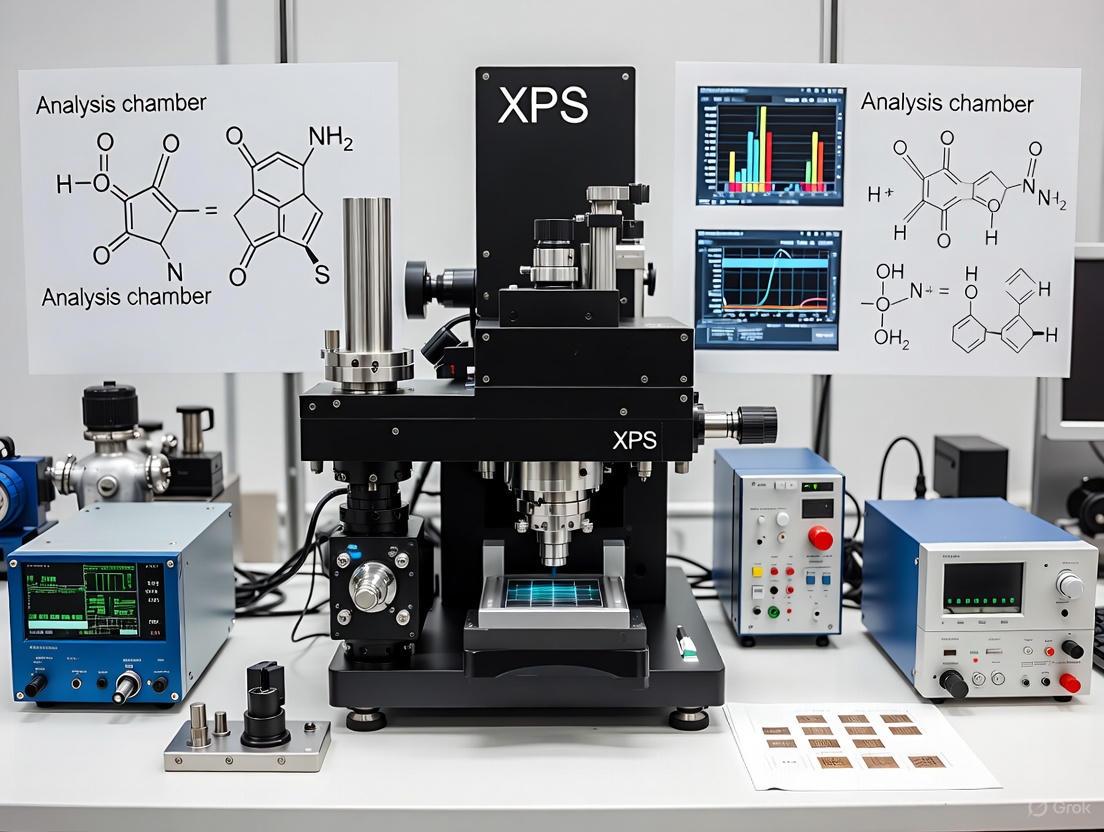
This guide provides a thorough exploration of X-ray Photoelectron Spectroscopy (XPS), a powerful surface-sensitive technique crucial for analyzing material composition and chemical states at the nanoscale.
XPS Surface Analysis: A Comprehensive Guide for Biomedical Researchers and Drug Development
Abstract
This guide provides a thorough exploration of X-ray Photoelectron Spectroscopy (XPS), a powerful surface-sensitive technique crucial for analyzing material composition and chemical states at the nanoscale. Tailored for researchers, scientists, and drug development professionals, it covers foundational principles, practical methodologies, common challenges, and comparative analysis with other techniques. The content addresses key intents from understanding core concepts to applying XPS for quality assurance in medical devices, troubleshooting analytical issues, and validating its use in biomedical and clinical research contexts to advance material biocompatibility and drug delivery systems.
What is XPS? Understanding the Core Principles and Capabilities
X-Ray Photoelectron Spectroscopy (XPS), also known as Electron Spectroscopy for Chemical Analysis (ESCA), has become the most widely used method of surface analysis over the past three decades [1]. This analytical technique is essential for research spanning from traditional chemistry and materials science into environmental, atmospheric, and biological systems [1]. The fundamental principle underlying XPS is the photoelectric effect, which enables the identification of all elements except hydrogen and helium on sample surfaces by measuring the binding energies of emitted photoelectrons during X-ray excitation [1]. This article explores the core physics of this phenomenon and its application in modern surface science, providing researchers with detailed protocols for effective implementation.
Fundamental Physical Principles of the Photoelectric Effect
The Photoelectric Process
The photoelectric effect, for which Albert Einstein received the Nobel Prize in 1921, describes the emission of electrons from a material when it is exposed to electromagnetic radiation of sufficient energy. In XPS, this phenomenon occurs through a precise sequence of physical interactions:
- Photon Absorption: An incident X-ray photon with energy hν is absorbed by an electron in an inner atomic orbital.
- Electron Emission: If the photon energy exceeds the electron's binding energy, the electron is ejected from the atom with a specific kinetic energy.
- Energy Conservation: The process follows the conservation of energy principle: KE = hν - BE - φ, where KE is the measured kinetic energy of the photoelectron, hν is the incident X-ray energy, BE is the electron binding energy, and φ is the spectrometer work function.
This fundamental process enables XPS to provide both elemental identification and chemical state information through precise measurement of electron binding energies.
Diagram: The Photoelectric Effect in XPS
Figure 1. Fundamental process of photoelectron emission in XPS. The diagram illustrates the sequence from photon absorption to photoelectron emission and energy measurement, which forms the basis of XPS analysis.
Experimental Protocols for XPS Analysis
Pre-Analysis Planning and Assessment
Proper planning is crucial for obtaining reliable XPS data. The following checklist outlines critical considerations before conducting experiments:
- Define Analytical Question: Clearly articulate what information is needed from the analysis [1].
- Sample Compatibility: Verify that the sample size, form, and composition are compatible with XPS instrumentation and ultra-high vacuum requirements [1].
- Sensitivity Assessment: Determine if XPS has the required detection sensitivity for target elements and potential peak interferences [1].
- Depth Resolution Needs: Evaluate whether angle-resolved measurements, ion sputtering, or specialized XPS configurations are needed for depth profiling [1].
- Sample Preparation: Plan appropriate handling and cleaning procedures to minimize contamination layers [1].
Step-by-Step Measurement Protocol
Instrument Calibration
- Verify instrument performance using standard samples
- Confirm energy scale calibration with known reference materials
- Document all instrument parameters including X-ray source settings and analyzer configurations [1]
Sample Loading and Preparation
- Mount sample securely using appropriate holders
- Implement charge control strategies for insulating specimens
- Minimize atmospheric exposure time before introducing to analysis chamber
Data Collection Strategy
- Acquire survey spectra (0-1100 eV binding energy) for elemental identification [1]
- Collect high-energy-resolution regional spectra for elements of interest
- Use appropriate dwell times and scan repetitions for adequate statistics [1]
- Monitor for potential X-ray induced specimen damage throughout analysis [1]
Depth Profiling (When Required)
Data Interpretation and Analysis Protocol
Energy Alignment and Charge Referencing
- Apply charge correction using adventitious carbon (C 1s at 284.8 eV) or known reference peaks
- Verify correction consistency across all spectral regions
Peak Identification and Fitting
- Identify all major photoelectron peaks using established binding energy databases [3]
- Employ appropriate background subtraction methods (Shirley, Tougaard, or linear)
- Use physically meaningful constraints during fitting procedures
- Document all fitting parameters including peak positions, full width at half maximum (FWHM), and area ratios
Quantitative Analysis
- Calculate elemental concentrations using relative sensitivity factors
- Account for matrix effects and inelastic mean free paths in quantification
- Report uncertainties and detection limits based on signal-to-noise ratios
The Scientist's Toolkit: Essential Research Reagents and Materials
Table 1: Essential materials and reagents for XPS analysis
| Item | Function/Purpose | Application Notes |
|---|---|---|
| Standard Reference Materials | Energy scale calibration and quantitative verification | Au, Ag, Cu foils for regular instrument calibration [1] |
| Conductive Adhesive Tapes | Sample mounting for analysis | Double-sided carbon or copper tapes for electrical contact |
| Charge Neutralization Systems | Surface potential stabilization | Low-energy electron flood guns for insulating samples [1] |
| Ion Sputtering Sources | Depth profiling and surface cleaning | Monoatomic (Ar+) for metals; cluster sources for organics [2] |
| XPS Knowledge Bases | Peak identification and chemical state analysis | Database resources for binding energies and chemical shifts [4] [3] |
| Ultra-High Vacuum Compatible Materials | Sample preparation and handling | Materials with low vapor pressure to maintain analysis chamber pressure |
Data Presentation and Analysis Parameters
Key Quantitative Parameters in XPS Analysis
Table 2: Critical parameters for XPS data acquisition and interpretation
| Parameter | Typical Values/Ranges | Significance |
|---|---|---|
| X-ray Source Energy | 1486.6 eV (Al Kα), 1253.6 eV (Mg Kα) | Determines ionization cross-sections and probing depth |
| Analysis Depth | 3-10 nm (depending on material) | Information depth for surface-sensitive measurements |
| Energy Resolution | 0.3-1.0 eV (routine), <0.3 eV (high-res) | Affects chemical state differentiation capability |
| Binding Energy Range | 0-1400 eV (covers all elements except H, He) | Comprehensive elemental coverage [1] |
| Detection Limits | 0.1-1.0 atomic percent | Element-dependent sensitivity factors |
| Depth Profiling Resolution | 1-10 nm (varies with sputter conditions) | Interface resolution in multilayer structures [2] |
Advanced Methodologies and Applications
Depth Profiling Techniques and Considerations
XPS depth profiling, particularly using ion sputtering methods, requires careful optimization to minimize artifacts and obtain accurate compositional information [2]. The workflow below outlines the decision process for selecting appropriate depth profiling methods:
Figure 2. Decision workflow for XPS depth profiling methodology. The selection between monoatomic and cluster ion sputtering depends on material type to minimize measurement artifacts [2].
Addressing Reproducibility Challenges
The widespread use of XPS has revealed significant reproducibility challenges in the scientific literature [1]. Implementation of standardized protocols is essential for generating reliable data:
- Instrument Performance Verification: Regular calibration using certified reference materials
- Documentation Standards: Comprehensive reporting of all experimental parameters [1]
- Data Analysis Consistency: Application of validated peak fitting procedures and constraints
- Interlaboratory Comparisons: Participation in proficiency testing programs when available
XPS remains an indispensable surface analysis technique rooted in the fundamental physics of the photoelectric effect. Its ability to provide both elemental identification and chemical state information with high surface sensitivity makes it uniquely valuable across numerous scientific disciplines. However, the technique's perceived simplicity often belies the careful experimental planning and execution required to generate reliable, reproducible data. By adhering to the detailed protocols and methodologies outlined in this article, researchers can leverage the full analytical power of XPS while avoiding common pitfalls associated with its implementation. As XPS continues to evolve with new source technologies, detection methods, and data analysis approaches, maintaining rigorous standards in its application will ensure its continued contribution to scientific advancement.
X-ray Photoelectron Spectroscopy (XPS), also known as Electron Spectroscopy for Chemical Analysis (ESCA), is a powerful surface-sensitive analytical technique that has become indispensable in modern materials research and development. This non-destructive method provides quantitative information about the elemental composition, chemical state, and electronic structure of the outermost layers of a material, typically the top 1-10 nm [5] [6]. The fundamental principle of XPS is based on the photoelectric effect, where X-rays irradiate a sample, causing the ejection of photoelectrons from core levels. By measuring the kinetic energy of these ejected electrons, the binding energy can be determined using the equation: Ebinding = Ephoton - (Ekinetic + φ), where Ephoton is the known X-ray energy, Ekinetic is the measured electron kinetic energy, and φ is the spectrometer work function [5] [6]. This relationship forms the basis for all XPS analysis, allowing researchers to identify elements present on material surfaces and their chemical environments with high precision.
The surface sensitivity of XPS arises from the short inelastic mean free path of electrons in solids, which limits the escape depth of photoelectrons to approximately the top 5-10 nm (about 30 atomic layers) of the material surface [5] [7]. This makes XPS particularly valuable for investigating surface-mediated processes such as catalysis, corrosion, adhesion, and various interfacial phenomena that dominate material behavior in practical applications. Since its development into a practical analytical tool by Dr. Kai Siegbahn and his colleagues (earning him the Nobel Prize in Physics in 1981), XPS has evolved to become a standard technique in surface science laboratories worldwide [5] [6].
Fundamental Principles and Technical Specifications
Core Physical Principles
XPS operates based on the photoelectric effect, where photons of sufficient energy eject electrons from core atomic orbitals. When an X-ray photon with energy ℎν strikes an atom, it may transfer its energy to a core-level electron, ejecting it with a kinetic energy given by: Ekinetic = ℎν - Ebinding - φ, where Ebinding is the electron's binding energy relative to the Fermi level, and φ is the spectrometer work function [5]. The measured kinetic energy of the photoelectrons is characteristic of specific elements, while subtle shifts in binding energy (known as chemical shifts) provide information about the chemical state and bonding environment of the emitting atoms [5] [6]. These chemical shifts occur because changes in the chemical environment affect the electrostatic screening of core electrons by valence electrons; for example, increased oxidation state typically results in higher binding energies due to reduced valence electron density [5].
For electrons in p, d, or f orbitals, spin-orbit splitting occurs, resulting in doublet peaks (e.g., p₁/₂ and p₃/₂) with characteristic intensity ratios and energy separations that aid in elemental identification [5]. The technique also produces Auger electron peaks, which result from the relaxation process following photoemission, and these can provide additional chemical information through the Auger parameter [5] [8]. The information depth in XPS is governed by the Beer-Lambert law: Is = I₀e^(-d/λ), where Is is the intensity of photoelectrons emitted at depth d below the surface, I₀ is the initial intensity, and λ is the inelastic mean free path of the electron in the material (typically 1-3.5 nm for Al Kα X-rays) [5]. This relationship means that approximately 95% of the detected signal originates from within 3λ of the surface, establishing the fundamental surface sensitivity of the technique.
Technical Specifications and Capabilities
Table 1: Key Technical Specifications of XPS Analysis
| Parameter | Specification | Notes |
|---|---|---|
| Elements Detected | Lithium (Li) to Uranium (U) | Hydrogen and Helium not detectable [6] [9] |
| Detection Limits | 0.01-1 atomic % (100-1000 ppm) | Dependent on element and matrix [6] [9] |
| Surface Sensitivity | 1-10 nm (top 5-10 nm typical) | ~30 atomic layers [5] [7] [9] |
| Lateral Resolution | 10 μm to 200 μm | Down to 200 nm with synchrotron sources [6] |
| Quantitative Accuracy | ±10% for major elements | ±60-80% for weak signals (10-20% of strongest peak) [6] |
| Analysis Depth | ~3-10 nm | Approximately 3 times the inelastic mean free path (λ) [5] |
| Chemical Shift Resolution | ±0.1 eV | Typically sufficient to distinguish oxidation states [5] |
XPS provides exceptional capabilities for surface chemical analysis with particular strengths in several areas. The technique is semi-quantitative without requiring standards, using relative sensitivity factors (RSFs) to convert peak areas to atomic concentrations according to the formula: Cₓ = (Iₓ/Sₓ)/(ΣIᵢ/Sᵢ), where Cₓ is the concentration of element x, Iₓ is the measured intensity, Sₓ is the elemental sensitivity factor, and ΣIᵢ/Sᵢ is the sum of these ratios for all detected elements [5]. This quantitative capability extends to both conducting and insulating materials, with the latter requiring charge neutralization systems such as electron flood guns to compensate for surface charging effects [5] [8]. The exceptional surface sensitivity of XPS means it often reveals composition differences between the surface and bulk material that would be missed by techniques with greater sampling depths, such as energy dispersive spectrometry (EDS) with excitation volumes extending up to 3 microns into the material [5].
Experimental Protocols and Methodologies
Sample Preparation and Handling Protocols
Proper sample preparation is critical for obtaining reliable XPS data. Samples must be compatible with ultra-high vacuum (UHV) conditions (<10⁻⁹ Torr), as the emitted photoelectrons have relatively low energy and are readily absorbed by ambient atmosphere [5] [6]. Solid samples should be cut to appropriate dimensions for the sample holder (typically 1-2 cm in maximum dimension), with powders mounted using double-sided conductive tape or pressed into indium foil to minimize charging [5]. For highly volatile materials, freezing protocols may be employed, where hydrated samples are frozen in their hydrated state in an ultrapure environment and allowed to sublime multilayers of ice prior to analysis [6].
Surface contamination represents a significant challenge in XPS analysis, as the technique is exquisitely sensitive to the outermost molecular layers. Adventitious carbon from atmospheric exposure is ubiquitous and is often used as a charge reference by setting the C 1s peak to 284.8 eV [5] [8]. To minimize contamination, samples should be handled with clean gloves, using tweezers, and stored in clean, dry environments prior to analysis. For surface-sensitive studies, additional cleaning procedures such as solvent cleaning, argon ion sputtering to "dust off" environmental contaminants, or in situ treatments (heating, fracturing, or scraping) may be employed to reveal the intrinsic surface chemistry [5] [7].
Data Acquisition Protocols
XPS data collection follows a systematic approach to ensure comprehensive surface characterization:
Survey Scans: Wide energy range scans (typically 0-1100 eV or 0-1400 eV) performed initially to identify all elements present on the surface. Acquisition parameters: Pass energy of 100-200 eV, step size of 1.0 eV, and dwell times of 50-100 ms per step to ensure adequate signal-to-noise ratio while maintaining reasonable acquisition times (typically 1-20 minutes) [5] [6].
High-Resolution Regional Scans: Narrow energy range scans centered on photoelectron peaks of interest, performed to determine chemical states and obtain quantitative data. Acquisition parameters: Pass energy of 20-50 eV, step size of 0.05-0.1 eV, and longer dwell times (100-500 ms) to achieve high energy resolution [5] [6]. Multiple sweeps are often required to achieve sufficient signal-to-noise ratio for accurate peak fitting.
Charge Compensation: For insulating samples, the electron flood gun should be optimized to provide sufficient low-energy electrons to neutralize surface charge without degrading spectral resolution. The optimal settings vary by instrument and sample, requiring empirical determination [5] [8].
Data Collection Order: Always collect survey spectra first, followed by high-resolution regions, as prolonged X-ray exposure may degrade certain materials, particularly organics, polymers, and some highly oxygenated compounds [6].
XPS Experimental Workflow: This diagram illustrates the standard protocol for XPS analysis, from sample preparation through data acquisition and analysis.
Depth Profiling Methodology
Depth profiling enables the investigation of compositional changes as a function of depth below the original surface. The most common approach combines alternating cycles of ion sputtering and XPS analysis:
Sputter Source Setup: Typically use argon ion gun with acceleration voltages of 1-5 kV for adequate sputter rates without excessive atomic mixing or sample damage. Lower energies (0.5-1 kV) are preferred for organic materials and delicate structures [5].
Sputter Rate Calibration: Calibrate using standards of known thickness (e.g., thermal oxide on silicon wafer). Report sputter rates in nm/minute based on this calibration [5].
Analysis Sequence: Program automated sequences of brief sputtering (5-30 seconds) followed by XPS analysis of selected regions (multiplex routine). The cycle repeats until the desired depth is profiled [5].
Cluster Ion Sources: For organic materials and delicate structures, gas cluster ion beams (GCIB) provide more gentle sputtering with reduced chemical damage and better preservation of chemical state information [9].
Data Presentation: Depth profiles typically display atomic concentration (normalized to 100%) as a function of sputter time or depth, revealing layer structures, interfacial reactions, and diffusion profiles [5].
Data Analysis and Interpretation
Quantitative Analysis Procedures
Quantitative analysis in XPS involves measuring peak areas and correcting them with relative sensitivity factors (RSFs) that account for elemental differences in photoionization cross-sections, analyzer transmission functions, and electron mean free paths. The standard quantification formula is:
Cₓ = (Iₓ/Sₓ) / Σ(Iᵢ/Sᵢ)
Where Cₓ is the atomic concentration of element x, Iₓ is the background-subtracted peak area, Sₓ is the relative sensitivity factor, and the denominator represents the sum of this ratio for all elements detected [5]. The accuracy of quantitative XPS analysis depends on several factors, including sample homogeneity, surface roughness, peak overlap, and the accuracy of the sensitivity factors used. For major constituents (peak intensities >10% of the strongest signal), quantitative accuracy of 90-95% can be expected, while weaker signals may have accuracies of 60-80% of the true value [6].
Peak fitting of high-resolution spectra is essential for extracting chemical state information. This process involves:
Background Subtraction: Typically using Shirley or Tougaard backgrounds to account for inelastically scattered electrons [5] [8].
Peak Model Selection: Using appropriate combinations of Gaussian-Lorentzian functions (typically 70-90% Gaussian) to represent individual chemical states [8].
Constraint Application: Applying physically meaningful constraints based on known spin-orbit splitting (energy separation and area ratios for doublets) and FWHM relationships [5] [8].
Validation: Ensuring the fitted components correspond to realistic chemical states by comparison to reference spectra from databases such as the NIST XPS Database or PHI Handbook of X-ray Photoelectron Spectroscopy [5] [8].
Chemical State Identification
Chemical state identification relies on the precise measurement of binding energy shifts that occur when elements enter different bonding environments. These chemical shifts typically range from 0.1 eV to several eV, significantly larger than the instrumental resolution of modern XPS instruments (±0.1 eV) [5]. General trends in chemical shifts include:
Higher Oxidation States: Typically exhibit higher binding energies due to the reduced electron density around the atom (e.g., Ti⁰ vs. Ti⁴⁺ has a ~5 eV shift) [5].
Electronegative Ligands: Bonding to more electronegative elements increases binding energy (e.g., fluorocarbons vs. hydrocarbons) [5].
Metallic vs. Oxide States: Pure metallic states typically have 0.5-3 eV lower binding energies than their oxidized counterparts [5].
For complex materials with multiple bonding environments, such as polymers or mixed oxidation state compounds, high-resolution spectra must be deconvoluted into individual components representing distinct chemical environments [5] [7]. The Auger parameter, which combines XPS and AES measurements, provides additional chemical state information that is independent of charge referencing and particularly valuable for certain elements [8].
Table 2: Representative Chemical Shift Ranges for Common Elements
| Element | Core Level | Chemical State | Binding Energy Range (eV) | Characteristic Features |
|---|---|---|---|---|
| Carbon | C 1s | C-C/C-H | 284.8 (reference) | Adventitious carbon reference [5] [8] |
| C-O | 286.0-286.5 | ~1.5 eV shift from C-C [5] | ||
| C=O | 287.5-288.0 | ~3 eV shift from C-C [5] | ||
| O-C=O | 288.5-289.0 | ~4 eV shift from C-C [5] | ||
| Oxygen | O 1s | Metal oxides | 529-531 | Lattice oxygen [5] |
| Hydroxides | 531.0-532.5 | ~1-2 eV higher than oxides [5] | ||
| Adsorbed H₂O | 532.5-533.5 | ~3-4 eV higher than oxides [5] | ||
| Nitrogen | N 1s | Organic/amine | 399.0-400.0 | Neutral nitrogen [5] |
| Protonated amine | 401.0-402.0 | ~2 eV shift from neutral [5] | ||
| Nitro/o | 405.0-406.0 | ~6 eV shift from neutral [5] | ||
| Silicon | Si 2p | Elemental Si | 99.0-99.5 | Metallic silicon [7] |
| SiO₂ | 103.0-104.0 | ~4 eV shift from elemental [7] |
Applications in Research and Industry
Pharmaceutical and Biomedical Applications
XPS plays a critical role in pharmaceutical development and biomedical research, particularly in characterizing surface properties that govern biological interactions. Key applications include:
Drug Delivery Systems: Surface characterization of polymeric nanoparticles, liposomes, and other drug carriers to verify surface functionalization, quantify targeting ligand density, and assess surface charge [10]. These parameters significantly influence biodistribution, cellular uptake, and therapeutic efficacy.
Medical Implants: Analysis of surface composition and chemical states of implant materials (e.g., titanium, stainless steel, polymers) to verify surface treatments, monitor oxide layer composition and thickness, and detect contaminants that may affect biocompatibility [10] [9].
Surface Modification Verification: Confirming the success of surface treatments such as plasma modification, silanization, and PEGylation intended to enhance biocompatibility, reduce fouling, or enable specific biointeractions [10] [7].
Contaminant Identification: Detection and quantification of surface contaminants that may affect drug product stability, sterility, or performance, including silicone oils, mold release agents, and processing residues [7] [9].
Materials Science and Engineering Applications
XPS provides essential insights for advanced materials development across multiple industries:
Semiconductor Technology: Characterization of ultra-thin films, high-k dielectrics, interface reactions, and contamination control in device fabrication [10] [11]. XPS can measure oxide thickness, interface quality, and dopant distribution in emerging semiconductor materials for electronics and photovoltaics [11].
Catalyst Research: Analysis of oxidation states and surface composition of heterogeneous catalysts, correlation of surface chemistry with catalytic activity, and studies of catalyst deactivation mechanisms [5] [10].
Corrosion Science: Investigation of passive film composition, thickness, and chemistry on metals and alloys, studies of corrosion initiation, and evaluation of corrosion protection treatments [5] [9].
Polymer Surface Modification: Verification of surface treatments (plasma, flame, chemical) for improving adhesion, printability, or biocompatibility; analysis of polymer degradation and weathering [5] [7].
Adhesion Science: Identification of failure mechanisms in adhesive bonds, characterization of surface treatments for improved adhesion, and analysis of interphase chemistry in composite materials [7].
Emerging and Niche Applications
The application space for XPS continues to expand with technological advancements:
Environmental Science: Study of mineral-fluid interfaces, contaminant sorption, and nanoparticle environmental behavior using ambient pressure XPS (AP-XPS) that allows analysis under more realistic environmental conditions [6].
Energy Storage and Conversion: Characterization of electrode surfaces, solid-electrolyte interphase (SEI) layers in batteries, catalyst surfaces in fuel cells, and light-absorbing materials in photovoltaics [10] [11].
Two-Dimensional Materials: Surface analysis of graphene, transition metal dichalcogenides, and other 2D materials, including characterization of functionalization, doping, and interface properties [8].
Heritage Conservation: Analysis of historical artifacts and artworks to identify surface degradation products, original manufacturing techniques, and inform conservation strategies [6].
Essential Research Reagents and Materials
Table 3: Essential Research Reagent Solutions for XPS Analysis
| Reagent/Material | Function | Application Notes |
|---|---|---|
| Conductive Tapes | Sample mounting for powders and irregular shapes | Double-sided carbon tape preferred; may contribute to C 1s signal [5] |
| Indium Foil | Substrate for powder mounting | Malleable metal with well-characterized XPS signals [5] |
| Reference Materials | Energy scale calibration | Gold, copper, and silver foils for Fermi edge and peak position references [8] |
| Argon Gas | Ion sputtering for depth profiling and cleaning | High purity (99.999%) required to minimize contamination [5] |
| Charge Reference Standards | Binding energy calibration | Adventitious carbon (C 1s at 284.8 eV) or deposited gold nanoparticles [5] [8] |
| Silicon Wafers | Reference substrates and thickness standards | Native oxide provides SiO₂ reference; used for sputter rate calibration [5] |
| Certified Standard Materials | Quantitative accuracy verification | NIST-traceable standards with certified surface composition [6] |
Advanced Techniques and Methodologies
Angle-Resolved XPS (ARXPS)
Angle-Resolved XPS enables non-destructive depth profiling with nanometer-scale resolution by varying the emission angle between the sample surface and the analyzer. At grazing angles (relative to the surface), the analysis becomes more surface-sensitive, enhancing the signal from the outermost layers. The technique is particularly valuable for:
Thin Film Characterization: Determining layer thicknesses in the 1-10 nm range without sputtering [8].
Interface Analysis: Probing buried interfaces by enhancing signals from interfacial species [8].
Molecular Orientation Studies: Detecting anisotropic distribution of functional groups at surfaces [8].
The information depth in ARXPS follows the relationship: d(θ) = 3λ sin(θ), where θ is the emission angle measured from the surface plane, and λ is the electron inelastic mean free path. This allows controlled variation of the sampling depth from approximately 0.5-10 nm [5] [8].
Imaging XPS and Mapping
XPS imaging capabilities enable the creation of chemical state maps with micrometre-scale lateral resolution. Two primary approaches are employed:
Microprobe Mode: A focused X-ray spot is rastered across the sample surface while the spectrometer collects electrons from each position. This approach provides high spatial resolution (down to 3 µm with laboratory sources, 200 nm with synchrotron sources) but requires longer acquisition times [6] [9].
Parallel Imaging Mode: The sample is illuminated with a broad X-ray beam, and a position-sensitive detector simultaneously collects electrons from different regions of the sample. This approach is faster but typically offers lower spatial resolution (10-30 µm) [6].
XPS imaging applications include contamination mapping, analysis of patterned surfaces, heterogeneous catalyst characterization, and failure analysis of electronic devices [6] [9].
XPS Instrumentation Schematic: This diagram shows the key components of an XPS instrument and their relationships in the measurement process.
Comparison with Complementary Techniques
Understanding the position of XPS within the broader analytical landscape is essential for appropriate technique selection. Compared to other surface analysis methods:
XPS vs. AES (Auger Electron Spectroscopy): XPS provides better chemical state information and handles insulating samples more easily, while AES offers superior spatial resolution (down to 10 nm) and is more sensitive to light elements [5] [8].
XPS vs. SIMS (Secondary Ion Mass Spectrometry): XPS provides quantitative elemental and chemical state information from the top 1-10 nm, while SIMS offers superior detection limits (ppm-ppb) and isotopic sensitivity but is less quantitative and more destructive [7].
XPS vs. FTIR (Fourier Transform Infrared Spectroscopy): XPS probes the top few nanometers with elemental specificity, while FTIR provides molecular functional group information with greater sampling depths (micrometers) [7].
XPS vs. UPS (Ultraviolet Photoelectron Spectroscopy): XPS measures core-level electrons for elemental and chemical state analysis, while UPS probes valence electrons for electronic structure and work function measurements with even greater surface sensitivity (2-3 nm) [12].
The combination of XPS with complementary techniques often provides the most comprehensive understanding of material surfaces, leveraging the specific strengths of each method while compensating for their respective limitations.
X-ray Photoelectron Spectroscopy (XPS) has become an indispensable surface analysis technique across diverse fields, including materials science, semiconductor development, and pharmaceutical research, due to its unique capability to provide quantitative elemental composition and chemical state information from the outermost atomic layers of a material [10] [13]. Despite its widespread adoption and utility, the technique possesses several intrinsic limitations that can significantly impact the quality of analytical data, the scope of analyzable samples, and the overall efficiency of research and development workflows. This application note provides a detailed examination of three critical limitations—ultra-high vacuum (UHV) requirements, sample size constraints, and charging effects—within the context of advanced material and drug development research. It further offers validated experimental protocols and mitigation strategies to assist researchers in optimizing their XPS analyses, ensuring data reliability, and expanding the technique's applicability to challenging sample types.
Ultra-High Vacuum (UHV) Requirements
The Imperative for UHV Conditions
The operational requirement for Ultra-High Vacuum (UHV), typically defined as pressures lower than 1×10⁻⁹ torr, is fundamental to the XPS technique [14]. This environment is necessary to ensure that photoelectrons ejected from the sample surface can travel along their mean free path to the detector without undergoing scattering events with gas molecules. In UHV, the mean free path of a gas molecule exceeds approximately 40 km, thereby preserving the energy and intensity of the photoelectron signal and enabling accurate compositional analysis [14]. Furthermore, UHV is essential for maintaining a pristine, contamination-free sample surface for the duration of the analysis by minimizing the adsorption of ambient gas molecules onto the area of interest.
Practical Constraints and Sample Compatibility
The UHV requirement imposes significant practical constraints on the types of samples suitable for XPS analysis and the procedures for their handling. The fundamental challenge is that many materials are unstable or volatile under such low-pressure conditions [15]. This is particularly problematic for biological specimens, certain hydrated polymers, pharmaceutical compounds with high vapor pressures, and any materials containing volatile solvents or plasticizers. When placed in the UHV chamber, these samples can outgas, decompose, or undergo irreversible morphological changes, leading to erroneous analytical results and potential contamination of the spectrometer.
Table 1: UHV System Components, Their Functions, and Associated Challenges
| System Component | Primary Function | Operational Challenge |
|---|---|---|
| Roughing Pump | Initial pump-down from atmospheric pressure | Removes bulk gas; insufficient for UHV |
| High-Vacuum Pump | Achieves high vacuum (e.g., Turbomolecular Pump) | Requires clean, oil-free operation to prevent contamination |
| UHV Pump | Maintains sustained UHV (e.g., Ion Pump, NEG Pump) | Limited pumping capacity for high outgassing samples |
| Bake-Out System | Heats chamber walls to desorb water vapor | Time-consuming (hours to days); can damage sensitive samples |
| Airlock System | Introduces samples without breaking main UHV | Adds complexity but drastically improves throughput |
Mitigation Strategies and Protocols
Protocol 2.3.1: Sample Pre-Screening for UHV Compatibility
- Stability Assessment: Prior to analysis, investigate the thermal stability and vapor pressure of the sample material. Thermogravimetric Analysis (TGA) is a recommended pre-screening method.
- Visual Inspection: For liquid or semi-solid samples, a test vial can be placed in a low-pressure desiccator to observe for boiling, bubbling, or phase separation.
- Alternative Preparation: If UHV compatibility is questionable, consider cryogenic cooling of the sample stage to reduce vapor pressure, or explore alternative sample preparation such as thorough drying or embedding in a stable matrix, acknowledging potential for surface modification.
- Utilize Load-Lock System: Transfer the sample into the analytical chamber using a dedicated load-lock, which is pumped separately to minimize exposure of the main chamber to atmosphere.
- Pre-Pumping: Pump the load-lock to a medium-high vacuum (e.g., 10⁻⁶ torr) for a predetermined period to allow for initial outgassing.
- Monitor Pressure: Closely monitor the pressure in the main analytical chamber during and after sample transfer. A significant, sustained pressure rise indicates high sample outgassing, necessitating pump-down time or removal of the sample.
Diagram 1: UHV Sample Introduction Workflow. This protocol ensures the main chamber remains under UHV.
Sample Size and Geometry Constraints
The Nature of the Constraint
A frequently encountered practical limitation in XPS analysis stems from the physical dimensions and topography of the sample. Unlike electron beams used in techniques like SEM, X-ray beams cannot be focused as finely [15]. Consequently, the analyzed area is typically large, ranging from tens of microns to several millimeters, and the signal obtained is an average over this entire area [15]. This characteristic poses two major challenges: First, samples must be small enough to fit inside the UHV chamber's specimen stage, which often has limited clearance. Second, and more critically, the surface of the sample must be flat and smooth within the plane of analysis. Rough or highly textured surfaces can cause differential charging (discussed in Section 4) and distort quantitative analysis because photoelectrons emitted from sloped surfaces or crevices may not reach the detector, leading to unrepresentative sampling.
Impact on Analysis
This averaging effect over a relatively large area makes it difficult to analyze small, isolated features or heterogeneous materials with micron-scale domain sizes. If a sample is too small, or incorrectly positioned, it may not adequately cover the X-ray beam spot, leading to a weak signal and potential detection of the underlying sample holder, which contaminates the spectral data. The technique is, therefore, inherently not suited for analyzing the bulk composition of materials, as its information depth is limited to approximately ~10 nm [15].
Mitigation Strategies and Protocols
Protocol 3.3.1: Preparation of Small or Non-Ideal Samples
- Mounting Substrates: For powders or small particles, use a stable, non-contaminating substrate. Indium foil is excellent as it is malleable, conductive, and provides a clean background. Alternatively, use a pre-cleaned silicon wafer.
- Adhesive Selection: If necessary, use a double-sided conductive carbon tape to affix the sample. Avoid using non-conductive tapes or epoxies that can outgas.
- Flatness Assurance: Gently press the sample onto the substrate to ensure maximum contact and a flat upper surface. For powders, a small, clean glass slide can be used to press and spread the sample into a thin, uniform layer.
- Electrical Grounding: Verify that the mounting method provides an electrical path to the grounded sample holder, especially for insulating samples, to help mitigate charging.
Table 2: Research Reagent Solutions for Sample Preparation
| Material/Reagent | Primary Function | Application Notes |
|---|---|---|
| Indium Foil | Conductive, malleable mounting substrate | Excellent for powders; provides a cold-weld seal; clean XPS spectral background. |
| Conductive Carbon Tape | Adhesive for mounting samples | Provides electrical contact to holder. Check for outgassing potential in UHV. |
| Pre-cleaned Silicon Wafer | Flat, low-background substrate | Ideal for depositing solutions, nanoparticles, or thin films. |
| Custom Sample Holder | Accommodate non-standard shapes | 3D-printed or machined holders can position wires, fragments, etc. |
Charging Effects
Fundamentals of Surface Charging
Charging is arguably the most pervasive analytical challenge in XPS, particularly when analyzing insulating materials. The process involves a steady flux of positively charged X-rays onto the sample, which causes the emission of negatively charged photoelectrons. If the sample is electrically insulating, this electron emission creates a positive charge buildup on the surface because the lost electrons cannot be replenished [16]. This positive charge affects the kinetic energy of subsequently emitted photoelectrons, resulting in a shift in the measured binding energy and often peak broadening or distortion [16] [17]. This effect compromises the accuracy of elemental identification and, most importantly, the determination of chemical states.
Types of Charging and Complexity
The problem is compounded by differential charging, where different regions of the sample surface acquire different charge potentials [17]. This can occur horizontally across a heterogeneous material or vertically in thin insulating films on conductive substrates [17]. The result is peak broadening, asymmetry, or even the appearance of multiple peaks for a single chemical species, making spectral interpretation extremely difficult. A common but often problematic practice is charge referencing the C 1s peak of adventitious carbon to 284.8 eV. Studies have shown this value can be inconsistent, varying significantly based on the substrate material and the nature of the carbon contamination [17].
Advanced Mitigation Strategies and Protocols
Recent research has demonstrated innovative approaches to charge neutralization. One promising method is UV-Assisted Charge Neutralization, where ultraviolet light is irradiated onto the sample surface during XPS analysis [16]. The UV light generates low-energy photoelectrons that adsorb onto the positively charged, X-ray-irradiated region, effectively suppressing charging intensity and enhancing its temporal stability and spatial uniformity [16]. This method has been shown to be at least as effective as, and sometimes superior to, traditional dual-beam (low-energy electrons and ions) flood guns, particularly in maintaining sample integrity.
Protocol 4.3.1: Implementing UV-Assisted Charge Neutralization
- Equipment Setup: Ensure the XPS instrument is equipped with a UV source (e.g., a deuterium lamp) that can be directed at the sample surface. The UV irradiation should be introduced concurrently with the X-ray beam.
- Optimize UV Intensity: Systematically adjust the intensity and focus of the UV light. The goal is to use the minimum flux required to stabilize the binding energy scale, as excessive UV flux could potentially induce sample damage.
- Monitor Spectral Stability: Acquire successive rapid scans of a core level peak (e.g., C 1s or a substrate peak). The neutralization is effective when the peak position remains stable between scans with minimal broadening.
- Validate with Reference Standard: Analyze a known insulating standard (e.g., a clean SiO₂ wafer) to calibrate and validate the effectiveness of the UV neutralization under your specific instrumental conditions.
Protocol 4.3.2: Strategy for Analyzing Thin Insulating Films on Conductive Substrates
- Assessment: Determine if the insulating layer is thin enough (typically <5 nm) that photoelectrons from the conductive substrate can be detected.
- Flood Gun Management: For such samples, it is often advisable to turn the standard electron flood gun OFF. Using the flood gun can induce vertical differential charging by creating a negative charge on the surface layer that is decoupled from the grounded substrate [17].
- Alternative Neutralization: If charging persists, use the UV-assisted neutralization protocol (Protocol 4.3.1) or operate the flood gun at the lowest possible electron flux and energy.
Diagram 2: Logical decision pathway for diagnosing and mitigating charging effects during XPS analysis.
The powerful surface sensitivity of XPS comes with the inherent challenges of UHV requirements, sample size constraints, and charging effects. These limitations, however, can be systematically managed through careful experimental planning and the application of robust protocols. As demonstrated, strategies such as load-lock sample introduction, appropriate substrate mounting, and advanced neutralization techniques like UV illumination are highly effective in expanding the range of analyzable samples and ensuring the generation of reliable, high-quality data. The ongoing integration of artificial intelligence for data interpretation and technological trends toward miniaturization and automation are poised to further mitigate these limitations, solidifying the role of XPS as a critical tool for surface analysis in scientific research and industrial development [10] [13].
X-ray Photoelectron Spectroscopy (XPS) is a surface-sensitive quantitative spectroscopic technique that measures the very topmost 50–60 atoms, 5–10 nm of any surface [6]. This technique belongs to the family of photoemission spectroscopies in which electron population spectra are obtained by irradiating a material with a beam of X-rays [6]. XPS is a powerful measurement technique because it not only identifies what elements are present in a material but also reveals what other elements they are bonded to, enabling researchers to determine chemical state information and empirical formulas [6]. The fundamental physical principle underlying XPS is the photoelectric effect, where electrons are ejected from a material when it is irradiated with X-rays of sufficient energy [18]. The kinetic energy of these ejected photoelectrons is measured by the spectrometer, and the binding energy of the electrons within their parent atoms is calculated using the photoelectric equation: Ebinding = Ephoton - (Ekinetic + ϕ), where Ephoton is the energy of the X-ray photons, Ekinetic is the kinetic energy of the ejected electron measured by the instrument, and ϕ is the work function of the spectrometer [6] [18] [19]. This binding energy serves as a unique fingerprint for each element and its chemical environment, forming the basis for interpreting XPS spectra to extract elemental composition, chemical state information, and empirical formulas.
Experimental Protocol for XPS Analysis
Sample Preparation and Handling
Proper sample preparation is critical for obtaining reliable XPS data. Samples must be compatible with ultra-high vacuum (UHV) conditions (typically 10⁻⁷ Pa or lower), although ambient-pressure XPS is an emerging area that allows analysis at higher pressures [6]. The sample surface should be representative of the material being studied and free from adventitious contamination that could mask the true surface composition. For insulating materials, charge compensation is essential to neutralize positive charge accumulation that occurs due to electron emission [20]. This is typically achieved using a low-energy electron flood gun in combination with the XPS instrument's charge neutralization system. Sample size limitations depend on instrument design, with most instruments accepting samples ranging from millimeters to several centimeters in size [6]. Both organic and inorganic materials can be analyzed, including polymers, metals, ceramics, glasses, and biological samples, though each requires specific preparation considerations [6] [19].
Data Acquisition Workflow
The following workflow outlines the standard protocol for acquiring and processing XPS data:
- Survey Spectrum Collection: Begin with a broad energy range scan (typically 0-1100 eV or 0-1400 eV) to identify all elements present on the surface except hydrogen and helium [19]. Acquisition times typically range from 1-20 minutes [6].
- High-Resolution Regional Scans: Collect narrow window spectra for each element identified in the survey scan at higher energy resolution to resolve chemical state information. Allocate 1-15 minutes per region, with multiple sweeps often required for adequate signal-to-noise ratio [6].
- Energy Scale Calibration: Reference the energy scale to a peak with known binding energy. The adventitious hydrocarbon C 1s peak at 284.8 eV is commonly used, though alternatives like the O 1s peak in oxides or F 1s in fluorides may be more appropriate depending on the sample [21].
- Charge Compensation Optimization: For insulating samples, optimize the charge neutralizer settings to produce the narrowest peak full width at half maximum (FWHM) possible, indicating minimal charging [21].
- Quantitative Analysis: Use appropriate relative sensitivity factors (RSF) and intensity calibration specific to the instrument and X-ray source. Ensure the correct RSF library is loaded in the analysis software [21].
- Data Validation: Check for potential issues such as sample degradation, differential charging, peak overlaps, or the presence of Auger lines that might complicate interpretation [6] [21].
Figure 1: Standard XPS Data Acquisition and Analysis Workflow
Advanced XPS Techniques
For more specialized analytical needs, several advanced XPS techniques can be employed:
- Angle-Resolved XPS (ARXPS): Varies the emission angle at which electrons are collected to obtain depth resolution for ultra-thin films (1-10 nm) without sputtering [20].
- XPS Depth Profiling: Combines alternating cycles of ion beam sputtering and XPS analysis to determine composition as a function of depth [6] [20].
- XPS Imaging/Mapping: Creates spatial images showing the distribution of specific elements or chemical states across a surface [20].
- Small Area XPS (SAXPS): Focuses analysis on small features (down to 10-30 µm) on a solid surface using focused X-ray beams [20].
Interpretation of Elemental Composition
Peak Identification and Elemental Determination
The first step in interpreting XPS spectra is identifying elements present in the sample by matching the binding energies of peaks in the survey spectrum to known elemental transitions. Each element produces a set of characteristic XPS peaks corresponding to their electron configurations (e.g., 1s, 2s, 2p, 3s, etc.) [6]. Table 1 shows the characteristic binding energy ranges for principal photoelectron lines of common elements. Peaks from the XPS spectra give the relative number of electrons with a specific binding energy, with peak heights correlating to elemental concentration [18]. For accurate quantification, the intensity of each elemental peak must be corrected using relative sensitivity factors (RSFs) that account for differences in photoelectron cross-sections, mean free paths, and instrument transmission functions [21].
Table 1: Characteristic Binding Energy Ranges for Principal XPS Peaks of Common Elements
| Element | Orbital | Binding Energy Range (eV) | Characteristics |
|---|---|---|---|
| Carbon | C 1s | 284-292 | Reference peak for adventitious carbon at 284.8 eV; chemical shifts indicate bonding |
| Oxygen | O 1s | 528-536 | Metal oxides ~530 eV; organic oxygen ~532-533 eV |
| Nitrogen | N 1s | 398-404 | Organic nitrogen ~399-400 eV; nitrides ~397 eV |
| Silicon | Si 2p | 99-106 | Elemental Si 99 eV; SiO₂ 103-104 eV |
| Fluorine | F 1s | 684-689 | Highly electronegative; useful for referencing |
| Sulfur | S 2p | 160-170 | Distinguish between sulfate (~168 eV) and sulfide (~162 eV) |
Quantitative Composition Analysis
Quantitative analysis in XPS involves converting peak intensities to atomic concentrations using the formula:
Atomic % (A) = (Iₐ / Sₐ) / Σ(Iₙ / Sₙ) × 100%
where Iₐ is the integrated peak area for element a, Sₐ is the relative sensitivity factor for element a, and the summation is over all detected elements [6]. Under optimal conditions, the quantitative accuracy for major peaks (comprising 10-20% or more of the total signal) is 90-95%, while weaker signals may have accuracies of 60-80% of the true value [6]. Detection limits typically range from 0.1-1.0 atomic % (1000-10,000 ppm), though lower limits can be achieved in favorable circumstances with long collection times [6]. Several factors affect quantitative accuracy, including signal-to-noise ratio, peak intensity, accuracy of relative sensitivity factors, surface volume homogeneity, and correction for the energy dependence of electron mean free path [6].
Interpretation of Chemical State Information
Chemical Shifts and Bonding Environment
Chemical state information is derived from small shifts in binding energy (typically 0.1-4 eV) caused by changes in the chemical environment of the atom [19]. When an atom enters a chemical bond, the binding energy of its core electrons changes due to alterations in the valence electron distribution, which affects the electrostatic screening of the core electrons. Atoms in higher oxidation states or bonded to more electronegative elements typically exhibit higher binding energies due to increased effective positive charge on the atom. For example, the carbon 1s spectrum can reveal different carbon functional groups: C-C/C-H at 284.8 eV, C-O at 286.0-286.5 eV, C=O at 287.5-288.0 eV, and O-C=O at 288.5-289.0 eV [22]. Similarly, silicon shows distinct 2p binding energies for elemental silicon (99 eV), silicon nitride (101.5 eV), silicon oxynitride (102-103 eV), and silicon dioxide (103-104 eV) [22].
Spin-Orbit Splitting and Peak Parameters
For elements with p, d, or f orbitals, photoelectron peaks exhibit spin-orbit splitting due to coupling between the electron's spin and orbital angular momentum. This splitting produces doublets with characteristic area ratios and separations: p peaks split into p₃/₂ and p₁/₂ with a 2:1 area ratio; d peaks split into d₅/₂ and d₃/₂ with a 3:2 area ratio; and f peaks split into f₇/₂ and f₅/₂ with a 4:3 area ratio [21]. The full width at half maximum (FWHM) of peaks also provides chemical information, with pure metals typically having the narrowest peaks (0.5-1.0 eV), inorganic compounds having intermediate widths (0.5-1.5 eV), and organic compounds having the broadest peaks (1.0-2.0 eV or larger) [21]. When performing peak fitting, constraints based on these known parameters should be applied to produce chemically meaningful results.
Table 2: Spin-Orbit Splitting Parameters for Common Elements
| Element | Orbital | Spin-Orbit Components | Area Ratio | Separation (eV) |
|---|---|---|---|---|
| Sodium | Na 1s | No splitting | N/A | N/A |
| Phosphorus | P 2p | 2p₃/₂, 2p₁/₂ | 2:1 | 0.8-0.9 |
| Sulfur | S 2p | 2p₃/₂, 2p₁/₂ | 2:1 | 1.2 |
| Chlorine | Cl 2p | 2p₃/₂, 2p₁/₂ | 2:1 | 1.6 |
| Chromium | Cr 2p | 2p₃/₂, 2p₁/₂ | 2:1 | 9.0-9.5 |
| Copper | Cu 2p | 2p₃/₂, 2p₁/₂ | 2:1 | 19.8-20.0 |
| Gold | Au 4f | 4f₇/₂, 4f₅/₂ | 4:3 | 3.7 |
Determining Empirical Formulas from XPS Data
Calculation Methodology
The empirical formula of a material can be determined from quantitative XPS data by converting atomic percentages into stoichiometric ratios. The process involves:
- Quantification: Obtain atomic percentages for all detected elements using the quantitative analysis method described in Section 3.2.
- Normalization: Select a key element (typically the primary cation or most abundant element besides oxygen) and normalize all other elemental concentrations relative to this element.
- Ratio Calculation: Divide each elemental atomic percentage by the atomic percentage of the reference element to obtain stoichiometric ratios.
- Rounding: Round ratios to the nearest whole numbers or simple fractions to obtain the empirical formula.
For example, if analysis of a calcium phosphate material yields Ca at 12.5%, P at 7.5%, and O at 35.0% (with other elements making up the remainder), the stoichiometric ratios would be Ca:P:O = 1:0.6:2.8, which rounds to Ca:P:O = 1:0.6:2.8, suggesting a hydroxyapatite-like composition of Ca₁₀(PO₄)₆(OH)₂ when multiplied by appropriate factors. It is important to note that XPS-derived empirical formulas represent the surface composition, which may differ from the bulk composition, especially for materials with surface segregation, contamination, or oxidation layers.
Considerations for Accurate Formula Determination
Several factors must be considered when determining empirical formulas from XPS data:
- Hydrogen and Helium Detection: XPS cannot detect hydrogen and helium, so empirical formulas derived from XPS data necessarily exclude these elements [6] [19]. This limitation must be acknowledged when reporting results.
- Surface Sensitivity: Since XPS probes only the top 1-10 nm of a material, the empirical formula represents the surface composition rather than the bulk [20].
- Accuracy Limitations: The accuracy of empirical formulas depends on the quantitative accuracy of the elemental concentrations, which is typically 90-95% for major elements but may be lower for minor constituents [6].
- Chemical State Considerations: The empirical formula should be consistent with the chemical states identified through high-resolution spectra. For example, a material containing both sulfide and sulfate species should account for both forms of sulfur in the interpretation.
Common Artifacts and Analysis Errors
Despite its apparent simplicity, XPS data interpretation is prone to several common errors and artifacts that can lead to incorrect conclusions:
- Improper Peak Fitting: One of the most common errors is overfitting spectra with too many components or using physically unrealistic parameters [21]. Peaks cannot be narrower than the X-ray linewidth (~0.25 eV for monochromatic Al Kα), and most peaks fall between 0.5-2.0 eV FWHM [21].
- Incorrect Charge Referencing: Using inappropriate reference peaks or misapplying charge correction can shift all binding energies, leading to incorrect elemental identification and chemical state assignment [21].
- Peak Overlaps: Many elements have peaks that overlap in energy, such as Pb 4f and Al 2p, or Cu 3p and Na KLL Auger peaks [21]. These overlaps must be identified and accounted for during analysis.
- Differential Charging: On heterogeneous insulating samples, different regions may charge to different potentials, causing peak broadening and distortion that complicates interpretation [21].
- Sample Degradation: Some materials, particularly polymers, certain catalysts, and fine organics, can degrade under X-ray irradiation, leading to time-dependent changes in spectra [6].
The XPS Scientist's Toolkit
Table 3: Essential Research Reagents and Materials for XPS Analysis
| Item | Function/Application |
|---|---|
| Monochromatic Al Kα X-ray Source (1486.7 eV) | Standard high-energy resolution excitation source for core-level spectroscopy |
| Charge Neutralization System | Electron flood gun for stabilizing potential on insulating samples |
| Relative Sensitivity Factor (RSF) Library | Database for converting peak intensities to atomic concentrations |
| Argon Gas Cluster Ion Source | Sputtering source for depth profiling of organic and delicate materials |
| Certified Reference Materials | Standards for instrument calibration and validation (Au, Cu, Ag) |
| Conductive Adhesive Tapes | Sample mounting for electrical grounding of non-conductive materials |
| Ultra-High Vacuum System | Environment for electron detection without scattering (10⁻⁷ to 10⁻⁹ Pa) |
| High-Resolution Electron Energy Analyzer | Measurement of photoelectron kinetic energies with ~0.5 eV resolution |
XPS provides powerful capabilities for determining the elemental composition, chemical states, and empirical formulas of material surfaces. By following standardized protocols for data acquisition and interpretation, researchers can extract valuable information about their samples with quantitative accuracy. Proper attention to experimental details such as charge referencing, peak fitting constraints, and awareness of common artifacts is essential for obtaining reliable results. As XPS continues to evolve with techniques like ambient-pressure analysis and improved spatial resolution, its utility in solving materials characterization challenges across diverse fields continues to expand. The protocols and guidelines presented here provide a foundation for researchers to implement XPS effectively in their surface analysis investigations.
Applying XPS in Research: From Sample Preparation to Data Acquisition
Sample Handling and Preparation Protocols for Reliable Analysis
X-ray Photoelectron Spectroscopy (XPS), also known as Electron Spectroscopy for Chemical Analysis (ESCA), is a highly surface-sensitive analytical technique that provides valuable quantitative and chemical state information from the top 1-10 nanometers of a material's surface [23] [24]. The exceptional surface sensitivity of XPS, with an average analysis depth of approximately 5 nm, makes proper sample handling and preparation absolutely critical for obtaining reliable analytical data [23]. Unlike techniques with greater analysis depths such as SEM-EDX (which analyzes 0.5-2 microns deep), XPS exclusively probes the outermost atomic layers, meaning even minimal surface contamination or improper preparation can significantly compromise results [25]. This application note establishes detailed protocols for sample handling and preparation to ensure the integrity of XPS analysis within research and drug development contexts.
Critical Pre-Analysis Considerations
Avoiding Sample Contamination and Damage
The fundamental principle of XPS sample preparation is to preserve the true surface chemistry of the material as it exists in its application environment. Contamination control begins with understanding and avoiding common sources of interference:
- Avoid Electron Beam Techniques Prior to XPS: The region of interest for XPS analysis must not be exposed to electron beam methods such as SEM-EDX or Auger electron spectroscopy beforehand. The electron beam can cause carbon contamination thick enough to obscure the true surface chemistry and create reactive sites that alter surface composition [25].
- Limit ToF-SIMS Exposure: While Time-of-Flight Secondary Ion Mass Spectrometry (ToF-SIMS) is also surface-sensitive (1-3 nm), analysis times exceeding 4-5 minutes can degrade the surface chemistry intended for XPS analysis [25].
- X-ray Induced Damage: Although less damaging than electron beams, monochromatic X-rays can cause slight degradation to certain materials after many hours of exposure or when using high X-ray flux density. Particularly sensitive materials include polymers (PVC, poly-acrylic acid, Teflon), high oxidation state chemicals, and some catalysts [25]. Non-monochromatic X-ray sources cause more significant damage due to higher operating temperatures [25].
Surface scientists recognize several recurring contamination sources that must be controlled during sample preparation:
Table 1: Common Surface Contaminants and Their Sources
| Contaminant Type | Common Sources |
|---|---|
| Hydrocarbons | Pump oil, greasy fingerprints, dirty desiccators, contaminated solvents [25] [26] |
| Silicones | Inappropriate gloves, glass-fitting-grease, hair, hand lotion [25] [26] |
| Salts | Improper rinsing, exposure to inadequately purified water [26] |
Sample Preparation Methods and Protocols
Sample Handling and Mounting Procedures
Proper sample handling begins with using appropriate materials and techniques to minimize introduction of contaminants:
- Glove Selection: Use only polyethylene gloves or other non-powdered, clean gloves specifically approved for surface science. Many common gloves contain silicones that can transfer to samples and contaminate surfaces [26].
- Tool Cleaning: All utensils (tweezers, cutters, etc.) must be thoroughly cleaned before use to remove hydrocarbon and silicone contaminants. Regular cleaning by sonication in isopropyl alcohol (IPA) is recommended [26].
- Sample Mounting: For most XPS applications, samples can be mechanically attached to specimen mounts without special preparation. However, preserving the "as-received" surface condition is crucial, as vital information often resides in the native surface [26]. The largest typically accommodated sample mount is approximately 8 cm (3.3 inches) in diameter, though most instruments require smaller samples [25].
- Sample Identification: Mark analysis regions using a carbide tip to scribe a circle (2-3 mm) around the feature of interest. Avoid using Sharpie marking pens directly on the analysis area, as they can introduce contaminants [25].
Preparation Techniques for Different Sample Types
Powder Samples
Powdered materials require specific preparation techniques to ensure representative surface analysis:
- Pressed Pellet Method: Press powder into clean, high-purity indium foil. This increases signal counts, improves charge compensation, and creates a smooth surface for analysis [25].
- Drop-Casting: Dissolve powder in a suitable solvent and drop-cast onto the surface of a clean silicon wafer [26].
- Alternative Methods: For powders not amenable to the above methods, sprinkle onto sticky carbon tape or press into a tablet using a pellet press [26].
Solid Samples
Various techniques exist for exposing bulk chemistry or preparing specific solid sample types:
- Fracturing: Break open samples using a hammer in air, fracture under solvent, or use liquid nitrogen fracturing for brittle materials. Note that fracturing may occur along grain boundaries that may not be representative of bulk material [25] [26].
- Scraping: Scrape the surface with a freshly cleaned single-edge razor blade to remove surface contamination and expose underlying material. This can be performed in air or under solvent [25].
- Abrasion: Use fine sandpaper, a file, or a razor blade to remove surface material. To prevent oxidation of active materials, perform abrasion in an inert atmosphere or while immersing the sample in an appropriate volatile organic solvent [26].
- Grinding: Grind coarse particles into fine powder using a mortar and pestle to expose bulk chemistry. Grind slowly to minimize heat generation that could alter chemistry [26].
Cleaning Treatments
Various cleaning methods can remove specific types of surface contaminants:
- Solvent Cleaning: Use freshly distilled solvents to avoid contaminating surfaces with high boiling point impurities. Light hydrocarbon solvents like hexane are least likely to alter surfaces [26].
- Plasma Cleaning: Exposure to air-plasma corona using a laboratory Tesla coil can remove organic contaminants from insulator surfaces [25].
- Ion Etching: Use light ion etching to remove approximately 8 nm of adventitious carbon contamination, or strong ion etching to remove 25 nm or more of surface material. Note that ion sputtering may cause changes in surface chemistry [25].
Table 2: Sample Preparation Methods and Their Applications
| Preparation Method | Primary Function | Important Considerations |
|---|---|---|
| As-Received Condition | Preserves native surface chemistry | Essential for contamination analysis and failure analysis [25] [26] |
| Light Ion Etch | Removes ~8 nm adventitious carbon | Reveals subsurface information without significant material removal [25] |
| Solvent Cleaning | Removes soluble contaminants | Use freshly distilled solvents to avoid impurity deposition [26] |
| Powder Pressing | Creates analyzable surface from powders | Press into indium foil for best results [25] |
| Fracturing/Scraping | Exposes bulk chemistry | May create unrepresentative surfaces along grain boundaries [26] |
Sample Storage and Shipping Protocols
Proper storage and transportation are essential for maintaining surface integrity before analysis:
- Storage Containers: Store samples in clean tissue culture polystyrene (TCPS) dishes, clean glass vials, or new aluminum foil. Avoid plastic bags and most plastic containers, which can introduce contaminants [25] [26].
- Shipping Preparation: Secure samples in TCPS dishes using a small amount of double-sided tape on only a tiny corner of the sample. Ensure samples can be easily removed without damage [26].
- Documentation: Include a detailed sample summary sheet listing all samples, their structures, and the chemistry of the surface-bound species. Without structural information, accurate analysis of XPS data is difficult [26].
- Control Samples: Always include appropriate control samples, such as underlying substrate alone or solvent-exposed controls, to enable proper data interpretation [26].
Experimental Workflow for XPS Analysis
The following diagram illustrates the comprehensive workflow for proper XPS sample handling and preparation, from initial planning through data acquisition:
Essential Materials for XPS Sample Preparation
Table 3: Research Reagent Solutions for XPS Sample Preparation
| Material/Reagent | Function in Preparation | Application Notes |
|---|---|---|
| High-Purity Indium Foil | Substrate for pressing powdered samples | Creates smooth, analyzable surface from powders; superior to carbon tape [26] |
| Polyethylene Gloves | Hand protection without contamination | Avoids silicone transfer from many common gloves [26] |
| Isopropyl Alcohol (IPA) | Cleaning agent for tools and surfaces | Use freshly distilled 90-100% IPA to remove soluble contaminants [25] |
| Silicon Wafers | Clean substrate for drop-casting | Provides atomically flat, reproducible surface for liquid samples [26] |
| Aluminum Foil | Clean storage and transport medium | New, clean foil avoids contaminant transfer from plastic containers [25] |
| Tissue Culture Polystyrene Dishes | Sample storage and shipping containers | Sealed with parafilm; superior to plastic bags for maintaining cleanliness [26] |
Analytical Conditions and Data Quality Assurance
Standard XPS Analysis Parameters
For consistent and comparable results, standard analytical conditions should be employed:
- X-ray Beam Size: 500 × 800 μm for large area analysis, down to 50 × 150 μm for small features [25]
- Survey Spectra Range: -10 to 1100 eV (extended to 1400 eV if arsenic or gallium are expected) [25]
- Electron Take-off Angle: 35 degrees maximizes surface information [25]
- Detection Limits: 0.1 to 1.0 atomic percent, depending on element and kinetic energy of the peak [25]
Quality Control Measures
Implementing rigorous quality control procedures ensures data reliability:
- Duplicate Samples: Submit duplicate samples when possible, as samples can be damaged during transport or loading [26].
- Control Samples: Always include appropriate controls, such as the underlying substrate alone or solvent-exposed controls [26].
- Sequential Analysis: For troubleshooting applications, analyze the "bad" area first, then compare to "good" areas on the same sample when possible [25].
- Outgassing Management: For materials that tend to outgas (polymers, "wet" silicones, spongy materials), reduce sample size to facilitate pumping to required vacuum levels (<5×10⁻⁹ Torr) [26].
Proper sample handling and preparation represent the most critical factors in obtaining reliable, reproducible XPS data. The extreme surface sensitivity of this technique demands meticulous attention to contamination control, appropriate sample-specific preparation methods, and careful documentation throughout the process. By adhering to these established protocols, researchers and drug development professionals can ensure that their XPS analysis accurately reflects the true surface chemistry of their materials rather than artifacts of improper handling. Maintaining consistency in sample preparation across experiments is essential for meaningful comparison of results and drawing valid scientific conclusions about surface composition and chemistry.
Conducting Surface Surveys and High-Resolution Regional Scans
X-ray Photoelectron Spectroscopy (XPS) is a highly surface-sensitive quantitative spectroscopic technique that measures the elemental composition, empirical formula, chemical state, and electronic state of elements within a material [10] [27]. As a surface analysis technique, XPS provides critical information from the top 1–10 nm of a material, making it indispensable for research and quality control across numerous fields including electronics, healthcare, automotive, aerospace, and materials science [10] [28]. The technique operates on the photoelectric effect principle, where X-rays irradiate a solid surface, causing the emission of photoelectrons whose kinetic energy is measured and related to their binding energy within the parent atom [27] [29].
Two fundamental measurement modes in XPS analysis are the surface survey (or wide scan) and high-resolution regional scans (or narrow scans). The survey scan provides a comprehensive overview of all detectable elements within the analysis volume, while high-resolution scans deliver detailed chemical state information for specific elements of interest. These complementary approaches form the cornerstone of rigorous XPS characterization, enabling researchers to extract both elemental and chemical bonding information from material surfaces [1].
Theoretical Foundations
Fundamental Principles of XPS
The fundamental relationship in XPS follows from the photoelectric effect, expressed as:
BE = hν – KE
Where BE is the electron binding energy, hν is the incident X-ray energy, and KE is the measured kinetic energy of the emitted photoelectron [29]. Crucially, the binding energy represents the difference in energies between the N-electron initial (un-ionized) state and the (N-1)-electron final (ionized) state:
BE = E(N-1, final) – E(N, initial) [29]
This relationship highlights that XPS binding energies are rigorously many-electron quantities rather than simple one-electron measurements, accounting for the rich chemical information contained in XPS spectra [29].
Initial and Final State Effects
Proper interpretation of XPS data requires understanding both initial state and final state effects:
- Initial state effects refer to the electronic structure of the un-ionized system, including chemical bonding, charge transfer, and the formal oxidation state of the atom [29].
- Final state effects arise from the response of the system to the creation of the core hole during photoemission, including core-hole screening and relaxation phenomena [29].
The interplay between these effects governs the observed binding energy shifts and spectral complexities, necessitating sophisticated interpretation approaches, especially for complex materials like metal oxides [29].
Experimental Protocols
Pre-Analysis Planning and Sample Preparation
Question Definition: Clearly define the analytical questions before measurement. Determine whether the analysis requires elemental identification, chemical state determination, depth profiling, or spatial mapping [1].
Sample Compatibility Assessment:
- Evaluate sample size compatibility with the XPS instrument
- Determine electrical conductivity (conductive, semiconducting, or insulating)
- Assess vacuum compatibility and vapor pressure
- Consider radiation sensitivity (potential for X-ray damage) [1]
Sample Handling and Preparation:
- Use clean tools and gloves to minimize contamination (some gloves contain transferable elastomers) [30]
- For powders, consider mounting on adhesive tapes or pressing into indium foil
- For insulating samples, plan for charge compensation strategies
- Document all pre-treatment procedures for reporting [1]
Instrument Setup and Performance Verification
Instrument Calibration:
- Verify energy scale calibration using standard reference materials (e.g., clean Au, Ag, or Cu foils)
- Confirm analyzer work function settings
- Check intensity/response function using standard materials [1]
Source Selection:
- Choose between monochromatic and non-monochromatic X-ray sources based on analysis requirements
- Monochromatic sources offer higher energy resolution and reduced bremsstrahlung background
- Non-monochromatic sources may provide higher photon flux but can cause more sample damage due to heating and high-energy X-rays [30]
Table 1: Key Instrument Parameters for XPS Analysis
| Parameter | Survey Scans | High-Resolution Scans | Notes |
|---|---|---|---|
| Pass Energy | 50-100 eV | 10-50 eV | Higher pass energy increases sensitivity but reduces resolution |
| Step Size | 0.5-1.0 eV | 0.05-0.1 eV | Finer steps for better definition of spectral features |
| Analysis Area | 100×100 µm to 1×1 mm | 100×100 µm to 500×500 µm | Smaller areas require longer acquisition times |
| Number of Scans | 1-4 scans | 4-20 scans | Signal averaging improves S/N ratio |
| Dwell Time | 50-100 ms | 100-200 ms | Longer dwell times improve S/N but increase acquisition time |
Surface Survey Scan Protocol
Objective: To identify all elements present on the sample surface within the detection limits of XPS (typically ~0.1-1.0 atomic %).
Acquisition Parameters:
- Energy range: 0-1100 eV or 0-1400 eV (covering all core levels for most elements)
- Pass energy: 50-100 eV (high sensitivity mode)
- Step size: 0.5-1.0 eV
- Number of scans: 1-4 (optimizing S/N ratio versus time) [30]
Data Interpretation:
- Identify all detectable elements using known binding energy tables [30]
- Note relative peak intensities for semi-quantitative assessment
- Check for instrumental artifacts (X-ray ghosts, energy loss features)
- Identify possible contamination elements (C, O, Si common from handling)
High-Resolution Regional Scan Protocol
Objective: To obtain detailed chemical state information for specific elements identified in the survey scan.
Acquisition Parameters:
- Energy range: Spanning 15-30 eV around the core level of interest
- Pass energy: 10-50 eV (high resolution mode)
- Step size: 0.05-0.1 eV
- Number of scans: Sufficient to achieve acceptable S/N ratio (typically 5-20) [1]
Element-Specific Considerations:
- Carbon 1s: Often used as charge reference (adventitious carbon at 284.8 eV)
- Transition metals: Multiple oxidation states with possible multiplet splitting
- Polymers: Subtle chemical shifts for different functional groups
- Metals/alloys: Metallic versus oxide components requiring peak fitting
Charge Compensation Strategies:
- Use of low-energy electron flood guns
- Placement of meshes or screens for insulating samples (particularly effective on PHI 5800 instruments) [30]
- Adjustment of flood gun parameters for optimal peak shape and resolution
Data Collection Workflow
The following workflow diagram illustrates the complete process for conducting surface surveys and high-resolution regional scans:
Data Processing and Interpretation
Data Processing Steps
Charge Referencing:
- For insulating samples, apply charge correction using known reference peaks
- Adventitious carbon C 1s peak at 284.8 eV is commonly used
- Internal references (known components with fixed BEs) are preferred when available [1]
Background Subtraction:
- Apply appropriate background models (Shirley, Tougaard, or linear)
- Shirley background is most common for general applications
- Tougaard background accounts for inelastic scattering effects more accurately
Peak Fitting Procedures:
- Use minimum number of components justified by chemical knowledge
- Maintain consistent full-width at half maximum (FWHM) for related chemical states
- Apply appropriate peak shapes (Gaussian-Lorentzian mixtures)
- Validate fitting models with known reference materials when possible [1]
Quantification:
- Apply relative sensitivity factors (Scofield factors) to peak areas
- Report atomic percentages with understanding of inherent uncertainties (±10%)
- Consider matrix effects and depth distribution variations [1]
Advanced Interpretation Concepts
Satellite Features:
- Recognize shake-up satellites in transition metal compounds and polymers
- Identify plasmon loss features in metals
- Understand multielectron processes in rare earth compounds [29]
Multiplet Splitting:
- Identify exchange coupling in open-shell systems
- Recognize characteristic splitting patterns in transition metal compounds
- Understand angular momentum recoupling effects [29]
Chemical Shift Interpretation:
- Correlate binding energy shifts with oxidation states
- Understand initial state (charge transfer) versus final state (screening) contributions
- Recognize Wagner plots for chemical state identification [29]
Table 2: Troubleshooting Common XPS Data Quality Issues
| Problem | Possible Causes | Solutions |
|---|---|---|
| Poor Resolution | Charge buildup, analyzer issues, X-ray source broadening | Optimize charge neutralization, check instrument calibration, use monochromatic source |
| Peak Shifting | Differential charging, insufficient charge compensation | Adjust flood gun parameters, use lower X-ray flux, employ mesh screening [30] |
| Unexpected Peaks | Sample contamination, X-ray ghosts, energy loss features | Review sample handling procedures, check for source impurities, identify plasmon features |
| Low Signal | Small analysis area, low concentration, surface roughness | Increase acquisition time, use larger analysis area, angle-resolved measurements |
The Scientist's Toolkit: Essential Research Reagents and Materials
Table 3: Essential Materials and Reference Samples for XPS Analysis
| Item | Function/Purpose | Application Notes |
|---|---|---|
| Reference Foils (Au, Ag, Cu) | Energy scale calibration, instrument performance verification | Use freshly sputtered or annealed surfaces for optimal results [1] |
| Conductive Adhesive Tapes | Mounting of powder samples, electrical grounding | Carbon tapes preferred over metallic tapes to avoid signal interference |
| Indium Foil | Substrate for powder mounting, soft malleable metal | Provides good electrical contact and can be pressed into pellets |
| Charge Compensation Materials | Grounding meshes, electron flood sources | Essential for analysis of insulating samples; meshes particularly effective on certain instruments [30] |
| Standard Reference Materials | Validation of chemical state identification, quantification methods | Certified materials with known composition and oxidation states |
| Clean Room Gloves | Minimizing surface contamination during handling | Select low-silicone varieties to avoid transfer of elastomers [30] |
| Ion Sputter Sources | Surface cleaning, depth profiling | Argon gas most common; cluster sources enable profiling of organic materials [27] |
Applications in Research and Drug Development
XPS surface surveys and high-resolution scans find critical applications in pharmaceutical and biomedical research:
Surface Characterization of Drug Delivery Systems:
- Analysis of surface modification techniques for implants and drug delivery systems
- Verification of functionalization chemistry on nanoparticle surfaces
- Assessment of coating uniformity and composition on medical devices [10]
Biomaterial Interface Analysis:
- Determination of surface chemistry ensuring biocompatibility
- Analysis of protein adsorption on material surfaces
- Characterization of corrosion products on implant materials [10] [28]
Quality Control and Regulatory Compliance:
- Verification of surface composition for regulatory submissions
- Analysis of batch-to-batch consistency in material synthesis
- Detection of surface contaminants in manufacturing processes [1]
The complementary approaches of XPS surface surveys and high-resolution regional scans provide powerful tools for characterizing material surfaces at the nanoscale. By following standardized protocols for data acquisition, processing, and interpretation, researchers can extract comprehensive information about elemental composition, chemical states, and electronic structure. The rigorous application of these methods is particularly crucial in pharmaceutical and biomedical research, where surface properties directly influence material performance, biocompatibility, and regulatory approval. As XPS technology continues to evolve with improvements in sensitivity, resolution, and data analysis capabilities, its role as an indispensable surface characterization technique will further expand across scientific disciplines.
Performing Depth Profiling with Ion Sputtering for Chemical Stratigraphy
X-ray Photoelectron Spectroscopy (XPS) has become a cornerstone technique in modern material science for probing surface chemistry, with applications spanning energy production, bio-interface analysis, and catalysis [2]. While XPS inherently analyzes the top few nanometers of a material, many investigations require detailed chemical information from deeper layers. XPS depth profiling, which combines controlled surface erosion by ion sputtering with sequential XPS analysis, addresses this need by enabling the reconstruction of chemical stratigraphy in thin film systems [2] [31]. This application note details the protocols for performing depth profiling with ion sputtering, framed within a broader research thesis on advancing XPS surface analysis techniques. It provides researchers and development professionals with optimized methodologies to accurately determine elemental and chemical state depth distributions, which are critical for understanding and improving functional materials in applications such as fuel cell catalysts and semiconductor devices [32].
Key Technical Parameters for Depth Profiling
The depth resolution and accuracy of a chemical stratigraphy profile are governed by numerous instrumental and physical factors. Understanding these parameters is essential for designing robust experiments and correctly interpreting the resulting data.
Ion Beam Parameters and Their Influence
The characteristics of the ion beam used for sputtering directly control the rate of material removal and the degree of sample mixing and damage, thereby affecting the depth resolution.
Table 1: Optimizing Ion Beam Parameters for Depth Profiling
| Parameter | Effect on Profiling | Optimization Strategy |
|---|---|---|
| Beam Energy | Higher energy increases sputter yield but degrades depth resolution due to increased ion beam mixing [31]. | Use lower energies (e.g., 0.5-2 keV) for high resolution; higher energies (e.g., 4-10 keV) for faster profiling through thick layers [31]. |
| Incidence Angle | The sputter yield initially increases with angle before passing through a maximum. Depth resolution generally improves with increasing angle (from normal) as ion range is reduced [31]. | Use higher angles for smooth samples to improve resolution; lower angles may be preferable for rough samples [31]. |
| Ion Species | Larger ions (e.g., Xe+) have a shorter depth range in the sample, improving depth resolution. Reactive ions (O, Cs) can chemically alter the surface [31]. | Use monatomic Ar⁺ for general purposes; cluster argon sources can minimize artefacts; Xe⁺ offers superior resolution but at higher cost [2] [31]. |
| Beam Purity | Neutral species in the beam cause undefined sputtering, while doubly-charged ions strike with double the energy, degrading resolution [31]. | Use a high-purity gas feed and ensure proper ion gun alignment and tuning to minimize neutrals and multiply-charged ions [31]. |
Sample and Analysis Considerations
The physical properties of the sample and the conditions of the XPS analysis itself are equally critical for achieving high-quality depth profiles.
Table 2: Sample-Specific and Analytical Factors
| Factor | Impact on Depth Profiling | Mitigation Approach |
|---|---|---|
| Surface Roughness | The original surface roughness is preserved during sputtering and degrades the apparent depth resolution, as information is collected from a range of depths simultaneously [31]. | Use well-polished, smooth samples. For rough surfaces, interpret data with the understanding that resolution is inherently limited. |
| Induced Roughness | The sputtering process itself can create topography, especially on polycrystalline or multi-component samples, due to preferential sputtering of different grains or elements [33] [31]. | Implement sample rotation during sputtering. This varies the ion impact direction and dramatically improves depth resolution [33]. |
| Charging | On insulating samples, charge buildup can deflect ion beams, distort the sputter crater, and even cause migration of species, leading to artefacts [31]. | Allow for an equilibration period between sputtering and analysis for insulators. Use a low-energy electron flood gun for charge compensation. |
| Analysis Area & Crater Quality | A non-flat crater bottom or an analysis area that is too large relative to the crater means signals are averaged from different depths, degrading resolution [31]. | Ensure the analyzed area is small, well-centered on the flat bottom of a large sputter crater (5-10x the ion beam diameter) [31]. |
| Information Depth | The effective sampling depth depends on the escape depth of the measured photoelectrons [31]. | For the best depth resolution, monitor the XPS peak with the lowest kinetic energy, as it has the shortest inelastic mean free path [31]. |
Experimental Protocols
This section provides a detailed, step-by-step methodology for acquiring a high-resolution XPS depth profile, incorporating best practices for artifact minimization.
Pre-Profiling Preparation and Setup
- Sample Preparation: Mount the sample securely on a flat holder using conductive tape or clamps to ensure electrical and thermal contact. For polycrystalline or rough samples, if possible, prepare a cross-sectional or polished specimen. Ensure the sample is clean and free of external contaminants before loading into the introduction chamber [31].
- Initial Surface Analysis: Before any sputtering, acquire a survey XPS spectrum (e.g., 0-1100 eV binding energy) from the surface to identify all elements present. Follow with high-resolution scans of the key elemental peaks of interest to determine their initial chemical states [31].
- Ion Gun Configuration:
- Select an ion gun species (typically monatomic Ar⁺ or a cluster argon source for reduced damage [2]).
- Set the ion energy based on the priority of speed versus resolution (see Table 1). For high-resolution studies on a sub-100 nm film, start with 1 keV.
- Set the ion incidence angle. A angle of 30-45° from surface normal is often a good starting point for balancing sputter rate and resolution on a smooth sample [31].
- Define a sputter crater area that is significantly larger (recommended 5-10 times) than the XPS analysis area. For instance, a 2 mm x 2 mm raster with a 200 µm analysis area is appropriate [31].
- XPS Analysis Configuration: Position the XPS analysis area to the center of the prospective sputter crater. Select the spectral regions (elements and their chemical states) to be monitored. Where possible, choose photoelectron peaks with low kinetic energy to minimize the information depth and thus optimize depth resolution [31].
Optimized Sputter-and-Analyze Cycle
The following workflow, also depicted in Figure 1, should be repeated until the substrate or a sufficient depth is reached.
Figure 1: Depth Profiling Workflow. A flowchart illustrating the cyclic process of ion sputtering and XPS analysis used for chemical stratigraphy.
- Ion Sputter Etch Cycle: Activate the ion gun to raster over the predefined crater area for a calculated time interval to remove a thin layer of material. The time is determined based on the estimated sputter yield for the material and the desired depth resolution per cycle. For high-resolution studies near interfaces, use shorter cycles.
- Post-Etch Equilibration (for Insulators): After blanking the ion beam, allow a brief equilibration period (e.g., 30-60 seconds) for the surface potential of an insulating sample to return to a steady state before XPS analysis. This step is critical for obtaining accurate and stable spectral data [31].
- XPS Data Acquisition: With the ion beam off, acquire a full set of XPS spectra (survey and/or high-resolution) from the center of the sputtered crater. It is vital that the analysis area is completely within the flat bottom of the crater.
- Cycle Repetition: Repeat steps 1-3 until the profile has proceeded to the required depth, as indicated by the stabilization of the substrate signal and the disappearance of the film signals.
Protocol for High-Resolution Interface Analysis
Detecting subtle features like interface contaminations requires specialized approaches to maximize depth resolution [33]. The following protocol modifications are essential for probing interfaces.
- Implement Sample Rotation: If your instrument is equipped with a sample rotator, activate it during the sputter etching cycles. This continuously varies the angle of ion impact relative to crystalline grains, averaging out sputter yield variations and significantly reducing ion-induced roughness, thereby sharpening interface resolution [33].
- Reduce Ion Beam Energy: Lower the ion energy to 0.5-1 keV for the final cycles before and during the interface analysis. This reduces the depth of ion beam mixing, preserving the sharpness of the interfacial chemical gradients [31].
- Maximize Angle of Incidence: For the final sputter cycles, increase the ion beam incidence angle to at least 45-60° from the surface normal. This further reduces the ion penetration depth and improves depth resolution [31].
- Increase Data Density at Interface: Reduce the sputter time per cycle when approaching the suspected interface location. This provides a higher density of data points across the interface, allowing for a more precise definition of its chemistry and width.
The Scientist's Toolkit
Successful execution of XPS depth profiling requires not only the core instrument but also a suite of conceptual and material tools. The following table details these essential components.
Table 3: Essential Research Reagents and Materials for XPS Depth Profiling
| Item / Solution | Function / Purpose |
|---|---|
| Monochromatic Al Kα X-ray Source | Provides a high-brightness, narrow-energy X-ray beam for exciting photoelectrons, enabling high-energy resolution chemical state analysis. |
| Low-Energy Electron Flood Gun | Essential for charge compensation on insulating samples (e.g., polymers, oxides) by providing low-energy electrons to neutralize positive surface charge. |
| High-Purity Argon Gas Feed | The source for the monatomic ion beam. High purity (e.g., 99.9995%) is critical to minimize beam impurities that can cause uncontrolled sputtering or surface contamination [31]. |
| Cluster Argon Ion Source | An advanced ion source that clusters Ar atoms (e.g., Arₙ⁺, n=1000+). It sputters with minimal chemical damage and reduced atomic mixing, ideal for sensitive organic materials and polymers [2]. |
| Sample Rotation Stage | A stage that rotates the sample during sputtering. This is a key hardware solution for improving depth resolution by mitigating sputter-induced roughness on polycrystalline materials [33] [31]. |
| Conductive Mounting Materials | (e.g., copper tape, indium foil, carbon tape). Used to secure the sample to the holder, ensuring good electrical and thermal contact, which minimizes charging and sample drift. |
Data Interpretation and Analysis
The raw data from a depth profile is a sequence of spectra. Converting this into a meaningful chemical depth profile requires careful processing.
- Data Processing: For each cycle, integrate the peak areas for the selected spectral lines. Apply the relative sensitivity factors (RSFs) provided by the instrument software to convert these peak areas into atomic concentrations.
- Depth Scale Calibration: The sputter time is converted to depth. This requires knowing the total crater depth, which can be measured after the experiment using a profilometer. The depth per cycle is then estimated by dividing the total depth by the number of cycles, assuming a constant sputter rate. Caution: Sputter rates can vary significantly between different materials and chemical states, making depth scale calibration a primary source of uncertainty [31].
- Profile Construction: Graph the atomic concentration of each element (y-axis) against the calculated depth or sputter time (x-axis). This visualizes the chemical stratigraphy of the sample.
- Interface Analysis: The depth resolution, often defined as the depth interval over which a signal changes from 16% to 84% of its maximum value at a sharp interface, can be quantified from the profile. Techniques like sample rotation dramatically improve this metric, making interface contaminations like the oxygen at an Al/Si interface detectable [33].
The relationship between key experimental parameters and the final profile quality is complex. Figure 2 illustrates the logical impact of the primary optimization parameters on the final depth resolution.
Figure 2: Parameter Impact on Resolution. A diagram showing how different experimental factors logically contribute to the final depth resolution of the profile.
XPS depth profiling with ion sputtering is a powerful technique for unraveling the chemical stratigraphy of thin film systems, but its successful application hinges on a meticulous and informed approach. The inherent artifacts of ion etching—such as atomic mixing, preferential sputtering, and induced roughness—must be actively managed through careful parameter selection [2]. The protocols outlined herein, emphasizing techniques like low-energy sputtering, sample rotation, and optimized crater geometry, provide a framework for maximizing depth resolution and obtaining reliable chemical depth information [33] [31]. As material systems in fields like electrocatalysis and microelectronics grow more complex, the integration of XPS depth profiling with complementary techniques such as TOF-SIMS and AES will be essential for a comprehensive understanding of surface and subsurface chemistry [32]. By adhering to these detailed application notes, researchers can leverage this technique to its full potential, generating data that is critical for both fundamental research and the development of next-generation materials and devices.
Application Note: Identifying Surface Contaminants
Surface contamination, comprising both visible and invisible impurities, can severely impact material performance by affecting properties such as adhesion, corrosion resistance, and biocompatibility [34]. X-ray Photoelectron Spectroscopy (XPS) serves as a powerful technique for detecting and quantifying these surface contaminants at the atomic level, with exceptional sensitivity to less than 0.1 monatomic layer and an analysis depth of approximately 10 nm [34] [35]. This application note details the use of XPS for contamination analysis, which is critical for industries ranging from semiconductor manufacturing to biomedical device production.
Capabilities and Significance
XPS provides quantitative elemental composition and chemical state information of surface contaminants, enabling researchers to identify their sources and develop effective mitigation strategies [34]. The technique is particularly valuable for detecting trace-level contamination that can dramatically affect product functionality and safety, such as in electronic device production where minute traces of contaminants can lead to electrical shorts, corrosion, or device failure over time [36]. The non-destructive nature of XPS allows for the analysis of delicate components without altering their properties, minimizing waste and production costs [36].
Table 1: Common Surface Contaminants Detectable by XPS
| Contaminant Category | Specific Examples | Potential Sources | Impact on Materials |
|---|---|---|---|
| Carbon-Based | Adventitious Carbon (3-8 nm thick), Heavy Hydrocarbons [34] | Airborne hydrocarbons, cleaning process residues, vapor degreasing baths [34] | Affects surface wettability, adhesion of coatings and paints [34] |
| Silicones | Silicone Oil, Silicone Polymers [34] | Lubricants, oven door seals, gloves [34] | Weakens adhesive bonding, causes sealant integrity issues [34] |
| Soluble Salts | Chlorides, Sulfates [34] | Acid rain, industrial pollution, marine environments [34] | Initiates corrosion cells, accelerates corrosion degradation [34] |
| Particles | Micron-sized particles [34] | Manufacturing environments, cleaning processes [34] | Causes coating adhesion failure, device performance issues [34] |
Experimental Protocol for Contamination Analysis
Sample Preparation
- Handling: Use acceptable gloves and avoid contact with dirty surfaces or contaminated boxes [34].
- Cleaning Verification: Assess effectiveness of cleaning methods (plasma cleaners, UV-Ozone chambers) which may leave residual carbon or other contaminants [34].
- Storage: Avoid storage in containers that may introduce contamination, such as those with Viton O-rings or certain ESD bags [34].
Data Collection
- Survey Spectra: Collect wide energy range spectra (0-1100 eV binding energy) to identify all elements present on the surface [1].
- High-Resolution Regional Scans: Acquire detailed spectra of key elemental regions (C 1s, O 1s, Si 2p, etc.) to determine chemical states [1].
- Angle-Resolved XPS (ARXPS): Vary photoelectron collection angles to determine depth distribution of contaminants within the top 2-10 nm [35].
Data Interpretation
- Peak Fitting: Use appropriate software to deconvolute overlapping peaks, being aware that improper fitting can lead to dramatic overestimation of trace elements [37].
- Quantification: Calculate atomic concentrations using sensitivity factors, with detection limits around 0.1 atomic percent for most elements [36].
- Systematic Uncertainty Assessment: Account for potential peak overlaps, particularly for elements such as S, P, or halogens on certain substrates [37].
Application Note: Analyzing Thin Films
Thin film technologies are increasingly applied across numerous research and industrial applications, with the thin film analysis segment accounting for over 38% of the XPS market revenue [36]. XPS is uniquely positioned to provide quantitative chemical information from these samples due to its sampling depth of several nanometers, making it indispensable for semiconductor development, coatings, electronics, and materials research [38] [36].
Capabilities and Significance
XPS allows for the identification and quantification of elements present on the surface of thin films and coatings, providing critical information for quality control and material characterization [35]. The chemical state information obtained through XPS is particularly valuable for assessing the stability and reactivity of thin films, as changes in chemical states can impact material performance over time [35]. In the electronics and semiconductor industries, the development of advanced materials and miniaturized components has necessitated the use of XPS for analyzing ultra-thin layers and interfaces [36].
Table 2: XPS Applications in Thin Film Analysis Across Industries
| Industry Sector | Application Focus | Key Measurable Parameters |
|---|---|---|
| Semiconductor & Electronics | Analysis of ultra-thin layers and interfaces [36] | Chemical composition, interfacial chemistry, contaminant identification [36] |
| Solar Energy | Thin film solar cells (CdTe, CIGS) [36] | Elemental and chemical makeup, compositional control for efficiency [36] |
| Coatings Industry | Surface treatments and protective layers [36] | Surface chemistry, corrosion resistance, coating effectiveness [36] |
| Biological Applications | Protein layers, lipid films, biomaterials [35] | Composition, structure, mechanical characteristics for cellular interactions [35] |
| Extreme Ultraviolet (EUV) Optics | Contamination control for lithography systems [35] | Trace contamination measurement, surface cleanliness verification [35] |
Experimental Protocol for Thin Film Analysis
Non-Destructive Depth Profiling
- Angle-Resolved XPS (ARXPS): Vary collection angle of ejected photoelectrons relative to surface normal. At 75 degrees from surface normal, sampling depth decreases to 2-3 nm [35].
- Multiple Excitation Energies: Utilize different X-ray sources (e.g., Ag Lα vs Al Kα) to vary sampling depth, comparing spectra to infer depth distributions [35].
- Data Reconstruction: Use algorithms (e.g., in ESCApe software) to reconstruct concentration depth profiles from angle-dependent data [35].
Destructive Depth Profiling
- Sputter Depth Profiling: Employ ion sources to remove material sequentially, combined with XPS analysis between sputtering cycles [35].
- Cluster Ion Sputtering: Use Gas Cluster Ion Source (GCIS) for successful depth profiling of organic polymer thin films and multilayer materials while minimizing ion-induced chemical changes [35].
- Optimized Sputtering Parameters: Control cluster size and energy to balance sputtering rate and chemical preservation [35].
Data Interpretation for Thin Films
- Quantitative Compositional Analysis: Determine elemental concentrations using sensitivity factors, particularly important for stoichiometric calculations in compound films [35].
- Interfacial Chemistry: Identify chemical state changes at interfaces that may affect adhesion and performance [35] [36].
- Thickness Estimation: Combine ARXPS data with modeling to estimate film thicknesses below 10 nm [35].
Application Note: Evaluating Stainless Steel Passivation
Stainless steels form passive films that provide high resistance to corrosive attack, with chromium content playing a crucial role in facilitating the formation of a thin, robust chromium oxide (Cr2O3) layer nanometers thick [39]. XPS has proven invaluable for characterizing these passive films, providing insights into composition, thickness, and chemical states that determine corrosion resistance [40] [39].
Capabilities and Significance
XPS enables researchers to determine the elemental composition, chemical states, and thickness of passive films on stainless steel, with angle-resolved XPS measurements providing depth distribution of cations within the film [40]. This capability is particularly important for evaluating alternative passivation treatments, such as citric acid as an environmentally friendly replacement for traditional nitric acid passivation [39]. Studies have demonstrated that XPS can reveal how conductive polymer coatings like poly-o-phenylenediamine (PoPD) and polyaniline (PANI) influence the chemistry and composition of passive films on stainless steels [40].
Experimental Protocol for Passivation Evaluation
Sample Preparation and Passivation
- Material Selection: Common stainless steels include 17-7PH, 410 SS, 304 SS, and 316 SS, with varying chromium content (typically 12% or higher) [40] [39].
- Surface Preparation: Polish surfaces using successive grades of SiC sandpaper (e.g., up to 1000 grit), followed by cleaning in ethanol and deionized water using ultrasound [39].
- Passivation Treatments: Treat samples with passivating solutions (nitric acid, citric acid, or electrodeposition of conductive polymers) at controlled temperatures and immersion times (e.g., 49°C for 90 minutes) [39].
XPS Analysis Parameters
- Spectra Acquisition: Collect survey spectra and high-resolution regional scans for key elements (Cr 2p, Fe 2p, O 1s, C 1s, Ni 2p, Mo 3d) [40] [39].
- Angle-Resolved Measurements: Acquire data at multiple emission angles to determine depth distribution of elements within the passive film [40].
- Charge Compensation: Implement appropriate charge neutralization methods for insulating oxide films [1].
Data Interpretation
- Chemical State Identification: Identify Cr(III) oxide/hydroxide species characteristic of protective passive films, as well as metallic Cr and Fe components [40] [39].
- Compositional Depth Profiling: Determine enrichment of Cr oxide in the inner layers of the passive film, which enhances protective quality [40].
- Film Thickness Estimation: Calculate passive film thickness from angle-resolved data or sputter depth profiling [40].
Table 3: XPS Analysis of Passivated Stainless Steel Compositions
| Material & Treatment | Passive Film Characteristics | Corrosion Performance |
|---|---|---|
| Type 304 SS with PoPD | Thickest passive film with greatest chromium enrichment in both inner and outer oxide layers [40] | Excellent protection against pitting in aggressive chloride environments [40] |
| Type 304 SS with PANI | Thick passive film with chromium enrichment [40] | Improved corrosion resistance compared to anodically passivated steel [40] |
| 17-7PH with Citric Acid | Effective passive film formation [39] | Lower corrosion rate values equivalent to ×10−3 mm/year [39] |
| Anodically Passivated Steel | Thinner passive films with less chromium enrichment [40] | Lower corrosion resistance compared to polymer-passivated samples [40] |
The Scientist's Toolkit: Essential Research Reagents and Materials
Table 4: Essential Materials for XPS Surface Analysis Experiments
| Category | Specific Items | Function/Purpose |
|---|---|---|
| Sample Preparation | SiC sandpaper (various grits: 400, 500, 600, 800, 1000) [39] | Surface polishing to achieve consistent topography and remove gross contamination |
| Ethanol, Deionized Water [39] | Ultrasonic cleaning to remove particulate and soluble contaminants | |
| Passivation Treatments | Nitric Acid solutions [39] | Traditional passivating agent for stainless steels |
| Citric Acid solutions [39] | Environmentally friendly alternative passivating agent | |
| Aniline, ο-Phenylenediamine monomers [40] | Electrodeposition of conductive polymer coatings (PANI, PoPD) for enhanced passivation | |
| Reference Materials | Pure elemental foils (Au, Ag, Cu) [1] | Energy scale calibration and instrument performance verification |
| Sputtered gold on substrate [1] | Spatial resolution and transmission function checks | |
| Charge Control | Electron Flood Guns [1] | Charge compensation for insulating samples |
| Low-energy Electron Sources [1] | Alternative charge neutralization methods | |
| XPS Instrumentation | Monochromated Al Kα X-ray Sources [38] | High-energy resolution for chemical state analysis |
| Dual Anode (MgKa/AlKa) X-ray Sources [38] | Versatility for analyzing diverse materials | |
| Gas Cluster Ion Source (GCIS) [35] | Depth profiling of organic materials and delicate films |
XPS has established itself as an indispensable technique for surface analysis, with critical applications in contamination identification, thin film characterization, and corrosion science. The continued advancement of XPS technology, including integration with AI and automation, development of portable systems, and implementation of hybrid techniques, ensures its growing relevance across research and industrial sectors [38] [13]. As the global XPS market continues to expand with projected growth rates of 7.0% to 19.44% CAGR through 2032, driven by increasing demand from semiconductors, energy storage, and healthcare sectors, the applications detailed in this document will remain fundamental to materials innovation and quality assurance [38] [13] [36]. Proper implementation of the standardized protocols outlined herein will enable researchers to generate reliable, reproducible data that advances our understanding of surface phenomena and contributes to the development of next-generation materials and technologies.
X-ray Photoelectron Spectroscopy (XPS), also known as Electron Spectroscopy for Chemical Analysis (ESCA), has emerged as an indispensable analytical technique for characterizing the surface chemistry of biomedical materials. This powerful surface analysis method provides quantitative information about the elemental composition and chemical states of materials within the top 1-10 nanometers of a surface [41] [28]. This extreme surface sensitivity is particularly valuable in biomedical applications because the outermost atomic layers of a material directly interact with biological systems, controlling critical processes such as protein adsorption, cell adhesion, and biological response [42]. The fundamental principle of XPS involves irradiating a sample with X-rays and measuring the kinetic energy of ejected photoelectrons, which enables identification of elements (except hydrogen and helium) and their chemical environments through characteristic binding energies [1].
The non-destructive nature of XPS, combined with its quantitative capabilities and surface sensitivity, makes it ideally suited for investigating biomedical interfaces [41]. In the context of medical device biocompatibility and drug delivery systems, understanding surface interactions at the molecular level is essential for predicting and optimizing performance in biological environments. XPS has become a cornerstone technique for researchers developing advanced biomaterials, as it provides crucial insights into surface composition that directly influence biological responses [42].
Fundamental Principles and Methodological Approaches
Core XPS Methodologies for Biomedical Applications
XPS analysis in biomedical research employs several specialized methodologies to extract comprehensive information about material surfaces. Each approach offers unique advantages for characterizing specific aspects of biomedical materials, from thin coatings to complex biological interfaces.
Table 1: Essential XPS Techniques for Biomedical Surface Characterization
| Technique | Key Application in Biomedicine | Information Obtained | Limitations |
|---|---|---|---|
| Standard XPS | General surface composition analysis | Elemental identity, chemical states, relative atomic concentrations | Limited to top ~10 nm; requires ultra-high vacuum |
| Small-Area XPS (SAXPS) | Analysis of micro-scale features, patterned surfaces, localized contamination | Spatial distribution of chemistry across small features | Reduced signal intensity with smaller analysis areas |
| Angle-Resolved XPS (ARXPS) | Thin film thickness measurement, stratification of chemical moieties | Depth distribution of chemistry within top ~10 nm; non-destructive depth profiling | Complex data interpretation; limited to ultrathin films |
| XPS Imaging | Mapping chemical heterogeneity across surfaces | Spatial distribution of specific chemical states | Time-consuming for high-resolution, large-area maps |
| XPS Depth Profiling | Interface chemistry, multilayer structure, coating uniformity | Composition as a function of depth from surface | Destructive technique; may alter chemistry during sputtering |
Each methodology provides complementary information, and experienced researchers often combine multiple approaches to develop a comprehensive understanding of surface properties. For instance, standard XPS survey scans provide elemental inventory, while high-resolution regional scans deliver chemical state information critical for understanding surface functionality [43]. The integration of these methods enables researchers to correlate surface chemistry with biological performance, a fundamental requirement for advancing biomedical device technology.
Advanced Correlative Approaches
Modern XPS analysis frequently incorporates complementary surface analysis techniques to overcome inherent limitations and provide a more complete picture of material properties. Reflected Electron Energy Loss Spectroscopy (REELS) enables probing of electronic structure and can detect hydrogen in some cases, which is not possible with conventional XPS [43]. Similarly, Ultraviolet Photoelectron Spectroscopy (UPS) provides information about the highest occupied molecular orbitals, offering insights into electronic properties relevant to surface energy and biological interactions [43].
The growing implementation of correlative imaging workflows, particularly combining XPS with scanning electron microscopy (SEM), represents a significant advancement in biomedical surface characterization [43]. This integrated approach bridges the gap between high-resolution morphology provided by SEM and detailed surface chemistry from XPS, enabling researchers to directly correlate physical structure with chemical composition at biomedical interfaces.
Application Protocols: XPS for Biomedical Surface Analysis
Protocol 1: Biocompatibility Assessment of Implant Surfaces
Objective: To evaluate the surface composition and chemical states of implant materials before and after surface modification, correlating these findings with biocompatibility testing results.
Materials and Equipment:
- XPS instrument with monochromatic Al Kα X-ray source
- Charge neutralization system (flood gun)
- Sample holders compatible with biomedical materials
- Ultra-high vacuum system (base pressure ≤ 1 × 10⁻⁸ mbar)
- Reference samples (Au, Ag, Cu for calibration)
Procedure:
Sample Preparation:
- Cut implant material to appropriate size (typically 1 cm × 1 cm)
- Clean samples sequentially in ultrasonic baths of acetone, ethanol, and deionized water (10 minutes each)
- For modified surfaces, apply surface treatment (plasma, chemical functionalization, coating)
- Mount samples on holders using double-sided conductive tape or clips
- If analyzing hydrated biological interfaces, use appropriate sample preparation (freezing, controlled drying)
Instrument Calibration:
- Verify energy scale using Au 4f₇/₂ peak at 84.0 eV ± 0.1 eV
- Check intensity scale with clean copper or silver standard
- Confirm energy resolution using Ag 3d₅/₂ peak (FWHM ≤ 0.65 eV)
Data Acquisition:
- Insert samples into introduction chamber, pump to ≤ 1 × 10⁻⁷ mbar
- Transfer to analysis chamber, ensure pressure ≤ 5 × 10⁻⁹ mbar
- Acquire survey spectrum (0-1100 eV binding energy, pass energy 100-150 eV)
- Collect high-resolution spectra for all detected elements (pass energy 20-50 eV)
- For insulating materials, optimize charge compensation settings
- Maintain consistent X-ray spot size, take-off angle, and analysis area
Data Analysis:
- Apply charge correction using adventitious carbon C 1s peak at 285.0 eV
- Identify all elements present from survey spectrum
- Quantify atomic concentrations using appropriate sensitivity factors
- Deconvolve high-resolution peaks to determine chemical states
- Correlate surface chemistry with parallel biocompatibility tests
Figure 1: Experimental workflow for XPS analysis of implant surface biocompatibility.
Protocol 2: Surface Characterization of Drug Delivery Systems
Objective: To analyze the surface chemistry of drug delivery vehicles and their interactions with biological molecules, providing insights into drug release profiles and targeting efficiency.
Materials and Equipment:
- XPS instrument with small-area capability
- Charge neutralization system optimized for insulating materials
- Low-energy ion source for depth profiling (where appropriate)
- Temperature-controlled stage for environmental simulations
- Reference standards for quantification
Procedure:
Sample Preparation:
- For polymeric nanoparticles: deposit concentrated suspension on conducting substrate, allow to dry under controlled conditions
- For coated systems: ensure uniform coating thickness appropriate for XPS analysis
- For protein adsorption studies: incubate materials in protein solution, rinse gently with buffer to remove loosely bound proteins, freeze-dry or analyze in frozen hydrated state if possible
- Prepare control samples (uncoated materials, untreated surfaces)
Data Acquisition Strategy:
- Begin with survey spectra from multiple locations to assess homogeneity
- Acquire high-resolution spectra of key elements: C 1s, O 1s, N 1s, P 2p (if present)
- For polymer systems: collect detailed C 1s spectra to identify functional groups
- Use small-area XPS for patterned or heterogeneous systems
- Consider angle-resolved XPS for thin coating thickness determination
- For depth information: employ gentle depth profiling with cluster ion sources if material permits
Specialized Measurements:
- For stimuli-responsive systems: conduct analysis under different environmental conditions (temperature, pH)
- Time-dependent studies: analyze surfaces after various incubation times in relevant media
- Competitive adsorption studies: use labeled compounds or specific element tags
Data Interpretation:
- Calculate elemental ratios relevant to specific biomolecules (N/C for proteins, P/C for phospholipids)
- Monitor changes in chemical states after biological fluid exposure
- Track specific element markers for functional groups or targeting ligands
- Correlate surface chemistry modifications with drug release kinetics
Figure 2: XPS characterization workflow for drug delivery system surface analysis.
Key Research Applications and Data Interpretation
Medical Device Biocompatibility Evaluation
XPS plays a critical role in assessing the biocompatibility of medical devices by providing detailed information about surface composition that directly influences biological response. The technique has been extensively applied to study various biomedical materials, including polymers, metals, and ceramics, with specific focus on surface properties that affect hemocompatibility, cytotoxicity, and tissue integration.
Table 2: XPS Analysis of SU-8 Biocompatibility: Conflicting Findings and Resolution
| Study Reference | Cell Type/Model | Key XPS Findings | Biocompatibility Conclusion | Potential Explanatory Factors |
|---|---|---|---|---|
| Vernekar et al. [44] | Primary cortical/hippocampal neurons | Not specified | <10% neuron survival; not cytocompatible | Possible antimony leachates from photoacid generator |
| Ereifej et al. [44] | C6 rat astrocytoma cells | Antimony below detection limit (<1%) | ≥93% cell viability; cytocompatible | Complete polymerization reduces leachates |
| Walther et al. [44] | Various cell lines | Antimony concentration: 0.2 atm% | Variable biocompatibility | Fabrication variances affecting cross-linking |
| Nemani et al. [44] | 9L glioma cells | ICP-MS detected Sb leachates (23.4 ppb max) | Concentration-dependent cytotoxicity | Leaching enhanced in acidic environments |
The contradictory findings regarding SU-8 biocompatibility highlighted in Table 2 demonstrate how XPS analysis provides crucial insights into surface chemistry that can explain varying biological responses. The detection and quantification of antimony, a component of the photoacid generator in SU-8, has been particularly informative. While some studies detected antimony at minimal levels (0.2 atomic percent) using XPS [44], others found it below the detection limit of the technique [44]. This discrepancy highlights the importance of complementary techniques like inductively coupled plasma mass spectrometry (ICP-MS), which can detect trace amounts of leached antimony in solution [44].
XPS analysis further contributes to biocompatibility assessment by characterizing surface modifications designed to improve biological response. For example, O₂ plasma treatment, heat treatment, and grafting of biocompatible polymers can be verified and optimized using XPS surface analysis [44]. The technique provides quantitative data on the introduction of oxygen-containing functional groups, deposition of thin coatings, and effectiveness of surface cleaning procedures—all critical factors in enhancing medical device biocompatibility.
Drug Delivery System Surface Interactions
The surface chemistry of drug delivery systems directly influences their performance through effects on drug loading, release kinetics, stability, and targeting efficiency. XPS provides unique insights into these surface properties, enabling rational design of advanced drug delivery platforms.
Table 3: XPS-Derived Surface Composition of Biodegradable Polymer Drug Delivery Systems
| Polymer System | Key XPS Elements Monitored | Surface Chemical Features | Influence on Drug Delivery Performance |
|---|---|---|---|
| PLGA | C, O, N (from encapsulated drugs) | Ester carbon (O-C=O), hydrocarbon (C-C/C-H) | Degradation rate affects drug release; surface chemistry controls protein adsorption |
| PCL | C, O | Carbonyl carbon (O-C=O), C-C | Crystalline structure influences drug permeability; surface modification enhances targeting |
| Chitosan | C, O, N | Aminocarbon (C-N), acetamido groups | Cationic surface promotes mucoadhesion; pH-responsive behavior |
| PLA | C, O | Ester functionality, methyl groups | Hydrophilicity affects protein corona formation; surface roughness influences cell uptake |
For polymeric nanoparticles, XPS analysis reveals critical information about surface functionalization with targeting ligands, PEGylation density for stealth properties, and the chemical state of encapsulated drugs that may migrate to the surface [41] [42]. The technique has been particularly valuable in characterizing the surface composition of multilayer capsules, core-shell nanoparticles, and implantable drug delivery systems where surface properties dictate release profiles and biological interactions.
In protein adsorption studies relevant to drug delivery, XPS provides quantitative information about the composition and thickness of protein layers on material surfaces [41]. The nitrogen-to-carbon (N/C) ratio serves as a sensitive indicator of protein adsorption, while high-resolution C 1s spectra reveal changes in functional groups associated with protein binding. These measurements are crucial for understanding the formation of protein coronas on drug delivery vehicles, which significantly impacts their biological behavior, circulation time, and targeting specificity.
The Scientist's Toolkit: Essential Research Reagents and Materials
Successful XPS analysis of biomedical materials requires careful selection of reference materials, calibration standards, and sample preparation reagents. The following toolkit outlines essential resources for obtaining reliable, reproducible surface analysis data.
Table 4: Essential Research Reagent Solutions for XPS Analysis of Biomedical Materials
| Category | Specific Items | Function/Purpose | Application Notes |
|---|---|---|---|
| Reference Materials | Gold foil (99.99%), Silver foil, Copper foil | Energy scale calibration | Verify instrument performance before sample analysis |
| Clean silicon wafers with native oxide | Charge reference standards | Adventitious carbon C 1s at 285.0 eV for charge correction | |
| Sample Substrates | Indium tin oxide (ITO) coated glass | Conducting substrates for insulating samples | Minimize charging effects with biological samples |
| Silicon wafers | Low background substrates | Ideal for nanoparticle deposition and thin films | |
| Gold-coated substrates | Self-assembled monolayer studies | Thiol-functionalized surface modifications | |
| Cleaning Reagents | HPLC-grade acetone, ethanol, isopropanol | Removal of surface contaminants | Sequential cleaning in ultrasonic bath recommended |
| Argon gas (99.999%) | Sputtering source for surface cleaning | In situ cleaning before analysis | |
| Specialized Reagents | Trisy(hydroxymethyl)aminomethane buffer | Biological sample preparation | Maintain physiological pH during immobilization |
| Glutaraldehyde, formaldehyde | Fixation agents for biological layers | Stabilize protein layers for vacuum analysis | |
| Parylene C coating materials | Reference coating material | Known composition for quantification verification |
Technical Considerations and Best Practices
Addressing Technical Challenges in Biomedical XPS
The analysis of biomedical materials presents unique challenges that require specialized approaches and careful methodological considerations. Sample charging represents a particularly significant issue when analyzing insulating biomedical polymers and biological layers. Effective charge compensation using low-energy electron floods combined with charge stabilization techniques is essential for obtaining high-quality data [43]. Adventitious carbon contamination, ubiquitous in biomedical samples, can be both a complication and a useful reference when properly managed.
Radiation damage represents another critical consideration when analyzing radiation-sensitive biomedical polymers and biological molecules. Minimizing X-ray exposure through rapid data collection, use of lower power settings, and sample cooling can help preserve sample integrity. The complex, heterogeneous nature of many biomedical surfaces further complicates analysis, often requiring multiple measurement locations and statistical approaches to ensure representative data.
For biological interface studies, the transfer from solution to vacuum environment presents significant challenges. Controlled drying, freeze-drying, or specialized environmental cells can help preserve the native state of biological layers. The correlation of XPS findings with complementary techniques such as AFM, SEM, and FTIR is particularly valuable for biomedical samples, providing a more comprehensive understanding of structure-property relationships [42].
Methodological Standards and Reproducibility
The growing recognition of reproducibility challenges in scientific research has highlighted the need for standardized methodologies in XPS analysis [1]. Consistent sample preparation, instrument calibration, data acquisition parameters, and processing approaches are essential for obtaining reliable, comparable results across studies. Recent initiatives have developed practical guides to assist researchers in implementing best practices throughout the XPS analysis workflow [1].
Comprehensive reporting of experimental details is crucial for enabling replication and comparison of XPS studies. This includes complete documentation of X-ray source parameters, analysis area, pass energy, charge compensation settings, calibration methods, and data processing approaches. Such detailed methodology reporting is particularly important for biomedical applications, where surface chemistry directly influences biological performance and regulatory approval.
XPS surface analysis provides indispensable insights into the chemical composition of biomedical materials at the critical interface where devices and drug delivery systems interact with biological environments. The techniques and protocols outlined in this application note demonstrate how rigorous surface characterization enables researchers to understand and optimize medical device biocompatibility, control drug release profiles, and engineer advanced biomaterials with tailored biological responses. As biomedical technologies continue to advance toward increasingly sophisticated designs and applications, XPS will remain an essential tool for elucidating surface interactions and driving innovation in biomedical science. The integration of XPS with complementary characterization methods and the adoption of standardized methodologies will further enhance its value in developing next-generation biomedical technologies that safely and effectively interface with biological systems.
Overcoming Common XPS Challenges: Data Interpretation and Technical Pitfalls
Within the broader context of advancing X-ray photoelectron spectroscopy (XPS) for surface analysis, managing sample compatibility represents a critical methodological frontier. The integrity of XPS data is fundamentally constrained by the physical and chemical properties of specimens introduced into the ultra-high vacuum (UHV) environment [45]. Issues of volatility, outgassing, and dimensional compliance persistently challenge researchers across disciplines from drug development to extraterrestrial material science [46] [47]. This application note establishes structured protocols to identify, mitigate, and control these compatibility factors, ensuring reliable analytical outcomes while preserving sample provenance.
The central challenge lies in reconciling the intrinsic requirements of XPS—stable, clean, and conductive surfaces under vacuum—with the diverse nature of analytical specimens. Volatile components can compromise vacuum integrity, while outgassing introduces surface contaminants that obscure genuine chemical signatures [48] [49]. Physical dimensions beyond instrument specifications mechanically preclude analysis altogether. Through systematic handling, preparation, and mounting methodologies detailed herein, researchers can preemptively address these limitations while maintaining analytical integrity.
Fundamental Compatibility Challenges in XPS
Volatility and Outgassing
Volatility refers to the tendency of a material to vaporize under reduced pressure, while outgassing describes the spontaneous release of trapped gases or volatiles from a sample's bulk or surface [49]. Both phenomena critically degrade the vacuum quality required for XPS analysis, typically below 5×10⁻⁹ Torr [47]. The consequences include:
- Increased hydrocarbon contamination: Creating competing signals that overwhelm native surface chemistry [48]
- Instrument performance degradation: Compromised detector sensitivity and signal-to-noise ratios
- Chemical state alteration: Modification of the very surface properties targeted for analysis
- Extended pump-down delays: Reducing instrument availability and throughput
Materials prone to these issues include biological specimens, polymers, solvents, hydrated compounds, and "spongy" materials that absorb atmospheric contaminants [45] [47].
Size and Dimensional Limitations
Physical sample dimensions must conform to instrument specifications to ensure proper analysis, manipulation, and stage clearance. Standard XPS instruments accommodate samples approximately 0.5–1 cm² in surface area with thickness up to 4 mm, though some systems can handle specimens up to 75 mm in diameter and 25 mm tall [47]. Non-compliant specimens risk:
- Inability to position within analysis area: Preventing focal alignment with the X-ray beam
- Mechanical interference: Damaging instrument components or sample integrity
- Poor thermal/electrical contact: Exacerbating charging effects in insulating materials [50]
- Compromised vacuum integrity: From inadequate sealing or excessive surface area
Table 1: Standard XPS Sample Dimension Limitations
| Dimension | Typical Range | Extended Capabilities | Critical Considerations |
|---|---|---|---|
| Width/Diameter | 0.5–1 cm | Up to 75 mm | Must fit within sample holder; can be cut down |
| Thickness | Up to 4 mm | Up to 25 mm | Must clear stage and allow for clamping |
| Analysis Area | >500 µm feature size | Small-area XPS (SAXPS) available | Region of interest must be accessible to beam |
| Powder Volume | Minimal for monolayer | Varies with preparation method | Sufficient for pressed indium foil or silicon wafer |
Pre-Analysis Assessment and Planning
Sample History Documentation
Comprehensive documentation of sample provenance and treatment history is essential for interpreting XPS results and ISO 20579-2 compliance [51]. Critical information includes:
- Synthesis and processing history: Manufacturing methods, solvent exposure, and treatments
- Environmental exposure: Duration and conditions of air, light, or moisture exposure
- Cleaning protocols: Solvents, rinsing procedures, and drying methods employed
- Storage conditions: Container materials, atmosphere, and duration
This documentation establishes the necessary provenance for assessing potential contamination sources and pre-analytical modifications to surface chemistry.
Compatibility Evaluation Protocol
A systematic evaluation protocol identifies potential compatibility issues before introducing samples to the XPS instrument:
- Visual inspection under magnification for surface irregularities, contamination, or damage
- Material composition review to identify polymers, hydrated compounds, or volatile components
- Dimensional verification using calibrated measuring tools against instrument specifications
- Preliminary conductivity assessment to anticipate charging mitigation requirements [50]
- Contamination risk evaluation for hydrocarbons, silicones, or salts based on handling history [49]
Experimental Protocols for Sample Management
Handling and Cleaning Procedures
Proper handling minimizes the introduction of adventitious carbon and other contaminants that compromise surface analysis [49] [47].
Protocol: Minimal-Contamination Handling
- Glove selection: Use only polyethylene gloves; avoid latex or nitrile containing silicones
- Tool decontamination: Clean tweezers and utensils via sonication in freshly distilled isopropyl alcohol before each use
- Surface contact prohibition: Handle samples only by edges; never contact analysis surfaces
- Cleaning verification: Visually inspect under angled lighting for streaks or residues
Protocol: Solvent Cleaning for Organic Contaminant Removal
- Solvent selection: Use high-purity, freshly distilled hexane or light hydrocarbons for organic contaminants [49]
- Application method: Apply via gentle dripping or immersion with minimal mechanical action
- Rinsing sequence: Three sequential rinses with fresh solvent aliquots
- Drying procedure: Evaporate under gentle argon or nitrogen stream; avoid forced air
Protocol: Plasma Cleaning for Hydrocarbon Contamination
- Equipment: RF downstream plasma cleaner (e.g., SEMI-KLEEN, EM-KLEEN) [48]
- Process gases: Oxygen, hydrogen, or clean dry air to generate reactive species
- Parameters: 40-minute hydrogen plasma treatment at room temperature effectively removes hydrocarbons [48]
- Verification: Monitor carbon signal reduction via preliminary survey scans
Stabilization of Volatile and Outgassing Materials
Protocol: Pre-Drying and Stabilization
- Controlled dehydration: Gradual pressure reduction in separate vacuum chamber before analysis
- Solvent exchange: Replace high-vapor-pressure solvents with more stable alternatives
- Size reduction: Divide samples to increase surface area and accelerate outgassing [47]
- Thermal conditioning: Mild heating (if sample permits) below degradation temperature
Protocol: Cryogenic Stabilization
- Equipment requirements: Liquid nitrogen cooling system integrated with XPS stage
- Freezing methodology: Rapid freezing under dry nitrogen gas flow to vitrify water [45]
- Temperature maintenance: Continuous monitoring to prevent sample warming during analysis
- Hydration preservation: Maintains native state of biological materials while controlling volatility [45]
Dimensional Adaptation Methods
Protocol: Size Reduction for Oversized Samples
- Cutting methodology: Use clean ceramic scissors or blade for compliant materials
- Cleaving technique: Fracture along natural crystal planes when possible
- Contamination control: Perform under argon atmosphere or solvent immersion when appropriate [49]
- Edge preservation: Minimize deformation of analysis surface
Protocol: Powder Preparation Methods
- Pressed indium foil: Press powder into high-purity indium foil using clean spatula [49] [47]
- Solvent deposition: Disperse in distilled solvent and drop-cast onto clean silicon wafer
- Adhesive mounting: Sparingly use double-sided carbon tape for incompatible powders
- Pellet formation: Hydraulic pressing for cohesive tablet formation (last resort)
Diagram 1: Comprehensive XPS sample management workflow integrating compatibility assessment, preparation, and analysis stages.
Specialized Applications and Materials
Biological and Hydrated Materials
The analysis of biological specimens presents unique compatibility challenges due to their high volatility, complex surface chemistry, and sensitivity to dehydration.
Protocol: Cryo-XPS for Biological Specimens [45]
- Sample preservation: Fast-freezing hydrated samples under dry nitrogen gas flow to vitrify water
- Structural integrity: Maintains native cell architecture without collapse during analysis
- Contamination control: Reduces adventitious carbon to negligible levels on frozen surfaces
- Temperature management: Analysis at liquid nitrogen temperature prevents radiation damage
Protocol: Near-Ambient Pressure (NAP) XPS [45]
- Hydration maintenance: Analysis in water vapor atmosphere (mbar range) bypasses UHV requirements
- Native state preservation: Enables direct analysis of hydrated biofilms and cellular structures
- Instrument requirements: Specialized NAP-XPS system with differential pumping
- Comparative analysis: Provides complementary data to cryo-XPS for validation
Extraterrestrial and Friable Materials
The analysis of precious extraterrestrial materials requires exceptional compatibility management to preserve sample integrity while obtaining meaningful surface data [46].
Protocol: Specialized Sample Holder Design
- Material selection: High-purity molybdenum and alumina (Al₂O₃) for minimal contamination risk
- Containment system: Sample holder container (SHC) maintains inert gas environment during transfer
- Friability accommodation: Secure mounting for irregular, millimeter-sized grains without compression
- Multi-technique compatibility: Enables sequential micro-IR, XPS, FE-SEM, and micro-Raman analysis
Table 2: Research Reagent Solutions for XPS Sample Compatibility
| Reagent/Material | Function | Application Specifics | Compatibility Considerations |
|---|---|---|---|
| High-purity Indium Foil | Powder substrate | Press powders into clean surface | Ductile, conductive, minimal spectral interference |
| Double-sided Carbon Tape | Sample immobilization | Secure powders or fragments | Can introduce hydrocarbon background; use sparingly |
| SEMI-KLEEN Plasma Cleaner | Hydrocarbon removal | In-situ chamber cleaning | Uses O₂, H₂, or dry air to generate reactive species [48] |
| Alumina Sample Holders | Friable sample support | Custom holders for delicate materials | Chemically inert, minimal contamination risk [46] |
| Polyethylene Gloves | Contamination prevention | Sample handling | Silicone-free alternative to latex or nitrile [49] |
| Argon Gas | Inert atmosphere | Sample preparation environments | Prevents oxidation during abrasion or fracture [49] |
| Liquid Nitrogen | Cryogenic cooling | Freezing hydrated samples | Vitrifies water, preserves biological structures [45] |
| Distilled Hexane | Solvent cleaning | Removal of organic contaminants | Low boiling point, leaves minimal residue [49] |
Data Integrity and Validation
Referencing Methodologies
The prevalent practice of using adventitious carbon (AdC) for charge referencing presents significant reliability challenges, as the C 1s peak position varies with substrate work function [52]. Alternative methodologies include:
- Metallic reference foils: Apply well-characterized Au or Al foils in electrical contact with sample
- Fermi edge referencing: For conducting materials with clear Fermi edge in valence band
- Internal standards: Incorporate known chemical states within sample matrix when possible
- Work function correction: Account for vacuum level alignment in poorly-contacted layers [52]
Contamination Monitoring and Control
Systematic contamination control ensures that analyzed surfaces represent genuine sample chemistry rather than artifact introduction.
Protocol: Surface Cleanliness Verification
- Survey scan analysis: Monitor silicon, sodium, and chlorine peaks indicating handling contamination
- Carbon speciation: Differentiate native carbon from adventitious hydrocarbons through lineshape analysis
- Spatial mapping: Identify localized contamination using small-area XPS or imaging modes [50]
- Time-series monitoring: Detect surface modification during analysis through repeated measurements
Effective management of sample compatibility limitations—volatility, outgassing, and size constraints—represents a cornerstone of reliable XPS analysis within broader surface science research. The protocols and methodologies detailed herein provide researchers with structured approaches to preemptively address these challenges while maintaining analytical integrity. As XPS applications expand into increasingly diverse materials systems, from pharmaceutical formulations to extraterrestrial samples, rigorous compatibility management becomes ever more critical for generating chemically valid and reproducible data. Through systematic implementation of these guidelines, researchers can overcome fundamental technical constraints while advancing the analytical capabilities of XPS across scientific disciplines.
Addressing and Compensating for Sample Charging Effects
X-ray Photoelectron Spectroscopy (XPS) is a paramount surface analysis technique that provides invaluable information about the elemental composition, chemical state, and electronic structure of material surfaces. However, a significant challenge arises when analyzing electrically insulating samples, such as ceramics, polymers, and biological materials. When X-ray photons strike an insulating surface, they cause the emission of photoelectrons. This emission leads to an accumulation of positive charge on the surface, as the lost electrons are not readily replenished from the bulk material [53]. This phenomenon, known as surface charging, disrupts the charge neutrality essential for accurate measurement and can severely compromise the integrity of the acquired data.
The consequences of surface charging are twofold. Primarily, it causes photoelectron peaks in the XPS spectrum to shift towards higher binding energies, rendering quantitative chemical state analysis unreliable without proper correction [53]. Secondly, it can lead to peak broadening and distortion, a result of non-uniform or differential charging across the analyzed area, which makes accurate peak fitting and interpretation exceedingly difficult [54]. In severe cases, particularly with bulk insulators like polyethylene terephthalate (PET), the charging can be so pronounced that obtaining meaningful spectra becomes impossible without effective neutralization [54]. Therefore, implementing robust charge compensation strategies is not merely an option but a fundamental requirement for obtaining accurate and reliable XPS data from non-conductive samples.
Mechanisms and Impact of Surface Charging
Fundamental Principles
The physical basis of surface charging lies in the photoelectric effect itself. During XPS analysis, a sample is irradiated with X-rays, which have sufficient energy to eject core-level electrons from atoms within the top 1-10 nm of the surface. For a conducting sample, these ejected electrons are continuously replaced by electrons from the ground, maintaining electrical equilibrium. Insulating materials, however, prevent this charge replenishment, leading to a localized positive charge build-up in the X-ray irradiated region [53]. This positive surface potential subsequently affects the kinetic energy of any subsequently emitted photoelectrons. Since the measured binding energy (BE) is calculated from the electron's kinetic energy (KE) through the relationship BE = hν - KE - Φ (where hν is the X-ray photon energy and Φ is the spectrometer work function), a change in effective KE due to surface potential directly manifests as a shift in the measured BE [55]. This shift can be substantial, ranging from a few electron volts to several hundred electron volts, as observed in materials like α-Al2O3 crystal (shifts of 55-80 eV) and SiO2 glass (shifts of 110-330 eV) [54].
Manifestations and Diagnostic Features
The primary manifestation of charging is a uniform shift of all peaks in the XPS spectrum to higher binding energies. However, its effects can be more complex. Differential charging occurs when different phases or regions on an insulating surface charge to different potentials, leading to peak broadening and asymmetric line shapes [54]. This is graphically evidenced in sequential measurements on α-Al2O3, where not only the absolute peak positions but also the distances between peaks and the overall spectral shapes show significant and irregular fluctuations, indicating unstable and non-uniform surface charging [54]. Diagnosing charging involves looking for mismatches between the measured binding energies of known, stable reference peaks (e.g., adventitious carbon at 284.8 eV) and their expected positions. A consistent deviation indicates a uniform charge shift, while peak broadening or shoulder formation suggests differential charging.
Charge Compensation Strategies and Methodologies
Several established and emerging techniques are employed to neutralize surface charge in XPS, each with its own mechanisms, advantages, and limitations. The choice of strategy depends on the sample type, the X-ray source, and the required data quality.
Established Compensation Methods
Dual-Beam Charge Neutralization: This is the most widely used method in modern XPS instruments, particularly those with monochromated X-ray sources. It employs a combined flood source that simultaneously delivers low-energy electrons and, in some designs, low-energy argon ions onto the sample surface [53]. The electrons serve to neutralize the positive charge, while the ions help to stabilize the electron flux and prevent over-compensation which can lead to a negative surface potential. Modern systems, such as the Thermo Scientific patented dual-beam source, are designed to be effective for all sample types and X-ray spot sizes, providing a low-energy electron beam that minimizes residual shifts from reference positions [53].
Adventitious Carbon Referencing: This is a data correction method rather than a charge prevention technique. After data acquisition, the measured binding energy scale is calibrated by assigning a specific value to the C 1s peak from ubiquitous hydrocarbon contamination (AdC), typically 284.8 eV [54]. This method is incorporated into ASTM and ISO standards [54]. However, its reliability can be variable, as the exact chemical nature of the adventitious carbon layer is not always consistent, and differential charging can make the selection of the correct carbon peak ambiguous.
Internal or External References: Other referencing strategies involve using characteristic peaks from intrinsic elements of the material with known binding energies, or externally added elements such as sputter-deposited gold nanoparticles [54]. These methods provide a fixed reference point for calibrating the energy scale post-measurement, assuming the reference material itself is not affected by charging.
Emerging Techniques: UV-Assisted Neutralization
Recent research has introduced UV-assisted neutralization as a promising alternative. This innovative approach involves irradiating the sample surface with ultraviolet (UV) light simultaneously with the X-ray beam. Intuitively, one might expect UV light (which can also eject photoelectrons) to exacerbate charging. However, experiments have demonstrated the opposite: UV irradiation significantly mitigates the charging induced by X-rays [54].
The proposed mechanism is that UV-excited photoelectrons from the surrounding area or holder are attracted to and adsorbed onto the positively charged, X-ray-irradiated region, thereby neutralizing the charge [54]. A systematic study comparing this method with dual-beam neutralization on bulk insulators (α-Al2O3, SiO2, and PET) showed that UV light (particularly He I line at 21.2 eV) not only reduced the magnitude of spectral shifts but also enhanced the temporal stability and spatial uniformity of the charging during measurements [54]. For instance, on a PET sample where charging was too severe for standard measurement, He I UV irradiation reduced the spectral shift to 17.5 eV with a fluctuation of only 0.12 eV over 10 consecutive measurements [54]. This method was found to be at least as effective as, and in some aspects superior to, conventional dual-beam neutralization, particularly in maintaining sample integrity, as prolonged dual-beam exposure can sometimes induce reduction of metal ions or loss of carbon atoms [54].
Table 1: Comparison of Common Charge Compensation Methods
| Method | Principle | Advantages | Limitations |
|---|---|---|---|
| Dual-Beam Neutralization [53] | Floods surface with low-energy electrons & ions. | Industry standard; effective for most insulators; integrated into commercial systems. | Risk of over/under-compensation; may cause sample damage (reduction, carbon loss) [54]. |
| UV-Assisted Neutralization [54] | UV light promotes electron adsorption onto charged surface. | Enhanced temporal stability and spatial uniformity; minimal sample damage. | Emerging technique, not yet standard on all instruments; effectiveness varies with sample. |
| Adventitious Carbon Referencing [54] | Post-acquisition calibration of energy scale to C 1s peak (284.8 eV). | Simple, widely applicable; no special hardware needed. | Relies on consistent contaminant layer; unreliable with differential charging. |
Experimental Protocols for Charge Compensation
Protocol A: Standard Operation with Dual-Beam Flood Gun
This protocol outlines the standard procedure for charge compensation using a commercially available dual-beam flood gun, typical on instruments like the Thermo Scientific Nexsa or K-Alpha systems.
- Sample Mounting: Secure the insulating sample to the sample stub using a double-sided conductive adhesive, such as carbon tape. Ensure the stub is properly grounded to the sample holder.
- Flood Gun Activation: In the instrument software, activate the combined electron/ion flood gun. Most modern systems feature a "single mode flood gun for all sample types" [53].
- Parameter Optimization: The system may automatically set parameters. For manual optimization:
- Electron Energy: Typically set to a low energy (0-10 eV) to minimize residual shifts. The patented sources can provide electrons with an energy spread of only ~0.3 eV [53].
- Emission Current: Adjust the current (e.g., up to 500 µA) until the spectral peaks are sharp and stable.
- Beam Alignment: Use integrated electrostatic deflectors to ensure the flood beam is precisely aligned with the X-ray analysis area [53].
- Data Acquisition and Validation: Acquire a wide-scan survey spectrum. Check the position of the Adventitious Carbon (AdC) C 1s peak. A well-neutralized sample should show the AdC peak close to 284.8 eV. A small, consistent shift can be corrected post-processing.
Protocol B: UV-Assisted Charge Neutralization
This protocol is based on recent research and is applicable to systems equipped with a UV source, such as a He I (21.2 eV) lamp [54].
- Sample Preparation: Mount the bulk insulating sample (e.g., α-Al2O3 crystal, SiO2 glass, or PET slice) on a holder using double-sided carbon tape [54].
- UV Source Selection: Select the UV source. Experimental data indicates that the He I source (21.2 eV) provides more effective and stable neutralization compared to the He II source (40.8 eV) [54].
- Simultaneous Irradiation: Initiate irradiation of the sample surface with the selected UV light concurrently with the monochromatic Al Kα X-ray beam. The UV lamp power in the referenced study was 65 W [54].
- Stability Monitoring: Collect sequential narrow-scan spectra (e.g., 20 repeats of the C 1s region on PET). Monitor the binding energy position of a characteristic peak to assess the temporal stability of the charge neutralization. The standard deviation of the surface potential should be minimal (e.g., < 0.2 eV) [54].
- Performance Comparison: Compare the spectral quality—including peak full width at half maximum (FWHM), symmetry, and shift stability—against spectra obtained using the dual-beam method to evaluate effectiveness.
Workflow and Logical Relationships
The following diagram illustrates the decision-making workflow for diagnosing and addressing charging effects in XPS analysis, incorporating both established and emerging techniques.
The Scientist's Toolkit: Essential Research Reagents and Materials
Table 2: Key Materials and Reagents for XPS Charge Compensation Studies
| Item | Function/Application |
|---|---|
| Double-Sided Conductive Carbon Tape | Standard for mounting powdered and bulk insulating samples to ensure the best possible path to ground. |
| Bulk Insulator Test Samples (e.g., α-Al2O3, SiO2, PET) [54] | Well-characterized model materials for evaluating and optimizing the performance of charge neutralization techniques. |
| Adventitious Carbon Layer [54] | The ubiquitous hydrocarbon contamination on surfaces, used as an internal standard (C 1s at 284.8 eV) for binding energy scale calibration. |
| Gold Sputter Coater | Used to deposit a thin, conductive layer of gold nanoparticles on insulators for external charge referencing, though this can mask the native surface chemistry. |
| Monatomic Argon Ion Source [53] | Part of a dual-beam flood gun; low-energy ions help stabilize the electron flood for consistent neutralization and are also used for depth profiling. |
| UV Light Source (He I, 21.2 eV) [54] | Key component for UV-assisted neutralization, providing photons to generate low-energy photoelectrons for charge compensation. |
Effectively addressing sample charging is a critical and non-negotiable aspect of conducting reliable XPS analysis on insulating materials. While established methods like dual-beam neutralization and adventitious carbon referencing remain pillars of daily practice, the emergence of innovative techniques such as UV-assisted neutralization highlights the ongoing evolution of the field. This method offers a promising path toward achieving superior temporal stability and spatial uniformity in charge compensation, potentially minimizing sample alteration. The choice of strategy and the careful execution of the corresponding experimental protocol are fundamental to extracting accurate chemical state information. As XPS continues to be applied to increasingly complex and delicate materials, including those in operando conditions [55], the development and refinement of robust, gentle, and highly effective charge compensation methodologies will remain a central focus of surface science research.
Recognizing and Mitigating Ion Sputtering Artefacts during Depth Profiling
X-ray Photoelectron Spectroscopy (XPS) depth profiling is an indispensable technique in modern materials science for investigating the chemical composition of surfaces and interfaces as a function of depth. This capability is crucial for a wide spectrum of applications, from developing advanced semiconductors and energy storage materials to ensuring the performance of biomedical implants [2] [10]. The technique typically involves the controlled removal of material using an ion beam, followed by XPS analysis at each etching step, to construct a high-resolution composition profile from the surface to the bulk [50] [56].
However, the interaction of the incident ions with the sample can induce a range of artefacts that alter the surface chemistry and morphology, potentially leading to misinterpretation of the data. The emergence of these ion-induced artefacts, including atomic mixing, preferential sputtering, and surface roughening, necessitates that depth profile evaluation be performed with special care [2]. The challenge is particularly pronounced when analyzing complex functional materials such as battery electrodes or organic thin films [57]. This application note, framed within a broader thesis on XPS surface analysis, delineates the primary ion sputtering artefacts, outlines strategies for their mitigation, and provides detailed protocols for researchers, including those in drug development who work with organic-based coatings.
Major Ion Sputtering Artefacts and Their Impact
Ion sputtering can fundamentally change the very surface the analyst intends to characterize. Recognizing these artefacts is the first step toward accurate data interpretation. The table below summarizes the key artefacts, their causes, and consequences.
Table 1: Key Ion Sputtering Artefacts in XPS Depth Profiling
| Artefact | Primary Cause | Impact on Analysis | Materials Most Affected |
|---|---|---|---|
| Preferential Sputtering | Different sputtering yields of elements due to mass or bond strength differences [58]. | Alters elemental composition; induces chemical state reduction (e.g., NiO to Ni metal) [58]. | Multi-component systems (alloys, oxides) [58]. |
| Atomic Mixing / Ion Beam Induced Roughening | Collision cascades from incident ions drive atoms deeper into the material or sideways [2]. | Degrades depth resolution; blurs interface sharpness. | All materials, especially layered structures and soft materials. |
| Chemical State Reduction | Ion bombardment breaks chemical bonds, leading to preferential oxygen loss in oxides [58]. | Creates incorrect chemical state information; misrepresentation of oxidation states. | Transition metal oxides (e.g., NiO, Ta₂O₅, TiO₂) [58]. |
| Topographical Roughening | Uneven sputter rates across different crystallites or phases. | Further degrades depth resolution; creates non-uniform analysis areas. | Polycrystalline materials, polymers. |
A critical and commonly encountered artefact is the chemical reduction of cations in oxides. For instance, a systematic study on thermally oxidized nickel (NiO) demonstrated that monatomic argon ion sputtering consistently reduces Ni²⁺ to metallic Ni⁰, as confirmed by the appearance of characteristic metallic peaks in the Ni 2p XPS spectrum [58]. This reduction is a direct result of preferential oxygen removal. The severity of this artefact is highly dependent on the sputtering parameters, particularly the ion energy and the choice between monatomic and cluster ion sources [58].
Mitigation Strategies and The Scientist's Toolkit
The selection of appropriate sputtering parameters and ion sources is paramount to mitigating the artefacts described above. The core strategy involves matching the sputtering conditions to the material's properties, with a fundamental division between monatomic and gas cluster ion sources.
Table 2: Research Reagent Solutions: Sputter Ion Sources for Depth Profiling
| Tool / Reagent | Function | Key Application Notes |
|---|---|---|
| Monatomic Ion Source (e.g., Ar⁺) | High-rate material removal for inorganic, hard materials [50]. | Prone to all artefacts in Table 1; use lower energies (e.g., 500 eV) to minimize damage [58]. |
| Gas Cluster Ion Source (e.g., Arₙ⁺, n=1000-2000) | "Gentle" sputtering for organic and soft materials; minimizes chemical damage [50]. | Low energy per atom prevents bond breaking; essential for polymers, organics, and sensitive interfaces [2] [50]. |
| Cesium (Cs⁺) or Oxygen (O₂⁺) Ion Source | Monatomic source that can enhance secondary ion yield for SIMS analysis [57]. | Cs⁺ reduces the surface, boosting negative ion yield; O₂⁺ oxidizes the surface, boosting positive ion yield [57]. |
Optimizing Sputtering Parameters
The following workflow diagram outlines the decision process for selecting and optimizing sputtering conditions to mitigate artefacts, based on the material type and analysis goals.
Diagram: Workflow for selecting and optimizing sputtering conditions to mitigate artefacts.
The effectiveness of these strategies is data-dependent. Research on NiO shows that while monatomic Ar⁺ causes severe reduction under all tested conditions, cluster ion sources (Arₙ⁺) can largely prevent this artefact when optimal parameters are used. The following table synthesizes quantitative findings from such systematic investigations.
Table 3: Effect of Sputtering Parameters on Nickel Reduction Artefact [58]
| Ion Source Type | Acceleration Voltage | Cluster Size (Atoms) | Observed Chemical Reduction | Recommended Protocol |
|---|---|---|---|---|
| Monatomic Ar⁺ | 500 eV - 4 keV | 1 | Significant to Severe | Avoid for quantitative Ni oxidation state analysis. |
| Gas Cluster Arₙ⁺ | 4 keV | 2000 | Minimal | Optimal for NiO. |
| Gas Cluster Arₙ⁺ | 8 keV | 2000 | Minimal | Acceptable for NiO. |
| Gas Cluster Arₙ⁺ | 4 keV | 1000 | Moderate | Suboptimal; use larger clusters. |
| Gas Cluster Arₙ⁺ | 8 keV | 1000 | Significant | Avoid for NiO. |
Detailed Experimental Protocols
Protocol 1: Depth Profiling of a Transition Metal Oxide (e.g., NiO)
This protocol is designed to minimize the reduction of NiO during depth profiling, based on the experimental work of Moore et al. [58].
1. Sample Preparation:
- Thermal Oxidation: Clean a nickel metal foil (e.g., Nickel 200) ultrasonically in isopropanol. Oxidize the foil in a box furnace at 800 °C under ambient atmosphere for 72 hours to form a uniform NiO layer.
- Characterization: Validate the oxide layer using Grazing Incidence X-ray Diffraction (GI-XRD) to confirm the presence of NiO and scanning electron microscopy (SEM) to examine surface morphology [58].
2. Pre-sputtering XPS Analysis:
- Collect a high-resolution XPS spectrum over the Ni 2p region before any sputtering. This spectrum serves as a critical reference for the unaltered Ni²⁺ state.
- Charge correct the spectrum using the C 1s peak (adventitious carbon at 284.8 eV).
3. Sputtering Parameters Setup:
- Ion Source: Use a gas cluster ion source (GCIB).
- Cluster Size: Set the source to achieve a main cluster size of 2000 atoms [58].
- Acceleration Voltage: Use 4 keV or 8 keV.
- Sputter Ion Current: Adjust to achieve a low sputter rate for better control.
- Analysis Area: Ensure the ion beam raster is larger than the X-ray analysis area to ensure a uniform crater bottom.
4. Depth Profiling Execution:
- Program the instrument to cycle between short sputter intervals and XPS data acquisition.
- Collect survey scans and high-resolution spectra for all relevant elements (Ni 2p, O 1s, C 1s) at each cycle.
5. Post-Processing and Validation:
- Compare the Ni 2p line shape from the bulk of the profile with the pre-sputtered reference. A maintained line shape indicates minimal reduction.
- If reduction is observed (emergence of the Ni⁰ metallic peak), consider using an even larger cluster size or lower energy in subsequent experiments.
Protocol 2: Depth Profiling of an Organic/Solid-Electrolyte Interphase (SEI)
This protocol is adapted from studies on lithium metal battery surfaces, which are exceptionally sensitive to ion damage [57].
1. Sample Preparation and Transfer:
- Handle samples, such as lithium metal foil with an SEI layer, in an inert atmosphere (e.g., argon glovebox).
- Use an air-tight, Ar-filled transfer vessel to move the sample into the XPS instrument without exposure to air, which preserves the native chemical state [57].
2. Sputtering Parameters Setup:
- Ion Source: A gas cluster ion source is mandatory to preserve molecular information and prevent the destruction of organic and inorganic lithium compounds (e.g., LiF, Li₂O, semicarbonates) [57].
- Cluster Size: Use a large cluster ion beam, such as Ar₁₅₀₀⁺ [57].
- Acceleration Voltage: A voltage of 5 keV has been reported for such analyses, but optimization may be required [57].
- Sputter Ion Current: A low current (e.g., 500 pA) is typical to gently remove material.
3. Data Acquisition and Interpretation:
- Monitor characteristic secondary ions or XPS peaks for SEI components: LiF, Li₂O, Li₂CO₃, and organic fragments (e.g., C₂H₃O⁻).
- Be aware that even with cluster ions, reaching the bulk metal interface may require long sputter times. The depth profile should show a sequential transition from organic-dominated to inorganic-dominated species before reaching the bulk metal signal [57].
Integrated Workflow and Correlative Analysis
For a comprehensive understanding, especially when analyzing novel or complex materials, integrating XPS with other analytical techniques is highly recommended. The following diagram illustrates a correlative workflow that provides cross-validated information to confidently identify and mitigate sputtering artefacts.
Diagram: Correlative analysis workflow for cross-validating depth profile results.
Key Techniques in the Workflow:
- Scanning Electron Microscopy (SEM): Provides high-resolution imagery of the surface and the sputtered crater to assess topographical roughening [50] [56].
- Non-Destructive Angle-Resolved XPS (ARXPS): Can be used to determine the thickness and composition of ultra-thin films (≤10 nm) without any sputtering, providing a ground truth for the initial surface condition [50] [27].
- Time-of-Flight Secondary Ion Mass Spectrometry (ToF-SIMS): Offers high sensitivity for trace elements and molecular species. The choice between Cs⁺, Ar⁺, and Arₙ⁺ sputter ions in ToF-SIMS follows similar logic to XPS, allowing for complementary depth profiling with different trade-offs in information preservation [57].
Ion sputtering artefacts are an inherent challenge in XPS depth profiling, but they can be effectively recognized and mitigated through a careful, methodical approach. The core principle is to move beyond "one-size-fits-all" sputtering conditions. As detailed in this note, the choice between monatomic and gas cluster ion sources, and the fine-tuning of parameters like energy and cluster size, are the most critical factors for success. For hard, inorganic materials, low-energy monatomic sputtering may be sufficient, whereas for soft, organic, or easily reducible materials (like NiO or battery SEI layers), large-cluster gas ion beams are essential to preserve chemical state integrity.
The integration of a correlative analysis workflow, which includes non-destructive techniques like ARXPS and surface imaging, provides a powerful strategy for validating results and constructing an accurate, artefact-aware chemical depth model. By adhering to these detailed protocols and maintaining a critical approach to data interpretation, researchers can leverage the full power of XPS depth profiling to advance their research in materials science, pharmaceuticals, and beyond.
X-ray Photoelectron Spectroscopy (XPS) has evolved from surface science studies to a fundamental tool for quantitative elemental and chemical state analysis of solid materials, particularly as technologies increasingly rely on thin films at the nanoscale [59]. However, converting relative XPS peak intensities into accurate atomic concentrations presents significant challenges. The accuracy of quantification is fundamentally limited by two factors: the subtraction of inelastically scattered electrons (the extrinsic background) and the accurate knowledge of the intrinsic photoelectron signal's spectral distribution [59]. Materials with broad, asymmetric peaks and strong satellite structure—particularly compounds containing transition metals, lanthanides, and actinides—present greater challenges and may achieve accuracies no better than ±20% routinely [59].
Foundational Principles of XPS Quantification
The Photoemission Process and Intensity Measurement
The relative intensities of XPS peaks form the basis for quantification. The process begins with the photoemission process, where an X-ray photon of energy hν ejects an electron from a core level, resulting in a photoelectron with kinetic energy KE = hν - BE (Binding Energy) [59]. For quantification, the intrinsic component of the spectrum—photoelectrons that escape without inelastic scattering—is used. The relative peak intensities are controlled by the photoionization probability for each orbital at the specific X-ray energy used [59].
Relative Sensitivity Factors (RSFs)
Quantification typically employs Relative Sensitivity Factors (RSFs) to convert measured peak intensities into atomic concentrations. These can be obtained empirically from standards (e-RSF) or from theoretical cross-sections (t-RSF) [59]. Contrary to historical claims of serious discrepancies between these approaches, recent perspectives indicate that when performed correctly, both methods agree within claimed accuracy limits [59].
Table 1: Material-Dependent Challenges in XPS Quantification
| Material Class | Spectral Characteristics | Typical Best-Case Accuracy | Primary Challenges |
|---|---|---|---|
| Polymers (1st row elements) | Narrow, symmetric peaks; low background & satellites [59] | Better than ±4% [59] | Minimal; relatively straightforward |
| Transition Metal Oxides | Broad, asymmetric peaks; strong satellite structure [59] | ~±20% [59] | Complex background subtraction, peak overlaps [60] |
Advanced Strategy: Machine Learning for Enhanced Quantification
Recent advances demonstrate machine learning as a powerful strategy for correlating subtle spectral features with material composition, particularly for complex spectra.
Machine Learning Protocol for XPS Quantification
The following workflow outlines the comprehensive machine learning approach for XPS quantification, from data preparation to model interpretation:
Experimental Protocol: Building an ML Model for HfO₂ Alloy Quantification
Objective: To quantify heteroatom (F, La, N) concentration in HfO₂ thin films using artificial neural networks (ANN) trained on XPS spectra.
Materials and Sample Preparation:
- Thin Films: 1.5 nm thick HfO₂ films grown on p-type silicon wafers via atomic layer deposition (ALD) [60].
- Alloying Elements: La (from La₂O₃ deposited via ALD), N (from NH₃), F (from WF₆) [60].
- Reference Samples: Include blank HfO₂ (#07) and singly-alloyed samples (e.g., F-alloyed #10, N-alloyed #08) as base training sets [60].
Methodology:
- XPS Data Acquisition: Collect high-resolution XPS spectra from structure-sensitive orbitals (e.g., p and d orbitals) [60].
- Database Construction: Build training databases of increasing complexity, starting with base samples and progressively adding co-alloyed samples (e.g., La-N co-alloyed #02) [60].
- ANN Training: Train separate ANN models using each database. A "bottom-up" strategy helps understand how the model learns from increasing data complexity [60].
- Model Validation: Validate prediction accuracy against known alloying concentrations determined by standard XPS quantitative analysis on N 1s, F 1s, and La 3d peaks [60].
- SHAP Analysis: Apply SHapley Additive exPlanation (SHAP) to identify which spectral features most strongly influence predictions, addressing the "black box" nature of ML models [60].
Core Protocol: Traditional Peak Fitting for Quantification
For researchers not employing machine learning, rigorous traditional peak fitting remains essential.
Experimental Protocol: Standard Peak Fitting and Background Subtraction
Objective: To accurately determine elemental concentrations by quantifying XPS peak areas after appropriate background subtraction and peak modeling.
Materials:
- Software: XPS analysis software capable of non-linear least squares fitting, background subtraction, and sensitivity factor application.
Methodology:
- Energy Alignment: Calibrate spectrum using well-known adventitious carbon C 1s peak (typically 284.8 eV).
- Background Subtraction: Apply appropriate background model (Shirley, Tougaard, or linear) to remove inelastically scattered electrons [59].
- Peak Modeling: Fit peaks with appropriate line shapes (Gaussian-Lorentzian mixes) representing chemical states.
- Satellite Handling: Include satellite features (e.g., shake-up, plasmon loss) in the fitting model where present [59].
- Peak Area Integration: Calculate total area under each fitted peak after background subtraction.
- Concentration Calculation: Apply relative sensitivity factors (RSFs) to convert peak areas to atomic concentrations using standard quantification formulas.
Table 2: Research Reagent Solutions for XPS Analysis
| Reagent / Material | Function / Application | Critical Notes |
|---|---|---|
| Silicon Wafers (p-type) | Substrate for thin film growth [60] | Provides a clean, uniform, and electrically conducting surface. |
| Hafnium Oxide (HfO₂) | Model system for thin film analysis [60] | Grown via Atomic Layer Deposition (ALD) for precise thickness control. |
| Lanthanum Oxide (La₂O₃) | Source for La alloying [60] | Deposited via ALD onto HfO₂ surface to modify film properties. |
| Ammonia (NH₃) | Source for Nitrogen (N) alloying [60] | Introduces N atoms into the HfO₂ lattice. |
| Tungsten Hexafluoride (WF₆) | Source for Fluorine (F) alloying [60] | Used to incorporate F heteroatoms into the film structure. |
| Cluster Ion Beams | Sputter depth profiling [59] | Reduces artifacts like preferential sputtering for more accurate bulk analysis. |
Integrated Workflow: Combining Traditional and Modern Approaches
The most robust strategy for accurate peak fitting and quantification integrates established practices with new technologies, as visualized below:
Accurate peak fitting and quantification in XPS requires a strategic approach tailored to material complexity. For simpler materials like polymers containing first-row elements, traditional RSF methods can yield high accuracy. For challenging materials like transition metal oxides with complex spectra, integrating machine learning with traditional methods provides a promising path forward. This approach can correlate subtle spectral features with composition and even enable the quantification of alloying elements from the spectra of other elements, potentially reducing beam time and resolving overlapping chemical states [60]. As the field advances, strategies that combine rigorous physical models with data-driven insights will be crucial for unlocking the full quantitative potential of XPS surface analysis.
Understanding Reproducibility and Error Margins in XPS Analysis
X-ray Photoelectron Spectroscopy (XPS) has become the most widely used surface-analysis method, essential for research spanning materials science, nanotechnology, and corrosion evaluation [28] [61]. Its capacity to identify all elements except hydrogen and helium and provide chemical state information from the top <10 nm of a surface makes it indispensable for modern science [28]. However, its widespread adoption has revealed significant challenges in measurement reproducibility. Experienced practitioners note that a growing number of publications report XPS data that are incomplete, misinterpreted, or irreproducible [1]. This application note examines the sources of error and variability in XPS analysis, providing structured protocols to enhance measurement reliability for researchers and drug development professionals.
Fundamental Principles and Reproducibility Challenges
Core Physical Principles
XPS operates based on the photoelectric effect, first discovered by Hertz in 1887 and explained theoretically by Einstein in 1905 [61]. The fundamental equation governing XPS is:
Kinetic Energy of Photoelectron = hν (light frequency) – Binding Energy of the Electron [61]
This relationship enables the determination of electron binding energies, which are characteristic of specific elements and their chemical environments. The technique utilizes X-rays to eject core-level electrons, whose kinetic energies are measured to calculate binding energies [61].
Surface Sensitivity and Information Depth
XPS is exceptionally surface-sensitive, probing the top approximately 10 nanometers of a material [28]. This extreme surface sensitivity makes the technique particularly vulnerable to contamination and sample handling artifacts, which represent significant sources of interlaboratory variability.
Historical Context of Reproducibility Issues
Reproducibility concerns in XPS are not new. Interlaboratory comparison studies conducted as early as the late 1970s demonstrated that XPS measurements on catalytic materials and metals were not reproducible between different laboratories [1]. While standardization efforts have improved this situation, the proliferation of automated instruments and inexperienced users has introduced new challenges to measurement reliability.
Figure 1: Key Factors Affecting XPS Reproducibility. Multiple technical and procedural factors contribute to variability in XPS measurements, requiring systematic control protocols.
Quantitative Data on Measurement Variability
Method Comparison for Surface Functional Group Quantification
Recent multi-method studies quantifying surface amino functional groups on silica nanoparticles reveal the comparative performance and variability of different analytical approaches, including XPS.
Table 1: Comparison of Methods for Surface Functional Group Analysis
| Method | Measured Quantity | Typical Relative Standard Deviations | Key Limitations | Information Depth |
|---|---|---|---|---|
| XPS | N/Si ratio in near-surface region | Varies with instrument calibration and operator expertise | Limited chemical specificity for similar functional groups; surface contamination sensitive | ~10 nm |
| Solution qNMR | Total amino silane molecules after particle dissolution | 5-15% in optimized bilateral studies [62] | Requires particle dissolution; not surface-specific | Bulk measurement |
| Potentiometric Titration | Total (de)protonatable functional groups [63] | Dependent on number of data points and equilibrium criteria | No chemical specificity; measures all proton-active sites | Surface-sensitive in solution |
| Optical Fluorescamine Assay | Dye-accessible primary amino groups [63] [62] | Reporter-dependent; affected by particle properties | Measures only reporter-accessible sites; dye-specific bias | Surface-sensitive in solution |
XPS-Specific Reproducibility Factors
The reproducibility of XPS measurements depends on multiple instrument- and operator-dependent factors that contribute to overall error margins.
Table 2: XPS Measurement Error Margins and Reproducibility Factors
| Factor | Typical Impact on Reproducibility | Control Strategies | Reported Variability Range |
|---|---|---|---|
| Charge Referencing | High - major source of binding energy shifts | Use of internal reference (e.g., adventitious carbon at 284.8 eV), low-energy flood guns | Binding energy shifts of 0.1-2 eV without proper correction |
| Peak Fitting | High - subjective element in analysis | Use of standardized constraints, documentation of all fitting parameters | Quantitative results can vary by 10-30% between analysts |
| Instrument Calibration | Medium - affects absolute binding energies | Regular calibration using standard samples (Au, Ag, Cu) | Interlaboratory deviations of 0.1-0.3 eV for well-calibrated instruments |
| Sample Preparation | High - contamination affects composition | Standardized cleaning, handling, and transfer protocols | Surface carbon contamination can vary by >50% between laboratories |
| Quantification Algorithms | Medium - affects elemental concentrations | Use of standardized relative sensitivity factors, validation with standards | Relative concentrations can vary by 5-15% |
Experimental Protocols for Reproducible XPS Analysis
Pre-Measurement Planning and Instrument Verification
Objective: Establish instrument performance and determine if XPS can obtain the desired information for the specific analytical question [1].
Step-by-Step Protocol:
- Define Analytical Question: Clearly articulate the specific information needed (elemental identification, chemical state determination, quantification, depth profiling, or spatial mapping).
- Assess Sample Compatibility:
- Confirm sample is vacuum compatible and does not outgas excessively
- Verify sample dimensions fit instrument specifications
- Determine if sample requires special handling (electrically insulating, magnetic, etc.)
- Instrument Performance Verification:
- Run standard samples (clean Au, Ag, or Cu foil) to verify energy resolution and calibration
- Measure full width at half maximum (FWHM) of Au 4f₇/₂ peak - should be ≤0.6 eV for modern instruments
- Verify energy scale linearity using multiple reference peaks
- Develop Data Collection Plan:
- Determine required spectra (survey scans, high-resolution regional scans)
- Plan for adequate statistics - define acquisition parameters for acceptable signal-to-noise
- Consider need for angle-resolved measurements, sputter depth profiling, or mapping
Sample Preparation Protocol for Reliable XPS Analysis
Objective: Prepare samples to minimize contamination and artifacts while preserving the original surface chemistry of interest.
Materials:
- Clean, instrument-compatible substrate (silicon wafer, indium foil, or sample stub)
- Solvent cleaning series (toluene, acetone, methanol of spectroscopic grade)
- Plasma cleaner (optional for surface activation)
- Conductive tape or clips for mounting
- Glove box or inert atmosphere for air-sensitive samples (when applicable)
Procedure:
- Substrate Preparation:
- Clean substrates by sequential solvent rinsing (toluene → acetone → methanol)
- Dry under purified nitrogen stream
- Optional: Use oxygen plasma treatment (5 minutes, 50 W) for further cleaning
- Sample Deposition:
- For powders: Sprinkle lightly onto conductive tape or prepare as dry dispersion
- For solid specimens: Mount securely to ensure good electrical contact
- Use a fiduciary mark if spatial correlation with other techniques is needed
- Minimize Contamination:
- Handle samples with clean gloves or tweezers only
- Minimize atmospheric exposure before insertion into vacuum
- Record any intentional exposures or treatments
- Documentation:
- Record all preparation steps, solvents, and handling procedures
- Note any visual anomalies or irregularities
Data Acquisition Protocol for Maximum Reproducibility
Objective: Acquire XPS data with sufficient quality for reliable interpretation and comparison between laboratories.
Step-by-Step Protocol:
- Sample Introduction:
- Insert sample following instrument-specific procedures
- Allow adequate pump-down time to reach base pressure (<1×10⁻⁸ mbar preferred)
- Charge Neutralization Optimization:
- For insulating samples, optimize flood gun parameters using adventitious carbon C 1s peak
- Adjust electron flux and energy to achieve narrow symmetric peaks without over-compensation
- Verify stability by monitoring a peak position over time
- Preliminary Survey Scan:
- Acquire wide energy range survey scan (e.g., 0-1100 eV binding energy)
- Use pass energy of 80-100 eV for high sensitivity
- Identify all elements present
- High-Resolution Regional Scans:
- For each element of interest, acquire high-resolution spectrum
- Use pass energy of 20-40 eV for optimal resolution
- Set step size to 0.1 eV or smaller
- Acquire sufficient counts for reliable peak fitting (typically >10,000 counts in principal peaks)
- Data Collection Verification:
- Monitor for radiation damage by comparing successive scans
- Check for charging stability during acquisition
- Verify that no contamination peaks are developing during measurement
Data Processing and Interpretation Protocol
Objective: Extract reliable chemical information from XPS data while minimizing subjective interpretation.
Step-by-Step Protocol:
- Data Pre-treatment:
- Apply instrument-specific transmission function corrections if required
- Subtract Shirley or Tougaard background as appropriate for the system
- Avoid excessive smoothing that distorts peak shapes
- Energy Scale Calibration:
- Reference to adventitious carbon C 1s peak at 284.8 eV for insulating samples
- For conductors, use a known Fermi edge or internal elemental reference
- Document reference method used
- Peak Fitting Procedure:
- Use minimum number of components justified by chemical knowledge
- Apply constraints based on chemical principles (fixed spin-orbit splits, area ratios)
- Use consistent full width at half maximum (FWHM) for similar chemical states
- Document all constraints, background method, and fitting parameters
- Quantification:
- Use relative sensitivity factors (RSFs) from the instrument manufacturer or reliable databases
- Report atomic concentrations with estimated uncertainties
- For thin films, apply appropriate overlayer models rather than simple quantification
- Reporting:
- Include all instrumental conditions (X-ray source, analyzer settings, charge neutralization)
- Document sample preparation history
- Provide raw and processed data when possible
The Scientist's Toolkit: Essential Research Reagents and Materials
Table 3: Essential Research Reagents and Materials for Reproducible XPS Analysis
| Item | Function/Application | Specifications/Quality Requirements |
|---|---|---|
| Standard Reference Materials | Instrument calibration and performance verification | Au, Ag, Cu foils (99.99% purity) with well-characterized spectra |
| Spectroscopic Solvents | Sample cleaning and preparation | Toluene, acetone, methanol (spectroscopic grade, low particulate) |
| Conductive Substrates | Sample mounting for various material types | Highly oriented pyrolytic graphite, silicon wafers, indium foil |
| Charge Reference Materials | Binding energy calibration for insulating samples | Adventitious carbon standards, sublimed gold nanoparticles on inert substrates |
| Specimen Mounting Supplies | Secure and reproducible sample presentation | Conductive carbon tape, copper tape, specialty sample holders |
| Quantitative NMR Standards | Cross-method validation for functional group quantification [62] | Certified reference materials for qNMR (e.g., maleic acid, dimethyl sulfone) |
| Surface Functional Group Reporters | Validation of XPS quantification with orthogonal methods [63] | Fluorescamine for primary amines, other selective dyes for specific functional groups |
Integrated Workflow for Reliable XPS Analysis
Figure 2: Integrated XPS Analysis Workflow. A systematic approach encompassing planning, preparation, measurement, and validation phases is essential for reproducible results.
Reproducible XPS analysis requires meticulous attention to multiple factors spanning sample preparation, instrument operation, data acquisition, and processing. The protocols outlined herein provide a framework for minimizing variability and producing reliable, comparable data across different laboratories and operators. As XPS continues to evolve as a critical surface analysis tool in pharmaceutical development and materials research, adherence to standardized methodologies and implementation of cross-validation with complementary techniques like qNMR and potentiometric titration becomes increasingly important for scientific rigor and reproducibility [63] [62]. By adopting these comprehensive protocols, researchers can significantly reduce error margins and enhance the reliability of their XPS-based conclusions.
How XPS Compares: Validating Results and Choosing the Right Technique
Within the framework of advanced materials characterization for pharmaceutical and scientific research, selecting the appropriate analytical technique is paramount. X-ray Photoelectron Spectroscopy (XPS) and Scanning Electron Microscopy with Energy Dispersive X-ray Spectroscopy (SEM/EDS) represent two cornerstone techniques with fundamentally different analysis depths and information domains. XPS provides exquisite surface sensitivity, probing the top 5-10 nanometers to deliver quantitative chemical state information, while SEM/EDS interrogates the bulk material from hundreds of nanometers to several microns deep, primarily yielding elemental composition [64] [23]. This application note delineates the distinct capabilities, operational protocols, and ideal applications of each technique to guide researchers in drug development and materials science in selecting the optimal methodology for their specific analytical challenges. The profound difference in sampling depth fundamentally dictates their application spaces, with XPS revealing surface chemistry critical for contamination analysis, catalyst studies, and coating verification, while SEM/EDS provides bulk composition and elemental distribution in microstructures.
Technical Comparison: XPS vs. SEM/EDS
The fundamental differences between XPS and SEM/EDS stem from their underlying physical principles and the resultant sampling depths. XPS operates on the photoelectric effect, where X-rays eject photoelectrons from the topmost atomic layers, and the measured kinetic energy of these electrons reveals elemental identity and chemical state [6]. The shallow escape depth of these photoelectrons (typically < 10 nm) confers exceptional surface sensitivity [64] [28]. In contrast, SEM/EDS relies on a focused electron beam to generate characteristic X-rays from a much larger, tear-drop shaped interaction volume within the sample, providing bulk compositional information from depths ranging from 0.1 to 3 microns, or even up to 5 microns depending on the accelerating voltage and material density [64] [65].
Table 1: Core Technical Specifications and Capabilities
| Parameter | XPS (ESCA) | SEM/EDS |
|---|---|---|
| Analysis Depth | ~1-10 nm [64] [23] | 0.1 - 5 µm [64] [65] |
| Information Obtained | Elemental identity, chemical state, empirical formula [6] | Elemental identity [64] |
| Detection Limits | 0.1 - 1 at% (can be as low as 0.01 at% in favorable cases) [66] | 0.1 - 1 at% [65] |
| Elements Detected | All except H and He [6] | Boron (B) and heavier [65] |
| Lateral Resolution | ≥ 7.5 µm for lab systems [23] | 1-2 nm (STEM), ≥ 0.1 µm (SEM) [65] |
| Quantitative Accuracy | Excellent (90-95% for major elements) [6] | Semi-quantitative to quantitative for flat, polished samples [65] |
| Chemical State Information | Yes, via chemical shifts in binding energy [64] | No [64] |
| Vacuum Requirements | Ultra-High Vacuum (UHV), ~10⁻⁷ to 10⁻⁹ Pa [67] [6] | High Vacuum [65] |
| Typical Analysis Time | Minutes to hours [6] | Minutes [65] |
Experimental Protocols
XPS Analysis Protocol
1. Sample Preparation and Loading:
- Solid Samples: Mount directly onto standard sample stubs using double-sided conductive tape or clips. For powders, press them into a soft metal substrate (e.g., indium foil) to ensure electrical and thermal contact [1].
- Insulating Samples: Ensure proper mounting to mitigate charging. The instrument's charge neutralization system (low-energy electron flood gun) is essential for non-conducting materials like polymers or ceramics [67].
- Vacuum Compatibility: Samples must be vacuum compatible and stable under UHV conditions. Hydrated or volatile samples require special handling, such as cryogenic freezing and transfer [6].
- Surface Cleanliness: The surface should be representative of the desired analysis. Avoid touching the area of interest. Surface cleaning via argon ion sputtering may be employed in situ to remove adventitious carbon contamination, but this can induce chemical reduction [67].
2. Instrument Setup and Calibration:
- Verify instrument calibration using a standard reference material (e.g., clean gold or copper foil). The Au 4f₇/₂ peak should be at 84.0 eV [1].
- Select the X-ray source. Monochromatic Al Kα (1486.7 eV) is standard and provides high-energy resolution, minimizing sample damage and Bremsstrahlung X-rays compared to non-monochromatic sources [67] [6].
- Configure the analysis area. Modern XPS instruments can define analysis spots from 10-200 µm up to several mm [6].
3. Data Acquisition:
- Survey Spectrum: Acquire a wide energy range scan (e.g., 0-1200 eV binding energy) to identify all elements present. Use a pass energy of 100-150 eV for high sensitivity [1] [6].
- High-Resolution Regional Scans: For elements of interest, acquire narrow energy windows over their core-level peaks (e.g., C 1s, O 1s, N 1s). Use a lower pass energy (20-50 eV) for higher energy resolution [1].
- Charge Neutralization: For insulating samples, activate the low-energy electron flood gun and argon ion source to balance surface charge. Adjust settings to achieve symmetric peak shapes and known reference positions (e.g., adventitious C 1s at 284.8-285.0 eV) [67].
- Acquisition Parameters: Ensure sufficient scan passes and dwell times to achieve an adequate signal-to-noise ratio for quantitative analysis, especially for trace elements [1].
4. Data Processing and Reporting:
- Perform charge correction by referencing the C 1s peak of adventitious carbon to 284.8 eV [1].
- Identify all peaks using established binding energy databases [1].
- Perform quantitative analysis by integrating peak areas after background subtraction (e.g., Shirley or Tougaard background) and applying relative sensitivity factors (RSFs) [6].
- For chemical state analysis, deconvolute high-resolution spectra using appropriate curve-fitting procedures (e.g., mixed Gaussian-Lorentzian line shapes) [1].
SEM/EDS Analysis Protocol
1. Sample Preparation:
- Conductivity: Samples must be electrically conductive. Non-conductive samples (e.g., polymers, biological tissues, ceramics) require coating with a thin layer (5-20 nm) of conductive material such as gold, platinum, or carbon [65].
- Mounting: Secure the sample on an aluminum stub using conductive carbon tape or epoxy.
- Surface Flatness: For optimal quantitative EDS analysis, a flat, polished surface is ideal to minimize topographic effects on X-ray intensity [65].
2. Instrument Setup:
- Insert the sample into the high vacuum chamber of the SEM.
- Select the accelerating voltage (typically 5-20 kV). Higher voltages increase the interaction volume and X-ray generation, potentially exciting unwanted elements from deeper layers or the substrate. A general rule is to use a voltage 1.5 to 2 times the critical excitation energy of the element of interest [64].
- Select a spot size and working distance that provides a stable beam and the desired spatial resolution for imaging and analysis.
3. Data Acquisition:
- Imaging: Obtain a secondary electron (SE) or backscattered electron (BSE) image to identify features of interest. BSE images are particularly useful for distinguishing areas with different average atomic numbers [64].
- Point Analysis: Position the electron beam on a specific feature to collect an EDS spectrum from that spot. Ensure the sample is tilted correctly (often 0° or 35°) relative to the detector.
- Elemental Mapping: Raster the beam across a defined area to generate spatial distribution maps for selected elements.
- Line Scan: Acquire a line profile of elemental concentrations across an interface or feature.
4. Data Processing and Reporting:
- Identify elemental peaks in the acquired spectrum. Be aware of potential peak overlaps (e.g., S Kα and Mo Lα, Pb Mα and S Kα) which require careful deconvolution [65].
- Apply standardless or standards-based quantification routines to determine elemental weight% and atomic%. Note that EDS is generally considered semi-quantitative, especially for rough or unpolished samples [65].
- Report the acquisition parameters, including accelerating voltage, beam current, and working distance.
The Scientist's Toolkit: Essential Research Reagents and Materials
Table 2: Key Research Reagents and Materials for XPS and SEM/EDS Analysis
| Item | Function/Application |
|---|---|
| Indium Foil | Soft, ductile metal substrate for mounting powder samples in XPS to ensure electrical and thermal contact [6]. |
| Double-Sided Conductive Carbon Tape | Standard adhesive for mounting samples to aluminum stubs for both SEM and XPS, providing electrical conductivity. |
| Sputter Coater (Au, Pt, C) | Device for applying an ultra-thin (5-20 nm) conductive coating to non-conductive samples for SEM analysis to prevent charging [65]. |
| Calibration Standards (Au, Cu, Ag) | Certified reference materials for verifying the binding energy scale (XPS) or energy calibration (EDS) of the instrument [1]. |
| Adventitious Carbon Reference | Ubiquitous hydrocarbon contamination on surfaces used as an internal charge reference in XPS (C 1s set to 284.8 eV) [1]. |
| Argon Gas | High-purity gas used in ion sources for sample cleaning and depth profiling in XPS, and for plasma cleaning in sample preparation [67]. |
| Relative Sensitivity Factors (RSFs) | Empirically derived factors applied to raw XPS peak areas to calculate atomic concentrations, typically embedded in instrument software [6]. |
| Polishing Supplies | Alumina or diamond suspensions and polishing cloths for creating flat, smooth cross-sections for quantitative SEM/EDS analysis [65]. |
XPS and SEM/EDS are powerful yet complementary techniques in the researcher's arsenal. The choice between them hinges critically on the depth scale of the analytical question. XPS is the unequivocal technique for probing the outermost surface chemistry (~5-10 nm), providing indispensable data on chemical states, contamination, and thin film composition. Conversely, SEM/EDS is the preferred tool for investigating bulk elemental composition and spatial distribution within microstructures at depths of 0.1 to 5 microns. For a comprehensive material characterization strategy, these techniques are often employed in sequence: SEM/EDS for initial microstructural and bulk elemental screening, followed by XPS for detailed surface chemical analysis. Understanding their contrasting principles, capabilities, and protocols, as outlined in this application note, enables researchers in drug development and materials science to make informed decisions, ultimately leading to more accurate and insightful characterization of their materials.
Surface analysis is a critical component of materials science, playing a pivotal role in the development and quality control of products across industries ranging from electronics and automotive to pharmaceuticals and medical devices. The performance of materials—including their corrosion resistance, catalytic activity, biocompatibility, and adhesion properties—is predominantly governed by their surface chemistry and morphology. Among the arsenal of analytical techniques available, X-ray Photoelectron Spectroscopy (XPS), Secondary Ion Mass Spectrometry (SIMS), and Atomic Force Microscopy (AFM) have emerged as powerful tools for surface characterization. Each technique offers unique capabilities and insights, yet they are often most powerful when used in a complementary fashion.
For researchers and drug development professionals, selecting the appropriate technique or combination of techniques is crucial for solving complex analytical challenges. This application note provides a detailed comparison of XPS, SIMS, and AFM, framing them within the context of a broader thesis on surface analysis. It offers structured quantitative comparisons, detailed experimental protocols, and visualization aids to guide researchers in leveraging these techniques effectively for their specific applications, with a particular emphasis on the unique positioning of XPS in the analytical landscape.
Technical Comparison of XPS, SIMS, and AFM
The following table summarizes the fundamental characteristics and capabilities of XPS, SIMS, and AFM, providing a clear overview for initial technique selection.
Table 1: Core Characteristics of XPS, SIMS, and AFM
| Feature | XPS (X-ray Photoelectron Spectroscopy) | SIMS (Secondary Ion Mass Spectrometry) | AFM (Atomic Force Microscopy) |
|---|---|---|---|
| Primary Information | Elemental composition, empirical formula, chemical state, electronic state [10] [68] | Elemental, isotopic, and molecular composition from the top 1-2 nm [69] [70] | 3D surface topography, roughness, mechanical properties (e.g., adhesion, stiffness) [71] [72] |
| Detection Limits | 0.1% to 1% (atomic) [68] | ppm to ppb range; the most sensitive surface technique [69] [70] [68] | Not applicable (non-chemical technique) |
| Lateral Resolution | ~3 µm for imaging/mapping [68] | Down to < 0.2 µm (TOF-SIMS) [70] to 100 nm [68] | Sub-nanometer (dependent on probe) [71] |
| Information Depth | 2-10 nm (varies with take-off angle) [73] [68] | 1-2 nm (Static SIMS) [69] [70] | Angstroms to nanometers (vertical resolution) [71] |
| Quantitation | Excellent with sensitivity factors [68] | Difficult; requires standards due to matrix effects [69] [70] | Quantitative for topography and dimensions |
| Chemical Bonding | Yes, via chemical shifts [68] | Possible for molecular structure, but complex [68] | No |
| Sample Environment | Ultra-High Vacuum (UHV) typically required [73] | High Vacuum (< 10⁻⁴ Pa) required [69] | Ambient air, liquid, or vacuum [72] |
| Key Strength | Quantitative chemical state information | Extreme surface sensitivity and detection limits | True 3D topography under near-native conditions |
A more granular comparison of XPS and SIMS—two techniques that provide direct chemical information—highlights their complementary nature, especially for polymer and organic material analysis.
Table 2: Detailed Comparison of XPS and Static TOF-SIMS for Surface Analysis
| Aspect | XPS | Static TOF-SIMS |
|---|---|---|
| Elements Detected | All except hydrogen [68] | All elements, including hydrogen, plus molecular species [70] [68] |
| Molecular Information | Little [68] | Yes, high [68] |
| Structural Insight | Can provide limited information on branching and conformation (with difficulty) [68] | Yes for saturation/unsaturation, branching, conformation, and sequence distribution [68] |
| Sampling Depth | 2.0 - 7.5 nm (angle-dependent) [68] | < 1.0 nm for molecular ions [68] |
| Detection Limit | 0.1% to 1% of a monolayer [68] | ppm to ppb of a monolayer [68] |
| Imaging/Mapping | Yes, spatial resolution ~3 µm [68] | Yes, spatial resolution down to ~100 nm [68] |
Complementary Applications and Protocols
A multi-technique approach often yields the most comprehensive understanding of a material's surface properties. The following case studies and protocols illustrate how XPS, SIMS, and AFM can be integrated.
Case Study 1: Analysis of Biodegradable Polymer Hydrolysis
Background: Studying the acid-catalyzed hydrolysis of poly(orthoesters) used in controlled drug delivery systems requires correlating chemical changes with morphological evolution [74].
Experimental Protocol: A Multitechnique Investigation
- Sample Preparation: Spin-coat a thin film of the poly(orthoester) onto a flat substrate (e.g., silicon wafer). Subject the film to a buffered acidic solution (e.g., pH 4.0) for controlled time intervals to initiate hydrolysis.
- Chemical Mechanism Probe (SIMS):
- Objective: Determine the molecular pathway of hydrolysis (e.g., cleavage of exocyclic alkoxy bond).
- Method: Use a pulsed primary ion beam (e.g., Ga⁺ or Bi₃⁺) in a TOF-SIMS instrument. The high surface sensitivity and molecular specificity of SIMS allows identification of fragment ions unique to the cleavage of specific bonds in the polymer backbone, suggesting the preferred hydrolysis mechanism [74].
- Surface Chemistry Analysis (XPS):
- Objective: Quantify changes in elemental composition and identify new chemical states resulting from hydrolysis.
- Method: Analyze samples using a monochromatic Al Kα X-ray source. High-resolution scans of the C 1s and O 1s regions are acquired. While the study noted that initial surface chemical changes were more readily detected by SIMS, XPS provides quantitative data on the overall surface composition before and after degradation [74].
- Morphological Tracking (in situ AFM):
- Objective: Monitor real-time changes in surface morphology and film thickness during hydrolysis.
- Method: Use an AFM with a fluid cell. Analyze the polymer film in contact mode or tapping mode under ambient conditions or in a liquid buffer. The AFM probe (curvature radius <10 nm, spring constant of ~0.1 Nm⁻¹) is rastered across the surface. The formation of pits and an overall thinning of the polymer film, indicative of degradation, can be observed in real time [74] [71].
Conclusion: This synergistic approach revealed that the hydrolysis mechanism proceeded via a specific bond cleavage (SIMS data), which led to surface erosion and pit formation (AFM data), even when the associated chemical change was subtle for XPS detection [74].
Case Study 2: Investigating Surface Segregation in Polymer Blends
Background: In polymer blends, a low surface energy component (e.g., a fluoropolymer or silicone) often segregates to the surface to minimize interfacial energy, dramatically affecting properties like adhesion, lubricity, and biocompatibility [68].
Experimental Protocol: Surface Enrichment Quantification
- Sample Preparation: Prepare blends of a high-surface-energy polymer (e.g., poly(methyl methacrylate), γ = 41.1 dyn/cm) with a small weight percent (1-5%) of a low-surface-energy polymer (e.g., polydimethylsiloxane, γ = 19.9 dyn/cm). Process the blends into thin films using spin-coating or compression molding [68].
- Surface Composition Quantification (XPS):
- Objective: Quantify the atomic concentration of the low-surface-energy component at the surface.
- Method: Acquire wide-scan and high-resolution spectra. For a PDMS blend, the Si 2p peak is a unique marker. Using sensitivity factors, calculate the atomic percentage of silicon at the surface. A surface Si concentration significantly higher than the known bulk value confirms surface segregation. Angle-dependent XPS can be used to non-destructively profile the concentration gradient within the top ~10 nm [68].
- Molecular Fingerprinting (ToF-SIMS):
- Objective: Confirm the molecular identity of the segregating species and map its distribution.
- Method: Analyze the same sample set using TOF-SIMS. Identify characteristic secondary ions of the additive (e.g., SiC₃H₉⁺ for PDMS). The high sensitivity of TOF-SIMS can detect trace surface contaminants and generate maps showing the lateral distribution of the segregant, which is crucial for understanding heterogeneity [68].
- Topographical Correlation (AFM):
- Objective: Assess whether surface segregation leads to changes in surface roughness or domain formation.
- Method: Use AFM in tapping mode to image the film surface over multiple scan sizes (e.g., 5x5 µm to 50x50 µm). Measure the roughness average (Ra) and root mean square (RMS) values. Phase imaging can reveal nanoscale domains of different components if their mechanical properties differ [68].
Conclusion: The combination of quantitative surface composition from XPS and detailed molecular identification/mapping from TOF-SIMS, correlated with topographical data from AFM, provides a complete picture of surface segregation behavior in polymer blends.
Experimental Workflow Visualization
The following diagram illustrates a logical decision-making workflow for technique selection based on the primary analytical question.
Essential Research Reagent Solutions
The table below lists key materials and consumables essential for experiments utilizing XPS, SIMS, and AFM.
Table 3: Key Research Reagents and Materials for Surface Analysis
| Item | Function/Application | Technical Considerations |
|---|---|---|
| Reference Samples (e.g., Gold, Silicon Wafer) | Calibration of instrument spatial and energy scales (XPS, SIMS); verification of tip sharpness and scanner calibration (AFM). | Should be highly pure and atomically flat for AFM. Gold is common for XPS/SIMS charge reference. |
| Conductive Adhesive Tapes/Carbons | Mounting of non-conductive samples (e.g., polymers, powders) for XPS and SIMS to prevent charge build-up. | Must be ultra-high vacuum (UHV) compatible to maintain instrument integrity [73]. |
| AFM Probes/Cantilevers | Physical probe for surface interaction and topography measurement. | Choice is critical. Parameters include: spring constant (e.g., 0.1 Nm⁻¹ for soft contact), resonance frequency, tip radius (<10 nm for high resolution), and coating (e.g., conductive for CAFM) [71] [72]. |
| Sputter Coating Sources (e.g., Iridium, Gold, Carbon) | Applying an ultra-thin conductive layer to insulating samples for high-resolution SEM imaging prior to AFM or SIMS analysis. | Iridium provides finer grain size than gold for superior high-resolution imaging. |
| Cluster Ion Sources (e.g., C₆₀⁺, Arₙ⁺) | Sputtering for depth profiling of organic and polymeric materials in SIMS. | Gas cluster ion beams (e.g., Ar₇₀₀⁺) cause minimal molecular damage, enabling accurate organic depth profiling [69] [70]. |
| Charge Compensation Flood Guns (Electron/ Ion Sources) | Neutralizing surface charge on insulating samples during XPS and SIMS analysis. | Essential for achieving high-energy resolution spectra from polymers and oxides with monochromatic XPS sources [68]. |
XPS, SIMS, and AFM are not competing techniques but rather complementary pillars of modern surface analysis. XPS stands out for its ability to provide quantitative elemental composition and definitive chemical state information directly from the top ~10 nm of a material, making it indispensable for understanding surface chemistry, functionalization, and contamination. SIMS offers unparalleled surface sensitivity and detection limits, capable of identifying trace contaminants and molecular structures in the uppermost monolayer. AFM uniquely provides three-dimensional nanoscale topography and mechanical property measurements under ambient or liquid environments.
The most powerful insights are often gained through a combined approach, as demonstrated in the protocols above. For researchers in drug development and materials science, understanding the strengths and limitations of each technique is crucial for designing experiments that can successfully solve complex challenges, from optimizing drug-delivery polymer matrices to ensuring the biocompatibility of implant surfaces. The strategic integration of XPS, SIMS, and AFM data provides a holistic view of a material's surface characteristics, driving innovation and ensuring quality.
The Role of XPS in Quality Assurance and Control for Electronics and Material Science
X-ray Photoelectron Spectroscopy (XPS) has emerged as an indispensable surface analysis technique in quality assurance and control (QA/QC) protocols across electronics and materials science. This technique provides quantitative elemental composition and chemical state information from the top 1-10 nanometers of a material, making it critical for analyzing surface contaminants, thin film properties, and interface chemistry that directly impact product performance and reliability [10] [13]. The global XPS market, valued at USD 1.83 billion in 2025, is projected to grow at a CAGR of 19.44% through 2032, reflecting its expanding role in industrial and research applications [13]. In the semiconductor sector alone, XPS accounts for 26-29% of global application demand, driven by the need for sub-nanometer characterization in increasingly miniaturized electronic devices [10] [75]. This application note details standardized XPS protocols and methodologies tailored to QA/QC workflows, enabling researchers and development professionals to effectively leverage this powerful surface analysis technique.
Application Notes: XPS in Quality Assurance
Quantitative Surface Analysis for QA/QC
XPS provides critical quantitative data for quality assurance across multiple industries, with specific relevance to electronics and materials science. The technique detects all elements except hydrogen and helium with detection limits around 0.1 atomic percent, making it suitable for both conductive and insulating samples [36]. This capability is particularly valuable for contamination control, interface analysis, and material verification.
Table 1: XPS Market and Application Landscape in Electronics and Materials Science
| Parameter | Electronics Industry Impact | Materials Science Impact |
|---|---|---|
| Market Share | 26-29% of global XPS applications [10] [75] | 35-42% of global XPS applications [10] [75] |
| Primary Applications | Thin film analysis, contamination detection, interface chemistry [36] | Surface composition, corrosion studies, coating analysis [10] |
| Detection Capabilities | Contaminants below 0.5 nm affecting device yields [75] | Surface chemistry variations >0.1 atomic % [36] |
| Industry Adoption | 33% demand growth in microelectronics fabrication [75] | 31% increase in thin-film development projects [75] |
| Quality Impact | Direct correlation between surface chemistry and device reliability [36] | Material performance and longevity determination [10] |
XPS Instrumentation and Technical Specifications
Modern XPS systems for QA/QC applications are characterized by their analytical capabilities and configuration options. Understanding these technical specifications is essential for appropriate method selection.
Table 2: XPS Technical Specifications for QA/QC Applications
| Parameter | Monochromatic XPS | Non-Monochromatic XPS |
|---|---|---|
| Market Share | 61% of installations [75] | 39% of installations [75] |
| Energy Resolution | <0.3 eV [75] | Lower resolution compared to monochromatic |
| Key Strengths | High-resolution surface analysis, reduced noise, improved reproducibility [75] | Affordability, robustness, faster acquisition for large-area scans [75] |
| Primary QA/QC Applications | Semiconductor-related studies requiring accurate binding-energy quantification [75] | Education, chemical testing, industrial QC workflows, rapid elemental screening [75] |
| Performance Metrics | 22% reduction in re-analysis cycles [75] | 28% reduction in analysis time for large-area scans [75] |
Experimental Protocols
Protocol 1: Thin Film Analysis for Electronic Devices
Scope and Application
This protocol specifies the procedure for analyzing thin films and multilayer structures in semiconductor devices using XPS depth profiling. It applies to films with thicknesses below 100 nm, particularly those used in advanced nodes below 10 nm where contamination layers under 0.5 nm can disrupt device yields [75]. The method is suitable for conductive and semi-conductive materials including metals, metal oxides, and advanced dielectric materials.
Equipment and Reagents
- Monochromatic XPS system with Al K-alpha source (spot size variable from 10-400 μm)
- Charge compensation system (low-energy electron flood gun)
- Ion sputtering source (monoatomic Ar⁺ or cluster ion source)
- Standard reference materials for instrument calibration (Au, Cu, Ag)
- Ultrasonic cleaner with electronic-grade solvents (isopropanol, acetone)
- Sample holders compatible with vacuum transfer
Procedure
Sample Preparation:
- Clean samples using solvent washing (isopropanol followed by acetone) in ultrasonic bath for 5 minutes each
- Dry under nitrogen stream and mount on appropriate sample holder
- For insulating samples, apply minimal conductive adhesive to edges only
Instrument Setup:
- Establish ultra-high vacuum (<1×10⁻⁸ Torr)
- Select monochromatic X-ray source with 100-200 μm spot size
- Set pass energy to 20-40 eV for high-resolution scans, 160 eV for survey scans
- Configure charge compensation for insulating samples
Data Acquisition:
- Acquire survey spectrum (0-1100 eV binding energy) to identify all elements present
- Collect high-resolution spectra for identified elements with appropriate step sizes (0.1 eV)
- For depth profiling, set ion gun parameters (1-5 keV Ar⁺, raster over 2×2 mm area)
- Cycle between sputtering (30-60 seconds) and analysis until substrate is reached
Data Analysis:
- Identify elements and chemical states using established binding energy databases [30]
- Quantify elemental composition using relative sensitivity factors
- Construct depth profiles by plotting atomic concentration vs. sputter time
- Convert sputter time to depth using certified reference materials
Protocol 2: Surface Contamination Analysis
Scope and Application
This protocol describes the procedure for identifying and quantifying surface contaminants on electronic components and materials. It applies to manufacturing environments where even minute traces of contaminants (0.1 atomic percent) can lead to electrical shorts, corrosion, or device failure over time [36]. The method is particularly valuable for failure analysis and root cause investigation in quality control.
Equipment and Reagents
- XPS system with high transmission lens configuration
- Automated sample stage for multi-point analysis
- Vacuum transfer vessel for air-sensitive samples
- Certified reference materials for contamination analysis
- Standardized binding energy calibration samples
Procedure
Sample Handling:
- Use cleanroom-compatible gloves to prevent silicone contamination [30]
- Handle samples with ceramic tweezers to minimize metal transfer
- Transfer samples quickly to minimize air exposure
Analysis Protocol:
- Acquire survey spectra from multiple locations (minimum 3 points)
- Collect high-resolution spectra for C 1s, O 1s, and any contaminant elements
- Utilize angle-resolved XPS for contamination layer thickness determination
- For patterned samples, use small-spot analysis (10-30 μm) on specific features
Contaminant Identification:
- Compare C 1s spectra to reference databases for hydrocarbon contamination [30]
- Identify specific chemical states (carbides, carbonates, adventitious carbon)
- Quantify contaminant levels using peak area and sensitivity factors
Reporting:
- Document contaminant elements and concentrations
- Include spatial distribution if multiple points analyzed
- Compare against established cleanliness specifications
The Scientist's Toolkit: Essential Research Reagents and Materials
Table 3: Essential Research Reagents and Materials for XPS Analysis
| Item | Function/Application | Specifications |
|---|---|---|
| Monochromatic Al K-alpha Source | High-energy resolution analysis for precise chemical state identification [75] | Energy resolution <0.3 eV, spot size variable 10-400 μm |
| Argon Ion Sputtering Source | Depth profiling through material removal; cluster sources minimize damage [2] | 1-5 keV energy, raster capability, cluster sources for organic materials |
| Charge Compensation System | Analysis of insulating samples by neutralizing surface charge [30] | Low-energy electron flood gun (0.1-10 eV), automated adjustment |
| Certified Reference Materials | Instrument calibration and quantification accuracy verification [30] | Pure Au, Ag, Cu foils with certified surface cleanliness |
| Ultra-High Vacuum Components | Maintaining analysis environment <10⁻⁸ Torr for surface-sensitive measurements [10] | Ion pumps, turbo molecular pumps, all-metal seals |
| Binding Energy Reference Database | Chemical state identification and peak assignment [30] | Comprehensive database of 1,300+ photoelectron and Auger signals |
Advanced Techniques and Methodologies
Near-Ambient Pressure XPS (NAP-XPS)
Near-Ambient Pressure XPS represents a significant advancement for studying materials under more realistic conditions. This technique allows measurements in the presence of gases up to 20 mbar, enabling real-time observation of surface reactions and chemical changes under operational conditions [76]. The methodology includes:
- In-situ cell design with temperature control (200-800 K)
- Integrated mass spectrometry for gas phase analysis
- Specialized differential pumping to maintain analyzer pressure
- Applications include catalyst studies, corrosion processes, and electrode-electrolyte interfaces
Data Processing and Analysis Protocols
Modern XPS data interpretation leverages advanced computational methods to enhance accuracy and efficiency:
Peak Fitting Procedures:
- Use appropriate background subtraction (Shirley, Tougaard, or linear)
- Apply constraints based on chemical knowledge of the system
- Validate fit quality with statistical parameters (R², chi-squared)
Multivariate Analysis:
- Implement principal component analysis for complex spectra
- Utilize machine learning algorithms for pattern recognition [13]
- Apply automated peak identification against reference databases
Quantification Methods:
- Use relative sensitivity factors from instrument manufacturers
- Apply appropriate correction factors for analyzer transmission function
- Account for depth-dependent effects in layered structures
XPS has established itself as a critical analytical technique in quality assurance and control frameworks for electronics and materials science. Its unparalleled sensitivity to surface chemistry and composition at the nanometer scale provides essential insights into material performance, contamination control, and process optimization. The standardized protocols outlined in this document enable researchers and quality professionals to implement robust, reproducible XPS methods that align with industry best practices. As technological advancements continue, particularly in automation, data analysis, and ambient pressure capabilities, the role of XPS in QA/QC is expected to expand further, addressing emerging challenges in materials development and electronic device manufacturing.
Cross-Validating XPS Findings with Complementary Analytical Methods
X-ray photoelectron spectroscopy (XPS) is a powerful surface analysis technique, being widely used across many branches of science and engineering to study surface properties within the top <10 nm of materials [28]. Despite its extensive capabilities, accurate analysis of XPS data presents significant challenges, and difficulties with data acquisition, analysis, and reporting persist in the scientific literature [77]. Relying solely on XPS data can be insufficient for comprehensive material characterization, particularly for complex samples or when subtle chemical changes are involved. Cross-validation with complementary analytical methods is therefore not merely beneficial but essential for verifying findings, resolving ambiguities, and gaining a more complete understanding of a sample's surface characteristics. This application note provides detailed protocols for effectively integrating multiple surface-sensitive techniques to validate and enrich XPS data, with a particular focus on applications in materials science and nanotechnology.
The Analytical Gap in XPS and the Need for Complementary Techniques
While XPS excels at providing quantitative elemental composition and chemical state information, it has inherent limitations that necessitate a complementary approach. These limitations include:
- Difficulty identifying subtle chemical changes: XPS may remain inconclusive when chemical core-level shifts associated with a reaction are too small or affect only a minor fraction of the element [78]. For instance, distinguishing between sp² and sp³ hybridized carbon can be challenging based solely on XPS data.
- Limited structural sensitivity: XPS provides information about chemical states but offers little direct insight into molecular structure, bonding configurations, or long-range order.
- Complex data interpretation: XPS data analysis, particularly background subtraction and peak fitting, is susceptible to errors and subjective interpretation [77].
- Lack of real-time monitoring capabilities: Conventional XPS is generally not suitable for directly monitoring reaction kinetics or dynamic processes without specialized experimental setups.
These gaps can be effectively addressed by strategically combining XPS with other surface-sensitive techniques, each providing unique and orthogonal information about the sample.
Key Complementary Techniques and Data Correlation
Table 1: Comparison of Complementary Analytical Techniques for XPS Validation
| Technique | Key Strengths | Information Provided | XPS Cross-Validation Applications | Typical Resolution/Sensitivity |
|---|---|---|---|---|
| Scanning Probe Microscopy (SPM) [78] | Real-space imaging with submolecular resolution; direct visualization of reactants, products, and intermediates. | Surface topography, molecular structure, electronic properties. | Verification of surface structures inferred from XPS chemical states; correlation of chemical composition with morphological features. | Atomic/Submolecular (lateral); ~0.1 nm depth (STM). |
| Vibrational Spectroscopy (IR, Raman) [78] | Identification of specific chemical groups and bonding configurations. | Molecular fingerprints, functional groups, chemical bonding. | Confirmation of molecular identity and reaction products when XPS core-level shifts are ambiguous (e.g., sp² vs. sp³ carbon). | Sub-monolayer sensitivity; ~1 cm⁻¹ spectral. |
| X-ray Standing Wave (XSW) [78] | Precise determination of atomic positions relative to crystal surface. | Adsorption heights, structural parameters. | Validation of structural models and adsorption geometries; benchmarking for DFT calculations. | Picometer accuracy (vertical). |
| Mass Spectrometry (MS) [78] | Detection and identification of volatile species; monitoring of reaction pathways. | Chemical identity of desorbing products, reaction intermediates, by-products. | Identification of species released during surface reactions (e.g., during temperature-programmed studies); mechanistic insights. | High mass sensitivity (ppm-ppb). |
Experimental Protocols for Cross-Validation
Protocol: Integrating SPM with XPS for On-Surface Synthesis (OSS) Characterization
This protocol is particularly relevant for characterizing synthetic organic nanostructures on surfaces [78].
- Sample Preparation: Synthesize molecular structures on an atomically clean, single-crystal metal surface (e.g., Au(111), Cu(111)) under ultra-high vacuum (UHV) conditions.
- In-situ XPS Analysis:
- Acquire survey and high-resolution spectra of relevant core levels (e.g., C 1s, N 1s, O 1s, Br 3d) from the molecular precursors.
- Induce the on-surface reaction (e.g., via thermal annealing).
- Acquire XPS spectra from the same sample region post-reaction to monitor chemical changes (e.g., disappearance of halogen signals in Ullmann coupling).
- In-situ SPM Analysis:
- Transfer the sample under UHV to a scanning probe microscope.
- Acquire high-resolution STM or non-contact AFM images of the surface.
- For bond-level resolution, use CO-functionalized tips for frequency-modulated AFM (FM-AFM) [78].
- Data Correlation:
- Correlate the chemical state changes observed by XPS (e.g., dehalogenation) with the structural motifs observed by SPM (e.g., formation of organometallic chains or covalent networks).
- Use the molecular-level dimensions measured by SPM (e.g., bond lengths) to validate the proposed chemical structures inferred from XPS.
Protocol: Using Vibrational Spectroscopy to Resolve Ambiguous XPS Results
This protocol is applicable when XPS data suggests a reaction but cannot precisely identify the resulting functional groups.
- Sample Preparation: Prepare a thin film or monolayer of the material on a substrate suitable for both XPS and vibrational spectroscopy. For IR, conductive substrates are required.
- XPS Measurement: Perform standard XPS analysis to determine elemental composition and identify potential chemical shifts.
- Vibrational Spectroscopy Measurement:
- For Infrared (IR) Spectroscopy: Utilize reflection-absorption IR spectroscopy (RAIRS). Note the surface selection rule for conductive surfaces: only vibrational modes with a dipole component perpendicular to the surface are detected [78].
- For Raman Spectroscopy: Use a confocal Raman microscope with a laser excitation wavelength appropriate for the sample to avoid fluorescence. Enhance sensitivity for monolayers using surface-enhanced Raman scattering (SERS) if applicable.
- Data Interpretation and Validation:
- Identify the characteristic vibrational peaks in the IR or Raman spectrum.
- Cross-reference these peaks with known fingerprint regions for specific functional groups (e.g., C=O stretch, C-H bend).
- Use this molecular fingerprint to confirm or refute the chemical structures proposed based on the XPS data.
Protocol: Employing Real-Time XPS and MS for Kinetic Studies
This protocol is designed for monitoring the progress and mechanism of surface reactions.
- Experimental Setup: Utilize a UHV system equipped with a fast-acquisition XPS spectrometer and a quadrupole mass spectrometer (QMS) with a line-of-sight to the sample.
- Real-Time Data Acquisition:
- Program a linear or customized temperature profile for the sample.
- Simultaneously monitor the intensity and binding energy of a relevant XPS core level (e.g., the decay of a reactant's signal) while using the QMS to track the evolution of specific mass fragments (e.g., released by-products like H₂ or small organic molecules) [78].
- Kinetic Analysis:
- Plot the normalized XPS signal intensity and MS ion current as a function of time or temperature.
- Fit the data with appropriate kinetic models to extract activation energies and other kinetic parameters.
- Correlate the onset temperatures and profiles from both techniques to establish mechanistic links between chemical changes on the surface (XPS) and the desorption of volatile species (MS).
The Scientist's Toolkit: Research Reagent Solutions
Table 2: Essential Materials and Reagents for Surface Analysis Studies
| Item/Category | Function/Application | Specific Examples & Notes |
|---|---|---|
| Single-Crystal Substrates | Provides a well-defined, atomically flat surface for model studies. | Au(111), Cu(111), Ag(111). Must be prepared by standard sputter-anneal cycles in UHV. |
| Molecular Precursors | Building blocks for on-surface synthesis and thin-film formation. | Halogenated aromatics (e.g., dibromo-bianthryl for GNRs), boronic acids, specially designed precursors for cyclization reactions [78]. Purity is critical. |
| SPM Probes | High-resolution imaging and spectroscopy. | Conductive tips for STM (e.g., PtIr). Sharp silicon cantilevers for AFM. For FM-AFM, tips are functionalized via controlled dosing of CO gas [78]. |
| Calibration Standards | Energy scale calibration and instrument function verification. | Sputter-cleaned Au foil (for Au 4f₇/₂ at 84.0 eV), Cu foil (for Cu 2p₃/₂ at 932.7 eV), Ag foil (for Ag 3d₅/₂ at 368.3 eV). |
| Charge Compensation Source | Neutralizes surface charging on insulating samples during XPS analysis. | Low-energy electron flood gun (usually integral to XPS instrument). Often used in combination with a low-energy ion flood gun for optimal results on sensitive materials. |
Workflow Visualization
Cross-validating XPS findings with complementary analytical methods is a critical practice for ensuring the accuracy and depth of surface science research. No single technique provides a complete picture; the synergistic application of SPM, vibrational spectroscopy, XSW, and mass spectrometry fills the analytical gaps inherent to XPS. The structured protocols and workflows outlined in this application note provide a clear roadmap for researchers to design rigorous characterization strategies. By systematically integrating these tools, scientists can move beyond simple compositional analysis to develop robust, atomistically precise models of surface structure and reactivity, thereby advancing fields ranging from nanomaterials to catalysis.
X-ray Photoelectron Spectroscopy (XPS) has emerged as a premier surface-sensitive analytical technique capable of providing both quantitative elemental composition and chemical state information from the outermost atomic layers of a material (typically 1-10 nm) [13] [50]. The technique is based on the photoelectric effect, where a sample is irradiated with monochromatic X-rays, causing the emission of photoelectrons whose kinetic energies are measured; this allows for the determination of binding energies that serve as fingerprints for elements and their chemical states [13]. This capability positions XPS as an indispensable tool across a wide spectrum of industries where surface properties dictate material performance, including electronics, healthcare, automotive, aerospace, and materials science [10].
The expanding adoption of XPS is driven by several convergent trends: the critical importance of surface chemistry in advanced materials, stringent regulatory requirements for material characterization, and continuous technological innovations that enhance instrument sensitivity, resolution, and usability [10]. This article validates the growing market adoption of XPS through quantitative data analysis and provides detailed experimental protocols for its application in healthcare and materials science research contexts, framing this discussion within the broader thesis of XPS surface analysis technique research.
Global Market Size and Growth Projections
The XPS market demonstrates robust growth trajectories across multiple independent analyses, reflecting increasing adoption and technological advancement.
Table 1: XPS Market Size and Growth Projections
| Source | 2024/2025 Baseline | 2032/2035 Projection | CAGR | Key Drivers |
|---|---|---|---|---|
| Fortune Business Insights [13] | USD 1.83B (2025) | USD 6.34B (2032) | 19.44% | High-performance materials, semiconductor demand, healthcare applications |
| 360 Research Reports [75] | USD 824.3M (2025) | USD 974.5M (2034) | 1.9% | Surface analysis precision, nanotechnology, industrial quality control |
| Research Nester [79] | USD 635.38M (2025) | USD 1.05B (2035) | 5.2% | Biopharmaceutical R&D, material science, academic research |
The variance in reported market sizes reflects different methodological approaches and segmentation definitions but consistently indicates positive growth. The particularly high CAGR reported by Fortune Business Insights [13] highlights the expanding application base and technological value proposition of XPS systems.
Market Segmentation Analysis
The adoption of XPS technology varies significantly across industries and instrument types, revealing priority areas for research and investment.
Table 2: XPS Market Segmentation by Application and Technology
| Segmentation Basis | Category | Market Share | Key Applications |
|---|---|---|---|
| Application Area [75] | Materials Science | 35% | Coatings, alloys, polymers, ceramics, composites |
| Electronics | 26% | Semiconductor surface evaluation, contamination studies | |
| Chemical | 17% | Catalysts, polymers, adhesives, pigments | |
| Biomedicine | 14% | Implants, biomaterials, pharmaceutical surfaces | |
| Others | 8% | Environmental monitoring, geology, energy | |
| Instrument Type [75] | Monochromatic XPS | 61% | High-resolution analysis, semiconductor research |
| Non-monochromatic XPS | 39% | Education, chemical testing, industrial QC | |
| End-User [13] | Food & Beverages | Leading segment | Foreign material detection, quality control |
| Healthcare | Steady growth | Medical devices, drug delivery systems |
Materials science represents the largest application segment at 35% of global XPS usage, with thin-film research growing 33% between 2022-2024 [75]. The healthcare segment shows particularly promising growth dynamics, driven by expanding applications in medical device development, pharmaceutical research, and diagnostic advancements.
Regional Adoption Patterns
Geographical analysis reveals distinct adoption patterns and growth centers for XPS technology across global markets.
Table 3: Regional Market Analysis for XPS
| Region | Market Share | Growth Characteristics | Key Countries/Drivers |
|---|---|---|---|
| North America [75] [13] | 29-67.8% | Mature market with advanced research infrastructure | USA: 29% of global installations; strong semiconductor and healthcare sectors |
| Europe [75] | 27% | Established industrial and research base | Germany, UK: automotive, aerospace, materials science |
| Asia-Pacific [75] | 33% | Fastest-growing region | China, Japan, South Korea: electronics manufacturing, government initiatives |
| Rest of World [75] | 9% | Emerging markets | Latin America, Middle East & Africa: increasing industrial investment |
North America continues to dominate the XPS market, with the United States alone accounting for approximately 29% of global installations (nearly 1,900 active instruments) [75]. The Asia-Pacific region is emerging as the fastest-growing market, driven by rapid industrialization, expanding electronics manufacturing, and increased government support for scientific research [10].
XPS in Materials Science: Applications and Protocols
Key Applications in Materials Science
Materials science represents the largest application segment for XPS, comprising 35% of global usage [75]. Specific applications include:
- Thin-film characterization: XPS provides essential data on composition, thickness, and interface chemistry for films used in electronics, coatings, and energy applications. Thin-film research utilizing XPS grew 33% between 2022-2024 [75].
- Surface contamination analysis: Identification and quantification of surface contaminants affecting material performance in semiconductors, biomedical implants, and functional coatings.
- Corrosion and degradation studies: Investigation of oxidation states and surface chemical changes in metals and alloys under environmental exposure.
- Polymer surface modification: Analysis of functional groups and chemical changes induced by plasma treatment, irradiation, or chemical modification of polymer surfaces.
- Catalyst development: Characterization of active sites, surface species, and oxidation states in heterogeneous catalysts for chemical processes and energy applications [80].
Experimental Protocol: Thin-Film Surface Characterization
Objective: To determine the elemental composition, chemical states, and uniformity of a thin-film coating on a substrate.
Materials and Equipment:
- XPS instrument with monochromatic X-ray source
- Charge compensation system (for insulating samples)
- Ion gun for depth profiling (optional)
- Sample holder appropriate for material type
- Standard samples for instrument calibration
Procedure:
Sample Preparation
- Cut sample to appropriate size for instrument holder (typically 1cm × 1cm or smaller)
- If possible, clean sample with appropriate solvent (e.g., ethanol, isopropanol) to remove surface organic contaminants
- Mount sample securely in holder using conductive tape if necessary
- For powder samples, press into indium foil or use specialized powder holder
Instrument Setup
- Verify instrument calibration using standard sample (e.g., clean gold or silver foil)
- Select appropriate X-ray source (typically monochromatic Al Kα for high resolution)
- Set pass energy to 20-80 eV for high-resolution spectra, 100-160 eV for survey scans
- Enable charge neutralization for insulating samples
- Set analysis area according to needs (typically 100-500 μm spot size)
Data Acquisition
- Acquire survey spectrum from 0-1200 eV binding energy to identify all elements present
- Collect high-resolution spectra for all detected elements plus any suspected elements
- For non-uniform samples, acquire XPS images or multiple point analyses
- For depth profiling, implement sputter-depth profiling with appropriate ion species and energy
Data Analysis
- Identify elements from survey spectrum using characteristic peak positions
- Apply charge correction referencing to adventitious carbon (C1s at 284.8 eV)
- Perform peak fitting for high-resolution spectra to identify chemical states
- Calculate atomic concentrations using peak areas and sensitivity factors
- For depth profiles, plot atomic concentration vs. sputter time
Quality Control Considerations:
- Always analyze standard reference materials to verify instrument performance
- Maintain consistent experimental parameters for comparative studies
- Document all instrument settings and data processing parameters
- Perform replicate analyses to ensure reproducibility
The following workflow diagram illustrates the key steps in this protocol:
Advanced Protocol: Machine Learning-Enhanced XPS Quantification
Recent advances integrate machine learning with XPS analysis to improve quantification accuracy, particularly for complex materials with overlapping spectral features [60].
Objective: To implement an artificial neural network (ANN) for quantifying alloying element concentrations in thin films from XPS spectral features.
Materials and Equipment:
- XPS instrument with monochromatic X-ray source
- Reference samples with known compositions for training
- Computational resources for machine learning implementation
- Python environment with scikit-learn, TensorFlow, or similar ML libraries
Procedure:
Training Data Collection
- Prepare or obtain reference samples with known, varying compositions
- Acquire XPS spectra using consistent instrument parameters
- Ensure broad coverage of expected composition range
- Include replicates to account for experimental variance
Data Preprocessing
- Apply charge correction to all spectra
- Normalize spectral intensities
- Extract relevant spectral regions containing features of interest
- Optionally apply background subtraction (Shirley, Tougaard)
Model Development
- Select appropriate machine learning architecture (ANN, random forest, etc.)
- Divide data into training, validation, and test sets (typical ratio: 60/20/20)
- Train model using training set
- Optimize hyperparameters using validation set
- Evaluate model performance using test set
Model Application
- Acquire XPS spectra from unknown samples using same parameters as training
- Apply identical preprocessing steps
- Use trained model to predict composition
- Report predictions with confidence intervals
Case Study Application: Research on heteroatom (F, La, N) alloyed HfO₂ thin film demonstrated that machine learning approaches could accurately predict alloying element concentrations by correlating subtle spectral changes with composition variations, even without directly measuring the specific element's peaks [60].
XPS in Healthcare Applications: Protocols and Implementation
Key Applications in Healthcare
The healthcare sector represents approximately 14% of global XPS usage [75] with applications including:
- Biomedical implant characterization: Surface analysis of implants, catheters, and medical devices to ensure biocompatibility and functionalization [10]. Studies analyzing protein adsorption and polymer coatings on medical devices increased 31% since 2021 [75].
- Pharmaceutical surface analysis: Characterization of drug formulations, excipients, and delivery systems to optimize performance and stability.
- Biomaterial interface studies: Investigation of interactions between biological systems and synthetic materials at the molecular level.
- Diagnostic device development: Surface optimization of sensors, chips, and platforms for in vitro diagnostics.
- Nanomedicine characterization: Analysis of nanoparticle surfaces for drug delivery, imaging, and therapeutic applications.
The growing emphasis on targeted therapies and personalized medicine further drives XPS adoption in healthcare, with the healthcare segment anticipated to generate the largest revenue share in the XPS market by 2035 [79].
Experimental Protocol: Biomaterial Surface Biocompatibility Assessment
Objective: To evaluate the surface chemistry of a biomaterial and correlate with biocompatibility requirements.
Materials and Equipment:
- XPS instrument with monochromatic X-ray source
- Charge compensation system
- Sterile handling equipment for biological samples
- Reference biomaterials with known biocompatibility
- Ultrapure water and solvents for cleaning
Procedure:
Sample Preparation (Aseptic Technique)
- Clean biomaterial samples according to manufacturer specifications
- For in-vitro tested samples, fix biological components if necessary
- Cut samples to appropriate size for analysis
- Mount samples using minimal contact to avoid contamination
- Include control samples with known surface properties
Instrument Setup
- Use monochromatic X-ray source for high-resolution analysis
- Set large spot size (500-1000 μm) for representative sampling
- Enable charge neutralization appropriate for insulating biomaterials
- Set pass energy to 20-50 eV for high-resolution spectra of key elements
Data Acquisition
- Acquire survey spectrum to identify all surface elements
- Collect high-resolution spectra for key elements: C1s, O1s, N1s, and material-specific elements
- For coated materials, consider angle-resolved XPS to examine stratification
- Acquire multiple analysis points for heterogeneous surfaces
Data Interpretation
- Identify chemical states relevant to biocompatibility (e.g., oxidation states, functional groups)
- Quantify surface composition, noting potential contaminants
- Compare with reference materials of known biocompatibility
- Correlate specific chemical features with biological responses
Key Biomaterial Applications:
- Orthopedic implants: Surface oxide characterization on titanium, cobalt-chromium, and stainless steel alloys
- Polymer-based devices: Identification of surface functional groups affecting protein adsorption
- Drug-eluting systems: Analysis of drug distribution and surface concentration
- Biosensors: Characterization of recognition element immobilization
The following workflow illustrates the biocompatibility assessment process:
The Scientist's Toolkit: Essential Research Reagents and Materials
Successful implementation of XPS analysis requires specific materials and reagents tailored to application needs. The following table details essential components for establishing XPS capabilities in research laboratories.
Table 4: Research Reagent Solutions for XPS Analysis
| Category | Item | Function/Application | Key Considerations |
|---|---|---|---|
| Reference Materials | Gold & Silver Foils | Energy scale calibration | High purity (99.99%+) for accurate calibration |
| Certified Reference Materials | Quantitative accuracy verification | NIST-traceable standards preferred | |
| Sample Preparation | Conductive Adhesive Tapes | Sample mounting | Carbon or copper tapes for minimal background |
| Indium Foil | Powder sample preparation | Ductile, clean surface for pressing powders | |
| Solvent Grade Reagents | Sample cleaning | HPLC grade solvents to prevent contamination | |
| Instrument Consumables | X-ray Anodes | X-ray generation | Al Kα (1486.6 eV) and Mg Kα (1253.6 eV) most common |
| Ion Source Gases | Depth profiling/sputtering | Argon for monatomic ions, C₆₀ or argon clusters for organics | |
| Charge Neutralization | Insulating sample analysis | Low-energy electrons for surface charge compensation | |
| Data Analysis | Sensitivity Factor Databases | Quantitative analysis | Relative Sensitivity Factors (RSF) for element quantification |
| Spectral Database Software | Peak identification | Commercial or curated public databases (NIST, etc.) |
Emerging Trends and Future Outlook
The XPS market continues to evolve with several transformative trends shaping its future development and application:
Automation and High-Throughput Analysis: Laboratory automation in XPS surged by 27%, with automated sample loading reducing turnaround time by 42% in high-volume testing centers [75]. Fully automated XPS systems, such as the Thermo Fisher Scientific Nexsa G2 Surface Analysis System, are increasingly adopted for multi-discipline material research [79].
Integration of Artificial Intelligence: AI-enabled spectral analytics grew 27% year-over-year, with machine learning algorithms enhancing data interpretation accuracy and speed [75]. Research demonstrates successful application of artificial neural networks for quantifying alloying elements in thin films from XPS spectra [60].
Miniaturization and Portability: Development of more compact XPS instruments expands applications for in-field analysis and quality control in manufacturing environments [13].
Hybrid Analytical Platforms: Multi-technique platforms integrating XPS with complementary methods like AES and SIMS expanded by 22%, addressing cross-correlation needs for advanced nanostructure verification [75].
Advanced Depth Profiling: Gas cluster ion sources enable depth profiling of organic and soft materials previously inaccessible to XPS analysis, significantly expanding application range [50].
Despite promising growth, the XPS market faces challenges including high equipment costs, operational complexity, and the need for specialized expertise [75]. Approximately 41% of facilities cite challenging maintenance involving ultra-high vacuum systems, and 33% report long training cycles exceeding 120 hours for new technicians [75]. Addressing these constraints through improved user interfaces, training programs, and cost-reduction strategies will be essential for broader technology adoption.
The growing adoption of XPS in healthcare and materials science is well-validated by quantitative market data and expanding application portfolios. With the global XPS market projected to grow at CAGR values ranging from 1.9% to 19.44% across different analyses [75] [13], the technique is positioned for sustained expansion driven by material innovation, semiconductor advancements, and healthcare applications. Materials science continues to dominate XPS usage at 35% of applications [75], while healthcare presents the fastest-growing opportunity sector with increasing reliance on surface analysis for medical devices, pharmaceutical development, and diagnostic platforms.
The experimental protocols presented in this article provide practical frameworks for implementing XPS analysis in research settings, with particular emphasis on thin-film characterization in materials science and biocompatibility assessment in healthcare applications. As XPS technology continues to evolve through automation, AI integration, and methodological improvements, its value proposition for surface-sensitive analysis across diverse research and industrial domains will further strengthen. For researchers, scientists, and drug development professionals, mastery of XPS capabilities and protocols represents a critical competency for advancing material innovation and healthcare technology development.
Conclusion
XPS surface analysis stands as an indispensable technique for biomedical research and drug development, offering unparalleled insights into surface chemistry that directly impacts product safety and functionality. Its strengths in non-destructive elemental and chemical state analysis are balanced by specific operational constraints, necessitating careful methodological planning. Future directions point toward increased integration with artificial intelligence and machine learning for enhanced data interpretation, ongoing technological miniaturization for broader accessibility, and a growing role in validating the surface properties of next-generation nanomaterials and advanced drug delivery systems. By mastering both its capabilities and limitations, researchers can fully leverage XPS to drive innovation in clinical applications and material biocompatibility.
References
- 1. Practical Guides for X-Ray Photoelectron Spectroscopy ... [https://pmc.ncbi.nlm.nih.gov/articles/PMC6774202/]
- 2. Evaluation methods for XPS depth profiling; A review [https://www.sciencedirect.com/science/article/pii/S2666523925001825]
- 3. Periodic Table of BEs - The XPS Library [https://xpslibrary.com/periodic-tables/?srsltid=AfmBOorGmQsgyBwFNiyRQwcvk8zps1GkOxCIzv3Axjju60Poz-_APwap]
- 4. Table of Elements | Thermo Fisher Scientific - US [https://www.thermofisher.com/us/en/home/materials-science/learning-center/periodic-table.html]
- 5. X-Ray Photoelectron Spectroscopy (XPS; aka Electron ... [https://serc.carleton.edu/msu_nanotech/methods/xps.html]
- 6. X-ray photoelectron spectroscopy [https://en.wikipedia.org/wiki/X-ray_photoelectron_spectroscopy]
- 7. X-ray photoelectron spectroscopy (XPS) is a ... [https://www.brighton-science.com/blog/using-an-xps-to-understand-surfaces-critical-to-adhesion]
- 8. XPS International - Application Notes - PDFs [https://xpslibrary.com/xi-application-notes/?srsltid=AfmBOoplRX4eWT_hshAnSw0dMpRau26Xku2TFxljZZcFwBA3HVX0ax5G]
- 9. X-ray Photoelectron Spectroscopy [https://wcnt.wisc.edu/xps/]
- 10. Market Trend Report 2025 - XPS Instrument Consultants (XIC) [https://xpsinstruments.com/market-trend-report-2025/]
- 11. Probing the surface of photoactive semiconductors using X ... [https://www.nature.com/articles/s44359-025-00101-w]
- 12. Ultraviolet Photoelectron Spectroscopy [https://www.thermofisher.com/us/en/home/materials-science/learning-center/surface-analysis/uv-photoelectron-spectroscopy.html]
- 13. X-Ray Photoelectron Spectroscopy Market Size, Share [2032] [https://www.fortunebusinessinsights.com/x-ray-photoelectron-spectroscopy-market-113298]
- 14. Ultra-high vacuum [https://en.wikipedia.org/wiki/Ultra-high_vacuum]
- 15. Strengths and Limitations of XPS [https://xpsanalysis.wordpress.com/2025/05/12/strengths-and-limitations-of-xps/]
- 16. UV-Assisted Charge Neutralization for Reliable XPS ... [https://pubmed.ncbi.nlm.nih.gov/40649539/]
- 17. Charge Referencing Problems - The XPS Library [https://xpslibrary.com/charge-referencing-problems/?srsltid=AfmBOopC3kjHae3qWcG2YVcdZilpEhfXweqGxa8p3J4tDcy8wDX-m9cU]
- 18. X-ray Photoelectron Spectroscopy (XPS) [https://chem.libretexts.org/Courses/Franklin_and_Marshall_College/Introduction_to_Materials_Characterization__CHM_412_Collaborative_Text/Spectroscopy/X-ray_Photoelectron_Spectroscopy_(XPS)]
- 19. X-ray Photoelectron Spectroscopy | XPS-ESCA [https://www.eag.com/techniques/spectroscopy/x-ray-photoelectron-spectroscopy-xps-esca/]
- 20. X-Ray Photoelectron Spectroscopy | Learning Center [https://www.thermofisher.com/sn/en/home/materials-science/learning-center/surface-analysis.html.html]
- 21. Guidelines and suggested workflow for analyzing your XPS ... [https://sac.umd.edu/workflow-for-xps-analysis/]
- 22. Periodic Table of BEs - The XPS Library [https://xpslibrary.com/periodic-tables/?srsltid=AfmBOoppoMZY1hO4jFQ4gUVahmiVEx_4dTv1rONTRY1gWrxr5D1gR_l8]
- 23. X-Ray Photoelectron Spectroscopy (XPS) Surface Analysis ... [https://www.phi.com/surface-analysis-techniques/xps-esca.html]
- 24. X-Ray Photoelectron Spectroscopy | Learning Center [https://www.thermofisher.com/mf/en/home/materials-science/learning-center/surface-analysis.html]
- 25. Sample Preparation - The XPS Research Institute [https://xpsresearch.institute/sample-preparation/]
- 26. Sample Preparation Methods - The XPS Library [https://xpslibrary.com/sample-prep-methods/?srsltid=AfmBOoouwe9MISLTXfwX44nZM5artuCCJGxCClH70PJbmU9Ecj8KfS-Q]
- 27. X-Ray Photoelectron Spectroscopy | Learning Center [https://www.thermofisher.com/us/en/home/materials-science/learning-center/surface-analysis.html]
- 28. Review on surface-characterization applications of X-ray ... [https://www.sciencedirect.com/science/article/pii/S2666523922001222]
- 29. Advanced Interpretation of XPS Spectra [https://xpslibrary.com/advanced-interpretation-of-xps/?srsltid=AfmBOorHI4OBTv8UBu-OTiTBnvePkv3xKphc4Pbmy7gN0kcieNkGzFMr]
- 30. XPS Data Tables [https://www.xpsdata.com/xpsdata.htm]
- 31. X-Ray Photoelectron Spectroscopy | XPS Depth Profiling [https://www.thermofisher.com/us/en/home/materials-science/learning-center/surface-analysis/monatomic-depth-profiling.html]
- 32. Why TOF-SIMS and XPS Are Essential for Next-Gen ... [https://www.phi.com/news-and-articles/how-multiple-phi-surface-analysis-techniques-are-utilized-in-fuel-cell-research.html]
- 33. Depth resolution optimized sputter depth profiling of a ... [https://arxiv.org/abs/2101.00519]
- 34. Surface Contamination [https://xpsanalysis.com/surface-contamination-2/]
- 35. XPS Analysis of Thin Films & Coatings [https://www.kratos.com/surface-analysis-application-areas/thinfilm-coatings/]
- 36. X-ray Photoelectron Spectroscopy Market Size & Forecast, ... [https://www.persistencemarketresearch.com/market-research/xray-photoelectron-spectroscopy-market.asp]
- 37. Quantitative Analysis of trace levels of surface ... [https://www.nist.gov/publications/quantitative-analysis-trace-levels-surface-contamination-x-ray-photoelectron]
- 38. X-ray Photoelectron Spectroscopy Market sees increased ... [https://hackmd.io/@shubhamashtul302/SJeFAfZpxl]
- 39. Evaluation of Passive Films on 17-7PH and 410 Stainless ... [https://pmc.ncbi.nlm.nih.gov/articles/PMC11356734/]
- 40. XPS analysis of the passive film formed on austenitic ... [https://www.sciencedirect.com/science/article/abs/pii/S0010938X08002254]
- 41. XPS Analysis for Biomedical - Rocky Mountain Labs [https://rockymountainlabs.com/xps-analysis-for-biomedical/]
- 42. Insights from XPS, DRIFT, and AFM Techniques [https://link.springer.com/article/10.1007/s10924-025-03578-5]
- 43. Surface Analysis | Techniques | Thermo Fisher Scientific - US [https://www.thermofisher.com/us/en/home/materials-science/surface-analysis/techniques.html]
- 44. Biocompatibility of SU-8 and Its Biomedical Device Applications [https://pmc.ncbi.nlm.nih.gov/articles/PMC8304786/]
- 45. Comparative Study of NAP-XPS and Cryo ... [https://www.frontiersin.org/journals/chemistry/articles/10.3389/fchem.2021.666161/full]
- 46. Development of a new sample holder and sample holder ... [https://earth-planets-space.springeropen.com/articles/10.1186/s40623-025-02245-2]
- 47. Sample Submission [https://xpsanalysis.com/sample-submission/]
- 48. Hydrocarbon contamination Removal on XPS, SIMS, AES [https://piescientific.com/application_pages/applications_carbon_contamination_removal_on_xps/]
- 49. Sample Preparation Methods - The XPS Library [https://xpslibrary.com/sample-prep-methods/?srsltid=AfmBOoo1R6iTfwxYSFNv2SzQCllDTT67brlg5rfSNqEDvcv6He6vvsIG]
- 50. XPS Technique | XPS Analysis | Materials Science [https://www.thermofisher.com/us/en/home/electron-microscopy/products/xps-instruments/techniques.html]
- 51. ISO 20579-2:2025 - Surface chemical analysis [https://www.iso.org/standard/83686.html]
- 52. The same chemical state of carbon gives rise to two peaks ... [https://www.nature.com/articles/s41598-021-90780-9]
- 53. X-ray Photoelectron Spectroscopy | Charging Effects in XPS [https://www.thermofisher.com/us/en/home/materials-science/learning-center/surface-analysis/charge-compensation.html]
- 54. UV-Assisted Charge Neutralization for Reliable XPS ... [https://pmc.ncbi.nlm.nih.gov/articles/PMC12251480/]
- 55. Challenges and strategies for probing the composite interface ... [https://pubs.rsc.org/en/content/articlehtml/2025/ta/d4ta07085b]
- 56. Surface Analysis | Techniques | Thermo Fisher Scientific - BR [https://www.thermofisher.com/br/en/home/materials-science/surface-analysis/techniques.html]
- 57. ToF-SIMS sputter depth profiling of interphases and ... [https://www.nature.com/articles/s42004-025-01426-0]
- 58. Using sputtering parameters to mitigate argon ion ... [https://www.sciencedirect.com/science/article/abs/pii/S0169433224005890]
- 59. Quantification by XPS – A Perspective [https://xpslibrary.com/quantification-atoms-2/?srsltid=AfmBOorw1ssQw-eaxxBJwwCLtMxCd7XMtqcFtU-BM0X-KzLmm3CFmrYB]
- 60. Application of machine learning on quantitative XPS ... [https://www.sciencedirect.com/science/article/abs/pii/S2468023025013240]
- 61. Perspective on the development of XPS and the pioneers ... [https://www.frontiersin.org/journals/analytical-science/articles/10.3389/frans.2024.1509438/full]
- 62. Quantifying surface groups on aminated silica nanoparticles of ... [https://pubs.rsc.org/en/content/articlehtml/2025/na/d5na00794a]
- 63. Expanding the Toolbox of Simple, Cost-Efficient, and ... [https://pmc.ncbi.nlm.nih.gov/articles/PMC12532055/]
- 64. Chemical Analysis Service Lab, Materials Analysis... XPS Surface [https://xpsanalysis.com/sem-chemistry-versus-xps-chemistry/]
- 65. Energy Dispersive X-ray Spectroscopy (EDS) [https://www.eag.com/techniques/spectroscopy/energy-dispersive-x-ray-spectroscopy-eds/]
- 66. XPS Detection Limits [http://www.xpsfitting.com/2017/05/xps-detection-limits.html]
- 67. X-Ray Photoelectron Spectroscopy Instrumentation Features [https://www.thermofisher.com/us/en/home/electron-microscopy/products/xps-instruments/features.html]
- 68. Surface Characterization of Polymer Blends by XPS and ... [https://pmc.ncbi.nlm.nih.gov/articles/PMC5509266/]
- 69. Secondary-ion mass spectrometry [https://en.wikipedia.org/wiki/Secondary-ion_mass_spectrometry]
- 70. Time-of-Flight Secondary Ion Mass Spectrometry (TOF-SIMS) [https://www.eag.com/techniques/mass-spec/tof-sims/]
- 71. Surface analysis by atomic force microscopy (AFM) [https://bio-protocol.org/exchange/minidetail?id=7936880&type=30]
- 72. Soft matter analysis via atomic force microscopy (AFM) [https://www.sciencedirect.com/science/article/pii/S266652392300082X]
- 73. Comparison with Other Techniques: Surface Analysis [https://www.horiba.com/usa/scientific/technologies/glow-discharge-optical-emission-spectroscopy/comparison-with-other-techniques-surface-analysis/]
- 74. The use of SIMS, XPS and in situ AFM to probe the acid ... [https://pubmed.ncbi.nlm.nih.gov/9758035/]
- 75. X-ray Photoelectron Spectroscopy (XPS) Market Trends [https://www.360researchreports.com/market-reports/x-ray-photoelectron-spectroscopy-xps-market-202271]
- 76. Surface Analysis Laboratory - XPS and AFM [https://chemistry.osu.edu/research-support-services-core-facilities/surface-analysis-laboratory-xps-and-afm]
- 77. Avoiding common errors in X-ray photoelectron ... [https://www.sciencedirect.com/science/article/pii/S266652392300168X]
- 78. On the utility of complementary analytics for on-surface synthesis [https://pubs.rsc.org/en/content/articlehtml/2025/nh/d5nh00288e]
- 79. X-Ray Photoelectron Spectroscopy Market Size, Trends & ... [https://www.researchnester.com/reports/x-ray-photoelectron-spectroscopy-market/7398]
- 80. Applications of X-ray Photoelectron Spectroscopy (XPS) [https://www.diamond.ac.uk/default/industry/Techniques-Available/Spectroscopy/X-ray-Photoelectron-Spectroscopy-XPS/Applications-of-XPS.html]